


A TPMS sensor battery typically lasts between 5 and 12 years, with most drivers seeing an average of 7 to 10 years before a sensor needs full replacement. Because the battery is permanently sealed inside the sensor housing, there is no way to swap out just the cell — when the battery dies, the entire sensor unit must be replaced. For the millions of vehicles on the road today equipped with mandatory tire pressure monitoring systems, knowing this lifespan range is the first step toward avoiding a surprise dashboard warning light and the safety risk that follows.
Several variables determine where on that 5-to-12-year spectrum your sensors will fall. Temperature extremes, driving patterns, transmission frequency design, and the quality of the battery cell itself all play measurable roles in how quickly a TPMS sensor battery drains. A driver who navigates stop-and-go city traffic in a hot climate will almost certainly face earlier sensor failure than someone who logs steady highway miles in a mild environment.
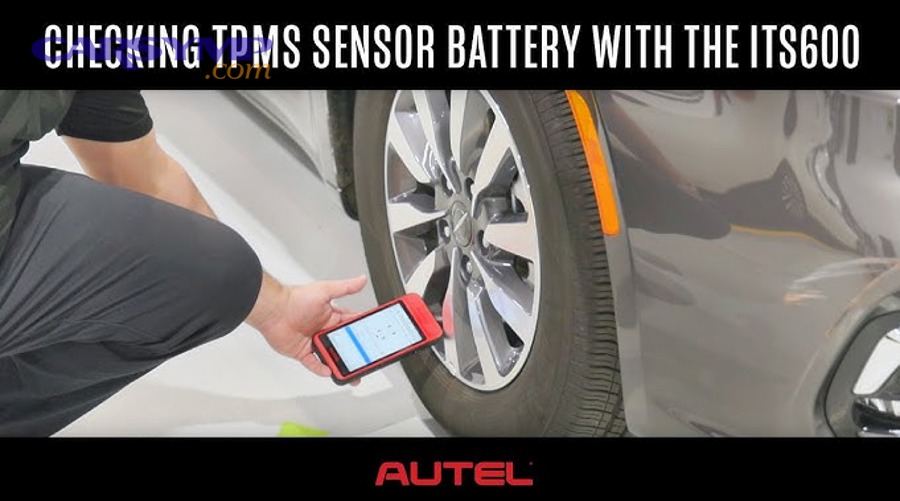
Recognizing the warning signs of a weakening battery is equally important. A flashing TPMS dashboard light — particularly one that blinks for 60 to 90 seconds at startup before going solid — is the most common signal that one or more sensors are failing. Scan tool diagnostics at a tire shop can sometimes display a battery percentage or status reading, although interpreting those readings requires professional guidance, as a readout of “10%” or “low” can still mean months of service life remain.
Understanding when and how to replace TPMS sensors is where knowledge directly saves money. Many automotive professionals recommend replacing all sensors simultaneously when one fails, particularly if the vehicle is past the seven-year mark, since all sensors were installed at the same time and carry similar battery ages. To better understand every dimension of TPMS sensor battery performance — from basic definitions to advanced battery chemistry — the sections below cover each factor in full detail.
What Is a TPMS Sensor Battery?
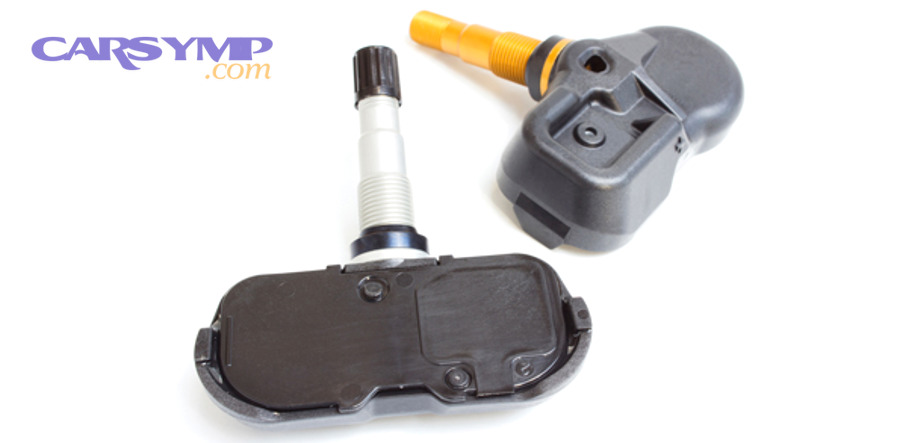
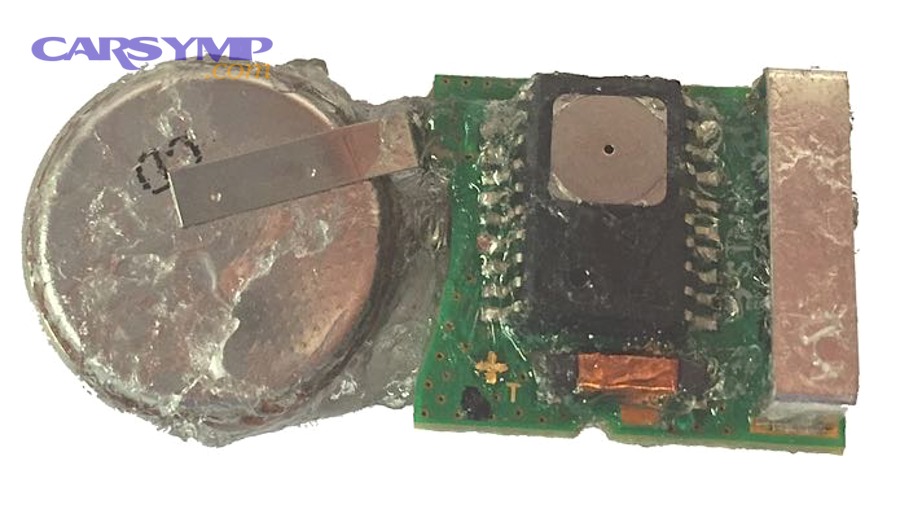
A TPMS sensor battery is a sealed, non-replaceable power cell integrated into a tire pressure monitoring sensor, using either a 3-volt lithium-ion or 1.25-volt nickel metal hydride (NiMH) chemistry, and it powers the radio frequency transmissions that report real-time tire pressure data to a vehicle’s onboard electronic control unit.
To better understand why this component matters so much to everyday vehicle safety, it helps to look at exactly how the battery functions inside the sensor during normal operation.
How Does a TPMS Sensor Battery Work?
The TPMS sensor battery works by supplying power to a microprocessor and radio frequency transmitter housed inside the sensor unit, which is mounted either on the valve stem or directly on the wheel rim inside the tire. When the vehicle begins moving and wheel speed crosses a threshold — typically around 15 to 25 mph — the sensor “wakes up” from sleep mode and begins measuring tire pressure at regular intervals. It then transmits that pressure data as a radio frequency signal to the vehicle’s ECU, which compares the reading against a threshold (a 25% or greater pressure drop triggers a dashboard alert under U.S. federal regulations).
The battery is consumed primarily during these transmission events. Sensors that transmit every minute drain their batteries significantly faster than those programmed to transmit every 5 or 20 minutes. This is why sleep mode is such a critical design feature — most modern TPMS sensors are engineered to deactivate entirely when the vehicle has been stationary for several minutes, preserving battery capacity for when it is actually needed on the road.
Is the Battery in a TPMS Sensor Replaceable?
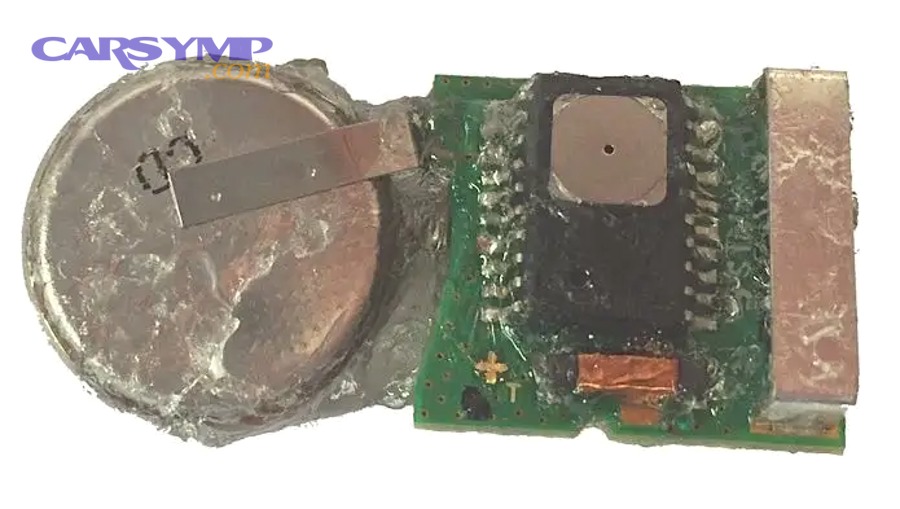
No — the battery inside a TPMS sensor is not replaceable in the vast majority of factory-installed and OEM-grade sensors. Manufacturers encapsulate the battery inside a silicone potting compound during production, creating a hermetically sealed unit that protects the battery from moisture, road debris, and temperature fluctuation. This design improves durability over the sensor’s service life but makes the battery completely inaccessible for routine replacement.
There is a narrow exception worth noting: some aftermarket sensor brands manufacture units with a replaceable battery compartment, allowing a technician to swap the cell without buying a new sensor. However, these are not standard across the industry, and most tire pressure monitoring system service procedures at dealerships and tire shops assume full sensor replacement when the battery expires. Drivers should verify their specific sensor type before assuming any battery-swap option is available.
How Long Does a TPMS Sensor Battery Last?
A TPMS sensor battery lasts between 5 and 12 years on average, equating to roughly 60,000 to 100,000 miles, with OEM sensors averaging around 7 years and premium aftermarket units often reaching or exceeding 10 years depending on driving conditions and battery chemistry.
Specifically, the range is wide enough that two identical vehicles driven differently can produce vastly different sensor lifespans — which is why breaking down the lifespan by both time and mileage gives drivers a more complete picture.
The table below summarizes expected TPMS sensor battery lifespan across three performance tiers, giving drivers a quick reference point for planning replacement.
| Sensor Type | Expected Lifespan (Years) | Expected Lifespan (Miles) | Notes |
|---|---|---|---|
| Budget aftermarket | 3–5 years | 40,000–60,000 miles | Lower-grade battery cells; faster drain |
| OEM / standard | 5–10 years | 60,000–100,000 miles | Industry standard; most common |
| Premium (LiSOCl₂) | 10–12+ years | 100,000+ miles | Superior chemistry; temperature resistant |
How Many Years Do TPMS Sensor Batteries Typically Last?
TPMS sensor batteries typically last 5 to 10 years, with the OEM average sitting near 7 years, though a meaningful share of sensors installed on low-mileage vehicles have been documented functioning reliably at 10 to 12 years or beyond.
The lifespan breaks into three practical ranges that drivers and technicians can use as planning benchmarks:
- Conservative range (5–7 years): Common for sensors on high-mileage commuter vehicles, those driven in hot climates, or budget aftermarket replacements with lower-grade cells.
- Average range (7–10 years): The typical experience for OEM sensors on passenger vehicles under normal driving conditions, which is what most drivers will encounter.
- Best-case range (10–12+ years): Reported on low-mileage vehicles, those driven primarily at steady highway speeds, and sensors using premium lithium chemistry. Real-world forum data from Subaru Crosstrek owners, for example, documents original sensors still functioning at 9 to 10 years with no failures.
OEM sensors tend to outlast budget aftermarket alternatives primarily because automakers specify higher-capacity battery cells to meet longer warranty and reliability targets. Budget sensors, by contrast, are often built to a price point that compromises cell quality, resulting in earlier depletion.
How Many Miles Can a TPMS Sensor Battery Last?
A TPMS sensor battery can last between 60,000 and 100,000 miles under typical driving conditions, with premium sensors capable of exceeding 100,000 miles when driven primarily at steady speeds and in moderate temperatures.
For high-mileage drivers, mileage can actually be a more reliable planning metric than years. A driver logging 25,000 miles per year will hit the 100,000-mile threshold in just four years, meaning their sensors could be approaching end-of-life well before the 7-year time benchmark. Conversely, a driver who covers only 7,000 miles annually may still have functional sensors at year 12 or beyond.
Continuous highway driving is notably more battery-efficient than stop-and-go traffic. At a constant speed, sensors transmit data at a steady, predictable rate with fewer wake-up cycles. In city traffic, every deceleration and re-acceleration event triggers additional transmission activity, cumulatively drawing down battery capacity faster over the same total mileage. This is one of the most overlooked variables in any TPMS sensor replacement overview.
What Factors Affect TPMS Sensor Battery Life?
There are four primary factors that affect TPMS sensor battery life: temperature exposure, driving pattern, RF transmission frequency, and sensor/battery quality — with each one capable of shortening or extending the standard 5-to-10-year lifespan depending on the specific conditions a vehicle experiences.
Next, each of these factors deserves a closer look, because understanding them gives drivers the ability to make proactive decisions rather than waiting for a dashboard warning to force action.
Does Temperature Affect TPMS Sensor Battery Life?
Yes — temperature is one of the most significant external factors affecting TPMS sensor battery life. Extreme heat accelerates the rate of electrochemical degradation inside lithium-ion battery cells, causing internal resistance to increase over time and reducing the cell’s ability to hold a charge. Vehicles regularly parked in direct sunlight, driven in desert climates, or exposed to high under-tire temperatures during aggressive driving will consistently show earlier sensor failure than those kept in cooler, shaded conditions.
Cold temperatures present a different dynamic. While freezing or sub-zero conditions temporarily reduce voltage output — meaning a sensor may transmit a weaker signal or fail to wake up correctly — the long-term structural damage to the battery cell is considerably less than what sustained heat causes. In practical terms, a driver in Minnesota dealing with harsh winters will generally see their sensors outlast those on a vehicle baked year-round on the streets of Phoenix. Drivers in extreme climates should factor temperature into their replacement planning and lean toward the shorter end of the lifespan range when estimating battery life.
Does Driving Style Impact How Long TPMS Batteries Last?
Yes — driving style directly impacts TPMS sensor battery life because the number of radio frequency transmissions a sensor makes is tied directly to how often the vehicle accelerates, decelerates, and changes speed. Every time a sensor wakes from sleep mode and transmits, it draws from a finite, non-rechargeable battery reserve.
In stop-and-go city traffic, sensors cycle through more frequent wake-up-transmit-sleep sequences per mile traveled than sensors on a vehicle maintaining a constant highway speed. Over 80,000 miles of city driving, a sensor may generate significantly more total transmission events than the same sensor would accumulate on 80,000 miles of interstate driving — even though the odometer reads identically. For city drivers, this means planning for replacement at the lower end of the mileage range (closer to 60,000 miles) is more prudent than assuming the full 100,000-mile ceiling applies.
Does Sensor Quality Influence Battery Longevity?
Yes — sensor quality has a direct and measurable influence on battery longevity because higher-grade sensors use superior battery cell chemistry, tighter manufacturing tolerances, and more efficient power management circuits that collectively reduce parasitic battery drain. OEM sensors are engineered to meet automaker durability specifications, which typically require the sensor to remain functional for the duration of the vehicle’s original powertrain warranty period and well beyond.
Budget aftermarket sensors, available at price points significantly below OEM units, often rely on lower-capacity lithium cells paired with less sophisticated sleep-mode programming. These sensors may also transmit data more frequently than necessary — because their firmware is less refined — further accelerating battery depletion. The financial calculation matters here: a $25 aftermarket sensor that fails in four years ends up costing more over a decade than a $70 OEM sensor lasting ten. Battery chemistry is the most technical dimension of this quality gap, and it is covered in the Supplementary Content section below for drivers who want to understand the science behind it.
What Are the Warning Signs of a Dying TPMS Sensor Battery?
There are three main warning signs of a dying TPMS sensor battery: a flashing TPMS dashboard light, intermittent or missing tire pressure readings, and a low or failed battery status displayed on a professional scan tool — with the flashing dashboard light being the most universally recognizable signal for drivers.
However, understanding what these signals actually mean — and what action they call for — requires a bit more context than a simple light on the dash provides.
How Do You Know If Your TPMS Sensor Battery Is Low?
You can tell your TPMS sensor battery is low through two primary indicators: a flashing TPMS warning light on the dashboard at startup, and a diagnostic scan tool reading that displays a low battery percentage or “low” status for one or more sensors.
The dashboard warning light behavior is the first thing most drivers notice. A solid TPMS light typically means a tire is actually underinflated. A flashing light — one that blinks rapidly for approximately 60 to 90 seconds when the vehicle is first started, then goes solid or turns off — indicates a sensor fault, which is most commonly caused by a dying or dead battery. This distinction is important: a flashing light does not mean a tire is flat; it means the system can no longer confirm tire pressure status, which is itself a safety concern.
At a tire shop equipped with a TPMS scan tool, a technician can interrogate each sensor individually and retrieve battery status data — provided the sensor outputs that data and the scan tool supports reading it. The readout format varies: some sensors report a percentage (e.g., “10%”), others use a descriptor (“low,” “replace,” or “good”). As industry professionals note, a “low” reading or a “10%” figure can still represent six months to a year of remaining service life depending on driving conditions, so context matters when interpreting these numbers. Routine tire pressure monitoring system service at a qualified shop should include a battery status check on all four sensors as part of standard procedure.
Can a Dead TPMS Battery Cause Inaccurate Tire Pressure Readings?
Yes — a dead or dying TPMS sensor battery can absolutely cause inaccurate or entirely absent tire pressure readings, because without adequate power, the sensor cannot perform measurements or transmit data to the vehicle’s ECU. When the ECU stops receiving a signal from one or more sensors, it cannot report that tire’s pressure status — meaning the driver has no warning if that tire begins losing air.
What makes this particularly concerning from a safety standpoint is the delay built into most vehicle systems for detecting a missing sensor signal. Testing on various vehicle platforms has demonstrated that it can take anywhere from 20 to 45 minutes of driving before the ECU registers a missing sensor and triggers a dashboard alert. During that window, a tire with a slow leak or significant pressure loss goes undetected. This is one of the most practically important Car Symptoms to understand: a flashing or absent TPMS reading is not just a minor nuisance — it represents a gap in the vehicle’s active safety monitoring capability. According to the National Highway Traffic Safety Administration (NHTSA), underinflated tires are a contributing factor in thousands of tire-related crashes annually, underscoring the importance of a fully functional tire pressure monitoring system.
When Should You Replace Your TPMS Sensors?
You should replace your TPMS sensors when one sensor fails and the remaining sensors are 7 or more years old, or proactively as a complete set during a scheduled tire change at the 7-to-10-year mark — whichever comes first — to minimize labor costs and eliminate the safety gap created by sequential sensor failures.
To better understand the decision, it helps to compare the two main replacement strategies side by side.
Should You Replace All TPMS Sensors at Once or One at a Time?
Replacing all TPMS sensors at once wins on total cost efficiency and safety continuity, while replacing sensors individually is best for drivers on a tight short-term budget whose remaining sensors are recently verified as healthy and are well within their expected service life.
The following table compares both strategies across the key decision criteria to help drivers choose the right approach for their situation.
| Criteria | Replace All at Once | Replace One at a Time |
|---|---|---|
| Upfront cost | Higher ($80–$600 depending on vehicle) | Lower per visit |
| Long-term cost | Lower (single labor charge) | Higher (multiple shop visits) |
| Safety continuity | High (all sensors equally fresh) | Lower (others near end of life) |
| Best suited for | Sensors 7+ years old, one failure | Sensors under 5 years, all healthy |
| Technician recommendation | Strongly recommended at 7+ years | Acceptable under 5 years |
The core argument for replacing all sensors simultaneously is straightforward: since all sensors were factory-installed on the same day, they carry nearly identical battery ages and accumulated transmission cycles. If one has died, the others are statistically close behind. Replacing only the failed sensor and returning to the shop one or two more times within the next year to replace the rest costs significantly more in total labor than addressing all four in a single service appointment. This is a standard point raised during any thorough TPMS sensor replacement overview provided by tire professionals.
On the other hand, if a single sensor fails early — say, at five years due to a manufacturing defect or physical damage rather than battery depletion — and the remaining three test as healthy on a scan tool, replacing only the failed unit is a reasonable and economical choice.
How Much Does It Cost to Replace a TPMS Sensor?
TPMS sensor replacement costs range from $20 to $150 per sensor for the part itself, plus $10 to $35 per sensor in installation and programming fees, making a full four-sensor replacement a total investment of approximately $120 to $750 depending on vehicle make, model, and whether OEM or aftermarket sensors are used.
The price breakdown by sensor type helps clarify the decision:
- OEM sensors: $50–$150 per unit. Required on some European and luxury vehicles where aftermarket sensors are not compatible. Longest expected lifespan.
- Premium aftermarket sensors (e.g., Schrader, Continental): $40–$80 per unit. Comparable quality to OEM; compatible with most domestic and Asian vehicles.
- Budget aftermarket sensors: $20–$40 per unit. Wider compatibility but shorter expected lifespan; higher risk of premature failure.
The smartest cost-reduction strategy is timing the sensor replacement to coincide with a scheduled tire change. Because the wheels must be demounted from the vehicle anyway during a tire swap, the additional labor cost for sensor replacement is minimal. Paying for a separate service appointment dedicated solely to sensor replacement adds a full demount-and-remount labor charge that is entirely avoidable with a little forward planning. Drivers who are also navigating TPMS issues after tire rotation or replacement — such as a system that won’t relearn new sensor positions — should address battery status at the same time to avoid compounding problems.
Advanced Factors That Affect TPMS Sensor Battery Performance
There are four advanced factors that significantly affect TPMS sensor battery performance beyond typical driving variables: RF transmission frequency design, shelf life degradation in stored sensors, battery cell chemistry differences, and the accelerated wear patterns experienced by fleet and commercial vehicles operating under continuous high-demand conditions.
These factors extend the conversation from general consumer guidance into the more specialized technical territory that matters for enthusiasts, technicians, and fleet operators who need a deeper understanding of sensor longevity.
How Does RF Transmission Frequency Affect Battery Drain?
RF transmission frequency is one of the single most influential design variables in TPMS sensor battery lifespan — sensors programmed to transmit every 60 seconds consume their battery capacity far more rapidly than those transmitting every 5 to 20 minutes, with the cumulative difference potentially amounting to years of additional service life.
Each transmission event is a discrete power draw on the battery. A sensor transmitting once per minute generates 60 transmission events per hour of driving. A sensor transmitting once every 20 minutes generates just three. Across 100,000 miles of driving, the cumulative transmission count difference between these two designs is enormous — and that difference directly correlates to battery depletion rate.
Sleep mode engineering is what controls this frequency in real-world use. Premium sensors are designed with sophisticated sleep-mode logic that monitors wheel speed, detects stationary conditions, and aggressively limits transmissions when full reporting is unnecessary. Budget sensors often lack this sophistication, defaulting to more frequent transmission intervals that provide no meaningful safety benefit but drain the battery faster. An important gap identified by industry professionals is the lack of standardized transmission protocols across manufacturers — meaning two sensors from different brands mounted on the same vehicle may deplete at meaningfully different rates.
Do TPMS Sensors Have a Shelf Life Before Being Installed?
Yes — TPMS sensors have a measurable shelf life even before installation, because the sealed lithium battery inside the sensor undergoes slow self-discharge at rest, gradually depleting its available capacity even when the sensor has never been mounted in a tire.
This matters most for drivers or technicians purchasing sensors in advance for future installation. A sensor manufactured three years ago but never mounted has already lost a portion of its usable battery capacity to passive discharge — effectively reducing its in-service lifespan from the moment it is finally installed. The practical calculation is straightforward: subtract the sensor’s manufacture date from its expected ~10-year total battery life, then subtract the anticipated storage duration, to estimate remaining useful life after installation.
When purchasing replacement sensors — particularly in bulk or from discount sources that may be moving older inventory — checking the manufacture date stamped on the sensor body or packaging is a worthwhile step. A sensor manufactured five years ago sitting on a shelf is already halfway through its expected life before it has ever touched a wheel. Industry professionals advise checking manufacture dates to avoid unknowingly installing near-end-of-life sensors during what is meant to be a fresh replacement service.
How Does Battery Chemistry Impact TPMS Sensor Longevity?
Standard lithium-ion chemistry wins on cost and availability, while lithium thionyl chloride (LiSOCl₂) is optimal for maximum longevity and extreme temperature tolerance, making it the superior choice for premium applications, high-demand environments, and vehicles expected to remain in service for a decade or more.
The chemistry distinction is more significant than most drivers realize. Standard lithium-ion cells — the type used in most OEM and aftermarket TPMS sensors — deliver reliable performance within a moderate temperature range and offer a lifespan of 5 to 10 years under normal conditions. Lithium thionyl chloride batteries, by contrast, are a primary lithium chemistry with an exceptionally flat discharge curve, meaning they maintain consistent voltage output until very near the end of their life rather than gradually declining. They are also rated to operate reliably across an extreme temperature range of −40°C to +125°C (−40°F to +257°F), making them the preferred choice for vehicles routinely exposed to climatic extremes.
From a TPMS application standpoint, LiSOCl₂-equipped sensors can realistically achieve 10 to 12 or more years of service life, even under demanding conditions. For most passenger vehicle owners, the standard lithium-ion sensor is sufficient. For performance vehicles, trucks, and any application involving sustained extreme temperatures, the chemistry upgrade represents a meaningful long-term value proposition.
Do TPMS Sensors in Fleet or Commercial Vehicles Wear Out Faster?
Yes — TPMS sensors in fleet and commercial vehicles wear out significantly faster than those in typical passenger cars, primarily because fleet vehicles accumulate mileage and operating hours at a rate that compresses years of consumer use into a much shorter calendar period.
A delivery van or service vehicle logging 40,000 to 60,000 miles per year will reach the 100,000-mile sensor threshold in just two to three years — well before the 7-year time benchmark that guides most consumer replacement recommendations. Continuous daily use also eliminates most of the sleep-mode recovery time that helps extend sensor battery life in vehicles that sit idle overnight and on weekends. For commercial operators, the standard consumer replacement guidance is simply not applicable.
Fleet managers are best served by implementing a proactive, mileage-based replacement cycle rather than waiting for individual sensor failures — a reactive approach that causes vehicle downtime, potentially multiple shop visits per vehicle per year, and unpredictable maintenance costs. A 3-to-5-year proactive replacement interval is the practical standard for fleet TPMS management, with the exact timing calibrated to annual mileage rather than calendar years. Bulk sensor purchasing agreements with tire service providers and standardizing on a single compatible sensor SKU across the fleet can significantly reduce per-unit costs and streamline the programming step during replacement service.
In summary, TPMS sensor battery life is not a fixed number — it is a range shaped by chemistry, climate, driving habits, sensor design, and usage intensity. Most drivers on standard passenger vehicles will see reliable service for 7 to 10 years from OEM sensors, with the practical replacement decision best made proactively at or around the 7-year mark rather than waiting for a dashboard warning to force the issue. Whether you are a daily commuter, a high-mileage driver, or a fleet operator managing dozens of vehicles, understanding these variables puts you in control of replacement timing — and protects the safety function that TPMS is specifically designed to deliver.