


When it comes to tire pressure monitoring system service, the decision between doing it yourself and paying a professional is rarely black and white. Both routes are legitimate — but each comes with trade-offs in cost, complexity, and risk that can significantly affect the outcome. Understanding those trade-offs before you commit is what separates a smart maintenance decision from an expensive mistake.
Cost is usually the first factor car owners weigh. DIY TPMS sensor replacement can reduce your out-of-pocket expense by cutting out labor charges entirely, but it introduces a hidden cost many people overlook: the price of a quality relearn tool. Professional shops, meanwhile, absorb that tool cost across hundreds of jobs — making their per-visit rate appear higher while actually reflecting real expertise and equipment investment.
The skill and time requirement is the second variable most people underestimate. Swapping a sensor is only half the job. The other half — programming the new sensor so your vehicle’s ECU recognizes it — is where most DIY attempts go wrong. A sensor that isn’t correctly registered to the vehicle’s onboard computer will leave the TPMS warning light on regardless of how well the physical installation was performed.
There are also vehicle-specific scenarios where professional service is not just preferred, but practically unavoidable. Certain OEM sensors, indirect TPMS systems, and aftermarket rim configurations require tools and knowledge that are genuinely beyond what most home mechanics can access. Next, this article walks through every key consideration — from cost breakdowns to programming requirements to sensor compatibility — so you can make the right call for your specific situation.
What Is TPMS Service and Why Does It Matter for Your Vehicle?
TPMS service is the maintenance category that covers inspection, replacement, reprogramming, and relearn procedures for the sensors that monitor tire air pressure in any vehicle manufactured after 2008. It matters because without functioning sensors, your vehicle cannot warn you about dangerous underinflation before it leads to a blowout, handling failure, or accelerated tire wear.
To better understand why tire pressure monitoring system service is more involved than it first appears, it helps to break the system down into its two main working layers: the physical sensor hardware inside the wheel, and the communication link between that sensor and the vehicle’s onboard computer.
What Does a TPMS Sensor Do Inside Your Tire?
A TPMS sensor is a small battery-powered electronic device mounted inside each wheel, typically on the valve stem, whose job is to continuously measure tire air pressure and transmit that data wirelessly to the vehicle’s ECU. When pressure in any tire drops below a calibrated threshold, the ECU triggers the TPMS warning light on the dashboard.
Specifically, the sensor performs three core functions simultaneously: pressure measurement, temperature monitoring (on most direct systems), and wireless signal transmission. Each sensor carries a unique ID that the vehicle’s ECU stores and references to identify which wheel is reporting a pressure event. This ID-matching step is precisely why simply replacing a sensor is not enough — the ECU must be updated to recognize the new sensor’s ID, or the warning light will remain active regardless of actual tire pressure.
The internal lithium-ion battery that powers the sensor is non-replaceable and is sealed inside the sensor body at the time of manufacture. According to data compiled by the National Highway Traffic Safety Administration (NHTSA), TPMS sensors typically have a service life of five to ten years or approximately 100,000 miles, after which battery depletion is the most common cause of sensor failure.
What Are the Main Components of a TPMS Service Job?
A complete TPMS service job involves more than just the sensor itself — it includes a full service kit consisting of the valve stem, rubber seal or grommet, washer, retaining nut, and valve cap. Each of these components plays a role in maintaining an airtight seal and preventing corrosion from compromising the sensor’s mounting point.
More specifically, the reason these components are replaced together — rather than just the sensor — is that the process of dismounting a tire exposes the valve stem hardware to stress and potential damage. Rubber seals degrade over time, especially in climates with road salt, temperature cycling, or UV exposure. Reusing worn hardware after a tire dismount is a common source of slow leaks that go undetected for weeks.
Beyond the hardware, the programming and relearn step is a distinct and equally critical phase of the service job. After new sensors are physically installed, a relearn procedure must be performed to register each sensor’s ID to the vehicle ECU in the correct wheel position. Some vehicles perform this automatically after driving a set distance; others require a manual relearn using a TPMS tool or a dealer-level scan tool. Skipping this step — or assuming it will happen on its own — is the single most common reason a TPMS warning light stays on after a sensor replacement.
Can You Really Replace TPMS Sensors Yourself Without a Professional?
Yes, you can replace direct TPMS sensors yourself without a professional, provided you have the right tools, basic mechanical familiarity, and a willingness to complete the full relearn procedure — not just the physical swap.
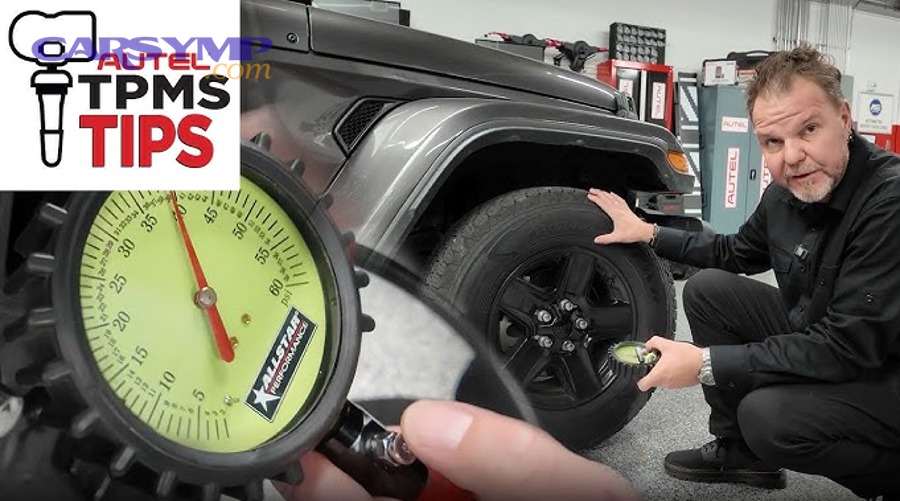
However, whether you should attempt DIY replacement depends on three conditions being true at the same time: your vehicle uses a direct TPMS system with accessible sensors, you have access to or are willing to invest in a TPMS relearn tool, and you are comfortable with tire dismount work or plan to use a shop only for tire mounting while handling the sensor programming yourself.
What Tools Do You Need to Replace TPMS Sensors at Home?
There are five core tools required for a complete DIY TPMS sensor replacement: a valve stem removal tool, a torque wrench, a TPMS activation and relearn tool, tire irons or a tire changing machine (for full dismount jobs), and a vehicle-specific relearn procedure guide.
The TPMS relearn tool is the most important — and most overlooked — item on that list. Tools like the Autel MaxiTPMS TS508WF allow you to activate sensors at the wheel, read their IDs, compare those IDs to what the ECU has stored, and perform the relearn procedure without a shop visit. Entry-level relearn tools start at around $100, while more capable diagnostic tools suitable for a wider range of vehicles can run $250 to $400.
The torque wrench is equally non-negotiable. TPMS valve stem nuts have very specific torque specifications — typically between 35 and 62 inch-pounds depending on the sensor manufacturer. Over-torquing is one of the most common causes of cracked sensor bodies or damaged seals during DIY installation, and the damage is often invisible until the tire is mounted and inflated.
For a cleaner picture of what a basic DIY TPMS toolkit looks like compared to what a shop uses, the table below summarizes the key tools and cost ranges for each scenario:
| Tool | DIY (Home) | Professional Shop |
|---|---|---|
| Valve stem removal tool | Required | Required |
| Torque wrench | Required | Required |
| TPMS relearn tool | Autel TS508WF (~$150–$250) | ATEQ VT57 / Bartec TECH600PRO ($500–$1,500+) |
| Tire changing equipment | Needed for full dismount | In-house machine |
| OBD2 interface | Optional (some tools include) | Standard in shop tools |
| Vehicle database / software updates | Via Wi-Fi (tool dependent) | Subscription-based, regularly updated |
This table illustrates that while the DIY toolkit is a one-time investment, shop-grade tools carry significantly more vehicle coverage and diagnostic depth — a difference that matters most for complex or newer vehicle platforms.
What Skills and Time Should You Have Before Attempting DIY TPMS Service?
DIY TPMS service is appropriate for car owners who are already comfortable with tire rotations, basic torque work, and following vehicle-specific procedures — and who are willing to budget 1 to 3 hours for a first-time replacement including research, installation, and relearn.
For example, if you have successfully changed your own tires, replaced brake pads, or performed basic suspension work, TPMS sensor replacement is within your skill range. If, on the other hand, you have never used a torque wrench or are unfamiliar with valve stem hardware, the risk of damaging a $50 to $150 sensor during installation is real and worth factoring into your decision.
The time investment is another honest consideration. Unlike an oil change, TPMS service doesn’t have a “quick” version. Researching the correct sensor for your vehicle, verifying compatibility, performing the physical installation with proper torque, and completing the relearn procedure all take time — particularly on the first attempt. Professional shops with a dedicated TPMS workflow can complete the same job in 20 to 40 minutes per vehicle.
How Much Does DIY TPMS Service Cost Compared to a Professional Shop?
DIY TPMS service wins on per-sensor cost — typically $30 to $150 for parts alone — while professional shop service ranges from $70 to $250 per sensor including labor, making the cost difference meaningful across a full set of four sensors.
That said, the true cost comparison is more nuanced than a single-sensor price. The following sections break down what you actually pay in each scenario, including costs that are easy to overlook.
What Is the Typical Cost of TPMS Sensor Replacement at a Shop?
Professional TPMS sensor replacement typically costs between $70 and $250 per sensor, with labor adding $50 to $100 per sensor on top of parts — and some shops charging an additional $100 to $200 per vehicle for programming and relearn.
More specifically, the pricing structure at most tire shops and dealerships reflects three separate cost layers: the sensor itself (parts), the physical installation during a tire mount/dismount (labor), and the ECU programming or relearn procedure (diagnostic fee). Customers who bring their own sensors to a shop often eliminate the parts markup but may still pay the full labor and programming rate — and some shops decline customer-supplied parts entirely due to warranty liability concerns.
Package pricing is common when all four sensors are replaced simultaneously or when sensor service is bundled with a full tire replacement appointment. In those scenarios, shops at retailers like Discount Tire have been known to absorb the relearn fee entirely when sensors are purchased in-store.
How Much Can You Save by Doing TPMS Service Yourself?
DIY TPMS service can save $80 to $400 on a full four-sensor replacement compared to shop pricing — but that savings is partially offset by the one-time cost of a TPMS relearn tool, which typically runs $100 to $400 depending on capability.
To illustrate the real break-even math: if a shop charges $200 per sensor (parts, labor, and programming) for all four wheels, your total cost is $800. Buying aftermarket sensors at $40 each ($160 total) and a $200 relearn tool brings your first-time DIY cost to approximately $360 — a savings of $440 on the first service interval. On your second set of sensors, the tool cost is already absorbed, and your total drops to around $160, which represents a savings of over $600 compared to repeat shop visits.
The caveat is that this math only holds if your vehicle is compatible with a DIY-friendly relearn tool, your sensors program correctly on the first attempt, and you don’t incur any damage costs from improper installation. Factoring in a realistic failure margin is important before committing to the DIY path.
What Are the Key Differences Between DIY and Professional TPMS Service?
DIY TPMS service wins on cost and scheduling flexibility, while professional shop service wins on programming accuracy, vehicle coverage breadth, and warranty protection — making the right choice dependent on your vehicle type, technical comfort, and how often you service your tires.

This is the core of the DIY vs. shop decision, and it comes down to more than just price. The two paths diverge most significantly at the programming and relearn stage — the step that determines whether your TPMS system actually works after the sensors are installed.
How Does Sensor Programming Differ Between DIY and Shop Service?
Sensor programming is the process of registering each new sensor’s unique ID to the vehicle ECU so the system knows which sensor is in which wheel position — and it differs significantly in depth and reliability between DIY tools and shop-grade equipment.
Specifically, professional shop tools like the Bartec TECH600PRO and ATEQ VT57 connect to the vehicle via OBD2 and directly compare the IDs stored in the ECU against the IDs of the physically installed sensors. This workflow catches the most common post-installation problem: a “new sensors but TPMS light still on” situation caused by an ID mismatch rather than a sensor fault. These tools also retrieve and clear TPMS-specific diagnostic trouble codes (DTCs) — a capability that goes well beyond what most entry-level DIY tools offer.
DIY tools at the consumer level, such as the Autel TS508WF, do cover the most common relearn procedures and are genuinely capable for standard sensor replacements on mainstream vehicles. However, their vehicle database depth, OBD2 integration, and ability to diagnose complex sensor communication failures are more limited than shop-grade platforms. For straightforward replacements on common domestic and Asian-market vehicles, the DIY tool is sufficient. For European vehicles, luxury platforms, or any vehicle with a persistent TPMS fault that isn’t cleared by a basic relearn, a shop-grade diagnostic tool is a meaningful advantage.
Which Situations Require a Professional Shop Regardless of DIY Skill?
There are four specific scenarios where professional shop service is effectively required, regardless of the car owner’s mechanical skill level: dealer-only OEM sensor programming, indirect TPMS systems requiring ECU recalibration, aftermarket rim fitment with non-standard valve hole geometry, and advanced sensor ID mismatch diagnosis.
Dealer-only OEM programming applies to certain European and luxury vehicle brands — including some BMW, Mercedes-Benz, and Porsche platforms — where TPMS sensor registration requires the manufacturer’s proprietary software, which is not accessible through any aftermarket tool. In these cases, even a professionally equipped independent shop may refer the job to the dealer.
Indirect TPMS recalibration is a separate scenario. Indirect TPMS systems don’t use physical pressure sensors at all — they infer pressure changes from wheel rotation speed data via the ABS system. When these systems lose calibration (typically after tire rotation or replacement), the recalibration procedure must be completed using an OBD2 scan tool or through a specific driving cycle, neither of which involves sensor hardware. A shop familiar with the vehicle’s ABS integration handles this most reliably.
Aftermarket rim fitment introduces variables around valve hole angle and sensor placement that require physical assessment before sensor selection. If the installed sensor sits above the wheel’s safety hump or the valve hole is centered at a non-standard angle, a standard replacement sensor will not fit correctly — and forcing it risks both sensor damage and air seal failure.
Sensor ID mismatch diagnosis — where the TPMS light stays on despite new sensors being installed — requires a tool that can compare ECU-stored IDs against installed sensor IDs wheel by wheel. This is a diagnostic step, not just a relearn step, and it requires tool capability that most basic consumer tools do not provide.
What Are the Pros and Cons of Each TPMS Service Option?
There are two main TPMS service options — DIY replacement and professional shop service — and each presents a distinct set of advantages and disadvantages based on cost, skill requirement, tool access, and outcome reliability.

This side-by-side evaluation is the practical lens through which most car owners should make their final decision. Neither option is universally superior; the right answer depends on your specific vehicle, your current tool situation, and how much risk tolerance you have for a service that directly affects driving safety.
What Are the Advantages and Disadvantages of DIY TPMS Replacement?
DIY TPMS replacement offers genuine cost savings and scheduling flexibility but introduces real risks around programming accuracy, installation damage, and the absence of any warranty protection on the work performed.
Advantages of DIY:
- Cost savings: Eliminating labor costs and programming fees can reduce per-sensor cost by 50–70% after the initial tool investment is recovered.
- Scheduling freedom: No appointment needed; service can be performed on your timeline.
- Skill development: Builds mechanical familiarity with a system that requires service every 5–10 years.
- Sensor choice control: You select the sensor brand and grade (OEM vs. aftermarket) directly, rather than accepting whatever a shop stocks.
Disadvantages of DIY:
- Programming complexity: The relearn procedure is the most common point of failure and requires a dedicated tool investment.
- Installation risk: Incorrect torque, improper sensor orientation, or reused worn hardware can cause air leaks or sensor damage.
- No labor warranty: If something goes wrong post-installation, the cost of diagnosis and correction falls entirely on you.
- Tool investment: A capable TPMS relearn tool costs $100–$400, partially offsetting savings on the first service interval.
- Limited coverage on complex platforms: DIY tools may not support advanced relearn procedures on European or luxury vehicles.
What Are the Advantages and Disadvantages of Professional TPMS Service?
Professional TPMS service guarantees correct programming, covers a broader range of vehicle platforms, and typically includes a warranty on parts and labor — but at a significantly higher cost per service event.
Advantages of professional service:
- Programming reliability: Shop-grade tools handle the full relearn, ID comparison, and DTC clearing workflow in a single session.
- Warranty coverage: Most shops warrant both parts and labor, providing recourse if a sensor fails or the warning light returns.
- Speed: Experienced technicians complete a full four-sensor service in 20–40 minutes.
- Vehicle coverage: Shop tools support a wider range of platforms including European, luxury, and dealer-only programming scenarios.
- Diagnostic depth: Technicians can distinguish between a sensor fault, a relearn failure, and a module communication issue — critical for persistent TPMS problems.
Disadvantages of professional service:
- Higher cost: $70–$250 per sensor including labor and programming, versus $30–$150 DIY parts cost.
- Scheduling dependency: Requires an appointment and vehicle downtime.
- Potential upselling: Some shops recommend full sensor replacement when only a relearn or seal service kit is needed.
- Quality variance: TPMS service quality varies significantly between dealerships, independent tire shops, and national chains — not all technicians have equal TPMS diagnostic expertise.
What Else Should You Know About TPMS Sensors Before Choosing Your Service Path?
Beyond the core DIY vs. shop comparison, four additional factors can influence which service path is right for your specific vehicle: the OEM vs. aftermarket sensor decision, the right relearn tool for home use, sensor fitment requirements for aftermarket rims, and whether your existing sensors can simply be reused rather than replaced.

These factors represent the micro-level knowledge that separates a well-executed TPMS service decision from one that results in incompatible parts, persistent warning lights, or unnecessary replacement costs. The TPMS sensor replacement overview below covers each in practical detail.
What Is the Difference Between OEM and Aftermarket TPMS Sensors?
OEM sensors are factory-specification units made by or for the vehicle manufacturer, offering guaranteed compatibility and plug-and-play programming — while aftermarket sensors offer lower cost and broad vehicle coverage but require compatibility verification and active programming before use.
Specifically, OEM sensors are manufactured to exact vehicle tolerances and, in most cases, communicate seamlessly with the existing ECU without requiring a special programming step beyond the standard relearn. Their primary drawback is cost: OEM sensors typically range from $80 to $150 per unit, and some platforms require dealer-level tools for registration.
Aftermarket sensors, such as those from Schrader, HUF, or Autel’s MX-Sensor line, are designed to cover multiple vehicle makes and models within a single programmable unit. This flexibility makes them attractive for independent shops and DIY users, but it introduces a critical responsibility: confirming that the specific sensor is compatible with your vehicle’s frequency (315 MHz vs. 433 MHz), communication protocol, and ECU requirements before purchase. Installing the wrong frequency sensor is a common “new sensor but light won’t go off” scenario that requires a full do-over.
How Do You Choose the Right TPMS Relearn Tool for Home Use?
The right TPMS relearn tool for home use is one that supports your specific vehicle’s relearn procedure, offers ECU ID comparison capability, and can perform OBD2 resets for vehicles that require it — with the Autel MaxiTPMS TS508WF representing the best balance of capability and cost for most DIY users.
When evaluating relearn tools, the following criteria matter most:
- Sensor activation: The tool should be able to trigger and read each sensor at the wheel to confirm it’s functioning before and after installation.
- ECU ID comparison: The ability to compare what the ECU has stored against what’s physically installed is essential for diagnosing persistent TPMS faults.
- OBD2 relearn support: Many newer vehicles require an OBD2 connection to complete the relearn — tools that only support manual relearn sequences will fail on these platforms.
- Wi-Fi software updates: TPMS databases are updated frequently as new vehicle models are released; a tool with wireless updates stays current without manual downloads.
- Vehicle coverage: Verify your make and model is supported before purchasing.
Shop-grade tools like the ATEQ VT57 and Bartec TECH600PRO offer all of these features plus wireless VCI integration and guided step-by-step workflows — but at $500 to $1,500+, they are overkill for a car owner who services one or two vehicles. The Autel TS508WF covers the majority of common DIY needs at a fraction of the price.
What Should You Know About TPMS Sensor Fitment on Aftermarket Rims?
TPMS sensor fitment on aftermarket rims requires physical assessment of valve hole angle, sensor body height relative to the wheel’s safety hump, and valve hole position before selecting a replacement sensor — because standard straight-stem sensors will not fit correctly in all aftermarket rim configurations.
The safety hump rule is the first check: when the sensor is installed, the sensor body must sit below the wheel’s safety hump — the raised ridge inside the rim that prevents tire bead displacement. If the sensor body protrudes above this ridge, it creates a risk of bead interference during tire seating and may cause the sensor to crack under load. In these cases, an angled or flexible-stem sensor is the correct choice.
Valve hole position is the second variable. Most OEM rims place the valve hole at a slight inward angle near the rim edge. Some aftermarket rims position the valve hole at the center of the rim wall or at a 90-degree angle to the rim face — configurations that require 90-degree stem sensors specifically designed for that geometry. Installing a standard sensor in a 90-degree valve hole will leave the stem misaligned and the seal compromised.
For black or machined aftermarket rims, black anodized valve stem options are available from most major TPMS sensor suppliers, maintaining aesthetic consistency without any functional trade-off. Always assess the current sensor’s position and stem angle in the existing rim before ordering a replacement, since the previous service technician may not have selected the correct variant.
Can TPMS Sensors Be Reused When You Replace Your Tires?
Yes, TPMS sensors can and typically should be reused when replacing tires, provided a shop or DIY tool confirms the sensor’s battery voltage is still within an acceptable range and the valve stem hardware is replaced with a fresh service kit.
Reusing sensors rather than replacing them is a legitimate and cost-effective approach — but it depends entirely on battery health. A TPMS tool that supports battery voltage reporting (not all sensors transmit this data, but many modern ones do) can give you an estimated remaining lifespan. Sensors showing degraded battery output are better replaced proactively during a tire change when the wheel is already dismounted, rather than waiting for an in-service failure.
Vehicle-specific serviceability is a key variable here. Subaru vehicles equipped with Schrader (Sensata) sensors, for example, feature fully detachable valve stems that can be unscrewed and replaced for approximately $5 each at every tire change — making full sensor replacement unnecessary unless the battery is depleted. By contrast, many Toyota vehicles use TRW or Pacific Industries sensors with fixed metal valve stems welded to the sensor body; corrosion on the stem means the entire sensor must be replaced, with no partial service option available.
The practical guidance for How to check tire pressure correctly and assess sensor health starts with this step: before authorizing a full sensor replacement at any shop, ask the technician to activate and read each sensor with a TPMS tool and report battery voltage alongside pressure and temperature readings. This single question can prevent unnecessary sensor replacements and save $200 to $600 on a routine tire change appointment.
According to reporting from the Tire Industry Association’s TPMS service guidelines, the majority of TPMS warning light activations following tire service are caused by incomplete relearn procedures or sensor ID mismatches — not actual sensor failures — underscoring that correct service process is more important than reflexive sensor replacement in most routine maintenance scenarios.