


A DIY transmission fluid change carries far more risk than most home mechanics expect. Unlike an oil change, which tolerates minor imprecision, a transmission fluid service demands exact fluid specification, correct fill volume, proper sealing, and temperature-aware procedures — and getting any one of these wrong can trigger damage that costs thousands of dollars to repair. The draining step alone disturbs settled debris and exposes gaskets, clutch packs, and valve bodies to new fluid conditions that an already-stressed transmission may not tolerate.
The most dangerous mistakes in a DIY transmission fluid change are not dramatic errors — they are quiet ones. Using a fluid that is almost right but not exactly right, filling half a quart over the line, or reusing a gasket that should have been replaced: these are the mistakes that show up as slipping gears or harsh shifts weeks later, long after the memory of the fluid change has faded. Understanding what each mistake actually does inside the transmission is the difference between a successful service and an expensive repair.
Not every vehicle is an equally risky candidate for a DIY transmission fluid change. A simple rear-wheel-drive automatic on a truck with a drain plug and a dipstick is a very different job from a CVT in a crossover, a sealed transaxle in a hybrid, or a 10-speed automatic in a modern truck that requires tire removal and temperature-verified fills. The vehicle type, transmission design, and service history all change the risk calculation significantly.
Beyond mistakes and vehicle types, there is a broader decision every home mechanic must make honestly: is the money saved worth the risk carried? For some vehicles and some mechanics, the answer is yes. For others, the Correct ATF type and why it matters, the tools required, the warranty implications, and the niche risk of disturbing long-undisturbed fluid all point toward professional service. Below, this article works through every layer of that decision — so that before any drain plug is touched, the full picture is clear.
What Is a DIY Transmission Fluid Change — and Why Does It Carry Risk?
A DIY transmission fluid change is a home-performed maintenance procedure in which old automatic or manual transmission fluid is drained and replaced with fresh fluid — and it carries significant risk because transmission systems are hydraulically precise, fluid-sensitive, and intolerant of errors that would be harmless in simpler maintenance tasks.
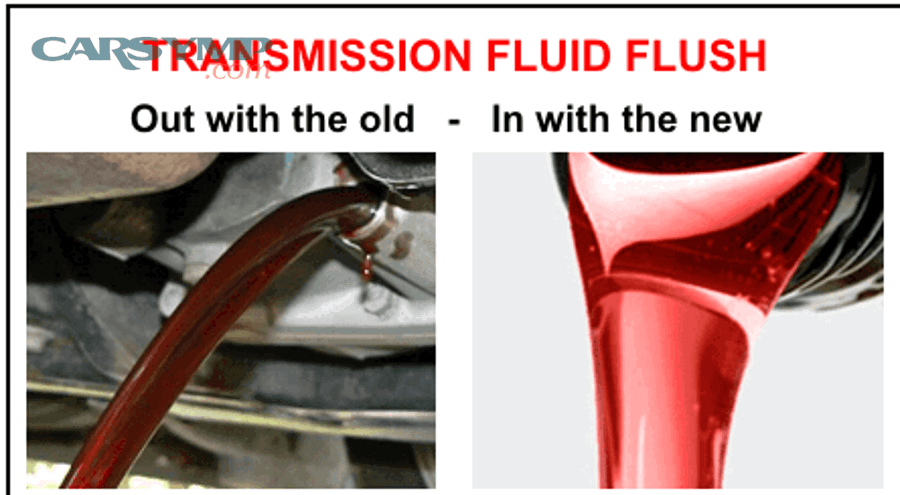
To better understand why the stakes are this high, it helps to look at what is actually happening inside the transmission during the service — and why a drain-and-fill and a full flush are not the same operation at all.
What Happens Inside Your Transmission During a Fluid Change?
Automatic transmission fluid (ATF) is not simply a lubricant. It is simultaneously a hydraulic medium that transfers engine power through the torque converter, a lubricant for gears and bearings, a coolant that carries heat away from friction surfaces, a cleaner that suspends fine metallic and friction debris, and a chemical conditioner for rubber seals. When fluid is drained, all of that function is temporarily suspended, and the transmission’s internal surfaces — clutch packs, valve body passages, solenoid screens, and seals — are exposed to whatever new fluid is introduced.
This is precisely why errors at the draining stage have outsized consequences. A clutch pack that has been running in degraded fluid for 60,000 miles has adapted to that fluid’s friction coefficient. Introduce a fluid with a different friction modifier profile and shifting behavior changes immediately. Dislodge debris that was suspended in old fluid and it can migrate to a solenoid screen or valve body passage and cause a shift fault. Disturb a pan gasket that was barely sealing and a slow post-service leak begins. None of these outcomes announce themselves at the moment of the mistake — they surface days or weeks later, making diagnosis harder and the connection to the fluid change easy to miss.
Is a Transmission Fluid Change the Same as a Transmission Flush?
No — a transmission fluid change and a transmission flush are not the same procedure, and the risk profile of each is meaningfully different. A standard drain-and-fill removes only the fluid held in the transmission pan, which represents roughly 40 to 60 percent of the total fluid volume. The remaining fluid — retained in the torque converter, valve body passages, and cooler lines — stays in place. A transmission flush, by contrast, uses either the transmission’s own pump or an external pressure machine to push all old fluid out and replace it entirely, typically recovering 10 to 12 quarts and achieving close to 100 percent fluid replacement.
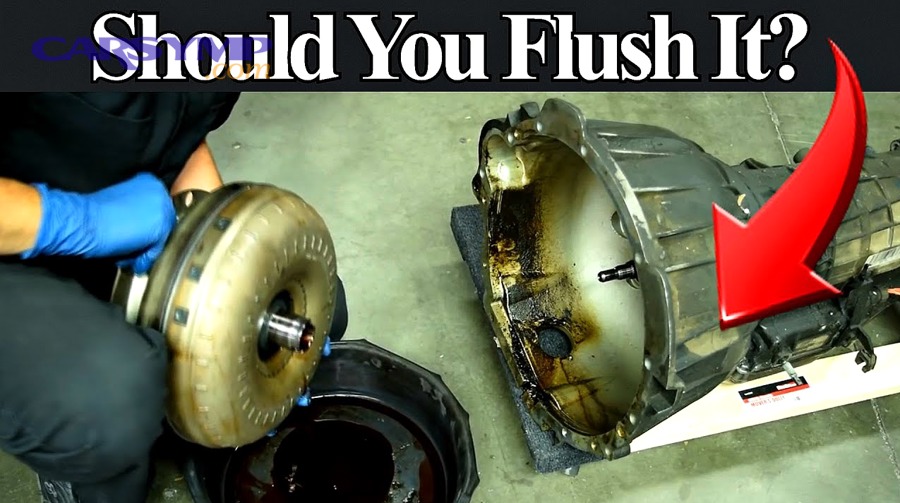
The trade-off is risk. A drain-and-fill is lower-impact and leaves a portion of old fluid to buffer the transition. A pressure machine flush introduces hydraulic force that can dislodge varnish deposits or debris in a high-mileage transmission that has never been flushed — and that debris can then block solenoid screens or valve body passages. For vehicles with a consistent flush history, a full flush is an effective preventive service. For high-mileage vehicles with no prior fluid service history, the drain-and-fill is the safer starting point — or better, a series of three sequential drain-and-fills spaced over time, which progressively dilutes old fluid without the pressure risk.
What Are the Most Common Mistakes in a DIY Transmission Fluid Change?
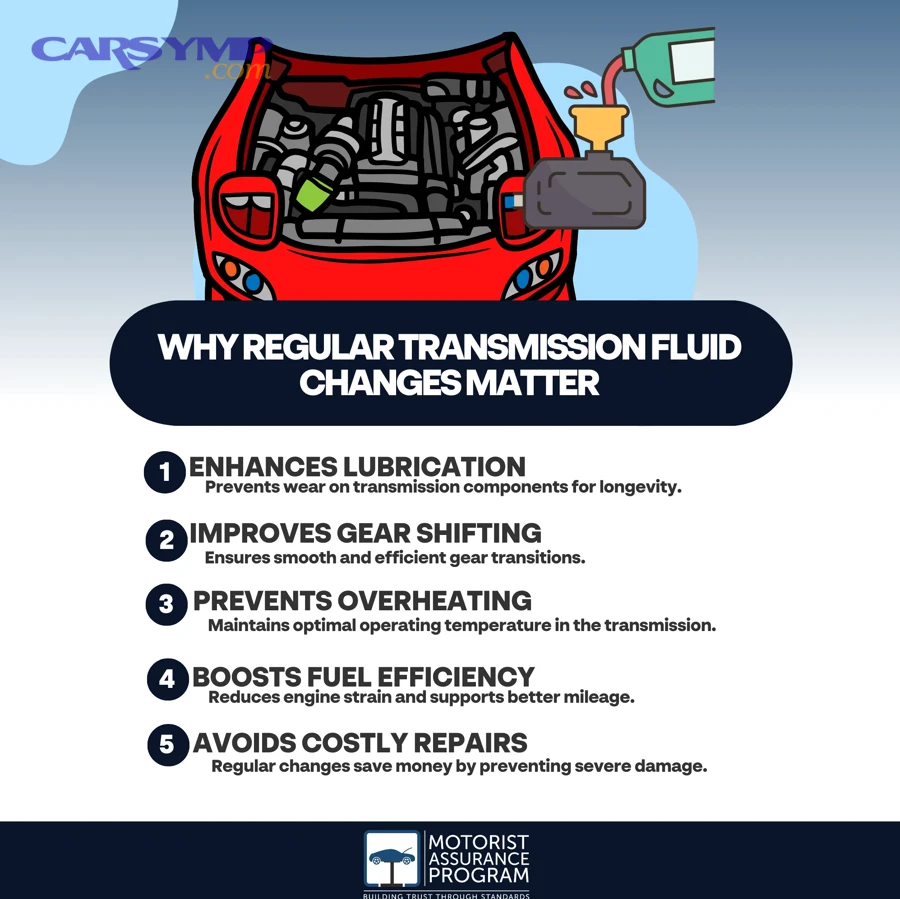
There are five categories of common mistakes in a DIY transmission fluid change: using the wrong fluid type, incorrect fill volume, improper pan sealing, skipping filter replacement, and temperature-blind filling — each of which damages the transmission through a distinct failure mechanism.
Specifically, the first three of these mistakes account for the overwhelming majority of post-DIY transmission complaints. Understanding the mechanism behind each one makes it far easier to avoid them.
What Happens If You Use the Wrong Transmission Fluid?
Using the wrong transmission fluid is the single most consequential DIY mistake, and it does damage that does not reverse itself when correct fluid is added later. Transmission fluids are not interchangeable — they differ in viscosity, friction modifier chemistry, oxidation inhibitor packages, and seal conditioner formulations. The table below illustrates how dramatically fluid specifications vary across common vehicle platforms.
| Fluid Type | Common Applications | Key Characteristic |
|---|---|---|
| Dexron VI (GM) | Most GM automatics post-2006 | Backward compatible with Dexron III |
| Mercon LV (Ford) | Ford 6- and 10-speed automatics | Not compatible with Mercon V |
| Honda ATF-3.1 / DW-1 | Honda/Acura automatics | Honda-specific friction modifier; do not substitute |
| Toyota WS | Toyota/Lexus automatics post-2004 | Lifetime fluid designation; very low viscosity |
| CVT Fluid NS-3 / NS-2 | Nissan CVT transmissions | Belt-type CVT; ATF use causes immediate damage |
| Dexron III / ATF+4 (Chrysler) | Older Chrysler/Dodge automatics | Not forward-compatible with modern spec fluids |
This table shows that correct ATF type and why it matters is not an abstract concern — it is a vehicle-specific requirement with no safe margin for substitution. A fluid that is labeled “compatible” or “multi-vehicle” may meet some specifications but fail others. Honda, in particular, issues explicit warnings that non-Honda ATF will affect clutch pack engagement and shift quality. Using a Dexron-VI fluid in a Honda transmission that calls for DW-1 will produce immediate shift complaints and long-term clutch pack wear.
Mixing fluid types adds another layer of risk. Even if the old fluid and new fluid are both technically correct for the vehicle, mixing a fully synthetic fluid with a conventional fluid of a different additive generation can cause foaming or additive precipitation. Always identify the exact fluid specification from the owner’s manual or door jamb sticker — not from the parts store’s cross-reference chart.
Can Overfilling or Underfilling Your Transmission Cause Damage?
Yes — both overfilling and underfilling a transmission cause damage, and both are common outcomes of DIY services performed without proper level-verification tools or procedures.
Overfilling is the more immediately dangerous of the two. When transmission fluid level is too high, the rotating planetary gears and drum components churn through the excess fluid, whipping air into it and causing it to foam. Foamed fluid cannot maintain hydraulic pressure — it compresses slightly under load, causing erratic clutch engagement, delayed shifts, and loss of torque converter lockup. Sustained operation on foamed fluid overheats the transmission rapidly because aerated fluid loses most of its heat-transfer capacity. Many home mechanics who overfill by half a quart dismiss the extra fluid as a safe margin, not realizing that the operating fill level is measured at a specific fluid temperature — typically between 99°F and 113°F — and that cold fill measurements are not reliable.
Underfilling is a slower, quieter form of damage. Insufficient fluid volume means rotating components are not fully immersed in lubricant at all operating speeds, increasing friction and heat. Hydraulic pressure for clutch pack actuation drops below specification, causing slipping and delayed engagement. Over time, starved lubrication accelerates wear on bushings, thrust washers, and clutch steel plates. The difficulty with underfilling is that many modern transmissions have no dipstick — the fill level can only be verified through a temperature-specific level-check plug procedure that requires both a scan tool to monitor fluid temperature and the correct hex bit to access a plug often located in an awkward position on the transmission case.
What Are the Risks of Improper Pan Sealing and Drain Plug Reinstallation?
Improper pan sealing and drain plug reinstallation introduce slow fluid leaks that are among the most frequently missed post-service problems in DIY transmission work. Unlike an obvious fluid pour or spill, a slow pan leak may deposit only a few drops per day — enough to drop the fluid level into the danger zone over several hundred miles without triggering an immediate warning.
The most common sealing errors are:
- Reusing a formed-in-place gasket that has compressed and no longer seals under its original torque specification
- Over-torquing pan bolts in an attempt to stop a seeping gasket — which distorts the pan flange and makes the leak worse
- Under-torquing drain plugs because the mechanic is unfamiliar with the relatively light torque spec (many drain plugs call for only 20–35 N·m)
- Reusing crush washers on drain plugs that require a new aluminum or copper sealing washer each service
- Applying RTV sealant incorrectly — too much, applied in the wrong location, or not allowed to cure before fluid is added
The correct procedure is to use a new OEM-specification gasket or a fresh bead of the manufacturer-specified RTV, torque all pan bolts to the exact specification in the correct cross-pattern sequence, and always install a new crush washer on the drain plug. After the service, place a clean sheet of cardboard under the transmission for 24 hours and inspect it before driving the vehicle on public roads.
Why Is Performing a Fluid Change at the Wrong Temperature a Risk?
Performing a transmission fluid fill verification at the wrong fluid temperature produces an inaccurate level reading, which leads directly to either overfilling or underfilling — both of which, as described above, cause damage during operation.
This risk is most acute on modern transmissions that use a level-check plug rather than a dipstick. These systems require the fluid to reach a specific temperature window — commonly 99°F to 113°F (37°C to 45°C) — before the level-check plug is opened. If fluid temperature is below that range, the fluid has not yet expanded to its operating volume, and the level will read low. The mechanic adds more fluid to compensate, then drives away with an overfill condition that only manifests once the transmission reaches full operating temperature. If the temperature is above the window, the fluid has over-expanded and will flow freely from the level-check plug even if the actual cold fill is insufficient.
Accessing the correct temperature requires either a scan tool with live transmission fluid temperature data or an infrared thermometer aimed at the transmission case — neither of which is standard equipment for most casual home mechanics. This single procedural requirement elevates the complexity of a transmission fluid change well above a simple oil change, and it is the main reason that many experienced forum contributors advise against DIY ATF service on vehicles without a dipstick.
What Types of Transmission Damage Can Result from a DIY Fluid Change Gone Wrong?
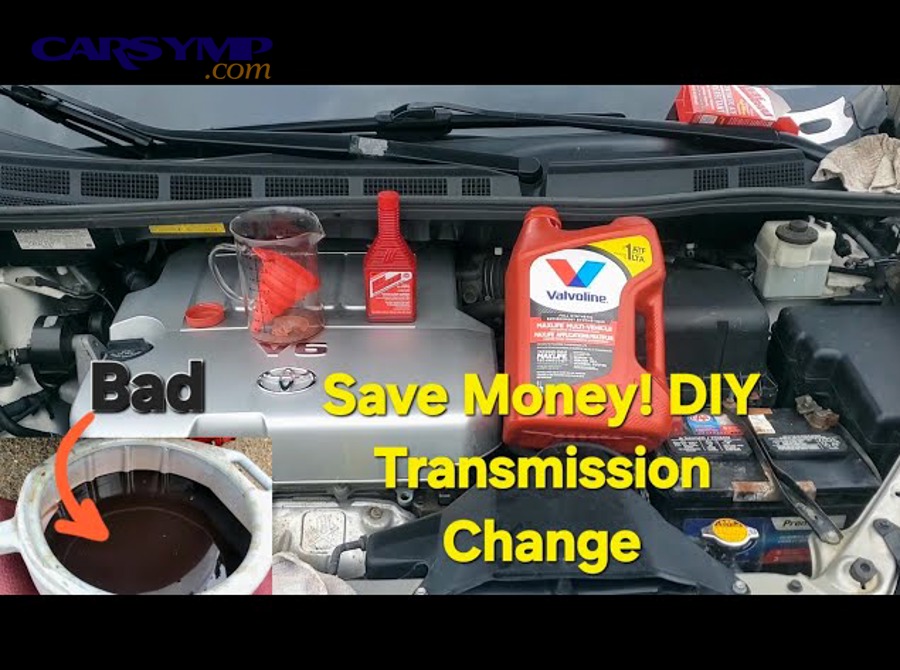
There are three primary categories of transmission damage that result from a failed DIY fluid change: hydraulic failure from fluid quality or level errors, mechanical wear from inadequate lubrication, and catastrophic failure from compounding mistakes — ranging in severity from a recoverable shift quality complaint to a complete transmission rebuild.
To better understand how these damage types develop, it is important to recognize both the symptoms that appear and the timeline on which they emerge.
What Are the Signs That a DIY Transmission Fluid Change Caused Damage?
The signs that a DIY transmission fluid change caused damage fall into two timing categories: symptoms that appear within the first 50 to 200 miles of post-service driving, and symptoms that develop gradually over the following months.
Immediate symptoms (within 200 miles):
- Harsh, jerky, or delayed upshifts and downshifts
- Transmission slipping — engine revs rise without a corresponding increase in vehicle speed
- Check Engine light with transmission-related DTCs (particularly P0700-series codes or torque converter codes)
- Overheating warning or elevated transmission temperature reading on a scan tool
- Whining or humming noise from the transmission at speed (indicative of aeration from overfill)
- Fluid leaking from pan or drain plug area
Delayed symptoms (developing over weeks or months):
- Progressive worsening of shift quality that was initially mild
- Increased shift flare during hard acceleration
- Difficulty engaging Reverse immediately from a cold start
- Transmission shudder during torque converter lockup at highway speeds
- Gradual increase in fluid contamination rate (metal particles visible when checking fluid condition)
The critical diagnostic challenge is that delayed symptoms are often attributed to unrelated causes — age, mileage, or coincidence — rather than traced back to the fluid service. Documenting the fluid type used, the fill volume, and the post-service driving behavior in the first week is valuable precisely because it creates a reference point for diagnosis if problems develop later.
Can a DIY Transmission Fluid Change Cause Complete Transmission Failure?
Yes — a DIY transmission fluid change can cause complete transmission failure, though it typically requires a combination of mistakes rather than a single error. The most dangerous scenario is the one that affects high-mileage vehicles receiving their first-ever fluid service.
In a transmission that has run on the same degraded fluid for 80,000 or 100,000 miles, the old fluid — despite being dark and degraded — has reached a chemical equilibrium with the transmission’s internal components. The clutch pack friction surfaces have conditioned to its friction coefficient. The varnish deposits that have built up on valve body passages and solenoid screens are holding debris in place rather than releasing it. When that fluid is entirely replaced with fresh, clean ATF of a different viscosity or additive chemistry, two things can happen simultaneously: the new fluid’s detergent action dislodges the varnish that was sealing small cracks and passages, and the debris held in suspension by the old fluid is no longer held — it settles onto solenoid screens and valve body passages, causing pressure faults and shift failures.
This mechanism explains why transmission shops routinely advise against a full flush on a high-mileage vehicle with no service history. It does not mean the fluid should never be changed — neglected fluid is itself a cause of long-term failure. It means the transition should be gradual: a drain-and-fill with OEM-specification fluid, followed by a second drain-and-fill at 5,000 to 10,000 miles, and a third if needed. This approach progressively refreshes the fluid without the sudden chemical disruption of a complete replacement.
Which Vehicles Make a DIY Transmission Fluid Change More Dangerous?
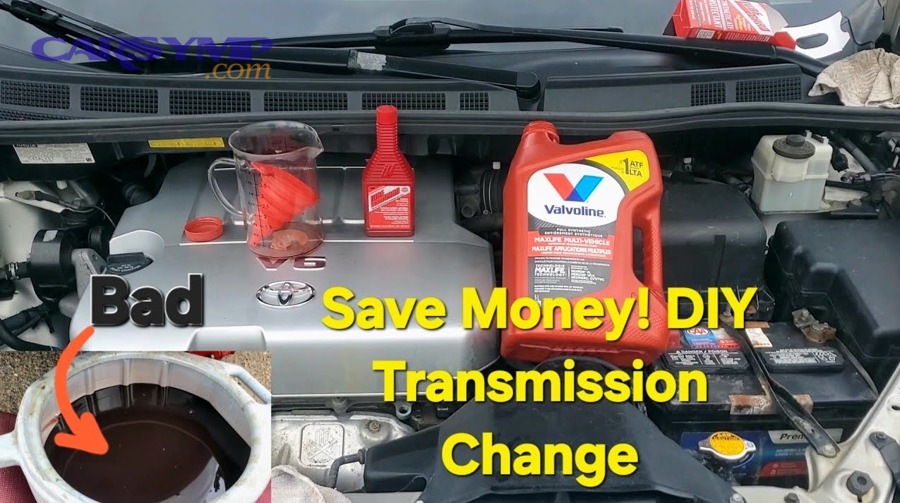
There are four vehicle categories that make a DIY transmission fluid change significantly more dangerous than a standard automatic transmission service: CVT-equipped vehicles, high-mileage units with no prior fluid service history, hybrid vehicles with high-voltage transmission systems, and AWD/4WD vehicles that require simultaneous multi-component servicing.
Specifically, each of these categories introduces a distinct risk factor that goes beyond the standard fill-level and fluid-type concerns already covered.
Is a DIY Fluid Change Safe on a CVT Transmission?
No — a DIY fluid change on a CVT (Continuously Variable Transmission) is not safe for most home mechanics, and it represents the highest-risk transmission fluid service available on a modern consumer vehicle.
CVT fluid is chemically and mechanically distinct from conventional ATF. It is formulated specifically for the friction interface between the drive belt or chain and the two variable-diameter pulleys that give a CVT its operating principle. Conventional ATF — even high-quality synthetic ATF — has friction modifier chemistry that disrupts this interface, causing the belt to slip on the pulleys and accelerating wear at a rate that can destroy the CVT within tens of thousands of miles. Many CVT failures that owners attribute to poor design are actually the downstream consequence of a fluid substitution made years earlier.
Beyond fluid specificity, CVT fill procedures are among the most temperature-sensitive and tool-dependent of any transmission type. Nissan’s CVT, for example, requires a special fill tool and a specific temperature window for level verification. The cost of a CVT replacement — typically $3,500 to $8,000 depending on the vehicle — makes the risk-reward calculation for a DIY service particularly unfavorable.
What Makes High-Mileage Vehicles Especially Vulnerable to DIY Fluid Change Risks?
High-mileage vehicles are especially vulnerable to DIY fluid change risks because of the debris suspension phenomenon: aged, degraded ATF holds fine metallic particles and friction material in suspension, and the introduction of fresh fluid disrupts that equilibrium by dislodging varnish deposits and altering the fluid’s carrying capacity.
The transmission fluid change interval recommended by most manufacturers — typically every 30,000 to 60,000 miles for conventional ATF and every 60,000 to 100,000 miles for synthetic — exists precisely to prevent fluid from reaching the state of degradation where this risk applies. When to change transmission fluid interval recommendations are not arbitrary: they reflect the point at which fluid’s additive package is depleted enough to begin accelerating wear, but before it has degraded so severely that a change becomes risky.
For a vehicle at 120,000 miles that has never had its transmission fluid serviced, the correct approach is not a full flush — it is a conservative drain-and-fill using the OEM-specified fluid, followed by a second service at 5,000 to 10,000 miles. This strategy gradually refreshes the fluid without the hydraulic disruption of a full flush or the chemical shock of a complete overnight change from severely degraded to fully fresh ATF.
Are Hybrid and AWD Transmissions More Risky to Service at Home?
Yes — hybrid and AWD transmissions present meaningfully elevated DIY risk, for different reasons that require separate consideration.
Hybrid transmissions combine a conventional automatic or CVT unit with a motor-generator that operates at high voltage — typically 200 to 650 volts depending on the platform. The physical proximity of the transmission fluid system to high-voltage components means that a fluid spill or improper access during a DIY service can create an electrocution hazard that does not exist in a conventional powertrain. Most hybrid manufacturers, including Toyota and Honda, recommend dealer or hybrid-certified technician service for transmission fluid changes precisely because of this high-voltage exposure risk.
AWD and 4WD vehicles introduce a different complexity: the transmission fluid change is rarely a standalone service. These vehicles also have a transfer case and, in many configurations, one or two differentials — all of which have their own fluid specifications and change intervals. Performing a transmission fluid change without simultaneously checking the transfer case and differential fluid levels creates an incomplete service. More importantly, the correct fill procedure for the front differential or transfer case on many AWD vehicles requires the same temperature-sensitive level-check protocol as the transmission itself, requiring a scan tool and a thorough understanding of the vehicle’s architecture before the first bolt is turned.
How Can a Home Mechanic Safely Reduce the Risks of a DIY Transmission Fluid Change?
A home mechanic can reduce the risks of a DIY transmission fluid change by completing four preparation steps before any work begins: verifying the exact OEM fluid specification, assembling all required tools including a torque wrench and fluid temperature monitoring capability, confirming the vehicle is on level ground, and establishing go/no-go criteria for whether the job should be attempted at all.
Next, both the tool preparation and the go/no-go decision deserve specific attention, because they are the two areas where home mechanics most frequently underestimate what the job requires.
What Tools and Preparations Are Required to Minimize DIY Transmission Fluid Risks?
The minimum tool and preparation requirements for a safe DIY transmission fluid change go significantly beyond what a basic oil change demands. The following checklist reflects the baseline for a straightforward drain-and-fill on a vehicle with a drain plug and dipstick — and each item has a specific function in preventing one of the failure modes described earlier in this article.
Essential tools and materials:
- OEM-specification ATF — purchased after verifying the exact fluid code from the owner’s manual, not from a parts store compatibility chart
- Floor jack and four jack stands — not ramps; the vehicle must be on level ground for accurate fill verification
- Wheel chocks — to prevent movement while the vehicle is elevated
- Calibrated torque wrench — for pan bolts and drain plug; guessing torque by feel is how pan flanges get distorted and drain plugs strip
- New OEM-spec pan gasket or appropriate RTV sealant — never reuse a compressed gasket
- New crush washer for the drain plug — sized to the exact drain plug thread diameter
- Drain pan of sufficient capacity — most automatic transmissions drain 4 to 8 quarts from the pan
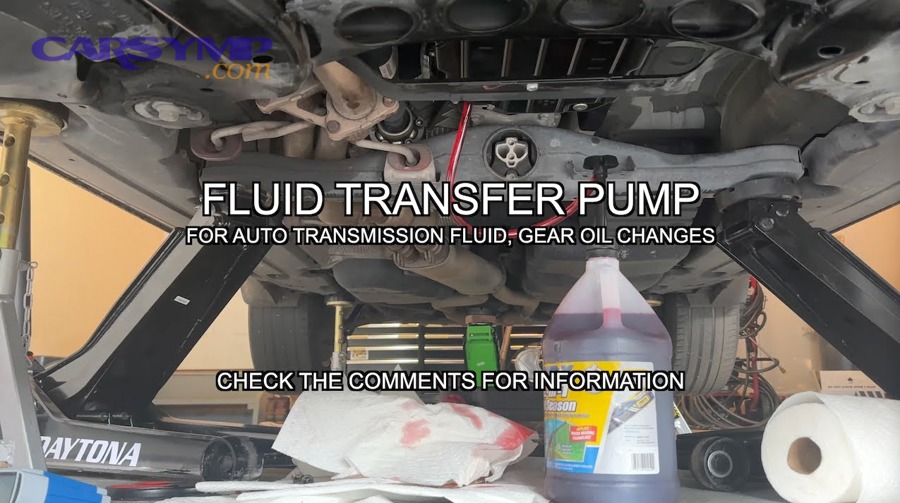
- Fluid pump or hand pump with extension tube — required for transmissions filled through a plug port rather than a dipstick tube
- Infrared thermometer or scan tool with live ATF temperature data — required for level verification on any transmission without a dipstick
- Vehicle-specific service manual or verified forum procedure — not a generic YouTube video; transmission service procedures vary significantly even within the same model year
When Should a Home Mechanic Stop and Call a Professional?
A home mechanic should stop and call a professional when any of the following conditions are present before or during the DIY transmission fluid change — these are non-negotiable go/no-go criteria, not matters of preference or confidence.
Stop and seek professional service if:
- The transmission is a CVT — fluid specificity and fill procedure complexity make this a high-risk DIY service for anyone without CVT-specific training
- The vehicle has a sealed or “fill-for-life” transmission with no drain plug — these require specialized equipment to drain and fill correctly
- The vehicle is a hybrid — high-voltage proximity risk is a safety issue, not a skill issue
- The transmission is showing symptoms before the service — slipping, delayed engagement, harsh shifts, or burnt/metallic-smelling fluid indicate internal damage that a fluid change will not fix and may worsen
- Metal particles are visible in the old fluid — shiny metallic debris in drained ATF indicates active internal wear; a fluid change in this condition should be accompanied by a full diagnostic inspection
- The manufacturer’s service procedure requires specialized tools not in the mechanic’s possession — attempting to improvise around a required tool introduces uncontrolled variables into a precision procedure
Professional transmission fluid service costs between $100 and $300 at a reputable shop — a fraction of the $1,500 to $5,000+ that a damaged transmission costs to repair. When any of the above conditions apply, that cost differential makes professional service the economically rational choice, not just the conservative one.
DIY vs. Professional Transmission Fluid Change — Is the Risk Worth the Savings?
For a straightforward automatic transmission on a vehicle with a drain plug, a dipstick, and a standard ATF specification, a DIY transmission fluid change is worth the savings for a mechanically competent home mechanic with the correct tools. For sealed transmissions, CVTs, hybrids, and high-mileage vehicles with no service history, the risk outweighs the savings in nearly every scenario.
However, three specific secondary questions deserve attention in this decision: the warranty implications of DIY service, the environmental and legal risks of improper used-ATF disposal, and the often-overlooked Post-service shifting behavior and adaptation period that follows a successful fluid change.
Does a DIY Transmission Fluid Change Void Your Vehicle Warranty?
No — a DIY transmission fluid change does not automatically void your vehicle warranty in the United States, provided the correct fluid is used, the procedure is performed correctly, and documentation is maintained. The Magnuson-Moss Warranty Act prohibits manufacturers from voiding a warranty solely because the vehicle owner performed their own maintenance, as long as the maintenance meets the manufacturer’s specifications.
The practical requirement is documentation. Every fluid purchase receipt, every date and mileage record, and ideally a photograph of the fluid container’s specification label should be retained. Without documentation, a dealer can legitimately claim that the correct fluid was not used and attribute transmission damage to improper DIY service. The documentation burden is the home mechanic’s responsibility, not the manufacturer’s.
The exception to this general rule applies to vehicles with manufacturer-specified dealer-only service requirements — most commonly CVT transmissions and some hybrid transmission systems — where the service procedure itself requires proprietary tools or software that are only available at the dealership level. In these cases, the warranty concern is real and the manufacturer’s recommendation should be followed.
What Are the Environmental and Legal Risks of Disposing of Used Transmission Fluid?
Used transmission fluid is classified as hazardous waste in the United States, and disposing of it by pouring it down a drain, onto the ground, or into household trash is illegal under federal and state environmental regulations and can result in fines.
The practical solution is straightforward: most major auto parts retailers — including AutoZone, O’Reilly Auto Parts, and Advance Auto Parts — accept used ATF for recycling at no charge. The used fluid should be stored in a sealed container with a lid until it can be transported to a recycling drop-off. A clean drain pan with a pour spout, or the empty fluid containers from the new ATF, work well for this purpose. Some municipalities also accept used motor oil and transmission fluid at household hazardous waste collection events — check with the local solid waste authority for scheduled dates.
This disposal step is frequently skipped or performed incorrectly by first-time DIY mechanics who focus on the mechanical aspects of the job and treat the waste fluid as an afterthought. Including it in pre-job planning — confirming the nearest recycling drop-off location before starting the drain — removes any temptation to dispose of it improperly.
What Is the Risk of Skipping the Transmission Control Module Re-Learn After a Fluid Change?
Skipping the Transmission Control Module (TCM) re-learn procedure after a fluid change on vehicles that benefit from or require it does not damage the transmission, but it can produce temporary shift quality complaints that cause unnecessary concern and, in some cases, lead the owner to conclude that the fluid change was performed incorrectly.
Post-service shifting behavior and adaptation is a real phenomenon on many modern automatic transmissions. The TCM continuously monitors shift timing, clutch engagement pressure, and torque converter lockup behavior and adapts its control strategy to the fluid’s actual friction characteristics over time. When new fluid with a different friction modifier profile is introduced, the TCM’s learned adaptation — built around the old fluid — is no longer accurate. The result is shift timing that feels slightly off: firmer than expected, softer than expected, or with a brief hesitation that was not present before the service.
On Honda and Acura vehicles in particular, a TCM reset is recommended after an ATF change. The procedure involves a specific ignition cycle or a scan tool command that clears the adaptive memory and allows the TCM to relearn shift parameters from scratch using the new fluid. Without the reset, the adaptation period takes longer — typically 200 to 500 miles of varied driving — and the shift quality complaints during that period can be misattributed to a bad fluid choice or an incorrect fill level. Performing the reset shortens the adaptation window and gives the new fluid the best possible start.
How Does a DIY Drain-and-Fill Compare to a Professional Transmission Flush in Terms of Risk and Effectiveness?
A DIY drain-and-fill wins on safety for high-mileage vehicles and those with no service history; a professional transmission flush is best for well-maintained vehicles with a consistent flush schedule; and a series of sequential DIY drain-and-fills is optimal for high-mileage vehicles that need more complete fluid replacement without pressure-flush risk.
Specifically, the effectiveness gap between a single drain-and-fill and a full flush is significant — a single drain-and-fill replaces only 40 to 60 percent of total fluid volume, leaving old fluid in the torque converter and cooler lines. However, three sequential drain-and-fills spaced 5,000 miles apart progressively dilutes old fluid to the point where the total ATF quality approaches that of a full flush, without the hydraulic pressure that makes a machine flush risky for vulnerable transmissions.
The following table summarizes the key comparison points between the three service approaches:
| Service Method | Fluid Replaced | Risk Level | Best Candidate | Approximate Cost |
|---|---|---|---|---|
| Single DIY drain-and-fill | 40–60% | Low | Low-mileage, healthy transmission | $30–$60 (fluid + parts) |
| Sequential DIY drain-and-fill (×3) | 85–95% (cumulative) | Low-Medium | High-mileage, no flush history | $90–$180 total |
| Professional transmission flush | ~100% | Medium-High (high-mileage) | Vehicles with consistent flush history | $150–$300 |
| Professional drain-and-fill | 40–60% | Very Low | Any vehicle; professional execution | $100–$200 |
This table shows that the decision is not simply DIY versus professional — it is a combination of fluid replacement completeness, transmission condition, and risk tolerance. A home mechanic with the correct tools and the correct ATF can perform a safe and effective drain-and-fill. The same mechanic attempting a pressure flush on a 140,000-mile transmission that has never been serviced is operating in a very different risk environment.
In short, the transmission fluid change risks that matter most are not the dramatic ones — they are the quiet accumulation of small errors: wrong fluid, slightly overfilled, gasket reused, temperature ignored, vehicle-specific procedure skipped. Knowing exactly what each error does, which vehicles are most vulnerable, and where the honest boundary between DIY and professional service lies is what separates a successful home transmission service from an expensive lesson in hydraulic precision.