


Transmission fluid leaks after a service are one of the most preventable — and most misunderstood — problems car owners face. In the majority of cases, a leak that appears in the days following a transmission fluid change is not a sign of a failing transmission. It is a sign that something was disturbed, loosened, or improperly reinstalled during the service itself. Understanding this distinction is the first step toward resolving the problem quickly and cheaply, before it escalates into something far more serious.
The most important thing to know about post-service leaks is that they almost always trace back to a handful of specific components: the pan gasket, the drain plug and its O-ring, the transmission seals, and the fluid level itself. Each of these components is touched during a routine service, and each carries its own failure mode when the job is not done with precision. Identifying which component is responsible determines whether the fix costs you thirty minutes of your time or a trip to a professional shop.
Beyond fixing an active leak, there is an equally important question: how do you make sure it never happens in the first place? A proper post-service inspection routine — one that takes less than fifteen minutes — can catch a developing leak before a single drop hits your driveway. Combined with the right service interval and the right choice between a Flush vs drain-and-fill for transmission fluid, preventive maintenance is the most cost-effective strategy available to any vehicle owner.
Finally, not all transmission leaks behave the same way, and not all transmissions respond to the same solutions. Whether you drive a conventional automatic, a CVT, or a vehicle with a manual transmission, the leak risks after service differ in meaningful ways. Next, this guide walks through every layer of the problem — from initial detection to root cause, from DIY repair to professional escalation, and from post-service checklists to the long-term habits that keep your transmission sealed and healthy.
What Is a Transmission Fluid Leak After Service?
A transmission fluid leak after service is a post-maintenance failure where transmission fluid escapes the sealed transmission system following a fluid change, flush, or repair procedure — most commonly caused by disturbed gaskets, seals, or improperly reinstalled components.
To better understand why this happens, it helps to know exactly what is at stake when a technician performs a transmission service. The transmission is a fully sealed hydraulic system that holds anywhere from 3 to 20+ quarts of fluid depending on the vehicle. That fluid does three critical jobs simultaneously: it lubricates internal moving parts, regulates operating temperature, and provides the hydraulic pressure that controls gear shifts. When the sealed environment is compromised — even slightly — fluid begins to escape, and every quart lost reduces the system’s ability to perform all three of those functions.
The reason post-service leaks are categorically different from pre-existing leaks is straightforward: a service requires opening or accessing the transmission system. Technicians drain fluid, remove the pan, replace the filter and pan gasket, reinstall the pan, torque the bolts, and refill with fresh fluid. Every one of those steps is an opportunity for a component to be slightly misaligned, undertorqued, or damaged. A seal that was perfectly intact before the service may be jostled just enough to begin seeping during the first heat cycle after the job is complete.
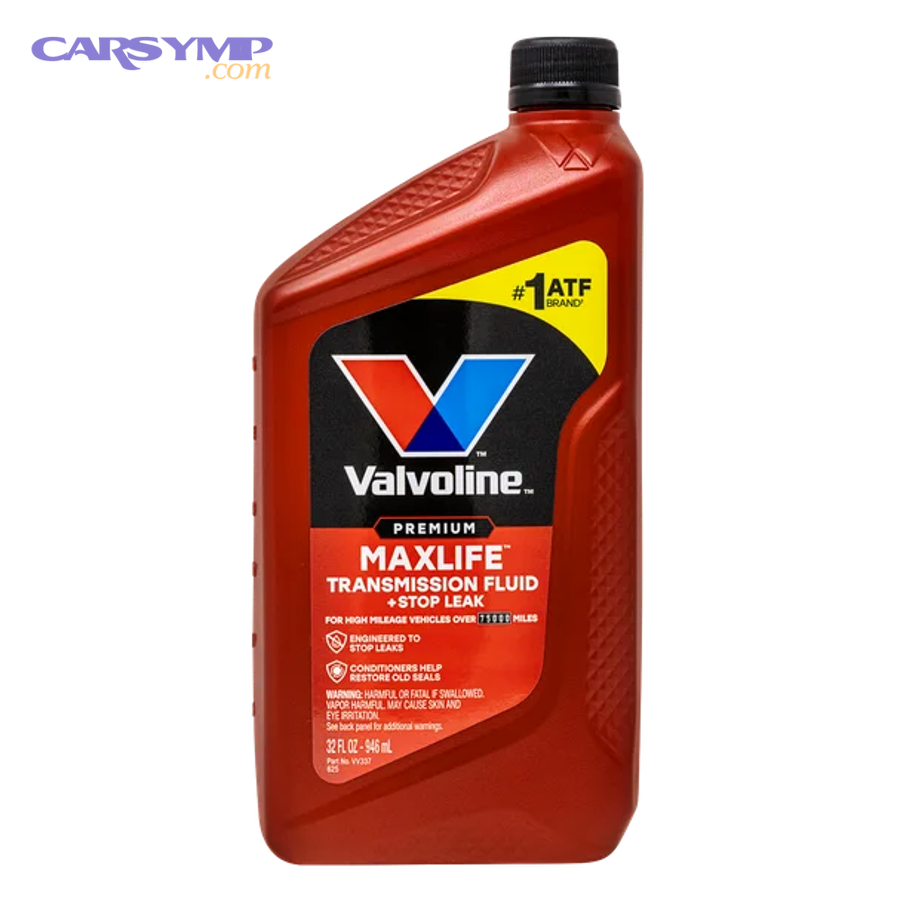
The root attributes most commonly involved in post-service leaks include the pan gasket, the drain plug and O-ring, the transmission seals (axle, input shaft, and output shaft), the fluid lines, and the pan bolts. Each of these components is directly accessed or disturbed during a standard service, which is why a leak that appears within 24 to 72 hours of a service should always be investigated in the context of what was done — not assumed to be a pre-existing condition.
How Do You Know If Your Transmission Is Leaking After a Service?
Detecting a post-service transmission leak requires knowing exactly what to look for, because early-stage leaks are often subtle enough to go unnoticed until the fluid level drops to a dangerous point. The most reliable signs include the following:
- A red or reddish-brown puddle under the vehicle — Fresh transmission fluid is translucent red. As it ages or burns, it darkens to brown. A puddle forming beneath the vehicle after parking, particularly on the driver’s side or center, is the clearest physical indicator of a leak.
- A burnt smell from under the hood or beneath the car — When transmission fluid drips onto hot exhaust components, it produces a distinct acrid burning odor. This smell after a recent service is a strong warning sign.
- Dipstick reading below the minimum line — After a service, the fluid should be at the correct level. If a check a day or two later shows the level has dropped, fluid is escaping somewhere.
- Sluggish gear engagement, gear slip, or delayed shifts — Low fluid pressure caused by a leak affects the transmission’s hydraulic function directly. These symptoms often appear before the leak is visually obvious.
- Erratic or harsh shifting — Insufficient fluid volume disrupts the pressure balance across the valve body, leading to unpredictable shift behavior.
The critical window for post-service leak detection is the first heat cycle — the first time the vehicle is driven after the service and the transmission reaches full operating temperature. Heat causes all metal components to expand slightly, which can expose a poorly seated gasket or a seal that was just barely holding. Always inspect beneath your vehicle after the first drive following any transmission service.
Is It Normal to Have a Small Transmission Leak After a Fluid Change?
No — it is not normal to have any transmission leak after a fluid change, even a small one. While a very minor seep at the pan gasket edge during the first heat cycle may seem insignificant, no post-service leak should be dismissed as acceptable or expected.
The reasoning is straightforward: a properly performed transmission fluid change disturbs no seals that should be compromised. If the pan gasket was correctly installed, the drain plug was torqued to spec with a new O-ring, and the fluid was filled to the correct level, there is no mechanical reason for fluid to escape. Any leak — regardless of size — signals that something in the reinstallation was imperfect.
The following table summarizes the three severity levels of post-service transmission leaks and the appropriate response to each. Minor seepage often resolves with a simple re-torque of the pan bolts; an active drip or steady flow indicates a failed gasket, O-ring, or seal that requires immediate replacement.
| Leak Severity | Visual Sign | Safe to Drive? | Recommended Action |
|---|---|---|---|
| Minor seep | Small stain on ground after parking | Briefly, monitor closely | Re-inspect bolts and drain plug; re-torque if needed |
| Active drip | Steady drops when parked | Limited distance only | Inspect immediately; do not drive until source is found |
| Steady flow | Puddle forming within minutes | No | Do not drive; have vehicle towed or serviced on-site |
What Causes Transmission Fluid Leaks After a Service?
There are four primary causes of transmission fluid leaks after a service: improper pan gasket installation, a loose or damaged drain plug, disturbed or improperly reseated transmission seals, and overfilling the transmission with fluid — each traceable to a specific step in the service procedure.
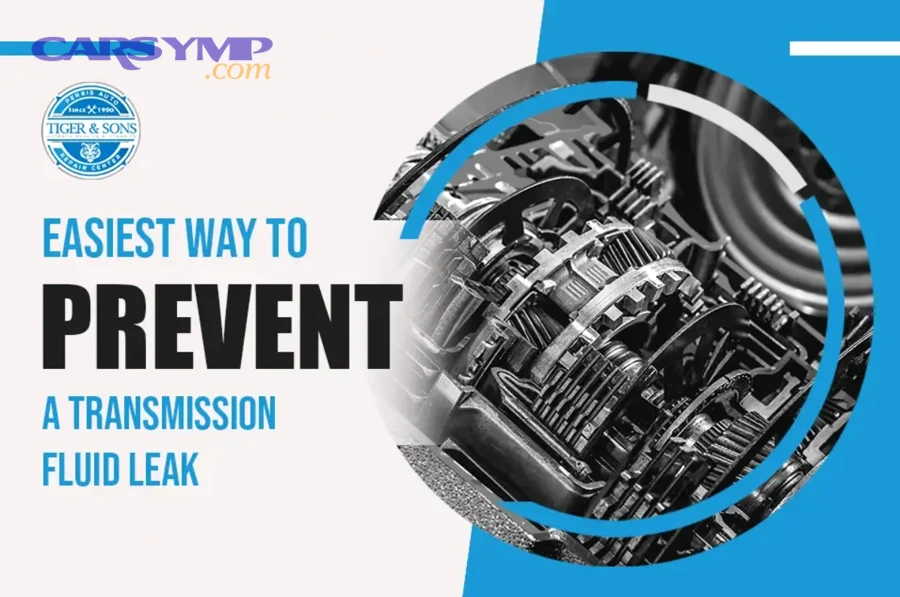
Specifically, the act of servicing a transmission requires disassembly and reassembly of several sealed interfaces. Each interface is only as reliable as the care taken during reinstallation. The following sections break down each cause in detail, beginning with the most statistically common.
Why Is My Transmission Pan Leaking After a Fluid Change?
The transmission pan is the most frequent source of post-service leaks because it is always removed during a Filter and pan gasket replacement during service. A pan that leaks after reinstallation almost always points to one of three installation errors:
- Gasket not properly seated — The pan gasket must lie flat and evenly compressed across the entire mating surface. If it shifts during bolt tightening or was reused from a previous service (a common cost-cutting shortcut), it will not seal correctly.
- Pan bolts torqued unevenly or incorrectly — Most transmission pans require bolts to be tightened in a specific cross-pattern to ensure even compression of the gasket. Over-tightening one side while leaving another loose creates a gap that fluid exploits.
- Pan surface not cleaned before reinstallation — Old gasket material, dried fluid, or debris on the mating surface prevents a full seal even with a new gasket.
The fix is straightforward: drain the remaining fluid, remove the pan, clean both mating surfaces thoroughly, install a new OEM-spec gasket, and reinstall the pan with bolts torqued to the manufacturer’s specification — typically between 12 and 20 ft-lbs depending on the vehicle, always in a star pattern.
Can a Loose Drain Plug Cause a Transmission Leak After Service?
Yes — a loose or improperly sealed drain plug is one of the most common and most easily overlooked causes of a transmission leak after service, and it is also one of the simplest to fix without professional help.
During a transmission fluid change, the drain plug is removed to allow old fluid to drain from the pan. When it is reinstalled, it must be torqued to the correct specification and fitted with a new sealing O-ring. Two failure modes are common:
- Under-torquing — A plug that is finger-tight or slightly below spec will vibrate loose over the first few hundred miles of driving, allowing fluid to seep or drip from the bottom of the pan.
- Damaged or missing O-ring — The O-ring creates the fluid-tight seal between the plug and the pan. Reusing an old, compressed O-ring — or forgetting to replace it entirely — allows fluid to bypass the plug threads and seep around the exterior.
To inspect: wipe the area around the drain plug clean, then check after the first short drive. If the dampness reappears exclusively around the plug rather than the pan edge, the plug or its O-ring is the culprit. A replacement O-ring costs under two dollars at any auto parts store, and proper torque typically falls between 14 and 29 ft-lbs depending on the vehicle’s make and model.
Do Transmission Seals Fail After a Service?
Yes — transmission seals can fail or begin seeping after a service, particularly if they were marginally worn before the service and the thermal cycle of reinstallation pushed them past their sealing threshold.
The seals most vulnerable to post-service disturbance are:
- Axle seals (output shaft seals) — These seal the point where the driveshafts exit the transmission. During some services, particularly on front-wheel-drive vehicles, the axles must be partially or fully removed for access, which disturbs the seals.
- Input shaft seal — Located at the front of the transmission where the torque converter connects, this seal can weep if it was bumped during converter removal or reinstallation.
- Output shaft seal — On rear-wheel-drive vehicles, this seals the rear of the transmission where the driveshaft connects.
A heat-expansion leak is a specific post-service phenomenon worth understanding: a seal that holds during cold inspection may begin seeping only after the transmission reaches operating temperature (typically 175–200°F), because heat causes both the metal housing and the rubber seal to expand at different rates. This is why a leak that appears “only after driving” is not imaginary — it is a real thermal failure mode that requires inspection at operating temperature, not just cold.
Can Overfilling Transmission Fluid Cause a Leak?
Yes — overfilling the transmission with fluid is a direct cause of post-service leaks because excess fluid creates internal pressure that the sealing system was never designed to contain.
Automatic transmissions maintain fluid pressure through a closed hydraulic circuit. When fluid volume exceeds the system’s capacity, pressure builds beyond normal operating parameters. That excess pressure seeks the path of least resistance, which is almost always a seal or vent:
- Seals are pushed outward — Excess pressure can deform or dislodge otherwise-intact seals, creating leaks at the axle seals or input shaft seal that did not exist before the overfill.
- The transmission vent overflows — Most transmissions have a vent designed to release air pressure, not fluid pressure. An overfilled transmission can push fluid through the vent, appearing as a leak from an unexpected location near the top of the unit.
- Fluid foams — Excess fluid gets churned by the rotating internal components, creating aerated foam that circulates through the system and degrades lubrication — compounding the damage beyond a simple leak.
To check for overfill: with the engine running and the transmission warmed to operating temperature in Park, pull the dipstick and verify the fluid sits within the marked range. If it is above the MAX line, drain enough fluid through the drain plug to bring it back within spec.
How Do You Fix a Transmission Fluid Leak After a Service?
Fixing a transmission fluid leak after a service involves three tiers of intervention — DIY tightening and minor component replacement, gasket and seal replacement, or professional reseal service — with the correct tier determined by the leak’s source, severity, and location.
To better understand which tier applies to your situation, work through the causes identified in the previous section before spending money on parts or labor. Many post-service leaks are resolved at the first tier without any cost beyond an O-ring or a torque wrench.
What Are the DIY Fixes for a Post-Service Transmission Leak?
There are four DIY fixes appropriate for post-service transmission leaks, in ascending order of complexity: re-torquing pan bolts, replacing the drain plug O-ring, replacing the pan gasket, and correcting the fluid level.
1. Re-torque the pan bolts
If the leak is along the pan edge, start here. Drain enough fluid to safely remove the pan, or simply re-torque the existing bolts using a star pattern to the manufacturer’s specification. This costs nothing if you own a torque wrench.
2. Replace the drain plug O-ring
If the leak is centered at the drain plug, remove the plug, discard the old O-ring, install a new one of the correct diameter and durometer, and reinstall the plug to spec. Total cost: under $5.
3. Replace the pan gasket
If re-torquing does not stop the pan edge leak, the gasket itself has likely been damaged or was improperly installed. Drain the fluid, remove the pan, scrape all old gasket material from both surfaces, install a new OEM-equivalent gasket, and reinstall. A replacement gasket typically costs $10–$30 depending on the vehicle.
4. Correct the fluid level
If the leak appears at a vent or seal location and the vehicle was recently serviced, check for overfill first. Drain the excess through the drain plug in small increments, re-checking the dipstick between each drain until the level falls within the correct operating range.
Tools required for DIY post-service leak repair:
- Torque wrench (3/8-inch drive recommended)
- Drain pan
- Socket set
- Gasket scraper or plastic putty knife
- Clean lint-free rags
- OEM or quality aftermarket replacement gasket and O-ring
When Should You Take Your Car to a Professional for a Transmission Leak?
You should take your car to a professional when the leak originates from an internal seal, a torque converter, or a cooler line — locations that require partial or complete disassembly of the transmission or its surrounding systems to access.
Specifically, the following post-service leak scenarios exceed the scope of safe DIY repair:
- Input shaft or output shaft seal failure — Accessing these seals typically requires removing the driveshaft or half-shafts and may require transmission removal on some vehicles.
- Torque converter seal leak — A leak at the front of the transmission bell housing where the torque converter meets the engine block requires transmission removal to access and repair.
- Transmission cooler line displacement — If a service involved working near the cooler lines and one was bent, cracked, or insufficiently reconnected, the leak will appear near the radiator or front of the engine bay and requires specialized line replacement.
- Persistent leak after DIY attempts — If re-torquing and gasket replacement do not stop the leak after two attempts, an internal cause is likely and professional diagnostics are needed.
It is also worth noting that many vehicles still under a powertrain warranty require all transmission services to be performed by a licensed technician using OEM-specified fluids and procedures. DIY repairs that involve opening the transmission pan may void that warranty, significantly increasing your financial exposure if a larger failure occurs later.
How Do You Prevent Transmission Fluid Leaks After a Service?
Preventing transmission fluid leaks after a service requires four key actions: using a new gasket and O-ring during every service, torquing all fasteners to spec, filling fluid to the correct level, and conducting a post-service inspection after the first heat cycle.
Most post-service leaks do not appear because the transmission is failing — they appear because one or more of these four steps was skipped or rushed. The good news is that all four are completely controllable, whether you are performing the service yourself or overseeing work done at a shop.
What Should Be Checked Immediately After a Transmission Service?
There are five specific checks that should be completed immediately after a transmission service to prevent leaks from developing unnoticed:
1. Verify drain plug torque and O-ring replacement
Before the vehicle moves, confirm the drain plug has been tightened to the manufacturer’s specified torque and that a new O-ring was installed. Ask your technician directly, or if performing the service yourself, document the torque value applied.
2. Confirm pan bolt torque in a star pattern
All pan bolts should be torqued to spec (consult the vehicle service manual) using a cross or star pattern. A quick re-check by hand — ensuring no bolt turns further — takes under two minutes and can prevent the most common post-service leak cause.
3. Check fluid level with engine running and warm
Transmission fluid level is checked with the engine running on most vehicles, with the transmission in Park and the fluid warmed to operating temperature. Checking cold or with the engine off produces an inaccurate reading that can mask an overfill or underfill condition.
4. Visual inspection under the vehicle before leaving
After the service is complete and the engine has run for five minutes, look under the vehicle for any sign of dripping or wetness around the pan, drain plug, axle seals, and cooler line connections. This takes less than two minutes and catches installation errors before the vehicle leaves the driveway.
5. Second inspection after the first drive
After the first short drive of 5–10 miles, park on a clean, dry surface and inspect beneath the vehicle again after the engine cools for 30 minutes. Post-heat-cycle seepage that was not visible cold will often appear at this stage.
How Often Should Transmission Fluid Be Changed to Prevent Leaks?
Transmission fluid should be changed every 30,000 miles or every two years — whichever comes first — to prevent the gradual seal and gasket degradation that makes the transmission vulnerable to leaks at service time.
This recommendation exists because transmission fluid does not simply get dirty — it chemically degrades. As the fluid breaks down, its seal-conditioning additives lose effectiveness, and the rubber compounds in seals and gaskets begin to dry out, shrink, and harden. A transmission that receives a fluid change on schedule arrives at each service with seals that are still supple and resilient — far less likely to fail during the thermal disturbance of a new service.
The question of flush vs drain-and-fill for transmission fluid is particularly relevant here. A drain-and-fill replaces only the fluid in the pan — roughly 40–50% of total system volume — while leaving degraded fluid in the torque converter and cooler lines. A full flush, performed with specialized equipment, cycles all of the old fluid out of the system. For vehicles with high mileage or a long gap since the last service, the flush is the more thorough option. However, on transmissions with seals that are already marginally compromised, the sudden introduction of fully fresh fluid can briefly accelerate seal seepage — which is why the post-service inspection protocol described above is especially important after a flush.
The Transmission fluid change cost estimate for a standard drain-and-fill ranges from $80 to $150 at an independent shop, depending on fluid type and vehicle. A full flush typically runs $150 to $300. These costs are modest compared to the average transmission repair bill of $1,500 to $3,500 — making the case for regular, properly performed service straightforward.
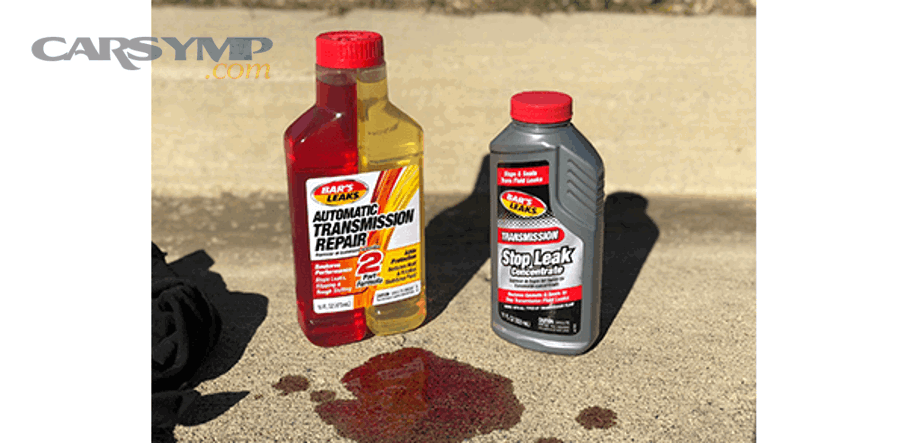
Do Transmission Stop-Leak Products Actually Work After a Service?
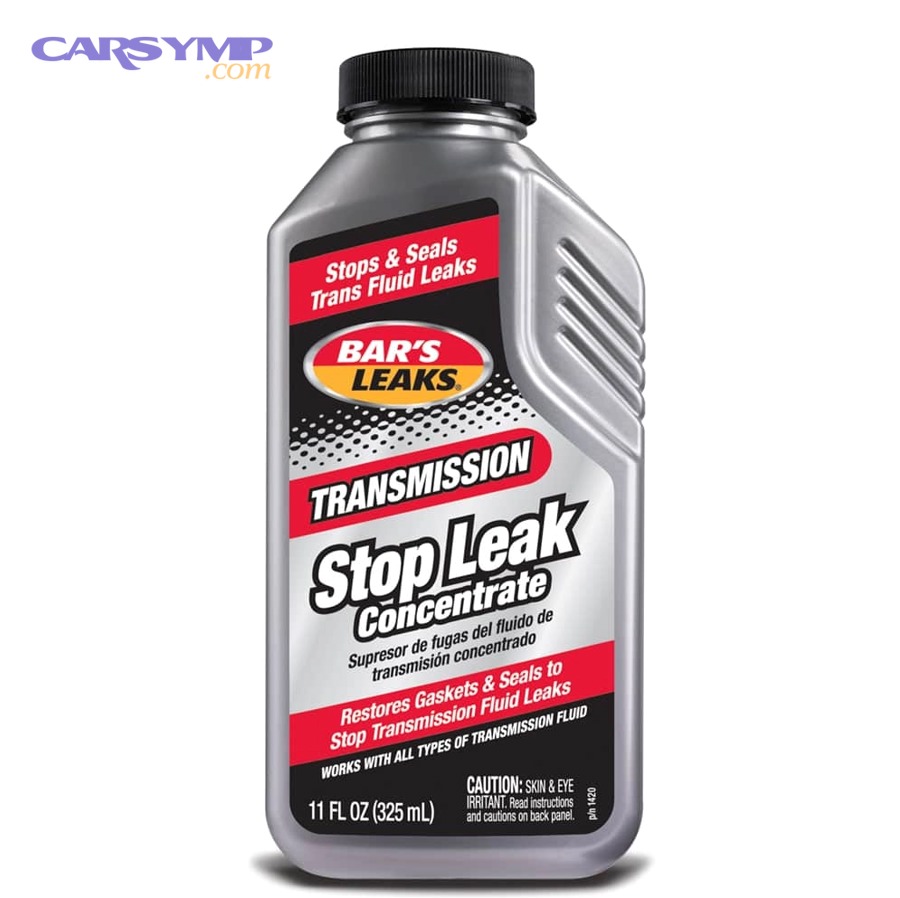
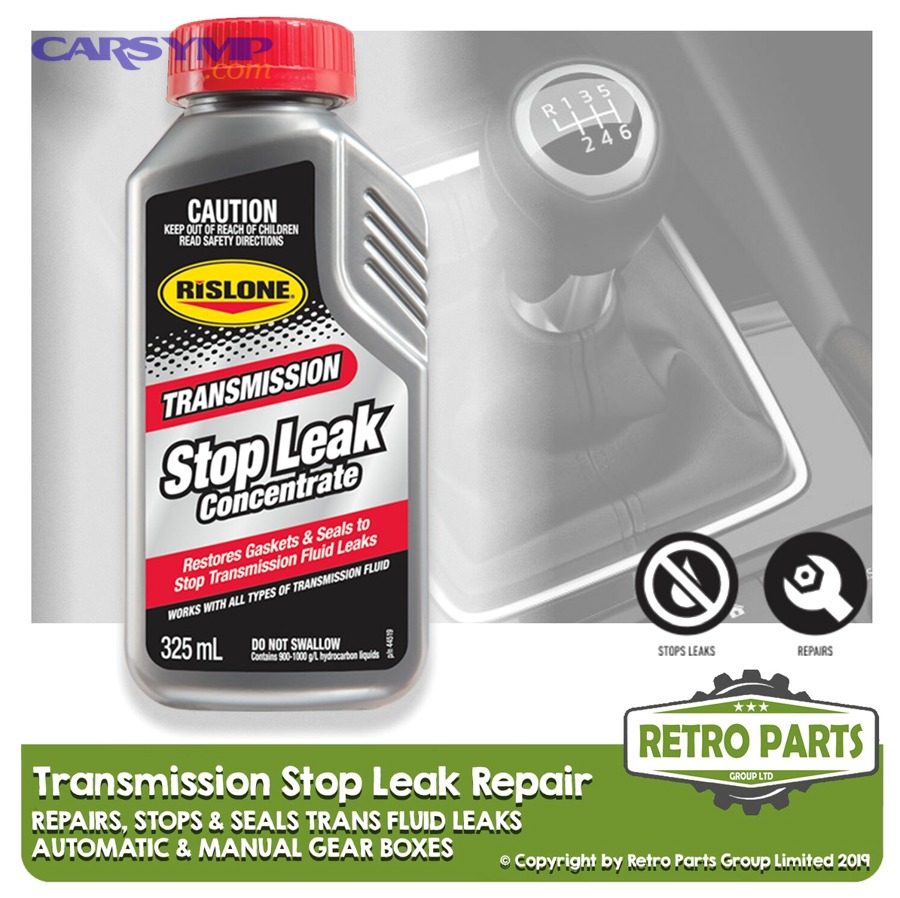
Transmission stop-leak products work in limited, specific circumstances — they are effective for minor seal seepage caused by rubber drying and shrinkage, but they cannot fix mechanical failures such as cracked gaskets, loose bolts, or damaged drain plugs.
The active ingredients in most stop-leak products are seal-conditioning chemicals that cause rubber seals to swell slightly, restoring their original pliability and closing small gaps. This mechanism works reasonably well when a post-service leak is caused by a seal that dried out slightly during a period of low fluid, or when an older seal was disturbed just enough to begin weeping. In these narrow scenarios, a quality stop-leak additive — poured directly into the transmission fill point — can seal the leak within 100 to 200 miles of driving.
However, stop-leak products are not appropriate substitutes for proper installation. If the pan gasket was installed crooked, if the drain plug O-ring is missing, or if the fluid level is incorrect, no additive will compensate for those mechanical failures. Applying stop-leak to a pan that needs re-torquing wastes money and delays the correct repair.
One critical caveat: stop-leak additives are contraindicated for CVT transmissions. CVT fluid contains a highly specific additive package calibrated for the unique friction characteristics of the variator belt. Introducing an incompatible seal conditioner can alter the fluid chemistry, accelerate belt wear, and cause the very failures it was meant to prevent.
Are Transmission Leaks After Service Different Depending on Your Vehicle’s Transmission Type?
Yes — transmission leaks after service behave differently across CVT, conventional automatic, and manual transmissions because each type uses a different fluid chemistry, different sealing architecture, and different service procedures that each carry unique post-service leak risks.
In addition to the general prevention and repair guidance covered in the preceding sections, understanding the specific leak profile of your transmission type adds an important layer of precision to diagnosis. The following sections address the three most clinically relevant transmission-type scenarios.
Why Do CVT Transmissions Leak Differently After a Fluid Service?
CVT transmissions are more sensitive to post-service leaks than conventional automatics for three interconnected reasons: their fluid is proprietary, their sealing components are more precisely toleranced, and their internal pressure dynamics are fundamentally different from a gear-based automatic.
CVT fluid — unlike Dexron or Mercon automatic transmission fluid — is formulated to a precise viscosity and friction coefficient that allows the continuously variable belt or chain to operate without slipping. Using the wrong fluid type during a service (even a fluid that appears similar on the shelf) can cause seal degradation within a single heat cycle, producing a leak that has nothing to do with installation quality and everything to do with chemistry.
CVT pans and their gaskets are also more precisely toleranced. Where a conventional automatic may tolerate a bolt torque that is slightly off-spec before leaking, a CVT pan gasket requires more precise installation. Even minor surface contamination — a fingerprint of grease, a fiber from a shop rag — can prevent a full seal.
Finally, as noted above, stop-leak products should never be used in CVT systems. If a CVT develops a post-service leak, the correct path is inspection and mechanical repair only.
Is a Transmission Cooler Line Leak After Service a Separate Problem?
Yes — a transmission cooler line leak after service is a distinct failure mode that is separate from pan or seal leaks, caused specifically by the displacement or damage of cooler line connections during service access rather than by poor installation of the pan or gasket.
Transmission cooler lines run from the transmission to the vehicle’s radiator (or a dedicated transmission cooler), carrying hot fluid out for cooling and returning it to the transmission. On many vehicles, these lines pass near — or are temporarily moved during — a transmission service. A line that is bent, crimped, or reconnected improperly will leak at the fitting, and that leak will appear near the front of the vehicle rather than beneath the transmission pan.
Cooler line leaks are identifiable by their location: the drip or stain will be near the radiator, along the front subframe, or on the passenger side of the engine bay rather than directly beneath the transmission. The fluid color and smell are identical to a pan leak, but the position rules out a pan or seal as the source.
DIY repair of cooler line leaks depends on the failure mode:
- Loose fitting — Can be tightened with a line wrench (not an open-end wrench, which can round the fitting)
- Kinked or bent line — Requires replacement; a kinked line cannot be safely straightened without risk of future cracking
- Cracked line — Requires full line replacement; this is the job where a specialty manufacturer that produces precision-fit, pre-bent replacement lines delivers the best long-term outcome
What Is the Difference Between a Post-Service Transmission Leak and a Chronic Transmission Leak?
A post-service leak is an acute failure caused by service-related installation error — sudden in onset, traceable to a recent procedure; a chronic leak is a gradual failure caused by long-term seal aging, heat damage, or mileage-related wear, typically developing slowly over weeks or months with no direct link to recent service.
The following table summarizes the key diagnostic differences between the two leak types, helping vehicle owners and technicians determine the correct root cause and repair path.
| Characteristic | Post-Service Leak | Chronic Leak |
|---|---|---|
| Onset | Within 24–72 hours of service | Gradual over weeks or months |
| Primary cause | Installation error, disturbed components | Seal aging, heat, mileage-related wear |
| Fluid color | Bright red (fresh fluid just added) | Darker red-brown (aged fluid) |
| Common location | Pan edge, drain plug, cooler line fittings | Axle seals, input shaft, torque converter |
| Leak volume | Often moderate to high initially | Typically slow seep that worsens over time |
| Correct first response | Re-inspect installation; re-torque or replace | Professional diagnosis of seal condition |
Distinguishing between the two matters because the repair path diverges significantly. A post-service leak typically resolves with a reinstallation correction that costs very little. A chronic leak requires identifying which seal has degraded and may require partial or full transmission disassembly to access — a far more involved and expensive repair. If a vehicle has never shown signs of a transmission leak before a service and develops one within days of that service, the post-service cause should always be investigated first before assuming internal seal failure.
Can Using the Wrong Transmission Fluid During a Service Cause a Leak?
Yes — using the wrong transmission fluid during a service can directly cause a leak because incompatible fluid chemistries interact with rubber seals in ways that cause swelling, shrinkage, or accelerated degradation depending on the mismatch.
This is one of the rarest but most insidious post-service failure modes because it is invisible at the time of installation. The fluid looks correct, the installation is correct, and everything appears normal — until the incompatible fluid reaches operating temperature and begins interacting with the seals.
Two chemical reactions are most common:
- Seal swelling — Some fluid additives cause rubber compounds to absorb fluid and swell. A swollen seal may initially stop an existing small leak but will eventually distort, lose structural integrity, and fail catastrophically.
- Seal shrinkage — Fluid that lacks the correct ester or seal-conditioning chemistry can cause rubber to dry out and shrink over 500–2,000 miles, producing leaks at every seal in the system simultaneously.
The three most commonly confused fluid types are:
- Dexron VI vs. Dexron III — Not backward-compatible in all vehicles
- Mercon V vs. Mercon LV — Different viscosity profiles; wrong use in modern Ford transmissions degrades clutch packs and seals
- CVT fluid vs. standard ATF — Interchangeable in appearance but chemically incompatible; using standard ATF in a CVT will cause rapid seal and belt failure
If you suspect the wrong fluid was used during a service, do not wait for symptoms to appear. Drain the fluid immediately, identify the correct OEM-specified fluid from the vehicle owner’s manual or door placard, and refill with the correct type. The earlier the correction, the lower the likelihood of permanent seal damage.
According to guidance published by the Automatic Transmission Rebuilders Association (ATRA), fluid misapplication is among the leading causes of premature transmission failure following service — underscoring why verifying fluid specification before and after every service is not optional, but essential.