


Motor mounts can cause vibration at idle because they isolate engine movement from the chassis, and when they wear, crack, collapse, or leak, normal engine pulses travel into the cabin instead of being absorbed. To begin, the key is not just noticing a shake at a stoplight, but deciding whether the vibration comes from the mounts themselves or from an engine, exhaust, or drivetrain problem that feels similar.
The next question is how bad motor mount symptoms usually appear in real life. More specifically, many drivers first notice vibration in the steering wheel, seat, floor, or dashboard while the engine seems to idle normally, especially in Drive or Reverse. That symptom pattern matters because it helps separate mount-related vibration diagnosis from rough-running engine problems.
Then, diagnosis becomes the main task. Specifically, you need to compare vibration in different gears, inspect the mounts visually, and rule out competing causes such as Engine misfire vibration symptoms, exhaust contact, accessory drag, or a transmission mount problem. A good diagnosis follows a sequence instead of jumping straight to parts replacement.
In addition, some vehicles continue to shake even after mount replacement because mount stiffness, installation preload, hydraulic mount failure, or nearby exhaust contact can still transfer movement into the body. Below, the article explains how to identify the right cause, compare related causes, and decide what to inspect next with a practical focus on vibration diagnosis.
Can motor mounts cause vibration at idle?
Yes, motor mounts can cause vibration at idle because they lose isolation, allow more engine movement, and transmit normal engine pulses into the body, steering wheel, seat, and floor. To better understand that answer, it helps to look at what mounts do when they work properly and what changes when they begin to fail.
What do motor mounts do at idle?
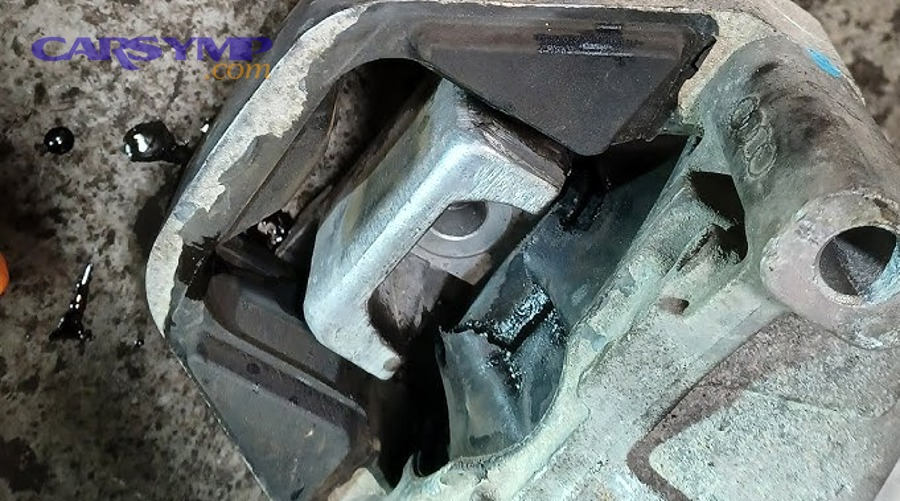
Motor mounts are structural vibration isolators that hold the engine in position while reducing the amount of movement and harshness that reaches the body of the vehicle. In most passenger cars, the mounts support the engine and transmission, control torque reaction, and absorb small pulses that naturally occur every time the engine fires. At highway speed, tire noise, road input, and airflow often mask minor vibration. At idle, however, the vehicle is stationary, engine speed is low, and the body becomes more sensitive to any extra movement that slips past the mounts.
That is why a vehicle can feel smooth enough while cruising but noticeably shaky at a stop. The engine still produces small rhythmic motions at idle, but healthy motor mounts keep those motions from becoming cabin shake. When rubber hardens, tears, separates from the bracket, or collapses under load, the mount stops acting like a cushion and starts acting more like a direct path for vibration transfer.
This is also where the synonym relationship matters in semantic terms: motor mounts and engine mounts describe the same core component in most consumer searches. Some repair manuals may separate engine mounts from transmission mounts, but drivers often use the terms interchangeably. Keeping the terminology consistent helps the reader understand that the issue is about engine support and vibration isolation, not only about one brand-specific part name.
In practical terms, an idle complaint often begins with comments like, “The car vibrates when stopped,” “The steering wheel shakes in Drive,” or “It smooths out a little when I accelerate.” Those clues point toward a mount problem because the complaint centers on transmitted movement rather than on a change in power output. The engine may still produce full power, start normally, and rev cleanly, yet the cabin feels harsher because the mounts no longer control engine motion effectively.
When is idle vibration likely to be caused by motor mounts?
Idle vibration is likely to be caused by motor mounts when the engine seems to run smoothly but the vibration increases in Drive or Reverse, the body shakes at stoplights, and you notice clunks or visible engine rock during gear engagement. More specifically, mount-related vibration tends to change with load rather than with combustion quality.
That distinction matters. A worn mount usually becomes more obvious when the transmission is engaged because the engine twists slightly under load. If the vibration grows stronger when you shift from Park into Drive, then becomes milder when you rev the engine a little, the mounts deserve close attention. The engine itself may sound steady, yet the cabin becomes unpleasant because the mount no longer dampens low-speed movement.
Another strong sign is excessive engine motion when shifting from Reverse to Drive or when blipping the throttle lightly. A damaged front, rear, or side mount can allow the powertrain to rock farther than intended. That extra motion can create a thump, tug on exhaust hangers, and increase what feels like Drivetrain vibration even though the real source is poor isolation at the mount.
At the same time, not every idle vibration comes from motor mounts. If the engine stumbles, the RPM hunts up and down, the exhaust note becomes uneven, or the check engine light appears, the vibration may be caused by incomplete combustion rather than mount failure. A good vibration diagnosis begins by asking a simple question: is the engine running badly, or is the engine running normally while the body receives too much movement?
According to a study by the National Institute for Automotive Service Excellence training materials, engine mounts and related supports are part of the vehicle’s NVH control system, and deterioration in those components can increase transmitted vibration even when engine operation remains otherwise normal.
What are the signs of bad motor mounts causing vibration at idle?
The main signs of bad motor mounts causing vibration at idle are stronger cabin shake, more vibration in gear than in Park, clunking during shifts, visible engine movement, and physical mount damage such as torn rubber or hydraulic leakage. Next, it is useful to separate the symptoms you feel inside the cabin from the symptoms you can inspect under the hood.

What symptoms usually appear inside the car?
Inside the car, bad motor mount symptoms usually appear as steering wheel vibration, seat shake, floor buzz, dashboard rattles, and a harsh feeling that is strongest when the vehicle is stopped with the engine idling. Specifically, the vibration often feels more like a steady hum, shudder, or tremor than a random stumble.
Drivers often report that the car feels acceptable while moving but annoying at red lights. The steering wheel may buzz lightly, the center console may rattle, and the driver’s seat may transmit a low-frequency shake into the body. Some vehicles show the symptom mainly in Drive with the brake applied. Others show it in Reverse as well, especially when backing up slowly or idling after a cold start.
Temperature and accessory load can change the symptom. When the air conditioner turns on, the engine load increases slightly. A healthy set of mounts absorbs that change with minimal drama, but weak mounts may let the extra torque reaction pass directly into the cabin. That makes the vibration seem intermittent even though the real issue is still poor isolation. The same thing can happen when headlights, the rear defroster, or other electrical loads slightly affect idle control.
The key pattern is that the engine may sound relatively smooth while the interior feels rough. That is different from a misfire, where the entire engine operation feels uneven. With bad mounts, the issue is often not that combustion is unstable, but that normal combustion pulses reach the driver too clearly.
In some vehicles, the vibration also creates secondary noises. Plastic trim can buzz, mirrors can tremble slightly, and the cupholder area or dashboard can sound loose even though the root cause is not the trim itself. When the engine support degrades, the vehicle body receives more movement, and interior materials simply react to that extra energy.
What symptoms usually appear in the engine bay?
In the engine bay, bad motor mount symptoms usually appear as excessive engine rock, cracked or separated rubber, mount collapse, leaking hydraulic fluid, shiny contact marks, or a sagging engine position relative to nearby brackets and shields. More specifically, visual clues help support the diagnosis, especially when they match the cabin symptoms.
A standard rubber mount may show visible splitting, compression, or separation where the rubber bonds to the metal bracket. A hydraulic mount can leak fluid when the internal chamber fails. Once the fluid escapes, the mount loses much of its damping ability. That type of failure can create surprisingly strong idle vibration even when the mount does not look completely broken at first glance.
Excessive engine movement is another important clue. If the engine lifts sharply on one side during a gentle throttle input, a mount may be torn or weakened. If the engine sits lower than expected, the mount may have collapsed, allowing metal parts to move closer together and transfer more vibration into the subframe or body.
Contact marks matter too. A shifted engine can pull the exhaust into a heat shield, bracket, or crossmember. That produces a second vibration path. In those cases, the mount causes the initial misalignment, while the exhaust or nearby component amplifies the symptom. This is one reason bad mounts can create what feels like a broader Drivetrain vibration pattern.
You should also pay attention to fresh repairs. If a vibration started after engine work, transmission work, or exhaust work, mount alignment and fastener position should be checked. Mounts may not be fully failed, yet improper positioning can preload the system and create harshness.
According to service information from major OEM repair procedures, collapsed or fluid-leaking engine mounts are recognized indicators of reduced damping performance and increased NVH under idle and load conditions.
How can you diagnose motor mounts causing vibration at idle?
Diagnosing motor mounts causing vibration at idle requires a simple sequence: confirm engine smoothness, compare vibration by gear and load, inspect the mounts visually, and watch for abnormal powertrain movement. Let’s explore that sequence carefully so the diagnosis stays accurate and does not drift into guesswork.
What should you check first before blaming the mounts?
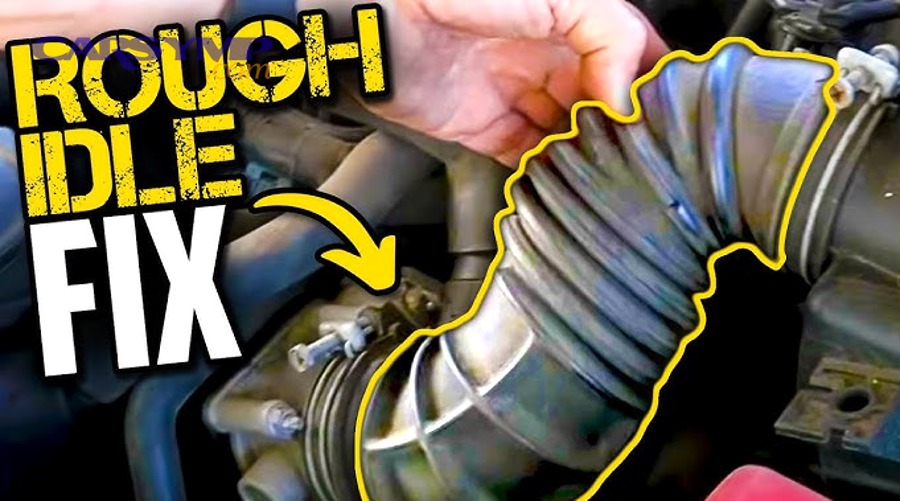
Before blaming the mounts, you should first check whether the engine itself is idling smoothly, because a rough-running engine can create the same shaking feeling even when the mounts are still serviceable. Specifically, the first elimination step is engine behavior, not mount replacement.
Start with the dashboard. If the check engine light is on, scan for codes before concluding that the mounts are bad. A misfire, lean condition, vacuum leak, dirty throttle body, worn spark plug, ignition coil issue, or injector imbalance can all create idle shake. In that case, the vibration starts with unstable combustion, and even perfect mounts will not fully hide it.
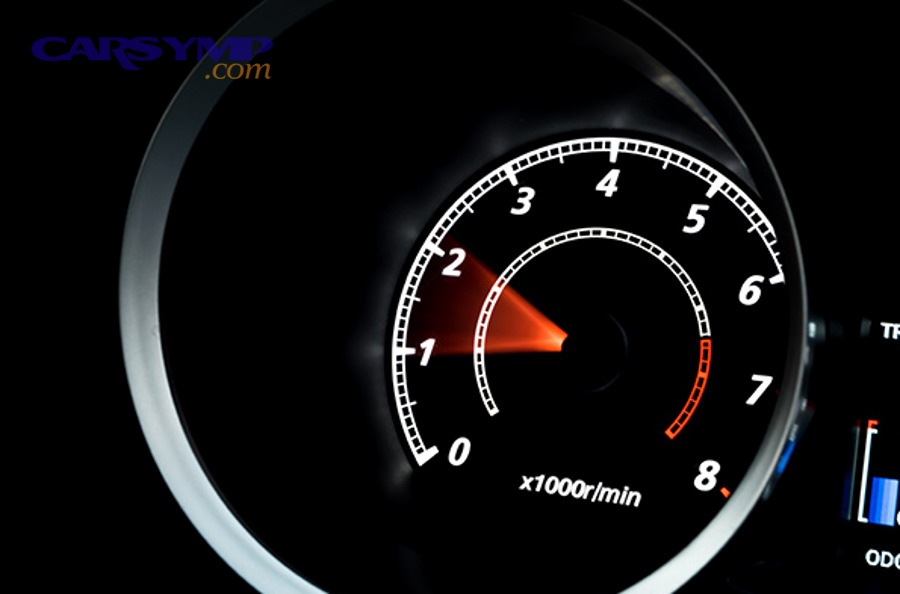
Listen to the engine. A smooth engine usually has a stable rhythm and consistent exhaust note. A misfiring engine often stumbles, drops rhythm, or sounds uneven. Watch the tachometer too. If the RPM fluctuates noticeably at idle, the problem may involve engine management instead of mount isolation.
That is why Engine misfire vibration symptoms belong early in the comparison process. A misfire often produces shaking along with hesitation, poor acceleration, fuel smell, flashing warning lights, or trouble codes. A mount problem, on the other hand, often produces a vehicle that still revs cleanly and drives normally once speed increases, but feels coarse while stopped.
You should also consider recent maintenance. If the issue started after spark plug replacement, ignition coil service, intake work, or fuel system cleaning, the engine may need attention before the mounts do. If the issue started after collision repair, subframe work, or engine removal, the mounts and their alignment move higher on the suspect list.
What simple tests can help confirm a bad motor mount?
Simple tests that can help confirm a bad motor mount include comparing vibration in Park, Neutral, Drive, and Reverse, observing engine rock during a light throttle input, listening for clunks during gear changes, and checking the mounts for collapse or leaks. More specifically, these tests work best when you use patterns instead of relying on one single clue.
Start with a gear comparison test in a safe, stationary setting. With the brake firmly applied and adequate ventilation, note how the vibration feels in Park or Neutral. Then shift into Drive and Reverse, one at a time. If the vibration increases sharply in gear while the engine still sounds steady, mount weakness becomes more likely. The load change twists the engine slightly, and a failed mount passes that movement into the cabin.
Next, perform a visual movement check. Have a helper shift between gears with the brake applied while you observe the engine from a safe position, or observe from the driver’s seat if visibility allows. Excessive rocking, lifting, or a sharp lurch can indicate that one mount no longer controls the powertrain properly.
A throttle blip test can provide another clue. A brief, gentle increase in engine speed should produce controlled movement. If the engine snaps, lifts, or swings more than expected, a mount may be torn. This test should stay gentle. Excessive throttle in place is unnecessary and unsafe.
Then inspect the mounts directly. Look for cracked rubber, torn bonding surfaces, collapsed height, or fluid leakage from hydraulic mounts. Also inspect nearby components. A weakened mount can pull the exhaust close to a crossmember or shield, creating a second contact vibration that confuses the diagnosis.
The table below shows how symptom patterns can guide a practical vibration diagnosis.
| Symptom pattern | More likely motor mounts | More likely engine issue | More likely exhaust or related contact |
|---|---|---|---|
| Vibration strongest in Drive or Reverse at idle | Yes | Sometimes | Sometimes |
| Engine sounds smooth | Yes | No | Yes |
| RPM fluctuates at idle | No | Yes | No |
| Check engine light present | Uncommon | Yes | Uncommon |
| Clunk when shifting gears | Yes | No | Sometimes |
| Visible engine rock | Yes | Sometimes | Sometimes |
| Metallic buzz or shield rattle | Sometimes | No | Yes |
| Vibration improves with slight throttle | Often | Sometimes | Sometimes |
This table compares common symptom patterns among mount failure, rough engine operation, and contact-related vibration so readers can avoid replacing the wrong part too early.
According to a study by the Society of Automotive Engineers on vehicle NVH behavior, powertrain mounting system stiffness and damping strongly affect the transmission of low-frequency idle vibration into the vehicle body.
Which other problems feel like motor mounts at idle?
Motor mounts do not own idle vibration alone; engine misfires, rough idle, exhaust contact, transmission mount wear, and accessory drag can feel similar, but each problem leaves a different pattern of sound, load change, and movement. However, the best diagnosis comes from comparing those patterns rather than chasing the first symptom you notice.
How is motor mount vibration different from engine misfire or rough idle?
Motor mount vibration usually means the engine runs smoothly while the cabin shakes, whereas engine misfire or rough idle means combustion becomes uneven and the entire engine operation feels unstable. To illustrate, the difference appears in rhythm, drivability, and load response.
A misfire interrupts one or more combustion events. That creates an uneven pulse pattern that the driver feels as stumbling, shaking, and sometimes hesitation during acceleration. The tachometer may dip, the exhaust note may sound broken or irregular, and the check engine light may illuminate. When the misfire gets worse, the whole vehicle can shudder because the engine is no longer producing balanced power.
With bad mounts, the idle may remain consistent. The engine can sound normal, respond cleanly to the throttle, and cruise without obvious power loss. Yet the steering wheel, seat, and floor vibrate because the mount fails to isolate movement. The problem is transmission of vibration, not creation of vibration through faulty combustion.
That difference becomes even clearer when the vibration changes with gear position. Mount issues often get worse in Drive or Reverse because the engine twists against the mounts under load. A misfire may shake in any gear and may not care as much whether the transmission is engaged. It often shows other signs too, such as poor fuel economy, jerking, flashing codes, or hard starting.
In short, Engine misfire vibration symptoms point toward unstable engine operation, while mount-related symptoms point toward failed isolation of otherwise normal engine movement. The car may shake in both cases, but the source of the shake is different.
How is motor mount vibration different from exhaust, transmission, or accessory problems?
Motor mount vibration differs from exhaust, transmission, or accessory problems because mount-related shake usually follows powertrain load, exhaust-related vibration often brings metallic contact noise, transmission mount issues overlap with engine support issues, and accessory problems tend to change directly with RPM or added mechanical load. More importantly, each cause creates a different relationship between sound, speed, and gear engagement.
Exhaust contact often produces a buzz, rattle, or droning sound when the engine moves at idle. A bad mount can cause that by shifting the engine and exhaust together, but the exhaust itself may be the part physically touching the body or a heat shield. If the noise sounds metallic and changes when you lightly move the exhaust or inspect the hangers, the exhaust path deserves attention.
Transmission mount problems create one of the closest comparisons. Because the engine and transmission work as one assembly, a weak transmission mount can feel almost identical to a weak engine mount. The difference is often subtle: drivetrain lash, harsh engagement, or a heavier thump on shifting may suggest the transmission side of the support system. In many real repairs, both engine and transmission mounts are inspected together because one worn support can overload the others.
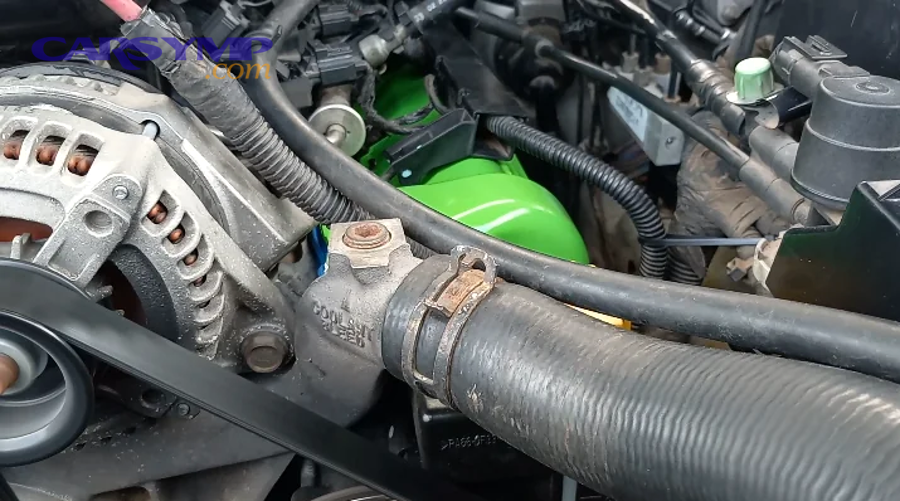
Accessory-related vibration has its own pattern. A failing A/C compressor, weak pulley bearing, alternator issue, or belt-driven imbalance can create shaking that increases as the accessory cycles on. Unlike a pure mount problem, the vibration may follow accessory operation more closely than gear load. If the shake appears mostly when the air conditioner engages, for example, the mount may only be exposing a load-related weakness rather than creating the problem by itself.
This is where the term Drivetrain vibration can confuse diagnosis. Some drivers use it to describe any low-speed shake, but true drivetrain-related issues often involve torque transfer, rotating parts, or support components that connect the engine and transmission to the body. Bad mounts belong in that broader conversation because they shape how powertrain movement reaches the cabin, even though they are not rotating parts themselves.
According to a study by the University of Michigan Transportation Research Institute, NVH complaints often require pattern-based diagnosis because similar cabin sensations can result from combustion, structural contact, or mounting system issues.
What should car owners do if motor mounts are causing vibration at idle?
If motor mounts are causing vibration at idle, car owners should confirm the diagnosis, inspect related supports and contact points, repair worn mounts before movement worsens, and recheck the system for secondary exhaust or alignment issues. Next, it helps to separate temporary drivability from long-term mechanical risk.

Is it safe to keep driving with bad motor mounts?
Yes, some cars with mildly worn motor mounts can still be driven for a time, but continued driving is not ideal because the vibration can worsen, nearby components can be stressed, and severe mount failure can lead to heavy movement or impact. Specifically, safety depends on the degree of damage.
A mount that is only beginning to harden or crack may produce annoyance more than immediate danger. The driver notices the shake, especially at idle, but the engine remains securely supported. In that stage, the main concern is rising NVH and gradual stress on surrounding parts.
A more serious failure changes the picture. If the rubber tears deeply, hydraulic fluid leaks out, or the engine lifts and drops during gear changes, the powertrain can move farther than intended. That movement can strain hoses, wiring, exhaust flex sections, brackets, and heat shields. It can also create harsh thumps that make driving feel less controlled, especially when shifting from Park to Drive or accelerating from a stop.
Driving with a severe mount problem also makes vibration diagnosis harder over time because secondary problems appear. Once the exhaust starts touching a shield or a transmission mount begins compensating for a failed engine mount, the symptom no longer points to one clean cause. That is why delaying repair may turn one bad part into several smaller NVH complaints.
The practical rule is simple: mild vibration may allow limited driving, but visible movement, banging, severe shake, or obvious collapse means the repair should move up in priority.
When should you repair the mounts and what should you inspect with them?
You should repair the mounts when vibration grows stronger, gear engagement becomes harsher, the engine moves excessively, or the mount shows visible damage such as cracking, collapse, or hydraulic leakage. Besides the mount itself, you should inspect the transmission mount, exhaust clearance, brackets, fasteners, and nearby contact points.
Repair timing depends on symptom severity and inspection findings. If the vehicle only has a light buzz and no visible damage, the diagnosis should be verified carefully before replacement. But if the engine rocks hard, the mount leaks, the cabin shakes strongly, or shifting produces a clunk, replacement becomes easier to justify.
During repair, it is smart to inspect the system as a whole. An old transmission mount can keep transmitting vibration after one engine mount is replaced. An exhaust pipe that shifted under the old load may still sit too close to a crossmember. A bracket or heat shield may have loosened because of months of extra movement. A complete repair addresses the cause and the secondary contact paths.
Part choice matters too. Some aftermarket mounts are stiffer than the factory design. That does not always mean they are wrong, but it can change how much idle vibration reaches the cabin. On luxury-oriented vehicles especially, OEM-style damping may preserve comfort better than a firmer aftermarket substitute. On the other hand, a performance-oriented driver may tolerate slightly higher NVH if durability improves.
After replacement, the vehicle should be rechecked at idle in Park, Drive, and Reverse. If the harshness changes but does not disappear, the diagnosis should continue rather than assuming the new part failed. Mount systems, exhaust geometry, and support alignment all affect the final result.
According to a study by SAE International on powertrain mounting systems, correct mount selection and installation geometry influence both vibration control and perceived vehicle comfort after repair.
Why can vibration still happen after engine mount replacement?
Vibration can still happen after engine mount replacement because new mounts may be stiffer, installation preload may be incorrect, hydraulic or active mounts may behave differently, or secondary exhaust and subframe contact may remain. Below, that post-repair scenario becomes clearer when each specialized cause is examined on its own.
Can new engine mounts feel stiffer than worn mounts?
Yes, new engine mounts can feel stiffer than worn mounts because old mounts often soften, sag, and lose their original damping behavior, while fresh mounts restore support and sometimes transmit different frequencies more clearly at first. Specifically, the driver may notice a change even when the repair is correct.
A worn mount does not just fail to isolate vibration; it also changes the engine’s resting position and movement path. Over time, the driver becomes accustomed to that abnormal condition. After replacement, the engine sits where it should, the torque reaction changes, and the cabin may feel different even if the system is healthier overall.
This becomes more noticeable when the replacement part is an aftermarket mount with firmer rubber than the original design. A firm mount may control movement well under acceleration yet transmit more low-speed harshness at idle. That is why some drivers report that the engine feels more secure but the car no longer feels as soft at a stop.
In many cases, that difference is not a sign of failure. It is a sign that the mount’s damping characteristics differ from the old part or from the OEM calibration. The correct question is whether the vibration is moderate and consistent or whether it points to misalignment, preload, or another unresolved issue.
Can hydraulic or active mounts fail differently from standard rubber mounts?
Yes, hydraulic and active mounts can fail differently from standard rubber mounts because they rely on fluid control or active damping strategies, not just on rubber support alone. More specifically, those designs can lose damping performance without showing the same obvious tearing seen on simpler mounts.
A hydraulic mount contains fluid chambers that help absorb low-frequency vibration, especially at idle. When the fluid leaks or internal valving fails, the mount may still appear physically present, yet the cabin suddenly feels much harsher. The engine can also move more than expected because the mount has lost part of its controlled damping effect.
Active mounts go a step further by adjusting damping characteristics through vacuum, electronics, or internal control systems, depending on vehicle design. When those systems fail, the symptoms may seem inconsistent. The car might feel acceptable under one condition but unusually rough under another. That complexity makes post-repair vibration diagnosis harder if the replacement part is incorrect or if the control system was not addressed.
Because these mount types are more specialized, they reinforce an important rule: diagnosis should consider not only whether a mount is present, but whether it behaves the way the vehicle was engineered to behave.
Can mount installation position or preload create new vibration?
Yes, mount installation position or preload can create new vibration because the powertrain must settle in its natural position before final tightening, and misalignment can lock tension into the system. More specifically, the mount may be new and undamaged, yet the engine support geometry may still transmit harshness.
Preload happens when the engine, transmission, or subframe is tightened while slightly shifted from its neutral resting position. Instead of absorbing movement evenly, the mount begins its life already twisted or compressed in the wrong direction. That changes how vibration travels through the bracket and into the body.
This problem often appears after engine removal, major drivetrain work, collision repair, or mount replacement on one side only. The driver may say, “It did not vibrate like this before the repair,” and that statement can be accurate even if the new mount itself is not defective. The installation process changed the support relationship.
Correcting preload may involve loosening specific fasteners, supporting the powertrain correctly, allowing the assembly to settle, and tightening everything in the right sequence. The exact method depends on the vehicle, but the principle stays the same: a mount should support the engine naturally, not fight against forced alignment.
Can a bad mount cause exhaust or subframe contact that continues after repair?
Yes, a bad mount can cause exhaust or subframe contact that continues after repair because the old failure may have shifted the exhaust path, stressed hangers, loosened shields, or changed clearances that do not automatically reset once the new mount is installed. In addition, those secondary contact points can keep producing vibration even after the main support issue improves.
This is a common reason post-repair complaints feel confusing. The new mount restores support, but the exhaust still sits close to a brace, or a heat shield still resonates because it was bent during the period of excess movement. The driver feels continued vibration and assumes the mount repair failed, when the real issue is incomplete correction of the secondary effects.
Subframe contact can create a similar illusion. If the powertrain shifted long enough to polish, bend, or stress a nearby bracket, replacing the mount may stop the original movement but not remove the residual contact point. That is why a final inspection should include clearance checks, hanger condition, fastener security, and visible witness marks where metal touched metal.
In short, a successful motor mount repair does not end with the new part. It ends when the vehicle idles smoothly, the powertrain moves normally, and no secondary path continues to transmit vibration into the body.
According to a study by automotive NVH engineering literature from SAE and OEM service practices, post-repair vibration complaints often trace back to support alignment, stiffness mismatch, or residual structural contact rather than immediate failure of the replacement mount itself.