


Auto repair warranties typically cover the specific repair that was just performed, and in most real-world cases that means the replacement part, the labor used to install it, or both, for a defined period of time or mileage limit. For car owners, the practical meaning is simple: if the same covered part fails again or the original workmanship proves faulty within the stated warranty window, the shop may repair or replace it without charging you again for the same issue. (consumer.ftc.gov)
That core answer leads to the next question: what exactly sits inside the warranty on repairs, and what stays outside it? Most shops and warranty programs draw a line between covered defects or workmanship problems and excluded items such as routine maintenance, normal wear, abuse, accidents, or unrelated failures that happen after the original job. That is where Common exclusions and fine print matter more than the word “warranty” itself. (kbb.com)
Car owners also need to know how long coverage lasts and how to compare a repair-shop guarantee with a manufacturer warranty or a service contract. Those terms often get mixed together, but they do not mean the same thing, and misunderstanding them is one reason people assume they have coverage when they do not. (consumer.ftc.gov)
Finally, the most useful question is practical rather than legal: How to file a warranty claim on repairs without delay, and How long you should expect repairs to last before you reasonably worry about a repeat failure. Next, the article breaks that down in the same order car owners think about it: coverage, included repairs, exclusions, time limits, comparisons, claims, and specialized fine print. (napaonline.com)
What do auto repair warranties typically cover for car owners?
Auto repair warranties typically cover the repaired component, the labor tied to that repair, and failures caused by defective parts or faulty workmanship within a stated time or mileage limit.
To better understand that coverage, it helps to separate what a shop promises from what a customer assumes.
Do most auto repair warranties cover both parts and labor?
Yes, most auto repair warranties cover both parts and labor, because the repair has two inseparable elements: the component installed and the work required to install it correctly. However, the written terms still control the exact scope.
A car owner usually pays for a repair as a combined transaction. The shop diagnoses the issue, sources a part, installs it, tests the result, and returns the vehicle. Because of that, a meaningful warranty on repairs often addresses both the component and the workmanship. If a replacement alternator fails quickly because the part was defective, that points to parts coverage. If the alternator works but a loose connection or improper belt tension causes the same problem to return, that points to labor or workmanship coverage.
More specifically, many shops present coverage as “parts and labor” because customers want protection from paying twice for the same job. That language matters. A “parts-only” promise may still leave you paying labor the second time. A “labor-only” promise is less common but can appear when the customer supplied the part. The safest assumption is never to guess. Read the repair order and ask whether the second visit would include diagnostic time, removal, reinstallation, and related shop supplies.
The practical value is peace of mind. A repair warranty reduces the risk that you will absorb the cost of a repeat repair immediately after authorizing the first one. According to NAPA Auto Care, its Peace of Mind Warranty covers parts and labor on qualifying repairs and services for 24 months or 24,000 miles, showing how large repair networks frame combined coverage in the market. (napaonline.com)
What does “covered repair” usually mean in an auto repair warranty?
A covered repair is the original authorized repair and the specific defect, malfunction, or workmanship issue directly tied to that repair, not every future problem that appears on the same vehicle.
That distinction is where many disputes start. A customer hears “warranty” and thinks “my car is protected.” A shop hears “warranty” and thinks “this exact repair is protected.” In practice, the shop’s interpretation usually controls if it matches the written warranty language. If a water pump was replaced and starts leaking at the gasket seam soon after installation, that usually falls inside the original repair scope. If the radiator cracks six weeks later, that may sit outside the warranty because it is a different failure even though it belongs to the same cooling system.
For example, a covered repair often includes the same part failing prematurely, a workmanship defect that causes the original symptom to return, or a related adjustment that should have been completed during the original job. It usually does not include fresh damage caused by collision, owner neglect, contamination, overheating after warning signs were ignored, or a separate component that fails later for unrelated reasons.
This is why the invoice matters. The repair order creates the hook between the symptom, the diagnosis, the authorized work, and the promised remedy. The more specific that document is, the easier it becomes to determine whether the repeated issue belongs to the original claim or not. The FTC explains that warranties and service promises are defined by written terms and that coverage applies to certain defects or malfunctions during a specific timeframe, reinforcing that scope is not unlimited. (consumer.ftc.gov)
Which parts and services are usually included under an auto repair warranty?
There are several common categories of repairs usually covered under an auto repair warranty: replacement parts, installation labor, and the same system repair if the original job fails within the covered period.
Let’s explore those categories in the way car owners actually experience repair bills.
What categories of repairs are commonly covered under warranty?
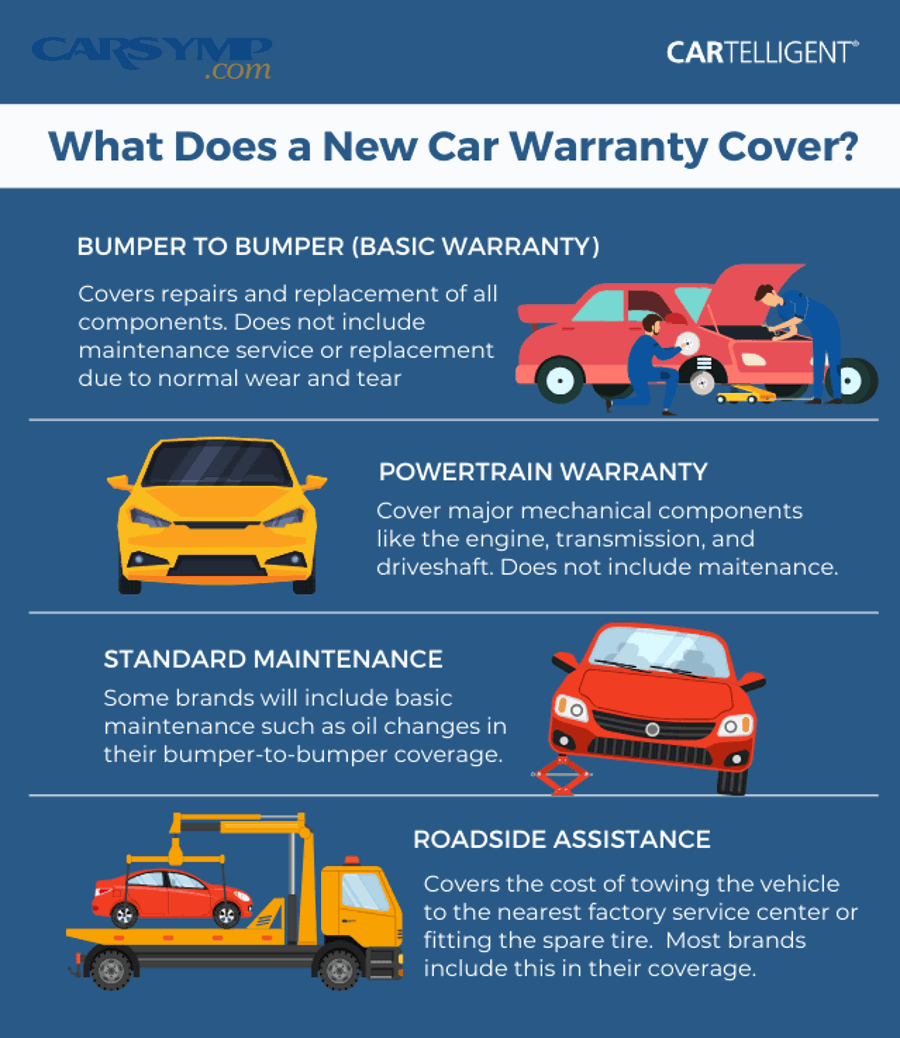
There are 3 main coverage categories in most repair warranties: the replacement part itself, the labor to install or correct it, and the same repair if the original problem returns because the job failed.
Specifically, coverage commonly appears after repairs involving engine accessories, cooling-system components, suspension parts, steering parts, brake hardware, electrical items, AC components, and drivetrain parts, provided the shop actually performed the work. The key criterion is not the system name. The key criterion is whether the part or labor being claimed matches the original repair order.
For example, if a shop replaces a starter, brake caliper, wheel bearing, tie-rod end, compressor, or alternator, the warranty usually follows that exact component and the labor attached to it. If the same starter fails, or if the original installation was faulty, the customer often has a strong warranty argument. If a different electrical issue develops elsewhere in the vehicle, that new problem may not qualify.
The table below shows what car owners usually mean when they ask what repair warranties cover.
| Repair element | Usually covered? | Why |
|---|---|---|
| Replacement part installed by the shop | Usually yes | It is the primary subject of the repair |
| Labor to remove and reinstall that part | Usually yes | Workmanship is part of the job value |
| Same complaint caused by original faulty work | Usually yes | It is tied to the first repair |
| New failure in another component | Usually no | It is outside the original scope |
| Routine maintenance item | Usually no | Maintenance is treated differently from defects |
This grouping matters because it stops overgeneralization. A warranty rarely protects an entire vehicle system just because one component in that system was repaired. Kelley Blue Book notes that warranty coverage centers on covered defects rather than routine service, which supports the narrower, repair-specific reading that shops commonly use. (kbb.com)
Are workmanship problems covered differently from part failures?
Yes, workmanship problems and part failures are covered differently because one comes from how the repair was performed, while the other comes from the component itself.
A defective part fails because the item was bad, prematurely wore out, or did not perform as promised. Faulty workmanship fails because the repair process introduced an error: improper torque, a missed seal, a bad connection, incorrect routing, contamination, or incomplete calibration. Both problems can trigger warranty coverage, but they raise different questions. Part failures often lead to supplier or brand issues. Workmanship problems often lead to shop responsibility.
More importantly, these two paths affect how a claim is handled. A part failure may require proof that the part itself failed under normal use. A workmanship claim may require the shop to inspect installation quality and determine whether the original technician’s work caused the repeat issue. This is why some shops insist on seeing the car before approving outside corrective work.
From the customer’s point of view, the result is the same: the repair did not hold. But from the shop’s point of view, the root cause decides who bears the cost and whether related charges apply. Mercury Insurance explains that warranty coverage generally addresses mechanical failures or defects in materials and workmanship, which captures both sides of this distinction. (mercuryinsurance.com)
What is usually not covered by an auto repair warranty?
Auto repair warranties usually do not cover routine maintenance, normal wear, misuse, accident damage, or new failures unrelated to the original repair.
However, exclusions deserve close reading because the denied claim usually turns on those details rather than on the headline promise.
Are wear-and-tear items and routine maintenance normally excluded?
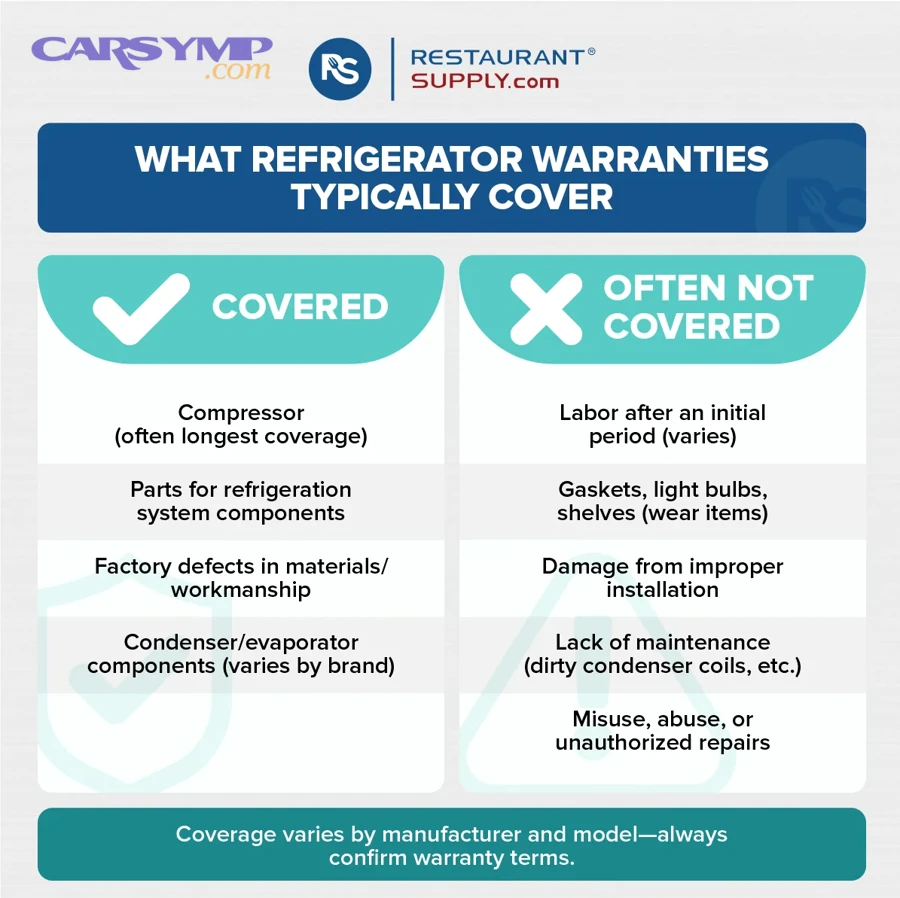
Yes, wear-and-tear items and routine maintenance are normally excluded because they deteriorate through normal use and are expected ownership costs, not repair defects.
Routine maintenance includes services such as oil changes, fluid services, filters, tire rotation, alignment checks, and scheduled inspections. Wear items often include brake pads, wiper blades, clutches, bulbs, tires, and other components designed to consume value over time. A repair warranty usually exists to protect you against a bad repair, not against the ordinary aging of parts that were never expected to last indefinitely.
For example, a shop may warranty a newly installed brake caliper but not the gradual wearing of brake pads months later. It may warranty a newly installed wheel bearing but not a future alignment problem caused by pothole impact. This distinction is one of the biggest sources of confusion for drivers who assume that anything near the repaired area must also be covered.
Besides, scheduled maintenance can affect warranty eligibility. If the failure happened because the vehicle was not maintained as required, a shop or provider may argue that owner neglect contributed to the problem. Kelley Blue Book states that car warranties do not cover regularly scheduled maintenance and that failing to follow the maintenance schedule can affect warranty protection, underscoring why excluded maintenance sits outside most repair guarantees. (kbb.com)
How do exclusions differ between normal wear, misuse, and unrelated damage?
Normal wear is gradual deterioration, misuse is owner-caused or operation-caused harm, and unrelated damage is a separate failure that has no direct link to the original repair.
That comparison matters because “not covered” is not a single category. Normal wear happens because parts age and friction does its work. Misuse happens when the vehicle is overloaded, driven despite warning signs, modified improperly, or otherwise subjected to conditions outside normal expectations. Unrelated damage happens when a different component fails later even if the car recently had work done nearby.
For instance, a newly replaced serpentine belt tensioner that fails immediately may suggest a covered defect. A belt shredded after oil contamination from another leak may move the issue toward exclusion. A cooling fan motor failure after a water pump replacement may be excluded if the fan motor had nothing to do with the original job. The same symptom does not always mean the same cause.
This is the heart of Common exclusions and fine print. Exclusions are often written broadly enough to reserve judgment until the shop inspects the vehicle. That does not mean the shop is always wrong; it means causation matters. The FTC notes that warranty coverage depends on specific written terms and that service contracts and warranties are not identical, so exclusions, conditions, and definitions determine the real scope of protection. (consumer.ftc.gov)
How long does auto repair warranty coverage usually last?
Auto repair warranty coverage usually lasts for a set time, a set mileage amount, or both, with the first limit reached ending the coverage.
Then, the useful question becomes not just how long the paper lasts, but how long you should expect repairs to last in real driving conditions.
Do repair warranties expire by time, mileage, or both?
Yes, repair warranties commonly expire by time, mileage, or both, and many use a “whichever comes first” formula because it captures both calendar aging and vehicle usage.
A driver who travels very little may hit the time limit first. A rideshare driver or long-distance commuter may hit the mileage limit first. This dual structure is common because a part can age without much driving, while heavy use can wear or expose defects quickly even within a short period. That is why advertised repair coverage often sounds generous but must be read together with driving habits.
In the market, repair-shop guarantees vary widely. Some independent shops offer 90 days or 3,000 miles. Others offer 12 months or 12,000 miles. Network-backed programs may offer more. NAPA’s published program advertises 24 months or 24,000 miles for qualifying repairs and services, which is a strong example of how a nationwide program defines duration. (napaonline.com)
Still, duration is not the same as expected service life. How long you should expect repairs to last depends on the part type, vehicle age, driving conditions, installation quality, and whether the repair addressed the root cause instead of only the symptom. A quality repair can outlast the warranty by years. A weak repair can fail inside it. The warranty period is therefore a risk-allocation tool, not a promise of exact lifespan. Kelley Blue Book and the FTC both frame auto warranty coverage around months or miles, which supports this time-or-usage reading. (consumer.ftc.gov)
What should car owners check in the warranty period before making a claim?
Car owners should check 4 things before making a claim: the repair date, current mileage, the exact work listed on the invoice, and whether the new symptom matches the original repair.
Next, make that review before authorizing anyone else to touch the vehicle. The invoice tells you what was replaced, the warranty statement tells you the limits, and the symptom comparison tells you whether your argument is strong. If the same noise, leak, warning light, vibration, or starting problem returned, your claim is cleaner than if a different symptom appeared later.
More specifically, review:
- The original repair order and final invoice
- The written warranty language
- Current mileage and date since repair
- Any warning lights, leaks, noises, or drivability symptoms
- Whether the vehicle was maintained and used normally
- Whether another shop has already disassembled the area
This preparation helps because many claims fail not on merit but on documentation gaps. If you cannot show when the job was done, what was done, and what failed now, the shop must reconstruct the story from scratch. NAPA’s published process also distinguishes between returning to the original shop and contacting the warranty administrator when you are farther away, which shows why timing and paperwork matter before the claim begins. (napaonline.com)
How do auto repair warranties compare with manufacturer warranties and service contracts?
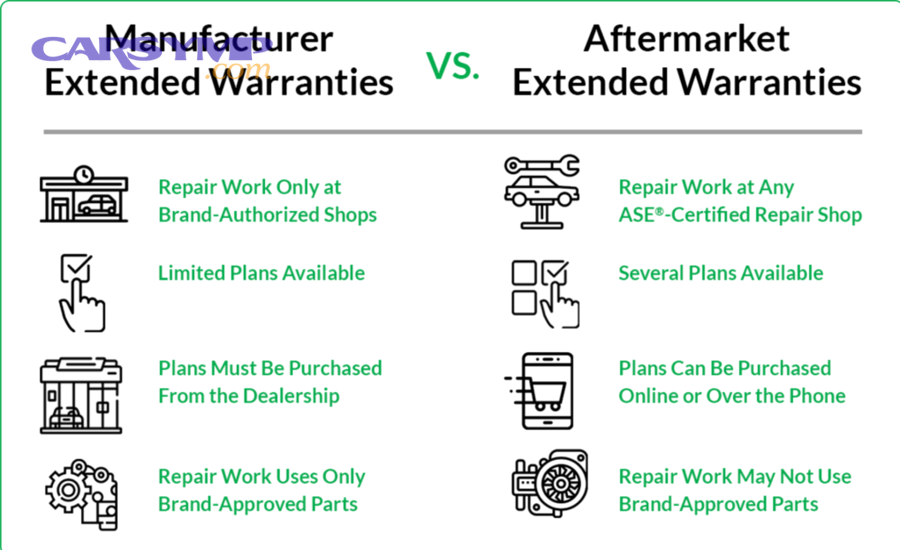
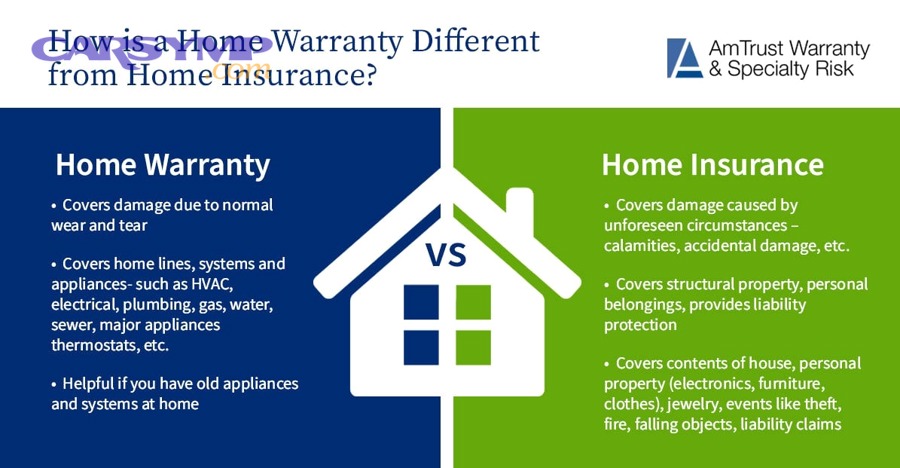
Repair warranties, manufacturer warranties, and service contracts protect different risks: repair warranties cover a specific completed job, manufacturer warranties cover vehicle defects from the maker, and service contracts pay for defined future repairs under separate contract terms.
To better understand your actual rights, compare the source of the promise before you compare the marketing language.
Is an auto repair warranty the same as a manufacturer warranty?
No, an auto repair warranty is not the same as a manufacturer warranty, because the first comes from the shop or repair network for a specific job, while the second comes from the automaker for vehicle defects during the factory warranty period.
A manufacturer warranty usually arrives with the vehicle and covers defects in materials or workmanship under the automaker’s own schedule and exclusions. An auto repair warranty comes later and usually applies only to the repair the customer already purchased. The entity making the promise is different, the scope is different, and the claims process is different.
For example, if your new vehicle has a covered transmission defect under factory coverage, the manufacturer warranty may apply. If an independent shop replaces a transmission mount after the factory period and the mount fails again soon after, the shop’s repair warranty may apply instead. Confusing those two can delay the claim because the owner sends the complaint to the wrong place.
The FTC explains that a manufacturer warranty is included with a new vehicle and covers certain defects or malfunctions for a set number of months or miles, while service contracts are separate products and not the same thing under federal law. That distinction is essential when you are deciding who must fix the problem. (consumer.ftc.gov)
What is the difference between a repair warranty, a parts warranty, and a service contract?
A repair warranty protects a completed repair, a parts warranty protects the component, and a service contract agrees to pay for certain repairs later under separate contract terms.
This three-way comparison clarifies most consumer confusion. A repair warranty usually follows a specific invoice. A parts warranty may come from the manufacturer or supplier of the component and may or may not include labor reimbursement. A service contract, often marketed as an extended warranty, is purchased coverage that pays for listed repairs according to a broader agreement.
Below is a quick comparison so car owners can classify coverage correctly before calling the wrong party.
| Coverage type | Main source | Typical scope | Common limit |
|---|---|---|---|
| Repair warranty | Repair shop or repair network | The exact repair just performed | Time and/or mileage |
| Parts warranty | Part manufacturer or supplier | The replacement component itself | May exclude labor |
| Service contract | Dealer, manufacturer, or third party | Future listed repairs under contract | Deductibles, exclusions, approval rules |
More importantly, service contracts often carry pre-authorization rules, provider networks, and claim procedures that do not resemble a simple shop guarantee. The FTC states that service contracts are contracts to pay for some repairs or services and are often called “extended warranties,” but they are not warranties as defined by federal law. (consumer.ftc.gov)
How can car owners tell whether a warranty claim should be approved?
A warranty claim should usually be approved when the failed part or workmanship issue falls within the written time or mileage limit and clearly connects to the original authorized repair.
Moreover, the strength of the claim rises when the paperwork, timing, and symptom history all point in the same direction.
What documents do you need to make an auto repair warranty claim?
You usually need 5 core documents for a claim: the original invoice, the repair order, any written warranty statement, current mileage evidence, and a clear description of the repeated problem.
How to file a warranty claim on repairs becomes much easier when you treat it like a documentation exercise instead of an argument. Start by contacting the original shop, explaining that the same or closely related issue has returned, and asking for inspection under the original warranty. Then gather your paperwork before the appointment. If you are away from home and the warranty is network-backed, ask whether you must call an administrator before visiting another location.
A strong claim packet often includes:
- The final paid invoice
- The repair order showing parts and labor
- Warranty language printed on the invoice or attached separately
- Odometer reading and repair date
- Photos or video of leaks, noises, or warning lights when relevant
- Notes on when the symptom returned and under what conditions
This process protects both sides. The customer proves timing and scope. The shop verifies whether the current issue matches the original job. NAPA’s published nationwide process specifically instructs customers to contact the original repair center for local warranty-backed service and to call the warranty administrator when outside a 25-mile radius, illustrating that claim procedure can be part of the coverage itself. (napaonline.com)
Can a warranty claim be denied if the failure is outside the original repair?
Yes, a warranty claim can be denied if the failure is outside the original repair, because warranty responsibility usually follows causation, not proximity to the repaired area.
For example, a shop may replace a front wheel bearing and warranty that work. If a month later the same corner develops a torn CV boot or bent wheel from road impact, the shop can reasonably deny the claim because those conditions are separate causes. On the other hand, if the bearing itself becomes noisy again or installation looseness causes repeat play, the denial becomes much harder to justify.
This is why wording such as “related repair,” “qualifying repair,” “consequential damage,” or “same defect” matters. A denial is not automatically unfair simply because the symptom feels similar to the driver. The key question is whether the new failure belongs to the original repair chain. Shops and providers often inspect first because a claim lives or dies on that linkage.
In short, good documentation and a tight symptom match usually support approval; weak documentation and a different root cause usually support denial. The FTC’s guidance on warranty terms and the published wording of network repair programs both show that the written scope of the original repair remains the central decision point. (consumer.ftc.gov)
What special warranty terms can expand or limit coverage beyond standard parts and labor?
Special warranty terms can expand or limit coverage through network rules, pre-authorization steps, diagnostic-fee language, towing provisions, and part-type clauses that go beyond ordinary parts-and-labor wording.
Below, those specialized terms deepen the meaning of coverage after the main question has already been answered.
Do nationwide repair warranties offer broader protection than shop-only warranties?
Yes, nationwide repair warranties can offer broader practical protection than shop-only warranties because they may let drivers obtain covered service away from the original repair location.
That extra protection is about convenience as much as scope. A local shop warranty may still be strong in substance, but it can become inconvenient if the vehicle fails while traveling or after the owner moves. A nationwide network can reduce that friction by honoring qualifying work at participating locations or by coordinating repairs through a centralized administrator.
However, broader reach does not always mean broader coverage. Some programs still require contact with the original shop first, and some reserve the right to approve outside repairs before work begins. In other words, portability improves access, but the underlying coverage still depends on the original qualifying repair and the program’s written rules. NAPA’s published program states that participating centers honor qualifying repairs and services nationwide and provides a process for customers needing service away from the original shop. (napaonline.com)
What is a pre-authorization requirement in a repair warranty claim?
A pre-authorization requirement is a rule that says the warranty provider or original shop must approve the repair process before another shop starts corrective work.
This clause exists because once another technician disassembles the vehicle, the original cause can become harder to verify. A provider may therefore insist on inspection, photos, diagnostic confirmation, or direct contact before authorizing reimbursement. If the customer skips that step, even a valid claim can become harder to recover because the provider may argue it lost the chance to verify the defect.
For car owners, the rule is simple: before you approve outside work on a likely warranty issue, call the original shop or network administrator first. Ask exactly what they need from you, whether towing is covered, whether a participating location is available, and whether diagnostic time requires approval. This is one of the less visible but most important pieces of Common exclusions and fine print because a missed phone call can change the outcome of the claim even when the underlying repair truly failed.
Are diagnostic fees, towing, or consequential damage usually included?
No, diagnostic fees, towing, and consequential damage are not usually included automatically; they are special items that must be stated clearly in the warranty language.
A standard repair warranty usually focuses on correcting the failed repair itself. Diagnostic time may be included when the failure is confirmed as covered, but not always. Towing may be excluded unless a network program or provider specifically offers it. Consequential damage, meaning damage caused by the failure spreading to other components, is often treated cautiously or excluded unless the written warranty explicitly says otherwise.
For example, a covered failed part might be replaced at no cost, yet the rental car, towing charge, hotel cost, lost wages, and damage to other components may still remain outside coverage. These details rarely appear in the big headline promise. They live in the narrow language that car owners often skip.
How do betterment clauses and aftermarket-part terms affect warranty coverage?
Betterment clauses can limit what the provider pays when a repair leaves the vehicle in better condition than before, while aftermarket-part terms can define whether equivalent replacement parts are acceptable under the warranty.
These are rare attributes, but they matter in edge cases. A betterment argument appears when the provider says the customer should share cost because the repair materially increased the value or life of an older component. Aftermarket-part language matters when the claim involves whether the replacement must be OEM, can be remanufactured, or can be another approved equivalent. Those terms influence claim value even when coverage exists.
For most drivers, the practical lesson is straightforward: ask not only “Is this covered?” but also “What exactly will you pay for if it is covered?” That question reveals whether labor, diagnostics, towing, related seals, fluids, taxes, or upgraded part choices will create out-of-pocket cost even after the claim is approved.
To sum up, most car owners need only four habits to handle a warranty on repairs well: keep the invoice, read the time-and-mileage limit, compare the new symptom to the original repair, and contact the original shop before authorizing outside work. When you do that, you move from guessing about coverage to evaluating it on written terms, real causation, and reasonable expectations about how long you should expect repairs to last. (consumer.ftc.gov)