


Getting warranty terms in writing means turning a vague promise into a usable record of what a seller, dealer, or repair shop will actually do if something fails. A written warranty gives you a concrete basis for checking coverage, exclusions, time limits, labor obligations, and claim steps before you agree to a purchase or authorize work. That matters because the Federal Trade Commission advises consumers to read the warranty to see what is and is not covered and to keep a copy of the warranty with the receipt for future problems. (consumer.ftc.gov)
Written terms also help you compare what looks generous on the surface with what is truly useful in practice. A warranty on repairs can sound strong until you discover it only covers replacement parts, only applies at one location, or requires pre-approval before any follow-up work. That is why readers searching this topic usually want more than a definition. They want a practical way to confirm coverage, exclusions, and repair promises before they commit money.
The next layer of intent is comparison. Many consumers confuse a receipt, an estimate, a verbal assurance, a manufacturer warranty, a service contract, and a shop guarantee as if they all provide the same protection. They do not. Dealer warranty vs independent shop warranty questions also arise because coverage scope, labor terms, and claim procedures can vary sharply depending on who stands behind the work.
Introduce a new idea: the smartest approach is not to wait for a breakdown and then search for proof. It is to ask for clear written terms before the sale or repair, review the fine print, save the right records, and know how to use those documents if a dispute appears later.

What does it mean to get warranty terms in writing?
Getting warranty terms in writing means obtaining a clear written statement of coverage, exclusions, duration, and claim rules before or at the time you buy a product or approve a repair.

To better understand the issue, written terms matter because they convert an uncertain promise into language you can read, compare, save, and use later if the product fails or the repair does not hold.
Is a verbal warranty promise enough to protect a consumer?
No, a verbal warranty promise is usually not enough to protect a consumer because it is harder to prove, easier to reinterpret, and weaker than a written document when a dispute starts.
More specifically, a spoken promise often sounds reassuring at the counter, but it may leave out the details that determine whether a claim succeeds. A shop employee might say, “We stand behind our work,” yet never explain how long that promise lasts, whether labor is included, whether wear items are excluded, or whether you must return to the same location. Once a problem appears, memory and interpretation become the battlefield.
That is the practical gap between reassurance and enforceable clarity. A written warranty or written guarantee allows both sides to see the same terms in the same language. It also reduces the chance that the service advisor, the manager, and the consumer all remember the promise differently. In real-world disputes, the customer who saved a written work order, invoice, and stated warranty terms usually begins from a much stronger position than the customer relying on a conversation.
FTC guidance distinguishes between oral and written warranties and explains that consumers should read what is covered and save the warranty with the receipt. The FTC also notes that written warranties on consumer products fall under Magnuson-Moss rules in ways oral promises do not. (consumer.ftc.gov)
What information should a written warranty clearly define?
A written warranty should clearly define at least seven core elements: what is covered, what is excluded, how long coverage lasts, who provides service, whether parts and labor are both covered, what the customer must do to claim service, and what conditions can void coverage.
Specifically, these details tell you whether the warranty has real value or only marketing value. A good written warranty identifies the product, system, or repair that is covered. It states the term in time or mileage. It explains exclusions such as misuse, neglect, accident damage, normal wear, unauthorized modifications, or commercial use. It says whether the warranty covers replacement parts only or both parts and labor. It names the responsible party for approval and performance. It tells you how to make a claim and which documents you must present.
This is where many readers first notice the Parts warranty vs labor warranty differences that change the cost of a future repair. A warranty that covers only the replacement part can still leave you paying diagnosis, installation, and related labor. By contrast, a stronger written repair warranty explains whether both the component and the work performed to install it are included.
According to the FTC’s consumer warranty guidance, consumers should look for coverage length, limitations, what repairs are covered, and what must be done to obtain service. The FTC also advises keeping records after purchase, including the receipt and the warranty copy. (consumer.ftc.gov)
What should consumers ask to have included in written warranty terms?
Consumers should ask for at least eight written details before agreeing: coverage scope, exclusions, term length, mileage limits if relevant, parts coverage, labor coverage, claim steps, and who approves or performs the remedy.
Let’s explore the issue further, because many problems do not come from having no warranty at all. They come from having a warranty that was never fully described before the money changed hands.
Which warranty details should be listed before you approve a repair or purchase?
There are eight main details that should be listed before approval: covered items, excluded items, duration, mileage or usage limits, parts terms, labor terms, claim procedure, and conditions that can void the promise.
For example, if you are authorizing auto repair work, ask the shop to specify which exact repair is covered. “Brake work” is too broad. “Front brake pads and rotor replacement performed on the invoice date” is much clearer. Ask how long the warranty on repairs lasts and whether it is measured by months, miles, operating hours, or some combination. Ask whether a return inspection is required before a claim is approved. Ask whether collateral damage, diagnostics, towing, fluids, taxes, or shop fees are included.
A buyer should also ask whether the warranty follows the part, the labor, the full repair order, or only certain listed line items. That distinction becomes critical later. Some shops warranty only the part supplier’s component, while others warranty the complete repair outcome. The second approach is usually stronger for the customer because it reduces finger-pointing between installer and manufacturer.
The table below shows what consumers should request in writing before they proceed.
| Warranty Detail | Why It Matters | What Strong Wording Looks Like |
|---|---|---|
| Covered repair or product | Prevents vague promises | “This warranty applies to the listed alternator replacement on Invoice #1234.” |
| Exclusions | Avoids surprise denials | “Excludes collision damage, misuse, and unrelated system failures.” |
| Time or mileage term | Defines claim window | “24 months or 24,000 miles, whichever comes first.” |
| Parts coverage | Clarifies replacement rights | “Defective replacement part included at no charge.” |
| Labor coverage | Clarifies who pays installation | “Removal and reinstallation labor included during warranty term.” |
| Claim process | Prevents procedural denial | “Customer must contact shop before third-party repairs are performed.” |
| Service location | Shows where remedy is available | “Repairs must be performed at any participating location.” |
| Documentation required | Helps consumers prepare | “Original invoice and inspection findings required.” |
This checklist supports Choosing a shop based on warranty strength because the strongest provider is not always the one making the biggest promise. It is usually the one stating the promise most clearly.
What proof should a shop, dealer, or seller give you in writing?
A shop, dealer, or seller should give you a written warranty document, a detailed invoice or work order, and language that identifies the covered product or repair and the claim conditions.
More specifically, a receipt alone is not always enough. A basic payment receipt proves that money changed hands. It does not necessarily prove what was promised afterward. A better record is a signed repair order or purchase document that includes warranty language, the date, the covered work, exclusions, and claim instructions. If the warranty terms appear online, download or print them immediately so you can preserve the version you relied on at the time of purchase.
For vehicles, the FTC’s Used Car guidance tells dealers to provide or make written warranty terms available before sale, and the Buyers Guide directs consumers to ask for a copy of the warranty document and an explanation of coverage, exclusions, and repair obligations. That principle matters beyond cars as well: if a provider will not show the written terms before the transaction, that hesitation itself is a warning sign. (ftc.gov)

Why do written warranty terms help prevent claim disputes?
Yes, written warranty terms help prevent claim disputes because they define expectations early, create proof of the promise, and reduce arguments about coverage, timing, and responsibility.
In addition, the dispute-prevention value of a written warranty appears long before a claim is ever filed. Once both sides read the same terms, the chances of misunderstanding drop immediately.
Can written warranty terms make a future claim easier?
Yes, written warranty terms can make a future claim easier because they establish the covered repair, the time limit, the required records, and the remedy process before a problem occurs.
Specifically, a future claim becomes easier when the written terms answer four questions in advance: Is this failure covered? Are you still within the time or mileage window? Did you follow the required procedure? What remedy should be provided if the claim is valid? When those answers already exist in writing, the discussion becomes more factual and less emotional.
This is especially important in repair situations. If a component fails again, the shop can compare the new symptom with the original invoice and determine whether the same covered repair has failed or whether a different related issue is present. That written baseline protects the customer from vague dismissals, but it also protects the shop from being asked to fix unrelated problems for free. Clarity serves both sides.
According to the FTC, consumers should save the warranty and receipt because those records help prove ownership, purchase date, and applicable coverage when a problem arises. (consumer.ftc.gov)
How do written warranty terms compare with verbal promises or vague receipts?
Written warranty terms win in proof and clarity, verbal promises are weakest for enforcement, and vague receipts are only useful when they also state coverage, exclusions, and remedy obligations.
However, many consumers do not realize that a vague receipt can create false confidence. A document that lists a repair but says nothing about post-repair obligations does not automatically function as a strong warranty. Likewise, a friendly verbal promise may reflect good intentions, but good intentions are not the same as documented obligations.
In a comparison sense, written terms are best for verification, dispute reduction, and claim support. Verbal statements may still matter, but they are much harder to prove. A generic receipt sits in the middle: better than nothing, but not enough unless it includes real warranty language. This distinction matters when comparing Dealer warranty vs independent shop warranty as well. A dealer may rely on manufacturer-backed written terms for certain components, while an independent shop may rely on supplier-backed parts coverage plus its own labor promise. One is not automatically better than the other. The better choice is the provider whose written terms are clearer, broader, and easier to use.
FTC guidance on auto warranties explains that manufacturer warranties and service contracts are different products with different coverage rules, which reinforces why consumers should read the written terms instead of assuming similar protection. (consumer.ftc.gov)
How can consumers review coverage, exclusions, and claim rules before agreeing?
Consumers can review coverage, exclusions, and claim rules before agreeing by checking the covered item, the excluded conditions, the claim steps, and the exact parts-and-labor obligations line by line before signing or paying.
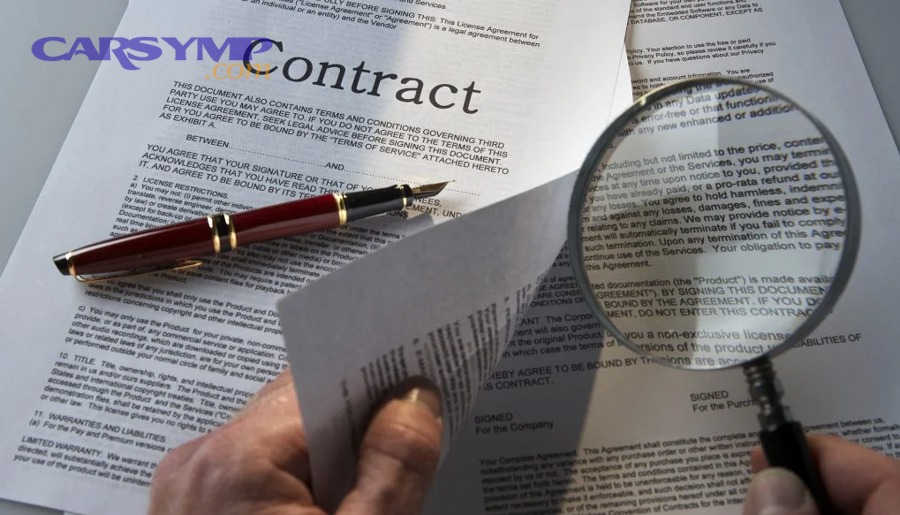
To better understand the review process, it helps to read the warranty as if you were already filing a claim. That mindset exposes the gaps quickly.
What exclusions and conditions should consumers check first?
There are six common exclusions and conditions consumers should check first: misuse, neglect, normal wear, unauthorized repairs, accidental damage, and commercial or abnormal use.
More specifically, exclusions matter because they define the boundary between a valid claim and a denied claim. If the provider excludes normal wear, ask what that means in practice. If the provider excludes damage caused by continued operation after a symptom appears, ask how quickly you must report the issue. If unauthorized repairs void coverage, ask whether diagnosis by another shop also creates a problem. If maintenance neglect is excluded, ask what maintenance records you may need to preserve.
This is also where warranty language can reveal whether a strong-looking offer is actually narrow. For example, “lifetime warranty” may only apply to the part itself and not to labor, shipping, diagnosis, or any damage caused when the part failed. Likewise, “guaranteed repair” may only mean that the shop will reinspect the work, not necessarily that it will replace everything related at no charge.
The FTC advises consumers to ask what is covered, what is not covered, and what limitations apply before relying on warranty protection. (consumer.ftc.gov)
What is the difference between parts coverage, labor coverage, and repair promises?
Parts coverage applies to the replacement component, labor coverage applies to the work of diagnosis, removal, and installation, and a repair promise applies to the overall corrective result under stated conditions.
Specifically, this is where Parts warranty vs labor warranty differences become expensive. If a starter fails again, a part-only warranty may provide another starter but still charge the customer for diagnosis and installation. A labor warranty may cover the technician’s time as well. A broader repair promise may go further by treating the repair as one whole obligation, subject to the written terms.
Consumers should not assume these categories overlap. Some shops offer strong labor coverage for a short time and supplier-backed parts coverage for longer. Some dealers offer manufacturer-backed parts and labor for specific systems but exclude wear items or aftermarket accessories. This is why Choosing a shop based on warranty strength requires more than comparing the number of months advertised. The better question is: what exactly gets paid for if the same problem returns?
The FTC’s auto warranty guidance explains that different forms of vehicle coverage can vary by timeframe, source, and obligations, which supports careful comparison before purchase or repair approval. (consumer.ftc.gov)
How should consumers document and use written warranty terms when filing a claim?
Consumers should document and use written warranty terms by saving the warranty, invoice, receipts, photos, and communication history, then matching the current problem to the written coverage and following the stated claim steps in order.
Next, think of documentation as the bridge between the promise on paper and the remedy you want in real life. Even a strong warranty becomes harder to use when records are scattered or incomplete.
What documents should you save to support a warranty claim?
There are seven main documents you should save to support a warranty claim: the written warranty, the original invoice, proof of payment, photos or videos, maintenance records if relevant, inspection notes, and written communication with the provider.
For example, if a repaired component fails again, start by locating the original repair order and the page or line that describes the warranty on repairs. Keep the date visible. Save any text messages or emails where the provider explained the warranty or instructed you on the next step. If the item shows visible failure, photograph the condition before additional work changes the evidence. If towing or emergency action was required, keep those records too.
This habit also helps you separate a strong claim from a confusing complaint. A claim succeeds more easily when the consumer can show the original covered repair, the time window, the symptom history, and compliance with the provider’s instructions. That is much more persuasive than a general statement that “it broke again.”
The FTC advises consumers to save a copy of the warranty and the receipt because those records help prove purchase date and original ownership when service is needed. (consumer.ftc.gov)
When should you challenge unclear or incomplete written warranty language?
Yes, you should challenge unclear or incomplete written warranty language before you approve the transaction, when the wording is vague, when the covered repair is not identified, and when the exclusions or claim steps are missing.
More importantly, unclear wording rarely becomes clearer after the problem appears. If the document says “limited warranty applies” but never explains the limitation, ask for the full text. If the invoice lists a replacement part but says nothing about labor, ask whether labor is included if the part fails. If the warranty says prior approval is required, ask how approval is obtained and what to do in an emergency.
This is not being difficult. It is being precise. Good providers usually welcome the chance to explain their policy because clarity reduces disputes later. Weak providers may resist because ambiguity benefits them. That response itself gives you useful information about risk.
If the terms are online, save them right away. FTC materials explain that written warranties may be made available electronically, and consumers should keep a copy for their records. (ftc.gov)
What fine print in written warranties can change the real value of coverage?
Fine print can change the real value of coverage through transfer limits, location restrictions, pre-approval rules, arbitration clauses, documentation burdens, and differences between written and implied warranty rights.
Besides the main promise, the micro details often decide whether the warranty is convenient, frustrating, broad, or barely usable. This is where careful reading creates a real advantage.
Can transferability and geographic limits reduce the value of a written warranty?
Yes, transferability and geographic limits can reduce the value of a written warranty because a broad promise becomes much less useful if it only protects the original buyer or only applies at one location.
For example, a used product or vehicle may still sound attractive when a seller says it “has warranty left,” but that value drops if the warranty is non-transferable. Likewise, a nationwide brand may appear convenient until the written terms require service only at the original shop. Consumers comparing dealer and non-dealer options should ask whether follow-up service is local-only, network-based, or nationwide.
In practical terms, transferability matters most when resale, travel, relocation, or used-vehicle transactions are likely. Geographic limitations matter most when the product or vehicle could fail far from the original purchase location. A promise that works only under ideal circumstances is worth less than a promise that remains usable when life gets inconvenient.
What is the role of authorized repair shops and pre-approval requirements in warranty claims?
Authorized repair shops and pre-approval requirements control where service is performed and when the provider must approve work before paying for it, which means procedure can matter as much as the defect itself.
Specifically, some warranties require the customer to return to the original provider or to a participating network before any third-party repair occurs. Others require phone or online approval before teardown, diagnosis, or replacement. If the customer skips that step, the provider may argue that the claim is procedurally defective even if the underlying failure looks legitimate.
That does not mean such rules are always unfair, but it does mean they should be understood before the purchase or repair order is signed. The FTC states that a manufacturer generally cannot require branded parts or services to maintain warranty coverage unless it provides them for free or has an FTC waiver, which is an important protection against some overreaching restrictions. (consumer.ftc.gov)
How do dispute-resolution clauses and arbitration language affect consumers?
Dispute-resolution clauses and arbitration language affect consumers by controlling how disagreements are handled, where claims are heard, and how formal remedies may be pursued if the provider refuses coverage.
More specifically, arbitration or informal dispute programs can change the cost, speed, and leverage of a claim. Some consumers may appreciate a faster process. Others may prefer court access, especially in higher-value disputes. The key point is not that one method is always better. The key point is that the claim path should not surprise you after the denial arrives.
Because these clauses can shape your next step, they deserve the same attention as coverage length or exclusions. A warranty with generous surface coverage but a burdensome dispute process may be less valuable than a shorter warranty with a simpler remedy path.
How are written warranties different from implied warranties or general satisfaction promises?
Written warranties are stated promises with specific terms, implied warranties arise under law without detailed written wording, and general satisfaction promises are often looser marketing assurances unless they are tied to defined remedies.
On the other hand, many consumers assume all three operate the same way. They do not. The FTC explains that implied warranties, such as merchantability, may still exist under state law even when no separate written warranty is presented, unless an as-is sale or another lawful limitation applies. In used-car contexts, the FTC notes that implied warranties can still matter if the sale is not as-is, and a service contract purchased within a defined period may also affect implied warranty rights. (consumer.ftc.gov)
That distinction matters because a written warranty tells you the explicit promise, while implied warranty law can provide a different baseline right. A satisfaction statement such as “we stand behind our work” may be helpful, but unless it is tied to written terms, time limits, and remedies, it is not a substitute for a clearly written warranty. In short, the strongest position for a consumer is to understand all three layers, but to insist on written terms whenever a seller or repairer is making a promise you may need to rely on later.
According to FTC materials on warranties and federal warranty law, written warranties on consumer products are subject to specific disclosure standards, while implied warranties arise under state law and may provide additional protection in some transactions. (ftc.gov)
In sum, getting warranty terms in writing is not just a paperwork habit. It is the practical step that turns a promise into a standard you can evaluate, compare, and enforce. Whether you are reviewing a household product, auto repair, dealer coverage, or an independent shop guarantee, the safest path is the same: ask for the terms early, read the exclusions carefully, confirm the parts-and-labor split, save every record, and choose the provider whose written promise remains strong after the fine print is fully visible.