


Choosing between a dealer warranty and an independent shop warranty depends on what kind of protection you need, what type of repair your car needs, and whether your vehicle is still under factory coverage. In most cases, dealer-backed coverage protects newer vehicles better for brand-specific repairs, while an independent shop warranty on repairs often gives drivers better value for common maintenance and out-of-warranty work. To begin, the right answer is not simply “dealer” or “independent,” but which option fits your car’s age, repair complexity, and ownership goals.
A second issue matters just as much: many drivers worry that visiting an independent repair shop will automatically void their manufacturer warranty. That concern is understandable, especially when people notice Car Symptoms, hear conflicting advice, or need service quickly. Specifically, independent service does not automatically cancel factory protection, but the repair must follow proper standards and the shop must perform the work correctly.
Another major part of this topic is understanding What repair warranties typically cover. Dealer coverage, manufacturer coverage, and an independent shop’s workmanship guarantee are not the same thing, even when they all relate to the same vehicle. More specifically, drivers need to compare parts, labor, exclusions, and claim procedures before deciding where to authorize repairs.
Cost, convenience, trust, and documentation also shape the decision. Getting warranty terms in writing can protect you whether you choose a dealership or an independent garage, because written coverage rules make it easier to understand responsibilities and resolve disputes. Introduce a new idea: the sections below break down the differences, the legal realities, and the practical scenarios that show which option protects drivers best.
What Is the Difference Between a Dealer Warranty and an Independent Shop Warranty?
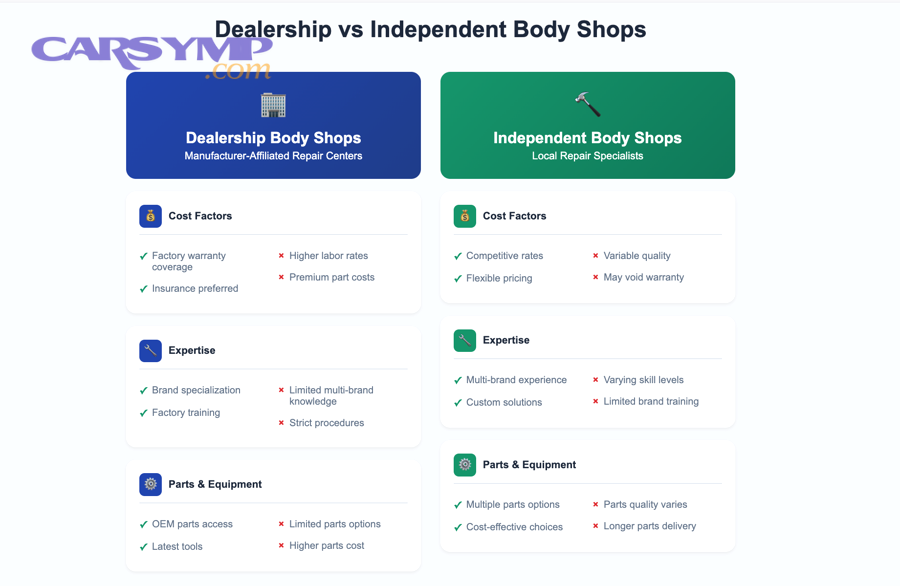
A dealer warranty and an independent shop warranty are two different types of repair protection: one is usually tied to manufacturer or dealer-backed coverage, while the other typically covers the shop’s own parts and labor for a limited period.
To better understand the issue, it helps to separate factory obligations from a local or chain repair facility’s promise to stand behind its work.
What Does a Dealer Warranty Usually Cover?
A dealer warranty usually covers repairs that fall under a manufacturer’s new vehicle limited warranty, a certified pre-owned program, or a dealer-specific service contract. In practice, that means the dealership performs authorized repairs using factory procedures, approved parts, and brand-specific diagnostic systems. If the vehicle is still within the coverage term and the problem is not excluded, the dealer may repair or replace the failed component with little or no out-of-pocket cost to the driver.
This kind of warranty often applies best to newer vehicles. If the issue involves software calibration, electronics, emissions systems, hybrid components, advanced safety systems, or a recall-related condition, dealerships usually have an advantage. Their technicians often receive model-specific training and use tools designed for that brand. That can matter when a problem is not obvious or when the repair requires technical bulletins, programming access, or factory documentation.
Dealer-backed coverage may also include certain parts and labor rules that are stricter but more standardized. The benefit for the driver is consistency. The downside is that dealership pricing outside warranty claims is often higher, and the repair approval process may be slower if the claim requires verification, inspection, or communication with the manufacturer.
What Does an Independent Shop Warranty Usually Cover?
An independent shop warranty usually covers the work that shop performed, including replacement parts and labor connected to that repair, for a defined time or mileage period. That means if the same repaired part fails again during the covered period, or if the installation was defective, the shop may correct the issue at no extra charge or at a reduced cost.
This is where many drivers misunderstand the term warranty on repairs. An independent shop is generally not promising broad factory-level coverage for the whole car. Instead, the shop is standing behind its workmanship and the parts it installed. That can still be valuable. For brake service, suspension repair, cooling system work, battery replacement, starter replacement, or routine mechanical service, a strong independent warranty may offer practical protection that fits the driver’s daily needs.
Independent warranties vary more than dealer coverage. One shop may offer 12 months or 12,000 miles, while another may offer 24 months or 24,000 miles, and a larger network may offer nationwide support. Because standards vary, getting warranty terms in writing becomes essential. A written document should explain what is covered, what is excluded, who pays labor, whether diagnostics are included in a return visit, and whether the warranty is honored at other locations.
In simple terms, the dealer often offers coverage tied to the car’s original manufacturer support, while the independent shop offers coverage tied to the repair it performed. That difference is the foundation for everything else in this comparison.
Is Dealer Warranty Coverage Better Than Independent Shop Warranty Coverage?
Dealer warranty coverage is better for factory-covered, brand-specific, and highly technical repairs, while independent shop warranty coverage is often better for value, flexibility, and common repairs after factory coverage becomes less important.
However, the answer depends on the vehicle’s age, the repair category, and how much the driver values cost savings versus factory alignment.
Which Option Offers Better Protection for Newer Vehicles?
Dealer coverage usually protects newer vehicles better because it aligns directly with manufacturer policies, approved parts, and model-specific repair procedures. When a car is still under factory warranty, the dealership is often the most straightforward place to diagnose and perform covered repairs. That matters especially for powertrain issues, electronic modules, infotainment concerns, ADAS sensors, emissions components, and defects that may trigger a technical service bulletin or recall action.
A newer vehicle often contains integrated systems that depend on precise software and calibrations. If a repair involves cameras, radar, battery management systems, or transmission control updates, the dealership may offer the clearest path to a complete and compliant repair. The dealer also has direct access to brand service records, which can simplify warranty claim approval.
Another strength is predictability. A manufacturer-backed process usually follows a standardized claim structure. The customer can often see whether the repair is covered, whether the part is excluded, and whether there is any deductible under an extended service plan. That predictability can be worth more than the cheapest upfront repair bill.
Which Option Offers Better Value for Older or Out-of-Warranty Vehicles?
Independent shops usually offer better value for older or out-of-warranty vehicles because labor rates are often lower, repair options are broader, and the shop may tailor the work to the car’s actual condition and budget. This does not mean independent shops are automatically “better” in all cases. It means they are often more practical once the car no longer depends heavily on manufacturer coverage.
For example, an older sedan that needs brakes, control arms, a radiator, spark plugs, or a starter may not benefit much from dealership pricing or brand-specific workflow. In that case, a trusted independent shop may install quality parts, provide a solid warranty on repairs, and save the driver meaningful money. That can improve the total cost of ownership without reducing repair reliability.
Independent shops may also offer more communication. Drivers often appreciate talking directly with the technician or service advisor who explains the cause of the issue, shows worn parts, and discusses repair options. When car owners notice Car Symptoms such as vibration, overheating, brake noise, rough idle, or warning lights, a reputable independent shop may provide more personalized guidance, especially if the vehicle is older and no longer under original factory protection.
The key point is that “better” means different things in different situations. The dealer often wins on factory alignment and technical depth. The independent shop often wins on cost efficiency, convenience, and customized solutions.
Can You Use an Independent Shop Without Voiding a Dealer or Manufacturer Warranty?
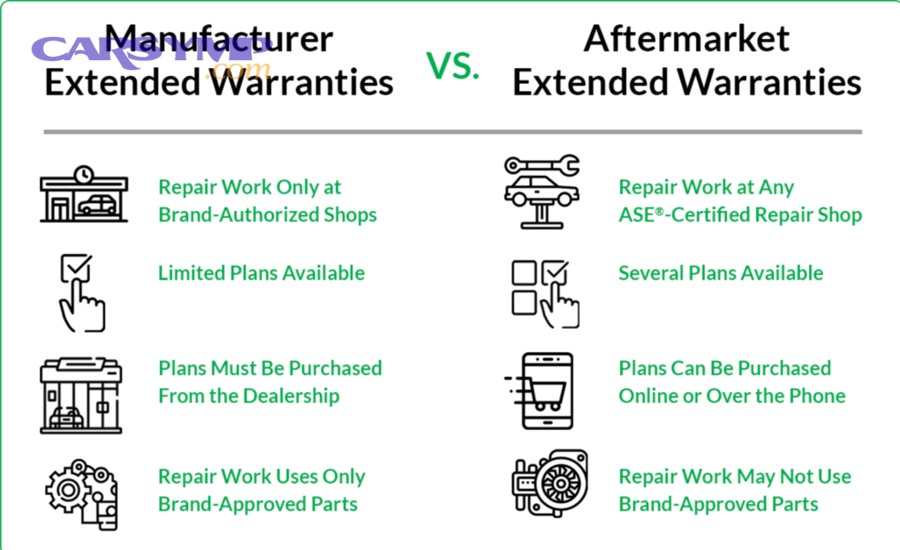
Yes, you can usually use an independent shop without voiding a dealer or manufacturer warranty, as long as the work is done properly, maintenance requirements are met, and the outside repair did not cause the covered failure.
More importantly, drivers should understand that routine service choice and warranty claim approval are related but not identical issues.
When Does Independent Service Not Void Warranty Coverage?
Independent service does not void warranty coverage when the shop performs routine maintenance correctly, follows the manufacturer schedule, uses appropriate parts and fluids, and documents the work. Oil changes, tire rotation, brake service, battery replacement, filters, and many maintenance operations can be completed outside the dealership without automatically canceling the vehicle’s warranty rights.
The critical detail is documentation. Keep invoices, mileage records, parts information, and service notes. Those records help show that the vehicle was maintained properly. If a future warranty claim arises, a service history can support the argument that the owner met required maintenance responsibilities.
This is where getting warranty terms in writing also matters. Drivers should read the warranty booklet, service contract language, and repair invoice terms. The written documents often clarify whether a specific claim depends on inspection, prior authorization, maintenance intervals, or proof that a covered part failed due to a defect rather than outside influence.
When Can a Warranty Claim Be Denied After Independent Repairs?
A warranty claim can be denied after independent repairs if the outside repair caused the problem, if improper parts or fluids damaged the vehicle, if maintenance was neglected, or if the repair falls under an exclusion. That is an important distinction. The warranty is not denied merely because an independent shop touched the car. It is denied because there is a causal connection between the outside action and the failure in question.
For example, if an independent shop installs the wrong fluid in a transmission and damage follows, the manufacturer may deny a related transmission claim. If a poor electrical repair leads to module failure, the covered repair may be rejected. If a driver skips required oil changes and the engine fails, the lack of maintenance can also become a valid reason for denial.
Drivers should not interpret this as a reason to avoid independent shops entirely. Instead, it shows why shop quality matters. A competent independent repair business that uses correct procedures and clear documentation can protect the driver well. A careless shop can create risk even if the original issue might otherwise have been covered.
According to the Federal Trade Commission’s consumer guidance on auto warranties and service contracts, warranty coverage generally cannot be conditioned on using a specific repair facility for routine maintenance unless the provider supplies that service for free. That principle reinforces why proper service records and correct repair practices matter most.
What Factors Should Drivers Compare Between Dealer and Independent Shop Warranties?
Drivers should compare parts, labor, exclusions, claim rules, turnaround time, repair expertise, and cost because those factors determine whether a warranty delivers real protection or only sounds reassuring on paper.
To illustrate the issue clearly, a side-by-side framework helps drivers judge value beyond the word “warranty.”
The table below compares the practical factors that matter most when choosing between dealer and independent shop coverage.
| Factor | Dealer Warranty | Independent Shop Warranty |
|---|---|---|
| Coverage source | Manufacturer, dealer program, or service contract | Shop workmanship and installed parts |
| Best use case | Newer vehicles, factory claims, complex systems | Common repairs, older vehicles, budget-conscious ownership |
| Parts type | Usually OEM or approved equivalents | OEM, aftermarket, or customer-approved options |
| Labor coverage | Often standardized under program rules | Varies by shop and repair type |
| Exclusions | Defined by factory or contract language | Defined by shop policy and parts supplier terms |
| Claim process | Often formal and inspection-based | Usually direct with the original shop |
| Cost outside coverage | Often higher | Often lower |
| Transferability | Sometimes available on contracts | Usually limited, sometimes non-transferable |
| Nationwide support | Strong within dealer network | Varies from local-only to national chains |
How Do Parts, Labor, and Exclusions Differ?
Parts, labor, and exclusions differ significantly between the two models. A dealer claim may use OEM parts or brand-approved replacements, which can help preserve fit, compatibility, and factory standards. Independent shops may offer a broader range of parts, including premium aftermarket, value-line alternatives, or customer-choice options. That flexibility can reduce cost, but it also means the driver must understand what repair warranties typically cover.
Some warranties cover replacement parts fully but limit labor reimbursement. Others cover both parts and labor but exclude diagnostics, fluid losses, seals, alignment, programming, or collateral damage. Wear items may receive shorter coverage than hard parts. For instance, a brake pad warranty may differ from a brake caliper warranty, and a battery warranty may differ from labor to reinstall it.
That is why a repair authorization should never rely on vague promises. Ask whether the warranty covers:
- The part itself
- Labor to replace it again
- Diagnostics tied to the repeat failure
- Related materials such as coolant, gaskets, or shop supplies
- Towing or roadside inconvenience
- A prorated versus full replacement rule
The clearer the answer, the more useful the warranty becomes.
How Do Cost, Convenience, and Service Experience Differ?
Cost, convenience, and service experience often tilt the decision toward independent shops, especially for drivers who need practical, recurring maintenance. Dealerships may offer nicer waiting areas, shuttle service, loaners, and direct manufacturer systems, but they often charge higher labor rates. Independent shops may provide faster scheduling, more flexible estimates, and lower hourly costs.
Convenience also depends on location and urgency. A nearby independent repair shop may resolve a brake issue, cooling issue, or check-engine concern faster than a booked dealership service lane. When a driver is responding to Car Symptoms such as a grinding brake, a battery that will not hold charge, or a coolant leak, immediate access can matter as much as the warranty language.
Service experience is more personal at many independent shops. Customers often value honest explanation, photo evidence, old parts shown after removal, and the ability to approve repairs in stages. Meanwhile, the dealership experience may feel more standardized and more closely linked to the manufacturer brand, which some drivers prefer.
According to a Consumer Reports reliability and ownership-cost pattern observed across many vehicle categories, repair costs and maintenance expenses often rise as vehicles age, making price-sensitive service decisions increasingly important over time. That reality is one reason independent warranty-backed repairs become more attractive after factory coverage loses relevance.
Which Warranty Option Protects Drivers Best in Real-World Repair Situations?
A dealer warranty protects drivers best in complex, covered, and brand-specific situations, while an independent shop warranty protects drivers best in common repair scenarios where cost control, convenience, and workmanship support matter most.
Below, the best choice becomes easier to see when the decision is tied to actual repair categories rather than abstract labels.
Is a Dealer Warranty Better for Complex or Brand-Specific Repairs?
Yes, a dealer warranty is usually better for complex or brand-specific repairs because the dealership can combine factory systems, approved procedures, and direct claim handling in one place. That matters when the repair involves advanced electronics, drivability software, emission controls, hybrid systems, factory recalls, or model-specific technical updates.
A modern vehicle can contain interconnected systems that require special calibration after even a simple-looking repair. A radar sensor replacement, steering angle calibration, transmission software update, or battery control module issue may not be handled as efficiently outside the dealer environment. Even if an independent shop is technically capable, the dealer may still offer stronger claim alignment when the vehicle is under manufacturer coverage.
This is especially true when the repair falls into a gray area between defect and wear. The dealer may have a better chance of identifying whether the issue relates to a known campaign, technical bulletin, or goodwill assistance pathway. In those situations, the dealership is not only fixing the car but also navigating the factory process around the repair.
Is an Independent Shop Warranty Better for Common Repairs and Budget-Conscious Drivers?
Yes, an independent shop warranty is usually better for common repairs and budget-conscious drivers because it focuses on the actual work performed and often reduces the total repair bill. Brake jobs, suspension work, belts, hoses, radiators, starters, alternators, wheel bearings, and many routine repairs fit this model well.
The independent advantage grows when the car is older, the driver plans to keep it for years, and the repair does not depend on manufacturer authorization. A strong local shop can provide honest diagnosis, quality replacement parts, and a sensible warranty on repairs without the overhead often seen at a dealership. If the problem returns, the driver often goes straight back to the same shop for a direct resolution instead of navigating a formal claim system.
This does not mean every independent shop offers equal protection. Some are exceptional, while others provide thin coverage or vague promises. Drivers should look for clarity, reputation, certifications, and a written explanation of what repair warranties typically cover. A shop that cannot clearly explain its warranty should not be trusted with major work.
In real-world terms, the best protection comes from the right match:
- Dealer for factory-covered, software-driven, or brand-sensitive repairs
- Independent for common mechanical service and out-of-warranty ownership
- Either one, if the shop is trustworthy, the repair is appropriate, and the terms are clear
How Should You Choose Between Dealer Warranty and Independent Shop Warranty?
You should choose based on five factors—vehicle age, factory coverage status, repair complexity, total cost, and warranty clarity—because those factors reveal which option protects your car and your budget most effectively.
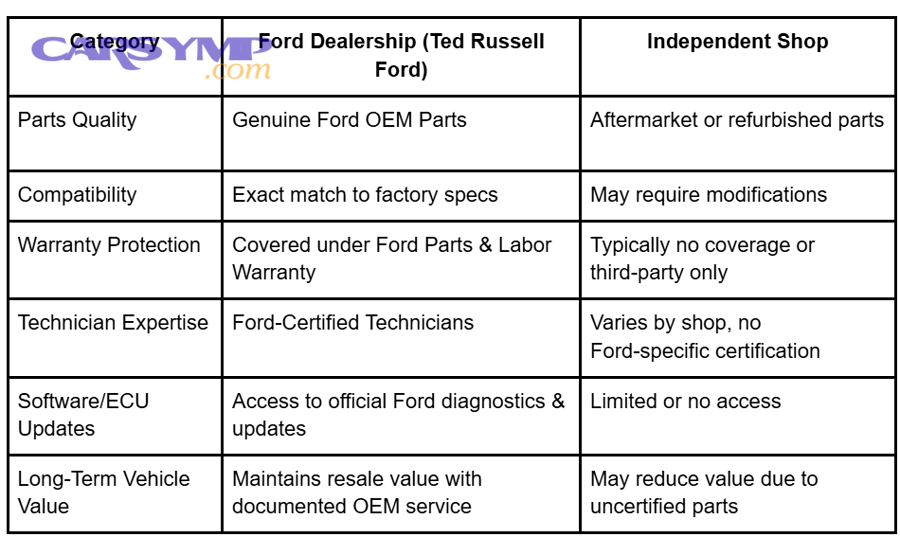
In short, the best decision comes from comparing the repair situation first and the brand name second.
What Questions Should You Ask Before Approving a Repair?
Before approving a repair, ask direct questions that turn a vague promise into a usable contract. Many disputes happen because customers assume coverage exists without asking what it actually includes. The easiest protection step is getting warranty terms in writing before the work begins.
Ask questions such as:
- What exactly is covered: parts, labor, or both?
- How long does the coverage last in time and mileage?
- Is the warranty nationwide or only valid at this location?
- Are diagnostics included if the same issue returns?
- Are there exclusions for wear, misuse, or related failures?
- Will the shop use OEM or aftermarket parts?
- Does the warranty transfer if I sell the car?
- What paperwork do I need to keep for future claims?
These questions do more than protect against confusion. They also reveal how organized and honest the service provider is. A clear answer often signals a professional repair business. A vague answer often signals future frustration.
What Is the Best Choice for Your Vehicle and Driving Needs?
The best choice for your vehicle and driving needs depends on context, not brand loyalty. If your car is new, still under manufacturer warranty, or showing technical faults linked to factory systems, the dealership often provides the strongest protection. If your vehicle is older, out of warranty, and needs straightforward mechanical repairs, an independent shop often delivers better value without sacrificing reliability.
A practical decision model looks like this:
- Choose the dealer if the car is under factory warranty, the repair is complex, or the issue may involve recall, programming, or manufacturer defect review.
- Choose an independent shop if the repair is routine, the car is out of factory coverage, and you want lower cost with a strong local workmanship guarantee.
- Compare both if the repair is expensive, the diagnosis is uncertain, or the warranty language seems unclear.
Drivers should also think about ownership horizon. If you will keep the car for several years, reliable and affordable recurring service may matter more than factory alignment. If you plan to preserve resale value on a newer car, dealer service history and OEM parts may carry more weight.
The strongest outcome comes from matching the warranty model to the repair scenario, then documenting everything. That includes invoices, parts details, mileage, and any promises made by the service provider. Written records protect your budget and strengthen your position if a dispute arises later.
What Extra Warranty Details Should Drivers Know Before Choosing a Repair Shop?
Drivers should also know the legal, geographic, and parts-related details behind repair coverage because those details often determine whether a warranty works smoothly or becomes difficult to use when a problem returns.
Besides the main comparison, these micro-level details expand the decision and help drivers avoid common misunderstandings.
Does the Magnuson-Moss Warranty Act Affect Dealer vs Independent Repair Choices?
Yes, the Magnuson-Moss Warranty Act affects the discussion because it supports the principle that consumers generally cannot be forced to use a specific repair facility for routine maintenance in order to keep warranty protection. In practical terms, that means a manufacturer usually cannot say, “You must use our dealership for every oil change,” unless that service is provided free of charge.
However, the law does not excuse poor workmanship. If an independent repair causes the damage, the resulting claim can still be denied. That is why drivers should never reduce this issue to a simple legal slogan. The law helps protect consumer choice, but repair quality and documentation still decide many real claim outcomes.
Is a Dealer or Independent Shop Warranty Valid Nationwide?
Dealer warranty support is often valid throughout the brand’s authorized network, while independent warranty support may range from local-only coverage to nationwide support through a chain or partner program. This distinction matters for drivers who travel often, relocate, or rely on their car for work.
A nationwide warranty can be very valuable, but it should not be assumed. Some independent businesses advertise broad support but actually require approval steps or partner location availability. Others only honor the warranty at the original shop. Ask for the rule in writing and verify how a claim is handled away from home.
Can Dealer Warranty and Independent Shop Warranty Coverage Overlap?
Yes, dealer warranty and independent shop warranty coverage can overlap, but they usually apply to different parts of the situation. A factory warranty may cover a defect in an original component, while the independent shop warranty covers the labor or replacement part from a separate repair. The overlap does not mean double payment. It means different sources may be responsible for different failures or different stages of the same overall issue.
For example, if a shop replaces a water pump and its gasket, the shop may warranty that installation. If a separate factory-covered electronic issue later appears, the manufacturer may remain responsible for that unrelated defect. Understanding the boundary between these coverages prevents false expectations and helps drivers know whom to contact first.
Are OEM Parts Always Better Than Aftermarket Parts for Warranty Protection?
No, OEM parts are not always better in every situation, but they often reduce compatibility concerns and may simplify warranty questions, especially on newer vehicles. Aftermarket parts vary widely. Some match or exceed original standards, while others are lower-grade replacements designed mainly around price.
For warranty protection, the most important issue is not the label alone but fit, specification, and repair suitability. A high-quality aftermarket brake pad on an older daily driver may be completely appropriate. A non-approved sensor or incorrect fluid on a newer electronically complex vehicle may create claim risk. The right choice depends on the repair category, the car’s age, and the quality level of the alternative part.
To sum up, dealer warranty coverage usually protects newer and more complex vehicles best, while independent shop warranty coverage often protects drivers best for common repairs, lower costs, and flexible service after factory coverage matters less. The smartest decision comes from understanding what each warranty actually covers, matching it to the repair, and insisting on clear written terms before authorizing any work.