


If one headlight is flickering, dim, or dead, you can usually diagnose whether the bulb (lamp), HID ballast, or LED driver is failing by matching the symptom pattern and running a few safe “swap and isolate” tests—so you replace the right part the first time instead of guessing.
Next, understanding what each component actually does (bulb makes light, ballast starts/regulates HID, driver regulates LED power) explains why similar symptoms can have different root causes, especially when modern cars mix halogen, HID, and LED tech in different trims.
Then, choosing what to replace first depends on probability, cost, and effort: sometimes a $20 bulb fixes it, but other times a control module or wiring fault will instantly kill a new bulb again.
Introduce a new idea: before you buy parts, use the same logic technicians use—identify the lighting type, isolate the circuit, confirm power/ground, and only then replace components—so your fix holds up and you avoid repeat failures.
What is the difference between a bulb (lamp), a ballast, and an LED driver in a home lighting system?
A bulb (lamp) produces light, a ballast ignites and regulates current for HID systems, and an LED driver conditions power for LEDs—three distinct power paths that fail differently even when the symptom looks like “my headlight doesn’t work.”
More importantly, once you know which technology your vehicle uses, you can narrow the failure to the “light source” (bulb/LED emitter) or the “power control” (ballast/driver) and avoid unnecessary headlight repair.
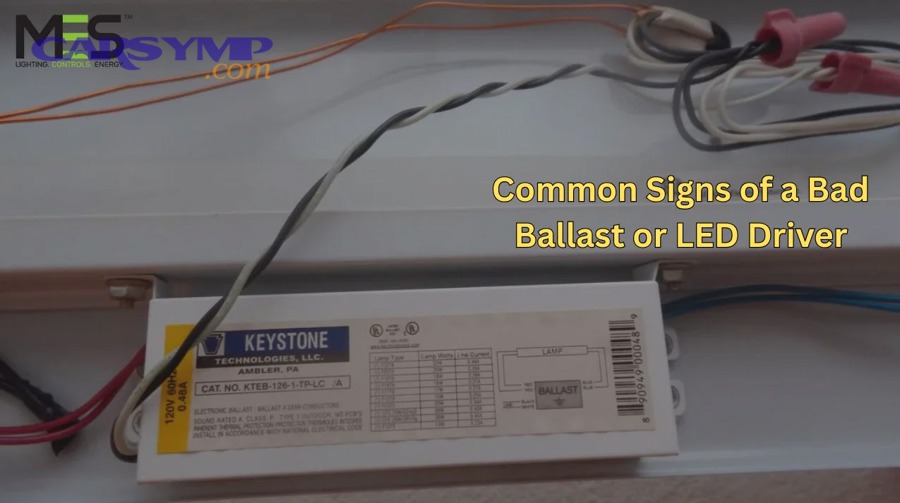
What does a bulb (lamp) do, and what are the most common ways it fails?
A headlight bulb (lamp) is the replaceable light source (halogen or HID capsule) that turns electrical energy into light; it typically fails by filament breakage (halogen), electrode wear (HID), internal contamination, or heat-induced darkening that reduces output.
Specifically, bulb failures tend to be local and consistent: one side out, the other side fine, and the problem follows the bulb when swapped.
Common bulb failure patterns (practical cues):
- Halogen: sudden outage after a bump, visible broken filament, or intermittent operation that changes when you tap the housing lightly (not recommended while on).
- HID capsule: color shift (pink/purple), longer warm-up time, flicker that worsens over days/weeks, or random shutoff after ignition attempts.
- Any bulb type: corroded terminals, loose connector, damaged O-ring letting moisture in, or wrong bulb type/wattage overheating the socket.
What this means for diagnosis: when the symptom is isolated to one lamp and the wiring looks intact, the bulb is statistically the first suspect—unless you also see signs of power-control faults (rapid cycling, immediate shutoff, repeated bulb burnouts).
What does a ballast do in fluorescent/HID fixtures, and what failure patterns are typical?
An HID ballast is the high-voltage control unit that ignites the HID capsule and then regulates current to keep the arc stable; it commonly fails due to heat, moisture intrusion, aging components, or internal shorting.
However, ballast failures often look “weird” compared to a simple burnt bulb: the headlight may strike then die, flicker under load, or behave differently on cold vs warm starts.
Typical ballast-related symptom clusters:
- No ignition at all even with a known-good HID bulb.
- Ignites for 1–2 seconds then shuts off (protective shutdown behavior is common in failing ballasts).
- Buzzing or humming from the headlight area during attempted ignition.
- Repeated bulb failures (unstable output can shorten capsule life).
Many “ballast symptoms” can still be caused by poor connections, water in the housing, or vehicle-side wiring faults, so you diagnose by isolation—not by assumptions.
What does an LED driver do, and why do driver problems look like “bad bulbs”?
An LED driver is a regulated power supply (often a module) that delivers controlled current/voltage to LED emitters; it can fail from thermal stress, moisture, or electronics aging, causing flicker, dimming, intermittent shutdown, or a dead headlight even when the LED itself is fine.
To better understand why this is confusing: LEDs don’t “burn out” like filaments—drivers often fail first, and heat accelerates that process. The Illuminating Engineering Society notes driver life is strongly affected by operating temperature and thermal cycling.
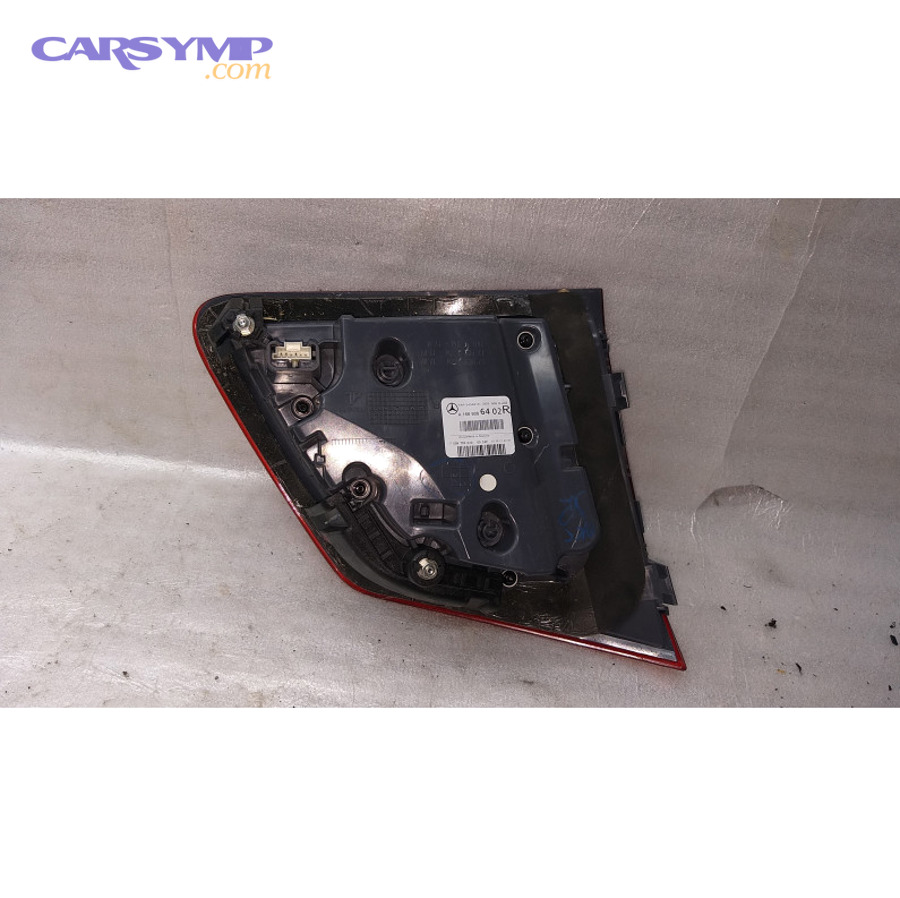
Driver failure tends to show up as:
- Flicker/strobe (sometimes only at certain RPMs or when other loads switch on).
- Intermittent shutoff after warm-up (thermal protection behavior).
- Dimming that resets after cycling the headlight switch (temporary recovery).
- One function works, another doesn’t (e.g., DRL works but low beam fails, or vice versa, depending on module architecture).
What symptoms point to bulb failure vs ballast failure vs LED driver failure?
There are three main symptom groups—bulb-dominant, ballast-dominant, and driver-dominant—based on how the light behaves over time, whether it follows a swap, and whether the failure is “clean” (on/off) or “controlled” (flicker/shutdown).
To illustrate the difference clearly, the table below maps common headlight symptoms to the most likely culprit and the fastest next test (because symptoms overlap).
| Symptom you notice | Most likely culprit | Why it points there | Fastest confirmation test |
|---|---|---|---|
| One headlight out, other side fine | Bulb (lamp) | Single-point failure is common for bulbs | Swap left/right bulb if possible |
| Flicker that worsens over days + color shift (HID) | HID bulb or ballast | Aging capsules shift color; ballasts can destabilize arc | Swap HID bulb first; observe if symptom follows |
| Ignites then shuts off quickly (HID) | Ballast | Protective shutdown or unstable output | Swap ballast side-to-side if accessible |
| Intermittent shutoff after warming up (LED) | LED driver | Thermal protection/failing electronics | Run headlights, monitor heat, cycle switch; test on different circuit if possible |
| Both headlights out at once | Fuse/relay/switch/wiring | Shared power path failed | Check fuses/relays, switch output, grounds |
Now, let’s break the symptom groups down so you can make a confident call.
Which symptoms most strongly suggest the bulb (lamp) is the problem?
There are 4 main “bulb-first” symptoms—single-side outage, visible damage, predictable intermittency, and swap-follow behavior—based on the criterion “failure stays local to the lamp.”
Specifically, suspect the bulb when:
- Only one side fails (left or right low beam) and the other is normal.
- The bulb shows darkening, cloudy capsule, or filament break (halogen).
- The problem changes when you reseat the connector (loose contact at the base).
- A new bulb temporarily works, but the old one doesn’t in any socket (classic lamp failure).
Important caution: If a new bulb dies quickly (days or weeks), that’s often not “bad luck”—it can indicate overvoltage, moisture, vibration, or connection resistance creating heat at the socket.
Which symptoms most strongly suggest the ballast is the problem?
There are 4 main “ballast-first” symptoms—failed ignition, strike-then-die, buzzing under start, and repeat bulb killing—based on the criterion “the bulb is fine but the arc can’t be started or stabilized.”
More specifically, an HID ballast is a top suspect when:
- The HID bulb won’t ignite at all, even though the bulb is known-good.
- The headlight starts then immediately shuts off (common ballast failure signature).
- You hear buzzing/humming right when the light tries to start.
- Bulbs seem to burn out repeatedly on the same side.
Because aftermarket anecdotes can be noisy, prioritize isolation tests (swap or known-good bulb). Still, many HID guides note these same ballast-related behaviors, including flicker and random shutoff.
Which symptoms most strongly suggest the LED driver is the problem?
There are 4 main “driver-first” symptoms—temperature sensitivity, patterned flicker, partial-function failure, and control interaction—based on the criterion “the LED needs regulated power and the regulator is unstable.”
In addition, LED drivers are especially vulnerable to heat. Automotive lighting research repeatedly emphasizes thermal management as critical for LED headlamp reliability and performance.
Look at the driver first when:
- The LED headlight works cold, then fails after 5–20 minutes.
- The light strobes/flickers in a consistent rhythm.
- You get inconsistent brightness (resets after cycling power).
- One mode works and another doesn’t (module channels failing).
How can homeowners safely test whether the bulb, ballast, or LED driver is failing?
Use a 4-step isolation method—identify the headlight type, run swap tests, check the simplest power-path items (fuse/relay/ground), and only then replace the control module—to reach a confident diagnosis without risky probing.
Below is a practical Headlight not working diagnosis checklist you can follow in order. Then, once you’ve isolated the likely culprit, you’ll know whether you’re looking at a bulb, ballast, driver, or Headlight switch and wiring issues.
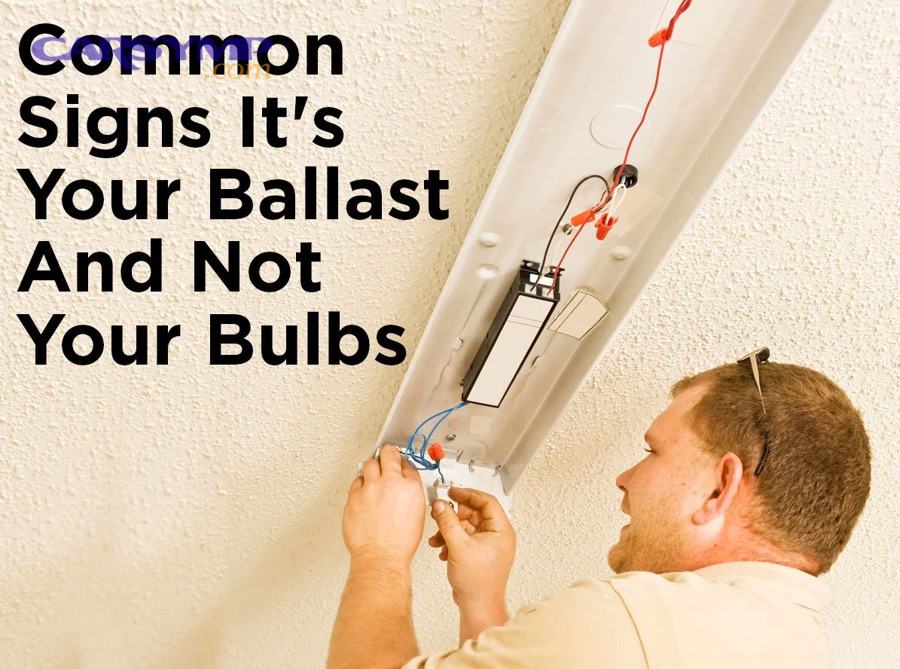
Headlight not working diagnosis checklist (fast order):
- Confirm which function fails: low beam, high beam, DRL, or all.
- Identify the technology: halogen bulb, HID with ballast, or LED module/driver.
- Compare sides: does one side behave differently or do both fail?
- Do the easiest swap: bulb swap (halogen/HID) or module swap (if accessible).
- Check shared components: fuses, relays, grounds, connectors.
- Only then replace ballast/driver/housing.
Can you confirm a bad bulb by swapping it into a working fixture (or swapping a known-good bulb into the suspect fixture)?
Yes—swapping bulbs is the fastest way to confirm bulb failure because (1) it isolates the light source from the circuit, (2) it reveals whether the problem “follows the bulb,” and (3) it prevents unnecessary module replacement.
Next, do the swap methodically:
- Halogen: move left bulb to right and right to left (or install a known-good bulb on the bad side).
- HID: swap the HID capsule side-to-side if accessible and if you can do it without contaminating the glass.
Interpreting results:
- If the failure moves with the bulb, the bulb is bad.
- If the failure stays on the same side, suspect ballast/driver, wiring, ground, or a connector issue.
- If the bulb works sometimes, clean and reseat connectors; oxidation can create resistance and heat.
Safety note: Always turn lights off, let components cool, and avoid touching glass bulbs with bare fingers (skin oils can shorten life).
Can you diagnose ballast issues without a meter by using symptom isolation and lamp-swapping patterns?
Yes—you can diagnose many HID ballast issues without a meter because (1) ballast failures produce distinct ignition behaviors, (2) side-to-side comparison is strong evidence, and (3) a known-good bulb test separates “arc source” from “power control.”
Then, focus on the two most revealing patterns:
- Ignites then dies: often ballast instability or protective shutdown.
- No ignition with known-good bulb: ballast, igniter, or power feed issue.
Simple ballast isolation steps (no meter):
- Swap the HID bulbs first (cheapest/easiest).
- If symptom stays on one side, swap the ballast module side-to-side if your vehicle layout allows and connectors match.
- Inspect for moisture, cracked covers, swollen seals, and corroded pins—HID systems are sensitive to connection quality.
When to stop and seek a pro: if you suspect a high-voltage issue, see melted connectors, or the headlight housing has water damage that requires resealing.
Can you diagnose an LED driver issue by testing with/without a dimmer or moving the fixture to a non-dim circuit?
Yes—you can often diagnose an LED driver issue by isolation because (1) drivers are sensitive to voltage stability and heat, (2) control modules can enter protection modes, and (3) a stable power feed test can separate driver faults from vehicle-side issues.
However, unlike house LEDs, cars don’t use wall dimmers—what matters is vehicle controls: body control module behavior, PWM (pulse-width modulation), and wiring integrity. “Driver-like” symptoms can also come from Headlight switch and wiring issues.
Practical LED driver isolation tests:
- Temperature test: run the headlight until failure; if it consistently fails after warm-up, suspect driver thermal protection or internal degradation.
- Load interaction test: if flicker happens when you brake, use turn signals, or the fan kicks on, suspect grounding or power quality before blaming the driver.
- Module/channel test: if DRL works but low beam fails, it may be a driver channel or control module fault.
Flicker (temporal light modulation) is strongly influenced by driving electronics and power conditioning. Research and engineering guidance note the driver’s role in flicker behavior across LED systems.
What should you replace first: bulb, ballast, or LED driver—and why?
Bulbs should be replaced first when symptoms indicate a local lamp failure, ballasts are next when HID ignition is unstable, and LED drivers are targeted when heat-dependent flicker/shutdown appears—because each choice optimizes cost, likelihood, and time-to-fix.
Meanwhile, the fastest way to avoid wasting money is to treat replacement as a decision tree, not a shopping list.
When is replacing the bulb first the best move, and when is it a waste of money?
Replacing the bulb first is best when (1) only one side fails, (2) the failure follows a swap, and (3) there’s no sign of connector damage or moisture, because that combination strongly points to a simple lamp failure.
However, it’s a waste of money when:
- A new bulb dies very quickly (repeat burnouts often mean power/heat issues).
- The headlight strikes then shuts off (more ballast-like than bulb-like).
- The housing has water intrusion (you’ll kill the new bulb or module again).
A practical rule: if the symptom is “dead light” with no other odd behavior, start with the bulb; if the symptom is “unstable behavior,” look upstream at control and wiring.
When does ballast replacement make sense versus converting to LED (ballast-bypass or new fixture)?
Ballast replacement makes sense when (1) the vehicle uses OEM HID, (2) the housing is in good condition, and (3) diagnosis shows the fault stays with the ballast side, because it restores factory optics and beam pattern.
On the other hand, “converting to LED” only makes sense if:
- You can maintain proper beam focus and cutoff (optics matter more than raw brightness).
- The retrofit is compatible with vehicle monitoring (CANbus warnings, PWM behavior).
- You’re prepared to do follow-up Headlight alignment after repair to avoid glare and reduce unsafe scatter.
Key point for real-world headlight repair: replacing a ballast in an OEM HID system is usually more predictable than fitting random LED conversions into housings not designed for them.
When should you replace an LED driver versus replacing the entire LED fixture?
Replace the LED driver when (1) the driver is a separate serviceable module, (2) the LEDs and optics are intact, and (3) the fault pattern is consistent with driver failure (thermal shutdown, rhythmic flicker, channel loss).
But replace the whole headlamp assembly when:
- The driver is integrated and not serviceable (common in modern sealed units).
- The housing is damaged, moisture-damaged, or the lens is degraded.
- Internal wiring/boards are compromised.
Higher case temperatures and thermal cycling accelerate degradation in driver components, which explains why some modules fail intermittently before failing completely.
Is it safe to keep using a light that flickers, buzzes, smells hot, or shuts off randomly?
No—continuing to use a headlight that flickers, buzzes, smells hot, or shuts off randomly is unsafe because (1) you reduce forward visibility and other drivers’ ability to judge distance, (2) electrical faults can worsen into melted connectors or shorts, and (3) intermittent lighting can create glare and mis-aimed beam patterns.
Besides, safety isn’t only about “will it turn on”—it’s about predictable illumination. So treat unstable headlights as a priority repair.
What are the “stop using it now” warning signs that require turning off power at the breaker?
There are 6 main “stop now” signs—burning odor, smoke, melting, popping, repeated fuse blows, and visible arcing—based on the criterion “active overheating or short risk.”
More specifically, stop driving at night and address the fault immediately if you observe:
- Burning plastic smell near the headlight or inside the cabin.
- Smoke or visible haze from the headlight area.
- Melted connector, browned socket, or brittle wiring insulation.
- Popping/crackling sounds during operation.
- Fuses that blow repeatedly after replacement.
- Water sloshing inside the lens or heavy condensation that doesn’t clear.
These signs point to wiring resistance, short circuits, or moisture-driven corrosion—classic Headlight switch and wiring issues that can’t be solved by bulb swaps alone.
What are the “schedule a fix soon” signs, and how long is too long?
There are 4 main “fix soon” signs—mild flicker, occasional dimming, delayed start, and side-to-side mismatch—based on the criterion “degrading performance without obvious overheating.”
Especially, schedule headlight repair soon if:
- Flicker is occasional but getting more frequent.
- The light is noticeably dimmer than the other side.
- HID takes longer to reach full brightness.
- LED brightness pulses when electrical loads change.
How long is too long? If you rely on that headlight for night driving, “soon” means days, not months. Intermittent failure tends to worsen, and a weak connection can turn into a melted socket unexpectedly.
Now that you’ve used symptoms and simple tests to identify the most likely failing part—and you know what to replace first—the next section goes deeper into retrofit options and less-common causes that can mimic bulb, ballast, or driver failure.
Which upgrade path prevents repeat failures: ballast-compatible LEDs, ballast-bypass LEDs, or replacing the fixture?
Ballast-compatible LEDs reduce install effort, ballast-bypass LEDs remove a common failure point, and replacing the entire headlamp assembly is most reliable when housings/modules are sealed or damaged—because each path changes where the failure can occur next.
Next, treat upgrades as a reliability decision, not just a brightness upgrade, and plan for Headlight alignment after repair so your “fix” doesn’t create glare.
What are the pros and cons of ballast-compatible LED tubes compared with ballast-bypass (direct-wire) LEDs?
Ballast-compatible retrofits are “keep the ballast,” while ballast-bypass is “remove the ballast”—an antonym-style choice that determines whether the ballast remains a future failure point.
Pros (ballast-compatible):
- Faster install, less rewiring.
- Useful when you want a reversible change.
Cons (ballast-compatible):
- You still depend on a ballast that can fail.
- Compatibility issues can cause flicker or shortened life.
Pros (ballast-bypass/direct-wire):
- Eliminates ballast as a failure point.
- Often improves reliability in older systems.
Cons (ballast-bypass/direct-wire):
- Requires correct rewiring and safety practices.
- In vehicles, “bypass” equivalents can trigger monitoring errors or beam pattern issues.
For automotive headlights specifically, many “LED conversion” kits behave like a bypass approach—powering a driver directly—so compatibility and optics become the real make-or-break factors.
How do dimmers and smart switches cause LED flicker that looks like a bad driver?
In vehicles, flicker that resembles a bad driver can actually come from control strategies and electrical noise (PWM, load sensing, module output behavior), meaning the “driver” is blamed when the root cause is upstream.
More specifically, flicker can be worsened by:
- Poor ground connections (voltage drop under load).
- Corroded connectors (micro-arcing and resistance).
- Vehicle control module PWM not compatible with aftermarket drivers.
Practical takeaway: if flicker changes when you switch on other loads, inspect grounds and connectors before replacing the LED driver.
Why do heat and enclosed fixtures shorten LED driver life, and how can homeowners reduce thermal stress?
Heat shortens LED driver life because higher junction/case temperatures accelerate electronic component aging, and enclosed or poorly ventilated spaces trap that heat, pushing drivers into thermal protection or early failure.
Then, reduce thermal stress by:
- Ensuring the headlamp housing seals are intact (keeps moisture out, but don’t block ventilation paths designed into the assembly).
- Avoiding oversized/high-wattage aftermarket LEDs that overwhelm the housing’s heat capacity.
- Checking for debris or damage that restricts airflow around rear caps.
- Fixing misalignment or loose mounting that increases vibration and heat cycling.
How can surges or “dirty power” mimic ballast/driver failure, and when is a surge protector worth it?
Surges or unstable voltage can mimic ballast/driver failure because drivers and ballasts rely on stable input and protection circuits can shut them down, making lights flicker or cut out even when the light source is fine.
More importantly, you should suspect “dirty power” when:
- Multiple bulbs/modules fail around the same time (after a storm, jump-start, or alternator issue).
- Flicker correlates with engine RPM or heavy electrical loads.
- The problem affects more than one lighting circuit intermittently.
When protection is worth it: In vehicles, you don’t add a home-style surge protector, but you do protect the system by fixing charging issues (alternator/regulator), ensuring good grounds, and using quality components with proper protection design—because repeated electrical stress will defeat even a new ballast or driver.
Evidence (if any)
According to a study published by the Illuminating Engineering Society (IES) in 2023, higher operating case temperatures and repeated thermal cycles accelerate degradation in LED driver components, reducing useful life.
According to automotive LED thermal management research (published 2025) focused on high-power LED headlights, thermal management is a critical constraint in headlamp design, underscoring why heat-driven driver issues are common in real vehicles.