


A serpentine belt shows seven critical wear signs: squealing noises during startup, visible cracks along the ribs, glazed or shiny surfaces, fraying edges with exposed cords, power steering or air conditioning failure, engine overheating, and electrical problems including battery warning lights. These symptoms indicate the belt has deteriorated beyond safe operating condition and requires immediate replacement to prevent complete accessory system failure and potential engine damage.
Understanding what a serpentine belt does helps car owners recognize why these wear signs matter. This single continuous belt drives multiple essential engine accessories simultaneously, including the alternator that charges your battery, the power steering pump that makes turning effortless, the air conditioning compressor that keeps you cool, and the water pump that prevents engine overheating. When this belt fails, all these systems stop working at once, leaving you stranded with a vehicle that cannot operate safely.
Visual inspection reveals the most obvious serpentine belt wear indicators. Cracks that form along the ribbed surface, glazing that creates a shiny hardened appearance, fraying edges where internal cords become exposed, and missing chunks of rubber all signal that the belt material has degraded. Modern EPDM rubber belts resist belt cracking better than older materials, but they still wear down gradually through rib erosion that reduces their grip on pulleys, similar to how tire treads wear smooth over time.
Performance problems often appear before visible damage becomes severe. Below, we’ll explore each critical wear sign in detail, explaining what causes these symptoms, how to identify them during inspection, and when replacement becomes necessary to avoid roadside breakdowns.
What is a Serpentine Belt and Why Does It Wear Out?
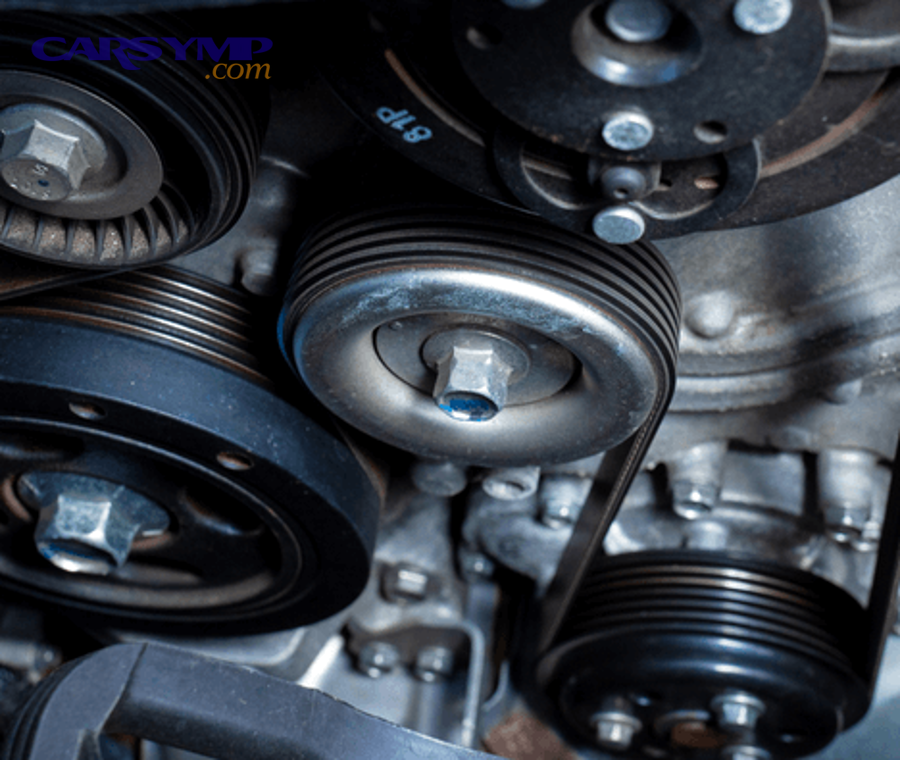
A serpentine belt is a single continuous rubber belt with longitudinal ribs that drives multiple engine accessories from the crankshaft pulley, typically powering the alternator, power steering pump, air conditioning compressor, and water pump. This belt wears out due to constant friction against pulleys, exposure to extreme engine heat (often exceeding 200°F), chemical degradation from ozone and oil contamination, and mechanical stress from tension cycling during acceleration and deceleration.
To better understand how serpentine belts function within modern engines, consider their operational environment. The belt wraps around multiple pulleys in a specific serpentine (snake-like) routing pattern, maintained under constant tension by an automatic tensioner mechanism. As the engine crankshaft rotates at thousands of revolutions per minute, the belt transfers this rotational power to each accessory pulley simultaneously. This continuous operation subjects the belt to enormous cumulative stress over its lifetime.
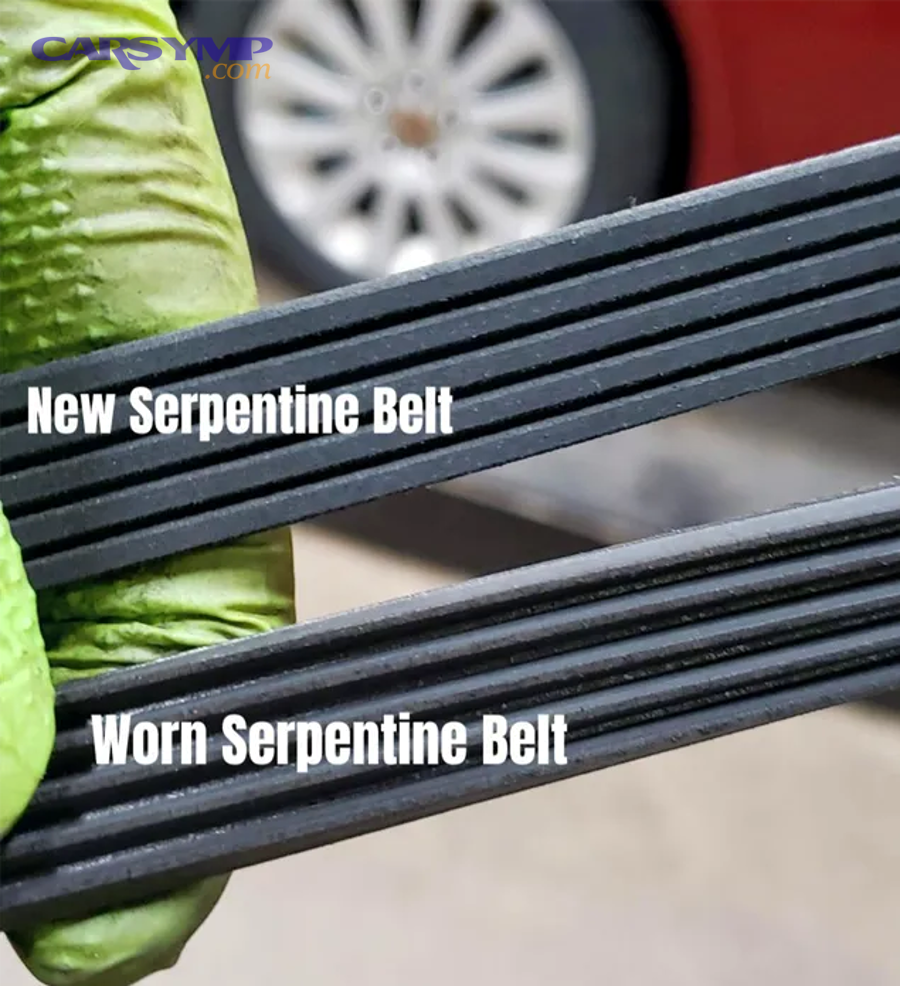
Modern serpentine belts typically last between 60,000 and 100,000 miles depending on driving conditions, maintenance practices, and belt quality. However, several factors accelerate wear beyond normal aging. Heat cycles cause the rubber compound to harden and lose elasticity, making the belt brittle over time. Friction between the belt ribs and pulley grooves gradually wears down the rib height, reducing contact area and grip strength. Chemical exposure to engine oil from leaks or ozone in the atmosphere breaks down the molecular bonds in the rubber material. Additionally, improper tension from a failing tensioner causes excessive slippage that generates heat and accelerates surface wear.
The belt material itself determines longevity and wear characteristics. Older serpentine belts used neoprene rubber compounds that showed visible cracking as the primary wear indicator. Contemporary belts use EPDM (ethylene propylene diene monomer) rubber, which resists cracking much better but still wears through rib erosion. Inside the rubber matrix, aramid or Kevlar fiber reinforcement cords provide tensile strength to prevent stretching and breaking. As these belts age, the rubber wears away from the ribs while the reinforcement cords remain intact until very late in the failure process.
How Does a Serpentine Belt Differ from V-Belts?
Serpentine belt systems replaced traditional V-belt configurations starting in the late 1980s, offering several distinct advantages. V-belt systems used multiple separate narrow belts, each dedicated to driving one or two accessories, whereas a single serpentine belt handles all accessories simultaneously. This consolidation reduces the number of components requiring maintenance and allows for more compact engine designs with accessories positioned more flexibly around the engine block.
The design differences create opposite performance characteristics during failure scenarios. With V-belts, if one belt breaks, the others typically continue operating, which means critical systems like the water pump often remained functional enough to limp the vehicle to safety. When a serpentine belt breaks, all accessories lose power instantly, creating an immediate emergency situation where power steering fails, the battery stops charging, and the engine begins overheating within minutes. This total system dependency makes preventive serpentine belt replacement far more critical than V-belt maintenance ever was.
Serpentine belts also maintain tension automatically through spring-loaded tensioners, eliminating the periodic manual adjustment that V-belts required. The ribbed design provides superior grip compared to the wedge-shaped V-belt profile, allowing the serpentine belt to drive accessories more efficiently with less slippage. However, this efficiency advantage comes with a maintenance trade-off: because the belt contacts each pulley over a greater arc length with more surface area, any misalignment or pulley damage affects the entire system rather than just one accessory.
What Are the Visual Signs of Serpentine Belt Wear?
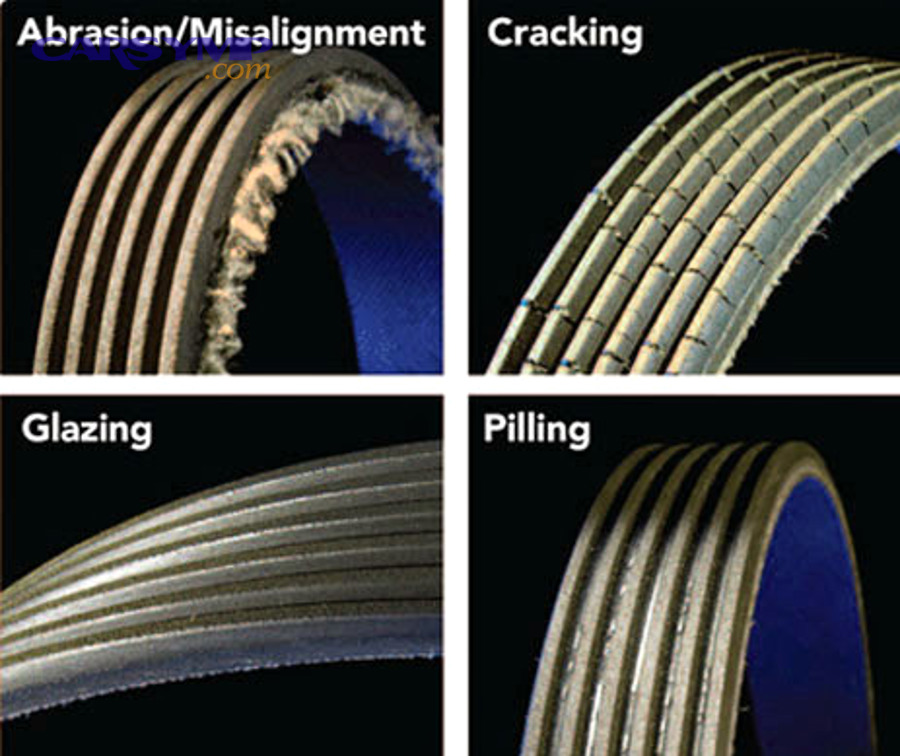
Visual serpentine belt wear signs include longitudinal cracks along the ribs, glazed shiny surfaces indicating hardened rubber, frayed edges exposing internal reinforcement cords, missing chunks or pieces of rubber material, and worn-down ribs with shallow groove depth. Regular monthly visual inspections allow car owners to identify these deterioration patterns before complete belt failure occurs, preventing roadside breakdowns and potential engine damage.
Specifically, performing thorough visual inspections requires proper technique and lighting conditions. Turn off the engine and allow it to cool completely before touching any components. Use a flashlight to illuminate the entire belt surface, examining both the ribbed side that contacts pulleys and the smooth back side. Rotate the belt manually by turning an accessible pulley to inspect sections hidden behind components. Look closely at the belt edges where it enters and exits each pulley, as these areas often show the first signs of wear or damage.
How Do You Identify Cracks and Splits in a Serpentine Belt?
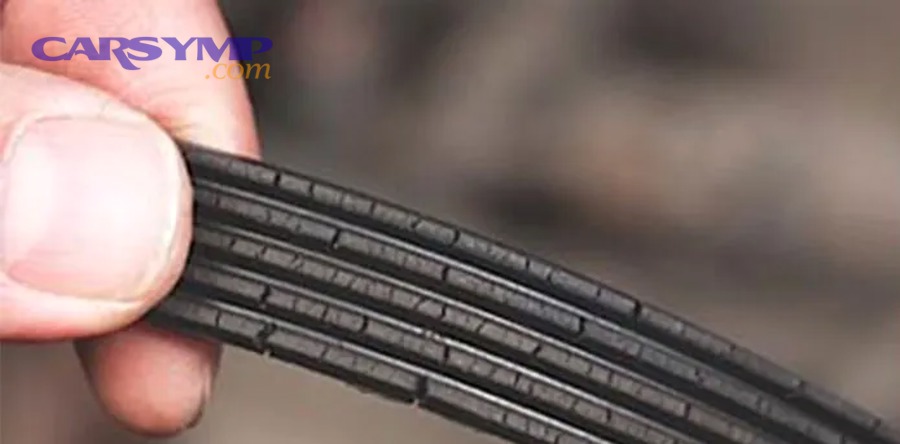
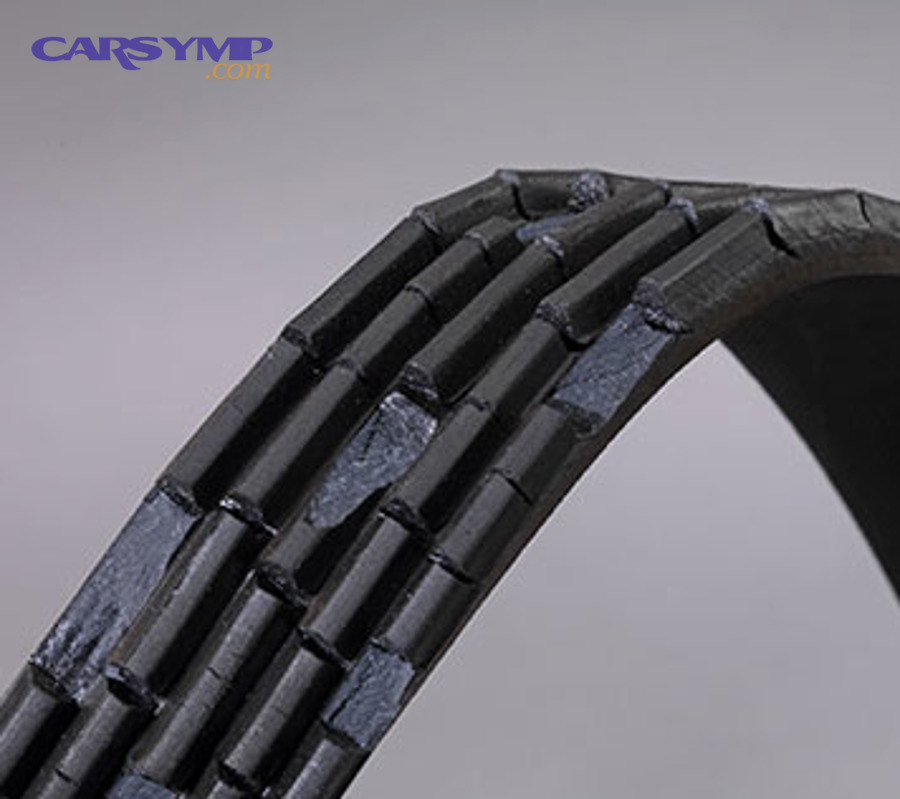
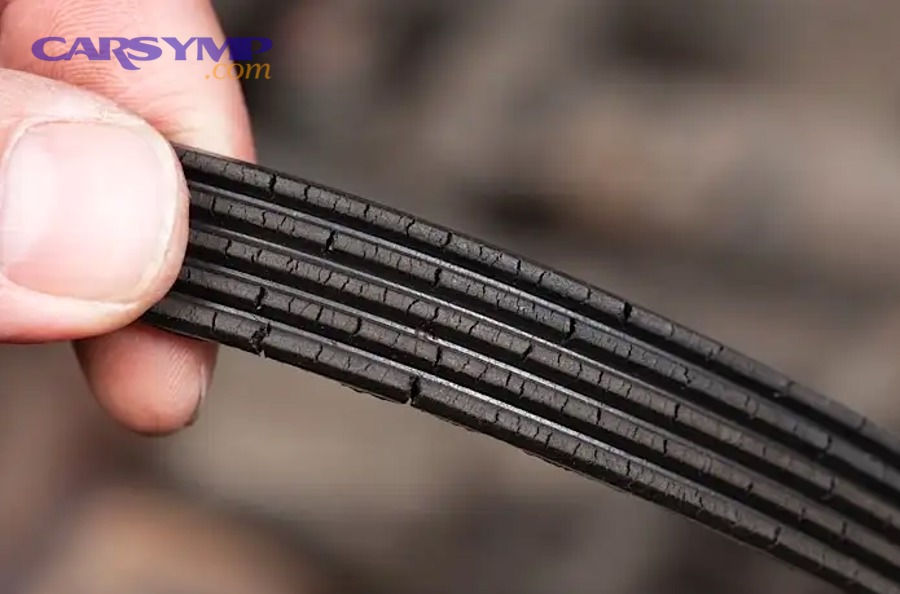
Belt cracking appears as small perpendicular fissures cutting across the ribs on the inner grooved surface of the belt. These cracks typically start as fine surface hairline fractures barely visible to the naked eye, then progressively deepen and widen as the rubber continues degrading. In advanced stages, cracks extend through the full depth of the ribs, creating splits that can propagate rapidly into complete belt separation.
The crack pattern reveals important information about wear severity and cause. Shallow surface cracks spaced evenly across all ribs indicate normal aging and UV exposure, representing manageable wear in early stages. Deep cracks concentrated in specific sections suggest localized stress from misaligned pulleys or debris impact damage. Cracks running parallel to the belt length rather than perpendicular indicate unusual stress patterns potentially caused by improper installation or manufacturing defects.
Modern EPDM rubber formulations resist cracking significantly better than older neoprene compounds, which means contemporary belts often fail from rib wear rather than visible cracking. A belt can appear crack-free while actually being severely worn, with ribs eroded to the point where they no longer grip pulleys effectively. This characteristic makes relying solely on crack inspection inadequate for comprehensive belt condition assessment. Car owners should inspect for other wear indicators even when no cracks appear visible.
When cracks do appear on EPDM belts, they indicate advanced deterioration requiring immediate replacement. Unlike older belts where minor surface checking was acceptable, any cracking on modern serpentine belts signals that the rubber compound has degraded beyond safe operating limits. The belt has likely already stretched, hardened, and lost its gripping capability, even if it hasn’t failed completely yet.
What Does Glazing on a Serpentine Belt Look Like?
Glazing creates a shiny, smooth, hardened surface on the ribbed side of the serpentine belt, contrasting sharply with the soft matte texture of new belt material. A new belt feels slightly fuzzy or felt-like when touched, while a glazed belt appears polished like glass and feels slick and hard. This transformation occurs when excessive heat from friction melts and burnishes the rubber surface, creating a slippery layer that cannot grip pulleys effectively.
The glazing process begins with belt slippage caused by insufficient tension, misaligned pulleys, or contamination with oil or coolant. When the belt slips rather than gripping, friction generates intense localized heat that literally cooks the rubber surface. The heat causes rubber molecules to migrate to the surface and re-cure into a hard, shiny glaze. This glazed layer has minimal friction coefficient compared to fresh rubber, creating a self-reinforcing cycle where the slippery surface causes more slippage, generating more heat and additional glazing.
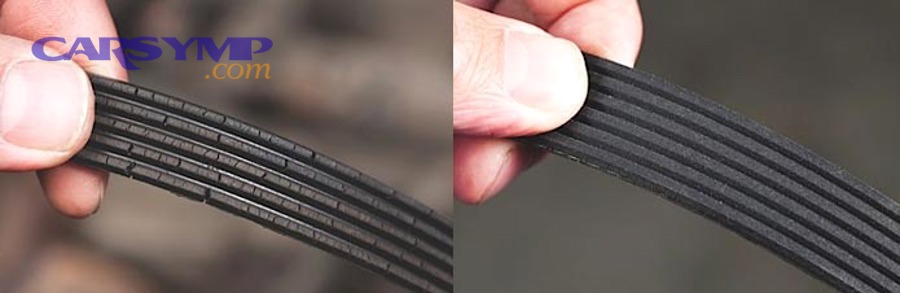
Visual identification requires comparing the belt appearance to known reference conditions. Run your fingers lightly across the ribs—a properly functioning belt should feel slightly rough or textured, while a glazed belt feels abnormally smooth. Look for areas where the belt surface reflects light like polished plastic rather than having a matte finish. Check whether the black rubber appears to have a brownish or grayish tint, which sometimes accompanies severe glazing from heat exposure.
Glazing frequently accompanies other symptoms that help confirm the diagnosis. Squealing noises during startup or acceleration indicate the glazed surface slipping on pulleys. Power steering or air conditioning performance may decline as the belt fails to spin accessory pulleys at proper speeds. Engine temperature may rise if the water pump receives insufficient rotational power. Addressing glazing requires both serpentine belt replacement and identifying the root cause—whether a weak tensioner, misaligned pulley, or contamination source—to prevent the new belt from glazing prematurely.
How Can You Spot Fraying or Missing Chunks?
Fraying manifests as fuzzy, string-like fibers extending from the belt edges where the internal reinforcement cords have become exposed through rubber wear. These aramid or Kevlar fibers, which normally remain encased within the rubber matrix, appear as whitish or yellowish thread-like strands protruding from the belt sides. Fraying indicates that the belt has worn completely through its rubber outer layer in those areas, exposing the structural cords to direct friction and potential failure.
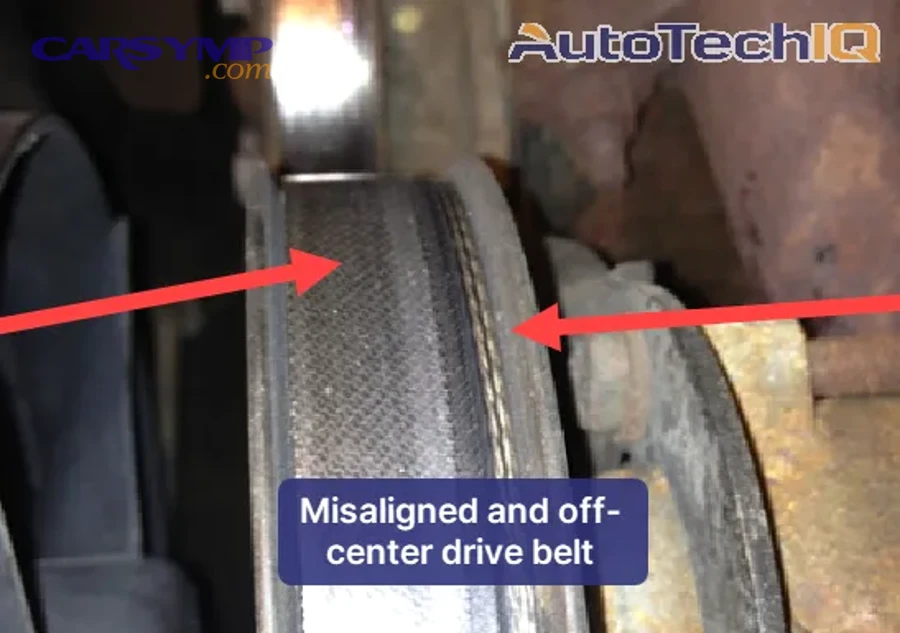
Edge fraying typically results from the belt rubbing against pulley flanges due to misalignment. When pulleys don’t align properly in the same plane, the belt tracks toward one side and contacts the pulley edge rather than sitting centered in the grooves. This misalignment causes rapid localized wear on one edge of the belt while the opposite edge appears normal. Severe cases create a beveled or tapered edge profile where one side of the belt becomes noticeably thinner than the other.
Missing chunks represent catastrophic material failure where pieces of the belt have torn away completely. These missing sections may range from small divots in individual ribs to large gaps involving multiple ribs across significant belt length. Chunks typically separate due to advanced crack propagation, impact from foreign objects entering the belt path, or catastrophic tensioner failure that allows the belt to contact stationary engine components. Any missing material creates immediate imbalance and vibration, rapidly accelerating complete belt destruction.
Rib wear erosion represents a subtler but equally critical wear pattern. The ribs gradually wear down in height similar to tire tread loss, reducing the depth of the V-shaped grooves that fit into pulley channels. This wear may appear uniform across the entire belt or concentrated in high-stress areas where the belt contacts pulleys with the greatest wrap angle. Measuring rib depth requires a specialized belt wear gauge—a simple tool with teeth matching new belt rib profiles. When the gauge teeth no longer fit snugly into the belt grooves, the ribs have worn beyond acceptable limits even if no cracks or other damage appears visible.
What Noises Indicate a Failing Serpentine Belt?
Failing serpentine belts produce distinctive high-pitched squealing, chirping, or squeaking noises caused by the belt slipping on pulleys rather than gripping firmly, typically most noticeable during cold starts, acceleration, or when accessories activate. These sounds result from the worn belt surface vibrating at high frequency as it alternately grips and releases against the pulley surfaces, creating audible noise that often disappears once the belt warms and expands slightly or when engine RPM stabilizes.
More specifically, understanding the mechanics behind belt noise helps distinguish normal sounds from warning signs. A properly tensioned belt with good rubber material maintains constant friction contact with each pulley, transferring power silently through mechanical grip. When the belt surface degrades through glazing, rib wear, or stretching, it loses this gripping ability and begins slipping intermittently. The rapid stick-slip vibration creates sound waves in the audible frequency range, producing the characteristic squealing that alerts drivers to belt problems.
What Causes Squealing or Chirping Sounds?
Squealing occurs when the belt slips continuously on one or more pulleys, creating sustained high-frequency vibration audible as a loud squeal that persists while the slippage continues. This noise most commonly appears during cold starts when the belt rubber remains stiff and less pliable, or in wet conditions when moisture reduces friction between the belt and pulley surfaces. The squealing typically intensifies when electrical loads increase (turning on headlights or air conditioning), which adds resistance to the alternator or compressor pulleys that the weakened belt struggles to overcome.
Chirping produces a rhythmic, intermittent squeaking sound that pulses in time with engine rotation rather than being continuous. This pattern indicates the belt briefly slips once per revolution, often at a specific pulley where alignment issues or local wear creates a momentary loss of grip. Chirping can also result from a failing automatic tensioner that allows the belt to flutter or bounce slightly rather than maintaining steady tension. The rhythmic nature helps pinpoint the problem source—counting the chirps per second and matching to engine RPM can identify which pulley diameter corresponds to the slipping location.
The timing of noise onset provides diagnostic clues about the underlying cause. Squealing that starts immediately on cold startup but disappears after 30-60 seconds suggests the belt material hardens when cold and regains adequate grip once warmed to operating temperature—indicating advanced age and hardening even if the belt appears crack-free. Squealing that begins only after several minutes of operation points to heat-related belt expansion or a tensioner that loses strength as it warms. Squealing that occurs exclusively during acceleration indicates the belt cannot handle power demands under load, suggesting either severe wear or insufficient tension.
Important caution: never apply belt dressing or spray lubricants to serpentine belts attempting to quiet squealing noises. Belt dressing was designed for older V-belt systems and actually damages modern serpentine belts by creating a slippery film that increases slippage rather than improving grip. The correct solution involves identifying why the belt slips—whether from wear, inadequate tension, contamination, or misalignment—and addressing that root cause through serpentine belt replacement, tensioner service, or alignment correction.
When Should You Worry About Whining or Buzzing Noises?
Whining noises indicate belt misalignment where the belt rides up against pulley edges or tracks incorrectly through the accessory drive system. Unlike squealing from slippage, whining creates a constant tone that rises and falls with engine speed, produced by the belt edge friction against pulley flanges or by the belt vibrating laterally as it tries to maintain position on misaligned pulleys. This noise often accompanies visible edge wear patterns on the belt, with one side showing significantly more wear than the other.
Pulley misalignment occurs when accessory mounting brackets loosen, allowing components like the alternator or air conditioning compressor to shift position. Even minor angular misalignment (as little as 1-2 degrees) forces the belt to run at an angle to the pulley plane, causing the belt to walk toward one side until it contacts the pulley flange. The resulting edge friction creates both the whining noise and accelerated wear that can destroy a new belt within thousands of miles rather than the expected 60,000-100,000 mile lifespan.
Buzzing noises specifically indicate alternator decoupler pulley failure on vehicles equipped with this technology. Modern alternators use overrunning alternator decouplers (OAD) or overrunning alternator pulleys (OAP) that allow the pulley to freewheel in one direction, smoothing out engine vibration and reducing belt stress. When the internal clutch mechanism fails, the decoupler creates a buzzing or rattling sound distinct from belt slippage squealing. This noise may appear only at specific RPM ranges where the decoupler mechanism engages improperly.
Growling during acceleration suggests bearing failure in the tensioner pulley, idler pulleys, or accessory components. As the belt tries to spin a pulley with damaged bearings, resistance increases and the bearing produces grinding or growling sounds. This condition rapidly accelerates belt wear as the increased friction heats the belt surface and causes localized glazing. Testing requires removing the belt and manually spinning each pulley—rough rotation, excessive play, or squeaking from the pulley itself confirms bearing failure requiring component replacement along with the belt.
What Performance Problems Signal Serpentine Belt Failure?
Performance problems from serpentine belt failure include heavy power steering requiring excessive effort to turn, weak or non-functional air conditioning producing minimal cooling, engine overheating as coolant circulation decreases, and electrical system issues with battery warning lights illuminating due to insufficient alternator charging. These symptoms develop when the worn belt slips on accessory pulleys, preventing them from spinning at the full speed required for proper operation even though the belt hasn’t completely broken yet.
Specifically, the progression from minor slippage to complete system failure follows a predictable pattern. Initially, accessories operate normally under light loads but underperform during demanding conditions—power steering feels heavy only during parking maneuvers, air conditioning cools adequately at highway speeds but struggles in stop-and-go traffic, and the battery maintains charge during short trips but drains on longer drives with multiple electrical accessories active. As belt wear advances, these symptoms become constant rather than intermittent, eventually leading to complete accessory failure that makes vehicle operation impossible.
Why Would Power Steering or A/C Stop Working?
Power steering failure from serpentine belt slippage creates dangerously heavy steering feel requiring significant physical strength to turn the wheel, particularly at low speeds or while stationary. The belt slips on the power steering pump pulley, reducing pump rotational speed below the threshold needed to generate hydraulic pressure that assists steering effort. The hydraulic system itself remains functional with proper fluid levels and no leaks, but without the pump spinning at adequate RPM, the system cannot provide power assist, reverting the vehicle to manual steering as if it lacked power steering entirely.
Diagnosing belt-related power steering problems requires systematic inspection. First, verify the power steering fluid reservoir shows proper levels with no visible leaks under the vehicle or on the pump itself—if fluid levels are low, the problem may originate from a leak rather than belt issues. With fluid confirmed adequate, inspect the belt for glazing, cracking, or wear while observing whether the belt sits properly in the power steering pump pulley grooves. Start the engine and watch the belt during steering input; visible belt slippage or the belt appearing to “jump” in the pulley indicates insufficient grip causing the power steering symptoms.
Air conditioning performance degradation follows similar mechanics but with different symptoms. The compressor requires substantial rotational power to compress refrigerant, making it particularly sensitive to belt slippage. When the belt fails to spin the compressor at full speed, the refrigerant cycle operates inefficiently, producing progressively warmer air from the vents. Early-stage belt wear might allow the AC to function adequately at highway cruising speeds where belt tension remains high, but struggle during idling or low-speed driving when tension decreases slightly. Advanced wear creates complete AC failure where the system blows only ambient-temperature air regardless of controls settings.
Temperature differences help identify belt-related AC problems versus refrigerant or compressor issues. If the air from vents starts cold then gradually warms, or if AC performance varies with engine speed, suspect belt slippage affecting compressor speed. If the system never produces cold air even briefly, refrigerant leaks or compressor mechanical failure becomes more likely. Observing the compressor clutch engagement while operating the AC system provides additional diagnostic information—if the clutch engages but the compressor pulley slips against the belt, the belt requires replacement along with investigating why adequate tension isn’t maintained.
How Does a Bad Serpentine Belt Cause Engine Overheating?
Engine overheating from serpentine belt failure occurs because the belt drives the water pump that circulates coolant through the engine block, radiator, and heater core, and when the belt slips or breaks, coolant circulation stops, allowing engine temperature to rise rapidly into dangerous levels. Unlike gradual overheating from thermostat failure or coolant leaks, belt-related overheating often develops suddenly, with the temperature gauge climbing quickly from normal operating range into the red zone within several minutes of belt failure.
The water pump operates as a centrifugal impeller that pushes coolant through the cooling system only when rotating at sufficient speed. Most engines require the water pump to spin at several thousand RPM to generate adequate coolant flow for effective heat transfer. When the serpentine belt slips on the water pump pulley, pump speed decreases proportionally, reducing coolant flow and allowing heat to accumulate in the engine block faster than the radiator can dissipate it. Complete belt failure stops the pump entirely, creating an emergency condition where continued engine operation will cause severe damage within minutes.
Temperature increase patterns help distinguish belt-related overheating from other cooling system failures. Belt problems typically cause temperature to rise during high-load conditions like climbing hills or operating air conditioning, when increased engine heat generation exceeds the reduced cooling capacity from belt slippage. The temperature may stabilize or decrease during highway cruising or downhill coasting when airflow through the radiator supplements mechanical cooling. Conversely, thermostat or radiator problems usually cause temperature fluctuations unrelated to engine load or vehicle speed.
Critical warning: never continue driving with the temperature gauge in the red zone, regardless of suspected cause. Excessive engine temperature warps cylinder heads, damages head gaskets, and can seize pistons within cylinders, creating catastrophic engine failure requiring complete engine replacement. If temperature rises into warning levels, safely pull over immediately, shut off the engine, and allow it to cool completely before attempting any inspection or repair. Checking belt condition requires the engine to be completely cool to avoid burn injuries from hot components.
Can a Worn Belt Cause Electrical or Battery Issues?
Electrical system problems from worn serpentine belts manifest as battery warning lights illuminating on the dashboard, dimming headlights, erratic behavior of electronic modules and sensors, and batteries that discharge overnight or fail to maintain charge despite being relatively new. These symptoms develop when the belt slips on the alternator pulley, preventing consistent electrical generation to power vehicle systems and recharge the battery, creating voltage fluctuations that modern computer-controlled vehicles tolerate poorly.
The alternator requires constant high-speed rotation to generate the electrical current needed to power ignition systems, fuel injection, lights, accessories, and vehicle computers while simultaneously recharging the battery. When the serpentine belt slips intermittently on the alternator pulley, charging output fluctuates rather than remaining steady. Modern vehicles expect stable voltage in the 13.5-14.5 volt range for proper operation. Voltage that swings between 12 volts and 15 volts as the belt alternately slips and grips creates erratic behavior in sensitive electronic components designed for stable power supply.
Advanced diagnostic symptoms include seemingly random check engine lights for various systems with no apparent connection, electrical accessories that work inconsistently, or communication errors between control modules. These puzzling symptoms occur because voltage instability causes computer modules to reset, lose stored calibration data, or incorrectly interpret sensor signals when power fluctuates outside expected parameters. Technicians may spend hours diagnosing individual component failures without identifying the underlying belt slippage causing system-wide electrical instability.
Testing for belt-related electrical problems requires measuring alternator output voltage with a multimeter while the engine runs. Connect the meter to the battery terminals and observe voltage with the engine idling, then increase RPM to 2000-2500 and activate electrical loads (headlights, blower fan, rear defrost). Voltage should remain stable between 13.5-14.5 volts throughout testing. If voltage drops below 13 volts under load or fluctuates more than 0.5 volts during the test, suspect either alternator failure or belt slippage preventing consistent alternator operation. Visually inspect the belt during the voltage test—if the belt appears to slip on the alternator pulley correlating with voltage drops, replacement addresses the electrical symptoms.
According to research published by the Society of Automotive Engineers in 2019, belt-related electrical failures have increased 34% in modern vehicles compared to older designs, attributed to the proliferation of electronic systems requiring stable voltage and the higher electrical loads from features like heated seats, entertainment systems, and advanced driver assistance technologies that strain aging serpentine belt drive systems.
When Should You Replace a Serpentine Belt?
Serpentine belt replacement should occur at manufacturer-recommended intervals of 60,000-100,000 miles or every 4-7 years regardless of visible condition, immediately upon discovering any of the seven critical wear signs, before long road trips if the belt shows minor wear indicators, or whenever associated components like tensioners or pulleys require service to prevent premature failure of the new belt. Proactive replacement based on age and mileage prevents unexpected breakdowns, while reactive replacement addresses visible wear before complete failure occurs.
To better understand optimal replacement timing, consider the cost-benefit analysis of preventive versus emergency replacement. A planned serpentine belt replacement during routine maintenance costs $70-$225 total including parts and labor, performed at a convenient time with the vehicle safely in a shop. Emergency replacement after roadside belt failure adds towing charges ($75-$200), potential damage to other components from overheating or accessory failure ($300-$2,000+), and the substantial inconvenience of being stranded. The relatively low cost of preventive replacement makes waiting for complete failure economically irrational and potentially dangerous.
What Mileage or Age Requires Serpentine Belt Replacement?
Manufacturer replacement intervals range from 60,000 to 100,000 miles depending on vehicle make, model, engine configuration, and belt material composition. Consult your vehicle’s maintenance schedule in the owner’s manual for specific recommendations, typically found in the scheduled maintenance section under “drive belt” or “accessory belt” service intervals. Vehicles using EPDM belts often have extended 100,000-mile intervals compared to older neoprene belt applications with 60,000-mile replacement schedules.
Age-based replacement addresses deterioration that occurs independently of mileage accumulation. Rubber compounds degrade through ozone exposure, UV radiation, and heat cycling even when the vehicle sits idle or accumulates low annual mileage. A serpentine belt on a 7-year-old vehicle with only 35,000 miles has experienced nearly as much chemical and environmental degradation as a 5-year-old belt with 75,000 miles, despite the mileage difference. Industry recommendations suggest replacing belts every 4-7 years regardless of mileage to account for this time-based deterioration.
Multiple belt systems require replacing both belts simultaneously even if only one shows wear. Vehicles with separate belts for the air conditioning compressor or other accessories should receive new belts for all positions during any serpentine belt replacement service. Labor cost represents the majority of replacement expense, and the incremental cost of an additional belt ($15-$40) is minimal compared to the labor savings from replacing everything at once rather than returning for separate service visits as each belt fails independently.
Preventive replacement before long road trips provides insurance against breakdowns in unfamiliar locations far from home or preferred service providers. If your belt approaches 50,000 miles or 4 years age and you’re planning extended highway travel, replacement provides peace of mind. The stress of sustained highway speeds, potential exposure to extreme temperatures, and the increased consequence of failure far from assistance make preemptive replacement prudent. The modest upfront cost prevents the substantial inconvenience, safety concerns, and expense of roadside emergency service in remote areas.
Should You Replace the Belt If It Looks Fine?
Replace serpentine belts based on age and mileage even without visible wear because modern EPDM belts fail primarily through rib erosion and rubber hardening that aren’t obvious during visual inspection, similar to how tire tread wears gradually reducing grip before becoming visually bald. The soft felt-like surface that provides traction transforms into hardened rubber that loses gripping ability while the belt still appears intact with minimal cracking, creating false confidence that masks actual deterioration.
The 90,000-mile replacement guideline exists specifically because belts reach end-of-life through mechanisms invisible to casual observation. Rib height decreases through abrasive wear against pulley surfaces, reducing the engagement depth between belt grooves and pulley channels. This wear happens uniformly across the belt length, making comparison difficult without reference to new belt dimensions. The rubber compound polymerizes and hardens through heat cycling and chemical exposure, losing the elasticity needed to maintain constant friction under varying tension loads. Neither process creates cracks, glazing, or other obvious visual indicators until very late in the failure progression.
Professional belt condition assessment uses specialized tools beyond visual inspection. Belt wear gauges measure rib depth by comparing belt groove dimensions to standardized teeth matching new belt profiles—when the gauge teeth no longer fit snugly in the grooves, the belt has worn beyond service limits regardless of crack-free appearance. Durometer hardness testers measure rubber flexibility, comparing the belt’s shore hardness to specifications for new material. Tension testing with specialized tools measures belt stiffness and stretch, identifying belts that have elongated beyond proper fit despite appearing intact.
The consequences of running a belt to complete failure justify conservative replacement timing. When a serpentine belt breaks, the vehicle loses all accessory function simultaneously—steering becomes dangerously heavy, the battery immediately begins draining, and the engine starts overheating within minutes. Modern vehicles cannot operate safely without serpentine belt function, unlike older cars where individual V-belt failure allowed partial system operation. Replacing belts at 90,000 miles or 7 years even without obvious wear provides substantial safety margin preventing the far greater cost and danger of unexpected failure.
How Do You Inspect a Serpentine Belt for Wear?
Inspect a serpentine belt for wear by conducting monthly visual examinations with the engine off and cool, checking for cracks, glazing, fraying, and missing material while rotating the belt to view all sections, testing belt tension by pressing midway between pulleys (should deflect 1/4 to 1/2 inch under firm pressure), and examining all pulleys and the tensioner for alignment, smooth rotation, and bearing condition. Comprehensive inspection requires good lighting, a flashlight to illuminate hidden sections, and systematic coverage of every belt surface and pulley contact point.
More specifically, proper inspection technique follows a methodical process ensuring nothing gets overlooked. Begin by locating the belt routing diagram, typically found on a decal under the hood or in the owner’s manual, showing how the belt winds through the pulley system. Take a photo of the current belt routing before removal or service to reference during reinstallation. Check belt tension with the engine off by pressing firmly on the belt span between the longest pulley spacing—proper tension allows 1/4 to 1/2 inch deflection, with less indicating over-tightening and more suggesting inadequate tension from a weak tensioner or stretched belt.
What Should You Check During a Visual Inspection?
Visual inspection covers five critical areas: overall belt surface condition, rib wear patterns, edge condition, contamination, and routing alignment. Start by examining the ribbed inner surface for the wear indicators discussed earlier—cracks, glazing, or worn rib depth. Use a flashlight to illuminate the belt from different angles, making surface irregularities more visible through shadow patterns. Press your fingertips against the ribs feeling for hardness (indicating aging) versus the slightly soft pliable texture of newer belts.
Belt routing verification ensures the belt follows the correct path through all pulleys according to the routing diagram. Incorrect routing causes rapid wear, noise, and potential belt ejection at high speeds. Verify the belt sits centered in each pulley groove rather than riding toward one edge, indicating alignment problems. Check whether the belt contacts only the grooved pulleys where it should grip versus touching any smooth backside-only pulleys with the wrong belt surface, suggesting routing errors.
Contamination inspection looks for oil, coolant, or other fluids on the belt surface, appearing as dark streaks, swollen rubber, or softened material texture. Oil contamination causes rapid deterioration, often destroying a belt within days or weeks rather than months. Trace any contamination to its source—common culprits include valve cover gasket leaks, water pump seepage, power steering hose connections, or air conditioning compressor seal leaks. Address these fluid leaks before installing a new belt, as contamination will quickly destroy the replacement.
Edge condition examination identifies fraying, peeling layers, or beveled wear patterns that indicate misalignment issues. Run your fingers along both belt edges feeling for rough or fuzzy texture versus smooth factory edges. Look for whitish fiber strands protruding from the edge where aramid reinforcement cords have become exposed. Inspect for chunks missing from the belt edges where material has torn away, creating irregular jagged profiles. Any edge damage or one-sided wear confirms alignment correction needs before serpentine belt replacement.
How Do You Test Belt Tension and Pulley Condition?
Belt tension testing assesses whether the automatic tensioner maintains adequate pressure to prevent slippage without over-tightening and accelerating wear. The simplest method presses firmly midway between the two longest-spaced pulleys, measuring deflection distance—proper tension typically allows 1/4 to 1/2 inch movement under strong thumb pressure. Excessive deflection (more than 3/4 inch) indicates weak tensioner springs or a stretched belt requiring replacement. Insufficient deflection (less than 1/4 inch) suggests tensioner mechanism failure stuck in the over-tightened position, causing accelerated belt and bearing wear.
Professional tension measurement uses specialized belt tension gauges calibrated in pounds of force or hertz frequency (vibration method). These tools provide objective measurements compared to the subjective manual deflection test, particularly valuable for vehicles with critical tolerances or when documenting baseline conditions before serpentine belt replacement. Typical tension specifications range from 50-90 pounds for automotive applications, though values vary significantly by vehicle model and belt width.
Automatic tensioner condition assessment requires inspection beyond simple tension measurement. Examine the tensioner arm movement by pushing it through its travel range—motion should feel smooth and spring-loaded throughout the range, returning to its rest position when released. Grinding, binding, or loose sloppy movement indicates internal bearing failure or spring weakness requiring tensioner replacement. Look for oil leaking from hydraulic tensioners, physical damage to the tensioner arm or pulley, or excessive rust indicating age-related deterioration.
Pulley inspection tests each component the belt contacts for smooth rotation, proper alignment, and bearing condition. With the belt removed (releasing tension at the tensioner), manually spin each pulley observing for roughness, noise, wobble, or excessive free play. Good pulleys rotate smoothly and silently with minimal effort, coasting freely without binding. Grinding sounds, rough rotation feel, or squeaking noises indicate bearing failure requiring pulley replacement before installing a new belt. Check that pulleys align in the same plane by sighting along the belt path from the side—misaligned pulleys tilt at angles rather than sitting parallel.
Idler pulley bearing failure represents a common cause of premature belt wear often overlooked during superficial inspections. These non-powered pulleys simply guide the belt path and maintain tension assist, but their bearings endure substantial stress from belt pressure. Failed bearings create resistance that heats the belt locally, causing glazing and rapid wear. Testing requires removing the belt and spinning each idler independently—any roughness confirms replacement needs. The relatively low cost of idler pulleys ($15-$50) compared to their potential to destroy expensive new belts makes replacement during serpentine belt replacement service economically sound preventive maintenance.
What Other Issues Can Cause Serpentine Belt Failure?
Other issues causing premature serpentine belt failure include oil or coolant contamination from engine leaks, automatic tensioner weakness or seizure preventing proper belt tension, pulley misalignment forcing edge wear, and extreme environmental conditions accelerating rubber degradation. These external factors can destroy even new high-quality belts within thousands of miles rather than their expected 60,000-100,000 mile lifespan, making root cause identification and correction essential for durable serpentine belt replacement results.
Specifically, distinguishing between normal belt wear and accelerated failure from external causes prevents the frustration and expense of repeatedly replacing belts that fail prematurely. A belt that requires replacement at 25,000 miles or shows severe wear after just one year indicates underlying problems beyond simple belt deterioration. Systematic investigation of contamination sources, mechanical alignment, tensioner function, and operating conditions identifies these contributing factors, allowing corrective action that protects the replacement belt from the same premature failure.
How Do Oil or Coolant Leaks Damage Serpentine Belts?
Oil or coolant contamination chemically attacks the rubber compound in serpentine belts, causing swelling, softening, and rapid material breakdown that can destroy a belt within days to weeks depending on contamination severity. Petroleum-based engine oil is particularly aggressive, penetrating the rubber matrix and disrupting molecular bonds that provide strength and flexibility. Coolant contamination, while slightly less aggressive than oil, still degrades rubber through chemical reaction and allows the belt to absorb moisture that accelerates internal deterioration.
Contaminated belts exhibit distinctive visual characteristics beyond normal wear patterns. Oil-soaked sections appear darker and shinier than uncontaminated areas, with a greasy feel when touched. The rubber may feel abnormally soft or spongy compared to the firm texture of clean belt material. Swelling causes the belt to increase in thickness, creating tight spots that bind in pulley grooves and generate squealing even with proper tension. Advanced contamination causes the rubber to disintegrate into chunks or become so soft it tears easily under normal operating stress.
Common contamination sources include valve cover gasket leaks dripping onto the belt from above, camshaft or crankshaft front seal leaks allowing oil to seep directly onto the belt path, water pump weep hole discharge indicating internal seal failure, and power steering hose connections leaking fluid onto nearby belt sections. Identifying the source requires thorough inspection of all components above and around the belt path, looking for fresh oil or coolant residue, staining patterns that indicate leak origins, or actual dripping while the engine runs.
Attempting serpentine belt replacement without addressing contamination sources wastes money and creates recurring failure. A new belt installed in a contaminated environment begins degrading immediately upon contact with leaked fluids, failing within a fraction of its normal lifespan. The correct repair sequence always begins with identifying and repairing all fluid leaks before belt replacement. This may require valve cover gasket replacement ($120-$300), seal replacements ($150-$400), or water pump service ($250-$600), but these repairs protect the serpentine belt investment and prevent the greater cost of repeated belt failures and associated towing or breakdown expenses.
What Happens When Belt Tensioner or Pulleys Fail?
Belt tensioner failure creates either insufficient tension allowing belt slippage or excessive tension accelerating wear, depending on the failure mode. Automatic tensioners use internal springs (mechanical tensioners) or hydraulic pressure (hydraulic tensioners) to maintain constant belt pressure as the belt stretches slightly during normal operation. When the spring weakens or hydraulic mechanism fails, the tensioner can no longer compensate for belt stretch, resulting in progressively looser belt tension that causes slippage, squealing, and incomplete accessory power delivery.
Alternatively, tensioner mechanism seizure locks the tensioner arm in position, preventing proper belt tension adjustment. If the tensioner seizes in the loose position, symptoms mirror spring failure with inadequate belt grip. If seizure occurs in the tight position, the belt experiences constant excessive pressure that accelerates bearing wear in all pulleys, heats the belt through friction, and may cause premature belt breakage from overstress. Seized tensioners typically show visible rust, corrosion, or physical damage to the pivot mechanism, and the tensioner arm cannot be manually moved through its normal travel range.
Pulley bearing failure creates resistance that the belt must overcome, generating friction heat that glazes the belt surface and causes rapid localized wear. Failed bearings produce grinding or rumbling noises distinct from belt slippage squealing, and the affected pulley feels rough or notchy when rotated manually with the belt removed. Idler pulleys and accessory pulleys like the alternator or power steering pump can all develop bearing problems, though idler pulleys often fail first due to their side-loading stress from belt tension.
Pulley misalignment forces the belt to run at an angle across pulley faces rather than tracking centered in the grooves. This creates concentrated edge wear on one side of the belt while the opposite edge shows minimal contact. Misalignment typically results from loose mounting bolts allowing an accessory to shift position, incorrect installation with components not properly seated, or worn mounting brackets that no longer hold accessories at the correct angle. Detecting misalignment requires sighting along the belt path from multiple angles, looking for pulleys that don’t align in the same plane or appear tilted relative to adjacent components.
According to data from automotive parts retailers published in 2022, approximately 35% of serpentine belt replacement warranty claims result from related component failures—tensioners, idler pulleys, or accessory bearings—that weren’t addressed during belt replacement, causing the new belt to fail prematurely. This statistic emphasizes the importance of comprehensive drive system inspection rather than simply replacing the belt when wear symptoms appear.
Can Extreme Weather or Driving Conditions Accelerate Wear?
Extreme weather and demanding driving conditions significantly accelerate serpentine belt degradation beyond normal wear rates. High ambient temperatures (above 95°F) and intense engine heat combine to accelerate chemical breakdown of rubber compounds, particularly in engine bays with poor ventilation or in vehicles operated in desert climates. Heat causes rubber molecules to cross-link excessively, making the material progressively harder and more brittle over time. This hardening reduces the belt’s ability to conform to pulley surfaces, decreasing grip and increasing slippage tendency.
Cold weather creates different stress patterns through increased material stiffness and brittleness. When temperatures drop below freezing, rubber loses flexibility and becomes glass-like, making it prone to cracking when flexing around pulleys during cold starts. The belt may even crack audibly when first started in sub-zero conditions, though these cracks often close and become invisible once the belt warms to operating temperature. Repeated cold-hot cycling accelerates fatigue crack development that eventually propagates into belt failure.
Ozone exposure represents an environmental factor independent of temperature that breaks down rubber molecular structures. Ozone occurs naturally in the atmosphere at ground level, with concentrations higher in urban areas with air pollution. Rubber compounds react with ozone molecules, creating surface oxidation that appears as fine surface cracking or hazing. EPDM belt materials resist ozone attack better than older neoprene compounds, but prolonged exposure still causes deterioration, particularly for vehicles parked outdoors rather than in garages.
Driving pattern impacts accumulate through different mechanisms than environmental exposure. Short-trip urban driving creates frequent heat cycles as the engine warms and cools repeatedly, accelerating thermal fatigue. Stop-and-go traffic loads the accessories heavily (air conditioning compressor in summer, alternator in winter) while the engine operates at lower RPMs, increasing belt stress and slippage tendency. Conversely, sustained highway cruising maintains steady belt tension and temperature but accumulates mileage rapidly, reaching replacement intervals faster. Aggressive acceleration patterns repeatedly shock-load the belt and tensioner system, creating peak stresses that fatigue the belt material and tensioner springs more rapidly than gentle driving.
Dusty or contaminated environments introduce abrasive particles that accelerate rib wear through grinding action between the belt and pulley grooves. Rural areas with agricultural dust, construction zones, or unpaved roads expose belts to fine abrasive particles that infiltrate the pulley channels. These particles act like grinding compound, wearing down rib height faster than normal friction alone. Regular underhood cleaning and air filter maintenance help minimize abrasive exposure in dusty operating conditions.
How Much Does Serpentine Belt Replacement Cost?
Serpentine belt replacement costs range from $70-$225 total including parts ($18-$75) and labor ($50-$150), with price variation depending on vehicle make and model, belt accessibility, and whether additional components like tensioners or idler pulleys require replacement simultaneously. Luxury and performance vehicles typically incur higher costs due to complex engine compartment layouts requiring more disassembly labor to access the belt, while economy cars with simple layouts and good belt access fall toward the lower end of the cost spectrum.
To better understand cost factors, consider the components comprising total replacement expense. The belt itself represents the smallest cost element—quality EPDM belts from reputable manufacturers cost $18-$40 for most applications, with premium belts featuring advanced materials and construction reaching $50-$75. Labor represents the majority of expense, varying by vehicle design complexity. Simple belt changes on accessible engines require 0.3-0.8 hours of shop time, while difficult applications requiring removal of engine covers, cooling system components, or other obstructions can demand 1.5-2.5 hours, directly multiplying labor costs at shop rates of $80-$150 per hour.
What Is the Average Cost for Professional Replacement?
Professional serpentine belt replacement at dealerships typically costs $150-$300 including parts and labor, while independent repair shops charge $100-$200 for the same service. The dealership premium reflects higher labor rates, OEM parts pricing, and comprehensive warranty coverage, though quality differences between OEM and premium aftermarket belts are often minimal for this component. National chain shops like Firestone, Pep Boys, or Jiffy Lube offer competitive pricing ranging $90-$175 with frequent promotional coupons providing additional discounts.
Additional cost factors arise when comprehensive drive system service proves necessary beyond simple belt replacement. Automatic tensioner replacement adds $75-$175 for the part plus additional labor time, while idler pulley replacement contributes $25-$75 per pulley. Many technicians recommend replacing the tensioner when approaching or exceeding 100,000 miles even if it still functions, as tensioner failure shortly after belt replacement necessitates repeating the labor expense. The incremental cost of preventive tensioner replacement during planned belt service ($40-$80 labor savings) makes this economically sensible compared to separate service visits.
Mobile mechanics offer alternative pricing structures, bringing tools and expertise to your location rather than requiring vehicle transport to a shop. Mobile service typically costs similar to independent shop rates ($100-$200) while providing convenience advantages and eliminating towing costs if the belt has already failed. However, mobile mechanics may lack specialized tensioner tools or diagnostic equipment available at established shops, potentially limiting their ability to address underlying component failures beyond simple belt replacement.
Regional cost variations reflect local labor market economics and cost-of-living differences. Metropolitan areas with high wage rates (San Francisco, New York, Boston) typically charge at the higher end of cost ranges, while rural or lower-cost regions (Midwest, South) tend toward more moderate pricing. Obtaining quotes from multiple providers within your area establishes realistic local pricing expectations and identifies competitively priced quality service options.
Is Serpentine Belt Replacement a DIY Job?
Serpentine belt replacement difficulty rates 3-7 on a 10-point scale (where 10 requires professional expertise), making it accessible for mechanically inclined car owners on many vehicles but challenging on others depending on engine layout and belt accessibility. Simple installations on vehicles with front-accessible engines and minimal obstruction require only basic hand tools and clear belt routing diagrams, consuming 15-45 minutes for completion. Complex installations on vehicles with transverse engines, tight engine bays, or belts hidden behind numerous components demand more advanced mechanical skill and may require specialized tools or component removal.
Essential tools for DIY serpentine belt replacement include a breaker bar or large wrench to rotate the tensioner pulley, a belt routing diagram (photographed before removal or referenced from the owner’s manual), and adequate lighting to see belt paths clearly. Some vehicles require specialized serpentine belt tools with specific profiles designed to engage unique tensioner mechanisms, available at auto parts stores or tool rental services. Safety equipment should include gloves to protect hands from sharp edges and eye protection to prevent debris or spring-loaded components from causing injury.
The belt routing diagram represents the most critical information for successful DIY replacement. Losing track of belt routing during removal makes reinstallation extremely challenging, potentially resulting in incorrect paths that cause immediate failure or damage. Photograph the existing installation from multiple angles before removing the old belt, or reference the routing decal typically affixed to the radiator support, engine compartment panel, or underside of the hood. If no decal exists and you didn’t photograph before removal, online resources and repair manual diagrams provide routing information specific to your vehicle’s year, make, model, and engine.
Potential DIY pitfalls include installing the belt along incorrect routing causing immediate failure, improper tensioner operation creating inadequate belt tension, and failure to identify underlying component problems that will destroy the new belt prematurely. After installation, verify the belt sits centered in all pulley grooves without riding against edges, check that all accessories operate properly when started, and listen carefully for squealing or unusual noises indicating installation problems. Run the engine briefly, shut off and allow to cool, then re-inspect belt position and tension to confirm everything seated properly during initial operation.
When professional help becomes advisable: if you lack mechanical experience or confidence, if specialized tools prove necessary but unavailable, if the belt routing appears extremely complex, or if underlying tensioner or pulley problems require diagnosis and replacement simultaneously with the belt. Professional service provides warranty coverage, guarantees proper installation, and includes component inspection identifying problems beyond simple belt wear. The modest additional cost compared to DIY often proves worthwhile considering the peace of mind and time savings, particularly for individuals with limited mechanical experience or limited time for DIY automotive projects. Understanding the Serpentine belt replacement labor time helps set realistic expectations—professional shops typically complete straightforward replacements in 0.5-1 hour, though complex applications may require 1.5-2.5 hours depending on vehicle design.
What Happens If a Serpentine Belt Breaks While Driving?
If a serpentine belt breaks while driving, the vehicle immediately loses power steering making steering extremely heavy and difficult, the battery warning light illuminates as the alternator stops charging, air conditioning ceases functioning, and the engine begins overheating rapidly within 2-5 minutes as the water pump stops circulating coolant, creating an emergency situation requiring immediate safe pullover and engine shutdown to prevent catastrophic damage. Unlike minor mechanical failures that allow continued operation, complete serpentine belt failure makes safe vehicle operation impossible and demands immediate response.
More specifically, the sequence of system failures follows predictable progression as accessories lose power. The steering wheel becomes drastically heavier within seconds, requiring substantial physical strength to turn and making emergency maneuvering extremely difficult. The battery warning light appears almost immediately as the alternator stops generating electricity—the battery alone can power vehicle electrical systems for 15-45 minutes depending on battery condition and electrical load, but no charging occurs. Air conditioning and heating blower function temporarily on battery power but the compressor stops running, ending cooling capability. Most critically, engine temperature climbs rapidly once the water pump stops, with modern engines reaching dangerous temperature levels within 2-5 minutes of continued operation.
What Are the Immediate Effects of Belt Failure?
Immediate steering system impact creates the most dangerous condition requiring instant driver response. Modern power steering systems reduce steering effort by 80-90% compared to manual steering, meaning belt failure instantly makes the wheel extremely heavy to turn. At highway speeds, this may not prevent lane keeping since steering inputs are minimal, but any emergency maneuver requiring quick steering becomes nearly impossible without the strength to overcome manual steering resistance. At low speeds or while parking, the vehicle may become practically unsteerable for drivers lacking significant upper body strength.
Dashboard warning lights provide visual indication of the failure before the driver might otherwise recognize the problem. The battery light (often shown as a battery icon or “ALT” warning) illuminates when the alternator stops charging. The temperature warning light or gauge begins rising as coolant circulation ceases. Vehicles equipped with sophisticated electronics may show multiple warning lights or messages as various systems detect abnormal conditions resulting from accessory power loss. These warnings demand immediate attention—they’re not minor alerts that can wait for convenient service but indicators of conditions rapidly deteriorating toward vehicle damage.
Electrical system degradation follows the battery’s discharge curve. Immediately after belt failure, all electrical systems continue operating normally powered by battery reserve capacity. As the battery discharges over subsequent minutes, lights begin dimming, electronic accessories may shut down, and eventually the engine may run rough or stall as insufficient voltage reaches fuel injection systems and ignition components. Vehicles with higher electrical demands (extensive lighting, powerful audio systems, heated accessories) discharge faster than minimal electrical configuration vehicles. Cold weather accelerates battery discharge due to reduced battery capacity at low temperatures.
The engine overheating timeline depends on ambient conditions, engine load, and vehicle speed. At highway speeds with good airflow through the radiator, passive cooling may delay temperature rise for several minutes. During stop-and-go traffic, uphill climbing, or hot weather, overheating begins within 1-2 minutes. The temperature gauge provides critical monitoring—if it enters the red zone or warning lights illuminate, engine damage becomes imminent. Modern engines use aluminum components that warp rapidly under excessive heat, causing head gasket failure, cylinder head warping, or complete engine seizure requiring replacement rather than repair.
Can a Broken Serpentine Belt Cause Engine Damage?
Engine damage from serpentine belt failure occurs primarily through overheating when the water pump stops circulating coolant, potentially causing cylinder head warping, head gasket failure, crankshaft bearing damage, and piston seizure within minutes if operation continues after temperature warnings appear. The severity ranges from minor and repairable (slightly warped heads requiring resurfacing) to catastrophic and terminal (seized pistons requiring complete engine replacement), depending on how long the engine operated after overheating began and how severe temperatures became.
Overheating damage progression follows temperature thresholds. Mild overheating (230-250°F) stresses head gaskets and may cause minor warping detected only through precision measurement. Moderate overheating (250-280°F) typically fails head gaskets, allowing coolant to enter combustion chambers and creating the characteristic white exhaust smoke. Severe overheating (above 280°F) warps cylinder heads beyond serviceable limits, damages piston rings, and may seize pistons to cylinder walls as metal expands beyond tolerance clearances. Catastrophic overheating (above 300°F) destroys engines completely, melting piston crowns, welding bearings to crankshaft journals, and cracking engine blocks.
Important distinction: serpentine belt failure differs fundamentally from timing belt failure in damage potential. Timing belts drive the camshaft(s) and control valve timing—when a timing belt breaks, valves and pistons collide (in interference engines), causing instant catastrophic damage. Serpentine belts drive only accessories, so breakage itself causes no direct engine damage. The danger comes from the secondary effects of lost water pump operation causing overheating, which develops over minutes rather than instantly. This time window allows drivers to prevent damage by shutting down immediately upon recognizing belt failure symptoms.
Prevention through monitoring and immediate response cannot be overstated. If you experience sudden power steering heaviness, see the battery warning light illuminate, or notice the temperature gauge rising rapidly, immediately activate hazard flashers, safely pull to the roadside shoulder, shift to park/neutral, and shut off the engine. Do not attempt to limp to a service station or home—every additional second of operation after overheating begins escalates damage severity exponentially. Call for towing service rather than risk driving, as the modest towing cost ($75-$200) pales against the potential engine replacement expense ($3,000-$8,000) from continued operation.
Salvage scenarios rarely succeed once belt breakage occurs. Some drivers attempt bypassing broken belts by removing the belt entirely and driving short distances accepting the loss of accessories. This approach works only for extremely short distances (under one mile) on flat terrain in cool weather with minimal electrical demands, and always carries substantial overheating risk. The better solution involves carrying a spare serpentine belt and basic tools for roadside replacement, or relying on emergency roadside assistance programs (AAA, manufacturer roadside service) for professional response. If experiencing Squeal after belt replacement diagnosis, revisit installation to ensure proper routing and tension were achieved during service.
How Can You Extend Serpentine Belt Life?
Extend serpentine belt life through monthly visual inspections checking for early wear indicators, maintaining proper engine cleanliness to prevent oil or coolant contamination, addressing accessory problems promptly before they damage the belt, replacing tensioners and pulleys proactively when approaching belt replacement intervals, and avoiding aggressive driving patterns that shock-load the belt system. These preventive practices can maximize belt service life to the upper range of manufacturer specifications (90,000-100,000 miles) while minimizing premature failure risk.
Specifically, implementing systematic preventive maintenance creates protective layers against unexpected belt failure. Monthly underhood inspections consume only 2-3 minutes but provide early warning of developing problems before they progress to failure. Addressing minor issues when discovered prevents cascading failures where one problem damages multiple components. Combining belt service with related component replacement eliminates labor duplication and ensures all drive system elements function optimally together.
What Maintenance Practices Prevent Premature Belt Wear?
Regular visual inspections represent the single most effective preventive maintenance practice for serpentine belt longevity. Establish a monthly routine during other vehicle maintenance tasks (checking oil, washing, fueling) to open the hood and examine belt condition under good lighting. Look for the seven critical wear signs covered earlier: cracks, glazing, fraying, missing material, contamination, misalignment, and abnormal noise. This recurring inspection creates familiarity with normal belt appearance, making abnormal changes immediately obvious when they first develop.
Tension verification during oil changes leverages existing maintenance intervals for belt system assessment. When the vehicle visits a service center for routine oil changes every 3,000-7,500 miles, request belt tension verification as part of the service. Many shops include this in standard multi-point inspections, but explicitly requesting it ensures technicians specifically check belt condition rather than simply glancing at it. Professional assessment benefits from experience recognizing subtle wear indicators that novice inspectors might miss, providing expert verification supplementing your own monitoring.
Engine cleanliness maintenance prevents contamination damage that rapidly destroys belts. Address oil leaks promptly when first discovered—even minor seepage that doesn’t create puddles can drip onto belts, causing degradation. Fix coolant leaks similarly, whether from radiator hoses, water pump gaskets, or heater core connections. Keep the engine compartment reasonably clean by occasionally hosing away accumulated dirt and debris (with engine off and cool), removing materials that could fall into the belt path. However, avoid direct high-pressure water spray on the belt itself, as this can force water and contaminants into pulley bearings.
Accessory problem resolution prevents belt damage from failing components. When power steering fluid levels drop, identify and repair the leak rather than simply refilling periodically, as low fluid makes the pump work harder and increases belt load. If air conditioning performance degrades, have the system serviced before compressor seizure occurs—locked compressors create massive belt drag that can destroy belts instantly. Address squealing noises immediately through diagnosis rather than ignoring them, as noise indicates problems requiring correction before belt damage progresses.
According to automotive maintenance research published by the Car Care Council in 2021, vehicles receiving regular preventive inspections experience 68% fewer roadside breakdowns from belt failures compared to vehicles serviced only when problems become apparent, demonstrating the substantial safety and reliability benefit from proactive belt system monitoring.
Should You Replace Belt Tensioner and Pulleys with the Belt?
Replace the belt tensioner and idler pulleys simultaneously with serpentine belt replacement when the belt approaches or exceeds 90,000 miles, when any component shows visible wear or damage during inspection, or when tensioner operation feels weak or binding, because these components share similar service lives and combined replacement eliminates labor duplication while preventing premature new belt failure from worn accessories. The incremental parts cost ($75-$200 for tensioner and idler pulleys) becomes economically justified by the labor savings from addressing everything during a single service visit rather than requiring separate future repairs.
Component lifespan correlation explains why simultaneous replacement makes sense. Automatic tensioners typically last 70,000-120,000 miles depending on quality and operating conditions, overlapping substantially with belt replacement intervals. Idler pulley bearings experience similar lifespan ranges, often failing within 10,000-20,000 miles after belt replacement when replaced separately. Installing a new belt onto a tensioner or pulley nearing end-of-life creates high probability that the accessory component fails soon afterward, requiring belt removal and reinstallation to access the failed part—essentially duplicating the labor expense.
The cost-benefit analysis strongly favors combined replacement in high-mileage applications. Labor to replace a serpentine belt typically requires 0.5-1.5 hours at shop rates of $80-$150 per hour, totaling $40-$225 labor. Adding tensioner and pulley replacement during the same service visit adds only 0.2-0.5 additional labor hours ($15-$75), rather than the full labor cost required if these components were replaced during separate service visits. The net savings of $25-$150 offsets substantial portions of the parts cost, making combined service economically efficient.
Quality considerations should guide parts selection for replacement components. OEM (original equipment manufacturer) tensioners and pulleys match factory specifications exactly and typically provide reliable service, though premium aftermarket brands like Gates, Dayco, and Continental often meet or exceed OEM quality at lower prices. Avoid economy-grade tensioners and pulleys from unknown manufacturers, as these frequently fail prematurely due to inferior springs, bearings, or materials. The modest price premium for quality components ($20-$40 more) provides substantial reliability insurance protecting your investment in professional serpentine belt replacement labor time.
DIY component replacement becomes more complex than simple belt changes due to additional disassembly and specialized tools potentially required. Tensioner replacement may require removing mounting bolts accessible only with specialized sockets or extensions, while pulley replacement sometimes demands bearing pullers or pressing equipment. Evaluate your mechanical skill, tool availability, and time budget realistically before attempting combined service as a DIY project. Many experienced home mechanics successfully handle these repairs, but the increased complexity compared to simple belt replacement justifies professional service consideration, particularly when the comprehensive warranty coverage and labor time savings make professional service costs reasonable.
Conclusion
Recognizing the seven critical serpentine belt wear signs—squealing noises, visible cracks, glazed surfaces, fraying edges, accessory failures, engine overheating, and electrical problems—allows car owners to prevent roadside breakdowns through timely replacement. Regular monthly inspections combined with adherence to manufacturer replacement intervals of 60,000-100,000 miles or 4-7 years provide comprehensive protection against unexpected belt failure. When wear symptoms appear, addressing the problem immediately through professional serpentine belt replacement or competent DIY service prevents the substantially greater expense and danger of complete system failure. Proactive belt maintenance represents one of the most cost-effective reliability investments for modern vehicles, protecting thousands of dollars in potential engine damage and towing costs through modest preventive service expenses.