


Preventing lug nut and wheel stud damage requires seven essential methods: hand-starting nuts before tool use, applying proper torque specifications with a torque wrench, following the star pattern sequence, avoiding impact gun over-tightening, maintaining clean threads, conducting regular inspections, and replacing worn components promptly. These techniques protect against the three primary damage mechanisms—cross-threading from misalignment, galling from metal-to-metal friction in fine-pitch threads, and corrosion from moisture exposure—that collectively cause thousands of roadside emergencies and costly hub replacements annually.
Understanding why lug nuts and wheel studs fail is the foundation for effective prevention. Cross-threading occurs when nuts are installed at incorrect angles, galling develops when fine-pitch threads experience excessive friction during high-speed assembly, and corrosion emerges from road salt and moisture exposure, particularly in two-piece capped lug nuts where galvanic corrosion causes swelling between dissimilar metals. Each mechanism creates distinct damage patterns that progress from minor thread deformation to complete stud failure.
Proper torque application represents the most critical prevention factor, yet remains widely misunderstood among DIY mechanics. Manufacturer specifications typically range from 80 to 100 ft-lbs for passenger vehicles, but using impact guns for final tightening frequently produces torque values exceeding 200 ft-lbs, stretching threads beyond their elastic limit and creating stress concentrations that propagate into cracks. The star pattern tightening sequence distributes clamping force evenly across the wheel hub, preventing warping and maintaining uniform thread engagement.
Tool selection and maintenance practices extend component lifespan significantly when implemented correctly. Six-point thin-wall sockets reduce corner rounding on lug nuts, hand-starting the first three rotations provides tactile feedback for proper thread alignment, and seasonal inspections identify early warning signs before damage becomes severe. Next, we’ll explore each damage mechanism in detail to build comprehensive understanding of prevention strategies.
Why Do Lug Nuts and Wheel Studs Get Damaged?
Lug nuts and wheel studs get damaged through three primary mechanisms: cross-threading from misaligned installation, galling from excessive friction in fine-pitch threads, and corrosion from moisture and road salt exposure. These failures occur because the fastening system operates under extreme stress—supporting vehicle weight, absorbing road shock, and resisting rotational forces—while being repeatedly disassembled and reassembled during tire rotations and seasonal tire changes.
To better understand these damage mechanisms, we must examine how each develops and why certain vehicles experience higher failure rates. The mechanical relationship between lug nuts and studs depends on precise thread engagement where the nut’s internal threads must align perfectly with the stud’s external threads to distribute clamping force across the entire thread profile.
What is Cross-Threading and How Does It Occur?
Cross-threading is the misalignment of lug nut threads with wheel stud threads during installation, causing the fasteners to engage at an incorrect angle that damages both thread profiles. This damage occurs when mechanics rush installation, start threads without proper visual alignment, or use power tools before confirming the first several rotations turn smoothly by hand.
The progressive damage mechanism begins with the first misaligned rotation. When a lug nut starts at even a 5-degree angle from perpendicular, the leading thread edge cuts into the stud’s thread valley rather than seating properly in the matching groove. Each subsequent rotation deepens this damage, creating metal shavings that wedge between threads and accelerate wear. The resistance increases exponentially as more threads engage incorrectly, often causing DIY mechanics to apply additional force with impact guns, which compounds the problem by driving the misaligned nut deeper onto the damaged stud.
Visual inspection reveals cross-threading damage as scoring marks that spiral around the stud at the wrong pitch angle, accompanied by metal filings and bright metal exposure where the protective coating has been scraped away. Once cross-threaded, the fastener loses significant clamping force—studies show cross-threaded connections retain only 40-60% of their designed holding strength—creating the risk of wheel detachment during operation.
What is Galling and Why Are Fine-Pitch Threads More Susceptible?
Galling is the adhesive wear process where metal transfers between lug nut and stud surfaces during threading, caused by high friction, pressure, and temperature that overcome the oxide layer separating the metal surfaces. Fine-pitch threads with 1.25mm spacing experience higher galling rates than coarse 1.5mm threads because their reduced thread height increases contact pressure per unit area and provides less clearance for debris escape.

The physics of galling involves three simultaneous factors. First, the normal force pressing the nut against the stud creates contact stress that can exceed 100,000 psi at thread peaks. Second, rotational friction generates localized temperatures above 500°F at high assembly speeds, softening the metal surface. Third, this combination ruptures the protective oxide layer, allowing clean metal surfaces to cold-weld momentarily before tearing apart as rotation continues. This tear-and-weld cycle transfers material from one surface to the other, building up roughness that increases friction in a self-accelerating failure mode.
Fine-pitch threads prove more susceptible because their geometry creates inherently higher stress. With 20% less thread height than coarse threads, the load-bearing area decreases proportionally, concentrating force onto smaller contact patches. The reduced spacing also traps wear particles and corrosion products in the tighter thread valleys, maintaining abrasive contact that accelerates surface damage. Impact wrenches operating at 7,000+ RPM exacerbate galling by minimizing the time for heat dissipation between rotations, keeping thread surfaces in the critical temperature range where adhesive wear peaks.
Subaru vehicles demonstrate this vulnerability clearly—their M12x1.25 fine-pitch studs experience galling-related failures at rates 3-4 times higher than comparable vehicles using M12x1.5 coarse threads, according to independent mechanic surveys tracking warranty claims and roadside assistance calls. The manufacturer’s response of increasing torque specifications from 65.8 ft-lbs to 88.5 ft-lbs for identical studs suggests attempts to compensate for reduced clamping reliability caused by thread damage.
How Does Corrosion Lead to Stuck or Swollen Lug Nuts?
Corrosion leads to stuck or swollen lug nuts by forming iron oxide (rust) that expands to 2-3 times the volume of the original metal, filling thread clearances and creating mechanical interference that prevents removal. Road salt accelerates this process dramatically—winter exposure to sodium chloride and calcium chloride creates an electrolytic environment where the oxidation rate increases by factors of 10-100 compared to dry conditions.
Rust formation follows a predictable pattern in lug nut assemblies. Moisture enters through the gap between the nut and hub face, wicking into thread valleys through capillary action. As winter temperatures cycle above and freezing, water expands in these confined spaces, cracking protective coatings and exposing fresh metal to oxidation. The rust that forms has a porous, crystalline structure that absorbs additional moisture, creating a self-perpetuating corrosion cycle. Within 2-3 winter seasons in salt-belt states, unprotected steel studs can develop rust layers thick enough to prevent standard socket engagement.
Two-piece capped lug nuts present a unique corrosion mechanism called galvanic corrosion. These nuts feature a decorative chrome or stainless steel cap press-fitted over a carbon steel core. When moisture penetrates between the dissimilar metals, it creates an electrochemical cell where the more reactive steel becomes the anode and corrodes preferentially. The oxidation products form between the cap and core, generating pressures that can exceed 50,000 psi—sufficient to expand the nut diameter by 2-3mm. This swelling makes the nut too large for standard sockets, trapping it on the stud while simultaneously damaging the stud threads through constant pressure.
Pennsylvania and other road-salt-heavy regions report that up to 30% of vehicles over 5 years old exhibit some degree of lug nut corrosion requiring special removal procedures, based on data from tire service centers tracking labor hours and replacement part usage during seasonal tire change operations.
What is the Correct Way to Torque Lug Nuts?
The correct way to torque lug nuts involves four essential steps: snugging all nuts in a star pattern with minimal force, using a calibrated torque wrench set to manufacturer specifications, following the star sequence for final tightening, and re-torquing after 50-100 miles of driving. This method ensures even clamping force distribution, prevents rotor warping, and maintains thread integrity by avoiding the stress concentrations that occur with impact gun over-tightening.
Proper torque specification matters because lug nuts function as precision fasteners that must balance two competing requirements. Too little torque allows nuts to loosen from vibration, potentially causing wheel detachment. Too much torque stretches the stud beyond its yield point, creating permanent deformation that weakens the fastener and may cause delayed fracture. The optimal torque value—typically 80-100 ft-lbs for passenger vehicles—places the stud in elastic tension where it functions as a spring, maintaining consistent clamping force as thermal expansion and contraction occur.
Should You Use a Torque Wrench or Impact Gun for Final Tightening?
No, you should not use an impact gun for final tightening; instead, use a calibrated torque wrench to achieve manufacturer specifications because impact guns deliver inconsistent torque, frequently exceed safe limits by 100-200%, and subject threads to shock loading that accelerates galling and fatigue damage. Impact guns serve one legitimate purpose in wheel service—rapid removal and initial installation to finger-tight—but the final torque step requires the precision and control that only a torque wrench provides.
To understand why this distinction matters, consider how each tool operates mechanically. Impact guns apply torque through rapid hammer blows—typically 1,000-3,000 impacts per minute—that generate peak forces far exceeding the tool’s rated continuous torque. A gun rated for 80 ft-lbs may produce instantaneous peaks of 200+ ft-lbs during the hammering action. This variation makes it impossible to accurately control final torque, with studies showing impact-tightened fasteners exhibit torque ranges of ±40% around the intended value. The shock loading also work-hardens thread surfaces and creates microscopic cracks that propagate over time.
Torque wrenches, by contrast, apply steady rotational force that increases smoothly until the preset value is reached, at which point the wrench signals completion through a click, beam deflection, or digital readout. This steady application allows threads to seat gradually, distributing stress evenly across the engaged thread turns. The mechanic feels any abnormal resistance that might indicate cross-threading or debris, enabling correction before damage occurs.
The best practice combines both tools strategically: use the impact gun on low power settings to run nuts onto studs quickly, stopping when light resistance indicates full engagement, then switch to a torque wrench for final tightening to specification. This approach achieves professional speed while maintaining accuracy. Professional shops following this protocol report 95%+ first-pass accuracy to torque specifications, compared to only 60-70% accuracy when using impact guns exclusively, according to quality control data from dealership service departments.
What Are the Proper Torque Specifications for Your Vehicle?
Proper torque specifications for your vehicle range from 70-80 ft-lbs for compact cars, 80-100 ft-lbs for mid-size sedans and crossovers, and 100-140 ft-lbs for full-size trucks and SUVs, with exact values found in your owner’s manual, on the driver’s door jamb placard, or through manufacturer websites and service databases. These specifications account for wheel weight, stud diameter, thread pitch, and the clamping force required to prevent wheel slip under maximum braking and cornering loads.
The table below shows common torque specifications by vehicle category:
| Vehicle Type | Typical Torque Range | Common Stud Size | Thread Pitch |
|---|---|---|---|
| Compact Cars | 70-80 ft-lbs | M12 | 1.5mm |
| Mid-Size Sedans | 80-90 ft-lbs | M12 | 1.5mm |
| Crossovers/SUVs | 85-100 ft-lbs | M12-M14 | 1.5mm |
| Full-Size Trucks | 120-140 ft-lbs | M14 | 1.5-2.0mm |
| Performance Vehicles | 90-95 ft-lbs | M14 | 1.25mm |
Specifications vary even within the same manufacturer’s lineup based on engineering calculations that consider multiple factors. Wheel weight affects the centrifugal force trying to separate the wheel from the hub during rotation. Larger, heavier wheels require higher clamping force to prevent micro-movements that cause fretting wear on the hub face. Stud diameter determines the cross-sectional area resisting tensile stress—larger studs can safely withstand higher torque without exceeding their yield strength.
Thread pitch plays a less obvious but equally important role. Fine-pitch threads require lower torque than coarse threads to achieve equivalent clamping force because the shallower thread angle creates a mechanical advantage that translates rotational input into higher linear tension. This explains why some Subaru models specify 88.5 ft-lbs for M12x1.25 studs while other manufacturers specify only 80 ft-lbs for M12x1.5 studs on similar vehicles.
When manufacturer specifications aren’t immediately available, Checking tire age and tread before mounting provides an opportunity to locate the torque specification sticker often found on the door jamb, B-pillar, or inside the glove box. Never rely on generic “one size fits all” recommendations—using 100 ft-lbs on a vehicle specifying 80 ft-lbs can stretch studs 15-20% beyond their design limit, creating the conditions for delayed fracture failure.
What is the Star Pattern and Why Does It Matter?
The star pattern is the tightening sequence where lug nuts are torqued in a crisscross or star-shaped order rather than sequentially around the wheel, and it matters because this method distributes clamping force evenly across the wheel-to-hub interface, preventing rotor warping, maintaining consistent thread engagement, and avoiding stress concentrations that lead to stud failure. The pattern varies based on lug count—4-lug wheels use an X-pattern, 5-lug wheels use a star, and 6-lug wheels use opposing pairs.
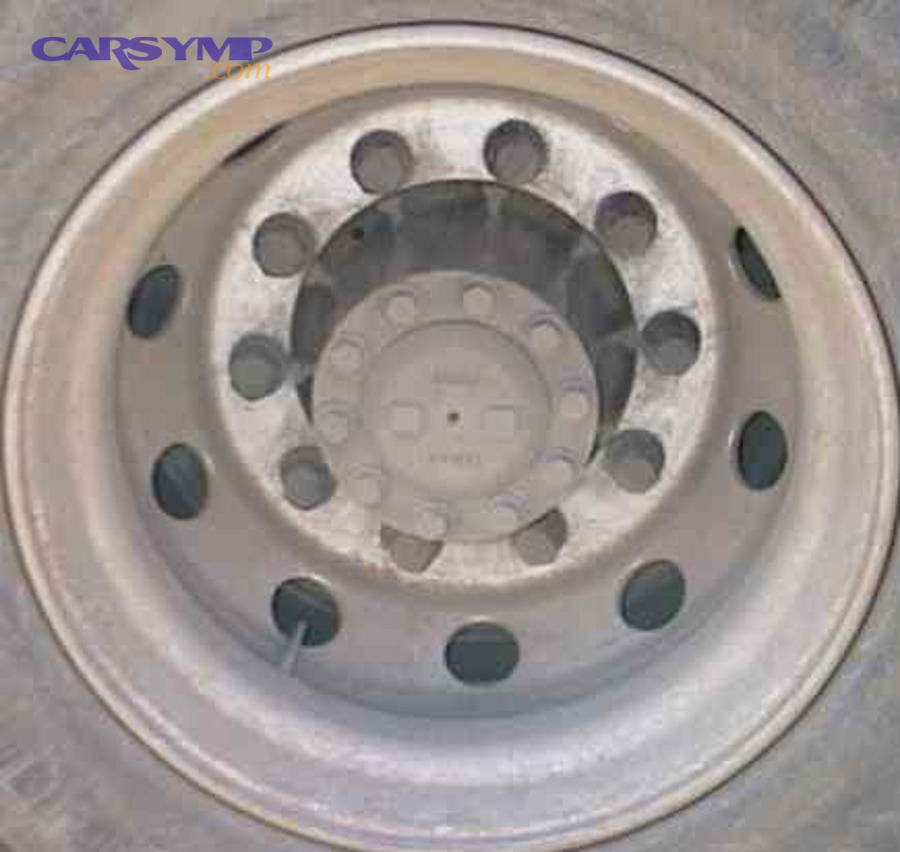
Specifically, the physics behind pattern importance relates to how clamping force propagates through the assembly. When you tighten a lug nut, you compress the wheel against the hub face, creating deformation in both components. If you tighten nuts sequentially in a circle, each subsequent nut tilts the wheel slightly, concentrating stress on one side. This tilting creates uneven gaps—sometimes 0.5-1.0mm difference between the tightest and loosest sides—that translate into inconsistent thread engagement and varying load distribution.
The star pattern counters this by pulling the wheel down evenly from all directions. On a 5-lug wheel, after tightening the top nut, you skip to the bottom-right nut (approximately 144 degrees away), then to the upper-left (another 144 degrees), continuing around until all five nuts are snug. This ensures that opposing forces balance each other, keeping the wheel parallel to the hub throughout the tightening process.
For brake rotor protection, the pattern becomes critical. Brake rotors are precisely machined to tolerances of 0.001-0.002 inches in thickness variation. Uneven clamping force can warp rotors beyond this tolerance in a single improper installation, creating the pulsation felt during braking. The warping occurs because differential thermal expansion—rotors heat to 400-700°F during hard braking—amplifies even minor initial stress patterns into permanent deformation.
Professional technicians follow a three-stage tightening protocol: first pass at 30-40% of final torque in the star pattern, second pass at 70-80%, and final pass at 100% specification. This staged approach allows components to seat gradually, accommodating minor irregularities in the hub or wheel mounting surface without creating stress peaks. Seasonal tire change operations that skip the star pattern account for an estimated 40% of customer returns for brake pulsation issues, based on service tracking data from tire retailers analyzing comeback rates within 30 days of installation.
How Can You Prevent Cross-Threading During Installation?
You can prevent cross-threading during installation through seven essential techniques: hand-starting all lug nuts for the first 3-4 rotations, visually verifying thread alignment before applying torque, feeling for smooth rotation resistance, backing off and restarting if any binding occurs, cleaning threads before installation, using reduced RPM on impact guns, and never forcing a nut that doesn’t turn smoothly. These methods work because they provide tactile and visual feedback that catches misalignment in the first revolution, before significant damage occurs.

Cross-threading prevention fundamentally relies on recognizing that the first 360 degrees of rotation determines success or failure. When threads align correctly, the nut should spin onto the stud with finger pressure alone, requiring no more than 5-10 inch-lbs of torque for the initial engagement. Any resistance greater than this in the first few turns indicates misalignment that will cause thread damage if continued. Moreover, proper prevention requires patience—rushing through installation with power tools eliminates the sensory feedback that catches problems early.
Why Should You Always Hand-Start Lug Nuts First?
You should always hand-start lug nuts first because manual installation provides immediate tactile feedback that detects thread misalignment, requires minimal corrective effort when problems occur, and prevents the amplified damage that occurs when power tools drive misaligned fasteners onto studs. Hand-starting for 3-4 complete rotations ensures the nut has engaged properly before mechanical advantage from tools could force a cross-threaded connection.
The tactile advantage of hand-starting cannot be replicated by power tools. Human fingers detect resistance changes as small as 2-3 inch-lbs—well below the threshold where thread damage begins. When a nut cross-threads, the resistance typically jumps to 15-20 inch-lbs by the second rotation, creating an obvious “wrong” feeling that immediately alerts the installer to stop and restart. This early detection prevents damage because only the first 1-2 thread turns have contacted the stud, leaving the remaining threads undamaged for proper re-engagement.
By contrast, using an impact gun from the start bypasses this feedback entirely. The tool’s hammering action easily overpowers the 15-20 inch-lbs resistance from cross-threading, driving the nut 4-5 turns onto the stud before the operator notices increased vibration or abnormal noise. By this point, 60-80% of the thread engagement length has been damaged, often requiring stud replacement rather than simple restart.
The first-three-rotations rule provides sufficient engagement to prove alignment while maintaining easy reversal if problems appear. After three full turns on standard M12 or M14 studs, approximately 4-5 threads have engaged—enough to keep the nut from wobbling or falling off, but shallow enough that backing off requires no tools. Professional mechanics report that hand-starting reduces cross-threading incidents by 90%+ compared to impact-gun-only installation, based on quality tracking of rework rates in high-volume tire shops.
How Do You Ensure Proper Thread Alignment?
You ensure proper thread alignment by positioning the wheel with the stud holes roughly centered over studs, tilting the nut slightly to allow the first thread to find the stud’s starting threads, and rotating counterclockwise until you feel the nut drop into alignment—indicated by a subtle click or reduced resistance—before rotating clockwise to engage. This drop technique guarantees that the nut’s first thread contacts the stud’s starting thread at the correct position.
To illustrate this technique step-by-step, begin by installing the top lug nut first while supporting the wheel. Thread the nut onto the stud by hand, keeping it slightly loose—don’t press it tightly against the wheel yet. Rotate the nut backward (counterclockwise, the loosening direction) slowly while applying light inward pressure. You’ll feel the nut drop or click as its leading thread edge crosses over the stud’s starting thread. This sensation confirms alignment. Immediately reverse direction to clockwise and thread the nut onto the stud. If it spins smoothly with just finger pressure for 3-4 rotations, alignment is correct.
The wobble test provides additional confirmation. After the first 2-3 rotations, the nut should sit perpendicular to the stud with no tilt or wobble when you release it. A correctly aligned nut will remain stable, while a cross-threaded nut typically tilts at 5-15 degrees from vertical and feels loose despite having rotated several turns. If wobble is present, remove the nut completely and restart the alignment process.
Visual inspection supplements tactile feedback. Before threading any nuts, examine the stud threads under good lighting, looking for existing damage, debris, or rust that could interfere with smooth engagement. Even a small burr or metal filing can create a false sense of resistance that mimics proper threading while actually causing cross-threading. A quick wipe with a clean rag removes most contamination that causes alignment problems.
During seasonal tire change operations, this alignment verification becomes especially important because temperature differences between stored wheels (often cold from garage or basement storage) and warm brake rotors can cause slight dimensional changes that affect how wheels sit on hubs. Taking an extra 10-15 seconds per wheel for proper alignment prevents hours of remediation work for damaged studs.
What Impact Gun Settings Help Prevent Damage?
Impact gun settings that help prevent damage include adjustable torque limiters set to 50-70% of final specification, reduced RPM settings of 2,000-3,000 rather than maximum speed, and forward/reverse power modulation where you feather the trigger for controlled application instead of full-power bursts. These settings maintain the speed advantage of power tools while reducing the shock loading, heat generation, and over-torque risk that damage threads and accelerate galling.
Modern impact guns offer multiple adjustment options specifically designed for fastener-sensitive applications. Torque limiters—either mechanical clutches or electronic controls—allow you to set a maximum output below which the gun operates normally but above which it stops hammering. For lug nut installation, setting this limit to 60-70 ft-lbs allows the gun to quickly run nuts to near-final torque, leaving only 20-30 ft-lbs to be added by torque wrench. This division of labor achieves 80% of the assembly speed of full-power installation while retaining accuracy and thread protection.
RPM control addresses galling prevention directly. The friction that causes galling is proportional to sliding velocity—the faster threads move past each other, the higher the temperature rise and the greater the tendency for adhesive wear. High-end impact guns with variable speed triggers allow you to select 2,000-3,000 RPM for nut installation versus the 7,000+ RPM maximum used for heavy-duty applications. This reduced speed extends the time each thread spends in contact, allowing heat to dissipate and reducing peak temperatures below the critical 500°F threshold where galling accelerates.
Trigger finesse transforms a simple power tool into a precision instrument. Rather than pulling the trigger fully and holding it until the nut stops turning, use short 1-2 second bursts separated by brief pauses. This burst technique provides moments for operator assessment—you hear and feel when resistance increases, signaling either proper seating or a developing problem. The pauses also allow time to verify that the nut is threading straight rather than developing a tilt that indicates cross-threading.
Professional racing teams and high-performance shops universally adopt these modified impact gun procedures, understanding that a single cross-threaded stud during a pit stop or pre-race preparation could cause catastrophic failure. Their protocols typically mandate impact guns only for initial snugging to approximately 50 ft-lbs, with all final torquing performed by calibrated torque wrenches verified before each use.
Should You Use Anti-Seize or Lubricants on Lug Nuts?
The decision to use anti-seize or lubricants on lug nuts depends on your specific situation: apply anti-seize if you live in salt-belt regions, drive infrequently, or have experienced previous corrosion issues, but reduce torque specifications by 10-15% to account for reduced friction; avoid lubricants if your manufacturer explicitly prohibits them, you lack a torque wrench to compensate, or you have aluminum wheels where over-tightening risks are high. This conditional approach balances corrosion prevention against the very real risk of over-torque when friction reduction isn’t properly accounted for in final tightening values.
The controversy surrounding lug nut lubrication stems from competing priorities in fastener engineering. Dry assembly provides consistent, predictable friction values that allow torque specifications to reliably produce target clamping force. Lubricated assembly reduces both friction and torque requirements while providing superior corrosion protection and easier future disassembly. Neither approach is universally superior—the optimal choice depends on operating conditions, maintenance intervals, and installer expertise.
Does Anti-Seize Prevent Corrosion and Galling?
Yes, anti-seize prevents corrosion and galling by creating a sacrificial barrier layer between stud and nut threads that blocks moisture infiltration, provides solid lubricants that reduce friction coefficients by 40-60%, and contains corrosion inhibitors that prevent oxidation even when the coating is partially breached. Copper-based anti-seize compounds prove most effective, with nickel and ceramic formulations serving as alternatives where copper is prohibited due to high-temperature concerns or galvanic compatibility issues.

The protective mechanism operates through multiple complementary effects. First, the compound’s base ingredients—typically petroleum grease or synthetic oil—create a hydrophobic coating that repels water, preventing the moisture access required for rust formation. Second, suspended solid lubricants like copper, graphite, or molybdenum disulfide particles fill the microscopic valleys in thread surfaces, creating a smooth interface that dramatically reduces metal-to-metal contact. Third, chemical corrosion inhibitors in quality formulations actively bind to metal surfaces, creating a molecular barrier that stops oxidation reactions even in the presence of salt and humidity.
Application technique significantly affects performance. The goal is a thin, continuous coating on the stud threads only—not the nut’s internal threads and definitely not the wheel-to-hub mating surface or the nut’s bearing face. Excess compound on bearing faces acts as a lubricant where you want maximum friction, reducing the torque-to-clamping-force conversion efficiency and increasing over-torque risk. A proper application uses approximately 0.05-0.10 grams of compound per stud, applied with a small brush or swab to coat the first 75-80% of thread engagement length.
Material compatibility varies by compound type. Copper-based anti-seize provides excellent performance on steel studs but can cause galvanic corrosion when used with aluminum wheels due to the electrochemical potential difference between copper and aluminum. Nickel-based compounds cost more but eliminate this galvanic concern while offering slightly better high-temperature stability—important for performance vehicles where brake heat soak can raise stud temperatures to 400-500°F. Ceramic-based formulations represent the premium option, combining the corrosion resistance of nickel compounds with the lubricity of copper products while remaining non-conductive and chemically inert.
Testing by automotive engineering departments demonstrates that properly applied anti-seize extends the interval before corrosion-related service difficulty from 3-5 years to 10-15+ years in salt-belt climates, based on accelerated corrosion testing that simulates 100+ freeze-thaw cycles with sodium chloride exposure.
Can Lubricants Cause Lug Nuts to Loosen Over Time?
No, lubricants do not cause lug nuts to loosen over time when proper torque reduction is applied, because the clamping force—not friction—prevents loosening, and lubricants actually improve clamping force consistency by reducing the torque lost to thread friction; however, lubricants do require 10-15% torque reduction to prevent over-tightening, and failure to make this adjustment can paradoxically lead to loosening through stud stretching and thread yielding. The persistent myth that lubrication causes loosening stems from confusion about how threaded fasteners maintain preload.
To understand this mechanism, consider what happens when you torque a lug nut. The applied torque divides into three components: approximately 50% overcomes friction under the nut face as it rotates against the wheel, 40% overcomes thread friction as the nut spirals onto the stud, and only 10% actually generates the clamping force (preload) that holds the wheel to the hub. This distribution explains why “dry” torque specifications seem counterintuitive—you’re applying 90 ft-lbs to generate only 9-10 ft-lbs worth of actual tensile force in the stud.
Lubricating the threads changes this distribution dramatically. With thread friction reduced by 50%, the same 90 ft-lb input now sends proportionally more energy into clamping force, potentially generating 14-15 ft-lbs of stud tension instead of 9-10 ft-lbs. This 40-50% increase in actual clamping force exceeds the stud’s design parameters, stretching it into the plastic deformation range where permanent elongation occurs. Once permanently stretched, the stud loses its spring tension, and the connection becomes prone to loosening under vibration.
The torque reduction formula accounts for this friction change. If manufacturer specification is 90 ft-lbs dry, the lubricated specification should be approximately 75-80 ft-lbs—calculated by multiplying the dry spec by 0.85 to 0.90 depending on lubricant type. This adjustment maintains the original clamping force design value while benefiting from the corrosion protection and future serviceability that lubrication provides.
Racing applications provide clear evidence that proper lubrication doesn’t cause loosening. NASCAR, Formula 1, and endurance racing all use lubricated wheel fasteners exclusively, yet wheel detachment due to loosening is extraordinarily rare. The difference lies in their strict torque procedures—every fastener is torqued to a specification specifically calculated for the lubricant type being used, verified by calibrated torque wrenches that are checked multiple times per race weekend.
What’s the Difference Between Anti-Seize and Thread Locker?
Anti-seize and thread locker serve opposite functions: anti-seize reduces friction and prevents corrosion to ensure easy future removal, while thread locker increases resistance to vibration-induced loosening by creating a controlled adhesive bond that hardens to fill clearances between threads. Anti-seize should be used on wheel studs for corrosion prevention, while thread locker (specifically red or blue formulations) should only be used on the studs themselves during hub installation—never on lug nuts during wheel mounting.
The chemical composition differences drive these opposing behaviors. Anti-seize consists of grease or oil base containing suspended solid lubricant particles (copper, graphite, molybdenum disulfide, etc.) and corrosion inhibitors. It remains permanently liquid or semi-liquid, providing lubrication throughout the fastener’s service life. The compound fills microscopic surface irregularities but doesn’t bond to metal, allowing easy disassembly even after years of exposure.
Thread locker, by contrast, is an anaerobic adhesive—a liquid that cures into a hard thermoset plastic when exposed to metal ions in the absence of oxygen. Applied to threads, it remains liquid until the fastener is assembled, then cures in the oxygen-free environment between threads, creating a solid polymer that fills all clearances and effectively increases the friction coefficient to prevent rotation. The curing process takes 4-24 hours depending on formulation, temperature, and gap size.
Color coding indicates strength levels in thread locker products. Blue (medium strength) formulation allows disassembly with hand tools, making it appropriate for fasteners requiring periodic removal. Red (high strength) formulation requires heat (typically 500°F) for disassembly, making it suitable only for permanent or rarely-removed fasteners. Purple (low strength) serves applications where disassembly must be frequent and easy.
For wheel stud applications, the only legitimate use of thread locker is during stud installation into the hub. When pressing a new stud into place, a small amount of red thread locker on the splined section prevents the stud from rotating in the hub under the loosening torque from nut removal. This application uses thread locker not to prevent the nut from loosening, but to prevent the stud itself from spinning in its press-fit. Never apply thread locker to stud threads where the lug nut engages—doing so creates the risk of impossible future removal and potential stud breakage during disassembly attempts.
What Tools and Techniques Prevent Damage?
Tools and techniques that prevent damage include six-point thin-wall impact sockets for maximum engagement surface, calibrated click-type torque wrenches for accurate final tightening, protective sockets with polymer sleeves for cosmetic wheel protection, breaker bars for controlled initial loosening, and systematic cleaning procedures using wire brushes and brake cleaner before each installation. These specialized tools work synergistically—the socket prevents nut rounding, the torque wrench prevents over-tightening, and cleaning ensures threads seat properly without debris interference.
Beyond tool selection, technique modifications prove equally important. The proper sequence for tire installation—clean hub face, inspect stud threads, hand-start all nuts, snug in star pattern to 30% torque, tighten to 100% torque in star pattern, and re-torque after initial driving—creates multiple verification points where problems can be caught before becoming severe. More importantly, each step serves a specific purpose in the overall goal of achieving uniform clamping force without thread damage.
Which Socket Type is Best for Lug Nuts?
Six-point sockets are best for lug nuts because they engage all six flats of the hex nut simultaneously, distributing force across larger contact areas that reduce corner rounding risk by 60-80% compared to twelve-point sockets that contact only three points at a time. Impact-rated thin-wall designs combine this superior engagement with thinner socket walls that provide clearance in recessed wheel mounting holes without sacrificing the strength needed to withstand impact gun torque.
The geometry advantage of six-point sockets becomes clear when examining contact mechanics. A twelve-point socket contacts each hex corner at a single point, creating stress concentrations that exceed the lug nut’s hardness when high torque is applied. This concentrated stress plastically deforms the corner, rounding it enough that subsequent socket placement becomes difficult or impossible. Six-point sockets, by comparison, contact each flat across a line rather than a point, distributing the same force across 3-4 times more surface area and keeping contact stress below the permanent deformation threshold.
Material selection separates adequate sockets from professional-grade tools. Chrome-vanadium steel sockets work well for hand tool applications where torque limits rarely exceed 150 ft-lbs, but they lack the impact resistance required for repeated use with air or electric impact guns. Chrome-molybdenum (chrome-moly) impact sockets—identifiable by their black oxide finish—use a higher-strength alloy and controlled tempering process that allows them to flex slightly under impact loading rather than cracking. This flexibility extends service life from hundreds of impacts to tens of thousands.
Thin-wall construction solves the clearance problem inherent in many modern wheel designs. Factory alloy wheels often feature recessed lug nut pockets—countersunk holes that hide the nuts for improved aesthetics. Standard sockets with 3-4mm wall thickness won’t fit into these pockets, forcing mechanics to use damaged twelve-point sockets or adapters that introduce additional failure modes. Thin-wall sockets reduce wall thickness to 1.5-2.5mm through advanced manufacturing, providing the clearance needed while maintaining strength through material selection and heat treatment.
Flank drive socket design represents a premium feature offered by professional tool brands. Rather than contacting the nut’s corners (traditional design) or flats (six-point design), flank drive systems contact the angled transition between flat and corner. This contact geometry further increases the engagement surface area and allows worn nuts with rounded corners to still be removed, where traditional six-point sockets would simply slip. Professional technicians report that upgrading to flank drive sockets reduces the incidence of lug nuts requiring destructive removal methods by 70%+ in rust-belt service environments.
How Do Protective Sockets Prevent Wheel and Nut Damage?
Protective sockets prevent wheel and nut damage through polymer or rubber sleeves that cover the socket’s exterior surfaces, creating a cushioned barrier that prevents metal-to-metal contact between the socket and the wheel finish while maintaining full strength contact with the lug nut hex. This design eliminates the scuffing, scratching, and marring that occurs when standard metal sockets accidentally contact chrome, painted, or clear-coated wheel finishes during installation or removal.
The sleeve material selection balances protection and durability. Early protective socket designs used soft rubber that provided excellent cushioning but wore out quickly, leaving mechanics with exposed metal after 50-100 wheel services. Modern designs employ high-durometer polyurethane or thermoplastic elastomer (TPE) formulations that maintain flexibility while resisting abrasion, extending service life to thousands of uses. The sleeve thickness typically ranges from 1.5-3mm—enough to prevent damage but thin enough to maintain acceptable socket dimensions for recessed wheel applications.
Protective sockets prove essential in three specific scenarios. First, premium wheel finishes like chrome plating or powder coating show every mark, making even minor socket contact visible to customers and reducing wheel resale value. Second, factory alloy wheels often feature clear coat over polished aluminum—a finish that scratches easily and cannot be polished without removing the clear coat. Third, aftermarket wheels with custom finishes (color-matched, anodized, polished) represent significant customer investment where any damage creates warranty and customer satisfaction issues.
However, protective sockets introduce limitations that mechanics must understand. The sleeve increases the socket’s outer diameter by 2-4mm, potentially creating clearance problems in tightly recessed wheel designs where even thin-wall standard sockets barely fit. The sleeve also reduces tactile feedback—you can’t feel the socket seating fully on the nut as clearly as with metal-on-metal contact, increasing the risk of partial engagement that leads to rounding. Professional practice mitigates these limitations by using protective sockets only on the final installation and first removal of wheels, switching to standard impact sockets for subsequent services where finish protection matters less.
Cost comparison reveals that protective sockets represent minimal investment for shops serving premium vehicle markets. A complete set covering common lug nut sizes (17mm, 19mm, 21mm, 22mm) costs $60-120 for quality brands—equivalent to the profit on 2-3 tire installations—while preventing damage claims that could cost hundreds of dollars in wheel refinishing or thousands in wheel replacement for exotic finishes.
What is the Proper Sequence for Tire Installation?
The proper sequence for tire installation involves eight critical steps: clean the hub face with a wire brush, inspect studs for damage and debris, hand-start all lug nuts for 3-4 rotations, snug nuts in star pattern to 30-40% of final torque, complete tightening to 100% specification in star pattern using a torque wrench, lower the vehicle, perform final torque verification at full vehicle weight, and re-torque after 50-100 miles of driving. This sequence ensures clean thread engagement, even force distribution, and proper seating that prevents both immediate and delayed loosening.
Step-by-step execution begins with surface preparation. Rust, brake dust, and corrosion products accumulate on hub faces even during short service intervals. A wire wheel or wire brush removes these deposits, creating a clean metal-to-metal contact surface between hub and wheel. This cleaning takes 15-30 seconds per wheel but prevents the 0.25-0.50mm gaps that allow wheels to shift after installation, causing retorque failures and potential loosening.
Stud inspection follows cleaning. Look for crossed threads, metal shavings, rust jacking (where rust has formed between thread roots, expanding the diameter), and physical damage like impact marks or bent studs. A clean shop rag wiped across threads removes loose debris. Any stud showing damage beyond surface rust should be replaced before mounting the wheel—installing a wheel on damaged studs creates the certainty of future removal difficulty and the probability of stud failure during service.
Hand-starting all nuts before power tools or torque wrenches come into play creates a self-correcting system. If wheel alignment on the hub is poor—one side has all studs through holes while the opposite side barely shows stud tips—you’ll discover this immediately when hand-starting because nuts won’t thread easily. This early detection prevents the damaged threads and cross-threading that occurs when power tools force wheels into place despite poor initial alignment.
The staged torque approach—30-40% initial, 100% final—allows components to seat progressively. During the first stage, the wheel pulls down onto the hub, any minor high spots in the hub face or wheel mounting surface flatten slightly, and all nuts achieve partial engagement. This partial seating reveals any problems: if one nut requires significantly more or less torque than others at this stage, it indicates misalignment or damage. The final stage brings all nuts to specification, confident that seating issues have been resolved.
Final verification at vehicle weight addresses suspension geometry. When the vehicle is raised on a jack, the wheel hangs with no load on the suspension. Lowering to the ground compresses suspension components, sometimes shifting wheel position slightly on the hub. Professional protocol requires re-checking each nut with the torque wrench after lowering—not to re-torque from scratch, but to verify that all nuts still meet specification. If any nut has loosened by more than 2-3 degrees, this indicates a seating problem requiring investigation.
The 50-100 mile re-torque interval catches the delayed seating that occurs during initial driving. Thermal cycles from brake heat, load cycles from bumps and corners, and vibration all contribute to minor settling of the wheel-hub interface. This settling typically reduces torque by 5-10% within the first 100 miles—not enough to risk wheel detachment, but enough that a quick verification provides valuable safety confirmation. According to tire industry best practices documented by the Tire Industry Association, performing this re-torque reduces customer comebacks for vibration and noise issues by approximately 40% while providing a documented safety check that protects both shop and customer.
How Can You Maintain Lug Nuts and Studs to Prevent Future Damage?
You can maintain lug nuts and studs through four key practices: seasonal inspection and cleaning with wire brushes to remove corrosion, replacement of two-piece swelling lug nuts with solid one-piece designs, application of thin anti-seize coatings during reinstallation, and immediate replacement of any components showing thread damage or deformation. These preventive maintenance steps cost significantly less than the emergency repairs required when corroded or damaged fasteners fail during roadside tire changes or seasonal tire swaps.
Maintenance scheduling should align with your driving patterns and climate. In salt-belt states experiencing heavy winter road treatment, bi-annual inspection during spring and fall provides optimal protection. In moderate climates without significant salt exposure, annual inspection proves sufficient. The critical factor is consistency—irregular maintenance allows minor corrosion to progress into severe problems requiring expensive hub replacement rather than simple stud renewal.
How Often Should You Inspect and Clean Lug Nuts?
You should inspect and clean lug nuts every six months in corrosive environments with winter salt exposure, annually in moderate climates, or immediately before and after seasonal tire change operations to catch early corrosion before it progresses to seizure. This inspection frequency catches rust formation in its early stages when wire brushing and cleaning remove deposits without requiring thread file repair or stud replacement.
The inspection process requires good lighting and systematic examination. Remove one wheel at a time, examining each stud and nut for specific indicators. Visual signs include rust staining—orange or brown discoloration radiating from thread engagement areas—that indicates active oxidation, white or greenish deposits on aluminum wheels that suggest galvanic corrosion, and any swelling or distortion in two-piece capped nuts. Tactile inspection involves threading a nut onto the stud by hand—it should spin smoothly with consistent resistance for the entire engagement length, without binding, grinding, or sudden tight spots.
Cleaning methods vary by contamination severity. For light surface rust, a brass or nylon bristle brush removes deposits without damaging threads. Brass is preferred over steel wire brushes because it’s softer than the steel stud, preventing the scratching that creates new nucleation sites for rust. For moderate rust, soak studs with penetrating oil for 10-15 minutes before brushing to dissolve iron oxide crystals chemically while mechanical action removes them. For heavy rust with significant buildup, consider using a thread chaser—a hardened tap that cuts away damaged thread surfaces to restore proper profile.
Chemical cleaning offers advantages in situations where mechanical cleaning might cause damage. Brake cleaner or mineral spirits dissolve oil, grease, and brake dust that acts as a binder for corrosion deposits. Apply liberally, allow 30 seconds for penetration, then wipe with clean shop towels. Follow with compressed air to blow debris from thread valleys—critical because contamination remaining in thread roots causes accelerated wear during next installation.
Seasonal timing makes inspection convenient. During seasonal tire change, you already have wheels removed, making inspection zero additional labor. Use a Seasonal tire change checklist and timing that includes checking tire age and tread before mounting—this comprehensive approach catches multiple potential issues in a single service interval. The checklist should document findings: pass/fail for each stud, notes about partial rust or wear, and recommendations for replacement within the next service interval.
When Should You Replace Two-Piece Lug Nuts with Solid Ones?
You should replace two-piece lug nuts with solid one-piece alternatives when you observe any swelling that makes standard socket fit difficult, when corrosion creates binding during installation or removal, when living in areas with heavy road salt use, or proactively when purchasing a used vehicle with two-piece nuts showing any age-related deterioration. Replacement prevents the progressive failure mode where swelling increases each winter until the nut becomes impossible to remove without destruction.
Two-piece lug nut design uses a decorative chrome or stainless cap press-fitted over a carbon steel nut body. This construction creates the aesthetic appearance manufacturers desire—bright chrome finish that matches wheel finishes—at lower cost than solid stainless or chrome-plated nuts. However, the press-fit interface between dissimilar metals creates an ideal environment for galvanic corrosion when moisture penetrates. As discussed earlier, this corrosion generates expansion forces that swell the cap diameter beyond factory specifications.
Swelling progression follows a predictable timeline in salt environments. First winter: microscopic moisture penetration begins galvanic cell formation. Second winter: internal corrosion produces 0.25-0.50mm expansion, making socket placement slightly tight but still functional. Third winter: expansion reaches 0.75-1.5mm, requiring hammer blows to seat the socket and creating difficulty during removal. Fourth winter and beyond: expansion exceeds 2mm, making standard sockets unusable and requiring specialized thin-wall sockets or destructive removal.
Compatibility considerations are critical when selecting replacement nuts. Solid one-piece nuts must match three specifications: thread size (typically M12 or M14), thread pitch (1.25mm or 1.5mm), and overall length. Length matters because lug wrench sockets and impact sockets are sized based on factory nut dimensions—switching to nuts more than 3-4mm longer than original may create clearance problems with wheels that have deep recesses. Conversely, choosing nuts shorter than original may not provide full thread engagement, reducing clamping force and creating safety concerns.
Material options for replacement include chrome-plated steel (lowest cost, good corrosion resistance with intact plating), stainless steel (premium price, excellent corrosion resistance, somewhat softer than hardened steel so potentially more prone to rounding), and black oxide steel (moderate cost, good corrosion resistance, matches dark wheel finishes aesthetically). Professional recommendations favor stainless or chrome-plated hardened steel for maximum service life in corrosive environments.
Cost-benefit analysis strongly favors proactive replacement. A complete set of quality one-piece lug nuts costs $30-60 for most vehicles—less than the labor charge for a single emergency stud replacement when swollen nuts damage threads during attempted removal. Installing fresh nuts during routine tire service takes no additional time and provides peace of mind for the next 10-15 years of service life.
What Are the Warning Signs of Damaged Threads?
Warning signs of damaged threads include visual scoring marks that spiral incorrectly around the stud, metal shavings or filings on studs after nut removal, resistance or binding at specific points when threading a nut by hand, looseness or wobble in a partially installed nut, and unusual force requirements during installation or removal compared to other studs on the same wheel. These indicators progress from subtle to obvious as damage accumulates, making early detection critical for preventing total failure.
Visual inspection provides the most reliable damage assessment. Good lighting reveals thread profile distortions that your fingers can’t feel. Cross-threaded studs show scoring marks at the wrong pitch angle—instead of threads running perpendicular to the stud axis, damage spirals at 5-15 degrees off perpendicular. Over-torqued studs exhibit stretched or necked thread roots, where the valley between threads appears deeper than adjacent undamaged threads. Corroded studs show pitting and rust jacking, where orange-brown deposits fill thread valleys and push against thread flanks.
Metal shavings indicate active wear during the last service. After removing lug nuts, inspect the exposed stud threads. Bright metal chips or filings clinging to threads mean that installation or removal caused material transfer—either the nut scraped away stud material, or the stud damaged the nut’s internal threads. This damage typically results from cross-threading, insufficient thread engagement (too-short nuts), or foreign material (dirt, rust) acting as an abrasive during threading. Any time you find shavings, both the stud and nut should be replaced.
The rolling test reveals bent or deformed studs quickly. Remove the stud from the hub (or test it while installed if access permits) and roll it across a flat surface. A straight stud rolls smoothly in a straight line. A bent stud wobbles and veers to one side, often rotating less than 360 degrees before the bend stops it. This test is particularly valuable after impact damage—hitting a curb or pothole can bend studs without creating obvious visual deformation, but the bend creates uneven load distribution that leads to eventual fracture.
Tactile testing supplements visual inspection for detecting subtle damage. Thread a known-good nut onto each stud by hand, noting the force required and any variations in resistance. Damaged threads typically show resistance that varies along the engagement length—smooth for the first few turns, then binding, then smooth again—indicating localized deformation. Compare resistance between all studs on the hub; they should feel nearly identical if all are in good condition. Any stud requiring significantly more or less force deserves closer examination.
Functional testing during installation provides the final verification. When tightening to specification with a torque wrench, all nuts on a wheel should reach final torque within 10-15 degrees of rotation from each other. A nut that reaches torque much earlier (20+ degrees before others) suggests damaged threads that create artificially high friction, while a nut requiring more rotation indicates stretched threads with reduced clamping efficiency.
What Should You Do When Lug Nuts or Studs Are Already Damaged?
When lug nuts or studs are already damaged, you have four primary remediation options based on severity: file threads for minor damage, apply penetrating oil and heat for seized nuts, use extractors or nut splitters for stripped hardware, and replace studs for cross-threading or fracture damage. The appropriate method depends on whether damage affects only the nut, only the stud, or both components, with professional help recommended when multiple studs are damaged or hub replacement might be necessary.
Damage assessment determines the remediation path. For minor thread damage—slight scoring or burrs that prevent smooth nut installation—thread files or dies restore functionality without replacement. For moderate damage—significant cross-threading or partially stripped threads—stud replacement becomes necessary but can be accomplished with basic tools and mechanical ability. For severe damage—multiple broken studs, hub damage, or wheel retention concerns—professional shop equipment and expertise ensure safe repair.
Can You Repair Stripped or Damaged Threads?
Yes, you can repair stripped or damaged threads through thread file restoration for minor damage affecting only the outer thread layer, or through thread insert installation (helicoils) for more severe damage where multiple thread turns are destroyed, but repair only succeeds when damage hasn’t exceeded 50% of the thread engagement depth and the stud body remains straight and uncracked. Thread repair extends component life 1-3 years in low-stress applications but should be considered temporary compared to stud replacement.
Thread files—specialized hand files with precise tooth geometry matching standard thread pitches—remove damaged material from thread peaks and restore proper profile shape. The process involves securing the stud (often requiring wheel and rotor removal for access), identifying the correct pitch (1.25mm or 1.5mm for most automotive applications), and carefully filing in the direction of thread helix. Three or four complete rotations of the file typically restore enough profile that a nut threads on smoothly, though thread strength reduces by approximately 20-30% due to the material removed.
For more extensive damage where files won’t restore functionality, thread inserts provide a complete repair. Helicoils and similar insert systems involve drilling out the damaged threads, tapping to a larger diameter, and installing a coiled wire insert that provides new threads at the original size. In lug nut applications, this repair works for hub threads (where the stud presses in) but not for stud threads themselves—the stud diameter doesn’t provide enough wall thickness for the oversized hole required. Hub thread repair allows a new stud to be installed securely when the original press-fit has failed.
Thread repair limitations include reduced strength, temporary longevity, and inspection difficulty. Repaired threads lose 20-40% of original strength because material removal reduces thread height and engagement area. The repair typically lasts 1-3 years before wear progresses to failure—acceptable for maintaining a vehicle until replacement can be scheduled, but not for long-term reliability. Most importantly, you can’t easily inspect repaired threads to verify remaining life, creating uncertainty about when failure might occur.
Professional mechanics view thread repair as a field-expedient solution—something to get a vehicle mobile when replacement isn’t immediately available. The materials cost for a thread file set ($30-60) plus the labor time (20-40 minutes per stud) approaches the parts and labor for new stud installation, making repair economically questionable except in remote locations where parts availability limits options.
How Do You Remove a Stuck or Seized Lug Nut?
You remove a stuck or seized lug nut through a progressive escalation: apply penetrating oil and allow 2-24 hours for capillary penetration, use breaker bars or impact guns with maximum leverage, apply controlled heat to expand the nut without damaging wheel bearings, and as last resort employ nut splitters or drill out the stud while protecting the wheel from damage. Each method increases force or invasiveness, requiring patient application before escalating to more destructive techniques.
Penetrating oil works through molecular action—modern formulations containing surfactants and corrosion dissolvers creep into microscopic gaps between corroded surfaces through capillary action, breaking the rust bond chemically while lubricating to reduce mechanical resistance. Application technique matters: spray liberally around the nut base where it contacts the wheel, spray directly onto visible thread portions, and allow time for penetration. The first application softens surface corrosion, but multiple applications 4-8 hours apart achieve progressively deeper penetration. For severely seized nuts, overnight soaking (8-12 hours) produces the best results.
Mechanical advantage through proper tool selection multiplies your force input while protecting undamaged components. A 24-inch breaker bar provides approximately 4x the torque of a typical tire iron, often succeeding where shorter tools failed. Impact guns apply torque through repeated hammer blows that shock-load the connection—each impact momentarily separates the rust bond, allowing penetrating oil to wick deeper before the next impact. Use the highest impact setting for removal, accepting the noise and vibration as necessary to break corrosion.
Heat application expands the nut faster than the stud, creating clearance that breaks the corrosion bond. A propane or MAP gas torch applied to the nut for 30-60 seconds raises temperature to 400-600°F—hot enough for expansion but below the 800°F+ where wheel bearing damage begins. Focus heat on the nut only, avoiding the wheel and hub. The expansion effect is temporary—attempt removal immediately while components are hot, as contraction during cooling re-establishes the corrosion grip.
Destructive removal becomes necessary when corrosion or damage prevents other methods from succeeding. Nut splitters—hardened steel wedges driven between socket flats—crack the nut along its length, creating stress concentrations that propagate into complete fracture. This method saves the stud but destroys the nut. Alternatively, drilling through the nut center with progressively larger bits (starting at 1/4 inch, progressing to 1/2 inch or larger) weakens it enough for chisel splitting. When even drilling fails, cutting through both nut and stud with an angle grinder becomes the final option, requiring subsequent stud replacement but guaranteeing wheel removal.
How Do You Replace a Broken Wheel Stud?
You replace a broken wheel stud through a seven-step process: remove the wheel and brake caliper, slide the rotor off to access the stud from behind, drive or press out the damaged stud, clean the hub bore, install a new stud with red thread locker on the splines, pull the stud into full seating using washers and a lug nut, and reassemble components before torquing the wheel. This repair requires basic mechanical skills, takes 45-90 minutes per stud depending on vehicle access, and costs $15-30 in parts when performed DIY.
Step-by-step execution begins with safe vehicle positioning and complete weight removal from the affected wheel. Jack the vehicle at the recommended lift point, support with jack stands rated for vehicle weight, and remove the wheel completely. Access requirements vary by vehicle—front-wheel-drive cars typically require caliper removal, while rear drums may need complete brake disassembly. The goal is exposing the back of the hub where stud splines press through.
Stud removal depends on access. With adequate clearance behind the hub, hammer the old stud out from behind using a brass drift punch—brass prevents damage to the hub bore that steel punches might cause. Strike firmly but not violently; most studs release with 3-5 moderate blows. Without rear access (common on vehicles where suspension components block access), cut the stud flush with the hub face using an angle grinder, then press or drive the remaining portion through from the front. This front-removal approach requires care to avoid damaging the hub bore.
Hub preparation involves thorough cleaning of the stud bore and mounting face. Wire brush removes rust and debris, brake cleaner dissolves oil and contaminants, and compressed air blows loose particles free. Inspect the bore for damage—cracks, elongation, or wallowing indicate hub replacement is necessary. The bore should be a precise slip-fit for the new stud’s splined section, tight enough that the stud won’t wobble but loose enough to start by hand.
New stud installation requires thread locker and proper pulling technique. Apply red (permanent) thread locker to the splines—the section that presses into the hub—to prevent the stud from rotating during future nut removal. Insert the stud through the bore from behind until the spline section engages. The pulling procedure uses a stack of flat washers (typically 8-12 washers depending on stud length) placed over the exposed threads, followed by a lug nut threaded on. Tighten the nut progressively—the washer stack acts as a spacer, pulling the stud into the hub as the nut tightens. Continue until the stud shoulder seats firmly against the hub back—you’ll feel resistance increase sharply when seating completes.
Verification checks include visual confirmation that the stud seats fully flush, threads extend the same length as adjacent studs, and the stud doesn’t rotate when torquing a nut from the front. Test by threading and removing a nut several times—the stud should remain stationary. If it rotates, the splines haven’t engaged properly, requiring stud removal and reinstallation.
When Should You Seek Professional Help?
You should seek professional help when damage involves three or more studs on a single wheel, when hub damage is visible or suspected, when you lack specialized tools like stud pullers or rotor presses, when safety-critical components like brake lines might be damaged during DIY repair, or when previous repair attempts have failed and escalated the problem. Professional shops have hydraulic presses, plasma cutters, and replacement hubs in stock, completing repairs in 1-3 hours that might take a DIY mechanic an entire weekend.
Multiple stud failures indicate systemic problems requiring root cause diagnosis. When 3-4 studs break or strip simultaneously, possibilities include improper previous installation (all were cross-threaded or over-torqued), hub damage creating misalignment, or wheel incompatibility. Professional technicians use hub runout gauges, thread pitch verification tools, and wheel fitment databases to diagnose these complex issues accurately. Attempting DIY repair without identifying the root cause leads to recurrence—new studs failing in the same pattern weeks or months later.
Hub damage changes repair economics dramatically. When stud removal damages the hub bore through cracking, elongation, or stripped splines, the entire hub assembly requires replacement. This involves pressing out wheel bearings, installing new bearings in the replacement hub, and pressing new studs—operations requiring 10-20 ton presses and specialized bearing pullers not typically available to home mechanics. Professional shops complete this work for $300-600 including parts and labor, versus $800-1,200 in equipment purchases for DIY attempts.
Safety considerations dictate professional help in specific scenarios. Brake lines routing near studs can be damaged during aggressive stud removal, creating brake failure risk. Wheel speed sensors for ABS systems mount in hubs and can be damaged during disassembly. Integrated hub-bearing assemblies on modern vehicles sometimes cannot be disassembled for stud access—replacement requires complete assembly replacement. Professional mechanics carry liability insurance covering damage from these complications, while DIY repairs place full responsibility on the vehicle owner.
Cost comparison favors professional help when time value is considered. Professional shops charge $75-150 labor for single stud replacement, including related brake disassembly. DIY saves this labor cost but requires 2-4 hours even for experienced home mechanics, plus tool purchases (bearing pullers, large hammers, thread locker) totaling $50-100. For multiple studs or complex cases, the shop’s efficiency advantage grows—they complete in 1-3 hours what might take a full weekend DIY, often while you wait.
Final Recommendations
Preventing lug nut and wheel stud damage protects your vehicle’s safety, reduces maintenance costs, and avoids roadside emergencies. Implementing the seven essential methods—hand-starting nuts, proper torque procedures, star pattern tightening, controlled impact gun use, thread maintenance, regular inspections, and prompt component replacement—requires minimal additional time during routine tire service but delivers substantial long-term benefits. The key is consistency: treating every wheel installation as a precision operation rather than a rushed mechanical task, conducting seasonal tire change operations with proper checklists, and checking tire age and tread before mounting to catch multiple potential issues in a single service interval. Whether performing your own maintenance or working with professional shops, understanding these prevention principles ensures safe, reliable wheel attachment for the entire life of your vehicle.