


A pre-purchase inspection checklist is a step-by-step way to confirm a used car’s real condition before money changes hands, so you can spot safety risks, predict near-term repairs, and decide whether the deal is truly worth it.
Beyond the obvious dents and a smooth idle, this checklist helps you validate hidden-value details like maintenance evidence, wear patterns, and warning signs that often appear only during a careful walkaround and test drive.
It also gives you a consistent framework to compare multiple vehicles fairly, so you don’t “fall in love” with a car that looks great in photos but fails basic mechanical and safety reality checks.
To start, Giới thiệu ý mới: we’ll build your inspection flow from fast screening to hands-on checks, then show how to use what you find to negotiate, walk away, or buy with confidence.
What is a pre-purchase inspection checklist, and what does it protect you from?
A pre-purchase inspection checklist is a how-to evaluation system that breaks a used-car inspection into repeatable steps, protecting you from hidden damage, deferred maintenance, and mismatched paperwork by forcing objective checks instead of gut feelings.
To connect the idea, this matters because “looks good” is not the same as “is sound,” and the gap between those two is where expensive surprises live.

- Safety: Is the car structurally and mechanically safe right now?
- Reliability: Will it likely need urgent repairs in the next 30–90 days?
- Truthfulness: Do the wear signs match the story (mileage, maintenance, ownership)?
What “quick check” usually misses that a checklist catches
A quick check finds obvious problems, but a checklist catches patterns—like uneven tire wear pointing to alignment or suspension issues, coolant residue suggesting leaks, or inconsistent panel gaps hinting at collision repair.
However, the key is sequence: first screen, then inspect, then verify with a test drive and documents, so you don’t waste time on cars that fail early red flags.
What this checklist is not
This checklist is not a promise that the car will never fail, and it’s not a substitute for a professional diagnostic when the stakes are high; instead, it’s a structured way to reduce uncertainty and prioritize what to verify next.
To keep momentum, the next step is choosing which car deserves a deeper inspection in the first place.
How do you screen a used car before you even see it in person?
You screen a used car by checking listing details, seller behavior, VIN availability, and maintenance evidence to remove high-risk candidates early, so your in-person time is spent only on cars that pass basic credibility tests.
Next, use the same screening rules for every car, because consistent criteria makes comparisons fair and reduces emotional bias.

- VIN first: If the seller avoids sharing a VIN, treat it as a risk signal.
- Records: Look for receipts, service intervals, and evidence of routine maintenance, not just “oil changed.”
- Photos: Demand clear images of tires, engine bay, underbody (if possible), and interior wear points.
- Consistency: Mileage, seat wear, pedal wear, and steering wheel shine should match the story.
- Seller clarity: A trustworthy seller can explain ownership, recent repairs, and known issues without vague answers.
What to ask in one message to reduce seller “story drift”
Ask for: VIN, title status, reason for selling, last major service date, any warning lights, accident history, and whether you can do a cold start plus a test drive—then compare the answers later against what you see.
After that, move from “paper screening” to “eyes-on inspection,” starting outside where the biggest deception risks often show up.
What should you inspect on the exterior in the first 10 minutes?
You should inspect body panels, paint consistency, glass, lights, tires, and stance because exterior clues often reveal collisions, poor repairs, misalignment, and neglect faster than any conversation with the seller.
To continue smoothly, treat the walkaround like a map: you’re locating anomalies first, then investigating them in detail.

Body and paint: look for mismatch, not perfection
Check panel gaps, door alignment, and reflections in the paint. A repainted panel may have different orange peel texture, overspray in hidden edges, or tape lines inside door jambs. Also inspect the roof and hood for “blend” marks where paint transitions can hide repairs.
However, don’t stop at cosmetics—connect paint issues to structural risks by checking whether the car sits level and drives straight later.
Glass and lights: small cracks can mean real cost
Inspect windshield chips (especially in the driver’s line of sight), headlight haze, moisture inside lenses, and all exterior light functions. Water in a light housing can hint at broken seals or collision repairs.
Next, shift attention to tires because they are both a safety item and a diagnostic clue.
Tires and wheels: “wear tells the truth”
Measure tread depth and compare left vs right, front vs rear. Uneven wear can suggest alignment issues, worn suspension components, or mismatched tire sizes. Also look for sidewall cracking, bubbles, and curb rash that may reflect rough use.
To keep the flow, confirm tire pressure and condition before the test drive so your later steering feel isn’t distorted by underinflation.

What under-hood checks matter most for a buyer without a lift?
The most important under-hood checks are fluid condition, leak evidence, belts and hoses, battery health clues, and signs of overheating, because these reveal neglect and expensive failures even when the engine sounds “fine” at idle.
To connect this section to the exterior, remember: a clean engine bay can be cosmetic, but fluids and residue are harder to fake consistently.

Fluids: use color, smell, and consistency
Engine oil: Check level and look for gritty texture, burnt smell, or milky foam (possible coolant contamination). Coolant: Look for correct color, no oil sheen, and no crusty residue around caps/hoses. Brake fluid: Dark fluid can mean overdue service; it doesn’t prove failure, but it indicates maintenance habits.
Next, look for leaks because they turn small seals into big bills when ignored.
Leak and overheating signals: the “silent deal killers”
Scan for wetness under the engine, fresh spray patterns, or powdery residue on the radiator and hoses. Smell for sweet coolant odor after the engine warms. Check the oil filler cap area for sludge that can indicate poor service intervals.
However, don’t assume every leak is catastrophic—your goal is to identify what needs verification by a mechanic or during the test drive.

Belts, hoses, and wiring: fast checks with high value
Squeeze hoses (engine cool), looking for spongy softness or cracking. Inspect belts for fraying and glazing. Look for hacked wiring, aftermarket splices, or non-factory connectors that can cause intermittent electrical issues.
To transition forward, the next step is to look below the car—because what’s hidden underneath often determines whether the car is a bargain or a trap.
What underbody and suspension checks reveal the biggest risks?
Underbody and suspension checks reveal rust severity, accident damage, oil leaks, torn boots, and worn joints because these components affect safety and alignment, and they are expensive to correct if the structure is compromised.
Next, treat underbody findings as a “severity ladder,” moving from minor surface rust to structural corrosion or bending.
Rust: separate cosmetic from structural
Surface rust on exhaust parts is common, but frame rust, suspension mounting rust, and flaking layers are more serious. Probe gently (no damage) and look for swelling seams, soft spots, or heavy scaling where components attach.
However, rust is regional—so your standard should be “safe and structurally sound,” not “perfectly clean.”
Suspension joints and boots: the silent steering killers
Inspect CV boots and ball-joint boots for tears and grease. Look for wet shock absorbers and cracked bushings. Excessive play can cause wandering, clunks, and uneven tire wear that never truly goes away until parts are replaced.
To connect this to real-world outcomes, confirm suspicious components during the test drive, where noises and steering behavior become obvious.

Brakes and wheels: quick visibility checks
If you can see through the wheel, check rotor grooves and pad thickness. A rusty lip on rotors after sitting can be normal, but deep scoring or thin pads suggest immediate service.
Next, we’ll use the test drive to convert “inspection clues” into “behavior evidence.”

What should your test drive checklist include to uncover hidden problems?
Your test drive checklist should include cold start behavior, steering feel, braking stability, transmission shifts, engine response, and temperature behavior because many defects only appear under load, heat, and real driving conditions.
Next, drive in layers: low speed first, then moderate speed, then highway if possible, so you can isolate where symptoms begin.

Cold start and idle: listen for patterns, not single sounds
Start the car when the engine is cold if you can. Note how quickly it starts, whether idle hunts, and whether any smoke appears. Blue smoke can suggest oil burning; white smoke lingering after warm-up can signal coolant issues.
However, a smooth idle alone proves little—so connect idle behavior to acceleration and load testing next.
Steering and alignment: “straight road truth test”
On a straight, flat road, loosen your grip slightly: the car should track straight without constant correction. Steering wheel off-center can suggest alignment issues or crash/suspension history. Listen for clunks over bumps and during low-speed turns.
Next, use braking to test stability and confidence, because a car can feel fine until you ask it to stop hard.
Braking and ABS: test predictably and safely
Brake from moderate speed with hands lightly on the wheel. Pulling can mean caliper issues, tire mismatch, or alignment problems. Pulsation can indicate rotor issues. If safe and legal, do one firm stop to confirm ABS behavior and pedal feel.
To continue, evaluate the transmission because shift quality can be expensive to fix and easy to ignore in a short drive.
Transmission and drivetrain: smoothness beats “noisy excuses”
For automatics, shifts should be consistent and not flare (RPM spikes) or slam. For manuals, clutch take-up should be smooth and not slip. Listen for whining, grinding, or vibration changes under acceleration vs coasting.
To wrap the drive logically, verify that the engine reaches normal operating temperature and stays stable without overheating or warning lights.
Which dashboard, scan, and paperwork checks catch problems you can’t see?
Dashboard, scan, and paperwork checks catch hidden problems by revealing stored fault codes, emissions readiness, recall status, title issues, and mismatch patterns between the car’s story and its recorded history.
Next, combine “computer truth” with “paper truth,” because either one alone can be incomplete or misleading.

Dashboard self-test: the warning light honesty check
Turn the key to accessory/on (engine off). Warning lights should illuminate briefly, then go off after start. Missing lights can indicate tampering. Confirm check engine, ABS, airbag, and traction control indicators behave normally.
However, a cleared light is not a cleared problem—so scanning is the next logical step.
OBD scan: interpret categories, not just codes
Scan for stored, pending, and permanent codes. Review readiness monitors (useful for emissions-related confidence). A seller who recently cleared codes may still show incomplete monitors—so treat that as a “verify further” sign.
To keep the flow practical, pair scan results with your test drive notes: codes + symptoms tell the real story.

VIN and recall checks: safety issues you can verify in minutes
Use the VIN to check open recalls and confirm the vehicle identity matches title/registration. Even if the seller seems honest, recall status is a separate question about safety completion and follow-through.
Theo nghiên cứu của NHTSA từ Recall Management Division, vào January 2025, cơ quan này ghi nhận năm 2023 có khoảng 1,000 đợt thu hồi liên quan đến hơn 39 triệu xe và thiết bị, nhấn mạnh rằng kiểm tra recall là bước thiết thực trước khi mua.
Title and ownership documents: the “future headache filter”
Verify title status (clean, salvage, rebuilt), lien presence, and that the seller can legally sell the car. Match VIN on documents to the car. Ask for maintenance receipts and compare dates/mileage to what you see on the odometer and wear points.
Next, we’ll decide when a professional inspection is worth paying for, and what it should include so you’re not paying for a shallow “look-over.”
Do you need a professional inspection, and what should it include?
Yes, you usually need a professional inspection when the purchase price is meaningful to you, when the car has any red flags, or when you can’t confidently evaluate safety-critical systems, because a thorough mechanical review can uncover issues you will not catch alone.
Next, treat the professional step as “confirmation under tools,” not as a replacement for your own checklist, so you can ask sharper questions and spot inconsistencies.
When it’s worth paying (and when it’s not)
Pay for a professional inspection when: the car is older, higher mileage, has modified parts, shows uneven wear, has incomplete service history, or you’re comparing two “similar” cars and need a tie-breaker based on mechanical truth.
However, it’s often not worth paying if the seller refuses a cold start, avoids VIN sharing, won’t allow a test drive, or the car already fails basic safety checks—because those are walk-away signals.
What a thorough inspection should cover
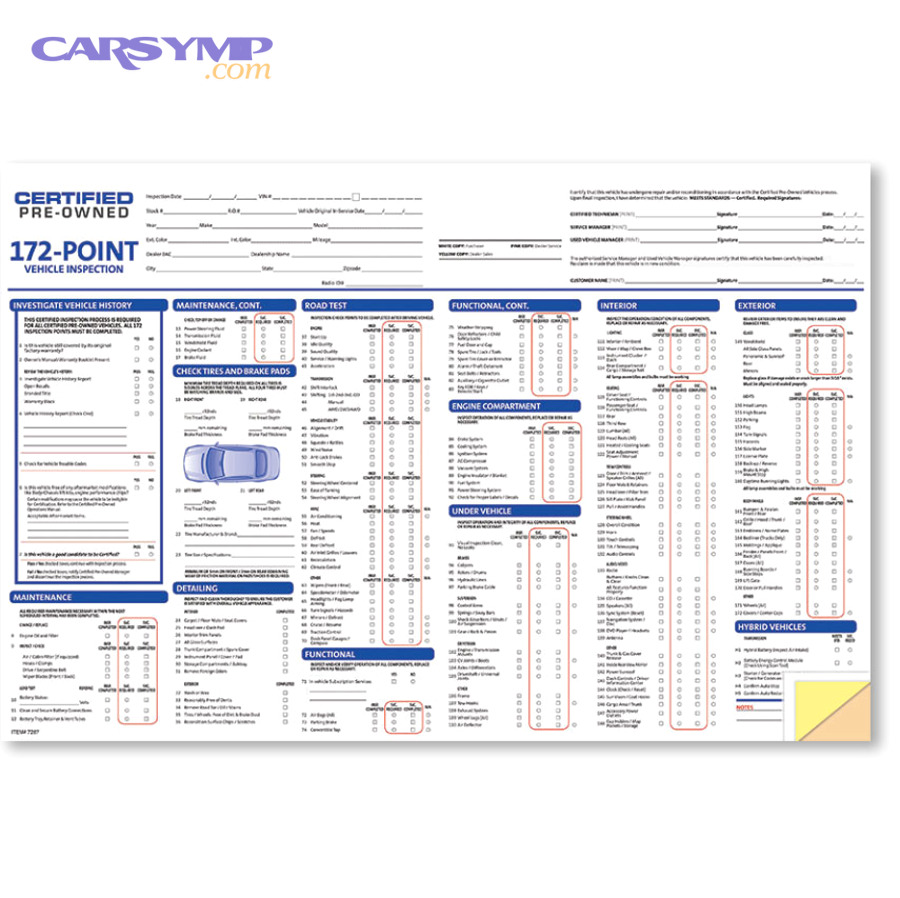
A strong inspection typically includes brakes, suspension play, fluid leaks, steering components, engine and transmission behavior, tire condition, scan results, and a lift-based underbody review when available. It should also translate findings into severity and priority, not just “notes.”
To connect cost and scope, think in points: the more structured the checklist, the easier it is to compare across shops and vehicles.
Cost expectations and why “cheap” can be expensive
Theo nghiên cứu của AAA từ Auto Club Enterprises, vào March 2022, một cơ sở AAA Approved Auto Repair có thể thực hiện kiểm tra 86-point với chi phí dưới $100, cho thấy đây là khoản chi nhỏ so với rủi ro mua nhầm xe có lỗi lớn.
In many markets, you’ll also see independent mechanics offering package pricing; the real value is not the price tag, but whether you receive clear severity ranking and repair estimates.
What to request in writing before you pay
Ask for a written summary with: (1) safety-critical findings, (2) near-term maintenance needs, (3) evidence of leaks or fault codes, and (4) a recommended repair priority list. Mention that you need a buyer-focused report, not a generic service upsell.
Later in the process, you may choose a car inspection service that specializes in buyer reports; just ensure their deliverable includes measurable checks and photos rather than vague “good condition” statements.
To keep the decision flow intact, the next step is translating what you found into negotiation leverage—or into a clean walk-away.
How do you convert inspection findings into negotiation and a buy-or-walk decision?
You convert inspection findings into negotiation by ranking issues by safety, cost, and urgency, then using evidence—photos, notes, and estimates—to justify your offer or to walk away when risk exceeds the deal’s value.
Next, treat negotiation as a calm math exercise: your goal is a fair price for known condition, not a “win” over the seller.
This table contains a simple severity map that helps you decide what to negotiate, what to fix, and what to reject.
This table helps you turn inspection notes into a clear action plan and a consistent offer strategy.
| Finding Category | Examples | Severity | Best Buyer Action |
|---|---|---|---|
| Safety-critical | Airbag light, severe brake issues, structural rust | High | Walk away unless professionally repaired with proof |
| Mechanical-risk | Transmission slip, overheating signs, major leaks | High | Negotiate only with verified estimates; consider walking |
| Wear-and-tear | Tires, brakes, battery, fluids | Medium | Negotiate price reduction or request repairs before sale |
| Cosmetic | Small dents, faded trim, minor scratches | Low | Negotiate lightly; don’t overpay for “pretty” fixes |
| Documentation gaps | Missing records, unclear ownership story | Medium | Ask for proof; reduce offer or walk if inconsistencies persist |
Build a “walk-away rule” before you negotiate
Choose two or three deal-breakers in advance—like structural rust, airbag/ABS warnings, overheating evidence, or title problems—so you don’t rationalize risks under pressure.
However, if the issues are moderate and well-defined, negotiation can be fair and productive when backed by evidence.
Use repair estimates as a rational anchor
Get a written estimate for the top 1–3 issues and subtract it from your offer with a buffer for uncertainty. When sellers push back, stay factual: you’re not arguing taste, you’re pricing documented condition.
To transition into execution, the final step is creating a record so you don’t forget details across multiple cars and conversations.
How do you record your inspection so you can compare cars objectively?
You record your inspection by capturing consistent photos, writing short symptom notes, saving scan screenshots, and scoring each section, so you can compare vehicles side-by-side without memory bias and make a cleaner final choice.
Next, use a repeatable template for every vehicle you view, because consistency turns observations into decisions.
What to photograph every time
- VIN and odometer (same visit, same timestamp mindset)
- All four tires (tread and sidewalls) and wheel condition
- Engine bay (wide shot + close-ups of any residue/leaks)
- Underbody (rust areas, leak spots, damaged panels if visible)
- Dashboard in accessory mode (warning light proof)
- Title/registration key fields (VIN, owner name matching seller)
However, photos alone aren’t enough—so pair them with short notes that describe what changed under load (noise, vibration, pull, shift behavior) during the test drive.
A simple scoring method that prevents overthinking
Score each category 0–2: 0 = major concern, 1 = needs follow-up, 2 = acceptable. Add totals for: exterior, tires, under-hood, underbody, test drive, documents/scan. The highest-scoring car is not always the best, but low scores reveal where risk concentrates.
To keep your process complete, place a clear boundary now: the next section covers edge cases and “extras” that improve decision quality when the situation is complex.
Contextual Border: The sections above cover the main purchase intent—screening, inspecting, verifying, test-driving, and negotiating. Below are supplementary checks for special situations, rare risks, and comparison edge cases.
Extra checks and edge cases: tough comparisons, special setups, and buyer FAQs
Extra checks matter when the vehicle, seller, or buying scenario adds complexity, because edge cases—like remote buying, limited access time, or conflicting history—can magnify small uncertainties into major financial or safety mistakes.
Next, use these extras selectively: apply them when the situation demands, not on every easy, clean, well-documented car.
How should you decide between on-site and facility-based inspections?
Choose the inspection format based on access and depth: on-site inspections can be convenient and faster, while facility-based inspections may allow lift access, specialized tools, and a quieter environment for detailed measurement.
To make the choice concrete, write down what you need most: underbody clarity, noise diagnosis, or documentation verification—then pick the format that best supports that priority.
If you’re doing a Mobile inspection vs shop inspection comparison, focus less on “which is cheaper” and more on “which provides the evidence you need,” such as lift time, detailed photos, and clear severity ranking.
What can you do to reduce “seller setup” bias and improve accuracy?
You reduce bias by insisting on a cold start, checking the car in daylight, driving on mixed roads, and verifying documents before emotional commitment, because rushed nighttime views and pre-warmed engines hide the most valuable diagnostic clues.
Next, ask the seller not to wash the engine bay right before your visit; fresh cleaning can temporarily hide leaks and residue patterns you’re trying to detect.
For buyers planning logistics, Preparing your car for inspection means arranging a cold-start window, confirming tire pressure is reasonable, ensuring the VIN is accessible, and having service records ready so the inspection measures reality instead of guesswork.
What should a buyer-focused report include beyond “looks good”?
A buyer-focused report should include evidence (photos, measurements, code screenshots), severity ranking, and a short repair-priority list, because vague positivity doesn’t help you price risk or decide whether to walk away.
Next, confirm the report distinguishes safety issues from maintenance and clarifies what was not checked due to access limits, so you understand the report’s blind spots.
When you hire a car inspection service, ask whether they provide lift-based underbody checks (when possible), a scan summary, and an itemized severity scale, rather than a generic checklist with no interpretation.
FAQ: common pre-purchase inspection questions buyers ask
Should I buy a car with an active recall? It depends: some recalls have easy free remedies, but you should confirm the recall is repairable now and factor the hassle into your decision; safety-critical open recalls deserve extra caution.
Is one warning light an automatic deal-breaker? Not always, but treat it as a “verify with scan + diagnosis” trigger; airbag and brake warnings are higher risk than minor convenience warnings.
How long should the whole process take? A careful buyer checklist plus test drive often takes 45–90 minutes; adding a professional inspection can extend the timeline, but it can also prevent far larger costs later.
What’s the simplest reason to walk away? Any sign of structural compromise, unsafe braking/steering behavior, a seller who blocks verification steps, or documents that don’t match the car’s identity is a strong reason to leave.