


The parking brake warning light causes are usually straightforward: the parking brake is still partially applied, the brake fluid level is low, or a switch/sensor is sending a false “applied” signal—so you can often diagnose it quickly with a few priority checks.
Next, you’ll learn the first checks drivers should do (in the safest order) to confirm whether this is a simple “release/adjust” issue or a genuine braking-system warning that needs immediate attention.
Moreover, you’ll get clear safety guidance on whether it’s okay to drive, including the exact symptoms that mean “stop now,” because a red brake warning can indicate reduced braking ability on some vehicles.
Introduce a new idea: once you know what the light means and what to check first, you can match the most likely cause to the right fix—including cases involving an Electronic parking brake system.
What does the parking (emergency) brake warning light mean?
The parking (emergency) brake warning light is a dashboard brake-system indicator that typically turns on when the parking brake is applied, and on many vehicles it also warns about low brake fluid or a hydraulic brake issue because the same lamp is used for both functions.
To better understand why this matters, it helps to treat this light as a “two-message” signal: parking brake status and/or brake system warning, depending on your car’s design.
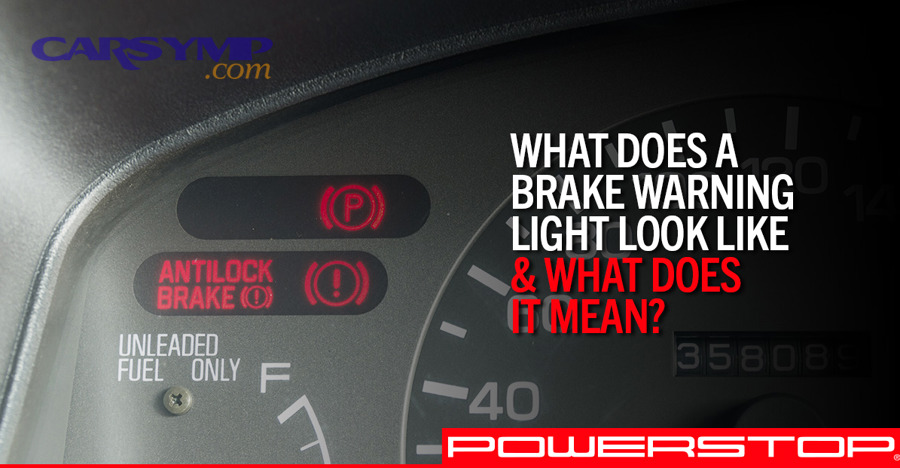
Most drivers see the red “BRAKE” or circle-and-exclamation icon and assume it only means the parking brake is on. However, manufacturers often route multiple inputs into one warning lamp, such as:
- Parking brake switch (lever/pedal applied or not)
- Brake fluid level sensor (reservoir float reads low)
- Brake system fault logic (some vehicles illuminate BRAKE for certain ABS/ESC-related faults)
That’s why the same light can appear in very different situations—like immediately after startup, or only while driving, or only on hills.
From a practical perspective, the meaning breaks down like this:
- If the parking brake is applied (even slightly): the lamp is doing exactly what it should.
- If the parking brake is fully released and the lamp remains on: the car may be warning about low fluid, a sensor/switch problem, or a brake-system condition that needs inspection.
This is also where the Title’s lexical relation matters: “Parking brake” and “Emergency brake” are commonly used as synonyms in everyday search behavior, so drivers may see the same warning under “parking,” “emergency,” or “handbrake” terms.
According to a paper hosted by Budapest University of Technology and Economics (BME), brake fluid condition can degrade measurably over time; in a 2021 study, the average brake fluid boiling temperature dropped from 212.22°C to 196.25°C over a one-year vehicle life cycle, highlighting why brake-system warnings shouldn’t be ignored. (pp.bme.hu)
Is it safe to drive when the parking brake warning light is on?
No—driving with a parking brake warning light on is not automatically safe because it can indicate reduced braking performance, and three common “red-flag” reasons are low brake fluid, a hydraulic leak, or a brake system fault that the vehicle is actively warning you about.
More importantly, you should decide based on brake feel and supporting symptoms, not on hope that the light is “just a sensor.”

Use this practical safety rule:
- Stop and do not continue driving if you notice any of these:
- The brake pedal feels soft/spongy, sinks, or requires pumping
- The car pulls strongly when braking or grinding noises appear suddenly
- The brake fluid is below MIN or dropping quickly
- You smell burning or the wheels are unusually hot (possible dragging brake)
- You may move the car short-distance cautiously (to a safer spot or nearby service) if:
- The brake pedal feels normal and stopping power feels unchanged
- The parking brake was clearly not fully released and the light goes off after correcting it
- There are no signs of fluid loss and no other brake-related warnings
A simple “three-check” safety routine works well:
- Release the parking brake fully and confirm the lever/pedal returns to its stop
- Press the brake pedal firmly—feel for a solid, consistent response
- Check the brake fluid level (only if safe to open the hood)
If you must drive briefly, avoid high speeds, leave extra distance, and head directly to inspection—because brake warnings can precede real loss of braking if fluid is low or leaking.
According to the U.S. FMCSA’s Large Truck Crash Causation Study summary, brake problems were coded for almost 30% of the trucks involved in the study, showing how frequently brake-condition issues appear in real crash investigations. (fmcsa.dot.gov)
What are the most common causes of a parking brake warning light staying on?
There are 6 main parking brake warning light causes—(1) parking brake not fully released, (2) low brake fluid, (3) worn brakes affecting fluid level, (4) faulty switch/sensor, (5) ABS/ESC-linked brake warnings, and (6) wiring/ground issues—grouped by whether the system detects a real brake condition or a false signal.
Then, once you classify the cause, you can choose the right “first check” instead of guessing.
Below is a quick table that matches the most common cause families to what drivers typically notice. This table helps you triage the light by symptom pattern rather than by random part replacement.
| Cause family | Typical driver clues | Why it triggers the light |
|---|---|---|
| Parking brake not fully released | Light goes off after “re-pull and release” | Switch stays engaged or cable doesn’t return |
| Low brake fluid level | Light on during turns/hills; fluid near/below MIN | Reservoir float drops and signals warning |
| Worn pads/normal wear lowering fluid | Gradual onset; braking still “OK” | Caliper pistons sit farther out, lowering reservoir level |
| Faulty switch/sensor | Flickers with bumps; changes when lever is touched | Bad contact, misadjusted switch, corrosion |
| ABS/ESC-related warning logic | ABS/traction lights join the brake lamp | Control module sets warning strategy |
| Wiring/ground issue | Intermittent, weather-related, random flicker | Signal wire short/open causes false state |
More specifically, these H3 checks address the highest-probability causes first.
Is the parking brake actually fully released (and returning to its stop)?
Yes—the parking brake is often not fully released even when it “feels” off, and three common reasons are cable drag, a sticky lever/pedal mechanism, or a misadjusted switch that still reads “applied.”
Then, you can confirm it quickly without tools.
Start with a clean physical confirmation:
- Pull the lever/pedal firmly (just once), then release it completely.
- Confirm the lever/pedal returns fully to its home stop.
- Roll the car slightly on flat ground (if safe) to ensure it isn’t dragging.
If the light goes off immediately after this, you likely had a partial engagement or a sticky return.
If the light stays on, pay attention to friction clues:
- Dragging smell or heat near rear wheels can indicate the parking brake is mechanically holding.
- A lever that feels “loose” can indicate a stretched cable or adjustment issue.
This is where Weak parking brake adjustment steps can matter: many cable-operated systems have an adjuster at the lever/pedal or near the rear brakes, and insufficient return slack can keep the switch engaged even if holding force is weak. If the parking brake feels weak and the light behavior is inconsistent, adjustment or cable service becomes more likely.
Is low brake fluid the reason the light is on?
Yes—low brake fluid is a top reason the brake/parking brake warning light stays on, and three common drivers are pad wear, a fluid leak, or a sticking fluid-level sensor/float that reports low even when the level looks borderline.
Next, check it safely because low fluid is both a warning sign and a diagnostic clue.
How to check safely:
- Park on level ground, engine off, and allow hot components to cool.
- Locate the brake fluid reservoir and read the level against MIN/MAX.
- If the fluid is at/under MIN, do not just top off and forget it—find the reason.
Interpretation that prevents mistakes:
- Gradual drop + older pads often means pad wear lowered the reservoir level.
- Sudden drop strongly suggests a leak or a developing brake component issue.
- If the fluid is low, look for wetness at:
- Inside of wheels (caliper leaks)
- Brake lines and junctions
- Master cylinder area
A key micro-fact that matters for safety: brake fluid is hygroscopic and water contamination can reduce boiling point, increasing risk under hard braking. According to a 2024 brake fluid condition monitoring paper in a peer-reviewed open-access journal, brake fluid commonly absorbs moisture at about 1% or more per year, and 2% water can reduce the boiling point of DOT 4 fluid by about 45°C (81°F). (pmc.ncbi.nlm.nih.gov)
Is a faulty parking brake switch or sensor causing a false warning?
Yes—a faulty parking brake switch/sensor can keep the light on even when the brake is released, and three common triggers are misadjustment, corrosion/contamination, or wiring contact wear that creates an “always applied” signal.
Then, you can test the logic without special tools by watching how the light reacts to small changes.
Typical driver-level signs of a false signal:
- The light changes when you touch/jiggle the lever/pedal slightly.
- The light flickers with bumps but braking feels normal.
- The light stays on even with fluid level normal and parking brake fully released.
The switch is usually positioned so the lever/pedal physically presses (or releases) a plunger. If the plunger sticks, or the mount loosens, the system never receives the “released” state.
A practical approach:
- Apply/release 3–5 times. If the light changes inconsistently, suspect the switch or its mounting.
- Look for debris, spilled drinks (in console area), or corrosion near the mechanism.
- If the problem repeats, this becomes a parking brake repair scenario—often small, but important because the light is your warning channel.
Could ABS/ESC be turning on the brake warning light too?
Yes—ABS/ESC logic can illuminate the brake warning light on some cars, and three common reasons are wheel speed sensor faults, control module warning strategies, or electronic parking brake coordination errors that route faults to a shared brake lamp.
Moreover, the easiest way to spot this is to look for “companion lights.”
What to check immediately:
- Is the ABS light on?
- Is traction control/ESC light on?
- Did a warning message appear (e.g., “Brake system,” “Service brake,” “EPB fault”)?
When multiple lights appear together, the vehicle is often telling you: “A system that supports braking stability has a fault.” The car may still brake, but it may have reduced stability assistance, and you may need a scan tool to pinpoint the exact cause.
One example of how module logic can trigger brake warnings is documented in an official NHTSA-hosted service bulletin describing brake warning messages tied to erroneous wheel speed sensor inputs and EPB release complaints. (static.nhtsa.gov)
What first checks should drivers do before going to a mechanic?
Drivers should do 5 first checks—confirm full release, assess brake feel, check fluid level/leaks, look for companion warnings, and note when the light triggers—because these steps identify the most common causes quickly and prevent unsafe “just keep driving” decisions.
Next, you’ll use symptom timing to narrow the cause without replacing parts.
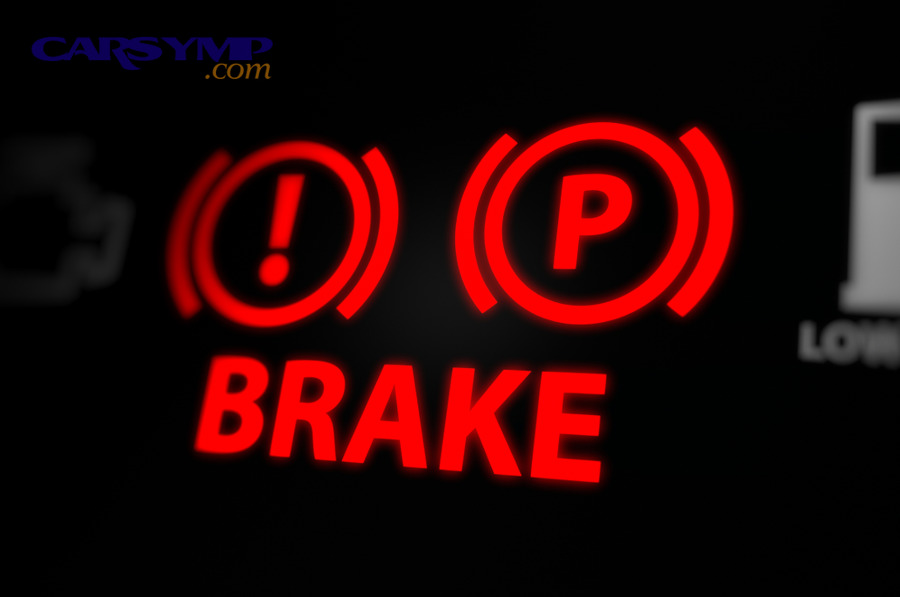
Here’s the short checklist in the safest order:
- Release verification: Apply and release the parking brake firmly; confirm full return.
- Brake pedal feel: Press the pedal hard; confirm it’s firm and consistent.
- Fluid level check: Confirm level between MIN/MAX and look for obvious leaks.
- Companion warnings: Note ABS/ESC lights or messages.
- Trigger pattern: Write down when it appears (startup, bumps, turns, rain, hills).
If you want a visual walkthrough, this video format is often helpful for seeing where switches and reservoirs sit on typical vehicles:
The goal is not to become a mechanic in your driveway. The goal is to gather high-signal observations so your next step is correct.
Does the light come on only while driving, or only when you start the car?
X wins in predicting an intermittent signal, Y is best for identifying a baseline fault, and Z is optimal for spotting a fluid-level threshold issue when you compare (A) “only while driving,” (B) “only at startup,” and (C) “only during turns/hills.”
Then, you can translate that timing into a likely cause category.
A) Only while driving:
This pattern often points to:
- Wiring that shifts with vibration
- A switch that loses contact on bumps
- Fluid level hovering near the sensor threshold (sloshing triggers the float)
B) Only at startup:
This can point to:
- A system self-check that flags a stored fault (ABS/EPB)
- A sensor that fails during the initial circuit check
- A low voltage condition (especially with Electronic parking brake systems)
C) Only during turns/hills:
This strongly suggests:
- Fluid level is low enough that it triggers when the reservoir sloshes
- A float is sticking or moving erratically
Your “timing note” becomes part of the diagnostic story. It helps a shop avoid guessing and helps you avoid unnecessary repairs.
Does the light change with bumps, turns, or hard braking?
Yes—if the light changes with bumps/turns/hard braking, the pattern usually signals fluid slosh near the low threshold, a loose connector, or a switch/float that sticks, which are three of the most common “intermittent” pathways.
More specifically, this is where you decide whether the issue is “fluid-level physics” or “electrical contact.”
Use this quick separation:
- If it changes mostly during turns/hills → think fluid level (or float) first.
- If it changes mostly during bumps/vibration → think switch/wiring first.
- If it changes during hard braking → check for other symptoms like pedal fade, pulling, or smell (and avoid repeating hard stops until inspected).
If you’re seeing fluid-level behavior, don’t ignore it: a low reservoir is often the earliest visible signal of worn friction material or leakage.
How do you fix the parking brake warning light based on the cause?
You fix the parking brake warning light by matching the cause to one of 4 fix paths—(1) release/adjust the parking brake mechanism, (2) correct low brake fluid by addressing wear or leaks, (3) repair/replace the switch/sensor or wiring, or (4) diagnose module faults for ABS/ESC/EPB—because the same lamp can represent multiple systems.
Then, once you pick the correct path, you avoid the classic mistake of “topping fluid and moving on.”
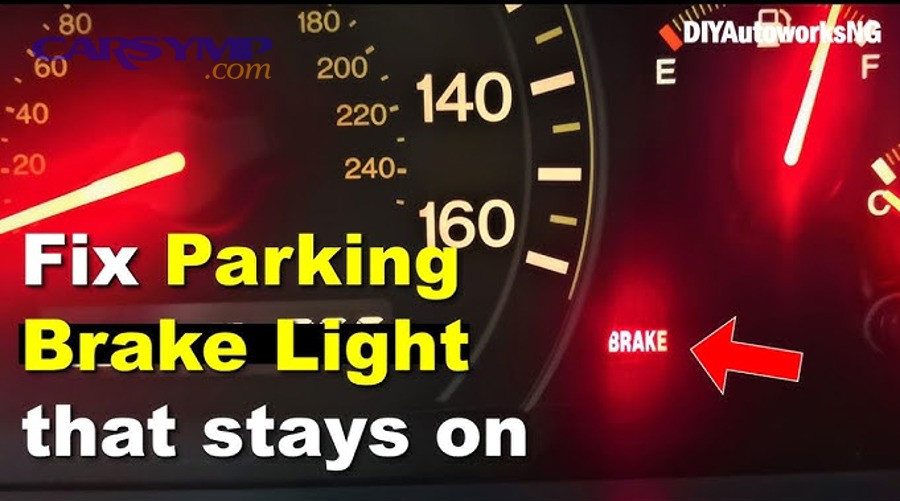
Below is a driver-to-repair map that keeps decisions clean:
- Parking brake not fully released: confirm full release; inspect cable/return; adjust if needed.
- Weak hold + inconsistent light: follow Weak parking brake adjustment steps (or have a shop adjust); inspect cable stretch.
- Low brake fluid due to pad wear: replace pads/inspect rotors; recheck fluid level afterward.
- Low brake fluid due to leak: repair leak first; bleed system; verify pedal feel.
- Faulty switch/sensor: clean/adjust/replace switch; confirm consistent lamp behavior.
- ABS/ESC or EPB fault: scan for codes; repair sensors/modules as required.
This is also the section where cost expectations matter: a basic switch replacement might be small, while ABS/EPB diagnostics can be higher because it involves scanning and sometimes calibration steps.
If you’re looking for a Parking brake repair cost estimate, think in “tiers” rather than one number:
- Low tier: simple adjustment, cable lubrication, switch replacement
- Mid tier: cable replacement, rear brake service plus adjustment
- Higher tier: EPB actuator/module diagnosis, wiring harness repair, calibration steps
(Actual pricing varies by vehicle and region, but the tier model helps you understand why quotes differ.)
When is topping up brake fluid a valid fix, and when is it a red flag?
Topping up brake fluid wins when the level is low due to normal pad wear, a red flag is best for leaks or sudden drops, and “top up + inspect immediately” is optimal when you’re uncertain—because fluid level alone doesn’t tell you the root cause.
Then, you can avoid masking a dangerous issue.
Valid-ish scenario (still inspect):
- Pads are near the end of life, fluid is just under MAX/MIN range, no leak signs.
- After pad replacement, the caliper pistons retract and the reservoir level may rise again.
Red flag scenario (stop driving, inspect now):
- Fluid is below MIN or dropping quickly.
- You see wetness near wheels/lines/master cylinder.
- Brake pedal feel is changing.
The reason this matters is measurable: moisture and contamination change fluid behavior over time. In a 2021 study hosted by BME, researchers documented a measurable average boiling point drop over one year, indicating that “fluid condition” is not a theoretical concept—it changes in real service. (pp.bme.hu)
When should you scan for codes or get professional brake inspection?
Yes—you should scan for codes or get a professional inspection when the parking brake warning light persists, and three strong reasons are companion ABS/ESC warnings, any change in brake feel, or EPB release problems that require module-level diagnosis.
More importantly, scanning is not “extra”—it’s often the shortest path to truth on modern vehicles.
Escalate immediately if:
- The car displays “Service brake system,” “Brake fault,” or “EPB malfunction”
- The EPB won’t release or requires repeated cycling
- ABS/traction lights are also on
- The brake pedal sinks, feels spongy, or stopping distance feels longer
A professional inspection typically includes:
- Brake fluid level/condition check
- Leak inspection
- Pad/rotor inspection
- Switch/sensor verification
- Scan for ABS/EPB codes (if equipped)
- Road test confirmation
Some EPB issues specifically require a scan tool to place the system into service mode and to calibrate after repairs, which is why DIY attempts sometimes stall without the right equipment.
An NHTSA-hosted service bulletin describes scenarios where a brake warning light can accompany an inability to release the electric parking brake, indicating that module inputs and sensor signals can directly affect warning behavior. (static.nhtsa.gov)
How does an electric parking brake (EPB) change the causes and fixes?
An Electronic parking brake changes the diagnostic path because the warning can come from software logic, actuator motors, sensor inputs, or voltage conditions, not just from a simple mechanical cable and switch—so fixes often involve scanning, calibration, or module-level checks.
Next, you’ll see how EPB introduces “system interactions” that don’t exist on older handbrake designs.
With cable parking brakes, the warning is usually a direct physical signal. With EPB, the system may combine:
- Switch input (driver command)
- Actuator position feedback
- Wheel speed / stability data
- Brake control module logic
- Battery voltage and current monitoring
That’s why an EPB warning can appear even when the brake “seems off,” especially if the module detects abnormal motor current or unexpected sensor readings.
Can low battery voltage trigger an EPB/Auto-Hold brake warning?
Yes—low battery voltage can trigger EPB/Auto-Hold warnings, and three common reasons are insufficient motor current to actuate, module undervoltage fault detection, and startup voltage dips that cause self-check failures.
Then, you can confirm it by correlating warning behavior with cold starts and electrical symptoms.
Common pattern:
- Warning appears after overnight parking or cold mornings
- The car cranks slowly or accessories flicker
- The EPB behaves sluggishly or throws a message after ignition-on
This isn’t guesswork: EPB systems can monitor voltage/current behavior to detect abnormal operation. A technical paper on EPB diagnostics explains that EPB software can define a failure when it detects unexpected voltage and current behavior, then protects the system by stopping or ignoring invalid signals until the failure mode is removed. (joace.org)
What’s the difference between EPB “service mode” issues and a true brake system fault?
EPB “service mode” wins in explaining warnings after brake pad service, true brake system faults are best for explaining warnings tied to fluid loss or braking performance, and a mixed scenario is optimal when a module fault masks a mechanical issue—because EPB adds a maintenance state that can look like a malfunction.
Then, you can avoid confusing a maintenance procedure with a real failure.
Service mode / calibration-type issue clues:
- Warning appears right after pad/rotor replacement
- EPB behaves oddly after the rear brakes were serviced
- The shop mentions “calibration,” “relearn,” or “service mode”
True brake system fault clues:
- Brake pedal feel changed
- Fluid level is low
- There are leak signs
- Braking performance is reduced
A good EPB-aware shop will check both: they’ll verify hydraulics and confirm EPB actuator states and codes.
Why might the warning appear after brake pad or caliper service on EPB cars?
The warning can appear after brake service because EPB systems may require proper actuator retraction, correct pad installation, and module calibration, and three frequent post-service triggers are incorrect service mode procedure, connector disturbance, or actuator position mismatch after reassembly.
Next, you’ll see why this happens even if the mechanical brakes were installed correctly.
EPB-equipped rear brakes often need a controlled retraction process. If a caliper motor is forced without the right procedure, the module can detect abnormal current draw or position feedback and set a warning.
Practical prevention:
- Use the correct service mode procedure (scan tool or OEM method, depending on vehicle)
- Confirm connectors and harness clips were re-seated
- Test EPB apply/release behavior before road testing
If the warning appears immediately after service, that timing is a strong diagnostic signal.
What uncommon wiring or sensor problems cause intermittent brake warnings?
There are 4 uncommon but real intermittent brake-warning causes—harness chafing, sticking reservoir float, corroded connectors, and ground/voltage irregularities—grouped by whether the signal is disrupted mechanically, electrically, chemically, or by power delivery.
More specifically, these cases often show “patterned randomness,” which feels confusing until you know what to look for.
Uncommon wiring/sensor issues to consider:
- Harness chafing near suspension movement points (rear axle area, underbody clips) causing intermittent shorts/opens
- Reservoir float sticking due to contamination/sludge, creating false low-fluid readings
- Connector corrosion after water intrusion (rain/wash correlation)
- Voltage irregularities from weak battery/charging issues that trip EPB module thresholds
If you experience intermittent warnings plus any braking symptom (soft pedal, pull, smell), treat it as urgent. If warnings are intermittent with no braking symptom, you still want it inspected—because the warning system is your earliest detection layer.
According to a 2024 brake fluid monitoring paper, brake fluid moisture absorption over time is common and can meaningfully reduce boiling point, which supports the real-world need to keep brake systems maintained rather than ignoring early warnings. (pmc.ncbi.nlm.nih.gov)
Evidence (if any)
According to a study hosted by Budapest University of Technology and Economics (BME) from the Faculty of Transportation Engineering and Vehicle Engineering, in 2021, operational tests in passenger cars showed the average brake fluid boiling temperature dropped from 212.22°C to 196.25°C over a one-year life cycle. (pp.bme.hu)
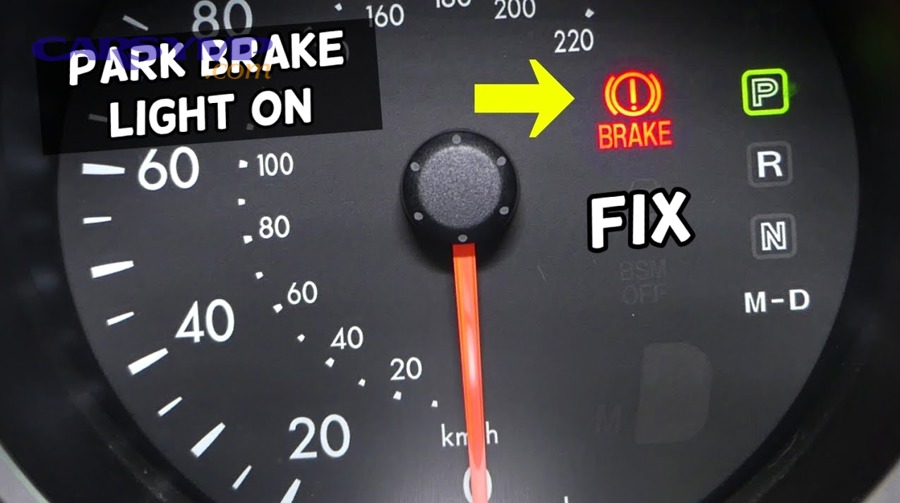
According to a study in a peer-reviewed open-access engineering journal, in 2024, researchers reported brake fluid typically absorbs moisture at a rate of ~1% or more per year, and 2% water content can reduce the DOT 4 boiling point by about 45°C (81°F)—a meaningful reduction during high-heat braking events. (pmc.ncbi.nlm.nih.gov)