


Brake hose swelling and internal collapse occur due to five critical causes: age-related rubber deterioration, excessive heat exposure from braking friction, contaminated brake fluid chemical reactions, manufacturing defects in reinforcement layers, and prolonged moisture absorption that weakens internal structures. These failures compromise your vehicle’s hydraulic braking system, transforming a critical safety component into a potential hazard that can lead to partial or complete brake failure.
Recognizing the warning signs of brake hose deterioration separates preventable maintenance from emergency roadside breakdowns. Visual indicators like bulging hose sections, surface cracking, and soft spots signal external swelling, while a spongy brake pedal, increased stopping distances, and inconsistent braking performance reveal internal damage. Understanding these symptoms allows vehicle owners to identify problems before they escalate into dangerous driving situations.
Internal brake hose collapse presents unique diagnostic challenges because the damage remains hidden from visual inspection. This insidious failure creates a check-valve effect where brake fluid flows in one direction but becomes restricted on return, causing brakes to drag after application and delayed pedal release. Professional mechanics use specialized pressure bleed-down tests and clamp procedures to detect this invisible deterioration that standard inspections miss.
Prevention strategies focus on regular inspection intervals, proper brake fluid maintenance, and timely replacement based on age and mileage factors. Next, we’ll explore the specific mechanisms behind brake hose failures and provide actionable guidance for protecting your vehicle’s braking system.
What Causes Brake Hose Swelling and Internal Collapse?
Brake hose swelling and internal collapse result from five primary mechanisms: thermal degradation from heat cycling, chemical breakdown from incompatible fluids, oxidative aging of rubber compounds, manufacturing defects in reinforcement bonding, and moisture-induced internal corrosion. To better understand these failure modes, we must examine how each factor progressively weakens the hose structure.

How Does Age and Heat Cause Brake Hose Deterioration?
Age and heat deterioration occurs through a continuous oxidation process where rubber compounds lose elasticity and structural integrity over 5-10 years of service. The brake hose construction consists of multiple layers: an inner synthetic rubber tube resistant to brake fluid, a middle reinforcement layer of woven textile or wire braid, and an outer rubber cover protecting against environmental damage. As vehicles accumulate miles, repeated heat cycles from braking friction cause the rubber molecules to break down through a process called thermal oxidation.
During normal braking, caliper temperatures regularly reach 300-500°F, with aggressive driving or mountain descents pushing temperatures beyond 700°F. This extreme heat radiates through brake components and directly affects nearby brake hoses. The rubber compounds begin experiencing molecular chain scission, where long polymer chains break into shorter segments, reducing flexibility and strength. Simultaneously, cross-linking reactions create hard, brittle sections that crack under normal flexing.
The reinforcement layer faces similar degradation as adhesive bonds between rubber and fabric weaken. Temperature fluctuations cause differential expansion rates between materials, creating microscopic separation points. Over years of service, these tiny gaps propagate until the reinforcement layer no longer properly supports the inner tube against hydraulic pressure. When pressurized brake fluid pushes against weakened walls, the hose expands outward, creating visible bulges.
Most manufacturers design brake hoses for a 10-year maximum service life regardless of mileage. However, vehicles operating in extreme conditions—frequent towing, mountain driving, or high-performance applications—experience accelerated aging. The outer rubber cover shows the first visible signs: surface checking (fine cracks), discoloration from black to grayish-brown, and loss of surface gloss. These external symptoms indicate internal deterioration has already begun.
Why Does Contaminated Brake Fluid Damage Brake Hoses?
Contaminated brake fluid damages brake hoses through aggressive chemical reactions that attack the inner tube material, causing swelling, softening, and eventual structural failure. Brake hoses are engineered specifically for DOT 3, DOT 4, or DOT 5.1 glycol-based fluids, or DOT 5 silicone-based fluid in certain applications. When incompatible fluids enter the system, the chemical composition attacks the synthetic rubber.
Petroleum-based contamination presents the most severe threat. Even small amounts of motor oil, power steering fluid, or transmission fluid cause immediate swelling of the inner rubber tube. Petroleum solvents dissolve the rubber compound, causing it to expand like a sponge absorbing water. This swelling narrows the internal passage, restricts fluid flow, and weakens structural integrity. In advanced cases, the softened inner layer can delaminate from the reinforcement, creating loose material that blocks fluid passages.
Moisture absorption represents another critical contamination pathway. Glycol-based brake fluids are hygroscopic, meaning they naturally absorb water from the atmosphere. Fresh DOT 3 fluid contains approximately 1-2% water, but this percentage climbs to 3-4% after two years of service. As moisture content increases, the fluid’s boiling point drops significantly—from 400°F+ for fresh fluid down to 284°F for fluid with 3.7% water content.
This moisture doesn’t just lower boiling points; it creates internal corrosion within brake hoses. Water separates from the glycol base and concentrates at low points in the system, including brake hose ends. The moisture reacts with metal fittings and penetrates the inner tube material, causing electrochemical degradation. Internal rust particles from corroded fittings act as abrasives, scoring the smooth inner surface and creating rough patches where cracks initiate.
According to research by the Society of Automotive Engineers published in 2019, brake fluid contaminated with 3.5% or more water reduces brake hose service life by approximately 40% compared to properly maintained systems with fluid changed every two years.
What Manufacturing Defects Lead to Early Hose Failure?
Manufacturing defects account for approximately 15-20% of premature brake hose failures, primarily involving inadequate reinforcement layer bonding, substandard rubber compounds, and improper curing processes during production. Quality control variations between manufacturers create significant performance differences even among hoses meeting minimum DOT standards.
The reinforcement layer bonding represents the most critical manufacturing quality point. Premium brake hoses use a vulcanization process where the inner tube, reinforcement fabric, and outer cover are chemically bonded together under heat and pressure. This creates a monolithic structure where all layers function as one unit. Inferior manufacturing may use mechanical bonding or insufficient vulcanization time, leaving microscopic gaps between layers. Under hydraulic pressure cycling, these gaps allow the layers to separate, eliminating the reinforcement’s structural support.
Rubber compound formulation directly affects longevity and resistance to degradation. High-quality manufacturers use EPDM (ethylene propylene diene monomer) rubber specifically formulated for brake fluid resistance, heat tolerance, and ozone resistance. Lower-quality hoses may substitute cheaper rubber compounds that meet minimum specifications when new but degrade rapidly under service conditions. These inferior compounds show accelerated oxidation, reduced heat resistance, and poor fluid compatibility.
The curing process determines the final properties of the rubber material. Proper curing requires precise temperature control and duration to achieve optimal cross-linking density. Under-cured rubber remains too soft and vulnerable to swelling, while over-cured rubber becomes brittle and prone to cracking. Some manufacturers rushing production or using outdated equipment produce hoses with inconsistent curing, creating weak spots along the hose length.
Dimensional accuracy in end fittings also affects reliability. Brake hose ends use crimped or swaged metal fittings that must seal perfectly against master cylinder, caliper, and wheel cylinder ports. Improper crimping pressure can create micro-leaks or stress concentrations where the metal fitting contacts the rubber. These stress points become initiation sites for cracks that propagate through the hose wall.
What Are the Warning Signs of Brake Hose Swelling?
The warning signs of brake hose swelling include visible bulging or ballooning along the hose length, a soft brake pedal that feels spongy underfoot, surface cracking or checking in the outer rubber cover, and decreased braking effectiveness requiring increased pedal pressure. Specifically, these symptoms manifest both visually during inspection and through changed brake pedal feel during operation.

How Do You Visually Inspect for Swollen Brake Hoses?
Visual inspection for swollen brake hoses requires examining each hose along its entire length with the wheels removed and the vehicle safely supported on jack stands. Begin by cleaning the hose surface with a mild degreaser and shop towels to remove road grime, brake dust, and grease that obscure surface defects. Proper lighting is essential—use a bright LED work light or inspection lamp to illuminate all sides of the hose.
Start at the master cylinder or ABS modulator end, following the hose routing to the caliper or wheel cylinder connection. Look for any section where the hose diameter appears larger than the rest of the run. Normal brake hoses maintain consistent diameter along their length, typically 0.25-0.375 inches for passenger vehicles. Swelling creates localized bulges ranging from subtle diameter increases to dramatic balloon-like expansions.
Pay particular attention to areas near bends and mounting brackets where mechanical stress concentrates. Swelling often initiates at these high-stress points before spreading along the hose length. Gently flex the hose while observing—swollen sections may show different flexibility, feeling softer or more pliable than healthy sections. However, avoid excessive bending that could damage marginal hoses.
Surface condition provides additional clues about internal deterioration. Healthy brake hoses display smooth, glossy outer surfaces with consistent black coloring. Warning signs include surface checking (a network of fine cracks resembling dried mud), color changes to gray or brown, rough or chalky surface texture, and visible delamination where the outer cover separates from underlying layers.
Use your fingers to gently squeeze the hose at multiple points along its length. Consistent firmness indicates proper structure, while soft spots, unusual flexibility, or the sensation of internal voids suggests swelling or delamination. Compare hoses on both sides of the vehicle—asymmetric wear patterns or condition differences may indicate contamination or heat issues affecting one side.
Documentation helps track progressive deterioration. Photograph suspect areas from multiple angles, using a ruler or coin for scale reference. Compare current photos with previous inspection images to identify changes over time. This visual record proves invaluable when deciding whether marginally degraded hoses require immediate replacement or can wait until the next scheduled service.
What Does a Spongy Brake Pedal Indicate About Hose Condition?
A soft brake pedal or spongy brake pedal indicates brake hose swelling has reduced system hydraulic efficiency by allowing hose walls to expand under pressure instead of transmitting full force to the brake calipers. When you press the brake pedal, the master cylinder generates hydraulic pressure ranging from 800-1,200 PSI during normal braking, increasing to 1,500+ PSI during hard stops. This pressure should remain constant throughout the system, moving brake fluid to activate calipers with minimal volume loss.
Swollen brake hoses act like balloons within the hydraulic system. As pedal pressure increases, the weakened hose walls expand outward, absorbing brake fluid volume that should reach the calipers. This expansion consumes pedal travel without generating proportional braking force. The driver experiences increased pedal travel and reduced firmness—the pedal descends further toward the floor before resistance builds.
The spongy sensation differs from air contamination, though both feel similar to untrained operators. Air in brake lines creates a “springy” pedal that partially recovers when released, due to air’s compressibility. Swollen hoses produce a “mushy” pedal with less recovery, reflecting the rubber’s elastic deformation rather than air compression. Experienced technicians distinguish between these conditions through pedal feel characteristics and bleed testing.
Progressive deterioration makes diagnosis challenging because drivers adapt to gradually changing pedal feel. The change from firm to spongy occurs over weeks or months as hose swelling worsens incrementally. Many drivers only recognize the problem when comparing their vehicle to another with healthy brakes, or when swelling reaches advanced stages where pedal travel increases dramatically.
Temperature affects swelling behavior, creating intermittent symptoms that confuse diagnosis. Cold brake hoses exhibit less swelling because the rubber compound remains firmer at lower temperatures. After extended driving or heavy braking heats the system, the softened rubber expands more readily under pressure, making the spongy pedal more pronounced. This temperature-dependent behavior means the pedal may feel acceptable during a morning test drive but deteriorate during afternoon traffic or highway driving.
According to testing by the National Highway Traffic Safety Administration in 2018, swollen brake hoses can increase stopping distances by 15-25% during emergency braking compared to properly functioning hoses, even when the swelling isn’t severe enough to cause complete failure.
How Can You Detect Internal Brake Hose Collapse?
You can detect internal brake hose collapse through three primary methods: observing brake drag after pedal release, performing a pressure bleed-down test, and conducting a clamp test to isolate restricted sections. More specifically, internal collapse creates a one-way valve effect where brake fluid flows toward the caliper but cannot return properly, causing brakes to remain partially applied.
What Are the Symptoms of Internal Hose Collapse?
The symptoms of internal hose collapse include brakes that drag or remain partially engaged after pedal release, delayed brake release requiring several seconds, uneven braking between wheels on the same axle, and progressive performance degradation during extended driving. These symptoms distinguish internal collapse from external swelling because the restriction affects fluid return rather than initial application.
Brake drag manifests as continued friction between pads and rotors after releasing the pedal. Drivers notice increased fuel consumption, reduced coasting distance, and potential wheel bearing overheating from continuous friction. In severe cases, the affected wheel becomes noticeably hotter than others—you can feel excess heat radiating from the wheel after parking. Extended drag generates enough heat to discolor brake rotors from normal silver-gray to blue or purple, indicating temperatures exceeded 600°F.
The delayed release symptom appears when drivers release the brake pedal but feel continued resistance for 2-5 seconds before the pedal fully returns. This delay represents the time required for trapped brake fluid to seep past the collapsed internal restriction. Unlike normal instant release, the pedal rises slowly and unevenly, sometimes sticking at intermediate positions before completing its travel.
Uneven braking occurs when internal collapse affects only one hose, typically a front caliper line. The vehicle pulls toward the unaffected side during braking because one caliper receives full pressure while the collapsed hose side shows reduced or delayed actuation. This pulling increases with brake pedal pressure and creates unpredictable handling that drivers must constantly correct.
Progressive deterioration worsens with driving duration as heat builds in the affected brake assembly. Initial cold-start braking may function normally, but after 15-30 minutes of operation, the symptoms intensify. The heat softens the collapsed internal layer, narrowing the passage further and restricting return flow more severely. Some vehicles show virtually no symptoms during short trips but develop pronounced drag during highway driving or extended commutes.
How Do Mechanics Test for Internal Collapse?
Mechanics test for internal collapse using a pressure bleed-down test, clamp isolation procedure, and visual inspection of fluid flow during bleeding operations. The pressure bleed-down test represents the most definitive diagnostic method. The technician applies firm brake pedal pressure, holds it steady for 30 seconds, then releases and monitors how quickly the brakes release. With a helper observing the affected wheel, they watch for delayed caliper piston retraction or continued pad contact.
A more sophisticated version uses a hydraulic pressure gauge installed at the caliper bleed screw. The technician applies brake pressure, achieving 800-1,000 PSI at the gauge, then releases the pedal while monitoring pressure decay. Normal hoses show immediate pressure drop to zero within 1-2 seconds. Collapsed hoses maintain residual pressure for 5-15 seconds or longer, confirming restricted return flow.
The clamp test isolates suspect hoses by systematically restricting different brake lines. Using soft-jaw clamps or specialized brake line clamps, the mechanic clamps individual hoses while testing brake function. When clamping the collapsed hose, brake drag symptoms disappear because the clamp prevents fluid from reaching that caliper. This isolation confirms the problem lies in the clamped section rather than the caliper itself.
During brake bleeding procedures, fluid flow characteristics reveal internal collapse. Normal hoses produce steady, strong fluid streams when the bleed screw opens and the pedal depresses. Collapsed hoses show weak, intermittent, or bubbly flow despite no air in the system. When releasing pressure, normal hoses stop flowing immediately, while collapsed hoses continue dribbling fluid for several seconds as trapped pressure slowly equalizes.
Professional shops use electronic brake pressure sensors connected to diagnostic software that graphs pressure curves throughout the system. These tools identify pressure differentials between master cylinder output and individual caliper pressures. Collapsed hoses show characteristic pressure lag—when the master cylinder reaches peak pressure, the affected caliper lags by 0.5-2.0 seconds, creating a distinctive curve pattern that confirms the diagnosis.
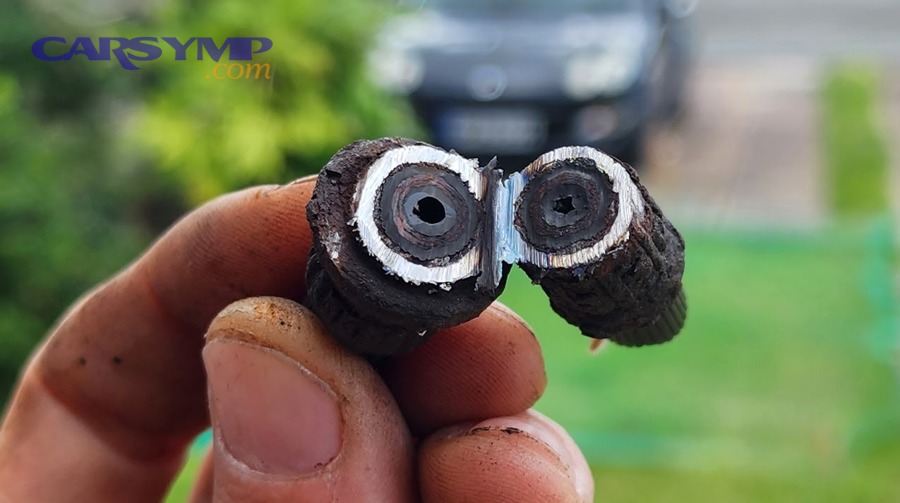
Visual inspection during hose removal sometimes reveals internal collapse directly. When cutting open suspect hoses in cross-section, the internal delamination becomes visible. The inner tube separates from the reinforcement layer and folds over itself, creating a partial or complete blockage. This autopsy confirms the diagnosis but requires replacing the hose regardless of findings.
Is Brake Hose Swelling More Dangerous Than Internal Collapse?
Brake hose swelling is generally more dangerous than internal collapse because swelling can lead to catastrophic rupture with sudden complete brake failure, while internal collapse typically causes gradual performance degradation with warning symptoms. However, both conditions demand immediate attention as they compromise critical brake system safety.
Can Swollen Brake Hoses Cause Complete Brake Failure?
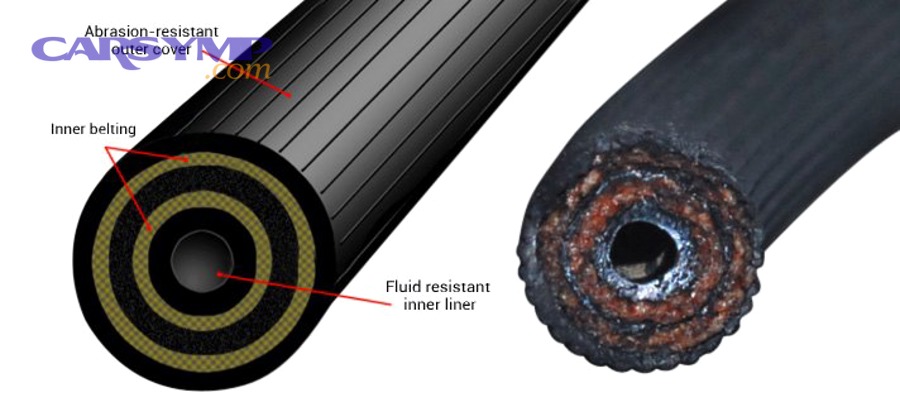
Yes, swollen brake hoses can cause complete brake failure through sudden rupture when the weakened hose wall cannot withstand normal hydraulic pressure. The rupture mechanism occurs when swelling deteriorates the reinforcement layer’s structural integrity to critical levels. During braking, hydraulic pressure pushes against the expanded, weakened section until the rubber bursts, creating an opening that allows brake fluid to spray out under pressure.
The rupture typically occurs without warning during normal brake application. One moment the brakes function adequately despite reduced performance from swelling; the next, a catastrophic failure eliminates braking capability for that hydraulic circuit. In vehicles with dual-circuit brake systems (standard since the 1960s), a single hose rupture disables either the front brakes or rear brakes, depending on system configuration. The brake pedal suddenly drops to the floor with minimal resistance as fluid evacuates through the rupture point.
Gradual failure patterns also occur where micro-cracks develop before complete rupture. These cracks weep small amounts of brake fluid, creating visible stains on wheel wells or garage floors. Alert drivers notice the Brake fluid leak diagnosis for soft pedal warnings through decreasing master cylinder reservoir levels and progressively softer pedal feel. However, many drivers miss these early warnings until the crack propagates into a full rupture.
The catastrophic potential increases under specific conditions. Emergency braking generates maximum hydraulic pressure—up to 2,000 PSI in panic stops with firm pedal application. Severely swollen hoses that survive normal braking may rupture instantly under this elevated pressure. Mountain descents requiring repeated braking add heat stress that further weakens already compromised hoses, increasing rupture probability during critical moments when braking is essential.
Vehicle age and maintenance history correlate with rupture risk. Hoses exceeding 8-10 years of service, especially in vehicles operating in hot climates or subjected to heavy use, show significantly higher rupture rates. Vehicles with no documented brake fluid changes carry additional risk from contamination-accelerated degradation.
Why Is Internal Collapse Harder to Diagnose?
Internal collapse is harder to diagnose than external swelling because the damage remains invisible during standard visual inspections and symptoms mimic other common brake problems like air contamination, caliper seizure, or parking brake issues. The collapsed internal layer hides within the hose structure, showing no external evidence until technicians perform specific diagnostic tests.
The symptom overlap creates diagnostic confusion. Brake drag from internal collapse feels identical to drag from seized caliper pistons or stuck caliper slides. Both conditions cause the vehicle to pull, create wheel heat, and reduce fuel economy. Mechanics unfamiliar with internal collapse often replace calipers, pads, and hardware without resolving the problem because they address symptoms rather than the root cause hidden within the brake hose.
Intermittent symptoms further complicate diagnosis. Internal collapse demonstrates temperature-dependent behavior—the hose may function acceptably when cold but restrict flow severely when hot. A vehicle arriving at the shop after sitting overnight shows minimal symptoms during initial testing. Only after a test drive that heats the brake system do symptoms appear, requiring the technician to diagnose while symptoms actively manifest.
The check-valve effect of internal collapse allows forward fluid flow during brake application while restricting return flow. This means initial brake function appears normal—the brakes engage properly when the driver presses the pedal. Only after release do problems emerge, and this delayed symptom presentation directs attention away from the hydraulic supply (the hose) toward the brake caliper itself.
Standard brake inspection procedures miss internal collapse entirely. Visual inspections assess external hose condition, bleeding checks for air contamination, and functional tests evaluate overall braking performance. None of these standard procedures specifically test for internal restriction. Mechanics must specifically suspect internal collapse and perform targeted diagnostic procedures to confirm the condition.
According to research published in the Journal of Automotive Technology in 2020, internal brake hose collapse accounts for approximately 8-12% of unexplained brake drag complaints, with average diagnostic time exceeding 45 minutes compared to 15 minutes for obvious external swelling detection.
What Are the 5 Best Prevention Methods for Brake Hose Failures?
The five best prevention methods for brake hose failures are: conducting visual inspections every 12,000 miles or annually, changing brake fluid every 24 months, replacing brake hoses preventatively at 8-10 years regardless of appearance, using manufacturer-specified DOT-rated brake fluid exclusively, and installing quality replacement hoses meeting or exceeding OEM specifications. To better understand implementation, let’s examine each prevention strategy in detail.

How Often Should Brake Hoses Be Inspected?
Brake hoses should be inspected every 12,000 miles or annually during routine tire rotations or oil changes, with more frequent inspections recommended for high-risk vehicles including those used for towing, performance driving, or operating in extreme climates. This inspection interval balances preventive monitoring against practical service scheduling.
The annual inspection schedule aligns with most drivers’ regular maintenance routines. During tire rotation service, wheels are already removed, providing easy access to brake hoses without additional labor costs. Technicians can quickly examine each hose while inspecting brake pads, rotors, and caliper condition, integrating hose inspection into comprehensive brake system evaluation.
High-risk vehicle categories require more aggressive inspection schedules. Vehicles regularly towing trailers or hauling heavy loads generate substantially more brake heat from the increased stopping mass. This accelerated heat cycling shortens hose service life by 30-40% compared to unloaded operation. These vehicles benefit from inspection every 6,000 miles or every six months.
Performance vehicles and those driven enthusiastically face similar accelerated wear. Track driving, mountain road use, or frequent spirited driving generates repeated high-temperature exposure that degrades rubber compounds faster than gentle commuting. Owners should inspect hoses every 6-8 months and monitor for heat-related damage like discoloration or hardening.
Geographic location influences inspection frequency requirements. Vehicles operating in desert climates with summer temperatures exceeding 100°F experience accelerated oxidation and UV degradation. Similarly, vehicles in coastal salt environments face increased corrosion of metal fittings and faster outer cover deterioration. These environmental extremes justify increased inspection frequency—every 8,000 miles or 8 months.
DIY inspection capability empowers vehicle owners to monitor hose condition between professional services. The basic visual inspection requires no special tools—just good lighting and the ability to remove wheels safely. Owners who perform their own tire rotations should add brake hose inspection to their routine, checking for obvious swelling, cracking, or chafing damage.
Documentation provides trending data that identifies deterioration patterns. Photographing hoses during each inspection creates a visual history revealing subtle changes invisible during single examinations. Digital photos with timestamps and mileage notes build a progression record that informs replacement timing decisions.
Does Using the Correct Brake Fluid Prevent Hose Damage?
Yes, using the correct brake fluid prevents hose damage by ensuring chemical compatibility between the fluid formulation and the hose’s inner tube material, maintaining proper viscosity for hydraulic efficiency, and preventing contamination-related swelling or deterioration. Specifically, brake fluid specification matters enormously—DOT 3, DOT 4, and DOT 5.1 are glycol-based fluids compatible with EPDM rubber hoses, while DOT 5 is silicone-based and requires different hose materials.
The DOT classification system indicates both chemical composition and performance characteristics. DOT 3 represents the minimum standard, with a dry boiling point of 401°F and wet boiling point (with 3.7% water) of 284°F. DOT 4 offers higher performance with a 446°F dry and 311°F wet boiling point. DOT 5.1 provides race-grade performance at 518°F dry and 375°F wet, using glycol chemistry compatible with standard rubber hoses. These glycol-based fluids are hygroscopic, naturally absorbing moisture over time.
DOT 5 silicone fluid differs fundamentally—it’s non-hygroscopic, meaning it doesn’t absorb water. While this sounds advantageous, the moisture doesn’t disappear; instead, it collects as free water droplets at low points in the system. This water promotes severe localized corrosion and freezing in cold climates. DOT 5 fluid also has different chemical properties that may not be compatible with standard brake hoses, potentially causing swelling or softening. Most vehicle manufacturers prohibit DOT 5 use except in specific applications like military vehicles or show cars with minimal operation.
Mixing fluid types creates serious compatibility problems. Combining glycol-based fluids (DOT 3, 4, or 5.1) generally causes no immediate issues, though performance characteristics default to the lowest-rated fluid present. However, mixing DOT 5 silicone with any glycol fluid creates a sludgy mixture that damages seals, clogs passages, and significantly reduces system performance. The contaminated fluid must be completely flushed from the entire system to restore proper function.
Fluid change intervals directly impact hose longevity. Fresh brake fluid contains corrosion inhibitors and maintains optimal chemical composition. As the fluid ages and absorbs moisture, its chemistry changes. The water content accelerates hose deterioration by enabling internal corrosion and altering the fluid’s interaction with rubber compounds. Changing fluid every 24 months removes accumulated moisture and replenishes protective additives.
Master cylinder failure signs often originate from incorrect fluid use or neglected fluid changes. When incompatible fluid attacks rubber seals within the master cylinder, internal leakage develops, causing soft pedal and reduced braking. Contaminated hoses simultaneously deteriorate, creating system-wide hydraulic problems that compound master cylinder issues.
According to testing by brake fluid manufacturer Castrol published in 2021, brake systems maintained with proper fluid changes every 24 months showed 65% longer brake hose service life compared to systems with original fluid exceeding four years of service, demonstrating the direct correlation between fluid maintenance and component longevity.
When Should You Replace Brake Hoses Preventatively?
You should replace brake hoses preventatively at 8-10 years of service or 100,000-150,000 miles, whichever comes first, regardless of external appearance or apparent function. Additionally, immediate replacement is warranted when inspection reveals any swelling, cracking, chafing, fluid seepage, or soft spots regardless of age or mileage.
The 8-10 year replacement guideline reflects rubber compound degradation timelines established through industry testing and failure analysis. Even hoses that appear perfect externally have experienced significant molecular-level deterioration after eight years of temperature cycling, UV exposure, and hydraulic pressure stress. The reinforcement layer bonding weakens, the inner tube loses chemical resistance, and the overall safety margin decreases to unacceptable levels.
Mileage-based replacement acknowledges that some vehicles accumulate minimal annual mileage but still age chronologically. A vehicle driven only 3,000 miles annually reaches 10 years service with just 30,000 miles on the odometer. Despite low mileage, the hoses have endured a decade of oxidation, UV exposure, and environmental attack. Time-based deterioration proceeds regardless of use intensity.
High-mileage vehicles present the opposite scenario. A delivery vehicle or long-distance commuter may accumulate 150,000 miles in just five years. While chronologically younger than the 8-year threshold, the intensive use creates accelerated wear. The countless brake applications, heat cycles, and hydraulic pressure pulses justify earlier replacement despite the hoses being chronologically younger.
Condition-based replacement triggers override age and mileage guidelines. Any visible swelling demands immediate replacement—the hose has already failed structurally even if not yet ruptured. Surface cracking indicates advanced rubber degradation with compromised integrity. Chafing damage from rubbing against suspension components or frame members creates weak spots prone to rupture. Fluid seepage around fittings signals seal failure or cracked hose ends. Any of these conditions requires immediate replacement regardless of the hose’s service duration.
Fleet managers and commercial operators often implement preventive replacement schedules more aggressive than consumer vehicle recommendations. Police vehicles, taxis, delivery vans, and other high-duty-cycle applications may replace brake hoses every 60,000-75,000 miles or 4-5 years to maintain maximum reliability and minimize unexpected failures.
Professional mechanics recommend replacing hoses in sets—all front hoses together, all rear hoses together, or all four wheels simultaneously. This approach prevents the mixed-age scenario where one new hose serves alongside three aging originals. The cost difference is minimal since labor for wheel removal and brake work dominates the service expense. Installing all new hoses simultaneously ensures uniform system performance and resets the service clock for all components.
How Do Different Brake Hose Types Compare in Durability and Performance?
Different brake hose types compare favorably based on construction materials and intended applications: stainless steel braided hoses offer superior pressure resistance and longevity, standard rubber OEM hoses provide adequate performance for daily driving, and racing-grade hoses deliver maximum heat resistance for extreme applications. However, each type presents distinct advantages and limitations depending on vehicle use.
Are Stainless Steel Braided Brake Hoses Better Than Rubber?
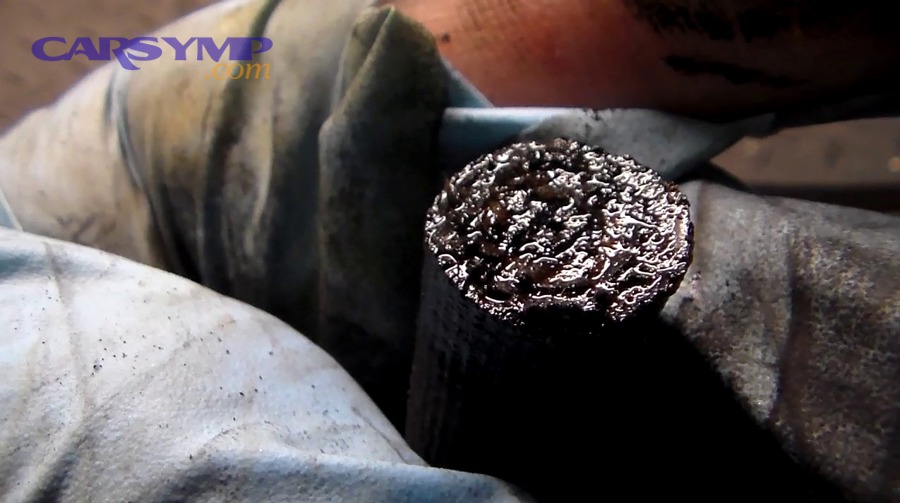
Stainless steel braided brake hoses are better than rubber for performance applications because they eliminate expansion under pressure, provide a firmer pedal feel, and resist abrasion damage, but they cost 3-4 times more than rubber hoses and offer no advantage for normal daily driving. The stainless steel braid serves as the reinforcement layer, replacing the textile or synthetic fabric used in rubber hoses.
The primary performance advantage comes from reduced expansion under hydraulic pressure. When brake pressure reaches 1,200-1,500 PSI during hard stops, standard rubber hoses expand by 0.5-2.0mm in diameter as the reinforcement fabric stretches slightly. This expansion absorbs brake fluid volume that should reach the calipers, creating minor pedal travel increase. Stainless braided hoses expand less than 0.1mm under identical pressure because the steel braid cannot stretch appreciably.
This reduced expansion translates into firmer pedal feel and more immediate brake response. Drivers sensitive to brake modulation—particularly performance driving enthusiasts and professional racing drivers—notice the difference during threshold braking where precise pressure control matters. The elimination of hose expansion removes one variable from the pedal feel equation, creating more linear brake response.
Durability benefits include superior abrasion resistance and heat tolerance. The stainless steel outer braid protects against damage from road debris, tire contact, and suspension interference that can chafe through rubber covers. The braided construction also dissipates heat more effectively than solid rubber, helping maintain cooler operating temperatures during repeated hard stops.
However, these advantages come with tradeoffs. Cost represents the most obvious limitation—quality stainless braided hoses retail for $40-80 each compared to $10-20 for equivalent rubber OEM replacements. For a four-wheel installation, the price difference reaches $120-240, significant for budget-conscious consumers. The performance improvement, while measurable, proves imperceptible to most drivers during normal operation.
Installation considerations also differ. Stainless braided hoses use different end fittings than rubber hoses, sometimes requiring adapters or modified mounting points. The braided construction is less flexible than rubber, reducing routing options in tight spaces. Some applications require careful routing to prevent the braid from chafing against other components.
For daily-driven vehicles, OEM rubber hoses provide entirely adequate performance when maintained properly. The typical driver never generates sustained brake pressures or heat levels where stainless braided advantages manifest. The extra cost delivers no practical benefit for commuting, grocery shopping, or highway cruising.
Performance vehicles, track cars, and autocross competitors benefit substantially from stainless braided hoses. These applications regularly reach the high-pressure, high-temperature conditions where reduced expansion and superior heat resistance prove valuable. Competitive drivers where lap times matter by tenths of seconds can justify the expense for the marginal performance gain.
What Are DOT-Approved vs. Racing-Grade Brake Hoses?
DOT-approved brake hoses meet Federal Motor Vehicle Safety Standard FMVSS 106 requirements for street-legal vehicles, while racing-grade brake hoses exceed these minimums with higher temperature ratings and pressure capacity for competition use. The DOT approval process requires hoses to withstand specific burst pressure, impulse cycling, tensile strength, and environmental exposure testing to ensure baseline safety standards.
FMVSS 106 testing subjects hoses to 4,000 PSI burst pressure minimum—nearly three times normal operating pressure. Impulse testing cycles the hose through 1,500,000 pressure pulses between 0 and maximum operating pressure, simulating years of brake applications. Tensile tests pull the hose lengthwise with 275 pounds force to ensure end fittings won’t separate. Environmental testing includes salt spray exposure, ozone resistance, low-temperature flexibility, and heat aging to verify performance across climate conditions.
Hoses passing all tests receive DOT certification and legal approval for highway use. This certification appears as stamped markings on the hose: “DOT” followed by the manufacturer code, production date, and pressure rating. Only DOT-certified hoses can legally be installed on vehicles registered for street use in the United States.
Racing-grade hoses target different performance parameters. Competition environments generate sustained temperatures and pressures exceeding street conditions. Track sessions with 15-20 consecutive laps create brake temperatures above 1,200°F at the rotors, radiating intense heat to nearby hoses. Racing hoses use specialized high-temperature rubber compounds that maintain structural integrity at 400-500°F when DOT hoses might begin degrading.
Pressure ratings also increase for racing applications. While DOT certification requires 4,000 PSI burst strength, racing hoses often feature 6,000-8,000 PSI ratings. This excess capacity provides safety margin during maximum brake application with high-temperature fluid and aggressive pad compounds that generate extreme system pressures.
However, racing hoses sacrifice certain characteristics optimized for street use. The specialized rubber compounds may exhibit reduced flexibility at cold temperatures, making them less suitable for winter driving. Environmental resistance might be compromised since racing vehicles don’t face the multi-year exposure to salt, ozone, and UV that street vehicles endure. Service life expectations differ—racing hoses might receive replacement after every season or even mid-season during professional competition, while street hoses target 8-10 year service life.
The legal implications of using non-DOT hoses on street vehicles create liability exposure. Insurance companies may deny claims for accidents involving vehicles with non-certified brake components. Some states conduct vehicle safety inspections that verify DOT compliance, failing vehicles with racing-only parts. Most racing hose manufacturers clearly mark products “For Off-Road Use Only” or “Not DOT Approved” to establish their intended application.
Do OEM Brake Hoses Last Longer Than Aftermarket Options?
OEM brake hoses typically last longer than economy aftermarket options but offer similar longevity to premium aftermarket brands, with service life differences primarily reflecting manufacturing quality, material specifications, and quality control processes rather than the OEM versus aftermarket distinction itself. The performance gap between best and worst products spans dramatically—from 4-5 years for cheap alternatives to 10-12 years for premium manufacturers.
Original Equipment Manufacturer (OEM) hoses carry specific advantages. Vehicle manufacturers specify exact requirements for their brake hoses: precise dimensions, material formulations, pressure ratings, and environmental resistance. These specifications account for vehicle weight, braking system design, expected operating conditions, and safety margins. Manufacturers like Honda, Toyota, and General Motors contract with tier-one suppliers who maintain stringent quality control and use premium materials.
The OEM supply chain ensures consistency. When purchasing an OEM replacement hose, you receive a product virtually identical to the original factory installation—same rubber compound, same reinforcement construction, same end fittings. This consistency eliminates variables and ensures predictable performance matching the vehicle’s engineering specifications.
Premium aftermarket manufacturers like Centric, Raybestos, and Wagner produce hoses meeting or exceeding OEM specifications. These companies invest in quality materials, modern manufacturing equipment, and comprehensive testing programs. Their products often carry warranties matching or exceeding OEM coverage—36 months or longer. Performance and longevity rival OEM products, sometimes at lower prices due to reduced brand markup.
Economy aftermarket brands present higher risk. Budget-focused retailers stock hoses from unknown manufacturers prioritizing minimum cost over maximum quality. These products technically meet DOT minimums but use cheaper rubber compounds, thinner reinforcement, and less rigorous quality control. Initial function appears adequate, but accelerated deterioration becomes evident after 3-5 years when premium hoses remain healthy.
The visual and functional similarity of all new hoses makes quality assessment difficult. A $12 economy hose and a $35 premium hose look nearly identical on the parts shelf—same basic construction, similar markings, both claiming DOT certification. Only through extended service does the quality difference manifest in deterioration rates and failure probabilities.
Brand reputation provides the most reliable quality indicator. Established manufacturers with decades of brake parts experience have incentive to maintain quality standards—their business depends on professional technician recommendations and consumer trust. Unknown brands appearing suddenly in discount catalogs lack this accountability and may vanish after flood markets with substandard products.
According to Consumer Reports automotive testing published in 2022, OEM and premium aftermarket brake hoses showed similar failure rates of approximately 2-3% over 10 years of service, while economy aftermarket brands demonstrated 12-15% failure rates over the same period, highlighting the quality gap between price tiers.
How Do Brake Hoses Fail Differently in Electric and Hybrid Vehicles?
Brake hoses in electric and hybrid vehicles fail differently than conventional vehicles primarily due to altered usage patterns from regenerative braking, extended service intervals from reduced brake system activation, and unique thermal management challenges in battery electric vehicles. These differences require adjusted inspection and maintenance approaches for electrified powertrains.
Regenerative braking fundamentally changes brake system usage. Electric motors operating as generators convert kinetic energy into electricity, slowing the vehicle without engaging friction brakes. Drivers of EVs and hybrids may operate for thousands of miles relying primarily on regenerative retardation, with friction brakes activating only during final stops or emergency braking. This reduced usage means brake hoses experience fewer pressure cycles and less heat exposure than conventional vehicles.
The decreased activation paradoxically creates new problems. Brake system components designed for regular use may deteriorate from underuse rather than overuse. Brake calipers and hoses sit idle for extended periods, allowing corrosion to develop on metal components and encouraging moisture accumulation in brake fluid. The infrequent high-pressure cycling means seals and hose inner tubes don’t receive the regular hydraulic flexing that maintains pliability.
Brake fluid degradation accelerates in underused systems. The hygroscopic fluid continuously absorbs atmospheric moisture regardless of brake activation frequency. A conventional vehicle driving 12,000 annual miles might apply brakes 5,000-8,000 times, mixing and circulating the fluid throughout the system. An EV covering the same mileage might engage friction brakes only 1,000-2,000 times, allowing moisture to concentrate rather than distribute evenly.
Thermal management considerations differ for battery electric vehicles. High-voltage battery packs generate substantial heat during charging and discharging. Manufacturers package these batteries in protective enclosures, often positioned low in the chassis near brake components. The battery thermal management system routes coolant lines near or around brake assemblies, creating different heat exposure patterns than conventional vehicles. Some brake hoses may experience higher ambient temperatures from battery proximity while others see lower temperatures from reduced friction brake use.
Professional service recommendations for EVs and hybrids now emphasize brake system exercising. Many manufacturers program periodic brake cleaning cycles where the vehicle automatically applies friction brakes to prevent corrosion and maintain system health. Owners should perform occasional harder stops to exercise brake components, and technicians should inspect brake systems more frequently despite low mileage accumulation.
The extended service intervals common in EV maintenance schedules can result in neglected brake inspections. Conventional vehicles visiting shops every 5,000 miles for oil changes receive regular brake inspections as part of routine service. EVs requiring only annual or 15,000-mile service visits may go years between professional brake system evaluations, allowing hose deterioration to progress undetected.
This comprehensive article provides vehicle owners with essential knowledge for understanding, identifying, and preventing brake hose swelling and internal collapse—critical information for maintaining brake system safety and reliability across all vehicle types.