


The seven critical master cylinder failure signs every driver must recognize include a soft or spongy brake pedal, brake pedal sinking to the floor, visible brake fluid leaks, contaminated or dirty brake fluid, illuminated brake warning light, uneven braking performance, and unusual noises or vibrations during braking. These symptoms indicate internal seal degradation, hydraulic pressure loss, or complete component failure that compromises your vehicle’s braking system and requires immediate attention to prevent accidents.
Understanding what a master cylinder does and why it fails helps you identify problems before they become dangerous. The master cylinder converts the mechanical force from your brake pedal into hydraulic pressure that activates your wheel brakes, making it the heart of your vehicle’s braking system. When this component deteriorates due to age, seal wear, or fluid contamination, it produces specific warning signs that progressively worsen until complete brake failure occurs.
Knowing how to diagnose master cylinder failure at home empowers you to make informed decisions about your vehicle’s safety. Simple visual inspections and brake pedal pressure tests can confirm whether your symptoms match master cylinder problems or indicate other brake system issues. These diagnostic techniques help you determine whether you need immediate professional service or can safely drive to a repair facility.
Recognizing the danger level of driving with a failing master cylinder protects you and other road users from potentially fatal accidents. Next, let’s explore each critical failure sign in detail so you can identify problems early and take appropriate action.
What Is a Master Cylinder and Why Does It Fail?
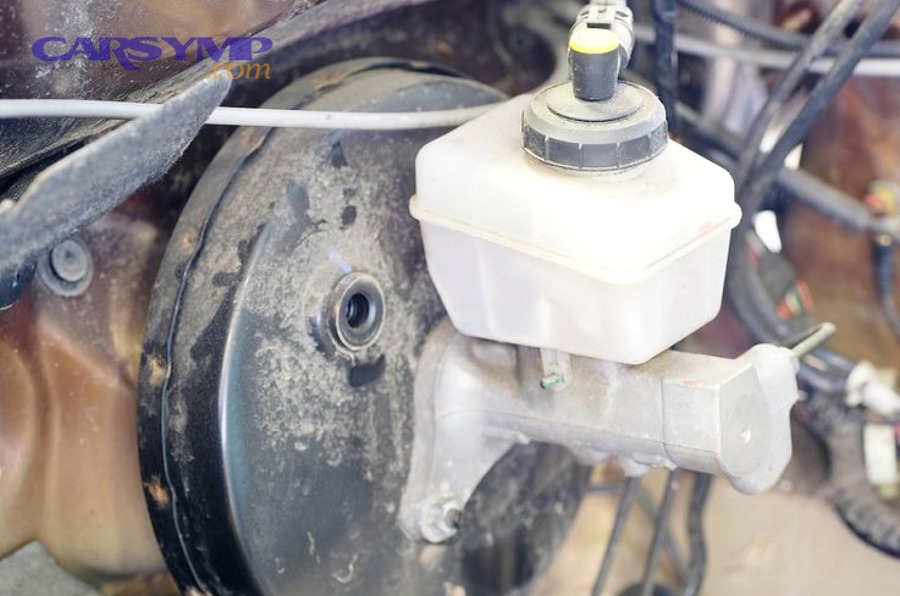
A master cylinder is a hydraulic pump component that converts brake pedal pressure into hydraulic force, distributing brake fluid through lines to wheel cylinders and calipers to activate your vehicle’s brakes. This critical component sits under your hood, typically mounted to the brake booster on the firewall, and contains a fluid reservoir, pistons, seals, and dual chambers that work together to create the hydraulic pressure necessary for safe braking.
To better understand this component’s importance, we need to examine how it functions within your brake system and what causes it to deteriorate over time.
How Does the Master Cylinder Work in Your Brake System?
When you press your brake pedal, the mechanical force travels through the brake booster to the master cylinder’s primary piston. This piston compresses brake fluid in the primary chamber, creating hydraulic pressure that flows through brake lines to your front wheels. Simultaneously, the hydraulic pressure pushes against a secondary piston in the master cylinder, which generates additional pressure for your rear brakes. This dual-chamber design ensures that if one braking circuit fails, the other circuit continues functioning to provide partial braking capability.
The master cylinder maintains constant fluid pressure throughout the entire brake system, transforming your foot’s force into stopping power at each wheel. The brake fluid reservoir attached to the top of the master cylinder supplies fluid to both chambers and includes a level sensor that triggers your dashboard warning light when fluid drops below safe levels. Modern master cylinders use specialized rubber seals and cups that create airtight barriers between chambers, preventing pressure loss and maintaining consistent brake response.
What Causes a Master Cylinder to Go Bad?
Master cylinders fail primarily due to internal seal deterioration caused by heat cycles, age, and brake fluid contamination. The rubber seals and cups inside the master cylinder expand and contract with temperature changes every time you drive, gradually losing their elasticity and ability to maintain hydraulic pressure. After 100,000 to 150,000 miles or 7 to 10 years of service, these seals typically develop microscopic cracks that allow brake fluid to bypass the pistons, creating internal leaks that produce a soft brake pedal even when no external fluid loss is visible.
Brake fluid contamination accelerates master cylinder failure by breaking down rubber seals and causing internal corrosion. Moisture absorbed through the hygroscopic brake fluid creates rust on the cylinder bore’s metal surfaces, which then scores the seals during piston movement. Contaminated fluid also lowers the boiling point, causing vapor bubbles during hard braking that compress instead of transmitting pressure, further degrading braking performance.
External damage from road debris, collision impact, or improper installation can crack the master cylinder housing or damage mounting points. Corrosion on the exterior surfaces can eventually penetrate the cylinder walls, creating external leaks that are easier to detect than internal failures. Regular brake fluid maintenance and timely seal replacement can extend master cylinder life, but eventually, complete component replacement becomes necessary to restore safe braking function.
What Are the 7 Critical Signs of Master Cylinder Failure?
The seven critical signs of master cylinder failure include: a soft or spongy brake pedal feel, brake pedal sinking to the floor under sustained pressure, visible brake fluid leaks around the master cylinder or inside the brake booster, contaminated or discolored brake fluid in the reservoir, an illuminated brake warning light on your dashboard, uneven braking performance with pulling to one side, and unusual noises or vibrations felt through the brake pedal during braking. Each symptom indicates specific internal damage that progressively worsens until complete brake system failure occurs.
Specifically, these warning signs represent different failure modes within the master cylinder’s complex hydraulic system, and recognizing them early can prevent dangerous situations on the road.
Is a Soft or Spongy Brake Pedal a Sign of Master Cylinder Failure?
Yes, a soft brake pedal is a primary sign of master cylinder failure because internal seal degradation allows brake fluid to bypass the pistons instead of creating hydraulic pressure, resulting in a mushy or spongy pedal feel that requires excessive force to achieve normal braking. This soft pedal sensation indicates that hydraulic pressure is escaping within the master cylinder rather than being transmitted effectively to your wheel brakes.
When master cylinder seals wear out, they create gaps that allow pressurized brake fluid to flow backward into the reservoir instead of forward to the brake calipers. This internal leak doesn’t cause visible fluid loss, making it difficult to diagnose without specific testing. The soft brake pedal symptom typically appears gradually, starting with slightly reduced pedal firmness that progressively worsens until the pedal feels completely spongy and requires pushing nearly to the floor to engage the brakes.
Air in brake lines symptoms and fixes overlap with master cylinder failure symptoms, but air contamination typically produces a different pedal feel. Air bubbles compress under pressure, creating a springy or bouncy pedal response, while master cylinder internal leaks produce a soft, mushy feel without the bounce-back sensation. Bleeding the brake system removes air but won’t fix internal master cylinder seal damage, which requires component replacement to restore proper hydraulic pressure and firm pedal feel.
Safe-to-drive guidance with soft pedal depends on the severity and progression of the symptom. If your brake pedal feels slightly softer than normal but still provides adequate stopping power without sinking, you can carefully drive to a repair facility, maintaining extra following distance and avoiding high-speed travel. However, if the pedal feels extremely soft, requires pumping to build pressure, or continues softening during your drive, you should stop immediately and arrange for towing rather than risking complete brake failure.
Does Brake Pedal Sinking to the Floor Indicate Master Cylinder Problems?
Yes, brake pedal sinking to the floor indicates severe master cylinder problems because complete seal failure allows all hydraulic pressure to escape internally, eliminating the resistance that normally keeps your pedal elevated and forcing you to push the pedal to or near the floor to achieve minimal braking force. This critical symptom represents advanced master cylinder deterioration that requires immediate attention.
The pedal-sinking phenomenon occurs when the primary and secondary seals in the master cylinder completely fail, allowing brake fluid to flow freely between chambers without building pressure. When you press the brake pedal with failed seals, the initial resistance feels normal, but continued pressure causes the pedal to slowly descend toward the floor as fluid bypasses the damaged seals. Some drivers describe this as “pedal fade” or note that the pedal “travels too far” before the brakes engage.
Testing for this condition involves holding steady pressure on the brake pedal while the engine runs. With a healthy master cylinder, the pedal remains firm and stationary. With failing seals, the pedal gradually sinks toward the floor under sustained pressure, even when the vehicle isn’t moving. This test, often called a “pedal hold test,” clearly demonstrates internal master cylinder leakage that won’t be visible as external fluid loss.
Driving with a brake pedal that sinks to the floor is extremely dangerous and should never be attempted. This symptom indicates imminent complete brake failure, leaving you with minimal or no stopping capability in emergency situations. If you experience pedal sinking while driving, carefully reduce speed, shift to a lower gear for engine braking, engage your parking brake gradually, and pull over immediately to call for roadside assistance.
Are Brake Fluid Leaks Always Related to Master Cylinder Issues?
No, brake fluid leaks are not always related to master cylinder issues because brake systems contain multiple potential leak points including brake lines, wheel cylinders, calipers, hoses, and connection fittings, but when leaks appear specifically around the master cylinder housing, at the mounting flange, or inside the brake booster chamber, they directly indicate master cylinder seal or housing failure. Location and leak pattern help identify whether the master cylinder is the source.
External master cylinder leaks typically appear as wet spots or fluid accumulation on the cylinder body, around the reservoir seal, or at the connection points where brake lines attach to the cylinder. Fresh brake fluid appears clear to light amber in color and feels slippery or oily to touch. If you notice fluid dripping from the master cylinder or pooled brake fluid on the brake booster or firewall, the master cylinder’s external seals have failed and require immediate replacement.
Internal master cylinder leaks are more difficult to detect because the fluid leaks into the brake booster chamber rather than onto external surfaces. Signs of internal leakage include a soft brake pedal without visible external fluid loss, a slowly dropping reservoir level without puddles under the vehicle, and sometimes a hissing sound when pressing the brake pedal as brake fluid enters the vacuum booster. Checking the brake booster for fluid contamination requires removing the vacuum hose and looking for brake fluid inside the booster chamber or hose.
Differentiating master cylinder leaks from other brake line leaks requires systematic inspection starting at the master cylinder and following each brake line to its destination. Brake line leaks typically occur at rusted sections of steel lines, damaged rubber hoses, or corroded fittings, appearing as drips along the line path or at wheel assemblies. Master cylinder leaks concentrate at the component itself or at the booster interface, while caliper and wheel cylinder leaks appear at the wheels with fluid contaminating brake pads or shoes.
What Does Contaminated or Dirty Brake Fluid Tell You?
Contaminated or dirty brake fluid indicates that moisture, debris, or rubber particles from degraded seals have entered your brake system, turning the normally clear or light amber fluid dark brown or black and often signaling that master cylinder seals are breaking down and releasing rubber particles into the hydraulic system. This visual contamination serves as an early warning sign of internal component failure.
Healthy brake fluid maintains a clear, slightly yellowish appearance similar to light cooking oil. As brake fluid ages and absorbs moisture from the atmosphere through the reservoir cap’s vent, it gradually darkens to amber or light brown. However, when fluid turns dark brown, opaque black, or contains visible particles floating in the reservoir, it indicates severe contamination from decomposed rubber seals, corrosion particles, or external contaminants entering through damaged reservoir seals.
Checking your brake fluid condition takes only minutes and requires no special tools. Open your hood, locate the brake fluid reservoir on top of the master cylinder, and examine the fluid level and color through the translucent reservoir walls without removing the cap. If you cannot clearly see through the fluid or notice dark particles settled at the bottom of the reservoir, your brake fluid is contaminated and both the fluid and likely the master cylinder need replacement.
The connection between contaminated fluid and master cylinder failure works both ways: deteriorating master cylinder seals release rubber particles that contaminate the fluid, while contaminated fluid accelerates seal breakdown by introducing abrasive particles and corrosive moisture. This destructive cycle means that severely contaminated brake fluid almost always coincides with advanced master cylinder seal damage, requiring complete system flushing and master cylinder replacement to restore safe braking function.
Does the Brake Warning Light Indicate Master Cylinder Failure?
Yes, the brake warning light can indicate master cylinder failure because the sensor in the brake fluid reservoir detects low fluid levels caused by internal or external leaks from a failing master cylinder, triggering the dashboard warning light to alert you of potentially dangerous brake system problems. However, this warning light also illuminates for other brake system issues, requiring additional inspection to confirm the master cylinder as the source.
The brake warning light system uses a float sensor inside the master cylinder reservoir that drops when fluid level decreases below the minimum safe threshold. When master cylinder seals fail, brake fluid either leaks externally onto surrounding components or leaks internally into the brake booster, causing the reservoir level to drop and the warning light to illuminate. Some vehicles use separate warning lights for parking brake engagement and brake system malfunction, so consult your owner’s manual to identify which warning applies to your vehicle.
Additional symptoms accompanying the brake warning light help diagnose master cylinder failure versus other brake issues. If the warning light appears together with a soft brake pedal, pedal sinking, or visible leaks around the master cylinder, the master cylinder is almost certainly the problem. If the warning light illuminates alone without other symptoms, check for worn brake pads (which lower fluid level as caliper pistons extend), external brake line leaks, or a faulty reservoir cap seal allowing fluid evaporation.
Never ignore an illuminated brake warning light, as it indicates your brake system has lost hydraulic capacity and may fail completely without warning. Check your brake fluid level immediately by examining the reservoir, and if the level sits below the minimum line, inspect for leaks around the master cylinder, brake lines, and wheel assemblies. If you cannot identify an obvious leak source and the fluid level continues dropping, have your vehicle towed to a repair facility for professional diagnosis rather than risking brake failure while driving.

Is Uneven Braking Performance a Symptom of Master Cylinder Problems?
Yes, uneven braking performance is a symptom of master cylinder problems because the dual-chamber design can fail asymmetrically, with one chamber losing pressure while the other continues functioning, resulting in stronger braking force on one pair of wheels compared to the other and causing your vehicle to pull to one side during braking. This failure pattern creates dangerous handling characteristics that worsen as the damaged chamber deteriorates further.
Master cylinders use separate hydraulic circuits for front and rear brakes or diagonal wheel pairs, depending on your vehicle’s design. When one chamber’s seals fail, that circuit loses hydraulic pressure while the functioning circuit maintains normal pressure. This pressure imbalance causes the wheels receiving proper hydraulic pressure to brake harder than the wheels connected to the failed circuit, pulling your vehicle toward the side with stronger braking force.
Distinguishing master cylinder-related pulling from other brake issues requires understanding the pull pattern. Master cylinder failure typically causes consistent pulling in the same direction every time you brake, with the pull becoming more pronounced during harder braking. In contrast, seized brake calipers cause pulling that varies with caliper temperature, worn brake pads create pulling that changes as pad wear progresses, and tire pressure differences cause pulling that occurs even when not braking.
Testing for chamber-specific master cylinder failure involves careful brake application while driving at low speed in a safe area. If your vehicle pulls strongly to one side during moderate braking and you’ve recently checked that tire pressures are equal and brake pads have even wear, the master cylinder’s dual-chamber system has likely experienced asymmetric failure. This dangerous condition requires immediate professional inspection, as complete failure of the remaining functional chamber would leave you with no braking capability.
Can You Hear or Feel Master Cylinder Failure?
Yes, you can hear and feel master cylinder failure through unusual noises including hissing sounds when pressing the brake pedal, indicating internal leaks into the brake booster, and through tactile sensations like vibrations or pulsations in the brake pedal that differ from normal ABS operation, signaling air contamination or uneven hydraulic pressure distribution caused by failing master cylinder components. These auditory and tactile symptoms provide additional diagnostic clues beyond visual inspection.
Hissing sounds during brake pedal application indicate that brake fluid is leaking past the master cylinder’s rear seal into the vacuum brake booster chamber. This internal leak allows brake fluid to be drawn into the booster’s vacuum chamber, where it creates a distinct hissing noise as air and fluid interact under pressure. The hissing typically occurs only when pressing the brake pedal and may be accompanied by a soft or sinking pedal feel, confirming the internal leak diagnosis.
Vibrations or pulsations felt through the brake pedal can indicate air bubbles in the hydraulic system caused by master cylinder seal failure. Unlike the rhythmic pulsation of normal ABS activation during emergency stops, master cylinder-related vibrations feel irregular and may occur during routine braking. These vibrations result from air bubbles compressing and expanding as hydraulic pressure fluctuates, creating an unstable pressure wave that translates to pedal movement.
Grinding or scraping noises during braking rarely originate from the master cylinder itself but instead indicate severely worn brake pads, damaged rotors, or seized caliper components. However, if grinding noises accompany master cylinder failure symptoms like soft pedal or fluid leaks, you may be hearing metal-on-metal contact at the wheels because insufficient hydraulic pressure from the failing master cylinder prevented proper pad-to-rotor contact, accelerating brake pad wear. Any unusual noises during braking warrant immediate professional inspection to identify the source and prevent complete brake system failure.
How Can You Diagnose Master Cylinder Failure at Home?
You can diagnose master cylinder failure at home by performing a visual inspection of the master cylinder and reservoir for leaks and contamination, conducting a brake pedal pressure test to detect internal seal failure, and checking brake fluid level and condition, though professional diagnosis remains necessary for definitive assessment and to identify related brake system problems that may require simultaneous repair. These simple diagnostic tests help you determine whether your symptoms match master cylinder failure patterns.
More specifically, home diagnosis gives you valuable information about whether immediate professional service is required or whether the problem can wait until your next scheduled maintenance appointment.
What Should You Check in a Visual Inspection?
Your visual inspection should check the brake fluid reservoir level against the minimum and maximum markers, examine the master cylinder body and mounting area for wet spots or fluid accumulation indicating external leaks, assess brake fluid color and clarity for contamination, and inspect the reservoir cap and seal for damage or deterioration that could allow moisture entry. These visual checks take less than five minutes but provide critical diagnostic information.
Start your inspection by opening the hood and locating the master cylinder, which typically sits on the driver’s side firewall near the brake pedal. The brake fluid reservoir either integrates with the master cylinder body or attaches as a separate translucent plastic container on top. Without removing the reservoir cap, check the fluid level through the reservoir walls—the level should sit between the minimum and maximum markers, usually about halfway up the reservoir when brakes are in good condition.
Examine the brake fluid’s color and clarity through the translucent reservoir. Fresh brake fluid appears clear to light amber, similar to maple syrup or light cooking oil. Dark brown or black fluid indicates contamination and aging, while fluid containing visible particles or sediment suggests internal seal breakdown. If the fluid appears cloudy or you see debris settled at the reservoir bottom, the master cylinder and brake system need professional service regardless of other symptoms.
Inspect all visible surfaces of the master cylinder body, the area where it mounts to the brake booster, and the connections where brake lines attach for any signs of wetness or fluid accumulation. Run your finger along the bottom edge of the master cylinder and around the mounting flange—fresh brake fluid feels slippery and oily. Check the ground beneath the vehicle for brake fluid puddles, which appear as clear to amber oily spots. Any external fluid leakage requires immediate professional attention, as even small leaks rapidly worsen and compromise braking safety.
How Do You Perform a Brake Pedal Pressure Test?
To perform a brake pedal pressure test, start your engine and let it idle, then press the brake pedal firmly and hold steady pressure for 30 to 60 seconds while monitoring whether the pedal remains firm and stationary or gradually sinks toward the floor, with a sinking pedal indicating internal master cylinder seal failure that allows hydraulic pressure to escape. This simple test reliably identifies internal leaks that produce no external fluid loss.
Begin the test with the engine off by pumping the brake pedal several times to deplete any residual vacuum in the brake booster. After depleting the vacuum, the pedal should feel high and firm. Now start the engine—you should feel the pedal drop slightly and become easier to press as the brake booster’s vacuum assist activates. This initial pedal drop is normal and doesn’t indicate master cylinder problems.
With the engine running and your foot applying steady, moderate pressure to the brake pedal, observe the pedal’s position and resistance for at least 30 seconds. A healthy master cylinder maintains constant pedal height and firmness throughout the test period. If the pedal gradually sinks toward the floor under steady pressure, even slightly, the master cylinder’s internal seals have failed and allow brake fluid to bypass the pistons. The rate of sinking indicates failure severity—rapid sinking suggests severe seal damage requiring immediate replacement, while slow sinking indicates early-stage failure that will progressively worsen.
Perform a second test by pressing and releasing the brake pedal rapidly several times while the engine runs. Count how many pumps are required before the pedal feels firm and high. A healthy brake system reaches full firmness within two to three pedal pumps. If you need to pump the pedal five or more times to achieve firmness, or if firmness decreases immediately after pumping stops, you likely have air in the brake lines or internal master cylinder leakage. According to brake system diagnostic standards published by the National Institute for Automotive Service Excellence, any pedal movement during sustained pressure testing indicates hydraulic system failure requiring immediate professional service.
How Dangerous Is Driving with a Failing Master Cylinder?
Driving with a failing master cylinder is extremely dangerous because progressive seal deterioration can lead to complete brake system failure without warning, eliminating your ability to stop the vehicle and creating high-risk situations for collisions, injuries, and fatalities, making master cylinder failure one of the most critical automotive safety issues that requires immediate professional attention regardless of apparent symptom severity. The unpredictable nature of final failure makes every mile driven with a compromised master cylinder a serious safety gamble.
Understanding the specific risks and progression timeline helps you make informed decisions about whether your vehicle requires immediate towing or can be carefully driven to a repair facility.
What Happens If You Ignore Master Cylinder Failure Signs?
If you ignore master cylinder failure signs, internal seal degradation progressively worsens through a predictable sequence: initial symptoms like slightly soft pedal feel advance to moderate pedal sinking requiring increased pressure, then deteriorate to severe pedal fade where the pedal travels to the floor with minimal resistance, and ultimately result in complete hydraulic pressure loss that leaves you with no functional brakes and no ability to stop your vehicle safely. This deterioration timeline varies from days to weeks depending on driving patterns and failure severity.
The early stage of master cylinder failure produces subtle symptoms that many drivers dismiss or adapt to by pressing the brake pedal harder. During this phase, which may last several weeks, the master cylinder maintains partial hydraulic pressure that provides reduced but functional braking. Drivers often unconsciously compensate by applying more pedal force and increasing following distances, not realizing they’re experiencing progressive brake system failure.
As seal damage advances to the moderate stage, symptoms become unmistakable with pronounced pedal softness, noticeable sinking under sustained pressure, and increased stopping distances. This stage typically lasts days rather than weeks, and the rate of deterioration accelerates as damaged seals tear further with each brake application. During this phase, emergency braking situations reveal the system’s compromised state, as maximum pedal force produces insufficient stopping power compared to a healthy brake system.
The final stage arrives suddenly and without additional warning when complete seal failure eliminates all hydraulic pressure. Drivers report that the brake pedal “goes to the floor” with no resistance, providing zero braking force despite full pedal travel. This catastrophic failure can occur while driving at highway speeds, in heavy traffic, or approaching intersections, creating immediate life-threatening emergencies. According to National Highway Traffic Safety Administration crash data analysis from 2023, brake system failures, including master cylinder failures, contribute to approximately 22% of vehicle crashes where mechanical failure was a primary or contributing factor.
Can You Drive with a Bad Master Cylinder or Should You Stop Immediately?
No, you generally should not drive with a bad master cylinder except in specific limited circumstances where you can safely travel a short distance at low speed to reach a repair facility, but you should stop immediately if you experience severe symptoms including brake pedal going to the floor, complete loss of braking pressure, or the inability to stop within normal distances, as continuing to drive with complete master cylinder failure creates imminent danger to yourself and others on the road. The decision to drive or stop depends entirely on symptom severity and your ability to safely control the vehicle.
Safe-to-drive conditions exist only when symptoms remain mild and you can maintain control with adequate stopping power. If your brake pedal feels slightly softer than normal but still provides firm resistance in the upper half of pedal travel and you can stop within reasonable distances, you may carefully drive to the nearest repair facility using these precautions: travel at reduced speeds below 35 mph, double your normal following distance, avoid highways and high-traffic areas, use lower gears for engine braking assistance, and plan your route to minimize stops and turns.
Immediate-stop conditions require you to pull over safely and arrange for towing rather than continuing to drive. Stop immediately if your brake pedal sinks to the floor, if you need to pump the pedal multiple times to achieve minimal braking, if the pedal feels completely soft with no resistance, if your vehicle pulls severely to one side during braking, or if you notice brake fluid actively leaking from the master cylinder. These severe symptoms indicate imminent complete failure that could occur at any moment, leaving you with no braking capability.
Emergency procedures when brake failure occurs while driving include shifting to lower gears to use engine braking, gradually applying the parking brake while holding the release button to prevent wheel lockup, steering toward the shoulder or a safe stopping area, and using vehicle contact with curbs or guardrails as a last resort if other methods fail. Never turn off the engine while moving, as this disables power steering and makes the vehicle extremely difficult to control. After safely stopping, activate hazard lights and call for roadside assistance rather than attempting to restart and continue driving.
What Should You Do When You Detect Master Cylinder Failure?
When you detect master cylinder failure, you should immediately assess symptom severity to determine if the vehicle can be safely driven to a repair facility or requires towing, schedule professional inspection and diagnosis to confirm the master cylinder as the failure source and identify any related brake system damage, and prepare to make an informed decision between master cylinder repair or replacement based on vehicle age, component condition, and cost-effectiveness. Taking prompt action prevents complete brake failure and reduces overall repair costs.
Addressing master cylinder failure quickly protects your safety and potentially saves money by preventing secondary damage to other brake components that can occur when operating with compromised hydraulic pressure.
Should You Repair or Replace a Failing Master Cylinder?
You should replace rather than repair a failing master cylinder in most cases because replacement with a new or remanufactured unit provides reliable long-term performance at comparable cost to rebuild kits, eliminates the risk of improper seal installation that could cause rapid re-failure, and includes warranty coverage that rebuild attempts typically lack, making replacement the more cost-effective and safer option for the majority of vehicle owners. Repair through rebuild kits makes sense only in specific limited situations.
Replacement advantages include guaranteed component quality, professional installation by trained technicians, and comprehensive warranty protection typically ranging from one year to lifetime coverage depending on the part manufacturer. New master cylinders arrive pre-assembled with all internal components properly installed and pre-tested for hydraulic integrity. Remanufactured master cylinders offer similar reliability at lower cost, as they undergo factory rebuilding with new seals, honed cylinder bores, and quality testing that exceeds typical shop rebuild procedures.
Repair using rebuild kits theoretically costs less than replacement, with kits typically priced between $25 and $75 compared to $100 to $300 for replacement units. However, rebuild success depends entirely on proper disassembly, cleaning, honing, seal installation, and reassembly procedures that require specialized tools and expertise. Improper rebuilding causes rapid re-failure, often within weeks or months, ultimately costing more than initial replacement would have cost. Additionally, most repair shops refuse to warranty rebuilt master cylinders due to high failure rates, leaving you without protection if problems recur.
Consider rebuilding only if you’re working on a classic or rare vehicle where replacement master cylinders are unavailable or prohibitively expensive, if you possess the specialized tools and experience to properly rebuild hydraulic components, or if you’re performing a complete brake system restoration where all components receive similar rebuilding attention. For daily-driver vehicles and standard makes and models, replacement provides superior value, reliability, and peace of mind compared to repair attempts.
Vehicle age and overall condition also influence the repair-versus-replace decision. If your vehicle exceeds 150,000 miles or 12 years of age and shows multiple signs of brake system wear including corroded brake lines, leaking wheel cylinders or calipers, and worn hoses, investing in only master cylinder replacement may prove shortsighted. In such cases, comprehensive brake system overhaul including master cylinder, brake lines, calipers or wheel cylinders, hoses, and fluid provides better long-term value than piecemeal repairs that require repeated shop visits.
How Much Does Master Cylinder Replacement Cost?
Master cylinder replacement costs range from $250 to $600 for most vehicles, including $100 to $300 for parts and $150 to $300 for labor, with luxury vehicles, trucks, and vehicles with ABS integration potentially reaching $800 to $1,200 due to more complex master cylinder designs and longer labor times for proper installation and bleeding procedures. Cost varies significantly based on vehicle make, model, year, and whether you choose original equipment manufacturer (OEM) or aftermarket replacement parts.
Parts costs depend on master cylinder type and quality level. Basic master cylinders for common domestic vehicles cost $100 to $175 for aftermarket units or $200 to $300 for OEM replacements. Master cylinders for European luxury vehicles, performance cars, or vehicles with integrated ABS modulators cost $300 to $600 for aftermarket units or $500 to $900 for OEM parts. Remanufactured master cylinders from quality suppliers like Cardone or A1 Cardone typically cost 30% to 40% less than new OEM units while providing comparable reliability and warranty coverage.
Labor costs for master cylinder replacement typically range from $150 to $300, representing 1.5 to 3 hours of shop time at standard labor rates of $90 to $150 per hour. The replacement procedure includes removing the old master cylinder, installing the new unit, connecting brake lines with proper torque specifications, filling the system with fresh brake fluid, bleeding all four wheels to remove air from the lines, and testing brake operation to verify proper function. Vehicles with difficult master cylinder access or integrated ABS systems require additional labor time and higher costs.
DIY master cylinder replacement can reduce costs to just the parts price if you possess mechanical skills, proper tools including flare nut wrenches and brake bleeding equipment, and the ability to properly bleed brake systems to remove all air. However, improper installation or inadequate bleeding creates dangerous air pockets that compromise braking and potentially cause accidents. Most vehicle owners should have professional technicians perform master cylinder replacement to ensure proper installation, complete air removal, and safe brake system operation. According to automotive repair cost data from RepairPal, the national average for master cylinder replacement including parts and labor is $471, with regional variations based on local labor rates and parts availability.
Can You Temporarily Fix a Bad Master Cylinder?
No, you cannot safely or effectively create a temporary fix for a bad master cylinder because internal seal damage cannot be repaired with external products or adjustments, and attempting temporary measures like adding brake fluid to compensate for leaks or using stop-leak additives creates false confidence that may lead to complete brake failure in dangerous situations where emergency stopping is required. No legitimate temporary fix exists for master cylinder failure.
Some drivers attempt to temporarily compensate for master cylinder problems by frequently adding brake fluid to maintain reservoir levels, but this approach merely masks the underlying problem without addressing the seal failure causing fluid loss. As internal or external leaks continue, you must add fluid more frequently, and the progressive seal deterioration means that brake performance continues declining regardless of fluid level maintenance. Driving with known master cylinder failure while repeatedly adding fluid creates liability issues if an accident occurs, as you knowingly operated a vehicle with defective safety equipment.
Brake system stop-leak additives marketed as temporary fixes for fluid leaks should never be used in master cylinders or anywhere in hydraulic brake systems. These products contain particles or chemicals designed to swell rubber seals, but they cannot repair torn or damaged seals and may cause additional problems by contaminating brake fluid, clogging ABS valves, or creating deposits in calipers and wheel cylinders. The National Institute for Automotive Service Excellence explicitly warns against using any additives in brake hydraulic systems due to safety risks and potential for accelerating component failure.
The only appropriate action when detecting master cylinder failure is immediate professional service to replace the failed component. Emergency field repairs for brake system failures are not possible and should not be attempted. If master cylinder failure symptoms appear while traveling far from repair facilities, the safest course is calling for towing service rather than attempting to drive extended distances with compromised brakes. The risk of causing a serious accident far outweighs the inconvenience and cost of towing, and most auto insurance policies include roadside assistance coverage that pays for towing to the nearest repair facility.
How Is Master Cylinder Failure Different from Other Brake Problems?
Master cylinder failure differs from other brake problems in that it affects the entire hydraulic system’s ability to generate and transmit pressure rather than causing localized wheel-specific issues, produces distinctive symptoms including soft pedal feel and internal fluid leakage that other brake problems don’t create, and requires complete component replacement rather than adjustment or maintenance procedures that address problems like worn pads or air-contaminated fluid. Understanding these differences helps you accurately diagnose brake issues and choose appropriate repair strategies.
Comparing master cylinder failure to brake pad wear reveals fundamental differences in symptom patterns and repair approaches. Worn brake pads create grinding or squealing noises, reduced braking effectiveness that worsens gradually over thousands of miles, and low brake fluid levels as caliper pistons extend to compensate for missing pad material. In contrast, master cylinder failure produces soft or sinking pedal feel, sudden changes in brake performance, and fluid level drops caused by leakage rather than pad wear. Brake pad replacement is routine maintenance performed every 25,000 to 70,000 miles, while master cylinder replacement is a major repair typically needed only once or twice during a vehicle’s lifetime.
Master cylinder failure versus caliper seizure creates distinctly different braking behaviors. Seized brake calipers cause pulling to one side during braking, uneven brake pad wear visible during wheel inspection, and wheels that feel hot after driving due to constant brake drag. Master cylinder failure affects both sides equally in single-circuit failure or causes systematic pressure loss in dual-circuit failure, produces soft pedal feel rather than hard pedal from seized components, and doesn’t create the heat and pad wear associated with seized calipers. Caliper repair or replacement addresses single-wheel issues, while master cylinder replacement affects the entire brake system.
Distinguishing master cylinder failure from air in brake lines requires understanding how each condition affects pedal feel and system behavior. Air contamination creates a spongy, springy pedal that responds well to pumping, as each pump temporarily compresses air bubbles and builds pressure. Master cylinder internal leaks create a soft, mushy pedal that doesn’t improve significantly with pumping because each pedal application allows more fluid to bypass damaged seals. Bleeding the brake system removes air and restores firm pedal feel, while bleeding cannot fix master cylinder seal damage. The table below summarizes these diagnostic differences:
| Problem Type | Primary Symptoms | Pedal Feel | Noise Indicators | Repair Solution |
|---|---|---|---|---|
| Master Cylinder Failure | Soft/sinking pedal, fluid leaks at cylinder, contaminated fluid | Soft, mushy, gradually sinking | Possible hissing from booster leak | Complete master cylinder replacement |
| Brake Pad Wear | Grinding/squealing sounds, reduced stopping power, low fluid level | Normal to firm pedal | Grinding, squealing, or scraping | Brake pad replacement |
| Caliper Seizure | Pulling to one side, hot wheels, uneven pad wear | Hard pedal, difficult to press | None specific to calipers | Caliper rebuild or replacement |
| Air in Brake Lines | Spongy, springy pedal, inconsistent brake feel | Spongy, improves with pumping | None | Brake system bleeding |
| Brake Line Leak | Visible fluid loss, soft pedal, reduced braking | Soft, may sink with severe leak | None | Brake line replacement |
This comparison demonstrates that master cylinder failure creates unique diagnostic signatures that distinguish it from other common brake problems, helping you and your technician quickly identify the root cause and implement appropriate repairs.