


A P0300–P0308 misfire code means your engine computer detected combustion events that didn’t contribute normal power—either across multiple cylinders (P0300) or in a specific cylinder (P0301–P0308). The goal isn’t to “clear the code,” but to pinpoint why combustion is failing so you can fix the root cause and prevent catalytic converter damage.
Next, you’ll want to understand what the code is actually telling you—because “random misfire” and “cylinder 3 misfire” lead to different diagnostic paths. The same symptom (rough idle) can come from ignition, fuel, air leaks, or mechanical compression problems, so the quickest wins come from reading freeze frame data and matching patterns.
Then, safety matters. A mild intermittent misfire might be limp-able to a shop, but a flashing check-engine light often indicates a severe misfire condition that can overheat and damage the catalytic converter if you keep driving. (kbb.com)
Introduce a new idea: below is a practical, step-by-step guide that explains the codes, clarifies what’s safe, and walks you through an engine misfire diagnosis strategy that avoids guessing and wasted parts.
What do OBD-II misfire codes P0300–P0308 mean?
P0300–P0308 are OBD-II trouble codes that indicate misfires detected by the powertrain computer (PCM/ECM): P0300 means random/multiple cylinder misfire, while P0301–P0308 identify a specific cylinder number as the primary misfire source.
To better understand what the code means in real life, it helps to know how the computer detects a misfire and why the same engine can throw different misfire codes depending on driving conditions.
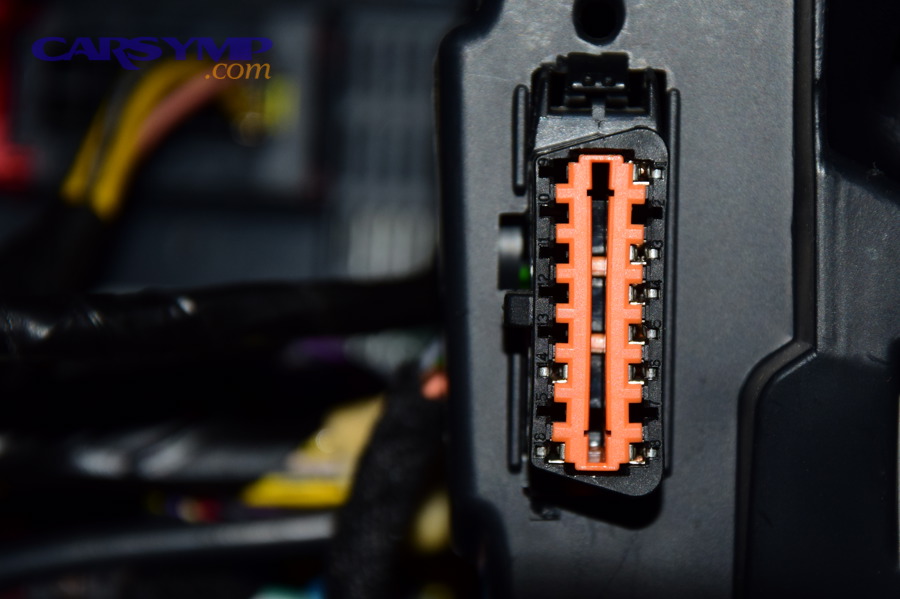
What does P0300 mean vs P0301–P0308?
P0300 means the computer sees misfire activity but can’t reliably attribute it to one cylinder (or it’s spread across several cylinders). That typically happens when:
- Multiple cylinders misfire at similar rates
- Misfires shift from cylinder to cylinder
- The root cause affects the whole engine (vacuum leak, low fuel pressure, contaminated fuel, etc.)
P0301–P0308 mean the PCM believes a specific cylinder is misfiring most often. That tends to point you toward cylinder-specific causes like:
- A bad coil or plug on that cylinder
- A clogged injector on that cylinder
- Low compression on that cylinder (valve, ring, head gasket issue)
A quick mental shortcut: P030x narrows your “where.” P0300 forces you to focus on “what the cylinders share.”
How does the PCM detect a misfire?
Most vehicles detect misfires by watching tiny changes in crankshaft speed via the crankshaft position sensor. A misfire causes a small loss of acceleration at the crank during that cylinder’s power stroke; enough of those events triggers a code. One training/inspection reference notes that misfire detection commonly uses crankshaft speed variation, and that a small rotational velocity variation can be enough to set misfire codes. (nyvip3.com)
What that means for you: the PCM doesn’t “see” spark or fuel directly—it infers misfires from rotational behavior and supporting sensor data. That’s why misfire diagnosis works best when you combine:
- Freeze frame (when it happened)
- Misfire counters (which cylinders increment)
- Fuel trims (whether the engine is adding/subtracting fuel)
- Load/rpm pattern (idle-only, cruise-only, under load, cold-only)
What does a flashing check engine light mean with a misfire code?
A flashing check engine light is commonly used to indicate a severe misfire condition with potential for catalyst damage, not just a minor emissions fault. (kbb.com) If you have P0300–P0308 + flashing MIL, treat it as urgent: reduce load immediately, avoid hard acceleration, and strongly consider towing if the engine is shaking violently.
What freeze frame and pending misfire codes tell you?
Freeze frame is your “snapshot” of the moment the PCM decided the problem was real. Before you clear anything, write down:
- Engine coolant temperature (cold vs warm)
- RPM and vehicle speed
- Load (calculated load, MAP reading, throttle position)
- Short- and long-term fuel trims (STFT/LTFT)
- Any related codes (P0171/P0174 lean, P0420 catalyst efficiency, EVAP codes, etc.)
Pending codes matter too. A pending P0302 alongside a stored P0300 can be the clue that the “random” misfire is actually starting to localize.
Is it safe to drive with a P0300–P0308 misfire code?
Sometimes yes, but often no—it depends on severity, whether the light is flashing, and how the engine behaves. The safest answer is: a misfire is a “fix now” problem because it can rapidly damage the catalytic converter and create unsafe drivability (stalling, hesitation).
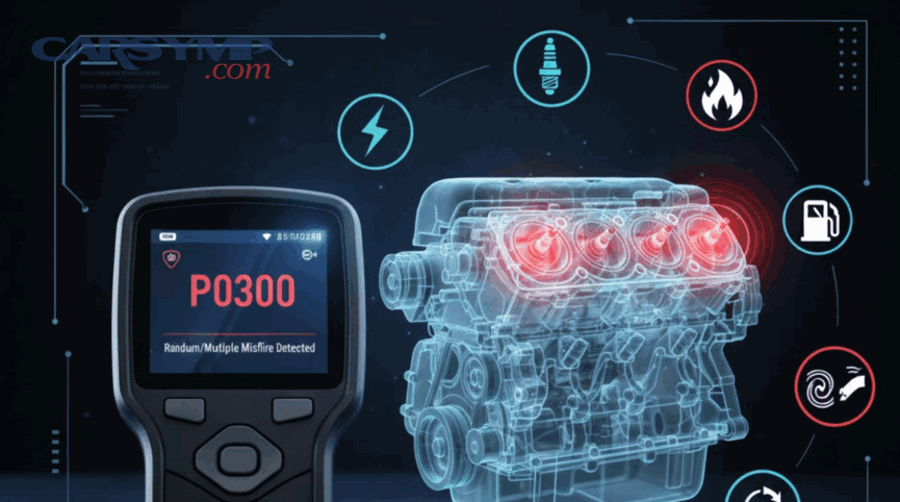
More specifically, use the rules below to decide if you can drive with a misfire safely—or if you should stop.
Can you drive with a misfire safely for a short distance?
Yes—only if all three are true:
- The check engine light is solid (not flashing)
- The misfire is mild/intermittent (no violent shaking)
- You can drive gently without hard acceleration and without the engine bucking
If you choose to limp it, keep RPM moderate, avoid hills, avoid heavy throttle, and head straight to diagnosis or repair. This is the practical version of “Can you drive with a misfire safely” without pretending it’s risk-free.
When is towing the only safe option?
Tow it if any of the following are true:
- The check engine light is flashing
- The engine shakes so hard you fear it may stall in traffic
- You smell raw fuel from the exhaust
- Power is severely reduced (can’t maintain speed safely)
- The misfire is accompanied by overheating or oil pressure warnings
Towing is cheaper than a melted catalyst plus an additional repair spiral.
What damage can a misfire cause if you keep driving?
A sustained misfire can:
- Overheat and damage the catalytic converter (unburned fuel ignites in the catalyst)
- Damage ignition coils (overwork/heat)
- Wash down cylinder walls (fuel dilution), accelerating wear
- Trigger secondary codes (O2 sensor, catalyst efficiency, fuel trim)
- Create unsafe drivability (stalling, loss of power while merging)
If you’re asking “Can you drive with a misfire safely,” the honest answer is: only long enough to get to a controlled repair situation, and only if symptoms are mild.
What are the most common causes of P0300–P0308?
There are four major cause buckets for P0300–P0308: ignition, fuel/air, mechanical, and control/wiring—and each bucket leaves different footprints in symptoms and scan data.
Next, you’ll diagnose faster by matching the misfire pattern (idle vs load, cold vs hot, single cylinder vs random) to the most likely bucket.
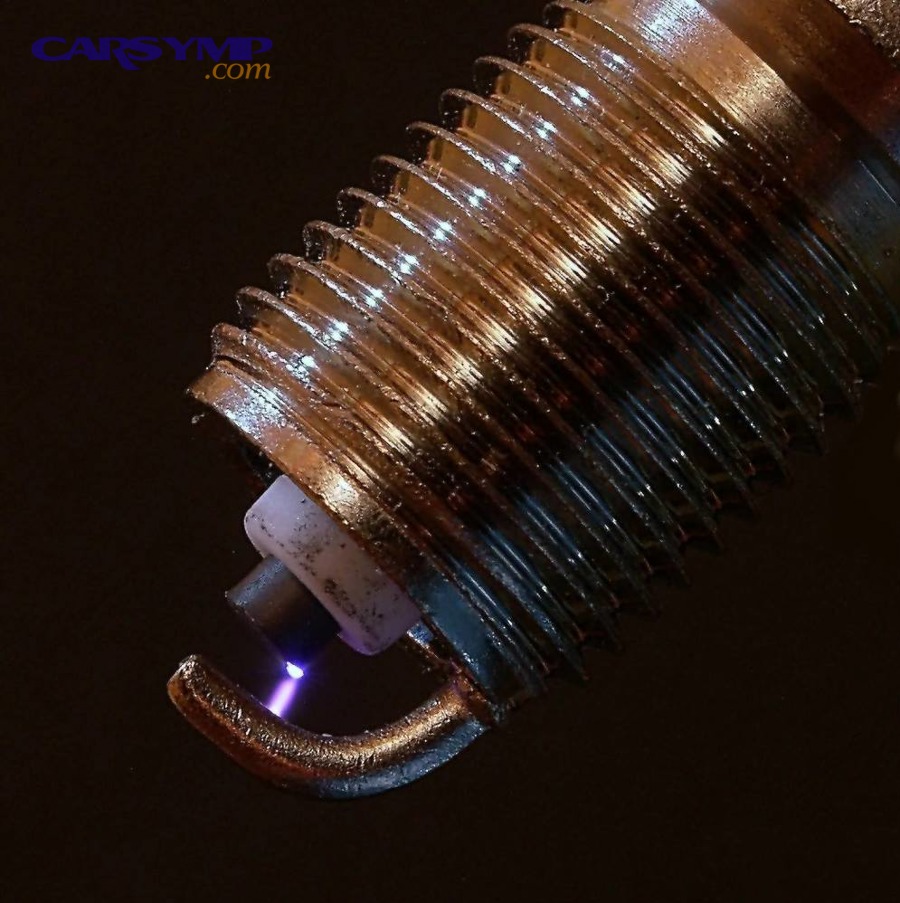
Ignition causes (plugs, coils, wires): which failures map to which codes?
Ignition issues are common because spark delivery is per-cylinder and wear-related.
Most likely patterns
- P030x at idle and under load: coil or plug on that cylinder, plug gap issue, cracked insulator, poor coil boot contact
- Misfire under load only: weak coil, excessive plug gap, high resistance wire, moisture in boots
- After plug replacement: wrong plug type, incorrect gap, cross-threaded plug, boot not fully seated
A practical move: if you have a P0302, swap coil #2 with another cylinder and see if the misfire follows. If it moves (P0302 becomes P0304), you’ve isolated the fault to the coil/boot/plug area.
Fuel and air causes (injectors, vacuum leaks, MAF): when misfire looks random
P0300 often appears when the root cause is shared across multiple cylinders:
- Vacuum leak (especially intake manifold gasket leak)
- Low fuel pressure (pump, filter, regulator)
- Dirty or failing MAF sensor
- Contaminated fuel (water/ethanol mismatch)
- Lean condition codes alongside misfires
Scan data clue: if LTFT is strongly positive (engine adding fuel), suspect a lean condition from unmetered air or insufficient fuel delivery. That’s classic P0300 territory.
Mechanical causes (compression, timing, head gasket): red flags
Mechanical issues are less “cheap,” but they’re not rare—especially when a misfire persists after ignition parts are replaced.
Red flags
- One cylinder consistently misfires despite new coil/plug/injector swap
- Low compression on one cylinder
- Misfire only on cold start with a sweet-smelling exhaust (possible coolant intrusion)
- Misfire plus abnormal crankcase pressure, oil consumption, or blow-by
- Misfire after timing work (timing off a tooth, variable valve timing issues)
If you suspect mechanical, don’t keep throwing parts. Go straight to compression/leakdown testing.
Sensor/ECU and wiring causes: when to suspect control issues
These are less common but important when symptoms don’t match the usual patterns:
- Damaged coil/injector wiring near hot exhaust components
- Poor ground connections
- Crankshaft or camshaft sensor signal issues
- PCM software/learned values needing relearn (rare but real)
- Connector corrosion or pin fitment problems
If misfires appear right after other repairs (intake off, wiring moved), wiring/connectors jump way up the list.
How do you diagnose P0300–P0308 step by step without guessing?
A clean engine misfire diagnosis is a 5-step workflow: capture data, do quick checks, use live data to choose a bucket, run cylinder-specific tests, and confirm the fix.
Below is the process that minimizes guesswork—and helps you avoid the “replace everything and hope” approach.
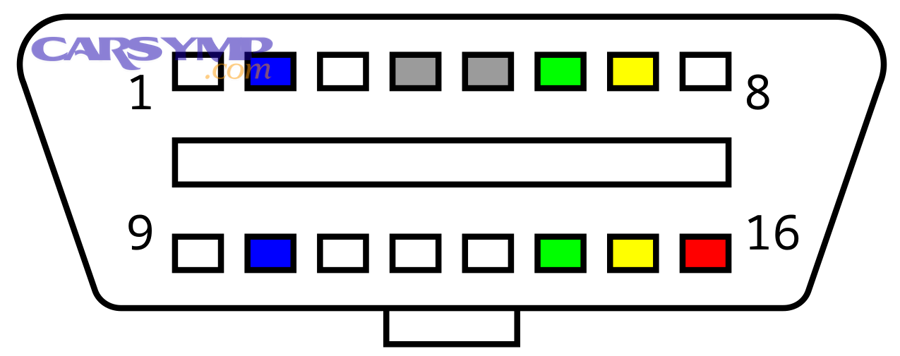
Step 1: Read codes, freeze frame, misfire counters
Do this before disconnecting the battery or clearing codes:
- Record stored + pending codes
- Save freeze frame data
- Look for related codes: lean (P0171/P0174), catalyst (P0420), fuel system, VVT, EVAP, etc.
- If your scan tool supports it, monitor misfire counters per cylinder
If you’re seeing P0300 and counters across many cylinders, that’s a sign to shift toward shared causes (air/fuel/pressure).
Step 2: Quick visual and basic checks you can do in 10 minutes
Before you touch sensors, do these simple checks:
- Is oil level correct? Is it overfilled (foam) or low?
- Are any vacuum hoses split or disconnected?
- Is the air intake boot torn after the MAF?
- Are coil connectors fully seated? Any broken locking tabs?
- Are plugs properly torqued and boots fully clicked on?
This is also where you catch the #1 “Misfire after repairs troubleshooting” reality: something got left loose, pinched, or unplugged during the last job.
Step 3: Use live data (fuel trims, O2, MAP/MAF) to narrow the system
This is where diagnosis becomes efficient.
Fuel trims
- High positive LTFT/STFT at idle that improves with RPM → vacuum leak
- High positive trims everywhere → low fuel pressure / fuel delivery
- Negative trims (pulling fuel) with rich smell → leaking injector, excessive fuel, ignition not burning properly
MAF/MAP sanity checks
- MAF readings that seem too low/high for displacement and RPM (relative sanity check)
- MAP at idle unusually high (low vacuum) can point to vacuum leak or valve timing
O2 sensor behavior
- Upstream O2 switching shows the PCM is trying to correct mixture
- A misfire can show excess oxygen in exhaust, confusing the mixture story—so don’t interpret O2 in isolation
This is the heart of engine misfire diagnosis: you’re deciding whether you’re hunting spark, fuel, air, or compression.
Step 4: Cylinder-specific tests (spark, injector balance, compression/leakdown)
Now choose tests based on whether you have P030x or P0300.
If you have P030x (single cylinder):
- Swap coil/plug to see if misfire follows
- Spark tester (confirm strong spark)
- Injector click test or resistance check
- Compression test; if low, follow with leakdown
If you have P0300 (random/multiple):
- Smoke test for vacuum leaks
- Fuel pressure test under load
- Check for exhaust restriction if power is weak
- Inspect PCV/EGR operation if applicable
Step 5: Confirm the fix and reset monitors
After repairs:
- Clear codes
- Road test under similar conditions to the freeze frame
- Watch misfire counters return to near-zero
- Confirm fuel trims normalize
- Ensure readiness monitors complete before emissions testing (if relevant)
If the misfire returns, don’t restart at “replace plugs.” Restart at the data: what changed in trims, which cylinders count, and when it happens.
What fixes work for P0300–P0308 and in what order should DIY drivers try them?
The best fix order starts with cheapest-to-verify items and moves toward harder-to-test causes—while respecting whether you have a cylinder-specific code (P030x) or random/multiple (P0300).
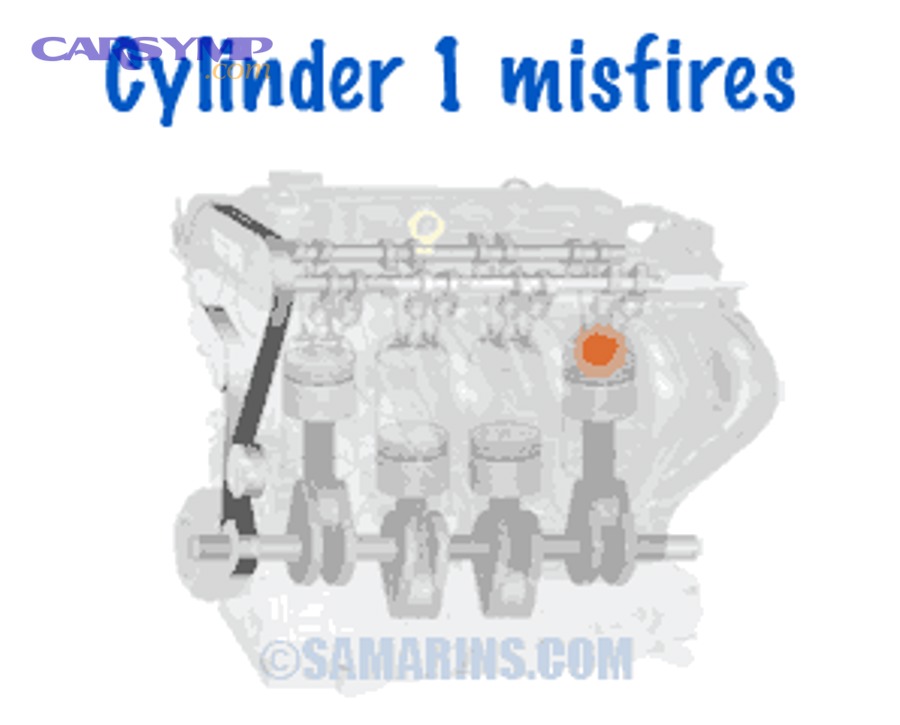
More importantly, a good order prevents you from “confirming” the wrong fix because the misfire temporarily disappears.
Fix order for P030x (single cylinder)
Try this sequence:
- Verify plug and coil seating (especially after recent work)
- Inspect/replace spark plug (correct type, correct gap, not oil-fouled)
- Swap coil with another cylinder (see if the code follows)
- Check coil boot and spring, look for carbon tracking
- Evaluate injector (listen for click, resistance, swap if possible)
- Compression test, then leakdown if compression is low
- Only then consider wiring/PCM driver issues
This order works because each step either fixes the issue or produces a clear “yes/no” directional result.
Fix order for P0300 (random/multiple)
For P0300, assume a shared cause until proven otherwise:
- Check air intake ducting and vacuum lines; fix obvious leaks
- Check fuel trims at idle vs cruise (lean pattern?)
- Clean/inspect MAF (if trims suggest airflow measurement issues)
- Smoke test for vacuum leaks (intake gasket, PCV hoses, brake booster)
- Fuel pressure test under load
- Check for EGR stuck open (if equipped) or PCV faults
- Consider mechanical timing/VVT issues if symptoms match (power loss, odd idle vacuum)
The logic: P0300 rarely resolves permanently by swapping one coil—unless the “random” misfire is actually just moving around due to intermittent ignition faults.
Misfire after repairs troubleshooting
If the misfire started right after you replaced plugs, coils, intake gaskets, a battery, or sensors, prioritize “repair-introduced” errors:
- Wrong plug part number or incorrect gap
- Coil boots not fully seated
- Connector partially latched or pins pushed back
- Vacuum hose left off, cracked, or routed incorrectly
- MAF left unplugged or intake boot not sealed
This is the fastest way to solve “Misfire after repairs troubleshooting” without spiraling into expensive testing.
What not to do (parts cannon) and when to stop DIY
Avoid these common traps:
- Replacing O2 sensors because the car “runs lean” during a misfire
- Replacing the catalytic converter to “fix” a misfire code
- Replacing all coils without checking misfire counters or doing a swap test
Stop DIY and get professional help if:
- Compression/leakdown indicates internal engine problems
- The check engine light is flashing and drivability is unsafe
- You need oscilloscope-level signal checks or advanced scan tool functions
What is the difference between diagnosing P0300 and diagnosing P030x?
P030x diagnosis is typically a cylinder-focused hunt, while P0300 diagnosis is a system-pattern hunt—even though both use the same tools and scan data.
Next, this difference becomes obvious when you compare what changes and what stays the same across the workflow.
Shared diagnostic core: what’s the same
Whether it’s P0300 or P0304, you should still:
- Read freeze frame
- Check misfire counters if available
- Look for related codes
- Use fuel trims to determine mixture direction
- Inspect obvious air leaks and ignition seating issues
The base method doesn’t change—the interpretation does.
Pattern recognition: what changes with P0300
With P0300, you’re asking:
- What do these cylinders share? (fuel rail pressure, vacuum source, intake leak, airflow measurement)
- Does it happen at idle, cruise, or load?
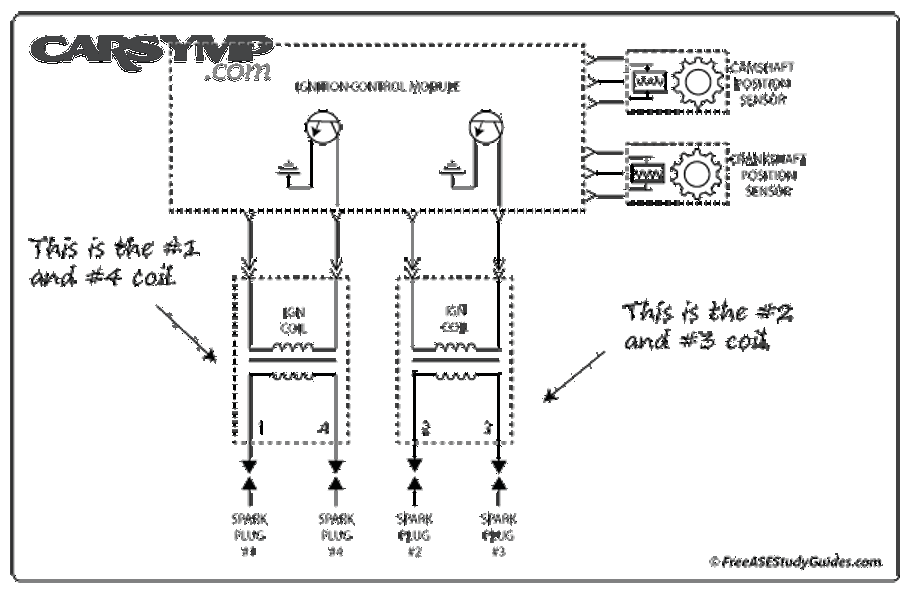
- Do misfires cluster on one bank (V engine) or on paired cylinders (waste-spark systems)?
A simple bank clue: if one bank runs lean due to an intake gasket leak, you may see misfires mostly on that bank’s cylinders—yet it might still log as P0300 if multiple cylinders are affected.
Common misdiagnoses unique to P0300
P0300 is often misdiagnosed because it tempts you to chase the last thing you replaced. Common errors:
- Assuming “random misfire” means “bad gas” without checking fuel trims
- Replacing coils/plugs repeatedly when the root cause is a vacuum leak
- Ignoring fuel pressure under load (a weak pump can mimic ignition failure)
If you want a fast sanity check, compare idle trims vs 2500 RPM trims. A vacuum leak usually looks worse at idle and improves off-idle.
How OEM misfire monitors and Mode $06 can help
If your scan tool supports Mode $06 (on many vehicles), you may be able to view misfire-related test results that add detail beyond a simple code. Not every car presents it clearly, but when it does, it can help you see borderline cylinders before they set a P030x.
Here’s a quick comparison table to summarize the practical differences. It shows what the code focuses on and what your first diagnostic move should be:
| Code type | What it implies | Best first move | Most common “real” bucket |
|---|---|---|---|
| P030x (single cylinder) | One cylinder is leading the misfire count | Swap coil/plug and check that cylinder’s injector/compression | Ignition or mechanical on that cylinder |
| P0300 (random/multiple) | Misfires spread or shift; PCM can’t localize | Check trims + air leaks + fuel pressure pattern | Air/fuel delivery or shared control issue |
Contextual border: at this point you can correctly explain and diagnose most P0300–P0308 situations. The remaining content covers less common, higher-friction scenarios that expand troubleshooting depth when the “normal fixes” don’t work.
What uncommon scenarios can trigger P0300–P0308 even after new plugs and coils?
Yes—P0300–P0308 can persist even after plugs and coils because the misfire may be caused by air/fuel control, mechanical conditions, or mismatched parts, not spark energy alone.
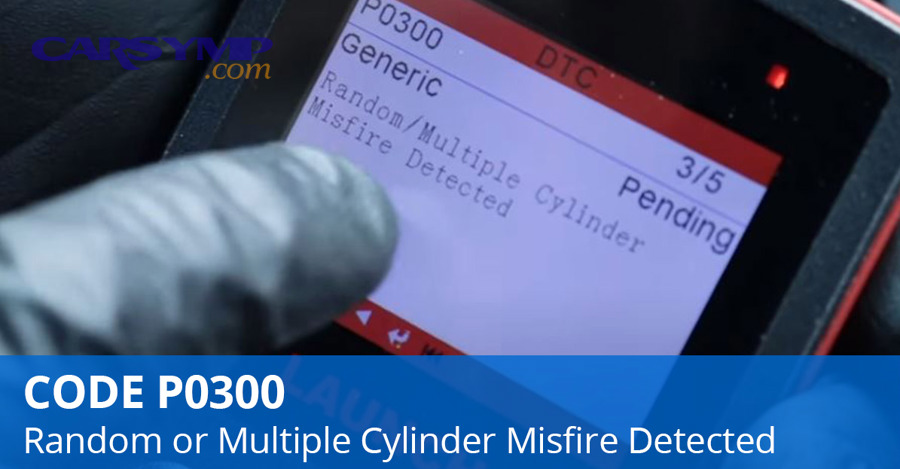
Below are the most common “rare-but-real” situations that make people feel like they’re stuck—especially after a round of parts replacement.
Aftermarket parts mismatch and wrong plug specs
Even “new” parts can create misfires if:
- The plug heat range is wrong
- The plug design doesn’t match OEM requirements
- The gap is incorrect out of the box
- Coil boots don’t seal well (aftermarket tolerances)
If misfires began right after new ignition parts, temporarily reinstall known-good OEM-spec components if possible.
Vacuum leaks that show up only cold or only under load
Some leaks are sneaky:
- Intake gasket leaks that seal when warm
- PCV hoses that collapse under certain conditions
- Brake booster diaphragm leaks that appear during braking or idle
These often show: rough cold idle, improved warm behavior, and fuel trims that change dramatically with temperature.
EGR or PCV faults that imitate a misfire
A stuck-open EGR valve (on vehicles equipped) can dilute the mixture at idle and cause a stumble that looks exactly like an ignition misfire. A malfunctioning PCV system can create a vacuum leak, oil ingestion, or mixture instability.
If you see P0300 with strong idle issues and fuel trims suggesting lean, PCV/EGR checks can be the missing link.
Software updates, adaptives, and crank relearn issues
In rare cases—especially after engine or sensor work—the PCM may need relearn procedures (varies by vehicle):
- Crankshaft position variation relearn
- Idle relearn / throttle adaptation
- Updated calibration (TSBs)
Evidence example: a technical thesis from Chalmers University of Technology, Department of Applied Mechanics (Division of Combustion) discusses misfire detection performance challenges at higher engine speeds; it reports that achieving detection performance above ~80% without false alarms becomes difficult as speed increases (work published in 2011). (publications.lib.chalmers.se)
If you suspect this category, it’s often the point where a professional scan tool (or a shop familiar with your make) saves significant time.