


Dirty throttle body and idle air control valve issues manifest through seven distinct symptoms: rough or fluctuating idle, engine stalling, poor acceleration, check engine light codes, decreased fuel economy, starting difficulties, and abnormal engine noise. These symptoms occur when carbon deposits and dirt accumulate inside the throttle body and IAC valve, disrupting the precisely controlled airflow your engine needs to run smoothly. Recognizing these warning signs early allows car owners to address contamination before it causes severe performance degradation or expensive repairs.
Cleaning a dirty throttle body and IAC valve involves a straightforward DIY process that requires basic tools, throttle body cleaner, and about 30-45 minutes of your time. The procedure includes disconnecting the battery for safety, removing the IAC valve with Torx screwdrivers, applying specialized throttle body cleaner to dissolve carbon buildup, and allowing the engine control unit to relearn idle settings after reassembly. This maintenance task restores optimal engine performance, eliminates rough idling, and improves fuel efficiency by 10-15% in most cases.
Visual inspection provides the most reliable confirmation that your throttle body needs cleaning, revealing black carbon deposits coating the throttle plate and inner housing walls. Car owners can perform this inspection by removing the air intake hose and examining the throttle body opening with a flashlight. The decision between cleaning versus replacing the IAC valve depends on whether the component responds to cleaning or shows signs of mechanical failure, with cleaning costing $5-10 in materials compared to $50-200 for replacement parts.
Post-cleaning complications occasionally occur when the engine control unit needs time to adjust to increased airflow through the cleaned components, causing temporary high idle or hesitation. Understanding these normal adaptation processes versus genuine problems like vacuum leaks or electrical issues helps car owners troubleshoot effectively and know when professional diagnosis becomes necessary. Below, we’ll explore each symptom in detail, walk through the complete cleaning procedure, and address common questions that arise during this essential maintenance task.
What Are the 7 Common Symptoms of a Dirty Throttle Body and IAC Valve?
Seven primary symptoms indicate dirty throttle body and IAC valve contamination: irregular idle fluctuation, engine stalling at stops, sluggish acceleration, illuminated check engine light with specific codes, reduced fuel economy exceeding 10%, hard starting especially when cold, and unusual engine noise at idle. These symptoms arise from carbon deposits restricting airflow and preventing the IAC valve from properly regulating the air bypass around the closed throttle plate.
To better understand how contamination creates these symptoms, consider that your throttle body controls all air entering the engine while the IAC valve fine-tunes idle speed by allowing precise amounts of air to bypass the throttle plate. When carbon accumulates on these surfaces, the rough texture disrupts smooth airflow patterns and prevents the IAC valve’s pintle from moving freely through its air passage. This contamination forces your engine control unit to constantly compensate for inconsistent airflow, creating the characteristic symptoms that alert attentive car owners to the underlying problem.
How Does a Dirty Throttle Body Cause Rough or Fluctuating Idle?
A dirty throttle body causes rough or fluctuating idle by creating turbulent airflow that makes the engine control unit unable to maintain steady RPM, resulting in oscillations typically between 600-1200 RPM instead of the normal stable 700-800 RPM range. The carbon deposits on the throttle plate create an uneven surface that disrupts the laminar airflow pattern the engine requires for smooth combustion.
Specifically, when your engine idles with the throttle plate nearly closed, even small amounts of carbon buildup significantly alter the narrow air passage. The rough carbon surface causes air to tumble and swirl unpredictably as it enters the intake manifold, creating momentary lean or rich conditions that the fuel injection system struggles to correct. Your engine responds by hunting for the correct idle speed, revving up when it runs too lean and dropping when it compensates with excess fuel. This hunting behavior becomes particularly noticeable at stoplights when you’re in gear with the brake applied, as the transmission load amplifies the engine’s difficulty maintaining consistent RPM.
The contamination also prevents the throttle plate from fully closing or causes it to stick partially open, allowing more air than the engine control unit expects. For example, if carbon buildup holds the throttle plate 1-2 degrees more open than calibrated, the extra air creates a high idle that drops suddenly when the deposits shift slightly. Car owners often describe this as the engine feeling “nervous” or “hunting” for the right speed, with tachometer needles visibly bouncing rather than holding steady.
Why Does a Clogged IAC Valve Lead to Stalling?
A clogged IAC valve leads to stalling because carbon deposits prevent the valve’s pintle from extending to allow bypass air when the throttle closes, starving the engine of the airflow it needs to maintain idle RPM and causing it to die at stops or during deceleration. The IAC valve’s primary function involves providing controlled air when you release the accelerator pedal, and any restriction in this pathway eliminates the engine’s ability to idle.
This stalling typically occurs in predictable scenarios that reveal the mechanism behind the failure. When you come to a stop at a traffic light, your foot leaves the accelerator and the throttle plate snaps shut, cutting off the engine’s primary air supply. The IAC valve should immediately extend its pintle to open the bypass passage, allowing sufficient air for idle combustion. However, when carbon clogs this passage or coats the pintle preventing it from moving, no air reaches the engine and it stalls within 1-2 seconds. The engine may catch momentarily as residual air burns, then die completely as that air supply exhausts.
Cold start stalling presents a particularly frustrating variant of this problem because cold engines require 50-100% more air than warm engines to maintain idle. When you start your car in the morning, the engine control unit commands the IAC valve to fully extend, creating maximum bypass airflow. If carbon restricts this passage, the engine starts but immediately dies because it cannot pull in enough air to sustain combustion at the enriched cold-start fuel mixture. You may find yourself holding the accelerator pedal slightly open just to keep the engine running until it warms enough to idle on reduced airflow.
What Acceleration Problems Indicate Throttle Body Contamination?
Throttle body contamination creates three distinct acceleration problems: delayed response when pressing the gas pedal, jerky or stuttering power delivery during acceleration, and reduced maximum acceleration capability compared to normal performance. These symptoms occur because carbon deposits prevent smooth throttle plate movement and disrupt the precise air-fuel mixture required for clean combustion under load.
The delayed response, often called “throttle lag,” happens when carbon buildup increases friction on the throttle shaft, making the plate stick momentarily before breaking free to open. To illustrate this mechanism, imagine pressing your accelerator and feeling nothing happen for a fraction of a second, then experiencing a sudden lurch as the throttle plate breaks past the carbon deposits and snaps open. This creates an unpredictable, non-linear relationship between pedal position and engine response that makes smooth acceleration nearly impossible, particularly in stop-and-go traffic where you need precise throttle control.
Jerky acceleration results from the contaminated throttle body creating inconsistent airflow as you apply throttle. The carbon deposits cause air to flow unevenly around the throttle plate’s edges, creating alternating lean and rich conditions that translate to surging power delivery. Your car accelerates in irregular bursts—pulling hard for a moment, then hesitating, then pulling again—as the fuel injection system tries unsuccessfully to compensate for the erratic airflow readings from the throttle position sensor and mass airflow sensor. This jerking becomes especially pronounced during moderate acceleration between 2000-4000 RPM where precise air-fuel mixture matters most for clean combustion.
Reduced maximum acceleration occurs when heavy carbon buildup physically restricts the throttle plate’s range of motion, preventing it from opening to the full 80-90 degrees required for maximum airflow. Even when you floor the accelerator, the throttle may only open to 60-70 degrees, choking the engine and reducing available power by 20-30%. This manifests as sluggish highway merging, labored hill climbing, and extended 0-60 mph times that feel noticeably slower than your car’s normal performance.
How Do You Recognize Check Engine Light Codes Related to IAC Issues?
Check engine light codes related to IAC issues include P0121 (throttle position sensor range/performance), P2111 (throttle actuator control system stuck open), P2112 (throttle actuator control system stuck closed), and P0300 series codes (random or cylinder-specific misfires) that appear when contamination disrupts proper throttle body and IAC valve function. These diagnostic trouble codes trigger when the engine control unit detects discrepancies between commanded and actual throttle position or airflow.
To recognize these codes, you need an OBD-II scanner that plugs into the diagnostic port typically located under the driver’s side dashboard. When your check engine light illuminates due to throttle body or IAC problems, the scanner retrieves stored codes that point directly to air intake issues. The P0121 code specifically indicates that the throttle position sensor is reporting values inconsistent with expected readings, which commonly occurs when carbon prevents smooth throttle plate movement or causes the plate to stick at unexpected positions. This code often accompanies rough idle and poor acceleration symptoms.
The P2111 and P2112 codes relate specifically to electronic throttle control systems (drive-by-wire) where the engine control unit commands a motor to position the throttle plate. P2111 indicates the throttle is stuck more open than commanded, typically from carbon preventing the plate from closing fully, while P2112 shows the opposite problem where deposits prevent the plate from opening. These codes frequently appear together with reduced engine power warnings as the engine control unit enters a failsafe mode that limits throttle opening to prevent potential damage.
Misfire codes (P0300 for random misfires, P0301-P0308 for cylinder-specific misfires) connect to throttle body contamination less obviously but occur frequently when severe carbon buildup creates such inconsistent airflow that individual cylinders occasionally receive insufficient air for complete combustion. For example, if your scanner shows P0300 combined with P0121, the root cause likely involves throttle body contamination rather than ignition system failure. The rough idle diagnosis becomes clearer when multiple codes point toward air delivery problems rather than spark or fuel injection issues.
Can a Dirty Throttle Body Cause Poor Fuel Economy?
Yes, a dirty throttle body causes poor fuel economy by forcing the engine control unit to overcorrect for inconsistent airflow with excess fuel, typically reducing efficiency by 10-15% compared to normal consumption. The contamination creates unpredictable air intake that prevents the precise 14.7:1 air-fuel ratio required for optimal combustion efficiency.
Specifically, carbon deposits disrupt the mass airflow sensor and throttle position sensor readings that the engine control unit uses to calculate fuel delivery. When these sensors report erratic values due to turbulent airflow around carbon buildup, the engine control unit defaults to a richer fuel mixture to prevent lean conditions that could damage the engine. This safety strategy protects your engine but wastes fuel by injecting more gasoline than the actual airflow requires. For example, if your throttle body contamination causes airflow readings to fluctuate by 20%, the engine control unit may maintain a 12:1 air-fuel ratio (too rich) instead of the optimal 14.7:1, burning 15-20% more fuel than necessary.
You can measure this fuel economy impact by calculating your miles per gallon over a full tank. Fill your tank completely, reset your trip odometer, and drive normally until you need to refuel. Divide the miles traveled by the gallons needed to refill the tank. If your car normally achieves 28 MPG but you’re seeing 24-25 MPG without changing driving habits, the 10-15% decrease strongly suggests throttle body contamination among other potential causes. This calculation becomes even more revealing when you clean the throttle body and immediately see fuel economy return to normal within 1-2 tanks.
The relationship between throttle body contamination and fuel economy extends beyond simple overcorrection. Carbon buildup also creates resistance that forces your engine to work harder to pull air through the restricted passages, increasing the power required for any given speed. This additional load translates directly to increased fuel consumption, particularly during highway driving where maintaining constant speed at 65-70 MPH requires more throttle opening to overcome the airflow restriction. Combined with the rich fuel mixture compensation, these factors explain why some car owners report fuel economy improvements of 2-4 MPG immediately after thorough throttle body cleaning.
What Starting Difficulties Suggest IAC Valve Problems?
Starting difficulties that suggest IAC valve problems include extended cranking time before the engine catches (5-10 seconds instead of 1-2 seconds), engines that start but immediately die requiring multiple attempts, and cold starts requiring accelerator pedal input to keep the engine running. These symptoms indicate the IAC valve cannot provide sufficient bypass air for the engine to establish stable idle upon startup.
Extended cranking occurs because a clogged IAC valve restricts the cold-start air the engine needs to fire initially. When you turn the key, the starter motor cranks the engine through multiple compression cycles while the fuel injection system provides an enriched mixture for cold starting. However, if the IAC valve cannot open its bypass passage due to carbon deposits, insufficient air enters the cylinders to support combustion even with excess fuel present. The engine may fire sporadically on individual cylinders where air randomly reaches the combustion chamber, but cannot sustain running until enough cranking cycles pull in sufficient air through the restricted passages.
The start-then-die pattern reveals a slightly different manifestation of IAC valve contamination. In this scenario, the engine has enough airflow to start initially, often firing quickly and running for 1-3 seconds before stalling. This happens because the initial cranking and first combustion cycles create enough airflow momentum to sustain brief operation, but once the engine settles toward idle speed, the clogged IAC valve cannot maintain adequate bypass air and the engine dies from lack of oxygen. Car owners describe this as the engine “refusing to stay running” or “needing to be started 3-4 times” before finally maintaining idle, with each attempt gradually clearing enough carbon or warming the engine enough to improve airflow.
Cold start accelerator dependence demonstrates severe IAC valve restriction where the only way to maintain idle involves manually opening the throttle plate with the gas pedal. When starting your car on a cold morning, you may need to hold the accelerator pedal pressed 10-20% to keep the engine running for the first 30-60 seconds until it warms. This compensates for the clogged IAC valve by opening the main throttle passage to provide the air the bypass passage cannot deliver. As the engine warms and requires less air to idle, you can gradually release the pedal, though the underlying IAC valve problem remains and will cause the same difficulty at the next cold start.
Does Carbon Buildup in the Throttle Body Affect Engine Noise?
Yes, carbon buildup in the throttle body affects engine noise by creating turbulent airflow that produces whistling, hissing, or rough running sounds not present when the component is clean. The carbon deposits create uneven surfaces and restricted passages that cause air to flow irregularly, generating audible turbulence as air molecules collide and create pressure fluctuations.
To understand this noise generation mechanism, consider that clean throttle bodies allow smooth, laminar airflow where air molecules move in parallel paths without colliding. Carbon deposits create rough surfaces with irregular edges that break up this laminar flow, causing air to tumble and swirl chaotically. When air moves through these irregular restrictions at high velocity, it creates pressure waves that manifest as whistling sounds similar to blowing across the mouth of a bottle. The frequency and volume of these sounds vary based on engine speed and throttle position, often becoming most noticeable at idle when airflow velocity through restrictions reaches peak values.
The rough running noise differs from the high-pitched whistling and manifests as an irregular, grumbling engine note that sounds like the engine is “missing” or running on fewer cylinders than it should. This noise results from inconsistent combustion caused by erratic airflow distribution between cylinders. When carbon buildup disrupts even air delivery, some cylinders receive slightly more air than others, creating uneven combustion timing that produces the characteristic rough-running sound. Your engine may sound smooth at higher RPM when increased airflow volume overwhelms the restriction effects, but develops a noticeable roughness at idle when small airflow variations make a proportionally larger difference.
Importantly, these noises typically disappear within minutes of thorough throttle body cleaning, providing immediate audible confirmation that the maintenance was necessary and effective. If you notice your engine sounds smoother and quieter after cleaning the throttle body, you’ve directly experienced how carbon contamination affects engine acoustics. This noise reduction often surprises car owners who had gradually adapted to the increasing roughness without consciously recognizing how much louder their engine had become over months of carbon accumulation.
How Do You Clean a Dirty Throttle Body and IAC Valve?
Cleaning a dirty throttle body and IAC valve requires removing the IAC valve with Torx screwdrivers, spraying throttle body cleaner on all contaminated surfaces, scrubbing carbon deposits with a soft brush, and allowing 15 minutes of idle time after reassembly for the engine control unit to relearn proper air-fuel mixture settings. This straightforward procedure restores smooth airflow, eliminates rough idle, and improves throttle response without requiring specialized mechanical knowledge or expensive tools.
The cleaning process works by dissolving the carbon deposits and oil residue that accumulate inside the throttle body and IAC valve over thousands of miles of operation. Specifically, throttle body cleaner contains powerful solvents that break down carbon bonds, allowing you to wipe away deposits that would otherwise require mechanical scraping. The chemical action softens even hard, baked-on carbon that forms when oil vapor from the crankcase ventilation system contacts hot throttle body surfaces and carbonizes. By thoroughly cleaning these surfaces, you restore the precise airflow control that your engine management system requires for optimal performance.
What Tools and Materials Are Needed for Throttle Body Cleaning?
Throttle body cleaning requires throttle body cleaner spray ($3-8), a set of Torx screwdrivers (T20 or T25 most common), clean lint-free cloths or shop rags, a soft brush or old toothbrush, and replacement gaskets if the existing ones show damage or deterioration. These basic materials provide everything necessary to thoroughly clean both the throttle body and IAC valve without special equipment.
The throttle body cleaner represents the most critical component selection because not all cleaners suit this application equally. Specifically, you should use dedicated throttle body cleaner rather than carburetor cleaner, despite many people suggesting they’re interchangeable. Throttle body cleaner formulates specifically to be safe on the coatings and sensors present in modern fuel-injected engines, whereas carburetor cleaner can be too aggressive and may damage throttle position sensors, MAF sensor elements, or the special coatings applied to electronic throttle bodies. Popular brands include CRC Throttle Body & Air Intake Cleaner, Gumout, and Berryman B-12 Chemtool Throttle Body Cleaner, all available at auto parts stores.
The Torx screwdriver requirement often surprises first-time cleaners who assume standard Phillips or flathead screwdrivers will work. Most IAC valves mount with two Torx screws, typically T20 or T25 size depending on your vehicle manufacturer. Japanese vehicles commonly use T20, while American vehicles often use T25, and some European vehicles use T30. A complete Torx driver set costs $8-15 and proves valuable for many automotive maintenance tasks beyond throttle body cleaning. The screws may be difficult to access, particularly the rear mounting screw on the throttle body, making a set with various handle lengths useful for reaching tight spaces.
Clean cloths specifically need to be lint-free because lint particles can contaminate the cleaned surfaces or stick to wet cleaner residue, defeating your cleaning purpose. Microfiber towels work excellently, as do dedicated shop rags or even old cotton t-shirts. Avoid paper towels because they disintegrate when saturated with cleaner and leave behind paper fibers. You’ll need 3-4 cloths: one for initial heavy scrubbing, one for detailed cleaning inside the IAC valve bore, one for wiping the throttle body housing, and one for final polishing of cleaned surfaces.
The soft brush allows you to scrub carbon deposits without scratching aluminum throttle body surfaces or damaging the IAC valve pintle. An old toothbrush works perfectly for this purpose, with bristles firm enough to dislodge carbon but soft enough not to mar the finish. Some mechanics prefer small brass-bristle brushes for heavy carbon deposits, though you must use these cautiously to avoid scratching. For stubborn deposits inside the IAC valve air passage, Q-tips or pipe cleaners work well to reach into the narrow bore and dissolve carbon that spray alone cannot remove.
What Is the Step-by-Step Process to Remove and Clean the IAC Valve?
The step-by-step process to remove and clean the IAC valve involves disconnecting the negative battery terminal, locating the IAC valve on the throttle body, removing two Torx screws that secure it, gently pulling it straight out without twisting the pintle rod, spraying it with throttle body cleaner while scrubbing with a soft brush, and reinstalling it with the same or new gasket after all cleaner evaporates. This process takes 15-20 minutes and dramatically improves idle quality when the IAC valve is contaminated.
Begin by disconnecting the negative battery terminal using a 10mm wrench, which prevents any electrical shorts or false error codes during the cleaning process. This safety step takes 30 seconds and prevents the engine control unit from recording fault codes when you disconnect the IAC valve’s electrical connector. Once the battery is disconnected, locate the IAC valve, which typically mounts on the side or rear of the throttle body as a cylindrical component about 2-3 inches long with an electrical connector attached. On most vehicles, you’ll find it by following the throttle body surface until you spot a component with two Torx screws and a wiring harness plug.
Disconnect the electrical connector by squeezing the release tab and gently pulling the connector straight away from the valve. Some connectors require wiggling while pulling if they’ve become tight from years of installation. Never force the connector or you risk breaking the locking tabs. With the connector removed, select the correct Torx driver (usually T20 or T25) and remove both mounting screws. The rear screw often presents access challenges, requiring a screwdriver with a thin shaft or a right-angle Torx driver to reach past other engine components. Keep these screws in a safe location because they’re easy to drop into the engine compartment where they become difficult to retrieve.

Gently wiggle the IAC valve to break the gasket seal, then pull it straight out from the throttle body. Critical caution: do not twist, push, or pull on the pintle rod (the needle-like component extending from the valve body) because it’s fragile and bending it will ruin the valve. The pintle must move freely in and out to control bypass airflow, and any damage to its straight alignment prevents proper seating and causes air leaks. If the valve resists removal, work it gently side-to-side while pulling outward, never forcing it.
With the IAC valve removed, examine the bore where it was installed, noting the likely carbon buildup inside this passage. Spray throttle body cleaner generously into the valve and into the bore in the throttle body. Use your soft brush to scrub the pintle and the air passages inside the valve body, working the bristles into all visible passages. For heavily contaminated valves, spray cleaner into the valve, let it soak for 2-3 minutes to dissolve carbon, then scrub and spray again. The cleaner will drip dark with dissolved carbon—continue this spray-and-scrub process until the runoff appears clear.
Clean the throttle body bore thoroughly using the brush and additional cleaner spray, removing all carbon from the surfaces where the IAC valve seats. This ensures proper gasket sealing when you reinstall the valve. Examine the gasket that sealed between the IAC valve and throttle body. If it’s damaged, torn, or hardened, replace it with a new one (available at auto parts stores for $2-5). If it’s still soft and shows no damage, you can reuse it, though many mechanics prefer replacing gaskets as cheap insurance against vacuum leaks.
Allow the IAC valve and throttle body bore to air dry for 5-10 minutes, ensuring all cleaner evaporates before reinstallation. Throttle body cleaner evaporates quickly, but residual cleaner in deep passages may need extra time. Position the gasket on either the valve or the throttle body mounting surface, align the IAC valve with the mounting holes, and press it gently into place. Install both Torx screws finger-tight, then snug them with your screwdriver. These screws require only firm snugness, not maximum torque—overtightening can crack the throttle body housing or strip the soft aluminum threads.
Reconnect the electrical connector by pushing it firmly onto the IAC valve until you hear or feel it click into locked position. Reconnect the negative battery terminal and tighten it securely. Your IAC valve cleaning is complete and the engine is ready to start and relearn its idle parameters.
How Do You Clean the Throttle Body Without Removing It?
Cleaning the throttle body without removing it involves removing only the air intake tube to expose the throttle plate, spraying throttle body cleaner directly onto the plate and bore while holding the throttle open with a screwdriver or by having an assistant gently press the accelerator pedal, and scrubbing visible carbon with a brush through the intake opening. This method works well for maintenance cleaning but may not reach all contaminated areas as thoroughly as full removal.
Start by turning off the engine and removing the air intake tube that connects the air filter box to the throttle body. This tube typically secures with a hose clamp that you loosen with a flathead screwdriver or 7mm socket, depending on the clamp type. Once loose, wiggle the tube to break any seal and pull it away from the throttle body, exposing the throttle plate and bore. You’ll immediately see carbon deposits on the throttle plate and the bore walls if contamination is significant.
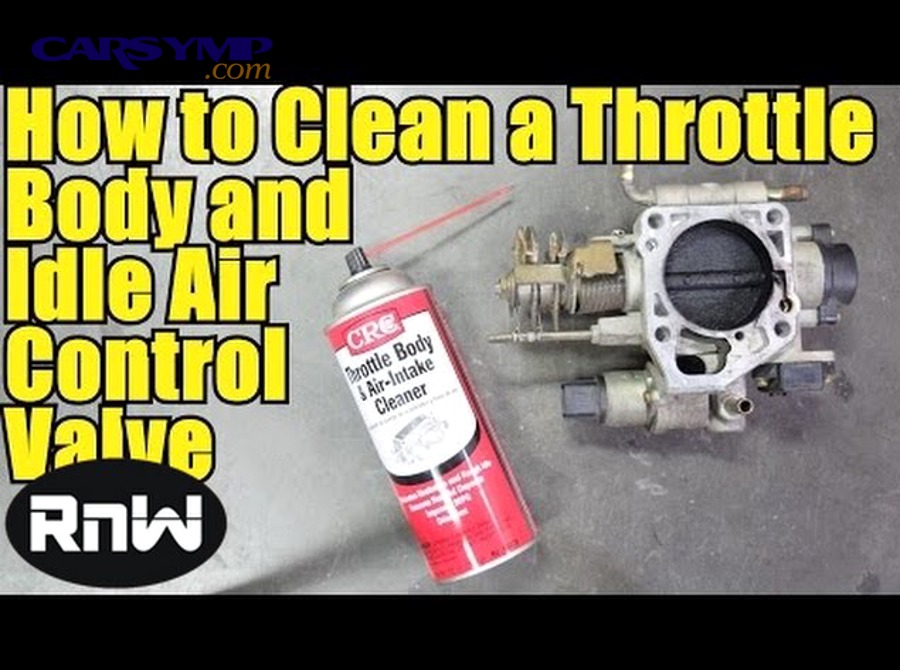
With the throttle body exposed, you need to open the throttle plate to access all surfaces. The safest method involves having an assistant sit in the driver’s seat and gently press the accelerator pedal while you spray and scrub, opening the throttle plate gradually. Alternatively, you can carefully insert a flathead screwdriver into the throttle body and use it to gently hold the throttle plate open—be extremely careful not to scratch the bore or bend the throttle plate with excessive force. Never force the throttle plate beyond its normal range of motion or you risk damaging the throttle shaft bearings.
Spray throttle body cleaner liberally onto the throttle plate while it’s held open, coating both sides of the plate and the exposed bore surfaces. Use your soft brush to scrub the throttle plate’s edges where carbon accumulates thickest, working around the entire perimeter. The carbon often builds up on the backside (engine side) of the throttle plate more heavily than the front, so make sure your brush reaches these surfaces. Rotate the throttle plate by moving your screwdriver or having your assistant modulate the pedal, exposing different areas for cleaning.
Continue spraying and scrubbing until the throttle plate appears shiny metal and the bore walls show no visible carbon streaks. The cleaner will drip out the bottom of the throttle body—have shop rags positioned underneath to catch the runoff. For intake manifold cleaning mentioned in some guides, spray a small amount of cleaner onto a rag and wipe the manifold mounting surface of the throttle body, removing any oil or carbon residue that could prevent proper gasket sealing.
Allow 5-10 minutes for all cleaner to evaporate before reinstalling the air intake tube. This prevents liquid cleaner from being sucked into the engine during startup, which could cause rough running or hydrolock in extreme cases. Reinstall the air intake tube by sliding it onto the throttle body inlet and tightening the hose clamp securely. Your in-place throttle body cleaning is complete.
Should You Reset the ECU After Cleaning the Throttle Body?
Yes, you should reset the ECU after cleaning the throttle body or allow it to relearn idle parameters through a drive cycle because the engine control unit has adapted to restricted airflow from carbon buildup and needs to recalibrate for the increased airflow through cleaned components. This relearning process prevents high idle, rough running, or check engine lights that commonly occur immediately after throttle body cleaning.
The ECU reset accomplishes two critical recalibrations. First, it erases the learned idle fuel mixture that the ECU developed to compensate for restricted airflow. When carbon gradually accumulated over months or years, your ECU continuously adjusted fuel delivery to maintain proper combustion despite decreasing airflow. These adjustments became “learned” values stored in the ECU’s memory. After cleaning opens the throttle body to like-new airflow, these learned values cause overly rich fuel mixture because the ECU is still compensating for restriction that no longer exists. Resetting clears these learned values, forcing the ECU to start fresh.
Second, the ECU reset recalibrates the idle air control valve position. The ECU learned to position the IAC valve further open than normal to compensate for carbon restriction in the bypass passage. With the passage now clean, that excessive opening creates high idle because too much air enters the engine. The reset and relearn process allows the ECU to discover the correct IAC valve position for the cleaned condition.
You can reset the ECU through two methods: battery disconnection or drive cycle relearn. For battery disconnection, simply remove the negative battery terminal for 10-15 minutes, which clears the ECU’s adaptive memory. However, this method also erases radio presets, clock settings, and other convenience features. The drive cycle relearn method avoids these inconveniences by allowing the ECU to adapt naturally through specific driving conditions.
For the drive cycle relearn, start the engine and let it idle in park with all accessories off (air conditioning, radio, lights) for 2-3 minutes. This allows the ECU to establish baseline idle with minimal load. Next, turn on the air conditioning and set the blower to maximum for 3 minutes, allowing the ECU to learn idle compensation for the AC compressor load. Finally, drive the vehicle normally for 10-15 minutes, including various speeds and light acceleration, which completes the adaptation process. Most vehicles complete relearning within this timeframe, though some may require 20-30 miles of driving for full adaptation.
If high idle persists beyond the relearn period, the problem likely stems from incomplete cleaning (debris still restricting passages), damaged gaskets creating vacuum leaks, or torn intake hoses rather than ECU adaptation issues. In these cases, additional troubleshooting becomes necessary rather than further resets.
How Can You Tell If Your Throttle Body or IAC Valve Needs Cleaning?
You can tell your throttle body or IAC valve needs cleaning through visual inspection revealing black carbon deposits on the throttle plate and bore walls, combined with performance symptoms including rough idle, stalling, and poor acceleration that match the contamination patterns described earlier. The most reliable confirmation method involves removing the air intake tube and examining the throttle body opening with a flashlight, looking for the characteristic dark coating that indicates carbon accumulation.
The decision between cleaning and replacing depends on whether the component responds positively to cleaning or shows signs of mechanical failure. To make this determination effectively, car owners should understand both diagnostic confirmation through inspection and the criteria that indicate replacement becomes necessary instead of simple maintenance cleaning.
What Does a Dirty Throttle Body Look Like During Visual Inspection?
A dirty throttle body appears as black or dark brown carbon coating on the throttle plate and inner bore walls, visible when you remove the air intake tube and shine a flashlight into the throttle body opening. Clean throttle bodies show shiny aluminum or painted surfaces, while contaminated ones display a velvety black texture covering the metal.
To perform this visual inspection on your own vehicle, locate the air intake tube connecting your air filter box to the throttle body—it’s typically a 3-4 inch diameter black rubber or plastic tube near the front of the engine. Loosen the hose clamp securing this tube to the throttle body using a flathead screwdriver or 7mm socket, then gently twist and pull the tube away from the throttle body. This exposes the throttle body bore, allowing you to see the throttle plate and surrounding surfaces.

Direct a flashlight into the opening and examine the throttle plate (the circular metal valve that opens and closes). On a clean throttle body, you’ll see shiny metal or a clean painted surface. On a contaminated throttle body, you’ll observe a dark coating that may appear black, dark brown, or gray depending on the carbon composition. The coating often appears thicker on the edges of the throttle plate where airflow velocity is highest and on the bore walls immediately surrounding the plate.
The texture of carbon deposits provides additional diagnostic information. Light contamination appears as a thin, smooth dark film that you can barely feel with your finger. Moderate contamination shows as a thicker coating with a velvety or slightly rough texture. Heavy contamination presents as thick, crusty deposits that may flake when touched, sometimes accumulated to 1-2mm thickness in severe cases. This heavy buildup typically corresponds to vehicles with 60,000+ miles without previous throttle body cleaning.
Looking deeper into the throttle body bore with the throttle plate held open reveals additional contamination on surfaces you cannot see from the intake side. The backside (engine side) of the throttle plate often shows heavier carbon accumulation than the front because combustion gases can blow back during valve overlap, depositing carbon on these surfaces. Similarly, the bore walls on the engine side accumulate more deposits from crankcase vapors that condense and carbonize on hot surfaces.
For IAC valve inspection, you’ll need to remove the valve as described in the cleaning section. Once removed, examine the pintle (the pointed rod extending from the valve body) and the bore where the valve was mounted. Carbon deposits on the pintle appear as dark rings or coating on the shaft, while the bore shows black residue on its walls. Heavily contaminated IAC valves may have carbon buildup so thick that it prevents the pintle from moving freely, which you can test by manually attempting to push the pintle in and out—it should move smoothly with light pressure if clean, but will resist movement if carbon-bound.
Compare your findings against online images showing clean versus dirty throttle bodies and IAC valves available on automotive maintenance websites like carsymp.com. These visual references help you gauge whether your contamination level warrants immediate cleaning or can wait for scheduled maintenance. Generally, if you can see visible carbon deposits during basic visual inspection, cleaning will provide noticeable performance benefits.
When Should You Clean vs Replace the IAC Valve?
You should clean the IAC valve when carbon deposits cause performance symptoms but the valve’s mechanical components remain functional, indicated by smooth pintle movement and absence of electrical connector corrosion; replacement becomes necessary when the valve pintle sticks even after thorough cleaning, electrical resistance testing shows out-of-specification values, or the valve housing shows physical damage. Cleaning costs $5-10 in materials and takes 20 minutes, while replacement runs $50-200 for the part plus labor.
The clean-versus-replace decision begins with assessing how the IAC valve responds to initial cleaning attempts. After removing and thoroughly cleaning the valve as described earlier, reinstall it and test engine performance. If rough idle, stalling, and starting difficulties disappear completely, the valve was simply contaminated and cleaning successfully restored function. This outcome occurs in approximately 80% of IAC valve issues according to automotive service data, making cleaning the logical first step.
However, several failure modes indicate replacement becomes necessary regardless of cleaning efforts. Mechanical pintle binding represents the most common replacement criterion—if you cannot manually push the pintle smoothly in and out even after extensive cleaning, the internal motor or pintle mechanism has failed mechanically. This failure often results from corrosion on the pintle shaft or inside the valve body that cleaning cannot reach, or from bearing wear that allows the pintle to cock at an angle and bind. Testing this requires removing the valve and attempting to move the pintle by hand; it should extend and retract smoothly with light pressure. Binding, catching, or complete immobility indicates terminal failure.
Electrical testing provides another replacement criterion for electronically-controlled IAC valves. Using a multimeter set to resistance (ohms) mode, measure the resistance across the valve’s electrical terminals with the connector removed. Most IAC valves should show 10-15 ohms of resistance, though specifications vary by manufacturer. Check your vehicle’s service manual for exact values. Readings significantly outside specification (infinite resistance indicating open circuit, or near-zero resistance indicating shorted windings) mean the valve’s internal motor has failed electrically and cleaning cannot restore function.
Physical damage to the valve housing or pintle provides clear replacement indicators. Cracks in the valve body, stripped mounting screw threads, broken or bent pintle tips, or damaged electrical connector pins all necessitate replacement because these structural failures prevent proper sealing and function regardless of cleanliness. Similarly, if the gasket mounting surface on the valve shows deep grooves, corrosion pitting, or warpage, you cannot achieve a proper seal even with a new gasket, causing persistent vacuum leaks.
The cost-benefit analysis strongly favors attempting cleaning before replacement. A can of throttle body cleaner costs $3-8, and the cleaning process requires only basic tools and 20 minutes. In contrast, IAC valve replacement costs $50-120 for the part alone for domestic vehicles, $100-200 for imports, plus 0.5-1.0 hours labor ($50-100) if you pay a mechanic. Given that cleaning succeeds in the majority of cases, the potential savings of $100-250 makes attempting cleaning first financially prudent.
Frequency considerations also guide the clean-versus-replace decision. If your IAC valve requires cleaning every 6-12 months to maintain performance, the valve likely has worn internal components that allow excessive carbon accumulation. Normal IAC valves should remain clean for 30,000-50,000 miles under typical driving conditions. Frequent cleaning needs suggest replacement will prove more cost-effective in the long term, eliminating recurring maintenance intervals.
Environmental and driving pattern factors influence replacement timing as well. Vehicles operating in dusty environments, those with high-mileage engines burning some oil, or cars driven primarily for short trips that never fully warm up experience accelerated IAC valve contamination. In these cases, even a mechanically sound valve may accumulate carbon so quickly that cleaning every 15,000-20,000 miles becomes necessary. Replacement with a higher-quality aftermarket valve featuring improved carbon resistance may reduce maintenance frequency, though this strategy costs more initially.
What Problems Can Occur After Cleaning the Throttle Body and IAC Valve?
Four common problems occur after cleaning the throttle body and IAC valve: high idle requiring ECU relearning, vacuum leaks from damaged gaskets, electrical issues in electronic throttle control systems, and rough running from incomplete carbon removal. These complications arise because cleaning alters the airflow characteristics the engine control unit adapted to over time, or because the maintenance process damages components that were functioning despite contamination.
Understanding these post-cleaning problems helps car owners distinguish normal adaptation behavior from genuine new issues requiring correction. Specifically, some symptoms that appear immediately after cleaning represent the ECU’s confusion about changed airflow rather than damage from the cleaning process, while other symptoms indicate mistakes during reassembly or aggressive cleaning techniques that harmed delicate components.
Why Does High Idle Happen After Throttle Body Cleaning?
High idle happens after throttle body cleaning because removing carbon deposits allows significantly more air into the engine than before, while the ECU continues commanding the fuel mixture and IAC valve position it learned for the restricted condition, resulting in idle speeds 200-500 RPM above normal until the ECU completes its relearn process. This high idle typically resolves within 15-30 minutes of runtime through automatic ECU adaptation.
The mechanism behind post-cleaning high idle involves the ECU’s adaptive learning strategy. Over months or years, as carbon gradually accumulated and restricted airflow, your ECU incrementally adjusted two parameters to maintain proper idle: it opened the IAC valve progressively further to allow more bypass air, and it increased fuel delivery to match the reduced oxygen supply reaching the engine. These adjustments happened so gradually that you likely didn’t notice them occurring, with the ECU storing the new values as “learned” baseline parameters.
When you clean the throttle body and IAC valve, you instantly remove the airflow restriction that drove those learned adjustments. The throttle plate now closes more completely, the bore offers less resistance, and the IAC passages flow air more freely. However, the ECU still commands the wide-open IAC valve position and enriched fuel mixture it learned for the restricted condition. The combination of unrestricted airflow with wide-open IAC valve creates excessive total airflow, while the rich fuel mixture burns inefficiently with this extra oxygen, and the result manifests as high idle typically around 1200-1500 RPM instead of the normal 700-800 RPM.
Most modern ECUs detect this high idle condition within 2-3 minutes and begin adaptation. The ECU monitors actual idle RPM against target RPM, recognizes the consistent over-speed condition, and incrementally closes the IAC valve while leaning the fuel mixture. This adaptation accelerates if you follow the relearn drive cycle described earlier: idle for 2-3 minutes with accessories off, then 3 minutes with AC on maximum, followed by normal driving. Each cycle of idle-with-load provides the ECU additional data points to refine its parameters.
However, persistent high idle lasting beyond 30 minutes of runtime with multiple idle cycles suggests causes other than ECU adaptation. Three common culprits create persistent high idle: incomplete cleaning leaving debris that holds the throttle plate partially open, damaged throttle body gasket creating a vacuum leak, or debris dislodged during cleaning that migrated into the intake manifold and now causes airflow problems. Each requires specific diagnosis.
For incomplete cleaning, remove the air intake tube again and inspect the throttle body. If you see remaining carbon deposits or notice the throttle plate doesn’t fully close against the bore, additional cleaning becomes necessary. Pay particular attention to carbon on the throttle shaft where it passes through the bore—deposits here can prevent complete closure.

Vacuum leaks from gasket damage present differently. If you hear a hissing sound near the throttle body at idle, suspect a leaking gasket. Vacuum leaks allow unmetered air to enter the engine, causing the ECU to lean the fuel mixture while idle speed rises. Test by spraying a small amount of throttle body cleaner around gasket surfaces while the engine idles—if idle speed changes when you spray a particular area, air is leaking through that gasket. Replace the affected gasket to resolve the issue.
The debris migration problem requires more complex diagnosis. If you sprayed excessive cleaner that dislodged large carbon chunks, these may have washed down the intake manifold and partially blocked runners or stuck in intake valves. This creates uneven cylinder-to-cylinder airflow resulting in high, unstable idle. Diagnosing this condition requires removing the intake manifold and inspecting for debris, making it a task best left to professional mechanics if suspected.
What Causes Vacuum Leaks After IAC Valve Maintenance?
Vacuum leaks after IAC valve maintenance occur when the reinstalled gasket fails to seal properly due to damage during removal, incorrect gasket positioning, or insufficiently tightened mounting screws, allowing unmetered air to bypass the throttle body and confuse the engine control unit’s fuel mixture calculations. These leaks manifest as rough idle, high idle, and potential check engine light codes related to lean fuel mixture.
The IAC valve gasket serves as the primary seal preventing air from entering the engine except through the controlled IAC valve passage. This gasket typically consists of thin rubber or fiber material compressed between the IAC valve housing and the throttle body mounting surface. Over time and heat cycles, gaskets can become brittle and stuck to both surfaces. When you remove the IAC valve during cleaning, attempting to separate a stuck gasket often tears it, creating paths for vacuum leaks when you reassemble.
Identifying a vacuum leak requires listening for characteristic symptoms. At idle, vacuum leaks produce a hissing sound originating from the leak location—in this case, around the IAC valve mounting area. The hissing occurs because air rushing through a small opening at high velocity creates audible turbulence. You can confirm a leak by spraying throttle body cleaner around the IAC valve mounting surface while the engine idles; if the idle speed suddenly increases or the engine stumbles, the cleaner’s vapor is being sucked through a leak and temporarily enriching the mixture, proving the leak’s existence and location.
Another vacuum leak symptom involves a lean fuel mixture creating rough, unstable idle similar to a misfire. The ECU’s oxygen sensors detect excess oxygen from the unmetered leak air and command additional fuel to compensate. However, because the ECU cannot meter the leak air accurately, the compensation remains imperfect and idle quality suffers. In severe cases, the ECU triggers check engine codes P0171 (System Too Lean Bank 1) or P0174 (System Too Lean Bank 2) when oxygen sensors report consistently lean conditions the ECU cannot correct.
Prevention strategies reduce vacuum leak likelihood. First, always inspect the gasket carefully before removing the IAC valve. If it appears brittle, cracked, or extremely hard, plan to replace it and have a new gasket ready before starting work. When removing the valve, work slowly and gently to avoid tearing the gasket. If the gasket sticks to either surface, carefully peel it off rather than forcing the valve away and tearing the gasket in the process.
During reinstallation, ensure the gasket seats completely flat against both surfaces without wrinkles, folds, or misalignment. Even a slight fold creates a path for air leaks. Some mechanics apply a thin coating of vacuum-rated silicone gasket maker to the gasket surfaces as additional insurance, though this isn’t necessary with new, properly-installed gaskets. Tighten the mounting screws evenly in a cross-pattern (tighten one screw partially, then the opposite screw partially, alternating until both reach final torque). This ensures even compression across the gasket surface.
If you discover a vacuum leak after reassembly, the solution involves removing the IAC valve again, inspecting the gasket for damage, and replacing it if torn or deformed. Clean both mating surfaces thoroughly with throttle body cleaner to remove any old gasket material or residue that might prevent proper sealing. Install the new gasket carefully, ensuring proper alignment, and torque the mounting screws to specification (typically 25-35 inch-pounds, though verify in your service manual). This attention to gasket integrity eliminates vacuum leaks and restores proper engine performance.
How Do You Diagnose Electrical Problems in Electronic Throttle Bodies?
Diagnosing electrical problems in electronic throttle bodies requires using an OBD-II scanner to retrieve diagnostic trouble codes, performing throttle position sensor voltage tests with a multimeter, and verifying the throttle actuator motor operates correctly through bidirectional control tests available in advanced scan tools. These electronic systems’ complexity makes accurate diagnosis more challenging than mechanical throttle body troubleshooting.
Electronic throttle control systems, also called drive-by-wire systems, eliminate the mechanical cable between the accelerator pedal and throttle plate, replacing it with sensors, motors, and computer control. In these systems, pressing the accelerator operates a pedal position sensor that signals the ECU, which then commands a motor inside the throttle body to open the throttle plate to the appropriate angle. This additional complexity introduces electrical failure modes unknown in older mechanical systems, and cleaning the throttle body can occasionally disturb these delicate components.
The most common electrical problem following throttle body cleaning involves throttle body cleaner contaminating the throttle position sensor (TPS). The TPS typically mounts on the throttle shaft and measures throttle plate angle through a variable resistor that changes resistance as the throttle opens. If throttle body cleaner spray reaches this sensor’s internal components, it can dissolve protective coatings or leave residue that alters the resistance values. Contaminated TPS sensors report incorrect throttle position, confusing the ECU and triggering codes P0121 (TPS voltage range/performance), P0122 (TPS circuit low voltage), or P0123 (TPS circuit high voltage).
Testing TPS function requires a digital multimeter and access to the throttle body wiring. With the ignition on but engine off, backprobe the TPS signal wire (consult your vehicle’s wiring diagram for the specific wire identification) and measure voltage while slowly opening the throttle plate manually. The voltage should increase smoothly from approximately 0.5 volts at closed throttle to 4.5 volts at wide-open throttle, with no jumps, dropouts, or erratic readings. Any irregularity in this voltage sweep indicates TPS malfunction, often from cleaner contamination. Unfortunately, most TPS sensors integrate into the throttle body housing and cannot be replaced separately, necessitating complete throttle body replacement if damaged.
The throttle actuator motor presents another potential electrical failure point. This motor receives commands from the ECU to position the throttle plate at specific angles. If cleaner penetrates the motor’s brushes or commutator, it can cause increased resistance, binding, or complete failure. Symptoms include throttle plate not opening to commanded position, delayed throttle response, or check engine codes P2111 (throttle actuator stuck open) or P2112 (throttle actuator stuck closed). Testing requires an advanced scan tool capable of bidirectional controls—you command the throttle to open to various positions and verify the actual position matches the commanded position. Discrepancies indicate motor malfunction.
Drive-by-wire systems often enter failsafe mode when they detect electrical problems, which drastically limits engine power to protect against unintended acceleration. In failsafe mode, the ECU typically limits throttle opening to approximately 20-30% regardless of accelerator pedal position, reducing maximum speed to perhaps 30-40 MPH. The check engine light illuminates, often accompanied by a wrench or throttle warning light on the instrument panel. Retrieving codes with a scan tool reveals the specific electrical fault that triggered failsafe mode.
Preventing electrical damage during throttle body cleaning requires careful technique. Never spray cleaner directly at the TPS sensor or any electrical connectors. Instead, spray cleaner onto a cloth, then wipe the throttle body surfaces near sensors. Avoid excessive cleaner that drips down into the throttle body housing where it might reach electrical components. If you accidentally spray the TPS area heavily, allow extended drying time (30-60 minutes) before reconnecting the battery and starting the engine, giving cleaner time to fully evaporate.
When electrical diagnosis reveals TPS or throttle actuator failure from cleaning damage, replacement becomes unavoidable. Many modern throttle bodies sell as complete assemblies including the housing, TPS, throttle motor, and all electronics, with prices ranging from $200-600 depending on vehicle make and model. Some vehicles offer separate TPS replacement, though this requires careful calibration procedures using a scan tool to set the closed throttle position baseline. Given these costs and complexity, preventing sensor damage through careful cleaning technique proves far more economical than repair.
What Is the Difference Between Cleaning Issues in Mechanical vs Electronic Throttle Control Systems?
Mechanical throttle control systems tolerate aggressive cleaning because they contain only a simple cable-operated throttle plate and basic TPS sensor, while electronic throttle control systems require gentle cleaning techniques that avoid spraying the throttle position sensor, throttle actuator motor, and multiple electronic components integrated into the throttle body housing. This fundamental difference demands different cleaning approaches despite cleaning the same carbon deposits.
Mechanical throttle systems, common in vehicles built before 2000-2005, use a simple design where pressing the accelerator pulls a cable that physically opens the throttle plate. These systems typically include only one electrical component: a basic TPS sensor that reports throttle position to the ECU for fuel mixture calculation. The throttle plate opens and closes through physical force from the cable, making the system robust and tolerant of thorough cleaning. You can spray cleaner aggressively throughout the throttle body, soak components, and scrub vigorously without risking damage to complex electronics. The worst outcome from overly aggressive cleaning involves getting cleaner on the TPS, which typically survives exposure and functions normally once dried.
Electronic throttle control systems (drive-by-wire), standard in most vehicles built after 2005, replace the mechanical cable with electronic sensors and a motor. Pressing the accelerator operates a pedal position sensor sending signals to the ECU, which processes the input and commands the throttle actuator motor to open the throttle plate to the calculated angle. This system integrates multiple sensitive components into the throttle body: TPS sensor (often dual sensors for redundancy), throttle actuator motor with position feedback sensor, electrical connectors, and circuit boards. These components demand cautious cleaning because cleaner spray can penetrate and damage electronic elements.
The cleaning technique differences manifest in specific procedures. For mechanical systems, you can remove the throttle body completely, soak it in a parts cleaner bath, spray cleaner from any angle, and scrub all surfaces without concern for electronics. The only caution involves avoiding the TPS sensor’s electrical connector, though even accidental exposure rarely causes problems. After cleaning, ensure all cleaner evaporates before reinstalling, but the risk of damage remains minimal.
For electronic systems, you must avoid direct cleaner spray toward the TPS sensors (usually located on the throttle shaft sides), the throttle motor housing (typically on the throttle body side), and all electrical connectors. The preferred technique involves spraying cleaner onto a cloth first, then wiping the throttle bore and plate with the damp cloth. This controlled approach cleans carbon deposits while keeping cleaner away from sensitive electronics. For stubborn deposits, spray a small amount directly onto the carbon, allow it to soak briefly, then wipe away with a cloth rather than spraying continuously.
ECU relearning requirements also differ between systems. Mechanical throttle systems require minimal relearning—the ECU simply adjusts idle fuel mixture based on oxygen sensor feedback over 10-15 minutes of runtime. Electronic systems often require more extensive relearning procedures including throttle plate position calibration, idle speed relearn, and pedal position sensor synchronization. Some vehicles require a scan tool to perform these relearning procedures, while others complete the process automatically through specific drive cycles. Consult your vehicle’s service manual for exact relearning requirements.
The cost of mistakes differs substantially between systems. Damaging a mechanical throttle body during aggressive cleaning might require replacing a $50-100 throttle body and $30-50 TPS sensor separately. Damaging an electronic throttle body typically necessitates replacing the entire assembly because the TPS and throttle motor integrate into the housing, with replacement costs ranging $200-600 for the part alone. This cost difference underscores the importance of using appropriate cleaning techniques for your specific throttle body type.
Identifying which type your vehicle uses requires simple observation. Remove the air intake tube and trace the accelerator pedal linkage. If you see a cable running from the pedal area to the throttle body and connecting to a lever that mechanically opens the throttle plate, you have a mechanical system. If you find no cable, only electrical connectors at the throttle body and accelerator pedal, you have an electronic system. Additionally, electronic systems typically have “ETC,” “ETCS,” or similar labels on the throttle body housing indicating electronic throttle control.
Understanding these differences allows car owners to clean their throttle bodies effectively while avoiding the specific risks each system presents. Mechanical systems reward thorough, aggressive cleaning that removes every trace of carbon, while electronic systems demand cautious, gentle cleaning that preserves delicate sensors and motors. Both achieve the same goal of restored performance, but the path to that goal requires different techniques matched to each system’s design constraints and failure vulnerabilities.