


Diagnosing rough idle requires analyzing fuel trim data through a systematic five-step process: accessing live data via an OBD-II scanner, establishing baseline readings at stable idle, testing fuel trim behavior across different RPM ranges, identifying characteristic patterns that reveal vacuum leaks or sensor faults, and verifying your diagnosis through functional testing. This method enables both professional mechanics and DIY enthusiasts to pinpoint the root cause of rough idle conditions with precision, transforming what appears as confusing percentage values into actionable diagnostic intelligence that distinguishes between vacuum leaks, mass airflow sensor contamination, oxygen sensor failures, and fuel delivery problems.
Understanding what fuel trim data represents forms the foundation of effective rough idle diagnosis. Short-term fuel trim (STFT) captures the engine control unit’s immediate adjustments to maintain the optimal 14.7:1 air-fuel ratio, while long-term fuel trim (LTFT) stores learned corrections that compensate for mechanical wear, sensor drift, and aging components. When these values deviate beyond normal ranges—particularly at idle where problems manifest most dramatically—they create a diagnostic roadmap that points directly to specific system failures. The beauty of fuel trim analysis lies in its ability to reveal problems before they trigger diagnostic trouble codes, making it one of the most powerful tools in modern automotive diagnostics.
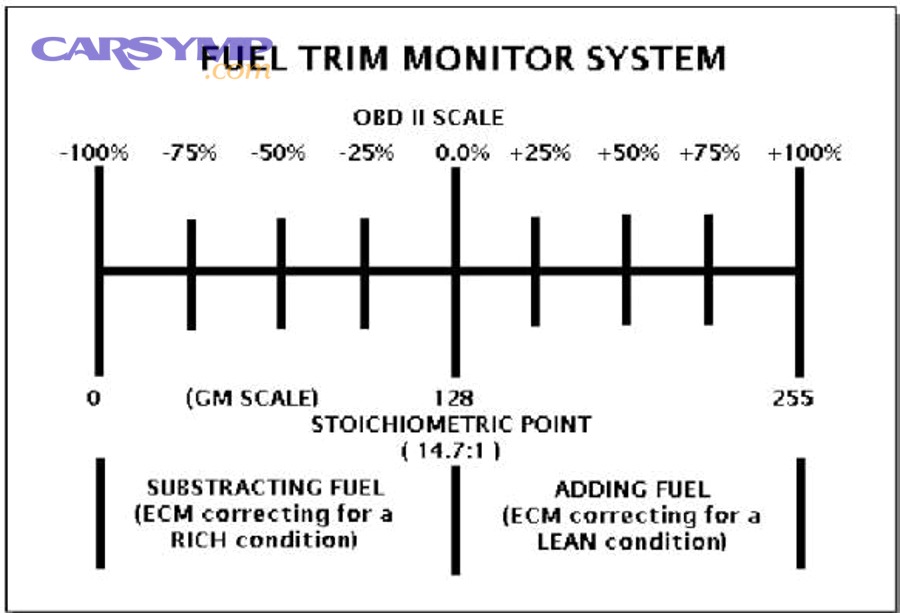
Reading fuel trim values correctly separates successful diagnostics from expensive parts replacement guesswork. Positive fuel trim percentages indicate a lean condition where the ECU adds fuel to compensate for excess air entering the system, typically pointing to vacuum leaks that worsen at idle when manifold vacuum peaks. Negative fuel trim percentages signal a rich condition where the ECU reduces fuel delivery, commonly caused by leaking injectors, stuck purge valves, or faulty oxygen sensors feeding false lean signals. The relationship between idle and elevated RPM fuel trim readings provides the critical clue: vacuum-related issues improve dramatically above 2,000 RPM, while fuel delivery and sensor problems persist across the entire RPM range.
Professional diagnostic procedures combine baseline fuel trim readings with systematic testing protocols that verify suspected causes before replacing components. Next, we’ll explore the specific definitions, normal ranges, and diagnostic techniques that transform fuel trim percentages into concrete repair strategies.
What is Fuel Trim Data and Why Does It Matter for Rough Idle Diagnosis?
Fuel trim data represents the engine control unit’s continuous adjustments to fuel injection duration, expressed as positive or negative percentages that reveal whether the engine runs lean or rich compared to the ideal stoichiometric ratio of 14.7 parts air to one part fuel. This data matters critically for rough idle diagnosis because abnormal fuel trim values expose hidden problems—vacuum leaks, sensor failures, fuel delivery issues—that create the air-fuel imbalance responsible for unstable engine operation at idle speeds.
To better understand fuel trim’s diagnostic power, consider how modern engine management systems constantly monitor exhaust oxygen content and make real-time corrections. The ECU receives voltage signals from upstream oxygen sensors positioned before the catalytic converter, comparing actual exhaust oxygen levels against target values programmed into its memory. When the oxygen sensors detect too much oxygen (lean mixture), the ECU increases fuel injection pulse width, creating positive fuel trim percentages. When sensors detect too little oxygen (rich mixture), the ECU decreases pulse width, creating negative fuel trim values. These adjustments happen continuously, with short-term corrections occurring within milliseconds and long-term corrections being stored in the ECU’s adaptive memory over hours and days of driving.
What is Short-Term Fuel Trim (STFT)?
Short-term fuel trim (STFT) consists of immediate, real-time adjustments the ECU makes to fuel injection based on continuous feedback from upstream oxygen sensors, typically updating every few milliseconds to chase the constantly moving target of optimal combustion. STFT operates only during closed-loop operation when the engine reaches normal operating temperature and the oxygen sensors actively control the fuel mixture.
Specifically, STFT values fluctuate rapidly as the ECU responds to instantaneous changes in engine load, throttle position, and air density. Think of STFT as the fine-tuning dial that makes quick corrections—when you accelerate suddenly, STFT temporarily increases to add fuel for the increased airflow; when you decelerate with fuel cutoff, STFT adjusts accordingly. Normal STFT ranges typically fall within ±5% to ±10%, though brief excursions outside this range during transient conditions don’t indicate problems. The key diagnostic indicator emerges when STFT consistently remains at extreme values (beyond ±15%) while the engine idles steadily, signaling that the ECU struggles to maintain proper air-fuel ratio despite maximum correction efforts.
The rapid response characteristic of STFT makes it invaluable for functional testing during rough idle diagnosis. When you create an artificial vacuum leak by disconnecting a hose, STFT immediately jumps positive within seconds. When you introduce propane vapor into the intake to artificially enrich the mixture, STFT drops negative just as quickly. This instant response confirms that both the oxygen sensors and the ECU’s closed-loop control system function properly, allowing you to focus diagnostic efforts on the mechanical or electrical fault creating the persistent fuel trim deviation.
What is Long-Term Fuel Trim (LTFT)?
Long-term fuel trim (LTFT) represents the ECU’s learned corrections stored in adaptive memory over extended periods of driving, compensating for gradual changes like fuel injector fouling, air filter restriction, sensor aging, and normal engine wear. LTFT provides the baseline adjustment that prevents STFT from constantly hunting, essentially resetting the zero point so short-term corrections operate within a narrower, more manageable range.
More specifically, the ECU calculates LTFT by averaging STFT values over time—typically across hundreds of closed-loop operating cycles. If STFT consistently reads +8% over several drive cycles, the ECU eventually transfers this correction into LTFT, adding perhaps +6% to the long-term value while allowing STFT to return closer to zero. This adaptive strategy enables the engine to maintain optimal performance despite component degradation, but it also means that LTFT values steadily climbing beyond ±10% signal developing problems that require attention. Normal LTFT ranges should remain between -10% and +10%, with values closer to zero indicating a healthy fuel system and properly functioning sensors.
LTFT’s stored nature provides critical diagnostic context when troubleshooting rough idle. Unlike STFT’s rapid fluctuations, LTFT changes slowly and reflects the vehicle’s operating history. A truck used primarily for highway cruising might show different LTFT values than an identical truck used for constant city stop-and-go driving, even if both have the same mechanical condition. This historical component means you should always clear LTFT values (by disconnecting the battery or using a scanner’s reset function) after making repairs, then allow the vehicle to relearn over 20-30 minutes of varied driving to verify the fix actually resolved the underlying cause.
How Do STFT and LTFT Work Together?
STFT and LTFT work together through a hierarchical correction strategy where LTFT establishes the baseline adjustment level and STFT makes fine-tuning corrections around that baseline, with the total fuel trim calculated by adding both values together to determine the engine’s overall deviation from programmed fuel delivery. This partnership creates a self-adapting system that maintains optimal combustion despite changing conditions and component aging.
For example, imagine a vehicle with a small vacuum leak that allows 10% excess air into the intake manifold at idle. Initially, STFT rises to +10% to compensate by adding fuel. Over subsequent drive cycles, the ECU transfers this correction into LTFT, which might settle at +8%, allowing STFT to return to approximately +2%. The total fuel trim remains +10% (LTFT +8% plus STFT +2%), but the distribution between long-term and short-term reveals that this represents a persistent problem rather than a temporary condition. If you then fix the vacuum leak, STFT immediately drops to approximately -8% (attempting to reduce the now-excessive fuel), and over time LTFT gradually decreases back toward zero as the ECU relearns the corrected condition.
Understanding this interaction becomes crucial when diagnosing rough idle because the pattern reveals problem severity and duration. A rough idle with STFT at +25% but LTFT near zero suggests a sudden-onset problem—perhaps a vacuum hose that just disconnected or an oxygen sensor that recently failed. Conversely, rough idle with LTFT at +20% and STFT fluctuating around ±3% indicates a long-standing issue that has progressively worsened, such as gradually increasing vacuum leak from deteriorating intake manifold gaskets or slowly declining fuel pump pressure. The total fuel trim exceeds acceptable limits in both cases, but the distribution between STFT and LTFT provides the timeline that guides your diagnostic approach.
How Do You Read Fuel Trim Values to Diagnose Rough Idle?
Reading fuel trim values for rough idle diagnosis requires connecting an OBD-II scanner, navigating to live data mode, monitoring both STFT and LTFT at stable idle, and interpreting positive values (lean condition, ECU adding fuel) versus negative values (rich condition, ECU reducing fuel) to determine whether excess air or excess fuel causes the unstable combustion. This systematic reading process transforms raw percentage data into actionable diagnostic conclusions.
To begin reading fuel trim data effectively, you must access the vehicle’s powertrain control module through the OBD-II diagnostic port, typically located under the dashboard on the driver’s side near the steering column. After connecting your scanner and turning the ignition to the “on” position (or starting the engine for live readings), navigate through the menu system to find “Live Data,” “Data Stream,” or “PID List” depending on your scanner’s interface. Scroll through the available parameters until you locate fuel trim readings, which most scanners label as “STFT Bank 1,” “LTFT Bank 1,” and on V-configuration engines, “STFT Bank 2” and “LTFT Bank 2.” The “bank” designation refers to which cylinder bank the oxygen sensor monitors—Bank 1 contains cylinder #1, while Bank 2 contains the opposite cylinder bank.
What Do Positive Fuel Trim Values Mean?
Positive fuel trim values mean the ECU detects a lean condition and compensates by adding fuel beyond the base programmed amount, with values of +10% or higher indicating problematic excess air entering the engine through vacuum leaks, exhaust leaks upstream of the oxygen sensor, low fuel pressure, or contaminated mass airflow sensors that underreport actual airflow. The positive percentage directly represents how much extra fuel injection duration the ECU adds to reach the target air-fuel ratio.
Specifically, when you observe fuel trim readings of +15% at idle, the ECU extends fuel injector pulse width by 15% compared to the base calibration map values. This compensation attempts to offset approximately 15% excess air that the ECU didn’t account for in its airflow calculations. Common causes creating this unmetered air scenario include cracked vacuum hoses leading to the brake booster or PCV system, deteriorated intake manifold gaskets, loose throttle body mounting bolts, or failed intake air temperature sensors that report incorrect air density. Each of these faults allows atmospheric air to enter the intake manifold downstream of the mass airflow sensor, so the ECU calculates fuel delivery based on measured airflow while actual cylinder airflow exceeds this measurement.
The severity and behavior of positive fuel trim values provide critical diagnostic clues during rough idle diagnosis. Moderately elevated values (+10% to +15%) that remain stable suggest a consistent small vacuum leak, while extreme values (+20% to +30%) indicate major air intrusion requiring immediate attention. More importantly, positive fuel trim that dramatically improves when you increase engine speed from idle to 2,000 RPM virtually confirms vacuum leak as the culprit—because manifold vacuum decreases at higher RPM and throttle openings, reducing the pressure differential that pulls unmetered air through leak points. Conversely, positive fuel trim that persists equally at idle and elevated speeds points toward fuel delivery problems (weak pump, clogged filter) or mass airflow sensor contamination rather than vacuum leaks.
What Do Negative Fuel Trim Values Mean?
Negative fuel trim values mean the ECU detects a rich condition and compensates by reducing fuel delivery below programmed amounts, with values of -10% or lower indicating problematic excess fuel from leaking injectors, stuck-open purge valves, high fuel pressure, or faulty oxygen sensors reporting false lean signals that trick the ECU into over-fueling. The negative percentage represents how much the ECU decreases injector pulse width to compensate.
For example, negative fuel trim reading -18% means the ECU reduces fuel injector pulse width by 18% compared to base calibration values, attempting to offset approximately 18% excess fuel entering the cylinders. The most common rough idle causes creating this scenario include fuel injectors that dribble or leak when commanded closed, allowing raw fuel to seep into cylinders during idle periods. Even one leaking injector contaminating its cylinder creates a bank-wide rich condition that the upstream oxygen sensor detects, causing negative fuel trim on that entire bank. Additional causes include evaporative emission system purge valves stuck in the open position, continuously drawing fuel vapors from the charcoal canister into the intake manifold, or fuel pressure regulators that fail to maintain proper pressure, allowing pressure to rise above specifications.
The pattern of negative fuel trim values during rough idle diagnosis often points directly to the failed component. Negative trim that worsens as the engine warms up suggests leaking injectors—as fuel temperature increases and viscosity decreases, the leakage rate accelerates. Negative trim accompanied by strong fuel odor from the exhaust confirms excess fuel delivery rather than a sensor reporting error. However, you must verify that negative fuel trim represents actual rich operation rather than a faulty oxygen sensor creating false lean signals that cause the ECU to over-compensate. Testing the downstream (post-catalyst) oxygen sensor voltage provides this verification—if the front sensor reports lean (creating negative fuel trim) but the rear sensor shows rich voltage (0.7-0.9V), the front sensor lies and requires replacement despite what fuel trim values suggest.
What Are Normal Fuel Trim Ranges at Idle?
Normal fuel trim ranges at idle should total between ±5% to ±10% when combining STFT and LTFT values, with ideal operation showing readings as close to 0% as possible, while total fuel trim exceeding ±15% indicates problematic deviations requiring diagnostic investigation. These ranges apply specifically to warm idle conditions after the engine reaches closed-loop operation and stabilizes at normal operating temperature.
More specifically, professional diagnostic standards consider the following fuel trim benchmarks at stable idle: excellent condition shows combined STFT plus LTFT between -5% and +5%, acceptable condition ranges from -10% to +10%, marginal condition spans -15% to +15%, and problematic condition exceeds ±15% in either direction. For example, if you observe LTFT at +8% and STFT fluctuating between -2% and +2%, the total fuel trim ranges from +6% to +10%—acceptable but trending toward the edge of normal range, suggesting developing issues worth monitoring. Conversely, LTFT at +18% with STFT at +7% totals +25%, clearly indicating a significant fault requiring immediate diagnosis and repair.
The table below illustrates fuel trim interpretation ranges for rough idle diagnosis:
| Total Fuel Trim (STFT + LTFT) | Condition Status | Diagnostic Action Required |
|---|---|---|
| -5% to +5% | Excellent | No action needed; system operating optimally |
| -10% to +10% | Acceptable | Monitor trends; consider preventive inspection |
| -15% to +15% | Marginal | Investigate cause; repair before failure occurs |
| Beyond ±15% | Problematic | Immediate diagnosis required; rough idle likely |
| Beyond ±25% | Critical | Severe fault; may trigger diagnostic codes |
For V-configuration engines with separate oxygen sensors monitoring each cylinder bank, you must compare fuel trim values between Bank 1 and Bank 2 to isolate problems. Both banks showing similarly high positive trim (for example, Bank 1 at +22% and Bank 2 at +20%) suggests a problem common to the entire engine—such as low fuel pressure, contaminated mass airflow sensor, or clogged fuel filter. However, one bank showing dramatically different values (Bank 1 at +25% while Bank 2 reads -3%) indicates a bank-specific problem like vacuum leak on one side’s intake manifold, failed oxygen sensor on one bank, or fuel injector issue affecting specific cylinders. This comparison significantly narrows the diagnostic field, preventing the common mistake of replacing components that serve both banks when the problem affects only one side.

What Are the Most Common Causes of Rough Idle Based on Fuel Trim Patterns?
The most common causes of rough idle revealed through fuel trim analysis include vacuum leaks (creating +15% to +30% positive trim at idle that improves above 2,000 RPM), contaminated or failing mass airflow sensors (producing consistent positive trim across all RPM ranges), faulty oxygen sensors (causing erratic fuel trim swings or stuck readings), and fuel delivery problems from weak pumps or clogged filters (generating positive trim that worsens under load). Each cause creates a distinctive fuel trim signature that enables rapid, accurate diagnosis when you know the characteristic patterns.
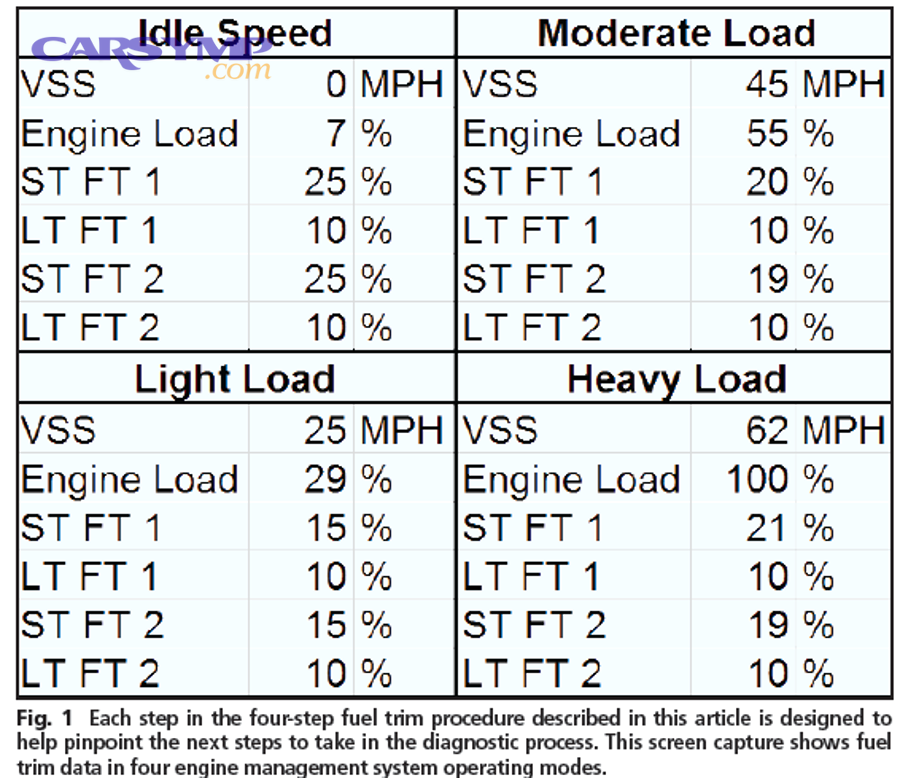
These patterns emerge because different faults affect the air-fuel mixture in fundamentally different ways that the fuel trim system attempts to correct. Understanding pattern recognition transforms fuel trim from abstract percentages into a diagnostic decision tree that quickly eliminates unlikely causes and focuses attention on the actual problem. Professional technicians who master fuel trim pattern analysis prevent 90% of misdiagnosis by avoiding the common trap of replacing oxygen sensors, mass airflow sensors, or fuel pumps based solely on diagnostic trouble codes without verifying the underlying cause through systematic fuel trim evaluation.
How Do Vacuum Leaks Affect Fuel Trim at Idle?
Vacuum leaks create high positive fuel trim specifically at idle (typically +15% to +30%) that dramatically improves or normalizes when engine speed increases above 2,000 RPM, because vacuum leaks allow unmetered atmospheric air to enter the intake manifold through the pressure differential created by high manifold vacuum at closed-throttle idle conditions. This characteristic idle-specific pattern provides the clearest diagnostic signature for vacuum leak identification.
To understand why vacuum leaks behave this way, consider the physics of intake manifold pressure. At idle with the throttle plate nearly closed, manifold absolute pressure drops to approximately 8-12 psi (compared to atmospheric pressure of 14.7 psi at sea level), creating a strong vacuum that actively pulls air through any leak points in the intake system downstream of the mass airflow sensor. A cracked vacuum hose to the brake booster might allow 10-15 cubic feet per minute of unmetered air to enter at idle. However, when you accelerate to 2,000 RPM and open the throttle, manifold pressure rises to perhaps 13-14 psi, nearly equalizing with atmosphere and eliminating most of the pressure differential driving air through the leak. The same crack that caused major problems at idle becomes negligible at higher engine speeds.
Common vacuum leak sources during rough idle diagnosis include:
- Brake booster vacuum hoses: Age-related cracking, particularly where hoses connect to hard fittings
- PCV system hoses: Deterioration from oil vapor exposure and heat cycling
- Intake manifold gaskets: Compression set from years of heat cycles, especially on plastic intake manifolds
- Throttle body base gaskets: Distortion from over-tightening or improper surface preparation
- Vacuum-operated accessories: HVAC blend doors, secondary air injection valves, and EGR systems
- Crankcase ventilation passages: Oil separator membranes failing in valve covers
Testing for vacuum leaks requires systematic approaches that confirm suspicions before parts replacement. The most reliable method involves using a smoke machine that introduces visible smoke into the intake system under slight pressure (typically 0.5-1.0 psi), allowing you to visually identify leak points as smoke emerges. Alternatively, you can spray small amounts of carburetor cleaner, propane, or unmetered air around suspected leak areas while monitoring STFT on a scanner—when the flammable vapor gets sucked into a leak point, STFT immediately drops negative as the artificially rich mixture reaches the oxygen sensor, confirming the leak location. Always exercise caution with flammable sprays near hot engine components and ensure adequate ventilation.
How Do MAF Sensor Problems Show Up in Fuel Trim Data?
Mass airflow (MAF) sensor problems create consistent positive fuel trim across all RPM ranges rather than just at idle, because contaminated or failing MAF sensors underreport actual airflow to the ECU, causing the computer to calculate insufficient fuel delivery that requires continuous upward correction regardless of engine speed or load conditions. This persistent positive trim pattern, combined with lower-than-normal calculated load values, distinguishes MAF sensor faults from vacuum leaks.
Specifically, the MAF sensor uses a heated wire or film element positioned in the intake airstream, measuring airflow by detecting how much electrical current is required to maintain the element at a constant temperature above ambient—higher airflow cools the element faster, requiring more current to maintain temperature. Over time, this sensing element accumulates microscopic contamination from oil vapor escaping past the air filter, dust particles that bypass filtration, and carbon deposits from any backfire events. This contamination layer insulates the sensing element, reducing heat transfer to the airflow and causing the sensor to report lower airflow than actually passes through. For example, a contaminated MAF might report 3.5 grams per second at idle when actual airflow measures 4.5 g/s, creating a 22% underreporting that appears as approximately +20% fuel trim as the ECU compensates.
The diagnostic confirmation for MAF sensor problems during rough idle diagnosis comes from comparing multiple parameters simultaneously. A failing MAF typically shows:
- Positive LTFT between +12% and +25% across idle, cruise, and moderate acceleration
- Calculated load (LOAD_PCT) reading 5-15% lower than typical for the operating condition
- MAF sensor output (grams/second or voltage) trending lower than reference values for the engine displacement
- Fuel trim that improves slightly at wide-open throttle when the ECU switches to speed-density backup mode
Before replacing a suspect MAF sensor, attempt cleaning with specialized MAF sensor cleaner (never carb cleaner or brake cleaner, which can damage the delicate sensing element). Remove the sensor, spray the cleaner directly on the sensing wire or film from about 4-6 inches away, allow it to air dry for 5-10 minutes, and reinstall. Test drive the vehicle and recheck fuel trim values—if positive trim drops by 50% or more (for example, from +22% to +8%), the cleaning successfully removed contamination and may provide months or years of additional service. If fuel trim remains essentially unchanged, the MAF sensor element has failed and requires replacement with an OEM-quality unit, as aftermarket MAF sensors frequently cause persistent drivability problems from calibration differences.
How Do O2 Sensor Faults Cause Rough Idle and Abnormal Fuel Trim?
Oxygen sensor faults create rough idle and abnormal fuel trim through two distinct mechanisms: lazy or slow-responding sensors cause fuel trim to oscillate wildly as the ECU chases constantly shifting oxygen readings, while stuck or failed sensors force STFT to peg at extreme values as the ECU attempts futile corrections based on false information. The pattern of fuel trim behavior—erratic versus stuck—reveals whether the sensor responds sluggishly or has failed completely.
More specifically, a properly functioning upstream oxygen sensor switches between rich (0.7-0.9V) and lean (0.1-0.3V) signals approximately once per second during closed-loop operation at idle, providing the rapid feedback the ECU needs for precise fuel control. A “lazy” oxygen sensor still switches between rich and lean but takes 2-4 seconds per cycle instead of 1 second, causing the ECU to over-correct on each adjustment because the delayed feedback makes it think corrections aren’t working. This creates oscillating STFT that might swing from +8% to -8% and back every few seconds, producing the rough idle sensation as air-fuel ratio constantly hunts without stabilizing. In contrast, a completely failed oxygen sensor might stick at 0.45V (stoichiometric), 0V (full lean), or refuse to switch at all, forcing the ECU into open-loop operation where it ignores oxygen sensor input and relies on predetermined fuel maps—typically resulting in rough idle from overly rich mixture and negative fuel trim pegged at maximum negative values.
Diagnosing oxygen sensor problems during rough idle troubleshooting requires verifying sensor performance rather than blindly replacing sensors based on fuel trim readings. The downstream (post-catalyst) oxygen sensor provides the verification tool. Connect your scanner to monitor both upstream and downstream oxygen sensor voltages simultaneously while the engine idles. The upstream sensor should switch rapidly between rich and lean, while the downstream sensor should remain relatively stable around 0.5-0.7V if the catalyst functions properly. If the upstream sensor reports consistently lean (0.1-0.2V) but the downstream sensor shows rich (0.8V), the upstream sensor provides false information. Conversely, if both sensors show matching rich signals and fuel trim reads -20%, the engine actually runs rich from a mechanical fault rather than a sensor problem.
The functional test for oxygen sensor response capability involves creating artificial rich and lean conditions while watching sensor voltage and STFT reaction:
- Lean test: Disconnect a vacuum hose to create an air leak. Upstream O2 voltage should drop to 0.1-0.2V within 2-3 seconds, and STFT should jump positive by 10-20%. Reconnect the hose and confirm readings return to normal.
- Rich test: Introduce propane vapor into the intake (crack open a propane torch valve near a vacuum port). Upstream O2 voltage should rise to 0.8-0.9V within 2-3 seconds, and STFT should drop negative by 10-20%.
No response or delayed response (taking more than 5 seconds to react) confirms oxygen sensor failure. Normal rapid response confirms the sensor works properly and directs diagnosis toward mechanical faults causing the abnormal air-fuel mixture.
How Do Fuel Delivery Problems Appear in Fuel Trim Readings?
Fuel delivery problems create positive fuel trim that persists equally at idle and elevated RPM, often worsening under acceleration or load conditions, because insufficient fuel pressure, clogged fuel filters, or weak fuel pumps affect all operating conditions rather than just idle-specific scenarios like vacuum leaks. This across-the-board positive trim pattern, particularly when it increases during acceleration, distinguishes fuel delivery faults from air-side problems.
Specifically, fuel delivery systems must maintain specified pressure—typically 35-65 psi depending on engine design—to ensure proper fuel injector spray atomization and delivery volume. When fuel pressure drops below specification, injectors cannot deliver sufficient fuel even at maximum pulse width commanded by the ECU. For example, if the system requires 55 psi but a weak fuel pump delivers only 45 psi, each injector might flow 15% less fuel than designed. The ECU attempts to compensate by increasing injector pulse width (positive fuel trim), but this compensation has limits. At idle with minimal fuel demand, +15% trim might adequately offset the pressure deficit. However, during acceleration when fuel demand increases dramatically, even maximum pulse width cannot deliver sufficient fuel at reduced pressure, causing fuel trim to climb toward +25-30% while the engine stumbles and runs rough.
Testing fuel pressure provides definitive diagnosis for suspected fuel delivery problems. Connect a fuel pressure gauge to the fuel rail test port (or splice into the fuel line if no test port exists). Check pressure in three conditions:
- Key-on, engine-off (KOEO): Pressure should reach specification within 2-3 seconds and hold steady. Pressure that builds slowly suggests a weak pump; pressure that drops rapidly indicates a leaking fuel pressure regulator or check valve.
- Idle: Pressure should maintain specification ±2-3 psi. Lower pressure confirms insufficient delivery capacity.
- Snap throttle test: Blip the throttle to 3,000 RPM and watch pressure response. Pressure should remain steady or increase slightly. Pressure that drops 10+ psi during this test confirms inadequate pump flow capacity.
Additional fuel delivery fault indicators include:
- Positive fuel trim that increases proportionally with engine load (higher calculated load percentage correlates with higher positive trim)
- Fuel trim that worsens as fuel tank level decreases below quarter-tank (weak pump struggles more when not submerged in fuel)
- Check engine light with code P0171 (Bank 1 lean) or P0174 (Bank 2 lean) accompanying the rough idle
- Rough idle that improves immediately after refueling with fresh, higher-quality fuel (suggesting fuel quality rather than mechanical problems)
When fuel pressure testing confirms low pressure, the systematic diagnostic approach involves replacing the fuel filter first (if external and serviceable), retesting pressure, and only replacing the fuel pump if pressure remains low after filter replacement. This sequence prevents unnecessary pump replacement when a $25 filter replacement would have solved the problem. However, if the vehicle uses an in-tank fuel pump with integrated filter, pump replacement becomes necessary when pressure testing confirms inadequate delivery.
What is the Step-by-Step Diagnostic Procedure for Rough Idle Using Fuel Trim?
The step-by-step diagnostic procedure for rough idle using fuel trim involves four sequential phases: performing baseline fuel trim readings at stable warm idle to establish current condition, testing fuel trim response across different RPM ranges to identify whether problems are idle-specific or persistent, creating artificial rich and lean conditions to verify oxygen sensor and ECU functionality, and documenting all findings for trend analysis and repair verification. This systematic approach prevents misdiagnosis and ensures you identify the actual root cause rather than replacing components based on assumptions.
Professional diagnostic workflows emphasize the importance of documentation throughout this process. Recording baseline values, test results, and repair outcomes creates a diagnostic trail that verifies whether repairs actually resolved the underlying cause or merely addressed symptoms. This documentation becomes especially valuable when dealing with intermittent rough idle conditions that don’t occur during initial testing—comparing fuel trim values over multiple days or weeks reveals developing trends that point toward components approaching failure before they completely break down.
How Do You Perform a Baseline Fuel Trim Reading at Idle?
Performing a baseline fuel trim reading requires warming the engine to full operating temperature (typically 180-195°F coolant temperature), allowing it to idle for 2-3 minutes until fuel trim values stabilize, then recording both STFT and LTFT for Bank 1 and Bank 2 (if applicable) along with operating conditions such as altitude, outside temperature, and fuel quality. This baseline establishes your diagnostic starting point and provides comparison values for subsequent testing.
To execute this baseline reading procedure properly, follow these specific steps:
- Engine warm-up: Start the engine and drive the vehicle for at least 10 minutes, including highway speeds if possible, to ensure the engine reaches full closed-loop operation and all adaptive values stabilize. Simply idling in the driveway doesn’t adequately warm catalytic converters and oxygen sensors.
- Stabilization period: Return to your diagnostic location, place the transmission in park (automatic) or neutral (manual), and let the engine idle undisturbed for 2-3 minutes. This allows the ECU to enter stable idle fuel control mode and for STFT to settle at its characteristic idle values.
- Data recording: Using your OBD-II scanner, navigate to live data and record the following parameters:
- Short-term fuel trim Bank 1 (STFT B1)
- Long-term fuel trim Bank 1 (LTFT B1)
- Short-term fuel trim Bank 2 (STFT B2) – if V-engine
- Long-term fuel trim Bank 2 (LTFT B2) – if V-engine
- Engine coolant temperature (ECT)
- Manifold absolute pressure (MAP) or calculated load
- Engine speed (RPM)
- Upstream oxygen sensor voltage for both banks
- Calculate totals: Add STFT and LTFT for each bank to determine total fuel trim (for example: STFT B1 +5% plus LTFT B1 +12% equals total fuel trim B1 +17%).
- Environmental notation: Record ambient temperature, approximate altitude (affects baseline MAP readings), and time since last refueling (fuel quality variation can affect readings by ±3-5%).
The baseline values you record serve multiple diagnostic purposes beyond simply identifying whether fuel trim exceeds normal ranges. Comparing Bank 1 versus Bank 2 values immediately reveals whether problems affect the entire engine or isolate to one cylinder bank. Recording oxygen sensor voltages alongside fuel trim values documents whether sensors actively switch or stick at fixed voltages, providing sensor functionality verification. Most importantly, these baseline values become the reference against which you compare all subsequent test results, allowing you to quantify exactly how much fuel trim changes when you test different RPM ranges or create artificial mixture variations.
How Do You Test Fuel Trim at Different RPM Ranges?
Testing fuel trim at different RPM ranges requires smoothly increasing engine speed to 1,500, 2,000, and 2,500 RPM while monitoring how fuel trim values change, with vacuum leak problems showing dramatic improvement (positive trim decreasing toward zero) at elevated speeds while fuel delivery and sensor problems maintaining similar abnormal values across all RPM points. This RPM variation test provides the critical data point distinguishing between idle-specific vacuum leaks and persistent system-wide faults.
Execute this RPM variation testing through the following procedure:
- 1,500 RPM test: With the engine at normal operating temperature and your scanner displaying fuel trim values, smoothly increase throttle to bring engine speed to 1,500 RPM. Hold this speed steady for 15-20 seconds and observe how STFT and LTFT values respond. Record the stabilized values for both banks if applicable.
- 2,000 RPM test: Increase to 2,000 RPM and hold steady for 15-20 seconds. This represents the most critical test point because vacuum leaks typically show maximum improvement at this speed—manifold vacuum decreases substantially compared to idle, reducing air intrusion through leak points while still operating well below the engine’s power band where fuel delivery problems become most apparent.
- 2,500 RPM test: Increase to 2,500 RPM and hold for 15-20 seconds. At this speed, any remaining positive fuel trim almost certainly indicates fuel delivery inadequacy or sensor problems rather than vacuum leaks, as manifold vacuum has decreased to levels where vacuum leaks contribute minimally to the total airflow.
- Snap throttle test: After recording steady-state values, perform several quick throttle blips from idle to 3,000 RPM and back to idle, watching how quickly STFT responds and whether it returns to baseline values. Sluggish response or failure to return to baseline suggests oxygen sensor problems.
- Deceleration fuel cutoff observation: While monitoring fuel trim, accelerate to 2,500 RPM then quickly release the throttle to simulate deceleration. Modern engines cut fuel delivery completely during deceleration, and you should see STFT drop to maximum negative values briefly before returning to normal when fuel delivery resumes. Lack of this response indicates potential ECU programming issues or oxygen sensor problems.
The pattern interpretation matrix for RPM variation testing:
| Idle Fuel Trim | 2,000 RPM Fuel Trim | Likely Cause |
|---|---|---|
| +20% | +5% | Vacuum leak (improves with reduced vacuum) |
| +22% | +20% | Fuel delivery problem or MAF sensor (consistent across RPM) |
| -18% | -16% | Leaking injector or stuck purge valve (rich at all speeds) |
| +15% | +25% | Weak fuel pump (worsens under increased demand) |
| Erratic ±15% | Stable ±5% | Idle-specific problem (IAC valve, throttle body carbon) |
This RPM variation data becomes especially powerful when combined with your baseline idle readings. A vehicle showing +25% total fuel trim at idle that drops to +6% at 2,000 RPM demonstrates the classic vacuum leak signature—you can proceed confidently to vacuum leak testing without wasting time checking fuel pressure or replacing the MAF sensor. Conversely, a vehicle maintaining +22% fuel trim at idle, 1,500, 2,000, and 2,500 RPM demands fuel delivery system and MAF sensor investigation, making vacuum leak diagnosis unnecessary.
How Do You Verify Your Diagnosis with Functional Testing?
Verifying your diagnosis with functional testing involves creating controlled artificial rich and lean conditions while monitoring STFT response to confirm that oxygen sensors and ECU closed-loop control operate properly, ensuring that abnormal fuel trim results from mechanical faults rather than failed sensors or ECU malfunctions. This verification step prevents the costly mistake of repairing suspected mechanical problems when the actual fault involves failed sensors feeding incorrect information to a properly functioning ECU.
The functional testing procedure requires carefully creating temporary mixture disturbances and observing system response:
Artificial Lean Condition Test:
- With the engine idling and your scanner displaying STFT in real-time, disconnect a vacuum hose (brake booster line works well) to create a deliberate vacuum leak.
- Within 2-3 seconds, STFT should jump positive by 10-20% as the oxygen sensor detects the sudden lean condition and the ECU adds fuel to compensate.
- Reconnect the vacuum hose and verify STFT returns to its baseline value within 3-5 seconds.
- Proper response confirms: oxygen sensor detects lean mixtures quickly, ECU receives and processes this signal correctly, and closed-loop fuel control functions properly.
Artificial Rich Condition Test:
- Obtain a small propane cylinder (camping-style cylinder with adjustable valve) and position it near a vacuum hose connection or the throttle body intake.
- Slightly crack open the propane valve to allow a small amount of propane vapor to be drawn into the intake manifold (start with very little—propane is extremely flammable and too much can cause engine speed to surge dangerously).
- STFT should drop negative by 10-20% within 2-3 seconds as the oxygen sensor detects the artificially rich mixture.
- Turn off the propane and verify STFT returns to baseline within 3-5 seconds.
- Proper response confirms: oxygen sensor detects rich mixtures quickly and the ECU properly reduces fuel delivery in response.
Response Interpretation:
- Normal response to both tests: The fuel system, oxygen sensors, and ECU function correctly. Abnormal baseline fuel trim indicates an actual mechanical problem (vacuum leak, fuel pressure issue, etc.) that requires physical repair.
- No response or delayed response (>5 seconds): The oxygen sensor has failed or responds too slowly. The abnormal fuel trim may result from a failed sensor feeding incorrect information to the ECU rather than from mechanical faults. Replace the oxygen sensor and retest before pursuing mechanical repairs.
- Response to rich test but not lean test (or vice versa): The oxygen sensor responds in only one direction, indicating partial sensor failure. Replace the oxygen sensor.
- STFT responds but doesn’t return to baseline: The ECU detects the mixture change but cannot properly correct it, suggesting either the ECU has reached its correction limits trying to compensate for a severe fault, or there’s a problem with the fuel delivery system preventing proper correction.
This functional verification serves as the critical decision point in your diagnostic procedure. When both tests show proper rapid response, you can confidently proceed with mechanical repairs knowing the control system works correctly. When tests reveal sensor or ECU problems, you’ve just prevented the expensive mistake of performing unnecessary mechanical repairs that wouldn’t have solved the rough idle condition.

What Tools Do You Need to Analyze Fuel Trim Data for Rough Idle?
Analyzing fuel trim data for rough idle requires at minimum a professional-grade OBD-II scanner with live data streaming capability, real-time graphing functions, and fast update rates of 0.5 seconds or better, supplemented by supporting diagnostic tools including a smoke machine for vacuum leak detection, fuel pressure gauge for delivery system testing, and propane torch or carburetor cleaner for functional testing. These tools transform abstract fuel trim percentages into concrete diagnostic conclusions.
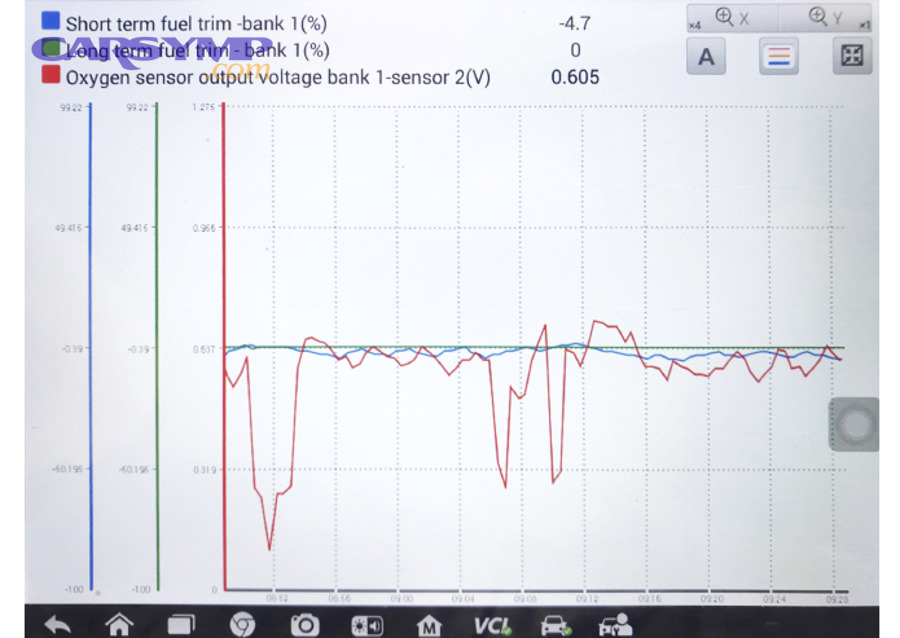
The quality and capability of your diagnostic tools directly impact your efficiency and accuracy when troubleshooting rough idle using fuel trim analysis. Entry-level code readers that only display generic fault codes provide insufficient information for effective fuel trim diagnosis, while mid-range scanners offering basic live data but lacking graphing capabilities force you to mentally track changing values. Professional-grade tools that display multiple parameters simultaneously, graph trends over time, and update rapidly enough to catch transient conditions enable you to see patterns that would otherwise remain invisible.
What Scanner Features Are Essential for Fuel Trim Diagnosis?
Essential scanner features for fuel trim diagnosis include simultaneous real-time display of STFT and LTFT for all engine banks, graphing capability that visualizes fuel trim trends over 30-60 second periods, update rates of 0.5 seconds or faster to capture rapid changes, freeze frame data access for fault code analysis, and enhanced manufacturer-specific PIDs that provide additional fuel system parameters beyond generic OBD-II. These features elevate your diagnostic capability from basic code reading to professional-level system analysis.
Specifically, the most critical scanner capabilities include:
Multi-parameter display: Your scanner must show at minimum four parameters simultaneously—STFT Bank 1, LTFT Bank 1, STFT Bank 2, and LTFT Bank 2 (for V-engines)—allowing you to compare values side-by-side without toggling between screens. Professional diagnosis often requires monitoring 8-10 parameters at once (adding oxygen sensor voltages, calculated load, MAP/MAF values, and engine speed) to understand the complete picture of engine operation during rough idle conditions.
Graphing functionality: The ability to graph fuel trim values over time reveals patterns invisible in raw numbers. When STFT oscillates between +5% and +15% every 2-3 seconds, you see this immediately on a graph as a sawtooth wave pattern indicating a lazy oxygen sensor. Static number displays require you to memorize values and mentally reconstruct the pattern—inefficient and prone to missing important details. Quality scanners allow you to overlay multiple parameters on a single graph, enabling you to visualize correlations like watching STFT spike positive exactly when MAP increases during a vacuum leak.
Fast update rates: Generic OBD-II protocol updates parameters once per second, but proprietary enhanced protocols from manufacturers like Ford, GM, Toyota, and Honda can update 2-10 times per second. This faster refresh rate catches transient events—for example, a vacuum leak that only occurs during transmission gear engagement creates a brief fuel trim spike lasting less than one second that slow-updating scanners completely miss. Professional technicians prioritize scanners supporting enhanced protocols for the vehicle brands they service most frequently.
Data logging and playback: Recording entire diagnostic sessions allows you to analyze complex problems after the fact, share data with colleagues for second opinions, and compare before-and-after results following repairs. When diagnosing intermittent rough idle that occurs randomly, data logging enables you to capture the event when it happens, then play back the recording to analyze what fuel trim, oxygen sensor, and other parameters were doing at the exact moment the rough idle occurred.
Bidirectional control: Advanced scanners offer bidirectional control allowing you to command specific components—cycling fuel injectors, commanding purge valve operation, or forcing the ECU into specific operating modes. This capability proves invaluable when confirming suspected problems. For example, commanding the purge valve open while watching fuel trim immediately shows whether a stuck-open purge valve causes the negative fuel trim you’ve been chasing.
Scanner recommendations by user type:
- Professional technicians: Invest in manufacturer-specific scan tools (Ford IDS, GM Tech2/MDI, Toyota Techstream) or high-end aftermarket professional scanners (Snap-on, Autel MaxiSys, Launch X431) offering full bidirectional control, all manufacturer-specific PIDs, and advanced features like component activation and module programming.
- Serious DIY enthusiasts: Choose mid-range scanners (BlueDriver, FIXD Pro, Autel MaxiCheck) offering graphing, enhanced PIDs for common manufacturers, and reasonably fast update rates at $200-500 price points.
- Basic DIY users: Entry-level scanners (basic Bluetooth OBD-II adapters with smartphone apps) provide adequate live data for simple fuel trim analysis but lack graphing and fast update rates. Acceptable for straightforward diagnostics but limiting for complex rough idle problems.
What Additional Tools Support Fuel Trim Diagnosis?
Additional tools supporting fuel trim diagnosis include smoke machines that pump visible smoke through the intake system to visually identify vacuum leak locations, fuel pressure gauges with vehicle-specific adapters for accurate delivery system testing, propane torches or carburetor cleaner spray for creating controlled rich conditions during functional testing, and infrared thermometers for confirming catalytic converter operation when evaluating downstream oxygen sensor readings. These supporting tools verify suspected causes identified through fuel trim analysis before committing to repairs.
Smoke machine operation and benefits: Professional smoke machines pump non-toxic theatrical smoke into the intake system through any vacuum port, maintaining slight positive pressure (0.5-1.0 psi) that forces smoke out through leak points without over-pressurizing and potentially damaging components. Quality smoke machines include ultraviolet dye that fluoresces under UV light, making even tiny leaks visible that might not produce visible smoke plumes in normal light. This tool eliminates the guesswork from vacuum leak diagnosis—rather than spraying carburetor cleaner around suspected areas and hoping to see an RPM change, you simply pump in smoke and watch where it emerges, pinpointing the exact leak location in seconds.
DIY alternatives include using a shop vacuum in reverse mode to blow baby powder or cigar smoke into the intake, though these methods lack the pressure control and UV enhancement of professional units. EVAP smoke machine alternatives specifically designed for evaporative emission system testing work equally well for intake vacuum leak diagnosis since both applications require the same smoke generation and pressure control capabilities.
Fuel pressure testing equipment: Accurate fuel pressure diagnosis requires a gauge calibrated for automotive fuel system pressures (0-100 psi range minimum), equipped with the correct adapter fittings for your vehicle’s fuel rail test port or provisions for splicing into the fuel line. Universal fuel pressure test kits include multiple adapters covering most domestic and import applications. The key feature is the ability to leave the gauge connected while operating the vehicle, allowing you to monitor pressure during idle, acceleration, and load conditions rather than just static key-on pressure.
Testing procedure involves connecting the gauge, starting the engine, and observing three critical measurements: initial pressure buildup time (should reach specification within 2-3 seconds), static running pressure at idle (should match specification ±2-3 psi), and pressure stability during snap throttle tests (should maintain pressure or increase slightly, never drop more than 5 psi). Pressure that builds slowly indicates weak pump flow; pressure that drops rapidly when the key turns off indicates a leaking check valve or fuel pressure regulator; pressure that drops during acceleration confirms inadequate pump capacity under load.
Propane enrichment testing: A small camping-style propane cylinder with an adjustable valve serves as a controlled rich mixture source for functional testing. By carefully introducing small amounts of propane vapor into the intake (either through a vacuum port or near the throttle body), you create an artificial rich condition that should cause STFT to drop negative by 10-20% if the oxygen sensor and ECU respond properly. This confirms the feedback control system works correctly before you invest time and money repairing suspected mechanical faults.
Safety considerations with propane testing:
- Use minimal propane flow—start with barely cracking the valve open
- Work in well-ventilated areas
- Keep the propane cylinder away from hot exhaust components
- Never introduce propane with ignition sources (sparks, flames) nearby
- Have a fire extinguisher readily accessible
- Stop immediately if engine speed surges excessively (indicates too much propane)
Infrared thermometer applications: Non-contact infrared thermometers measure component surface temperatures, providing valuable confirmation data during fuel trim diagnosis. Key applications include:
- Comparing intake manifold temperature across different runners (temperature variation of more than 20°F suggests one cylinder runs significantly leaner or richer than others)
- Verifying catalytic converter operation by measuring inlet versus outlet temperatures (properly functioning catalyst should show 100-200°F temperature increase from inlet to outlet)
- Checking exhaust manifold temperatures to identify misfiring cylinders (a cold exhaust port indicates that cylinder isn’t firing properly)
- Confirming thermostat operation by monitoring coolant temperature rise during warm-up
These supporting tools convert fuel trim analysis from theoretical diagnosis into confirmed, actionable repair plans. Fuel trim values might suggest a vacuum leak, but smoke machine testing shows you exactly where the leak is located. Fuel trim might indicate inadequate fuel delivery, but pressure gauge testing confirms whether the pump, filter, or regulator causes the problem. Together, scanner-based fuel trim analysis and physical testing tools create a comprehensive diagnostic approach that identifies problems accurately and efficiently.
What Are Advanced Fuel Trim Concepts and Special Diagnostic Scenarios?
Advanced fuel trim concepts include understanding the fundamental differences between speed-density and mass airflow fuel management systems (which respond oppositely to vacuum leaks), distinguishing between additive and multiplicative fuel trim corrections (revealing idle-specific versus load-dependent problems), recognizing how open-loop versus closed-loop operation affects fuel trim validity, and diagnosing rough idle conditions where fuel trim values appear normal despite obvious engine performance problems. These advanced concepts separate professional-level diagnostics from basic troubleshooting, addressing complex scenarios that don’t follow typical patterns.
These edge cases and manufacturer-specific variations require deeper technical understanding because they represent situations where standard diagnostic rules don’t apply. A technician who doesn’t understand speed-density systems might waste hours searching for a vacuum leak that creates no fuel trim deviation on that system design. Someone unfamiliar with additive versus multiplicative fuel trim might misdiagnose a throttle body carbon buildup problem as a mass airflow sensor fault. Mastering these advanced concepts prevents misdiagnosis and enables you to solve the diagnostic challenges that frustrate less experienced technicians.
How Do Fuel Trim Values Differ Between Speed-Density and Mass Airflow Systems?
Fuel trim values differ fundamentally between speed-density and mass airflow systems because speed-density systems calculate airflow mathematically from manifold pressure and temperature sensors rather than measuring it directly, meaning vacuum leaks don’t create unmetered air and therefore produce no fuel trim deviation, while mass airflow systems measure actual airflow with a sensor, so any vacuum leak allowing air to bypass the sensor creates unmetered air that appears as positive fuel trim requiring ECU compensation. This critical difference completely changes diagnostic approach based on which fuel management system the vehicle uses.
Understanding the operational differences between these systems:
Mass airflow (MAF) systems: The MAF sensor sits in the intake air duct between the air filter and throttle body, directly measuring every gram of air entering the engine. The ECU uses this measured airflow value along with oxygen sensor feedback to calculate precise fuel delivery. When a vacuum leak allows air to enter the intake manifold downstream of the MAF sensor, this “unmetered air” bypasses the sensor—the MAF reports, for example, 5 grams/second while actual cylinder airflow measures 6 g/s due to the leak-induced extra gram/second. The resulting lean mixture triggers positive fuel trim as the ECU attempts to compensate. This scenario creates the classic vacuum leak signature: positive fuel trim at idle that improves at higher RPM as manifold vacuum decreases.
Speed-density systems: These systems use a manifold absolute pressure (MAP) sensor combined with intake air temperature sensor to mathematically calculate airflow rather than directly measuring it. The ECU knows the engine’s displacement and calculates volumetric efficiency based on MAP reading, RPM, and temperature, then computes how much air mass fills the cylinders each intake stroke. When a vacuum leak occurs, the leak allows extra air into the manifold, but this extra air changes the MAP sensor reading—manifold pressure rises slightly from the air intrusion. The ECU detects this pressure change and automatically calculates the increased airflow, adjusting fuel delivery accordingly. The result: vacuum leaks on speed-density systems don’t create fuel trim deviation because the system naturally accounts for the extra air through the MAP sensor.
The diagnostic implications profoundly affect troubleshooting strategy:
- MAF system with rough idle and positive fuel trim: Vacuum leak remains the primary suspect; proceed with smoke testing and visual inspection of vacuum lines, intake gaskets, and throttle body mounting.
- Speed-density system with rough idle and positive fuel trim: Vacuum leak is unlikely to be the cause (since vacuum leaks don’t affect fuel trim on these systems); focus instead on fuel delivery problems (weak pump, clogged filter, low pressure) or mass airflow calculation errors from failed sensors (bad MAP, IAT, or ECT sensor).
- Speed-density system with rough idle but normal fuel trim: The rough idle likely stems from the vacuum leak affecting idle quality through changes in total airflow and idle speed control, even though fuel trim remains normal. Check for vacuum leaks using traditional methods (hissing sounds, visual inspection) rather than relying on fuel trim analysis.
Identifying which system your vehicle uses requires checking technical documentation or observing which sensors are present. MAF systems have a distinctive mass airflow sensor in the intake duct (typically a plastic housing 2-3 inches in diameter with electrical connector). Speed-density systems lack this MAF sensor but have a MAP sensor (usually mounted on the intake manifold or firewall with a vacuum hose connection). Some hybrid systems use both sensors, switching between MAF and speed-density operation under different conditions—these require manufacturer-specific diagnostic procedures.
What is the Difference Between Additive and Multiplicative Fuel Trim?
Additive fuel trim represents fixed adjustments (typically measured in milliseconds of injector pulse width) made primarily at idle and low-load conditions to compensate for idle-specific problems like vacuum leaks and idle air control valve issues, while multiplicative fuel trim represents percentage-based adjustments made across the RPM range to compensate for airflow measurement errors from contaminated MAF sensors or fuel delivery volume problems. The distinction reveals whether a problem affects primarily idle operation or persists across all engine speeds and loads.
This concept applies most directly to European vehicles, particularly Volkswagen-Audi Group (VAG) products, which explicitly separate these trim types in diagnostic data. When scanning a VAG vehicle using manufacturer-specific software (VCDS, VAG-COM, or dealer tools), you access measurement blocks showing:
Group 032 – Additive Fuel Trim (Adaptation):
- Field 1: Bank 1 idle adaptation (additive) in %
- Field 2: Bank 1 partial load adaptation (multiplicative) in %
- Field 3: Bank 2 idle adaptation (additive) in % [on V-engines]
- Field 4: Bank 2 partial load adaptation (multiplicative) in % [on V-engines]
Group 033 – Short-Term Fuel Trim (Lambda Control):
- Field 1: Bank 1 STFT in %
- Field 2: Bank 1 oxygen sensor voltage
- Field 3: Bank 2 STFT in %
- Field 4: Bank 2 oxygen sensor voltage
Interpreting VAG additive versus multiplicative trim:
High additive trim at idle (field 1 in group 032 showing +15% or higher): Indicates an idle-specific problem, most commonly a vacuum leak that primarily affects idle operation when manifold vacuum peaks. Other causes include dirty throttle body with carbon buildup restricting airflow, faulty idle air control valve, or intake manifold flap system malfunction (on engines with variable intake runners).
High multiplicative trim during partial load (field 2 in group 032 showing +15% or higher): Indicates a problem affecting airflow calculation or fuel delivery across the RPM range, most commonly a contaminated or failing MAF sensor that underreports airflow at all operating conditions. Secondary causes include restricted fuel filter, weak fuel pump, or low fuel pressure affecting delivery volume.
Both additive and multiplicative trim high: Suggests a combined problem—perhaps a vacuum leak creating the additive trim deviation plus a dirty MAF sensor creating the multiplicative trim deviation. Alternatively, may indicate a single severe problem (major vacuum leak or very low fuel pressure) that exceeds the ECU’s ability to fully compensate through additive trim alone, forcing multiplicative trim to assist.
For non-VAG vehicles that don’t explicitly separate additive and multiplicative trim, you can infer this information by comparing idle fuel trim versus cruise/load fuel trim:
- Idle trim high, cruise trim normal = additive-type problem (vacuum leak, idle air control)
- Idle trim high, cruise trim equally high = multiplicative-type problem (MAF sensor, fuel delivery)
- Idle trim slightly high, cruise trim very high = fuel delivery problem worsening under increased demand
This advanced understanding prevents common misdiagnosis. Dirty throttle body and idle air control issues often cause positive fuel trim specifically at idle that technicians frequently misdiagnose as vacuum leaks. Recognizing the additive nature of the problem directs diagnosis toward throttle body cleaning and IAC valve service rather than wasting time searching for non-existent vacuum leaks.
How Does Open Loop vs. Closed Loop Affect Fuel Trim Diagnosis?
Open-loop versus closed-loop operation profoundly affects fuel trim diagnosis because fuel trim data only remains valid and actively controlled during closed-loop operation when oxygen sensors provide feedback to the ECU, while open-loop operation ignores oxygen sensor input and uses predetermined fuel maps, rendering fuel trim readings meaningless for diagnostic purposes. Understanding when the ECU switches between these modes prevents misinterpretation of fuel trim data during conditions where the readings don’t reflect actual engine condition.
The ECU operates in closed-loop mode under normal driving conditions when:
- Engine coolant temperature exceeds approximately 160°F (varies by manufacturer)
- Oxygen sensors reach operating temperature (typically 600°F+)
- Engine operates at stable throttle positions between idle and moderate acceleration
- No sensor failures force the ECU into backup modes
During closed-loop operation, the ECU constantly monitors oxygen sensor voltage and adjusts fuel delivery to maintain the target air-fuel ratio, with these adjustments appearing as fuel trim values. Fuel trim analysis provides accurate diagnostic information during this mode because the values represent real-time corrections for actual air-fuel mixture deviations.
The ECU switches to open-loop operation during:
- Cold start: Until coolant and oxygen sensors reach operating temperature
- Wide-open throttle (WOT): During maximum acceleration when the ECU intentionally commands rich mixture for power
- Deceleration fuel cutoff: When the throttle closes rapidly and the ECU temporarily stops fuel delivery completely
- Sensor failure modes: When oxygen sensor, MAF, or other critical sensor signals fall outside valid ranges
During open-loop operation, the ECU ignores oxygen sensor feedback and delivers fuel according to predetermined tables programmed into its memory based on engine speed, load, temperature, and throttle position. Fuel trim values may display on your scanner during open-loop operation, but these values don’t update based on current conditions—they freeze at whatever value existed when closed-loop operation ended. Attempting to diagnose rough idle using fuel trim data captured during open-loop operation leads to completely false conclusions.
Diagnostic implications and testing requirements:
Always verify closed-loop operation before interpreting fuel trim values. Most scanners display a “Fuel System Status” parameter showing “Closed Loop” or “Open Loop.” If your scanner doesn’t show this parameter, confirm closed-loop by observing oxygen sensor voltage—during closed-loop, upstream oxygen sensor voltage should actively switch between approximately 0.1V (lean) and 0.9V (rich) every 1-2 seconds. Stuck voltage or no switching indicates open-loop operation.
Some rough idle conditions specifically result from the ECU switching from closed-loop to open-loop operation due to perceived sensor failures. This scenario creates particularly confusing diagnostics:
- The vehicle idles roughly
- Fuel trim appears normal or shows minimal deviation
- The ECU has detected an out-of-range oxygen sensor signal and switched to open-loop
- The rough idle stems from the ECU using predetermined fuel maps that don’t match the engine’s actual needs
- Fuel trim reads “normal” because the ECU froze fuel trim when it switched to open-loop, but these frozen values don’t reflect current mixture condition
Diagnosing this scenario requires checking fuel system status (should show “Open Loop – Fault Detected” or similar), retrieving any stored diagnostic codes (may show pending oxygen sensor codes), and performing oxygen sensor functional testing to determine whether the sensor actually failed or whether an intermittent problem caused the ECU to temporarily switch modes.
How Do You Diagnose Rough Idle When Fuel Trim Values Are Normal?
Diagnosing rough idle with normal fuel trim values requires shifting focus from fuel system analysis to ignition system problems (spark plug wear, failing ignition coils, carbon tracking in plug wires), mechanical engine issues (low compression, valve problems, timing chain wear), air delivery restrictions (severely carbon-fouled throttle body, failed idle air control valve), and sensor failures that don’t affect fuel trim but do affect engine smoothness (throttle position sensor, engine temperature sensor providing false data). Normal fuel trim indicates the air-fuel mixture maintains correct ratio, directing diagnosis toward systems that affect combustion quality or engine mechanics rather than mixture preparation.
This scenario frequently confuses technicians because rough idle typically correlates with abnormal fuel trim—but several conditions create rough idle despite proper air-fuel mixture:
Ignition system misfires: Individual cylinder misfires from worn spark plugs, failing ignition coils, or damaged plug wires create rough idle sensation but may not affect overall fuel trim readings if the oxygen sensor averages readings across all cylinders. For example, one cylinder misfiring on a six-cylinder engine creates noticeable roughness but only represents 16.7% of total engine output. The other five cylinders maintain proper air-fuel ratio, so bank-wide fuel trim appears nearly normal even as the vehicle shakes noticeably at idle.
Diagnosis requires monitoring misfire counters in live data (most scanners show cylinder-specific misfire counts) or performing cylinder power balance testing where you individually disable each cylinder and measure RPM drop—a cylinder already misfiring shows minimal RPM change when disabled. Follow up with spark plug inspection (looking for fuel-fouling, oil-fouling, or excessive electrode wear), secondary ignition pattern testing using an oscilloscope or ignition analyzer, and ignition coil resistance/output testing.
Mechanical compression problems: Low compression in one or more cylinders from worn piston rings, burnt valves, or broken valve springs creates rough idle that fuel trim cannot detect or correct. The affected cylinder(s) draw in normal air and receive normal fuel, maintaining correct mixture ratio, but combustion pressure remains insufficient to contribute properly to power output.
Diagnosis requires wet and dry compression testing across all cylinders (normal compression typically ranges from 140-180 psi depending on engine design, with all cylinders within 10% of each other). Significantly low compression in one cylinder suggests valve problems; uniformly low compression across multiple cylinders indicates worn piston rings or cylinder wall wear. Cylinder leakage testing (leakdown test) pinpoints whether compression loss occurs past rings (hissing from crankcase), exhaust valves (hissing from tailpipe), or intake valves (hissing from throttle body).
Severely carbon-fouled throttle body: Excessive carbon buildup on the throttle plate and bore restricts airflow specifically at idle when the throttle opens only 2-3 degrees. The restriction reduces total airflow, but because the MAF sensor still measures the reduced flow correctly, fuel trim remains normal—the ECU simply delivers less fuel to match the reduced air. However, the restricted airflow combined with turbulent flow patterns across the carbon deposits creates rough idle and potential stalling.
Diagnosis involves visual throttle body inspection (remove intake duct and look for heavy black carbon deposits on throttle plate edges and bore), monitoring calculated load or MAF sensor readings at idle (values significantly lower than typical for the engine size suggest restricted airflow), and comparing idle speed with specification (throttle body carbon often reduces idle speed below target, forcing the ECU to open idle air control valve excessively to compensate). Treatment requires throttle body removal and professional cleaning with appropriate solvent, followed by idle relearn procedure if the vehicle uses electronic throttle control.
Engine mount failures: This often-overlooked cause creates physical vibration that feels like rough idle despite perfectly normal combustion. Collapsed or separated engine mounts allow the engine to move excessively during the combustion power pulses normally isolated by functional mounts. Fuel trim remains completely normal because engine operation itself is normal—only the vibration isolation has failed.
Diagnosis requires visual and physical mount inspection with the engine running. Have an assistant shift between drive and reverse (automatic transmission) or gently apply throttle in neutral (manual transmission) while you observe engine movement. Excessive rocking motion (more than 1-2 inches) indicates failed mounts. Inspect each mount for separation, fluid leakage (on hydraulic mounts), or obvious collapse. Compare affected and non-affected sides—a failed mount typically shows visibly different appearance than its counterpart on the opposite side.
This comprehensive understanding of rough idle diagnosis beyond fuel trim analysis ensures you don’t fall into the trap of blindly chasing normal fuel trim values while overlooking the actual cause. Fuel trim provides powerful diagnostic information when abnormal, but normal fuel trim doesn’t guarantee absence of problems—it simply directs your investigation toward systems that fuel trim cannot detect or compensate for.