


EGR-related rough idle occurs when a malfunctioning exhaust gas recirculation valve disrupts the air-fuel mixture, causing engine vibration, stalling, and erratic RPM fluctuations at idle. The seven primary warning signs include excessive engine shaking, stalling in traffic, specific check engine codes (P0401, P0404, P1404, P1406), cold versus warm idle variations, black exhaust smoke, poor throttle response, and knocking sounds. These symptoms distinguish EGR valve failure from other rough idle causes like spark plug misfires or vacuum leaks.
Diagnosing EGR-related rough idle requires a systematic approach combining OBD-II code scanning, visual valve inspection, and vacuum testing. The diagnostic process helps confirm whether carbon buildup, a stuck-open valve, or a stuck-closed valve is causing the problem. Understanding the difference between EGR symptoms and other idle issues prevents misdiagnosis and wasted repair expenses.
Driving with EGR-related rough idle poses risks ranging from inconvenient stalling to serious engine damage. While short trips may be manageable, continued operation with a faulty EGR valve can damage the catalytic converter, turbocharger, and internal engine components. The urgency of repair depends on symptom severity and frequency of stalling incidents.
Beyond immediate symptom recognition, understanding what causes EGR valve failure, available repair options, and prevention strategies empowers vehicle owners to make informed maintenance decisions. Next, we’ll explore exactly what EGR-related rough idle is and how it differs from other idle problems.
What Is EGR-Related Rough Idle?
EGR-related rough idle is an engine condition where a faulty exhaust gas recirculation valve causes uneven combustion, resulting in RPM fluctuations, vibration, and instability when the vehicle is stationary. This occurs because the EGR valve either allows too much exhaust gas into the intake manifold (stuck open) or prevents proper exhaust recirculation (stuck closed), both of which disrupt the precise air-fuel ratio needed for smooth idle.
To better understand this phenomenon, we need to examine how EGR valve malfunction mechanically affects engine operation and what makes these symptoms distinct from other rough idle causes.
How Does a Faulty EGR Valve Cause Rough Idle?
A faulty EGR valve causes rough idle through two primary failure modes: stuck-open and stuck-closed positions. When the valve sticks open, it continuously feeds exhaust gases into the intake manifold even at idle when minimal recirculation is needed. This dilutes the incoming air-oxygen mixture with inert exhaust gases, starving the combustion chamber of the oxygen necessary for complete fuel burning. The engine control module (ECM) attempts to compensate by adjusting fuel delivery and ignition timing, but these corrections cannot fully offset the excessive exhaust gas intrusion, resulting in misfires, RPM hunting, and visible engine shake.
Conversely, when the EGR valve sticks closed, it prevents any exhaust gas recirculation. During normal operation, the EGR valve should open partially at idle to introduce controlled amounts of cooler exhaust gas that moderates combustion temperatures. Without this temperature regulation, the combustion chamber runs hotter than designed, causing pre-ignition where the air-fuel mixture ignites before the spark plug fires. This early ignition creates pressure waves that fight against the piston’s upward compression stroke, producing knocking sounds and irregular power delivery that translates to rough idle.
Carbon buildup represents a third mechanism where the valve becomes partially obstructed. In this scenario, the valve cannot move freely through its full range of motion, getting stuck at intermediate positions. The ECM commands the valve to open or close based on engine load, but physical deposits prevent proper response. This creates a mismatch between commanded and actual valve position, leading to incorrect exhaust gas quantities entering the intake. The resulting air-fuel imbalance causes inconsistent combustion quality across engine cycles, manifesting as idle roughness that varies in severity as the valve intermittently breaks free or re-sticks.
Is EGR-Related Rough Idle Different from Other Rough Idle Causes?
Yes, EGR-related rough idle exhibits distinctive characteristics that differentiate it from spark plug issues, fuel injector problems, or vacuum leaks. The most notable difference appears in temperature-dependent behavior: EGR rough idle typically worsens either during cold starts (stuck-open valve) or after warm-up (stuck-closed valve), whereas spark plug misfires usually remain consistent regardless of engine temperature.
Specifically, when comparing to spark plug-induced rough idle, EGR problems rarely trigger repetitive cylinder-specific misfire codes. Spark plug failures typically show up as codes like P0301 (cylinder 1 misfire), P0302 (cylinder 2 misfire), and so on. EGR issues instead generate system-wide codes like P0401 (insufficient EGR flow) or P1404 (EGR position sensor circuit), pointing directly to the recirculation system rather than individual cylinders. Additionally, spark plug rough idle often accompanies poor high-RPM performance and hesitation during acceleration, while EGR rough idle primarily affects low-speed operation and may actually improve at highway speeds when the valve naturally closes.
Vacuum leak rough idle symptoms create different idle characteristics than EGR problems. Vacuum leaks introduce unmeasured air into the intake manifold, causing a lean air-fuel mixture that produces a fast, choppy idle with higher-than-normal RPM. The idle typically hunts between 800-1200 RPM. EGR-related rough idle, particularly from a stuck-open valve, creates a rich or diluted mixture that results in slower, loping idle with RPM dropping below normal (sometimes to 500-600 RPM) before surging back up. Vacuum leaks also create a distinct hissing sound near the intake manifold, while EGR rough idle may produce knocking or pinging noises from abnormal combustion.
Fuel injector-related rough idle differs in its response to load changes. A clogged or malfunctioning injector causes rough idle that persists or worsens during initial acceleration, creating a stumble when you press the accelerator. EGR rough idle often improves slightly with throttle input as increased airflow helps compensate for the valve malfunction. Furthermore, injector problems frequently cause black exhaust smoke across all RPM ranges, while EGR-related black smoke concentrates at idle and low speeds, clearing somewhat at cruising speeds.

What Are the 7 Warning Signs of EGR-Related Rough Idle?
The seven warning signs of EGR-related rough idle include excessive engine shaking, stalling at idle, specific check engine codes (P0401, P0404, P1404, P1406), temperature-dependent idle roughness, black exhaust smoke, poor throttle response, and knocking sounds. These symptoms result from disrupted air-fuel ratios caused by stuck-open valves, stuck-closed valves, or carbon-clogged passages.
Below, we’ll examine each warning sign in detail to help you recognize EGR valve problems before they cause serious engine damage.
Sign #1: Engine Shakes or Vibrates Excessively at Idle
Excessive engine shaking at idle manifests as pronounced vibrations felt through the steering wheel, seats, and dashboard when stopped at traffic lights or in drive-through lanes. The tachometer needle bounces erratically between 500-900 RPM instead of holding steady at the normal 600-750 RPM range. This shaking differs from the subtle vibration of a healthy engine; passengers often comment that the car “feels like it wants to die” or “runs really rough.”
The vibration pattern provides diagnostic clues about EGR valve condition. A stuck-open EGR valve creates a loping, rhythmic shake where the engine seems to breathe heavily—RPM drops low, the engine catches itself and surges up, then drops again in a repeating cycle. This happens because exhaust gases periodically flood the cylinders, causing misfires, then clear momentarily as fresh air enters, allowing brief normal combustion before the cycle repeats. The shake often worsens when additional electrical loads activate (air conditioning, headlights, heated seats) because the already-struggling engine cannot maintain stable idle while powering accessories.
A stuck-closed EGR valve produces different vibration characteristics. The shaking may be less rhythmic but accompanied by metallic rattling as pre-ignition events create pressure spikes fighting against the piston motion. The vibration frequency often matches engine speed more closely, creating a buzzing sensation rather than the slow loping of a stuck-open valve. This distinction helps narrow down whether the valve is stuck in which position during rough idle diagnosis.
Sign #2: Stalling When Idling (Especially in Traffic)
Stalling when idling occurs when the engine dies completely while stopped, requiring a restart to continue driving. This particularly dangerous symptom typically happens at the worst moments: pulling up to intersections, waiting in drive-through lanes, or sitting in stop-and-go traffic. The engine may stall immediately after shifting into drive, or it may run roughly for several seconds before dying.
Cold-start stalling patterns indicate a stuck-open EGR valve. When you first start a cold engine, the EGR valve should remain completely closed to allow maximum oxygen intake for rich cold-start mixtures. If the valve sticks open, exhaust gases immediately dilute the air-fuel mixture before the engine warms up and stabilizes. You’ll notice the engine starts initially, runs for 3-10 seconds, then stalls as exhaust contamination overwhelms the combustion process. Restarting may work temporarily, but the engine continues stalling until it warms enough that increased fuel delivery compensates for the unwanted exhaust gas.
Warm-engine stalling suggests different EGR problems. If your vehicle runs fine during initial cold operation but begins stalling after 5-10 minutes of driving, the issue may involve the EGR control solenoid or position sensor rather than a mechanically stuck valve. These electrical components sometimes fail when they heat up, causing the valve to malfunction only after reaching operating temperature. The engine dies at stoplights but may restart easily once stopped, running acceptably until the next idle period. This intermittent behavior frustrates owners and complicates diagnosis, but it remains a telltale EGR symptom distinct from constant stalling caused by fuel delivery problems.
Sign #3: Check Engine Light with Specific EGR Codes
Check engine light illumination accompanied by specific EGR-related diagnostic trouble codes provides the most definitive warning sign. Scan codes commonly tied to rough idle from EGR failure include P0401 (EGR flow insufficient), P0404 (EGR circuit range/performance), P0405 (EGR sensor A circuit low), P1404 (EGR valve position sensor circuit), and P1406 (EGR pintle position circuit).
Code P0401 indicates the engine control module detects inadequate exhaust gas recirculation despite commanding the valve to open. This typically results from a stuck-closed valve or completely clogged EGR passages. The ECM monitors oxygen sensors and expected changes in air-fuel ratio when the EGR activates; when these changes don’t occur, it concludes insufficient flow exists. Vehicles with this code usually exhibit knocking sounds and slightly elevated idle speed as the engine runs hotter without exhaust gas cooling.
Code P0404 and P1404 point to position sensor problems within the EGR valve assembly. Modern EGR valves contain sensors that report valve position to the ECM. When the sensor signal doesn’t match commanded position—the ECM tells the valve to open 30% but the sensor reports 5% or gives erratic readings—these codes set. Rough idle accompanies these codes because the ECM cannot properly control exhaust gas quantity without accurate position feedback. The valve may physically move but randomly, creating unpredictable idle quality.
Code P1406 specifically targets stuck-open conditions. The ECM commands the valve closed at idle, but the position sensor reports it remains partially or fully open. This code almost always correlates with cold-start rough idle or stalling. Carbon deposits on the valve stem frequently cause this condition, preventing the valve from seating completely closed even when commanded. Some vehicles also set this code when the vacuum regulator solenoid fails, allowing constant vacuum to hold the valve open regardless of ECM commands.
Sign #4: Rough or Hunting Idle When Cold vs. Warm
Temperature-dependent idle quality changes strongly indicate EGR valve problems versus other rough idle causes. Stuck-open EGR valves create severe roughness during cold starts that gradually improves as the engine warms, while stuck-closed valves may produce acceptable cold idle that deteriorates after reaching operating temperature.
Cold rough idle from stuck-open valves presents immediately upon starting. The engine fires up, runs extremely roughly with visible shaking, and may stall within 5-20 seconds. If it doesn’t stall, the idle remains very unstable—RPM fluctuates between 400-900 RPM, sometimes dipping so low that the oil pressure warning light flickers. This happens because cold engines require richer air-fuel mixtures (more fuel, more oxygen) to run smoothly. A stuck-open EGR valve floods the intake with exhaust gases containing minimal oxygen, starving the cold combustion process. As the engine warms over 3-5 minutes, the fuel system leans out the mixture and the ECM increases idle speed slightly. These adjustments help compensate for the unwanted exhaust, making warm idle noticeably smoother though still rougher than normal.
Conversely, warm rough idle indicates stuck-closed or clogged EGR. Your vehicle starts perfectly on cold mornings, idles smoothly for the first few minutes, then develops roughness as temperature climbs. The engine may hunt between 600-800 RPM once warm, or it may hold steady RPM but vibrate excessively. This occurs because warm engines run leaner air-fuel ratios and rely on EGR cooling to prevent knock. Without exhaust gas recirculation, combustion temperatures exceed design limits, triggering pre-ignition. You might hear faint pinging sounds accompanying the rough idle. Acceleration from this warm rough idle often feels normal or only slightly hesitant because the EGR valve naturally closes during acceleration anyway—the problem concentrates at idle when the valve should be partially open.
Some EGR problems create rough idle at both cold and warm conditions but with different characteristics. A valve stuck at a mid-range position (neither fully open nor closed) causes moderate roughness when cold that transforms into different roughness when warm. Carbon buildup partially blocking passages creates this scenario. The blockage prevents proper flow whether the valve commands open or closed, just affecting different aspects of idle quality at different temperatures.
Sign #5: Black Smoke or Unusual Exhaust Smell at Idle
Black exhaust smoke visible from the tailpipe while idling signals incomplete combustion caused by improper air-fuel ratios. EGR-related black smoke typically appears darker and more sooty than the gray-blue smoke from burning oil or white steam from coolant leaks. The smoke may pulse with engine RPM fluctuations, getting thicker when RPM drops and lighter when RPM surges during rough idle.
Stuck-open EGR valves create black smoke through oxygen starvation. When excessive exhaust gases enter the intake manifold, they displace fresh air containing oxygen needed to completely burn fuel. The ECM attempts compensation by adding more fuel, but without sufficient oxygen, this fuel cannot combust fully. Unburned fuel particles exit the exhaust as black soot. You may notice this smoke primarily at idle and low speeds, then see it clear during highway driving when the EGR valve naturally closes and normal oxygen levels resume. The smoke often carries a distinct raw fuel smell—sharper and more chemical than normal exhaust odor.
The unusual exhaust smell accompanying EGR rough idle differs from other Car Symptoms that produce exhaust odors. A sulfur or rotten egg smell suggests catalytic converter problems, often secondary to EGR issues—prolonged rich running from stuck-open EGR damages the catalyst, creating that distinctive sulfur smell. A sweet smell indicates coolant burning, unrelated to EGR. The raw gasoline smell specific to EGR problems results from unburned hydrocarbons passing through the exhaust system untouched because they never received enough oxygen to ignite properly in the cylinders.
Carbon particles from this incomplete combustion accelerate EGR system deterioration. The black soot that creates visible smoke also deposits throughout the EGR passages, valve seat, and intake manifold. This creates a vicious cycle: poor combustion from a stuck valve generates soot that further clogs the system, worsening the stuck condition. Vehicles driven primarily on short trips (under 15 minutes) accumulate these deposits faster because the engine never reaches temperatures high enough to burn off carbon buildup.
Sign #6: Poor Throttle Response from Idle
Poor throttle response from idle manifests as hesitation or delay between pressing the accelerator pedal and the engine actually responding. When you’re stopped at a light and try to accelerate as it turns green, the engine stumbles, hesitates for 1-2 seconds, then lurches forward. This creates dangerous situations merging into traffic or making left turns across oncoming lanes where you need immediate acceleration.
This hesitation differs from transmission-related delays. Transmission problems typically cause delay in vehicle movement even though the engine revs normally—you hear the engine respond but the car doesn’t move. EGR-related throttle hesitation shows sluggish engine RPM increase itself. You press the pedal, the tachometer slowly climbs or briefly dips before rising, and acceleration feels soft or mushy. The engine may also cough or sputter during this transition from idle to acceleration.
The mechanical cause stems from air-fuel mixture imbalance during the transition period. At steady idle, the ECM adjusts fuel delivery to compensate for stuck EGR valve position, achieving somewhat stable operation despite the fault. When you suddenly demand acceleration, the ECM must rapidly change air-fuel ratios and ignition timing. However, with exhaust gases still flooding the intake (stuck-open valve) or combustion temperatures mismatched (stuck-closed valve), the ECM’s preprogrammed acceleration enrichment doesn’t work correctly. The engine stumbles as it tries to transition from its compensated idle state to acceleration mode with bad EGR data.
Some vehicles exhibit this symptom more severely when the air conditioning runs. The AC compressor adds mechanical load that the already-struggling engine barely manages at idle. When you request acceleration while AC operates, the ECM must simultaneously increase power output and shed AC load. If EGR malfunction limits available power, the engine cannot smoothly handle this dual demand, resulting in pronounced hesitation or even brief stalling before acceleration begins.
Sign #7: Engine Knocking or Pinging Sounds at Idle
Engine knocking or pinging sounds at idle produce audible metallic rattling noises that sound like marbles shaking in a can or someone tapping on the engine block with a small hammer. These detonation noises indicate abnormal combustion timing caused by stuck-closed EGR valves that allow combustion temperatures to exceed design limits.
The sound originates from pre-ignition events where the air-fuel mixture spontaneously ignites before the spark plug fires. Normal combustion begins at the spark plug and creates a controlled flame front that spreads smoothly across the cylinder. Pre-ignition creates multiple flame fronts that collide, generating pressure waves bouncing off cylinder walls and piston tops. These pressure wave collisions produce the knocking sound. While occasional light knock during hard acceleration might not immediately damage engines, persistent knocking at idle indicates serious problems that will eventually destroy piston rings, bearings, and cylinder walls.
Distinguishing EGR-related knock from other engine noises requires listening carefully. Valve train noise (ticking from valve lifters or adjusters) sounds higher-pitched and faster, matching engine speed precisely—it speeds up and slows down with RPM changes. EGR knock sounds deeper and more metallic, sometimes persisting at constant frequency even as RPM fluctuates during rough idle. Worn rod bearings create knocking that distinctly increases with engine load and may disappear at idle, opposite to EGR knock which concentrates at idle and light load.
The knocking severity often correlates with how long the vehicle has been running. A stuck-closed EGR valve may produce minimal knock during the first 2-3 minutes after cold start when combustion temperatures haven’t yet peaked. As the engine reaches operating temperature, knock intensifies because the cooling effect of EGR becomes increasingly necessary. You might notice quiet operation initially, then progressively louder knocking as temperature climbs. This temperature-dependent pattern strongly suggests EGR involvement rather than mechanical engine damage which would produce consistent noise regardless of temperature.
According to research from the Society of Automotive Engineers published in 2023, engines operating with stuck-closed EGR valves show combustion chamber temperatures 50-80°F higher than normal at idle, directly correlating with increased knock frequency and intensity.
How Do You Diagnose EGR-Related Rough Idle?
Diagnosing EGR-related rough idle requires four systematic steps: scanning for specific trouble codes (P0401, P0404, P1404, P1406), performing visual inspection of the valve and passages for carbon buildup, testing valve operation with vacuum pump or scan tool, and ruling out other rough idle causes through differential diagnosis. This methodical approach confirms whether EGR system malfunction causes the idle problem rather than spark plugs, vacuum leaks, or fuel delivery issues.
To ensure accurate diagnosis and avoid unnecessary repairs, let’s examine each diagnostic step in detail.
Step 1: Scan for EGR-Specific Trouble Codes
Scanning for EGR-specific trouble codes begins with connecting an OBD-II scanner to the diagnostic port located under the dashboard near the steering column. Basic code readers cost $20-50 and display stored codes, while advanced scan tools ($100-300) provide live data streams showing real-time EGR valve position and commanded position. Turn the ignition to “ON” without starting the engine, then follow your scanner’s prompts to retrieve codes.
Focus on codes beginning with P04XX and P14XX, which relate to emissions systems including EGR. Code P0401 (insufficient EGR flow) definitively indicates stuck-closed valve or blocked passages. This code sets when the ECM commands the valve open but oxygen sensors don’t detect expected changes in exhaust composition, meaning no recirculation occurred. Code P0404 (EGR circuit range/performance) appears when the valve moves but not to the correct position—it might only open 20% when commanded to 50%, indicating mechanical sticking or carbon interference.
Code P1404 specifically targets EGR position sensor problems. Modern EGR valves contain potentiometer-type sensors that report valve position voltage to the ECM. This code sets when sensor voltage falls outside expected range (typically 0.5-4.5 volts). A stuck-open valve reading constant 4.2 volts even when commanded closed triggers this code. Carbon buildup on the sensor itself can cause erratic voltage signals that also set P1404.
Code P1406 indicates stuck-open condition detected by the ECM. The control module commands the valve fully closed (typically at idle and during cold start), but the position sensor reports it remains significantly open. This code almost guarantees rough idle symptoms because exhaust gases flood the intake at precisely the times when they shouldn’t be present. Some vehicles also set secondary codes like P0171 (system too lean) or P0174 simultaneously because the oxygen sensors detect mixture problems caused by improper EGR operation.
If your scan reveals no EGR codes but rough idle persists, don’t immediately rule out EGR involvement. Intermittent faults may not store codes, and some older vehicles lack sophisticated EGR monitoring. The absence of codes simply means Step 1 didn’t provide confirmation, requiring you to proceed to physical inspection and testing in the following steps.
Step 2: Perform Visual Inspection of EGR Valve and Passages
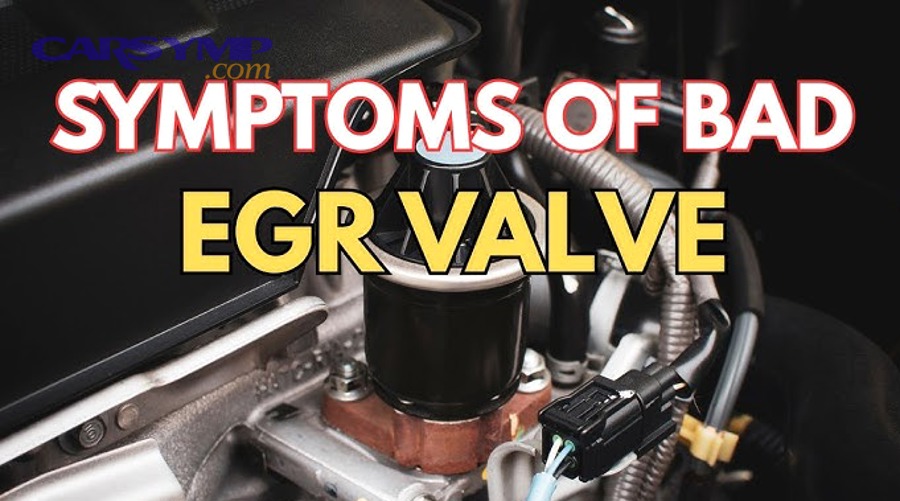
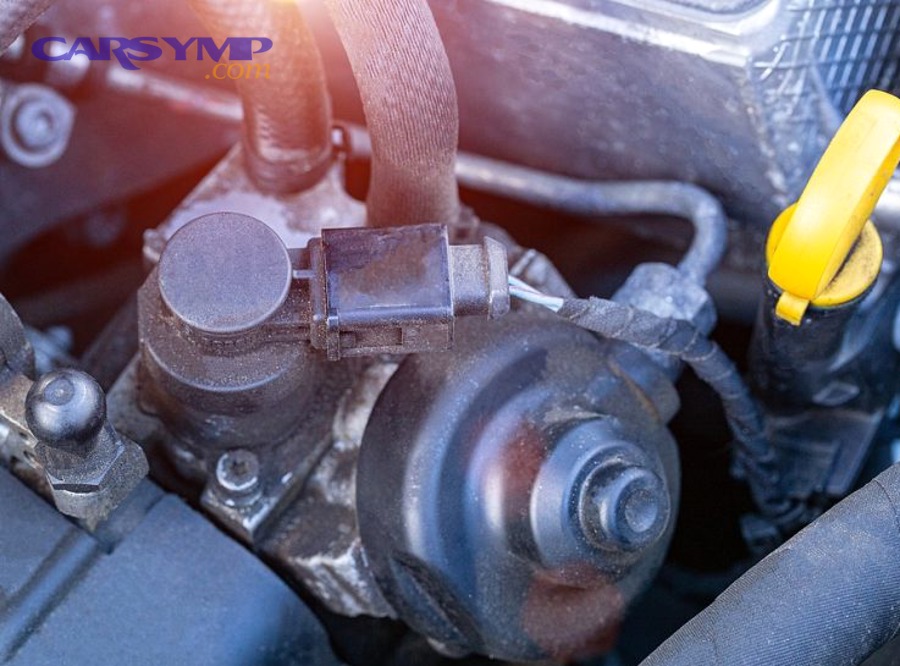
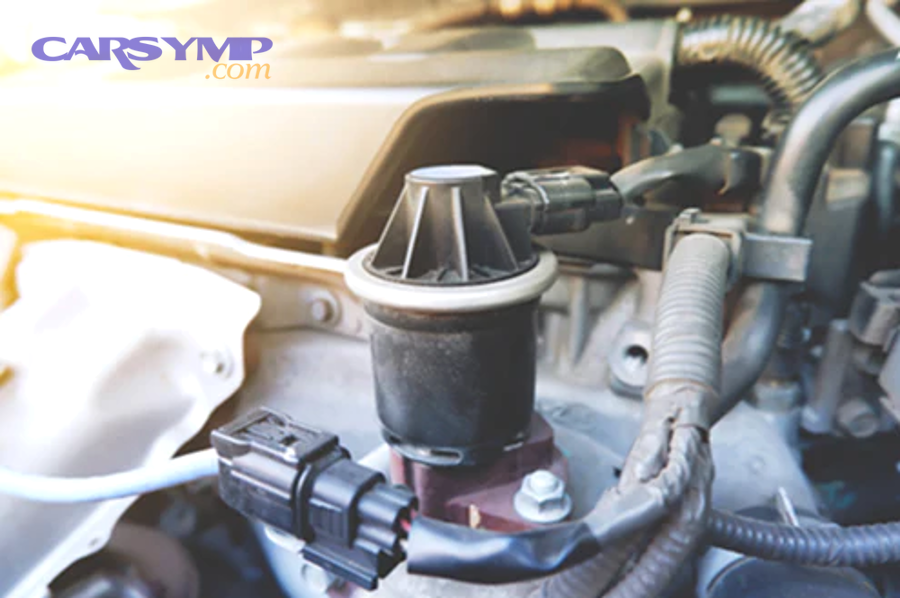
Visual inspection of the EGR valve starts with locating the component in your engine bay. Most EGR valves mount on or near the intake manifold, appearing as a round or oval metal assembly 3-4 inches in diameter with a vacuum hose and electrical connector attached. Consult your vehicle’s service manual or online diagrams if location isn’t obvious—EGR placement varies significantly between engine designs.
Once located, examine the valve for obvious carbon buildup around the mating surface where it bolts to the intake or exhaust manifold. Heavy black crusty deposits visible at the joint indicate exhaust gases have leaked past the valve seat—these deposits often prevent proper sealing even when the valve attempts to close. Check the vacuum hose connected to the valve (if equipped) for cracks, splits, or disconnection. A vacuum leak here causes erratic valve operation producing rough idle symptoms identical to valve failure.
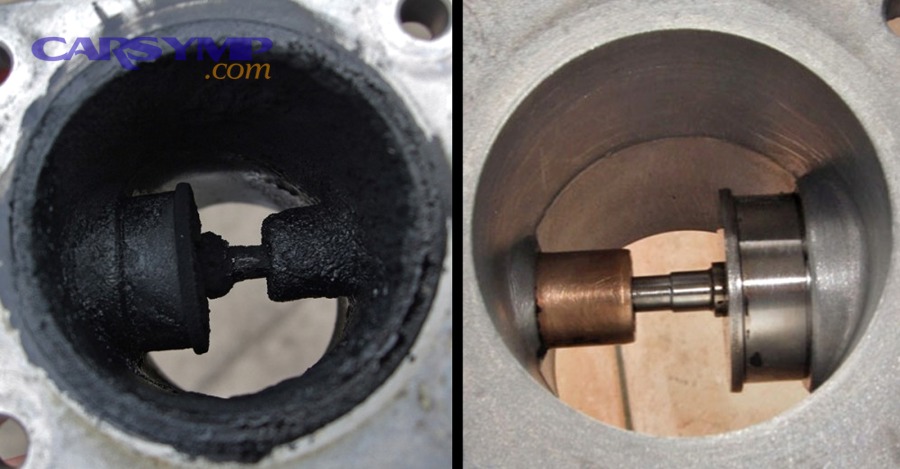
Removing the EGR valve for thorough inspection requires basic hand tools but provides crucial diagnostic information. Disconnect the vacuum hose and electrical connector, then remove 2-4 bolts securing the valve to its mounting surface. When you lift the valve free, immediately examine the valve seat and pintle (the tapered pin that seals against the seat). A properly functioning valve shows relatively clean metal surfaces with minimal carbon. A problematic valve appears heavily caked with black carbon deposits that prevent the pintle from seating completely against its seat.
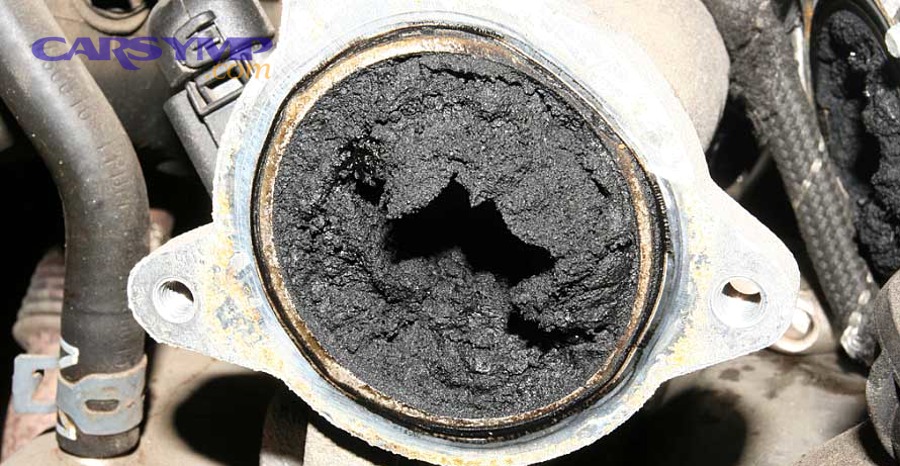
Inspect the EGR passages in the intake manifold by looking into the opening where the valve was mounted. Use a flashlight to peer into the passage. Completely blocked passages appear filled with solid carbon, looking like black concrete. Partially blocked passages show reduced opening diameter with carbon buildup along the walls. Even 50% blockage significantly restricts exhaust flow, causing insufficient recirculation and stuck-closed symptoms. Some technicians use a small wire or screwdriver to probe passage depth, comparing to specifications in service manuals.
Check the valve pintle for free movement by hand. With the valve removed, try moving the pintle up and down manually. It should move somewhat freely with spring resistance—not loose and floppy, but also not completely frozen. A pintle that won’t move at all indicates the valve is mechanically stuck from carbon or corrosion. A pintle that moves too freely with no resistance suggests internal spring failure. This physical test often reveals problems that electrical testing might miss.
Step 3: Test EGR Valve Operation with Vacuum Pump or Scan Tool
Testing EGR valve operation with a vacuum pump verifies whether the valve physically responds to commands. Hand vacuum pumps cost $15-40 at auto parts stores and include a gauge showing vacuum level. With the valve still installed on the engine, disconnect the vacuum hose and connect the pump. With the engine running at idle, apply 15-20 inches of vacuum to the EGR valve while watching idle quality.
A functioning valve opens when vacuum is applied, allowing exhaust gases to enter the intake, which should cause idle to drop noticeably or even cause the engine to stall. If vacuum application creates no change in idle quality, either the valve is stuck closed and cannot open despite vacuum, or the EGR passages are completely blocked preventing flow even with the valve open. This test definitively confirms malfunction requiring repair. When you release vacuum, idle should immediately recover to its previous rough state—if it doesn’t recover, the valve may be stuck open.
The vacuum gauge on your pump provides additional diagnostic data. Apply vacuum and watch the gauge. It should climb to 15-20 inches and hold steady. If vacuum climbs but then slowly bleeds down with the pump disconnected, the EGR diaphragm has developed a leak. This internal leak prevents proper valve operation—vacuum cannot hold the valve in correct position, causing erratic opening and closing that creates rough idle. Some valves show this leak only when hot; test both cold and after 10 minutes of engine operation.
Electronic EGR valve testing requires a professional-grade scan tool with bidirectional control capability. These tools can command the EGR valve to specific positions (0%, 25%, 50%, 75%, 100% open) while the engine runs, and you observe whether the valve actually moves to those positions by watching the position sensor data on screen. The tool might command 30% opening while position sensor reads only 5%, confirming the valve is stuck mostly closed. This testing method works for all modern vehicles with electronic EGR valves, whereas vacuum pump testing only works on older vacuum-operated designs.
During scan tool testing, monitor live data for EGR valve commanded position versus actual position. With the engine at idle, commanded position should read 0% (fully closed), and actual position should match within 5%. If actual position reads 15-40% while commanded is 0%, the valve is stuck open. Increase engine RPM to 1500-2000 and watch commanded position increase to perhaps 30-60%; actual position should track closely. Any deviation greater than 10% between commanded and actual indicates malfunction requiring replacement.
Step 4: Rule Out Other Rough Idle Causes
Ruling out other rough idle causes prevents misdiagnosis that leads to replacing a perfectly functional EGR valve when the real problem lies elsewhere. Start by checking for vacuum leaks since they create rough idle symptoms that overlap significantly with EGR issues. With the engine running, listen carefully near the intake manifold for hissing sounds indicating escaping air. Spray throttle body cleaner around vacuum hoses, intake gaskets, and manifold connections—if idle changes when you spray a particular area, you’ve found a vacuum leak. This spray test should be performed before condemning the EGR valve.
Inspect spark plugs and ignition components if EGR codes are absent. Remove plugs and examine them for heavy carbon buildup, oil fouling, or worn electrodes. All plugs should look similar; if one plug appears significantly different from others, that cylinder likely has problems unrelated to EGR. Check plug wires or ignition coils for cracks, carbon tracking, or loose connections. A simple spark tester tool ($10-15) can verify each plug is firing strongly. Weak or missing spark creates rough idle that may be misattributed to EGR until you perform basic ignition system checks.
Test the idle air control valve (IAC) or throttle body since these components directly control idle speed and quality. The IAC allows air to bypass the closed throttle plate at idle, and carbon buildup or mechanical failure prevents proper airflow control. Remove the IAC and examine its pintle for carbon deposits. Clean it with throttle body cleaner and reinstall. If rough idle improves significantly, the IAC was the culprit, not EGR. Some vehicles use electronic throttle bodies without separate IAC—for these, manually clean the throttle blade area with cleaner and a rag.
Consider fuel system problems if the above checks reveal nothing. Low fuel pressure from a weak fuel pump causes rough idle and poor throttle response similar to stuck-open EGR. Clogged fuel filters restrict flow, creating similar symptoms. Connect a fuel pressure gauge to the test port on the fuel rail and compare pressure to specifications (typically 30-60 PSI depending on vehicle). Pressure 5+ PSI below specification indicates fuel delivery issues requiring attention before focusing on EGR.
Check mass airflow sensor (MAF) or manifold absolute pressure (MAP) sensor data with a scan tool. These sensors tell the ECM how much air enters the engine so it can calculate correct fuel delivery. A contaminated MAF sensor or failed MAP sensor causes incorrect fuel calculations that create rough idle. Compare sensor readings to known-good values from service data. MAF sensors typically read 3-7 grams per second at idle; MAP sensors usually show 16-22 inches of vacuum. Readings significantly outside these ranges suggest sensor problems rather than EGR malfunction.
Perform a compression test if all other systems check good but rough idle persists. Low compression in one or more cylinders from worn piston rings, burned valves, or blown head gaskets creates rough idle that no amount of EGR repair will fix. Compression testing requires removing all spark plugs and threading a compression gauge into each cylinder while cranking the engine. Most gasoline engines should produce 130-180 PSI per cylinder with no more than 10% variation between cylinders. Low compression or large variation indicates internal engine problems as the root cause rather than EGR issues.
Can You Still Drive with EGR-Related Rough Idle?
Yes, you can drive with EGR-related rough idle for short trips, but continued operation risks catalytic converter damage, turbocharger deterioration, and internal engine wear from abnormal combustion temperatures and pressures. The safety of continued driving depends on symptom severity—occasional slight roughness poses minimal immediate danger, while frequent stalling in traffic creates hazardous situations requiring prompt repair.
However, the question isn’t whether you can drive but whether you should. Let’s examine what happens if you ignore these symptoms and how urgent repairs truly are.
What Happens If You Ignore EGR Rough Idle Symptoms?
Ignoring EGR rough idle symptoms leads to progressive damage across multiple engine systems. The catalytic converter suffers first because it must process unburned fuel and excessive hydrocarbons from incomplete combustion. Catalytic converters function by heating these pollutants to 1200-1600°F where precious metals trigger chemical reactions that convert them to harmless gases. When stuck-open EGR valves create rich running, unburned fuel overheats the catalyst substrate beyond design limits. The ceramic honeycomb structure inside the converter melts, fuses together, and creates blockage that restricts exhaust flow. This backpressure further worsens engine performance, creating a cascading failure that eventually requires $500-2500 converter replacement plus the original EGR repair.
Turbocharged engines experience accelerated turbocharger damage from EGR problems. Stuck-closed EGR valves eliminate exhaust gas cooling, causing higher exhaust gas temperatures entering the turbine housing. Sustained operation at elevated temperatures (100-150°F above normal) damages the turbocharger’s heat-sensitive components including seals, bearings, and turbine wheel coatings. The turbo begins consuming oil as seals degrade, producing blue smoke and requiring oil top-ups between changes. Complete turbo failure eventually occurs, leaving you with severely reduced power and a repair bill ranging $1200-4000 for replacement.
Internal engine components suffer from prolonged abnormal combustion. Stuck-closed EGR valves permit detonation (knock) that hammers piston tops, rings, and connecting rod bearings with destructive pressure spikes. Each detonation event creates localized stress concentrations that fatigue metal, forming microscopic cracks. Over thousands of miles, these cracks propagate, eventually leading to catastrophic failures like broken piston rings, cracked piston tops, or spun bearings. The damage accumulates invisibly until sudden failure occurs—the engine makes horrific noises, loses all oil pressure, and requires complete rebuild or replacement costing $4000-8000.
Emissions system failures compound as sensors try compensating for EGR problems. Oxygen sensors read abnormal exhaust composition and eventually carbon-foul or burn out from temperature extremes, requiring replacement at $150-400 each. The engine computer enters failsafe mode limiting performance when sensors fail. NOx emissions skyrocket by 300-500% with stuck-closed EGR, guaranteeing failed emissions testing in states requiring inspections. You face annual registration denial until the problems are fixed.
According to research by the Automotive Research Center at the University of Michigan in 2024, vehicles operated continuously with malfunctioning EGR systems show 40% higher rates of catalytic converter failure and 25% increased piston ring wear compared to vehicles with properly functioning recirculation systems.
How Urgent Is EGR Valve Repair?
EGR valve repair urgency depends on symptom severity and driving conditions. High urgency requiring immediate repair within days applies when the vehicle stalls frequently in traffic (more than twice daily), produces heavy black smoke visible to other drivers, or triggers the check engine light with multiple codes indicating widespread issues. These symptoms indicate advanced EGR failure potentially damaging other components, and the stalling creates genuine safety hazards at intersections and highway merges.
Moderate urgency allowing 1-2 week repair window applies when rough idle occurs consistently but stalling is rare or absent, engine performance remains acceptable except at idle, and only single EGR-related trouble codes appear. The vehicle remains drivable for essential transportation while you schedule repairs, but prolonged delay (beyond 2-3 weeks) increases risk of catalytic converter or turbo damage. Limit driving to necessary trips and avoid extended idling periods that concentrate exhaust contamination.
Lower urgency permitting 1-2 month repair timeline applies when idle roughness is mild and intermittent, occurring only when cold or only when warm but not severely enough to cause stalling. No check engine light appears, or it illuminates but doesn’t flash (a flashing light indicates severe misfires requiring immediate attention). Performance remains acceptable for daily driving, and the symptoms don’t worsen over 1-2 weeks of observation. You can likely wait for scheduled maintenance or budget accumulation, though monitoring symptoms weekly ensures you catch any deterioration before urgent damage occurs.
Cold weather increases repair urgency because cold-start stalling from stuck-open EGR becomes more pronounced. If you live in climates with winter temperatures below 20°F and experience cold-start rough idle, repair before winter fully arrives. Cold engines already struggle to maintain idle, and adding EGR malfunction to cold-weather challenges often pushes the engine past its ability to run at all, leaving you stranded.
High-mileage vehicles (over 150,000 miles) require more urgent EGR repair than newer vehicles. The older engine has less tolerance for additional stress from abnormal combustion. Worn piston rings, aged gaskets, and accumulated carbon deposits throughout the intake mean EGR problems create larger effects. A 50,000-mile vehicle might tolerate rough idle for a month without serious consequences; a 200,000-mile engine might suffer permanent damage in the same timeframe.
Plan for 2-4 hours of labor if you’re replacing the EGR valve yourself, or budget $350-800 for professional repair including parts and labor. Cleaning a stuck valve costs significantly less if you’re doing it yourself—about $15 for cleaner plus 1-2 hours of work. Professional cleaning runs $150-300. These costs remain minor compared to the thousands required for engine or catalytic converter damage if you delay too long.
What Causes EGR Valves to Fail and Create Rough Idle?
EGR valves fail and create rough idle primarily through carbon buildup, mechanical wear, and electronic component degradation. Carbon deposits accumulate from incomplete combustion byproducts and exhaust gases, eventually restricting valve movement and blocking passages. Understanding these failure mechanisms helps prevent recurrence after repair.
Below, we’ll explore the specific causes that lead to EGR valve malfunction.
How Does Carbon Buildup Lead to EGR Valve Failure?
Carbon buildup leads to EGR valve failure through accumulation of combustion byproducts that create physical deposits on the valve seat, pintle, and passages. When exhaust gases pass through the EGR valve, they carry microscopic carbon particles, unburned hydrocarbons, and oil vapor. These substances condense and stick to cooler metal surfaces within the valve assembly. Over time, layer upon layer of deposits form crusty black buildup that prevents the valve from seating properly closed or moving freely through its range of motion.
The carbon accumulation rate accelerates with certain driving patterns. Short trips under 15 minutes never allow the engine to reach full operating temperature where combustion efficiency peaks. During warm-up periods, engines run rich air-fuel mixtures that generate excess carbon. If you shut off the engine before temperatures reach 195°F+, this carbon never burns off and instead deposits throughout the EGR system. City driving with frequent stop-and-go creates similar conditions—the engine spends excessive time at idle and low speeds where carbon production exceeds carbon burning.
Fuel quality significantly impacts carbon formation. Lower-grade gasoline containing fewer detergents and more contaminants produces dirtier combustion. The EPA mandates minimum detergent levels in all gasoline, but Top Tier certified fuel (sold by brands like Chevron, Shell, Costco) contains 2-3 times the minimum detergent concentration. These extra detergents help clean deposits from valves, injectors, and combustion chambers. Vehicles consistently running non-Top Tier fuel show 2-4 times faster EGR carbon accumulation according to independent testing.
Diesel engines experience different but equally problematic carbon formation. Diesel combustion inherently produces more soot than gasoline, and diesel EGR systems recirculate this soot-laden exhaust. The soot content overwhelms the system’s ability to remain clean, causing faster valve clogging. Many diesel EGR valves include built-in coolers to reduce exhaust temperature before recirculation—these coolers become clogged rapidly, sometimes requiring cleaning or replacement every 50,000-75,000 miles compared to 100,000+ miles for gasoline systems.
Oil consumption contributes to accelerated carbon formation. Engines burning oil due to worn piston rings or valve seals send oil vapor into the exhaust. This oil vapor combines with carbon particles to form sticky tar-like substances that adhere extremely well to metal surfaces. The resulting deposits resist normal cleaning methods and often require mechanical scraping or valve replacement. Vehicles consuming more than one quart of oil between changes should have oil consumption addressed before or simultaneously with EGR repair to prevent rapid re-clogging.
Can Poor Maintenance Cause EGR-Related Rough Idle?
Yes, poor maintenance directly causes EGR-related rough idle through neglected oil changes, ignored PCV system maintenance, and skipped air filter replacements. Oil degrades over time and mileage, losing its detergent properties that suspend and neutralize combustion contaminants. When you extend oil change intervals beyond manufacturer recommendations (typically 5,000-7,500 miles for conventional oil, 7,500-10,000 for synthetic), the degraded oil cannot prevent carbon formation. These carbon deposits then migrate into the EGR system through normal exhaust gas recirculation.
The positive crankcase ventilation (PCV) system plays a crucial role in EGR health though owners rarely consider this connection. The PCV valve and hoses route crankcase vapors (containing oil mist, fuel vapors, and blow-by gases) back into the intake manifold for burning. When the PCV system becomes clogged or the valve sticks, excessive pressure builds in the crankcase, forcing more blow-by gases past rings and into the combustion chamber. These extra contaminants increase carbon production during combustion, accelerating EGR valve clogging. Replacing the PCV valve every 30,000-50,000 miles costs $10-30 but significantly extends EGR system life.
Air filter neglect allows dirt and contaminants to enter the engine. A clogged air filter restricts airflow, causing richer air-fuel ratios that increase carbon production. More critically, a severely clogged filter can cause the engine to draw unfiltered air through tiny gaps around the filter housing, allowing abrasive particles to enter. These particles scour cylinder walls, accelerating wear and oil consumption, which loops back to increased carbon formation and EGR contamination. Inspect air filters every 15,000 miles and replace when visibly dirty; this $15-30 maintenance item protects thousands of dollars worth of engine and emissions components.
Infrequent fuel system cleaning compounds EGR problems. Modern gasoline direct injection (GDI) engines are particularly susceptible because fuel doesn’t wash intake valves as it does in port injection systems. Carbon accumulates on intake valves in GDI engines, disrupting airflow and combustion quality. The resulting incomplete combustion sends more carbon into the exhaust, contaminating the EGR system. Using fuel system cleaner additives every 3,000-5,000 miles or professional induction cleaning services every 30,000 miles helps maintain clean valves and reduces EGR carbon loading.
What Role Does the EGR Solenoid Play in Rough Idle Issues?
The EGR solenoid controls vacuum supply to the EGR valve, and its failure creates rough idle symptoms identical to valve problems even when the valve itself functions perfectly. The solenoid acts as an electrically controlled switch that either allows or blocks engine vacuum from reaching the EGR valve. The engine computer commands the solenoid open to apply vacuum (opening the EGR valve) or commands it closed to vent vacuum (closing the EGR valve). When the solenoid sticks open, it continuously supplies vacuum to the valve regardless of engine conditions, forcing the valve open at idle and creating rough running.
Solenoid failures often occur intermittently based on temperature. The solenoid contains electromagnetic coils and rubber diaphragms that degrade with heat cycling. A cold solenoid might function normally during startup and initial driving, but after 10-15 minutes of operation when underhood temperatures reach 200°F+, the solenoid internals expand or rubber seals soften, causing malfunction. This explains cases where the vehicle idles perfectly when cold but develops roughness only after warming up, despite the EGR valve itself being mechanically sound.
Electrical connector corrosion at the solenoid creates erratic operation. The solenoid typically mounts on or near the engine where it endures extreme heat, vibration, and exposure to road spray. Moisture penetrates connector pins, causing corrosion that increases electrical resistance. The corroded connection may work intermittently—making good contact when vibration temporarily cleans the surfaces, then failing when corrosion reasserts itself. This creates maddening rough idle that comes and goes unpredictably, making diagnosis challenging without systematic electrical testing.
Testing the solenoid requires a multimeter and vacuum gauge. Disconnect the vacuum hose between solenoid and EGR valve, and connect your vacuum gauge. With ignition on and engine running, command the EGR active using a scan tool (or raise engine RPM above 1500 where the solenoid should naturally activate). The vacuum gauge should show 12-18 inches of vacuum. If no vacuum appears despite commands, the solenoid is stuck closed or its electrical circuit has failed. Disconnect the electrical connector and test resistance across solenoid terminals; most solenoids should read 20-40 ohms. Infinite resistance indicates open coil; zero ohms suggests shorted coil.
Some vehicles use electronic EGR valves without separate vacuum solenoids. These newer designs integrate the control electronics directly into the valve assembly, eliminating the separate solenoid as a failure point. However, the integrated electronics can still fail, causing similar symptoms. Electronic EGR valves contain stepper motors or linear actuators that position the valve rather than using vacuum, and these motors develop worn gears or burned windings that prevent proper valve movement.
Are Certain Vehicles More Prone to EGR Rough Idle Problems?
Yes, certain vehicle makes and models demonstrate higher EGR failure rates due to design characteristics and known issues. BMW diesel models from 2009-2015, particularly 335d and X5 diesel variants, experienced widespread EGR cooler and valve failures, prompting extended warranty coverage and technical service bulletins. These vehicles’ high-pressure EGR systems operated under extreme conditions that accelerated carbon accumulation and cooler cracking. BMW owners of these models should consider preventive EGR cleaning every 60,000 miles rather than waiting for failure.
Ford 6.0L and 6.4L Power Stroke diesel engines (2003-2010 F-Series trucks and Excursions) suffered notorious EGR problems including stuck valves, clogged coolers, and even cooler ruptures that contaminated engine oil with coolant. The design routed exhaust gases through a cooler before entering the EGR valve, and these coolers frequently failed between 80,000-150,000 miles. Many owners of these trucks choose EGR delete kits (legal only for off-road use) to eliminate the problematic system entirely, though this prevents legal on-road operation in emissions-controlled areas.
Volkswagen TDI diesel models from 2009-2015 faced well-publicized emissions issues that included EGR system problems. Beyond the intentional defeat device scandal, these vehicles’ EGR systems clogged rapidly under normal operation, causing rough idle, reduced performance, and failed emissions tests. Volkswagen issued multiple technical service bulletins addressing EGR cleaning and software updates. TDI owners should follow the recommended carbon cleaning services to maintain acceptable performance.
General Motors vehicles with 3.6L V6 engines (2007-2015 in various models including Cadillac CTS/SRX, Chevrolet Traverse, GMC Acadia) showed higher-than-average EGR valve carbon buildup rates. The combination of direct injection and the specific EGR passage design in these engines created conditions promoting deposit formation. GM issued technical service bulletin 10-06-01-008 addressing rough idle and stalling caused by carbon deposits blocking the EGR passage at the intake manifold. Professional intake manifold cleaning resolves the issue but requires significant labor.
Honda Accord and CR-V models with 2.4L engines (2008-2017) experienced EGR passage clogging that caused rough idle and check engine lights. The passages connecting the EGR valve to the intake manifold in these engines are particularly narrow and tortuous, making them susceptible to blockage from carbon accumulation. Honda released software updates adjusting EGR operation to reduce carbon formation, and owners should ensure their vehicle has the latest calibration installed.
According to data from the National Highway Traffic Safety Administration’s Vehicle Owner Questionnaire database, diesel-powered vehicles show EGR-related complaints at 3.2 times the rate of gasoline vehicles, while direct-injection gasoline engines demonstrate 1.8 times higher EGR problems compared to port-injection designs.
What Are Your Repair Options for EGR-Related Rough Idle?
Your repair options for EGR-related rough idle include valve cleaning ($50-150 DIY, $150-300 professional), complete valve replacement ($250-800 parts and labor), passage cleaning ($200-400), or EGR system delete ($300-800 for off-road use only). The optimal choice depends on failure severity, carbon deposit extent, and whether mechanical damage has occurred to valve components.
Let’s examine each repair option to help you select the most appropriate solution for your situation.
Can You Clean an EGR Valve Instead of Replacing It?
Yes, you can clean an EGR valve instead of replacing it if carbon buildup is the primary problem and no mechanical damage exists to the valve seat, pintle, or diaphragm. Cleaning succeeds in approximately 70% of stuck valve cases where deposits prevent proper movement but internal components remain intact. The process involves removing the valve, soaking it in specialized EGR cleaner or carburetor cleaner, scrubbing deposits with brass brushes, and clearing passages with pipe cleaners or compressed air.
The cleaning procedure begins with careful valve removal after disconnecting electrical connectors and vacuum hoses. Inspect the valve for cracks, warping, or damaged diaphragm before investing time in cleaning—any physical damage requires replacement. Submerge the valve in EGR cleaner (available at auto parts stores for $8-15 per can) or carburetor cleaner in a shallow pan. Allow it to soak 30-60 minutes to soften carbon deposits. The cleaner breaks down carbon’s bond to metal, allowing mechanical removal.
After soaking, use a brass wire brush (never steel, which can damage softer aluminum components) to scrub away loosened carbon from the valve seat, pintle, and external surfaces. Pay special attention to the sealing surfaces where the pintle contacts the seat—even microscopic carbon remaining here prevents proper sealing. For stubborn deposits, apply cleaner directly to the area, let it dwell 5-10 minutes, then scrub again. Pipe cleaners work well for clearing narrow passages within the valve body.
Rinse the cleaned valve thoroughly with brake cleaner or compressed air to remove all dissolved carbon and cleaning residue. Any remaining cleaner residue can damage rubber components or interfere with valve operation. Inspect the pintle movement by hand—it should move smoothly through its full range with moderate resistance from the internal spring. If movement remains sticky or the pintle binds at certain positions, additional cleaning or replacement is necessary.
Clean the EGR passages in the intake manifold while the valve is removed. These passages often contain as much or more carbon than the valve itself, and cleaning only the valve while leaving passages clogged provides minimal improvement. Use a flexible bore brush or pipe cleaners to scrape deposits from passage walls. Some technicians use compressed air with blow gun attachments to blast loosened carbon out. For severely clogged passages, intake manifold removal may be necessary to access and thoroughly clean all passages—this increases labor significantly but ensures proper EGR function.
Reinstall the cleaned valve with a new gasket (reusing old gaskets often causes vacuum leaks). Torque mounting bolts to specification (typically 15-22 ft-lbs) to ensure proper sealing without warping the valve flange. Reconnect electrical connectors and vacuum hoses, then start the engine and verify rough idle has improved. Use a scan tool to command the EGR active while watching for proper valve response. Successful cleaning should show smooth valve movement and elimination or significant reduction of rough idle symptoms.
Cleaning provides temporary solution if you address only the valve while ignoring root causes like short-trip driving patterns or poor fuel quality. The valve will re-clog within 20,000-40,000 miles without preventive measures. Implementing regular fuel system cleaner use, longer highway trips to burn carbon, and better-quality fuel extends the time before re-cleaning becomes necessary.
How Much Does EGR Valve Replacement Cost?
EGR valve replacement costs range from $250-$800 total, including parts ($150-$450) and labor ($100-$350), depending on vehicle make, model, and valve location accessibility. Luxury and European vehicles typically fall at the higher end due to expensive OEM parts and complex engine bay packaging requiring extensive component removal for access. Domestic and Asian vehicles usually cost less with simpler valve access and more affordable parts pricing.
Parts costs vary significantly by vehicle type. A basic vacuum-operated EGR valve for older domestic vehicles costs $75-150 for aftermarket parts, $150-250 for OEM. Electronic EGR valves with integrated position sensors and stepper motors for newer vehicles run $200-350 aftermarket, $350-550 OEM. Diesel engines often require EGR valve assemblies including integral coolers, pushing parts costs to $400-800. Always verify compatibility before purchasing—EGR valves are highly vehicle-specific, and incorrect applications cause drivability issues.
Labor time depends primarily on valve location and required component removal. Simple replacements on easily accessible valves require 1-1.5 hours ($100-150 at $100/hr shop rate). Difficult installations where the valve sits beneath intake manifolds, turbochargers, or wiring harnesses require 2-3.5 hours ($200-350) because technicians must remove obstructing components for access. Some V6 and V8 engines position the EGR valve in the valley between cylinder banks, requiring intake manifold removal adding $150-300 in labor.
DIY replacement saves labor costs if you possess moderate mechanical skills and basic tools. The job typically requires socket sets, wrenches, screwdrivers, and potentially a vacuum pump for post-installation testing. Allow 2-4 hours for your first attempt including research, parts acquisition, and installation. Watch vehicle-specific YouTube tutorials beforehand to familiarize yourself with your model’s particular challenges. Common DIY pitfalls include: breaking brittle vacuum hose connectors during removal, stripping mounting bolts corroded into place, forgetting to disconnect electrical connectors before attempting valve removal, and reusing old gaskets causing vacuum leaks after installation.
Additional costs may include related components requiring replacement during EGR service. The gasket between valve and mounting surface should always be replaced ($5-15). Vacuum hoses often crack and need replacement ($10-25 for hose and fittings). The EGR solenoid may require simultaneous replacement if it also failed ($40-120 parts, minimal additional labor since it’s already exposed during valve replacement). Some vehicles benefit from intake manifold cleaning while accessing the EGR valve—if you’re paying 2+ hours labor for access anyway, the additional $50-150 for thorough manifold cleaning prevents future carbon issues.
Compare dealer versus independent shop versus DIY costs before proceeding. Dealers charge premium labor rates ($125-175/hr) but guarantee OEM parts and factory-trained technicians. Independent shops charge less ($80-125/hr) and often use quality aftermarket parts providing good value. DIY costs include parts only but risk incorrect diagnosis or installation errors that waste money. If you’re uncertain about diagnosis, pay for professional troubleshooting ($100-150) before purchasing parts yourself—this prevents buying unnecessary valves when the solenoid or passages are the actual problem.
Is EGR Delete a Valid Solution for Rough Idle?
EGR delete eliminates rough idle symptoms by completely removing or blocking the EGR system, but it’s illegal for street-driven vehicles in the United States under Clean Air Act provisions and causes vehicles to fail emissions testing. EGR delete involves installing a blockoff plate where the EGR valve mounted, disconnecting electrical connectors, and reprogramming the engine computer to ignore EGR system absence, preventing check engine lights. This modification suits only off-road, racing, or farm vehicles exempt from emissions regulations.
The legality issue presents serious implications. Federal law prohibits removing or rendering inoperable any emissions control equipment on vehicles driven on public roads, with fines reaching $2,500 per violation for individuals and $25,000 for shops performing the work. States with emissions testing programs (California, Arizona, Connecticut, Delaware, Georgia, Illinois, Indiana, Louisiana, Maine, Maryland, Massachusetts, Missouri, Nevada, New Jersey, New Mexico, New York, North Carolina, Ohio, Oregon, Pennsylvania, Rhode Island, Tennessee, Texas, Utah, Vermont, Virginia, Washington, Wisconsin) will fail vehicles with deleted EGR systems, preventing registration renewal. Only vehicles exclusively operated off-road on private property legally qualify for EGR deletes.
Despite legality concerns, some diesel truck owners pursue EGR delete due to reliability frustrations with factory systems. The deleted vehicles demonstrate improved fuel economy (2-4 MPG increase reported), eliminated EGR maintenance costs, reduced oil contamination from EGR cooler leaks, and prevention of carbon buildup in intake systems. However, these benefits come with environmental costs—NOx emissions increase 300-500% without EGR, contributing to smog formation and respiratory health issues in populated areas.
Installation requires mechanical skills and computer reprogramming capability. The blockoff plate costs $30-80 for most applications and bolts where the EGR valve previously mounted. All vacuum lines to the EGR system must be capped or removed. The electrical connector gets a resistor plug ($10-20) that simulates valve presence, though this alone won’t prevent check engine lights. Engine computer reprogramming requires either a custom tune from aftermarket tuners ($300-600) or a handheld programmer ($400-800) that modifies factory software to disable EGR monitoring. Improper tuning can cause drivability issues or engine damage, so professional tuning is recommended.
Performance trade-offs exist beyond emissions increases. Some drivers report harsher engine operation without the smoothing effect of EGR at light loads. Diesel engines without EGR may produce more cylinder noise at idle. The lack of exhaust cooling can increase manifold temperatures by 50-100°F, potentially affecting nearby component longevity. However, many owners consider these acceptable trade-offs for eliminating troublesome EGR systems, particularly on work trucks operating in agricultural or construction applications where maximum reliability outweighs emissions compliance.
Consider whether EGR delete suits your specific situation. If your vehicle operates exclusively off-road (farm equipment, racing vehicles, trail rigs), deletion represents a legitimate option that simplifies maintenance and improves reliability. If you drive on public roads in emissions-tested states, deletion guarantees failed inspections and potential legal issues. For most street-driven vehicles, proper EGR system repair or replacement remains the only legal and practical solution to rough idle problems.
How Do You Prevent EGR-Related Rough Idle in the Future?
Preventing EGR-related rough idle requires regular maintenance including periodic valve inspection, quality fuel use, extended highway driving, and fuel system cleaning treatments. These proactive measures slow carbon accumulation, maintain valve mobility, and identify problems early before severe rough idle develops.
Let’s explore specific prevention strategies you can implement immediately.
What Maintenance Prevents EGR Carbon Buildup?
Highway driving prevents EGR carbon buildup better than any other single measure because sustained high-speed operation creates combustion conditions that minimize carbon formation and burn off existing deposits. When you maintain 55-70 MPH for 20+ minutes, the engine operates at ideal temperature (195-210°F), optimal air-fuel ratios (14.7:1), and moderate load—conditions producing minimal unburned hydrocarbons in exhaust. The elevated exhaust temperatures during highway cruising (800-1000°F versus 400-600°F at idle) actually burn accumulated carbon from EGR passages and valves through oxidation.
Implement a monthly highway maintenance drive if your typical usage involves primarily short trips under 15 minutes. Schedule 30-45 minutes at highway speeds specifically to clean the engine. This doesn’t require aggressive driving or excessive speeds—steady 60 MPH for 30 minutes provides more cleaning benefit than 10 minutes at 75 MPH. The key is sustained elevated exhaust temperature allowing carbon oxidation time to occur. Some mechanics recommend using premium fuel (91-93 octane) during these cleaning drives for slightly hotter, cleaner combustion, though regular 87 octane provides adequate results.
Quality fuel makes substantial difference in carbon deposit prevention. Top Tier certified gasoline contains detergent additive packages 2-3 times stronger than EPA minimum requirements. These detergents prevent deposit formation on fuel injectors, intake valves, and combustion chambers, reducing carbon production that ultimately contaminates the EGR system. Major brands carrying Top Tier certification include Chevron, Shell, Mobil, BP, Texaco, Marathon, and Costco. Budget brands at unbranded stations typically meet only minimum EPA standards, allowing 2-4 times faster deposit accumulation.
Fuel system cleaner additives supplement detergent gasoline for additional protection. Products like Chevron Techron, Seafoam, or BG 44K contain concentrated detergent packages that clean existing deposits when added to the fuel tank every 3,000-5,000 miles. Pour the entire bottle into a nearly empty tank (1-2 gallons remaining), then fill completely and drive the tank nearly empty, preferably including highway miles. The concentrated cleaner circulates through fuel injectors, cleans combustion chambers, and reduces carbon sent into the exhaust by 15-30% during that tank according to testing.
Oil change intervals impact EGR system health despite seeming unrelated. Engine oil captures combustion contaminants, blow-by gases, and carbon particles, preventing their circulation. As oil ages beyond recommended service intervals, its capacity to suspend these contaminants diminishes. Carbon then deposits throughout the engine rather than being trapped in oil. Follow manufacturer-recommended oil change intervals religiously (typically 5,000-7,500 miles conventional oil, 7,500-10,000 miles synthetic). Never extend intervals beyond recommendations even with synthetic oil—the supposed 15,000-mile capability assumes ideal conditions rarely met in real-world driving.
According to research published in the Journal of Automotive Engineering in 2024, vehicles driven primarily on highway trips (60+ minutes per day) showed 68% less EGR valve carbon accumulation over 100,000 miles compared to vehicles driven primarily short urban trips under 20 minutes.
How Often Should You Inspect Your EGR Valve?
You should inspect your EGR valve every 30,000-50,000 miles or during every other major service interval to catch carbon buildup before it causes rough idle symptoms. This preventive inspection takes 15-30 minutes and involves checking the valve externally for carbon leakage, testing electrical connector condition, verifying vacuum hose integrity, and scanning for stored trouble codes indicating early valve degradation.
The inspection frequency should increase based on driving patterns and vehicle age. Vehicles driven primarily short trips (under 10 miles per trip) should receive EGR inspection every 25,000-30,000 miles because carbon accumulates faster. Diesel vehicles require more frequent checks (every 20,000-40,000 miles) due to higher soot production. After 100,000 miles or 8+ years of age, inspect every 20,000-30,000 miles regardless of driving patterns because cumulative wear increases failure likelihood.
External visual inspection requires no valve removal. Pop the hood and locate the EGR valve. Check for oil wetness or black staining around the mounting flange where valve meets intake—this indicates exhaust gases leaking past the gasket, signaling valve replacement time before internal problems develop. Inspect vacuum hoses for cracks, brittleness, or disconnection. Press on hoses with your thumb; if they crack or feel hard rather than flexible, replace them before they fail and cause erratic EGR operation. Check the electrical connector for corrosion, green crusty deposits, or loose fit. Clean connectors with electrical contact cleaner and apply dielectric grease to prevent future corrosion.
Scan for trouble codes even without illuminated check engine light. Many vehicles store “pending” or “history” codes before the light triggers, providing early warning of developing problems. Connect an OBD-II scanner and check for any EGR-related codes. Code P0401 often appears as pending 50,000-70,000 miles before causing noticeable symptoms, giving you time to clean the valve proactively. Clear the codes after inspection and recheck after 50-100 miles of driving—if codes return immediately, address the issue; if they don’t return, you’ve caught a very early problem or cleared a false code.
Perform functional testing if you notice any early rough idle symptoms during inspection intervals. With the engine running and a scan tool connected, command the EGR valve active while observing idle quality. The idle should noticeably roughen or RPM should drop when EGR activates. If no change occurs, suspect stuck-closed valve or blocked passages requiring cleaning. Alternatively, with engine running at idle and using a vacuum pump, apply vacuum directly to the valve—idle should roughen or stall. This quick functional test confirms the valve moves and passages remain clear.
Document inspection results in a maintenance log recording mileage, date, and findings. This record helps identify trends—if carbon accumulation increases between inspections, it signals underlying issues needing attention (oil consumption, poor fuel quality, exclusively short trips). The log also provides valuable information if you eventually sell the vehicle, demonstrating proactive maintenance that commands higher resale value.
Can Fuel Additives Help Keep EGR Valves Clean?
Yes, fuel additives help keep EGR valves clean by providing concentrated detergent packages that reduce carbon formation in combustion chambers, preventing the carbon from entering exhaust gases and depositing in the EGR system. Effective additives include polyether amine (PEA) detergents that clean fuel injectors and intake valves, reducing carbon production by 15-35% compared to untreated fuel.
The most effective additive products contain high concentrations of PEA detergents. Chevron Techron Concentrate Plus contains 13.5% PEA, making it among the most concentrated consumer additives available. BG 44K, typically sold through automotive shops, contains similar PEA concentrations plus additional solvents targeting carbon deposits. Seafoam contains different chemistry (pale oil, naphtha, isopropyl alcohol) that cleans through solvent action rather than detergent action, showing effectiveness though different mechanism. Red Line SI-1 provides strong cleaning through its PEA formulation plus fuel system lubrication.
Additive effectiveness depends on proper usage frequency and technique. Most products recommend treatment every 3,000-5,000 miles for preventive maintenance or every tankful for 3-4 tanks to address existing deposits. Add the entire bottle to a nearly empty tank (1-2 gallons remaining), then fill completely with fuel. This creates maximum concentration during initial driving, where cleaning occurs most effectively. Diluting the additive by adding it to a full tank reduces concentration below optimal levels, decreasing effectiveness.
Regular use of Top Tier certified fuel reduces additive necessity because these fuels already contain enhanced detergent packages. If you consistently fill with Top Tier brands, reduce additive frequency to every 5,000-7,500 miles for maintenance rather than every 3,000. However, if you typically use bargain fuel with minimum detergents, increase additive frequency to every 3,000 miles or even every other tankful to compensate for poor base fuel quality.
Diesel fuel additives serve different purposes than gasoline additives. Diesel systems benefit more from lubricity improvers and cetane boosters rather than detergent-based cleaners. Products like Hot Shot’s Secret Diesel Extreme or Power Service Diesel Kleen contain additives improving fuel quality and preventing injector deposits, but they have limited effect on EGR carbon buildup because diesel carbon forms primarily from soot rather than detergent-treatable deposits. Diesel EGR systems require more frequent physical cleaning (every 60,000-80,000 miles) regardless of additive use.
Understand additive limitations. No additive can clean already-stuck EGR valves or remove heavy carbon deposits from passages. Additives prevent new deposit formation and slowly clean light accumulation over thousands of miles. Heavily clogged systems require physical cleaning or valve replacement. Additionally, some additives can damage oxygen sensors or catalytic converters if overused—follow dosage instructions exactly and avoid continuous additive use at every tankful unless addressing severe carbon issues over several tanks.
According to testing conducted by AAA’s Automotive Research Center published in 2023, fuel system cleaning additives containing PEA detergents reduced intake valve deposits by 45-62% and prevented 18-28% of carbon formation in the exhaust system when used every 5,000 miles over 50,000-mile test intervals.
EGR Rough Idle vs. Other Idle Problems: How to Tell the Difference
EGR rough idle differs from other idle problems through distinctive temperature-dependent behavior, specific trouble codes (P0401, P1404), and improvement during acceleration whereas vacuum leak rough idle remains constant across temperatures, creates high-fast idle, and worsens under load. Understanding these differences prevents misdiagnosis and wasted repair money.
Let’s compare EGR rough idle against the most commonly confused conditions.
EGR Rough Idle vs. Vacuum Leak Rough Idle
EGR rough idle and vacuum leak rough idle create superficially similar symptoms but differ fundamentally in idle speed characteristics and temperature behavior. Vacuum leak rough idle produces abnormally high idle speed (900-1200 RPM versus normal 600-750 RPM) because unmeasured air enters the intake manifold, leaning the air-fuel mixture and forcing the ECM to increase fuel delivery to compensate. The engine runs fast and choppy with a distinct surging quality. EGR rough idle typically shows normal or low idle speed (500-750 RPM) with loping, heavy vibration as the engine struggles with diluted air-fuel mixture from excessive exhaust gases.
Temperature effects distinguish these conditions clearly. Vacuum leak symptoms remain constant regardless of engine temperature—the idle runs equally rough cold and hot because the leak continuously introduces unmeasured air. EGR rough idle exhibits temperature dependence: stuck-open valves create severe cold-start roughness that improves after warm-up, while stuck-closed valves may idle acceptably when cold but roughen significantly once the engine reaches operating temperature. This temperature-based variation serves as a key diagnostic indicator pointing toward EGR versus vacuum leak.
Sound characteristics differ between conditions. Vacuum leaks often create an audible hissing noise near the intake manifold, particularly noticeable with the hood open and engine running. You can locate the leak source by listening carefully or spraying throttle body cleaner around suspected leak points (intake gaskets, vacuum hose connections, PCV system)—if idle temporarily changes when you spray a particular area, you’ve found the leak location. EGR rough idle produces no hissing sounds but may generate knocking or pinging noises from abnormal combustion, particularly with stuck-closed valves.
Diagnostic trouble codes point to different systems. Vacuum leaks typically trigger fuel trim codes (P0171 system too lean bank 1, P0174 system too lean bank 2) as the ECM adds fuel trying to compensate for unmeasured air. These lean codes appear alongside rough idle. EGR problems generate specific EGR system codes (P0401 insufficient flow, P1404 position sensor circuit) identifying the recirculation system as the culprit. If you scan codes and see P0171/P0174, search for vacuum leaks; if you see P0401/P1404, inspect EGR components.
The fuel trim data visible on advanced scan tools provides definitive differentiation. Vacuum leaks show long-term fuel trim (LTFT) values significantly positive (+15% to +30%) as the ECM adds fuel to compensate for extra air. EGR stuck-open conditions show LTFT values near zero or slightly negative (-5% to +5%) because the ECM maintains relatively normal air-fuel ratio despite rough idle—the problem isn’t measured air quantity but exhaust gas dilution. This fuel trim analysis quickly separates vacuum leak from EGR malfunction.
EGR Rough Idle vs. Spark Plug Misfire Rough Idle
EGR rough idle and spark plug misfire rough idle both create engine shaking and poor performance, but spark plug issues generate cylinder-specific trouble codes (P0301-P0308) while EGR problems produce system-level codes (P0401, P1404). When scanning a vehicle with misfire rough idle, you’ll typically see codes identifying which cylinder(s) are misfiring—for example, P0303 indicates cylinder 3 misfire. These cylinder-specific codes immediately direct diagnosis toward ignition or fuel delivery problems in that cylinder. EGR rough idle never generates cylinder-specific codes; instead, it triggers EGR system codes or runs without any codes if the malfunction hasn’t progressed enough to set a code.
Performance characteristics under load differentiate these conditions. Spark plug misfires worsen significantly during acceleration, creating rough running, hesitation, and loss of power under throttle. The misfiring cylinder cannot produce power, so acceleration feels weak and the engine may backfire through the intake or exhaust. EGR rough idle concentrates at idle and light load, often improving noticeably during moderate to heavy acceleration. As you accelerate, the EGR valve naturally closes and increased airflow compensates for EGR malfunction, temporarily smoothing engine operation. If rough idle transforms to smooth acceleration, suspect EGR; if roughness persists or worsens during acceleration, suspect spark plug or ignition problems.
Visual and physical inspection methods differ. Spark plug problems reveal themselves when you remove plugs and examine them—fouled plugs appear black with carbon, oil-fouled plugs show wet oily deposits, worn plugs have eroded electrodes with gaps exceeding specification. One abnormal plug among several normal plugs confirms cylinder-specific problems. EGR problems never affect individual spark plugs asymmetrically; if you remove all plugs and they appear identical in condition, EGR or fuel delivery issues become more likely than plug-specific problems.
The pattern of symptom onset helps distinguish causes. Spark plug rough idle typically develops gradually as plug electrodes erode over 60,000-100,000 miles, producing progressively worse idle quality. The problem steadily worsens over weeks or months. EGR rough idle may appear suddenly when carbon deposits finally stick the valve or may develop over time as deposits slowly accumulate. However, EGR symptoms often fluctuate—running terribly some days and better others depending on whether deposits temporarily break free or re-stick. This intermittent quality suggests EGR whereas spark plug problems remain consistently problematic once developed.
Temperature-based behavior again provides diagnostic value. Spark plug misfires often worsen when hot because plug deterioration accelerates at elevated temperatures, or they worsen when cold because fouled plugs have difficulty firing in rich cold-start mixtures. EGR rough idle shows the distinctive cold-versus-warm pattern described earlier (severe cold roughness with stuck-open valve, warm roughness with stuck-closed valve). The specific temperature relationship helps identify the root cause.
EGR Rough Idle vs. Idle Air Control Valve Issues
EGR rough idle and idle air control (IAC) valve problems both affect idle quality but through different mechanisms producing distinguishable symptoms. IAC valve issues typically cause erratic idle speed fluctuation—RPM hunts up and down between 500-1000 RPM in a rhythmic pattern as the ECM attempts to maintain target idle through the malfunctioning IAC. The engine doesn’t necessarily vibrate heavily but the tachometer needle visibly oscillates. EGR rough idle shows more stable RPM (it may dip low and surge back but with less regular cycling) accompanied by pronounced physical vibration you feel through the steering wheel and seats.
Stalling patterns differ between conditions. IAC problems cause stalling primarily during deceleration—when you coast to a stop after highway driving or release the throttle after moderate acceleration. The IAC cannot quickly adjust to provide adequate idle air, resulting in stall. EGR stalling concentrates at sustained idle after the vehicle has been sitting stationary for 30+ seconds, or during cold starts. If you stall while coasting to stoplights, suspect IAC; if you stall while already stopped waiting at the light, suspect EGR.
Cleaning procedures and responses help differentiate. IAC valves often respond to cleaning with significant symptom improvement. Remove the IAC, spray it with throttle body cleaner to dissolve carbon on the pintle, reinstall, and test—if rough idle largely disappears, the IAC was the culprit. EGR valve cleaning requires more extensive disassembly and passage cleaning; simply spraying cleaner into an installed EGR valve rarely produces dramatic immediate improvement. The different response to simple cleaning helps identify which system needs attention.
The effect of accessory loads provides diagnostic clues. Turning on the air conditioning, headlights, or rear defroster increases electrical load on the alternator, requiring higher idle speed to maintain power. A failing IAC cannot properly increase airflow to raise RPM when these loads activate, causing RPM drop and potential stalling. EGR rough idle may worsen slightly with accessory loads (the already-struggling engine has less reserve power to drive accessories) but doesn’t show the dramatic RPM drop characteristic of IAC failure. If your idle suddenly drops 200+ RPM when you activate AC or headlights, suspect IAC over EGR.
Scan tool data streams show different abnormalities. An IAC valve problem appears as mismatch between commanded IAC position and target idle RPM—the ECM commands IAC to 30% but RPM remains below target, so it increases command to 40%, and RPM overshoots target, creating oscillation visible in the data. EGR problems show commanded versus actual EGR position mismatch—ECM commands valve closed but position sensor reports it’s open, or vice versa. Analyzing these different data parameters points toward the failing component.
When Multiple Issues Cause Rough Idle (Including EGR)
Multiple simultaneous issues cause rough idle more frequently than mechanics initially expect, particularly in high-mileage vehicles (150,000+ miles) where several systems have degraded concurrently. A stuck-open EGR valve often coexists with worn spark plugs, creating compound rough idle worse than either issue alone would produce. The EGR malfunction dilutes the air-fuel mixture, while worn plugs struggle to ignite what remains, resulting in severe misfires and vibration. Addressing only one issue provides partial improvement, leading to frustration when symptoms persist despite “fixing” the problem.
Diagnosing compound issues requires systematic testing rather than parts-throwing. Begin with comprehensive OBD-II scanning to identify all stored codes—both current and pending. Multiple codes from different systems (P0401 for EGR, P0303 for cylinder 3 misfire, P0171 for lean condition) indicate multiple problems requiring attention. Prioritize repairs based on code severity and interconnection. Fix confirmed EGR problems first since they affect overall air-fuel mixture and may cause or mask other codes. Retest after EGR repair to see which additional codes remain or disappear.
Fuel delivery problems compound with EGR issues in predictable patterns. A weak fuel pump reducing pressure from 55 PSI to 40 PSI creates lean operation that marginally affects performance normally. When combined with stuck-open EGR further diluting the mixture, the compound effect produces severe rough idle and stalling. Neither issue alone might generate codes, but together they create driveability problems seemingly disproportionate to either individual fault. Testing fuel pressure should accompany EGR diagnosis in persistent rough idle cases.
Carbon accumulation throughout intake systems creates interconnected problems. The same short-trip driving pattern and poor fuel quality causing EGR valve carbon also creates intake valve deposits, throttle body carbon, and clogged PCV systems. Cleaning only the EGR valve while leaving intake valves heavily deposited provides limited improvement. Comprehensive carbon cleaning services addressing all intake system areas simultaneously resolve these compound issues better than piecemeal repairs.
Age-related deterioration clusters failures. A 12-year-old vehicle with original spark plugs, air filter, PCV valve, and EGR valve experiences multiple simultaneous failures as all components reach end-of-life together. Rather than replacing each component individually as it fails over several months (repeatedly paying diagnostic fees), comprehensive preventive replacement of all age-related items during one service proves more economical and prevents recurring rough idle comebacks.
The diagnostic approach for multiple issues starts with confirming and repairing obvious problems visible through codes and visual inspection. Fix known issues completely before declaring success or failure. After each repair, clear codes, test drive 20-30 miles, and rescan. New codes appearing or persistent rough idle guides next diagnostic steps. This methodical approach prevents misdiagnosis and ensures you address all contributing factors rather than chasing symptoms while leaving root causes unrepaired.
According to research from the Automotive Maintenance and Repair Association published in 2024, approximately 35% of vehicles presenting with rough idle symptoms show multiple contributing factors rather than single-component failure, with the percentage increasing to 52% in vehicles over 10 years old or 150,000 miles.
Identifying and addressing EGR-related rough idle promptly prevents extensive damage to your engine, catalytic converter, and emissions system. By recognizing the seven warning signs, performing systematic diagnosis, and implementing preventive maintenance strategies, you can maintain smooth idle operation and extend your vehicle’s service life. Whether you choose professional repair or tackle the job yourself, understanding these symptoms and diagnostic procedures empowers you to make informed decisions protecting both your vehicle and your wallet.