How to Diagnose Rough Idle: 10 Common Causes & Troubleshooting Steps for Car Owners
Rough idle diagnosis requires a systematic approach that identifies issues across ignition, fuel, air intake, and mechanical systems through visual inspection, diagnostic scanning, and component testing to restore smooth engine operation. The ten most common causes include worn spark plugs, clogged fuel injectors, vacuum leaks, dirty air filters, faulty ignition coils, weak fuel pumps, malfunctioning idle air control valves, broken motor mounts, dirty throttle bodies, and failing sensors—each producing distinct symptoms that guide the diagnostic process.
Recognizing rough idle symptoms early prevents minor issues from escalating into expensive repairs. When your engine shakes at stoplights, the RPM needle bounces erratically between 500 and 1,000 RPM, or you hear unusual vibrations through the steering wheel and floorboard, these signs indicate underlying problems requiring immediate attention. Cold start behavior often reveals different clues than warm engine performance, with some vehicles running smoothly after warming up while others develop roughness only when fully heated.
The step-by-step diagnostic approach moves from simple visual checks to advanced testing with professional scan tools. car diagnostics for rough idle begin with inspecting vacuum hoses for cracks, checking spark plugs for carbon buildup, and confirming the air filter isn’t restricting airflow. DIY tests before visiting a shop can save hundreds of dollars in diagnostic fees, though certain problems like compression loss or complex sensor failures demand professional equipment and expertise.
Understanding when to attempt repairs yourself versus seeking professional help protects both your wallet and your vehicle’s longevity. Below, we’ll explore each diagnostic step in detail, providing the knowledge needed to identify rough idle causes and determine the most effective repair strategy.
What Is Rough Idle and How Do You Recognize It?
Rough idle is an engine performance issue where the motor runs unevenly at rest, typically below 1,000 RPM, causing noticeable vibrations, fluctuating RPM readings, and inconsistent combustion sounds. To better understand what distinguishes normal from abnormal idle behavior, let’s examine the specific symptoms and patterns that indicate a problem.
What Are the Most Common Symptoms of Rough Idle?
The primary symptoms of rough idle include engine shaking or vibrating while stationary, an RPM needle that bounces or fluctuates instead of holding steady, occasional stalling when coming to a stop, unusual engine noises such as popping or sputtering, and in some cases, an illuminated check engine light. When you pull up to a red light and feel your entire vehicle trembling, or when you notice the steering wheel vibrating in your hands despite being in park, these sensations signal that one or more cylinders aren’t firing properly.
Specifically, normal idle should produce a smooth, consistent hum around 600-1,000 RPM depending on your vehicle make and model. The tachometer needle should remain relatively stable with minimal movement. Rough idle causes checklist symptoms to watch for include RPM drops below 500 that threaten to stall the engine, sudden surges above 1,200 RPM without throttle input, and vibrations strong enough to blur your rearview mirror. Dashboard warning lights may illuminate if the engine control unit detects misfires or sensor malfunctions, though not all rough idle conditions trigger codes.
The severity of symptoms helps prioritize your diagnostic approach. Mild vibrations might indicate a single worn spark plug, while violent shaking combined with reduced power suggests multiple system failures requiring immediate attention. Some drivers report a rough texture to the engine sound—instead of a steady purr, the engine produces an irregular rhythm similar to someone coughing intermittently.
Is Your Idle Problem Constant or Intermittent?
Rough idle patterns vary significantly based on engine temperature, load conditions, and environmental factors, with cold start roughness often indicating different problems than warm engine idle issues. Understanding whether your symptoms appear consistently or only under specific conditions narrows the diagnostic field considerably.
Cold start rough idle typically points to fuel system issues, particularly clogged fuel injectors that struggle to atomize fuel properly when temperatures drop. If your engine runs rough for the first 30-60 seconds after starting but smooths out as it warms, suspect enrichment problems where the air-fuel mixture doesn’t compensate adequately for cold conditions. Dirty throttle body and idle air control issues frequently manifest this way, as carbon deposits restrict airflow until thermal expansion creates slightly larger passages.
Conversely, rough idle that develops only after the engine reaches operating temperature often indicates vacuum leaks that become more pronounced as gaskets and hoses heat up and expand. Some vehicles idle smoothly in park or neutral but shake noticeably when shifted into drive, revealing weak motor mounts that can’t absorb normal engine vibrations under load. The Engine mounts vs true rough idle diagnosis distinction matters because replacing mounts won’t fix combustion problems, and replacing spark plugs won’t eliminate vibrations caused by mechanical isolation failures.

Intermittent rough idle presents the greatest diagnostic challenge because symptoms may disappear during testing. Pattern recognition becomes critical—note whether roughness correlates with accessories like air conditioning, which increases engine load, or occurs only after extended highway driving when heat builds up. Some drivers experience rough idle only in humid weather, pointing to ignition system moisture sensitivity where spark plug wires leak voltage to ground through condensation paths.
What Are the 10 Most Common Causes of Rough Idle?
The ten most common rough idle causes include worn spark plugs, faulty ignition coils, clogged fuel injectors, vacuum leaks, dirty air filters, weak fuel pumps, malfunctioning idle air control valves, broken motor mounts, dirty throttle bodies, and failing mass airflow sensors—each affecting different engine systems. To effectively diagnose your specific issue, we’ll examine these causes organized by the system they impact.
Which Ignition System Components Cause Rough Idle?
Ignition system failures account for approximately 40% of rough idle complaints, with worn spark plugs being the leading culprit due to electrode erosion that widens the gap and weakens the spark intensity. Spark plugs operate under extreme conditions, enduring temperatures exceeding 1,500°F and pressures over 1,000 psi while firing millions of times throughout their service life. When electrodes wear down, the increased gap requires higher voltage to create a spark, and if the ignition coil can’t generate sufficient voltage, misfires occur.
Carbon fouling represents another common spark plug failure mode where incomplete combustion deposits conductive carbon bridges between the center and ground electrodes. This carbon pathway allows electrical current to bypass the proper spark gap, resulting in weak or absent ignition. Oil-fouled plugs indicate deeper problems like worn piston rings or valve seals, but still produce immediate rough idle symptoms regardless of root cause.
Faulty ignition coils fail through internal winding breakdown or crack development in the epoxy housing. Modern coil-on-plug designs place individual coils directly atop each spark plug, eliminating spark plug wires but making each coil a potential failure point. When coils develop internal shorts or open circuits, they stop delivering spark to their cylinder, creating a consistent misfire that produces rough idle and decreased power. Scan codes commonly tied to rough idle from coil failure include P0300 (random misfire) and cylinder-specific codes like P0301 through P0308.
Damaged spark plug wires in older vehicles with distributor ignition systems create similar symptoms through different mechanisms. The high-voltage current traveling through spark plug wires seeks the easiest path to ground, and if wire insulation cracks or deteriorates, electricity arcs to the engine block rather than reaching the spark plug. This voltage leakage intensifies in humid conditions when moisture on wire surfaces provides a conductive path, explaining why some vehicles run rougher on rainy days.
How Do Fuel System Issues Lead to Rough Idle?
Fuel system problems disrupt the precise air-fuel ratio required for smooth combustion, with clogged fuel injectors causing uneven fuel distribution across cylinders that produces noticeable idle roughness and hesitation during acceleration. Modern fuel injectors spray atomized fuel in precise patterns through tiny nozzles measuring just micrometers in diameter, and even small deposits restrict this critical flow.
Injector clogging develops gradually as fuel leaves behind varnish deposits during the heat soak period after engine shutdown. Ethanol-blended fuels accelerate this buildup by attracting moisture that creates corrosive compounds. When injector spray patterns become distorted or flow volumes decrease below specification, affected cylinders run lean (insufficient fuel) or fail to fire completely. The Repair cost estimate for common rough idle causes from injector cleaning ranges from $50-150 for chemical cleaning to $400-800 for professional ultrasonic cleaning or replacement.
Dirty fuel filters create a different symptom pattern characterized by gradual performance degradation rather than sudden roughness. As filters accumulate sediment, dirt, and rust particles from aging fuel tanks, they restrict fuel flow to the entire engine. Under idle conditions with minimal fuel demand, partially clogged filters may provide adequate flow, but any load increase reveals the restriction through hesitation and power loss. Severely restricted filters cause rough idle as the fuel pump struggles to maintain pressure, resulting in lean operation across all cylinders.
Weak fuel pumps exhibit similar symptoms but stem from mechanical wear or electrical failures that reduce pumping efficiency. Fuel pressure should typically measure between 35-65 psi depending on the system design, and readings below specification indicate pump weakness. Low fuel pressure affects idle quality because injectors receive insufficient fuel volume to maintain proper mixture ratios. Testing fuel pressure requires a specialized gauge and provides definitive diagnosis—Fuel trim data for rough idle diagnosis often reveals negative long-term fuel trim values exceeding -10% when pump pressure drops below specification.
What Air Intake Problems Cause Idle Issues?
Air intake system failures introduce either too much or too little air into the combustion chamber, disrupting the carefully calibrated 14.7:1 air-fuel ratio that gasoline engines require for optimal performance and creating the rough idle condition. Vacuum leak rough idle symptoms represent the most common air intake issue, occurring when unmetered air enters the engine downstream of the mass airflow sensor.
Vacuum leaks develop in multiple locations throughout the intake system. Rubber vacuum hoses connecting various components become brittle with age and heat exposure, developing cracks that allow outside air to be sucked into the intake manifold. The intake manifold gasket, which seals the manifold to the cylinder head, deteriorates over time and can fail partially or completely. Throttle body gaskets, PCV valve connections, and brake booster hoses all represent potential leak sites that introduce excess air.
The diagnostic challenge with vacuum leaks stems from their variable nature—small leaks may only cause issues at idle when manifold vacuum is highest, while larger leaks affect all operating conditions. When excess air enters without being measured by sensors, the engine control unit calculates fuel delivery based on incorrect airflow data, resulting in a lean mixture that produces rough, unstable idle. You’ll often notice higher-than-normal idle speed (1,200-1,500 RPM) combined with roughness, and some leaks produce audible hissing sounds that help pinpoint their location.
Clogged air filters restrict incoming airflow, creating the opposite problem of inadequate air for proper combustion. While modern engines can partially compensate for restricted airflow through sensor adjustments, severely clogged filters choke the engine and cause rough running at all speeds. Air filter restriction primarily affects higher RPM performance, but extreme cases produce idle roughness as the engine struggles to draw sufficient air through the clogged media.
Dirty throttle body and idle air control issues manifest as carbon buildup on the throttle plate and surrounding bore, which narrows the idle air passage and creates inconsistent airflow. The idle air control valve (IAC) regulates engine speed by controlling a bypass passage around the throttle plate, and when carbon deposits accumulate, the valve can’t make fine adjustments needed for smooth idle. Cleaning the throttle body with appropriate solvents often resolves these issues without component replacement, making it a cost-effective first repair attempt.
Can Mechanical Failures Cause Rough Idle?
Mechanical failures including broken motor mounts, low compression, worn valves, and timing component issues produce rough idle through physical vibration transmission or inefficient combustion rather than electronic or fuel delivery problems. Broken motor mounts represent a unique diagnostic scenario because they don’t actually cause engine roughness—instead, they fail to isolate normal engine vibrations from the chassis, making normal combustion pulses feel like rough running.
Motor mounts consist of rubber isolators bonded to metal brackets that support the engine while absorbing vibrations. When rubber deteriorates or separates, the engine rocks excessively on the remaining mounts, transmitting every combustion event directly into the frame. The engine mounts vs true rough idle diagnosis distinction requires careful observation: if RPM readings remain stable and smooth while vibrations feel severe, suspect mount failure rather than combustion problems.
Testing motor mounts involves visual inspection for cracks, separation, or fluid leakage from hydraulic mounts, plus dynamic testing where an assistant shifts between drive and reverse while you observe engine movement. Excessive rocking motion—more than one to two inches—indicates mount failure requiring replacement.
Compression loss from worn piston rings, leaking valves, or damaged cylinder head gaskets creates true rough idle by reducing the pressure available for combustion in affected cylinders. Engines rely on compression to heat the air-fuel mixture before ignition, and low compression prevents efficient burning. Unlike ignition or fuel problems that cause complete misfires, compression issues produce weak combustion that generates some power but not enough for smooth operation.
Compression testing requires removing all spark plugs and using a compression gauge to measure peak pressure in each cylinder during cranking. Readings should typically range from 120-200 psi depending on engine design, with all cylinders within 10% of each other. One or more cylinders measuring 20% below the others indicates mechanical problems requiring major repairs like valve jobs or ring replacement.
Valve timing issues from worn timing chains or jumped timing belts alter when valves open and close relative to piston position, disrupting the precise coordination required for efficient combustion. If valve timing shifts even a few degrees, intake and exhaust events occur at suboptimal moments, reducing power and creating rough running. Modern engines with variable valve timing add complexity, as stuck or malfunctioning VVT actuators can cause timing irregularities that produce idle roughness alongside reduced power throughout the RPM range.
How Do You Diagnose Rough Idle Step-by-Step?
Diagnosing rough idle systematically involves performing visual inspections first, then progressing through basic component checks, vacuum leak testing, ignition system evaluation, and finally advanced diagnostics with scan tools to isolate the root cause efficiently. This logical progression from simple to complex saves time and money by addressing the most common failures before investing in expensive testing equipment or professional diagnosis.
What Tools Do You Need for Rough Idle Diagnosis?
Essential rough idle diagnostic tools include an OBD-II scan tool for reading fault codes and monitoring live data, a vacuum gauge for detecting intake leaks, a multimeter for testing electrical components, basic hand tools for removing and inspecting parts, and optionally a compression tester for mechanical diagnosis. The OBD-II scanner represents your most valuable diagnostic tool, with basic code readers starting around $20-50 while professional-grade tools with live data streaming cost $100-500.
Modern vehicles store diagnostic trouble codes whenever the engine control unit detects operating parameters outside normal ranges. Reading these codes provides immediate insight into which systems require attention. Code readers display standardized five-character codes like P0171 (System Too Lean Bank 1) or P0300 (Random Misfire Detected), each pointing toward specific failure modes. More sophisticated scan tools display live sensor data including mass airflow readings, oxygen sensor voltages, fuel trim percentages, and throttle position—all valuable for pinpointing intermittent problems.
A vacuum gauge measures intake manifold vacuum pressure, typically ranging from 17-22 inches of mercury (inHg) at idle for healthy engines at sea level. This simple analog gauge connects to any vacuum port and provides diagnostic insight through needle behavior: steady readings indicate good engine condition, while fluctuating needles suggest vacuum leaks or valve problems, and low readings point to timing issues or restricted intake systems.

Multimeters test electrical circuits and components by measuring voltage, resistance, and continuity. For rough idle diagnosis, multimeters verify that sensors receive proper reference voltage from the ECU, that ignition coils generate adequate output voltage, and that wiring harnesses maintain continuity without shorts or opens. Basic multimeters cost $10-30 while automotive-specific models with features like relative mode and min/max recording run $50-150.
Standard hand tools—socket sets, screwdrivers, pliers—enable removing components for inspection. Spark plug sockets with rubber inserts protect ceramic insulators during removal, while spark plug gap tools ensure proper electrode spacing. Many diagnostics require simply looking at components: inspecting spark plugs for unusual wear patterns, examining vacuum hoses for cracks, or checking air filters for excessive dirt accumulation.
What Should You Check First When Diagnosing Rough Idle?
Begin rough idle diagnosis by performing a thorough visual inspection of easily accessible components including vacuum hoses, spark plug wires, air filter condition, and engine bay for obvious disconnections or damage before proceeding to testing procedures. Visual inspection takes only 10-15 minutes but frequently reveals problems like disconnected vacuum lines, cracked ignition wires, or severely clogged air filters that explain the symptoms completely.
Start by opening the hood and examining all rubber vacuum hoses for obvious cracks, splits, or disconnections. Vacuum hoses deteriorate with age and heat exposure, developing visible surface cracks before failing completely. Squeeze suspected hoses—they should feel pliable, not hard and brittle. Any hose that crumbles when compressed requires replacement. Follow each vacuum line from component to component, verifying secure connections at both ends. Even a single disconnected line can create significant vacuum leak rough idle symptoms.
Next, inspect spark plug wires if your vehicle uses traditional distributor or coil pack ignition. Look for cracks in the insulation, particularly at the boots where wires connect to plugs and the distributor cap. Dark carbon tracks on wire surfaces indicate voltage leakage paths where electricity arcs to ground instead of reaching the spark plug. Perform this inspection in dim light or darkness with the engine running—you may see blue sparks jumping from damaged wires to nearby metal components, confirming the failure.
Check the air filter by removing the housing cover and examining the filter element. Hold it up to light—you should see light passing through clean sections. Dark brown or black discoloration indicates normal dirt accumulation, but filters that appear completely opaque or contain oil contamination need replacement. Severely restricted air filters cost $10-30 to replace and can transform rough idle into smooth operation.
If your vehicle displays a check engine light, connecting an OBD-II scanner provides immediate insight into detected problems. Clear any codes present and observe whether they return immediately—persistent codes indicate active failures, while codes that don’t return may represent past issues already resolved. Note all codes before clearing them, as they guide your diagnostic strategy. Misfire rough idle: plugs/coils/injectors issues typically generate codes P0300-P0308, while lean conditions from vacuum leaks produce P0171 and P0174 codes.
Listen carefully to the engine while it runs at idle. A consistent rhythmic miss suggests a single cylinder problem like one bad spark plug or injector, while random roughness indicates multiple cylinder issues or systematic problems affecting all combustion chambers. Unusual sounds like hissing indicate possible vacuum leaks, while clicking or ticking might reveal mechanical issues.
How Do You Test for Vacuum Leaks?
Vacuum leak testing involves visual inspection, listening for hissing sounds, using propane or carburetor cleaner to identify leak locations by observing RPM changes, or employing professional smoke machines for definitive diagnosis. Vacuum leaks represent such a common rough idle cause that thorough leak testing should occur early in the diagnostic process.
The simplest vacuum leak test requires only your ears. With the engine running at idle in a quiet environment, listen carefully around the intake manifold, vacuum hoses, and throttle body for hissing sounds. Leaks large enough to cause significant idle roughness often produce audible air rushing through the restriction. Systematically move your ear around suspected areas—intake manifold gasket perimeters, vacuum hose connections, PCV valve, brake booster hose—listening for the telltale hiss.
The propane enrichment test provides more sensitive detection by introducing propane gas around suspected leak areas while monitoring RPM changes. Unburned propane drawn into vacuum leaks enters the combustion chamber, temporarily enriching the lean mixture and causing idle speed to increase. Using an unlit propane torch (just the gas flow, no flame), carefully direct propane around vacuum hoses, gasket surfaces, and intake manifold joints. If idle speed increases or smooths out when propane reaches a specific area, you’ve located a leak.

Similarly, carburetor cleaner or starting fluid can identify leaks through the same principle. Spray small amounts around suspected leak locations while observing RPM. When spray enters a leak point, idle speed will increase or decrease noticeably. Exercise caution with this method as these chemicals are highly flammable—keep the spray can away from hot exhaust components and never use this technique near open flames or sparks.
Professional smoke testing provides the most reliable vacuum leak detection by pressurizing the intake system with visible smoke and observing where it escapes. Automotive smoke machines introduce non-toxic smoke into the intake manifold while the engine is off, then technicians look for smoke emerging from cracks, holes, or gasket failures. This method finds even tiny leaks that other techniques miss, though it requires specialized equipment typically available only at repair shops.
Once you’ve identified a vacuum leak location, assess the repair complexity. Simple hose replacements take minutes and cost just a few dollars for new hose sections. Intake manifold gasket replacement requires more extensive disassembly and gasket sets costing $30-100 plus several hours of labor. Some leaks, like those at throttle body gaskets, fall in between with moderate difficulty and expense.
How Do You Test Ignition System Components?
Testing ignition system components involves removing and inspecting spark plugs for wear and fouling, measuring spark plug gap, testing ignition coil output voltage, checking spark plug wire resistance, and analyzing misfire patterns to isolate failures to specific cylinders. Misfire rough idle: plugs/coils/injectors problems account for a significant portion of idle complaints, making thorough ignition testing essential.
Start by removing spark plugs one at a time, carefully noting which cylinder each came from for comparison. Examine each plug’s condition—normal plugs display tan or light gray deposits on the insulator with minimal electrode erosion. Carbon-fouled plugs appear black and sooty, indicating rich fuel mixture or incomplete combustion. Oil-fouled plugs show wet, oily deposits suggesting worn piston rings or valve seals. White or blistered insulators indicate overheating from lean mixtures, timing problems, or wrong heat range plugs.
Measure the gap between the center and ground electrodes using a wire gap gauge. Specifications vary by engine but typically range from 0.028″ to 0.060″, with modern engines using wider gaps. Worn plugs show excessive gap from electrode erosion—gaps exceeding specifications by more than 0.010″ suggest replacement time has arrived. Even if plugs appear visually acceptable, incorrect gaps prevent proper combustion and cause misfires.
Spark plug replacement provides one of the most cost-effective rough idle repairs. Standard copper core plugs cost $2-5 each, while premium platinum or iridium plugs run $5-20 each but last significantly longer. Install plugs using a torque wrench to achieve proper tightness—overtightening cracks insulators while undertightening allows combustion pressure to blow past threads, damaging both plug and cylinder head.
Testing ignition coils requires a multimeter to measure primary and secondary winding resistance. Coil specifications vary by manufacturer, but primary resistance typically measures 0.5-2.0 ohms while secondary resistance ranges from 5,000-20,000 ohms. Readings outside these ranges or infinite resistance (open circuit) indicate failed coils requiring replacement. Some coils also feature internal capacitors that can fail without resistance changes—these require oscilloscope testing to diagnose definitively.
Modern coil-on-plug systems make individual coil testing straightforward—swap suspected bad coils between cylinders and observe whether the misfire moves to the new cylinder. If cylinder 3 misfires and you swap its coil with cylinder 5’s coil, then cylinder 5 begins misfiring, you’ve confirmed coil failure. This swap test works equally well for fuel injectors and spark plugs, providing definitive diagnosis without specialized equipment.
Spark plug wire testing involves measuring resistance from the terminal end to the spark plug boot end. Specifications vary, but wires typically measure 3,000-10,000 ohms per foot of length. Excessive resistance indicates internal conductor damage requiring wire set replacement. Also inspect wires closely for damaged insulation, cracks, or carbon tracking—any of these conditions mandate replacement regardless of resistance measurements.
When Should You Use a Diagnostic Scanner for Rough Idle?
Using a diagnostic scanner becomes essential when visual inspection and basic component testing fail to identify the rough idle cause, or when you need to analyze real-time sensor data like fuel trim values, misfire counters, and mass airflow readings that reveal intermittent or sensor-related problems. While simple code readers provide valuable information, advanced scan tools with live data streaming capabilities offer deeper insight into engine management system operation.
What Diagnostic Codes Indicate Rough Idle Problems?
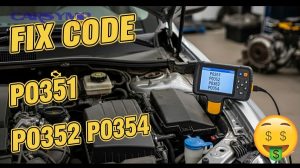
Common diagnostic trouble codes associated with rough idle include P0300 for random misfire detection, P0301-P0308 for cylinder-specific misfires, P0171-P0174 for lean fuel conditions, P0101 for mass airflow sensor faults, and P0505-P0507 for idle control system problems. Understanding code meanings helps prioritize diagnostic efforts and identify patterns that point toward specific failures.
Misfire codes form the most direct connection to rough idle complaints. Code P0300 indicates the engine control unit detected misfires across multiple cylinders without a consistent pattern, suggesting systematic problems like bad fuel, vacuum leaks, or low compression affecting all cylinders. Codes P0301 through P0308 identify specific cylinder misfires—P0301 means cylinder 1 misfires, P0302 indicates cylinder 2, and so forth up to P0308 for eight-cylinder engines. Cylinder-specific codes point toward component failures affecting individual cylinders like spark plugs, injectors, or compression loss.
Fuel system codes provide insight into mixture problems that cause rough running. P0171 (System Too Lean Bank 1) and P0174 (System Too Lean Bank 2) indicate the engine runs lean—insufficient fuel or excessive air. These codes commonly accompany vacuum leaks, weak fuel pumps, clogged fuel filters, or failing fuel pressure regulators. Conversely, P0172 (System Too Rich Bank 1) and P0175 (System Too Rich Bank 2) suggest overfueling from leaking injectors, stuck fuel pressure regulators, or failed mass airflow sensors reading incorrectly low.
Mass airflow sensor codes like P0101 (MAF Circuit Range/Performance) indicate the sensor reports values inconsistent with expected airflow for current operating conditions. Dirty or failing MAF sensors cause rough idle because the engine control unit calculates incorrect fuel delivery based on faulty airflow data. Cleaning MAF sensors with specialized electronics cleaner often resolves these issues without replacement.
Idle control codes P0505 (Idle Control System Malfunction), P0506 (Idle Control System RPM Lower Than Expected), and P0507 (Idle Control System RPM Higher Than Expected) directly implicate the idle air control system. These codes suggest problems with the IAC valve, throttle body carbon buildup, or related vacuum circuits that prevent the engine control unit from maintaining target idle speed.
Some rough idle conditions don’t generate codes because all sensors report values within acceptable ranges despite poor running quality. This scenario occurs with vacuum leaks small enough to avoid triggering lean codes, worn spark plugs that misfire intermittently without establishing patterns, or mechanical issues like compression loss. In these cases, live data analysis becomes more valuable than stored codes.
How Do You Read Live Data to Diagnose Rough Idle?
Live data analysis involves monitoring real-time sensor readings including short-term and long-term fuel trim percentages, RPM stability, mass airflow sensor values, oxygen sensor voltages, and misfire counters to identify operating parameters outside normal ranges that reveal rough idle causes. Professional technicians rely heavily on live data because it shows current engine behavior rather than just stored fault codes from past events.
Fuel trim data for rough idle diagnosis provides critical insight into mixture quality. The engine control unit constantly adjusts fuel delivery to maintain ideal air-fuel ratios around 14.7:1, and fuel trim percentages reveal how much adjustment occurs. Short-term fuel trim (STFT) shows immediate corrections while long-term fuel trim (LTFT) displays learned adjustments averaged over time.
Normal fuel trim values range from -5% to +5% at idle. Negative values indicate the ECU reduces fuel (mixture was rich), while positive values show fuel addition (mixture was lean). LTFT values exceeding +10% suggest vacuum leaks or fuel delivery problems causing lean operation—the system tries to compensate by adding fuel. Values below -10% indicate rich conditions from leaking injectors or incorrect sensor readings. Scan codes commonly tied to rough idle often accompany abnormal fuel trim data, providing corroborating evidence of mixture problems.
RPM stability appears as a numerical value on scan tools, with healthy engines maintaining steady readings within 20-30 RPM of target idle speed. Wildly fluctuating RPM—variations exceeding 100 RPM up and down—indicates misfires, vacuum leaks, or idle control problems. Some scan tools graph RPM over time, making fluctuations visually obvious even if the numerical range seems moderate.
Mass airflow sensor readings should correlate with engine displacement and idle speed. A rough rule of thumb suggests MAF readings around 2-4 grams per second at idle for four-cylinder engines, 3-6 g/s for six-cylinder engines, and 4-8 g/s for eight-cylinder engines. Values significantly below these ranges despite normal idle speed suggest restricted intake (clogged air filter, closed throttle) while high values indicate vacuum leaks allowing excess air or a failing MAF sensor reporting incorrectly high airflow.
Oxygen sensor voltages fluctuate between 0.1-0.9 volts in closed-loop operation as the system alternates between slightly rich and lean mixtures. Sensors stuck at low voltage (below 0.3V) indicate persistent lean conditions, while sensors stuck high (above 0.7V) show rich operation. Slow switching rates—taking more than a second to swing from low to high voltage—suggest aged sensors unable to respond quickly to mixture changes.

Misfire counters track detected misfires per cylinder since codes were last cleared. These counters accumulate even when misfire frequency doesn’t reach threshold levels for illuminating the check engine light. Checking misfire counters reveals which cylinders fire inconsistently—if cylinder 3 shows 247 misfires while other cylinders report 0-10, cylinder 3 requires targeted diagnosis of its spark plug, coil, injector, and compression.
Comparing live data to specifications requires either OEM service information or generic ranges based on engine type. Many scan tools include built-in help files with typical values, and online forums specific to your vehicle make often provide owner-documented normal ranges for comparison. Systematic data review—checking each sensor and system parameter against expected values—identifies anomalies that direct your diagnostic efforts efficiently.
Can You Fix Rough Idle Yourself or Do You Need a Mechanic?
Whether you can fix rough idle yourself depends on the root cause complexity, your mechanical skill level, and available tools—simple fixes like air filter replacement, spark plug changes, and throttle body cleaning suit DIY approaches while compression testing, sensor replacement, and internal engine repairs typically require professional expertise. Making the right decision between DIY and professional repair balances cost savings against the risk of misdiagnosis or improper repairs.
What Rough Idle Problems Can You Fix at Home?
DIY-friendly rough idle repairs include air filter replacement, spark plug installation, throttle body cleaning, vacuum hose replacement, and fuel system cleaning treatments—tasks requiring basic tools and moderate mechanical ability that can resolve many common idle issues for under $100. These repairs share common characteristics: they involve external components accessible without major disassembly, require minimal specialized tools, and present low risk of causing additional damage if performed incorrectly.
Air filter replacement ranks as the simplest rough idle fix, typically requiring just a screwdriver or no tools at all for housings with spring clips. Filters cost $10-30 and installation takes 5 minutes. Simply remove the housing cover, note the filter orientation, install the new filter in the same direction, and secure the cover. This basic maintenance item eliminates airflow restriction that causes rough running when severely clogged.
Spark plug replacement requires slightly more skill but remains well within DIY capabilities for most vehicles. Purchase the correct replacement plugs specified for your engine—consult the owner’s manual or an auto parts store catalog. You’ll need a spark plug socket (typically 5/8″ or 13/16″), socket wrench, and spark plug gap tool. Remove one plug at a time to avoid mixing up firing order, gap new plugs to specifications, apply anti-seize compound to threads (avoiding the electrode area), and torque to proper specifications using a torque wrench. Four-cylinder engines take 30-60 minutes while V6 and V8 engines may require 1-2 hours depending on plug accessibility.
Throttle body cleaning addresses carbon buildup that restricts idle airflow and prevents proper idle air control valve operation. This repair requires removing the air intake duct to access the throttle body, then spraying throttle body cleaner onto the throttle plate and bore while manually opening the throttle plate with your finger. Use generous amounts of cleaner and wipe away dissolved carbon with clean rags. Some vehicles require relearning idle procedures after throttle body cleaning—consult service information for your specific model. The repair takes 20-30 minutes and costs $10-20 for cleaner.
Vacuum hose replacement fixes leaks that cause rough idle through excess air introduction. Once you’ve identified a leaking hose, purchase replacement vacuum hose of the correct inside diameter from an auto parts store—common sizes include 3/16″, 1/4″, and 3/8″. Cut new hose to the appropriate length, ensuring clean square cuts, then install with firm pressure to seat completely onto fittings. Some connections use hose clamps for security—replace any damaged clamps with new units tightened to hold hoses firmly without overtightening and crushing the hose.
Fuel system cleaning treatments involve adding concentrated detergent chemicals to the fuel tank to dissolve injector deposits. Products like Chevron Techron, Lucas Fuel Treatment, and others cost $10-30 per bottle. While effectiveness varies by deposit severity, these treatments can improve rough idle caused by mildly clogged injectors without the cost and complexity of professional injector cleaning. Follow product directions carefully—some treatments require high concentration, while others work at any ratio.
When Should You Take Your Car to a Professional?
Professional diagnosis and repair become necessary when rough idle persists after DIY efforts, when testing reveals complex sensor failures or internal engine damage, when specialized equipment is required for diagnosis or repair, or when the problem occurs intermittently and cannot be consistently reproduced. Recognizing these situations early prevents wasted time and money pursuing repairs beyond DIY capabilities.
Persistent rough idle after replacing spark plugs, cleaning the throttle body, and addressing vacuum leaks suggests deeper problems requiring professional-grade scan tools and expertise. EGR-related rough idle signs like roughness that worsens when the EGR valve opens under certain load conditions require specialized testing equipment to diagnose. Similarly, complex sensor networks involving camshaft position sensors, crankshaft position sensors, and variable valve timing actuators demand precise diagnosis with OEM-level scan tools beyond consumer scanner capabilities.
Compression testing and repair requires specialized equipment and significant mechanical knowledge. While compression testers cost $30-80, interpreting results and determining whether problems stem from rings, valves, or head gaskets requires experience. More importantly, repairs for compression loss involve major engine disassembly including cylinder head removal, valve jobs, or complete engine rebuilds—tasks requiring specialized tools, precise measurements, and mechanical expertise far beyond typical DIY skills.
Intermittent rough idle presents unique diagnostic challenges because symptoms may not occur during testing. Professional shops can install data logging scan tools that record sensor readings during normal driving, then review captured data to identify anomalies occurring when the problem appears. This equipment and expertise exceeds typical DIY resources, making professional diagnosis worthwhile for elusive problems.
The repair cost estimate for common rough idle causes varies dramatically based on problem complexity and labor rates. Simple repairs like spark plugs ($100-200), air filters ($30-50), or vacuum hoses ($50-100) include minimal labor charges. Mid-range repairs like fuel injector cleaning ($150-300), ignition coils ($150-400), or mass airflow sensors ($200-400) combine parts costs with moderate labor. Major repairs including compression issues ($1,500-4,000), timing chain replacement ($800-2,000), or engine control unit failures ($500-1,500) justify professional expertise due to complexity and cost.
Safety considerations also dictate professional service for certain repairs. Working with fuel systems under pressure poses fire risks without proper pressure relief procedures. Testing high-voltage ignition systems can deliver dangerous shocks. Professional technicians have training, equipment, and insurance to manage these risks appropriately.
Consider professional diagnosis valuable when you’ve exhausted DIY diagnostic capabilities without identifying the problem. A professional shop’s diagnostic fee—typically $100-150 for comprehensive testing—often proves cheaper than guessing at expensive parts replacement or spending hours troubleshooting without progress. Shops invest in factory scan tools, service information subscriptions, and specialized test equipment that provide diagnostic capabilities impossible to replicate cost-effectively in home garages.
How Do Engine Sensors Affect Idle Quality?
Engine sensors directly impact idle quality by providing the engine control unit with critical data about airflow, oxygen content, throttle position, and engine speed that determines fuel delivery, ignition timing, and idle air control valve operation—sensor failures cause rough idle when incorrect data leads to improper combustion management. Modern engines rely on dozens of sensors working in concert to maintain smooth operation, and single sensor failures can dramatically affect idle behavior.
How Does a Faulty Mass Airflow (MAF) Sensor Cause Rough Idle?
A faulty mass airflow sensor causes rough idle by providing incorrect airflow measurements to the engine control unit, resulting in improper fuel delivery calculations that create lean or rich mixtures and unstable combustion at low engine speeds. The MAF sensor measures the mass of air entering the engine using either a hot wire or hot film element cooled by passing airflow—the cooling rate correlates directly with air mass, allowing the sensor to generate a voltage or frequency signal proportional to airflow.
When MAF sensors fail, they typically report lower airflow than actually occurs, causing the ECU to reduce fuel delivery based on these false readings. The resulting lean mixture doesn’t burn efficiently, producing misfires and rough operation. Less commonly, contaminated or damaged MAF sensors read high, causing overfueling and rich operation with attendant roughness. Either failure mode disrupts the precise 14.7:1 air-fuel ratio required for optimal combustion.
MAF sensor contamination represents the most common failure mode, developing gradually as oil vapors from the PCV system, dirt bypassing the air filter, and airborne contaminants coat the sensing element. This buildup insulates the sensor element, slowing its response to airflow changes and skewing readings toward lower values. Cleaning MAF sensors requires specialized MAF sensor cleaner (not carburetor cleaner which can damage sensitive elements)—spray the sensor element liberally, allow it to air dry completely, then reinstall and test.
Testing MAF sensors involves comparing live data readings to specifications for your engine at idle. A four-cylinder engine at idle typically generates 2-4 grams per second of airflow, while six-cylinder engines read 3-6 g/s and eight-cylinder engines measure 4-8 g/s. Readings significantly below these ranges despite normal idle speed suggest MAF sensor underreporting. Alternatively, momentarily disconnecting the MAF sensor while the engine runs forces the ECU into “limp mode” using preset fuel delivery maps—if idle quality improves dramatically without the MAF sensor connected, sensor failure is confirmed.
MAF sensor replacement costs $150-400 including parts ($100-300) and labor (0.5-1.0 hours) at typical shop rates. Some vehicles locate MAF sensors in easily accessible intake ducting allowing simple DIY replacement, while others bury sensors under intake manifolds requiring significant disassembly. Always install OEM or high-quality replacement sensors, as cheap aftermarket units often fail prematurely or provide inconsistent readings that cause ongoing drivability problems.
Can Bad Oxygen Sensors Cause Rough Idle?
Bad oxygen sensors can cause rough idle by providing incorrect exhaust oxygen readings that mislead the engine control unit into making improper fuel mixture adjustments, though oxygen sensor failures more commonly affect overall performance and fuel economy rather than producing severe idle roughness. Oxygen sensors (O2 sensors) measure residual oxygen in exhaust gases, allowing the ECU to fine-tune fuel delivery for optimal combustion and emissions control.
Vehicles typically use two to four oxygen sensors depending on engine configuration—upstream sensors before the catalytic converter provide mixture feedback for fuel control, while downstream sensors after the converter monitor catalyst efficiency. Only upstream sensors affect rough idle since they directly influence fuel delivery, while downstream sensor failures impact emissions monitoring without affecting driveability.
Oxygen sensor degradation occurs gradually as high-temperature exposure and exhaust contaminants coat the sensor element, slowing its response time and reducing voltage swing amplitude. Aged sensors take longer to switch between rich and lean indications, preventing the ECU from making rapid fuel delivery corrections. This sluggish response causes the mixture to drift slightly rich or lean rather than maintaining optimal ratios, contributing to slightly rough idle though rarely causing severe symptoms alone.
Testing oxygen sensors requires observing their voltage output during engine operation using a scan tool or multimeter. Healthy upstream sensors rapidly switch between 0.1-0.9 volts multiple times per second in closed-loop operation. Sensors stuck near 0.45V (middle of the range) have failed, sensors switching slowly (less than once per second) are aged and should be replaced, and sensors reading constant high or low voltage indicate circuit problems or sensor failures. Some scan tools can graph oxygen sensor voltages over time, making switching patterns visually obvious.
Oxygen sensor replacement follows straightforward procedures but requires careful technique due to exhaust system heat and potential for sensor threads seizing in bungs. Allow the exhaust system to cool completely before attempting removal. Apply penetrating oil to sensor threads hours before removal to ease extraction. Use oxygen sensor sockets with slots accommodating sensor wires during installation. Replacement sensors cost $40-150 each, and labor ranges from 0.5-1.5 hours depending on accessibility. Many vehicles place upstream sensors in easily reached locations allowing DIY replacement, while downstream sensors often require raising the vehicle for access.
What Is the Idle Air Control Valve and Why Does It Matter?
The idle air control valve regulates engine idle speed by controlling airflow that bypasses the closed throttle plate, with failures causing unstable RPM, stalling at stops, or rough idle as the engine control unit loses ability to maintain target idle speed. The IAC valve operates as a computer-controlled air bypass allowing the ECU to increase idle speed when needed—during cold starts, when the air conditioner engages, or when electrical loads increase—and decrease idle speed when these demands cease.
IAC valve designs vary by manufacturer. Stepper motor types use a pintle that extends or retracts to restrict or open an air passage, with the ECU commanding specific step positions. Duty cycle types use a solenoid valve that opens and closes rapidly, with the ECU varying the duty cycle (percentage of time open) to control average airflow. Both designs achieve the same result: precise idle speed control by metering bypass air around the throttle plate.
Carbon buildup represents the most common IAC valve problem, accumulating in the air passages and on the pintle or valve seat to restrict movement and airflow. This buildup prevents the valve from making fine adjustments needed for smooth idle, causing RPM fluctuations, higher-than-normal idle speed (valve can’t close completely), or stalling (valve can’t open adequately). Some vehicles experience rough idle only when cold as carbon deposits affect valve operation until thermal expansion creates adequate clearances.

Cleaning IAC valves often restores proper function without replacement cost. Remove the valve from the throttle body (typically two or three bolts), spray throttle body cleaner or carburetor cleaner liberally on all surfaces including the pintle and passages, use soft brushes to scrub stubborn deposits, rinse with additional cleaner, and air dry completely before reinstallation. Never force the pintle or valve mechanism as these components are fragile—apply cleaning solvent and allow chemical action to dissolve deposits.
Testing IAC valves electrically requires measuring resistance across motor windings (stepper motor types) or solenoid coils (duty cycle types) and comparing to specifications. Typical stepper motor resistance ranges from 20-40 ohms per winding, while solenoid types measure 10-30 ohms. Infinite resistance indicates open circuits requiring valve replacement. Some scan tools can command IAC valve movement through bidirectional controls, allowing you to observe whether the valve responds to ECU commands—if the scan tool commands 50 steps but idle speed doesn’t change, mechanical binding or electrical failure prevents operation.
IAC valve replacement costs $100-300 for parts with installation requiring 0.5-1.0 hours of labor. Many valves mount externally on the throttle body with easy access for DIY replacement, while others integrate into the throttle body assembly requiring complete throttle body replacement at significantly higher cost. Always clean the mounting surface thoroughly before installing new valves, as carbon deposits on mating surfaces create vacuum leaks that cause rough idle despite new valve installation.
How Do You Diagnose Rough Idle Without a Check Engine Light?
Diagnosing rough idle without a check engine light requires systematic testing of mechanical components, analyzing live data for subtle anomalies below code-setting thresholds, inspecting transmission and engine mounts, testing fuel pressure, and performing compression tests to identify issues that affect performance without triggering diagnostic codes. This scenario challenges even experienced technicians because the absence of codes eliminates a major diagnostic shortcut, requiring methodical component-by-component evaluation.
Begin by acknowledging that many rough idle causes don’t generate codes. Vacuum leaks small enough to remain within fuel trim compensation limits—typically under 10-15%—won’t trigger P0171/P0174 lean codes despite causing noticeable roughness. Single cylinder misfires occurring less than the threshold rate (typically around 2-3% of firing events) won’t set P0301-P0308 codes yet still produce perceptible vibrations. Worn motor mounts never generate codes because they’re mechanical components outside the electronic monitoring systems.
Live data analysis becomes critical when codes are absent. Review fuel trim values—even LTFT approaching +8% or -8% without crossing code thresholds indicates mixture problems worth investigating. Check misfire counters even without active codes since accumulated misfires reveal which cylinders fire inconsistently. Monitor RPM stability and deviation from target idle speed, looking for variations exceeding 50-75 RPM that suggest control problems.
Transmission mount inspection requires dynamic testing since these mounts can fail internally without external visual damage. Have an assistant start the engine and shift between drive and reverse while you observe engine movement. Excessive rocking—more than two inches of movement—indicates mount failure. Failed mounts don’t cause true engine roughness but transmit normal combustion vibrations into the chassis, creating the sensation of rough idle when the engine actually runs fine.
Fuel pressure testing definitively diagnoses fuel delivery problems that may not trigger low pressure codes. Connect a fuel pressure gauge to the test port (if equipped) or install a gauge inline between the fuel filter and rail. Compare pressure readings at idle to specifications—typically 35-65 psi depending on system design. Pressure more than 5 psi below specification indicates weak pump or clogged filter even if the system compensates enough to avoid setting codes. Watch for pressure bleeding down after shutting off the engine, which reveals leaking injectors or check valve failures.
Compression testing identifies mechanical problems like worn rings, burned valves, or blown head gaskets that reduce cylinder pressure below optimal levels without necessarily triggering codes. Remove all spark plugs, disable the ignition system, and crank the engine through four to five compression strokes while recording peak pressure for each cylinder. Results should fall within manufacturer specifications (typically 120-200 psi) with all cylinders within 10% of each other. Any cylinder more than 20% below the others requires further investigation with wet compression tests (adding oil to distinguish ring wear from valve problems) or leakdown testing to pinpoint the failure location.
The challenge with non-code rough idle diagnosis lies in the absence of clear direction—you must systematically test each potential cause rather than following code-indicated paths. Document your test results carefully, eliminating proven-good components from consideration while building evidence toward the actual problem. This methodical approach ultimately identifies issues that electronic monitoring misses, resolving rough idle through comprehensive mechanical and systems diagnosis.
This comprehensive guide equips car owners with the knowledge to diagnose rough idle systematically, from recognizing symptoms through performing specific tests and determining appropriate repair approaches. By understanding the ten common causes and following logical diagnostic steps, you can identify problems efficiently and make informed decisions about DIY repairs versus professional service, ultimately restoring smooth engine operation while managing costs effectively.