Diagnose Exhaust Smoke Colors: Complete Guide to White, Blue & Black Smoke Problems
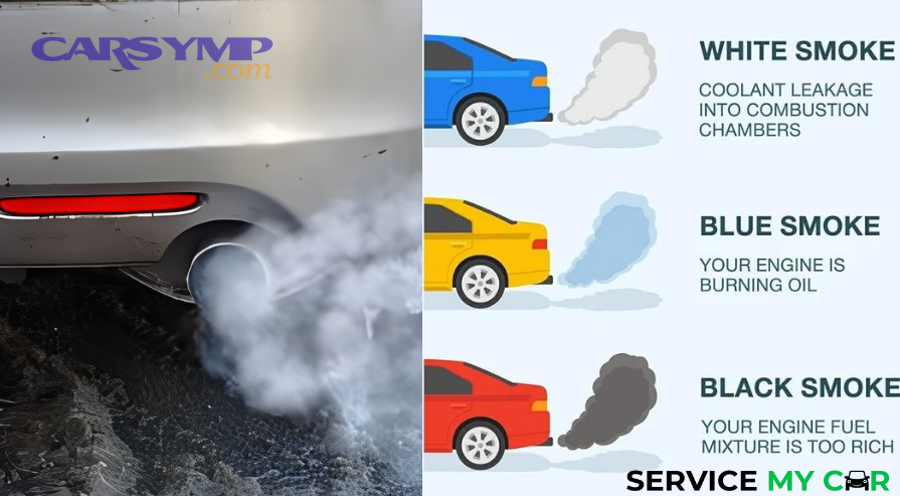
Exhaust smoke color directly reveals specific engine problems: white smoke indicates coolant burning from head gasket failure or cylinder cracks, blue smoke signals oil consumption through worn valve seals or piston rings, and black smoke means excessive fuel from sensor failures or clogged air filters. Understanding these color distinctions enables accurate car diagnostics and helps vehicle owners identify whether they face minor adjustments or major engine repairs requiring immediate professional attention.
Different smoke colors appear at different times during vehicle operation, providing critical diagnostic clues about the underlying mechanical failure. White smoke causes and diagnosis vary significantly between thin vapor from normal condensation and thick billowing clouds indicating catastrophic coolant leaks. Blue smoke causes and diagnosis depend on whether the smoke appears only at startup or continues while driving, revealing either valve seal deterioration or complete piston ring failure. Black smoke causes and diagnosis typically point to fuel system malfunctions that, while visually dramatic, often represent the least expensive repair category among Car Symptoms.
The timing and conditions when smoke appears provide essential information for accurate troubleshooting. Smoke on startup vs under acceleration clues help mechanics differentiate between valve guide problems and piston ring wear, while Coolant loss and sweet smell correlation confirms head gasket failure rather than simple condensation. Oil consumption tracking and smoke links establish patterns that predict repair urgency, and understanding Common repair costs by smoke type helps vehicle owners make informed decisions about whether repairs justify the vehicle’s value.
Professional diagnosis becomes critical when smoke persists beyond normal conditions, but performing DIY checks before major engine repairs can save thousands in unnecessary work. Knowing whether you can drive with exhaust smoke depends entirely on the color, volume, and accompanying symptoms like overheating or oil pressure loss. Next, let’s explore each smoke color systematically to build your diagnostic expertise.
What Does Exhaust Smoke Color Tell You About Your Car?
Exhaust smoke color serves as a diagnostic window into your engine’s internal condition, with each color indicating specific fluids entering the combustion chamber where they shouldn’t belong. A properly functioning engine produces nearly invisible exhaust because the emissions control system manages combustion byproducts efficiently, meaning any visible smoke signals an abnormal condition requiring investigation.
The combustion process in your engine should burn only air and fuel in precise ratios, producing carbon dioxide and water vapor as primary byproducts. When the engine’s internal seals, gaskets, or components fail, other fluids—coolant, engine oil, or excess fuel—enter the combustion chamber and burn alongside the fuel-air mixture. Each fluid produces a distinctive smoke color when burned: coolant creates white smoke, oil generates blue or gray smoke, and unburned fuel produces black smoke. This color-coding system makes exhaust smoke one of the most reliable initial diagnostic indicators available to vehicle owners.
The exhaust system itself includes the exhaust manifold, catalytic converter, oxygen sensors, and tailpipe, all designed to manage and clean combustion gases before releasing them into the atmosphere. Modern vehicles employ sophisticated emissions controls that capture most particulates and unburned hydrocarbons, which explains why you shouldn’t see smoke under normal operation. When smoke becomes visible, it means the volume of contaminants has overwhelmed the system’s capacity to process them, or the contaminants are of a type the system cannot filter.
Understanding the difference between normal and abnormal smoke prevents unnecessary panic while ensuring you don’t ignore serious problems. Light white vapor on cold mornings, particularly in humid climates, represents condensation evaporating from the exhaust system and poses no concern. However, thick, continuous smoke of any color acts as your engine’s distress signal, communicating that internal components have failed and require immediate attention. The key distinction lies in smoke persistence: normal condensation disappears within minutes of engine warmup, while problematic smoke continues regardless of engine temperature or operating duration.
What Does White Smoke From Your Exhaust Mean?
White smoke from your exhaust indicates coolant or water entering the combustion chamber and burning, creating visible steam-like emissions that range from thin vapor to thick billowing clouds depending on the leak’s severity. The color appears white or light gray because coolant contains water and ethylene glycol, which vaporize when exposed to combustion chamber temperatures exceeding 1,000 degrees Fahrenheit, producing a distinctive white appearance that differs significantly from the darker smoke colors associated with oil or fuel problems.
Distinguishing between harmless condensation and serious coolant leaks requires observing the smoke’s characteristics, timing, and persistence. To better understand the diagnostic process, let’s examine both normal and problematic white smoke scenarios.
Is Thin White Smoke Normal or a Problem?
Thin white smoke at startup is normal and results from condensation accumulating in the exhaust system overnight, particularly in cold or humid climates where temperature differences between the hot engine and cool ambient air create moisture buildup. This condensation collects in the exhaust manifold, catalytic converter, and tailpipe while your vehicle sits parked, then evaporates into visible white vapor when the exhaust system heats up during initial engine operation.
The condensation phenomenon occurs because exhaust systems contain small amounts of water vapor as a natural combustion byproduct, which condenses on cold metal surfaces when the engine cools. Geographic location significantly affects condensation volume—vehicles in the Pacific Northwest, New England, or other humid regions produce more startup vapor than those in arid climates like Arizona or Nevada. The smoke appears thinnest when exiting the tailpipe and dissipates quickly into the air, typically disappearing completely within two to five minutes of engine operation as the exhaust system reaches normal operating temperature.
Vehicle owners should recognize this normal condensation pattern to avoid misdiagnosing healthy engines. The vapor appears translucent rather than dense, never carries a sweet smell, and completely stops once the engine warms up. If white smoke continues after the engine reaches operating temperature (typically indicated by the temperature gauge moving to the middle position), the issue transitions from normal condensation to a coolant leak requiring immediate investigation. Driving primarily short distances where the engine never fully warms creates a secondary concern: persistent condensation can cause internal exhaust system rust, potentially leading to exhaust leaks and emissions test failures.
What Causes Thick White Smoke From the Exhaust?
Thick white smoke indicates coolant burning in the combustion chamber due to four primary mechanical failures: blown head gasket, cracked cylinder head, cracked engine block, or damaged cylinder head gasket surfaces. Each failure creates a pathway for pressurized coolant to enter combustion chambers where cylinder temperatures instantly vaporize the coolant, producing the characteristic thick white smoke that billows continuously from the tailpipe.
The blown head gasket represents the most common cause, accounting for approximately 60-70% of thick white smoke cases. The head gasket seals the junction between the engine block and cylinder head, maintaining separate pathways for coolant passages, oil galleries, and combustion chambers. When this gasket fails—typically from engine overheating, age-related deterioration, or improper installation—coolant leaks into one or more cylinders. The leaking coolant burns during the combustion cycle, creating dense white smoke with a distinctive sweet smell from the burning ethylene glycol. Simultaneously, combustion gases can blow back into the cooling system, causing bubbles in the coolant reservoir and pressure buildup that may blow off the radiator cap.
Cracked cylinder heads occur less frequently but produce identical symptoms. The cylinder head contains the combustion chambers and coolant passages in close proximity, separated only by thin metal walls. Severe overheating episodes can warp or crack these walls, creating direct communication between coolant channels and combustion areas. Aluminum cylinder heads, common in modern vehicles, are particularly susceptible because aluminum expands and contracts more dramatically than cast iron during temperature cycles. A cracked cylinder head often accompanies head gasket failure since the same overheating event that cracks the head typically destroys the gasket simultaneously.
Cracked engine blocks represent the most catastrophic white smoke cause, usually resulting from extreme freeze damage when coolant freezes and expands within the block, or from severe overheating that thermally stresses the cast iron or aluminum beyond its structural limits. Block cracks typically doom the engine to replacement rather than repair because the block forms the engine’s foundation, and welding or patching rarely provides long-term reliability. Fortunately, cracked blocks remain relatively rare compared to head gasket failures, though older vehicles in cold climates without proper antifreeze protection face higher risk.
The repair urgency for thick white smoke cannot be overstated. Continuing to drive with coolant entering the combustion chamber causes progressive damage: the steam washes lubricating oil from cylinder walls, accelerating piston and ring wear; coolant contaminates the engine oil, reducing its lubricating properties; and excessive heat from combustion gas leaking into the cooling system can cause complete engine seizure. Repair costs vary dramatically: head gasket replacement typically ranges from $1,200 to $2,500 depending on engine configuration and labor rates, while cracked cylinder heads add another $500-$1,500 for replacement or machining, and cracked blocks generally necessitate complete engine replacement at $3,000-$6,000 or more.
What Does Blue Smoke From Your Exhaust Indicate?
Blue smoke from your exhaust signals that engine oil is entering the combustion chamber and burning, creating a blue-gray haze with a distinctive acrid smell resembling burnt toast or heavy cooking oil. This oil infiltration occurs when engine seals or mechanical components wear beyond acceptable tolerances, allowing lubricating oil to migrate from its designated areas in the crankcase into spaces where combustion occurs, producing the characteristic blue tint as petroleum-based oil burns at high temperatures.
The severity of blue smoke varies based on when it appears and how much oil the engine consumes. Understanding the timing patterns provides critical diagnostic information about which specific components have failed.
What Causes Blue Smoke at Startup vs. While Driving?
Blue smoke exclusively at startup indicates worn valve seals or valve guides, which allow small amounts of oil to seep past the valves into the combustion chamber while the engine sits idle overnight. Valve seals are small rubber components that fit around each valve stem, preventing oil from draining down the valve guides into the combustion chamber. Over time, these seals harden, crack, and lose elasticity due to constant heat cycling, typically failing between 80,000 and 150,000 miles depending on maintenance history and driving conditions.
When valve seals fail, oil slowly seeps past them while the engine is off, pooling on top of the pistons in the combustion chambers. Upon startup, this accumulated oil burns immediately, creating a noticeable blue puff that clears within 30-60 seconds as the pooled oil burns away. The smoke then disappears during normal driving because oil pressure and valve motion prevent additional leakage while the engine runs. Vehicle owners often observe this pattern as a single blue cloud when starting the car after it has sat for several hours, with no smoke visible during highway driving or extended operation.
Continuous blue smoke while driving indicates worn or broken piston rings, scored cylinder walls, or complete piston ring failure—all significantly more serious than valve seal problems. Piston rings serve three critical functions: they seal combustion pressure in the cylinder, they scrape excess oil from cylinder walls back into the crankcase, and they transfer heat from the piston to the cylinder wall. When rings wear down, stick in their grooves, or break, they fail to scrape oil effectively, allowing lubricating oil to remain on cylinder walls where the combustion process burns it continuously.
The steady blue smoke pattern during driving reveals constant oil consumption rather than the brief startup puff characteristic of valve seal failure. Worn piston rings often worsen during acceleration when higher cylinder pressures force more oil past the compromised ring seal, or during deceleration when engine vacuum pulls additional oil into the combustion chamber. Cylinder wall scoring—scratches or grooves in the cylinder’s smooth surface—prevents even new piston rings from sealing properly, creating permanent oil consumption issues that only cylinder boring and new oversized pistons can resolve.
Turbocharged engines present an additional blue smoke source: turbocharger seal failure. Turbochargers spin at extremely high speeds (100,000-150,000 RPM) and use oil for bearing lubrication and cooling. When the turbocharger’s internal seals fail, oil leaks from the bearing housing into either the intake or exhaust side of the turbo. If oil enters the exhaust side, it burns immediately, creating blue smoke. Turbo smoke symptoms and checks include monitoring for oil coating inside the intercooler pipes, checking for excessive shaft play when the turbo is removed, and observing whether smoke appears primarily during boost conditions when turbo pressure peaks.
How Serious is Blue Exhaust Smoke?
Blue exhaust smoke demands immediate attention because oil burning creates cascading damage that accelerates exponentially if ignored, potentially destroying the engine through oil starvation, spark plug fouling, and catalytic converter contamination. Even minor oil consumption—as little as one quart per 1,000 miles—indicates significant internal wear that will worsen progressively, while severe cases consume one quart every few hundred miles, risking catastrophic engine failure.
The immediate concern centers on maintaining adequate oil levels for engine lubrication. Drivers who ignore blue smoke often fail to monitor oil consumption rates, inadvertently operating the engine with dangerously low oil levels that starve critical components like crankshaft bearings, camshaft lobes, and piston skirts of necessary lubrication. When oil pressure drops below minimum thresholds, bearing surfaces make metal-to-metal contact, generating extreme friction and heat that can seize the engine within minutes. Regular oil level checks become essential when blue smoke appears—checking every fuel fill-up or every few days prevents oil starvation damage while quantifying consumption rates that help mechanics diagnose the specific failure.
Spark plug fouling represents another progressive consequence of oil burning. When oil enters combustion chambers, it coats spark plug electrodes with carbon deposits and oil residue that insulate the plug and prevent proper spark generation. Fouled spark plugs cause misfires, rough idle, poor fuel economy, and difficulty starting. While replacing spark plugs temporarily restores performance, the underlying oil consumption quickly fouls the new plugs, creating a cycle of repeated replacements that never addresses the root cause. Ignition system stress from constant misfires can also damage ignition coils and other components, compounding repair costs.
Catalytic converter contamination poses the most expensive secondary damage risk. The catalytic converter uses precious metals—platinum, palladium, and rhodium—to chemically convert harmful exhaust pollutants into less toxic substances. These catalysts operate within specific temperature ranges and chemical environments. When oil burns in the combustion chamber, it produces ash and carbon deposits that coat the catalytic converter’s honeycomb structure, blocking exhaust flow and reducing catalyst efficiency. Over time, excessive oil consumption can completely clog the converter, causing severe power loss, failed emissions tests, and the need for catalytic converter replacement at $800-$2,500 depending on the vehicle.
The repair costs for blue smoke vary dramatically based on the root cause. Valve seal replacement typically costs $800-$1,500 because mechanics can often replace seals without removing the cylinder head, using compressed air to hold valves in place while swapping seals. However, piston ring replacement requires complete engine disassembly, costing $2,500-$4,500 including machine work, new rings, gaskets, and reassembly labor. If cylinder walls show scoring or excessive wear, the block requires boring to the next oversized piston dimension, adding another $500-$1,000 to total costs. Many mechanics recommend evaluating whether such extensive repairs justify the vehicle’s value, suggesting engine replacement or vehicle replacement as alternative strategies.
What Does Black Smoke From Your Exhaust Mean?
Black smoke from your exhaust indicates the engine is running excessively rich, burning more fuel than the air-fuel mixture can properly combust, resulting in unburned fuel particles and soot expelled through the tailpipe as dark, sooty emissions. This condition stems from either too much fuel entering the combustion chamber or insufficient air mixing with the fuel, creating an imbalanced mixture that combusts incompletely and wastes expensive gasoline while dramatically reducing fuel economy.
The fuel-air ratio in modern engines should maintain stoichiometric balance—approximately 14.7 parts air to 1 part fuel for gasoline engines. When this ratio shifts toward excess fuel (running rich), the combustion process cannot burn all available fuel molecules, leaving unburned hydrocarbons that exit as visible black smoke. Unlike white smoke from coolant or blue smoke from oil, black smoke typically indicates problems with the fuel delivery system, air intake system, or engine management sensors rather than internal mechanical failure, making black smoke issues generally less expensive to diagnose and repair than other smoke colors.
The causes of black smoke differ significantly between older carbureted engines and modern fuel-injected vehicles, requiring different diagnostic approaches for each system type.
What Causes Black Exhaust Smoke in Fuel-Injected Engines?
Black exhaust smoke in fuel-injected engines results from six primary causes: clogged air filter, faulty mass airflow sensor, malfunctioning oxygen sensors, leaking fuel injectors, stuck fuel pressure regulator, or engine control unit programming errors. Each component plays a critical role in maintaining the precise air-fuel balance modern engines require, and failure of any single element can shift the mixture toward excessive fuel.
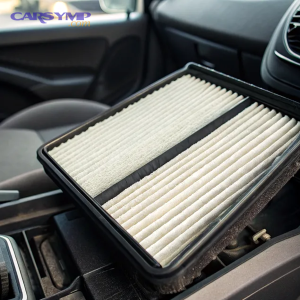
A clogged air filter represents the simplest and most common cause, restricting airflow into the engine and creating an oxygen-starved condition. The engine management system attempts to maintain power output by injecting additional fuel, but without sufficient air for complete combustion, this extra fuel burns partially and exits as black smoke. Air filter inspection takes less than five minutes and costs $15-$30 for replacement, making it the first diagnostic step when black smoke appears. Visual inspection reveals whether the filter element appears dark and saturated with debris, though even moderately dirty filters can restrict flow enough to cause rich running.
The mass airflow (MAF) sensor measures the exact volume of air entering the engine, providing this critical data to the engine control unit for fuel injection calculations. When MAF sensors fail or become contaminated with oil residue or dirt, they send inaccurate low-airflow signals to the computer, causing the system to inject excessive fuel for the actual air volume present. MAF sensor failure typically triggers a check engine light with diagnostic trouble codes P0171 (system too lean) or P0174, though these codes seem contradictory to black smoke symptoms. Testing MAF sensors requires a scan tool capable of displaying live sensor data, comparing actual airflow readings against factory specifications at various engine speeds.
Oxygen sensors monitor exhaust gas composition and provide feedback that allows the engine control unit to trim fuel delivery for optimal combustion. Modern vehicles typically use four oxygen sensors—two upstream sensors before the catalytic converter and two downstream sensors after it. When upstream O2 sensors fail, they may send false “lean” signals indicating insufficient fuel, causing the computer to add more fuel than necessary. The resulting rich mixture produces black smoke and dramatically increases fuel consumption. O2 sensor diagnosis requires scanning for diagnostic codes (P0130-P0167 series) and using a scan tool’s live data function to observe sensor voltage patterns, which should fluctuate between 0.1 and 0.9 volts multiple times per second at idle.
Leaking or stuck-open fuel injectors dump excessive gasoline into specific cylinders, creating rich conditions that produce black smoke. Fuel injectors operate using electromagnetic solenoids that open and close thousands of times per minute, spraying precisely metered fuel quantities into the intake manifold or directly into cylinders. When injector seals deteriorate or solenoids stick, continuous fuel flow floods the combustion chamber. Identifying which injector leaks requires removing spark plugs and checking for gasoline-soaked, carbon-fouled plugs that indicate overly rich combustion in that cylinder. Professional diagnosis uses fuel injector flow testing equipment that measures each injector’s spray pattern and volume, comparing results against manufacturer specifications.
The fuel pressure regulator maintains constant fuel rail pressure, typically 40-60 PSI for port fuel injection systems or much higher for direct injection. When regulators stick in the closed position, fuel pressure rises above specifications, forcing injectors to spray more fuel per pulse than the engine control unit commands. This excess fuel cannot combust completely, creating black smoke and poor fuel economy. Testing fuel pressure requires a dedicated fuel pressure gauge connected to the fuel rail’s test port, with readings compared against factory specifications during idle, acceleration, and deceleration conditions.
Engine control unit faults represent the rarest black smoke cause but can occur after failed software updates, electrical damage, or internal computer failures. The ECU processes dozens of sensor inputs simultaneously, calculating optimal fuel injection timing, duration, and quantity for current operating conditions. When ECU programming errors occur or internal circuits fail, fuel calculations may default to excessively rich settings. Professional diagnosis requires factory-level scan tools capable of monitoring actual versus commanded fuel delivery, identifying discrepancies that indicate ECU malfunction.

What Causes Black Smoke in Carbureted Engines?
Black smoke in carbureted engines stems from stuck automatic chokes, float problems, or incorrect fuel mixture adjustments—mechanical issues fundamentally different from the electronic sensor failures affecting fuel-injected vehicles. Carburetors use vacuum, airflow, and mechanical linkages to mix fuel and air, lacking the electronic precision of modern fuel injection but offering simpler diagnostic and repair procedures.
The automatic choke mechanism enriches the fuel mixture during cold starts by restricting airflow into the carburetor throat, creating higher vacuum that pulls more fuel through the jets. This temporary rich condition helps cold engines start and run smoothly until reaching operating temperature. However, when choke mechanisms stick in the closed or partially closed position, they continue restricting airflow even after the engine warms, creating an excessively rich mixture that produces black smoke and terrible fuel economy. Choke diagnosis involves visual inspection of the choke plate—it should stand fully open when the engine reaches operating temperature. Stuck chokes often result from carbon buildup, corroded linkages, or failed thermal springs that normally open the choke as the engine warms.
Carburetor float problems create black smoke when the float sinks, sticks, or is improperly adjusted, allowing excessive fuel to fill the float bowl beyond normal levels. The float acts like a toilet tank float, shutting off fuel flow when the bowl reaches proper levels. Metal floats can develop pinhole leaks that allow fuel inside, causing them to sink and permit continuous fuel flow. Foam plastic floats deteriorate over time, becoming fuel-saturated and losing buoyancy. Incorrect float adjustment sets the fuel level too high, increasing fuel delivery through all circuits. Float inspection requires removing the carburetor bowl and checking for leaks, fuel saturation, or incorrect height settings measured against manufacturer specifications.
Fuel mixture adjustments on carburetors control the ratio of fuel to air through various operating circuits—idle circuit, main circuit, power circuit, and accelerator pump circuit. When mixture screws are adjusted too rich (turned out excessively), or when jets are incorrectly sized too large, black smoke results from excess fuel. Carburetor rebuilding kits include proper jet sizes and gaskets, though aftermarket performance modifications sometimes install oversized jets that cause rich running. Mixture adjustment requires methodical tuning with the engine at operating temperature, adjusting idle mixture screws for highest idle speed, then backing them out slightly for smooth running without black smoke.
How Do You Diagnose Exhaust Smoke Problems Step-by-Step?
Diagnosing exhaust smoke problems requires a systematic seven-step approach: identify smoke color accurately, note timing of smoke appearance, perform smell tests, check fluid levels, inspect oil condition, scan for diagnostic codes, and monitor warning lights. This methodical process eliminates guesswork and guides you toward the specific failed component causing smoke, enabling informed decisions about DIY repairs versus professional service and preventing misdiagnosis that wastes time and money.
Accurate smoke color identification forms the diagnostic foundation, yet lighting conditions, background environments, and smoke density can obscure true colors. Observe smoke against neutral backgrounds like overcast skies or light-colored walls rather than dark pavement that makes all smoke appear lighter. Compare smoke under various lighting conditions—direct sunlight, shade, and dawn/dusk—because blue and gray smoke particularly change appearance based on lighting angles. If smoke color remains ambiguous, take smartphone photos or videos for comparison against online reference images, recognizing that white smoke appears translucent and dissipates quickly, blue smoke shows a distinct bluish tint similar to cigarette smoke, and black smoke looks dark and sooty like diesel exhaust.
Timing documentation provides essential clues about which components have failed. Record precisely when smoke appears: only at cold startup, continuously while idling, during acceleration, during deceleration, or constantly regardless of driving conditions. Startup-only smoke suggests valve seals or simple condensation, while continuous smoke indicates piston rings, head gaskets, or fuel system problems. Acceleration smoke often relates to piston rings allowing oil past during high cylinder pressures, while deceleration smoke suggests valve guide problems as engine vacuum pulls oil into combustion chambers. Create a simple log noting smoke appearance patterns over several days, including outside temperature, engine temperature, and driving conditions when smoke occurs.
The smell test adds another diagnostic dimension often overlooked but highly informative. White smoke from burning coolant carries a distinctive sweet smell resembling maple syrup or candy due to ethylene glycol in antifreeze formulations. Blue smoke from burning oil smells acrid and harsh like burnt cooking oil or burnt toast, completely different from coolant’s sweet odor. Black smoke from unburned fuel produces raw gasoline smell, clearly identifiable as excess fuel rather than burning fluids. Perform smell tests carefully by standing beside—never directly behind—the tailpipe to avoid breathing concentrated exhaust, and compare the smell at different times during the warm-up cycle.
Fluid level checks confirm fluid loss patterns that correlate with specific smoke types. Check coolant levels when the engine is completely cold by removing the radiator cap or checking the overflow reservoir—coolant loss with white smoke confirms head gasket failure or cracks allowing coolant into combustion chambers. Monitor oil levels daily when blue smoke appears, measuring consumption by tracking how much oil you add between changes. One quart per 1,000 miles indicates significant wear, while one quart per 500 miles signals severe internal damage requiring immediate repair. Black smoke typically doesn’t correlate with fluid loss but rather fuel consumption—calculate fuel economy and compare against normal baselines to quantify how much extra fuel the rich condition wastes.
When Should You Check Coolant and Oil Levels?
You should check coolant and oil levels immediately when any exhaust smoke appears, then monitor them daily to establish consumption patterns that confirm diagnoses and quantify problem severity. Proper checking techniques and safety procedures ensure accurate readings while preventing burns, explosions, or other injuries that can result from improper fluid inspection.
Coolant level checking requires a completely cold engine—never remove the radiator cap when the engine is warm because pressurized coolant can erupt violently, causing severe burns. Wait at least two hours after the last drive before checking, preferably performing checks in the morning before the first startup. Locate the coolant overflow reservoir, typically a translucent plastic tank mounted near the radiator with “full” and “low” marks. The coolant level should sit between these marks when cold. If the reservoir appears low or empty, carefully remove the radiator cap (only when completely cold) and visually inspect the radiator—coolant should be visible near the top of the filler neck. Significant coolant loss with white smoke confirms the fluid is entering combustion chambers rather than leaking externally.
Oil level inspection provides critical data for blue smoke diagnosis. Park the vehicle on level ground and wait five minutes after shutdown to allow oil to drain back into the pan. Locate the dipstick, pull it completely out, wipe it clean with a lint-free cloth, reinsert it fully, then remove it again for reading. The oil level should appear between the “full” and “add” marks—typically one quart difference between these indicators. When blue smoke appears, check oil levels every morning before starting the engine, recording the exact level position. This daily monitoring reveals consumption rates: if the level drops from “full” to “add” (one quart loss) after 250 miles of driving, the engine consumes one quart per 250 miles—a severe problem demanding immediate repair.
Beyond level checking, oil condition inspection reveals coolant contamination from head gasket failure. Remove the oil fill cap and examine the underside with a flashlight. Normal oil appears amber to dark brown and feels slippery. If the oil resembles chocolate milk or mayonnaise, displaying a tan or light brown frothy appearance, coolant has mixed with engine oil—definitive proof of head gasket failure, cracked head, or cracked block. This condition requires immediate engine shutdown and towing to a repair facility because the contaminated oil cannot properly lubricate, risking catastrophic bearing failure and complete engine seizure. Some mechanics call this condition “milkshake oil,” and its presence means the engine should not run another mile until complete repairs are performed.
When Should You Seek Professional Help for Exhaust Smoke?
You should seek immediate professional help for thick white smoke accompanied by overheating, any smoke with engine misfires or power loss, rapid coolant or oil consumption exceeding one quart per 500 miles, or smoke that persists beyond five minutes after cold startup. These symptoms indicate catastrophic failures requiring emergency towing rather than continued driving, while less severe smoke conditions may permit driving to a repair facility with appropriate precautions and monitoring.
Emergency towing situations demand immediate action to prevent total engine destruction. Thick white smoke billowing continuously signals massive coolant loss from blown head gaskets or cracked components, often accompanied by rising temperature gauge readings. If the temperature gauge enters the red zone, pull over immediately and shut off the engine—continuing to drive risks thermal warping of the cylinder head, complete head gasket failure, or engine block cracks that doom the engine to replacement. Call for a tow truck rather than attempting to drive, even short distances, because a few minutes of severe overheating can cause damage requiring $5,000-$8,000 in repairs or engine replacement.
Similarly, blue smoke with rapidly dropping oil pressure (indicated by warning lights or gauge readings) requires immediate shutdown and towing. Oil pressure warnings mean engine bearings are receiving inadequate lubrication, and continuing operation can seize the crankshaft or spin bearings within minutes. When oil consumption exceeds one quart per 500 miles, the engine cannot maintain safe oil levels during normal driving ranges, risking oil starvation damage. In these cases, carrying spare oil and checking levels before each drive provides temporary safety, but the underlying failure demands prompt professional repair before catastrophic failure occurs.
Professional diagnosis becomes necessary versus DIY troubleshooting when diagnostic steps reveal problems beyond basic repairs. Clogged air filters and spark plug replacement fall within most DIY capabilities, making black smoke from these causes relatively simple to address. However, blue smoke from piston rings or white smoke from head gaskets require specialized tools, knowledge, and facilities beyond typical home garages. Engine disassembly for ring replacement demands precision measurement tools, torque wrenches, engine hoists, and experience with proper reassembly procedures. Head gasket replacement requires cylinder head machining to ensure flatness, proper torque sequences, and often specialized sealants or updated gasket designs. Most vehicle owners find these repairs cost-effective only when performed by professional shops with appropriate equipment.
The cost-benefit analysis between repair and replacement hinges on several factors: vehicle age and value, repair costs, and expected remaining vehicle lifespan. A head gasket repair costing $2,000 on a vehicle worth $3,000 makes questionable financial sense, whereas the same repair on a $15,000 vehicle provides clear value. Common repair costs by smoke type establish baseline expectations: black smoke repairs (sensors, filters, injector cleaning) typically cost $200-$800; blue smoke repairs (valve seals) cost $800-$1,500, while piston ring replacement runs $2,500-$4,500; white smoke repairs (head gasket) cost $1,200-$2,500, while cracked heads add another $500-$1,500, and cracked blocks necessitate engine replacement at $3,000-$6,000 or higher depending on engine type. Many mechanics recommend the “50% rule”—if repair costs exceed 50% of vehicle value, replacement becomes more economical than repair.
Finding qualified mechanics requires research beyond price shopping. Seek ASE-certified technicians with specific experience in engine diagnosis and repair, reading online reviews focusing on complex repair quality rather than simple oil change experiences. Request detailed written estimates before authorizing work, ensuring they include diagnostic testing results, failed component identification, and repair procedures. Many reputable shops offer free initial consultations or diagnostic scans, though comprehensive diagnosis requiring smoke testing, compression testing, or leak-down testing may carry $100-$200 fees that apply toward repairs if you proceed.
What Other Exhaust Smoke Colors Can Appear and What Do They Mean?
Beyond the three primary smoke colors, exhaust can produce gray smoke indicating oil or transmission fluid burning, multi-color combinations suggesting multiple simultaneous failures, and you can use smell as a supplementary diagnostic tool to confirm smoke composition, with diesel engines presenting entirely different smoke characteristics than gasoline engines. These specialized scenarios require nuanced diagnostic approaches that build upon the foundational knowledge of white, blue, and black smoke interpretation.
Understanding these edge cases prevents misdiagnosis when smoke doesn’t fit standard patterns, particularly in older vehicles with multiple worn components or diesel engines where normal operation produces smoke characteristics that would indicate serious problems in gasoline engines.
What Does Gray Smoke From Your Exhaust Indicate?
Gray smoke defies simple diagnosis because it represents an intermediate color between blue oil smoke and white coolant smoke, potentially indicating oil burning, transmission fluid consumption, turbocharger problems, or clogged air filters depending on the exact shade and accompanying symptoms. The ambiguous nature of gray smoke requires close monitoring of additional indicators like fluid consumption rates, smell tests, and timing patterns to differentiate between multiple possible causes.
Light gray smoke often signals moderate oil burning—essentially blue smoke appearing less vivid due to lighting conditions or lower oil consumption rates than classic blue smoke scenarios. This lighter appearance occurs when oil consumption sits at moderate levels (approximately one quart per 2,000-3,000 miles) rather than the severe consumption creating dense blue smoke. The diagnostic approach mirrors blue smoke investigation: check oil levels daily, monitor consumption rates, and observe whether smoke appears primarily at startup (valve seals) or continuously (piston rings). Light gray smoke may also indicate early-stage turbocharger seal failure in forced-induction engines, where small amounts of oil leak into exhaust gases without the volume necessary to produce clearly blue smoke.
Dark gray smoke sometimes indicates burning transmission fluid, a rare but serious condition in vehicles with vacuum-operated transmission modulators. Older automatic transmissions use vacuum modulators to sense engine load and shift accordingly, with a small vacuum line connecting the transmission to the intake manifold. When the modulator diaphragm ruptures, engine vacuum sucks transmission fluid through the vacuum line into the intake manifold, where it enters combustion chambers and burns. The resulting smoke appears darker gray than oil smoke due to transmission fluid’s different chemical composition and additive package. Diagnosis requires inspecting the transmission vacuum line for fluid presence, checking transmission fluid levels for unexplained loss, and examining the vacuum modulator for diaphragm failure.
Gray smoke can also result from severely clogged air filters restricting airflow to the point where incomplete combustion occurs, though this typically produces darker smoke approaching black. The restricted air creates an overly rich mixture similar to black smoke causes, but partial combustion of the excess fuel may generate gray rather than pure black smoke depending on how severely the filter restricts flow. Checking and replacing the air filter provides immediate clarity—if gray smoke disappears after filter replacement, the diagnosis confirms simple air restriction rather than internal engine damage.
The key to gray smoke diagnosis lies in systematic elimination of possible causes through targeted testing. Begin with the simplest checks: air filter inspection and replacement, followed by oil consumption monitoring over 500-1,000 miles. If oil consumption remains minimal (less than one quart per 1,000 miles) and the new air filter eliminates smoke, the problem was simple restriction. If oil consumption exceeds one quart per 1,000 miles, treat the condition as blue smoke with moderate oil burning. If smoke persists with normal oil consumption and clean air filter, investigate transmission fluid levels and vacuum modulator condition, particularly on pre-2000 vehicles with vacuum modulators.
Can You Have Multiple Smoke Colors at Once?
Multiple simultaneous smoke colors indicate catastrophic engine failure with several different components compromised simultaneously, typically resulting from a single severe event like extreme overheating or cascading damage where one failure triggers secondary failures. This scenario represents the worst-case diagnostic situation because repair costs accumulate across multiple systems, often totaling more than engine replacement costs and certainly exceeding most vehicles’ resale values.
The most common multi-color scenario combines white and blue smoke, indicating both head gasket failure (white smoke from coolant) and piston ring or valve seal damage (blue smoke from oil). This combination frequently results from severe overheating episodes where initial coolant loss from a failing head gasket causes extreme cylinder temperatures that warp pistons, damage rings, and deteriorate valve seals simultaneously. The driver may observe white smoke initially as the head gasket fails, then notice blue smoke developing over subsequent days or weeks as the thermal damage to rings and seals manifests in oil consumption. Attempting to repair only the head gasket in these scenarios often proves futile because the ring damage continues producing blue smoke and oil consumption even after gasket replacement.
Black smoke combined with white or blue smoke suggests fuel system problems occurring alongside mechanical failures, though this combination appears less frequently. For example, a severely clogged air filter (causing black smoke) might mask underlying blue smoke from oil consumption, with both colors becoming apparent only after filter replacement allows proper airflow. Alternatively, fuel injector failure dumping excess fuel (black smoke) might occur in an engine already suffering from worn valve seals (blue smoke), creating a multi-layered diagnostic challenge.
Prioritizing repairs in multi-failure scenarios requires brutal honesty about cost-effectiveness and vehicle value. When multiple smoke colors appear, request compression testing and leak-down testing before authorizing repairs—these diagnostic tests quantify internal engine condition across all cylinders, revealing whether the damage localizes to specific areas (potentially repairable) or affects the entire engine (requiring replacement). If multiple cylinders show low compression or excessive leak-down rates, the engine’s internal condition has deteriorated beyond cost-effective repair. In these cases, mechanics typically recommend three options: complete engine replacement at $3,000-$8,000, purchasing a low-mileage used engine at $1,500-$4,000 plus installation, or replacing the vehicle entirely. The decision hinges on vehicle value, replacement costs, and whether the car’s remaining systems (transmission, suspension, electrical) justify the engine investment.

What Does Exhaust Smoke Smell Tell You About the Problem?
Exhaust smoke smell provides a secondary diagnostic tool that confirms visual smoke color identification and differentiates between similar-appearing smoke types, with four distinct smell categories correlating to specific fluid types burning in the combustion chamber: sweet smell indicates coolant, burnt oil smell confirms oil consumption, raw fuel smell signals unburned gasoline, and acrid chemical smell suggests catalytic converter damage. Combining smell analysis with color observation increases diagnostic accuracy and prevents misidentification that could lead to incorrect repairs.
The sweet smell accompanying white smoke confirms coolant entering combustion chambers rather than simple water vapor from condensation. Coolant formulations contain ethylene glycol or propylene glycol, both of which produce distinctively sweet, almost candy-like odors when vaporized at combustion temperatures. This smell permeates the exhaust plume and often lingers near the vehicle after shutdown, completely different from the odorless steam of normal condensation. If you smell sweetness while observing white smoke, head gasket failure, cracked cylinder head, or cracked block becomes the confirmed diagnosis, eliminating condensation as a possibility. The intensity of the sweet smell correlates roughly with leak severity—strong sweet odors indicate major coolant loss, while faint sweetness suggests smaller leaks or early failure stages.
Burnt oil smell confirms blue smoke diagnosis and indicates engine oil consumption through worn seals or rings. The smell resembles heavily burnt cooking oil or burnt toast, with an acrid, slightly harsh quality that most people find unpleasant. Unlike the sweet coolant smell, burnt oil creates a lingering odor that clings to clothing and can penetrate vehicle interiors through the HVAC system. The intensity of burnt oil smell correlates with consumption rates—light oil burning from early valve seal wear produces faint burnt odor, while severe piston ring failure creates overpowering burnt oil smell noticeable inside the cabin. Some experienced mechanics can even distinguish between valve seal smoke (lighter burnt oil smell during startup) and piston ring smoke (heavier burnt oil smell during driving) based purely on odor characteristics, though this skill requires years of experience.
Raw fuel smell accompanies black smoke and confirms unburned gasoline exiting the exhaust, indicating fuel system problems or severe air restriction. The smell is unmistakably gasoline—the same odor as standing near gas pumps during fueling—because unburned fuel molecules exit the tailpipe without undergoing combustion. This smell indicates not only poor fuel economy but also potential catalytic converter damage because unburned fuel can ignite inside the catalytic converter, creating excessive heat that melts the substrate. If you smell raw fuel while observing black smoke, diagnose and repair the underlying cause immediately to prevent catalytic converter destruction. The smell’s intensity indicates severity: light fuel odor suggests moderate rich running from dirty air filters or sensor issues, while overpowering fuel smell indicates severely rich conditions from stuck injectors or major air intake restrictions.
Acrid chemical smell without clear sweet, burnt oil, or fuel characteristics often indicates catalytic converter damage or failure resulting from upstream exhaust problems. When catalytic converters overheat from excessive unburned fuel, oil contamination, or coolant exposure, the catalyst substrate begins breaking down and producing harsh chemical odors resembling sulfur, rotten eggs, or burnt plastic. This smell signals that the original smoke problem has caused secondary catalytic converter damage, adding $800-$2,500 to repair costs beyond fixing the primary smoke cause. Catalytic converter smell sometimes appears even after smoke repairs, indicating the converter suffered permanent damage requiring replacement to restore proper emissions control and eliminate the odor.
How Does Diesel Engine Smoke Differ From Gasoline Engine Smoke?
Diesel engine smoke follows completely different diagnostic rules than gasoline engines because diesel combustion operates at higher compression ratios, uses different fuel properties, and lacks throttle plates that control airflow, making some smoke conditions normal in diesel engines that would indicate serious problems in gasoline engines. Understanding these differences prevents misdiagnosis and inappropriate repairs when evaluating diesel exhaust smoke.
White smoke in diesel engines indicates unburned fuel rather than coolant leaks, creating fundamentally different diagnostic pathways than gasoline engines. Diesel fuel requires specific compression temperatures and injection timing for ignition—if compression is insufficient or injection timing is incorrect, diesel fuel enters the combustion chamber but fails to ignite, exiting the exhaust as white smoke with a distinct diesel fuel smell. This condition appears most commonly during cold starts when cylinder temperatures remain low, or in engines with worn piston rings that reduce compression below the threshold needed for diesel ignition. Some white smoke during initial startup in cold weather is completely normal for diesels and typically clears within 30-60 seconds as cylinders warm. However, continuous white smoke while driving indicates serious problems: low compression from worn rings, incorrect injection timing, or faulty glow plugs preventing proper combustion chamber preheating.
Diesel engines can also produce white smoke from coolant leaks just like gasoline engines, but distinguishing between unburned fuel smoke and coolant smoke requires smell testing and coolant level monitoring. Unburned diesel fuel creates a distinctive diesel smell, while coolant produces the same sweet odor as in gasoline engines. If coolant levels drop while white smoke appears with sweet smell, head gasket failure or cracks require investigation. If coolant levels remain stable and the smoke smells like diesel fuel, compression testing and injection timing checks become the priority.
Black smoke represents a normal diesel characteristic during hard acceleration or heavy load conditions, unlike gasoline engines where any black smoke indicates problems. Diesel engines inject fuel directly into combustion chambers without pre-mixing with air like gasoline engines, and under sudden acceleration or heavy loads, temporary fuel-rich conditions occur until turbochargers spool up and provide additional air. Older diesel engines without modern emissions controls typically produce visible black smoke during these conditions, and this smoke is considered normal operation. However, modern “clean diesel” engines equipped with diesel particulate filters (DPF), exhaust gas recirculation (EGR), and advanced injection systems should produce minimal visible smoke even during acceleration. Continuous black smoke in modern diesels indicates problems: clogged air intake, turbocharger failure, injection pump malfunction, or incorrect injection timing.
Blue smoke in diesel engines indicates oil consumption through the same mechanisms as gasoline engines—worn valve seals, piston rings, or turbocharger seal failure. The diagnostic approach mirrors gasoline engine procedures: monitor oil consumption, observe whether smoke appears at startup or continuously, and check turbocharger shaft play for excessive movement indicating bearing or seal wear. Diesel turbochargers operate under extreme conditions and tend to wear faster than gasoline turbos, making turbo seal failure a more common blue smoke source in diesels.
Diesel particulate filter (DPF) regeneration creates unique smoke conditions unfamiliar to gasoline vehicle owners. DPF systems capture soot particles in a honeycomb filter, then periodically burn off accumulated soot through regeneration cycles that raise exhaust temperatures to 1,000+ degrees Fahrenheit. During active regeneration, drivers may notice slight haze or smell from the exhaust as the system burns soot, and fuel economy temporarily decreases. This regeneration smoke is completely normal and differs from problem smoke by its temporary nature (lasting only 10-15 minutes) and correlation with specific driving patterns (typically occurring after extended highway driving). Understanding DPF regeneration prevents panicked misdiagnosis of normal emissions control operation as a smoke problem requiring repair.
This comprehensive guide equips vehicle owners with the diagnostic knowledge necessary to identify exhaust smoke problems accurately, assess their severity, and make informed decisions about repairs. Whether you can drive with exhaust smoke depends entirely on color and accompanying symptoms—you should never drive with thick white smoke and overheating, you can carefully drive short distances to a repair shop with blue smoke while monitoring oil levels closely, and you can generally continue driving with black smoke while scheduling prompt diagnosis since fuel system issues rarely cause immediate catastrophic failure. By performing DIY checks before major engine repairs—verifying fluid levels, checking air filters, scanning for codes, and documenting smoke patterns—you empower yourself to communicate effectively with mechanics and avoid unnecessary repairs while ensuring legitimate problems receive appropriate attention before escalating into complete engine failure.