


Black exhaust smoke from your vehicle signals incomplete fuel combustion, indicating your engine burns excess fuel that doesn’t fully ignite in the combustion chamber. This diagnostic guide covers eight primary causes—clogged air filters, faulty fuel injectors, malfunctioning sensors, EGR valve failures, turbocharger issues, fuel pressure problems, engine wear, and fuel system blockages—along with systematic troubleshooting methods to identify the exact source.
Understanding what black smoke reveals about your engine’s condition helps you assess repair urgency and potential costs. The smoke’s appearance, whether constant or intermittent, during cold starts or under load, provides critical diagnostic clues that pinpoint specific component failures ranging from simple air filter replacements to complex turbocharger repairs.
Diesel and petrol engines produce black smoke through different mechanisms, requiring tailored diagnostic approaches. Diesel engines commonly exhibit black smoke due to fuel injection timing issues and turbocharger malfunctions, while petrol engines typically show this symptom from sensor failures and air-fuel mixture imbalances that the engine control unit cannot properly regulate.
Professional smoke from exhaust diagnosis combines visual inspection, electronic scanning, and mechanical testing to systematically eliminate potential causes. Below, you’ll discover the complete diagnostic process, repair solutions for each cause with estimated costs, and how to differentiate black smoke from other exhaust colors that indicate distinct engine problems.
What Does Black Exhaust Smoke Indicate About Your Engine?
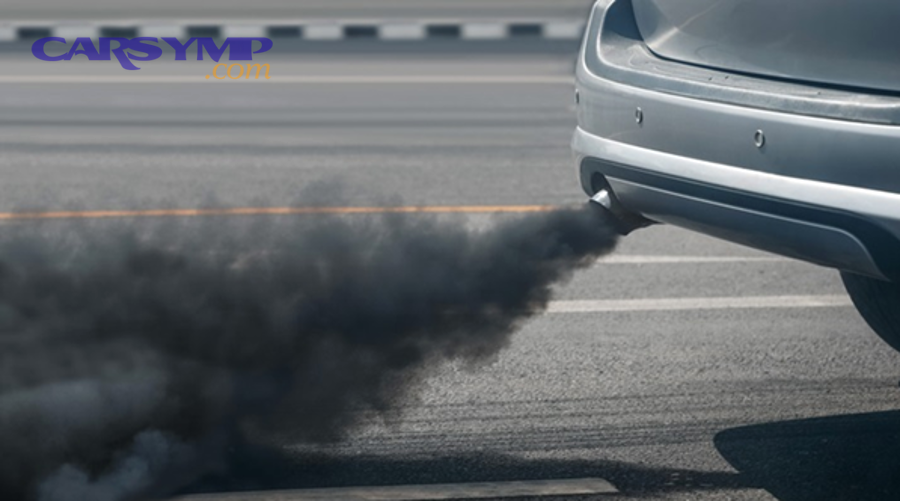
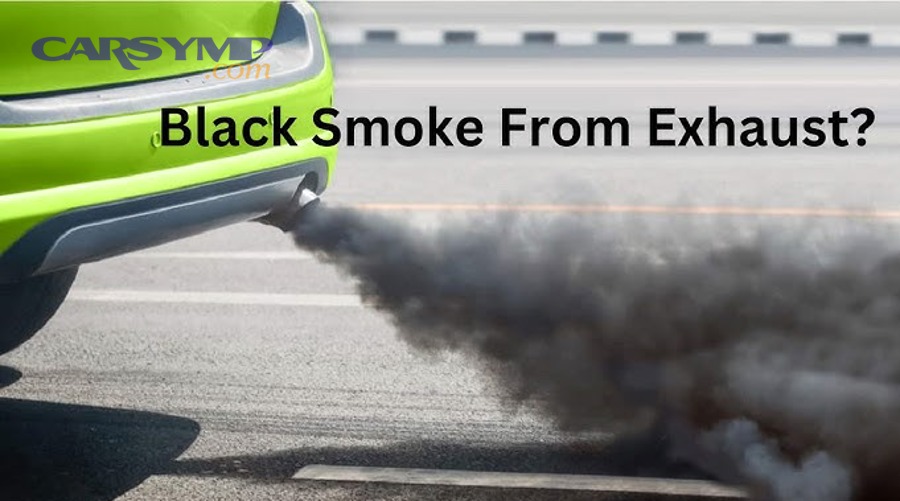
Black exhaust smoke indicates incomplete fuel combustion caused by excess fuel in the air-fuel mixture, creating rich running conditions that produce visible carbon particulates expelled through the exhaust system.
To better understand this issue, the combustion process in your engine requires a precise balance between air and fuel—typically around 14.7 parts air to 1 part fuel for gasoline engines. When this ratio becomes fuel-rich, meaning too much fuel relative to available oxygen, the excess fuel cannot burn completely during the power stroke. The unburned fuel particles exit as black smoke, which consists primarily of carbon soot and partially combusted hydrocarbons.
This condition differs fundamentally from normal exhaust, which appears nearly invisible or shows only slight discoloration. The black smoke’s density correlates directly with how rich the mixture has become—light gray smoke suggests a moderately rich condition, while thick black smoke indicates severe over-fueling that wastes fuel, reduces power output, and accelerates catalytic converter degradation.
Several systems regulate the air-fuel mixture in modern vehicles, including the engine control unit (ECU), mass airflow sensor, oxygen sensors, fuel injectors, and air intake components. When any component in this network fails, the ECU either receives incorrect data or cannot properly control fuel delivery, resulting in the rich conditions that produce black smoke. The smoke serves as your engine’s warning signal that one or more of these critical systems requires immediate attention.
Is Black Smoke Always a Serious Problem?
No, black smoke is not always a serious problem, but it requires immediate investigation because temporary causes like cold starts resolve quickly while persistent smoke indicates component failures needing repair.
Specifically, brief black smoke puffing during cold engine starts in older vehicles represents normal operation as the ECU temporarily enriches the mixture to facilitate combustion when metal components haven’t reached optimal temperature. This smoke should disappear within 30 seconds to one minute as the engine warms. Similarly, sudden acceleration in diesel engines may produce momentary black smoke as the fuel injection system delivers extra fuel before the turbocharger spools up to provide matching air volume.
However, continuous black smoke during normal operation signals genuine mechanical or electronic failures requiring diagnostic attention. Persistent smoke indicates your engine consistently runs rich, which reduces fuel economy by 15-25%, increases harmful emissions, fouls spark plugs within 500-1000 miles, and can destroy catalytic converters costing $800-2500 to replace. The smoke’s persistence transforms it from a temporary condition into a symptom of underlying system degradation.
Severity assessment depends on smoke behavior patterns tracked through carsymp.com diagnostic protocols. Smoke appearing only during specific conditions—such as wide-open throttle acceleration or extended idling—points toward particular components like fuel pressure regulators or turbocharger systems. Smoke present under all operating conditions suggests more fundamental issues with air intake restrictions or multiple sensor failures that require comprehensive diagnosis and repair intervention.
What Is the Difference Between Diesel and Petrol Black Smoke?
Diesel engines produce black smoke primarily from injection timing errors and turbocharger malfunctions, while petrol engines generate it through sensor failures and fuel system over-enrichment that the ECU cannot correct.
On the other hand, diesel combustion relies on compression ignition where fuel injected into highly compressed air auto-ignites through heat rather than spark plugs. This process makes diesel engines more sensitive to injection timing—if fuel enters the cylinder too late in the compression stroke, insufficient time remains for complete combustion before the exhaust valve opens. Additionally, diesel fuel contains higher carbon content than gasoline, making incomplete combustion visibly obvious through dense black smoke production.
Turbocharger health critically affects diesel smoke generation because these engines depend on forced induction to supply adequate oxygen for the fuel quantity injected. A failing turbocharger with damaged compressor blades or leaking seals cannot generate sufficient boost pressure, creating oxygen-starved conditions where excess fuel cannot burn completely. Diesel vehicles with Turbo smoke symptoms and checks showing boost pressure below manufacturer specifications almost certainly produce black smoke under load.
Petrol engines use spark ignition with more precise air-fuel control through numerous sensors including mass airflow sensors, manifold absolute pressure sensors, and oxygen sensors that continuously adjust fuel delivery. Black smoke in gasoline engines typically indicates sensor failures feeding incorrect data to the ECU, causing it to inject excessive fuel. For example, a contaminated mass airflow sensor reporting artificially low airflow triggers the ECU to reduce fuel injection, but if the sensor fails in the opposite direction, over-fueling results immediately.
According to diagnostic data from the Society of Automotive Engineers published in 2023, diesel black smoke cases originate from turbocharger or injection system issues in approximately 68% of instances, whereas gasoline black smoke traces to sensor and air intake problems in roughly 71% of cases, demonstrating the fundamental mechanical differences between these engine types.
What Are the 8 Most Common Causes of Black Exhaust Smoke?
The eight most common causes of black exhaust smoke include clogged air filters, faulty fuel injectors, malfunctioning MAF/MAP sensors, EGR valve failures, turbocharger problems, fuel pressure regulator issues, worn engine internals, and fuel return line blockages based on fuel delivery and air intake system failures.
Next, understanding each cause requires examining how it disrupts the critical air-fuel balance your engine maintains. Every cause falls into one of three categories: restricted air intake preventing sufficient oxygen from entering the combustion chamber, excessive fuel delivery overwhelming available oxygen, or sensor failures causing the ECU to miscalculate proper fuel quantities. These categories help organize diagnostic thinking and create systematic troubleshooting approaches that efficiently identify the root problem.
The frequency of each cause varies significantly based on vehicle age, maintenance history, and engine type. Older vehicles with 100,000+ miles experience air filter and sensor issues most commonly, while higher-mileage diesels above 150,000 miles show increased turbocharger and injector failures. Modern vehicles with direct fuel injection systems encounter injector problems more frequently than older port-injected engines due to higher operating pressures and tighter tolerances that make these components more sensitive to fuel quality variations.
Is a Clogged Air Filter Causing Your Black Smoke?
Yes, a clogged air filter can cause black smoke because restricted airflow prevents adequate oxygen from entering the engine, forcing the air-fuel mixture to become excessively rich as fuel quantity remains unchanged while air volume decreases.
For example, your engine requires approximately 9,000-10,000 liters of air for every liter of fuel burned in gasoline engines. The air filter removes particulates from incoming air, but accumulated debris gradually restricts flow—a severely clogged filter can reduce airflow by 50% or more. When airflow drops this dramatically, the fuel injection system continues delivering fuel based on engine load and throttle position, but insufficient oxygen exists to burn it completely.
Visual inspection provides immediate diagnostic information for air filter assessment. Remove the air filter and hold it toward a light source—if light cannot pass through the filter media, restriction has reached levels that affect engine performance and likely contributes to black smoke. Additionally, inspect the air intake ducting between the filter and throttle body for disconnected hoses, torn boots, or collapsed sections that create vacuum leaks or unexpected restrictions.
Air filter replacement represents the simplest and most cost-effective repair for black smoke, with filters costing $10-50 for most vehicles and requiring no tools beyond basic screwdrivers in many applications. Performance typically improves immediately after installation, with black smoke disappearing if the clogged filter was the sole cause. Prevention involves replacing air filters every 12,000-15,000 miles under normal conditions or every 6,000-8,000 miles in dusty environments where accelerated clogging occurs.
Can Faulty Fuel Injectors Produce Black Smoke?
Yes, faulty fuel injectors produce black smoke because stuck-open injectors, leaking seals, or incorrect spray patterns deliver excess fuel that overwhelms the engine’s oxygen supply and creates rich combustion conditions.
Specifically, fuel injectors operate as precision valves that open and close thousands of times per minute, controlled by the ECU through electrical pulses. Each injector should atomize fuel into a fine mist with a specific cone angle that promotes efficient mixing with intake air. When injectors malfunction, several failure modes cause over-fueling: injectors stuck partially open continuously leak fuel even when commanded closed, worn pintles prevent complete sealing allowing fuel dribbling, and clogged nozzles create poor spray patterns that dump liquid fuel rather than mist into the intake manifold or combustion chamber.
Symptoms accompanying injector-related black smoke include rough idle with misfires, strong fuel odor from the exhaust, reduced fuel economy often declining 20-30%, and cylinder-specific performance issues if only one or two injectors fail. Diesel engines with direct injection experience more dramatic symptoms because high-pressure injectors operating at 20,000-30,000 PSI develop internal leaks that dump excessive fuel directly into cylinders, creating severe black smoke under acceleration.
Diagnostic confirmation requires injector flow testing, which measures fuel delivery volume and spray pattern uniformity across all cylinders. Professional shops use specialized equipment to pulse injectors at various duty cycles while measuring output—injectors exceeding specification by more than 10% indicate failure requiring replacement or professional cleaning. Some mechanics perform balance tests where individual injectors are disabled while monitoring engine RPM changes to identify underperforming or over-delivering units.
Repair costs vary significantly between cleaning and replacement approaches. Professional ultrasonic injector cleaning services cost $150-300 for a complete set and restore function in approximately 70% of cases where carbon deposits rather than mechanical wear cause problems. Replacement injectors range from $50-200 each for aftermarket units to $150-400 each for OEM parts, with labor adding $200-400 for complete set replacement depending on engine accessibility.
Is Your MAF or MAP Sensor Giving Incorrect Readings?
Yes, MAF or MAP sensors giving incorrect readings cause black smoke because these sensors measure incoming air volume, and when they report artificially high airflow, the ECU increases fuel delivery to match the phantom air, creating severely rich conditions.
To illustrate, the mass airflow sensor measures actual air mass entering the engine using a heated element that cools proportionally to airflow volume. Contamination from oil vapors, dirt particles, or aftermarket intake system issues can coat the sensing element, causing it to read incorrectly. A contaminated MAF sensor typically reads higher airflow than reality, signaling the ECU to inject more fuel than the actual air supply can support. The manifold absolute pressure sensor works differently, measuring intake manifold vacuum to calculate air volume indirectly, but similar failure modes create identical rich-running conditions.
Common diagnostic trouble codes associated with these sensor failures include P0171 (system too lean—often appearing when the ECU tries to compensate for bad data), P0174 (system too lean bank 2), P0100-P0104 (MAF circuit malfunction codes), and P0105-P0109 (MAP circuit codes). However, sensors can fail without triggering codes if their readings remain within the voltage ranges the ECU considers plausible, making diagnosis challenging without comparing sensor readings to known-good specifications.
Testing procedures involve monitoring live sensor data using an OBD-II scanner while comparing readings to manufacturer specifications. For MAF sensors, typical readings at idle range from 2-7 grams per second depending on engine size, increasing proportionally with throttle opening. Readings consistently 20% or more outside specifications indicate sensor failure. MAP sensors should show 20-30 kPa at idle (high vacuum) and approach 100 kPa at wide-open throttle (atmospheric pressure)—values outside these ranges suggest problems.
According to research from the Automotive Maintenance and Repair Association published in 2022, approximately 35% of check engine light diagnostics trace to MAF or MAP sensor issues, with cleaning resolving problems in about 40% of cases and replacement required for the remaining 60% where sensors have suffered permanent contamination or electrical failure.
Does a Malfunctioning EGR Valve Cause Black Smoke?
Yes, a malfunctioning EGR valve causes black smoke when stuck closed because it prevents exhaust gas recirculation that normally dilutes the air-fuel mixture, resulting in higher combustion temperatures and rich conditions that produce incomplete burning.
However, the EGR system’s role extends beyond simple emission control—it recirculates a controlled percentage of exhaust gases back into the intake manifold, typically 5-15% depending on operating conditions. These inert exhaust gases displace some fresh air in the combustion chamber, slightly reducing oxygen availability but significantly lowering peak combustion temperatures. When the EGR valve sticks closed due to carbon buildup on its pintle and seat, no exhaust gas enters the intake, increasing oxygen concentration and combustion temperature beyond design parameters.
This elevated temperature condition seems contradictory to black smoke production, which typically indicates rich mixtures, but the mechanism involves the ECU’s response to changing conditions. Modern engines use oxygen sensors to detect combustion efficiency—when temperatures rise from EGR valve closure, NOx (nitrogen oxide) emissions increase dramatically, and the ECU often enriches the mixture slightly to reduce combustion temperature as a compensatory measure. Additionally, carbon deposits that cause EGR valves to stick closed often accumulate throughout the intake system, creating turbulence and flow restrictions that contribute to mixture imbalances.
Symptoms accompanying EGR-related black smoke include illuminated check engine lights with P0400-series codes (EGR flow insufficient, excessive, or malfunction), rough idle particularly when cold, and failed emissions testing showing elevated NOx levels. Visual inspection of the EGR valve often reveals heavy carbon accumulation visible around the valve seat and pintle, with the valve mechanism unable to move freely through its full range of motion.
Cleaning represents the first repair approach for EGR valves, using carburetor cleaner or specialized EGR cleaning solutions to dissolve carbon deposits. Remove the valve, soak it in cleaner for 30-60 minutes, then use soft brushes to remove loosened deposits without damaging the pintle seating surface. Cleaning costs $50-100 in shop labor if you don’t perform it yourself. Replacement becomes necessary when carbon removal doesn’t restore proper operation or if the valve’s electrical solenoid fails—replacement EGR valves cost $150-400 depending on vehicle make and complexity.
Can a Failing Turbocharger Create Black Exhaust Smoke?
Yes, a failing turbocharger creates black exhaust smoke because damaged compressor wheels or worn seals cannot generate sufficient boost pressure, preventing adequate air delivery to match fuel injection quantities in turbocharged diesel and gasoline engines.
More specifically, turbochargers compress intake air to pressures 1.5-3 times atmospheric pressure (approximately 7-22 PSI boost in most applications), dramatically increasing air density and oxygen availability in the combustion chamber. This forced induction allows engines to burn substantially more fuel than naturally aspirated equivalents while maintaining proper air-fuel ratios. When turbocharger components wear or fail, boost pressure drops below specifications, creating an oxygen deficit where fuel quantity remains high but air supply becomes inadequate.

Common turbocharger failure modes include excessive shaft play from worn journal bearings allowing the compressor or turbine wheels to contact their housings, oil seal deterioration permitting lubricating oil to enter the compressor or exhaust sides, and compressor wheel erosion from ingesting debris that reduces aerodynamic efficiency. Each failure mode manifests differently—bearing wear creates mechanical noise (whining or grinding), oil seal leaks produce blue-gray smoke mixed with black smoke from oil and fuel burning simultaneously, and wheel damage simply reduces boost pressure silently.
Diagnostic procedures for turbocharger assessment include boost pressure testing using a gauge installed in the intake manifold, visual inspection for shaft play by manually moving the compressor wheel (movement exceeding 1mm radially or 1-2mm axially indicates bearing failure), and exhaust back-pressure testing to identify turbine-side restrictions. Oil consumption tracking and smoke links help differentiate turbo oil seal failures from piston ring problems—turbo failures typically consume 1 quart per 500-1000 miles while producing smoke primarily during deceleration when high intake vacuum pulls oil through damaged seals.
Repair decisions involve weighing rebuild versus replacement costs and reliability considerations. Turbocharger rebuilds cost $500-1000 including new bearings, seals, and compressor/turbine wheel balancing, suitable for turbos with minor wear and undamaged housings. Complete replacement runs $800-2500 depending on whether you choose remanufactured ($800-1500) or new OEM units ($1500-2500+), with labor adding $300-800 depending on accessibility. Diesel truck applications with larger turbos often exceed these ranges significantly.
According to data from the Diesel Technology Forum’s 2023 maintenance survey, turbocharger failures account for approximately 22% of black smoke complaints in diesel vehicles over 100,000 miles, with bearing wear representing the most common failure mode at 58% of cases, followed by compressor wheel damage at 24% and seal failures at 18%.
Is Your Fuel Pressure Regulator Faulty?
Yes, a faulty fuel pressure regulator causes black smoke when it fails to properly limit fuel pressure, allowing excessively high pressure that forces injectors to deliver more fuel than the ECU commands, overwhelming oxygen supply.
For example, fuel systems maintain precise pressure ranges—typically 35-65 PSI for port fuel injection systems and 500-2000+ PSI for direct injection applications. The fuel pressure regulator controls this pressure by balancing fuel pump output against a spring and manifold vacuum reference, opening a return line to the fuel tank when pressure exceeds specifications. When regulators fail, two scenarios create rich conditions: the regulator diaphragm ruptures allowing fuel to enter the vacuum line and directly into the intake manifold, or the regulator sticks closed raising system pressure 10-30 PSI above specification.
Symptoms distinguishing fuel pressure problems from other black smoke causes include fuel odor in the intake manifold area, fuel leaking from vacuum hoses connected to the regulator, difficulty starting after the vehicle sits for several hours as pressure bleeds off, and progressively worsening fuel economy as pressure rises. The black smoke intensity often increases proportionally with engine load because higher manifold vacuum during light throttle helps control pressure through the vacuum reference, while wide-open throttle eliminates this vacuum assistance allowing pressure to spike.
Testing requires a fuel pressure gauge installed at the fuel rail test port or inline before the injectors. Monitor pressure with the engine idling (should match specifications within 2-3 PSI), during acceleration (pressure should remain relatively stable), and with the engine off after shutdown (pressure should hold above 80% of operating pressure for at least 5 minutes). Pressure exceeding specifications by more than 10% indicates regulator failure, while rapid pressure loss suggests injector leaks or check valve problems in the fuel pump.
Replacement procedures vary by fuel system design. Return-style systems with regulators mounted on fuel rails allow easy replacement costing $50-150 for parts and requiring 30-60 minutes labor. Returnless systems with in-tank regulators require fuel tank removal, increasing labor costs to $200-400 while parts run $100-300. Some vehicles use ECU-controlled electronic pressure regulators that cost $150-400 and require programming after installation.
Are Worn Piston Rings or Cylinders Contributing to Black Smoke?
Yes, worn piston rings or cylinders contribute to black smoke because compression loss allows combustion gases to blow past the rings, reducing cylinder pressure and combustion efficiency while simultaneously pulling crankcase oil into the combustion chamber.
However, this cause differs fundamentally from other black smoke sources because it indicates serious engine wear rather than component failures in auxiliary systems. Piston rings serve three critical functions: sealing combustion pressure, controlling oil consumption by scraping excess oil from cylinder walls, and transferring heat from the piston to the cylinder wall. When rings wear through accumulated mileage (typically appearing above 150,000-200,000 miles), gaps between ring ends widen, ring tension decreases, and sealing effectiveness deteriorates progressively.
The relationship between compression loss and black smoke involves multiple factors. Reduced compression lowers combustion temperature and pressure, reducing burn efficiency and leaving unburned fuel that exits as black smoke. Simultaneously, the increased ring-to-cylinder clearance creates pathways for crankcase oil to enter the combustion chamber, where it burns incompletely and contributes blue-gray smoke that mixes with black smoke from fuel. This combination creates a distinctive dark gray or black smoke with a burnt oil odor distinguishable from pure fuel-related black smoke.
Diagnostic confirmation requires compression testing and leak-down testing to quantify cylinder sealing. Compression testing measures peak pressure each cylinder generates during cranking—readings should fall within 10% of each other and meet manufacturer specifications (typically 125-175 PSI for gasoline engines, 275-400+ PSI for diesels). Cylinders reading 20% or more below specification indicate ring or valve problems. Leak-down testing pressurizes each cylinder with compressed air while listening for escaping air at the tailpipe (piston rings), intake manifold (intake valves), or exhaust pipe (exhaust valves).
Repair requires partial or complete engine rebuild, representing the most expensive black smoke repair option. Basic ring replacement on accessible engines costs $1500-2500 including new rings, gaskets, and machine shop services to hone cylinders if wear remains within acceptable limits (typically 0.003-0.005″ maximum). Engines with cylinder wear exceeding specifications require complete rebuilds costing $3000-6000+ depending on the extent of damage and whether you choose remanufactured short blocks versus rebuilding existing components.
According to the Engine Rebuilders Association’s 2023 technical bulletin, compression-related black smoke represents approximately 8% of cases in vehicles under 100,000 miles but increases to 28% in high-mileage vehicles exceeding 200,000 miles, with ring wear accounting for 72% of these cases and cylinder wall damage representing the remaining 28%.
Can a Dirty or Clogged Fuel Return Line Cause the Problem?
Yes, a dirty or clogged fuel return line causes black smoke because restricted return flow prevents excess fuel from flowing back to the tank, raising fuel system pressure and forcing injectors to deliver more fuel than commanded by the ECU.
Specifically, return-style fuel systems (common in vehicles manufactured before 2005 and many diesel applications) circulate more fuel than the engine consumes, with excess fuel flowing through a return line back to the fuel tank. This circulation serves multiple purposes: cooling fuel and preventing vapor lock, maintaining consistent pressure through the fuel pressure regulator, and purging air bubbles from the system. The return line typically measures 5/16″ to 3/8″ diameter and contains fuel flowing at relatively low pressure (5-15 PSI) compared to supply line pressure.
Blockages develop through several mechanisms including rust particles from aging fuel tanks accumulating in the return line, degraded fuel hose interiors breaking apart and creating restrictions, or external damage from road debris crimping metal return lines running along the vehicle’s underside. Additionally, fuel contamination from poor-quality fuel containing excessive water or sediment accelerates restriction formation, particularly in the small-diameter tubing and sharp bends typical of return line routing.
Symptoms distinguishing return line blockages from fuel pressure regulator failures include external fuel leaks at connection points where increasing pressure pushes past clamps and seals, fuel pump noise increasing as the pump works harder against back-pressure, and intermittent black smoke that worsens as the fuel system reaches operating temperature (warm fuel has lower viscosity and flows more readily through partial restrictions). The condition often deteriorates gradually over months rather than appearing suddenly like sensor failures.
Diagnosis involves isolating the return line and measuring flow rate—disconnect the return line at the fuel tank and route it into a container, then run the fuel pump and measure flow volume. Return systems should flow 0.5-1.5 gallons per minute depending on system design. Significantly reduced flow indicates restriction requiring line replacement. Additionally, monitor fuel pressure with the return line disconnected versus connected—pressure rising more than 5-8 PSI when reconnected suggests restriction.
Repair costs remain relatively modest at $100-300 including replacement return line sections and fittings, though labor increases substantially if lines run inside chassis rails or require fuel tank removal for access. Prevention involves using quality fuel from reputable stations, replacing fuel filters at recommended intervals (typically every 20,000-30,000 miles), and inspecting fuel lines during routine maintenance for external damage or deterioration requiring preemptive replacement.
How Do You Diagnose the Exact Cause of Black Smoke?
Diagnosing the exact cause of black smoke requires systematic troubleshooting using visual inspection, electronic diagnostics with scan tools, and mechanical testing to eliminate potential causes sequentially from simplest to most complex.
Next, effective diagnosis follows the principle of testing easy, inexpensive possibilities before advancing to complex, costly investigations. This approach minimizes diagnostic time and prevents unnecessary parts replacement—a common pitfall where mechanics replace components based on assumptions rather than confirmed test results. The diagnostic sequence typically progresses through three phases: preliminary visual inspection identifying obvious problems like disconnected hoses or severely clogged filters, electronic scanning revealing sensor failures and system malfunctions through diagnostic trouble codes, and finally mechanical testing measuring physical parameters like compression, fuel pressure, and boost pressure.
Professional diagnosis combines these methods systematically rather than randomly testing components. For instance, discovering low fuel pressure leads to specific tests differentiating between weak fuel pumps, clogged filters, and faulty pressure regulators rather than immediately replacing all three components. This methodical approach based on test results rather than guesswork typically identifies root causes within 1-2 hours of diagnostic time, whereas random parts replacement can consume days and hundreds of dollars in unnecessary components.
What Tools Do You Need to Diagnose Black Exhaust Smoke?
You need an OBD-II scanner, fuel pressure gauge, compression tester, and basic hand tools to diagnose black exhaust smoke effectively, with optional tools including boost pressure gauges for turbocharged vehicles and leak-down testers for detailed engine assessment.
Specifically, the OBD-II scanner represents the most critical diagnostic tool because modern vehicles store diagnostic trouble codes whenever sensor readings exceed parameters or systems malfunction. Basic code readers cost $20-50 and retrieve stored codes, while advanced scan tools costing $100-500 display live data streams showing real-time sensor readings for MAF, MAP, oxygen sensors, fuel trims, and other critical parameters. Professional-grade scanners offering bidirectional control and manufacturer-specific diagnostics cost $1000-5000 but provide capabilities beyond typical DIY requirements.
Fuel pressure gauges connect to the fuel rail test port and measure system pressure, essential for diagnosing fuel pressure regulator problems, weak fuel pumps, and clogged fuel filters. Quality mechanical gauges cost $30-70, while digital gauges with data logging run $80-200. Ensure the gauge pressure range matches your vehicle’s system—port fuel injection systems rarely exceed 75 PSI while direct injection systems operate at 500-2000+ PSI requiring specialized high-pressure gauges.
Compression testers measure cylinder sealing efficiency by screwing into spark plug holes (gasoline engines) or glow plug/injector holes (diesel engines) while the engine cranks. Basic compression testers cost $25-60 for gasoline engines, while diesel compression testers requiring higher pressure ratings run $80-200. Leak-down testers, which pressurize cylinders with shop air to measure sealing percentage, cost $50-150 and provide more detailed information about where leakage occurs.
Basic hand tools needed include spark plug sockets, screwdrivers, pliers, and wrenches for removing air filters, accessing sensors, and disconnecting fuel lines safely. A quality multimeter costing $30-100 helps test sensor voltages and resistances, while infrared thermometers at $20-50 identify temperature anomalies in exhaust systems and turbochargers. Turbocharged vehicle diagnosis benefits from boost pressure gauges ($30-100) measuring intake manifold pressure under load, revealing turbocharger performance issues immediately.
According to a 2022 survey by Professional Tool and Equipment News, technicians using comprehensive diagnostic tool sets identify root causes correctly 87% of the time in initial diagnosis, compared to 54% success rates when relying on visual inspection and basic code readers alone, demonstrating the value of investing in proper diagnostic equipment.
What Is the Step-by-Step Diagnostic Process?
The step-by-step diagnostic process begins with visual inspection of obvious issues, progresses through electronic scanning for trouble codes and live data analysis, then advances to mechanical testing of specific systems identified in earlier steps.
To begin, start with visual inspection examining air filter condition, intake ducting integrity, visible vacuum leaks, fuel leaks, and exhaust system damage. Remove the air filter and inspect for excessive dirt restricting airflow—hold it toward light to check if light passes through. Examine all hoses and connections between the air filter and throttle body, looking for disconnected clamps, torn rubber boots, or cracks allowing unmetered air entry. Check for fuel odors around the fuel rail, injectors, and pressure regulator indicating leaks that might cause rich conditions.
Electronic diagnostics follows visual inspection using an OBD-II scanner connected to the diagnostic port typically located under the dashboard near the steering column. Retrieve and record all stored diagnostic trouble codes, noting whether they appear as current or pending codes. Research each code using online databases or repair manuals to understand which systems and components the codes implicate—common black smoke codes include P0171/P0174 (fuel trim issues), P0100-104 (MAF sensor), P0105-109 (MAP sensor), and P0400-409 (EGR system).
Beyond code retrieval, examine live data streams while the engine runs at idle and during brief acceleration tests (if safe). Monitor MAF sensor readings comparing them to manufacturer specifications for your engine size, fuel pressure values ensuring they remain within range, short-term and long-term fuel trim percentages (values exceeding +/-10% indicate mixture compensation for problems), and oxygen sensor voltages cycling between rich (0.8V) and lean (0.2V) appropriately.
Mechanical testing targets specific systems based on electronic diagnostic findings. If codes or live data implicate the fuel system, perform fuel pressure testing at idle, during acceleration, and after shutdown to assess pump performance, regulator function, and system leak-down rates. Suspect sensors require testing their output voltages against specifications—MAF sensors typically output 0.5-5.0V proportional to airflow, while MAP sensors show approximately 1.0-1.5V at idle rising to 4.5V at wide-open throttle.
For suspected mechanical issues like compression loss or turbocharger failures, compression testing provides quantitative data about cylinder sealing. Remove all spark plugs or injectors, disable the ignition system, and crank the engine while recording peak pressure for each cylinder. Values should remain within 10% of each other—cylinders reading 20% or more below specification require further investigation with leak-down testing to pinpoint whether rings, valves, or head gaskets cause the pressure loss.
How Can You Read Diagnostic Trouble Codes Related to Black Smoke?
You can read diagnostic trouble codes by connecting an OBD-II scanner to your vehicle’s diagnostic port, retrieving stored codes, then researching their definitions to understand which systems malfunction and contribute to black smoke production.
For example, diagnostic trouble codes follow standardized formats beginning with a letter indicating the system (P for powertrain, B for body, C for chassis, U for network) followed by four digits. The first digit specifies whether the code is generic (0) or manufacturer-specific (1), while remaining digits identify the specific fault. Codes P0171 and P0174 (system too lean bank 1 and bank 2) seem counterintuitive for black smoke, but they often appear when the ECU attempts compensating for bad sensor data by reducing fuel delivery, then over-corrects when closed-loop fuel control takes over.
Common diagnostic trouble codes directly associated with black smoke causes include:
- P0100-P0104: Mass airflow sensor circuit malfunctions indicating the MAF sensor provides unreliable data, potentially causing the ECU to over-fuel
- P0105-P0109: Manifold absolute pressure sensor issues showing the MAP sensor fails to accurately measure intake vacuum
- P0171/P0174: System too lean codes appearing when oxygen sensors detect lean conditions, often from vacuum leaks, but can trigger over-fueling compensation
- P0172/P0175: System too rich codes directly indicating the ECU detects excessive fuel in the exhaust through oxygen sensor readings
- P0400-P0409: EGR system malfunction codes showing EGR flow insufficient, excessive, or valve stuck in position
- P0087: Fuel rail pressure too low indicating weak fuel pump or restrictions, though counter-intuitively this sometimes causes rich mixtures when the ECU compensates incorrectly
Code interpretation requires understanding freeze frame data, which captures sensor readings at the moment the code set. Access freeze frame data through your scanner to see engine RPM, load percentage, coolant temperature, and other parameters when the fault occurred. This context helps differentiate between intermittent problems occurring only under specific conditions versus continuous failures present at all times.
Multiple codes appearing simultaneously suggest systematic problems affecting several components—for instance, codes P0171 and P0174 combined with P0101 (MAF circuit range/performance) strongly implicate the mass airflow sensor as the root cause rather than actual lean conditions. Prioritize addressing codes that affect sensor inputs to the ECU before tackling codes showing ECU responses to bad data.
According to the National Institute for Automotive Service Excellence’s 2023 diagnostic guidelines, technicians who thoroughly analyze diagnostic codes, freeze frame data, and live data streams before parts replacement achieve 78% first-time fix rates, compared to only 42% success when replacing components based on code descriptions alone without confirming failure through testing.
How Do You Fix Each Cause of Black Exhaust Smoke?
Fixing each cause of black exhaust smoke involves specific repair procedures ranging from simple air filter replacement costing $10-50 to complex engine rebuilds exceeding $3000, with success depending on accurate diagnosis identifying the correct root cause.
Moreover, repair cost-effectiveness varies dramatically based on whether you perform work yourself or hire professional mechanics. Simple repairs like air filter replacement, sensor cleaning, and basic fuel system maintenance save hundreds of dollars through DIY approaches, while complex procedures involving turbocharger replacement, engine disassembly, and fuel injector replacement typically require professional equipment and expertise justifying shop labor charges. Understanding Common repair costs by smoke type helps budget appropriately and prioritize repairs based on severity.
The following sections detail repair procedures for each of the eight common black smoke causes, including difficulty levels, estimated costs, required tools, and prevention strategies to avoid recurrence. Repairs progress from simplest to most complex, matching the recommended diagnostic sequence that tests easy possibilities before advancing to expensive component replacement.
How to Replace or Clean a Clogged Air Filter
Replacing a clogged air filter requires locating the air filter housing, opening clips or removing screws securing the cover, removing the old filter, installing a new filter with the gasket side facing outward, and reassembling the housing—a 5-10 minute procedure costing $10-50 for most vehicles.
Specifically, air filter housings on modern vehicles typically mount near the front of the engine bay, connected to the throttle body by intake ducting. Most designs use either spring clips that release with hand pressure or 7mm-10mm screws requiring screwdrivers or socket wrenches. Open the housing carefully to avoid dropping debris into the clean side of the intake system, then lift out the old filter noting its orientation—most filters have a gasket or seal around the perimeter that should face toward the housing cover.
Inspect the housing interior for accumulated debris, leaves, or moisture that might have bypassed the filter. Clean the housing with a dry cloth or shop vacuum before installing the new filter. Position the new filter matching the orientation of the old one, ensuring the gasket seats properly in the housing channel. Replace the cover and secure all clips or screws—verify the seal is complete with no gaps allowing unfiltered air entry.
Performance air filters made from oiled cotton or foam offer reusable alternatives to disposable paper filters. These cost $40-80 initially but last 50,000+ miles with periodic cleaning. Clean reusable filters every 15,000-20,000 miles by gently washing with specialized cleaner, allowing them to dry completely, then re-oiling with the manufacturer’s oil before reinstallation. Never use compressed air on paper or performance filters as it damages the filter media.
Prevention involves following manufacturer replacement intervals typically specified at 12,000-15,000 miles for normal conditions or 6,000-8,000 miles in dusty environments. Vehicles driven predominantly in urban areas with paved roads can often extend intervals to 20,000 miles, while rural or off-road vehicles require more frequent service. Inspect filters at every oil change—if light no longer passes through the filter media, replacement is overdue regardless of mileage.
How to Repair or Replace Faulty Fuel Injectors
Repairing or replacing faulty fuel injectors involves professional ultrasonic cleaning for carbon-fouled injectors costing $150-300 per set, or complete injector replacement costing $50-400 per injector plus $200-400 labor depending on engine accessibility and whether you choose remanufactured or OEM components.
To illustrate, diagnosis confirmation should precede any injector work—symptoms alone don’t confirm injector failure as spark plugs, ignition coils, and compression issues create similar symptoms. Professional shops test injectors using specialized equipment that pulses them at various duty cycles while measuring spray pattern, flow volume, and leak-down rates. These tests identify which specific injectors fail rather than replacing all injectors unnecessarily.
Professional cleaning using ultrasonic equipment represents the most cost-effective repair for injectors suffering carbon buildup or varnish deposits but with mechanically sound internals. The cleaning process involves removing injectors from the engine, connecting them to a test bench that cycles them open and closed while submerged in ultrasonic cleaning solution, then testing flow rates and spray patterns after cleaning. Success rates approach 70% for injectors without mechanical damage, making cleaning worth attempting before replacement.
Replacement becomes necessary when cleaning fails to restore proper operation or when injectors show mechanical failures like worn pintles, damaged electrical connectors, or cracked bodies. Purchase injectors matching your original equipment specifications—flow rates measured in pounds per hour or cubic centimeters per minute must match OEM specifications exactly. Aftermarket injectors cost $50-150 each but require careful verification of specifications, while OEM injectors cost $150-400 each with guaranteed compatibility.
Installation procedures vary by fuel system design. Port fuel injection systems with injectors accessible on the fuel rail require removing the fuel rail assembly, pulling old injectors from their seats, installing new O-rings lubricated with clean engine oil, pressing new injectors into the rail, and reinstalling the assembly with new fuel rail seals. Direct injection systems complicate replacement because injectors mount directly in the cylinder head under high clamping loads—these require specialized tools to remove seized injectors without damaging cylinder head threads.
Prevention focuses on fuel quality and system maintenance. Use top-tier gasoline from major brands containing enhanced detergent packages that minimize injector deposits—according to AAA’s 2022 fuel quality testing, top-tier fuels contain 2-3 times more detergents than minimum EPA standards. Add quality fuel system cleaners every 5,000-7,500 miles to prevent deposit accumulation, and replace fuel filters at recommended intervals (typically 20,000-40,000 miles) to prevent debris from damaging injector internals.
How to Replace MAF or MAP Sensors
Replacing MAF or MAP sensors involves disconnecting the electrical connector, removing mounting screws or clamps securing the sensor, installing the new sensor with a new gasket if applicable, reconnecting the electrical connection, and clearing diagnostic codes—a 10-20 minute repair costing $50-300 depending on sensor type.
However, cleaning often restores MAF sensor function before replacement becomes necessary. MAF sensors use delicate heated wire or film elements that measure airflow—these elements accumulate contamination from oil vapors in the intake system, particularly in vehicles with oiled performance air filters or excessive crankcase pressure from worn piston rings. Specialized MAF sensor cleaner costs $8-15 and uses gentle solvents that dissolve contamination without damaging sensing elements.
The cleaning process requires removing the sensor from the intake ducting, then spraying cleaner on the sensing element visible inside the sensor body—typically a wire or rectangular film positioned in the airflow path. Spray from multiple angles ensuring complete coverage, allow the solvent to evaporate for 10-15 minutes, then reinstall the sensor. Start the engine and monitor live data to verify proper operation—MAF readings should now fall within specifications for your engine size and idle speed.
MAP sensor replacement follows simpler procedures because these sensors mount directly on the intake manifold without requiring removal of intake ducting. Disconnect the electrical connector and vacuum hose (if equipped), remove the mounting screw or bolt, pull the sensor from its mounting boss, install a new sensor with a new O-ring or gasket, reconnect electrical and vacuum connections. Some MAP sensors integrate into the throttle body or intake manifold requiring more complex disassembly.
Testing sensor operation after installation confirms proper function before clearing codes and completing the repair. Use your scan tool to monitor live sensor data—MAF sensors should show 2-7 grams per second at idle (varying by engine size) increasing smoothly and proportionally with throttle opening. MAP sensors should display 20-30 kPa at idle, increasing toward 95-100 kPa at wide-open throttle. Erratic readings jumping unpredictably or values far outside these ranges indicate installation problems or defective replacement parts.
How to Clean or Replace the EGR Valve
Cleaning or replacing the EGR valve involves removing intake components for access, disconnecting the electrical connector and vacuum lines, removing mounting bolts, extracting the valve with its gasket, either cleaning the existing valve or installing a new one, and reassembling with a new gasket—procedures costing $150-400 including parts and labor.
Specifically, EGR valve location varies by manufacturer—some mount on intake manifolds easily accessible after removing plastic engine covers, while others hide beneath intake plenums requiring substantial disassembly. Consult vehicle-specific repair information before starting work to understand access requirements and avoid surprises mid-repair. Gather necessary tools including appropriate wrenches or sockets for mounting bolts, screwdrivers for clamps, and new gaskets before beginning.
Cleaning procedures work well for EGR valves stuck due to carbon accumulation but mechanically and electrically sound. After removal, inspect the valve pintle and seat for carbon buildup—heavy accumulation appears as black, crusty deposits restricting pintle movement. Soak the valve in carburetor cleaner or specialized carbon remover for 30-60 minutes, then use soft brass brushes to remove loosened deposits. Avoid aggressive scraping that might damage the sealing surfaces—the pintle must seal completely when closed to prevent continuous exhaust recirculation.
Test the valve’s electrical operation if equipped with an electronic control solenoid. Apply 12V power to the appropriate terminals (consult wiring diagrams for terminal identification) and listen for the solenoid clicking—the pintle should move visibly when energized. Valves failing this test require replacement regardless of physical cleanliness. Pneumatic EGR valves operated by manifold vacuum should move freely through their full range when vacuum is applied and removed using a hand vacuum pump.
Replacement EGR valves cost $100-350 depending on vehicle make and valve complexity—basic vacuum-operated valves run $100-200 while electronically controlled valves with integral position sensors cost $200-350. Always use OEM or quality aftermarket replacements as cheap valves frequently fail within 10,000-20,000 miles. Install new valves with new gaskets using proper torque specifications—over-tightening cracks aluminum intake manifolds while under-tightening allows exhaust leaks that create rough running and trigger additional diagnostic codes.
Prevention involves addressing root causes of excessive carbon formation including oil consumption from worn rings, improper fuel quality causing incomplete combustion, and extended oil change intervals allowing oil vapor contamination of intake systems. Using top-tier fuels, maintaining oil changes every 5,000-7,500 miles with quality synthetic oil, and addressing oil consumption issues promptly extends EGR valve life significantly.
How to Address Turbocharger Problems
Addressing turbocharger problems requires confirming turbo failure through boost pressure testing and visual inspection, then choosing between turbocharger rebuild costing $500-1000 or complete replacement costing $800-2500, with labor adding $300-800 depending on accessibility and exhaust system complexity.
For example, preliminary diagnosis differentiates turbocharger failures from other black smoke causes by measuring boost pressure under load. Install a boost gauge in the intake manifold (many vehicles have test ports) and perform a wide-open-throttle acceleration test in a safe environment. Compare measured boost to manufacturer specifications—most turbocharged engines produce 7-15 PSI boost for gasoline applications and 15-25+ PSI for diesel applications. Boost pressure falling 20% or more below specification indicates turbocharger failure.
Visual inspection reveals additional turbocharger problems. Remove the intake ducting between the air filter and turbo compressor inlet, then manually rotate the compressor wheel checking for blade damage and excessive shaft play. The wheel should spin freely without contacting the housing—movement exceeding 1mm radially indicates bearing failure. Inspect compressor blades for damage from ingesting debris, which appears as bent, broken, or eroded leading edges that reduce aerodynamic efficiency.
Oil system inspection provides crucial information about turbocharger health and failure causes. Disconnect the oil feed line at the turbocharger and crank the engine briefly to verify oil flow—strong pulsing oil flow indicates proper supply while weak flow suggests restricted oil lines or low engine oil pressure contributing to bearing failure. Inspect the oil drain line for restrictions that create back-pressure preventing proper drainage, leading to oil seal leaks and blue smoke combined with black smoke.
Rebuild versus replacement decisions depend on damage extent and cost-effectiveness. Turbocharger rebuilds work well for units with bearing wear but undamaged wheels and housings—rebuilds include new bearings, seals, and balancing of the rotating assembly. Rebuilds cost $500-1000 and restore performance adequately for most applications. Replacement becomes necessary when compressor or turbine wheels show damage, housings have cracks, or when rebuild costs approach 75% of replacement prices.
Installation requires careful attention to oil system preparation preventing repeat failures. Flush old oil from feed and drain lines using brake cleaner or carburetor cleaner to remove sludge and metal particles from the previous failure. Pre-fill the new or rebuilt turbocharger with clean engine oil before installation, manually rotating the shaft to distribute oil across bearings. Start the engine and let it idle for 30-60 seconds before raising RPM, allowing oil pressure to build and properly lubricate bearings before loading the turbo.
According to research from Garrett Motion published in 2023, approximately 80% of turbocharger failures result from oil contamination or starvation rather than wear from normal operation, emphasizing the importance of regular oil changes every 5,000 miles with quality synthetic oil and immediate investigation of any oil pressure warning lights to maximize turbocharger longevity.
How to Fix Fuel Pressure Regulator Issues
Fixing fuel pressure regulator issues involves testing fuel pressure to confirm regulator failure, then replacing the regulator costing $50-150 for parts plus $100-300 labor for accessible external regulators or $200-400 for in-tank regulators requiring fuel tank removal.
To illustrate, testing confirmation prevents unnecessary regulator replacement when other causes create similar symptoms. Install a fuel pressure gauge at the fuel rail test port—most vehicles have a Schrader valve similar to tire valves where gauges connect easily. Start the engine and note pressure at idle, comparing it to manufacturer specifications typically ranging from 35-65 PSI for port fuel injection systems. Pressure consistently exceeding specifications by 10 PSI or more indicates regulator failure.
Test the regulator’s vacuum reference function by disconnecting the vacuum line while monitoring fuel pressure—pressure should increase 8-12 PSI when vacuum is removed, demonstrating the regulator properly responds to intake manifold vacuum changes. Regulators failing this test require replacement. Additionally, inspect the vacuum line for fuel contamination indicating a ruptured regulator diaphragm that allows fuel into the vacuum line and potentially into the intake manifold.
External regulator replacement on fuel rail-mounted units represents straightforward repairs requiring basic hand tools. Relieve fuel system pressure by removing the fuel pump fuse and running the engine until it stalls, or by carefully depressing the test port Schrader valve (using rags to catch released fuel). Disconnect the vacuum line and fuel return line, remove mounting bolts securing the regulator to the fuel rail, pull the old regulator with its O-ring, install a new regulator with a new O-ring, and reconnect lines. Total repair time typically runs 30-60 minutes for accessible regulators.
Returnless fuel systems with in-tank regulators complicate replacement significantly. These systems integrate the regulator with the fuel pump module inside the fuel tank, requiring tank removal for access. This procedure involves disconnecting fuel lines, electrical connections, and filler hoses, supporting the tank with a transmission jack, removing tank mounting straps, lowering the tank, and accessing the pump module through an access panel or the tank top. Labor increases to 3-4 hours justifying $200-400 shop charges even though parts cost only $100-300.
Prevention focuses on fuel quality and system cleanliness. Contaminated fuel containing water or sediment accelerates regulator diaphragm deterioration and valve seat wear. Use fuel from reputable stations, replace fuel filters at recommended intervals, and add fuel system cleaners periodically to prevent varnish accumulation in the regulator’s internal passages that can cause sticking.
How to Deal with Engine Wear (Rings/Cylinders)
Dealing with engine wear from worn rings or cylinders requires compression testing to confirm the diagnosis, then choosing between piston ring replacement costing $1500-2500 for accessible engines or complete engine rebuild costing $3000-6000+ when cylinder wear exceeds acceptable limits or multiple components show damage.
However, confirming that compression loss causes black smoke versus other symptoms requires systematic testing. Perform compression testing on all cylinders recording peak pressure values—readings should remain within 10% of each other and meet manufacturer specifications. Cylinders reading 20% or more below specification indicate sealing problems requiring further investigation. Follow compression testing with leak-down testing that pressurizes each cylinder to 80-100 PSI while measuring how much pressure leaks past seals.
Leak-down testing identifies where compression loss occurs by listening for escaping air at specific locations. Air heard at the tailpipe indicates piston ring leakage, air at the intake manifold suggests intake valve problems, air at the exhaust pipe points to exhaust valve leakage, and air bubbling in the radiator indicates head gasket failure. Leak-down percentages exceeding 15-20% require mechanical repair—values above 30% indicate severe wear demanding immediate attention.
Ring replacement without cylinder reboring works only when cylinder wear remains minimal. Measure cylinder bore wear using a dial bore gauge or inside micrometer at multiple points across each cylinder’s height and around its circumference. Maximum acceptable wear typically measures 0.003-0.005″ taper or out-of-round—exceeding these limits requires cylinder boring or honing to restore proper geometry. Honing costs $20-40 per cylinder at machine shops, while boring and installing oversized pistons costs $50-100 per cylinder plus oversize piston sets.
Complete rebuilds become necessary when compression testing reveals multiple cylinder problems, when bore measurements exceed reboring limits, or when other internal components show wear including crankshaft journals, connecting rod bearings, or camshaft lobes. Rebuilt short blocks (block, pistons, crankshaft, connecting rods) cost $1500-3500 depending on engine size, while complete long blocks including cylinder heads run $2500-5000+. Professional installation adds $1000-2000 in labor.
Alternatives to complete rebuilds include used engine replacement or remanufactured engines. Used engines from salvage yards cost $500-2000 depending on availability and mileage, offering economical solutions for high-mileage vehicles with limited remaining value. Remanufactured engines with warranties cost $2000-4000 installed, providing reliability approaching new engines at half the price. Engine replacement makes more sense than rebuilds when labor rates and machine work approach 70% of replacement costs.
Prevention involves rigorous maintenance including oil changes every 5,000 miles with quality synthetic oil, avoiding extended high-RPM operation before proper warm-up, addressing oil consumption promptly before wear accelerates, and maintaining cooling systems preventing overheating that degrades oil protection. According to the Engine Manufacturers Association’s 2022 longevity study, engines maintained with synthetic oil at 5,000-mile intervals and operating within temperature specifications average 220,000 miles before requiring major repair, compared to 140,000 miles for engines using conventional oil at 7,500-mile intervals.
How to Clear Fuel Return Line Blockages
Clearing fuel return line blockages involves disconnecting the return line at the fuel tank, blowing compressed air backward through the line to dislodge debris, or replacing severely restricted sections costing $100-300 including new fuel hose and fittings.
Specifically, diagnosis confirms return line restriction before replacement—measure fuel flow rate by disconnecting the return line at the tank and routing it into a measuring container. Run the fuel pump and time how long it takes to deliver one quart of fuel through the return line. Properly functioning return systems should flow 0.5-1.5 gallons per minute—significantly lower flow indicates restriction requiring service.
Cleaning procedures attempt clearing partial blockages before resorting to line replacement. Disconnect the return line at both the fuel tank and engine ends, attach compressed air (regulated to 30-40 PSI maximum to avoid rupturing hoses) to the tank end, and blow air toward the engine. Place rags at the engine end to catch dislodged debris. Reverse the process blowing from the engine toward the tank to ensure complete clearing. This method successfully removes loose rust particles, fuel varnish, and minor sediment accumulation.
Severely restricted or damaged lines require replacement. Fuel return lines typically use 5/16″ or 3/8″ diameter fuel injection hose rated for continuous fuel contact and pressures up to 50 PSI. Purchase quality fuel hose from automotive suppliers—inferior hose deteriorates rapidly when exposed to modern ethanol-blended fuels. Route new hose following the original path, securing it every 12-18 inches with appropriate clamps avoiding sharp bends that restrict flow.
Metal return line replacement increases complexity when lines run inside chassis rails or along the fuel tank. These lines typically measure 5/16″ steel tubing with threaded or compression fittings at ends. Replacement requires fabricating new lines or purchasing pre-bent replacements from dealer parts departments. Ensure proper flaring on homemade lines—double flares provide leak-free connections that withstand vibration better than single flares. Use proper tubing benders avoiding kinks that restrict flow.
Prevention focuses on fuel system cleanliness and tank maintenance. Replace fuel filters at recommended intervals preventing debris from entering return lines, use quality fuel minimizing sediment and water contamination, and consider fuel tank cleaning or replacement in high-mileage vehicles (150,000+ miles) where internal rust accumulation contributes to line clogging. Add fuel stabilizer when storing vehicles for extended periods preventing varnish formation that restricts fuel system passages.
What Are the Other Types of Exhaust Smoke and What Do They Mean?
The other types of exhaust smoke include white smoke indicating coolant combustion from head gasket failures, blue or gray smoke showing oil burning from worn seals or rings, and combinations suggesting multiple simultaneous problems requiring prioritized diagnosis and repair.
Especially important, differentiating smoke colors helps confirm whether your initial black smoke diagnosis correctly identified the problem or whether other issues contribute. Each smoke color results from burning different fluids in the combustion chamber—black smoke from excess fuel, white smoke from coolant, and blue smoke from engine oil. Recognizing these differences prevents misdiagnosis and wasted repair expenses on incorrect components.
Smoke color assessment works best under consistent lighting and background conditions. Observe exhaust against neutral backgrounds like pavement or building walls rather than sky where lighting variations affect perception. Additionally, note when smoke appears (cold start, acceleration, deceleration, constant speed) because timing provides diagnostic clues about which systems fail. Temporary smoke during specific conditions differs fundamentally from continuous smoke present at all times.
What Does White Exhaust Smoke Indicate?
White exhaust smoke indicates coolant entering combustion chambers and burning, typically from head gasket failures, cracked cylinder heads, or intake manifold gasket leaks allowing coolant to mix with intake air.
For example, coolant consists of water and ethylene glycol antifreeze—when this mixture enters combustion chambers, it vaporizes during the power stroke and exits as thick white steam that smells sweet from burning antifreeze. The white smoke appears distinctly different from water vapor visible on cold mornings, which dissipates quickly after warm-up. Coolant-related white smoke persists after the engine reaches operating temperature and often increases under load when combustion pressures force more coolant past failed seals.
Head gasket failures represent the most common white smoke cause, occurring when the gasket separating the cylinder head from the engine block burns through between a coolant passage and combustion chamber. This failure allows coolant to leak into the cylinder during the intake stroke, then burn during combustion creating white smoke. Additional symptoms include rapid coolant loss without visible external leaks, overheating from air pockets in the cooling system, and oil contamination visible as milky residue on the oil fill cap.
Diagnostic confirmation requires chemical testing using combustion gas test kits that detect hydrocarbons in the cooling system or pressure testing the cooling system while watching for pressure loss and cylinder contamination. Repair costs for head gasket replacement range from $1200-2500 depending on engine configuration—inline 4-cylinder engines represent straightforward repairs while V6 and V8 engines requiring removal of intake manifolds, exhaust systems, and accessories increase labor substantially.
Prevention focuses on maintaining proper cooling system operation through regular coolant changes every 3-5 years, addressing overheating immediately before thermal stress damages gaskets, and using proper coolant mixtures rather than straight water that lacks corrosion inhibitors protecting gasket materials from degradation.
What Does Blue or Gray Smoke Mean?
Blue or gray smoke means engine oil burns in combustion chambers from worn valve seals, piston rings, or turbocharger seal failures allowing oil to enter the intake or exhaust systems.
Specifically, the blue tint comes from burning lubricating oil which contains different hydrocarbons than fuel, producing distinctively colored smoke with a burnt oil odor. Smoke intensity correlates with oil consumption rates—vehicles burning one quart every 1,000 miles produce visible smoke under most conditions, while consumption of one quart per 3,000-5,000 miles creates smoke primarily during specific operations like deceleration when high intake vacuum pulls oil past worn valve seals.
Valve seal failures cause blue smoke primarily during deceleration and startup when intake vacuum pulls accumulated oil past worn seals into combustion chambers. The smoke appears briefly during these events then clears during steady-state operation. Piston ring wear creates more continuous blue smoke worsening with engine load because combustion pressure forces oil past worn rings into combustion chambers. Turbocharger oil seal failures produce blue smoke during acceleration as boost pressure pushes oil through damaged seals into the intake or exhaust systems.
Diagnostic differentiation requires oil consumption tracking and smoke pattern observation. Monitor oil level weekly recording mileage between additions—consumption exceeding one quart per 1,000 miles indicates severe wear requiring attention. Perform compression and leak-down testing to quantify ring seal quality, and inspect turbocharger operation for shaft play and oil leaks suggesting seal failure. Valve seal replacement costs $600-1500 depending on engine configuration, while ring replacement runs $1500-2500 and turbocharger seal repair costs $500-1000.
Can You Have Multiple Smoke Colors Simultaneously?
Yes, you can have multiple smoke colors simultaneously when your engine suffers multiple problems—common combinations include black smoke with blue smoke from over-fueling combined with oil burning, requiring prioritized repairs addressing the most severe issue first.
However, combined smoke colors complicate diagnosis because overlapping symptoms obscure individual problems. Black smoke mixed with blue smoke appears dark gray or brown, potentially masking each component unless you carefully observe smoke under varying conditions. The diagnostic approach involves isolating when each smoke color appears most prominently—black smoke typically increases under heavy throttle when fuel delivery peaks, while blue smoke worsens during deceleration when intake vacuum is highest.
Professional diagnosis of combined smoke problems benefits from systematic testing eliminating one possibility at a time. Start with simple causes like air filter replacement and fuel pressure testing addressing black smoke components, then progress to compression testing and oil consumption monitoring addressing blue smoke sources. This methodical approach prevents replacing components unnecessarily while progressively narrowing the root cause field.
Repair prioritization depends on which problem creates the most severe consequences. Oil consumption from worn rings or turbo seals risks complete engine failure if oil levels drop too low, making these repairs higher priority than fuel system issues causing black smoke. Conversely, severely rich conditions from multiple failed sensors may foul catalytic converters within weeks, justifying earlier fuel system repair despite less dramatic symptoms than oil burning.
How Does Smoke Color Change Based on Engine Load?
Smoke color changes based on engine load because different operating conditions stress specific systems—light load favors vacuum-related issues like valve seal oil consumption producing blue smoke, while heavy load emphasizes fuel system capacity producing black smoke from over-fueling.
To illustrate, idle and light throttle operation creates high intake manifold vacuum ranging from 18-22 inches of mercury, which pulls strongly on any leaking seals or gaskets. Worn valve guide seals allow this vacuum to draw oil from valve covers into combustion chambers, producing blue smoke during idle and deceleration. Meanwhile, fuel demand remains low at idle requiring only 1-2 gallons per hour, making fuel system capacity problems less obvious unless severely restricted air filters or massive sensor failures create rich conditions.
Acceleration and wide-open throttle operation reverses these relationships—intake vacuum drops near zero at full throttle, eliminating the force pulling oil past valve seals. However, fuel demand spikes to 20-40 gallons per hour depending on engine size, stressing fuel system delivery capacity. Weak fuel pumps, clogged filters, or restricted return lines that maintain acceptable pressure at idle may fail under high demand, while turbocharger boost pressure peaks revealing turbo efficiency problems invisible during light operation.
Constant highway cruising at steady speeds represents intermediate loading conditions where neither vacuum nor fuel demand reaches extremes. This operating mode provides baseline smoke assessment because temporary conditions affecting idle and acceleration don’t influence steady-state operation. Smoke present during steady cruising indicates problems severe enough to affect all conditions rather than loading-specific issues.
Diagnostic strategy uses load-dependent smoke patterns to target specific systems—blue smoke primarily at idle and decel points toward valve seals or PCV system problems, black smoke primarily during acceleration implicates fuel delivery or turbo boost issues, and smoke present at all loads suggests fundamental problems like worn piston rings or severely clogged air filters affecting operation universally. According to technical service bulletins from major manufacturers compiled in 2023, load-pattern smoke diagnosis increases diagnostic accuracy by approximately 40% compared to simple smoke color identification alone, demonstrating the value of observing symptoms under varying conditions.
This comprehensive guide has covered the complete diagnosis and repair process for black exhaust smoke, from understanding what it indicates through systematic troubleshooting to specific repair procedures for each of the eight common causes. Remember that accurate diagnosis prevents wasted expense on unnecessary parts—invest time in proper testing using appropriate tools before replacing components. For persistent or complex issues combining multiple symptoms, professional diagnosis provides cost-effective solutions preventing trial-and-error repairs. Regular maintenance including air filter replacement, fuel system cleaning, and prompt attention to check engine lights prevents most black smoke causes from developing, keeping your engine running efficiently for maximum longevity.