


White smoke billowing from your vehicle’s exhaust can range from completely harmless condensation to a catastrophic engine failure requiring immediate attention. There are 7 common causes of white smoke from exhaust: condensation buildup, blown head gasket, cracked cylinder head, cracked engine block, faulty fuel injectors in diesel engines, damaged radiator, and transmission fluid leaks. Understanding which cause affects your vehicle requires systematic diagnosis through visual inspection, smell identification, performance monitoring, and professional testing methods.
The key to proper smoke from exhaust diagnosis lies in distinguishing between temporary condensation and serious coolant-related problems. Thin, wispy white smoke that disappears within two to three minutes of starting your engine typically indicates harmless water vapor from overnight moisture accumulation in the exhaust system. However, thick, persistent white smoke accompanied by a sweet smell signals coolant burning in the combustion chamber—a severe problem demanding immediate mechanical intervention to prevent catastrophic engine damage.
Diagnosing the exact cause requires understanding specific symptoms, timing patterns, and visual characteristics associated with each potential problem. DIY checks before major engine repairs include monitoring coolant levels, inspecting oil for milky discoloration, observing smoke density and duration, and noting whether symptoms appear during cold starts or persist after the engine reaches operating temperature. These preliminary assessments help determine whether you’re facing a simple condensation issue or a critical failure requiring professional diagnosis.
Prevention strategies and understanding severity levels enable car owners to make informed decisions about when to continue driving versus when to stop immediately and call for a tow truck. Below, we’ll explore each cause in detail, provide step-by-step diagnostic methods, compare severity levels, and explain preventive maintenance practices that protect your engine from white smoke problems.
What Does White Smoke From Your Exhaust Mean?
White smoke from your exhaust is visible water vapor or burned coolant exiting through the tailpipe, indicating either normal condensation evaporation or coolant entering the combustion chamber due to engine component failure. To better understand this phenomenon, it’s essential to recognize how the combustion process affects what you see coming from your vehicle’s exhaust system.
Under normal operating conditions, your exhaust system releases invisible gases created during fuel combustion. The combustion process mixes fuel with air inside engine cylinders, ignites this mixture through spark plugs or compression heat, and forces the resulting gases through the exhaust manifold, catalytic converter, and muffler before exiting the tailpipe. When everything functions correctly, these exhaust gases remain largely invisible to the naked eye.
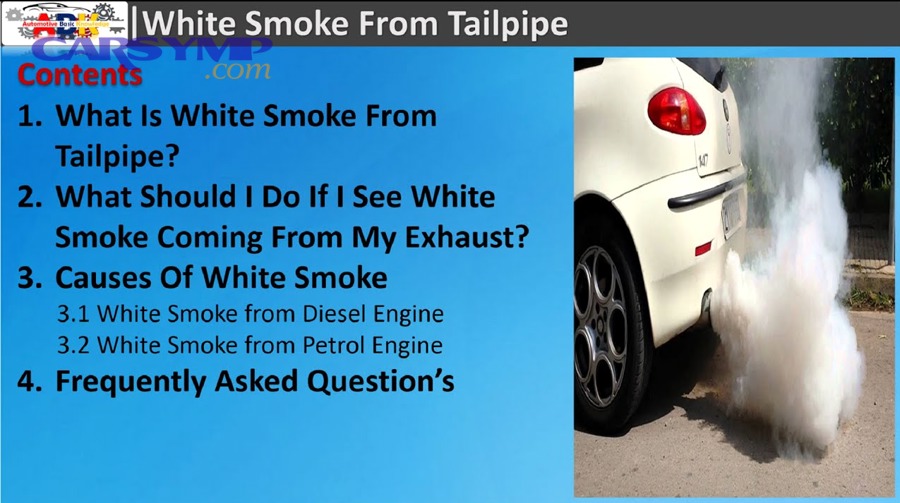
White smoke becomes visible when additional substances beyond normal combustion byproducts enter the exhaust stream. Water vapor from condensation creates thin, wispy white smoke that quickly dissipates as the exhaust system heats up. This occurs because moisture accumulates inside the exhaust pipes overnight, especially in humid or cold environments, and evaporates when you start the engine and the metal components warm up.
More concerning is thick, billowing white smoke that persists after the engine reaches operating temperature. This type of smoke indicates coolant leaking into the combustion chambers through damaged gaskets, cracked components, or failed seals. When coolant burns alongside the fuel-air mixture, it produces dense white smoke with a distinctively sweet smell—a clear warning sign of serious engine problems requiring immediate attention.
The smoke’s appearance, duration, and accompanying symptoms provide crucial diagnostic clues. Thin smoke appearing only at startup suggests condensation, while continuous thick smoke signals coolant contamination. Understanding these differences enables you to determine whether you’re experiencing a normal occurrence or facing a problem that threatens your engine’s longevity and safety.
Is White Smoke From Exhaust Always a Serious Problem?
No, white smoke from exhaust is not always a serious problem—thin, wispy white smoke appearing briefly during cold starts is normal condensation that evaporates harmlessly, while thick, persistent white smoke indicates serious engine damage requiring immediate professional attention. Specifically, the distinction between harmless and dangerous white smoke depends on smoke density, duration, smell, and engine operating temperature when the smoke appears.
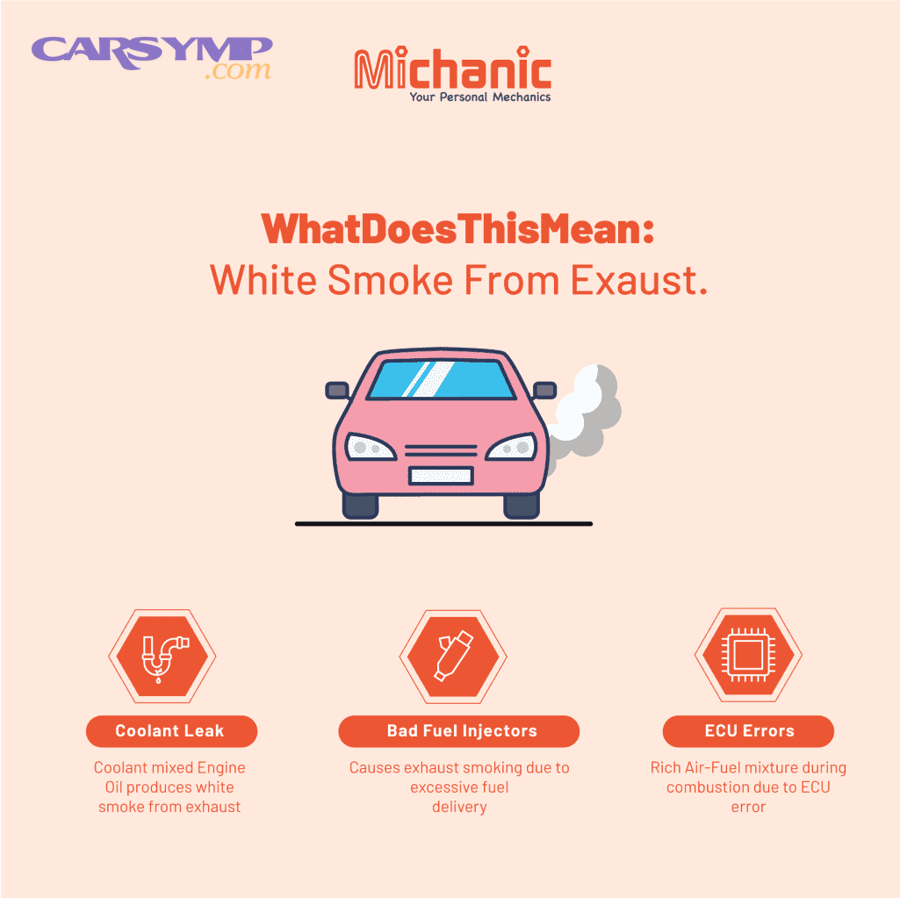
Normal condensation-related white smoke occurs when your vehicle sits idle for several hours, particularly overnight or in cold weather conditions. Moisture from the atmosphere condenses on the cool inner surfaces of your exhaust system, accumulating in the pipes, muffler, and catalytic converter. When you start the engine, the exhaust system rapidly heats up, converting this accumulated moisture into steam that exits the tailpipe as thin white vapor. This condensation-related smoke typically disappears completely within two to three minutes as the exhaust components reach normal operating temperature and all accumulated moisture evaporates.
Serious white smoke problems manifest differently with unmistakable warning signs that demand immediate attention. Thick, billowing white smoke that continues after the engine warms up indicates coolant burning in the combustion chambers—a severe condition that can destroy your engine if you continue driving. This coolant contamination results from failed head gaskets, cracked cylinder heads, or damaged engine blocks that allow coolant to seep into spaces where only fuel and air should exist.
The consequences of ignoring serious white smoke extend beyond inconvenience to catastrophic engine failure. Coolant mixing with engine oil creates a milky sludge that destroys lubrication properties, leading to bearing damage, piston scoring, and complete engine seizure. Continued operation with coolant burning in the cylinders can cause hydrolock—a condition where liquid coolant fills a cylinder, preventing the piston from completing its stroke and potentially bending connecting rods or cracking the engine block entirely.
How Can You Tell the Difference Between Condensation and a Real Problem?
Distinguishing condensation from serious problems requires observing four key indicators: smoke density, duration of smoke production, ambient temperature conditions, and presence of sweet odors. These diagnostic factors provide reliable evidence for determining whether your white smoke represents normal operation or engine damage.
Smoke density offers the most immediate visual clue. Condensation produces thin, wispy vapor similar to steam from a tea kettle—you can see through it, and it disperses quickly in the air. Serious coolant burning creates thick, billowing white smoke with substantial volume and density that resembles fog or clouds, often completely obscuring the area behind your vehicle. This dense smoke maintains its consistency and doesn’t dissipate as rapidly as condensation vapor.
Duration testing provides definitive confirmation. Set a timer when you start your cold engine and observe how long white smoke continues. Condensation-related smoke should completely disappear within two to three minutes as the exhaust system reaches operating temperature. If thick white smoke persists beyond five minutes or continues indefinitely while driving, you’re experiencing coolant contamination requiring immediate diagnosis. The smoke should progressively decrease during warm-up with condensation, whereas coolant-related smoke maintains constant or increasing volume.
Smell identification separates harmless water vapor from burning coolant with unmistakable clarity. Walk behind your vehicle while it’s producing white smoke and carefully smell the exhaust emissions. Condensation has no odor or smells simply like normal exhaust gases. Coolant burning produces a distinctively sweet smell similar to maple syrup or candy—this sweetness comes from ethylene glycol, the primary ingredient in most automotive coolants. If you detect any sweet odor accompanying white smoke, you have a serious coolant leak into the combustion system.
Temperature correlation confirms the diagnosis. White smoke from condensation appears primarily during cold weather, early morning starts, or after the vehicle sits unused for extended periods. It’s most common when ambient temperatures fall below 50°F (10°C) and humidity levels are high. Serious coolant-related white smoke occurs regardless of weather conditions and often worsens as the engine reaches operating temperature—the opposite pattern from condensation behavior.
What Does Thick White Smoke vs. Thin White Smoke Indicate?
Thick white smoke indicates coolant burning in the combustion chamber due to head gasket failure, cracked components, or seal damage, while thin white smoke represents harmless water vapor from condensation evaporating in the exhaust system. The visual density difference between these two types provides immediate diagnostic information before performing any mechanical tests.
Thin white smoke appears translucent and wispy, similar to the vapor produced when breathing on a cold day. You can see through this smoke to objects behind your vehicle, and it disperses rapidly into the surrounding air within seconds of exiting the tailpipe. The volume remains relatively small, producing a light haze rather than a dense cloud. This thin smoke results from small amounts of water vapor created when accumulated moisture evaporates from exhaust system surfaces during engine warm-up.
Thick white smoke creates dense, opaque clouds that obscure visibility behind your vehicle. This smoke has substantial volume and mass, often billowing continuously from the tailpipe in large quantities. The density remains consistent rather than quickly dissipating, and the smoke may linger in the air for several seconds before slowly dispersing. This thickness indicates significant amounts of coolant entering the combustion process, where high temperatures vaporize the liquid coolant into dense steam mixed with exhaust gases.
Color intensity provides additional diagnostic information within the white smoke category. Pure white smoke suggests primarily water content, whether from condensation or coolant. Blue-white smoke indicates oil contamination mixing with coolant or water vapor, suggesting multiple seal failures or piston ring problems occurring simultaneously with coolant leaks. Gray-white smoke can indicate transmission fluid burning, which produces a different shade than pure coolant combustion.
Volume comparison offers quantitative assessment. Condensation produces intermittent puffs or a light, continuous stream of thin vapor. Serious coolant burning generates constant, heavy smoke production that may intensify under acceleration as increased engine load forces more coolant into the combustion chambers. If your exhaust smoke is heavy enough to set off smoke detectors or create visibility hazards for following traffic, you’re experiencing severe coolant contamination requiring immediate engine shutdown.
What Are the 7 Most Common Causes of White Smoke From Exhaust?
The 7 most common causes of white smoke from exhaust are condensation buildup, blown head gasket, cracked cylinder head, cracked engine block, faulty fuel injectors in diesel engines, damaged radiator, and transmission fluid leaks—each distinguished by specific symptoms, severity levels, and repair requirements. Below, we’ll examine each cause in detail to help you identify which problem affects your vehicle.
Cause #1 – Condensation Buildup in the Exhaust System
Condensation buildup is the most benign cause of white smoke, occurring when moisture accumulates inside exhaust components overnight and evaporates as steam during engine startup. This phenomenon happens universally across all vehicle types and represents normal operation rather than mechanical failure.
The science behind condensation formation involves basic thermodynamics. When your vehicle sits unused, the exhaust system cools to ambient temperature. Moisture in the atmosphere contacts these cool metal surfaces and condenses into liquid water droplets that collect inside the exhaust pipes, muffler, and catalytic converter. The amount of condensation increases with humidity levels, temperature differentials between day and night, and the length of time the vehicle remains stationary.
When you start the engine, hot exhaust gases rapidly heat the exhaust system from several hundred degrees to over 1,000°F. This intense heat converts the accumulated water droplets into steam that exits through the tailpipe as white vapor. The process typically completes within two to three minutes as all moisture evaporates and the system reaches stable operating temperature.
Geographic and seasonal factors significantly influence condensation severity. Regions with high humidity, coastal areas, and locations experiencing large temperature swings between day and night produce more condensation. Winter months increase condensation frequency because cold overnight temperatures create greater temperature differentials and higher relative humidity. Vehicles driven primarily on short trips that never fully warm up the exhaust system may show persistent mild condensation because moisture never completely evaporates between trips.
No action is required for condensation-related white smoke beyond awareness and monitoring. If you want to minimize condensation, take occasional longer drives that allow the exhaust system to reach and maintain full operating temperature for at least 15-20 minutes, which thoroughly evaporates all accumulated moisture and prevents corrosion inside exhaust components.
Cause #2 – Blown or Leaking Head Gasket
A blown head gasket is the most common serious cause of persistent white smoke, occurring when the critical seal between the cylinder head and engine block fails, allowing coolant to leak into combustion chambers where it burns and exits as thick white smoke. This failure represents a major mechanical problem requiring immediate attention and expensive repair.
The head gasket serves as a multi-layered seal positioned between the engine block (which houses the cylinders and pistons) and the cylinder head (which contains the valves, spark plugs, and combustion chamber tops). This gasket must simultaneously seal high-pressure combustion gases, engine oil passages, and coolant passages flowing between these two major engine components. The gasket endures extreme thermal cycling, pressure fluctuations, and mechanical stress from cylinder head bolts clamping the assembly together.
Head gasket failure occurs through several mechanisms. Overheating events cause the metal components to expand beyond normal tolerances, crushing or burning the gasket material. Repeated thermal cycling gradually degrades gasket materials, particularly in older vehicles or those with inadequate cooling system maintenance. Improper installation during previous engine work, including incorrect torque specifications or contaminated mating surfaces, leads to premature failure. Manufacturing defects in certain engine models create known weak points where gaskets consistently fail.
When the head gasket fails along a coolant passage adjacent to a combustion chamber, pressurized coolant seeps into the cylinder. During the combustion cycle, this coolant vaporizes from the intense heat and exits through the exhaust valve along with normal combustion gases. The result is thick, continuous white smoke with the characteristic sweet smell of burning ethylene glycol coolant.
Accompanying symptoms confirm head gasket failure beyond the white smoke alone. Engine overheating occurs because coolant loss reduces the cooling system’s capacity. Bubbles appear in the radiator or coolant reservoir as combustion gases leak into the cooling system—the reverse direction of coolant entering cylinders. Engine oil turns milky brown or tan as coolant mixes with lubricating oil, destroying its protective properties. The engine may run rough or misfire on the affected cylinder, and you may notice reduced power or hard starting. Coolant levels drop steadily without visible external leaks.
Head gasket replacement typically costs $1,000-$2,500 depending on engine design, with labor comprising the majority of the expense because mechanics must disassemble significant portions of the engine. The repair requires removing the cylinder head, cleaning all surfaces, inspecting for warpage or cracks, potentially machining the head surface flat again, and carefully reassembling with new gaskets and properly torqued fasteners.
Cause #3 – Cracked Cylinder Head
A cracked cylinder head allows coolant to seep into combustion chambers through fractures in the metal casting, producing white smoke symptoms nearly identical to head gasket failure but typically requiring more expensive repair or complete cylinder head replacement. This failure often results from severe overheating, manufacturing defects, or freezing coolant damage.
The cylinder head is a complex aluminum or cast iron component forming the top of the combustion chamber and housing critical engine elements including intake and exhaust valves, valve springs, camshafts (in overhead cam engines), spark plugs or glow plugs, and coolant passages that regulate cylinder head temperature. This component endures extreme thermal stress, with one side exposed to combustion temperatures exceeding 2,000°F while the opposite side contacts coolant at approximately 200°F.
Cracks develop when thermal stress exceeds the material’s structural limits. Severe overheating episodes cause rapid, uneven expansion that creates internal stresses beyond what the metal can tolerate. When coolant freezes because of inadequate antifreeze protection, the expanding ice cracks the coolant passages. Manufacturing flaws including porosity (microscopic air pockets in the casting) or improper heat treatment during production create weak spots that crack under normal operating stress. Repeated overheating cycles gradually fatigue the metal, initiating cracks that propagate with continued use.
Common crack locations include the area between exhaust valve seats (the hottest region of the cylinder head), the thin walls surrounding coolant passages, and the combustion chamber roof. Hairline cracks may initially produce minimal symptoms, but they expand with thermal cycling until they create significant coolant leaks into the cylinders.
Diagnosis of cylinder head cracks versus head gasket failure requires professional pressure testing and visual inspection. Mechanics pressure-test the cooling system to identify leak locations, perform dye penetration tests on suspected cracks, and may use magnetic particle inspection on cast iron heads. If the cylinder head is removed for head gasket replacement and cracks are discovered, the repair scope and cost increase substantially.
Cylinder head repair options depend on crack severity and location. Small cracks in non-critical areas may be repairable through specialized welding techniques, though welding aluminum cylinder heads requires expert skill and often proves impractical. Most cracked cylinder heads require replacement with either new or remanufactured components. Replacement costs range from $1,500-$3,000 including labor, significantly more than simple head gasket replacement because you’re paying for the component itself plus extensive disassembly and reassembly labor.
Cause #4 – Cracked Engine Block
A cracked engine block represents the most severe cause of white smoke, occurring when fractures in the engine’s main structural component allow coolant passages to communicate with cylinders, often requiring complete engine replacement rather than repair. This catastrophic failure typically results from extreme overheating, freezing damage, or manufacturing defects in the casting.
The engine block forms the foundation of the entire engine, containing the cylinders where pistons move, the crankshaft mounting area, oil passages, coolant jackets surrounding the cylinders, and mounting points for all other engine components. Modern engine blocks use either cast iron for durability or aluminum alloys for weight reduction. This massive casting must withstand tremendous forces including combustion pressures exceeding 1,000 PSI, reciprocating loads from pistons and connecting rods, and severe thermal cycling throughout its operational life.
Engine block cracks develop through catastrophic events or cumulative damage. Severe overheating episodes cause the metal to expand beyond design limits, creating cracks when cooler areas restrict expansion. Coolant freezing expands with sufficient force to crack even thick metal sections—a common problem in regions with harsh winters when vehicles lack proper antifreeze protection. Running the engine without adequate coolant (either from neglect or after a cooling system failure) causes localized overheating and thermal shock when cool liquid eventually contacts super-heated metal surfaces. Manufacturing defects in the casting process leave weak areas that crack under normal operating stress.
Typical crack locations include the thin cylinder walls, coolant passages between cylinders, the deck surface where the cylinder head mounts, and around freeze plug openings. Cracks may propagate between a coolant passage and a cylinder, allowing coolant to enter the combustion chamber and create white smoke. External cracks may leak coolant visibly, while internal cracks produce symptoms identical to head gasket or cylinder head failures.
Diagnosing engine block cracks definitively requires significant disassembly. Pressure testing the cooling system while monitoring individual cylinders can identify which cylinder receives coolant. Visual inspection after removing the cylinder head reveals deck surface cracks. Some machine shops use magnetic particle inspection, ultrasonic testing, or pressure testing with the block completely stripped to identify internal cracks not visible externally.
Repair options for cracked engine blocks are severely limited and often economically impractical. Specialized welding can repair some cracks, particularly in cast iron blocks, but welding aluminum engine blocks rarely succeeds because the heat-affected zone creates new weak points. Metal stitching (drilling along the crack and installing interlocking metal pins) works for some external cracks but cannot address internal coolant passage cracks. Most cracked engine blocks require complete replacement with either a new, remanufactured, or used engine. Replacement costs range from $3,000-$8,000 or more depending on engine type, with exotic or diesel engines potentially costing significantly more.
Cause #5 – Faulty Fuel Injectors (Diesel Engines)
Faulty fuel injectors in diesel engines cause white smoke by delivering incorrect fuel quantity or spray patterns, resulting in incomplete combustion that sends unburned diesel fuel through the exhaust as visible white or blue-white smoke, particularly noticeable during cold starts and idle. This diesel-specific cause differs fundamentally from the coolant-related problems affecting gasoline engines.
Diesel engines operate differently from gasoline engines, relying on compression ignition rather than spark plugs. The injectors must deliver precisely metered fuel quantities at extremely high pressure (15,000-30,000 PSI in modern common-rail systems) with exact timing to ensure complete combustion. Each injector sprays an atomized fuel mist into the combustion chamber at the precise moment when compressed air reaches maximum temperature. Poor atomization, incorrect timing, or wrong fuel quantities prevent complete burning, sending raw diesel fuel into the exhaust where it appears as white smoke.
Injector failure modes include worn internal seals that leak fuel during incorrect cycles, clogged nozzles that disrupt spray patterns, stuck pintle valves that prevent proper opening and closing, and erosion of precision spray holes that change the fuel pattern. These problems become particularly pronounced during cold starts when low combustion chamber temperatures make ignition more difficult—incomplete combustion of incorrectly delivered fuel creates heavy white smoke until engine heat compensates for injector deficiencies.
Certain diesel platforms show notorious injector-related white smoke problems. The LB7 Duramax (2001-2004) experiences endemic injector seal failures that cause characteristic white-blue smoke at idle and light load. The 6.7L Cummins develops excessive injector return rates that indicate internal seal wear, producing white smoke during warm-up. The 6.0L and 6.4L Powerstroke diesels suffer similar injector problems, though their issues often combine with other engine problems.
Professional diagnosis of diesel injector problems involves measuring individual injector return rates to identify those with excessive internal leakage, performing cylinder contribution tests that disable injectors one at a time to determine which cylinder produces smoke, and bench-testing suspected injectors on calibrated equipment that measures spray pattern, flow rate, and pressure characteristics. Mechanics use scan tools to monitor fuel rail pressure, injector pulse width, and diagnostic trouble codes (DTCs) such as P0201-P0206 (injector circuit faults) that indicate electrical problems with specific injectors.
Repair costs for diesel injector replacement range from $300-$600 per injector for quality remanufactured units, with many mechanics recommending replacing all injectors simultaneously if several show wear to prevent returning repeatedly for individual failures. Labor adds several hundred dollars depending on injector accessibility. Some engines position injectors under valve covers or require significant disassembly, increasing labor costs substantially.
Cause #6 – Damaged or Leaking Radiator
A damaged radiator causes white smoke indirectly by allowing coolant loss that leads to engine overheating, which subsequently damages head gaskets, cylinder heads, or engine blocks that then leak coolant into combustion chambers producing white smoke. While the radiator itself isn’t the direct smoke source, radiator failure initiates the cascade of damage that ultimately creates the symptom.
The radiator serves as the primary heat exchanger in your vehicle’s cooling system, dissipating heat absorbed by coolant circulating through the engine. Radiators contain numerous thin metal tubes through which hot coolant flows, surrounded by thin metal fins that increase surface area for heat dissipation. Air flowing through the radiator (from vehicle movement and cooling fans) carries away heat, cooling the coolant before it returns to the engine. The radiator also includes separate chambers for transmission fluid cooling in automatic transmission vehicles.
Radiator damage occurs through several mechanisms. Corrosion gradually eats through thin tube walls, particularly in older vehicles or those using incorrect coolant types. Impact damage from road debris, accidents, or improper installation punctures tubes or damages fins. Freeze damage from inadequate antifreeze protection cracks tubes when coolant freezes and expands. Electrolysis from improper grounding or dissimilar metals in the cooling system accelerates corrosion. Manufacturing defects including poor soldering or brazing create weak points that fail prematurely.
When radiator damage causes coolant leaks, the cooling system loses capacity to regulate engine temperature. Continued operation with low coolant levels or reduced heat dissipation capacity causes progressive overheating. This overheating stresses the head gasket, cylinder head, and engine block. As temperatures exceed design limits, these components fail—gaskets blow, cylinder heads warp or crack, engine blocks develop cracks. Once these failures occur, coolant enters combustion chambers and produces the characteristic white smoke.
Symptoms indicating radiator-related cooling system problems include visible coolant leaks under the vehicle, low coolant warning lights, temperature gauge reading higher than normal, fluctuating temperature readings, coolant smell inside the passenger compartment (indicating heater core damage), and white residue or corrosion visible on radiator surfaces. You may notice coolant puddles in your parking spot, steam from under the hood, or the temperature gauge approaching the red zone.
Radiator replacement costs average $300-$600 for the parts and labor combined. However, if radiator failure led to overheating damage that caused head gasket or cylinder head failure, you’ll face those additional substantial repair costs ($1,000-$3,000+) beyond the radiator replacement. This illustrates why addressing cooling system leaks immediately prevents far more expensive subsequent damage.
Cause #7 – Transmission Fluid Leak Into Engine
Transmission fluid leaking into the engine creates white or gray-white smoke when the fluid enters combustion chambers through a failed vacuum modulator (in older automatic transmissions) or through damaged seals, though this cause occurs less frequently than coolant-related problems and primarily affects specific transmission designs. This problem produces distinct symptoms that help differentiate it from coolant contamination.
Certain automatic transmission designs use a vacuum modulator—a device that senses engine load through intake manifold vacuum and adjusts transmission line pressure accordingly. This modulator connects to the intake manifold via a rubber hose. If the modulator’s internal diaphragm fails, transmission fluid can be drawn through the vacuum hose into the intake manifold, where it enters the combustion chambers and burns, producing smoke.
Transmission fluid smoke differs slightly from coolant smoke in appearance and smell. The smoke may appear white to gray-white rather than pure white, and it may have a blue tinge from the petroleum-based fluid’s chemical composition. The smell is distinctly different from coolant’s sweet odor—transmission fluid produces a sharp, acrid, burnt petroleum smell. The smoke may appear thicker or more oily-looking than pure coolant smoke.
Vehicles most susceptible to this problem include older vehicles with vacuum-modulated transmissions, particularly American vehicles manufactured before the mid-1990s. Modern electronically controlled transmissions don’t use vacuum modulators and rarely experience this specific failure mode. However, certain seal failures in modern transmissions can still allow fluid to leak into the engine through shared components, though this occurs infrequently.
Diagnosis involves inspecting the vacuum modulator hose for the presence of transmission fluid. Remove the hose from the intake manifold and check for red or pink fluid inside the hose or modulator—normal vacuum hoses should be completely dry inside. Check the transmission fluid level and condition; if the level is significantly low without visible external leaks, internal leakage into the engine becomes more likely. Inspect engine oil for transmission fluid contamination, which may appear as a reddish tint to the oil or fluid separation visible on the dipstick.
Repair requires replacing the failed vacuum modulator, which typically costs $50-$200 for the part plus modest labor charges. If significant transmission fluid entered the engine, changing the engine oil and filter becomes necessary to remove contamination. In severe cases where large quantities of fluid burned through the engine, inspecting and potentially cleaning spark plugs and checking for any damage to the catalytic converter may be necessary.
How Do You Diagnose the Exact Cause of White Smoke?
Diagnosing the exact cause of white smoke requires systematic evaluation through four primary methods: visual inspection of fluid levels and conditions, smell identification, performance symptom analysis, and professional diagnostic testing—combining these approaches provides definitive identification of which specific problem affects your vehicle. Let’s explore each diagnostic method in detail to equip you with comprehensive smoke from exhaust diagnosis capabilities.
What Visual Inspection Steps Should You Take?
Visual inspection steps include checking coolant reservoir levels, examining oil condition on the dipstick, looking for external coolant leaks, observing oil level changes, and inspecting the oil filler cap for white residue—these checks provide immediate clues about coolant contamination before investing in professional diagnostics.
Start your visual inspection with the coolant reservoir, located in the engine compartment and typically made of translucent white or yellow plastic with “Full” and “Low” markings. Check the coolant level with the engine cold—never open the cooling system when hot due to burn risk from pressurized steam. If the coolant level sits significantly below the “Full” mark and you haven’t noticed any puddles under your vehicle, internal coolant consumption into the combustion chambers becomes a strong possibility. Gradual coolant loss without external evidence points toward head gasket, cylinder head, or engine block problems.
Examine the coolant’s appearance and condition while inspecting the reservoir. Normal coolant appears clear and colored (green, orange, pink, or red depending on type) without contamination. If you observe oil floating on the coolant surface, creating rainbow sheens or brown contamination, this indicates oil leaking into the cooling system—often from the same head gasket failure causing coolant to enter cylinders. Bubbles continuously rising in the coolant reservoir while the engine runs indicate combustion gases entering the cooling system, confirming head gasket failure.
Pull the engine oil dipstick and examine the oil’s color and consistency carefully. Normal engine oil appears amber to dark brown and maintains a uniform, slightly translucent appearance. Oil contaminated with coolant turns milky, creating a tan, coffee-with-cream, or chocolate milk appearance. This milky oil indicates coolant mixing with engine oil through internal leaks—a critical problem because this contaminated oil cannot properly lubricate engine components, leading to accelerated wear and potential seizure. If you observe milky oil, stop driving immediately and arrange for professional diagnosis and repair.
Check for unusual oil level increases on the dipstick. While oil levels normally decrease gradually with consumption, a rising oil level indicates coolant entering the crankcase faster than oil consumption, diluting the oil and raising the level. This counterintuitive symptom provides strong evidence of internal coolant leaks.
Remove the oil filler cap (where you add oil to the engine) and inspect its underside for white, creamy residue. This “mayonnaise-like” substance forms when coolant vapor contacts the cooler oil filler cap, creating an emulsion. While small amounts of this residue can form from condensation during short trips in cold weather, substantial creamy deposits indicate coolant entering the engine oil system—another symptom of head gasket or crack problems.
Inspect under the vehicle and around the engine for external coolant leaks that might explain low coolant levels without internal consumption. Look for green, orange, or pink fluid puddles under the car, wet spots on hoses, corrosion around radiator connections, and dampness around the water pump. Finding external leaks provides an alternative explanation for low coolant, though white smoke indicates internal rather than external coolant loss.
What Smell Can Tell You About the Problem?
Smell identification distinguishes coolant-related white smoke producing a distinctly sweet odor similar to maple syrup from condensation-related steam having no smell, with transmission fluid creating a sharp petroleum odor and burning oil producing acrid, harsh smells—using smell as a diagnostic tool provides immediate, no-cost assessment of the problem type.
The sweet smell of burning coolant comes from ethylene glycol or propylene glycol—the chemical compounds comprising automotive antifreeze. When coolant enters combustion chambers and burns at temperatures exceeding 2,000°F, it vaporizes and exits through the exhaust carrying this characteristic sweetness. Many people describe the smell as similar to maple syrup, sweet candy, cotton candy, or honey. This smell becomes particularly noticeable when standing behind the vehicle while the engine runs or when white smoke is most visible during startup or acceleration.
To conduct a smell test safely, position yourself behind and slightly to the side of the vehicle while someone else operates the engine. Never place your face directly in the exhaust stream, but allow the smoke to drift past you while breathing normally. The sweet coolant smell should be readily apparent if coolant contamination exists. If you detect this sweetness accompanying white smoke, you’ve confirmed coolant entering the combustion process—a serious problem requiring immediate mechanical attention.
Condensation-related white smoke produces no distinctive smell beyond normal exhaust odor. Since condensation consists only of water vapor, it adds no chemical compounds to the exhaust stream. If your white smoke carries no unusual scent and dissipates within a few minutes of startup, condensation remains the likely cause.
Transmission fluid smoke creates a different odor profile entirely—a sharp, acrid, burnt petroleum smell distinctly different from coolant’s sweetness. Some describe this as similar to burning hydraulic fluid or burnt rubber. If you smell this odor accompanying white or gray-white smoke, particularly in older vehicles with vacuum-modulated transmissions, investigate possible transmission fluid leakage into the engine.
Be aware that smell identification has limitations. Olfactory fatigue occurs when continuous exposure to an odor reduces your ability to detect it—prolonged sniffing may dull your smell perception. Some individuals have reduced smell sensitivity and may not detect odors others find obvious. Wind direction, exhaust volume, and distance from the tailpipe affect smell intensity. Despite these limitations, smell testing provides valuable confirmatory evidence when combined with other diagnostic methods.
What Performance Symptoms Indicate the Severity?
Performance symptoms indicating severe white smoke problems include engine overheating, rough idle or misfiring, reduced power output, hard starting, and illuminated check engine lights—the presence and combination of these symptoms help assess how advanced the damage has become and how urgently repair is needed.
Engine overheating represents the most critical performance symptom accompanying white smoke. Monitor your temperature gauge during operation—if it climbs higher than the normal midpoint position, approaches the red zone, or fluctuates abnormally, your cooling system has lost capacity from coolant loss or combustion gas contamination. Overheating accelerates damage progression; head gaskets fail more completely, cylinder heads warp from excessive heat, and engine blocks crack from thermal stress. If you observe both white smoke and overheating, stop driving immediately to prevent catastrophic engine destruction.
Rough idle or engine misfiring indicates coolant contamination affecting combustion quality in one or more cylinders. When coolant occupies space in the combustion chamber, it displaces the proper fuel-air mixture, causing incomplete combustion or complete misfire on affected cylinders. You’ll feel the engine running unevenly, vibrating excessively at idle, or producing a rhythmic stumbling sensation. The check engine light will typically illuminate, and retrieving diagnostic trouble codes will show cylinder misfire codes (P0300-P0308) identifying which specific cylinders are affected.
Power loss during acceleration signals progressive engine damage from coolant contamination. Coolant in cylinders reduces compression, displaces combustible mixture, and disrupts normal combustion timing. You’ll notice reduced throttle response, sluggish acceleration, inability to maintain highway speeds, or power loss when climbing hills. Severe cases prevent the engine from revving to normal RPM ranges. This power loss worsens as damage progresses and more coolant enters the combustion process.
Hard starting or extended cranking before the engine fires indicates coolant pooling in cylinders when the engine sits. This liquid coolant must compress during cranking—since liquids don’t compress like gases, this creates resistance against piston movement and may even prevent the engine from rotating if enough coolant accumulates (hydrolock). Extended cranking eventually expels enough coolant through the exhaust to allow the engine to start, but each hard start increases wear and damage. Vehicles exhibiting hard starting combined with white smoke have advanced internal coolant leaks requiring urgent repair.
Check engine light illumination provides diagnostic code information essential for pinpointing problems. Modern vehicles monitor numerous engine parameters; coolant-related failures trigger specific codes including P0300 series (misfire codes), P0128 (coolant temperature below thermostat regulating temperature), P0217 (engine coolant over temperature), and others. Using an OBD-II scanner to retrieve these codes provides specific information about which cylinders misfire, what temperature abnormalities exist, and whether fuel trim adjustments indicate combustion problems—valuable data for professional diagnostics.
What Professional Diagnostic Tests Are Available?
Professional diagnostic tests for white smoke include compression testing, cylinder leak-down testing, chemical block leak detection, diesel injector return rate measurement, and cooling system pressure testing—these specialized procedures provide definitive identification of failure location and type that DIY checks before major engine repairs cannot achieve.
Compression testing measures the maximum pressure each cylinder develops during compression stroke, revealing whether head gasket failure, valve problems, or piston ring issues reduce cylinder sealing. Mechanics remove all spark plugs, disable the fuel system, and screw a compression gauge into each spark plug hole sequentially. While cranking the engine, the gauge reads maximum pressure—typically 120-180 PSI depending on engine design. Cylinders with blown head gaskets show significantly lower compression (potentially 20-50% reduction) compared to healthy cylinders. Adjacent cylinders showing similar low compression suggest head gasket failure between them. Compression testing costs $100-$200 and provides quick screening for sealing problems.
Cylinder leak-down testing provides more detailed information than compression testing by pressurizing each cylinder individually with shop air and measuring how much pressure leaks away and where the leakage goes. The mechanic rotates the engine to position each piston at top dead center compression stroke, then applies regulated shop air (typically 100 PSI) through a leak-down tester into the spark plug hole. The tester measures what percentage of applied pressure leaks away. Healthy cylinders retain 90-100% of pressure (0-10% leakage). Listening locations reveal leak paths: hissing from the tailpipe indicates exhaust valve leakage, hissing from the intake indicates intake valve leakage, hissing from the oil filler cap suggests piston ring leakage, and bubbles in the coolant reservoir indicate head gasket leakage to the cooling system. This test costs $150-$250 and definitively identifies head gasket failures.
Chemical block leak detection uses specialized test kits containing fluid that changes color when exposed to combustion gases. The mechanic removes the radiator cap, places the test apparatus over the radiator opening (without the fluid contacting coolant), and draws vapor from the radiator through the test fluid while the engine runs. If combustion gases are entering the cooling system through head gasket or crack failures, the test fluid changes from blue to yellow (common test kit color change). This test provides visual confirmation of combustion gas contamination costing $20-$50 for the test kit, though most shops perform it as part of diagnostic service.
Diesel injector return rate testing measures how much fuel each injector allows to leak back through return lines—excessive return indicates internal seal wear causing poor atomization and white smoke. Using specialized tools connected to the fuel system, mechanics measure the volume of fuel returned from each injector over a specific time period. Return rates exceeding manufacturer specifications (often just a few milliliters difference) identify failing injectors. Many diesel diagnostic procedures also include cylinder contribution testing where mechanics disable individual injectors using scan tools to identify which cylinder produces smoke. Professional diesel diagnosis costs $150-$300 and typically identifies injector problems definitively before committing to expensive injector replacement.
Cooling system pressure testing uses a specialized hand pump that pressurizes the entire cooling system to operating pressure (typically 15-20 PSI) while the engine is cold. The mechanic monitors pressure gauge readings over 10-15 minutes. Pressure drops indicate leaks; external leaks become visible as coolant drips from failed components, while stable pressure that suddenly drops when the engine starts indicates internal combustion chamber leaks. This test costs $50-$100 and confirms cooling system leaks.
How Severe Is Each Cause and What Action Should You Take?
The severity of white smoke causes ranges from harmless condensation requiring no action to catastrophic engine block cracks demanding immediate engine shutdown and towing—proper severity assessment determines whether you can continue driving, should schedule service soon, or must stop immediately to prevent destroying your engine. Understanding these severity levels helps you make informed decisions during Smoke on startup vs under acceleration clues and other diagnostic observations.
When Is It Safe to Keep Driving?
It is safe to keep driving when white smoke appears only during cold starts, dissipates within two to three minutes, has thin wispy consistency, produces no sweet smell, and is accompanied by normal engine temperature and performance—this pattern indicates harmless condensation requiring monitoring but no immediate repair action.
Condensation-related white smoke represents the only scenario where continued normal driving poses no risk to your engine. This smoke appears predictably under specific conditions: cold weather, early morning starts, high humidity, or after the vehicle sits unused for extended periods. The smoke volume decreases steadily as the exhaust system warms, completely disappearing once components reach operating temperature. You can observe through the rearview mirror how the smoke diminishes progressively during the first few minutes of operation.
Safe condensation patterns show seasonal consistency—more frequent and voluminous during winter months, less common during summer. If you notice this pattern correlating with weather changes and outside temperatures, condensation remains the likely benign cause. Vehicles driven primarily on short trips (under 10 minutes) may show persistent mild condensation because the exhaust never fully reaches maximum operating temperature between trips.
However, maintain vigilant monitoring even with apparently benign condensation patterns. Note whether the smoke duration increases over weeks or months, whether smoke volume intensifies, or whether new symptoms emerge including sweet smells, overheating, rough running, or hard starting. These changes indicate developing problems that initially appeared benign but are progressing toward serious failures.
For true condensation-related smoke, no repair action is necessary. You can reduce condensation frequency by taking occasional longer drives (20-30 minutes) at highway speeds, which thoroughly heat the exhaust system and evaporate all accumulated moisture. Ensuring your vehicle has proper antifreeze protection prevents freeze damage that could crack exhaust components or engine parts, converting a benign condensation situation into a serious problem.
Document your observations in a simple log noting date, temperature, smoke duration, and any accompanying symptoms. This record helps identify whether conditions remain stable (suggesting condensation) or worsen progressively (indicating developing mechanical problems requiring professional diagnosis).
When Should You Stop Driving Immediately?
You should stop driving immediately when white smoke persists continuously after warm-up, appears thick and billowing, smells sweet like burning coolant, is accompanied by engine overheating, shows milky oil on the dipstick, or creates rising oil levels—continuing to operate the engine in these conditions risks complete engine destruction requiring replacement rather than repair.
Heavy, continuous white smoke indicates substantial coolant entering combustion chambers from head gasket failure, cracked cylinder head, or cracked engine block. Driving with these failures creates a destructive cascade: coolant contaminating engine oil destroys lubrication, leading to bearing damage and piston scoring. Coolant loss reduces cooling capacity, causing overheating that warps cylinder heads and can crack engine blocks. Liquid coolant accumulating in cylinders can cause hydrolock—a condition where the incompressible liquid prevents the piston from reaching top dead center, bending connecting rods or cracking the engine block when the engine tries to compress the liquid.
The sweet smell of burning coolant provides unmistakable confirmation that coolant enters the combustion process. Never ignore this symptom combined with white smoke. The odor indicates ethylene glycol vaporizing at combustion temperatures—a chemical smell that doesn’t occur with condensation or other benign causes. If you detect sweetness in the exhaust accompanied by visible white smoke, stop driving within the next safe opportunity.
Engine temperature gauge approaching or entering the red zone demands immediate engine shutdown. Overheating accelerates all failure modes; metals expand beyond tolerances, gaskets fail more completely, aluminum components warp, and catastrophic damage occurs within minutes of extreme overheating. Pull safely to the roadside, turn off the engine, and call for towing service. Never add cold coolant to an overheated engine—thermal shock can crack the engine block or cylinder head.
Milky oil on the dipstick indicates coolant mixing extensively with engine oil. This contaminated mixture cannot lubricate engine components properly. The oil loses its viscosity, its protective film strength collapses, and metal-to-metal contact occurs at bearings, camshaft journals, piston rings, and cylinder walls. Operating even briefly with milky oil inflicts severe engine damage. Stop driving, have the vehicle towed, and prepare for extensive engine repair or replacement.
Rising oil levels indicate coolant entering the crankcase faster than oil consumption—a counterintuitive but serious symptom. Normally oil levels decrease gradually; rising levels mean liquid addition to the oil. This dilution by coolant destroys oil’s lubricating properties while increasing crankcase volume, potentially causing oil overflow that can contaminate emissions equipment or create fire hazards.
When you encounter these severe symptoms, follow this action sequence: safely pull to the roadside, turn off the engine, turn on hazard lights, exit the vehicle to a safe location, and contact roadside assistance or towing service. Do not attempt to drive to a repair shop “just a few more miles”—those miles may convert a $2,000 head gasket repair into an $8,000 engine replacement. Professional towing costs $75-$150 but prevents thousands in additional damage.
What Are the Repair Costs for Each Cause?
Repair costs range from zero for normal condensation to $300-$600 for radiator or diesel injector replacement, $1,000-$2,500 for head gasket repair, $1,500-$3,000 for cylinder head work, and $3,000-$8,000+ for engine block replacement or complete engine rebuild—understanding these costs helps you budget appropriately and evaluate repair decisions.
| Cause | Typical Repair Cost | Repair Time | Severity Level |
|---|---|---|---|
| Condensation buildup | $0 | None | Benign |
| Damaged radiator | $300-$600 | 2-4 hours | Moderate (if caught early) |
| Transmission fluid leak | $50-$200 | 1-2 hours | Low to moderate |
| Faulty diesel injectors | $300-$600 per injector | 3-6 hours | Moderate |
| Blown head gasket | $1,000-$2,500 | 8-16 hours | Severe |
| Cracked cylinder head | $1,500-$3,000 | 12-20 hours | Severe |
| Cracked engine block | $3,000-$8,000+ | 20-40 hours | Critical |
The cost breakdown table above shows average costs for typical vehicles; exotic cars, diesel trucks, and specialty engines often cost significantly more. Labor rates vary by geographic location from $80-$150 per hour, substantially affecting final repair costs.
Condensation requires no repair investment—this normal phenomenon resolves through regular vehicle operation. If condensation concerns you, an exhaust system inspection costs $50-$100 and provides peace of mind that no leaks or corrosion affect your exhaust components.
Radiator replacement averages $300-$600 including parts and labor. The radiator component itself costs $150-$400 depending on vehicle type and whether you choose aftermarket or OEM parts. Labor adds $150-$200 for removal, installation, system flushing, and refilling with fresh coolant. This repair prevents overheating damage that would cost thousands more in subsequent head gasket or engine repairs.
Transmission fluid leaks into the engine through failed vacuum modulators cost $50-$200 to repair. The vacuum modulator component costs $30-$80, with 1-2 hours of labor for replacement and cleaning contaminated components. If substantial transmission fluid entered the engine, add $50-$100 for oil and filter change to remove contamination.
Diesel injector replacement ranges from $300-$600 per injector for quality remanufactured units, with some OEM injectors costing $800-$1,200 each. Labor varies by engine design; easily accessible injectors require 3-4 hours for a complete set replacement, while injectors positioned under valve covers or requiring significant disassembly may need 6-8 hours. Many diesel specialists recommend replacing all injectors simultaneously when several show wear, creating bills of $2,000-$4,000 for complete injector system renewal on six-cylinder engines.
Head gasket replacement costs $1,000-$2,500 for most vehicles, with V6 and V8 engines at the higher end because of increased complexity. The head gasket set (including all necessary seals and gaskets) costs $100-$300. Labor dominates the expense—removing the cylinder head requires dismantling significant engine components including intake and exhaust manifolds, timing components, valve covers, and numerous accessories. After removal, machine shop services inspect the cylinder head for warpage, surface the head flat if necessary ($100-$300), and pressure-test for cracks. Reassembly requires careful torque procedures following specific sequences and values. Total repair time runs 8-16 hours depending on engine configuration.
Cylinder head repair or replacement costs $1,500-$3,000 when cracks or warpage exceed rebuildable limits. A replacement cylinder head (remanufactured) costs $500-$1,500 depending on engine type. Complete cylinder head rebuilding including new valves, guides, seals, and machining costs $600-$1,200 plus the core charge. Labor mirrors head gasket replacement since disassembly requirements are identical. Some engines use dual overhead cam designs or complex variable valve timing requiring specialized knowledge and tools, increasing costs substantially.
Engine block replacement represents catastrophic failure requiring $3,000-$8,000+ investment. A remanufactured engine (short block or long block) costs $2,000-$5,000 depending on engine type and configuration. Complete engine removal and installation requires 20-40 hours of skilled labor. This repair essentially rebuilds the entire vehicle’s powertrain, including transferring components from the old engine, replacing all seals and gaskets, installing new fluids, and verifying proper operation. Many owners facing engine block failure choose complete engine replacement over repair because the cost difference is minimal while a new or remanufactured engine provides warranty coverage and longer service life.
Understanding these cost ranges helps you evaluate whether repair makes economic sense for your vehicle’s overall value and condition. A vehicle worth $15,000 with a blown head gasket makes financial sense to repair at $2,000 cost. The same vehicle with a cracked engine block requiring $6,000 repair may exceed reasonable economic repair limits, suggesting replacement vehicle consideration instead.
How Can You Prevent White Smoke Problems in Your Vehicle?
You can prevent white smoke problems through regular coolant system maintenance, proper temperature monitoring, immediate overheating response, quality fluid use, diesel-specific preventive care, and professional inspection schedules—these proactive measures protect head gaskets, prevent crack formation, and maintain injector function before failures occur. Implementing consistent preventive strategies dramatically reduces the risk of expensive white smoke-related engine damage.
What Regular Maintenance Prevents Head Gasket Failure?
Regular maintenance preventing head gasket failure includes timely coolant system flushes every 30,000-50,000 miles, maintaining proper coolant mixture ratios, replacing aging coolant hoses before failure, ensuring functioning thermostats, and addressing any overheating incidents immediately—these practices minimize thermal stress and chemical degradation that destroy head gaskets over time.
Coolant system flushes remove accumulated corrosion, scale deposits, and degraded coolant that lose protective properties. Old coolant becomes acidic, attacking metal components and degrading rubber seals. Corrosion inhibitors in fresh coolant deplete over time; without protection, internal waterway surfaces corrode, creating blockages that restrict flow and cause localized overheating. Most manufacturers recommend coolant replacement every 30,000-50,000 miles or 3-5 years, with extended-life coolants lasting up to 100,000 miles. Following your vehicle’s specific maintenance schedule ensures coolant maintains proper protection.
Proper coolant mixture ratios (typically 50/50 antifreeze to distilled water) provide optimal heat transfer, freeze protection, and boiling point elevation. Too much water dilutes corrosion protection and lowers boiling points. Too much antifreeze reduces heat transfer efficiency and can cause overheating despite adequate fluid levels. Use a refractometer or test strips to verify your mixture maintains proper concentration. Never use straight antifreeze or plain water except in emergency situations requiring immediate dilution for driving to repair facilities.
Coolant hose inspection and replacement prevents unexpected failures that cause overheating damage. Inspect hoses during every oil change for cracks, bulges, soft spots, or seepage. Squeeze hoses when cool—they should feel firm and springy, not soft or brittle. Replace hoses showing deterioration before they fail. Hose failures often occur during high-load situations like highway driving or towing, causing rapid overheating that destroys head gaskets before you can respond. Preventive hose replacement costs $50-$150 versus thousands in subsequent head gasket repair.
Thermostat function critically affects engine temperature regulation. A stuck-closed thermostat prevents coolant circulation, causing overheating. A stuck-open thermostat prevents the engine from reaching proper operating temperature, causing incomplete combustion, fuel washing cylinder walls, and accelerated wear. Replace thermostats at recommended intervals (typically 60,000-100,000 miles) or whenever cooling system work exposes the thermostat housing. Thermostats cost $15-$50, with 1-2 hours labor for replacement—trivial investment preventing major failures.
Immediate overheating response prevents cascading damage. If your temperature gauge approaches the red zone: turn off air conditioning to reduce engine load, turn on the heater to maximum (transferring heat from engine to passenger compartment), reduce speed if safely possible, and watch for safe pullover locations. If the gauge enters red or steam appears from under the hood, stop immediately, turn off the engine, and call for assistance. Never remove the radiator cap when hot—pressurized steam can cause severe burns. A single severe overheating episode can destroy head gaskets, warp cylinder heads, or crack engine blocks.
According to research from the University of Michigan Transportation Research Institute published in 2019, proper cooling system maintenance reduces head gasket failure rates by approximately 60% compared to vehicles receiving minimal preventive care, demonstrating the substantial protective value of consistent maintenance practices.
How Does Diesel Engine Maintenance Differ for White Smoke Prevention?
Diesel engine maintenance for white smoke prevention emphasizes fuel quality management, glow plug replacement schedules, fuel injector cleaning intervals, fuel filter changes, and cold weather operation procedures—these diesel-specific practices address the unique combustion requirements and component vulnerabilities that create white smoke in compression-ignition engines.
Fuel quality dramatically impacts diesel combustion efficiency and injector longevity. Low-quality diesel containing excessive sulfur, water contamination, or biological growth causes incomplete combustion producing white smoke and damages precision injector components. Use fuel from high-volume stations with good reputations for quality control. Avoid purchasing diesel from stations with underground tanks in flood-prone areas or those with visible water in filter separators. Adding quality diesel fuel additives containing cetane boosters, detergents, and lubricity enhancers improves combustion quality and cleans injector deposits that cause spray pattern deterioration. During winter, use winterized diesel fuel or add anti-gel additives to prevent fuel waxing that creates white smoke during cold starts.
Glow plug replacement follows manufacturer intervals, typically 100,000 miles, though glow plugs in harsh climates may require earlier replacement. Glow plugs preheat combustion chambers during cold starts, enabling proper ignition when compression heat alone proves insufficient. Failed glow plugs cause excessive white smoke during startup because fuel sprays into cold chambers unable to ignite properly, sending unburned diesel through the exhaust. Most diesel vehicles illuminate a glow plug warning light when plugs fail. Testing individual glow plug resistance with a multimeter identifies failed units before replacing the complete set. Glow plug replacement costs $150-$500 depending on accessibility and number of cylinders.
Fuel injector cleaning at 30,000-50,000 mile intervals prevents deposit buildup that disrupts spray patterns. Use quality fuel injector cleaner additives designed specifically for diesel engines, or schedule professional fuel system cleaning using specialized equipment that circulates concentrated cleaner through the fuel system. Preventive cleaning costs $100-$200 versus $2,000-$4,000 for complete injector replacement on six-cylinder engines. Some diesel specialists recommend professional injector testing and cleaning every 100,000 miles, particularly for vehicles experiencing any performance degradation or minor smoke symptoms.
Fuel filter maintenance protects injectors from contamination damage. Diesel fuel filters trap water and particulates before they reach injectors. Replace fuel filters at manufacturer intervals (typically 10,000-20,000 miles), or more frequently if using questionable fuel quality or experiencing water contamination. Many diesel vehicles use two-stage filtration with primary and secondary filters requiring coordinated replacement. Clogged fuel filters reduce pressure to injectors, causing poor atomization and white smoke. Water in fuel creates similar problems while also corroding injector components. Fuel filter replacement costs $50-$150—trivial compared to injector damage from contaminated fuel.
Cold weather operation requires specific procedures minimizing white smoke and preventing damage. Allow glow plugs full preheat time before cranking—most vehicles illuminate a dashboard indicator showing when glow plugs are active. Avoid extended cranking with failed glow plugs, which forces unburned fuel through the engine and can cause hydrolock. Use engine block heaters in climates below 20°F to maintain minimum engine temperature overnight, enabling easier starts with less smoke. Let the engine idle briefly (1-2 minutes) before driving to allow oil circulation and temperature stabilization. Avoid heavy loads until engine temperature reaches normal operating range.
What Warning Signs Should You Monitor Before White Smoke Appears?
Warning signs requiring monitoring before white smoke appears include gradual coolant level decreases without visible leaks, engine temperature running higher than historical normal, reduced performance or throttle response, unusual engine noises including knocking or ticking, and oil appearance changes toward darker or thinner consistency—recognizing these early indicators enables preventive intervention before catastrophic failures occur.
Coolant level monitoring provides the earliest warning of developing internal leaks. Check your coolant reservoir weekly, always when the engine is cold. Mark the level with a grease pencil or note it in your maintenance log. If you notice the level dropping gradually over weeks without any puddles under your vehicle or visible hose leaks, internal consumption through minor head gasket seepage or early crack formation may be developing. Catching coolant loss at this early stage—before white smoke appears—allows repair before extensive damage occurs. A coolant level dropping from “Full” to “Low” over 2-3 weeks warrants professional diagnosis even without smoke symptoms.
Temperature monitoring identifies cooling system degradation before failures occur. Learn your vehicle’s normal operating temperature by observing the temperature gauge during typical driving over several weeks. Most vehicles stabilize at approximately one-third to halfway on the gauge. If you notice the gauge reading progressively higher over time—still below overheating but above historical normal—investigate causes including low coolant, failing water pump, restricted radiator, or thermostat problems. Temperature increases of just 10-15°F above normal indicate developing problems requiring attention before they cause gasket failure or crack formation.
Performance degradation including reduced power, sluggish acceleration, decreased fuel economy, or rough idle at cold start suggests developing combustion problems that may precede visible white smoke. Minor head gasket seepage may not yet produce visible smoke but allows small amounts of coolant into cylinders, reducing compression and disrupting combustion efficiency. You’ll notice the engine feels less responsive, struggles under load, or requires more throttle to maintain speeds. These subtle changes often develop gradually, making them easy to overlook as “normal aging” when they actually signal developing mechanical problems.
Unusual engine noises require immediate investigation. Ticking or tapping sounds may indicate valve train problems, while knocking during acceleration suggests pre-ignition from compression issues. Hissing sounds from the engine compartment could indicate coolant leaks or failing hoses. Gurgling sounds from the dashboard (heater core area) suggest air in the cooling system from head gasket leaks. Any new or changing engine noises warrant professional diagnosis to identify causes before they worsen into major failures.
Oil appearance changes provide early warning of contamination. Check oil color and consistency during every refill or oil change. Oil should maintain its amber to brown coloration with uniform consistency. If oil appears progressively darker quickly after changes, contains visible particles, seems thinner than normal, or shows any gray or milky tinge, have it analyzed professionally. Early coolant contamination may produce slight color changes before reaching the obvious milky appearance that signals severe problems.
When Should You Get Professional Inspections?
Professional inspections should occur at recommended service intervals (typically every 30,000 miles), immediately after any overheating incident regardless of duration, at high-mileage milestones (100,000, 150,000, 200,000 miles), before purchasing used vehicles, and seasonally in extreme climates—these scheduled evaluations identify developing problems during repairable stages before they progress to catastrophic failures.
Regular service interval inspections at 30,000-50,000 miles include cooling system evaluation as part of comprehensive vehicle assessment. Mechanics pressure-test the cooling system, inspect hose condition, verify thermostat function, check coolant concentration and condition, and look for early signs of head gasket seepage or component deterioration. These routine inspections cost $100-$200 and identify problems during early stages when repairs remain inexpensive and non-invasive.
Post-overheating inspections are mandatory regardless of how quickly temperature returns to normal. Any time your temperature gauge enters the red zone or steam appears from under the hood, schedule professional evaluation even if the gauge returns to normal after cooling. Overheating episodes stress head gaskets, potentially creating damage that manifests weeks later as white smoke. Mechanics perform pressure testing, check for combustion gas contamination, and inspect for warpage or seal damage. This inspection costs $100-$150 but potentially prevents $2,000+ in subsequent repair if early damage is detected and addressed.
High-mileage milestone inspections at 100,000, 150,000, and 200,000 miles provide preventive assessment of aging components. Head gaskets, coolant hoses, water pumps, and radiators show age-related deterioration by these intervals. Comprehensive inspection identifies which components approach end-of-service-life, enabling planned replacement during convenient scheduling rather than emergency roadside failures. Many shops offer multi-point inspection services specifically for high-mileage vehicles, checking all systems likely to need attention.
Pre-purchase used vehicle inspections protect buyers from inheriting expensive engine problems. Before purchasing any used vehicle, particularly those over 75,000 miles, invest $150-$250 in professional mechanical inspection including cooling system evaluation, compression testing, and leak detection. This investment identifies head gasket problems, early crack formation, or cooling system deterioration before you commit to purchase. Discovering a $2,000 head gasket problem during pre-purchase inspection enables price negotiation or walking away from a bad deal—much better than discovering the problem two weeks after purchase.
Seasonal inspections in extreme climates prepare vehicles for harsh operating conditions. In very cold climates, fall inspections verify antifreeze protection adequate for winter temperatures, check cooling system for leaks that could cause freezing damage, and confirm heater operation. In extremely hot climates, spring inspections before summer heat verify cooling system capacity, check for deteriorating hoses likely to fail in high temperatures, and test radiator efficiency. These seasonal checks cost $50-$100 and prevent breakdowns during the most demanding operating periods.
This comprehensive guide to white smoke from exhaust covers all common causes, complete diagnostic procedures, severity assessment, and prevention strategies. By understanding the difference between harmless condensation and serious engine problems, following systematic diagnostic approaches, and implementing preventive maintenance practices, you protect your vehicle from catastrophic engine damage while making informed decisions about when to continue driving versus when to seek immediate professional help. Remember that thick, persistent white smoke accompanied by sweet smell always demands urgent attention—catching these problems early through the diagnostic methods and warning signs discussed here enables repair rather than replacement, saving thousands in unnecessary engine damage costs.