


Anti-squeal compound can reduce brake noise, but it rarely fixes the real reason a brake system squeals if the hardware is worn, missing, dirty, or installed incorrectly.
Most drivers want one clear answer: should you apply a paste/grease/spray, or should you replace/restore the shims, clips, springs, and sliding surfaces that control pad movement?
The best result usually comes from treating brake squeal like a vibration-and-fitment problem: stop the parts from chattering, stop the pad from sticking, and keep the friction surfaces clean and stable through heat cycles.
To begin, this guide breaks down what anti-squeal products actually do, what “proper hardware” really means, and how to choose the most reliable fix for your specific symptoms.
What causes brake squeal at the pad and caliper interface?
Brake squeal happens when friction and tiny stick-slip events excite a vibration that the pad, rotor, caliper, and bracket can “amplify” into an audible squeak or high-pitched squeal.
Tiếp theo, it helps to picture the brake assembly as a set of parts that must stay aligned and damped while clamping hard under heat.
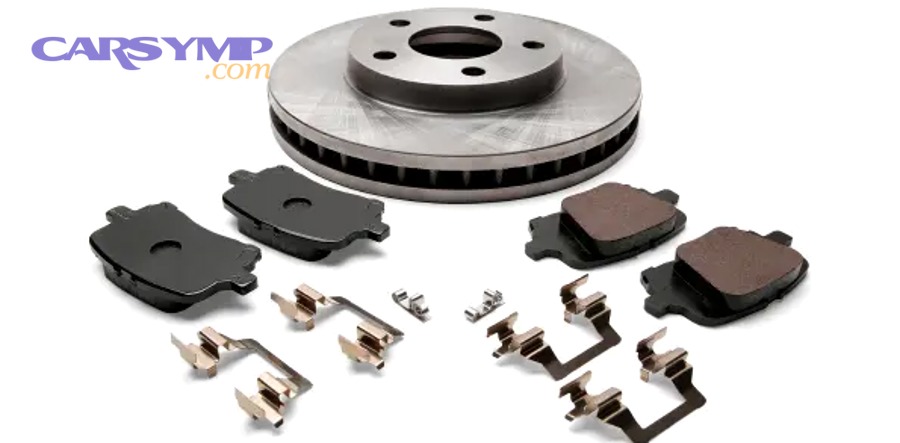
Why vibration grows instead of dying out
In a quiet brake system, vibration energy is absorbed (damping) or scattered before it becomes loud. In a noisy system, the vibration “feeds itself” because contact pressure, friction coefficient changes, and resonance line up at just the wrong time.
Cụ thể, when the pad cannot slide smoothly on its supports, it can grab-release-grab in rapid cycles, or it can resonate like a tiny speaker cone. That resonance can be triggered more easily when surfaces are glazed, when the rotor has uneven transfer, or when the pad is cocking in the bracket.
Where compound and hardware act in the noise pathway
Anti-squeal compound works mainly by adding a thin damping layer between the pad backing plate and the piston/caliper contact points. Proper hardware works by controlling pad fit, pad return, pad sliding, and micro-movements that create chatter in the first place.
Để minh họa, think of compound as “damping the symptom” and hardware service as “restoring the mechanism.”
Theo nghiên cứu của Universiti Teknologi Malaysia từ Faculty of Mechanical Engineering, vào Jan 2023, brake squeal is typically discussed in the audible band around 1,000–18,000 Hz and may reach roughly 60–120 dB at about a meter distance in reported measurements.
Is anti-squeal compound a real fix or a temporary patch?
Yes—anti-squeal compound can be a real fix when the brake is mechanically correct and you only need extra damping at the backing plate contact points.
Sau đây, you’ll see why it sometimes works beautifully and other times seems to “do nothing.”
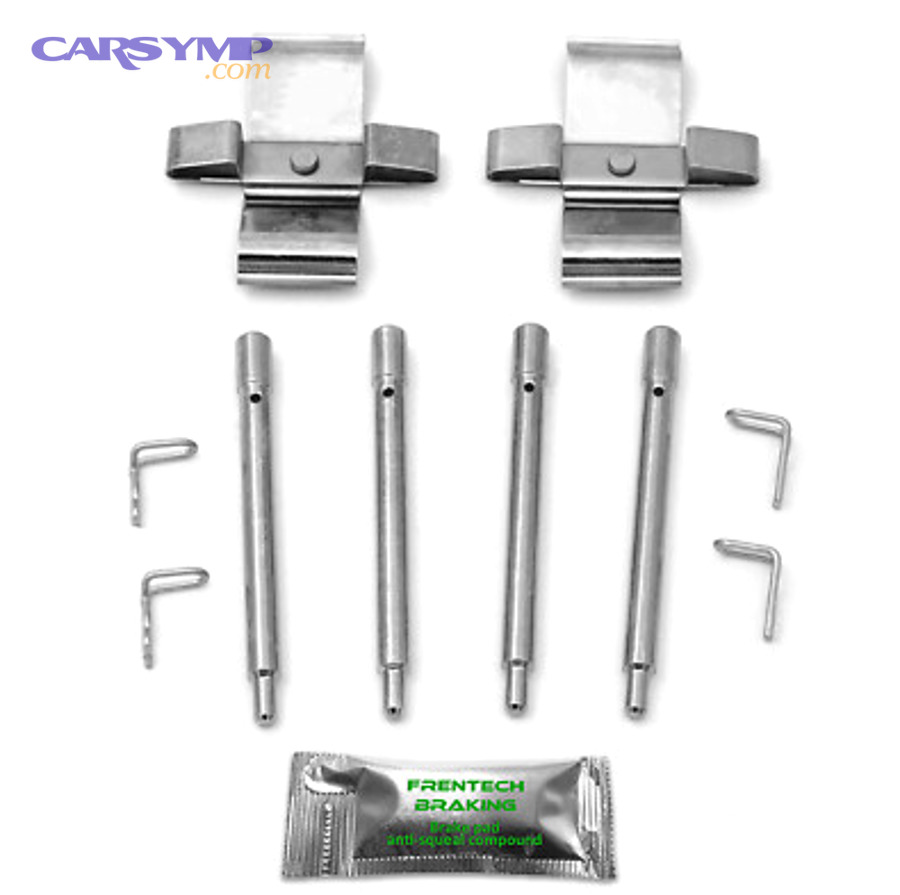
What anti-squeal products actually do
Most anti-squeal pastes/greases dry into a tacky film, or stay semi-flexible, so the pad backing plate is less likely to ring against the piston/caliper. Some are ceramic-based, some are synthetic, and some are adhesive-type “quiet” coatings meant to stay put under heat.
Ví dụ, if you have a pad with no shim and a piston that contacts bare steel, a proper damping film can reduce the tendency for a high-frequency ring to form at that contact interface.
Common misuse that makes squeal worse
Anti-squeal compound fails when it is treated like a universal lubricant. If it migrates onto the friction material or rotor face, braking performance can drop and noise can increase. If it is applied thickly, it can change pad fit and prevent the pad from sitting flat. And if the true issue is stuck hardware, no paste can “unstick” rusted abutment surfaces.
Quan trọng hơn, compound cannot replace missing shims, seized guide pins, bent anti-rattle springs, or corroded pad lands—those are mechanical control parts, not damping aids.
Theo nghiên cứu của Universiti Teknologi Malaysia từ Faculty of Mechanical Engineering, vào Jan 2023, common structural countermeasures discussed in the literature include using pad shims (constrained-layer damping), clips, and grease as part of a broader squeal suppression approach.
What does “proper hardware” mean for quiet brakes?
Proper hardware means the correct shims, abutment clips, anti-rattle springs, and smooth sliding contact points that keep pads centered, free-moving, and lightly preloaded to prevent chatter.
Để bắt đầu, treat hardware as the “guides and springs” that decide whether your pads glide quietly or vibrate loudly.
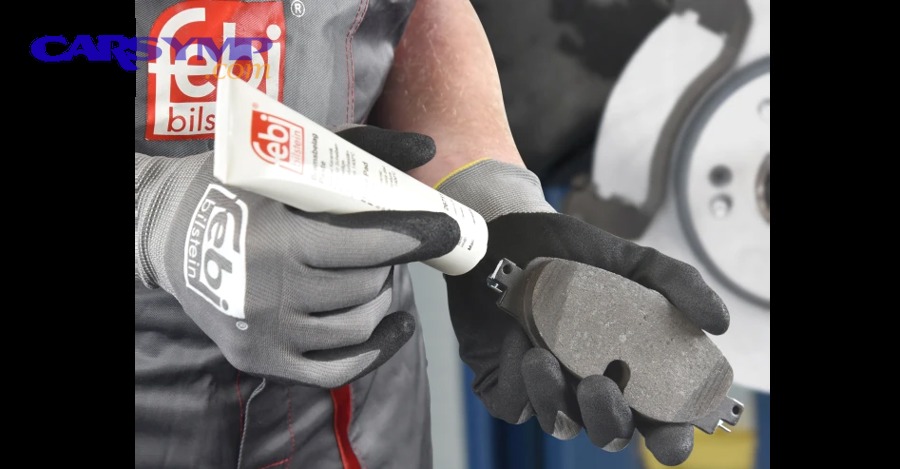
Shims, clips, and springs: the quietness toolkit
Trong khi đó, missing or mismatched clips can create extra clearance, allowing the pad ears to slap the bracket and squeal, especially at low speed.
Guide pins and pad lands: where squeal starts quietly
Even perfect shims can’t help if caliper guide pins are sticky or dry. Sticking pins cause uneven pad pressure, uneven transfer, and micro-vibrations that can turn into audible squeal. Likewise, the bracket “pad lands” (where pad ears slide) must be clean, smooth, and lightly lubricated with the correct high-temp brake lubricant where the manufacturer allows.
Hơn nữa, hardware is not “optional”—it is a tolerance system. If tolerances drift due to rust, wear, or missing parts, squeal becomes far more likely.
Theo nghiên cứu của Universiti Teknologi Malaysia từ Faculty of Mechanical Engineering, vào May 2022, the review notes that insertion/removal of pad shims and other structural modifications are repeatedly studied as practical ways to influence squeal propensity.
Anti-squeal compound vs proper hardware: which works better long-term?
Proper hardware is usually the more reliable long-term fix because it restores pad control, while anti-squeal compound is best as a finishing step that adds damping once fit and movement are correct.
Tuy nhiên, the “right” choice depends on whether your squeal is caused by poor damping at contact points or by mechanical clearance and sticking.
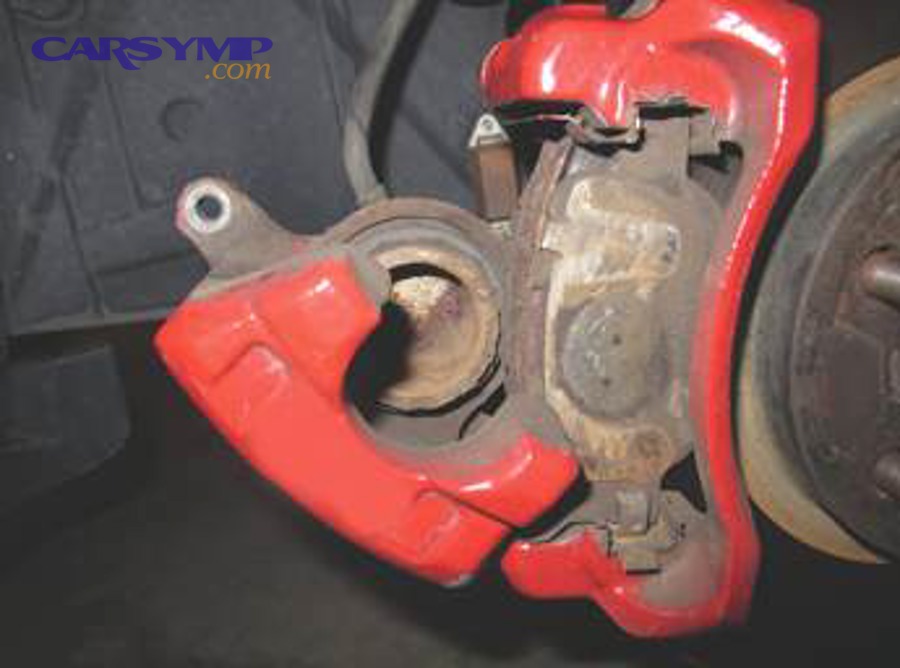
Comparison by reliability, heat, and repeatability
Reliability: Hardware fixes are repeatable because they restore geometry and motion control. Compound is sensitive to application thickness, curing, heat cycles, and contamination risk.
Heat tolerance: Both can survive heat if chosen correctly, but compound can dry out, wash away, or migrate if overapplied; hardware can corrode if not stainless-coated or if salt exposure is heavy.
Repeatability: Hardware service is measurable (clearances, smooth sliding, correct parts). Compound success is harder to verify until after a road test and heat cycle.
Bảng này chứa các tiêu chí so sánh thực dụng giúp bạn quyết định “dán/damping” hay “khôi phục cơ khí” dựa trên nguyên nhân gốc.
| Decision factor | Anti-squeal compound | Proper hardware (shims/clips/springs/pins) |
|---|---|---|
| Best when | Everything fits/moves correctly but needs more damping at piston/backing plate | There is corrosion, missing clips, wrong shim stack, sticking pads, uneven pad wear, or chatter |
| Failure mode | Contamination, over-application, dries out, masks a deeper fault | Wrong kit, poor cleaning, lack of correct lubrication, ignored pin/boot condition |
| Noise reduction durability | Medium (varies with heat cycles and product) | High (when installed correctly and protected from corrosion) |
| Safety risk if done wrong | High if it reaches friction surfaces | Medium if hardware is omitted or misinstalled (can lead to drag/uneven braking) |
| Time and cost | Low parts cost, low time, but may require rework | Moderate parts cost, moderate time, lowest chance of comeback |
What many “quick fixes” miss
Corroded shims and rusty clips don’t just make noise—they change pad alignment and allow micro-tilt under pressure. That tilt can create uneven contact and uneven friction film, increasing the chance of squeal returning even after you apply compound.
Ngược lại, if hardware is new and correct, compound can be the last 10% improvement that turns “almost quiet” into “quiet across all temperatures.”
Theo nghiên cứu của Universiti Teknologi Malaysia từ Faculty of Mechanical Engineering, vào Jan 2023, the review emphasizes damping optimization and structural modifications as recurring approaches discussed for squeal suppression.
How do you decide which fix matches your symptoms?
Choose hardware-first if you see rust, uneven pad wear, tight pad movement, missing clips, or if squeal returns quickly; choose compound-first only when everything is correct and you need extra damping.
Sau đây, use a simple symptom-to-cause filter before buying anything.
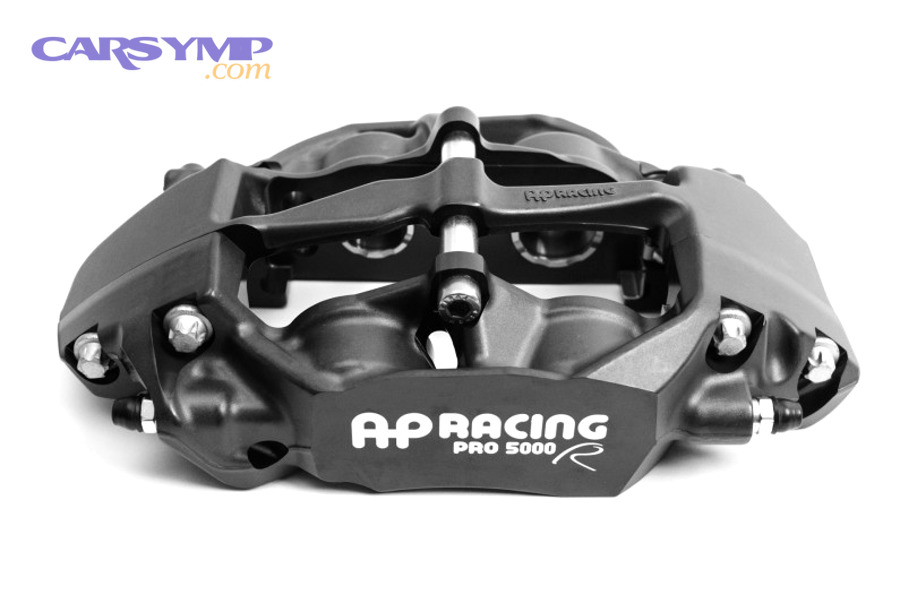
If the noise started after new pads
New pads can squeal if they were not bedded properly, if hardware was reused when it should have been replaced, or if the pad ears are binding on rusty bracket lands. In practice, a “new pads, old hardware” mix is a top reason squeal appears right after service.
Đặc biệt, if you also feel reduced bite or you see a shiny, hardened surface, the scenario often matches Glazed pads and rotor surface issues, which should push you toward correcting surface condition and installation quality—not just adding paste.
If the noise is mostly at low speed or light braking
Low-speed squeal frequently points to pad chatter (clearance and vibration) rather than high-energy braking instability. That usually favors hardware correction: proper abutment clips, correct springs, and smooth pad travel. Compound can help, but it will not correct excess clearance or a pad that “snaps” into position as it slides.
Quan trọng hơn, low-speed squeal can also be a wear-indicator warning on some pads, so inspection is mandatory before you assume it’s harmless.
If the noise appears in cold, damp, or after washing
Moisture film and light surface rust can create temporary squeaks. If it disappears after a few normal stops, you may not need parts. If it persists, check for pad binding and hardware corrosion—cold weather exposes weak hardware by reducing lubrication flow and increasing stiffness in rubber boots.
Hơn nữa, you can treat compound as an add-on only after confirming the pads glide freely and the clips are clean and intact.
Theo nghiên cứu của Firestone Complete Auto Care từ Brake Education content, vào Sep 2025, aggressive braking before proper break-in can contribute to glazing, which can lead to persistent squealing and reduced performance.
How do you apply anti-squeal compound correctly without causing brake issues?
Apply a thin, controlled layer only on the pad backing plate contact points (or on the shim interface as designed), never on friction surfaces, and only after cleaning and verifying correct hardware fit.
Dưới đây, a step-by-step method that focuses on safety and repeatability.

Step-by-step application that avoids contamination
- Confirm the pad slides freely first. If the pad binds, stop—compound is not the first fix.
- Clean the pad backing plate contact areas. Remove rust scale and old dried product where the piston and caliper fingers touch.
- Install or verify shims. If the pad design uses a shim, make sure it is present, seated flat, and not deformed.
- Apply a thin film. Use only enough product to coat the contact patch; thick blobs can squeeze out.
- Keep it off friction material. If you accidentally touch the friction face, clean it immediately with approved brake cleaner and replace the pad if contamination is heavy.
- Reassemble and torque correctly. Improper torque and misalignment can reintroduce vibration.
- Bed the pads properly. Controlled stops help stabilize friction film and reduce noise recurrence.
When compound should be skipped entirely
Skip compound if you see cracked friction material, a missing pad shim where the design expects one, severe rust on pad lands, seized guide pins, or obvious metal contact marks from misinstalled clips. In those cases, compound can mask the problem long enough to delay the real repair.
Để hiểu rõ hơn, remember: compound is a damping aid, not a replacement for a functioning sliding mechanism.
Theo nghiên cứu của Universiti Teknologi Malaysia từ Faculty of Mechanical Engineering, vào Jan 2023, grease and damping-related interventions are frequently discussed alongside clips and shims, but are presented as parts of an overall system approach rather than a single universal cure.
How do you service brake hardware so the pads move quietly?
Service hardware by restoring clean pad lands, replacing distorted or rusty clips/springs, lubricating only approved metal-to-metal sliding points, and ensuring guide pins move smoothly with intact boots.
Cụ thể, hardware service is about reducing stiction and preventing clearance-driven chatter.
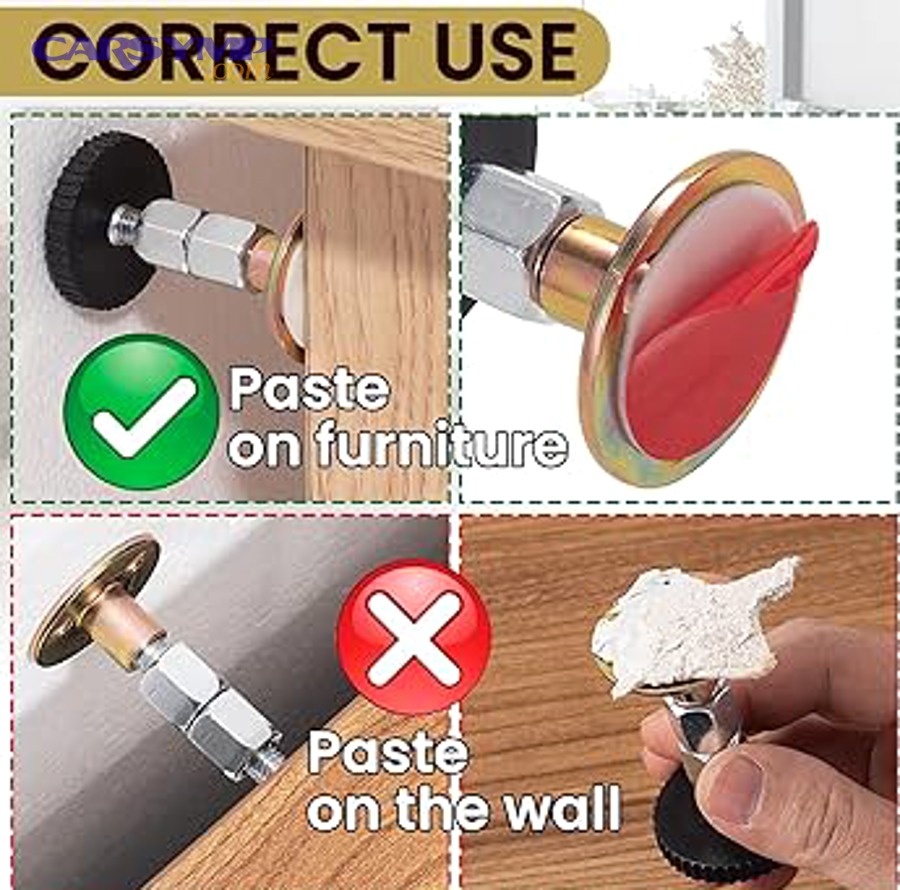
Hardware checklist that prevents repeat squeal
- Replace abutment clips when corroded or grooved. A worn clip changes pad position and promotes chatter.
- Clean pad lands to bare metal. Rust “jacking” under clips tightens the pad fit and causes binding.
- Use correct brake lubricant sparingly. Apply where the pad ears slide and where the clip design expects lubrication—never on friction surfaces.
- Service guide pins. Pins should slide freely; torn boots invite corrosion and uneven clamping.
- Confirm the shim stack is correct. Wrong shims can create piston/backing plate ringing or pad tilt.
How to verify you actually fixed the mechanism
A good verification step is a “hand slide” test: with the caliper removed, the pads should move smoothly in the bracket with light hand pressure and no sticking. Then, after assembly, a controlled bedding procedure and a few temperature cycles confirm whether the noise was damping-limited or mechanism-limited.
Hơn nữa, if squeal returns only after rain or after sitting, revisit corrosion protection and clip condition—hardware issues often relapse when moisture changes friction at the sliding points.
Theo nghiên cứu của Universiti Teknologi Malaysia từ Faculty of Mechanical Engineering, vào Jan 2023, clips and shims are repeatedly referenced as structural elements used to influence damping and vibrational behavior, reinforcing why “hardware condition” matters for squeal propensity.
When should you treat squeal as a warning instead of an annoyance?
You should treat squeal as a warning when it’s accompanied by grinding, poor braking feel, a burning smell, vibration, or visible pad wear near the backing plate—because the noise may signal severe wear or unsafe friction conditions.
Quan trọng hơn, some sounds are “built-in warnings,” and ignoring them can damage rotors fast.
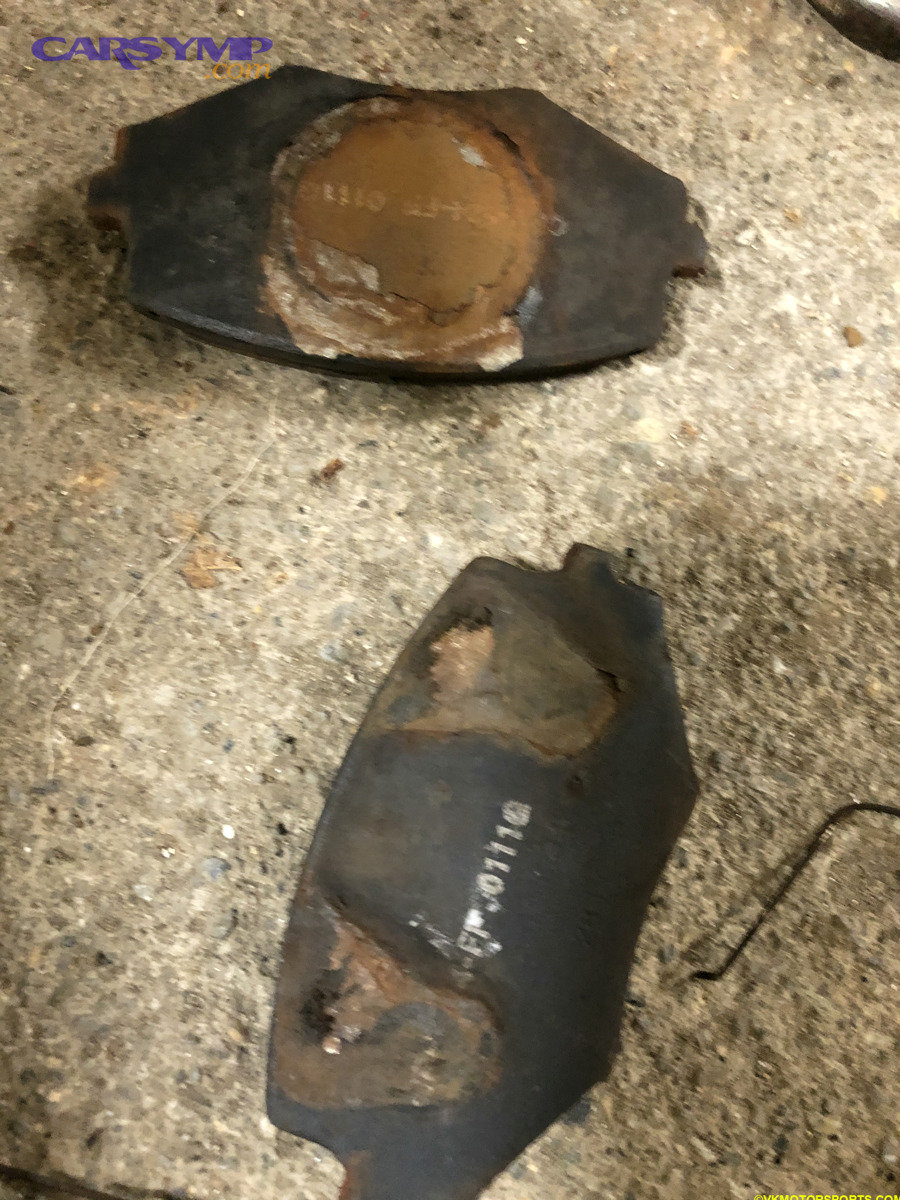
How to interpret the sound: squeal vs grind vs scrape
A light intermittent squeak can be normal in some conditions, but a harsh grind usually means the friction material is gone and the backing plate is contacting the rotor. That is the situation summarized by the phrase When squeal indicates metal-on-metal: if the sound turns into grinding or a loud constant scream with poor stopping, stop driving and inspect immediately.
Trong khi đó, a squeal that happens only at the end of a stop or only when reversing might be related to pad edge chatter and hardware preload—still worth fixing, but less likely to be emergency wear-through.
Wear indicators and what they mean
Many pads include wear indicators designed to make noise when pad material is low. That squeal is not “random”; it’s a deliberate alert that you’re near the service limit.
Đặc biệt, if you hear a persistent squeal that changes with light pedal pressure, inspect pad thickness before you apply any compound.
Cost reality and why diagnosis beats guessing
Noise-only problems can be cheap if it’s just hardware and cleaning, but letting it progress can force a full pad-and-rotor job. If you’re comparing options and searching for Shop fix cost for brake squeal, treat that number as a range that depends on whether you need hardware kits, pads, rotors, or caliper service.
Ví dụ, RepairPal’s estimator lists an average brake pad replacement cost range (parts and labor) that can land in the low-to-mid hundreds in the U.S., varying by vehicle and location—so stopping early can prevent higher combined repair totals.
Theo nghiên cứu của RepairPal từ Cost Estimator data, vào Oct 2025, an average brake pad replacement estimate is reported in the mid-$300 range (with labor and parts separated), highlighting how early intervention can reduce total spend when noise is caught before rotor damage.
Contextual Border: From here, we move beyond the compound-vs-hardware decision into advanced, less-obvious factors that can make a “mostly quiet” brake become quiet across seasons and driving styles.
Advanced tweaks that complement compound and hardware
Advanced tweaks work best after hardware is correct because they fine-tune friction stability, heat behavior, and vibration paths rather than replacing missing parts.
Hãy cùng khám phá the four upgrades that most often reduce “mystery squeal” after the basics are done.
Pad bedding and friction film stability
Proper bedding stabilizes the friction film on the rotor so the pad sees a consistent surface. When the film is uneven, squeal can appear as the pad repeatedly transitions between high and low friction patches. A controlled series of moderate stops—per pad manufacturer guidance—often reduces squeal that appears after a rushed installation.
Tóm lại, bedding is the bridge between “installed correctly” and “behaves quietly under heat.”
Pad edge chamfers and slot design
Some pads use chamfers and slots to reduce edge excitation and change how the pad contacts the rotor under light pressure. This is not magic; it’s geometry control that can reduce the tendency for a pad corner to initiate vibration.
Ngược lại, aggressive chamfers can sometimes change initial bite feel, so match pad design to vehicle and driving style.
Rotor surface condition and transfer layer cleanliness
A rotor surface that is heavily grooved, heat-spotted, or coated in uneven deposits can “sing” even with perfect hardware. Light resurfacing or cleaning (when within spec) can remove uneven transfer that triggers squeal. If the rotor is below minimum thickness or severely heat-damaged, replacement is the quieter and safer route.
Hơn nữa, avoid contaminating the rotor face with any paste or lubricant during assembly—cleanliness is part of NVH control.
Friction material choice (ceramic vs semi-metallic) as a synonym-level swap
Changing pad compound can function like a synonym swap in NVH terms: you keep the same brake architecture but substitute a different friction behavior profile. Some ceramics are quieter in daily driving; some semi-metallic pads handle heat differently but may be noisier depending on rotor and hardware condition.
Như vậy, if everything else is correct and squeal remains, pad material selection can be the last lever—after fit and movement are solved.
Theo nghiên cứu của Firestone Complete Auto Care từ Brake Education content, vào Jun 2025, glazed pads/rotors are associated with squealing and reduced braking performance, supporting why surface condition and bedding matter even after hardware is corrected.
FAQ
These quick answers clarify the most common confusion points people run into after reading a comparison like this.
Sau đây, each answer is designed to help you decide what to inspect next.
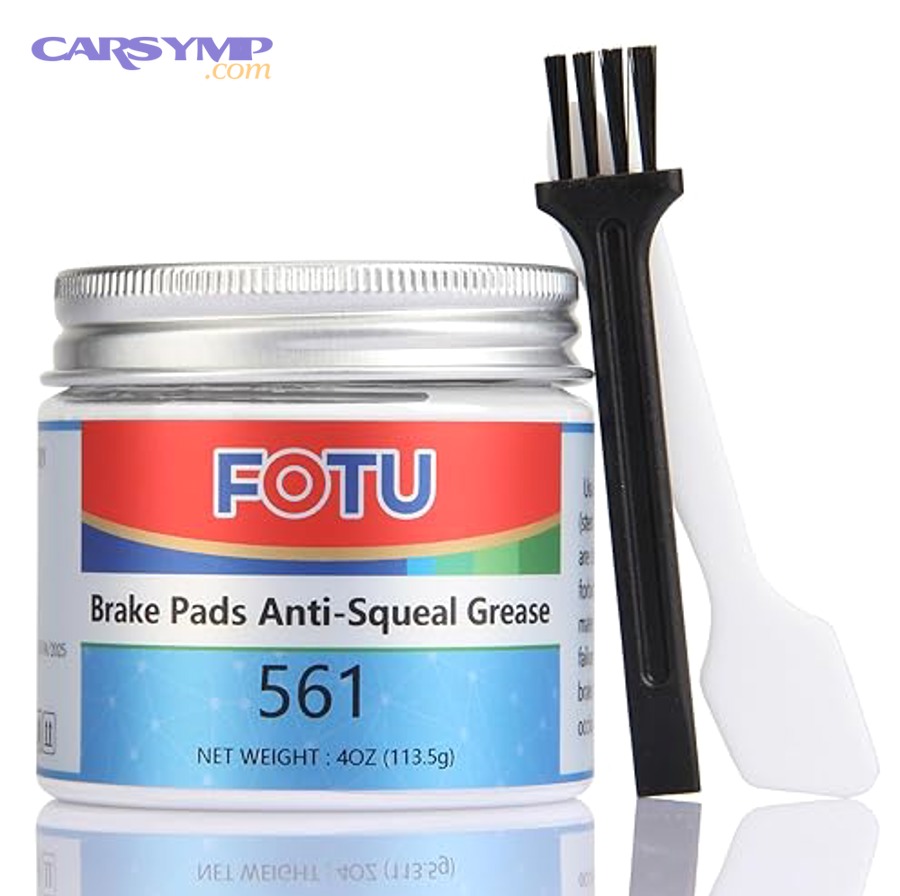
Can I rely on anti-squeal compound alone if my brakes squeak?
No—only if the pads move correctly and the hardware is correct. If the pad binds, clips are missing, or pins stick, compound may only mask the noise temporarily and the squeal will often return after heat cycles.
Should I replace hardware every time I replace pads?
Often yes, especially in rust-belt climates or when the kit is inexpensive compared with labor. New pads installed on old, corroded clips are a common recipe for squeal recurrence and uneven wear.
Where should compound go (and where should it never go)?
It belongs on pad backing plate contact points (or between shim and backing plate if designed that way). It should never go on friction material or rotor faces. If you’re doing a formal brake squeal diagnosis, contamination control is part of the diagnosis.
Is a squeal always “wear indicators,” or can it be something else?
It can be wear indicators, but it can also be hardware chatter, glazing, moisture, or uneven transfer. Inspect pad thickness and hardware condition before you assume it’s harmless.
What’s the fastest professional-style approach to stop repeat squeal?
Hardware-first: replace clips/springs as needed, clean pad lands, service pins, verify pad free movement, then apply a thin damping product only where appropriate, and finish with correct bedding. That workflow prevents the comeback cycle.
How does this relate to a content hub like Car Symp?
If you’re building a structured troubleshooting library (for example, under a project name like Car Symp), treat squeal as a symptom cluster: separate “damping fixes” (compound/shims) from “motion-control fixes” (hardware/pins/bracket lands) so readers stop guessing and start testing.