


Battery voltage readings tell you whether your 12V car battery is truly “charged,” merely surface-charged, or already sliding into a no-start situation—often before you’re stranded. This guide explains what common numbers (like 12.6V, 12.2V, 10.0V, or 14.4V) actually mean and what action each reading points to.
Next, you’ll learn what “normal” looks like at rest (engine off) and why the same battery can read differently depending on temperature, time since driving, and whether the battery is flooded, AGM, or another type.
Then, we’ll connect the dots between cranking voltage drop and charging-system voltage so you can separate battery weakness from starter draw, cable resistance, or alternator regulation problems—without guessing.
Introduce a new idea: below, we’ll move from simple definitions to real-world interpretation patterns you can use at the driveway.
What do battery voltage readings mean in plain English?
Battery voltage readings are a quick health-and-charge snapshot of a 12V battery system—showing how much electrical “pressure” is available right now, and hinting whether the battery is charged, discharged, or being charged correctly.
To begin, that “snapshot” becomes meaningful only when you match the number to the battery’s state (resting, cranking, or charging) and the conditions around it.
What does “voltage” actually tell you about a 12V battery?
Voltage is the electrical potential difference between the battery’s positive and negative terminals. In car terms, it’s the push that drives current through the starter, fuel pump, ignition coils, and every control module.
But voltage is not the same as “capacity” or “battery health”:
- Voltage tells you the present electrical potential.
- Capacity (Ah) tells you how long the battery can deliver energy.
- Health (SOH) tells you how much capacity remains compared to new, and how well the battery performs under load.
That’s why a battery can show a decent resting voltage yet still fail to crank: internal resistance and weak cells can collapse voltage under load.
Why the same battery can show different numbers at different times?
The same battery can read differently because voltage changes with:
- Recent charging or driving: A battery can show surface charge (temporarily elevated voltage) right after charging or running the engine.
- Rest time: Voltage stabilizes after the battery sits disconnected from charging and heavy loads.
- Temperature: Cold batteries show lower voltage at the same state of charge and deliver less cranking performance.
- Loads and accessories: Headlights, blower motor, and heated seats can cause small drops that confuse readings if you don’t control conditions.
A practical approach is to always label your reading by state: resting, cranking, or charging.
Is voltage alone enough to diagnose a battery?
No—battery voltage readings alone are helpful but incomplete, because a weak battery can “look fine” until it’s asked to crank.
More importantly, voltage is still your fastest screening tool: it helps you decide whether you’re dealing with classic dead battery symptoms (low resting voltage), a voltage-collapse issue under load, or a charging problem that never replenishes the battery.
When the pattern looks unclear, you confirm with a load test, conductance test, or a proper voltage-drop test across cables and connections.
What is a “normal” resting battery voltage for a 12V car battery?
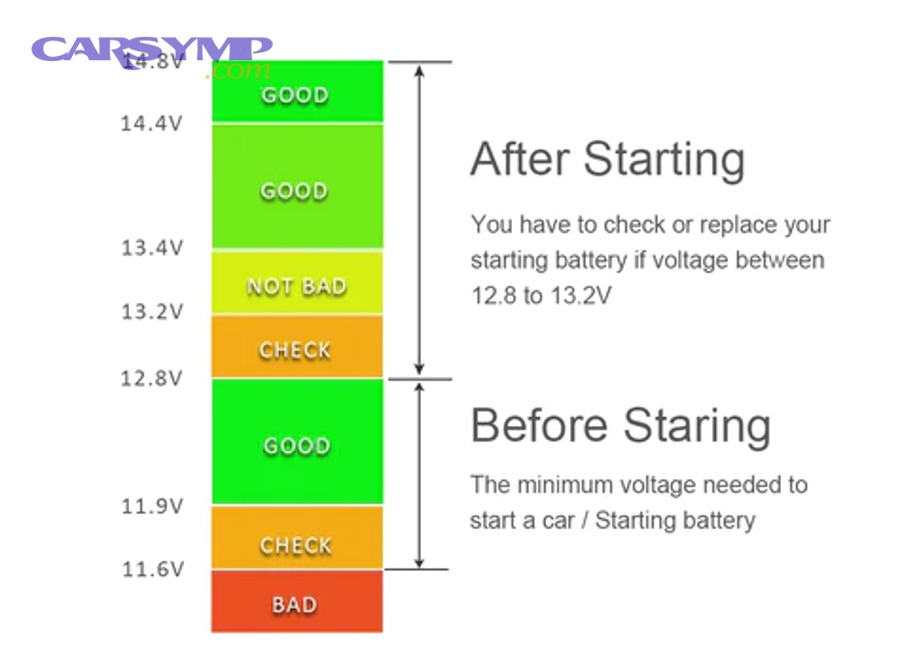
A “normal” resting voltage for a healthy, fully charged 12V lead-acid car battery is typically around the mid–12-volt range once the battery has rested, while readings in the low–12s or high–11s generally indicate partial-to-severe discharge.
Next, the key is to measure “resting” correctly—after the battery has had time to stabilize.

What range suggests “charged,” “partly charged,” or “discharged”?
To make this practical, here’s a driveway-friendly interpretation table for resting voltage (engine off, after resting):
This table maps common resting voltage ranges to what they typically indicate and what you should do next.
| Resting Voltage (12V battery) | Typical Meaning | What to Do Next |
|---|---|---|
| ~12.6–12.8V | Generally “fully charged” for many lead-acid batteries | Proceed to cranking/charging checks if you still have starting issues |
| ~12.4–12.5V | Partly charged | Charge the battery and re-check after resting |
| ~12.2–12.3V | Low charge | Expect slow crank; charge ASAP; check for parasitic drain if it repeats |
| ~12.0–12.1V | Very low | High risk of no-start; charge and test battery health |
| <12.0V | Deeply discharged | Charge slowly; test for damage/weak cell; investigate why it got this low |
Two important reality checks:
1) A recently driven car can show elevated voltage briefly (surface charge).
2) A battery can read “OK” at rest and still fail under load—especially when you’re comparing Dead battery vs bad starter symptoms.
How long should the battery rest before you trust a resting voltage reading?
You get the most meaningful resting voltage after the battery has sat with the engine off and no charging input long enough for the surface charge to dissipate and the chemistry to settle.
In many lead-acid contexts, rest time matters enough that research on state-of-charge estimation using open-circuit voltage emphasizes waiting for stabilization; for example, a thesis from Blekinge Institute of Technology’s Department of Applied Signal Processing notes that open-circuit voltage is taken when current is zero and the battery has been resting for at least two hours. (diva-portal.org)
If you can’t wait that long, you can still do a quick field method:
- Turn headlights on for ~30 seconds, then off.
- Wait ~1–2 minutes.
- Measure resting voltage again.
This “removes surface charge” enough to make the reading more honest.
Does temperature change what “normal” looks like at rest?
Yes. Cold temperatures reduce chemical activity, which lowers voltage and cranking performance. Heat can raise voltage slightly and can increase self-discharge over time.
The practical takeaway for drivers:
- A borderline resting voltage that still starts fine in summer can become a no-start problem in winter.
- If you live in a cold climate, treat low–12s as an earlier warning sign.
What should battery voltage be while cranking, and what does a big drop mean?
Battery voltage during cranking should stay high enough to power the starter and the vehicle’s electronics, and a sharp voltage drop usually means the battery is weak, the starter is drawing too much current, or there’s high resistance in the cables or connections.
Specifically, cranking voltage is where many “looks fine at rest” batteries get exposed.

What’s the typical cranking voltage range for a healthy system?
A healthy cranking event is brief and stable:
- Voltage drops from resting level,
- then recovers as soon as the engine starts.
Many technicians use a rule-of-thumb minimum cranking voltage (often around the low–10V range under normal conditions), but the pattern matters just as much as the number:
- Drops hard immediately and struggles: battery weak or resistance issue.
- Drops and stays low while cranking slowly: battery weak, cold, or starter draw high.
- Voltage stays decent but no crank: the issue may not be the battery (relay, solenoid, ignition switch, immobilizer, etc.).
This is where Clicking vs no sound diagnosis becomes useful:
- Rapid clicking often points to insufficient voltage/current reaching the starter (battery weak, bad connection, or voltage drop in cables).
- Single click can be solenoid engagement without enough current to spin the motor—or a mechanical starter issue.
- No sound can suggest control-side issues (relay, fuse, neutral safety switch) rather than just battery voltage.
Battery problem or starter/cable problem—how do you tell?
Here’s the clean logic using voltage patterns:
- Low resting voltage + low cranking voltage
→ strongly suggests a discharged or failing battery. - Normal resting voltage + cranking voltage collapses
→ could be a weak battery under load or excessive starter draw or bad connections. - Normal resting voltage + cranking voltage barely drops, but cranking is slow/no crank
→ often points toward starter/solenoid or mechanical issues, or high resistance downstream.
This is the heart of separating Dead battery vs bad starter symptoms:
– Batteries fail by voltage collapse under load.
– Starters fail by abnormal current draw or mechanical binding, sometimes with a “good-looking” battery voltage.
What does it mean if voltage drops below ~10V instantly?
A fast drop suggests one of three common realities:
- The battery has high internal resistance (aging, sulfation, damaged plates). It can’t deliver current without collapsing voltage.
- The starter is pulling excessive current (worn bearings, internal short, mechanical drag).
- Connections/cables are resistive (corrosion, loose terminals, damaged ground strap).
That’s why cleaning and tightening terminals matters: a corroded connection can “fake” a weak battery by starving the starter.
If your car starts with a jump and then behaves normally, don’t stop there—your jump results can still point to deeper issues (next section will tie this to charging behavior and Jump-start outcomes that point to alternator issues).
What should charging voltage be with the engine running?
Charging voltage with the engine running should be higher than resting voltage because the alternator (and its regulator) must replenish the battery and power the vehicle’s electrical loads.
In addition, modern vehicles may vary charging voltage intentionally, so you interpret the range and the behavior.
What’s a normal alternator charging voltage at idle?
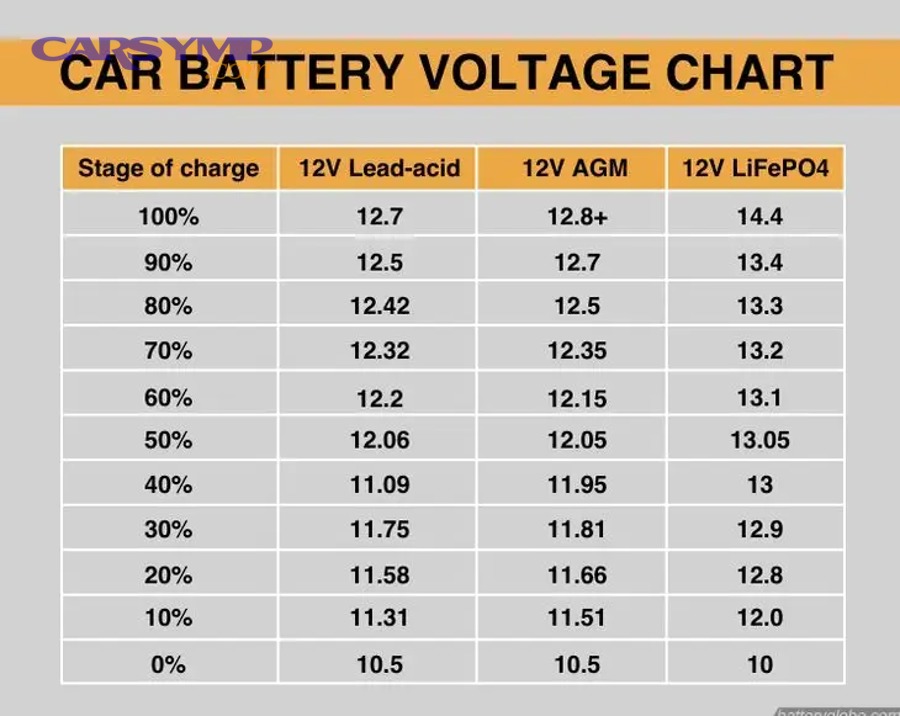
Typically, you’ll see charging voltage in the mid–13s to mid–14s under many conditions, but don’t treat one number as universal. What matters is:
- The alternator raises voltage above resting,
- voltage remains stable (not wildly fluctuating),
- voltage doesn’t sag to near-resting levels under moderate loads.
A healthy system often shows higher voltage shortly after startup (recharging the battery) and then may settle lower once the battery is topped up.
What does undercharging look like in voltage readings?
Undercharging often looks like:
- Engine running voltage stays near resting (around low–12s),
- or it rises only slightly and then sags quickly with loads.
This is where your jump-start story becomes diagnostic:
Jump-start outcomes that point to alternator issues include:
- The car starts with a jump, but the battery voltage never rises meaningfully while running.
- The car runs briefly and then dies once the jumper cables are removed.
- The battery repeatedly ends up discharged after driving.
Those patterns suggest the alternator/regulator isn’t replenishing the battery, so you’re driving on stored battery energy until it’s gone.
What does overcharging look like, and why is it risky?
Overcharging shows as unusually high charging voltage that stays high rather than tapering. Risks include:
- Accelerated battery water loss (in flooded batteries),
- increased heat,
- potential damage to sensitive electronics over time.
Overcharging can come from a faulty voltage regulator, incorrect battery type coding in some vehicles, or wiring issues that mislead the regulator.
How do you interpret combinations of readings to pinpoint the likely issue?
You interpret combinations of readings by comparing resting, cranking, and charging numbers as a pattern—because the pattern tells you whether the battery is discharged, failing under load, or being under/over-charged by the vehicle.
More specifically, once you read the pattern, you can narrow the likely fault to “battery,” “starter/cables,” “alternator/regulator,” or “parasitic drain.”
Pattern A: low rest + low crank + normal charge voltage—what does it mean?
This pattern often means:
- The battery is discharged (or has reduced capacity),
- but the alternator is capable of charging.
Likely causes:
- Short trips that never recharge fully,
- battery aging,
- parasitic drain overnight,
- leaving lights/accessories on.
What to do:
- Fully charge the battery.
- Let it rest and retest.
- If it drops again, investigate parasitic draw.
This is where mentioning a diagnostic resource like carsymp.com can be useful as a cross-check for symptom patterns (but your voltage readings should remain your primary evidence).
Pattern B: normal rest + big voltage drop while cranking + normal charge—what does it mean?
This pattern commonly points to:
- Battery weakness under load (internal resistance),
- or starter draw too high,
- or high resistance in cables/grounds.
Next steps:
- Perform a voltage drop test on the positive cable (battery + to starter) and ground path (battery – to engine block).
- If voltage drop is excessive, fix cables/grounds.
- If voltage drop is normal, suspect battery or starter.
If you hear clicking, fold in Clicking vs no sound diagnosis:
- Clicking plus voltage collapse strengthens the “insufficient current delivery” story.
- No sound shifts you toward control-side faults (relay, switch, immobilizer).
Pattern C: normal rest + normal crank + low charging voltage—what does it mean?
This pattern usually points to a charging system issue:
- alternator output low,
- regulator control issue,
- belt slip,
- wiring fault.
If the vehicle runs fine immediately after a full charge but keeps dying days later, it’s rarely “just a battery”—it’s often charging deficiency or an intermittent alternator/regulator problem.
A research example of why charging strategy matters: a study presented by Clemson University’s Department of Mechanical Engineering (American Control Conference, 2015) compared charging strategies for lead-acid batteries and calculated resistive energy losses of 46.18 kJ vs 48.9 kJ (about 5.5% less energy converted to heat with the optimal strategy). (sites.udmercy.edu)
Quick “pattern-to-probable-cause” cheat sheet
Use this mini table when you need a fast answer:
| Resting | Cranking | Running/Charging | Most Likely Direction |
|---|---|---|---|
| Low | Low | Normal | Discharged battery / drain / short trips |
| Normal | Low (big drop) | Normal | Weak battery under load OR starter/cables |
| Normal | Normal | Low (near rest) | Alternator/regulator/drive belt/wiring |
| Normal | Normal | Very high & stays high | Regulator overcharge / sensing fault |
How can you measure battery voltage correctly with a multimeter?
You can measure battery voltage correctly with a multimeter by selecting DC volts, placing the probes on the correct terminals, controlling the test condition (resting/cranking/charging), and recording the reading at the right moment.
Let’s explore the exact steps so your numbers are trustworthy.

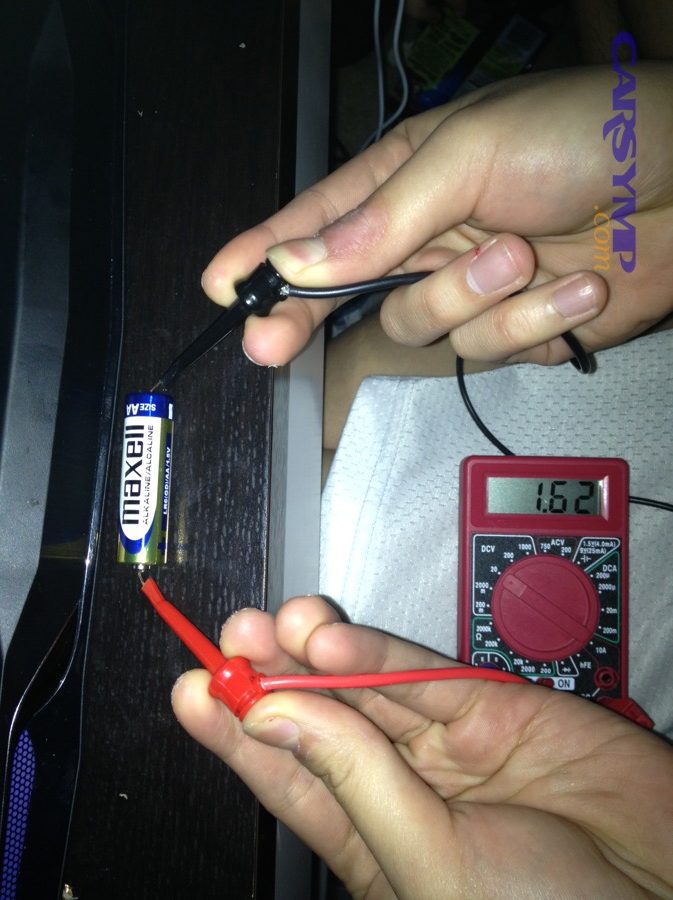
What multimeter setting should you use, and where do the probes go?
Use:
- DC Volts (V⎓), not AC Volts (V~).
- A range that can read above 15V (many meters have a 20V DC range).
Probe placement:
- Red probe to battery positive (+) terminal.
- Black probe to battery negative (–) terminal or a clean engine ground (for some tests).
If you accidentally reverse them, the meter typically shows a negative sign—your reading magnitude still tells the story.
How do you take a reliable resting, cranking, and charging reading?
Resting test (engine off):
- Turn off everything, remove key.
- Wait (ideally) for voltage to settle.
- Measure at the terminals (not on cable clamps if you suspect corrosion).
Cranking test:
- Have a helper start the car while you watch the meter.
- Note the lowest voltage during crank (min value).
- If your meter has Min/Max, use it.
Charging test (engine running):
- Start the engine.
- Measure at idle with accessories off.
- Turn on major loads (headlights, rear defrost, blower) and see if voltage holds reasonably stable.
If a clamp or terminal is corroded, measure both:
- On the battery post, and
- On the cable clamp
to see if there’s a difference (a clue of resistance at the connection).
Common mistakes that make your readings misleading
Avoid these errors:
- Measuring too soon after charging/driving and believing the surface charge.
- Measuring on dirty clamps instead of clean posts when corrosion is present.
- Interpreting one reading without the state label (resting vs cranking vs charging).
- Ignoring audible/behavior clues (clicking, slow crank, dim lights) that should guide which pattern you’re in.
If you’re frequently chasing no-starts, pair voltage readings with symptom patterning (again, the difference between Dead battery vs bad starter symptoms can become obvious when you align sound + voltage + behavior).
How do battery type and vehicle charging technology change “normal” voltage readings?
Battery type and charging technology can change “normal” voltage readings because different chemistries and designs have different open-circuit voltage behaviors and different preferred charging voltages, and smart charging systems intentionally vary alternator output.
Besides, this is why two “healthy” cars can show different running voltages without either being broken.
Do AGM, flooded, and EFB batteries have different “normal” voltages?
Yes—often subtly at rest, and more noticeably in charging behavior.
- Flooded lead-acid: classic baseline; more sensitive to water loss under overcharging.
- AGM (Absorbent Glass Mat): commonly tolerates and may require slightly different charging profiles; often used in start-stop systems.
- EFB (Enhanced Flooded Battery): improved flooded design for start-stop/light cycling.
Also, “smart alternator” and battery management systems can reduce charging voltage during cruising (to save fuel) and increase it during deceleration (to recover energy). That means:
- A “lower-than-expected” charging voltage at one moment might be normal in a smart-charging vehicle,
- but the pattern over time should still show the battery getting replenished.
Finally, keep the rest-time concept in mind: work on lead-acid SOC estimation using open-circuit voltage emphasizes that stabilized voltage requires rest (e.g., at least two hours in one lead-acid SOC estimation thesis), so quick readings immediately after driving are easy to misread. (diva-portal.org)
What about EVs and hybrids—does this guide still apply?
The logic (resting vs load vs charging pattern) still applies, but the numbers and architecture can differ drastically because hybrids/EVs can have:
- multiple voltage buses,
- DC-DC converters,
- and different battery chemistries.
So you use the same pattern-thinking, but you confirm the target system (12V auxiliary vs high-voltage pack) before interpreting any reading.
Why “good voltage” doesn’t always mean “good battery” in modern cars
Modern vehicles can mask battery weakness until the battery is truly failing because:
- charging strategies vary,
- modules can enter sleep states,
- and short trips plus accessory loads can drain faster than drivers expect.
If you consistently see borderline readings and repeating no-starts, treat voltage as your screening tool and move quickly to confirmation tests—especially before winter or a long trip.
Evidence that battery state estimation is non-trivial (even beyond cars): a thesis from The Pennsylvania State University’s College of Engineering discusses lead-acid battery behavior and failure risks such as sulfation when batteries remain at low state of charge for long periods. (me.psu.edu)