


Replacing an ignition switch yourself can be safe and successful if you treat it as a safety-first electrical and steering-column job: you must isolate power, control airbag risk, protect wiring, and verify operation before reassembly—because the most expensive mistakes come from skipping precautions, not from turning the wrong screw.
Next, you also need a clear DIY decision rule: some vehicles turn a “simple switch swap” into a programming or security-fastener problem, so the safest DIY plan includes early “stop and escalate” checkpoints before you get stuck with an immobilized car.
Then, you should confirm the diagnosis before you buy parts, because many “no-start” complaints are not the ignition switch at all; a quick symptom check and basic electrical verification can prevent wasted time, wrong parts, and repeat failures.
Introduce a new idea: once you know what you’re dealing with, you can follow a step-by-step safety workflow that starts with risk gates, moves through careful disassembly and testing, and ends with a functional test that proves the repair before the trim goes back on.
Should you replace an ignition switch yourself, or is it too risky for DIY?
Yes—DIY ignition switch replacement is reasonable for many home mechanics, because (1) the switch is often accessible with basic trim removal, (2) the task is mainly careful labeling and reassembly, and (3) you can reduce safety risk by powering down correctly and avoiding airbag/steering components you don’t need to touch.
More importantly, that “yes” becomes a “no” the moment your vehicle adds anti-theft programming, security fasteners, or steering-column disassembly beyond simple covers—so your first job is deciding whether the job is actually a DIY job.
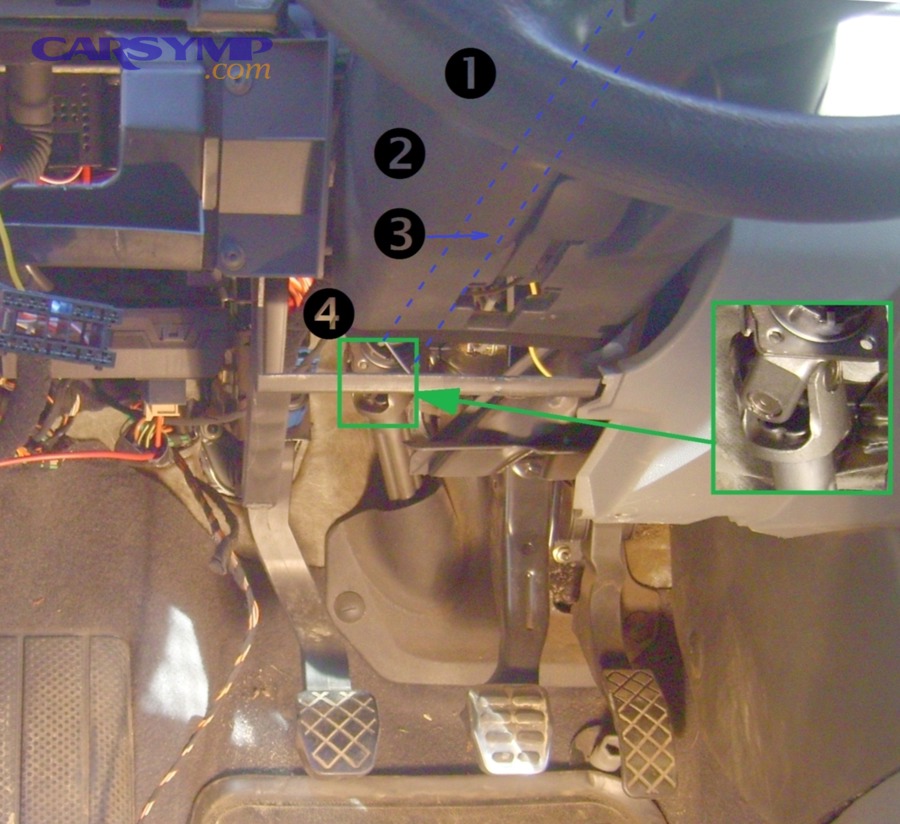
Before you pick up a screwdriver, use this fast DIY gate:
- DIY-friendly (usually): switch is separate from the lock cylinder, access is under the column covers, fasteners are standard Torx/Phillips, and no immobilizer relearn is required.
- DIY-risky (often): you must remove the steering wheel, touch the clock spring, drill shear bolts, or perform key/immobilizer programming after installation.
- DIY-not recommended: airbag/SRS connectors must be disturbed to access the part, the vehicle has a history of complex anti-theft resets, or you rely on the car daily and cannot tolerate downtime.
To make the decision concrete, this table summarizes the “risk vs. reward” that actually drives costly mistakes (not just the part price).
| Path | What you pay for | What you risk | Best for |
|---|---|---|---|
| DIY (basic switch access) | Lower spend; your time | Trim damage, misrouted wiring, incorrect diagnosis | Experienced DIYers with time and tools |
| Shop repair | Labor + parts markup | Less personal risk; still diagnosis-dependent | Anyone who needs guaranteed uptime |
| Dealer/specialist | Programming + OEM workflow | Highest cost; lowest immobilizer risk | Vehicles with key coding/anti-theft integration |
Is it safe to drive a car with a failing ignition switch until you can fix it?
No—driving with ignition switch problems is not reliably safe, because (1) the engine can shut off while moving, (2) critical electrical systems can drop out intermittently, and (3) a stall can reduce or remove crash protection features that depend on powered systems.
Next, the key point is predictability: intermittent failures are the most dangerous because they lull you into “it’s fine” right up until they strand you in traffic.
What “unsafe” looks like in the real world:
- Random stall or sudden loss of dash lights/accessories while driving
- Intermittent no-crank/no-start that changes with key position pressure
- Accessory power flicker (radio resets, blower cuts out, warning lights flash)
- Key feels loose or the switch position changes with bumps or keychain weight
If you’re seeing stalls, treat it as a tow-or-minimal-driving situation until repaired. One widely reported safety example is the General Motors ignition switch recall, where an ignition switch defect could shut off the engine in motion and contribute to airbags not deploying in certain conditions. (en.wikipedia.org)
DIY vs mechanic: which is cheaper after you factor in mistakes and rework?
DIY wins in out-of-pocket cost, a mechanic is best for reliability, and a dealer is optimal for programming-heavy vehicles, because DIY saves labor, independent shops reduce rework risk, and dealers minimize immobilizer/key coding failure.
However, the cheapest path becomes expensive when you add a second teardown, a tow, or a programming fee you didn’t plan for.
Use a simple “cost reality” checklist before committing:
- Do you have the tools to avoid stripped fasteners and broken trim clips?
- Do you have a backup plan if the car won’t start afterward?
- Do you know whether programming is required for your vehicle?
- Can you diagnose first (so you don’t replace the wrong part)?
For a reference point, RepairPal’s Ignition switch replacement cost estimate lists an average range of $238–$311 (varies by location and vehicle). That’s often the price of “certainty” if your DIY risk is high. (repairpal.com)
What is an ignition switch, and what parts do people confuse it with?
An ignition switch is an electrical switching component that routes battery power to accessory, ignition, and starter circuits based on key position, typically mounted on or near the steering column, and designed to coordinate multiple circuits with one controlled movement.
To better understand why DIY errors happen, you need to separate what the key turns (mechanical) from what actually powers the circuits (electrical).

Here are the most common look-alikes that cause wrong-part replacements:
- Ignition lock cylinder (mechanical): where the key inserts; wear here causes key binding or turning issues.
- Steering lock mechanism: prevents wheel rotation when locked; problems here feel like key/column binding.
- Starter relay/solenoid: can cause no-crank without being an ignition switch failure.
- Neutral safety switch / clutch switch: can block starting even when the ignition switch is fine.
- Immobilizer/key transponder system: can allow crank but block start, or block crank, depending on the design.
When people say “my ignition is bad,” they often mean Steering lock and ignition cylinder problems—which can mimic switch failure but require different parts and procedures.
What symptoms actually point to the ignition switch (not the battery, starter, or key)?
Ignition switch failure is most likely when electrical behavior changes by key position and pressure, especially when multiple accessories lose power together or the starter circuit behaves inconsistently across the same key movement.
Specifically, you’re looking for patterns that track the switch’s internal contacts, not just a single dead component.
Strong ignition-switch indicators include:
- Accessory power cuts out in ACC or RUN when you gently wiggle the key.
- Intermittent crank/no-crank that changes with key pressure (push/pull) rather than temperature alone.
- Dash lights flicker or reset when you transition between ACC → RUN.
- Stall + sudden loss of electrical power that returns when you re-cycle the key.
A practical way to confirm this diagnosis is Testing ignition switch with multimeter continuity/voltage checks (covered later), ideally with the switch connector isolated so you’re reading the switch, not the whole car.
Which common “no-start” problems mimic a bad ignition switch?
There are five common no-start mimics: battery/terminals, starter/relay, safety interlocks, lock-cylinder binding, and immobilizer faults, and you can classify them by whether the car loses power, loses crank, or loses spark/fuel authorization.
Moreover, recognizing these categories prevents “replace-and-pray” repairs.
Use this quick grouping:
- Power supply issues (battery/terminals/grounds): slow crank, clicking, dim lights, voltage drop under load.
- Starter circuit issues (relay/solenoid/starter motor): single click, no crank, but dash stays bright.
- Interlock issues (neutral safety/clutch switch): no crank, often works if you shift firmly to Park/Neutral or adjust pedal position.
- Mechanical key/lock issues (lock cylinder/steering lock): key won’t turn smoothly, steering wheel binds, key removal issues, abnormal key feel.
- Anti-theft/immobilizer issues: security light behavior, crank with no start, or start then die.
If you’re not sure which group you’re in, diagnose first—because replacing the ignition switch won’t fix a loose battery terminal or a bad starter relay.
What are the biggest safety warnings before you start (and why do they matter)?
The biggest safety warnings are: disable airbag/SRS power correctly, prevent electrical shorting, protect steering-column components, and avoid forced mechanical movement, because each one can cause injury, damage expensive modules, or create a no-start situation after reassembly.
In addition, “why it matters” is what keeps you disciplined—so you don’t rationalize skipping steps when you’re halfway in.
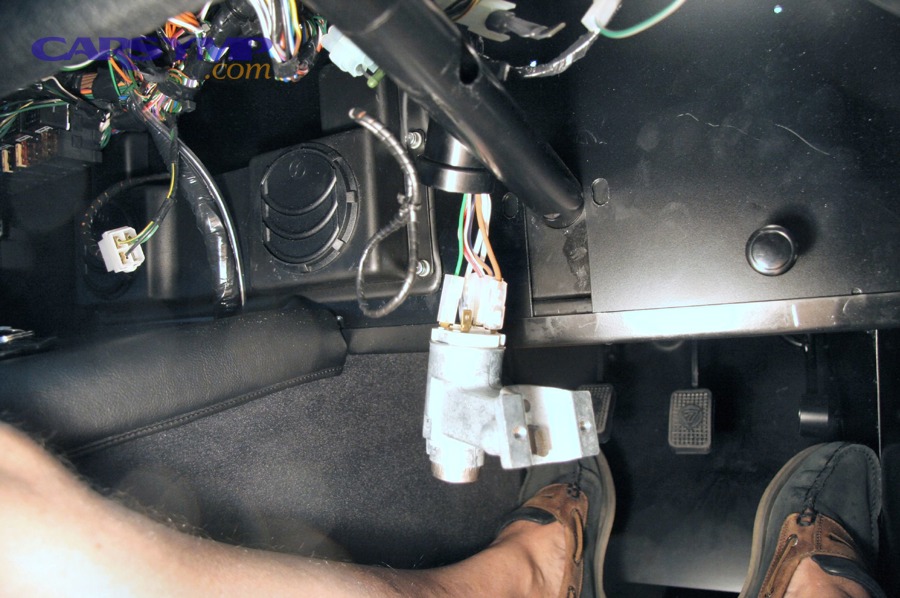
Core warnings that prevent costly mistakes:
- Airbag/SRS risk: accidental deployment can cause serious injury and expensive repairs.
- Clock spring risk: rotating or misaligning it can break steering wheel controls and trigger SRS faults.
- Short-circuit risk: a slipped tool can arc power, blow fuses, or damage connectors.
- Connector/pin damage: bent pins and partial seating create intermittent faults that are hard to trace.
- Steering lock stress: forcing the wheel/key can damage lock components and turn a switch job into a column job.
OSHA specifically emphasizes safe practices around airbags, including disconnecting battery cables and avoiding work in the deployment path. (osha.gov)
Do you need to disconnect the battery, and how long should you wait before touching the column?
Yes—you should disconnect the battery before DIY ignition switch work, because (1) it reduces airbag/SRS deployment risk, (2) it prevents accidental shorts while unplugging connectors, and (3) it protects modules from voltage spikes during reconnection.
Then, the waiting period matters because many systems retain reserve energy for a short time after disconnect.
A practical, safety-first workflow:
- Turn ignition OFF and remove the key.
- Disconnect and isolate the negative battery cable.
- Wait before working near airbag/SRS components. Some manufacturer recall/service documents specify waiting two minutes for reserve capacitors to discharge before airbag component service. (static.nhtsa.gov)
- If your vehicle’s service info recommends longer (some do), follow that.
Evidence: According to a General Motors technical bulletin on preventing inadvertent airbag deployment, the procedure includes disconnecting the negative battery cable and waiting 2 minutes before working on the system. (techlink.mynetworkcontent.com)
What can go wrong if you force the key, column lock, or electrical connectors?
Forcing parts can break lock components, damage switch internals, and bend connector pins, because steering-column parts are designed to align and release with precise positions—not with brute force.
However, the most frustrating outcome is the “new part, new problem” scenario: the car starts once, then becomes intermittent because a connector is half-seated or a pin is spread.
Common “force damage” outcomes:
- Lock cylinder wear accelerates when you torque the key against a bound steering wheel.
- Steering lock pawl damage can make the wheel stick or the key hard to turn.
- Connector housings crack and no longer hold pins firmly.
- Terminal pins bend and create heat, resistance, and intermittent power loss.
If you feel resistance, stop and diagnose what’s binding—usually steering wheel tension, a misaligned trim cover, or a connector latch that hasn’t released.
What tools and preparation prevent the most common DIY mistakes?
The best preparation is labeling, photographing, and using the correct trim and fastener tools, because most DIY ignition-switch failures come from broken trim clips, stripped security fasteners, and misrouted wiring—not from the switch itself.
Next, this is where you buy reliability: good prep prevents the “I can’t remember where this plug goes” moment.

A strong prep routine includes:
- Park with wheels straight (reduces steering lock tension).
- Gather tools and lighting before disassembly.
- Use containers or labeled bags for fasteners by location.
- Take photos at each layer (trim → connectors → fasteners → switch position).
- Plan your functional test before reassembly (so you don’t reinstall trim twice).
Which tools are “must-have” vs “nice-to-have” for ignition switch replacement?
Must-have tools include trim tools, correct driver bits, and a small ratchet set, while nice-to-have tools include a multimeter, magnetic pickup, and a torque wrench for reassembly confidence.
Specifically, tools matter because modern columns hide fasteners and use delicate clips.
Must-have:
- Plastic trim removal tools (to avoid gouging)
- Phillips and flat drivers
- Torx set (common on column covers)
- Socket set + extension
- Flashlight or headlamp
- Needle-nose pliers (for clips)
Nice-to-have:
- Digital multimeter (for diagnosing circuits and verifying switch output)
- Security Torx bits (if your vehicle uses them)
- Small mirror for hidden fasteners
- Torque wrench (helps avoid cracked plastic housings)
If your vehicle uses security fasteners or shear bolts, decide early whether you have the proper bits or extraction method—otherwise DIY becomes a stalled project.
What should you label, photograph, or mark before disassembly?
You should label connectors, fastener locations, and harness routing points, because these are the three places DIYers create intermittent problems after reassembly.
Moreover, a few minutes of documentation saves hours of troubleshooting.
Label/mark this list:
- Connector IDs: “upper yellow,” “lower gray,” etc. (match to photos)
- Harness routing: clip locations and slack direction (prevents pinching)
- Fastener length: some screws look similar but are not interchangeable
- Switch orientation: alignment marks if the switch has a sliding actuator or indexed mounting
- Steering wheel/column position: keep wheels straight and don’t rotate the column unnecessarily
If you plan on Testing ignition switch with multimeter, add one more prep step: photograph the connector pin layout or terminal labels so you can test consistently.
How do you replace an ignition switch safely (high-level steps without skipping hazards)?
A safe ignition switch replacement follows a controlled workflow with six steps—power down, access, identify, disconnect, replace, and verify—so you can restore reliable starting and accessory power without creating airbag faults or intermittent wiring issues.
To begin, remember that “high-level” does not mean “skip hazards”; it means you follow the order that prevents harm.

Here’s the high-level process you adapt to your vehicle’s service info:
- Disable power and reduce SRS risk (battery negative off; wait as specified).
- Remove lower dash and steering column covers carefully (trim tools, correct bits).
- Locate the ignition switch and confirm whether it is separate from the lock cylinder.
- Disconnect the ignition switch electrical connector(s) and release harness retainers.
- Remove fasteners, swap the switch, and ensure correct actuator alignment.
- Perform a functional test before final trim reassembly.
What is the safest order of operations from first screw to final test?
The safest order is: power down → stabilize the column → remove trim → verify parts → disconnect connectors → replace switch → staged testing → reassemble, because each stage reduces the chance of accidental deployment, shorts, and misalignment.
Then, you keep control by validating one layer at a time.
- Power down: key out, battery negative disconnected, wait per guidance.
- Stabilize: wheels straight, steering wheel centered, no unnecessary rotation.
- Trim removal: start with the least invasive cover; release clips gently.
- Part verification: confirm you are looking at the electrical switch, not only the cylinder.
- Connector discipline: release latches fully; pull by housings, not wires.
- Replacement: match the new switch to the old one; align any actuators/indexes.
- Staged test: reconnect battery briefly only when safe, run tests, then disconnect again if further work is needed.
- Final assembly: route harness like OEM; reinstall fasteners to snug, not “gorilla tight.”
If your vehicle has an immobilizer or special relearn, build that into your staged test so you don’t “finish” the job only to discover the car won’t start.
What functional tests confirm the repair before you put all the trim back?
You should confirm accessory power, ignition/run power, starter engagement, and key-return behavior before reinstalling trim, because those are the exact functions an ignition switch controls—and they reveal misalignment immediately.
Specifically, you want to prove stability across multiple key cycles, not just one lucky start.
Run this functional test sequence:
- ACC test: radio/infotainment powers consistently; no flicker when you lightly move the key.
- RUN test: dash lights behave normally; blower and wipers function without dropouts.
- START test: engine cranks reliably; key springs back to RUN cleanly.
- Cycle test: repeat 10–15 starts (short cycles), watching for intermittent dropouts.
- Steering feel: ensure the wheel lock engages/disengages normally when appropriate.
Optional electrical verification: If symptoms were intermittent, do Testing ignition switch with multimeter after installation to confirm stable continuity and output under key positions (covered further below).
Here’s a single helpful video embed that demonstrates multimeter-based diagnosis concepts you can adapt to your switch layout:
What “stop now” signs mean you should switch to professional help?
Yes—there are clear “stop now” signs, because (1) immobilizer/key programming issues can strand the vehicle, (2) SRS/airbag faults can create safety liability, and (3) steering-column hardware like shear bolts can escalate the job beyond typical DIY tools.
Besides, the goal is not to “prove you can,” but to finish the repair safely and predictably.
Stop and escalate if you hit any of these:
- You must remove the steering wheel or disturb the clock spring to reach the switch.
- The ignition switch is integrated with the lock cylinder housing or steering column module.
- The car cranks but won’t start and a security indicator suggests immobilizer lockout.
- An airbag/SRS light turns on after reassembly.
- You encounter shear bolts/security fasteners you can’t remove cleanly.
Contextual Border: Up to this point, you’ve covered the core safety warnings and the safest way to approach a DIY ignition switch replacement. Next, we’ll expand into vehicle-specific edge cases, compatibility pitfalls, and advanced scenarios that aren’t required for every DIYer—but can prevent rare, expensive problems.
Do you need key/immobilizer programming after an ignition switch replacement?
Yes, sometimes you do, because (1) some vehicles pair ignition components to the immobilizer module, (2) a new switch/cylinder assembly can change the authorization path, and (3) the system may require a relearn sequence after parts replacement.
However, the key detail is “sometimes”: on many vehicles the electrical ignition switch is not coded, while the lock cylinder/key system is.
A practical DIY decision rule:
- If you are replacing only the electrical ignition switch (not the lock cylinder), programming is less likely—but still possible on certain designs.
- If you are replacing the lock cylinder, keys, or an integrated ignition module, programming/relearn becomes much more likely.
If your vehicle’s procedure mentions “relearn,” “key registration,” or “immobilizer synchronization,” that’s your cue to either (a) confirm you can perform it with the tools you have, or (b) plan for a professional programming step.
What should you do if an airbag/SRS light comes on after reassembly?
If an SRS light appears, you should stop driving, re-check SRS-related connectors and routing, and use a proper scan tool or professional service to diagnose the fault, because (1) it can indicate a disconnected or damaged circuit, (2) it may disable supplemental restraint functions, and (3) guessing can worsen the problem.
More importantly, the safe move is to avoid “clearing codes” without correcting the cause.
Common DIY causes of an SRS light after column work:
- A connector not fully seated (often a latch not clicked)
- Pinched wiring under a trim edge
- Clock spring misalignment or damage (if the steering wheel/column was rotated)
- A disturbed connector at the column harness junction
Safety guidance around airbags consistently emphasizes disabling the system and avoiding work in the deployment path; OSHA’s airbag safety bulletin outlines these precautions for service work. (osha.gov)
What uncommon vehicle-specific issues can turn an ignition switch DIY into a costly mistake?
There are four high-impact vehicle-specific issues—part confusion, security hardware, part quality differences, and aftermarket wiring—that can turn a “simple” ignition switch replacement into repeat failures or a no-start, especially when the vehicle has anti-theft integration or modified wiring.
Next, this is where micro-details matter: small mismatches create big headaches.

Is the ignition switch the same as the ignition lock cylinder on your vehicle?
The ignition switch and ignition lock cylinder are usually different parts, but some vehicles integrate them into one housing, so the correct answer depends on how your steering column is designed.
However, misidentification is a top cause of wasted DIY effort—because replacing the electrical switch won’t fix a worn cylinder, and replacing the cylinder won’t fix burnt switch contacts.
Use this comparison:
- Ignition lock cylinder problem signs: key won’t turn smoothly, key sticks, steering wheel binds, key removal issues.
- Ignition switch problem signs: accessory power dropouts, intermittent crank, stalling tied to key position, electrical flicker in RUN/ACC.
If your main complaint is Steering lock and ignition cylinder problems, diagnose the mechanical side first—because forcing a binding key can damage the column mechanism and complicate the repair.
Which security fasteners (like shear bolts) or column interlocks make the job harder than expected?
Security fasteners and column interlocks increase difficulty because they require specialized removal methods and precise reassembly alignment, and they exist specifically to discourage tampering.
Meanwhile, “harder than expected” often means you need new hardware and extra time—not just more muscle.
Common examples:
- Shear bolts: heads break off at factory torque, leaving smooth studs that require extraction techniques.
- Security Torx / tamper-resistant bits: require the correct bit to avoid stripping.
- Shift interlocks (automatic transmissions): misalignment can prevent key removal or shifting.
If you discover shear bolts and don’t have an extraction plan, that is a legitimate “stop now” moment—because drilling near a column harness is how expensive electrical damage happens.
OEM vs aftermarket ignition switches: which is less likely to cause repeat failures or electrical quirks?
OEM usually wins in fit and long-term consistency, aftermarket is best for budget, and premium aftermarket is optimal when it matches OEM specs closely, because connector tolerances and internal contact quality directly affect intermittent electrical behavior.
On the other hand, the cheapest part can be the most expensive when it creates repeat ignition switch problems a month later.
A reliable purchasing checklist:
- Match connector shape and indexing exactly.
- Confirm part number and application for your trim/engine/year.
- Avoid parts with poor-quality terminals or loose housings.
- Prefer a supplier with a clear warranty and documented fitment.
If you’re trying to reduce overall risk, treat the ignition switch like a precision electrical component—not like a generic plastic part.
How do aftermarket alarms/remote starts change the cautions checklist?
Aftermarket alarms and remote starts increase risk because they often splice into ignition circuits, add bypass modules, and create non-OEM connections that can mimic switch failure, making diagnosis and replacement less straightforward.
Especially, splices can introduce voltage drop or intermittent opens that behave exactly like a failing switch.
What to do before replacing parts:
- Inspect for non-factory wiring near the column and ignition harness.
- Look for t-taps, crimp connectors, or electrical tape bundles.
- Identify remote start modules that connect to ignition, accessory, and starter circuits.
- If present, test circuits methodically before replacing the switch.
Evidence (if any)
According to a General Motors technical bulletin on preventing inadvertent airbag deployment (GM TechLink, 2018), the recommended deactivation steps include disconnecting the negative battery cable and waiting 2 minutes before working on the system, which supports the “power down + wait” safety workflow used in this guide. (techlink.mynetworkcontent.com)