


A no-crank problem is most often solved by separating ignition switch vs starter relay faults using a simple logic chain: confirm it’s truly “no crank,” then check whether the START signal is leaving the ignition switch and whether the relay is passing that signal to the starter solenoid.
Next, you’ll see how the starting circuit actually “hands off” electricity from a low-current command (your key or start button) to a high-current action (the starter motor turning the engine), so each symptom points to the right component instead of guesswork.
Then, you’ll follow a practical DIY test flow that fits a driveway: listening tests, relay swaps (when appropriate), and a basic multimeter/test-light approach that tells you which side of the circuit is failing.
Introduce a new idea: once you can confidently say “this is likely the ignition switch” or “this is likely the starter relay/control path,” you’ll use safety rules to decide whether you should keep testing, stop to prevent damage, or move into deeper checks for edge cases.
What does “no-crank” mean, and how is it different from “cranks but won’t start”?
No-crank means the engine does not rotate at all when you try to start, while “cranks but won’t start” means the starter motor spins the engine but the engine never fires. More importantly, this single distinction determines whether you should focus on the starting circuit (no-crank) or on fuel/air/spark/immobilizer issues (cranks-no-start).
To better understand why ignition switch problems and starter relay failures get confused, you first need to label the symptom correctly—because a wrong label sends you toward the wrong part.

When you say “my car won’t start,” you could be describing two completely different mechanical realities:
- No-crank: you turn the key or press Start and the engine does not turn.
- Crank-no-start: the engine turns normally (rr-rr-rr) but never runs.
- Slow crank: the engine turns, but sluggishly, often due to low battery or high resistance.
- Intermittent crank: it starts sometimes, then fails at random times.
Your goal in a no-crank diagnosis is to answer one question: Is the starter system being commanded and supplied correctly? That’s where “No crank vs no start ignition diagnosis” becomes the foundation of everything else you do.
Is the engine actually not turning at all when you turn the key/push start?
Yes—if the engine does not rotate at all, you are dealing with a no-crank condition, and that strongly points you toward the ignition switch/start command path, starter relay control, solenoid trigger, wiring, or battery connections. The three fastest reasons this matters are: (1) no-crank is mostly electrical/control, (2) the symptom language changes which tests apply, and (3) the fixes are usually cheaper when diagnosed early and correctly.
Next, listen and feel for the “signature” of no-crank:
- Total silence: no click, no starter movement, dash lights may stay normal. This often indicates the start command is not reaching the relay/solenoid, or a safety/authorization condition is blocking it.
- Single click (once) near the engine: could be the solenoid attempting to engage but not receiving enough current to spin the starter (battery/connection issue), or a worn solenoid contact.
- Rapid clicking: often indicates low battery voltage under load or high resistance in the battery cables/terminals.
- Dash lights dim hard when you try to start: current is being demanded, which can mean the starter is engaged but struggling, or the battery is weak.
A helpful habit is to place a hand lightly on the steering column shroud or dash while turning to START. If you feel a faint mechanical “tick” inside the column area, that can be consistent with ignition switch contact engagement—but it’s not proof by itself. Proof comes from measured voltage and repeatable symptom patterns.
Which quick clues point away from ignition switch/relay (battery, starter motor, cables)?
There are 4 quick clues that often point away from ignition-switch-only or relay-only failures: severe battery weakness, cable/terminal heat, consistent dimming under load, and obvious corrosion/looseness at high-current connections. Then, you can avoid replacing parts that were never broken.
Specifically, use these quick eliminations before you blame the ignition switch or starter relay:
- Battery “load behavior” beats battery “rest voltage.” A battery can show 12.6V at rest and still collapse under load. Rapid clicking and heavy dimming are classic signs of voltage dropping too low during cranking demand.
- Look for corrosion and looseness at the battery terminals. A crusty terminal can act like a resistor. A starter relay can be perfect and still fail to crank if the battery cannot deliver current through a dirty or loose connection.
- Touch test (carefully) after a start attempt: if a cable end is unusually warm compared to the cable itself, that suggests resistance at a connection—often a terminal, ground strap, or junction point.
- Jump-start response matters: if a jump reliably changes “no crank” into “cranks,” that shifts suspicion toward battery state, cable resistance, or connection integrity more than the ignition switch.
If these clues dominate, solve them first. A clean, tight electrical foundation makes every later test more trustworthy.
How does the ignition switch and starter relay work together in the starting circuit?
The ignition switch is the command source that requests “START,” and the starter relay is the control gate that uses that small command current to switch power to the starter solenoid—together acting as starting-circuit components in a single chain. This relationship explains why ignition switch problems can look like relay failures and why relay contact wear can mimic switch issues.
To illustrate the chain clearly, imagine the starting circuit as two layers: a control layer (low current) and a power layer (high current). The ignition switch usually lives in the control layer; the starter motor lives in the power layer.

Here’s the simplified pathway most vehicles follow (with variations):
- Battery supplies power to the vehicle (both constant power and keyed power).
- Ignition switch (or start button module) requests START when you turn to START or press the button.
- Safety/authorization checks (neutral safety switch, clutch switch, brake input, immobilizer approval, BCM/ECU logic) must allow the request.
- Starter relay energizes (relay coil gets power/ground), creating a magnetic field that closes relay contacts.
- Relay sends power to the starter solenoid (trigger circuit).
- Starter solenoid engages the starter gear and closes high-current contacts.
- Starter motor spins the engine (cranking).
If you don’t understand where the “START request” ends and where the “high current cranking” begins, you can misread symptoms. That’s why consistent terminology—ignition switch, starter relay, solenoid, starter motor—keeps the hook chain intact throughout diagnosis.
What does the ignition switch send, and what does the starter relay do with that signal?
The ignition switch sends a START command (a switched voltage output), and the starter relay uses that command to energize its coil and close its contacts so the solenoid receives power. Then the solenoid can engage the starter motor without routing heavy current through the ignition switch itself.
More specifically, the ignition switch (or start control module) typically performs these roles:
- It routes power from a fused source to different circuits depending on key position: ACC, ON, START.
- In START, it provides a switched output that can energize the relay coil or request start authorization through a control module.
The starter relay performs these roles:
- It uses a small coil current to move an internal armature.
- It closes higher-current contacts that can feed the solenoid trigger circuit reliably.
- It reduces the load on the ignition switch contacts, improving switch longevity.
This is why “ignition switch problems” often show up as intermittent start or no response in START—because the switch contacts that feed the start request can wear or develop resistance.
Which components are “upstream” vs “downstream” of the relay?
Upstream components create or permit the START request, while downstream components execute the crank by engaging the solenoid and starter motor. Next, this upstream/downstream view lets you diagnose by location: “Is the signal failing before the relay, at the relay, or after the relay?”
Use this practical grouping:
Upstream (before the relay energizes):
- Ignition switch or start button circuitry
- Fuses feeding the start circuit
- Neutral safety switch / clutch switch / brake switch (depending on vehicle)
- Body control module / ECU start authorization
- Immobilizer transponder approval (in many modern cars)
At the relay (the gate itself):
- Relay coil power/ground
- Relay internal contacts (wear, pitting, oxidation)
- Relay socket tension/corrosion
Downstream (after the relay output):
- Solenoid trigger wire
- Starter solenoid coil and internal contacts
- Battery cable to starter
- Engine ground strap and chassis grounds
- Starter motor
When you later test with a multimeter, you’ll basically be asking: Which side of the relay has voltage when it should? That’s the cleanest way to separate ignition switch vs starter relay issues.
What symptoms most strongly indicate an ignition switch problem?
Ignition switch problems most often present as inconsistent behavior across key positions, intermittent accessory power, or a start request that changes when you move the key/column—three reasons that point to worn internal switch contacts rather than a downstream relay. Then, you use repeatable patterns to avoid guessing.
Because the ignition switch sits at the “command source,” its failures tend to look like “the car doesn’t know what the key is doing.” That creates unique symptom clusters:
- Accessory circuits act strangely (radio cuts in/out, dash resets when turning to START).
- Start only works in certain key angles or when you jiggle the key.
- Intermittent stalling (in some designs) when the switch loses ON power momentarily.
You’re looking for a mismatch between what your hand does (turn to START) and what the vehicle responds with (no relay click, no crank, or unpredictable electrical behavior).
Do accessories cut out, or does the dash behave inconsistently with key positions?
Yes—if accessories or dash behavior is inconsistent across key positions, that strongly suggests ignition switch contact wear because the switch is responsible for distributing power differently in ACC/ON/START. Next, you confirm by observing whether the issue repeats with the same key movement.
Here’s what “inconsistent with key positions” looks like in real life:
- In ACC, the radio works, but in ON it flickers or shuts off unexpectedly.
- In ON, the dash lights appear normal, but the moment you twist to START the dash goes dark and nothing happens—not even a relay click.
- After a failed start attempt, the vehicle behaves as if it’s still in ACC or loses memory settings (a sign of voltage drop or switch distribution issues).
Important caution: a battery connection problem can also cause dash resets. That’s why you always pair these symptoms with at least one control-path clue (key wiggle effect, missing relay click, or lack of start signal output).
Does wiggling the key/steering column change the outcome?
Yes—if gently changing key angle or steering column pressure changes whether it starts, that is a classic sign of ignition switch contact inconsistency because the mechanical movement is altering the internal contact engagement. Then, you treat it as a diagnostic clue—not a long-term “fix.”
This is where many DIYers accidentally train themselves into a bad habit: “It starts if I jiggle it.” That’s not a solution; it’s evidence.
Use the wiggle test responsibly:
- Keep the vehicle in Park/Neutral, foot on brake, and avoid aggressive movement.
- Turn to START normally once.
- If it fails, return to OFF, then try again with a very slight change in key angle.
- If outcomes change dramatically (starts vs dead silent), the ignition switch assembly or its related mechanism becomes a prime suspect.
This is also where your phrase DIY ignition switch replacement cautions matters. Many vehicles integrate the electrical ignition switch with steering column components, airbags, or immobilizer parts. If you plan replacement, you must disconnect the battery, follow service procedures, and be aware that some vehicles require programming or relearn steps after components are changed.
What symptoms most strongly indicate a starter relay (or solenoid control) problem?
Starter relay problems most often show up as a clear “start request” that fails at the relay gate—typically a click/no-crank pattern, intermittent engagement that improves with relay swapping, or heat-related inconsistency—three reasons that point to relay contacts or socket issues. Next, you verify by distinguishing relay behavior from solenoid behavior.
Because the starter relay is a switching device, its failures commonly involve:
- Relay coil not energizing (no click from relay, caused by missing coil power/ground).
- Relay contacts not passing current (relay may click but output is weak or absent).
- Socket/terminal issues (loose fit, corrosion, heat expansion).
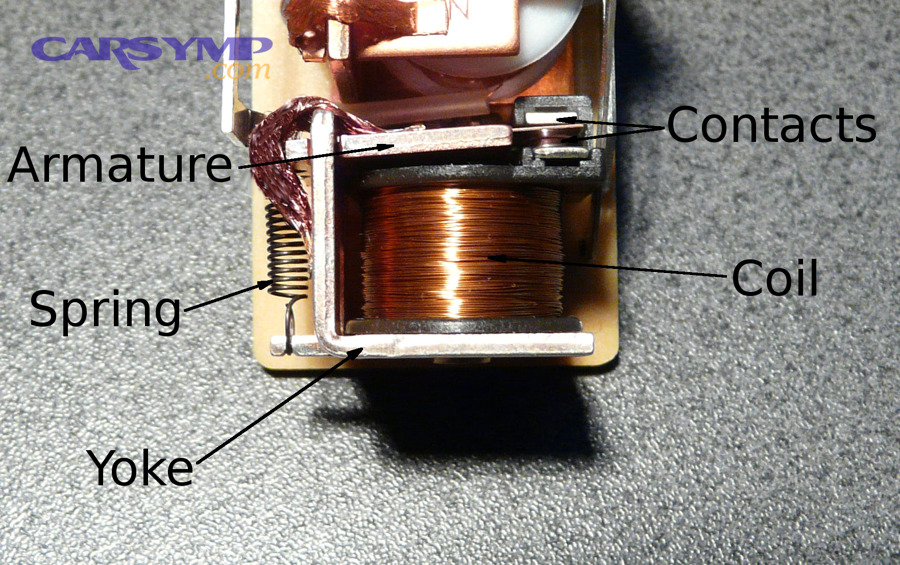
A relay can “sound” like it’s working (click) but still fail electrically if the contacts are pitted or resistive—especially under load.
Do you hear a single click from the fuse box/relay area when trying to start?
Yes—hearing a single click from the relay/fuse box area often means the starter relay coil is energizing, so the start command is reaching the relay, but the problem may be in relay contacts, relay socket, downstream wiring, or the solenoid/starter. Then, you move from listening to confirming output voltage.
Interpret the click carefully:
- Relay click (control layer): usually a lighter, plastic-box click near the fuse/relay box.
- Solenoid click (power layer): often a heavier thunk near the starter area.
If you hear the relay click but get no crank, it suggests the upstream command is present, so ignition switch failure becomes less likely—though not impossible in vehicles where the ignition switch signal passes through modules.
Does swapping the starter relay with an identical relay temporarily fix it?
Yes—if swapping with an identical relay makes the car start (even temporarily), that strongly implicates the relay or its socket because the test changes only the switching component while keeping the rest of the circuit the same. Next, you confirm by repeating the swap and checking for heat-related recurrence.
A correct relay swap test follows three rules:
- Swap only identical relays (same part number/function). Many fuse boxes include multiple matching relays (horn, fog lights, etc.), but not always.
- Mark positions so you can restore the original configuration.
- Treat a “temporary fix” as evidence of failing contacts or marginal socket tension.
However, a relay swap is not a complete diagnosis. A weak battery or corroded terminal can still create inconsistent results. That’s why the strongest conclusion comes from pairing relay swap evidence with voltage measurement.
How can you test ignition switch vs starter relay in 10–20 minutes with basic tools?
You can test ignition switch vs starter relay issues in 4 steps—confirm no-crank type, verify a START signal, verify relay coil operation, and verify solenoid trigger voltage—so you can isolate the fault to upstream command, the relay gate, or downstream execution. More importantly, you can do this without replacing parts blindly.
Let’s explore a quick diagnostic flow that works for DIYers and beginner mechanics. It uses the control-vs-power concept you already learned.
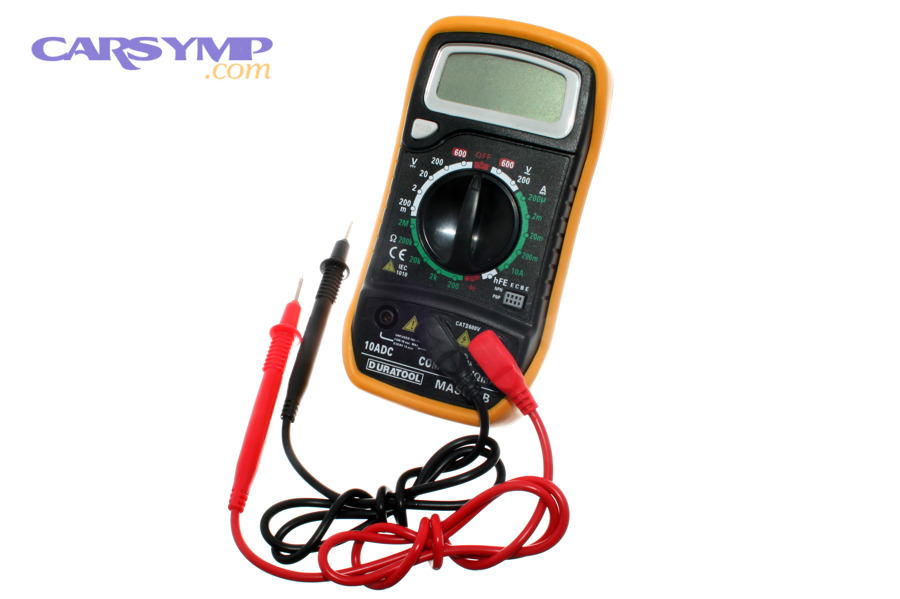
Tools that help most:
- A basic digital multimeter (DMM) or test light
- A flashlight
- A helper (optional) to turn the key while you probe
- Basic hand tools to access the fuse/relay box
Below is a safe workflow that avoids unsafe “jumping” methods and avoids routing power where it shouldn’t go.
Is there a “start signal” leaving the ignition switch when you turn to START?
Yes—when the ignition switch is healthy and start authorization is allowed, a START signal (switched voltage) should appear on the start output during the START position; if it’s missing, ignition switch problems or upstream authorization blocks become the top suspects. Then, you decide whether the issue is mechanical (switch contact) or logical (security/safety).
A practical way to approach this without tearing apart the column is to test at an accessible point:
- Many vehicles expose the START request at a fuse labeled START, CRANK, IGN, or similar.
- Some vehicles route START through a module; in that case you’ll test at the relay coil control pin instead.
What you’re looking for is a simple truth: Does the circuit that should become live in START actually become live? If you never see voltage in START at the expected point, the switch output may be failing—or the system is refusing the start request due to safety/authorization rules.
This is also where Security system interaction with ignition can change outcomes. An immobilizer or body control module may block cranking, and the symptoms can mimic a dead ignition switch if you focus only on “no crank.”
Is the relay receiving coil power and ground, but not sending power to the solenoid?
Yes—if the relay coil is energized (click or measured coil voltage/ground) but the relay output does not deliver voltage to the solenoid trigger, the relay contacts or socket are the likely failure point. Next, you confirm by checking input vs output on the relay under the same start attempt.
Here’s the logic test:
- Relay coil side (control): should energize when you request START.
- Relay contact side (output): should deliver voltage to the solenoid trigger circuit when energized.
If coil energizes but output is missing or significantly low, suspect:
- Worn/pitted relay contacts
- Corroded relay terminals
- Loose relay socket tension
- High resistance at a junction point
This is where general relay research supports why contacts matter: relay contact resistance and contact surface conditions can change with wear, heat, and arcing, affecting the ability to pass current reliably. (pmc.ncbi.nlm.nih.gov)
Does the solenoid get trigger voltage but the starter still doesn’t crank?
Yes—if the solenoid trigger wire receives proper voltage during START but the engine still won’t crank, the problem is likely downstream (solenoid contacts, starter motor, high-current cable, or ground path), not the ignition switch or starter relay. Then, your next checks focus on high-current delivery and mechanical engagement.
At this stage, you’ve essentially proven the control chain works:
- START request exists
- Relay is passing it
- Solenoid is being told to engage
So why no crank?
- Solenoid internal contacts are burnt or resistive (click but no motor power)
- Starter motor internal fault
- High resistance in the battery-to-starter cable
- Poor engine ground strap
- Mechanical jam (rare but possible)
Evidence note: A paper from Orenburg State University (Andrey Puzakov) modeled starter motor failures and linked starter performance to electrical resistance changes in windings, showing how electrical faults can directly translate into starter failure behavior. (matec-conferences.org)
What are the most common root causes behind each failure—and the most reliable fixes?
Ignition switch issues are most commonly caused by worn internal contacts or mechanical wear in the key/column mechanism, while starter relay issues are most commonly caused by contact wear, corrosion, or socket tension problems; the most reliable fixes match the failure mode rather than replacing parts at random. Next, you’ll map cause → symptom → fix so the repair actually sticks.

A diagnosis is only useful if it leads to the correct action. Use this section as a decision bridge: once you know which component is failing, you’ll pick the repair method that addresses the real cause.
Which fixes apply to ignition switch issues (replacement vs connector repair)?
There are 3 main fixes for ignition switch problems—repairing the connector/power feed, replacing the electrical portion of the ignition switch, or addressing the mechanical key/lock mechanism—based on where the failure is occurring. Then, you choose the least invasive fix that fully restores reliability.
Fix option 1: Restore the electrical connection (least invasive).
- Inspect the ignition switch connector for heat discoloration, looseness, or corrosion.
- Check fuse integrity and terminal tension.
- Verify that switch power feeds are stable.
This fix is powerful when the issue is not the switch itself but the wiring interface to it.
Fix option 2: Replace the electrical ignition switch (common fix).
- This is the typical solution when the START output is intermittent or missing, especially if key wiggle changes outcomes.
- Many vehicles allow replacing the electrical switch portion without replacing the lock cylinder.
Fix option 3: Address the lock cylinder/column mechanism (case-by-case).
- If the key physically won’t rotate smoothly to START or binds, the mechanical assembly may be at fault.
Now apply DIY ignition switch replacement cautions:
- Disconnect the battery and wait as recommended before working near airbags.
- Follow service manual steps for your specific vehicle because column disassembly and airbag handling are not universal.
- Expect that some cars require relearn/programming if immobilizer-related components are disturbed.
Evidence sentence (real-world consequence): Public case analyses of ignition switch defects show that ignition switch design and performance can have serious safety implications when key position changes unexpectedly. (bu.edu)
Which fixes apply to starter relay issues (relay, socket, wiring, fuse box)?
There are 4 practical fixes for starter relay failures—replace the relay, repair/clean the relay socket, restore wiring integrity, or address heat/corrosion in the fuse/relay box—based on whether the coil side, contact side, or socket interface is failing. Then, you verify the fix by repeating the same start conditions that previously failed.
Fix option 1: Replace the relay (most common).
- If swapping relays changes outcomes, replacement is usually justified.
- Use OEM-quality or reputable aftermarket parts to avoid inconsistent contact materials.
Fix option 2: Repair the relay socket/terminals (often overlooked).
- Loose socket tension can cause intermittent contact.
- Corrosion creates resistance and heat, which worsens the problem.
Fix option 3: Repair wiring to solenoid trigger circuit.
- Look for chafed harness sections, loose grounds, or brittle insulation.
- Ensure the solenoid trigger wire has a clean path and solid connections.
Fix option 4: Address fuse box heat or moisture intrusion.
- Water intrusion can corrode terminals.
- Heat cycles can loosen tension in older plastic housings.
Research on electrical contacts and connector durability highlights how vibration, temperature cycling, humidity, and fretting wear can degrade connection reliability over time—exactly the environment a relay box lives in. (sciencedirect.com)
Is it safe to keep trying to start the car, and when should you stop troubleshooting?
Yes and no: it’s safe to perform a limited number of controlled start attempts while diagnosing, but it is not safe to keep cranking repeatedly if you see signs of overheating, burning smell, severe voltage collapse, or abnormal cable heat—because repeated attempts can damage wiring, the starter, or the battery. Next, you’ll use clear stop rules so your diagnosis doesn’t create a bigger repair.

When you’re frustrated, it’s tempting to keep trying: “Maybe it’ll catch this time.” That habit can turn a simple control-path issue into melted terminals or a dead battery.
Can repeated start attempts damage the starter, relay, or wiring?
Yes—repeated start attempts can damage the starter, relay contacts, and wiring for 3 main reasons: heat buildup in high-current circuits, arcing/welding at contacts, and deep battery discharge that increases current draw and resistance stress. Then, you protect the system by spacing attempts and monitoring for warning signs.
Here’s what happens mechanically and electrically:
- The starter motor draws very high current. If it’s being commanded repeatedly without successful cranking, heat accumulates quickly.
- Relays and solenoids can arc at contacts under load; repeated arcing can pit contacts or even weld them in extreme cases. Contact resistance behavior and welding risk under fault conditions are documented in relay contact research. (pmc.ncbi.nlm.nih.gov)
- Low battery voltage can cause longer engagement times, which increases heat and stress.
Safe practice:
- Limit attempts to short bursts.
- Wait between attempts.
- If you observe heat, smell, or smoke: stop immediately.
When is it time to get a mechanic (or towing) instead of more DIY tests?
Yes—it’s time to stop DIY testing and get professional help if you see burning odor/smoke, hot battery cables, repeated rapid clicking with severe dimming, security/immobilizer warnings you can’t clear, or you can’t safely access test points without airbag/column disassembly. Next, you’ll protect yourself and the vehicle by choosing the safer path.
Use these red flags as a hard stop list:
- Burning smell or visible smoke
- Battery terminal or cable too hot to touch
- Melted relay/fuse box plastic
- Security light flashing with no crank and you don’t have a scan tool or procedures
- You must disassemble airbag/steering column without proper procedure knowledge
- Intermittent starts in unsafe situations (e.g., you’re relying on it for urgent travel)
If the symptom suggests “start authorization” problems (immobilizer, BCM, ECU interlock), a scan tool and service information can turn hours of guessing into minutes of clarity.
What other problems can mimic ignition switch vs starter relay failure?
Several issues can mimic ignition switch problems or starter relay failures—especially push-button start logic, immobilizer authorization, voltage-drop/ground faults, and safety interlocks—so you should expand the diagnosis only after you’ve confirmed the primary no-crank path tests. Next, you’ll use these micro-checks to catch the “look-alikes” that waste the most time.
This is your contextual border in action: you already did the main diagnosis. Now you widen semantic coverage to prevent false conclusions.

How do push-button start systems change the diagnosis compared to keyed ignitions?
Push-button systems shift the “ignition switch” role to electronic modules, so the start request may be created by a start/stop switch, verified by the BCM/ECU, and only then sent to the relay/solenoid—meaning a missing crank can be a logic/authorization failure rather than a physical switch contact failure. Then, you look for module-driven clues.
In practical terms:
- The button is usually a low-voltage input device.
- The BCM/ECU decides whether to allow cranking (brake input, key proximity, gear position).
- The relay may still exist, but it’s triggered by modules rather than a traditional ignition switch output.
So the correct question becomes: Is the system authorizing start? That’s why a scan tool can be more valuable on push-button cars than any relay swap.
Can an immobilizer or security system cause a no-crank that looks like a relay issue?
Yes—an immobilizer/security system can cause a no-crank (or crank-no-start) by refusing authorization, and it can look like a dead relay because the start command is blocked before the relay ever energizes. Next, you separate “blocked” from “broken” by watching for consistent security indicators.
This is the heart of Security system interaction with ignition:
- A security indicator may flash or stay on.
- The vehicle may power accessories but ignore START requests.
- The system may allow start only with a specific key or after a delay.
In these cases, replacing a starter relay can appear to “fix” the problem temporarily due to coincidence, which is why you should correlate with security indicators and, when possible, scan for immobilizer-related codes.
What does voltage-drop testing reveal that a simple relay swap can miss?
Voltage-drop testing reveals hidden resistance in cables, grounds, and terminals—problems a relay swap cannot detect—because it measures how much voltage is lost across a connection while the circuit is under load. Then, you find the real bottleneck instead of chasing symptoms.
A no-crank can be caused by a ground strap that looks fine but behaves like a resistor under load. Voltage-drop testing catches that by showing an abnormal drop across a cable or connection during a start attempt.
This method is especially valuable when:
- The relay clicks,
- The solenoid sometimes clicks,
- The battery seems “okay,”
- But the starter never cranks reliably.
Could a neutral safety/clutch switch be the real culprit, and how can you tell?
Yes—a neutral safety switch or clutch switch can be the real culprit because it can block the start request entirely, creating a dead-silent no-crank that mimics ignition switch problems. Next, you confirm by checking whether the start behavior changes with gear position or pedal input.
Practical clues include:
- Starts in Neutral but not in Park (or vice versa)
- Starts only when you press the clutch harder or adjust pedal position
- Intermittent no-crank that correlates with shifting
If these clues appear, test the interlock path before replacing ignition switch or relay parts.
Evidence (if any)
According to a study from Orenburg State University, in 2019, researchers modeled starter motor failure behavior and showed that changes in electrical resistance associated with electrical faults can correspond to starter failure outcomes, supporting why downstream electrical faults can produce no-crank symptoms even when the ignition switch and relay are functioning. (matec-conferences.org)
