


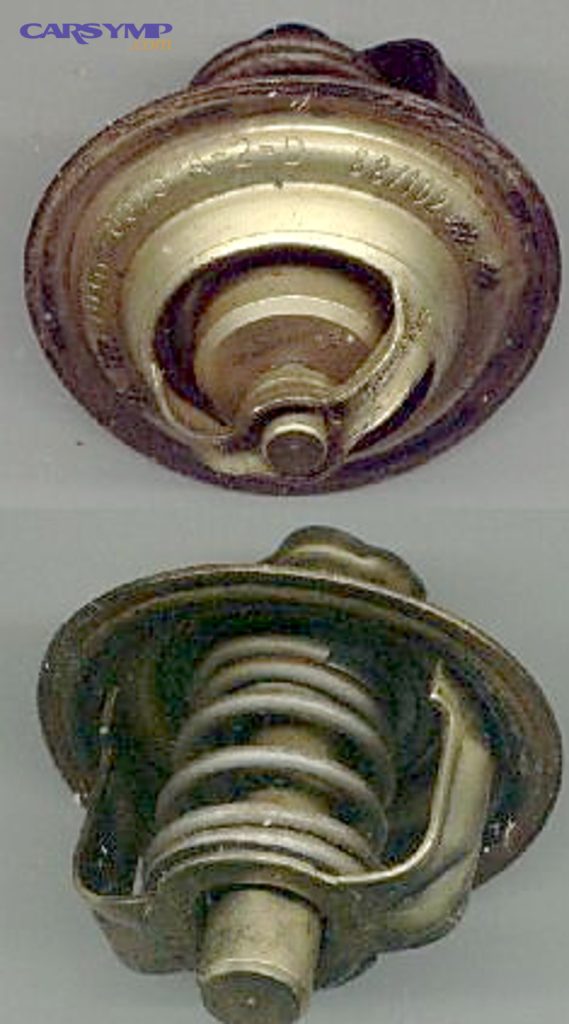
If your engine is overheating and the coolant level looks normal, replacing a stuck or sluggish thermostat is one of the most direct, high-probability fixes because the thermostat is the “gate” that controls when hot coolant can flow to the radiator.
Next, you’ll learn what the thermostat actually does inside the cooling system so you can connect symptoms—like rapid temperature spikes or overheating at idle—to a clear mechanical cause instead of guessing.
In addition, you’ll get a straightforward diagnosis path to separate a bad thermostat from common lookalikes like airflow problems, fan control issues, or restricted radiator flow.
Introduce a new idea: once you understand the “why” and confirm the “what,” the replacement process becomes a safe, repeatable workflow—and you’ll know when the real fix is not a thermostat at all.
Should you replace the thermostat when your car is overheating?
Yes—replacing the thermostat for overheating is often the right move when symptoms point to restricted coolant flow, because a thermostat can fail suddenly, it’s relatively inexpensive compared to engine damage, and it’s a common root cause of fast temperature spikes.
Then, the key is to tie “replace it” to evidence-based conditions instead of replacing parts blindly.
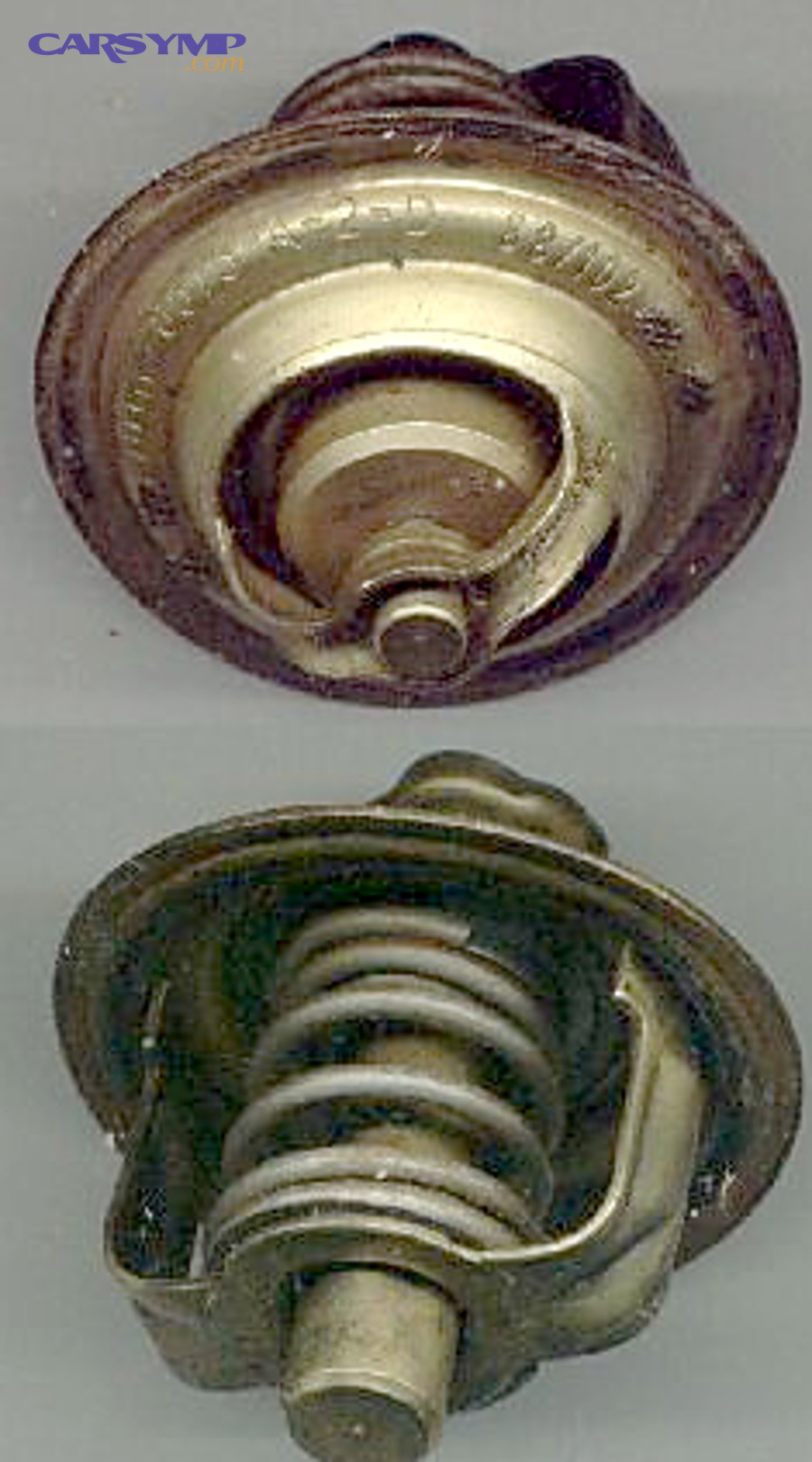
When replacing the thermostat is a smart first repair
A thermostat is a good “first repair” when your overheating pattern fits at least one of these scenarios:
- The temperature rises quickly from normal to hot within a few minutes of driving (especially after warm-up).
- Upper radiator hose stays cool while the engine is hot (suggesting the thermostat isn’t opening to send hot coolant to the radiator).
- Cabin heat turns weak or goes cold as the gauge climbs (coolant may not be circulating properly through the heater core).
- Overheating starts at low speed/around town even though coolant level is correct (low airflow can reveal circulation weaknesses).
In real-world overheating repair decisions, the thermostat is often chosen early because it’s a “high leverage” part: if it’s stuck closed, the radiator can’t do its job no matter how good the fans, coolant, and radiator are.
When you should not jump straight to thermostat replacement
Replace the thermostat only after you’ve ruled out conditions where thermostat replacement won’t fix overheating:
- Coolant is low or you’re losing coolant (leaks, pressure issues, head gasket risks).
- Fans do not run when the engine gets hot (fan, relay, fuse, control module, or temperature sensor issues).
- The radiator is externally blocked (debris, bent fins) or internally restricted (scale/corrosion).
- The engine overheats mainly at highway speed (often flow restriction, radiator efficiency, coolant mix, or pump issues).
A practical rule: if the car overheats and you also see obvious airflow/fan problems, solve airflow first—because the thermostat can be perfect and the engine will still overheat if heat can’t leave the radiator.
According to RepairPal’s estimator, the average cost for a thermostat replacement is in the $574–$667 range, which is often far cheaper than prolonged overheating damage.
What does a car thermostat do, and how does it cause overheating?
A car thermostat is a temperature-controlled valve (typically wax-pellet operated) that stays closed during warm-up and opens at a set temperature to route hot coolant through the radiator, and overheating happens when it sticks closed, opens too late, or creates restricted flow.
More specifically, understanding the thermostat’s “gatekeeping” role explains why overheating can look sudden and dramatic.
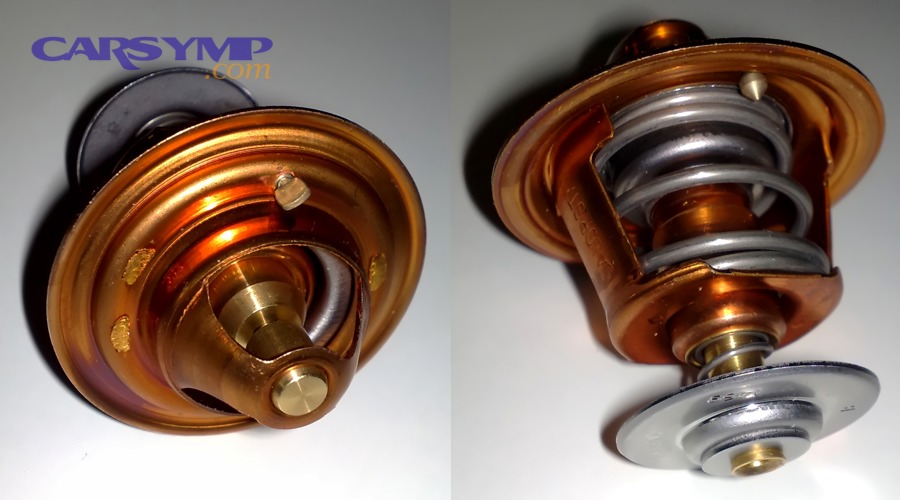
How the thermostat regulates temperature (the simple model)
Think of your cooling system as two loops:
- Small loop (warm-up loop): coolant circulates inside the engine (and often through the heater core) while the thermostat is closed.
- Big loop (radiator loop): once the thermostat opens, coolant flows through the radiator where heat is released to air.
That transition matters. If the thermostat never opens, the engine stays trapped in the small loop and temperature climbs until the gauge spikes.
Common thermostat failure modes that lead to overheating
Thermostats fail in a few repeatable ways:
- Stuck closed: the classic cause of rapid overheating. Coolant can’t reach the radiator.
- Stuck partially closed / slow opening: temperature may creep up under load, on hills, or in traffic.
- Intermittent sticking: overheating comes and goes, often confusing diagnosis.
- Wrong temperature rating / wrong part: opens later than designed, narrowing your cooling margin.
Many drivers describe the same pattern: “It was fine, then suddenly it wasn’t.” That’s consistent with a thermostat that stops moving freely.
Thermostat vs thermostat housing (why people confuse the fix)
A thermostat “housing” (or thermostat assembly) is the metal or plastic body that holds the thermostat and seals coolant passages. The housing can fail even if the thermostat is okay:
- Cracked housing leaks coolant and introduces air, which can trigger overheating.
- Warped sealing surface causes repeated leaks even after a new gasket.
- Integrated electronic thermostat assemblies on some modern vehicles bundle sensors/heaters into one unit.
So if your overheating is paired with coolant loss around the thermostat area, “thermostat vs thermostat housing” becomes a real decision—not just semantics.
According to RepairPal, a thermostat housing replacement average is $579–$673, so confirming which part actually failed can save time and repeat labor.
How do you diagnose a bad thermostat vs other overheating causes?
You can diagnose a bad thermostat by checking for restricted radiator flow signs (hose temperatures, warm-up behavior, heater output, and scan-tool coolant temperature trends) and comparing them against fan operation, coolant level/pressure integrity, and radiator efficiency indicators.
Next, you’ll follow a clean decision tree so you don’t mistake a fan or radiator problem for a thermostat.
Quick driveway checks that strongly implicate the thermostat
These checks don’t require deep tools, but they require patience and safety.
- Cold start warm-up observation (safe distance):
- Engine warms normally for a few minutes.
- Gauge climbs past normal toward hot.
- Upper radiator hose stays relatively cool while gauge climbs.
- This points to a thermostat not opening.
- Heater performance test:
- If the cabin heat goes weak right as the gauge climbs, coolant circulation may be compromised or air pockets may be forming.
- Infrared thermometer or careful hose temperature comparison:
- With a normal opening thermostat, the upper hose should suddenly get hot as the thermostat opens.
- If it never does, flow is likely blocked at the thermostat.
How to separate thermostat issues from fan-control problems
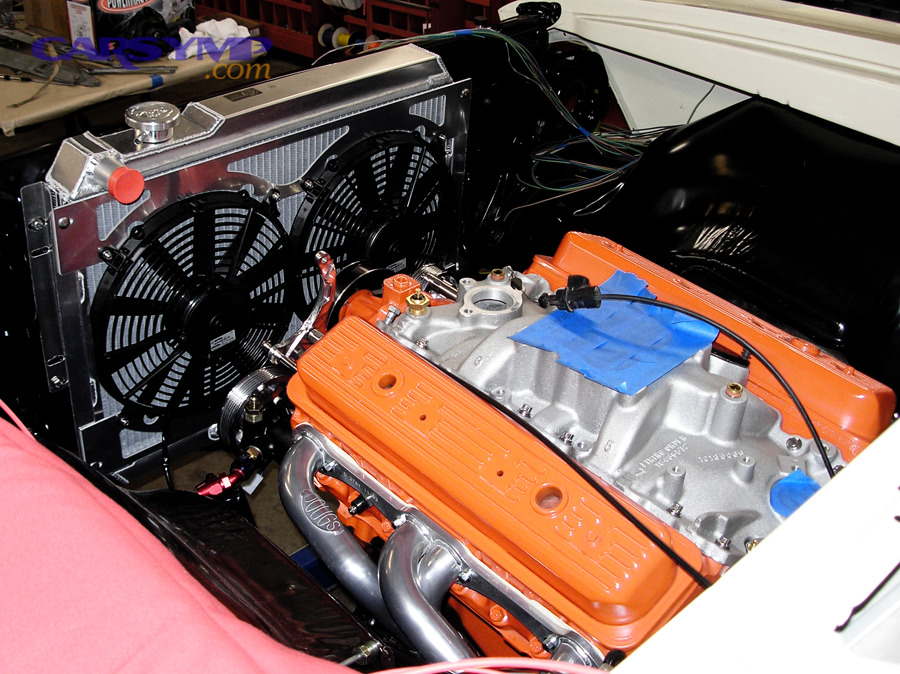
Fan problems can mimic thermostat overheating repair symptoms, especially in traffic.
- If overheating mainly occurs at idle or low speed, and improves when you drive faster, suspect airflow first.
- Confirm whether the fans engage when coolant temperature rises or when A/C is turned on (varies by vehicle logic).
If your fans don’t run, you may be facing Cooling fan repair and relay replacement rather than thermostat replacement. RepairPal estimates radiator fan relay replacement around $94–$112, making it one of the cheapest overheating-related fixes when it’s the actual culprit.
How to separate thermostat issues from coolant/pressure problems
Pressure integrity is part of temperature control. If you have:
- Low coolant
- Visible leaks
- Sweet smell
- Persistent bubbles in the reservoir
…then you may be overheating because the system can’t hold pressure or is ingesting air. Air pockets can prevent stable circulation and cause fast spikes that look “thermostat-ish.”
Scan-tool clues (best confirmation when available)
If you have a basic OBD2 scanner that reads live data:
- Watch ECT (engine coolant temperature) during warm-up.
- A thermostat that sticks closed often shows fast, continuous rise beyond normal without stabilization.
- A thermostat that’s slow can show oscillation (temperature rises, falls slightly, rises again).
A thermostat can still be “kind of working” and still create chronic overheating repair complaints—especially under load.
According to a study by Lamar University from the Department of Mechanical Engineering, in 2018, altering coolant thermal properties meaningfully changed heat rejection behavior, reinforcing why flow control (thermostat function) and coolant performance must be treated as a system—not isolated parts.
How do you replace a thermostat safely to fix overheating?
Thermostat replacement to fix overheating is a step-by-step process: relieve pressure and drain coolant safely, remove and replace the thermostat and seal correctly, refill with the correct coolant mix, bleed air from the system, and confirm stable operating temperature with a controlled test drive.
To begin, the biggest mistakes come from rushing the drain/refill and skipping bleeding—because trapped air can recreate overheating immediately after the repair.
Step 1: Confirm the engine is cold and depressurize safely
- Park on a level surface and let the engine cool fully.
- Never open a hot radiator cap; pressure and boiling coolant can cause severe burns.
- Once cool, open the reservoir cap (or radiator cap if applicable) slowly.
Step 2: Drain enough coolant to get below thermostat level
You don’t always need a full drain, but you do need coolant below the thermostat housing.
- Use the radiator drain petcock if accessible, or remove the lower hose carefully.
- Capture coolant in a clean pan for reuse only if it’s fresh and uncontaminated.
Step 3: Remove the thermostat housing and note orientation
- Follow the upper radiator hose to the engine; it often leads to the thermostat housing.
- Remove bolts evenly.
- Note the thermostat orientation (spring side usually faces the engine, but confirm for your design).
This is where “thermostat vs thermostat housing” matters: if the housing is cracked, warped, or corroded where it seals, replacing only the thermostat can lead to leaks and repeat overheating.
Step 4: Clean mating surfaces and install the new thermostat and seal
- Clean gasket surfaces carefully—no gouges.
- Install the correct gasket/O-ring (and sealant only if your vehicle specifies it).
- Torque bolts to spec (overtightening can crack plastic housings).
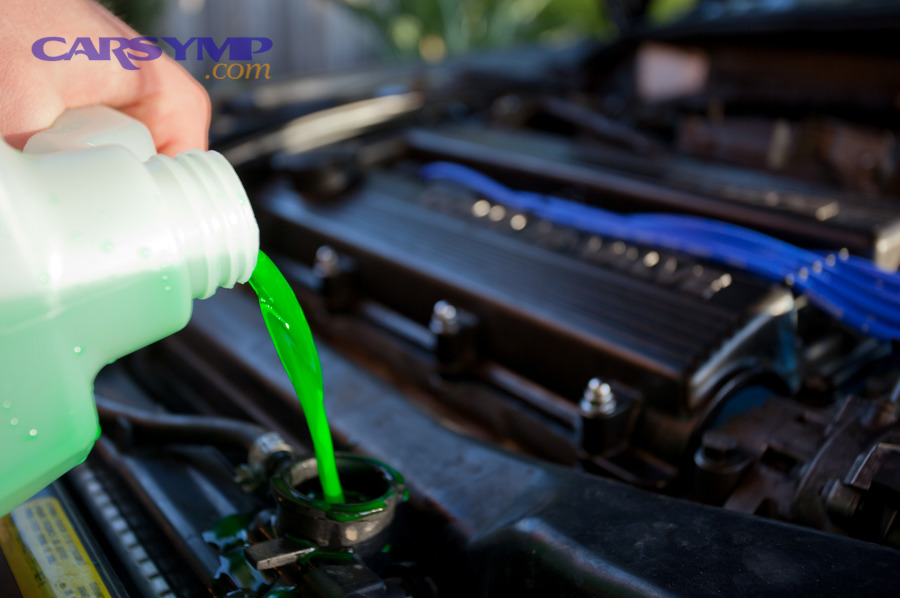
Step 5: Refill with the correct coolant mix
Refill slowly to reduce trapped air:
- Use the manufacturer-specified coolant type.
- Maintain the correct mix (often 50/50, but follow vehicle guidance).
- Fill the reservoir to the correct level.
Step 6: Bleed air properly (the step that prevents “repair didn’t work”)
Bleeding is where many overheating repair stories go wrong.
Common bleeding methods (vehicle-dependent):
- Bleeder screw on housing or coolant pipe: open until steady coolant with no bubbles.
- Heater on max while idling: encourages circulation through heater core.
- Raise front of vehicle slightly (if safe) to help air migrate.
- Squeeze upper hose gently to move trapped air (engine off or carefully, depending on heat).
If you skip bleeding, you can create hot spots and false overheating even with a brand-new thermostat.
Step 7: Verify repair with a controlled warm-up and road test
- Let the car idle to operating temperature.
- Confirm fans cycle normally.
- Confirm heater output stays steady.
- Drive a short loop, then recheck coolant level after cool-down.
If the gauge remains stable after a full heat cycle, your thermostat replacement likely solved the overheating root cause.
According to RepairPal, thermostat replacement costs typically sit in the mid-hundreds, which makes doing the job right (especially bleeding) financially valuable because repeat labor is what inflates total repair cost.
How much does thermostat replacement cost and how long do overheating repairs take?
Thermostat replacement cost usually falls in the mid-hundreds and overheating repairs can take anywhere from under two hours to a full day depending on access, coolant bleeding complexity, and whether related parts (housing, hoses, sensors) are required.
Next, you’ll connect pricing and time to real decision points—because the “cheap part” can still be a “long job” on some vehicles.
Typical thermostat replacement cost ranges
Real-world costs vary by vehicle layout and whether the thermostat is a simple insert or an integrated assembly.
- Thermostat replacement: RepairPal estimates $574–$667 on average.
- KBB range: KBB lists $661–$747 as an average range.
- Thermostat housing replacement: RepairPal estimates $579–$673 (often similar because labor overlaps).
If your vehicle uses an integrated housing/thermostat assembly, parts costs can jump, and that’s why some estimates feel “too high” compared to older cars.
How long overheating repairs take (thermostat-focused)
“How long overheating repairs take” depends mostly on thermostat location and the bleeding process:
- Easy access (top-front engines): ~1–2.5 hours including refill/bleed.
- Moderate access (tight bays, intake removal): ~2.5–5 hours.
- Complex access (under intake, behind accessories): half day.
Also, bleeding can add time if the vehicle is prone to trapped air or requires a specific procedure.
When cooling fan relay replacement changes the timeline
If diagnosis shows fans aren’t engaging, the timeline can drop dramatically:
- Cooling fan repair and relay replacement can be a short job when it’s just a relay/fuse.
- RepairPal estimates $94–$112 for radiator fan relay replacement, which often corresponds to quick labor.
In other words: if you’re overheating at idle and the fan is dead, you might solve overheating faster (and cheaper) than a thermostat job.
Cost-control tips that don’t compromise the repair
- Replace the gasket/O-ring every time.
- Use the correct coolant type (mixing types can create sludge).
- Inspect hoses and clamps while coolant is drained (cheap prevention).
- Don’t ignore a crusty housing—coolant leaks can recreate overheating.
According to RepairPal’s published estimator ranges, thermostat replacement and radiator replacement sit in very different cost tiers, which is why accurate diagnosis is the best “money saver” you can do before turning a wrench.
Radiator replacement vs cleaning decision: when is each the better overheating repair?
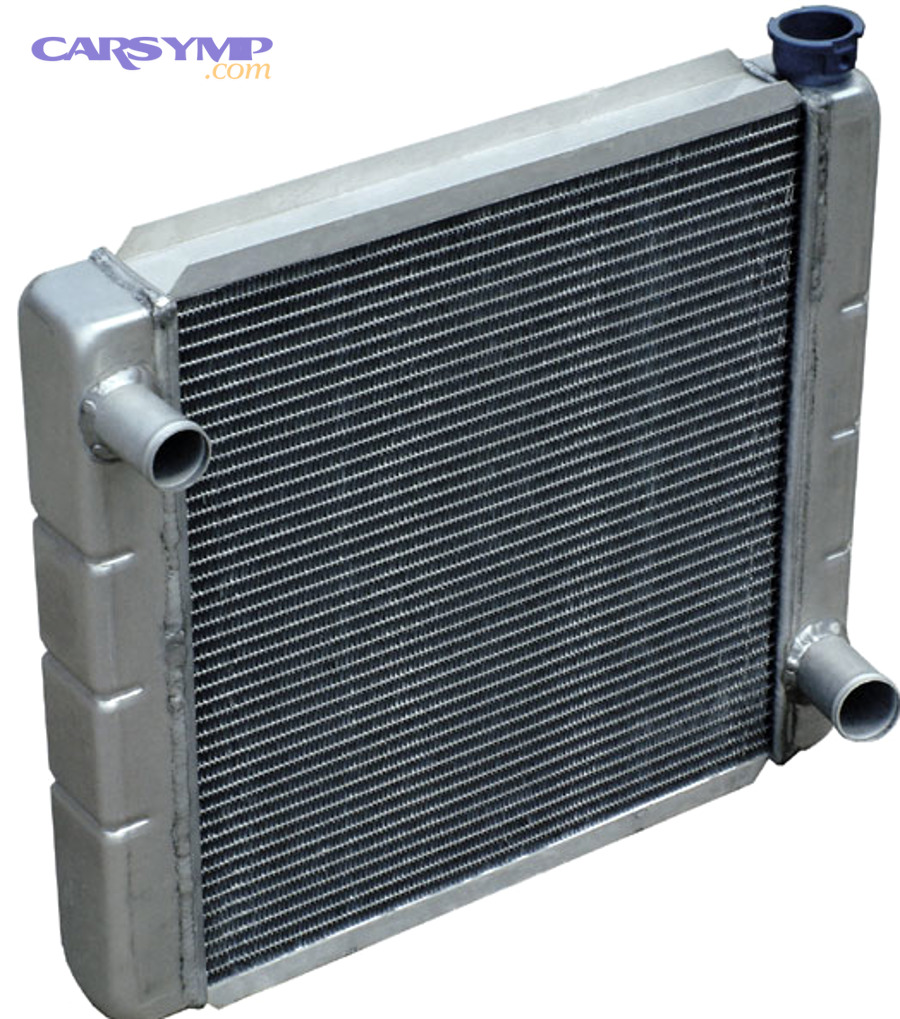
Radiator replacement wins when the radiator is internally restricted, leaking, or structurally compromised, while radiator cleaning is better when the radiator is externally clogged with debris or has mild internal scaling that can be restored without risking repeated overheating.
Next, this comparison prevents a common mistake: treating a flow/efficiency problem like a thermostat problem—or replacing a radiator when cleaning would have solved it.
When radiator cleaning is the right call
Cleaning can be effective when the radiator is fundamentally healthy:
- External fin blockage (bugs, dirt, leaves) reducing airflow
- Bent fins that can be straightened carefully
- Mild internal buildup where a professional flush may restore flow (vehicle-dependent)
If the car overheats mostly at low speed and fans work, external cleaning can restore airflow and reduce temperature rise.
When radiator replacement is the safer fix
Choose replacement when the radiator has clear failure signs:
- Coolant leaks at tanks, seams, or core
- Repeated overheating with confirmed poor heat rejection
- Internal blockage that flushing doesn’t resolve
- Severe corrosion or contamination (oil/coolant mixing, heavy sludge)
RepairPal estimates radiator replacement at $1,307–$1,471 on average, so you want to be sure the radiator is actually the bottleneck before spending at that level.
How this ties back to thermostat replacement for overheating
A thermostat is a flow gate; a radiator is the heat exchanger. If either fails, you overheat—but the symptom patterns differ:
- Thermostat failure: often sudden spikes; hose temperature “mismatch” is common.
- Radiator efficiency failure: can be more gradual, especially under load.
So, the best overheating repair isn’t “the most common part.” It’s the part that matches your symptom pattern and test results.
According to RepairPal’s estimator, radiator replacement costs are typically over $1,300, which is why confirming whether you need cleaning or replacement is a high-impact decision before committing to major overheating repair work.