Diagnose & Price Engine Overheating Repair: Cooling-System Fixes (Radiator, Thermostat, Water Pump) for Car Owners
If your temperature gauge keeps climbing, engine overheating repair is not one single fix—it’s a structured process: confirm the overheating pattern, identify the most likely cooling-system failure, and price the repair so you can choose the fastest, safest solution without wasting money on guesses.
The next priority is decision-making under risk: you need to know whether it’s safe to drive to a shop or whether you should stop and tow, because overheating damage can multiply the final bill far beyond a normal cooling system repair.
Then you can narrow the repair to the highest-probability components—radiator, thermostat, water pump, coolant leaks, fans—and understand what each fix involves, why it solves overheating, and what it typically costs so you can compare quotes confidently.
Introduce a new idea: the best repair is the one that stops the overheating and stays fixed, so the main content below uses a symptom-to-cause map, a cost framework, and a post-repair verification routine that prevents repeat overheating.
What does “engine overheating repair” actually mean for car owners (diagnosis + fix + verification)?
Engine overheating repair is a cooling system repair workflow that identifies the root cause of abnormal operating temperature, replaces or restores the failed component, and then verifies stable temperature control through bleeding and testing so the overheating does not return.
More specifically, “repair” means you are not just adding coolant—you are restoring heat transfer, coolant circulation, and fan/airflow control as a system.
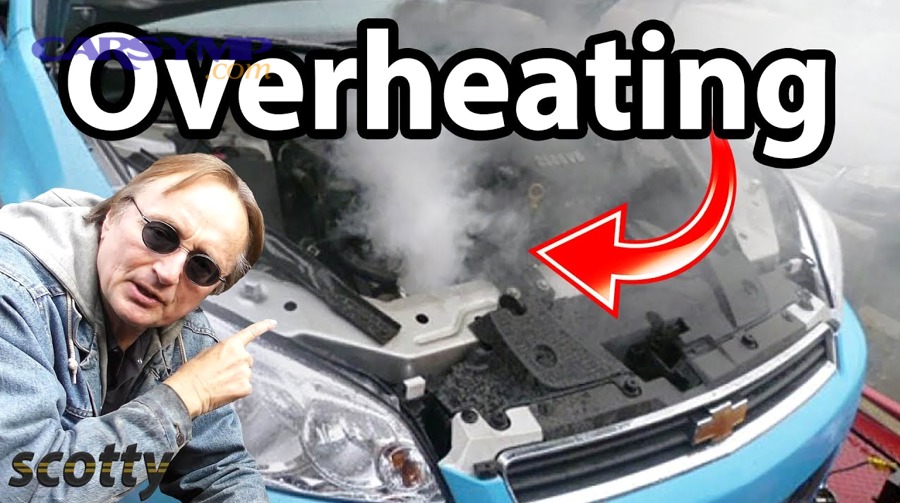
To better understand why overheating repairs can vary so widely, you have to treat the cooling system as a chain: if any link fails (leak, thermostat, radiator restriction, pump flow, fan control), the engine’s heat cannot leave the block fast enough. That chain is also why two cars with “overheating” can need totally different repairs.
A practical way to define the scope is to separate cooling-system overheating (fixable with parts and labor) from engine damage (head gasket, warped head, bearing damage). The diagnosis step exists to keep you in the first category.
What are the most common overheating symptoms that change the repair plan?
There are 5 main symptom patterns that change the overheating repair plan: rapid spikes, gradual creep, idle-only overheating, highway/load overheating, and coolant-loss overheating, based on when temperature rises and what else changes (heater output, coolant level, fan behavior).
Next, use these patterns as your “macro map” before you spend money:
- Rapid spike to hot (minutes after start or shortly after driving)
Common direction: thermostat stuck closed, air pocket, severe low coolant, or circulation failure.
What you notice: gauge climbs quickly; heater may blow cold; upper hose may stay cool longer than expected. - Gradual creep over time (especially in traffic)
Common direction: airflow/fan issues, radiator external blockage, weak cap, marginal coolant level, or weak pump under low RPM.
What you notice: temperature rises slowly; drops when you move or increase airflow. - Overheats at idle but cools down at speed
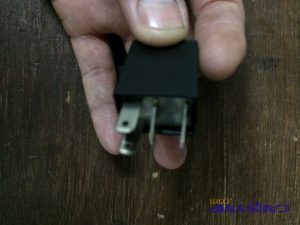
Common direction: Cooling fan repair and relay replacement, fan control issues, condenser/radiator airflow obstruction.
What you notice: sitting in traffic is worse; highway driving stabilizes temperature. - Overheats at highway speed or under load (hills, towing, long climbs)
Common direction: radiator restriction, thermostat not opening fully, water pump flow problem, combustion-gas intrusion, or under-load coolant leak.
What you notice: higher RPM/load makes it worse; turning heat on may only help a little. - Temperature rises with coolant loss (reservoir keeps dropping)
Common direction: Coolant leak repairs that stop overheating—hoses, radiator, water pump weep hole, cap, heater core, or internal leak.
What you notice: sweet smell, damp spots, crusty residue, or low coolant warning.
These patterns are not “proof,” but they steer you toward the right tests and the right estimate lines. That’s the difference between buying a random part and paying for a real engine overheating repair.
When does overheating become “engine damage” instead of just “cooling system repair”?
Overheating becomes engine damage when the engine runs hot long enough to distort metal, break sealing surfaces, or degrade lubrication—so the repair shifts from cooling system repair to Head gasket repair when overheating persists, cylinder head work, or even engine replacement.
However, you can often avoid that outcome by recognizing the tipping points early.
In addition, the signs below often separate “cooling system problem” from “possible internal engine damage”:
- Overheating plus misfires, rough idle, or white exhaust smoke can point to coolant entering the combustion chamber.
- Milky oil (oil + coolant emulsion) can signal coolant contamination.
- Repeated overheating right after repairs can indicate trapped air, improper bleeding, wrong coolant, or a deeper issue like combustion gas intrusion.
- Bubbling in the reservoir (especially when revved) can suggest combustion gases pressurizing the cooling system.
A key principle for car owners: the longer you drive while hot, the more likely the job moves from “replace a cooling component” to “repair internal engine damage.” That’s why the next section exists: you need a clear yes/no decision about driving.
Is it safe to drive an overheating car to a shop, or should you stop and tow?
No, it’s usually not safe to drive an overheating car because continued heat can cause engine damage, coolant loss can suddenly become severe, and temperature spikes can happen faster than you can react; however, a very short, controlled drive may be possible when the temperature is stable, coolant is full, and there are no critical warning signs.
Besides, the safest “repair” decision is the one that prevents a small cooling system repair from turning into a major engine rebuild.
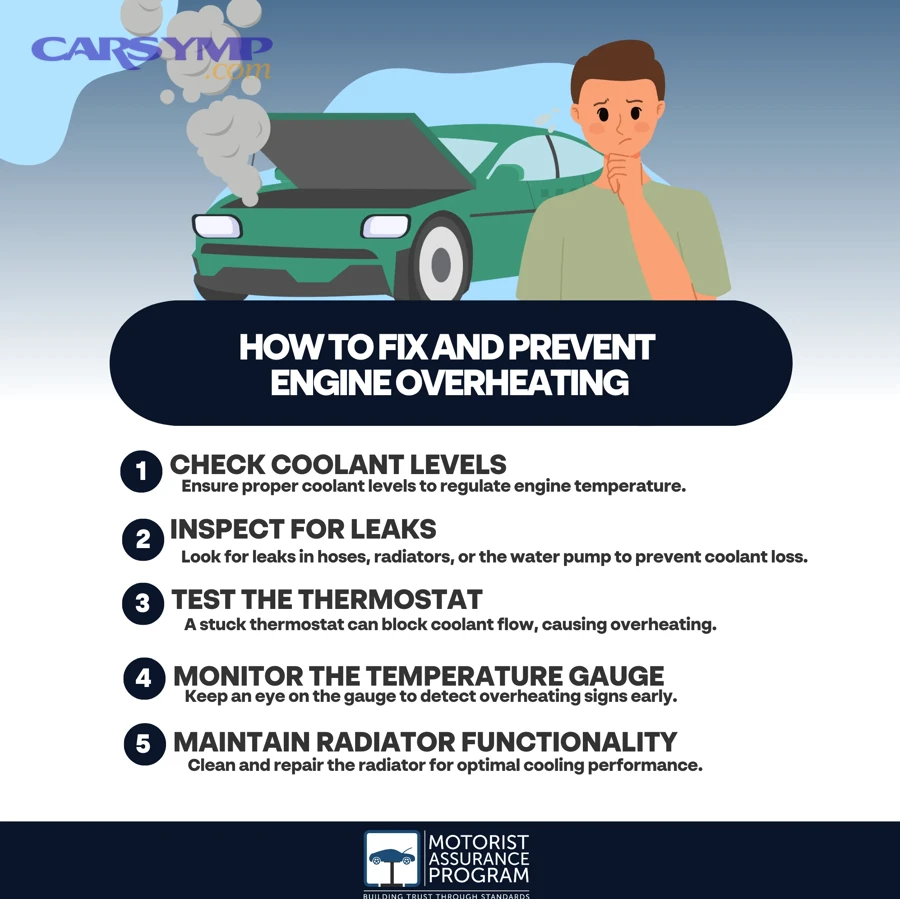
To begin, treat this as a risk decision, not a hope decision. If you are asking “Can I make it to the shop?” you are really asking “What is the probability I cause damage on the way?” The practical answer depends on symptoms, distance, and whether the engine is already in the danger zone.
Use this fast rule set:
- Tow immediately if there is steam, coolant spraying, a red temp warning light, engine knocking, or the gauge is pegged hot.
- Stop and cool down if the gauge climbs rapidly or you lose heater output suddenly.
- Consider a short drive only if temperature returns to normal and stays there with no coolant loss and no warning lights.
Is it ever OK to drive if the temperature drops back to normal?
Yes, it can be OK to drive briefly if the temperature drops back to normal, the coolant level is correct, and the overheating was triggered by a reversible condition—because stable temperature, stable coolant level, and stable fan operation reduce the risk of sudden damage.
Meanwhile, “drops to normal” is not a guarantee of safety; it’s a sign you need a controlled test, not a long trip.
Here are three reasons a short drive might be reasonable:
- The overheating was airflow-related and improved with movement
If the car runs hot at idle but cools at speed, airflow may be the main issue. You might drive a short distance to a shop if the gauge stays stable. - The coolant level was slightly low and topping up restored stability
Low coolant reduces heat transfer and can cause spikes. If topping up restores normal temperature and you see no leaks, you may limp to a shop for a proper pressure test. - You can keep the load low and monitor the gauge continuously
Low RPM acceleration, no towing, no AC load, and frequent monitoring reduces heat generation and gives you time to stop.
How to do the “short drive” safely (if you choose it):
- Keep the heater on high to shed heat from the coolant loop (uncomfortable but effective).
- Avoid stop-and-go traffic and steep hills.
- If the gauge rises again, stop immediately and shut down.
This approach is not a fix. It’s a controlled step to reach repair without multiplying damage.
Which warning signs mean “stop immediately” (no exceptions)?
There are 6 stop-now warning signs that mean you should not drive at all: steam, coolant spraying, red temperature light, knocking/metal noises, sudden power loss, and rapid gauge climb, based on the risk of immediate engine damage.
More importantly, these warning signs matter because they indicate the cooling system is no longer controlling heat:
- Steam from the hood: coolant is boiling or leaking onto hot surfaces.
- Coolant spraying or puddling: the system may empty quickly.
- Red temperature warning light: many vehicles trigger this when overheating is severe.
- Knocking/metal noise: oil may be thinning; bearings can be at risk.
- Sudden loss of power: the engine may be heat-soaking or entering protective mode.
- Gauge climbing fast toward hot: a circulation failure can spike quickly.
If any of these occur, the right move is to stop, shut down, and tow. A tow bill is often cheaper than a head gasket job.
What causes engine overheating most often, and how do you narrow it down quickly?
There are 6 main causes of engine overheating—low coolant/leaks, thermostat failure, radiator restriction, water pump flow loss, cooling fan/airflow failure, and pressure/cap issues—based on whether the failure reduces coolant volume, circulation, airflow, or boiling-point control.
Especially when you’re pricing Common overheating repairs and their costs, narrowing it down quickly keeps the estimate focused.
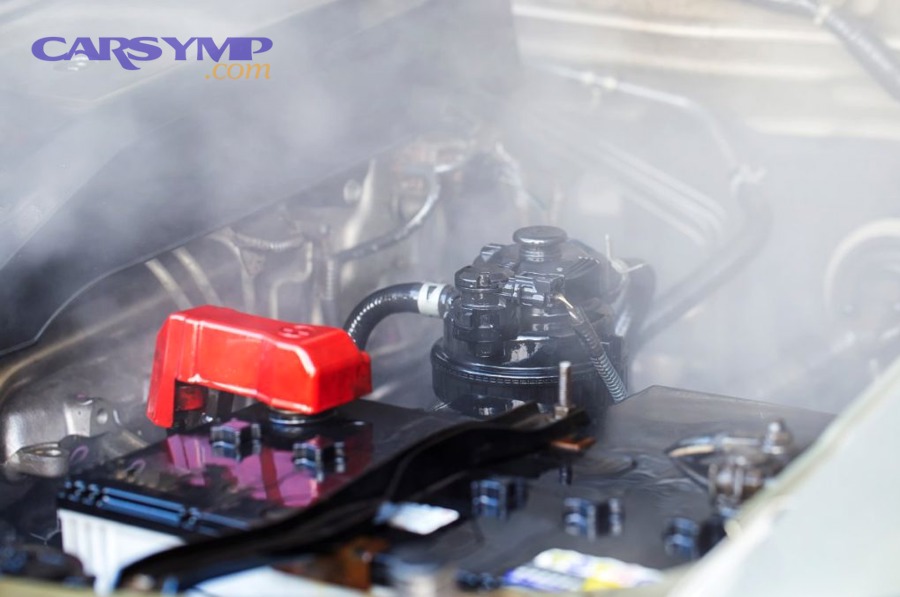
Next, think in terms of “what changed”:
- If coolant is low, you have either a leak or a previous service issue.
- If the car overheats at idle, airflow and fan control move to the top.
- If it overheats at highway speed, circulation and heat exchange capacity matter most.
- If it overheats right after a repair, bleeding, air pockets, or incorrect assembly can be the culprit.
A quick diagnostic sequence (owner-level, non-invasive) looks like this:
- Check coolant level when cold (never open a hot system).
- Look for obvious external leaks and residue.
- Observe overheating conditions: idle vs highway, AC on/off, heater output.
- Listen for fan operation when hot and idling.
- Note whether hoses warm up gradually (thermostat behavior).
- Bring this pattern to a shop for targeted testing (pressure test, fan command test, infrared temp checks).
Does overheating at idle vs at highway speed point to different fixes?
Yes—idle overheating usually points to airflow and fan control, while highway/load overheating usually points to circulation or radiator capacity, because idle depends on fan-driven airflow and highway depends on coolant flow and heat exchanger efficiency.
However, there is overlap, so the goal is to use the pattern to prioritize the most likely repair first.
Idle overheating often matches:
- Cooling fan repair and relay replacement (fan not turning on, weak fan, bad relay/module)
- Blocked airflow (debris between condenser and radiator, damaged shrouds)
- Low coolant that becomes more critical at idle due to reduced flow and less airflow
Highway/load overheating often matches:
- Radiator restriction (internal clogging or external fin blockage)
- Thermostat not opening fully (partial restriction looks like “fine around town, hot on highway”)
- Water pump flow loss (eroded impeller, slipping belt, weak pump)
- Under-load coolant leak (pressure rises under load, leaks become active)
Use the heater as a clue: if turning heat on noticeably lowers the gauge, you are shedding heat through the heater core—which suggests the engine is producing heat normally, but the main radiator circuit is underperforming.
Does losing coolant always mean a leak, and where are the usual leak points?
Coolant loss usually means a leak, but not always; coolant can also be lost through an overflow event, improper filling/bleeding after service, or internal consumption, so the best approach is to look for the most common leak points first and confirm the pattern.
In addition, Coolant leak repairs that stop overheating often solve the problem faster than replacing major parts unnecessarily.
Common external leak points include:
- Radiator end tanks and seams (plastic-to-aluminum interfaces can crack)
- Upper and lower radiator hoses (soft spots, cracks, loose clamps)
- Thermostat housing (gasket failures, warped housings)
- Water pump weep hole (classic pump failure sign)
- Reservoir and cap area (cap not holding pressure, cracked bottle)
- Heater core hoses (leaks near firewall)
Common “no puddle” scenarios:
- Coolant evaporates on hot surfaces (small leaks on engine block or exhaust area).
- The system vents coolant into the overflow due to a weak cap or boiling.
- The leak happens only under pressure (high load, hot conditions).
If you see coolant loss plus overheating, prioritize leak detection and pressure integrity before you pay for a radiator or pump.
Radiator vs thermostat vs water pump: which repair is most likely for your symptoms?
Radiator wins in highway/load overheating and heat rejection, thermostat is best for rapid warm-up spikes and flow control errors, and water pump is optimal for circulation loss with noise/leak clues, because each part fails in a different way that creates a distinct overheating pattern.
On the other hand, the most accurate choice comes from matching symptoms to failure mode rather than guessing the “most common” part.
To illustrate this comparison, think of the cooling loop as three jobs:
- Thermostat decides when coolant can flow to the radiator.
- Water pump creates flow rate through the engine and radiator.
- Radiator determines how much heat can be dumped into air.
If any job fails, temperature rises—but the timing and conditions of the rise usually reveal which job is failing.
Is a stuck thermostat the cause when the heater blows cold or temperature spikes quickly?
Yes, a stuck or malfunctioning thermostat is a common cause of quick temperature spikes, especially when it restricts flow to the radiator, because the engine generates heat faster than trapped coolant can carry it away; it’s also one of the most common overheating repairs and their costs are often moderate.
Specifically, Thermostat replacement for overheating is most likely when the warm-up behavior looks abnormal.
Typical thermostat clues:
- Rapid rise toward hot shortly after driving (especially within the first 5–15 minutes).
- Heater blows cold even as the gauge rises (coolant may not be circulating through the heater core as expected).
- Upper radiator hose stays cooler longer than expected (thermostat may not be opening).
- Temperature swings—hot, then cooler, then hot again (sticky thermostat behavior).
What thermostat replacement usually includes:
- Thermostat and gasket (sometimes a thermostat housing).
- Coolant drain/refill and bleeding.
- Inspection of hoses and cap, because pressure issues can mimic thermostat failure.
A common mistake is replacing only the thermostat when the housing is warped or cracked; that can create leaks and repeat overheating.
Is a clogged radiator more likely when it overheats on the highway or under load?
Yes, a restricted or underperforming radiator is more likely when overheating happens at highway speed or under load, because the engine is producing sustained heat and the radiator cannot reject enough of it even with strong airflow.
Moreover, this is where the Radiator replacement vs cleaning decision matters, because some restrictions are internal and do not flush out reliably.
Radiator restriction can be:
- External: fins blocked by debris, bent fins, clogged condenser/radiator stack limiting airflow.
- Internal: scale, corrosion, sludge, or partial blockage reducing coolant passage area.
Signs that support “radiator capacity” as the problem:
- Overheats more on long highway climbs than in city driving.
- Heater helps only slightly because overall heat load is too high.
- Coolant condition looks neglected (rusty, contaminated) and the radiator is old.
- You have repeated overheating after multiple coolant top-ups.
Radiator replacement vs cleaning decision:
- Cleaning/external fin restoration can help when airflow is blocked.
- Chemical flushing can help mild contamination but may not fix a physically restricted core.
- Replacement is often the most definitive when the radiator is old, leaking, or internally clogged.
This is also where “cheap fixes” can backfire: if the radiator is structurally failing, repeated flushing and sealing products can create more restriction.
Is a failing water pump more likely when you hear noise or see coolant near the pulley?
Yes, a failing water pump is more likely when you hear bearing noise or see coolant near the pump area, because pump bearings and seals wear and then leak from the weep hole, reducing circulation and eventually causing overheating.
Then, Water pump replacement overview becomes essential because pump access, belt type, and labor overlap can change the estimate a lot.
Common water pump clues:
- Coolant trails or crust near the pump (weep hole leakage).
- Whining, grinding, or chirping from the front of the engine (bearing wear).
- Overheating that worsens at idle or low RPM (reduced circulation).
- Repeated overheating after replacing thermostat/radiator (circulation not restored).
What a professional water pump job often includes:
- Water pump, gasket/sealant, fresh coolant.
- Inspection or replacement of related parts: drive belt, tensioner, sometimes thermostat (labor overlap).
- Bleeding and a road test to confirm stable temperature.
A practical cost tip: if the pump is driven by a belt that must be removed anyway, bundling the thermostat can reduce the chance of repeat labor later.
How much does engine overheating repair cost, and what makes the estimate go up or down?
Engine overheating repair cost is the sum of diagnosis + parts + labor + fluids, and it rises or falls based on accessibility, the number of components replaced, and whether the overheating caused secondary damage; the best way to manage cost is to price the most likely fix first using your symptom pattern.
Besides, Common overheating repairs and their costs become predictable when you separate “cooling system fixes” from “engine damage outcomes.”
To better understand pricing, think in layers:
- Diagnostic layer
Shops may charge a diagnostic fee, especially if they need pressure tests, fan command tests, or scan-tool temperature monitoring. Targeted diagnosis can save money by preventing unnecessary parts. - Repair layer
Parts and labor vary widely by vehicle design. A thermostat on one engine can be a quick job; on another, it can be buried behind intake components. - Verification layer
Bleeding, heat cycling, and a road test are not “extras”—they are what makes the repair reliable and prevents repeat overheating.
What are typical price ranges for common overheating fixes (by component)?
There are 7 common overheating repair categories that drive most costs: thermostat, radiator, water pump, fan/control, leaks/hoses, cap/pressure issues, and coolant service, based on what component is failing and how much labor access is required.
Next is a context table that shows what each repair generally includes and what factors change cost. (Actual pricing depends on vehicle and region, but the structure stays consistent.)
| Repair type | What it usually includes | What pushes cost higher |
|---|---|---|
| Thermostat replacement | Thermostat + gasket/housing + coolant | Buried location, brittle hoses, housing replacement |
| Radiator repair/replacement | Radiator + coolant + sometimes hoses | AC condenser stack access, transmission cooler lines |
| Water pump replacement | Pump + gasket + coolant + belt inspection | Timing-belt-driven pumps, tight engine bay packaging |
| Cooling fan / relay / module | Fan motor/assembly, relay/module diagnosis | Electronic fan modules, wiring faults, dual-fan setups |
| Coolant leaks (hoses, clamps, reservoir, cap) | Leak source part + clamps + refill/bleed | Multiple leaks, hard-to-reach heater hoses |
| Coolant flush/refill | Drain/flush + correct coolant + bleed | Severe contamination, wrong coolant mix, sludge |
| Engine damage (head gasket) | Head gasket repair when overheating persists | Head machining, warped head, internal damage extent |
This table helps you ask smarter questions: “Is the estimate mostly labor? Is the shop replacing overlapping parts while they’re in there? Are they including proper bleeding?”
Which estimate line items are legitimate, and which should raise questions?
Legitimate estimate items are the ones that directly restore function—testing, parts, fluids, bleeding, and verification—while questionable items are vague add-ons that don’t tie to a diagnosis, because overheating is a system problem that needs confirmed root cause.
However, not every “recommended” line item is a scam; some are preventive bundles that reduce repeat labor.
Legitimate line items (often worthwhile):
- Cooling system pressure test (confirms leaks and pressure integrity)
- Thermostat housing/gasket if the housing is known to warp or crack
- Coolant refill with correct specification (wrong coolant can cause corrosion/gel)
- Bleeding/burping procedure (especially on cars prone to air pockets)
- Road test + recheck (verification that the fix actually worked)
Questionable line items (ask for justification):
- “Cooling system service” with no explanation of what’s done
- “Radiator flush” when the radiator is leaking or clearly restricted
- “Stop-leak” products proposed as the main fix
- Parts replacement without symptom match (e.g., pump + radiator + thermostat all at once) unless diagnosis supports it
A strong question to ask is: “Which test result or symptom pattern confirms this part is the cause?” That keeps the estimate anchored to reality.
When is repair not worth it and what are the high-cost “damage” outcomes?
Yes, sometimes overheating repair is not worth it, especially when the engine has repeated severe overheating, shows signs of internal damage, and the projected cost approaches the vehicle’s value—because head gasket failure, warped cylinder heads, and bearing wear can make repairs unpredictable and expensive.
In addition, knowing these outcomes helps you decide early whether to continue or stop investing.
Three reasons repair may not be worth it:
- Evidence of internal engine damage is strong
Persistent overheating plus coolant/oil mixing, compression loss, or ongoing pressurization points toward major work. - The engine has overheated severely multiple times
Repeated heat cycles can warp sealing surfaces and degrade components even if the cooling system is later repaired. - The repair requires major disassembly on a high-mileage engine
If the engine is already worn, major teardown can reveal additional failures.
High-cost outcomes include:
- Head gasket replacement with head machining
- Cracked head or block (less common but possible)
- Engine replacement if damage is extensive or if labor exceeds value
The practical takeaway: if you suspect internal damage, insist on a diagnostic path that confirms or rules out head gasket issues before you sink money into repeated cooling parts.
What’s the best repair order (triage) to fix overheating fast and prevent it coming back?
The best repair order is (1) stop coolant loss and restore pressure, (2) restore correct flow control and circulation, (3) restore heat rejection and airflow, then (4) verify with bleeding and a road test, because the cooling system only works when volume, flow, airflow, and pressure all support each other.
Thus, Preventing overheating after repair starts with fixing the highest-probability root cause first and then proving the result.

Let’s explore a practical triage sequence that car owners and shops can align on:
Should you replace the thermostat when doing a water pump or radiator repair?
Yes, you often should replace the thermostat during a water pump or radiator job, because thermostats are inexpensive compared to labor, they commonly fail with age, and overlapping labor can reduce total cost while lowering the chance of repeat overheating.
Moreover, this “bundle” decision is rational when the engine is already opened for cooling system repair.
Three reasons bundling can make sense:
- Labor overlap
Many water pump jobs require coolant drain and access in the same area as the thermostat. Doing both can avoid paying labor twice. - System reliability
A new pump won’t help if the thermostat sticks. A new radiator won’t help if flow is restricted by a failing thermostat. - Verification becomes cleaner
When both flow-control and circulation components are refreshed, a stable road test result becomes more meaningful.
When bundling may not be necessary:
- The thermostat is recently replaced with proof (receipts, known part quality).
- The overheating pattern strongly points to a single failure (e.g., clear pump leak at weep hole).
The goal is not to replace parts blindly. The goal is to choose a combination that reduces repeat failure risk with minimal extra cost.
How do you verify the overheating repair actually worked (without guessing)?
You verify overheating repair with a Post-repair bleeding and road test checklist that confirms stable operating temperature, stable coolant level, proper fan cycling, and no leaks across multiple heat cycles—because a cooling system can appear “fixed” while still holding trapped air or leaking under pressure.
More specifically, verification is what turns a repair into a reliable solution.
Use this checklist after any cooling system repair:
A. Bleeding / burping checks (engine cold → warm):
- Fill with the correct coolant mix and follow the vehicle’s bleeding procedure.
- Confirm heater output becomes consistently hot (heater stability often indicates circulation is stable).
- Watch for sudden drops in reservoir level as air purges; top up as required.
B. Leak and pressure checks:
- Inspect for fresh wetness at hoses, thermostat housing, radiator seams, and the pump area.
- Recheck clamps after the first heat cycle (hoses can relax).
C. Fan and airflow checks (at idle when hot):
- Verify fans turn on at the expected time.
- Confirm temperature stabilizes at idle rather than creeping upward.
D. Road test checks (15–30 minutes):
- Drive a mix of city and highway conditions.
- Watch for stable gauge behavior (no spikes).
- Confirm the temperature doesn’t climb during sustained load (hills, higher speed).
E. Recheck after cool-down:
- Once the engine cools fully, recheck coolant level again.
- If the level drops repeatedly, you still have air purging or a leak.
This verification step directly supports Preventing overheating after repair, because many repeat-overheat cases are caused by incomplete bleeding, small leaks, or a fan issue that was never tested under real heat load.
What uncommon issues can mimic overheating or cause repeat overheating after repairs?
Uncommon overheating problems are edge-case cooling and measurement failures—like trapped air pockets, sensor/control errors, wrong coolant chemistry, or combustion-gas intrusion—that mimic or recreate overheating even after parts are replaced, because the system can look repaired while still failing in pressure, circulation, or temperature reporting.
More importantly, these issues explain why “I replaced parts but it still overheats” is a common story.

Below, the focus shifts from the “macro” fixes (radiator/thermostat/pump) to micro-semantics: problems that either look like overheating but aren’t, or overheating that persists because something was missed.
Can trapped air pockets after coolant service cause overheating symptoms?
Yes, trapped air pockets can cause overheating symptoms, because air reduces coolant contact with metal surfaces, disrupts thermostat sensing, and can block circulation, which creates temperature spikes and inconsistent heater output even when new parts are installed.
Next, this is why the Post-repair bleeding and road test checklist is not optional.
Air pocket clues:
- Temperature spikes that come and go
- Heater alternates hot/cold
- Gurgling sounds behind the dash
- Coolant level drops repeatedly after “full” fills
Fix direction:
- Follow the vehicle’s specific bleeding procedure (some need bleeder screws, some need vacuum fill tools).
- Elevate the front end if recommended by the manufacturer’s procedure.
- Run the engine with the heater on while monitoring temperature and topping up as air purges.
This is also where people misdiagnose: they assume “new thermostat didn’t fix it,” when the system simply never got bled correctly.
Can a bad temperature sensor or fan control module create “false overheating” readings?
Yes, a bad temperature sensor, wiring fault, or fan control module can create false overheating readings or real overheating by failing to command the fans, because the engine management system relies on accurate temperature data and correct fan activation to stabilize heat at idle.
However, you can often detect this by comparing gauge behavior with scan-tool readings and fan operation.
Common scenarios:
- The gauge reads hot, but the scan tool shows normal coolant temperature (instrument cluster issue).
- The scan tool shows rising temps, but fans never turn on (fan control or relay/module problem).
- Fans run constantly (sensor plausibility issue), masking the real diagnosis.
Repair direction often includes:
- Cooling fan repair and relay replacement after confirming power, ground, and control signals.
- Replacing the coolant temperature sensor if readings are implausible or inconsistent.
- Inspecting connectors for corrosion (a frequent cause of intermittent problems).
This matters because replacing a radiator or thermostat won’t fix a fan command problem, and the overheating will “persist” until control is restored.
Can the wrong coolant type or mixed coolants create overheating over time?
Yes, the wrong coolant type or mixed coolants can contribute to overheating over time, because incompatible additives can reduce corrosion protection, create deposits, and restrict heat transfer, which slowly reduces radiator efficiency and raises operating temperature.
In addition, this is a silent cause that shows up months after a “service.”
Clues include:
- Sludge or gel-like residue in the reservoir
- Discolored coolant despite recent service
- Repeated minor overheating under load that worsens over time
Fix direction:
- Drain and refill with the correct coolant specification.
- Flush if contamination is significant (performed carefully to avoid dislodging debris into passages).
- Replace severely restricted components if deposits have caused permanent blockage.
This is one reason “cheap coolant top-ups” can create long-term problems: the system depends on chemistry as much as it depends on parts.
Could it be a head gasket even if the car only overheats sometimes?
Yes, it could be a head gasket even if overheating is intermittent, because small combustion-gas leaks can pressurize the cooling system only under certain loads and temperatures, creating spikes, coolant loss, or overflow events that appear “random.”
Moreover, Head gasket repair when overheating persists becomes a rational discussion when cooling system repairs are verified and the problem returns.
Intermittent head gasket clues:
- Coolant pushes out of the reservoir after highway runs
- Bubbles in the reservoir when revving (especially after warm-up)
- Overheating that correlates with high load or long climbs
- Unexplained coolant loss with no external leak
Shops often confirm suspicion using:
- A combustion gas “block test”
- Cooling system pressure behavior tests
- Compression/leak-down testing (when appropriate)
The key is sequencing: confirm the cooling system is properly repaired and bled first, then investigate internal causes if overheating persists despite correct external function.
Evidence (if any)
No single evidence source is required to follow the diagnostic and repair logic above because the article relies on established mechanical principles of heat transfer, coolant circulation, and pressure control used in standard automotive cooling system diagnostics.