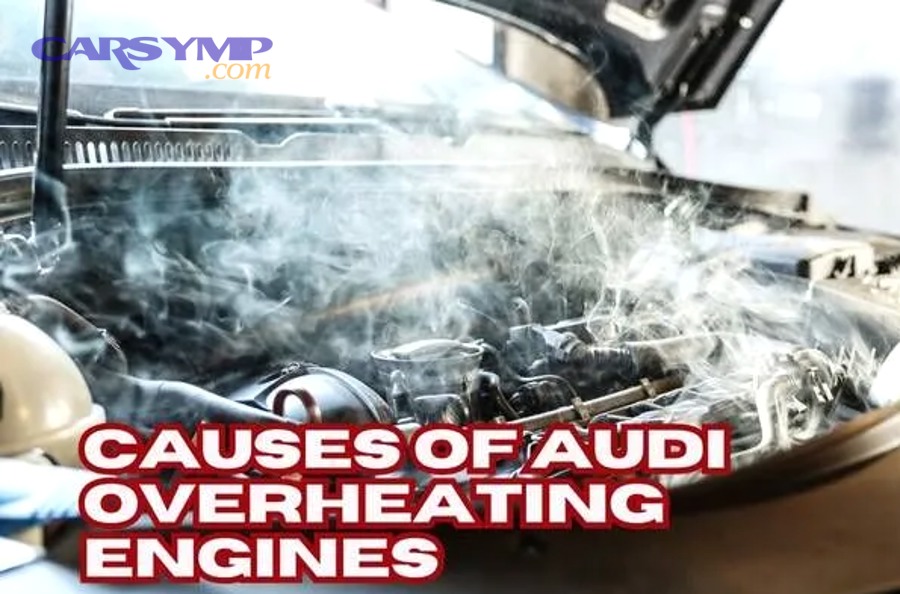
If your temperature gauge keeps climbing even after you top off coolant or replace “the usual suspects,” you need a plan that proves whether a blown head gasket is actually causing persistent overheating—and what the correct repair path is. This guide walks you through the fastest confirmation steps, the most reliable shop tests, and the decision points that keep you from paying for the wrong fix.
Just as importantly, persistent overheating has strong “look-alike” causes—trapped air, radiator restriction, fan control faults, weak pressure caps, water pump flow issues—that can mimic head gasket symptoms. You’ll learn how to separate head gasket failure from other overheating repair targets using symptom patterns and test results, not guesses.
Once you know the cause, the next decision is what “repair” really means. Head gasket replacement is not simply swapping a gasket; it involves inspection, sealing-surface prep, correct torque strategy, and cooling-system corrections so the engine does not overheat again. You’ll also see when alternatives (cooling system repair only, engine replacement, or stopping the job before deeper damage) make more sense.
Introduce a new idea: the easiest way to win this problem is to treat diagnosis, repair scope, and verification as one chain—because the real enemy is repeat overheating after repair.
Is a blown head gasket the reason your overheating keeps coming back? (Yes/No)
Yes—persistent overheating can be caused by a blown head gasket, especially when the engine also shows (1) unexplained coolant loss or pressurizing, (2) exhaust/combustion gases entering the cooling system, and (3) rough running or contamination signs that don’t fit a simple external leak.
Next, because overheating can also come from non-gasket cooling faults, you’ll confirm the “why” with fast triage checks before you commit to teardown.
Do you have any “stop-driving-now” signs (milky oil, steam, misfire, overheating spikes)? (Yes/No)
Yes—if you see any stop-driving-now signs, assume active head gasket risk until proven otherwise, for three reasons: (1) coolant and oil contamination can destroy bearings quickly, (2) overheating spikes can warp the cylinder head and worsen sealing, and (3) misfire/steam can indicate coolant ingestion that can damage the catalytic converter and cylinder walls.
Then, because the fastest savings often come from preventing additional damage, treat your next steps like damage control before diagnosis.
What counts as “stop-driving-now” signs
- Milky oil / “milkshake” under oil cap or on dipstick: possible coolant mixing with oil. (Not 100% conclusive alone, but it’s a red-flag.)
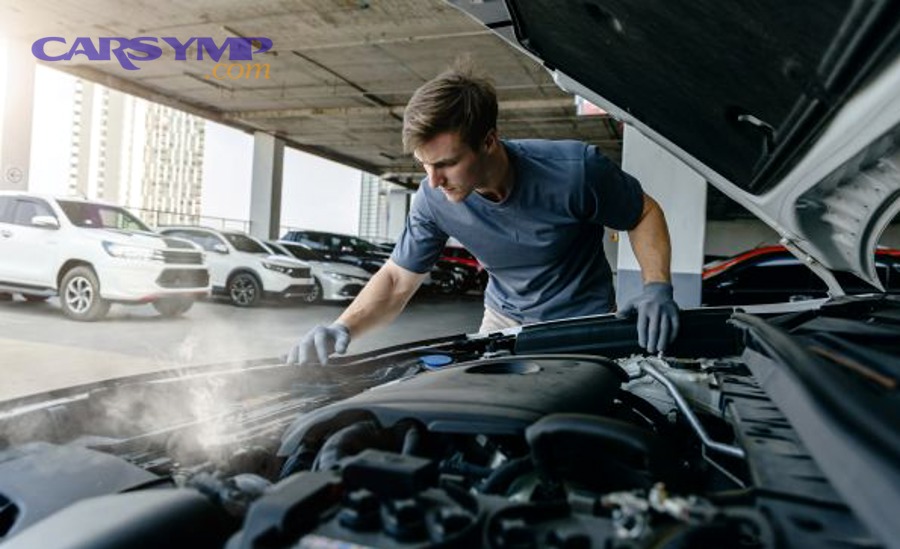
- White steam that lingers + sweet smell + coolant drop: possible coolant entering combustion.
- Misfire + coolant loss + overheating: possible cylinder-to-coolant leak path.
- Cooling system gets rock-hard quickly after cold start: possible combustion pressure entering coolant.
- Overheats rapidly under load, then pushes coolant into overflow: possible pressurization, boiling, or both.
Immediate damage-control actions
- Pull over safely; let the engine cool fully before touching the cap.
- Check coolant level only when cool; document how much you add.
- If the heater suddenly blows cold while the gauge rises, suspect air pockets or low coolant circulation—both can turn into severe overheating quickly.
- If you must move the car, short-distance only, low load, eyes on temperature—otherwise tow is cheaper than an engine.
Can an engine overheat persist without a blown head gasket? (Yes/No)
Yes—persistent overheating can continue without a blown head gasket, for at least three common reasons: (1) trapped air in the cooling system reduces heat transfer and can keep the thermostat closed, (2) restricted heat rejection from a clogged radiator or blocked fins prevents cooling even with good coolant flow, and (3) fan control/relay issues reduce airflow at low speed and idle.
Next, because the “look-alikes” are so common, you’ll move from symptoms to proof using a structured test approach.
High-probability non-gasket causes that mimic head gasket overheating
- Trapped air after coolant service or leak: causes hot spots, no cabin heat, erratic gauge behavior.
- Radiator restriction (internal) or fin blockage (external): engine runs hot on highway pulls or climbs.
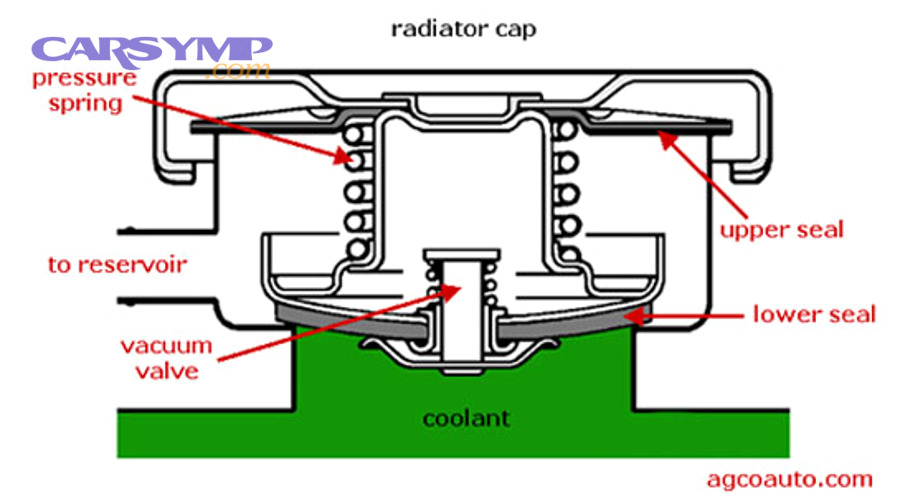
- Weak radiator cap / loss of pressure: coolant boils earlier and pushes into overflow.
- Thermostat stuck/installed wrong: poor circulation and fast overheat.
- Water pump impeller erosion/slip: circulation drops, especially at higher RPM load.
What is a blown head gasket, and why does it cause persistent overheating?
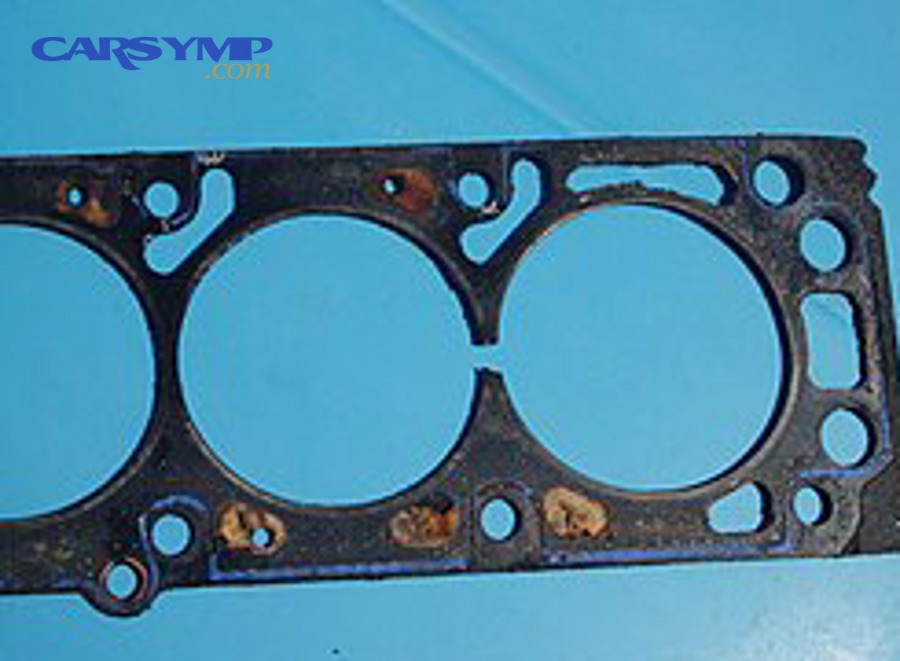
A blown head gasket is a sealing failure between the engine block and cylinder head that lets combustion gases, coolant, and/or oil leak across circuits, often creating persistent overheating by pressurizing the cooling system, forming air pockets, and reducing stable coolant circulation.
Next, because the failure path matters, you’ll connect the “physics” of pressure and heat to the exact symptoms you’re seeing.
What does “combustion gases in coolant” mean, and how does it overheat the engine?
Combustion gases in coolant means exhaust/combustion pressure leaks into the cooling system, displacing coolant and creating vapor/air pockets that block heat transfer, which leads to overheating even if the radiator, fans, and thermostat are otherwise fine.
Then, because pressure is the hidden lever in most overheating cases, you’ll focus on how that pressure changes coolant behavior.
Why combustion gas intrusion overheats an engine
- It crowds out coolant. Gas takes up space where liquid coolant should be carrying heat away.
- It creates hot spots. Vapor pockets insulate metal surfaces, allowing localized overheating.
- It disrupts thermostat operation. Air near the thermostat can delay opening and spike temperature.
- It pushes coolant out. Excess pressure can force coolant into the overflow, lowering system fill.
A key pressure reality you can use
A healthy cooling system is designed to operate under pressure; that pressure raises the coolant’s boiling point. If the system loses pressure or gets over-pressurized by combustion gases, boiling and coolant loss happen sooner. For example, industry references note that coolant boiling point rises roughly about 3°F per psi of pressure and that a typical 15 psi cap can significantly raise the boiling threshold. (macsmobileairclimate.org)
What symptoms specifically point to head gasket failure vs general overheating?
There are 3 main symptom groups that point to head gasket failure: pressure symptoms, contamination symptoms, and combustion-quality symptoms, based on where the leak path connects (cylinder ↔ coolant, oil ↔ coolant, cylinder ↔ outside).
Next, because symptoms vary in reliability, you’ll rank them by confidence so you don’t overreact to weak clues.
Group 1: Pressure symptoms (high signal)
- Cooling system pressurizes quickly after cold start.
- Bubbles in reservoir/radiator neck that increase with throttle blips.
- Repeated coolant purge into overflow with no external leak.
Group 2: Contamination symptoms (medium-to-high signal)
- Oil that looks milky or foamy.
- Coolant that smells like exhaust or shows oily sheen.
Group 3: Combustion-quality symptoms (supporting signal)
- Misfire on startup that clears (possible coolant in cylinder).
- White steam that persists and coolant level drops.
Important nuance
A head gasket can fail in ways that do not mix oil and coolant. So “no milkshake” does not rule it out, and “milkshake” alone does not prove it. (You still test.)
Which tests confirm a blown head gasket when overheating persists?
There are 4 main tests that confirm (or strongly indicate) a blown head gasket: combustion-gas detection in coolant, cooling-system pressure testing, compression testing, and cylinder leak-down testing, based on whether you’re proving gas intrusion, fluid loss, or sealing loss.
Next, because you want the cheapest clarity first, you’ll start with quick checks and then escalate to definitive shop tests.
Which quick checks can you do before paying for teardown?
There are 5 quick checks you can do before teardown: coolant behavior check, bubble check, hose pressure check, spark plug check, and heater-output check, based on what you can observe safely without special tools.
Then, because each check can be fooled by other faults, you’ll interpret them as “directional,” not final proof.
1) Coolant behavior check (cold to warm)
- Fill to proper level (engine cool).
- Start and watch: does coolant level surge unusually? Do bubbles appear early?
2) Bubble check
- Bubbles that increase with throttle can suggest combustion gas intrusion.
- Occasional small bubbles can also be trapped air—context matters.
3) Upper radiator hose pressure check (carefully)
- If the hose becomes extremely firm very quickly from cold, suspect abnormal pressurization.
- Normal systems build pressure as temperature rises, not immediately.
4) Spark plug check
- Remove plugs and look for one “steam-cleaned” plug or signs of coolant.
- Pair this with misfire history for stronger confidence.
5) Heater-output check
- Heater blowing cold while the gauge rises can indicate low coolant or air pockets, both of which can appear alongside head gasket problems.
Which shop tests are most reliable for a definitive diagnosis?
A combustion-gas (block) test wins for confirming gas in coolant, a leak-down test is best for locating where sealing is lost, and a cooling-system pressure test is optimal for finding coolant loss paths, because each test targets a different failure mode.
Next, because you may only want to pay for one or two tests, use this comparison to pick the best sequence.
Quick comparison table (what each test proves)
This table summarizes which diagnostic test best answers specific “persistent overheating” questions.
| Test | Best for proving | What a positive result means | Common false positives/limits |
|---|---|---|---|
| Combustion-gas / block test | Combustion gases entering coolant | Strong indicator of head gasket / head / block leak | Intermittent leaks may not show at idle; technique matters |
| Cooling-system pressure test | Coolant loss under pressure | Leak exists (external or internal) | Some internal leaks only show hot or under load |
| Compression test | Loss of cylinder sealing | Possible gasket, valves, rings | Doesn’t always detect small gasket leaks |
| Leak-down test | Where air escapes at TDC | Pinpoints intake/exhaust/rings/coolant path | Needs correct TDC positioning and procedure |
Evidence (coolant physics that supports pressure-based testing)
If the system can’t hold pressure, coolant can boil at lower temperatures and purge into the overflow—one reason pressure/cap issues mimic gasket symptoms. Auto service guidance commonly notes ~15 psi systems push boiling point toward ~265°F in typical conditions. (autozone.com)
How do you interpret test results when the leak only happens under load?
When a leak only happens under load, you interpret “negative” idle tests as incomplete, then reproduce the failure conditions (temperature, RPM/load, pressure) before re-testing, because some head gasket leaks open only when metal expands and cylinder pressure rises.
Then, because intermittent leaks waste time, you’ll use a practical escalation path.
A practical escalation path for intermittent cases
- Road-test data: log temperature behavior (idle vs highway vs climbs).
- Repeat block test after a heat-soak drive (safely).
- Leak-down test on suspect cylinders (especially if one plug looks different).
- Cooling-system pressure test when hot (shop procedure) if safe/available.
What “intermittent” often looks like
- Overheats during highway pulls or long climbs, then “recovers” at cruise.
- Coolant loss only after hard driving.
- Random misfire on startup after overnight cool-down.
What other causes can mimic head gasket overheating, and how do you rule them out?
Head gasket failure wins as the cause when tests show combustion gas intrusion or internal sealing loss, while cooling-system faults win when you can prove restricted flow, poor heat rejection, or pressure loss without combustion gas evidence, because each category leaves a different diagnostic fingerprint.
Next, because this is where most people overspend, you’ll compare “gasket vs non-gasket” using patterns you can verify.
Is it a coolant circulation problem (thermostat/water pump/air pocket) or a gasket leak?
Circulation problems win when the heater output is inconsistent, hose temperatures show uneven flow, and bleeding changes behavior; gasket leaks win when pressure builds abnormally early and bubbles correlate with throttle, because circulation is about movement while gasket leaks are about cross-circuit intrusion.
Then, because air pockets are a repeat offender, you’ll treat proper bleeding as a diagnostic tool—not only a repair step.
Circulation clues (thermostat/water pump/air)
- Heater blows cold at idle, then warm with RPM changes.
- Upper hose hot, lower hose cold (possible thermostat not opening or poor flow).
- Temperature spikes that improve immediately after bleeding/adding coolant.
Gasket intrusion clues
- Bubbles that increase with throttle.
- Reservoir “burps” coolant out after driving.
- Hose pressurizes unusually early.
Pro tip
A well-executed bleed can change the entire symptom picture. If bleeding fixes overheating, you likely had air/flow issues—even if you also had a small leak elsewhere.
Is it a heat-rejection problem (radiator restriction/fan control/airflow) or a gasket leak?
Heat-rejection problems win when the engine runs hottest at idle/low speed (fan/relay) or under sustained load (radiator restriction), while gasket leaks win when pressure and bubbles persist regardless of airflow improvements, because the radiator and fans affect cooling capacity, not internal sealing.
Next, because “radiator issues” can be internal or external, you’ll decide whether cleaning is enough or replacement is smarter.
Fan/airflow failure patterns
- Overheats in traffic; cools down at speed (fans not pulling air).
- Fan doesn’t run when commanded; relay or control module may be involved.
Radiator restriction patterns
- Overheats on highway hills or towing.
- Infrared scan shows “cold spots” on radiator face (blocked tubes).
Radiator replacement vs cleaning decision
- Clean (external fins) when fins are packed with debris but the radiator core is not internally restricted.
- Flush/clean internally only when contamination is mild and radiator flow is demonstrably improving.
- Replace when the core is internally clogged/corroded, has leaks, or shows significant cold-striping under IR scanning—because restriction often returns after partial cleaning.
Is it pressure/boiling (bad cap, wrong coolant mix) or combustion intrusion?
A bad cap/wrong mix wins when the system cannot hold pressure and coolant boils/purges without combustion gas evidence, while combustion intrusion wins when a block test or leak-down indicates cylinder-to-coolant leakage, because boiling is a pressure/chemistry failure, not necessarily a sealing failure.
Then, because pressure is measurable and inexpensive to fix, check it early.
Why a weak cap creates “fake head gasket” symptoms
- Pressure loss lowers the effective boiling point.
- Coolant can boil locally, push into overflow, and leave you “mysteriously low” afterward.
Industry cooling guidance explains the basic mechanism: increasing cooling-system pressure raises boiling point (often approximated as ~3°F per psi), and common 15 psi caps materially increase the boiling threshold. (macsmobileairclimate.org)
What does proper head gasket repair actually include (beyond the gasket)?
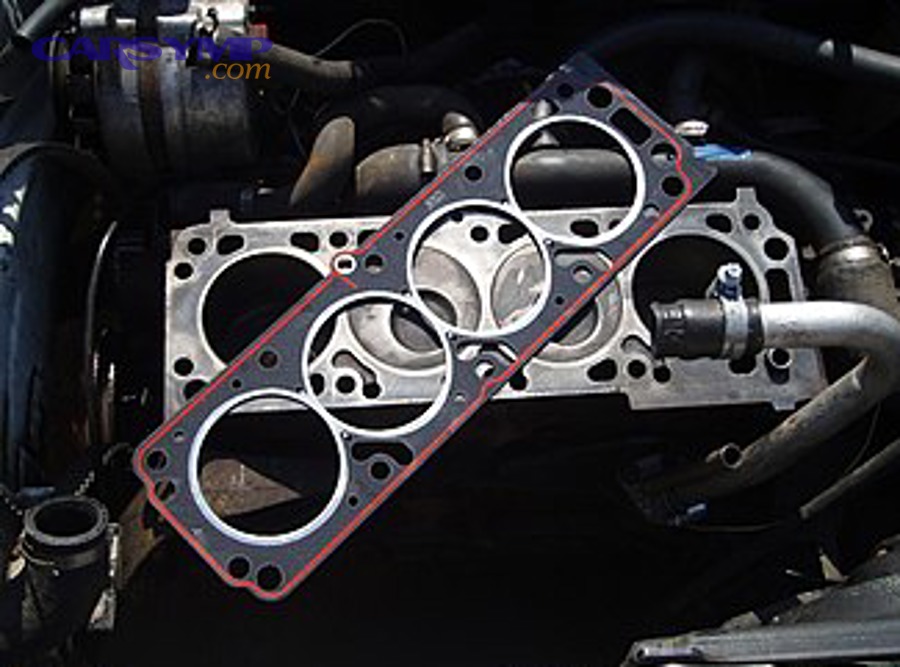
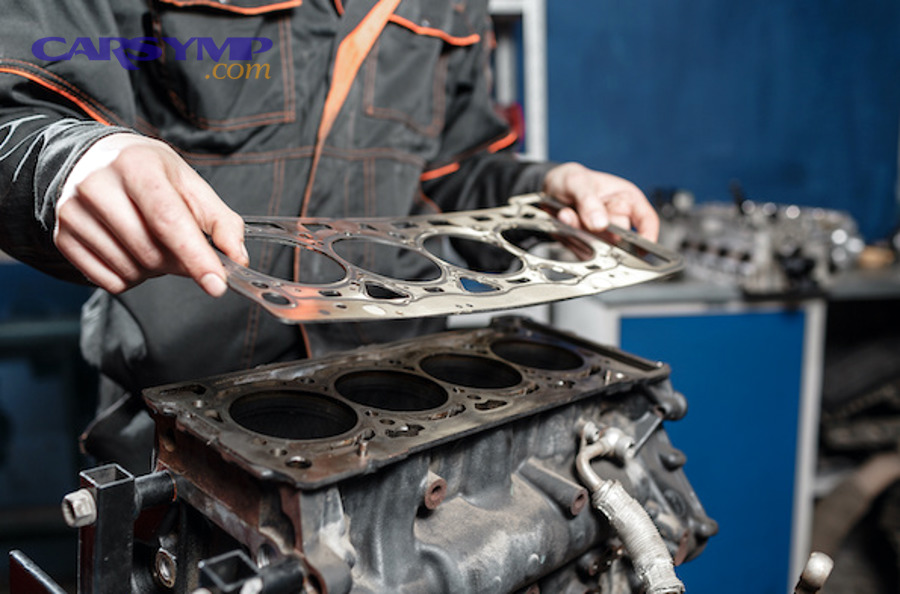
Proper head gasket repair is a system-level repair that includes sealing-surface verification, correct fastener strategy, precise assembly/torque procedure, and cooling-system corrections, because replacing only the gasket without correcting root overheating causes often leads to repeat failure.
Next, because most “comebacks” happen from shortcuts, you’ll break down what must be included for a durable overheating repair.
Should the cylinder head be resurfaced or replaced? (Yes/No + criteria)
Yes—resurface or replace the cylinder head when measurements or inspection show warpage, cracks, or sealing-surface damage, for three reasons: (1) an uneven surface prevents uniform clamping, (2) heat damage can create micro-cracks that re-open under load, and (3) resurfacing restores the finish needed for modern gasket materials to seal.
Then, because this decision affects cost and reliability, use clear criteria instead of “hoping it seals.”
When resurfacing is usually appropriate
- Warpage is within the manufacturer’s machinable limits.
- No cracks on pressure test.
- The surface finish can be achieved for the gasket type used.
When replacement becomes smarter
- Cracks, severe corrosion pitting, or repeated overheating history.
- Excessive material removal would compromise compression ratio or timing geometry (engine-dependent).
What you should expect a competent shop to do
- Clean and inspect the head.
- Measure flatness.
- Pressure-test for cracks (especially on aluminum heads).
- Resurface to the finish spec compatible with the chosen gasket.
Do you need new head bolts or studs, and why does it matter?
Yes—you often need new head bolts when the engine uses torque-to-yield (TTY) bolts, while studs can be preferable in some builds for consistent clamping, because clamping force is what keeps combustion pressure from reopening the leak path.
Next, because fasteners are cheap compared to redoing labor, treat this as a reliability decision, not an “extra.”
Bolts (often TTY)
- Designed to stretch into a controlled elastic/plastic range once.
- Reusing can reduce clamping consistency and risk repeat leaks.
Studs (in some applications)
- Can improve clamp uniformity and reduce thread wear in the block.
- Not always required; sometimes they complicate service or require machining/clearance.
Rule of thumb
Follow the manufacturer’s procedure for your engine platform. “Universal advice” breaks down fast at the torque-sequence level.
What cooling-system repairs should be done at the same time to prevent repeat overheating?
There are 6 cooling-system repairs worth considering alongside head gasket repair: pressure-cap renewal, thermostat validation, radiator flow/condition check, water pump inspection, fan control verification, and correct bleeding/refill, based on the principle that the original overheating cause must be removed.
Next, because repeat overheating is the number one reason gasket jobs fail again, treat these as “root-cause insurance.”
1) Radiator cap replacement (pressure integrity)
A weak cap can’t maintain pressure, which encourages boiling and coolant loss. (macsmobileairclimate.org)
2) Thermostat check (opening temp and orientation)
- Wrong thermostat or wrong orientation can trap air and restrict flow.
3) Radiator evaluation (restriction vs airflow)
- Make the Radiator replacement vs cleaning decision based on evidence (IR scan patterns, leaks, age, internal restriction signs).
4) Water pump assessment (impeller condition and circulation)
- Eroded or slipping impellers reduce flow when you need it most.
5) Fan system validation (command vs actual)
- Confirm fan operation at idle, A/C on, and at threshold temps.
6) Correct refill and air purge
This is where many comebacks begin. Poor bleeding leaves air pockets that create hot spots and false overheat symptoms.
Evidence (coolant heat transfer nuance)
According to a study by Sophia University from the Graduate School of Science and Technology / Department of Engineering and Applied Sciences, in 2021, researchers measuring boiling heat-transfer behavior in engine-cooling conditions found that 50% ethylene glycol (EG50%) showed lower measured heat flux than water, and their new predictive models achieved average relative errors around 9.7% (water) and ~10% (EG50%), highlighting how coolant choice and operating conditions affect heat transfer margins. (researchgate.net)
Head gasket replacement vs other fixes: which repair path is worth it for your car?
Head gasket replacement wins when tests prove internal sealing failure, while “other fixes” win when the overheating root cause is clearly external (flow, airflow, pressure loss) and internal tests are clean; engine replacement becomes optimal when damage risk or total cost outweighs value, because the best repair is the one that restores reliability, not just temperature.
Next, because this is where budget meets reality, you’ll use a decision framework instead of emotion.
Is a head gasket replacement worth it, or is engine replacement a better option?
Head gasket replacement wins for repairable engines with limited collateral damage, while engine replacement is best when bearings may be compromised, the head/block is cracked, or the vehicle needs predictable long-term reliability, because teardown labor is expensive and repeat failure is brutal.
Then, because “worth it” depends on risk, evaluate the car like a mechanic and an owner at the same time.
Head gasket replacement is usually worth it when
- Overheating was caught early.
- Oil contamination is minimal or absent.
- Leak-down/compression suggests the bottom end is healthy.
- Head is repairable and machine work is within spec.
Engine replacement becomes more rational when
- Severe overheating occurred multiple times.
- Oil/coolant contamination likely ran for long periods.
- The head or block fails crack/pressure testing.
- Total repair estimate approaches the value of the vehicle or your reliability needs are strict.
When is a “cooling system fix” enough and a head gasket job unnecessary? (Yes/No)
Yes—a cooling system fix is enough when you can prove the overheating source is external and internal sealing tests remain clean, for three reasons: (1) a confirmed restricted radiator or failed fan circuit can fully explain the temperature pattern, (2) a pressure-loss problem can cause boiling and coolant purge without internal leakage, and (3) trapped air after service can mimic gasket symptoms and resolve with proper bleeding.
Next, because the goal is durable cooling, you’ll verify the fix with a structured test drive.
Examples of “cooling system only” wins
- Fan relay/control failure confirmed (fan not running when commanded).
- Radiator restriction confirmed (IR cold spots, poor flow, age-related clogging).
- Weak cap confirmed (fails pressure test; boiling/purging occurs).
What are the most common reasons engines overheat again after head gasket replacement?
There are 7 common reasons engines overheat again after head gasket replacement: trapped air, unresolved radiator restriction, weak cap/pressure loss, thermostat issues, water pump flow problems, fan control faults, and assembly/torque errors, based on whether the failure is cooling-system-related or sealing-related.
Next, because repeat overheating is preventable, you’ll turn these reasons into a post-repair checklist.
Top repeat-overheating causes (with what to check)
- Trapped air → heater performance, bleed points, proper refill method.
- Radiator restriction → IR scan, flow test, replacement vs cleaning decision.
- Cap pressure loss → cap test, correct rating installed. (macsmobileairclimate.org)
- Thermostat stuck/wrong → correct temp rating and orientation.
- Water pump issues → circulation behavior under load.
- Fan control faults → confirm fan engagement across conditions.
- Procedure errors → torque sequence, bolt reuse, surface prep issues.
After repair, how do you verify the overheating is truly solved?
Yes—you can verify the overheating is solved if post-repair bleeding is correct, the road test matches normal temperature behavior, and coolant level/pressure remain stable, for three reasons: (1) stable temps across idle and load prove both airflow and circulation, (2) stable coolant level proves the system is sealed, and (3) stable heater output and hose temps indicate air is purged.
Next, because “it seemed fine” is not verification, you’ll use a repeatable checklist.
Should you do a post-repair bleeding and road-test checklist? (Yes/No)
Yes—you should do a Post-repair bleeding and road test checklist, for three reasons: (1) bleeding removes air pockets that cause false overheating, (2) road testing under controlled conditions confirms cooling capacity, and (3) rechecking levels catches small losses before they become repeat failures.
Then, because the checklist is only useful if it’s structured, follow a clear sequence.
Post-repair bleeding and road test checklist (practical version)
- Cold fill correctly
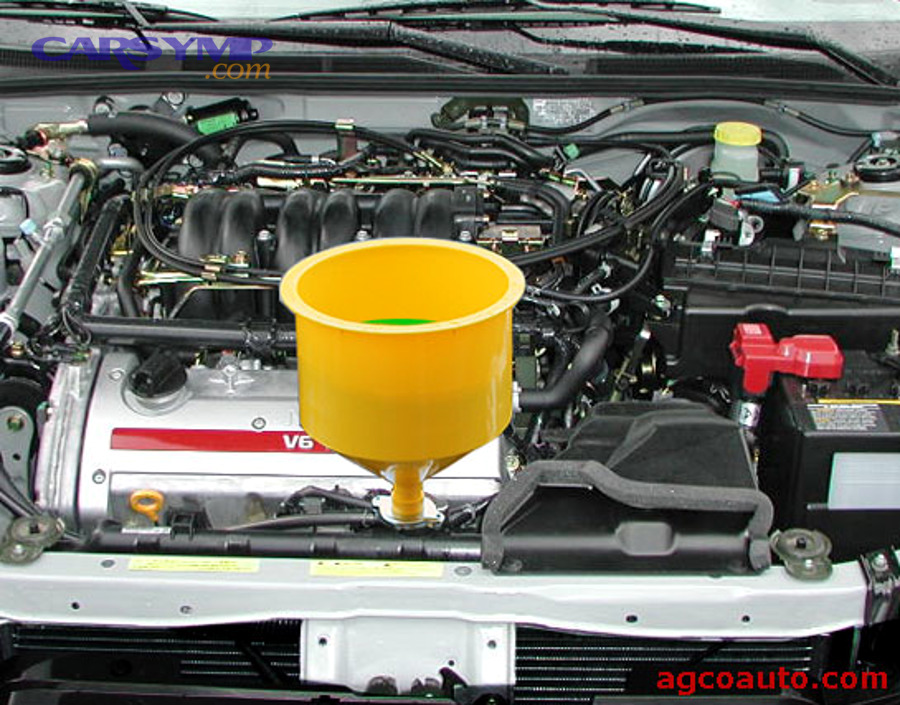
- Use correct coolant mix and fill method (funnel/surge tank if applicable).
- Bleed air
- Open bleed screws if equipped; run heater on high; watch for steady heat.
- Warm-up monitoring
- Verify thermostat opens (hose temp change), fans cycle, and no sudden spikes.
- Short road test
- Mix idle, low speed, and light load; watch temp stability.
- Load test
- Moderate hill or highway pull; confirm temps remain controlled.
- Cool-down and recheck
- After full cool-down, recheck coolant level and top off to mark.
- Second recheck after 1–2 days
- Small trapped air can purge later; this step prevents “mystery low coolant.”
Preventing overheating after repair
Treat verification as part of Preventing overheating after repair: the earlier you catch small level changes or pressure loss, the less likely you are to overheat again and stress the new gasket.
What signs tell you the repair failed early, and what should you do next?
There are 5 early signs of repair failure: repeated coolant loss, recurring bubbles/pressurization, temperature spikes under the same conditions, return of misfire/steam, and contamination signs, based on whether the failure is sealing-related or cooling-system-related.
Next, because fast action can save the engine, respond with a “re-test before you drive it hard” mindset.
Early failure signs
- Coolant level drops repeatedly with no external leak found.
- Hose pressurizes abnormally early; reservoir bubbles persist.
- Temperature spikes return under the same load pattern.
- White steam returns; misfire reappears.
- Oil/coolant contamination signs reappear.
What to do next
- Stop heavy driving; avoid towing/hills until confirmed.
- Re-test in this order: pressure/cap → bleeding verification → block test → leak-down (as needed).
- If shop-performed, document symptoms and request re-check under warranty terms.
What specialized factors can cause repeat overheating or repeat head gasket failure even after “correct” repair?
Specialized repeat-failure factors include pressure-cap mismatch, gasket material/fastener strategy mismatch, stop-leak side effects, and rare mechanical defects like cracks or deck erosion, because even a correct assembly can fail if operating conditions exceed the new seal’s margin.
Next, because these factors are less common, you’ll use them as “second-pass” diagnostics when the usual causes have been ruled out.
Can radiator cap pressure and boiling-point dynamics trigger repeat overheating? (Yes/No)
Yes—radiator cap pressure and boiling-point dynamics can trigger repeat overheating, for three reasons: (1) lower pressure reduces boiling point and encourages localized boiling, (2) boiling forms vapor pockets that reduce heat transfer, and (3) boiling/purging lowers coolant level and starts a feedback loop of overheating.
Then, because this is cheap to test and cheap to fix, verify cap rating and cap performance early.
Industry references commonly note the rule-of-thumb increase of about ~3°F per psi and highlight how typical cap pressures significantly increase boiling margin. (macsmobileairclimate.org)
Do gasket material choices (MLS vs composite) and bolt strategy change outcomes?
MLS gaskets win for modern engines with proper surface finish, composite gaskets are best for some older designs and rougher surfaces, and studs can be optimal for clamp consistency in select builds, because gasket design and fastener strategy must match surface finish and operating pressure.
Next, because mismatches cause “mystery comebacks,” treat gasket choice as a compatibility decision.
MLS (multi-layer steel)
- Excellent sealing when surfaces are flat and smooth to spec.
- Less forgiving of poor surface finish.
Composite
- More forgiving in some older applications.
- Can be more prone to blowouts under severe detonation/overheat.
Studs vs bolts
- Studs may improve clamp uniformity; bolts match OEM service procedures.
- Choose based on engine design, intended use, and machinist guidance.
Are chemical stop-leak sealers a safe alternative or a risky antonym to proper repair?
Stop-leak is a risky antonym to proper repair: it may buy time for small seepage in limited situations, but it can clog passages, reduce radiator efficiency, and mask root causes, because it changes coolant flow behavior rather than restoring sealing surfaces.
Next, because persistent overheating is a high-stakes symptom, treat stop-leak as a last resort, not a strategy.
Where stop-leak is most risky
- Engines already overheating (reduced margin).
- Systems with narrow passages (heater cores, modern radiators).
- Situations where you still need accurate diagnosis.
Could rare mechanical issues (cracked head/block, liner problems, deck erosion) explain persistent overheating?
Yes—rare mechanical issues can explain persistent overheating when normal tests don’t match symptoms, including (1) hairline cracks that open only when hot, (2) block deck erosion or sealing-surface damage, and (3) cylinder liner or localized hot-spot defects that repeatedly disturb sealing.
In short, once common causes are ruled out, the next step is specialized inspection and testing—often involving machine shop pressure testing, dye penetrant checks, and careful measurement.
Rare-issue indicators
- Repeated failure after correct repair and corrected cooling system.
- Overheating that correlates strongly with specific load conditions.
- Coolant loss that persists with no external leaks and inconsistent test outcomes.
Evidence (if any)
According to a study by Sophia University from the Graduate School of Science and Technology / Department of Engineering and Applied Sciences, in 2021, researchers testing water versus 50% ethylene glycol coolant (EG50%) under engine-cooling boiling heat-transfer conditions reported that EG50% produced lower heat flux than water, and their new predictive models showed average relative errors of about 9.7% (water) and ~10% (EG50%), reinforcing how coolant choice and operating conditions affect cooling margins. (researchgate.net)