


A coolant (antifreeze) leak can absolutely be the root cause of overheating, and the repairs that truly stop overheating are the ones that restore coolant level, pressure, and circulation—not just the ones that “stop the drip.” The goal is simple: seal the leak, refill correctly, remove trapped air, and confirm the system can hold pressure and shed heat under real driving load.
Then, you need to identify the exact leak source quickly, because different leak points (hose vs radiator vs water pump) fail differently and require different fixes. A rushed guess often leads to repeat overheating, repeat top-offs, and more expensive damage.
After that, you must handle the “still overheating after repair” scenario correctly. Many cars continue to overheat because air remains in the system, a cooling fan never turns on, a thermostat sticks, or coolant flow is restricted—problems that can hide behind the original leak until the system is refilled.
Introduce a new idea: once you understand which repairs actually stop overheating and how to verify them, you can avoid the most common rework traps (like stop-leak misuse) and build a reliable overheating repair plan that lasts.
STEP 1 — Title & outline analysis (required)
Main keyword (keyword focus): Coolant (antifreeze) leak repairs that stop overheating
Predicate (main verb/action): Fix
Relations Lexical used: Synonym (“Coolant” = “Antifreeze”)
Search intent types present in the outline:
– Definition: “What repairs…?”, “How do you find…?”, “Why is it still overheating…?”
– Grouping: “Which leak points…?”, “What’s the best fix for radiator leaks…?”
– Comparison: “Replace vs repair…?”, “Thermostat vs clogged radiator vs weak water pump…?”, “Stop-leak vs proper repair…”
– Boolean: “Can a leak cause overheating even if reservoir looks full?”, “Is trapped air #1 reason?”, “When is stop-leak acceptable?”
– How-to: “How do you find the exact leak fast…?”, “Step-by-step repairs…”
Primary intent (from the Title): Fix coolant leaks with repairs that stop overheating reliably.
Secondary intent 1 (from H2 #1): Identify which leak repairs truly prevent overheating and why.
Secondary intent 2 (from H2 #2): Diagnose the exact leak location efficiently.
Secondary intent 3 (from H2 #3): Execute the right repair steps per leak location (and avoid rework).
What coolant (antifreeze) leak repairs actually stop engine overheating?
There are 3 main types of coolant (antifreeze) leak repairs that stop engine overheating: (1) leak sealing at the failed component, (2) pressure restoration (cap, seals, system integrity), and (3) correct refill + air removal, based on whether overheating is caused by coolant loss, pressure loss, or trapped air/flow disruption.
Specifically, overheating repair succeeds when you treat the cooling system like a closed, pressurized loop: it must hold coolant, hold pressure, and move coolant through the radiator so heat can leave the engine.
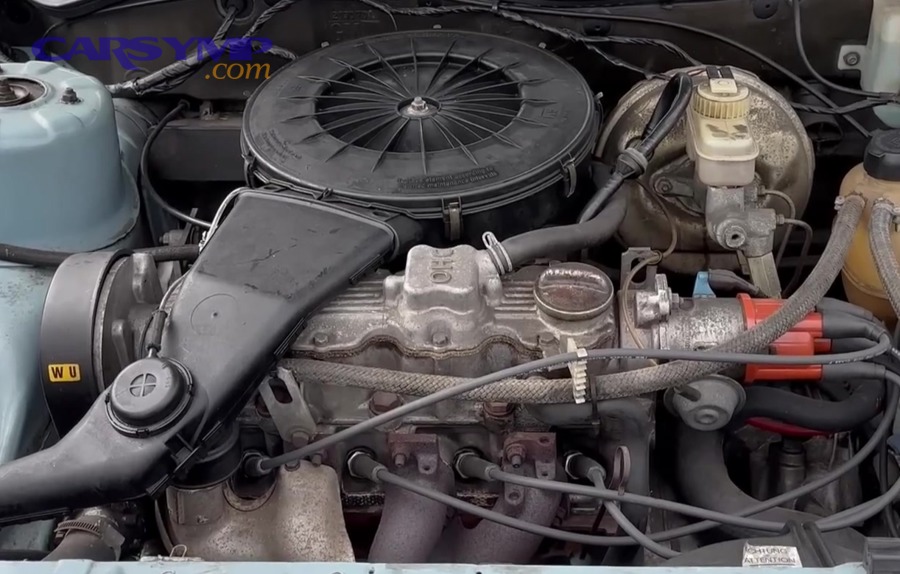
Which leak points (hoses, radiator, water pump, thermostat housing) most often cause overheating—and why?
Most overheating-causing leaks happen at high-pressure, high-heat, high-vibration points. The leak is the visible symptom; the overheating happens because the system loses coolant volume or pressure, or it pulls in air that blocks circulation.
The most common leak points that directly trigger overheating:
- Upper radiator hose / lower radiator hose
- Why overheating follows: A hose leak lowers coolant fast under load and can spray onto hot parts, creating steam and rapid temperature spikes.
- Typical pattern: Temperature rises during acceleration or highway driving; coolant smell appears after a drive.
- Radiator plastic tank seam / crimp joints / core pinholes
- Why overheating follows: Radiator leaks often worsen when hot, so the car may look “fine” cold but overheat in traffic.
- Typical pattern: Slow loss at first, then sudden overheating when pressure rises.
- Water pump weep hole / pump gasket
- Why overheating follows: Leaks can coincide with poor circulation if the pump bearing/seal is failing—so you get both loss and weak flow.
- Typical pattern: Overheats at idle and also under load; may squeal or show belt/coolant residue.
- Thermostat housing (especially plastic housings)
- Why overheating follows: Housing leaks introduce air and lower coolant; in some designs, the leak sits near temperature sensors, causing unstable readings.
- Typical pattern: Coolant loss plus erratic temperature gauge behavior.
To make this practical, use this “leak-to-overheat” rule:
If the leak is on the pressure side and worsens hot, overheating will follow quickly because boiling point drops as pressure drops. Even reputable automotive guidance notes that radiator-cap pressure directly affects boiling point; raising pressure increases boiling point, while losing pressure lowers it.
When should you replace vs repair (patch/epoxy/clamp-tighten) a coolant leak to prevent repeat overheating?
Replace wins in durability, repair wins in speed, and patch is only acceptable as a temporary bridge. That’s the cleanest comparison for preventing repeat overheating.
Replace (best for repeat-proof overheating repair) when:
- The part is aged rubber (soft, swollen, cracked hose).
- The part is plastic under heat cycles (radiator tank seams, plastic thermostat housing).
- The leak appears at a seam or crimp (radiator end tank).
- The leak contaminates a belt or sensor (coolant on serpentine belt = a repeat failure risk).
Repair (reasonable when the base part is still structurally sound) when:
- A clamp is loose and the hose is healthy (no bulges/cracks).
- A fitting or quick-connect O-ring failed and is replaceable.
- A metal housing gasket can be re-sealed properly (clean, flat mating surfaces).
Patch/epoxy/stopgap (only to get you to a shop) when:
- The leak is small but you’re stranded and need a short, controlled drive.
- You can monitor temperature constantly and avoid load.
The core logic is heat-cycle reliability: hoses, plastic tanks, and housings expand and contract constantly. A “tighten and pray” repair often survives one drive, then fails again once pressure and temperature peak.
Can a coolant leak cause overheating even if the reservoir still looks “full”?
Yes—coolant leak repairs that stop overheating are still necessary even if the reservoir looks full, for three reasons: (1) the radiator can be low while the reservoir looks normal, (2) trapped air can prevent circulation, and (3) pressure loss can make coolant boil early.
Then, the real trap is that a reservoir is not always a reliable indicator of what’s happening in the radiator or engine passages. Some systems only transfer coolant between radiator and reservoir when conditions are right (cool-down recovery, cap function, hose integrity). If the cap is weak or the return path is blocked, the bottle can look “okay” while the radiator is starving.
Three quick Car Symptoms that often indicate “reservoir looks fine, system is not”:
- Heater blows cold at idle while the gauge climbs (air pocket at heater core or low coolant at the pump inlet).
- Temperature spikes suddenly after a highway pull, then drops quickly when you lift off (pressure/flow instability).
- You hear gurgling behind the dash after shutdown (air moving through heater core lines).
And pressure truly matters: typical explanations of radiator-cap pressure show that added pressure raises the boiling point, so losing it can trigger overheating easier—even at temperatures the engine previously tolerated.
How do you find the exact coolant leak fast (without replacing random parts)?
Finding the exact coolant leak fast is a 3-step method—inspect, pressurize, then confirm under heat—and it reliably pinpoints the leak so your overheating repair targets the actual failure point instead of guessing.
To better understand why this matters, remember the hook from the first section: overheating stops when you restore a sealed, pressurized, circulating system. So your leak test must answer two questions: Where is it escaping? and Does the system hold pressure after repair?
What are the most reliable signs that a coolant leak is the true cause of overheating?
A coolant leak is the true cause of overheating when coolant loss and heat rise correlate. You’re looking for a consistent story: the system cannot keep enough coolant and pressure to carry heat away.
Reliable signs that link leak → overheating:
- You need to top off coolant repeatedly, and overheating improves temporarily afterward.
- You see fresh wetness (not just old crust) around hose ends, radiator seams, thermostat housing, or water pump area.
- You smell a sweet odor after driving, especially near the front of the car.
- You get steam from the engine bay (not from exhaust) as temperature rises.
Signs that suggest overheating may be not primarily a leak (or not only a leak):
- Coolant level stays stable, but temperature rises mostly at idle (suspect fan control).
- Coolant is full, but upper hose stays cool while engine overheats (suspect thermostat stuck).
- Overheating appears only at highway speed with stable coolant level (suspect radiator airflow restriction or internal blockage).
These signs don’t replace testing, but they prevent random part replacement.
Which test should you use: visual check, pressure test, or UV dye—and in what order?
Pressure testing wins for speed, UV dye wins for micro-leaks, and visual inspection is your first filter. That order—visual → pressure → UV dye—is the most efficient path for most DIYers and shops.
However, each test shines in a different scenario:
- Visual inspection (best first step)
- Look for crusty deposits (dried coolant), wet clamps, and staining on the radiator end tanks.
- Check the underside of hoses and the seam between radiator tank and core.
- Cooling system pressure test (best “find it now” method)
- Pressurize the system to the cap’s rated pressure (do not exceed).
- Watch the gauge drop; trace wet spots as coolant is pushed out.
- This test is especially useful because many leaks only show under pressure.
- UV dye (best for slow leaks that only show hot)
- Add UV dye, drive briefly, then scan with a UV light.
- Confirm the brightest trail near the highest point of wetness (dye travels).
This approach reduces error by controlling pressure and observing repeatable failure modes rather than guessing based on symptoms alone.
How can you tell if the leak is external (drips) or internal (engine/heater core)?
External vs internal comes down to where the coolant ends up.
External leak clues (outside the engine):
- Drips on the ground.
- Wetness on radiator end tanks, hoses, thermostat housing, pump.
- Steam from the front of the engine bay.
Internal leak clues (inside engine or cabin):
- Sweet smell inside the cabin; fogging windows; wet carpet (heater core).
- Coolant loss with no external drip.
- Exhaust steam with a persistent coolant loss pattern (possible internal engine issue).
The key is to avoid false certainty: some external leaks evaporate on hot surfaces and never drip. That’s why pressure testing is so valuable.
What step-by-step repairs stop overheating after you locate the leak?
The best way to stop overheating after locating a leak is a 5-step repair sequence: fix the failed part → restore sealing surfaces → refill with correct coolant → bleed air completely → verify pressure and fan operation, which prevents repeat overheating and “it’s still hot” comebacks.
More specifically, treat each repair as both a mechanical fix and a system reset. A perfect hose replacement still fails as an overheating repair if the system traps air or never builds pressure.
How do you repair a hose, clamp, or fitting leak the right way (not a temporary tighten)?
A correct hose/clamp repair stops overheating by restoring flow integrity and preventing air ingestion at the pump inlet.
Step-by-step:
- Let the engine cool fully (pressurized hot coolant can burn).
- Identify whether the hose is damaged or the clamp is failing.
- If the hose is aged (soft, cracked, swollen), replace the hose—don’t just tighten.
- Use the correct clamp type:
- Constant-tension clamps maintain seal through heat cycles.
- Worm-gear clamps can work, but over-tightening can cut hoses.
- Clean the fitting/barb:
- Remove corrosion and old rubber residue.
- Reinstall with proper positioning:
- Clamp behind the bead/bulge on the fitting, not on the edge.
- Refill and bleed (do not skip).
Common failure that causes repeat overheating:
A clamp sits on a tapered section instead of the bead, so it seals cold but leaks once hot pressure rises.
What’s the best fix for radiator leaks: tank seam, pinhole, or core damage?
There are 3 main types of radiator leaks—tank seam leaks, pinhole leaks, and core damage—based on where the radiator loses integrity, and the best fix depends on whether the structure can reliably hold pressure long-term.
- Tank seam / crimp leak (plastic tank to core seam)
- Best fix: radiator replacement
- Why: the seam is a structural joint; sealing rarely survives heat cycles.
- Pinhole leak (small puncture in metal core)
- Best fix: replacement or professional repair (application-dependent)
- Why: pinholes often indicate broader corrosion thinning.
- Core damage / fin and tube deterioration
- Best fix: replacement
- Why: heat transfer and pressure integrity both degrade.
If you’re deciding between “radiator replacement vs cleaning decision,” use a simple rule:
- Cleaning helps if overheating is due to external airflow blockage (debris on fins) and the radiator is not leaking.
- Replacement is needed when the radiator cannot hold pressure or coolant.
When is the water pump or thermostat housing the real fix for “leak + overheating”?
Yes—Water pump replacement overview and thermostat housing replacement can be the real overheating fix when the leak source also compromises circulation, because you’re not only losing coolant; you’re also losing consistent flow.
Moreover, the water pump is a special case: it can fail in ways that look like “just a leak,” while actually reducing pumping ability.
Water pump clues that point to replacement (not sealant):
- Coolant trails from the weep hole (seal failure).
- Bearing noise or pulley wobble.
- Repeated overheating even after refilling correctly.
Thermostat housing clues:
- Leak at the housing seam or sensor area.
- Warped plastic housing surfaces that won’t reseal.
- Coolant seepage that returns soon after tightening.
Evidence: According to a study by Drexel University from the Department of Mechanical Engineering and Mechanics, in 2003, a Formula SAE cooling-system design project emphasized that overheating is a primary failure mode and defined performance targets such as completing a 16-mile race without overheating, highlighting why correct sizing and integrity of the radiator/fan/coolant path matter.
If the leak is fixed, why is the engine still overheating—and how do you solve it?
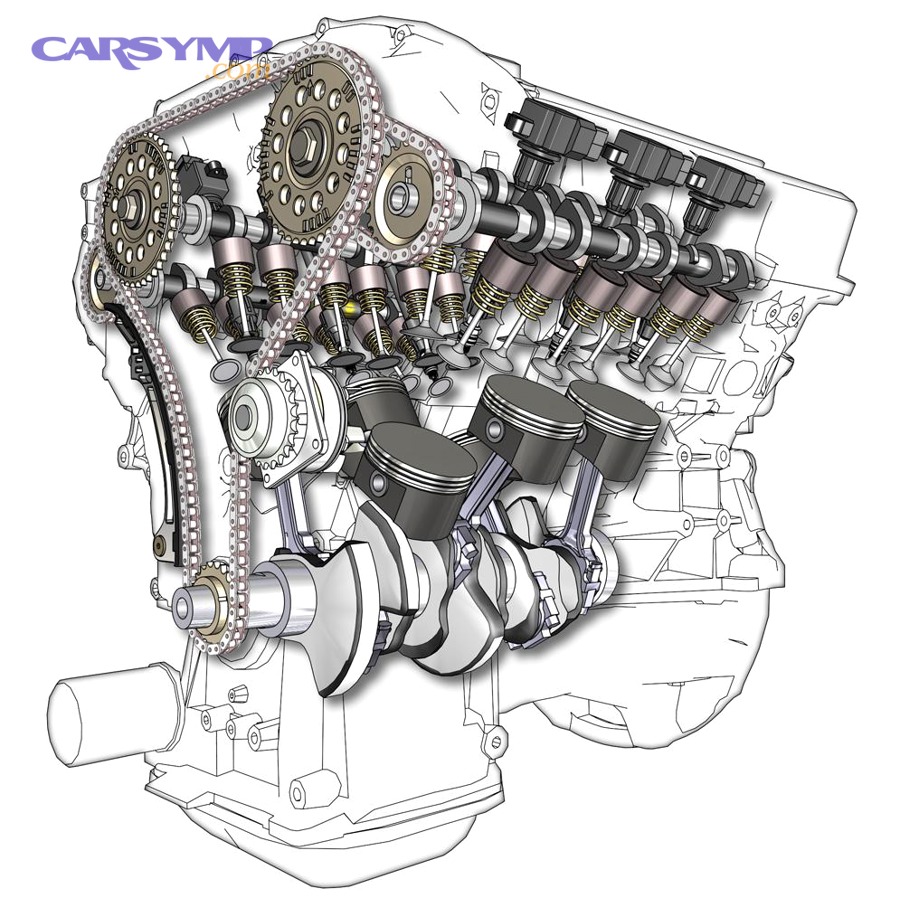
If the leak is fixed, the engine can still overheat because air remains trapped, coolant flow is still restricted, or airflow control (fans) is failing, and you solve it by following a post-repair overheating repair checklist: bleed air → verify fans → verify thermostat operation → verify radiator flow → consider internal failure only after the basics pass.
In addition, this section is where many people waste money: they fixed the leak, the driveway is dry, and they assume the job is done—while the system is still not functioning as a sealed, circulating heat exchanger.
Is trapped air (improper bleeding) the #1 reason overheating continues after a leak repair?
Yes—trapped air is one of the most common reasons a car still overheats after coolant leak repairs, for three reasons: (1) air blocks coolant circulation, (2) air creates hot spots that spike the temperature sensor, and (3) air prevents stable heater-core flow, hiding the real coolant temperature.
Then, the fix is procedural: bleeding is not optional.
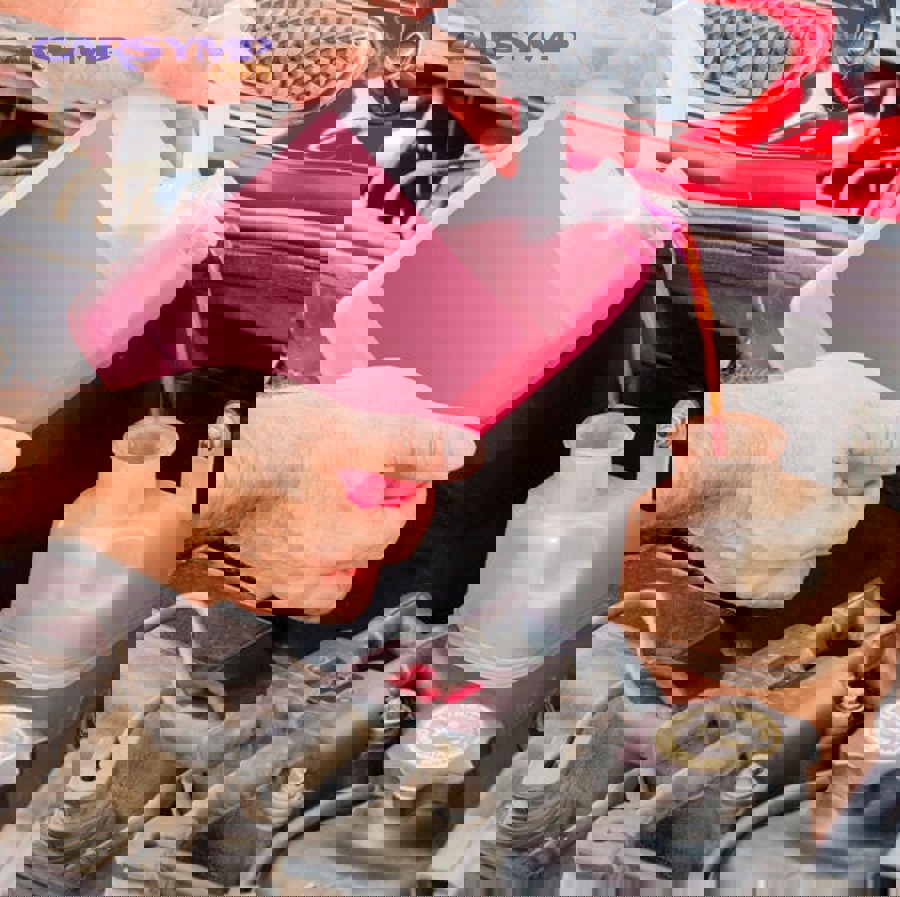
How to bleed properly (general process):
- Park on level ground (or nose slightly up if the design benefits).
- Set the heater to hot (opens heater core flow on many cars).
- Fill slowly; squeeze upper hose to burp air.
- Use bleed screws if equipped.
- Run the engine to operating temperature, then recheck level after full cool-down.
The “air pocket” symptom pattern:
- Temp spikes, then drops suddenly.
- Heater alternates hot/cold.
- Gurgling after shutdown.
How do you confirm the cooling fan and fan control are working (idle overheating pattern)?
To confirm cooling fans work, you check fan activation conditions, power delivery, and control signals, because idle overheating is often caused by airflow failure rather than coolant volume.
Moreover, the phrase “Cooling fan repair and relay replacement” matters because many failures are electrical, not mechanical.
Quick fan verification steps:
- A/C test (many cars force fan on with A/C):
- Turn on A/C; see if fans run (note: not universal).
- Temperature test:
- Observe whether fans turn on as the gauge approaches normal-high range.
- Electrical checks:
- Check fuse(s), relay(s), fan connector corrosion.
- Direct power test (advanced):
- Apply power safely to the fan motor to confirm motor function.
Classic signs of fan control failure:
- Overheats at idle, cools at highway speed.
- Fans never come on, or they run only intermittently.
- Temperature rises rapidly in stop-and-go traffic.
How do you differentiate thermostat vs clogged radiator vs weak water pump (highway vs idle overheating)?
Thermostat replacement for overheating is most likely when overheating is rapid and consistent, a clogged radiator is most consistent with highway overheating under load, and a weak water pump is most likely when you see overheating plus poor cabin heat or unexplained circulation issues—each is optimal to suspect based on the overheating pattern.
However, pattern alone isn’t enough; you confirm with simple observations:
Thermostat replacement for overheating (when to suspect):
- Upper radiator hose stays cooler than expected while the engine overheats.
- Temperature rises quickly from cold.
- Heat output is weak even after warmup.
Clogged radiator (internal restriction or external fin blockage):
- Overheats at highway speed or under sustained load.
- Upper hose is hot, but cooling performance is inconsistent.
- Radiator surface temperature may vary widely across the core (hot spots).
Weak water pump replacement overview (when to suspect):
- Coolant leaks at pump + overheating.
- Poor circulation signs even with correct coolant level.
- Recurrent air ingestion due to seal failure.
Evidence: According to a study by Drexel University from the Department of Mechanical Engineering and Mechanics, in 2003, the team planned controlled cooling-system testing using simulated loads and environmental conditions to size components like the radiator/fan unit and water pump—underscoring why you must verify airflow and circulation, not just “fix the leak.”
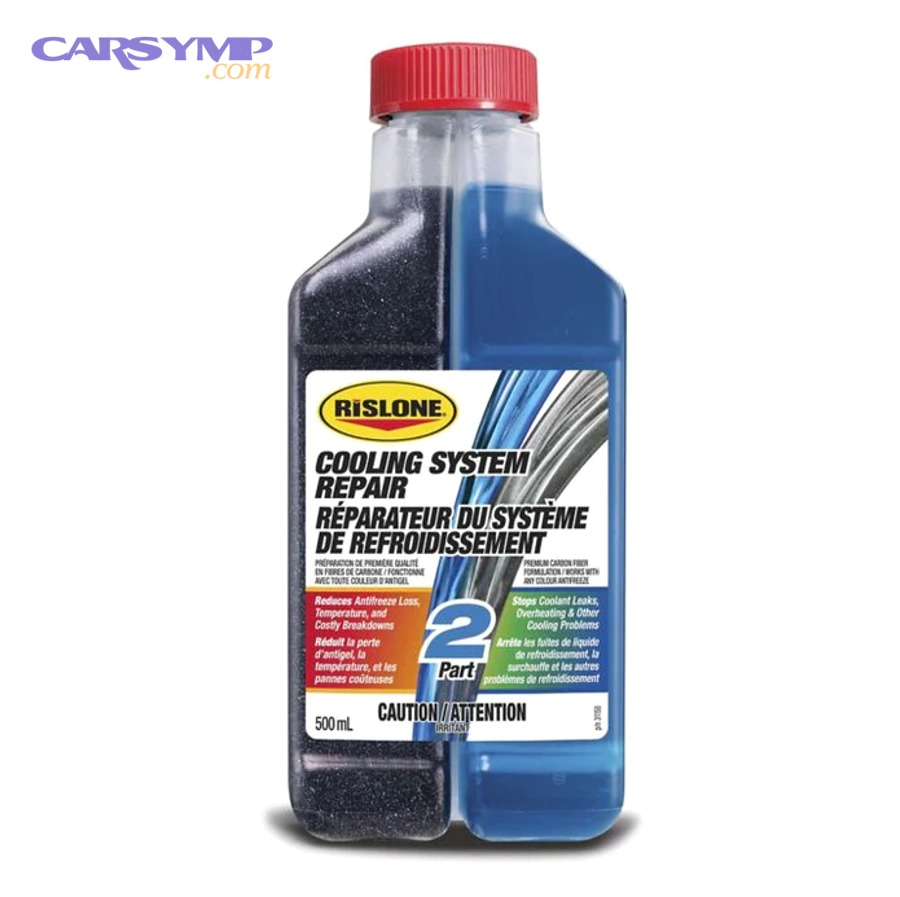
Should you use stop-leak products to fix overheating from coolant leaks?
No—for most overheating repair cases, stop-leak is not a true coolant leak repair that stops overheating long-term, for three reasons: (1) it can restrict small passages (heater core/radiator tubes), (2) it can mask the real leak so overheating returns, and (3) it does not restore mechanical integrity to cracked or heat-cycled parts.
On the other hand, there are narrow emergency scenarios where stop-leak is used as a temporary bridge—but it should never become the “final repair” for a system that already overheated.
Do stop-leak additives actually work—or do they create bigger cooling problems?
Stop-leak can “work” in the limited sense that it may reduce a small seep, but it often creates bigger cooling problems when it deposits in places you need maximum heat transfer and flow.
Why the risk increases specifically for overheating:
- Radiators and heater cores rely on small tubes for heat exchange.
- Deposits reduce effective cross-sectional area, reducing flow.
- Reduced flow increases temperature rise across the engine.
If the car overheats now, the system already has low margin; any added restriction makes that margin worse.
When is stop-leak acceptable as an emergency measure (and when is it a hard no)?
Yes—stop-leak can be acceptable only as an emergency measure when (1) the leak is small and external, (2) you must drive a short distance to reach a safe repair location, and (3) you can monitor temperature constantly—otherwise it’s a hard no.
Then, apply these boundary rules:
Acceptable (temporary)
- Tiny seep at radiator seam in a low-value vehicle where replacement is imminent.
- Short-distance “limp to shop” with careful monitoring.
Hard no
- Any sign of internal leak suspicion.
- Heater core concerns (cabin smell, fogging, damp carpet).
- Already-clogged radiator symptoms.
- Modern vehicles with narrow passages and sensitive cooling architecture.
If your goal is “coolant leak repairs that stop overheating,” stop-leak is usually the opposite of that goal: it’s a bandage that can reduce the system’s ability to reject heat.
What advanced checks prevent repeat overheating after coolant leak repairs?
Advanced checks prevent repeat overheating by validating coolant chemistry, pressure integrity, and hidden failure modes—the micro-details that decide whether your “fixed” system stays stable for months instead of failing again next week.
Next, this is the contextual shift: you already know how to fix the leak and stop the overheating today. Now you make the repair durable by confirming pressure, coolant mix, and internal integrity.
Which coolant type and mix ratio should you use after repairs—and why does “wrong coolant” cause future leaks?
Use the manufacturer-recommended coolant type and a proper mix ratio (often around 50/50 unless specified otherwise) because coolant is not just antifreeze—it carries corrosion inhibitors that protect gaskets, housings, and radiator materials.
Moreover, “wrong coolant” causes future leaks in two common ways:
- Incompatible additive packages can accelerate corrosion in mixed-metal systems.
- Incorrect concentration can reduce boiling margin and protection.
Evidence: According to a study by Drexel University from the Department of Mechanical Engineering and Mechanics, in 2003, engineering-oriented cooling procedures referenced a 50/50 water-antifreeze mixture as a baseline coolant medium for heat transfer through the radiator/fan unit.
How do you test the radiator cap and system pressure integrity to stop boil-over (even with no visible leak)?
You test pressure integrity by using a cap tester and a cooling system pressure test because pressure is what raises boiling point; losing it can trigger boil-over without dramatic external leaking.
Specifically:
- Test the cap’s relief pressure (does it hold to rating before venting?).
- Pressure test the system and watch for pressure decay (micro-leaks).
- Inspect overflow hose routing and recovery behavior.
General radiator-cap explanations consistently note that boiling point increases as system pressure increases, which is why a weak cap can act like an invisible leak (pressure loss first, coolant loss later).
When should you suspect an internal engine issue (head gasket/combustion gases) if coolant keeps disappearing?
Yes—you should suspect an internal engine issue if (1) coolant disappears with no external leak found, (2) the system repeatedly develops air soon after bleeding, and (3) overheating persists despite stable fan and thermostat behavior.
Then, use disciplined triggers rather than panic:
- Recurrent pressure in hoses when cold-starting.
- Persistent coolant loss plus unstable temperature after correct bleeding.
- Evidence of coolant entering combustion (symptoms vary by engine).
This is where professional tests (combustion gas detection, leak-down testing) become the smarter next step than replacing more external parts.
What “rare” leak scenarios happen only under load or heat soak, and how do you catch them?
There are 4 main rare leak scenarios: heat-soak seam leaks, load-only hose seep, cap/recovery failures, and micro-cracks in plastic housings, based on whether the leak depends on temperature, pressure, or component flex.
To illustrate how to catch them:
- Re-test after a full heat cycle (drive, then hot idle, then shut down).
- Pressure test when warm (safely) to simulate operating expansion.
- Use UV dye if the leak evaporates before it drips.
Evidence: According to a study by Drexel University from the Department of Mechanical Engineering and Mechanics, in 2003, their testing approach emphasized controlling temperature and pressure ranges and measuring coolant temperature near the engine block and radiator unit—exactly the mindset needed to catch load- and heat-dependent faults.