


Compressing brake caliper pistons safely requires using the right tools and following proper techniques to avoid damaging critical brake system components like the ABS pump, piston seals, and caliper bore. The safest methods include using a C-clamp with protection plates, professional brake caliper compression tools, or opening the bleeder valve while applying steady pressure—each technique designed to retract the piston without causing scratches, seal damage, or fluid contamination that could compromise your vehicle’s braking performance.
Understanding which tools work best for different caliper types is essential before starting any brake maintenance work. Front brake calipers typically compress with simple pressure from C-clamps or channel locks, while rear calipers with integrated parking brakes require a rotation method using specialized wind-back tools. Choosing the wrong approach can lead to damaged pistons, misaligned parking brake mechanisms, or even complete caliper failure that necessitates expensive replacements.
Safety precautions during compression extend beyond tool selection to include proper brake fluid management, preventing ABS system contamination, and recognizing the differences between single-piston and multi-piston calipers. Many DIY mechanics unknowingly force old, contaminated brake fluid back through the system when compressing pistons, which can clog ABS valves and introduce sludge into sensitive hydraulic components. Opening the bleeder valve before compression allows old fluid to exit the system rather than circulating debris throughout your brake lines.
Troubleshooting stuck or seized caliper pistons represents one of the most common challenges when replacing brake pads, often caused by corrosion from vehicle inactivity, torn rubber boots, or brake fluid moisture absorption. Below, we’ll explore the complete process of safely compressing brake caliper pistons, from understanding their function in your braking system to mastering all seven proven compression methods that protect your components while ensuring optimal brake performance.
What is Brake Caliper Piston Compression and Why is it Necessary?
Brake caliper piston compression is the process of retracting the hydraulic piston back into the caliper bore to create sufficient clearance for installing new, thicker brake pads during brake maintenance or repair. This compression becomes necessary because brake pistons gradually extend outward over time as brake pads wear down, automatically adjusting to maintain consistent pad-to-rotor contact through the vehicle’s hydraulic braking system.
To better understand why compression is essential, consider how the brake caliper piston functions within your vehicle’s braking system. When you press the brake pedal, hydraulic pressure from the master cylinder forces brake fluid into the caliper, pushing the piston outward. This outward movement forces the brake pads against the spinning rotor, creating friction that slows or stops your vehicle. The piston seal—a rubber component surrounding the piston—deforms slightly during this process.
When you release the brake pedal, hydraulic pressure drops and the piston seal’s elasticity pulls the piston back slightly, creating a small gap between the pads and rotor for drag-free wheel rotation. However, as brake pads wear from thousands of braking cycles, the piston gradually extends further from the caliper bore to compensate for the reduced pad thickness. This automatic adjustment ensures consistent braking performance throughout the life of your brake pads.
The problem arises during brake pad replacement. New brake pads measure significantly thicker than worn pads—often 3-5 millimeters thicker depending on how much the old pads wore down. With the piston extended to accommodate thin, worn pads, there simply isn’t enough physical space to fit new pads between the piston and rotor. Attempting to force new pads into position without compressing the piston can damage the caliper, crack the pads, or make installation impossible.
Compression resets the piston to its fully retracted position inside the caliper bore, creating the necessary clearance for new brake pad installation. This process also forces brake fluid back up through the brake lines into the master cylinder reservoir, which is why monitoring the reservoir level during compression is critical to prevent overflow. The compression must be performed carefully and evenly to avoid damaging the piston surface, scratching the cylinder bore, or tearing the rubber piston seal that prevents brake fluid leaks.
Different caliper designs require different compression approaches. Single-piston calipers—common on most vehicles—feature one piston that pushes the inner brake pad while the caliper frame slides to pull the outer pad against the rotor. Multi-piston calipers, typically found on performance vehicles, contain two, four, or even six pistons that must all be compressed simultaneously for even pad installation. Understanding your specific caliper configuration determines which compression method provides the safest, most effective results.
What Tools Do You Need to Compress a Brake Caliper Piston Safely?
You need a compression tool (C-clamp, brake caliper tool, or channel locks), jack and jack stands, socket set, brake fluid catch container, clean rags, and protective gloves to safely compress brake caliper pistons without damaging components. The specific compression tool depends on your caliper type—front calipers typically work with C-clamps or pliers, while rear calipers with integrated parking brakes require specialized wind-back tools that simultaneously rotate and compress the piston.
Gathering the right equipment before starting prevents mid-project complications and ensures you can complete the compression safely. Let’s explore the professional tools, common workshop alternatives, and essential safety equipment needed for successful caliper piston compression.
What Are the Professional Tools for Caliper Piston Compression?
Professional brake caliper compression tool kits provide the most controlled, efficient method for retracting pistons across various caliper designs. These kits typically include interchangeable plates and adapters that fit different piston sizes and configurations, allowing you to apply even pressure without risking piston or seal damage. The primary advantage of professional tools lies in their ability to distribute compression force evenly across the piston face, preventing the tilting or cocking that can occur with improvised methods.
A dedicated brake piston wind-back tool becomes essential when working with rear calipers that feature integrated parking brake mechanisms. These specialized tools combine rotation and compression capabilities in one device, featuring a threaded mechanism that screws the piston clockwise while simultaneously pushing it back into the caliper bore. The tool typically includes multiple adapter plates with different pin configurations to match various manufacturer designs—some pistons have two alignment notches, others three or four, requiring the correct adapter for proper engagement.
Investing in professional compression tools makes sense if you perform brake work frequently or maintain multiple vehicles. A quality disc brake piston compression tool kit costs between $30-80 and typically lasts for decades with proper care. The time savings and reduced risk of component damage often justify the investment after just a few brake jobs. Professional mechanics universally prefer these tools because they provide consistent results, reduce physical effort, and minimize the likelihood of callbacks due to improperly compressed pistons.
The most versatile professional tool sets include a ratcheting compression mechanism with force-multiplying leverage, eliminating the need to muscle pistons back manually. These tools feature a spreader plate that contacts the piston, a backplate that braces against the caliper body, and a threaded rod or ratchet mechanism that draws the plates together. This design allows controlled, gradual compression that you can stop and check at any point, ensuring the piston retracts straight and true without binding or seal damage.
What Common Workshop Tools Can Safely Compress Brake Pistons?
The C-clamp represents the most popular improvised compression tool, found in nearly every home garage and capable of generating sufficient force to retract most single-piston calipers. When using a C-clamp for piston compression, select one with a throat depth of at least 3-4 inches to span from the caliper back to the piston face. Position an old brake pad or wooden block against the piston to protect its surface from the C-clamp’s metal screw tip, which can scratch or damage the piston if applied directly. The brake pad also distributes pressure evenly across the piston face, preventing tilted compression that might damage the piston seal.
Large channel locks or vice grips offer an alternative to C-clamps, particularly useful when working in tight spaces where a C-clamp won’t fit comfortably. To use channel locks effectively, place one jaw against the caliper body and the other against the brake pad or a protective wooden block on the piston. Squeeze the handles together to gradually compress the piston, working slowly and checking your progress frequently. This method requires more physical effort than a C-clamp and provides less mechanical advantage, but it works well for slightly extended pistons that don’t require maximum compression force.
The socket and ratchet technique involves using a large socket that fits over or against the piston and a ratchet or breaker bar for leverage. Place the socket against the piston (again with a protective pad between metal surfaces), then use the ratchet handle to carefully pry the caliper body away from the piston, effectively pushing the piston back into its bore. This method works best for pistons that need only minor retraction and should be used cautiously since excessive force or improper angles can crack the caliper housing or damage mounting brackets.
Each improvised tool method shares the same critical requirement: apply force slowly and steadily while protecting the piston surface from scratches or gouges. Even minor damage to the piston’s chrome or phenolic coating can create leak paths or cause the piston to seize in its bore over time. Using an old brake pad as a protective interface between your compression tool and the piston represents best practice, regardless of which tool you choose. The pad’s friction material provides a soft, even surface that distributes pressure and prevents metal-to-metal contact.
What Additional Safety Equipment is Required?
A quality floor jack rated for your vehicle’s weight and a set of jack stands are non-negotiable safety equipment for any brake work. Never work under a vehicle supported only by a jack—hydraulic jacks can fail, bleed down, or tip over, causing catastrophic injury or death. After lifting the vehicle, place jack stands under manufacturer-recommended jacking points and lower the vehicle until it rests securely on the stands. Give the vehicle a firm shake before working underneath to verify the stands are properly positioned and stable.
A brake fluid catch container and clear vinyl tubing become essential if you choose to open the bleeder valve during compression—a method that prevents old, contaminated fluid from being forced back through the ABS system. The container needs sufficient capacity to hold the fluid displaced from the caliper, typically 50-100 milliliters per piston. Attach one end of the clear tubing to the bleeder valve and submerge the other end in the catch container to prevent air from being drawn into the brake line when you open the valve.
Clean shop rags and brake cleaner spray help maintain a contamination-free work environment, critical because brake systems are highly sensitive to dirt and debris. Before compressing pistons, clean the caliper exterior, especially around the piston and dust boot, to prevent forcing contaminants into the cylinder bore during compression. Brake fluid is also extremely corrosive to automotive paint—keep rags handy to immediately wipe up any spills on painted surfaces, and consider placing old towels or cardboard under your work area to catch drips.
Nitrile or latex gloves protect your hands from brake fluid, which can cause skin irritation and is difficult to wash off completely. Brake fluid also destroys the effectiveness of many hand creams and moisturizers, leading to dry, cracked skin after repeated exposure. Safety glasses protect your eyes when opening bleeder valves or working under the vehicle, where brake fluid can drip from connections or spray if a line is accidentally loosened under pressure.
Finally, ensure you have appropriate wrenches or sockets to remove caliper mounting bolts and bleeder valve caps. Most caliper bolts use metric sizes (commonly 12mm, 13mm, 14mm, or 17mm depending on the vehicle), while bleeder valves typically require 8mm, 9mm, or 10mm wrenches. Having the correct sizes prevents rounding off bolt heads or bleeder valve flats, which can transform a simple brake job into a frustrating ordeal requiring damaged hardware extraction.
How Do You Safely Compress Front Brake Caliper Pistons? (Step-by-Step)
To safely compress front brake caliper pistons, lift and secure the vehicle, remove the wheel, loosen caliper bolts, slide the caliper off the rotor, then use a C-clamp or compression tool to slowly retract the piston while monitoring the brake fluid reservoir level. The entire process takes 15-30 minutes per caliper when performed methodically with proper attention to preventing seal damage, brake line strain, and fluid overflow.
Following a systematic approach ensures you don’t miss critical steps that could compromise brake system integrity. Each phase of the compression process serves a specific purpose in protecting components while creating the clearance needed for new brake pad installation.
How Do You Prepare the Vehicle and Access the Caliper?
Begin by parking your vehicle on a level, stable surface and engaging the parking brake. If you’re working on front calipers, the parking brake won’t interfere since it typically operates on rear wheels only. However, double-check your vehicle’s parking brake configuration—some vehicles use front-wheel parking brakes that could complicate the process. Place wheel chocks behind the rear wheels (or front wheels if working on rear brakes) to prevent any rolling motion during the lift.
Position your floor jack under the manufacturer-recommended jacking point—consult your owner’s manual if you’re unsure where these points are located. For front brake work, you’ll typically jack up one side at a time unless you have a specialized jack that can safely lift the entire front end simultaneously. Pump the jack handle until the wheel clears the ground by 3-4 inches, providing sufficient working height without raising the vehicle unnecessarily high. Excessive height increases instability and danger.
Before the vehicle’s weight fully transfers to the jack, position your jack stands under the frame rails or designated support points. Lower the jack slowly until the vehicle rests completely on the jack stands, then give the vehicle a firm push from the side to verify stability. Only after confirming solid support should you proceed to remove the wheel. Use your lug wrench or impact gun to remove all lug nuts, keeping them organized in a container or magnetic tray so none roll away during the work.
With the wheel removed, spray the caliper assembly with brake cleaner to remove road grime, brake dust, and debris that has accumulated on the caliper body and mounting hardware. This cleaning step prevents contaminants from entering the caliper bore when you compress the piston. Pay special attention to the area around the piston dust boot—any dirt forced past this boot during compression can score the cylinder walls or damage seals, leading to fluid leaks and eventual caliper failure.
Locate the caliper mounting bolts on the backside of the caliper assembly. Most front calipers use two bolts securing the caliper to the mounting bracket or steering knuckle. These bolts may be hidden behind rubber caps or dust covers that you’ll need to pry off first. Select the correct socket size and attach it to your ratchet, ensuring a snug fit that won’t round off the bolt heads. Apply penetrating oil to the bolt threads if you live in a rust-prone climate or if the bolts appear corroded.
What is the Correct Method to Compress the Piston Using a C-Clamp?
Loosen the brake fluid reservoir cap before starting compression to prevent pressure buildup that could make the piston difficult to retract or cause fluid to leak from reservoir seals. The reservoir sits atop the master cylinder under your vehicle’s hood—removing the cap allows displaced fluid to rise into the reservoir without creating back-pressure in the system. However, don’t remove the cap completely; just break the seal by loosening it a few turns while keeping the cap in place to prevent contamination.
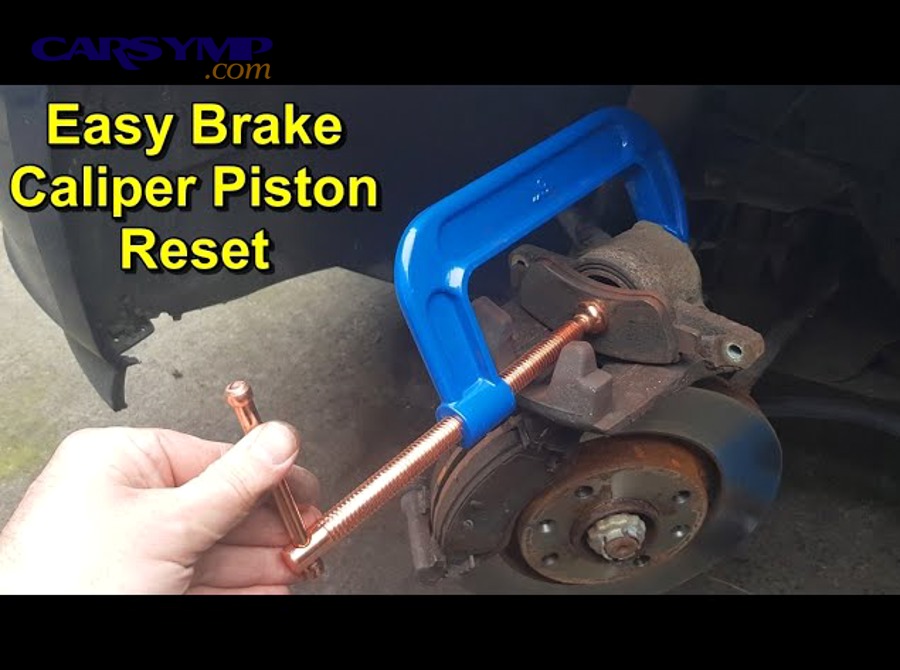
Position your C-clamp so the fixed end (the solid back portion) contacts the rear of the caliper body while the threaded screw end aligns with the piston face. Place an old brake pad between the C-clamp screw and the piston to distribute pressure evenly and protect the piston surface from scratches. The brake pad also provides a stable, flat surface for the C-clamp to push against, preventing the tool from slipping during compression. If you don’t have an old brake pad available, a small block of hardwood works as an alternative—avoid using metal directly against the piston under any circumstances.
Turn the C-clamp screw clockwise slowly and deliberately, watching the piston retract gradually into the caliper bore. Apply steady, continuous pressure rather than aggressive, forceful turns that could shock the system or damage seals. You should see the piston moving inward with each turn of the screw—if the piston doesn’t move or feels stuck, stop immediately and investigate the cause rather than forcing it. Excessive force indicates a problem such as corrosion, seized piston, or caliper damage that compression won’t solve.
Monitor the brake fluid reservoir level throughout the compression process, especially when working on the first caliper of a four-wheel brake job. As the piston retracts, it displaces brake fluid back up through the brake lines into the reservoir, which can cause overflow if the reservoir was at or near its “MAX” fill line. If you notice the fluid approaching the reservoir brim, pause compression and use a turkey baster or fluid transfer pump to remove excess fluid before continuing. Never allow brake fluid to overflow onto painted surfaces or engine components—it’s corrosive and will damage the finish.
Continue compressing until the piston sits completely flush with the caliper bore or slightly recessed below the dust boot lip. The piston should be fully retracted to provide maximum clearance for the new, thicker brake pads. Don’t over-compress—forcing the piston beyond its natural stopping point can damage internal seals or the piston itself. You’ll feel increased resistance when the piston reaches its fully retracted position; this is your signal to stop turning the C-clamp screw.
Release the C-clamp pressure carefully and remove the tool along with the protective brake pad. Inspect the piston dust boot—the rubber seal surrounding the piston where it emerges from the caliper—for tears, cracks, or damage. The compression process can sometimes dislodge or tear this boot if the piston wasn’t seated properly. A damaged dust boot allows moisture and contaminants to enter the caliper bore, leading to rapid corrosion and piston seizure. Replace the dust boot if you discover any damage before proceeding with brake pad installation.
Should You Open the Bleeder Valve When Compressing the Piston?
Opening the bleeder valve during piston compression offers significant advantages for brake system health and longevity, though it requires additional steps and equipment. When you compress a piston with the bleeder valve closed, you force old brake fluid—potentially contaminated with moisture, rubber particles, and metallic debris—backward through the brake lines, past the ABS hydraulic control unit, and into the master cylinder reservoir. This reverse flow can introduce contaminants into sensitive ABS components, potentially causing valve sticking or pump damage over time.
The bleeder valve method works by creating an exit path for old fluid at the caliper rather than forcing it back through the system. Attach a length of clear vinyl tubing to the bleeder valve nipple and place the other end in a catch container partially filled with fresh brake fluid—submerging the tube end prevents air from being sucked back into the system. Use an appropriate wrench (typically 8mm, 9mm, or 10mm) to open the bleeder valve by turning it counterclockwise one-quarter to one-half turn. You’ll know the valve is open when you see fluid begin flowing through the tube.
With the bleeder valve open, compression becomes noticeably easier because you’re not fighting hydraulic back-pressure in the brake lines. Apply your C-clamp or compression tool as described previously, watching fluid flow through the clear tubing into your catch container. The expelled fluid often appears darker than fresh brake fluid, sometimes containing visible particles or sediment—evidence of the contamination you’re preventing from circulating through your brake system. Continue compressing until the piston fully retracts and fluid stops flowing from the bleeder.
Once compression is complete, close the bleeder valve by turning it clockwise until snug—don’t overtighten, as bleeder valves are made from relatively soft brass that strips easily. Remove the tubing and wipe the bleeder valve area clean with a brake cleaner-dampened rag. This method does require you to bleed the brake system after completing the pad replacement, but many mechanics consider this a worthwhile trade-off for the protection it provides to ABS components. Fresh brake fluid also improves braking performance and extends the service life of your entire hydraulic system.
The ABS pump protection consideration is particularly important for modern vehicles with complex electronic brake systems. ABS hydraulic control units contain precision solenoid valves and high-pressure pumps that cost $500-$1,500 to replace if contaminated fluid causes failure. By spending an extra 15 minutes opening bleeder valves and bleeding the system after compression, you significantly reduce the risk of expensive ABS repairs down the road. This preventive approach is especially valuable for vehicles driven in wet climates or those with brake fluid that hasn’t been changed according to manufacturer recommendations.
How Do You Safely Compress Rear Brake Caliper Pistons?
Rear brake caliper pistons require a rotation method during compression when equipped with integrated parking brake mechanisms, using a specialized wind-back tool to simultaneously turn the piston clockwise while applying inward pressure. Unlike front calipers that accept straight compression, rear caliper pistons feature internal threads that engage with the parking brake actuator, requiring you to screw the piston into the caliper bore rather than simply pushing it back—attempting straight compression on these calipers can damage the parking brake mechanism and render it inoperative.
Understanding the fundamental differences between front and rear caliper designs prevents costly mistakes and ensures proper parking brake function after brake pad replacement. The rotation requirement exists because the parking brake must mechanically actuate the caliper independent of hydraulic pressure when you engage the parking brake lever or pedal.
How is Rear Caliper Compression Different from Front Calipers?
Rear brake calipers on most modern vehicles incorporate a self-adjusting parking brake mechanism that uses a threaded piston and internal screw mechanism. When you engage the parking brake, a cable or electric actuator turns a screw inside the caliper, which rotates the threaded piston outward to press the brake pads against the rotor mechanically. This design eliminates separate parking brake shoes and drums, simplifying the brake system while reducing weight and cost.
The threaded piston creates a critical compression difference: the piston can only retract by unscrewing it in the same direction it advanced. Attempting to compress a threaded rear piston with a C-clamp or channel locks will force the piston against its internal threads, potentially stripping the threads, bending the parking brake actuator screw, or breaking internal components. Even if you successfully compress a threaded piston with straight force, you’ll likely damage the parking brake adjustment mechanism, resulting in a parking brake that won’t hold the vehicle or requires excessive force to engage.
Not all rear calipers use threaded pistons—some older vehicles and certain manufacturers still employ non-integrated parking brake designs where the rear calipers function identically to front calipers. To determine your rear caliper type, examine the piston face before starting compression. Threaded pistons typically feature notches, slots, or pins on the piston face (commonly two opposed notches or slots, but sometimes three or four). These engagement features accept the wind-back tool’s adapters, allowing you to rotate the piston during compression.
If your rear caliper piston face is smooth and featureless like a front caliper piston, it likely accepts straight compression with a C-clamp. However, always consult your vehicle’s service manual or a reliable online resource specific to your make and model before assuming your rear calipers compress like front calipers. Installing a wind-back tool on a non-threaded piston won’t damage anything and will quickly reveal whether rotation is necessary—if the piston doesn’t move when you turn the tool, try straight compression instead.
The parking brake cable integration also means you should ensure the parking brake is fully released before attempting rear caliper piston compression. If the parking brake is engaged or partially engaged, the internal mechanism will resist piston retraction regardless of how much force you apply. Some vehicles with electronic parking brakes require a scan tool or specific procedure to retract the parking brake actuator before you can service the rear calipers—check for this requirement before starting work to avoid frustration and potential component damage.
What is the Correct Rotation Method for Rear Caliper Pistons?
The brake piston wind-back tool represents the proper equipment for compressing threaded rear caliper pistons, featuring interchangeable adapter plates that match different piston configurations. These tools typically include a rotating plate with various pin arrangements (two-pin, three-pin, four-pin) that engage the corresponding slots or notches in your caliper piston face. A central screw mechanism with a handle allows you to simultaneously rotate and compress the piston as you turn the handle.
Begin by selecting the correct adapter plate for your caliper piston. Examine the piston face and count the number of engagement notches or slots, then choose the matching adapter from your tool kit. The adapter pins must align precisely with the piston notches for proper engagement—forcing an incorrect adapter can damage the piston face or break the adapter pins. Once you’ve selected the right adapter, attach it to the wind-back tool according to the tool’s instructions, typically by threading it onto the central shaft or securing it with a retaining clip.
Position the wind-back tool against the caliper so the adapter pins align with the piston notches. You may need to rotate the tool slightly to achieve proper alignment—the pins should drop into the notches easily without forcing. Once aligned, ensure the tool’s backplate sits flush against the caliper body, providing stable support during compression. If your tool includes adjustable backing plates, adjust them to fit your specific caliper size before beginning rotation.
Turn the tool handle clockwise (when viewed from the piston face) while maintaining steady inward pressure. The clockwise rotation is almost universal for rear caliper pistons, though a few rare exceptions exist—if the piston doesn’t retract with clockwise rotation, try counterclockwise. The piston should gradually screw inward as you turn, combining rotational and linear motion. This process requires more turns than front caliper compression—you might need to rotate the piston 10-20 full revolutions to achieve complete retraction depending on how far it had extended.
Pay careful attention to the piston’s alignment as it retracts. The piston must maintain its correct rotational position to ensure the parking brake actuator’s internal components line up properly when you install the new brake pads. Many rear caliper pistons feature a specific alignment requirement where a cutout, slot, or flat spot on the piston face must align with a corresponding tab or feature on the inner brake pad. Failing to achieve proper alignment prevents the caliper from seating correctly over the new pads and can cause brake binding or parking brake malfunction.
If you don’t own a wind-back tool, you can improvise using large needle-nose pliers or channel locks combined with careful technique. Grip the piston’s engagement notches with your pliers and rotate clockwise while simultaneously pushing inward. This method requires significantly more effort and carries higher risk of slipping and damaging the piston face or dust boot. A large flathead screwdriver can sometimes be wedged into piston slots to provide rotational leverage, though this approach often scratches the piston and should be reserved for emergency situations only.
After fully compressing the piston, verify the alignment by checking that any piston cutouts or tabs match the corresponding features on your brake pads. The inner brake pad typically has a tab or protrusion that must seat into the piston’s alignment slot for proper installation. Rotating the piston to the correct position may require partially extending it again by turning counterclockwise, then re-compressing to the aligned position. Taking time to ensure proper alignment prevents comeback issues where the parking brake doesn’t hold or the brakes drag constantly after installation.
What Are the 7 Safe Methods to Compress Brake Caliper Pistons?
The seven safe methods for compressing brake caliper pistons include professional compression tools, C-clamps with protection plates, channel locks, wind-back tools for rear calipers, bleeder valve techniques, socket and ratchet approaches, and carefully controlled screwdriver prying—each method suited to specific caliper types and available equipment. Selecting the appropriate method depends on whether you’re working with front or rear calipers, the tools accessible in your workshop, and your experience level with brake system maintenance.
Let’s examine each compression method in detail, including when to use it, the specific technique required, and critical safety considerations for protecting your brake components.
Method 1: Professional Brake Caliper Compression Tool
Professional brake caliper compression tool kits represent the gold standard for piston compression, offering precise control and minimal risk of component damage. These tools feature a spreader plate that contacts the piston, an opposing backplate that braces against the caliper body, and a threaded mechanism (screw or ratchet) that draws the plates together with mechanical advantage. The design distributes force evenly across the piston face while the rigid backplate prevents caliper flexing or mounting bracket stress during compression.
Most professional kits include multiple adapters and plates to accommodate different caliper sizes and configurations. Single-piston calipers typically use a simple flat plate against the piston, while multi-piston calipers require special adapters that contact all pistons simultaneously. The ratcheting versions provide the easiest operation—you simply pump the handle to gradually compress the piston without continuously turning a threaded screw. This incremental compression allows frequent inspection to ensure the piston retracts straight without cocking to one side.
To use a professional compression tool, first select the appropriate adapters for your caliper size. Position the spreader plate against the piston (through an old brake pad for added protection) and the backplate against the caliper’s rear surface. Tighten the mechanism gradually, checking alignment every few clicks or turns. The piston should retract smoothly without binding—any resistance beyond normal hydraulic pressure indicates a problem that requires investigation rather than additional force.
Professional tools excel in situations requiring repeated brake work, whether you maintain multiple vehicles or perform brake services frequently. The time savings compared to C-clamps or improvised methods becomes significant across multiple brake jobs. Additionally, these tools reduce physical fatigue since the mechanical advantage requires minimal strength to generate sufficient compression force. For professional mechanics or serious DIY enthusiasts, a quality compression tool kit costing $50-100 pays for itself quickly through efficiency gains and reduced risk of damaging expensive calipers.
Method 2: C-Clamp with Protection Plate
The C-clamp method provides the most accessible compression approach for DIY mechanics since most workshops already contain various C-clamp sizes suitable for brake work. A C-clamp with a 3-4 inch throat depth handles the vast majority of passenger vehicle calipers, providing sufficient reach to span from the caliper back to the piston face. The key to successful C-clamp compression lies in using an old brake pad or hardwood block as a protective interface between the clamp’s screw and the piston—this distribution plate prevents point-loading that could crack phenolic pistons or scratch steel pistons.
Position the C-clamp carefully with its fixed end against a solid portion of the caliper body—typically the caliper’s rear housing behind the piston bore. Avoid placing the fixed end against brake hoses, bleeder valves, or other delicate components that could be damaged under compression force. The threaded screw end should align perpendicular to the piston face, with your protective pad squarely between the screw tip and piston. Misalignment causes uneven loading that can cock the piston sideways in its bore, potentially damaging seals or scoring the cylinder walls.
Turn the C-clamp screw clockwise in small increments, perhaps one-quarter turn at a time, while observing the piston’s retraction. This gradual approach allows you to detect binding or misalignment before significant damage occurs. Quality C-clamps with smooth threads and properly maintained screws require minimal effort—if you find yourself straining to turn the screw, stop and verify that everything is positioned correctly. Excessive resistance often indicates that the piston is cocking in the bore rather than compressing straight, or that internal corrosion is preventing smooth retraction.
The C-clamp method works best for single-piston front calipers where you need to compress one piston at a time. For multi-piston calipers, you’ll need to compress each piston individually or use a professional tool designed for simultaneous multi-piston compression. When compressing multiple pistons sequentially with a C-clamp, work in small increments across all pistons rather than fully compressing one before starting the next. This balanced approach maintains even pressure across the caliper and prevents excessive brake pad tilting during installation.
C-clamp limitations include the risk of piston scratching if the protective pad shifts during compression, the physical effort required compared to ratcheting tools, and the inability to handle threaded rear caliper pistons. Never attempt to compress a threaded rear piston with a C-clamp—the straight-line force will damage the internal parking brake mechanism even if you successfully retract the piston. Despite these limitations, the C-clamp remains the most popular compression method for home mechanics performing occasional brake work on standard front calipers.
Method 3: Large Channel Locks or Vice Grips
Channel locks and vice grips offer a portable compression alternative when C-clamps won’t fit in tight wheel wells or when you need to compress pistons with the caliper installed on the vehicle. These plier-style tools provide less mechanical advantage than C-clamps but allow compression in confined spaces where threaded tools cannot operate effectively. The adjustable jaw positions on channel locks accommodate different caliper sizes, while vice grips can be locked at specific settings to maintain constant pressure during compression.
To compress with channel locks, adjust the jaws to their widest position and place one jaw against the caliper body’s rear surface. Position the other jaw against a protective brake pad or wooden block held against the piston face. Squeeze the handles together with firm, steady pressure—you may need to reposition the jaws several times as the piston retracts to maintain effective leverage. The compression action requires considerably more hand strength than C-clamp methods, making it challenging for individuals with reduced grip strength or when compressing heavily extended pistons.
Vice grips provide a slight advantage over channel locks by maintaining constant pressure without continuous hand force. Adjust the vice grip’s jaw opening to match your caliper dimensions, then lock the grips onto the caliper with the protective pad against the piston. The locking mechanism maintains compression pressure while you adjust your grip or reposition the tool. However, vice grips can slip off unexpectedly if the locking adjustment is too loose, potentially damaging components—always set the lock tighter than you think necessary, then fine-tune if the tool won’t close completely.
Both channel locks and vice grips share the same critical limitation: they apply compression force at a single point rather than distributing it evenly across the piston face. This concentrated loading increases the risk of piston tilting, especially with larger pistons or significant retraction distances. Use these methods only when necessary due to space constraints or tool availability, and always proceed slowly while checking piston alignment frequently. If the piston appears to cock at an angle rather than retracting straight, release pressure immediately and reposition your tool for better alignment.
The plier-based methods work reasonably well for minor piston retraction when installing slightly thicker replacement pads or when pistons haven’t extended significantly between brake services. They become progressively less effective and more risky as retraction requirements increase. For pistons extended more than 5-8 millimeters or for calipers that haven’t been serviced in years, invest the time to obtain a proper C-clamp or compression tool rather than struggling with pliers that may damage your calipers while providing suboptimal results.
Method 4: Brake Piston Wind-Back Tool (Rear Calipers)
Brake piston wind-back tools are specifically engineered for rear calipers with integrated parking brake mechanisms, combining rotational and compressive force to screw threaded pistons back into their bores. These tools feature interchangeable adapter plates with various pin configurations (typically two, three, or four pins) that engage corresponding notches or slots in the piston face. The central mechanism includes both a threaded shaft for compression and a rotating handle that turns the adapter plate, creating the combined motion required for proper piston retraction.
Quality wind-back tool kits include a comprehensive adapter selection covering virtually all common piston configurations found in passenger vehicles, light trucks, and SUVs. The universal kits range in price from $40-120 depending on build quality and adapter variety. Professional-grade versions feature hardened steel pins that resist bending or breaking during compression, while budget tools sometimes use softer metals that can deform when encountering corroded or seized pistons. Investing in a mid-range or professional tool makes sense if you maintain multiple vehicles or plan to perform brake work regularly.
Begin wind-back compression by ensuring your parking brake is fully released and disengaged. On vehicles with electronic parking brakes, you may need to activate “service mode” using a scan tool or specific button sequence to retract the electric actuator before the piston can compress. Consult your vehicle’s service information for the correct procedure—attempting compression without first retracting the electric actuator can damage expensive electronic components that cost hundreds of dollars to replace.
Select the adapter plate matching your piston’s engagement pattern and secure it to the wind-back tool according to the manufacturer’s instructions. Position the tool’s backplate against the caliper body and align the adapter pins with the piston slots—they should drop into engagement easily without force. Turn the compression handle clockwise (typically) while maintaining gentle inward pressure on the tool. The piston should begin rotating and compressing simultaneously. If the piston doesn’t move after several complete handle rotations, verify that you’re turning in the correct direction and that the adapter is properly engaged.
Continue rotating until the piston sits flush with or slightly recessed below the caliper bore opening. Most threaded rear pistons require 15-25 full rotations to achieve complete compression from a fully extended position. The final alignment step is critical: examine the piston face and identify any cutout, slot, or tab that must align with corresponding features on the inner brake pad. Rotate the piston to the correct alignment position—this may require extending it slightly then re-compressing to the aligned position. Proper alignment ensures the parking brake actuator’s internal components mesh correctly and the brake pads seat properly in the caliper.
Method 5: Opening Bleeder Valve Method
The bleeder valve compression method represents best practice for maintaining brake system cleanliness and protecting ABS components, though it requires additional equipment and post-service brake bleeding. This approach creates an exit path for old brake fluid at the caliper rather than forcing contaminated fluid backward through brake lines and ABS modules. The method works with any compression tool—C-clamp, professional tool, or pliers—by simply adding the step of opening the bleeder valve before applying compression force.
Gather the necessary equipment before beginning: clear vinyl tubing with an inside diameter matching your bleeder valve nipple (typically 5/16 or 3/8 inch), a catch container with at least 8 ounces capacity, fresh brake fluid to partially fill the container, and appropriate wrenches for your bleeder valves. Attach one end of the vinyl tubing securely to the bleeder valve nipple—it should fit snugly without leaking. Place the other end of the tubing into your catch container and submerge it in 1-2 inches of fresh brake fluid. This fluid level prevents air from being sucked into the brake line when fluid flows out during compression.
Use a proper six-point wrench or line wrench (flare-nut wrench) on the bleeder valve to minimize the risk of rounding off the valve’s hex flats. Bleeder valves are made from relatively soft brass that strips easily, and rounded bleeder valves become extremely difficult to remove or turn. Turn the bleeder valve counterclockwise approximately one-quarter to one-half turn—you’ll know it’s open when brake fluid begins flowing through the tubing into your catch container. Don’t open the valve more than necessary; excessive opening can allow air to enter around the threads and compromise the bleeding process.
With the bleeder valve open, proceed with your chosen compression method exactly as described in the previous sections. You’ll immediately notice that compression requires significantly less force with the bleeder open because you’re not fighting hydraulic back-pressure in the brake lines. Watch the fluid flowing through the clear tubing—it often appears darker than fresh fluid and may contain visible sediment or particles. This contaminated fluid is what you’re preventing from circulating through your ABS hydraulic control unit and master cylinder.
Continue compressing until the piston fully retracts and fluid stops flowing from the bleeder valve. Once compression is complete, tighten the bleeder valve by turning it clockwise until snug—typically about one-eighth turn past initial contact. Don’t over-tighten; bleeder valves require only 50-70 inch-pounds of torque (approximately finger-tight with a small wrench). Over-tightening cracks the valve seat or breaks the valve body, creating leaks that are difficult and expensive to repair. After closing the valve, remove the tubing and wipe the bleeder area clean with brake cleaner to remove any residual fluid.
The primary trade-off with this method involves the additional time required to bleed the brake system after completing pad installation. Each caliper where you opened the bleeder valve must be bled to remove air and restore firm pedal feel. However, many mechanics consider this a worthwhile investment since you’ll simultaneously refresh the brake fluid—something that should be done every 2-3 years anyway according to most manufacturer maintenance schedules. Fresh brake fluid improves braking performance and prevents internal corrosion that leads to expensive component failures.
Method 6: Socket and Ratchet Technique
The socket and ratchet compression technique serves as an emergency method when proper compression tools are unavailable and you need to complete a brake job with whatever tools you have on hand. This approach uses a large socket that fits over or against the piston as a compression surface, combined with a ratchet or breaker bar to provide leverage for prying the caliper away from the piston. The method works but carries significant risks of caliper damage, mounting bracket bending, and piston cocking if not executed carefully.
Select a deep socket large enough to encompass your caliper piston or a socket that nests snugly against the piston face. Place the socket against the piston with a protective brake pad or wooden block between them. Attach a ratchet or breaker bar to the socket, then use the handle as a lever to carefully pry between the caliper body and the socket. The prying action pushes the piston inward while pulling the caliper outward, creating relative motion that compresses the piston into its bore.
This method requires extreme caution to avoid damaging the caliper casting, mounting bracket, or brake hose connections. Never pry against brake hoses, bleeder valves, or thin sections of the caliper body—these components cannot withstand prying forces and will crack or break. Position your leverage point against solid portions of the caliper structure, and apply force gradually in small increments rather than aggressive prying motions. If you hear cracking sounds or feel sudden movement, stop immediately and inspect for damage.
The socket and ratchet technique works best for pistons requiring only minor compression—5 millimeters or less of retraction. Beyond this distance, the prying angles become too severe and the risk of damaging the caliper structure increases dramatically. Additionally, this method provides no control over piston alignment, making it easy to cock the piston sideways in its bore and damage seals. If you must use this emergency approach, compress in very small increments while frequently checking that the piston retracts straight and true.
Professional mechanics universally discourage the socket and ratchet method due to its high potential for causing damage that far exceeds the cost of proper compression tools. A basic C-clamp costs $5-15 and eliminates the risks associated with prying-based compression. Reserve the socket technique for true emergency situations where you’re stranded away from proper tools and must complete a brake repair to restore vehicle mobility. For planned maintenance at home or in your workshop, invest in appropriate compression tools rather than gambling with improvised methods that often create more problems than they solve.
Method 7: Large Flathead Screwdriver (Caution)
The large flathead screwdriver represents the absolute last-resort compression method, appropriate only in emergency situations where no other tools are available and brake repair cannot be postponed. This technique involves inserting a wide-blade screwdriver into the gap between the caliper and brake pad, then prying to push the piston inward. The method is fraught with risks including piston scratching, dust boot tearing, pad cracking, and caliper damage—professional mechanics avoid this approach except in extreme circumstances.
If you must use a screwdriver for compression, select the largest flathead screwdriver available with a blade width approaching the brake pad width. Wider blades distribute prying force across more surface area, reducing the risk of cracking pads or damaging caliper components. Insert the screwdriver blade between the caliper housing and the inboard brake pad, positioning it against the pad’s backing plate rather than the friction material. Never pry directly against the piston—the screwdriver’s edge will scratch or gouge the piston surface, creating leak paths and future corrosion sites.
Apply gentle prying pressure to push the pad and piston inward, working slowly and incrementally. The piston typically moves only 1-2 millimeters per prying action, requiring many repetitions to achieve full compression. Reposition the screwdriver to different locations around the pad perimeter as you work, preventing uneven loading that cocks the piston sideways in its bore. If the piston stops moving before reaching full compression, investigate the cause rather than applying more force—excessive prying breaks caliper ears, cracks mounting brackets, or tears brake hoses.
The greatest risk with screwdriver compression involves damaging the piston dust boot—the rubber seal surrounding the piston where it emerges from the caliper bore. The screwdriver blade can easily catch and tear this boot during insertion or removal, especially if you’re working in cramped quarters with limited visibility. A torn dust boot allows moisture and contaminants to enter the caliper bore, causing rapid piston corrosion and seizure within weeks or months. Inspect the dust boot carefully after any screwdriver-based compression and replace it immediately if you discover tears or damage.
Under no circumstances should you attempt screwdriver compression on rear calipers with integrated parking brakes. The straight-line prying force cannot accommodate the rotational requirement of threaded pistons and will damage the internal parking brake mechanism beyond repair. Additionally, newer vehicles with phenolic (composite plastic) pistons are particularly vulnerable to screwdriver damage since the softer material scratches and cracks more easily than traditional steel pistons. When working with modern brake systems, the small investment in proper compression tools prevents expensive damage that dwarfs the cost of doing the job correctly.

What Safety Precautions Must You Follow When Compressing Brake Pistons?
You must protect brake system components from damage, manage brake fluid properly to prevent overflow and contamination, avoid excessive compression force that damages seals, and ensure proper piston alignment throughout the retraction process when compressing brake pistons. These safety precautions prevent expensive component damage, brake system failures, and personal injury while ensuring your brakes function correctly after pad replacement.
Systematic attention to safety details separates successful brake jobs from those that result in callbacks, component damage, or dangerous brake failures. Let’s examine the specific precautions required to protect your brake system and yourself during piston compression.
How Do You Protect the Brake System from Damage?
Protecting the piston surface from scratches, gouges, or other damage represents the most critical safety consideration during compression. Brake caliper pistons feature either a chrome-plated steel surface or a phenolic (composite) coating that must remain perfectly smooth to seal properly against the piston bore. Even minor scratches create leak paths where brake fluid can seep past the piston seal, leading to caliper fluid loss, reduced braking power, and eventual brake failure. Always use a protective interface—old brake pad, wooden block, or rubber pad—between your compression tool and the piston to prevent metal-to-metal contact.
The piston dust boot requires equal protection during the compression process. This rubber seal surrounds the piston where it emerges from the caliper bore, preventing moisture and contaminants from entering the cylinder. Torn or damaged dust boots allow road salt, water, and debris to contact the piston and bore surfaces, causing rapid corrosion that seizes the piston within weeks. During compression, ensure the dust boot doesn’t get pinched between the piston and compression tool, and inspect it carefully after compression for any tears or deformation. Replace damaged boots immediately—they cost only a few dollars but prevent caliper failures that require complete caliper replacement.
Preventing piston cocking or tilting during compression protects both the piston seal and cylinder bore from scoring damage. The piston must retract straight into its bore, maintaining parallel alignment with the bore walls throughout the compression process. Tilted pistons drag their edges against the cylinder walls, creating grooves that tear seals and cause fluid leaks. To prevent cocking, apply compression force evenly across the piston face using flat surfaces rather than point loads. If you notice the piston tilting during compression, release pressure immediately, realign the piston, and proceed more carefully with better force distribution.
Brake hose protection becomes especially important when you compress pistons with the caliper removed from its mounting bracket. Never allow the caliper to hang by its brake hose—the rubber hose cannot support the caliper’s weight and will develop internal damage that leads to brake failure. Use a piece of wire, a bungee cord, or a specialized caliper hanger to support the caliper during compression. Position the support so the brake hose maintains its natural curve without sharp bends or twists that could restrict fluid flow or damage the hose’s internal structure.
When to replace brake pads becomes obvious when you notice Common mistakes replacing brake pads like failing to protect components. Pad wear sensors and how to handle them requires disconnecting the electrical connector before removing old pads to prevent wire damage during compression.
How Do You Manage Brake Fluid During Compression?
Brake fluid reservoir monitoring prevents overflow that can damage painted surfaces and contaminate engine components. As caliper pistons retract, they displace brake fluid back through the brake lines into the master cylinder reservoir. If the reservoir was near its “MAX” fill line before you started compression, this displaced fluid will overflow the reservoir and spill onto surrounding components. Before beginning any compression work, check the reservoir level and remove excess fluid using a turkey baster or fluid transfer pump if it’s above the reservoir’s halfway point.
Opening the reservoir cap before compression prevents pressure buildup that makes piston retraction more difficult. The sealed reservoir creates hydraulic resistance when you try to force fluid backward into it during compression. Simply loosening the cap by 2-3 turns breaks the seal and allows displaced fluid to enter the reservoir freely. However, don’t remove the cap completely—keep it loosely in place to prevent dirt and moisture from contaminating the brake fluid. Brake fluid is hygroscopic (absorbs moisture from air), and even brief exposure to humid air degrades its performance and lowers its boiling point.
The bleeder valve method for managing brake fluid offers the cleanest approach by extracting old fluid at the caliper rather than forcing it back through the system. As discussed in Method 5, opening the bleeder valve during compression allows contaminated fluid to exit through the bleeder into a catch container. This technique prevents old fluid—potentially containing moisture, rubber particles, and metallic debris—from circulating through sensitive ABS components. The trade-off involves additional time spent bleeding the brake system after compression, but this also provides an opportunity to replace old brake fluid with fresh fluid, improving braking performance and preventing internal corrosion.
Brake fluid spill cleanup requires immediate attention because brake fluid is extremely corrosive to automotive paint and will damage the finish within minutes of contact. Keep clean shop rags readily available during compression work, and wipe up any spilled fluid immediately using brake cleaner spray followed by dry rags. Pay particular attention to painted surfaces on the caliper, control arms, and wheel well areas where drips commonly occur. If you spill brake fluid on painted body panels, wash the area thoroughly with soap and water within minutes to prevent permanent paint damage.
Brake fluid disposal must follow environmental regulations since brake fluid is toxic and cannot be poured down drains or dumped on the ground. Collect all used brake fluid in a sealed container and take it to an automotive fluid recycling center or hazardous waste collection facility. Many auto parts stores and quick-lube shops accept used brake fluid for recycling at no charge. Never mix brake fluid with other automotive fluids like motor oil or antifreeze—contaminated fluids cannot be recycled and create disposal problems.
When to replace rotors with pads becomes a question during brake service—warped rotors or excessive wear patterns indicate replacement is necessary to maintain proper braking performance after installing new pads.

What Should You Do When the Brake Caliper Piston Won’t Compress?
When a brake caliper piston refuses to compress despite proper technique and adequate force, stop immediately and diagnose the underlying cause—typically corrosion from moisture exposure, seized piston due to torn dust boots, contaminated brake fluid creating sludge buildup, or incorrect compression method for threaded rear calipers. Forcing a stuck piston with excessive pressure damages internal seals, cracks caliper housings, and can break compression tools without solving the actual problem preventing retraction.
Troubleshooting non-compressing pistons requires systematic investigation to identify whether the issue involves mechanical seizure, hydraulic problems, or simply using an inappropriate compression technique. Let’s explore the common causes and their solutions.
What Causes a Brake Caliper Piston to Become Stuck or Seized?
Corrosion represents the most frequent cause of seized caliper pistons, occurring when moisture enters the caliper bore through torn dust boots or degraded seals. Brake fluid is hygroscopic and absorbs water from the atmosphere over time—this moisture promotes rust formation on steel pistons and corrosion of aluminum or phenolic pistons. The corrosion creates rough spots and buildup on the piston surface that bind against the cylinder bore, preventing smooth retraction. Vehicles driven in winter climates where road salt is used experience accelerated corrosion, especially if the brake fluid hasn’t been flushed according to manufacturer recommendations.
Extended vehicle inactivity contributes significantly to piston seizure problems. Cars parked for months or years without operation develop corrosion as moisture accumulates in the brake system without the regular fluid circulation that occurs during normal driving. The brake pads may also corrode to the rotor surface during extended storage, and the piston can bond to its bore through a combination of rust and dried brake fluid residue. Classic cars, seasonal vehicles like motorcycles or convertibles, and project cars sitting in garages commonly develop seized calipers that require extensive work to free or ultimately need replacement.
Torn or deteriorated rubber components—specifically the piston dust boot and piston seal—allow contaminants to enter the caliper bore and moisture to contact metal surfaces. The dust boot tears when exposed to excessive heat from aggressive braking, road debris impacts, or simple age-related degradation of the rubber compound. Once torn, the boot no longer protects the piston from road spray, mud, salt, and other corrosive substances. The piston seal can deteriorate from exposure to contaminated brake fluid, incompatible brake fluid types, or petroleum-based products accidentally introduced into the brake system.
Brake fluid contamination and sludge accumulation occur when brake fluid isn’t changed according to maintenance schedules—typically every 2-3 years for most vehicles. As brake fluid ages and absorbs moisture, it becomes increasingly contaminated with rubber particles from deteriorating seals, metallic debris from normal brake wear, and chemical breakdown products. This contaminated fluid forms a sludge that settles in the caliper bore, especially at the bottom where gravity pulls heavier particles. When you attempt to compress the piston, this sludge gets stirred up and can jam between the piston and bore walls, creating resistance that prevents retraction.
Incorrect wind-back procedure for threaded rear calipers leads many DIYers to believe their pistons are seized when they simply need rotation during compression. Attempting straight-line compression on a threaded piston won’t work regardless of how much force you apply—the internal screw mechanism must rotate for the piston to retract. If your rear caliper piston won’t compress with a C-clamp or channel locks, don’t assume it’s seized—verify whether it requires the rotation method before diagnosing mechanical failure. Threaded pistons typically feature notches or slots on the piston face that indicate they need a wind-back tool rather than straight compression.
How Do You Free a Corroded or Seized Caliper Piston?
Penetrating oil application represents the first intervention for freeing mildly corroded pistons that resist compression but haven’t completely seized. Spray a quality penetrating lubricant (such as PB Blaster, Kroil, or WD-40 Specialist) around the piston where it meets the dust boot and caliper bore. Allow the penetrant to soak for 15-30 minutes while periodically working the piston in and out slightly using your compression tool. The penetrant works its way between the piston and bore, breaking down rust and corrosion that binds the components together. For severely seized pistons, multiple penetrant applications over several hours or overnight may be necessary before compression succeeds.
Gentle heat application can help free stubborn pistons by expanding the caliper bore slightly while softening corrosion deposits. Use a heat gun or propane torch to warm the caliper body around the piston—not the piston itself—to approximately 150-200°F (65-95°C). The differential thermal expansion between the aluminum or iron caliper body and the steel piston creates clearance that breaks the corrosion bond. However, excessive heat damages rubber seals and boots, so keep temperatures moderate and avoid directing flame at seal areas. Never heat the piston directly or apply heat for extended periods, as this can warp the caliper or destroy internal components.
For pistons that won’t compress despite penetrant and heat, the caliper likely requires complete rebuild or replacement. Attempting to force a truly seized piston with excessive compression force accomplishes nothing except breaking tools and potentially cracking the caliper casting. Professional mechanics use specialized hydraulic presses or leverage tools to extract completely seized pistons, but the effort typically exceeds the cost of a remanufactured caliper. Rebuilt calipers with new pistons, seals, and dust boots cost $40-150 depending on the vehicle, making replacement the most practical solution when pistons won’t free with reasonable effort.
Cleaning and reconditioning procedures for calipers with freed pistons involve complete disassembly, bore cleaning, seal replacement, and piston inspection. Once you’ve successfully compressed a previously seized piston, remove it completely from the caliper to inspect the bore for corrosion pitting or scoring. Use fine-grit abrasive pads or crocus cloth to smooth minor corrosion spots in the bore—deep pits or gouges indicate the caliper needs replacement. Clean the bore thoroughly with brake cleaner and compressed air to remove all debris and old grease. Install new piston seals and dust boots before reassembling—never reuse old seals on reconditioned calipers as they’ve likely been compromised by the corrosion that caused the seizure.
Can You Damage the ABS Pump When Compressing Brake Pistons?
Compressing brake pistons with the bleeder valve closed can potentially contaminate the ABS hydraulic control unit by forcing old, debris-laden brake fluid backward through the system, though immediate pump failure is unlikely from a single compression event. The ABS module contains precision solenoid valves and a high-pressure pump with very tight tolerances—typically measured in microns—that can become compromised when contaminated fluid carries sediment, rubber particles, and sludge through these sensitive components. The risk increases significantly when you compress all four calipers during a complete brake job without opening bleeder valves, displacing up to 200-300 milliliters of old fluid through the ABS unit.
The ABS hydraulic control unit’s relationship to brake calipers involves shared brake fluid that circulates throughout the entire brake system. During normal braking, fluid flows from the master cylinder through the ABS module, which modulates pressure to individual calipers during anti-lock events. When you compress caliper pistons with closed bleeder valves, the fluid path reverses—displaced fluid flows backward from the calipers through the ABS module to the master cylinder reservoir. This reverse flow carries contamination that has settled in the caliper bores directly through components designed for clean, filtered fluid flow in the opposite direction.
Opening bleeder valves prevents ABS contamination by creating an exit path for displaced fluid at the caliper rather than through the brake lines and ABS module. When you crack the bleeder valve before compression, old fluid exits through the bleeder into your catch container while fresh fluid from the reservoir flows down to the caliper through normal system passages. This one-way flow eliminates the backflow that carries debris through the ABS unit. The method requires bleeding the brake system after compression to remove air introduced through the open bleeders, but this additional step simultaneously refreshes the brake fluid and protects expensive ABS components.
Backflow concerns and sludge distribution become particularly important for vehicles with original brake fluid that hasn’t been changed in 5-10 years or more. Brake fluid degradation accelerates with age and moisture absorption, creating increasingly contaminated fluid that forms heavy sludge deposits in low-flow areas of the brake system. The caliper bores represent one such area where sludge accumulates, settling at the bore bottom where it doesn’t interfere with normal piston operation. During compression, however, this settled sludge gets stirred up and forced through the system, potentially clogging ABS valves or scoring ABS pump components.
According to research published by the Society of Automotive Engineers, brake fluid contamination contributes to approximately 25-30% of ABS system failures in vehicles over 10 years old, with sludge and sediment specifically identified as major contributors to valve sticking and pump wear. The study recommends opening bleeder valves during caliper service as standard practice for vehicles with ABS systems, particularly those with original brake fluid or history of infrequent maintenance.
What Are the Signs That You’ve Compressed the Piston Incorrectly?
A soft or spongy brake pedal after compression indicates air in the brake lines from opening bleeder valves without proper bleeding, damaged piston seals allowing fluid bypass, or master cylinder seal problems caused by excessive reverse fluid flow. The pedal should feel firm when you pump it several times after compression—if it remains soft or sinks slowly to the floor, you’ve either introduced air into the system or damaged hydraulic components during the compression process. Proper brake bleeding resolves air-related softness, but seal damage requires component replacement to restore proper pedal feel.
Uneven brake pad wear patterns appearing soon after installation suggest the piston retracted at an angle rather than straight into its bore. Cocked pistons create uneven pressure distribution across the brake pad face, causing excessive wear on one edge while the opposite edge remains relatively unworn. This condition also produces brake noise, vibration during braking, and reduced braking efficiency since only part of the pad surface contacts the rotor effectively. If you notice rapid uneven wear after a brake job, remove the caliper and inspect the piston—it may need to be removed, cleaned, and properly reseated to achieve straight alignment.
Parking brake failures on rear calipers indicate improper piston alignment or damage to the integrated parking brake mechanism. Threaded rear caliper pistons must align correctly for the parking brake actuator to engage the internal screw mechanism. If the piston’s alignment slots don’t match the brake pad tabs or if you damaged the internal mechanism by attempting straight compression on a threaded piston, the parking brake won’t hold the vehicle on inclines. Testing the parking brake immediately after installation catches this problem before it becomes a safety issue—the parking brake should hold the vehicle firmly on moderate slopes without the brake lever or pedal traveling to its maximum extent.
Fluid leaks around the caliper piston indicate torn or damaged piston seals resulting from improper compression technique. Fresh brake fluid seeping from around the piston dust boot or pooling in the caliper area signals immediate seal failure requiring caliper rebuild or replacement. Leaking calipers lose hydraulic pressure, resulting in reduced braking power and eventually complete brake failure if the leak depletes the brake fluid reservoir. Any visible brake fluid leakage after compression work requires immediate attention—don’t drive the vehicle until you’ve identified and corrected the leak source. Brake system integrity is non-negotiable for safe vehicle operation.
Compressing brake caliper pistons safely protects your vehicle’s critical braking system while enabling successful brake pad replacement. The seven methods detailed in this guide—from professional compression tools to emergency techniques—provide options for every situation and skill level. Remember that front calipers typically accept straight compression with C-clamps or similar tools, while rear calipers with integrated parking brakes require rotation using specialized wind-back tools. Always protect piston surfaces with old brake pads or wooden blocks, manage brake fluid levels carefully to prevent overflow, and consider opening bleeder valves to prevent ABS contamination from old fluid backflow.
The key to successful compression lies in understanding your specific caliper type and selecting the appropriate method rather than forcing techniques that don’t match your hardware. Threaded rear pistons damaged by straight compression attempts result in expensive caliper replacements that proper technique easily prevents. Similarly, seized pistons require penetrating oil, gentle heat, and patience rather than brute force that cracks calipers and breaks tools. When pistons won’t compress despite correct methods, replacement becomes the practical solution rather than continuing to fight seized components.
Safety precautions throughout the compression process prevent the common mistakes that lead to brake failures, ABS damage, and component deterioration. Monitoring brake fluid reservoir levels, protecting dust boots from tears, ensuring straight piston retraction, and properly supporting removed calipers all contribute to brake jobs that restore full braking performance without introducing new problems. The small investment in proper compression tools and the additional time spent following correct procedures pay dividends through reliable brake function and extended component life that keeps you safe on the road.