


You don’t always need to replace brake rotors when changing brake pads, but specific warning signs indicate when simultaneous replacement becomes necessary for safety and performance. The decision depends on rotor condition, including thickness measurements, surface damage, warping, and heat-related deterioration that affects braking efficiency.
Understanding the seven critical warning signs helps car owners make informed decisions about brake maintenance. These indicators range from physical symptoms like vibration and noise to visible damage such as scoring, blue discoloration, and corrosive rust. Recognizing these signs early prevents costly repairs and maintains optimal braking performance.
The consequences of installing new brake pads on damaged rotors extend beyond immediate safety concerns. Mismatched components cause premature wear, reduced stopping power, and can lead to complete brake system failure. Professional assessment of rotor condition ensures appropriate replacement timing.
Strategic replacement planning considers differences between front and rear rotors, alternative options like resurfacing, and specialized rotor types for specific driving conditions. Below, we’ll explore each warning sign in detail and provide the knowledge needed to protect your vehicle’s braking system.
Do You Always Need to Replace Rotors When Replacing Brake Pads?
No, you don’t always need to replace brake rotors when replacing brake pads, as replacement depends on rotor thickness, surface condition, and absence of warping or heat damage. Many vehicles can safely use new pads on existing rotors if those rotors meet manufacturer specifications and show no signs of deterioration.
To better understand when rotors can be retained, consider the fundamental relationship between these brake components. Brake pads are designed as wear items that require replacement every 25,000 to 70,000 miles depending on driving conditions, while rotors typically last longer due to their metal composition and heat dissipation design. The friction material on brake pads gradually wears away with each application of the brakes, eventually requiring replacement when the material thickness drops below 3mm.
Rotors, on the other hand, are cast iron discs that can withstand hundreds of thousands of braking events before reaching their discard thickness specification. Modern vehicles often feature thinner, lighter rotors designed for fuel efficiency, which means they may wear out at rates similar to brake pads. However, original equipment rotors on many vehicles can last through two or three brake pad replacements if properly maintained and not subjected to extreme conditions.
The key determining factors for rotor retention include measuring thickness against manufacturer specifications, inspecting for surface glazing or scoring, checking for warping through runout measurements, and assessing overall structural integrity. If a professional mechanic confirms that rotors are above minimum thickness and exhibit smooth, even surfaces without heat damage, installing new brake pads alone provides adequate brake performance. This approach saves vehicle owners between $200 to $400 per axle compared to full pad and rotor replacement.
However, mechanics and brake specialists increasingly recommend simultaneous replacement for several compelling reasons. Installing new pads on old rotors with wear patterns can cause the new pads to wear unevenly, reducing their lifespan by 30% to 50%. The glazed surface of used rotors may not provide optimal friction for new pad material, resulting in longer stopping distances during the critical break-in period. Additionally, if rotors fail inspection shortly after pad replacement, vehicle owners face duplicate labor charges for a second brake service.
What Are the 7 Critical Warning Signs That Rotors Need Replacement?
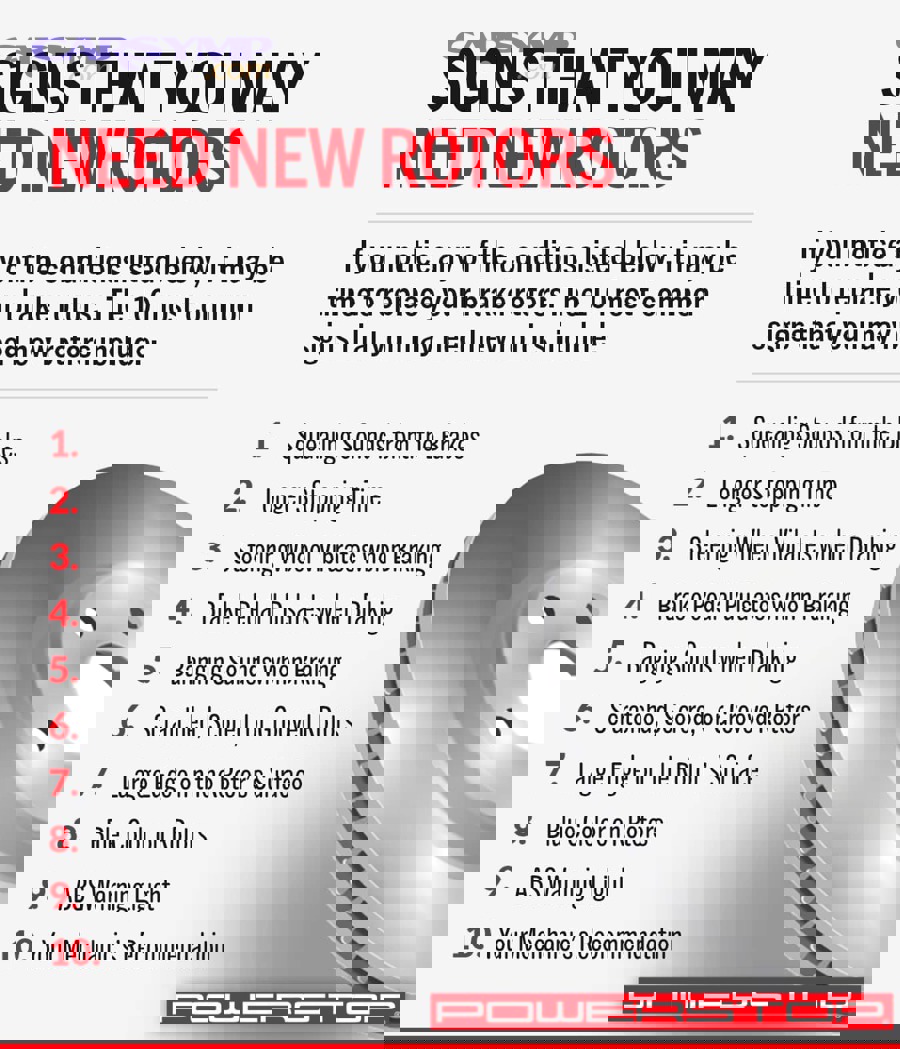
There are seven critical warning signs indicating brake rotors need replacement: vibration when braking, grinding or squealing noises, visible scoring or grooves, thickness below minimum specification, blue discoloration, corrosive rust, and uneven wear patterns. These symptoms signal rotor damage that compromises braking performance and safety.
Recognizing these warning signs early allows vehicle owners to address brake issues before they escalate into dangerous situations or costly repairs. Each indicator reveals specific types of rotor damage that affect braking efficiency in different ways. Below, we’ll examine each warning sign in detail to help you identify when rotor replacement becomes necessary.
Warning Sign #1 – Vibration or Pulsing When Braking
Vibration or pulsing sensations through the steering wheel or brake pedal during braking indicate warped rotors that have lost their flat, even surface. This warping occurs when rotors develop thickness variations as small as 0.005 inches, causing uneven contact with brake pads and creating a pulsating feedback that drivers feel through the vehicle’s controls.
Warped rotors develop from repeated heating and cooling cycles that cause uneven expansion and contraction of the metal. When you apply the brakes, friction generates intense heat that can exceed 500°F during normal driving and reach up to 1,200°F during aggressive braking or mountainous descents. If rotors cool unevenly—such as when you drive through a puddle immediately after heavy braking—differential cooling rates create internal stresses that permanently deform the rotor surface.
The severity of vibration indicates the extent of warping. Mild pulsing that appears only during hard braking suggests early-stage warping that may worsen over time. Moderate vibration felt during normal braking stops indicates significant thickness variation requiring immediate attention. Severe shaking that transfers through the entire vehicle represents advanced warping that severely compromises braking performance and safety.
Several factors accelerate rotor warping beyond normal wear. Aggressive driving with frequent hard stops generates excessive heat without adequate cooling time between braking events. Towing heavy loads or driving in mountainous terrain subjects rotors to prolonged high temperatures that exceed their heat dissipation capacity. Using low-quality or incorrect brake pads can cause uneven material transfer that creates hot spots on the rotor surface, leading to localized warping.
Drivers should never ignore brake vibration, as warped rotors progressively worsen and can lead to complete brake failure. The uneven surface prevents consistent contact between pads and rotors, increasing stopping distances by 15% to 30% compared to properly functioning brakes. Professional inspection can measure rotor runout (lateral movement) using a dial indicator; measurements exceeding 0.002 inches typically require rotor replacement rather than resurfacing.
Warning Sign #2 – Grinding or Squealing Noises
Grinding or squealing noises when applying brakes signal rotor surface damage, with grinding indicating metal-on-metal contact from completely worn pads and squealing suggesting rotor scoring or glazing. These sounds provide audible warnings that brake components have deteriorated beyond safe operating conditions and require immediate inspection.
High-pitched squealing typically emerges first in the brake wear progression. This sound often indicates that brake pad material has worn thin enough that built-in wear indicators—small metal tabs designed to contact the rotor—are doing their job by alerting you to replace brake pads. However, squealing can also result from glazed rotor surfaces that have developed a hardened, glass-like finish from excessive heat, reducing friction and causing pad material to vibrate against the smooth surface.
The transition from squealing to grinding represents a critical escalation in brake system damage. Grinding sounds occur when brake pads wear completely through their friction material, allowing the metal backing plate to scrape directly against the rotor surface. This metal-on-metal contact rapidly damages rotors, creating deep grooves and removing significant material with every brake application. Within just a few hundred miles of grinding contact, rotors can drop below minimum thickness specifications and develop damage too severe for resurfacing.
Environmental factors influence the types of noises rotors produce. Morning squealing that disappears after a few brake applications often results from overnight moisture creating surface rust, which normal braking quickly removes. Persistent squealing regardless of weather conditions indicates genuine rotor or pad issues requiring professional evaluation. Grinding that intensifies with brake pedal pressure suggests severe rotor damage that demands immediate service.
The cost implications of ignoring brake noise escalate rapidly. Addressing squealing brakes early typically requires only brake pad replacement, costing $150 to $300 per axle. Allowing pads to wear until grinding begins necessitates rotor replacement as well, increasing costs to $400 to $700 per axle. Continuing to drive with grinding brakes can damage calipers and other brake components, potentially resulting in repair bills exceeding $1,000 per axle.
Warning Sign #3 – Visible Scoring, Grooves, or Deep Scratches
Visible scoring, grooves, or deep scratches on rotor surfaces indicate material loss from abrasive contact that compromises the smooth friction surface necessary for effective braking. While light scoring represents normal wear, deep grooves exceeding 1.5mm depth require rotor replacement as they prevent consistent pad-to-rotor contact and reduce braking efficiency.
Vehicle owners can inspect rotor surfaces without removing wheels by looking through the wheel spokes. Healthy rotors display a uniform, smooth surface with minimal markings. Light surface scratches appearing as fine lines represent normal wear patterns that don’t affect braking performance. However, deep grooves that you can catch with a fingernail indicate significant material removal that creates an uneven braking surface.
Scoring develops from several sources of contamination and component failure. Small rocks or debris trapped between the pad and rotor create linear scratches as the wheel rotates. Worn brake pads that have exposed their metal backing plates carve deep grooves with each brake application. Contaminated brake pads containing metal fragments or hard particles embedded in the friction material act like sandpaper against the rotor surface. Damaged caliper hardware that fails to hold pads properly can cause tilted pad contact that scores rotors unevenly.
The pattern and depth of scoring reveal important information about brake system health. Circumferential grooves running around the rotor in circular patterns suggest normal wear from brake pad material. Radial scratches extending from the center outward indicate contamination or debris. Deep, uneven scoring on one side of the rotor points to caliper problems causing unequal pad pressure. Spiral or random patterns suggest loose components creating inconsistent pad contact.
Heavily scored rotors cannot be safely resurfaced because removing enough material to eliminate the grooves would reduce thickness below minimum specifications. Modern rotors are manufactured with minimal material to reduce weight and improve fuel efficiency, leaving little margin for machining. Additionally, grooves deeper than 1.5mm indicate rotor material that has likely experienced excessive heat, potentially altering its metallurgical properties and reducing structural integrity even if sufficient thickness remains.
Warning Sign #4 – Rotor Thickness Below Minimum Specification
Rotor thickness below minimum specification represents a critical safety concern, as thin rotors cannot adequately dissipate heat, leading to warping, brake fade, and potential structural failure during emergency stops. Every rotor is manufactured with a minimum discard thickness specification, typically stamped on the rotor hub or listed in the vehicle service manual, which defines the absolute thinnest safe operational dimension.
Professional brake inspections include micrometer measurements of rotor thickness at multiple points around the disc surface. Mechanics measure at least eight locations to detect uneven wear patterns and compare the thinnest measurement against manufacturer specifications. Common passenger vehicle rotors have minimum thicknesses ranging from 9mm to 12mm for front rotors and 7mm to 10mm for rear rotors, though specifications vary significantly between vehicle models.
The relationship between rotor thickness and heat dissipation explains why minimum specifications exist. Thicker rotors contain more mass to absorb thermal energy generated during braking, distributing heat over a larger volume of material. As rotors wear thinner, their heat capacity diminishes, causing temperatures to rise more rapidly during braking events. Excessive heat accelerates pad wear, boils brake fluid leading to vapor lock, and causes rotor warping that creates vibration and reduced stopping power.
Thickness loss occurs gradually through normal braking friction but accelerates under certain conditions. Aggressive driving with frequent hard stops removes more material per brake application. Using abrasive brake pad compounds increases wear rates on both pads and rotors. Contaminated brake components generate irregular friction patterns that create uneven thickness variations across the rotor surface. According to automotive engineering studies, rotors typically lose 0.5mm to 1.0mm of thickness per 20,000 miles under normal driving conditions.
Rotors approaching minimum thickness require immediate replacement regardless of surface condition. Operating at or below minimum specification creates dangerous situations where emergency braking can cause rotor failure. The thin metal lacks structural integrity to withstand extreme forces and temperatures, potentially cracking or shattering during hard stops. Even if a thin rotor appears visually acceptable, its compromised heat dissipation and structural weakness make it unsuitable for safe operation.
Warning Sign #5 – Blue Discoloration on Rotor Surface
Blue discoloration on rotor surfaces indicates excessive heat exposure that has chemically altered the metal structure, permanently compromising the rotor’s ability to dissipate heat and maintain structural integrity during braking. This distinctive blue or purple coloring results from oxidation reactions occurring when rotor temperatures exceed 650°F to 700°F for sustained periods, causing iron oxide formations that weaken the material.
The appearance of blue rotors provides clear visual evidence of overheating events that demand immediate replacement. Unlike surface rust that can be removed through normal braking, blue discoloration penetrates deep into the rotor material, indicating metallurgical changes at the molecular level. These chemical transformations create hard spots with different friction characteristics than surrounding material, leading to uneven braking, increased vibration, and accelerated pad wear.
Several driving scenarios generate the extreme temperatures that cause blue discoloration. Extended downhill descents without using engine braking force drivers to rely solely on friction brakes, subjecting rotors to continuous high-temperature operation. Repeated aggressive stops from highway speeds without adequate cooling time between braking events prevent heat dissipation. Towing heavy loads beyond vehicle capacity overworks the brake system, especially during mountain driving. Race track use or aggressive performance driving subjects rotors to temperatures far exceeding their design parameters.
The progression from normal rotor color to blue indicates the severity of thermal damage. Slight golden or straw-colored tinting suggests temperatures around 500°F to 550°F, representing heavy but potentially recoverable use. Distinct blue coloring confirms temperatures exceeded 650°F, causing permanent material changes. Purple or dark blue discoloration indicates extreme overheating above 800°F, often accompanied by visible warping and surface cracking.
Blue rotors cannot be resurfaced or salvaged through any repair process. The heat-induced changes affect the entire thickness of the rotor, not just the surface layer. Attempting to machine blue rotors creates uneven hardness across the friction surface, as the blue areas have different material properties than unaffected regions. This hardness variation causes rapid pad wear, unpredictable braking response, and continued overheating problems. Professional mechanics universally reject blue rotors as candidates for resurfacing, recommending immediate replacement to restore brake system safety and performance.
Warning Sign #6 – Corrosive Rust (Not Surface Rust)
Corrosive rust that penetrates the rotor material differs significantly from harmless surface rust, creating structural weaknesses that compromise braking performance and require rotor replacement. Surface rust appears as a thin orange coating on unused portions of the rotor and disappears within the first few brake applications, while corrosive rust eats into the metal, creating pitting and texture changes that affect the entire friction surface.
Understanding the distinction between these rust types helps vehicle owners assess replacement necessity. Surface rust commonly develops overnight or during periods of vehicle inactivity as atmospheric moisture contacts exposed iron on non-swept portions of the rotor. This superficial oxidation forms on the outer edges and interior areas where brake pads don’t make contact. Normal driving quickly removes surface rust through pad friction, leaving no lasting impact on rotor function or integrity.
Corrosive rust represents a serious deterioration process that compromises rotor structure. This aggressive oxidation penetrates deep into the cast iron, creating pits, rough texture, and material loss across the swept surface where pads contact the rotor. Corrosive rust appears as rough, flaking areas that persist despite regular brake use. The pitted surface prevents smooth pad contact, causing vibration, noise, and reduced braking efficiency. Advanced corrosion creates structural weakness that increases the risk of rotor cracking or failure during emergency braking.
Environmental and usage factors determine which type of rust develops on rotors. Vehicles operated in coastal regions face accelerated corrosion from salt air exposure. Winter driving in areas using road salt dramatically increases corrosive rust formation, as salt water penetrates rotor surfaces and sustains oxidation even after the rotor dries. Extended vehicle storage without operation allows moisture accumulation that transforms surface rust into deeper corrosion. Inadequate drainage in parking areas subjects rotors to standing water that accelerates rust penetration.
Climate conditions influence rust formation patterns across different regions. According to studies by the Corrosion Technology Laboratory, vehicles in coastal and northern salt-belt states experience rotor corrosion rates three to five times higher than those in dry climates. Humidity levels above 60% combined with temperature fluctuations create ideal conditions for sustained oxidation. Winter months see the highest corrosion rates due to road salt application and moisture retention in wheel wells.
Protective measures can slow corrosive rust development but cannot reverse existing damage. Coated rotors featuring proprietary paint or plating on non-friction surfaces resist corrosion better than bare cast iron. Regular vehicle use prevents moisture accumulation by generating heat that evaporates water before deep penetration occurs. Washing vehicles after winter driving removes salt deposits before they cause lasting damage. However, once corrosive rust establishes itself in the rotor material, replacement becomes necessary to restore proper brake function.
Warning Sign #7 – Uneven Wear Patterns
Uneven wear patterns on brake rotors indicate underlying brake system problems such as sticking calipers, damaged slide pins, or failed brake hardware that cause irregular pad contact and require both rotor replacement and correction of the root cause. These patterns appear as variations in rotor thickness across the friction surface, creating areas of excessive material loss alongside regions of normal thickness.
Identifying uneven wear requires careful visual inspection and professional measurement. Healthy rotors display consistent thickness and uniform surface appearance across the entire swept area. Uneven rotors show visible thickness variations, often appearing as lip formations on the outer edge or stepped surfaces between the inner and outer friction zones. Running a finger across the rotor surface reveals raised and lowered areas that indicate differential wear rates. Professional assessment uses micrometers to measure thickness at multiple points, documenting variations that exceed 0.003 inches.
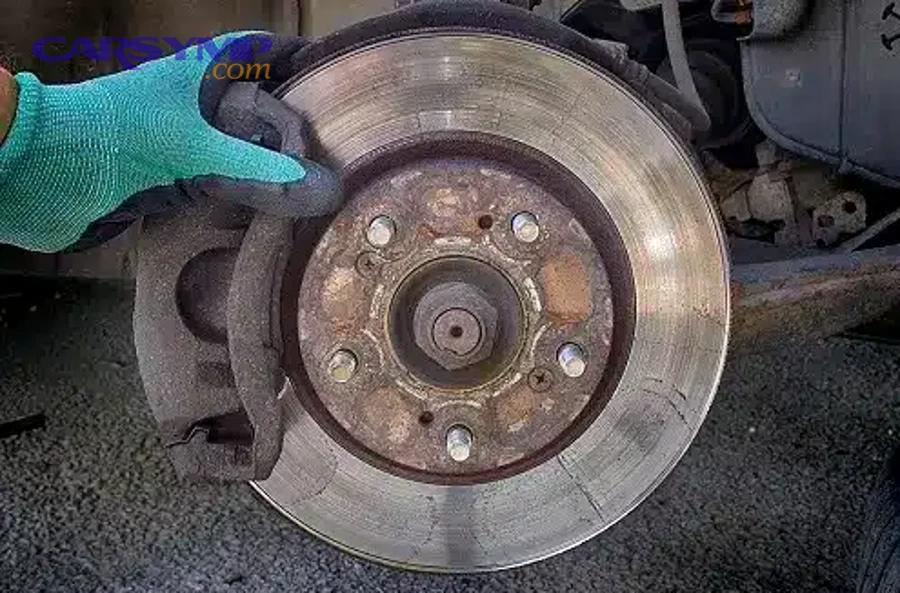
Caliper problems create the most common cause of uneven rotor wear. Sticking caliper pistons fail to release fully after braking, maintaining partial pad contact that creates continuous friction on one side of the rotor. This constant contact generates excessive heat and wear in the affected area while the opposite side experiences normal wear rates. Seized slide pins prevent calipers from centering properly over rotors, causing tilted pad contact that wears one side more aggressively. Corroded caliper brackets or damaged guide hardware create similar uneven contact patterns.
The consequences of uneven wear extend beyond rotor damage to affect overall vehicle safety and control. Thickness variations cause brake pulsation similar to warped rotors, creating vibration during braking. Unequal braking force between left and right wheels produces vehicle pulling, requiring steering correction during stops. The thinner sections of unevenly worn rotors overheat more rapidly, accelerating warping and potentially leading to rotor failure. Brake pad replacement on unevenly worn rotors results in immediate premature pad failure as new pads conform to the irregular surface.
Specific wear patterns reveal different mechanical failures requiring repair alongside rotor replacement. Tapered wear with greater thickness loss on the inner friction surface suggests caliper slide pin problems preventing proper caliper movement. Circumferential grooves or ridges indicate loose or damaged wheel bearings allowing rotor wobble. Localized hot spots appearing as dark patches on otherwise uniform surfaces point to contaminated brake fluid causing uneven caliper piston operation. Diagonal wear patterns suggest suspension problems affecting wheel alignment and brake component positioning.
Addressing uneven rotor wear requires comprehensive brake system repair beyond simple rotor replacement. Mechanics must identify and correct the underlying mechanical failure causing irregular pad contact. Common repairs include caliper rebuilding or replacement, slide pin cleaning and lubrication, brake hardware replacement, and brake fluid flushing. Installing new rotors without fixing the root cause results in rapid return of uneven wear patterns, wasting the investment in new components and leaving brake performance compromised.
When Can You Replace Brake Pads Without Replacing Rotors?
You can replace brake pads without replacing rotors when rotors measure above minimum discard thickness, display smooth surfaces without deep scoring, show no signs of warping or heat damage, and pass professional inspection criteria. This pad-only replacement provides adequate brake performance while reducing service costs by $200 to $400 per axle compared to complete pad and rotor replacement.
Specifically, rotors suitable for retention must meet multiple condition requirements. Professional assessment ensures these criteria are properly evaluated rather than relying on visual inspection alone. Below, we’ll examine the specific conditions that allow safe pad-only replacement and the assessment methods mechanics use.
What Rotor Conditions Allow Pad-Only Replacement?
Rotors can remain in service during brake pad replacement when they maintain thickness at least 1.0mm above manufacturer minimum specification, display friction surfaces free from deep grooves or scoring exceeding 1.5mm, show no blue discoloration indicating heat damage, exhibit runout measurements below 0.002 inches, and demonstrate uniform thickness across the swept surface. Meeting all five criteria ensures rotors can safely accommodate new brake pads.
Thickness measurements represent the primary qualification for rotor retention. Each vehicle manufacturer specifies a minimum discard thickness unique to each rotor design, accounting for the rotor’s mass, cooling capacity, and structural requirements. Professional mechanics measure rotor thickness at eight to twelve points around the friction surface using precision micrometers accurate to 0.01mm. The thinnest measurement must exceed minimum specification by at least 1.0mm to account for future wear and provide adequate safety margin.
Surface condition assessment examines the friction area for damage that prevents proper pad contact. Acceptable rotors display light circumferential scoring representing normal wear patterns, with scratch depths below 1.0mm that don’t compromise the overall smoothness of the surface. Tools needed for a brake pad job include measuring equipment to assess these wear patterns accurately. Rotor surfaces should feel uniformly smooth when running a finger across the swept area, without catching on deep grooves or raised edges. The absence of heat-related damage, indicated by normal gray cast iron coloring without blue or purple tinting, confirms the rotor hasn’t experienced thermal stress exceeding its design parameters.
Runout measurements detect warping invisible to visual inspection. Mechanics mount a dial indicator against the rotor friction surface and rotate the wheel through a complete revolution, observing lateral movement readings. Runout below 0.002 inches indicates a flat, true rotor suitable for new pads. Measurements exceeding this threshold suggest warping that will cause brake pulsation and premature pad wear, necessitating rotor replacement despite adequate thickness.
Uniform thickness distribution across the swept surface ensures even pad contact and consistent braking. Thickness variations exceeding 0.003 inches between measurement points indicate uneven wear from caliper problems or other mechanical issues. Even if average thickness exceeds minimum specifications, non-uniform rotors create brake pulsation and uneven pad wear requiring rotor replacement and correction of the underlying mechanical problem.
Additional factors influence retention decisions beyond these measurable criteria. Rotor age and mileage provide context for replacement timing. Rotors approaching 70,000 to 100,000 miles may have adequate thickness but reduced service life remaining, making simultaneous replacement with pads more economical. Vehicle use patterns matter—cars used for towing, mountain driving, or aggressive performance driving place higher demands on rotors, warranting more conservative replacement standards. Cost considerations favor rotor retention when replacement isn’t mechanically necessary, though the labor savings from single-visit service often justify replacing borderline rotors with new pads.
How to Measure and Assess Rotor Condition
Measuring and assessing rotor condition requires a micrometer for thickness measurements, dial indicator for runout detection, and visual inspection to identify surface damage, scoring, and heat-related discoloration. Professional evaluation ensures accurate assessment, though informed vehicle owners can perform preliminary inspections to understand rotor condition before service appointments.
Thickness measurement begins with identifying the minimum discard specification for your vehicle’s rotors. This critical dimension appears stamped on the rotor hub, cast into the rotor hat, or listed in the vehicle service manual. Specifications vary widely between vehicle models—a compact sedan might have 9.0mm minimum front rotors while a full-size truck requires 28.0mm minimums. Recording this specification before measurement provides the comparison standard for assessment.
The measurement process requires a micrometer capable of 0.01mm precision. Digital micrometers provide easy-to-read displays and often feature data recording capabilities for tracking measurements over time. Measurements should occur at eight evenly spaced points around the rotor, positioned mid-way between the inner and outer edges of the swept surface. This pattern captures thickness variations that single-point measurements might miss. Each measurement location should be clearly marked to ensure consistency during future inspections.
Proper measurement technique significantly affects accuracy. Clean the measurement area with brake cleaner to remove debris and brake dust that could inflate readings. Position the micrometer perpendicular to the rotor surface, applying gentle, consistent pressure. Digital micrometers often include automatic pressure adjustment to ensure repeatability. Record all eight measurements, noting the location of the thinnest reading. Calculate the thickness variation by subtracting the thinnest from the thickest measurement—variations exceeding 0.003 inches indicate uneven wear requiring further investigation.
Runout measurement requires a magnetic dial indicator mounted to a fixed point on the suspension or hub assembly. Position the indicator plunger against the rotor friction surface approximately one inch from the outer edge. Zero the dial indicator, then slowly rotate the wheel through one complete revolution while observing the indicator needle movement. Total runout equals the difference between maximum and minimum readings—acceptable runout remains below 0.002 inches for most passenger vehicles. Excessive runout confirms warping requiring rotor replacement regardless of thickness measurements.
Visual inspection complements measurements by identifying damage not revealed through numerical assessment. Examine the friction surface for deep scoring, cracks, or missing chunks of material. Look for blue, purple, or rainbow discoloration indicating heat damage. Inspect the rotor hat and ventilation vanes for cracks or structural damage. Check for rust penetration creating pitted surfaces rather than superficial oxidation. Run a fingernail across suspected grooves—if the nail catches significantly, the scoring exceeds acceptable limits.
Professional assessment provides definitive answers when DIY inspection reveals borderline conditions. Automotive service facilities possess calibrated measuring equipment and trained technicians familiar with manufacturer specifications across hundreds of vehicle models. Many shops offer free brake inspections, providing professional evaluation without commitment to service. This assessment identifies not only rotor condition but also related brake system components requiring attention, ensuring comprehensive repair planning.
What Are the Risks of Installing New Pads on Old Rotors?
Installing new brake pads on old rotors creates three primary risks: reduced braking performance from glazed surfaces preventing proper pad break-in, premature pad failure from uneven wear patterns conforming to rotor imperfections, and increased long-term costs requiring earlier repeat brake service. These consequences compromise both safety and economic efficiency of brake maintenance.
More specifically, the mismatch between fresh pad material and worn rotor surfaces generates problems throughout the brake system’s operation. Understanding these risks helps vehicle owners make informed decisions about replacement strategies that balance immediate costs against long-term value and safety requirements.
Performance and Safety Consequences
New brake pads installed on worn rotors deliver 15% to 30% longer stopping distances compared to matched new components, experience insufficient break-in preventing optimal friction development, and produce inconsistent braking response that affects vehicle control during emergency situations. These performance degradations directly compromise safety, particularly in adverse weather or emergency braking scenarios requiring maximum stopping power.
The break-in period for new brake pads proves critical for establishing optimal friction characteristics. Fresh pads require 200 to 300 miles of varied braking to transfer a microscopic layer of friction material onto the rotor surface, creating the ideal interface for consistent stopping power. When installed on worn rotors with glazed or uneven surfaces, this transfer occurs irregularly, leaving gaps where proper material bonding never develops. The result creates unpredictable braking response varying by rotor position and temperature.
Glazed rotor surfaces present particularly problematic conditions for new pad installation. Glazing develops when rotors experience excessive heat that hardens the outer surface layer into a smooth, glass-like finish with reduced friction characteristics. New pads sliding against this glazed surface cannot achieve proper bite, leading to extended stopping distances and reduced pedal feel. The driver experiences a spongy brake pedal requiring increased pressure for adequate deceleration, creating uncertainty during critical braking events.
Uneven rotor surfaces force new pads to conform to existing wear patterns rather than establishing optimal contact geometry. This conforming process accelerates dramatically compared to normal break-in, grinding away pad material at high rates in contact areas while leaving gaps elsewhere. Within 1,000 to 2,000 miles, new pads develop irregular wear matching the rotor’s imperfections, perpetuating the performance problems rather than correcting them. Emergency braking on such mismatched components generates unequal force distribution across the friction surface, reducing overall stopping power and potentially causing wheel lockup or anti-lock brake system activation at inappropriate times.
Temperature management becomes compromised when new pads operate on worn rotors. Properly matched brake components distribute thermal energy evenly across both pad and rotor surfaces, preventing hot spots that accelerate wear and promote warping. Mismatched components create concentrated contact areas that experience significantly higher temperatures than surrounding material. These hot spots can exceed 900°F during aggressive braking, causing accelerated pad material degradation, rotor warping, and brake fluid boiling in nearby caliper components.
Vehicle dynamics suffer from the inconsistent braking force produced by mismatched components. Modern vehicles rely on balanced front-to-rear and left-to-right braking force distribution to maintain stability during stops. When one or more wheels experiences compromised braking from worn rotors and new pads, the vehicle pulls toward the side with better brake performance. This pulling forces drivers to apply steering corrections during braking, reducing control and increasing the risk of accidents, especially on slippery surfaces where any lateral force can initiate skids.
Cost Implications of Delaying Rotor Replacement
Delaying rotor replacement when installing new brake pads increases total ownership costs by $300 to $600 over two years through premature pad replacement, additional labor charges, and potential damage to calipers and hydraulic components. The initial savings of $200 to $400 from avoiding rotor replacement disappear within 12 to 18 months when accelerated pad wear necessitates another brake service.
The economic mathematics of brake service reveals why simultaneous replacement often provides better value. Consider a typical scenario: pad-only replacement costs $250 per axle including labor, while pad and rotor replacement costs $450 per axle. Installing new pads on worn rotors might save $200 initially, but those pads wear 40% faster than they would on new rotors due to uneven contact and glazed surfaces. Instead of lasting 40,000 miles, the pads require replacement after just 24,000 miles. The second brake service, again costing $250 for pads, brings total expenses to $500 across 24,000 miles—exceeding the $450 cost of complete service that would have lasted the full 40,000 miles.
Labor costs compound the economic disadvantage of staged brake service. Brake pad replacement requires 1.5 to 2.5 hours of shop time depending on vehicle complexity. Shops charge $80 to $150 per hour for brake work, meaning labor represents $120 to $375 of the total service cost. Performing two separate brake services doubles these labor charges, adding $120 to $375 in redundant expenses. Complete single-visit service installs pads and rotors in the same time frame as pad-only service, eliminating duplicate labor costs.
Hidden costs emerge when worn rotors damage new brake pads in specific ways. Severely scored rotors act like files against pad material, grinding away friction compound at accelerated rates. Post-job test drive checklist items should include monitoring for unusual sounds, vibration, or pulling that indicates problems from the compromised installation. Warped rotors create pulsating contact that cyclically overheats pad material, causing glazing that further reduces braking efficiency. Corroded rotors with pitted surfaces prevent full pad contact, forcing smaller contact areas to handle all braking force and wearing those sections prematurely. Each of these damage modes shortens pad life while degrading braking performance, requiring earlier replacement than normal service intervals.
Cascade failures represent the most expensive consequence of delaying rotor replacement. When severely worn rotors continue in service, they can damage components beyond just the newly installed pads. Deep rotor grooves can catch and tear pad material, causing chunks to break away and jam in caliper assemblies. Excessive rotor runout creates caliper piston seal damage from repetitive extension and retraction cycles beyond normal range. Overheated rotors from poor thermal management can boil brake fluid in caliper bores, leading to internal corrosion and eventual caliper failure. These secondary failures add $150 to $400 per caliper to repair costs, far exceeding the initial rotor replacement savings.
Resale value considerations add another economic dimension. Vehicles with documented brake service showing matched pad and rotor replacement command higher resale prices than those with partial service records. Prospective buyers and used vehicle inspectors recognize complete brake service as evidence of proper maintenance, while pad-only replacement raises questions about deferred maintenance or cost-cutting that might indicate hidden problems. The perceived value difference can amount to $200 to $500 in negotiating power during vehicle sales.
How Do Replacement Timing Factors Differ Between Front and Rear Rotors?
Front rotors require replacement 60% to 70% more frequently than rear rotors because front brakes handle 65% to 75% of total braking force, experience higher operating temperatures, and undergo more severe wear from weight transfer during deceleration. This difference allows cost-effective staged replacement strategies where front components receive priority while rear rotors often survive multiple brake pad changes.
To better understand this disparity, consider the physics of vehicle braking and weight distribution. During deceleration, momentum shifts vehicle weight forward, increasing load on front tires while reducing rear tire contact pressure. This weight transfer amplifies front brake demand proportionally—a vehicle stopping from 60 mph might place 2,000 pounds of additional load on the front axle while reducing rear axle load by the same amount. Front brakes must generate significantly more friction force to overcome this increased weight, leading to faster component wear.
Front brake thermal loads exceed rear brake temperatures by 100°F to 200°F during typical driving. The combination of higher friction force and greater energy absorption generates intense heat at front rotors, often reaching 600°F to 700°F during highway braking compared to 400°F to 500°F at the rear. This temperature difference accelerates all wear mechanisms—friction material removal, surface oxidation, and structural degradation—causing front rotors to reach replacement criteria thousands of miles before rear components.
Component sizing reflects these different duty cycles. Front rotors typically measure 20% to 40% larger in diameter than rear rotors and incorporate thicker friction surfaces with greater mass for heat absorption. Despite these size advantages, the dramatically higher workload overwhelms the design margin, resulting in front rotor service life averaging 40,000 to 60,000 miles compared to 80,000 to 100,000 miles for rear rotors under similar driving conditions.
Replacement strategies can leverage these timing differences for budget optimization. Many vehicle owners successfully replace front pads and rotors while retaining rear rotors during the same service visit, then install new rear pads on existing rotors that still meet specification. This approach provides complete braking system refresh at the front axle where it matters most while deferring rear rotor replacement until the next service cycle. Total service costs decrease 25% to 35% compared to four-wheel rotor replacement while maintaining safe brake performance.
Exceptions to this general pattern occur with specific vehicle types and driving conditions. Rear-wheel-drive performance vehicles with aggressive rear brake bias distribute more braking force rearward, accelerating rear rotor wear. Vehicles equipped with electronic brake force distribution systems or those frequently loaded with cargo or passengers experience more balanced front-to-rear wear. Mountainous terrain driving relies heavily on engine braking, reducing front brake burden and evening out component wear rates across all wheels.
Inspection protocols should assess front and rear rotors independently rather than assuming uniform condition. Professional brake service includes measuring all four rotors and evaluating each position’s replacement necessity based on individual condition rather than conventional expectations. This component-specific approach optimizes replacement timing, replacing only what requires service while retaining components still meeting specifications.
What Are Your Brake Rotor Replacement Options Beyond Full Replacement?
Beyond complete rotor replacement, vehicle owners can choose rotor resurfacing for rotors with adequate thickness, select between OEM and aftermarket components offering different quality and price points, consider specialized rotor types for specific performance needs, and implement staged replacement strategies addressing one axle at a time. Each option presents distinct advantages and limitations affecting cost, performance, and service life.
Understanding these alternatives requires evaluating your vehicle’s specific needs, budget constraints, and driving conditions. The following sections examine each option in detail, providing the information necessary to make informed brake service decisions that balance immediate costs against long-term value and safety requirements.
Rotor Resurfacing vs. Rotor Replacement – Which Should You Choose?
Choose rotor resurfacing when rotors measure at least 2.0mm above minimum thickness and show only light scoring or glazing, saving $40 to $100 per rotor compared to replacement, but select new rotors when thickness approaches minimums, severe damage exists, or modern thin-rotor designs leave insufficient material for machining. Resurfacing provides a budget-conscious solution for rotors with adequate material, while replacement ensures maximum service life and performance.
Resurfacing, also called machining or turning, removes a thin layer of material from both friction surfaces to restore smoothness and eliminate light scoring or glazing. The process uses specialized brake lathe equipment that precisely cuts the rotor surfaces, typically removing 0.4mm to 1.0mm total material split evenly between both sides. This machining creates a like-new friction surface that allows proper break-in for new brake pads, restoring optimal braking performance at a fraction of replacement cost.
The viability of resurfacing depends primarily on available material thickness. Mechanics measure rotor thickness before machining to ensure the finished dimension will remain at least 1.0mm above minimum discard specification. If pre-machining thickness sits only 1.5mm above minimum, the process becomes impractical since removing 0.4mm to 1.0mm would leave inadequate safety margin. Modern vehicles often feature rotors designed with minimal excess material for weight reduction, making resurfacing impossible even on relatively low-mileage vehicles.
Cost comparisons reveal significant potential savings from resurfacing. Professional machining services charge $15 to $40 per rotor when performed as part of brake pad replacement, assuming the customer removes and reinstalls the rotor. Including labor for rotor removal and installation, total resurfacing costs range from $50 to $100 per rotor. New rotor prices vary from $40 for economy aftermarket rotors to $150 for premium OEM parts, plus installation labor. For rotors suitable for machining, resurfacing saves $100 to $200 per axle compared to replacement.
However, resurfaced rotors carry performance and longevity limitations compared to new components. Machining reduces rotor mass and thermal capacity, slightly decreasing heat dissipation ability and increasing susceptibility to warping under heavy braking. Industry data shows resurfaced rotors typically last 15,000 to 30,000 miles before requiring replacement, compared to 40,000 to 70,000 miles for new rotors. The reduced lifespan often results in another brake service within 12 to 24 months, potentially eliminating the initial cost savings when considering total ownership expenses.
Modern vehicle design trends increasingly eliminate resurfacing as a viable option. Manufacturers engineer rotors with thinner profiles to reduce unsprung weight and improve fuel efficiency, leaving minimal material for machining. Many late-model vehicles feature rotors that measure only 0.5mm to 1.5mm above minimum thickness when new, making them impossible to resurface even during the first brake service. General Motors, Ford, and several other manufacturers explicitly state in service documentation that their rotors should not be resurfaced under any circumstances.
The decision matrix for resurfacing versus replacement considers multiple factors beyond immediate cost. Vehicles with high annual mileage benefit more from replacement, as the longer service life of new rotors provides better value over the vehicle’s remaining operational period. Cars used for towing, mountain driving, or performance applications should receive new rotors to ensure maximum heat dissipation and structural integrity. Budget-constrained owners of lower-mileage vehicles driven primarily in city conditions might find resurfacing adequate, particularly if rotors show only minor glazing with ample remaining thickness.
Should You Choose OEM or Aftermarket Rotors?
OEM rotors provide guaranteed fit, original material specifications, and manufacturer warranty backing but cost 40% to 80% more than quality aftermarket alternatives, while premium aftermarket rotors often exceed OEM performance through advanced materials and coatings at competitive prices. The choice depends on vehicle value, performance requirements, and budget priorities.
Original Equipment Manufacturer rotors represent components identical or equivalent to those installed during vehicle production. These rotors precisely match manufacturer specifications for dimensions, material composition, heat treatment, and performance characteristics. OEM rotors purchased through dealership parts departments carry manufacturer warranties and ensure compatibility with other brake system components. Premium vehicle brands like BMW, Mercedes-Benz, and Audi specify rotors engineered for their high-performance braking systems, making OEM components particularly important for these applications.
Aftermarket rotors span a wide quality spectrum from economy-grade alternatives to premium performance upgrades. Economy rotors using basic cast iron with minimal quality control sell for $30 to $50 each but may suffer from dimensional inconsistencies, poor metallurgy, and short service life. Mid-grade aftermarket options from established brands like Raybestos, Wagner, and Bosch provide OEM-equivalent performance at prices 20% to 40% below dealer parts. Premium aftermarket rotors from companies like Brembo, StopTech, and EBC offer upgraded features like directional cooling vanes, proprietary metal alloys, and corrosion-resistant coatings that can outperform OEM specifications.
Coating technologies represent a key differentiator in the aftermarket rotor market. Traditional bare cast iron rotors develop surface rust within hours of exposure to moisture, creating cosmetic concerns and occasional brake noise during initial use. Coated rotors feature electroplated zinc, painted finishes, or ceramic coatings on non-friction surfaces that prevent rust formation while maintaining bare friction surfaces for proper braking. These rust-resistant rotors maintain visual appeal and eliminate the orange dust associated with rusting rotors, particularly valuable in coastal or winter climates with high corrosion rates.
Performance considerations influence the OEM versus aftermarket decision for specific vehicle applications. Daily driver vehicles operating in normal conditions perform perfectly well with mid-grade aftermarket rotors meeting or exceeding OEM specifications. Performance vehicles, luxury cars, and trucks used for towing benefit from premium rotors engineered for higher thermal loads and more demanding duty cycles. Track-driven vehicles require specialized high-performance rotors with features like directional vanes, two-piece construction, and exotic alloys not available in standard OEM offerings.
Warranty coverage varies significantly between OEM and aftermarket options. Dealership-sourced OEM rotors typically carry 12-month unlimited mileage warranties honoring manufacturer defects. Quality aftermarket brands offer warranties ranging from 12 months to limited lifetime coverage, though lifetime warranties often include fine-print limitations restricting coverage to material defects rather than wear-related failures. Economy aftermarket rotors may provide no warranty or extremely limited 30 to 90-day coverage, reflecting their budget positioning.
The price-to-performance ratio generally favors mid-grade to premium aftermarket rotors for most applications. A typical front rotor pair costs $150 to $250 through OEM channels, while equivalent aftermarket rotors range from $80 to $150 for the same application. This $70 to $100 per axle savings represents 30% to 40% cost reduction without sacrificing quality or performance when selecting reputable aftermarket brands. For budget-conscious owners, these savings can make the difference between affording complete brake service versus compromising with pad-only replacement.
Understanding Specialized Rotor Types (Drilled, Slotted, Performance)
Specialized performance rotors including drilled, slotted, and drilled-and-slotted designs offer enhanced heat dissipation, reduced brake fade, and improved wet-weather performance compared to solid rotors, but require specific applications like track driving, towing, or performance vehicles to justify their 50% to 150% price premium over standard rotors. Most daily drivers receive no measurable benefit from these specialized designs.
Drilled rotors feature precisely machined holes extending through the friction surface, creating channels for heat and gas ventilation. These holes serve multiple functions: releasing gases generated when brake pads reach high temperatures, providing additional cooling surface area for heat dissipation, and reducing overall rotor weight. Performance vehicles benefit from drilled rotors during track use where sustained high-speed braking generates significant gas production and thermal loads. However, drilled rotors sacrifice some structural strength, making them more susceptible to cracking under extreme stress or rapid temperature changes.
Slotted rotors incorporate machined grooves cut into the friction surface, typically running from the inner diameter toward the outer edge in a curved or straight pattern. These slots continuously refresh the pad friction surface by scraping away glazed material and allowing heat and gases to escape. Unlike drilled rotors, slots don’t compromise structural integrity since they don’t penetrate completely through the friction surface. Race teams and performance enthusiasts favor slotted rotors for their ability to maintain consistent braking force during repeated hard stops without the cracking risk associated with drilling.
Drilled-and-slotted rotors combine both technologies, offering maximum heat management and gas ventilation for the most demanding applications. These hybrid designs appear primarily on high-performance sports cars, modified track vehicles, and heavy-duty trucks used for towing. The combination provides superior fade resistance and maintains brake performance during extended high-load use. However, the aggressive surface features accelerate brake pad wear by 15% to 30% compared to smooth rotors, requiring more frequent pad replacement and increasing operating costs.
Material composition variations distinguish performance rotors from standard cast iron designs. Carbon-ceramic rotors used in exotic sports cars withstand temperatures exceeding 1,800°F without warping and reduce weight by 50% compared to iron, but cost $5,000 to $15,000 per axle, restricting their use to six-figure supercars. Two-piece rotors separate the friction disc from the mounting hat using aluminum or lightweight materials for the non-friction components, reducing unsprung weight and improving handling response. High-carbon iron alloys increase rotor strength and thermal stability compared to standard gray iron, delivering better performance without exotic material costs.
Directional vane designs within ventilated rotors improve cooling efficiency by optimizing airflow between friction surfaces. Standard ventilated rotors use straight or pillar-style vanes connecting the inner and outer friction discs, while performance rotors feature curved vanes angled to pump air through the rotor as it rotates. This enhanced airflow can reduce operating temperatures by 50°F to 100°F during sustained braking, minimizing fade and extending component life. Directional rotors must be installed correctly with the vanes angled to pump air outward from the vehicle center, requiring attention to left and right side-specific components.
The application appropriateness determines whether specialized rotors provide value. Street-driven vehicles operating within normal parameters see negligible benefit from drilled or slotted designs, as standard solid or vented rotors provide adequate heat dissipation for typical braking demands. Trucks towing heavy trailers, performance cars used for autocross or track days, and vehicles operating in mountainous terrain benefit measurably from performance rotor designs that resist fade during sustained braking. The $200 to $400 premium for performance rotors over standard replacements makes sense only when driving conditions regularly push brakes beyond normal operating envelopes.
Can You Replace Only Front or Rear Rotors Instead of All Four?
Yes, you can replace only front or rear rotors instead of all four when the opposite axle’s rotors meet specifications and show no signs of damage, saving $300 to $500 compared to complete four-wheel replacement while maintaining safe brake performance through prioritized component service. This staged approach proves particularly effective when front rotors require replacement while rear rotors retain adequate thickness and condition.
Axle-by-axle replacement strategies recognize the different wear rates between front and rear brake components. Since front brakes handle 65% to 75% of total braking force, front rotors wear significantly faster than rear components. A vehicle’s first brake service typically requires front pad and rotor replacement while rear rotors still measure well above minimum thickness with minimal surface wear. Replacing only the front axle components during this service provides complete braking system refresh where it matters most while deferring rear rotor expense until the second or third brake service cycle.
Safety considerations support partial replacement when performed correctly. Brake systems operate independently between front and rear axles, with separate hydraulic circuits and proportioning valves controlling force distribution. Installing new rotors on one axle while retaining good condition rotors on the other doesn’t compromise braking balance or stability. However, components on the same axle must match—never replace the rotor on only one wheel of an axle, as this creates dangerous left-to-right braking imbalance causing vehicle pulling during stops.
Professional inspection determines which axles require rotor replacement during each service interval. Comprehensive brake evaluation measures all four rotor thicknesses, assesses surface conditions, checks for warping, and evaluates overall component health. This complete assessment identifies which rotors need immediate replacement and which can safely remain in service. Attempting to guess or visually estimate rotor condition without proper measurement tools often leads to incorrect decisions that compromise either safety or budget efficiency.
Cost analysis reveals significant savings potential from strategic partial replacement. Four-wheel brake service installing pads and rotors on all positions costs $800 to $1,400 depending on vehicle and parts quality. Front-only replacement including pads and rotors ranges from $400 to $700, while rear-only service costs $350 to $600. Splitting rotor replacement across two service intervals reduces immediate out-of-pocket expense by 40% to 50% while spreading costs over 40,000 to 60,000 miles instead of one large expenditure.
Budget-conscious replacement planning maximizes component service life through attentive scheduling. The first brake service typically addresses front components only, as these wear first on most vehicles. The second service, occurring 30,000 to 50,000 miles later, might require front pad replacement again while finally replacing rear rotors with new pads. The third service returns to front rotor and pad replacement while installing new rear pads on the second-service rear rotors. This rotating pattern optimizes replacement timing based on actual wear rather than arbitrary schedules.
Vehicle-specific factors modify the general front-first replacement pattern. Rear-wheel-drive performance cars with aggressive rear brake bias might require rear rotor replacement during the first service. Heavy-duty trucks frequently loaded with cargo or used for towing experience more balanced front-to-rear wear, potentially requiring four-wheel replacement sooner than expected. Electronic brake force distribution systems on modern vehicles can shift braking balance dynamically, creating wear patterns that vary from traditional expectations. Professional assessment rather than assumptions should guide replacement decisions for these special cases.
The decision to replace brake rotors when changing pads depends on recognizing the seven critical warning signs and understanding your vehicle’s specific condition. Vibration during braking, grinding noises, visible scoring, thickness below specifications, blue discoloration, corrosive rust, and uneven wear patterns all indicate rotor replacement necessity. Meanwhile, rotors measuring well above minimum thickness with smooth surfaces and no warping can safely accommodate new pads alone.
Strategic replacement planning balances immediate costs against long-term value and safety requirements. Front rotors typically require replacement before rear components due to higher workloads and temperatures. Resurfacing provides cost savings for rotors with adequate material, while specialized performance rotors benefit specific applications beyond daily driving needs. Staged axle-by-axle replacement optimizes budgets without compromising brake performance.
Professional inspection remains essential for accurate assessment, as proper measurement tools and expertise identify rotor condition that visual inspection might miss. Whether choosing OEM components for guaranteed fit or quality aftermarket alternatives for value, prioritize brake system safety over short-term savings. Your vehicle’s braking system represents the most critical safety feature—investing in proper maintenance protects both occupants and others sharing the road.