


Seal leaks in hydraulic and mechanical systems can be prevented through ten proven methods: proper seal selection, precise installation techniques, regular maintenance schedules, contamination control, fluid compatibility verification, shaft alignment procedures, temperature management, pressure regulation, vibration monitoring, and seal conditioning programs. These prevention strategies address both immediate operational concerns and long-term system reliability, reducing downtime by up to 75% and extending equipment lifespan significantly.
Understanding what causes seal failures is essential for implementing effective prevention strategies. Seal leaks occur when the barrier between contained fluids and the external environment breaks down due to factors including misalignment, material incompatibility, excessive wear, contamination, temperature extremes, and improper installation. In hydraulic systems, common culprits include particle contamination and pressure spikes, while mechanical systems often experience failures from face wear and heat generation. Addressing these root causes requires a systematic approach that combines proper component selection with rigorous installation and maintenance protocols.
Diagnosing seal problems before they escalate into costly failures demands vigilant monitoring and inspection practices. Early warning signs include temperature elevation patterns, abnormal vibration signatures, minor seepage, and performance degradation trends. Advanced diagnostic tools such as vibration analyzers, thermal imaging cameras, and pressure transducers enable maintenance teams to detect seal deterioration in its earliest stages, often weeks or months before visible leakage occurs. This proactive approach transforms maintenance from reactive repairs to predictive interventions.
Beyond fundamental prevention methods, specialized seal technologies offer enhanced reliability for critical applications. Next, we’ll explore each prevention method in detail, examining the specific techniques that keep hydraulic and mechanical systems running leak-free across diverse industrial environments.
What Are Seal Leaks and Why Do They Occur in Industrial Systems?
Seal leaks are unintended fluid escape from hydraulic or mechanical systems where seals fail to maintain containment barriers, caused by material degradation, installation errors, operational stress, or environmental factors. These failures compromise system efficiency, create safety hazards, and lead to costly downtime across manufacturing, construction, and processing industries.
To better understand seal leak prevention, we must first examine the fundamental role seals play in industrial operations. Seals serve as critical barriers that contain pressurized fluids, separate different media, prevent contamination ingress, and protect equipment from environmental exposure. When seals fail, the consequences extend far beyond the visible fluid dripping from a component—system pressure drops, hydraulic fluid contamination accelerates component wear, and in severe cases, complete equipment failure occurs.

What Types of Seals Are Most Prone to Leaking?
O-rings, mechanical seals, and piston seals represent the three seal types most susceptible to leakage, with failure rates varying from 15-35% depending on application severity and maintenance practices. O-rings fail primarily through compression set and extrusion in dynamic applications, mechanical seals experience face wear and thermal degradation in high-speed rotating equipment, and piston seals suffer from abrasive damage in contaminated hydraulic systems. Each seal type presents distinct vulnerabilities based on its design function and operating environment.
O-rings dominate static sealing applications due to their versatility and cost-effectiveness, yet they account for approximately 25% of seal failures in industrial systems. The circular cross-section design that makes O-rings simple to install also creates specific failure modes. In dynamic applications where the O-ring moves against a surface, friction generates heat that accelerates elastomer aging. In high-pressure systems exceeding 3,000 psi, O-rings can extrude into clearance gaps, causing nibbling damage that progressively worsens. Material selection proves critical—nitrile (NBR) O-rings handle petroleum fluids effectively but degrade rapidly above 250°F, while fluoroelastomer (FKM) variants withstand higher temperatures but cost three to five times more.
Mechanical seals in pumps, mixers, and compressors experience the highest failure rates among rotating equipment seals, with industry studies indicating 30-35% of unplanned pump downtime stems from mechanical seal problems. These seals rely on two precisely lapped faces—one stationary, one rotating—maintaining contact under spring pressure while separated by a microscopic fluid film. Face wear occurs gradually through normal operation, but accelerates dramatically when lubrication fails. Dry running, even for seconds, generates temperatures exceeding 400°F at the seal faces, causing immediate thermal shock and cracking in carbon-graphite or silicon carbide materials. Misalignment compounds this vulnerability, creating uneven face loading that produces hot spots and premature wear patterns.
Piston seals in hydraulic cylinders face the harshest operating conditions, subjected to reciprocating motion, pressure reversals, and constant contamination exposure. These seals must maintain effectiveness across pressure ranges from atmospheric to 5,000+ psi while scraping contaminants from rod surfaces during each stroke cycle. Abrasive particles—often smaller than 10 microns—embed in seal lips or scratch cylinder bores, creating leak paths. Rod seals and piston seals work in tandem; when the piston seal wears, fluid bypasses into the opposite chamber (internal leakage), reducing cylinder efficiency without producing visible external leaks. This internal leakage often goes undetected for months, manifesting as sluggish actuator response or reduced force output before diagnosis occurs.
Is Seal Leakage Always Visible?
No, seal leakage is not always visible because internal leaks within equipment assemblies and microscopic seepage through degraded seal materials often produce no external evidence while still compromising system performance. Internal leaks in hydraulic cylinders bypass fluid between chambers without escaping the component, while early-stage seal deterioration may release fluid volumes too small for visual detection yet sufficient to cause pressure drops, contamination, and progressive damage.
Understanding the distinction between visible and hidden leaks proves essential for effective maintenance strategies. External leaks that produce puddles, drips, or visible fluid accumulation represent only 40-50% of seal failure events. The remaining failures manifest as internal leakage, weeping (microscopic fluid migration through seal material), or vapor-phase losses in high-temperature applications. Each leak type demands different detection methods and presents unique diagnostic challenges.
Internal leakage in hydraulic cylinders exemplifies the most common hidden leak scenario. When piston seals wear, fluid flows from the high-pressure chamber to the low-pressure chamber during extension or retraction strokes. This bypassing creates no external mess, yet reduces cylinder force output and slows cycle times. Operators often attribute performance degradation to pump wear or valve problems, delaying correct diagnosis. Flow meters in hydraulic circuits can detect internal leakage by measuring supply flow exceeding load requirements, but many systems lack this instrumentation. Thermal imaging provides another detection method—internal leakage generates localized heating as high-pressure fluid throttles through worn seal clearances, creating temperature differentials of 15-30°F that infrared cameras readily identify.
Weeping represents another invisible leak mode where fluid migrates through seal material porosity or micro-cracks at rates measuring mere drops per day. In static seal applications like flanged connections, weeping may indicate gasket compression set—the permanent deformation of sealing material under bolt load. Over months or years, weeping deposits chemical residues that corrode adjacent surfaces, though the fluid loss remains too small for visual detection during routine inspections. Fluorescent dye injection into sealed systems reveals weeping patterns under ultraviolet light, exposing leak paths invisible to naked eye examination.
Pressure decay testing quantifies hidden leaks in closed systems. By pressurizing a sealed assembly to operating pressure and monitoring pressure drop over time (typically 30-60 minutes), technicians can detect leaks representing fluid loss rates below 1 mL per hour. This sensitivity exceeds visual inspection capabilities by orders of magnitude. According to research published in the Journal of Pressure Vessel Technology in 2023, pressure decay testing identifies 85% of incipient seal failures before they progress to visible leakage, enabling proactive seal replacement rather than emergency repairs.
What Are the 10 Proven Methods to Prevent Seal Leaks?
The ten proven methods to prevent seal leaks are: (1) material-compatible seal selection, (2) precision installation with alignment verification, (3) scheduled preventive maintenance, (4) contamination filtration and control, (5) operating parameter management, (6) proper lubrication practices, (7) temperature regulation systems, (8) vibration monitoring and correction, (9) seal conditioning programs, and (10) documented seal replacement protocols based on lifecycle data. Implementing these methods systematically reduces seal failure rates by 60-80% compared to reactive maintenance approaches.
To implement these prevention methods effectively, maintenance teams must understand both the technical requirements and practical application of each strategy. Let’s examine how proper seal selection, installation techniques, and ongoing maintenance create a comprehensive leak prevention framework.
How Does Proper Seal Selection Prevent Leaks?
Proper seal selection prevents leaks by matching seal material chemistry, design configuration, and dimensional specifications to specific application parameters including fluid type, pressure range, temperature extremes, and dynamic motion characteristics. Material compatibility ensures the elastomer or thermoplastic compound resists chemical attack and maintains mechanical properties throughout the service temperature range, while correct sizing provides optimal squeeze percentage (typically 10-25%) for reliable sealing without excessive friction or compression set.
Material compatibility represents the foundation of seal selection. Each elastomer family exhibits distinct chemical resistance profiles—nitrile rubber (NBR) excels with petroleum oils and fuels but swells excessively in ketones and esters, while ethylene propylene (EPDM) handles water-based fluids and steam effectively but degrades in mineral oils. The Parker O-Ring Handbook provides comprehensive compatibility charts rating hundreds of chemical-elastomer combinations on a 1-4 scale (1=excellent, 4=not recommended). Selecting materials rated 1 or 2 for the specific service fluid prevents both swelling (volumetric expansion exceeding 20%) and shrinkage (contraction below 5%), either of which destroys seal effectiveness.
Temperature ratings establish another critical selection parameter. Standard NBR compounds function reliably from -40°F to +250°F, but high-temperature variants extend the upper limit to 275°F through modified cure systems and carbon black reinforcement. Fluoroelastomers (FKM/Viton) handle temperatures up to 400°F, making them essential for applications like engine seals, exhaust systems, and high-temperature process equipment. Low-temperature flexibility matters equally—seals must remain elastic below the glass transition temperature (Tg) to maintain contact pressure. Silicone and fluorosilicone elastomers retain flexibility to -65°F, while perfluoroelastomers (FFKM) function down to -13°F while simultaneously offering 600°F continuous temperature capability.
Pressure ratings influence both seal design type and material hardness selection. Static seal applications below 1,500 psi typically employ standard O-rings with 70-90 durometer hardness, while dynamic seals in high-pressure hydraulic systems (3,000-5,000 psi) require backup rings to prevent extrusion. The backup ring—typically made from PTFE, nylon, or polyurethane—installs adjacent to the O-ring on the low-pressure side, supporting the elastomer against extrusion into clearance gaps. Applications exceeding 5,000 psi often employ specially profiled seals like T-seals or step seals that incorporate anti-extrusion geometry into the seal design itself, eliminating the need for separate backup components.
What Installation Techniques Eliminate Seal Failures?
Precision installation techniques eliminate seal failures through five critical practices: (1) shaft alignment within ±0.002″ total indicator runout, (2) controlled torque application following manufacturer specifications, (3) surface preparation achieving Ra 16-32 microinch finish, (4) installation tooling that prevents seal damage, and (5) cleanliness protocols preventing contamination during assembly. These practices address the leading installation-related failure modes including misalignment-induced uneven wear, over-compression from excessive torque, surface roughness causing abrasion, mechanical damage during installation, and contamination embedded in sealing surfaces.
Shaft alignment stands as the most critical installation parameter for mechanical seals and rotating shaft seals. Misalignment creates non-uniform face loading in mechanical seals, concentrating contact pressure in localized areas that generate excessive heat and accelerated wear. Laser alignment systems measure both angular and parallel offset misalignment, displaying real-time corrections needed to achieve precision within 0.001-0.002″ total indicator runout (TIR). Dial indicator methods provide acceptable accuracy for less critical applications, though laser systems reduce alignment time by 50-70% while delivering superior precision. According to Mechanical Seal Handbook studies, proper alignment extends mechanical seal life by 3-5 times compared to installations with 0.005″ or greater misalignment.
Torque control prevents both under-tightening (insufficient seal compression causing leakage) and over-tightening (excessive compression causing seal extrusion and accelerated wear). Flange bolts require sequential tightening in a star pattern to evenly distribute compression force across the gasket or seal. Torque wrenches calibrated within ±4% accuracy ensure each fastener receives specified loading—typically 50-150 ft-lbs for 1/2″ to 3/4″ diameter bolts in standard flange assemblies. Hydraulic bolt tensioners provide superior accuracy for large-diameter bolts, stretching fasteners to precise elongation values that guarantee uniform clamping force. Over-torquing crush gaskets like copper or aluminum exceeds their elastic limit, causing permanent deformation that prevents reuse and may create leak paths.
Surface finish directly affects seal longevity in dynamic applications. Rod and cylinder bore surfaces must achieve 16-32 microinch Ra (arithmetic average roughness) for standard lip seals and piston seals, while mechanical seal faces require 2-4 microinch Ra helium light band flatness. Surfaces rougher than specified accelerate seal wear through abrasive cutting action, while excessively smooth surfaces (below 8 microinch Ra) paradoxically reduce seal life by preventing micro-pockets that retain lubricating fluid films. Honing provides optimal surface finish for hydraulic cylinders, creating a crosshatch pattern at 20-30 degree angles that promotes oil retention while supporting seal lips.
Installation tooling prevents the most common mechanical damage modes: cutting seal lips on sharp edges, twisting or rolling O-rings during installation, and stretching seals beyond elastic limits. Installation cones (also called bullet tools) provide smooth, tapered entry over rod ends, shaft splines, and threaded sections that would otherwise cut seal lips. For O-rings installed in pistons or bores, plastic installation sleeves compress the O-ring to fit through the housing diameter without rolling or twisting. Lubricants compatible with the service fluid ease installation—silicone grease works universally for initial assembly, while petroleum jelly suits petroleum-based hydraulic systems. Never use soap solutions for seal installation, as residual soap contamination causes seal swelling and premature failure.
Cleanliness during installation cannot be overstated. Contamination particles embedded between seal and sealing surface create leak paths and initiate wear grooves that progressively worsen. Clean room techniques—including lint-free gloves, particle-filtered compressed air for component cleaning, and sealed storage of parts prior to assembly—reduce contamination-related seal failures by 90%. Even fingerprints deposit skin oils that can react with certain elastomers (particularly fluoroelastomers) causing localized swelling. All components should be cleaned with isopropyl alcohol or appropriate solvent, dried with filtered compressed air, and immediately assembled or protected from contamination exposure.
How Does Regular Maintenance Prevent Seal Degradation?
Regular maintenance prevents seal degradation through scheduled inspection cycles, timely component replacement before failure, lubrication programs that minimize friction wear, and condition monitoring that detects performance changes indicating incipient seal problems. Preventive maintenance scheduled based on operating hours, cycles, or calendar time reduces unexpected seal failures by 70-85% compared to run-to-failure approaches, while predictive maintenance using vibration analysis, thermal imaging, and performance trending extends seal life an additional 20-40% beyond fixed-interval replacement schedules.
Specifically, inspection frequency must align with equipment criticality and operating severity. Critical systems with high consequence-of-failure (safety hazards, environmental risks, or production bottlenecks) warrant monthly or even weekly seal inspections, while non-critical auxiliary equipment may require only quarterly checks. Visual inspection identifies early-stage problems: minor weeping around rod seals suggests approaching wear limits, oil mist near mechanical seals indicates face wear progression, and fluid discoloration or foam points to contamination that degrades seals. Inspection checklists should document seal condition, visible leakage, temperature anomalies, noise changes, and vibration characteristics, creating trending data that reveals gradual degradation patterns.
Component replacement before failure prevents the collateral damage that often accompanies catastrophic seal failures. Hydraulic rod seals typically require replacement every 2,000-5,000 operating hours depending on contamination levels and stroke frequency, while mechanical seals in clean, stable applications may last 3-5 years. Establishing replacement intervals requires analyzing failure history data for similar applications and adjusting based on actual operating conditions. Many facilities implement time-based replacement (calendar months) for seasonally operated equipment, while continuously running systems benefit from hour-meter based scheduling. Seal manufacturers provide guidance on mean time between failures (MTBF) for specific seal designs, though actual field conditions often reduce expected life by 30-50%.
Lubrication programs minimize seal friction and wear while providing cooling that controls operating temperatures. Mechanical seals require clean, filtered flush fluid circulating through the seal chamber at flow rates of 0.5-2 gallons per minute, removing heat generated at seal faces and preventing process fluid crystallization or coking. Seal flush plans (API 682 standardized configurations) range from simple circulation of clean process fluid (Plan 11) to external cooling systems with dedicated heat exchangers (Plan 23) and barrier fluid systems isolating seals from process fluids (Plan 52/53). Hydraulic systems maintain seal lubrication through proper fluid filtration (typically β3≥200 removing particles 3 microns and larger) and viscosity control—fluids too thin (below ISO VG 32) don’t maintain adequate lubrication films, while excessively viscous fluids (above ISO VG 150) generate excessive friction heating.

Condition monitoring technologies enable predictive maintenance by detecting seal problems before they cause failures. Vibration analysis identifies bearing and shaft problems that cause misalignment affecting seals—spectral analysis showing elevated 1X running speed amplitude with phase shifts indicates shaft misalignment developing. Thermal imaging detects abnormal seal temperatures: mechanical seals operating 20-30°F above baseline indicate lubrication problems or face wear, while hydraulic cylinder hot spots reveal internal leakage. Ultrasonic leak detection identifies high-frequency sounds produced by fluid escaping through small leak paths, detecting problems weeks before they become visible. According to a 2024 study by the Reliability Center, facilities implementing comprehensive condition monitoring reduce seal-related failures by 65% and extend average seal life by 35%.
What Causes Seal Leaks in Hydraulic Systems?
Hydraulic seal leaks stem from four primary causes: particulate contamination abrading seal surfaces (40% of failures), fluid incompatibility causing seal swelling or deterioration (25%), pressure spikes exceeding seal ratings (20%), and thermal degradation from temperature extremes (15%). These failure modes often interact synergistically—contamination accelerates wear, creating heat that further degrades seals, while pressure transients force contaminants deeper into sealing interfaces.
Understanding hydraulic-specific failure mechanisms enables targeted prevention strategies. Hydraulic systems operate under unique stresses that distinguish them from general mechanical seal applications—high pressure differentials across seals, reciprocating motion that reverses loading continuously, and contamination challenges from both internal wear debris and external ingression.
How Does Contamination Lead to Hydraulic Seal Failure?
Contamination leads to hydraulic seal failure by abrading seal lips and sealing surfaces, embedding particles that create leak paths, and introducing chemical contaminants that attack seal materials. Particles larger than seal clearances (typically 10-50 microns) score cylinder bores and rod surfaces, creating permanent grooves that prevent effective sealing. Even smaller particles (3-10 microns) concentrate at seal edges during pressure strokes, progressively wearing seal lips until leakage initiates.
To illustrate the contamination damage process, consider the typical hydraulic cylinder operation cycle. During extension, the rod seal must wipe contaminants from the rod surface as it emerges from the cylinder—this prevents external dirt, dust, and moisture from entering the system. Simultaneously, the piston seal must maintain pressure differential between the extending and retracting chambers, blocking high-pressure fluid from bypassing. Any contamination present in the hydraulic fluid—whether from external ingression, component wear debris, or fluid degradation products—circulates through the system and concentrates at seal interfaces where narrow clearances create filtering effects.
Abrasive wear manifests differently across seal types and materials. Polyurethane seals, commonly used for piston sealing due to excellent wear resistance, develop characteristic wear patterns when contaminated—the seal lip thins uniformly while the backup geometry remains intact, eventually reaching a critical thickness (typically 50% of original) where pressure extrusion begins. Nitrile rod seals exhibit different wear signatures: contamination scores the dynamic sealing lip in circumferential bands corresponding to rod surface imperfections, while the static back-side remains undamaged. Examination of worn seals during teardown reveals these patterns, providing diagnostic information about contamination sources and severity.
Particle size distribution in hydraulic fluids directly correlates with seal life. ISO 4406 cleanliness codes quantify particle counts in three size ranges: >4μm, >6μm, and >14μm per milliliter of fluid. A cleanliness code of 18/16/13 (typical for mobile hydraulic equipment) contains approximately 1,300-2,500 particles >4μm per mL, while industrial systems targeting 16/14/11 reduce this to 320-640 particles per mL—a 4x reduction that extends seal life by 3-5 times. Achieving and maintaining these cleanliness levels requires high-efficiency filtration (β3≥200, meaning the filter removes 99.5% of particles 3 microns and larger) combined with breathers preventing atmospheric contamination during cylinder extension/retraction cycles.
Chemical contamination represents a distinct failure mode from particulate damage. Water contamination exceeding 500 ppm (0.05%) in petroleum-based hydraulic fluids initiates seal swelling in nitrile and polyurethane compounds, while accelerating oxidation that produces acidic degradation products. These acids attack seal materials, causing embrittlement and cracking. Synthetic fluids like phosphate esters and polyol esters require compatible seal materials—standard nitrile seals swell excessively (>30% volume increase) in these fluids, necessitating fluoroelastomer or ethylene-propylene compounds. Incompatibility manifests within days or weeks as visible seal swelling, extrusion, and rapid leakage.
Can Improper Fluid Selection Cause Seal Leaks?
Yes, improper fluid selection causes seal leaks through three mechanisms: incompatible fluids chemically attack seal materials causing swelling or shrinkage, incorrect viscosity grades generate excessive friction heating that degrades seals, and fluid additives react with seal compounds altering their mechanical properties. Seal volume changes exceeding ±15% from fluid exposure indicate incompatibility that will cause premature failure, while viscosity mismatches create either inadequate lubrication (too thin) or excessive heat generation (too thick).
More specifically, understanding fluid-seal compatibility requires examining both the base fluid chemistry and additive packages. Mineral oil-based hydraulic fluids use petroleum distillates as the base stock, with additive packages providing oxidation resistance, rust inhibition, anti-wear protection, and viscosity index improvement. These fluids generally achieve excellent compatibility with nitrile (NBR), polyurethane, and fluoroelastomer seals. However, introducing incompatible fluids—even briefly during equipment servicing—can cause permanent seal damage.
Seal swell occurs when fluid molecules penetrate the seal material, occupying space between polymer chains and forcing them apart. This volumetric expansion typically manifests uniformly across the seal, increasing dimensions by 5-50% depending on fluid type and exposure duration. Moderate swell (5-15%) can actually improve sealing by increasing squeeze in the seal groove, but swell exceeding 20% causes seal extrusion and binding in clearances. Polyurethane seals exposed to water-glycol fluids commonly swell 15-25%, necessitating seal groove dimensions designed to accommodate this expansion. Conversely, seal shrinkage (volume loss) occurs when fluids extract plasticizers from seal compounds—this primarily affects lower-quality nitrile formulations in contact with aromatics or esters, causing seals to harden and lose elasticity.
Viscosity impacts seal performance through its effect on lubrication film thickness and friction characteristics. Hydraulic fluids function across wide temperature ranges (-20°F to +200°F), and viscosity changes dramatically across this span—ISO VG 46 fluid measures approximately 350 cSt at 0°F but drops to 8 cSt at 200°F. Multi-grade hydraulic fluids using viscosity index improvers maintain more stable viscosity across temperature ranges, providing better seal lubrication under varying conditions. Excessively viscous fluids (>1000 cSt) during cold starts generate high breakout forces as seals plow through thick fluid films, potentially causing seal lip damage. Fluids too thin at operating temperature (<10 cSt) fail to maintain adequate lubrication films at seal interfaces, allowing metal-to-elastomer contact that rapidly wears seal lips.
Additive interactions with seal materials present subtle but significant compatibility challenges. Zinc dialkyldithiophosphate (ZDDP) anti-wear additives, while beneficial for protecting metal surfaces, can react with certain fluoroelastomer formulations, causing hardening and reduced compression set resistance. Detergent and dispersant additives in some hydraulic fluids clean deposits from metal surfaces but simultaneously extract stabilizers from elastomer compounds. The American Society for Testing and Materials (ASTM) D471 standard provides procedures for evaluating seal compatibility—specimens immersed in test fluids for 70 hours at elevated temperature reveal volume changes, hardness shifts, and tensile strength degradation that predict field performance.
What Causes Seal Leaks in Mechanical Systems?
Mechanical seal leaks result primarily from four failure modes: seal face wear reducing flatness and allowing fluid bypass (35% of failures), thermal distortion from inadequate cooling or excessive heat generation (30%), misalignment creating uneven face loading and accelerated wear (20%), and dry running causing immediate thermal damage to seal faces (15%). Unlike hydraulic seals that fail gradually, mechanical seal failures often progress rapidly once initiated, with minor weeping escalating to significant leakage within hours or days.
Specifically, mechanical seals in pumps, mixers, agitators, and compressors operate under fundamentally different conditions than hydraulic seals. The rotating seal face spins at speeds ranging from 1,200 RPM (large industrial pumps) to 3,600+ RPM (standard motor-driven equipment), generating substantial heat at the seal interface. This heat must be removed continuously through proper lubrication and cooling, or face temperatures quickly reach levels that damage seal materials.
How Does Misalignment Cause Mechanical Seal Leaks?
Misalignment causes mechanical seal leaks by creating non-uniform contact pressure between seal faces, concentrating wear in localized areas that develop leak paths while other regions remain properly sealed. Angular misalignment tilts the rotating face relative to the stationary face, maintaining contact on one side while creating gaps on the opposite side, while parallel offset misalignment shifts the rotating face laterally, producing uneven radial pressure distribution that accelerates wear on the high-contact side.
Understanding the geometry of misalignment helps clarify its destructive effects. In a perfectly aligned mechanical seal, the two lapped faces maintain parallel orientation within 0.0005″ across the entire sealing diameter, creating uniform contact pressure typically 30-50 psi. This pressure results from spring force or hydraulic loading acting through the seal face area. When misalignment exists, this pressure concentrates in smaller contact patches, potentially increasing local contact stress to 150+ psi. Higher contact stress generates more friction, producing localized hot spots that reach 400-600°F—temperatures that cause thermal shock cracking in ceramic faces or rapid wear in carbon-graphite materials.
Angular misalignment typically stems from shaft runout (bend or bow in the rotating shaft), bearing wear allowing shaft wobble, or coupling misalignment transmitting angular offset from the driver to driven equipment. Total Indicator Runout (TIR) measured at the seal face location should not exceed 0.002″ for standard mechanical seals, with precision seals requiring <0.001" TIR. Measurement involves mounting a dial indicator against the shaft near the seal location, then slowly rotating the shaft by hand while observing the indicator needle. Runout causes the needle to sweep back and forth—half the total sweep distance represents TIR. Values exceeding specifications require shaft straightening, bearing replacement, or equipment realignment before seal installation.
Parallel offset misalignment occurs when the shaft centerline shifts laterally relative to the seal chamber centerline, though both remain parallel. This condition typically results from bearing wear, thermal growth of equipment during operation, or piping strain pulling the pump off its mount. Parallel offset manifests as radial seal movement—the seal faces maintain contact on one side (typically the side experiencing tensile stress) while separating on the opposite side (compression side). Leak rates vary depending on shaft rotation direction and pressure orientation, sometimes showing intermittent leakage that appears and disappears as the shaft rotates.
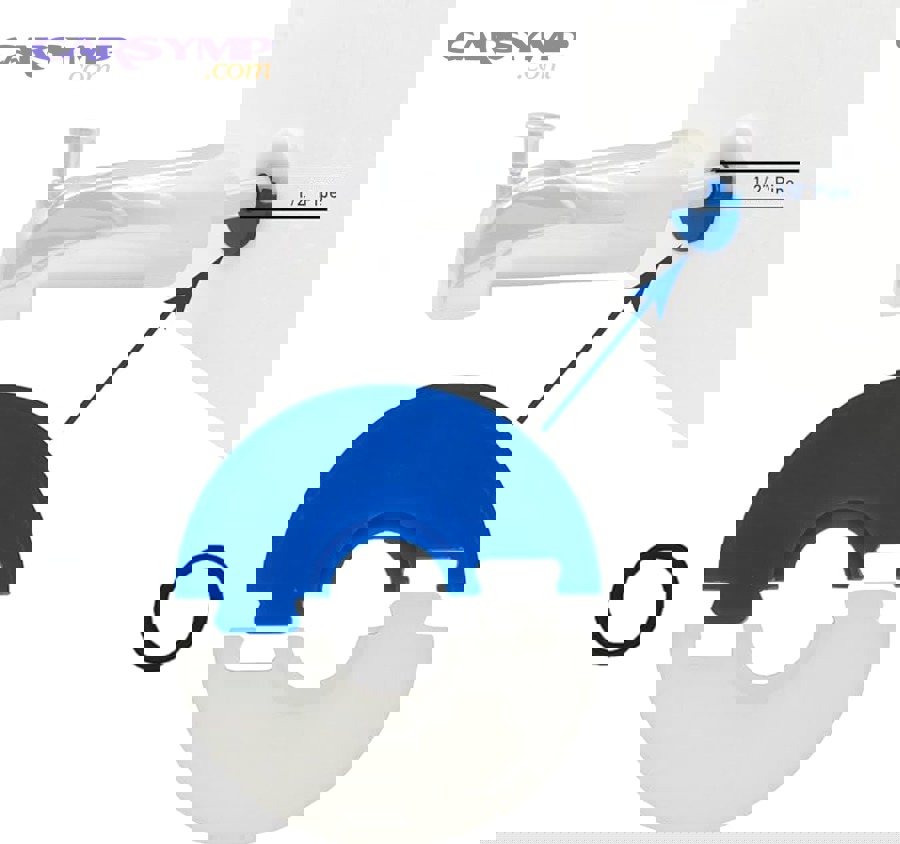
Laser alignment systems provide the most accurate method for eliminating misalignment. These systems project a laser beam from one shaft to a target on the coupled shaft, measuring both angular and offset misalignment in two planes simultaneously. The system calculates precise corrections needed at each mounting foot, displaying vertical and horizontal shim adjustments required to achieve alignment within 0.001″. Some advanced systems connect via Bluetooth to smartphones, guiding technicians through the alignment process with real-time feedback. While laser systems cost $3,000-15,000, they reduce alignment time by 60-80% compared to dial indicator methods while delivering superior accuracy.
According to research published in the STLE Tribology Transactions journal in 2023, mechanical seals operating with shaft misalignment exceeding 0.003″ TIR experience failure rates 4-6 times higher than properly aligned installations, with mean time to failure reduced from 24-36 months to 4-8 months. The study also found that correcting misalignment in existing installations extended remaining seal life by an average of 18 months, even for seals already showing minor leakage.
What Is the Difference Between Static and Dynamic Seal Failures?
Static seal failures occur in non-moving joints through compression set (permanent deformation under load) and chemical degradation, while dynamic seal failures result from friction wear, extrusion under pressure, and heat generation from sliding contact. Static seals typically fail gradually over months or years as elastomer materials lose resilience, whereas dynamic seals fail more rapidly (weeks to months) due to mechanical wear and thermal stress from continuous motion.
To clarify this distinction, static seals include O-rings in flange faces, gaskets in pipe connections, and seals in threaded fittings—applications where both sealing surfaces remain stationary. These seals rely on compression to maintain contact pressure against sealing surfaces. Initial installation compresses the seal by 10-25% of its cross-section thickness, creating contact stress that exceeds system pressure and prevents fluid escape. Over time, elastomer materials subjected to sustained compression undergo molecular rearrangement, permanently deforming to a compressed shape. When system pressure drops or fasteners loosen slightly, the compressed seal no longer springs back completely, reducing contact pressure and allowing leakage.
Compression set resistance varies dramatically across elastomer families and compounds. Fluoroelastomers (FKM) exhibit excellent compression set resistance at elevated temperatures, retaining 70-80% elastic recovery after 1,000 hours at 400°F under 25% compression. Nitrile compounds show similar performance below 250°F but deteriorate rapidly at higher temperatures. Silicone rubbers demonstrate poor compression set resistance even at moderate temperatures, making them unsuitable for critical static seal applications despite their temperature range. ASTM D395 testing quantifies compression set—low values (10-25%) indicate good resilience, while high values (>40%) suggest seal replacement is needed.
Chemical degradation affects static seals through oxidation, hydrolysis, and specific chemical attacks depending on fluid exposure. Oxidation occurs when elastomers react with atmospheric oxygen, crosslinking polymer chains and causing hardening and embrittlement. Antioxidant additives in quality seal compounds retard this process, but eventually deplete through diffusion and chemical consumption. Hydrolysis primarily affects polyurethane and certain ester-based elastomers in water service, breaking polymer chains and causing softening and dimensional changes. Specific chemical attacks include acid-catalyzed degradation, base-induced depolymerization, and solvent swelling—each requiring material selection compatible with the service environment.
Dynamic seal failures progress through distinctly different mechanisms driven by friction and wear. Rod seals, piston seals, and rotary shaft seals experience continuous sliding contact between seal lips and moving surfaces. This generates friction forces ranging from 5-20% of hydraulic pressure force for elastomeric seals, with harder materials (polyurethane) at the lower end and softer materials (nitrile) higher. Friction converts to heat—a 4″ diameter rod seal in a hydraulic cylinder operating at 2,000 psi and 1 ft/second sliding velocity generates approximately 300 watts of frictional heat. Without adequate lubrication and cooling, seal temperatures quickly reach 250-300°F, accelerating wear and thermal degradation.
Abrasive wear dominates dynamic seal failure in contaminated systems. Hard particles (silica, metal oxides) trapped between seal lips and sliding surfaces act like grinding wheels, cutting microscopic grooves in both seal and surface. These grooves progressively deepen with each stroke or revolution until they compromise sealing effectiveness. Surface hardness influences wear rates—hardened and chrome-plated rods resist abrasive damage better than plain steel, though proper filtration remains essential. Seal lip geometry also matters: dual-lip designs separate dirt-wiping and pressure-sealing functions, reducing contamination at the primary sealing interface and extending life 2-3 times compared to single-lip seals.
Extrusion represents a dynamic seal failure mode absent in static seals. As pressure oscillates in hydraulic systems, dynamic seals experience alternating loading that can force seal material into clearance gaps between rod and bore. Each pressure cycle extrudes a small amount of material, progressively damaging the seal lip edge in a failure mode called “nibbling.” Backup rings prevent extrusion, but add complexity and cost. Modern asymmetric seal profiles incorporate anti-extrusion geometry directly into the seal design, eliminating backup rings while maintaining extrusion resistance to 5,000+ psi.
How Do You Diagnose Seal Leak Problems Before They Worsen?
Diagnosing seal leak problems before failure requires four key detection methods: (1) visual inspection identifying early-stage weeping or minor seepage, (2) temperature monitoring detecting abnormal heat indicating friction or internal leakage, (3) vibration analysis revealing misalignment or bearing problems affecting seals, and (4) pressure decay testing quantifying leak rates below visual detection thresholds. Implementing these diagnostic techniques enables maintenance teams to identify seal problems 6-12 weeks before catastrophic failure, reducing emergency repairs by 70-80% through planned interventions.
More specifically, effective diagnosis requires establishing baseline conditions for comparison. New or recently serviced equipment provides reference points for normal operating parameters—typical seal temperatures, vibration signatures, cycle times, and pressure stability. Deviations from these baselines signal developing problems. Monthly or quarterly measurements trending over time reveal gradual deterioration patterns that predict approaching failure, enabling proactive seal replacement during planned maintenance windows rather than emergency shutdowns.
What Are the Warning Signs of Impending Seal Failure?
The warning signs of impending seal failure include: (1) minor weeping or dampness around seals (typically appears 4-8 weeks before visible leaking), (2) temperature increases of 15-30°F above baseline indicating increased friction or internal leakage, (3) performance degradation such as slower cycle times or reduced output pressure, (4) unusual noise including squealing or chattering from seals, and (5) vibration changes showing elevated amplitude at running speed frequencies. Recognizing these early indicators enables seal replacement before catastrophic failure causes secondary damage to shafts, bearings, and adjacent components.
Visual inspection remains the most accessible diagnostic method, requiring only flashlight and careful observation. Seals approaching failure often exhibit subtle changes before obvious leakage begins. A faint ring of fluid residue around rod seals, barely enough to create a damp appearance, indicates seal lip wear allowing microscopic fluid migration. This “weeping” stage may persist for weeks before progressing to dripping. Similarly, mechanical seals show crystallized deposits around seal faces as minor leakage evaporates, leaving behind fluid residues. In high-temperature applications, discoloration or charring of seal materials visible during inspection indicates thermal degradation approaching failure. Regular visual inspection following predictable patterns (monthly for critical equipment, quarterly for standard applications) creates trending data showing deterioration progression.
Temperature monitoring provides quantitative failure prediction. Infrared temperature guns or thermal imaging cameras measure seal operating temperatures, comparing readings to established baselines. Rod seals operating within normal parameters typically run 10-20°F above ambient temperature, while mechanical seals in pumps measure 20-40°F above process fluid temperature. Temperature increases beyond these ranges signal problems: a rod seal measuring 30-40°F above ambient suggests excessive friction from wear or inadequate lubrication, while mechanical seals showing 60-80°F elevation indicate face wear or cooling system problems. Internal leakage in hydraulic cylinders creates localized hot spots as high-pressure fluid throttles through worn seal clearances—thermal imaging reveals these 15-30°F temperature differentials against the cylinder body.
Performance degradation manifests differently across equipment types but consistently indicates seal problems. Hydraulic cylinders experiencing internal piston seal leakage slow their extension or retraction cycles, sometimes by only 5-10% initially. This minor change often goes unnoticed until comparing current cycle times against commissioning data or similar equipment. Reduced force output similarly indicates internal leakage—an actuator that previously lifted 10 tons might struggle with 9 tons when piston seals wear 30-40%. Pumps with failing mechanical seals exhibit reduced flow and pressure output as seal chamber flooding increases hydraulic resistance and cavitation risks. Tracking these performance parameters monthly using process instrumentation or manual measurements exposes declining trends 8-12 weeks before complete failure.
Noise changes provide audible failure warnings. Seals operating normally produce minimal sound, but wear and degradation generate distinctive noises. Hydraulic rod seals sometimes squeal during retraction when lip geometry changes from wear, creating stick-slip motion instead of smooth sliding. This high-pitched squeal occurs intermittently, often at specific positions in the stroke where seal wear concentration is highest. Mechanical seals may chatter or buzz when face wear creates intermittent contact, particularly during startup or shutdown when rotational speeds pass through critical frequencies. Cavitation from seal chamber flooding produces crackling or popping sounds resembling gravel in a blender. Training maintenance personnel to recognize these acoustic signatures enables early problem detection during routine equipment rounds.
How Does Vibration Monitoring Detect Seal Issues?
Vibration monitoring detects seal issues by identifying mechanical problems that accelerate seal wear, including shaft misalignment, bearing degradation, and coupling imbalance that create abnormal forces on sealing systems. Accelerometers mounted on equipment bearing housings or seal chambers measure vibration velocity, acceleration, or displacement across frequency ranges from 10 Hz to 10 kHz, with analysis software extracting amplitude at specific frequencies corresponding to shaft speed, bearing defect frequencies, and resonances. Seal-related problems manifest as elevated 1X running speed vibration (indicating misalignment or imbalance) and increased 2X running speed amplitude (suggesting mechanical looseness or bearing wear), while seal face wear in mechanical seals produces higher-frequency noise in the 1-10 kHz range.
Understanding vibration signatures requires knowledge of equipment operating speeds and bearing configurations. A pump running at 1,750 RPM produces a fundamental frequency of 29.2 Hz (1750÷60). In properly aligned, balanced equipment, this 1X running speed frequency shows moderate amplitude (typically 0.1-0.3 inches/second vibration velocity) without excessive sidebands or harmonics. Misalignment elevates 1X amplitude and generates 2X and 3X harmonics at 58.4 Hz and 87.6 Hz respectively, with axial vibration (parallel to shaft) particularly pronounced. Phase analysis across multiple measurement points distinguishes angular misalignment (180° phase difference between inboard and outboard bearings) from parallel offset (0° phase difference).
Bearing defect frequencies provide another diagnostic indicator affecting seal performance. Ball bearings generate four characteristic frequencies: Ball Pass Frequency Outer race (BPFO), Ball Pass Frequency Inner race (BPFI), Ball Spin Frequency (BSF), and Fundamental Train Frequency (FTF). These frequencies are calculated based on bearing geometry, shaft speed, and bearing configuration. When bearing wear develops, amplitude at these defect frequencies increases from baseline levels below 0.05 in/sec to 0.1-0.2 in/sec, indicating progressive damage. Bearing deterioration allows shaft motion that creates misalignment and eccentric loading on seals, accelerating seal wear proportionally to bearing condition.

Mechanical seal face wear produces distinctive high-frequency vibration in the 1-10 kHz ultrasonic range, detectable using specialized accelerometers or ultrasonic sensors. As seal faces develop wear grooves and roughness, fluid films become unstable, creating micro-cavitation and turbulence that radiate vibration energy at these higher frequencies. Condition monitoring systems equipped with demodulation algorithms extract these seal-specific signatures from the broader vibration spectrum, providing early warning 4-8 weeks before seal failure progresses to visible leakage. Alarm thresholds set at 2-3 standard deviations above baseline high-frequency vibration levels trigger maintenance notifications while still allowing planned repairs rather than emergency response.
Integration with Computerized Maintenance Management Systems (CMMS) automates vibration data collection and trending. Wireless vibration sensors transmit measurements to cloud-based analytics platforms that compare current readings against historical trends and equipment twins (similar equipment in the fleet). Machine learning algorithms identify anomalous patterns that might escape manual analysis, flagging equipment for detailed inspection. According to a 2024 study published in the Journal of Quality in Maintenance Engineering, facilities implementing automated vibration monitoring reduced unexpected seal failures by 60% and extended average seal life by 28% through timely interventions based on condition data rather than fixed time intervals.
What Are Advanced Seal Technologies for Leak Prevention?
Advanced seal technologies for leak prevention include cartridge mechanical seals that eliminate installation errors through pre-assembled, self-aligning designs; double mechanical seals providing redundant sealing with barrier fluids for critical applications; magnetic drive seal-less pumps that completely eliminate dynamic seals through magnetic coupling; and API 682 flush plan systems that optimize seal environment through engineered lubrication and cooling. These technologies address limitations of standard seals, offering 95-99% reliability in demanding applications where conventional seals fail frequently.
These advanced technologies typically cost 3-10 times more than standard seals but deliver proportional reliability improvements and reduced lifecycle costs through extended service life and elimination of leak-related incidents. To understand when advanced seals justify their premium pricing, we must examine specific failure modes they prevent and applications where they excel.
How Do Cartridge Seal Systems Reduce Installation Errors?
Cartridge seal systems reduce installation errors by arriving pre-assembled and pre-set from the manufacturer, eliminating the 8-12 individual assembly steps required for component mechanical seals that create opportunities for mistakes. The cartridge design incorporates the seal faces, gland plate, springs, and sometimes sleeve in a single unit with fixed dimensions, ensuring proper spring compression, face alignment, and squareness without requiring field measurements or adjustments. This plug-and-play approach reduces installation time by 50-75% while delivering alignment within ±0.001″ compared to ±0.003-0.005″ typically achieved with component seal field assembly.
Specifically, component mechanical seals require technicians to measure shaft dimensions, select appropriate seat heights, set spring compression distances, align gland plates, and verify seal face squareness—each step introducing potential error. A common mistake involves incorrect spring compression: under-compression reduces face loading below minimum requirements (typically 30-40 psi), allowing seal faces to separate intermittently and leak, while over-compression increases friction and heat generation, accelerating wear. Cartridge seals eliminate this variable entirely—springs pre-compressed to exact specifications during factory assembly remain at optimal loading throughout installation and operation.
Cartridge mechanical seals also incorporate self-aligning features that compensate for minor shaft misalignment or equipment imperfections. Floating gland plate designs allow radial movement up to ±0.030″, self-centering the seal relative to the shaft during installation. This tolerance dramatically reduces sensitivity to stuffing box concentricity errors common in older equipment or field-machined components. The sleeve included with most cartridge seals covers shaft surface imperfections, providing a smooth running surface for dynamic O-rings regardless of original shaft condition. In retrofit applications replacing packing or failed component seals, this feature proves invaluable when shafts show wear grooves or corrosion from previous service.
Installation procedure for cartridge seals follows a simplified sequence: (1) clean and inspect the stuffing box and shaft, (2) apply appropriate lubricant to O-rings, (3) slide the cartridge assembly onto the shaft until it contacts the equipment face, (4) bolt the gland plate using specified torque in a star pattern, and (5) remove installation clips or spacers that maintain seal dimensions during shipping. Total installation time typically ranges 30-60 minutes compared to 2-4 hours for component seal assembly requiring measurements, adjustments, and verification steps. According to data published in Pumps & Systems magazine in 2024, cartridge seals reduce installation-related failures from 30-40% of total seal failures (typical with component seals) to less than 5%.
What Is the Difference Between Single and Double Mechanical Seals?
Single mechanical seals contain process fluid with one set of seal faces exposed to pumped media, while double mechanical seals employ two sets of seal faces in series with barrier or buffer fluid between them, providing redundant sealing and isolating both seals from direct process exposure. Single seals cost $500-2,000 and suit clean, non-hazardous services, whereas double seals cost $2,500-8,000 but deliver 99%+ reliability in toxic, flammable, or abrasive applications where single seal failure poses safety or environmental risks.
Understanding the configuration differences clarifies their respective applications. Single mechanical seals position one rotating and one stationary seal face in contact, with the pumped process fluid providing lubrication and cooling to the faces. The seal chamber space between the impeller back shroud and seal faces fills with process fluid at approximately suction pressure (for pumps with balance holes) or discharge pressure (for unbalanced configurations). This process fluid must be clean, non-crystallizing, and capable of providing adequate lubrication—conditions met in perhaps 60-70% of industrial pumping applications. When these conditions don’t exist, single seals experience rapid face wear from abrasives, thermal damage from poor lubrication, or face plugging from crystallization.
Double mechanical seals address these limitations through their dual-seal configuration. Two seal faces install in series: the inboard seal faces the process fluid, while the outboard seal faces the atmospheric side, with both seals separated by a barrier or buffer fluid zone. This intermediate fluid serves multiple critical functions: (1) provides clean lubrication to both seal faces, (2) removes frictional heat through circulation and cooling, (3) isolates seals from process fluid degradation products, and (4) creates a pressure differential that determines leak direction if a seal face fails. The barrier/buffer fluid selection depends on application requirements—mineral oil, water-glycol, or synthetic fluids chosen for thermal stability, lubricity, and process compatibility.
API 682 standard defines two principal double seal arrangements: back-to-back and tandem. Back-to-back seals position both seal faces oriented toward the barrier fluid zone, with barrier fluid pressure maintained 15-30 psi above process pressure. If the inboard seal fails, process fluid leaks into the barrier zone rather than to atmosphere, while barrier fluid simultaneously leaks into the process—both monitored through flow rate or level changes in the barrier reservoir. This configuration suits toxic or flammable services where even transient atmospheric emissions cannot be tolerated. Tandem seals orient both faces the same direction, with barrier fluid pressure below process pressure, creating an unpressurized buffer zone. If the primary (inboard) seal fails, process fluid leaks into the buffer zone, activating alarms while the secondary seal continues preventing atmospheric release. Tandem configurations typically cost 20-30% less than back-to-back but provide slightly lower reliability.

Barrier fluid systems require pressurization equipment, circulation pumps, heat exchangers, and instrumentation that add complexity and cost. A complete API Plan 53B system (pressurized barrier fluid with circulation and cooling) includes a bladder accumulator maintaining barrier pressure, circulation pump providing 0.5-1.0 GPM flow through the seal chamber, plate heat exchanger removing 1,000-3,000 BTU/hr of frictional heat, and pressure/temperature instrumentation with alarm outputs. This auxiliary equipment occupies 2-4 square feet of floor space and costs $5,000-15,000 beyond the seal itself. Despite these costs, double seals with properly engineered barrier systems deliver mean time between failures exceeding 5 years in services where single seals fail every 6-18 months, providing economic justification through reduced downtime and maintenance labor.
How Do Seal-less Magnetic Drive Systems Eliminate Leaks Entirely?
Seal-less magnetic drive systems eliminate leaks entirely by replacing the rotating shaft penetration through the pump casing with a magnetic coupling that transmits torque without physical connection, completely isolating the process fluid within a hermetically sealed containment shell. The drive motor’s external rotating magnetic field couples through the non-magnetic containment shell to an internal magnetic assembly connected to the impeller, transferring rotational power without any dynamic seal. This design achieves zero-emission operation required in nuclear, pharmaceutical, and high-purity chemical applications where even minor seal leakage creates unacceptable contamination or safety risks.
To understand the technical implementation, consider the magnetic coupling arrangement. External permanent magnets (typically samarium-cobalt or neodymium-iron-boron alloys providing 30-40 MegaGauss-Oersted energy products) mount on a steel rotor connected to the motor shaft. These magnets rotate outside the containment shell, generating a powerful rotating magnetic field penetrating the shell material. Internal magnets mounted on the impeller shaft assembly synchronize with this external field, rotating in perfect correspondence up to the coupling’s torque limit. Magnetic coupling strength depends on magnet grade, number of pole pairs, and air gap distance—smaller gaps (0.2-0.4″) transmit more torque but require tighter manufacturing tolerances, while larger gaps (0.5-0.8″) provide greater manufacturing margin but reduce torque capacity proportionally.
The containment shell represents the critical leak-prevention component, hermetically isolating process fluid without any penetrations. Constructed from non-magnetic materials including austenitic stainless steels (316L), titanium, Hastelloy, or specialized alloys depending on process corrosivity, the shell must withstand full system pressure while remaining thin enough (0.06-0.12″ wall thickness) to minimize magnetic coupling air gap. Shell failure mechanisms include corrosion, erosion from internal recirculation, and thermal fatigue from temperature cycling. Eddy currents induced in the metal shell by the rotating magnetic field generate heat proportional to rotational speed and magnetic field strength—typically 200-800 watts depending on pump size and speed. This heat must be removed through process fluid circulation or external cooling to prevent shell overheating and thermal distortion.
Power transmission limitations constrain magnetic drive pump applications. Magnetic coupling torque capacity ranges from 5-500 HP depending on coupling diameter and magnet strength, with most industrial pumps in the 15-75 HP range. Exceeding torque capacity causes the internal magnets to slip relative to the external magnets, producing heat that can damage magnets and potentially boil process fluid inside the containment shell—a failure mode called “spin-out.” Modern magnetic drive pumps incorporate thermal monitoring of the containment shell with automatic shutdown systems preventing spin-out damage if torque exceeds capacity during process upsets or bearing failures. Despite power limitations, magnetic drives suit 40-50% of chemical process pumping applications that prioritize leak prevention over maximum efficiency or large flow capacity.
Efficiency penalties represent another trade-off for leak-free operation. Magnetic coupling transmission efficiency typically ranges 92-97%, meaning 3-8% of input power converts to heat rather than hydraulic work. Combined with eddy current losses in the containment shell, overall magnetic drive pump efficiency runs 5-12% lower than comparable mechanical seal pumps. For a 50 HP pump operating continuously, this efficiency penalty consumes approximately 5,000-10,000 kWh annually costing $500-1,000 in additional electrical expense. However, eliminating seal-related failures, leakage incidents, and associated maintenance costs provides economic justification in critical services. According to a lifecycle cost analysis published in Chemical Engineering magazine in 2023, magnetic drive pumps in corrosive or toxic services deliver 15-25% lower total cost of ownership despite higher initial purchase prices and operating costs.
What Are API Seal Flush Plans and When Should They Be Used?
API 682 seal flush plans are standardized mechanical seal support systems that provide lubrication, cooling, and environmental control through engineered flow of clean fluid to seal faces, with 23 defined plan configurations serving different process conditions and reliability requirements. Plans range from simple circulation of process fluid (Plan 11) through complex barrier fluid systems with pressurization and cooling (Plan 53), selected based on fluid properties including temperature, vapor pressure, solids content, crystallization tendency, and toxicity. Proper flush plan selection extends mechanical seal life 3-10 times compared to inadequate or absent support systems while preventing seal chamber fouling, face overheating, and premature wear.
Plan 11 represents the simplest configuration—process fluid circulation from pump discharge through the seal chamber via internal passages in the pump casing. This plan requires clean process fluid without solids, fibers, or abrasives, operating below 250°F with stable chemistry that won’t crystallize or polymerize in the seal chamber. Installation cost is minimal (no external piping or equipment), making Plan 11 the default choice for clean water, light hydrocarbons, and simple chemical services. However, Plan 11 provides limited cooling capacity since circulation flow depends entirely on pressure differential and internal passage size, typically 0.2-1.0 GPM. Applications generating high frictional heat (large seals, high speeds) often require external circulation enhancement.
Plan 23 adds external piping and heat exchanger to Plan 11, circulating process fluid from seal chamber through a shell-and-tube or plate heat exchanger then back to pump suction or seal chamber. A restriction orifice in the return line maintains back-pressure ensuring adequate flow (typically 0.5-2.0 GPM) through the seal chamber. The heat exchanger removes 1,000-5,000 BTU/hr depending on sizing, maintaining seal chamber temperature 20-40°F below process temperature. Plan 23 suits moderate-temperature services (250-400°F) with clean fluids where face cooling improves reliability. Installation requires additional piping, heat exchanger, and cooling water or air supply, adding $2,000-5,000 to system cost, but extending seal life from 12-18 months (Plan 11) to 24-36 months.
Plan 32 provides external injection of clean flush fluid into the seal chamber from an external source such as product recirculation, filtered discharge, or separate clean liquid supply. The flush fluid flows through the seal chamber at 1-3 GPM, exiting to process suction or drain, creating a continuous purge that prevents solids accumulation and provides cooling. This plan suits slurries, fluids with suspended solids, polymer services prone to fouling, and crystallizing chemicals where maintaining clean conditions at seal faces proves critical. Plan 32 requires reliable external fluid supply, flow control, and sometimes filtration equipment, but prevents the seal face fouling that rapidly destroys seals in difficult services. Seal life in properly implemented Plan 32 applications exceeds 36 months compared to weeks or months without adequate flushing.
Plan 52 and 53 introduce barrier fluid systems for double mechanical seals, providing the highest reliability for toxic, flammable, or extremely corrosive services. Plan 52 employs an unpressurized external reservoir circulating barrier fluid through the seal faces via seal face pumping action or thermosiphon effect. Barrier fluid selection considers thermal stability, lubricity, and process compatibility if leakage occurs—mineral oil, synthetic fluids, or water-glycol depending on application. Plan 53 pressurizes the barrier fluid 15-30 psi above process pressure using nitrogen-charged bladder accumulators, ensuring positive pressure differential that drives process leakage inward while preventing seal face dry-running. Both plans include heat exchangers maintaining barrier fluid temperature below 160°F for optimal seal face lubrication.
Selection criteria for flush plans balance reliability requirements, process conditions, and economic constraints. The table below summarizes key selection parameters:
| Flush Plan | Process Condition | Typical Applications | Relative Cost | Expected Seal Life |
|---|---|---|---|---|
| Plan 11 | Clean, <250°F, non-crystallizing | Clean water, light hydrocarbons, simple chemicals | Baseline | 12-18 months |
| Plan 23 | Clean, 250-400°F, requires cooling | Hot water, moderate temperature chemicals, thermal fluids | +40% | 24-36 months |
| Plan 32 | Solids, crystallizing, polymerizing | Slurries, polymer services, crystallizing salts | +60% | 24-48 months |
| Plan 52 | Toxic/flammable with double seal | Hazardous chemicals, toxic services, environmentally sensitive | +200% | 36-60 months |
| Plan 53 | Critical toxic/flammable applications | High-hazard chemicals, nuclear, pharmaceutical | +250% | 48-84 months |
This table shows how flush plan selection impacts both initial cost and seal reliability, enabling cost-benefit analysis for specific applications.
According to API 682 4th Edition technical data published in 2024, facilities implementing appropriate flush plans based on process conditions reduce mechanical seal failures by 70-85% compared to inadequate or improperly configured support systems. The standard emphasizes matching flush plan complexity to application requirements—over-specification wastes capital on unnecessary equipment, while under-specification guarantees premature seal failure regardless of seal quality. Proper flush plan selection, installation, and commissioning represents the single most important factor in mechanical seal reliability, often outweighing differences between seal manufacturers or materials.