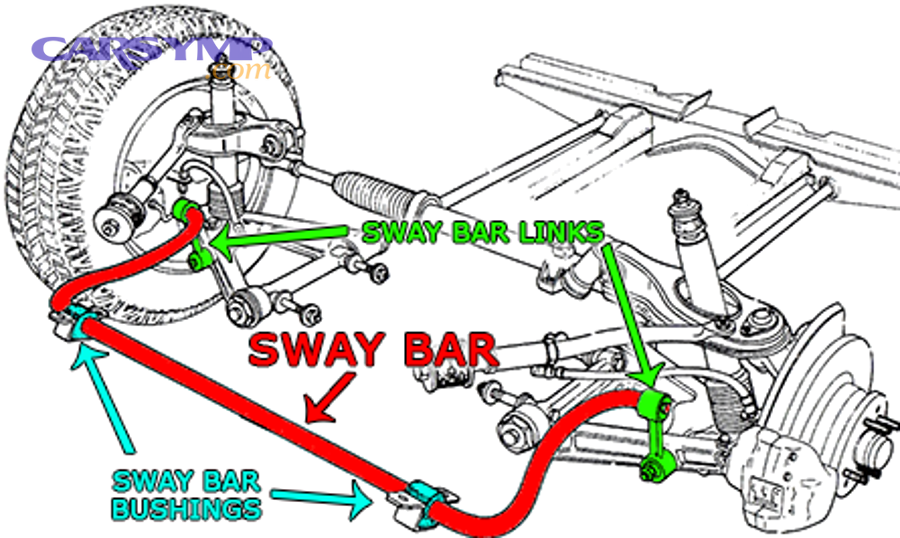
Sway bar bushings and sway bar links serve fundamentally different roles in your vehicle’s suspension system, though both are essential for controlling body roll during turns. Bushings are stationary rubber or polyurethane sleeves that mount the sway bar to your vehicle’s frame, acting as a pivot point, while links are connecting rods with bushings or ball joints on each end that transfer motion between the sway bar and your suspension components. Understanding this distinction helps you diagnose suspension problems accurately and avoid unnecessary repairs.
Determining which component needs replacement depends on recognizing specific failure symptoms and conducting proper visual inspection. Worn sway bar bushings typically cause creaking or squeaking noises and allow excessive body roll during cornering, while failed sway bar links produce distinctive clunking sounds over bumps and show visible play when manually tested. Many vehicle owners face confusion when mechanics recommend replacing one component versus the other, leading to either incomplete repairs or overspending on parts that don’t actually need replacement.
The cost difference between these components significantly impacts your repair decision, with bushings ranging from $10-$30 per set and links costing $20-$100 each, though labor costs remain similar for both. Material choices add another layer of complexity, as upgrading from rubber to polyurethane bushings offers dramatically longer lifespan and improved handling but may introduce unwanted noise and harshness. Professional mechanics typically charge $70-$100 per hour for installation, but both components rank among the easiest suspension repairs for DIY enthusiasts with basic tools.
Whether you tackle this repair yourself or hire a professional, knowing when to replace bushings, links, or both simultaneously maximizes your investment and restores proper suspension function. Below, we’ll explore the precise functional differences, diagnostic methods, cost comparisons, and installation guidance that empower you to make informed decisions about your vehicle’s suspension maintenance.
What Are Sway Bar Bushings and Links?
Sway bar bushings are rubber or polyurethane sleeves that secure the sway bar to the vehicle’s frame or subframe, while sway bar links are metal connecting rods that attach the sway bar ends to the suspension’s moving components.
To better understand these components, we need to examine how each functions within the complete suspension system. Both parts work together to reduce body roll during cornering, but they accomplish this through distinctly different mechanical actions and mounting positions.
What Is the Primary Function of Sway Bar Bushings?
Sway bar bushings secure the sway bar to your vehicle’s chassis while allowing controlled rotational movement during suspension travel. These bushings act as the fulcrum point around which the entire sway bar pivots when your vehicle encounters uneven road surfaces or enters a turn. The bushing material must be soft enough to absorb vibrations and road noise before they reach the cabin, yet firm enough to maintain the sway bar’s position under load.
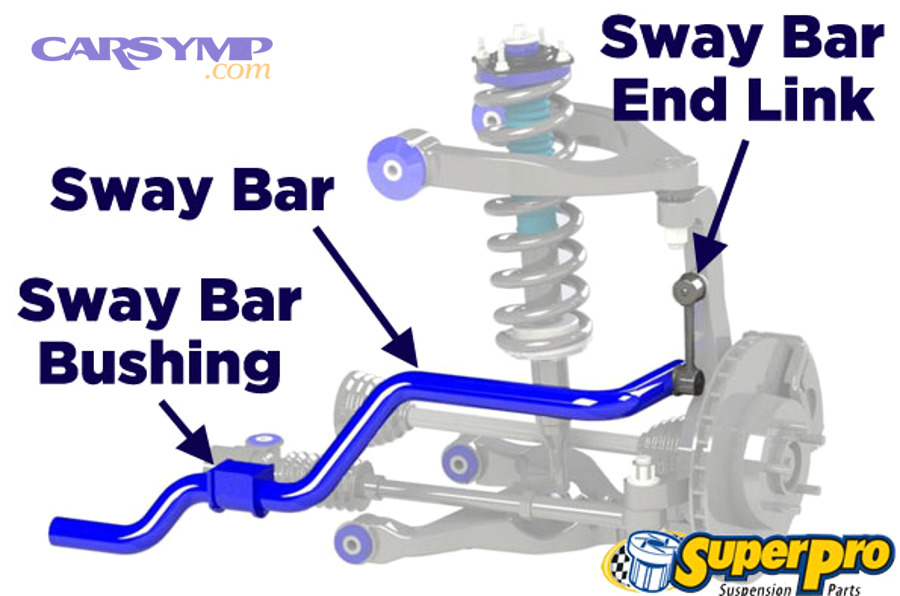
The bushing’s design typically features a split configuration that wraps around the sway bar, held in place by metal brackets or clamps bolted to the frame. This split design allows for easier installation without removing other suspension components. When your vehicle turns left, the right side suspension compresses while the left side extends, causing the sway bar to twist within these bushings. The bushings provide just enough friction to stabilize the bar without restricting its essential twisting motion.
Most factory bushings use rubber compounds engineered to balance comfort and performance, though these materials naturally degrade over time from constant flexing, exposure to road salt, oils, and temperature extremes. As rubber bushings age, they lose their elastic properties and develop cracks or become compressed into misshapen forms that no longer grip the bar tightly. This degradation directly reduces the sway bar’s effectiveness at controlling body roll.
What Is the Primary Function of Sway Bar Links?
Sway bar links transfer vertical suspension movement from the lower control arm or strut assembly to the ends of the sway bar, enabling the bar to resist body roll during cornering. When one wheel hits a bump or the vehicle enters a turn, the affected suspension component moves upward or downward, and the link mechanically communicates this movement to the sway bar. The sway bar then uses this information to apply counteracting force to the opposite side of the vehicle.
Each link consists of a metal rod or stud with connection points at both ends—one attaches to the sway bar and the other to a suspension component like the lower control arm. These connection points incorporate either rubber bushings with metal sleeves or ball joints that allow the necessary articulation as the suspension moves through its travel range. The link must be strong enough to withstand substantial forces during aggressive cornering yet flexible enough to accommodate the different motion paths of the sway bar and suspension.
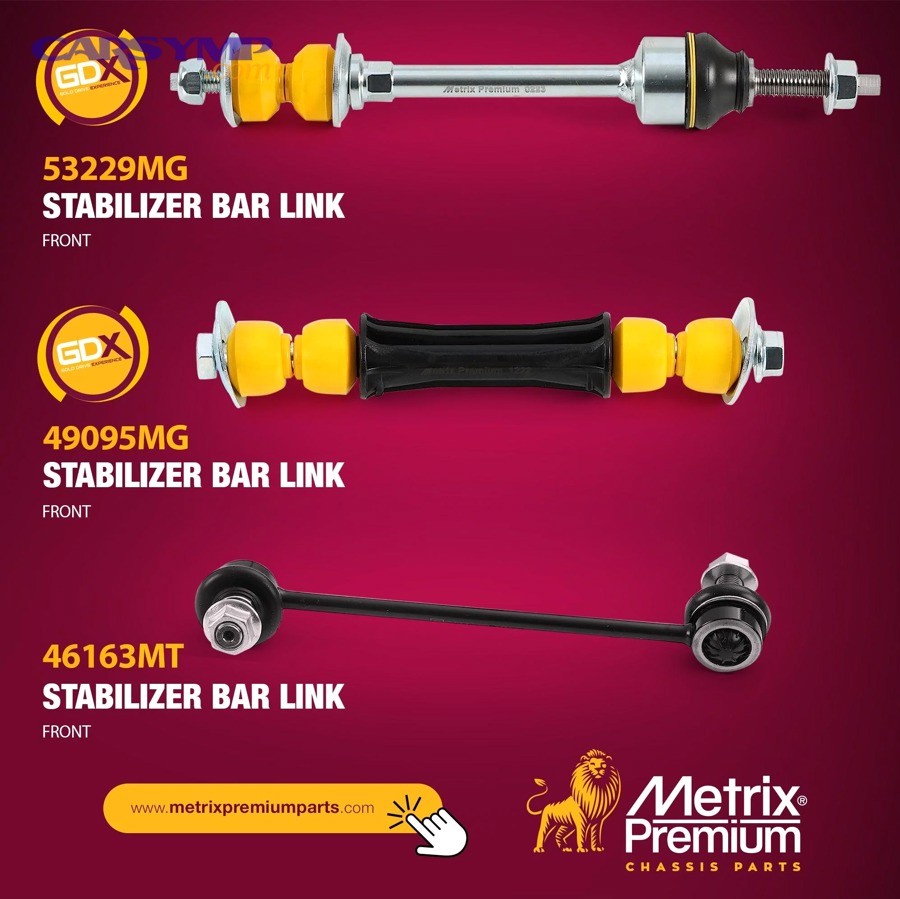
Modern vehicles typically use one of two link designs: the traditional “stack of bushings on a bolt” style or the more advanced ball joint style found on newer trucks and performance vehicles. The bushing style features multiple rubber or polyurethane washers separated by metal spacers, all compressed together by a long bolt. The ball joint style uses sealed ball-and-socket joints at each end, similar to those found in steering components, which eliminate the compliance and potential binding issues associated with bushings.
How Do Sway Bar Bushings Differ from Sway Bar Links?
Bushings differ from links primarily in their mounting location and mechanical function: bushings attach the sway bar to the stationary frame and allow rotational movement, while links connect the sway bar ends to the moving suspension components and transfer vertical motion.
Understanding these structural and functional differences helps you diagnose suspension issues accurately and communicate effectively with mechanics. Let’s examine the specific characteristics that distinguish these components.
What Are the Structural Differences Between Bushings and Links?
Sway bar bushings feature a semi-circular or split-sleeve design that wraps around the sway bar itself, typically measuring 1-2 inches in diameter depending on the bar’s thickness. The bushing material—rubber in factory applications or polyurethane in performance upgrades—forms a continuous cushioning layer between the metal sway bar and the metal mounting bracket. Most bushings include a slit along one side that allows the bushing to be installed around the bar without disassembly, though some older designs use solid bushings that require partial suspension disassembly.
The mounting bracket or clamp that holds the bushing typically bolts directly to the vehicle’s frame, subframe, or front crossmember using two bolts. This bracket design compresses the bushing against the sway bar with specific torque requirements that ensure proper grip without over-crushing the material. The bushing bore—the hole through the center—precisely matches the sway bar diameter with just enough clearance to allow twisting motion but prevent excessive lateral movement.
Sway bar links contrast sharply in construction, consisting of a rigid metal rod or stud (usually 4-8 inches long) with threaded sections at each end for attachment. Traditional links incorporate a “sandwich” design where the sway bar end and suspension mounting point are connected through alternating layers of rubber bushings, metal sleeves, and washers, all compressed by a through-bolt. More modern links use ball joints encased in protective boots at one or both ends, providing greater articulation range and eliminating the deflection inherent in rubber bushings.
The materials differ significantly between components: bushings are predominantly elastomeric (rubber or polyurethane), while links feature steel or aluminum rods with either rubber bushings or metal ball joints at the connection points. This material difference reflects their roles—bushings need compliance to absorb vibration, while links need rigidity to transfer forces effectively. The table below summarizes these structural distinctions:
| Feature | Sway Bar Bushings | Sway Bar Links |
|---|---|---|
| Primary Material | Rubber or polyurethane sleeve | Steel/aluminum rod with bushings or ball joints |
| Mounting Location | Between sway bar and vehicle frame | Between sway bar end and lower control arm/strut |
| Design Type | Split or solid sleeve with clamp bracket | Rod with threaded ends or ball joints |
| Movement Type | Rotational (allows bar to twist) | Articulating (allows vertical suspension travel) |
| Installation Method | Clamp around stationary bar | Bolt through moving suspension components |
| Typical Length | 1-2 inches (bushing thickness) | 4-8 inches (link rod length) |
How Do Their Failure Modes Differ?
Sway bar bushing failures manifest primarily through material degradation, where the rubber develops visible cracks, becomes brittle, or loses its original shape through compression. You’ll notice the bushing appears hollowed out or has separated from the metal bar it’s supposed to grip. This degradation occurs gradually as the rubber compound breaks down from repeated flexing cycles, exposure to petroleum products, road salt, and temperature fluctuations. The bushing may also tear along the split line or develop gaps that allow the sway bar to shift laterally within the mounting bracket.
When bushings fail, the symptoms often include a creaking or groaning noise during turns or when going over speed bumps, particularly noticeable at low speeds in parking lots. The vehicle may exhibit increased body roll during cornering because the loose bushing allows the sway bar to move within its mounts rather than transferring force effectively. Visual inspection reveals the deterioration clearly: healthy bushings appear uniform and fit snugly around the bar, while failed bushings show obvious cracking, compression, or gaps between the bushing and bar.
Sway bar link failures follow different patterns, typically involving worn bushings within the link assembly, damaged ball joints, or broken studs. The rubber bushings in traditional links wear out from constant articulation and compression, developing play that allows the link to rattle. Ball joint style links fail when the joint’s internal bearing surfaces wear or when the protective boot tears and allows contamination. Complete link failure sometimes occurs when the threaded stud snaps due to corrosion or over-torquing during previous installation.
The noise signature differs markedly: failed links produce sharp clunking or rattling sounds over bumps, particularly on rough roads or when hitting potholes. This clunking often happens during initial suspension movement and may occur on one side of the vehicle. Unlike bushing squeaks that tend to be continuous during body roll, link clunks are transient and directly correspond to suspension impacts. Testing for link failure involves grasping the link and attempting to move it—any play in the connection points indicates wear requiring replacement.
Which Component Should You Replace: Bushings or Links?
Replace the component showing visible damage or play during inspection: bushings when you see cracking or gaps around the bar, and links when they demonstrate looseness at connection points or produce clunking noises over bumps.
Making the correct replacement decision requires systematic diagnosis rather than guessing based on symptoms alone. Let’s examine the specific indicators that point to each component and when replacing both makes economic sense.
What Symptoms Indicate Worn Sway Bar Bushings?
Worn sway bar bushings create a noticeable increase in body roll during steady-state cornering, where the vehicle leans more to the outside of the turn than when the bushings were new. This excessive body roll occurs because loose bushings allow the sway bar to shift within its mounts rather than maintaining firm contact with the frame. When the bar moves laterally instead of twisting efficiently, it cannot transfer suspension travel from the compressed side to the extended side, reducing its anti-roll effectiveness by as much as 40%.
The characteristic sound of failing bushings is a creaking or squeaking noise that occurs when the vehicle’s body rolls during turns or when traversing uneven surfaces like speed bumps. Polyurethane bushings produce this noise when installed without adequate lubrication, but rubber bushings typically squeak only when significantly degraded. The noise pattern differs from other suspension sounds because it corresponds directly to body movement rather than to individual wheel impacts. You’ll hear it most clearly when making slow-speed turns in parking lots or when rocking the vehicle side-to-side while stationary.
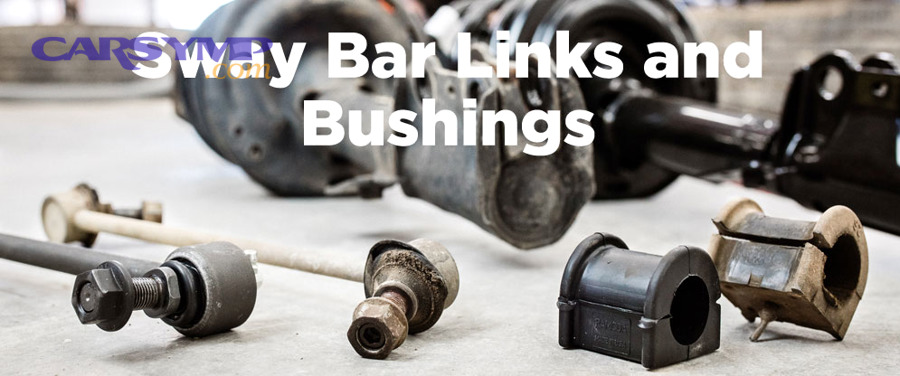
Visual inspection provides definitive confirmation of bushing wear. Healthy bushings appear uniform in color and texture, fitting tightly around the sway bar with no visible gaps. Failed bushings display obvious cracking patterns, particularly on the inner surface that contacts the bar, or show compression into a flattened, misshapen form. The bushing may have pulled away from the bar entirely, leaving a visible gap of several millimeters. Some bushings develop a hollowed-out appearance where the center section has compressed more than the edges.
Testing bushing condition requires safely raising the vehicle and grasping the sway bar to check for movement within the bushings. With the vehicle supported on jack stands and the suspension unloaded, you should be able to move the sway bar slightly within its bushings—about 1-2mm of play is normal. Excessive movement of 5mm or more indicates worn bushings that need replacement. The bushings should return the bar to center position when released; if the bar remains shifted to one side, the bushing has lost its grip.
What Symptoms Indicate Failed Sway Bar Links?
Failed sway bar links announce themselves through distinctive clunking or knocking sounds that occur precisely when driving over bumps, potholes, or rough pavement. This Clunking over bumps sway bar diagnosis signature differs from other suspension noises because it happens during the initial impact and sometimes again during rebound, creating a “double knock” pattern. The sound originates from the worn bushings or ball joints within the link assembly allowing metal-to-metal contact as the link shifts position under load. Unlike the continuous creaking of worn bushings, link clunking is transient and directly tied to suspension movement events.
Many drivers first notice the clunking when executing turns while simultaneously encountering uneven pavement, such as turning into a driveway with a crowned street. The combination of lateral body roll and vertical suspension movement stresses the link connections, amplifying any play in the system. Single-side clunking indicates a problem with the link on that specific corner of the vehicle, while clunking from both sides suggests either bilateral link failure or another suspension component issue entirely.
Visual inspection reveals link problems through several telltale signs. Grasping the link and attempting to move it manually exposes any play in the ball joints or worn bushings—the link should feel solid with minimal movement beyond the designed articulation. Traditional bushing-style links often show compressed or torn bushings visible between the metal washers. Ball joint style links may have torn protective boots exposing the joint to contamination, or the stud may have looseness when you attempt to rotate it by hand. Completely failed links sometimes display bent rods or separated components.
The definitive test involves having an assistant bounce the relevant corner of the vehicle while you observe and listen to the link. Position yourself where you can see the link connections and place your hand near (but not on) the link to feel vibrations. A healthy link moves smoothly without rattling or clunking sounds. A failed link produces audible and sometimes tactile evidence of internal play as the components shift against each other. Any visible gap opening and closing at the connection points during this test confirms the need for sway bar link replacement.
When Should You Replace Both Components Together?
Replace both sway bar bushings and links simultaneously when either component shows significant wear, as the age and usage conditions that degrade one typically affect the other equally. Vehicles with 60,000-100,000 miles often exhibit wear in both components simultaneously, particularly if exposed to harsh conditions like road salt, extreme temperatures, or frequent off-road use. The labor efficiency argument becomes compelling: since wheel removal and suspension access is required for either repair, the incremental labor time to replace both components adds only 15-30 minutes to the total job.
The cost analysis favors combined replacement in most scenarios. If a mechanic quotes $150 in labor to replace sway bar links, adding bushings might increase the total to only $180-$200 because the additional work involves simply unbolting the bushing brackets—the vehicle is already lifted and the wheels are already removed. Conversely, returning three months later to replace the bushings would incur another full labor charge of $150, resulting in $300 total labor costs versus $180 for combined replacement. The parts cost difference is minimal: adding a $20 bushing set to a $60 link replacement represents only a 33% increase in parts expense.
Preventive maintenance logic supports the combined approach even when only one component shows obvious failure. Bushings and links experience similar stress cycles and environmental exposure, so if links have failed at 80,000 miles, the bushings have endured the same conditions and will likely fail within the next 10,000-20,000 miles. Replacing both eliminates the possibility of returning to address the other component shortly after the initial repair. This approach particularly makes sense if you’re performing the work yourself, as you’ve already invested time learning the procedure and acquiring the necessary tools.
The only scenario where replacing just one component makes sense is when inspection clearly shows one component in excellent condition while the other is obviously failed. For example, if polyurethane bushings were installed 15,000 miles ago but the original links are now clunking, replace only the links. Similarly, if you’re addressing 30-year-old rubber bushings on a classic car with recently replaced heavy-duty links, focus solely on the bushings. Trust visual inspection and mechanical testing over blanket recommendations to replace everything.
How Much Does It Cost to Replace Bushings vs Links?
Sway bar bushings cost $10-$30 per set for parts while links range from $20-$100 each, with professional installation labor adding $70-$150 depending on vehicle complexity and regional labor rates.
Breaking down these costs by component and installation approach helps you budget appropriately and decide between DIY and professional service. Let’s examine the specific price factors for each component.
What Are the Parts Costs for Bushings and Links?
Sway bar bushings represent one of the least expensive suspension components, with basic rubber replacement bushings typically priced at $10-$15 for a complete set covering both mounting points on one sway bar. These economy bushings from brands like Beck/Arnley or Dorman match OEM specifications and restore factory performance for vehicles used primarily for commuting. Mid-range rubber bushings from established manufacturers like Moog or Energy Suspension cost $15-$25 and often feature improved rubber compounds that extend service life by 20-40% compared to the cheapest options.
Polyurethane bushing upgrades command premium prices of $25-$50 per set, reflecting the superior material properties and dramatically longer lifespan—often lasting the remaining lifetime of the vehicle. Energy Suspension and Prothane lead this segment with polyurethane bushings that resist compression set, oil degradation, and UV damage far better than any rubber compound. The $30 price premium over basic rubber bushings delivers value when you consider that polyurethane bushings may never need replacement again, whereas rubber bushings might require renewal every 60,000-100,000 miles on vehicles in harsh climates.
Sway bar link pricing varies more dramatically based on design complexity and quality tier. Basic replacement links with traditional bushing construction start at $20-$30 each from economy brands, though these often feature lower-grade steel and rubber bushings that may fail prematurely. Mid-tier links from Moog’s standard line cost $35-$50 each and include better corrosion protection plus greasable fittings on some models. Premium links featuring ball joint construction, heavy-duty studs, and lifetime warranties reach $60-$100 each—Moog’s Problem Solver series exemplifies this category with enhanced durability justifying the price premium.
The cost difference between OEM (Original Equipment Manufacturer) parts and aftermarket alternatives deserves consideration. Toyota, Honda, and other manufacturers typically charge $25-$40 per link for OEM parts that precisely match factory specifications but may not offer improvements over the original design. Quality aftermarket brands like Moog often provide enhanced designs with better materials at competitive prices. However, cheap aftermarket links from unknown manufacturers selling for $15 each frequently fail within 20,000-30,000 miles, making them false economy despite initial savings. A comparison table illustrates these price ranges:
| Component | Economy | Mid-Range | Premium |
|---|---|---|---|
| Rubber Bushings (per set) | $10-$15 | $15-$25 | — |
| Polyurethane Bushings (per set) | — | $25-$35 | $35-$50 |
| Bushing-Style Links (each) | $20-$30 | $35-$50 | $60-$80 |
| Ball Joint Links (each) | $30-$45 | $50-$70 | $70-$100 |
| OEM Bushings | $15-$25 | — | — |
| OEM Links | $25-$40 | — | — |
What Are the Labor Costs for Each Component?
Professional mechanics typically charge $70-$120 per hour for suspension work, with rates varying significantly by geographic region and shop type. Dealerships command the highest rates at $120-$150 per hour but provide manufacturer-trained technicians and warranty support. Independent repair shops charge $80-$100 per hour while offering more flexibility and often comparable expertise. Chain shops like Midas or Firestone fall in the $70-$90 per hour range, sometimes running specials on suspension services that reduce effective labor costs.
Sway bar link replacement labor time averages 0.5-1.0 hours for a straightforward front or rear link replacement on most vehicles, translating to $35-$100 in labor charges. The work involves minimal steps: lift vehicle, remove wheels, unbolt the old link from the sway bar and suspension mounting point, install the new link, and torque to specification. Complications arise with severely corroded bolts requiring cutting or drilling, or when the link stud spins freely during removal, necessitating specialized tools to hold it stationary. Trucks and SUVs with larger, more accessible wheel wells typically require less time than compact cars where space constraints slow the process.
Sway bar bushing replacement demands more labor at 0.8-1.5 hours because accessing the mounting brackets often requires removing splash shields, lowering exhaust components, or partially dropping the subframe. The actual bushing replacement takes only minutes once you have access—unbolt the bracket, slide out the old bushing, install the new one with proper lubrication, and reassemble. The additional time comes from gaining access and, on some vehicles, supporting the engine or transmission to allow subframe movement. Front bushings typically require more effort than rear bushings due to denser component packaging in the engine bay.
Combined replacement of both bushings and links adds minimal incremental labor because the access work overlaps completely. A shop quoting 1.5 hours for bushings alone and 0.75 hours for links might charge only 2.0 hours total when doing both simultaneously rather than 2.25 hours separately. This labor efficiency creates a compelling argument for addressing both components during a single service visit. The sway bar link replacement labor time effectively becomes nearly free when bundled with bushing replacement, since the wheels and splash shields are already removed.
DIY labor considerations focus on tool requirements and skill level rather than hourly cost. Both bushings and links require basic tools most home mechanics own: floor jack, jack stands, socket set, and wrenches. Specialized tools might include penetrating oil for corroded bolts and potentially a ball joint separator for stuck link connections. Your effective hourly “cost” is your time, which might be 2-3 hours for first-time DIY link replacement or 3-4 hours for bushings if access proves challenging. However, this time investment brings the reward of mechanical knowledge and significant cash savings—a $200 shop repair becomes a $50 parts-only expense.
Can You Replace These Components Yourself?
Yes, both sway bar bushings and links are among the easiest suspension components to replace yourself, requiring only basic tools, a floor jack with jack stands, and following proper safety procedures for working under a vehicle.
Understanding the specific requirements and potential challenges for each component helps you decide whether to tackle these repairs yourself or hire a professional. Let’s break down the difficulty and process for each.
How Difficult Is It to Replace Sway Bar Bushings?
Sway bar bushing replacement rates as beginner to intermediate difficulty depending primarily on access rather than mechanical complexity. The actual bushing swap takes under 10 minutes per side once you reach the components, but accessing the mounting brackets varies dramatically between vehicle models. Sedans with open subframe designs allow easy access from underneath, while trucks with skid plates or crossmembers blocking the brackets require additional disassembly steps. Some vehicles position the bushings behind exhaust components, forcing you to either work around the pipes carefully or unbolt exhaust hangers to gain clearance.
The essential tool list includes a quality floor jack rated for your vehicle’s weight, at least two jack stands for safety, a socket set with metric or SAE sizes matching your vehicle’s fasteners (commonly 12mm, 13mm, or 14mm), and a ratchet with extension. You’ll need penetrating oil applied 24 hours before the job to ease removal of potentially corroded bracket bolts. Many mechanics also use a pry bar to gently separate stuck bushings from the sway bar. Optional but helpful tools include a dead blow hammer for persuading stubborn bushings into position and synthetic grease specifically for lubricating polyurethane bushings during installation.
The replacement procedure follows a straightforward sequence: position the vehicle on level ground, loosen the wheel lug nuts slightly, lift the vehicle and secure it on jack stands placed at proper jacking points, remove the wheels for access, spray bracket bolts with penetrating oil if not done previously, unbolt the bushing bracket clamps (typically two bolts per bracket), slide out the old split bushings, clean the sway bar surface with a wire brush, apply grease to polyurethane bushings or leave rubber bushings dry, position the new bushings around the bar with the split facing the correct direction (usually forward or rearward per manufacturer instructions), reinstall the brackets and torque bolts to specification (typically 25-35 ft-lbs), reinstall wheels, lower the vehicle, and perform a final torque check with the vehicle weight on the suspension.
Common pitfalls include failing to properly support the vehicle—never work under a vehicle supported only by a jack without jack stands as backup. Another frequent mistake involves over-torquing the bracket bolts, which crushes the bushing excessively and accelerates wear. Polyurethane bushings absolutely require greasing with supplied lubricant or appropriate synthetic grease; skip this step and you’ll hear annoying squeaks every time you turn. Finally, some bushings have a directional installation with markings indicating which way faces forward—installing them backward can create clearance issues or abnormal wear patterns.
How Difficult Is It to Replace Sway Bar Links?
Sway bar link replacement qualifies as the easiest suspension repair most home mechanics can attempt, rated at pure beginner difficulty with success almost guaranteed on the first try. The job requires minimal mechanical understanding beyond basic bolt removal and installation, making it an excellent confidence-building project for novice DIYers. The entire process from start to finish typically takes 30-45 minutes for both front links on your first attempt, dropping to 15-20 minutes once you’ve learned the process.
Your tool requirements are minimal: floor jack, two jack stands for safety, 14mm or 15mm socket and wrench (sizes vary by vehicle, so check your specific model), and optionally a hammer for tapping out stuck bolts. Some links feature a hex socket on the stud end rather than requiring a wrench to hold the stud stationary during removal, simplifying the process further. If your vehicle’s links have severely corroded to the mounting points, penetrating oil applied the night before saves frustration during removal. Greasable links require a grease gun and appropriate grease, though this is a post-installation maintenance task rather than an installation requirement.
The step-by-step process follows a simple pattern: safely raise and support the vehicle on jack stands with the suspension in the proper position—ideally with wheels on the ground or both sides supported equally to prevent the sway bar from being in a twisted, loaded position. Spray the link bolts with penetrating oil if they appear rusty. Position your socket on the top nut while holding the bottom bolt head with a wrench, then break the nut loose and remove it completely. Repeat for the bottom connection. If the bolt doesn’t slide out easily, tap it gently with a hammer to break corrosion bonds. Install the new link by inserting the studs through the mounting holes, threading on the nuts, and tightening while holding the stud stationary using either the wrench flats machined into the stud base or a hex socket if provided. Torque the nuts to specification—typically 35-45 ft-lbs, though consult your vehicle’s service manual.
The most common issue encountered is the “spinning stud problem,” where the stud rotates inside the link when you try to tighten or loosen the nut, preventing you from getting either tightened or removed. Quality links include wrench flats specifically to combat this—apply your wrench to these flats while turning the nut. If no flats exist and the stud spins freely, you may need to grip the stud with locking pliers or, in extreme cases on removal, cut the nut off with a cutoff wheel. Another challenge occurs when installing the link with the suspension in the wrong position—if one wheel is on the ground while the other is raised, the sway bar will be twisted, making it nearly impossible to align the link holes. Always ensure both sides are equally supported or both wheels are on the ground during installation.
Should You Upgrade to Polyurethane Bushings and Links?
Polyurethane bushings excel for handling improvement and longevity, rubber bushings suit comfort-focused daily driving, while links benefit from ball joint designs rather than material upgrades.
Deciding whether to upgrade from standard rubber components to performance alternatives requires weighing your priorities between improved handling, component longevity, ride comfort, and noise levels. Let’s examine the specific trade-offs for each upgrade path.
What Are the Benefits of Polyurethane Over Rubber?
Polyurethane bushings deliver exponentially longer service life compared to rubber, often lasting the entire remaining lifetime of the vehicle versus rubber’s typical 60,000-100,000 mile replacement interval. This durability stems from polyurethane’s resistance to compression set—the permanent deformation that occurs when rubber bushings are repeatedly compressed under load. While rubber gradually flattens and loses its ability to maintain proper sway bar positioning, polyurethane maintains its original shape and firmness even after years of service. Testing data from Energy Suspension demonstrates their polyurethane bushings retain over 90% of their original properties after exposure to motor oil, transmission fluid, and road salt—substances that cause rubber to swell, crack, and deteriorate.
The performance improvement manifests through tighter sway bar control, which effectively increases the bar’s anti-roll capability without installing a physically larger bar. Rubber bushings allow microscopic deflection under load, essentially creating a softer connection between the sway bar and frame. This deflection reduces the effective stiffness of the entire sway bar system by 10-15%. Polyurethane’s increased hardness (typically 80-90 durometer versus rubber’s 40-60 durometer) eliminates this deflection, making the existing sway bar function as if it were one size larger in diameter. Drivers typically report noticeably flatter cornering and improved responsiveness during lane changes after upgrading to polyurethane bushings, especially on vehicles with worn rubber bushings that had allowed excessive body roll.
The economic argument favors polyurethane despite higher initial costs. A set of rubber bushings costing $15 that requires replacement every 80,000 miles means you might replace them three times over a vehicle’s 250,000-mile lifespan, totaling $45 plus three separate labor charges if professionally installed. A single $40 polyurethane bushing installation potentially eliminates all future replacement costs, saving hundreds in parts and labor over the vehicle’s lifetime. For enthusiasts keeping vehicles long-term or planning to exceed 150,000 miles, the payback period arrives quickly.
Polyurethane also provides benefits in demanding applications like towing, hauling, or spirited driving. The material maintains its properties under sustained loads that would cause rubber to heat up and soften temporarily. If you regularly tow a trailer, the reduced bushing deflection keeps your vehicle more stable during lane changes and reduces the swaying sensation that develops when rubber bushings heat-soften under load. According to testing by SuperPro Suspension, vehicles equipped with polyurethane bushings throughout the suspension system demonstrated 23% less body roll and 18% improved transient response during slalom testing compared to identical vehicles with rubber bushings.
What Are the Downsides of Polyurethane Components?
Polyurethane bushings transmit more vibration and road noise into the vehicle cabin compared to rubber due to their harder durometer and reduced dampening properties. Rubber’s natural compliance absorbs high-frequency vibrations from road surface irregularities before they propagate through the suspension into the chassis. Polyurethane’s stiffness allows more of these vibrations to pass through, resulting in a perceptibly harsher ride quality. Drivers transitioning from rubber to polyurethane often notice increased steering wheel vibration on rough pavement and more pronounced impact harshness over expansion joints and potholes, particularly on vehicles with firm factory suspension tuning.
The squeaking potential represents the most common complaint about polyurethane bushings, occurring when the bushings are installed without adequate lubrication or when the applied grease eventually works its way out over time. Polyurethane’s higher friction coefficient against metal creates noise as the sway bar twists within the bushing during suspension articulation. This squeaking differs from the creaking of worn rubber bushings—it manifests as a rhythmic chirping during turns or body roll events, sometimes loud enough to be embarrassing in parking lots. The issue is entirely preventable through proper installation with supplied grease and periodic relubrication, but many DIY installers skip this critical step or use inappropriate lubricants that fail prematurely.
The upfront cost premium of 100-200% over rubber bushings deters budget-conscious buyers, particularly those planning to keep a vehicle only a few more years. If you’re maintaining a high-mileage vehicle until it reaches 180,000 miles and you’re currently at 165,000 miles, spending $40 on polyurethane versus $15 on rubber makes little economic sense since you won’t realize the longevity benefits. Similarly, if you lease vehicles or trade every 3-4 years, polyurethane’s extended lifespan provides no value to you—the next owner receives the benefit of your premium investment.
Polyurethane’s firmness proves incompatible with comfort-prioritized vehicles or drivers with physical conditions sensitive to increased vibration transmission. Luxury sedans engineered specifically for isolation and smoothness can feel noticeably degraded when polyurethane bushings introduce additional harshness. Older drivers or those with back problems may find the increased high-frequency vibration fatiguing on long highway drives. The performance improvement simply doesn’t justify compromising the primary design goal of these vehicles. In these cases, premium rubber bushings from OEM suppliers represent a better choice, maintaining comfort while offering improved longevity over economy rubber parts.
Are Greasable Links Worth the Maintenance?
Greasable sway bar links provide extended service life and the ability to rehabilitate minor wear through periodic lubrication, but they require committed maintenance every 6-12 months to realize these benefits. The grease fitting, typically located at the base of the ball joint or stud, allows you to inject fresh synthetic grease that displaces contamination, lubricates bearing surfaces, and prevents corrosion from developing inside the joint. Properly maintained greasable links from manufacturers like Moog can exceed 150,000 miles in harsh climates where non-greasable sealed links might fail at 80,000-100,000 miles. However, these benefits materialize only when you actually perform the greasing—neglected greasable links offer no advantage over sealed designs.
The maintenance schedule involves greasing the links every 6 months or 6,000 miles for daily drivers, with more frequent intervals for vehicles exposed to extreme conditions like beach environments with salt spray, areas using heavy road salt in winter, or frequent water crossings during off-road use. Each greasing session takes approximately 5 minutes per link: wipe the grease fitting clean, attach your grease gun, pump grease slowly until you see the protective boot begin to swell slightly or observe fresh grease purging from the boot’s vent holes, then wipe away excess grease. Use only high-quality synthetic grease rated for chassis components—lithium-based greases work adequately, but synthetic greases provide superior protection and longer intervals between applications.
The diagnostic capability represents an underappreciated advantage of greasable links. When greasing older links that have accumulated significant mileage, observing what purges from the boot tells you about internal condition. Clean grease emerging indicates healthy seals and minimal contamination. Dirty grease or water mixed with the grease reveals that the boot has been compromised and contamination has entered the joint—a sign that replacement should be scheduled soon even if the link still functions acceptably. This early warning system allows proactive replacement before a catastrophic failure leaves you stranded or creates additional suspension damage.
However, greasable fittings introduce potential failure points absent in sealed links. The Zerk fitting itself can break off if impacted by road debris, or it may clog with hardened grease if the link goes too long between services. Some low-quality greasable links use inferior seals that allow grease to escape quickly, requiring frequent regreasing to maintain protection. The fittings also create slight additional complexity during link removal—you must avoid damaging them with tools or during hammering operations to free stuck bolts. For owners who honestly won’t maintain a regular greasing schedule, sealed links eliminate this maintenance requirement entirely while still providing adequate service life for most applications.
What About Ball Joint Style End Links vs Traditional Bushing Links?
Ball joint style end links eliminate the compliance and binding issues inherent in traditional bushing-on-bolt designs by using sealed ball-and-socket joints similar to steering components. Traditional links compress their rubber or polyurethane bushings under load, allowing several millimeters of deflection that reduces the effective stiffness of the sway bar system. This “bushing squish” means the sway bar cannot transmit forces as directly or quickly to the suspension components. Ball joints provide a rigid connection with articulation but zero compliance, allowing the sway bar to control body roll more effectively. Additionally, ball joints move through their range of motion without binding regardless of suspension position, while traditional bushings can bind when the suspension is at extreme angles.
The engineering advantages manifest in both performance and longevity. Vehicles equipped with ball joint links from manufacturers like Ford (who began using them on F-150s around 2010) or aftermarket suppliers like RideTech’s Posi-Link series demonstrate improved transient response during rapid direction changes. The elimination of bushing deflection means steering inputs translate more immediately to suspension response, reducing the “floaty” feeling some vehicles develop with worn bushing-style links. The joints themselves typically outlast traditional links because the sealed ball-and-socket design protects internal surfaces from contamination better than bushings exposed at their edges, and the metal-on-metal bearing surfaces (often with plastic bearing inserts) resist wear better than rubber under compression.
Cost and availability considerations limit widespread adoption of ball joint links. A set of four traditional links might cost $100-$120, while equivalent ball joint links run $180-$280 depending on brand and vehicle application. The premium reflects the more complex manufacturing process and sealed joint assemblies. Availability represents another challenge—while virtually every vehicle has traditional replacement links available, ball joint style links exist only for popular applications or require adaptation from other vehicle models. Enthusiasts sometimes retrofit Ford F-150 ball joint links to other vehicles if the length and stud diameter match, though this requires careful measurement and verification.
The adjustability factor favors traditional links in modified suspension applications. Lowering a vehicle or installing different suspension components may alter the optimal link length, and traditional links are easily shortened or lengthened by removing washers or using threaded adjustable links. Ball joint links from production vehicles come in fixed lengths, though companies like RideTech manufacture adjustable ball joint links for enthusiasts willing to pay $150-$200 per link. For stock-height vehicles with no suspension modifications planned, the fixed length of ball joint links presents no disadvantage. However, if you anticipate installing lowering springs or adjustable coilovers, traditional threaded links or aftermarket adjustable ball joint links provide necessary adjustment capability to prevent binding the sway bar at the new ride height.