


Clunking noises and uneven tire wear rarely happen in isolation — when they appear together, they almost always point to a failing suspension or steering component. Diagnosing this combination correctly means tracing two symptoms back to one root cause, whether that is a worn ball joint, a deteriorating control arm bushing, a damaged shock absorber, or a misaligned wheel. Understanding what connects these two signals is the first step toward an accurate, cost-effective repair rather than a cycle of replacing tires that wear out prematurely again and again.
The uneven wear pattern on your tire’s tread is one of the most reliable diagnostic tools available to any driver. Each pattern — whether it appears as cupping across the circumference, excessive wear on a single edge, feathering along the ribs, or a bald strip down the center — corresponds directly to a specific mechanical failure. Learning to read these patterns before visiting a mechanic puts you in a far stronger position to understand what your vehicle actually needs.
Once you know which component is causing the problem, the fix becomes straightforward: alignment correction, suspension part replacement, tire rotation, or a combination of all three. The challenge is sequencing these repairs correctly, because aligning a vehicle with a worn ball joint or tie rod, for example, produces results that immediately deteriorate once you drive away. Fixing the underlying mechanical failure first, then performing alignment, is the only sequence that produces lasting results.
Most importantly, knowing when these symptoms cross from a maintenance issue into a safety emergency can prevent a tire blowout or a sudden loss of steering control. Next, this article walks through every layer of this diagnosis — from definitions and wear pattern identification to hands-on inspection techniques, component-specific fixes, and the rare scenarios that even experienced mechanics sometimes overlook.
What Are Clunking Noises and Uneven Tire Wear?
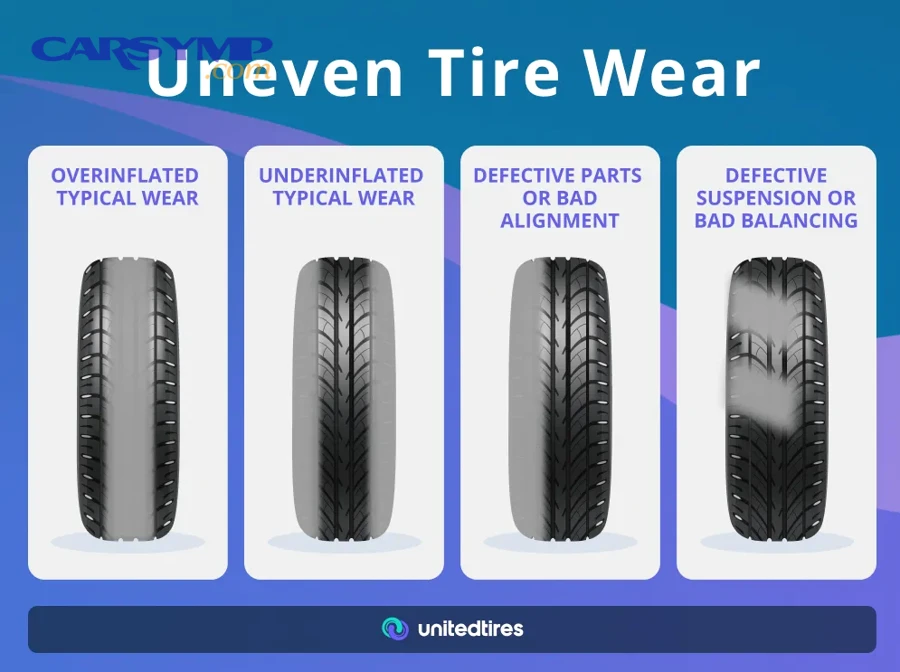
Clunking noise is a sharp, repetitive impact sound produced when worn or loosened suspension components move beyond their designed range of motion, and uneven tire wear is the non-uniform degradation of tread depth caused by irregular contact between the tire and the road surface. Together, these two symptoms form a compound diagnostic signal pointing directly at the suspension and steering system.
To better understand what each symptom tells you, it helps to define them separately before connecting them as a pair.
What Does a Clunking Noise Near the Tires Indicate?
A clunking noise near the tires is a mechanical impact sound generated when a suspension component has enough play — looseness — that it shifts position under load and strikes an adjacent surface. This is fundamentally different from a grinding noise, which suggests metal-on-metal friction from brake wear or bearing failure, and different from a squeal, which typically signals brake pad contact or belt slippage.
The components most commonly responsible for clunking include:
- Ball joints — produce a clunk when the vehicle goes over a bump, as the worn joint allows the knuckle to move beyond its normal arc
- Control arm bushings — generate a thudding knock during acceleration, braking, or cornering as the rubber degrades and allows the arm to shift
- Strut mounts and top hats — create a single sharp knock when hitting a pothole as the mount’s bearing wears out
- Tie rod ends — produce a lighter clunk or knock during steering input, particularly at low speed
The location and timing of the clunk narrows the diagnosis significantly. A clunk that occurs over bumps while driving straight points toward ball joints or bushings. A clunk that appears specifically during turning points toward tie rod ends or strut mounts. A clunk felt under braking often implicates control arm bushings or a loose sway bar link.
What Is Uneven Tire Wear and Why Does It Matter?
Uneven tire wear is the irregular or non-uniform degradation of a tire’s tread surface, where some areas of the tire lose rubber faster than others due to mechanical, inflation, or alignment-related causes. Unlike normal wear, which reduces tread depth evenly across the full width of the tire, irregular wear creates patterns — bald patches, wedge shapes, cupped depressions, or feathered ribs — that carry diagnostic meaning.
The safety implications extend well beyond the cost of premature tire replacement. A tire worn unevenly loses its ability to channel water away from the contact patch, dramatically increasing the risk of aquaplaning in wet conditions. Tread that has worn below 2/32 of an inch in any section — even if the rest of the tire appears healthy — is considered legally and functionally unsafe in most jurisdictions. According to the National Highway Traffic Safety Administration, tire-related issues contribute to approximately 11,000 crashes annually in the United States, making irregular wear a genuine road safety concern rather than a cosmetic inconvenience.
What Causes Clunking Noises and Uneven Tire Wear at the Same Time?
There are five primary component categories that simultaneously cause clunking and uneven tire wear: ball joints, control arm bushings, shocks and struts, wheel bearings, and alignment-disrupting failures — all operating through the same mechanism of allowing the wheel to shift out of its correct position under load.

Specifically, each of these components plays a role in holding the wheel at a precise angle and position relative to the road. When any one of them develops play or loses structural integrity, the wheel moves dynamically — producing noise as it does so, and contacting the road at a slightly different angle than intended with each rotation, which grinds away tread unevenly over time.
Can Worn Ball Joints Cause Both Clunking and Uneven Tire Wear?
Yes, worn ball joints can cause both clunking and uneven tire wear because the ball joint is the pivot point connecting the wheel knuckle to the control arm — when it wears, the wheel gains freedom to tilt, producing both impact noise and camber-driven edge wear.
A healthy ball joint allows smooth, controlled rotation while maintaining a fixed position. As the joint wears, the socket develops play, and under the weight of the vehicle the wheel begins to lean inward or outward beyond the manufacturer’s camber specification. This lean causes the inner or outer shoulder of the tire to bear a disproportionate share of the load, shaving the edge of the tread down rapidly while the opposite side remains relatively intact.
To check for ball joint failure at home, place the vehicle safely on jack stands, grip the tire at the 12 o’clock and 6 o’clock positions, and attempt to rock it toward and away from you. Any detectable play in the vertical plane — even a small amount — indicates ball joint wear that warrants immediate professional inspection. Because ball joint failure can result in complete wheel separation at speed, this is one of the few suspension symptoms that justifies stopping driving entirely until repaired.
Can Damaged Control Arm Bushings Cause Clunking and Irregular Wear?
Yes, damaged control arm bushings cause both clunking and irregular tire wear because degraded rubber inserts allow the entire control arm to shift position under braking, acceleration, and cornering loads, altering wheel geometry dynamically and inconsistently.
The bushing’s job is to mount the control arm to the vehicle’s subframe while absorbing vibration and maintaining arm position. When the rubber softens, cracks, or separates from its metal housing — a process accelerated by heat, road salt, and age — the arm gains freedom of movement. Under hard braking, the arm can kick forward; under acceleration, it pulls back. Each shift moves the wheel slightly out of alignment, wearing the inner or outer tire edge depending on the direction of displacement.
A visual inspection often reveals bushing failure before it becomes severe. Looking directly at the bushing from below the vehicle, visible cracking, deformation, or a gap between the rubber and the metal sleeve are all clear indicators of wear. Preventing tie rod wear and bushing deterioration together through regular undercarriage inspections — particularly after harsh winters when road salt accelerates rubber degradation — is a straightforward maintenance habit that can extend the life of an entire set of tires by tens of thousands of miles.
Do Worn Shocks or Struts Cause Clunking and Cupping Wear?
Yes, worn shocks and struts cause both clunking and cupping tire wear because a damper that can no longer control wheel rebound allows the tire to bounce rhythmically against the road surface, producing both impact noise and the characteristic cup-shaped depressions that appear around the tire’s circumference.
A functioning shock absorber or strut converts the kinetic energy of suspension travel into heat, smoothing the wheel’s contact with the road. When the internal valving wears out or the seal fails and fluid leaks, the damper loses this conversion ability. The spring continues to compress and extend freely, and the wheel literally hops up and down over road irregularities. Each landing grinds a small patch of tread against the pavement, and over thousands of repetitions, these grinding points become the cupped depressions that are unmistakable on an affected tire.
The clunking associated with strut failure often originates at the top mount rather than the strut body itself. The upper strut bearing — a thrust bearing that allows the strut to rotate with steering input — develops play as it wears, and the resulting knock is most noticeable when turning the steering wheel at low speeds or when the vehicle drops into a pothole.
Can Wheel Bearing Failure Produce Clunking and Uneven Wear?
Yes, wheel bearing failure produces both clunking and uneven tire wear because a deteriorating bearing allows the entire wheel hub to develop axial and radial play, destabilizing the wheel’s rotational axis and generating both impact noise and irregular tread contact.
The diagnostic distinction between wheel bearing clunk and ball joint clunk is important for accurate repair. Wheel bearing noise typically presents as a growling or humming sound that changes with vehicle speed — often increasing between 40 and 60 mph — and sometimes changes tone when the vehicle gently changes lanes, loading and unloading the bearing. The clunking component of bearing failure arises from in-and-out play: gripping the tire at the 3 o’clock and 9 o’clock positions and pushing and pulling it horizontally reveals this play, distinguishing it from the vertical play of a ball joint.
The uneven wear produced by bearing failure is often subtler than that caused by ball joints or alignment issues, manifesting as slight inconsistency across the tread width rather than a dramatic one-sided bald edge. However, because a severely failed bearing can cause the wheel to wobble at speed, the resulting wear accelerates quickly once the play becomes significant.
What Are the Different Uneven Tire Wear Patterns and What Do They Diagnose?
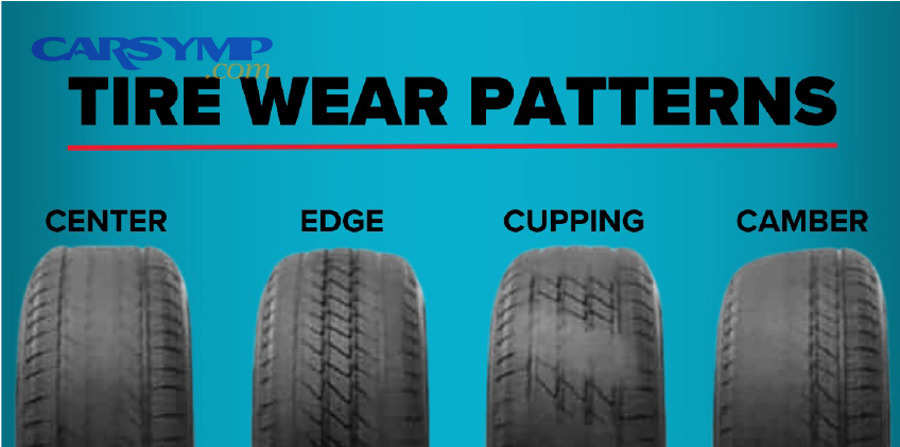
There are five main uneven tire wear patterns — center wear, edge wear, one-sided camber wear, cupping, and feathering — each corresponding to a distinct mechanical, inflation, or alignment cause that can be identified through visual and tactile inspection.
The following table summarizes the pattern-to-cause mapping, providing a quick reference before diving into the detail of each type.
| Wear Pattern | Visual Appearance | Primary Cause | Primary Fix |
|---|---|---|---|
| Center wear | Bald strip down the middle | Overinflation | Reduce PSI to spec |
| Edge (shoulder) wear | Both outer edges worn | Underinflation | Inflate to recommended PSI |
| Camber (one-sided) wear | One edge worn, one intact | Misalignment / worn suspension | Alignment + suspension check |
| Cupping / Scalloping | Cup-shaped depressions around circumference | Worn shocks or struts / imbalance | Replace dampers, balance tires |
| Feathering | Ribs rounded on one side, sharp on the other | Toe misalignment | Toe adjustment in alignment |
Each pattern tells a specific story about what is happening between the tire and the road, and identifying the correct pattern is the foundation of an accurate diagnosis.
What Does Center Tread Wear Indicate?
Center tread wear indicates chronic overinflation, where excessive air pressure causes the tire to balloon outward, shifting the majority of the vehicle’s weight onto the center band of the tread while the shoulders remain relatively unloaded.
The fix is straightforward: deflate each tire to the manufacturer’s recommended PSI, which is printed on a sticker inside the driver’s door jamb — not on the tire sidewall, which lists the maximum pressure rather than the recommended operating pressure. Once PSI is corrected, center wear stops progressing, though the already-worn tread cannot be recovered. If center wear has developed quickly despite correct inflation, a bent rim forcing the tire into an abnormal profile should be investigated.
What Does Edge (Shoulder) Wear on Both Sides Indicate?
Bilateral edge wear — where both outer shoulders of the tire wear faster than the center — indicates chronic underinflation, which causes the tire to sag and concentrate the vehicle’s load on both outer edges of the contact patch.
The immediate fix is inflating the tire to the correct PSI and checking pressure monthly, especially before temperature changes, as tire pressure drops approximately one PSI for every 10-degree Fahrenheit decrease in ambient temperature. Bilateral edge wear is the only major wear pattern where suspension inspection is not the primary diagnostic step — it is almost always an inflation management issue. If wear persists after correcting inflation, a wheel alignment check is the logical next step to rule out secondary alignment contributions.
What Does One-Sided (Camber) Wear Indicate?
One-sided camber wear — where one shoulder wears significantly faster than the other on the same tire — indicates that the wheel is tilted beyond its designed camber specification, forcing one edge of the tire to carry a disproportionate share of the vehicle’s weight.
The tilt can originate from two sources: an alignment setting that has drifted out of specification, or a physical change in suspension geometry caused by a worn or damaged component. Critically, a wheel alignment service alone will not permanently correct camber wear if the underlying suspension component — a worn strut, collapsed spring, deteriorated control arm bushing, or failed ball joint — is still present. The component must be repaired or replaced first, after which an alignment correction will hold and the remaining tread will wear evenly.
What Does Cupping or Scalloping Wear Indicate?
Cupping or scalloping wear — the appearance of shallow, cup-shaped depressions spaced irregularly around the tire’s circumference — indicates that the tire is bouncing against the road surface rather than maintaining consistent contact, almost always caused by worn shock absorbers or struts or by significant wheel imbalance.
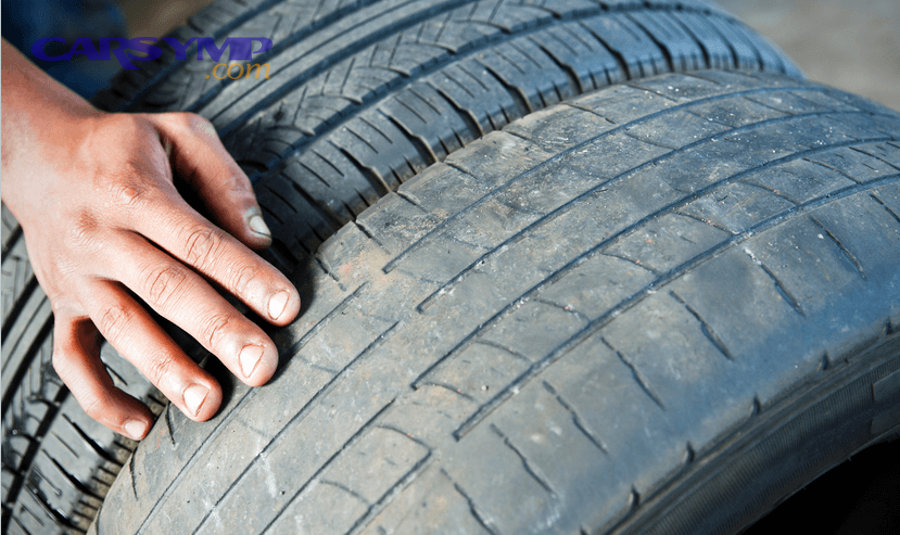
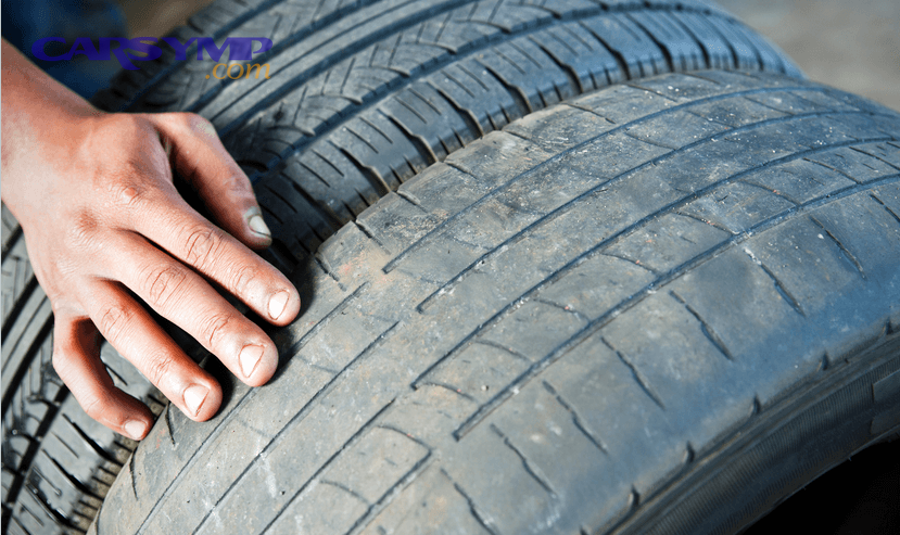
The rhythmic nature of the bouncing produces wear spots at the points where the tire repeatedly strikes the pavement with excess force. Running your hand around the circumference of the tire and feeling alternating smooth and rough patches is the tactile check for cupping, and it is often detectable by feel before it becomes visually obvious. Replacement of the worn dampers followed by tire balancing resolves the underlying cause; however, a cupped tire itself will continue to produce vibration and noise even after the shocks are replaced, meaning the tire may need replacement alongside the suspension work.
What Does Feathering Wear Indicate?
Feathering wear — where the tread ribs feel rounded and smooth on one side but sharp and pointed on the other when you run your hand across the tread — indicates a toe misalignment, where the fronts of the tires point inward (toe-in) or outward (toe-out) beyond the manufacturer’s specification.
Toe misalignment is the most common alignment-related cause of tire wear and the most directly correctable through a standard alignment service. A toe adjustment realigns the tires so they point parallel to the vehicle’s centerline, and once corrected, feathering stops progressing. Feathering is also a reliable indicator that a tie rod replacement may be overdue — a bent or worn inner or outer tie rod end shifts the toe angle and resists holding alignment correction — making the two repairs frequently paired together.
How Do You Diagnose Clunking and Uneven Tire Wear at Home?
Diagnosing clunking and uneven tire wear at home involves three sequential steps — visual tread inspection, hands-on grab testing of the wheel, and a structured test drive assessment — producing a component-level diagnosis that guides the correct repair without requiring specialized equipment.
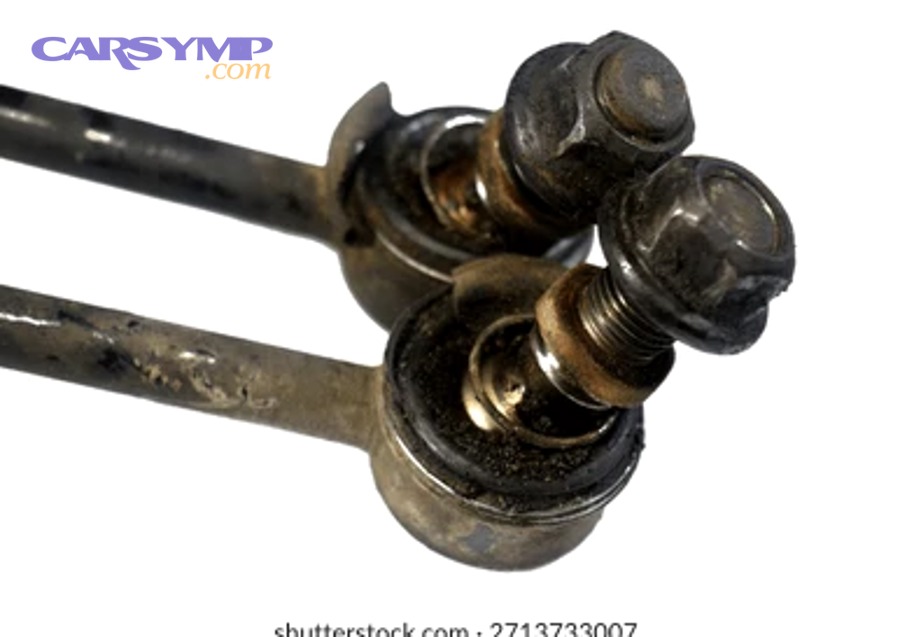
These steps build on each other: the wear pattern narrows the likely cause, the grab test confirms or rules out specific components, and the driving assessment identifies symptom patterns that point to the remaining candidates.
How to Perform a Visual Tire Inspection for Wear Patterns
Begin the visual inspection by parking on a flat, well-lit surface and crouching at eye level with each tire in turn. Look across the full tread surface from the front and from above, checking for any asymmetry in tread depth from one edge to the other, any bald patches, any rhythmic cupping depressions, and any feathering visible at the tread block edges.
For a more precise assessment:
- Penny test: Insert a penny into the tread groove with Lincoln’s head pointing down. If the top of Lincoln’s head is visible, tread depth is at or below 2/32 of an inch and the tire is legally worn out.
- Tread depth gauge: A basic plastic gauge costs under five dollars and gives exact measurements in 32nds of an inch. Measure at three points across the width — inner edge, center, outer edge — and compare the readings. A difference of more than 2/32 between the inner and outer measurements on the same tire confirms one-sided wear.
- Tactile sweep: Run your palm slowly across the tread surface. Cupping feels like alternating bumps and valleys. Feathering feels like gentle ridges that are rounded on one side and sharp on the other, similar to the pages of a fanned book.
How to Use the Grab Test to Identify Suspension Component Failure
The grab test is a hands-on diagnostic method performed with the vehicle safely elevated on jack stands — never on a floor jack alone — that identifies specific suspension component failures by detecting directional play in the wheel.
Follow these steps carefully:
- Raise the vehicle using a floor jack at the manufacturer’s recommended jack point and immediately secure it on rated jack stands before placing any part of your body near or under the vehicle.
- 12 and 6 o’clock test: Grip the tire firmly at the top and bottom. Push the top toward the vehicle while pulling the bottom outward, then reverse. Any detectable rocking in the vertical plane indicates ball joint wear on the lower control arm.
- 3 and 9 o’clock test: Grip the tire at the left and right sides. Push and pull horizontally. Play in this direction indicates either tie rod end wear (if the wheel pivots at the knuckle) or wheel bearing play (if the entire hub assembly moves laterally).
- Spin the wheel: With the wheel off the ground, spin it by hand and listen for roughness, grinding, or wobble. Smooth rotation rules out bearing failure; any grinding strongly suggests it.
Any detectable play in positions 1 or 2 warrants professional inspection before the vehicle is driven. Seized jam nut removal is often necessary when replacing tie rod ends, as the jam nut — which locks the tie rod end’s position relative to the inner tie rod — can corrode solidly in place, particularly on high-mileage vehicles in salt-belt regions. Penetrating oil applied 24 hours before the job and the correct open-end wrench size (typically 17mm or 19mm) are the most reliable Seized jam nut removal tips for a successful, thread-preserving replacement.
What Driving Symptoms Accompany Clunking and Uneven Wear?
Driving symptoms that commonly accompany clunking and uneven tire wear include the vehicle pulling to one side on a straight, flat road; a vibration felt through the steering wheel at specific speeds; a rougher, less controlled ride quality over bumps; and a vague or wandering steering response at highway speeds.
Each symptom combination narrows the diagnosis further:
- Clunk over bumps + vehicle pull + camber wear = strong indicator of a worn ball joint or collapsed spring
- Clunk during turning + feathering wear = strong indicator of a tie rod end failure requiring tie rod replacement
- Smooth-speed vibration + cupping wear = strong indicator of worn shocks or out-of-balance tires
- Clunk + in/out wheel play + high-speed hum = strong indicator of wheel bearing failure
The value of combining driving symptoms with tread pattern analysis is that it cross-references two independent data sources — what the car feels like and what the tire looks like — producing a far more reliable diagnosis than either source alone.
What Are the Fixes for Clunking Noises and Uneven Tire Wear?
The fixes for clunking and uneven tire wear fall into four categories: wheel alignment correction, suspension component replacement, tire rotation and balancing, and in severe cases, tire replacement — applied in the sequence of component repair first, then alignment, then tire maintenance.
Sequencing matters enormously here. Performing an alignment on a vehicle with worn ball joints or tie rod ends is ineffective because the worn components cannot hold the alignment settings under real-world driving loads. The correct sequence is always: identify and replace the worn component, perform the wheel alignment, then rotate and balance the tires.
When Should You Get a Wheel Alignment to Fix Uneven Wear?
A wheel alignment is necessary whenever suspension components have been replaced, after any significant impact such as hitting a major pothole or curb, at least once per year as preventive maintenance, and whenever the vehicle pulls to one side or the steering wheel is off-center while driving straight.
An alignment service adjusts three primary angles: camber (the wheel’s inward or outward tilt when viewed from the front), toe (the angle of the tire relative to the vehicle’s centerline when viewed from above), and caster (the forward or rearward tilt of the steering axis when viewed from the side). Each angle affects a different wear pattern — camber drives one-sided edge wear, toe drives feathering, and caster primarily affects steering stability rather than wear directly. A modern alignment machine measures all three angles simultaneously and compares them to the manufacturer’s specification, making small adjustments to tie rod position and, where adjustable, camber bolts or eccentric bolts until all values fall within tolerance.
When Do Ball Joints, Tie Rod Ends, or Bushings Need Replacing?
Ball joints, tie rod ends, and bushings need replacing when any detectable play is found during the grab test, when visible physical damage — torn boots, cracked rubber, separated metal-to-rubber bonds — is observed, or when the worn component is preventing a wheel alignment from holding its specifications.
The diagnostic threshold differs slightly by component. Ball joints on load-bearing lower control arms are subject to stricter play tolerances than upper ball joints because they carry the full weight of the vehicle. Most manufacturers specify maximum allowable axial play of 0.050 inches for lower ball joints; any play beyond this threshold indicates replacement is necessary. For tie rod ends, any horizontal movement detected in the 3-and-9 grab test — no matter how slight — is sufficient cause for tie rod replacement, as tie rod failure at speed can result in sudden loss of steering control.
Preventing tie rod wear proactively through regular lubrication of greaseable joints (where applicable) and prompt replacement of damaged tie rod end boots — which protect the joint from contamination — significantly extends component life between replacements.
Can Tire Rotation and Balancing Correct Uneven Wear?
Tire rotation and balancing can slow or redistribute uneven wear in its early stages, but cannot reverse wear that has already developed, and will not correct wear caused by a mechanical failure that remains unaddressed.
Rotation works by moving each tire to a different position on the vehicle — typically following a cross-pattern or front-to-rear pattern depending on whether the vehicle uses directional tires — redistributing the wear load so that no single tire wears disproportionately fast. The recommended interval is every 5,000 to 8,000 miles, or at every oil change as a practical rule. Rotation performed this regularly prevents wear differentials from becoming large enough to require premature single-tire replacement. However, if one tire has already developed significant cupping or camber wear, rotating it to a different position does not restore the lost tread — it only spreads the remaining wear more evenly across the other tires.
Balancing addresses a different problem: uneven weight distribution within the wheel-and-tire assembly. A tire that is heavy on one side will hop and vibrate at speed, generating cupping wear at the contact points. A balancing service attaches small weights to the rim to compensate for weight asymmetry, and it should be performed whenever new tires are mounted and whenever vibration or cupping wear appears.
Is It Safe to Drive With Clunking Noises and Uneven Tire Wear?
No, it is not consistently safe to drive with clunking noises and uneven tire wear, because both symptoms indicate an underlying mechanical failure that progressively worsens under driving loads and that can result in sudden, unpredictable loss of handling control or a tire blowout if left unaddressed.
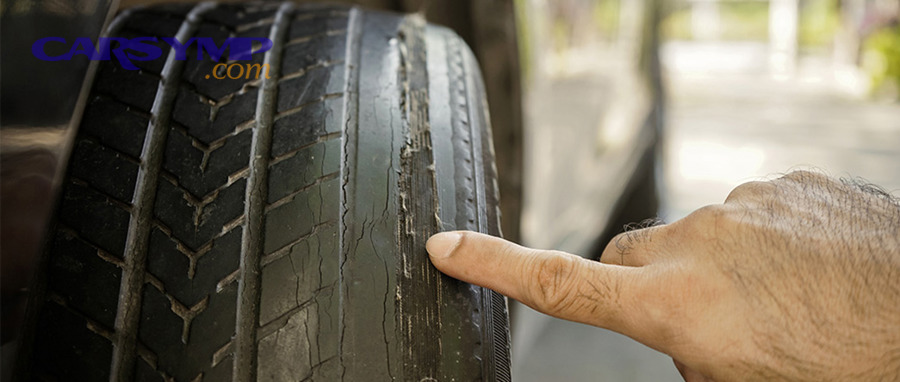
The safety risk is not uniform — a mild clunk from a slightly worn bushing combined with early-stage uneven wear is categorically less dangerous than a severe clunk with detectable wheel play and a tire worn below the legal tread depth limit. However, because both symptoms tend to worsen rather than self-correct, they should be treated as time-sensitive maintenance priorities rather than acceptable background conditions.
What Are the Stop-Driving Warning Signs?
The stop-driving warning signs for clunking and uneven tire wear are: any detectable play in the wheel during the grab test, tread depth below 2/32 of an inch in any section of any tire, a pull under braking that has worsened over recent drives, and a clunking noise that has increased in frequency or severity within a short time period.
These specific combinations represent the threshold between “schedule an inspection soon” and “do not drive this vehicle”:
- Detectable wheel play + clunking = potential ball joint or tie rod failure; the component can separate completely at speed
- Tread below 2/32″ + wet weather forecast = near-zero hydroplaning resistance; the risk of loss of control in rain is severe
- Increasing pull under braking + clunking = suggests a wheel bearing or ball joint is at advanced stage of failure, where the geometry is actively shifting under braking load
- Rapid new wear on a recently installed tire = indicates the mechanical cause of previous wear was not corrected before the new tire was mounted; the tire is being consumed by an ongoing fault
How Quickly Does Uneven Wear Become a Safety Hazard?
Uneven wear becomes a safety hazard at an accelerated pace once the tread in the affected area drops below 4/32 of an inch — a threshold at which wet-road stopping distances begin increasing measurably — and reaches critical danger once any section falls below 2/32 of an inch.
The snowball dynamic of uneven wear is particularly important to understand: a worn suspension component causes wear, which reduces tread depth, which reduces the tire’s ability to conform to the road surface, which further destabilizes the vehicle’s handling, which in turn accelerates the remaining wear on that tire and begins transferring stress to adjacent tires. According to the U.S. Tire Manufacturers Association, a tire at 2/32-inch tread depth on a wet road requires approximately 500 additional feet to stop from 70 mph compared to a tire at 10/32-inch tread depth — a difference of roughly one and a half football fields. At any speed, that gap between stopping and not stopping is the difference between a controlled stop and a collision.
What Else Can Cause Clunking and Uneven Wear in Specific Vehicles or Conditions?
Beyond the standard suspension components, there are four specialized scenarios that produce clunking and uneven wear in specific vehicle types, drivetrain configurations, and modification setups — each requiring a diagnosis approach that goes beyond the standard checklist.
These scenarios matter because they represent the cases most likely to be misdiagnosed or missed entirely during a standard suspension inspection, particularly on modified vehicles, high-mileage performance cars, or complex multi-link suspension platforms.
Does Front-Wheel Drive vs. Rear-Wheel Drive Affect How Wear Patterns Develop?
Front-wheel drive causes faster and more asymmetric front tire wear than rear-wheel drive because FWD front tires simultaneously manage steering, acceleration, and the majority of braking forces, while RWD distributes acceleration forces to the rear axle, reducing front tire stress.
On a FWD vehicle, the inner edges of front tires are particularly susceptible to camber-related wear because the constant CV joint articulation under power slightly loads the outer suspension geometry. The front tires on a FWD car typically need replacement 20 to 30 percent sooner than the rears under equivalent driving conditions, making aggressive rotation intervals especially important. On a RWD vehicle, rear suspension wear — particularly rear control arm bushings and rear toe links — is the more likely source of rear tire cupping or camber wear, and clunking from the rear axle area is a stronger diagnostic signal than it might initially appear. On AWD platforms, uneven wear on any single tire creates a rotational speed differential between axles that can damage the center differential or transfer case, making tire replacement intervals stricter than on two-wheel-drive vehicles.
Can Caster/Camber Plate Bushings Cause Clunking Without Obvious Wear?
Yes, worn caster/camber plate bushings — specifically the spherical bearings used in adjustable aftermarket camber plates on modified performance vehicles — can produce a distinct clunking noise near the strut tower while causing only gradual, subtle outer edge wear that is easy to attribute to alignment rather than the bushing itself.
This is a rare diagnostic scenario largely invisible to owners of unmodified stock vehicles, but highly relevant to enthusiasts running coilover suspension kits with adjustable top mounts. The spherical bearing in an aftermarket caster/camber plate eventually develops play, producing a characteristic single knock when the suspension reaches full bump or rebound — often confused with a strut mount bearing failure or a ball joint. The outer edge wear develops slowly because the play in the bearing allows a slight but persistent camber deviation that a standard alignment cannot fully correct, as the plate itself shifts under load after the alignment is set. Replacement of the worn bushing or spherical bearing — available as a standalone component from most coilover manufacturers — resolves both symptoms simultaneously.
How Does Rear Multi-Link Suspension Wear Differently Produce Clunking and Tire Issues?
Rear multi-link suspension systems — common on modern mid-size sedans, crossovers, and sports cars — produce clunking and rear tire wear through the deterioration of individual toe links, camber links, or trailing arms rather than a single identifiable component like a ball joint, making diagnosis more complex and often requiring professional measurement.
In a multi-link rear suspension, the wheel’s position in all three planes — toe, camber, and caster — is controlled by multiple separate links, each with its own bushings. When one link’s bushing deteriorates, the geometry control it provides is lost, and the rear wheel shifts into an incorrect angle. This manifests as rear tire feathering (from toe change), rear inner edge wear (from camber change), or a combination of both. The clunking associated with rear multi-link wear often appears during cornering or over speed bumps and is felt as a thunk through the rear seat rather than the steering wheel — a location cue that points the diagnosis rearward. A professional shop will use a four-wheel alignment system that measures rear camber and toe to identify which link is out of specification, and the repair will target that specific link rather than the entire rear subframe.
Does Uneven Tire Wear Void Your Tire Warranty?
Yes, uneven tire wear caused by neglected maintenance, mechanical failure that was not repaired, or intentionally modified suspension geometry typically voids the tread wear warranty provided by the tire manufacturer, because the warranty assumes the tire is operated under the vehicle manufacturer’s specified conditions.
Most tire manufacturer tread wear warranties explicitly exclude wear caused by improper inflation, misalignment, suspension component failure, and modified camber settings. If a tire develops premature uneven wear and a warranty claim is submitted, the manufacturer’s inspector will examine the wear pattern and the vehicle’s maintenance history. Edge wear consistent with camber misalignment, cupping consistent with worn shocks, or one-sided wear consistent with a ball joint failure will all result in a denied claim if there is no documentation of regular alignment services, rotation history, and timely repair of identified suspension faults. Maintaining dated alignment records, keeping tire rotation receipts, and addressing any clunking noise or suspension fault promptly — before it has time to generate a documentable wear pattern — is the most effective strategy for protecting a tire warranty claim should premature wear occur despite proper maintenance.