


A car that shakes after sitting often has one of two tire-related problems: temporary tire flat spotting or a persistent balance issue. In practical terms, flat spotting happens when the tire sits under load long enough for the contact patch to deform, while a balance issue happens when the wheel-and-tire assembly rotates with uneven mass distribution. For car owners, the key difference is behavioral: temporary flat spots often improve as the tire warms up, but true imbalance usually stays noticeable at specific speeds. ([tirerack.com](https://www.tirerack.com/upgrade-garage/what-is-temporary-tire-flatspotting?srsltid=AfmBOopWCgfYPj_C9BIXP1M9GFNA_RFj7PYu6eWf5XJBaSOpOiJ_j-t2&))
That basic diagnosis matters because the next step changes depending on the pattern. A temporary flat spot may only need proper inflation and a short drive, while a balance problem may require wheel balancing, a closer inspection of the wheel, or road-force testing. In other words, the symptom may feel similar from the driver’s seat, but the fix is not the same. ([tirerack.com](https://www.tirerack.com/upgrade-garage/what-is-temporary-tire-flatspotting?srsltid=AfmBOopWCgfYPj_C9BIXP1M9GFNA_RFj7PYu6eWf5XJBaSOpOiJ_j-t2&))
The first clues usually come from timing and location. Vibration that is strongest in the first few miles, especially on cold mornings, points more toward flat spotting. Vibration that appears predictably at one speed range and stays there after the tires warm up points more toward imbalance, an out-of-round condition, or another mechanical issue. ([tirerack.com](https://www.tirerack.com/upgrade-garage/what-is-temporary-tire-flatspotting?srsltid=AfmBOopWCgfYPj_C9BIXP1M9GFNA_RFj7PYu6eWf5XJBaSOpOiJ_j-t2&))
Car owners also need to separate tire behavior from look-alike problems such as alignment, uneven wear, and suspension faults. Introduce a new idea: the sections below show how to identify the pattern, test it safely, compare likely causes, and decide when to drive, rebalance, inspect, or replace the tire.
What are tire flat-spot and balance issues after sitting?
Tire flat-spot and balance issues after sitting are two different causes of post-storage vibration: one comes from temporary tread deformation under load, and the other comes from uneven rotating mass in the wheel-and-tire assembly.
To better understand the issue, it helps to define each condition before comparing how it feels on the road.
What is tire flat-spotting after a car sits?
Tire flat spotting is a condition in which the part of the tire touching the ground loses its perfectly round shape after being parked under load. That sounds dramatic, but in many cases it is temporary rather than permanent. When a vehicle sits overnight, for several days, or for weeks, the carcass and tread area can take a set. As the tire begins rolling again, that flattened area produces a thump, shake, or light shimmy until the casing regains a more uniform shape.
The severity depends on how long the car sat, ambient temperature, tire construction, vehicle weight, and inflation pressure. Cold weather matters because rubber becomes less compliant, so a tire can feel stiffer and take longer to return to normal. A heavier vehicle also loads the contact patch more strongly, which can make the initial disturbance easier to feel through the steering wheel or seat. Temporary flat spotting is especially common when the car has been parked longer than normal or when tire pressure has dropped below the recommended cold setting. ([tirerack.com](https://www.tirerack.com/upgrade-garage/what-is-temporary-tire-flatspotting?srsltid=AfmBOopWCgfYPj_C9BIXP1M9GFNA_RFj7PYu6eWf5XJBaSOpOiJ_j-t2&))
In daily driving, the defining trait is improvement. The vibration is usually strongest at the start of the drive and then fades as the tire warms and flexes. That warm-up pattern is the first major clue that the problem is not the same as a classic balance fault.
What is a tire balance issue, and how is it different from a flat spot?
A tire balance issue is a rotating-mass problem in which the wheel and tire no longer spin with even weight distribution around the assembly. Instead of the tire needing to round itself out after sitting, the assembly continues to rotate with a heavy spot or uneven distribution that creates cyclic vibration. This can happen if a wheel weight falls off, a tire is mounted imperfectly, the wheel is damaged, or the assembly has too much road-force variation.
The difference from a flat spot is practical and diagnostic. A temporary flat spot often changes noticeably after a few miles. A balance issue typically stays consistent at the same speed range, whether the tire is warm or not. Drivers often notice it between moderate and highway speeds, and the vibration may feel rhythmic rather than thumpy. That is why wheel balancing is a correction step, while temporary flat spotting is often a drive-and-monitor situation. ([tirerack.com](https://www.tirerack.com/upgrade-garage/what-is-temporary-tire-flatspotting?srsltid=AfmBOopWCgfYPj_C9BIXP1M9GFNA_RFj7PYu6eWf5XJBaSOpOiJ_j-t2&))
This distinction also leads directly into one of the most common service questions: Balance vs alignment: when each is needed. Balancing addresses rotating weight distribution; alignment addresses wheel angles such as toe, camber, and caster. If the vehicle shakes without pulling, balancing is usually the earlier suspect than alignment.
Can tires develop vibration after sitting for a short or long time?
Yes, tires can develop vibration after both short and long periods of sitting because casing deformation, temperature, load, and inflation pressure all influence how the tire behaves when it starts rolling again.
More specifically, the longer the car sits and the colder or lower-pressure the tire becomes, the more noticeable the symptom can be.
Does overnight sitting cause temporary flat spots?
Yes, overnight sitting can cause temporary flat spots, especially in cooler weather, with stiffer tire compounds, or when the tire pressure is lower than it should be. Many drivers notice this as a light shake during the first few miles of the morning drive. In most ordinary cases, the symptom fades as the tire flexes, warms up, and returns closer to its natural round shape.
This matters because many car owners mistake a normal short-term warm-up symptom for a serious tire failure. The better question is not whether a light vibration exists at startup, but whether it improves quickly and predictably. If the answer is yes, the pattern fits temporary flat spotting far better than a permanent balance problem. Tire Rack notes that temporary flat spotting can occur under different conditions and that knowing what to expect helps drivers minimize inconvenience, while official tire guidance also stresses resetting inflation to the recommended level when bringing a stored car back into use. ([tirerack.com](https://www.tirerack.com/upgrade-garage/what-is-temporary-tire-flatspotting?srsltid=AfmBOopWCgfYPj_C9BIXP1M9GFNA_RFj7PYu6eWf5XJBaSOpOiJ_j-t2&))
Does long-term storage make the problem worse?
Yes, long-term storage usually makes the problem worse because the tire remains loaded in one position for longer, pressure may fall during storage, and the casing has more time to take a set. A vehicle that sits for weeks or months can leave the driver with a vibration that lasts longer into the drive, feels stronger at speed, or in some cases no longer disappears fully.
That does not automatically mean the tire is ruined, but it raises the odds that the issue has moved beyond a mild overnight flat spot. Underinflation increases the risk because a softer tire deforms more under weight. Continental’s storage guidance says flat spots usually disappear in a short period of service, but also recommends increasing stored-tire pressure—when the tires support the vehicle—to the maximum shown on the sidewall, then returning to the recommended usage pressure before driving. NHTSA also emphasizes using the vehicle manufacturer’s recommended cold inflation pressure rather than guessing. ([continental-tires.com](https://www.continental-tires.com/tire-knowledge/storing-tires/?))
If the vibration remains strong after repeated drives, you are no longer dealing with a simple “sat too long” annoyance. You are then into the territory of inspection, balancing, or replacement.
What symptoms help diagnose flat spots vs balance issues?
There are three main symptom groups that help diagnose flat spots vs balance issues: timing, speed behavior, and vibration location in the vehicle.
To better understand the pattern, focus on when the vibration starts, whether it changes as the tire warms up, and where you feel it most clearly.
What symptoms usually point to temporary tire flat spots?
Temporary tire flat spots usually show three features: they appear right after the car has been sitting, they are often stronger in cold conditions, and they improve as the drive continues. The sensation may feel like a thump-thump-thump at first, then turn into a mild tremor, then nearly disappear. In some cars, especially with firmer suspensions or low-profile tires, the effect is easier to feel even when the deformation is temporary.
This warm-up behavior is the clearest clue. If the car sat overnight or longer, then vibrates only at the beginning of the trip, the pattern strongly suggests a tire shape issue rather than a pure mass-balance issue. Flat spotting can also be more noticeable after seasonal storage, after parking on a cold surface, or when a vehicle carries extra load for long periods. Firestone and Continental both note that low temperature and prolonged stationary load can make flat spotting more noticeable. ([continental-tires.com](https://www.continental-tires.com/tire-knowledge/flat-spotting/?))
What symptoms usually point to a balance problem?
A balance problem usually shows three different clues: the vibration is speed-specific, it does not improve much after the tires warm up, and it tends to return consistently on every drive. Drivers often notice it at one repeatable band, such as 55 to 70 mph, with the car smoothing out below or above that range.
That repeatability matters because it reflects rotational frequency, not just temporary casing recovery. If a wheel weight has moved or the assembly is uneven, the vibration will usually recur whenever the assembly spins through the same critical speed zone. In service terms, this is where wheel balancing becomes the logical next step, not just driving the car longer and hoping the symptom fades. If a balance check does not solve it, technicians may then look at wheel runout, road-force variation, or tire uniformity issues. ([commons.wikimedia.org](https://commons.wikimedia.org/wiki/File%3ATireimbalance.png?))
Where is the vibration felt: steering wheel, seat, or whole car?
Vibration location helps classify the problem because steering wheel shake more often points to the front axle, while seat or floor vibration more often points to the rear. That is not a perfect rule, but it is useful for first-pass diagnosis. A front-tire issue often feeds directly into the steering column, so the wheel trembles in your hands. A rear-tire issue may feel more like a body buzz or seat shake.
The whole car can still feel unsettled when the disturbance is large, especially at highway speed. What matters is not chasing absolute certainty from one symptom, but building a pattern from several clues. For example, a front steering shake that is strongest for the first few miles after a cold start points one way. A seat vibration that appears only at 65 mph on every drive points another. Hooking those clues together creates a stronger diagnosis than focusing on any single sensation alone.
How can car owners diagnose tire flat spots and balance issues at home?
The best home diagnosis method uses three steps—inspect, inflate, and road-test—so you can tell whether the vibration fades like a flat spot or stays consistent like a balance problem.
Next, use a controlled routine before you pay for service, because the pattern itself often reveals the likely cause.
What should you inspect before driving?
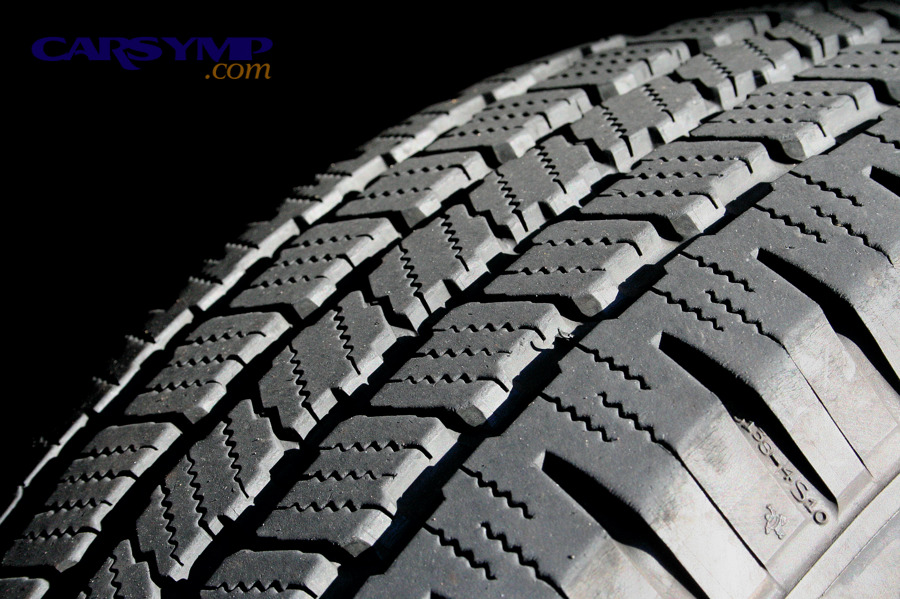
Before driving, inspect tire pressure, visible tread condition, sidewalls, the wheel rim, and any obvious signs of uneven wear or damage. Start with cold tire pressure, because underinflation can exaggerate both flat spotting and handling problems. Use the pressure on the vehicle placard or owner’s manual, not the sidewall maximum as your everyday operating target. NHTSA’s tire guidance consistently points drivers back to the manufacturer’s recommended cold inflation pressure. ([nhtsa.gov](https://www.nhtsa.gov/vehicle-safety/tires?))
Then look closely at the tread and sidewall. You are not trying to measure perfect roundness in your driveway. You are looking for red flags: a visibly deformed area, unusual flat wear patches, cracks, bulges, embedded objects, or an obviously bent rim. A bulge suggests structural damage, not a harmless storage flat spot, and that shifts the problem from diagnosis to safety. If you see damage, do not continue with a casual road test.
It also helps to note how long the vehicle sat and under what conditions. A car parked three days in winter with slightly low tires creates a different diagnostic starting point than a daily driver with sudden vibration right after a recent tire service. Context changes what is most likely.
What is the best short road test for diagnosis?
The best short road test is a simple speed progression over a safe route: drive at neighborhood speed, then city speed, then highway speed if conditions allow, and note what changes over time. The key observations are onset, speed sensitivity, vibration location, and whether the symptom fades after 10 to 20 minutes.
If the vibration is strongest in the first miles and then diminishes, temporary flat spotting rises to the top of the list. If the vibration is faint at low speed but becomes strong and repeatable at one highway band, then remains even after warm-up, balance becomes the more likely explanation. If the vehicle also pulls left or right, alignment or tire conicity moves up the list. If the ride feels lumpy no matter what speed you choose, then out-of-round or damaged components deserve more attention.
A useful way to organize the drive is to compare what the car does in the first five minutes with what it does after the tire has flexed and heated. That comparison is more valuable than trying to guess from the first minute alone.
When should you stop DIY diagnosis and get a professional inspection?
You should stop DIY diagnosis when the vibration stays severe, visible tire damage appears, the wheel seems bent, pressure will not hold, or the symptom continues after proper inflation and repeated warm-up drives. Those conditions go beyond harmless startup behavior and deserve shop-level tools.
Professional inspection becomes more valuable when home clues point in two directions at once. For example, if the car sat for weeks but also recently had tire work, you could have both temporary flat spotting and a missing wheel weight. In that situation, a shop can confirm balance, wheel runout, and tread uniformity more quickly than driveway guesswork. This is also where advanced testing such as road-force measurement can help separate a balance complaint from a uniformity complaint.
According to NHTSA tire guidance, drivers should inspect tires for signs of wear or trauma and maintain proper pressure, while tire manufacturers and service providers also advise consulting a qualified tire professional when visible flat spots, damage, or persistent vibration remain. ([nhtsa.gov](https://www.nhtsa.gov/sites/nhtsa.gov/files/one.pdf?))
How do flat spots compare with balance, alignment, and out-of-round tire problems?
Flat spots, balance issues, alignment problems, and out-of-round tire conditions differ most in cause, symptom pattern, and corrective action.
However, because all four can make the vehicle feel “off,” comparing them directly helps prevent the wrong repair.
The table below summarizes what each condition usually feels like and what action it usually needs.
| Condition | Typical cause | Common symptom pattern | Best first action |
|---|---|---|---|
| Temporary flat spot | Tire sat under load and deformed temporarily | Stronger at start of drive, improves with warm-up | Inflate correctly and drive-monitor |
| Balance issue | Uneven rotating mass, lost weight, assembly imbalance | Repeatable shake at specific speeds, often persists | Wheel balancing |
| Alignment problem | Incorrect wheel angles | Pulling, off-center steering, uneven wear | Alignment inspection |
| Out-of-round tire | Tire or wheel no longer rolls true | Persistent bumpiness or rhythmic vibration | Tire/wheel inspection and measurement |
How are flat spots and balance issues different?
Flat spots and balance issues differ in recovery pattern, root cause, and service response. A temporary flat spot is primarily a shape problem after storage; a balance issue is primarily a rotating weight distribution problem. Because of that, a flat spot may reduce as the tire flexes and warms, while imbalance usually does not change much with heat alone.
That difference is why wheel balancing is not the universal answer to every post-storage shake. If the tire only needs to recover from sitting, balancing may not change much. On the other hand, if a wheel weight is missing or the assembly is uneven, no amount of warm-up driving will make the vibration disappear. Weight types and placement considerations matter here as well. Clip-on and adhesive weights serve the same balancing purpose, but technicians choose placement based on wheel design, clearance, corrosion concerns, and the correction needed on the inner or outer planes of the wheel. In other words, the fix is not just “add weight somewhere”; it is “add the right weight in the correct plane and position.” ([commons.wikimedia.org](https://commons.wikimedia.org/wiki/Category%3AAutomobile_wheel_balance_weights?))
How are flat spots different from alignment problems?
Flat spots are different from alignment problems because flat spots mainly create vibration after sitting, while alignment problems mainly change how the vehicle tracks and how the tread wears over time. A car with poor alignment often pulls to one side, has an off-center steering wheel, or shows uneven shoulder wear. A car with temporary flat spotting often drives straight but feels rough at the start.
That is why the phrase Balance vs alignment: when each is needed is so important for car owners. If the symptom is a speed-related shake without a directional pull, balancing usually deserves attention before alignment. If the car drifts, the steering wheel sits crooked, or the tread shows classic toe or camber wear, alignment becomes more relevant. The overlap is real, but the first symptom usually points to the better first service.
How is an out-of-round tire different from a flat-spotted tire?
An out-of-round tire is different from a flat-spotted tire because it tends to stay problematic instead of recovering with heat and flex. A flat-spotted tire may begin the drive misshapen and become smoother. An out-of-round tire keeps rolling with geometric irregularity, so the rhythm remains.
This is where many drivers get stuck. They keep driving longer, expecting the shake to fade, but it never truly does. That persistence is the giveaway. If repeated warm-up drives do not improve the condition, the issue may be an out-of-round tire, a bent wheel, or a tire uniformity problem rather than a harmless storage flat spot. This is also one reason technicians sometimes recommend road-force testing after a standard balance check fails to cure the complaint. ([commons.wikimedia.org](https://commons.wikimedia.org/wiki/File%3ATireimbalance.png?))
What should you do if the vibration continues after driving?
If the vibration continues after driving, use a three-level response: monitor mild fading symptoms, rebalance persistent speed-specific symptoms, and inspect or replace any tire that remains visibly damaged or unsafe.
Besides identifying the cause, this step turns diagnosis into a sensible action plan.
When is driving and monitoring enough?
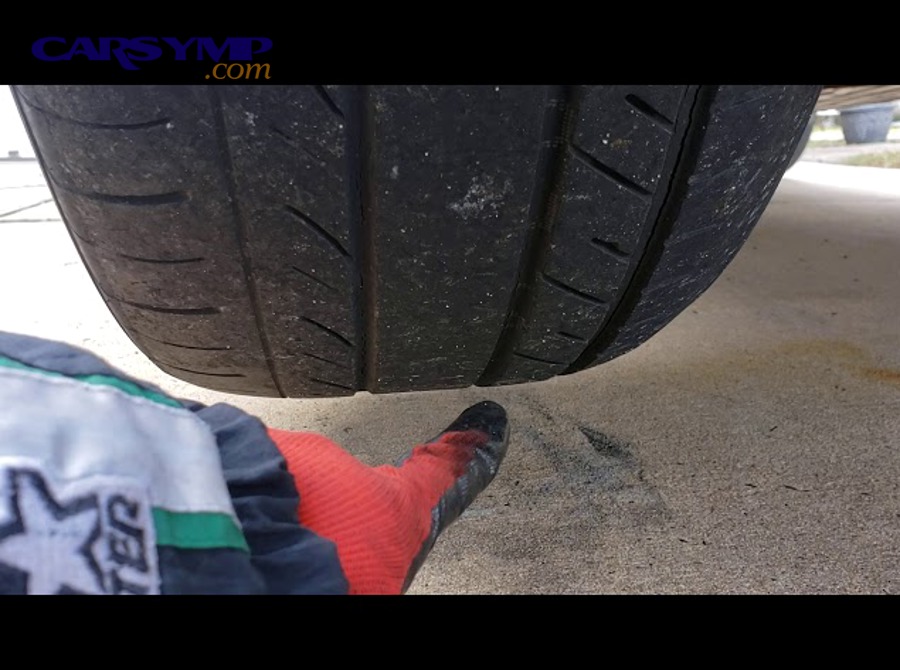
Driving and monitoring is enough when the vibration is mild, clearly tied to sitting, and fades within a short time after the tires warm up. In this case, your best move is to confirm proper cold pressure, continue normal driving, and watch whether the pattern repeats only after long periods of parking.
This low-intervention approach makes sense because many temporary flat spots resolve naturally in service. It is especially reasonable after overnight or short-term storage, with no visible damage and no worsening trend. If the symptom gets weaker over several drives, that supports the temporary diagnosis.
When should you rebalance the tires?
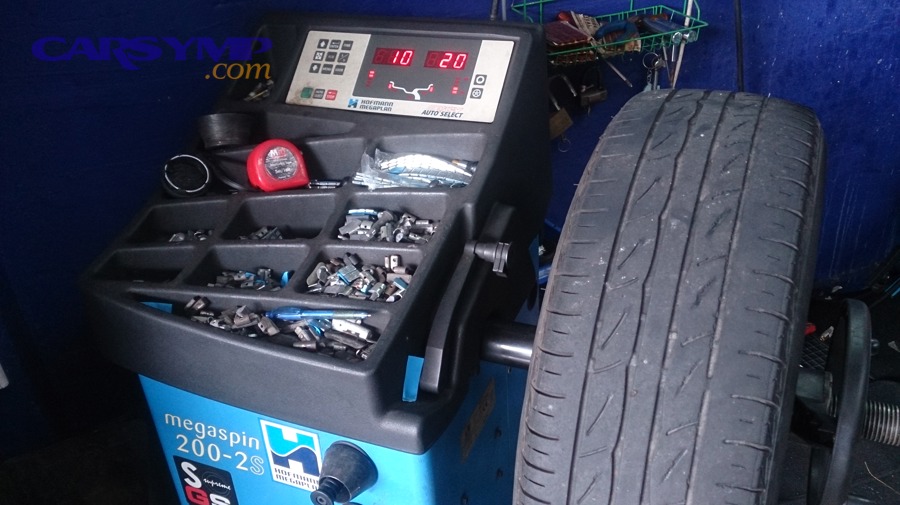
You should rebalance the tires when the vibration is tied to speed, persists after warm-up, follows recent tire service, or suggests a missing or shifted wheel weight. That pattern points directly toward rotating-mass correction rather than simple storage recovery.
Wheel balancing is also appropriate when the tires are otherwise healthy but the car has a repeatable highway-speed shake. A proper balance service can check both planes of the wheel and choose the correct corrective weights. This is where Weight types and placement considerations become practical rather than theoretical. Adhesive tape weights often suit alloy wheels and inner-barrel placement; clip-on weights may suit certain steel or compatible wheel edges. The balance machine identifies where the correction belongs, and accurate placement matters because a few grams in the wrong plane can leave a noticeable residual vibration. ([commons.wikimedia.org](https://commons.wikimedia.org/wiki/File%3AWheel_balancing.jpg?))
When should the tire be repaired or replaced?
The tire should be repaired or replaced when it shows structural damage, sidewall bulges, cracks, severe uneven wear, repeated air loss, or persistent deformation that does not improve with proper inflation and driving. In those cases, the problem is no longer just discomfort; it is safety and serviceability.
Replacement also becomes more likely when the tire is old, badly worn, or paired with a bent wheel or strong out-of-round measurement. Tire safety materials from manufacturers and NHTSA repeatedly advise inspection for visible trauma and warn against continuing to drive on damaged tires. If the tire has reached the point where vibration remains and physical defects are present, replacement is the more responsible answer than repeated balancing attempts. ([nhtsa.gov](https://www.nhtsa.gov/sites/nhtsa.gov/files/one.pdf?))
What storage, temperature, and tire-type factors make flat-spot and balance symptoms worse?
Storage duration, cold temperature, tire construction, vehicle load, and inflation pressure are the main factors that make flat-spot and balance symptoms worse after sitting.
In addition, these factors explain why one car feels fine after storage while another feels rough for miles.
Does cold weather make tire flat-spotting more noticeable?
Yes, cold weather makes tire flat-spotting more noticeable because the rubber and casing become less flexible, so the deformed contact area takes longer to smooth out. That is why many drivers notice the problem most clearly on the first cold morning after the vehicle has been parked.
Cold weather also interacts with pressure. Lower ambient temperature can reduce pressure, and lower pressure increases deformation under load. Firestone explicitly notes that flat spotting tends to occur more in cold climates or where temperatures swing sharply, while Tire Rack also describes temporary flat spotting as a condition influenced by storage and operating conditions. ([firestonecompleteautocare.com](https://www.firestonecompleteautocare.com/blog/tires/what-causes-tire-flat-spots/?))
Do performance or low-profile tires react differently after sitting?
Yes, performance and low-profile tires can react differently after sitting because stiffer sidewalls and performance-oriented compounds may transmit startup vibration more clearly to the cabin. The driver may feel the symptom more sharply even when the underlying flat spot is still temporary.
This does not mean performance tires are defective. It means they often prioritize steering response and handling precision, which can make small ride disturbances more noticeable. In practical terms, a sports sedan on low-profile tires may advertise a mild storage flat spot more honestly than a softer touring car with taller sidewalls.
Can long-term storage, heavy loads, or low pressure make flat spots more severe?
Yes, long-term storage, heavy loads, and low pressure can make flat spots more severe because they increase the time and force acting on one section of the tire. The longer and heavier the load, the stronger the deformation can become. The lower the pressure, the less resistance the casing has to that deformation.
That is why storage preparation matters. Continental advises that when tires support the vehicle during storage, they may be inflated to the maximum pressure shown on the sidewall, with the important condition that they must be returned to normal recommended operating pressure before use. NHTSA also emphasizes regular pressure checks and correct cold inflation pressure for everyday safety and tire performance. ([continental-tires.com](https://www.continental-tires.com/tire-knowledge/storing-tires/?))
What is road-force variation, and when does it matter?
Road-force variation is a measure of how uniformly a tire and wheel assembly loads the road as it rolls, and it matters when a standard balance looks correct but the car still vibrates. In simple language, a tire can be “balanced” in terms of mass yet still roll imperfectly because of stiffness or uniformity differences around the assembly.
This is a rare but important point for stubborn cases. If you have already checked pressure, driven long enough for temporary flat spots to fade, and performed wheel balancing, yet the vibration remains, road-force testing becomes a logical next step. It helps identify why a tire that seems balanced can still act like it has a persistent shake. For drivers dealing with repeated post-storage vibration that does not fit the usual pattern, this is often the advanced test that clarifies the problem.
In short, diagnosing tire flat-spot and balance issues after sitting is less about guessing and more about reading the pattern correctly. A vibration that fades with heat points one way. A vibration that repeats at the same speed points another. Once you connect the symptom timing, vibration location, pressure condition, and storage history, the right next step becomes much easier to choose.