


If your ABS light pops on, the fastest way to stop guessing is to separate “single-wheel feedback problems” from “system-level control problems.” In most cases, a wheel speed sensor issue behaves like a localized signal drop, while an ABS module issue behaves like a broader communication or hydraulic-control fault that affects multiple functions.
To narrow it down, you’ll want to look for patterns: one wheel reading weird, intermittent activation at low speed, or a fault that moves when you swap sides usually points toward the sensor side of the equation. In contrast, multiple implausible codes, loss of communication, or pedal/ABS pump behavior that feels “system-wide” is more consistent with a module-side problem.
Next, you can confirm the story with basic checks: visual inspection at the wheel, wiring wiggle tests, and live data comparing all four wheel speeds. That simple “compare all wheels” step usually turns the mystery into a clear winner without buying parts.
Giới thiệu ý mới: Below is a practical, step-by-step comparison so you can decide what to test, what to repair, and what to avoid replacing prematurely—especially when you’re trying to keep costs down and get back to safe braking behavior.
Are wheel speed sensor symptoms usually single-wheel and intermittent?
Yes—most wheel speed sensor problems show up as intermittent, single-wheel signal issues first, especially at low speeds, because the sensor is a localized input and small gaps, rust, or wiring strain can make the signal drop in and out. However, you should confirm the pattern before replacing anything.
To start that comparison, think of the sensor as the “eyes” of the ABS: if one eye blinks, the system gets confused at specific moments rather than failing everywhere.
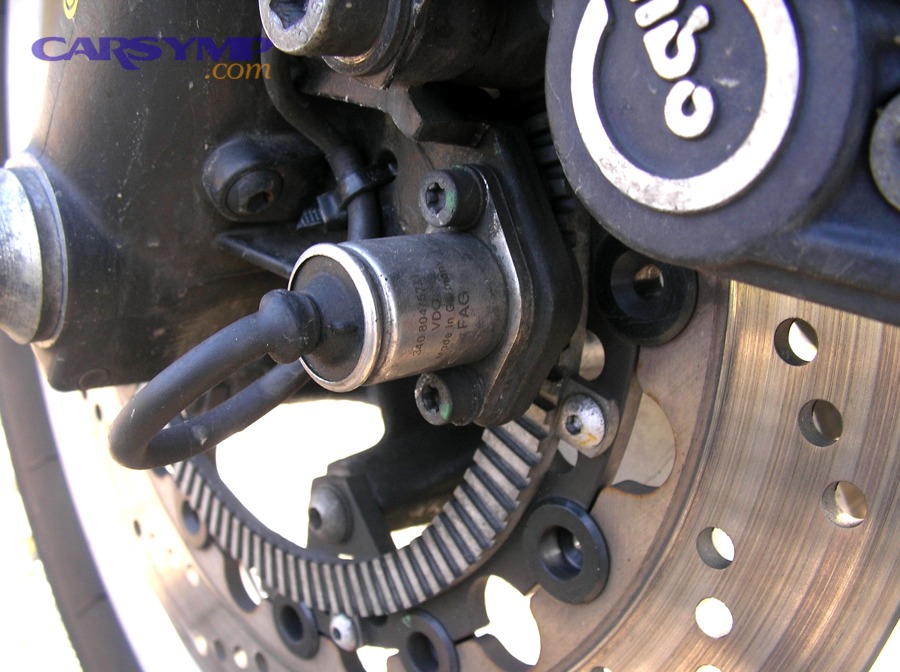
What you’ll feel when one wheel signal drops
A single wheel speed sensor fault often feels like a brief ABS intervention when you’re barely braking—such as the pedal buzzing or pulsing near the last 5–10 mph—because the module thinks one wheel stopped turning while the others are still moving. Next, that low-speed “false slip” becomes your strongest clue.
- Low-speed ABS chatter: the pedal vibrates at parking-lot speeds with normal traction.
- Intermittent ABS light: light appears after driving, then resets on restart (until the fault repeats).
- Traction/stability warnings: if your vehicle ties those systems to wheel speed data, they may disable too.
Common root causes at the wheel
Most sensor-side failures are not the sensor element “dying” instantly; instead, the signal gets corrupted. Specifically, corrosion at the mounting surface increases the sensor-to-ring air gap, debris collects on magnetic sensors, or the harness breaks internally from repeated steering and suspension travel. To connect the dots, always inspect what the sensor is reading.
- Rust jacking under the sensor (common on vehicles where the sensor sits in a rust-prone knuckle).
- Damaged tone ring/reluctor teeth or cracks (or a magnetic encoder ring inside some hub bearings).
- Harness strain near the strut, control arm, or wheel well clips.
- Connector moisture and pin corrosion causing high resistance.
Quick “single-wheel” indicators you can use today
If a scan tool shows one wheel speed reading zero, erratic, or different from the others during a steady roll, that’s sensor-side evidence. Next, if you safely lift the vehicle and spin each wheel by hand (following proper jacking safety), you’ll often see one wheel’s signal behave differently. That wheel becomes your target area.
The phrase ABS wheel speed sensor replacement shows up in a lot of repair guides, but you’ll save money by proving the failure is at the wheel before you commit to parts.
Theo nghiên cứu của National Highway Traffic Safety Administration từ Evaluation Division; National Center for Statistics and Analysis, vào August 2009, ABS giảm tỷ lệ va chạm tổng thể khoảng 6% ở xe du lịch và 8% ở LTVs trong các tai nạn không gây tử vong.
Do ABS module symptoms show up as multiple faults at once?
Yes—ABS module problems commonly present as “system-level” issues: multiple wheel sensor codes at once, pump/valve electrical faults, or communication errors, because the module is the central controller and power/ground integrity matters. However, you must rule out power, grounds, and wiring before condemning it.
However, there’s an important bridge here: a single wiring or voltage problem can mimic a bad module, so your next step is to separate “module is failing” from “module is being fed bad power or data.”
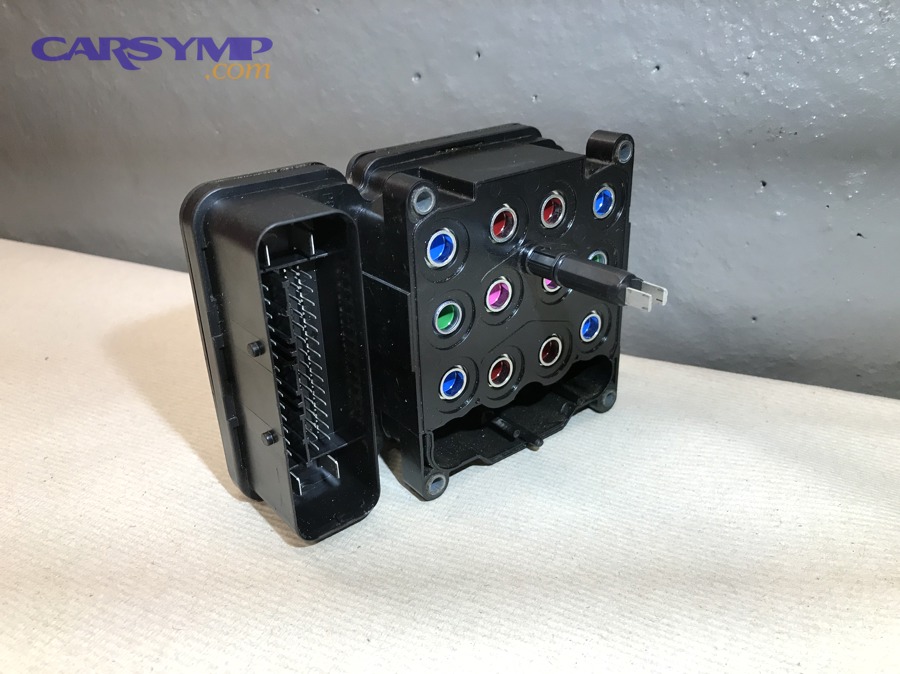
What “system-level” feels like compared to a wheel fault
When the module is the culprit, symptoms often feel less tied to one wheel or one driving moment. For example, ABS may be disabled entirely, multiple warning lights may come on together, and codes may include pump motor or valve circuit faults. Next, watch for patterns that don’t change even when you inspect or move wheel-side components.
- Multiple wheel speed codes simultaneously (especially if they appear together and return immediately).
- Loss of communication with the ABS controller (scan tool cannot connect, or U-codes appear elsewhere).
- Pump motor/valve solenoid codes that point to internal driver circuitry or relay issues.
- ABS activation behavior changes broadly, not just at low speed.
Typical module-side root causes
ABS modules fail for a few repeatable reasons: thermal stress on solder joints, moisture intrusion, internal relay/driver wear, or corrosion at the module connector. Next, keep in mind that some “module failures” are actually hydraulic control unit issues depending on how your vehicle integrates the electronics and hydraulic block.
- Internal solder cracks that break contact when hot and reconnect when cool.
- Internal pump relay/driver failure causing pump motor faults.
- Connector pin fit issues or oxidation at the module plug.
- Shared power/ground problems (battery, alternator ripple, chassis grounds).
Why multiple codes can still be misleading
Multiple wheel speed sensor codes don’t automatically prove a bad module. A single broken ground splice, corroded power feed, or CAN wiring issue can create a “scatter” of codes. Next, that’s why you should check fuses, power, grounds, and connector condition before any expensive replacement.
In many shops, the phrase ABS repair includes either rebuilding the electronics or addressing the wiring and power delivery that made the module look guilty in the first place.
Theo nghiên cứu của Insurance Institute for Highway Safety từ Insurance Institute for Highway Safety, vào May 2013, ABS được ghi nhận liên quan đến giảm khoảng 31% tỷ lệ tai nạn tử vong ở xe mô tô có ABS so với cùng mẫu không có ABS.
What warning lights and scan patterns most often separate sensor vs module?
The most useful separator is consistency: wheel sensor faults typically point to one corner and produce speed-signal or circuit codes, while module faults often add pump/valve/communication codes or prevent reliable scanning of the ABS controller. However, you should validate by looking at live wheel speed data.
To make that separation practical, use the dashboard as the “headline,” then use codes and data as the “evidence.”

When the warning light is “just ABS” vs ABS + stability/traction
If only the ABS warning is on, you may still have normal base braking, but ABS modulation and related features are disabled. Next, if traction control and stability control lights also appear, that can happen with either fault type—because both rely on wheel speed—but it increases the value of comparing all four wheel speeds in live data.
- ABS light only: often a single sensor signal or minor circuit issue, but not always.
- ABS + TCS/ESC lights: wheel speed data is not trustworthy to the system; confirm with live readings.
- ABS + brake warning: treat as higher urgency; check brake fluid level, pressure, and system warnings.
Scan tool clues that point more toward a sensor
Sensor-side codes often read like “wheel speed sensor circuit,” “signal implausible,” or “no signal.” More importantly, the code typically references a specific wheel. Next, if the live data shows three wheels matching and one dropping to zero or spiking, the diagnosis becomes straightforward.
Scan tool clues that point more toward a module
Module-side clues include inability to communicate with the ABS controller, codes for pump motor circuits, valve solenoid drivers, internal control module errors, or widespread implausible data across multiple wheels. Next, when you see both electrical/hydraulic control codes and communication faults together, think power/ground checks first, then module suspicion second.
A simple “three questions” filter
Ask: (1) Does the problem consistently point to one corner? (2) Does the fault change when the harness is moved or the wheel is turned? (3) Can you connect and read live ABS data reliably? Next, these three questions often narrow the path faster than chasing every stored code.
The phrase ABS warning light diagnosis is really about that filter: convert lights and codes into a repeatable pattern, then prove the pattern with data.
Theo nghiên cứu của Insurance Institute for Highway Safety từ nghiên cứu được công bố vào Dec 8, 2016, hệ thống phanh chống bó cứng trên xe tải nặng được ghi nhận giảm nguy cơ bị tai nạn khoảng 65% trong bối cảnh nghiên cứu về tai nạn xe tải lớn.
How can you test the wheel speed sensor signal before buying parts?
You can test it by comparing live wheel speed data, inspecting the tone ring/encoder area, and performing basic electrical checks on the sensor and harness, which often identifies whether the fault is the sensor element, the connector, or mechanical damage. However, do the simplest comparisons first to avoid unnecessary disassembly.
To make that test decisive, start with “compare all wheels,” then zoom in on the one that behaves differently.
Step 1: Compare all four wheel speeds in live data
Drive at a steady 10–25 mph on a safe, straight road and watch live wheel speed values. A bad sensor signal usually shows as dropouts, spikes, or a value that disagrees with the others. Next, repeat the test while lightly braking to see if the discrepancy triggers the fault.
- Healthy pattern: all four wheels track closely during steady speed.
- Sensor dropout: one wheel intermittently reads zero or jumps erratically.
- Mechanical encoder issue: one wheel reads consistently off, often tied to bearing/encoder damage.
Step 2: Visual inspection where the signal is created
Wheel speed sensors read a tone ring (toothed reluctor) or a magnetic encoder surface. Rust, cracks, missing teeth, or debris can distort the signal even when the sensor is electrically fine. Next, clean and inspect before you replace.
- Look for rust buildup lifting the sensor away from the ring.
- Check the ring/encoder for cracks, chipped teeth, or heavy contamination.
- Inspect the harness at clips and bends for rubbing or stretching.
Step 3: Basic electrical checks (without overselling the multimeter)
A multimeter can help, but it won’t always catch an intermittent signal failure. Still, you can check connector corrosion, reference voltage (on active sensors), and continuity through the harness. Next, if you find green corrosion or water intrusion, that alone can explain an intermittent light.
Step 4: Use a short video walkthrough to avoid common mistakes
Many DIY errors come from testing only resistance and skipping live data. Next, a visual walkthrough can help you confirm you’re testing the correct connector pins and reading the correct data stream on your tool.
Theo nghiên cứu của National Highway Traffic Safety Administration từ Evaluation Division; National Center for Statistics and Analysis, vào August 2009, ABS có lợi ích rõ hơn ở tai nạn không gây tử vong và đặc biệt hiệu quả trong một số tình huống đa phương tiện, nhấn mạnh giá trị của việc giữ tín hiệu bánh xe chính xác.
How can you sanity-check the ABS module without removing it?
You can sanity-check it by verifying power/grounds, inspecting the module connector, confirming communication stability, and checking whether the module can reliably command and report data; these steps often reveal whether the module is actually failing or simply being starved of voltage or data. However, always treat power integrity as step one.
To connect the logic: if the module is the “brain,” you must confirm it’s getting clean power and clean communication before you blame the brain.
Power and ground checks that matter most
Check ABS-related fuses, the main power feed to the ABS unit, and the ground points the ABS system uses. Low voltage during cranking, weak battery, or poor grounds can trigger module-like symptoms. Next, do a voltage drop test across grounds under load if you can, because a ground can look “fine” until current flows.
Connector inspection and pin fit
Unplug the connector (with battery safety precautions) and look for moisture, bent pins, oxidation, or damaged seals. Next, if the harness is tight or rubbing, fix that before you do anything else—connector problems can cause intermittent communication that looks like an internal failure.
Communication stability test
If your scan tool intermittently loses connection to the ABS controller while other modules remain stable, that supports a module or ABS-specific network problem. Next, if communication drops only when you move the harness, you’ve likely found a wiring or connector fault instead.
Functional clues you should not ignore
Some module/hydraulic unit faults create distinct behavior: pump motor running unexpectedly, pump not running during commanded tests, or valve solenoid electrical codes that return instantly. Next, when these happen alongside clean power and grounds, the module becomes a more credible suspect.
Theo nghiên cứu của Insurance Institute for Highway Safety từ nghiên cứu được công bố vào Dec 8, 2016, hệ thống ABS giúp cải thiện kiểm soát trong phanh khẩn cấp—vì vậy lỗi điều khiển cấp hệ thống cần được xử lý nghiêm túc thay vì chỉ xóa đèn báo.
Is it safe to keep driving when the ABS light is on?
It depends: you usually can drive short distances carefully because base braking still works, but it is not fully “safe” in the sense of emergency control, because ABS and often traction/stability functions may be disabled—especially on wet, icy, or gravel surfaces. However, you should treat it as a prompt to reduce speed, increase following distance, and schedule diagnosis quickly.
However, here’s the key bridge: “drivable” is not the same as “optimal in an emergency,” and ABS exists for the moments you can’t predict.
What still works and what doesn’t
When the ABS warning is on, your normal hydraulic brakes still stop the car, but the system may no longer modulate pressure to prevent lockup. Next, that means you can lock wheels under hard braking, which can reduce steering control during a panic stop.
- Usually still works: normal braking, parking brake, basic pedal feel (unless another issue exists).
- May be disabled: ABS modulation, traction control, stability control, some hill-start or brake assist features.
Situations that raise the risk fast
Risk increases in rain, snow, loose gravel, steep descents, and heavy traffic where emergency braking is more likely. Next, if you also see a red brake warning, low fluid, or a sinking pedal, stop driving and inspect immediately because that suggests a base brake problem, not just ABS.
How to adjust your driving if you must move the car
Increase following distance, avoid sudden lane changes, brake earlier and more gently, and avoid high-speed travel. Next, if the pedal behaves abnormally, you hear pump noises, or warning lights multiply, you should not keep driving—diagnose or tow.
Many people search Safe to drive with ABS light on because they want a yes/no answer, but the responsible answer is: drive only if braking feels normal and only long enough to get it diagnosed, because the safety margin is reduced when conditions change.
Theo nghiên cứu của National Highway Traffic Safety Administration từ Evaluation Division; National Center for Statistics and Analysis, vào August 2009, ABS có lợi ích thống kê rõ hơn ở nhiều va chạm không tử vong, nhấn mạnh rằng việc bỏ qua đèn ABS làm giảm “biên an toàn” trong những tình huống phanh khẩn cấp.
When should you choose sensor replacement, module repair, or wiring work?
You should choose based on evidence: replace a sensor when live data and inspection localize the fault to one corner, pursue wiring repair when movement or corrosion explains the dropout, and consider module repair/replacement only after power/grounds and network integrity are proven good. However, the cheapest fix is often cleaning/correcting a mounting gap or connector problem, not the part itself.
To keep the decision clean, use a short comparison matrix and commit only when the signs line up.
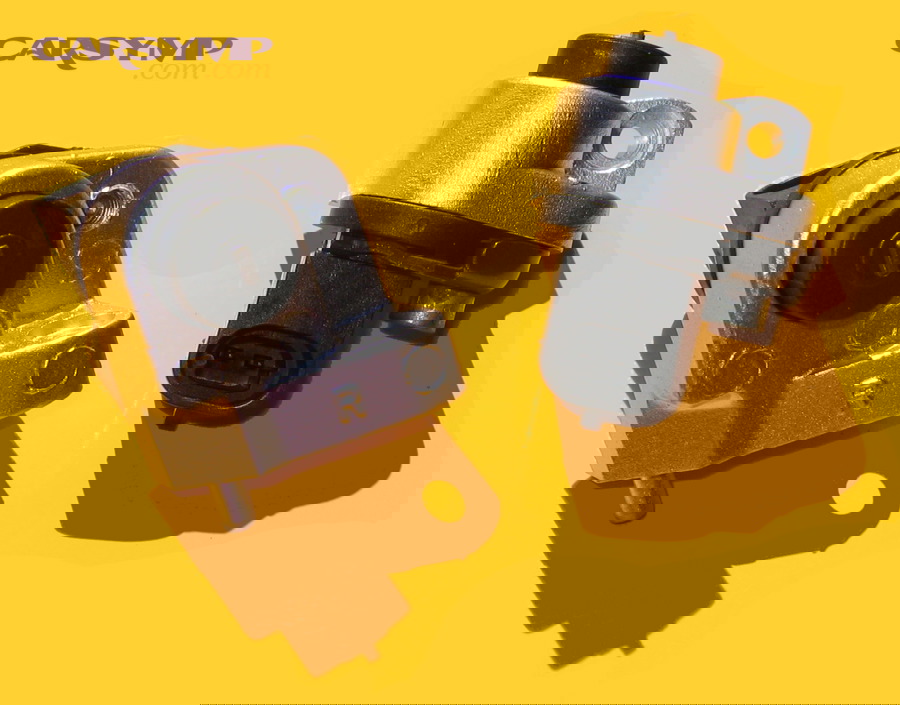
This table helps you map common clues to the most likely fix so you don’t replace expensive parts on a guess.
| Clue | More consistent with sensor-side | More consistent with module-side | Why it matters |
|---|---|---|---|
| One wheel reads zero/spikes in live data | Yes | Rare | Localized input failure is the classic sensor signature. |
| ABS chatter at very low speed | Common | Possible but less common | False “wheel lock” is often created by a weak/dirty signal. |
| Multiple wheel sensor codes appear together | Possible (shared wiring) | Common | Scatter codes may point to controller, power/ground, or network issues. |
| Cannot communicate with ABS module | Unlikely | Common | No communication suggests controller/network/power problems. |
| Pump motor / valve circuit codes | Unlikely | Common | These are controller outputs, not wheel inputs. |
| Fault changes when harness is moved | Common | Possible | Intermittent wiring/connector problems can mimic either failure. |
Choose sensor-side repair when these line up
If the problem stays tied to one wheel in both codes and live data, and inspection shows corrosion, damage, or a compromised connector, a sensor-side fix is justified. Next, confirm the mounting surface is clean and the harness is secured, because otherwise a new sensor can fail again or read incorrectly.
Choose wiring work when the fault is movement-sensitive
If turning the steering wheel, compressing suspension, or wiggling the harness changes the reading, prioritize wiring and connectors. Next, repair chafed insulation, broken conductors, and corroded pins before you buy parts.
Choose module repair/replacement only when “inputs and power” are proven good
If you have stable power/ground, good wheel signals, and the module still reports internal electrical faults, loses communication, or fails functional tests, then module repair becomes reasonable. Next, consider whether your vehicle supports electronic-only rebuilds or requires the full assembly depending on design.
Cost-smart guidance without gambling
In many vehicles, wheel sensors are relatively affordable compared to modules. But cost-smart doesn’t mean “cheap-first”—it means “evidence-first.” Next, a quick live-data test can prevent the common mistake of replacing an ABS module when one wheel signal is simply dropping out.
Theo nghiên cứu của Insurance Institute for Highway Safety từ Insurance Institute for Highway Safety, vào May 2013, ABS liên quan đến giảm đáng kể rủi ro tử vong trong nhóm nghiên cứu mô tô, gợi ý rằng ưu tiên sửa đúng nguyên nhân (thay vì thay sai cụm đắt tiền) mang lại lợi ích an toàn thực tế.
Beyond the obvious: rare ABS faults that mimic sensors or modules
Some problems imitate both categories: mechanical wheel bearing play can corrupt encoder readings, low system voltage can scramble module behavior, and brake fluid or hydraulic issues can trigger additional warnings that confuse the story. However, these are still solvable if you treat them as “context expanders” after you’ve done the basic comparison.
To extend your diagnostic border safely, use these rarer patterns only after you’ve checked live wheel speeds, wiring, and module power integrity.
Reluctor ring cracks and encoder ring delamination
A cracked tone ring can create a repeating dropout at the same wheel position, and a damaged magnetic encoder ring inside a hub bearing can produce a consistent “wrong” speed that looks like a sensor failure. Next, if the wheel speed error is consistent and not wiring-sensitive, consider the mechanical encoder surface.
Wheel bearing play that changes the air gap
Excess bearing play can change the sensor gap under load, turning a “good” signal into a dropout during turns or braking. Next, if the symptom shows up during cornering or load shifts, inspect the bearing for play and noise.
Low voltage, alternator ripple, and ground integrity
Voltage dips and electrical noise can create intermittent ABS module resets or communication errors, mimicking a failing controller. Next, if the ABS light appears after cold starts or with heavy electrical load, test battery condition and charging stability, and clean grounds.
Terminology traps: EBCM, HCU, and “ABS unit”
Depending on vehicle design, the “ABS module” may refer to the electronic brake control module (EBCM), the hydraulic control unit (HCU), or the combined assembly. Next, confirm which part your codes and service information actually reference so you don’t replace the wrong component.
FAQ
Can a bad wheel speed sensor cause traction control and stability control warnings?
Yes, because those systems rely on accurate wheel speed data to detect slip and yaw-related conditions. Next, compare all wheel speeds in live data to identify which corner is corrupting the calculation.
Why does the ABS light sometimes turn off after restarting the car?
Many faults are intermittent, so a restart clears the active condition until the sensor drops out again or the module loses communication again. Next, treat that behavior as a clue that the problem is real but not constant—often wiring, corrosion, or heat-related electronics.
Should I replace the sensor if resistance tests “look OK”?
Not automatically—many intermittent failures won’t show in a static resistance check. Next, prioritize live wheel speed comparison and a close inspection of the mounting surface and connector before you buy a sensor.
Does an ABS module always require programming after replacement?
It depends on the vehicle; some require coding/programming and some do not, while others require a relearn procedure. Next, check service information for your specific model before purchasing a replacement module.
What’s the most common DIY mistake in ABS troubleshooting?
Replacing expensive parts before proving the failure mode. Next, always confirm whether the fault is localized (one wheel signal) or systemic (power/communication/pump control) using live data and basic electrical checks.