


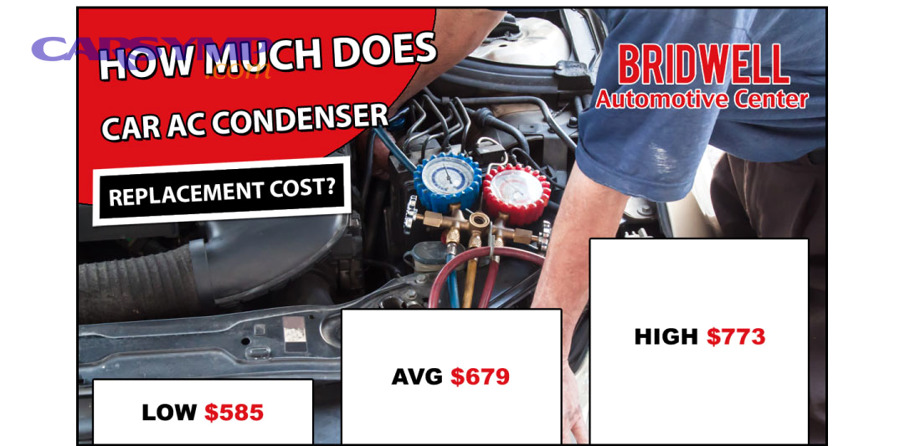
A realistic condenser replacement cost estimate usually lands in a mid-hundreds “typical” band, but the final bill can swing widely once labor access, vehicle design, and additional A/C work are factored in.
Beyond the headline number, most people want a usable breakdown—what you’re paying for (parts, labor, refrigerant handling), and which line items are optional versus non-negotiable.
Many estimates also go wrong because the condenser is blamed when the real fault is elsewhere, so learning how shops validate the failure can prevent an expensive misdiagnosis.
Giới thiệu ý mới: Below is a step-by-step way to read quotes, predict add-ons, and decide when replacing the condenser is the best value.
What is a typical condenser replacement cost range today?
Most drivers see a mid-hundreds total, with labor and parts contributing in roughly comparable chunks, but taxes, fees, and vehicle-specific access can shift the total upward quickly. Next, you’ll see exactly what that “range” includes and what it excludes.
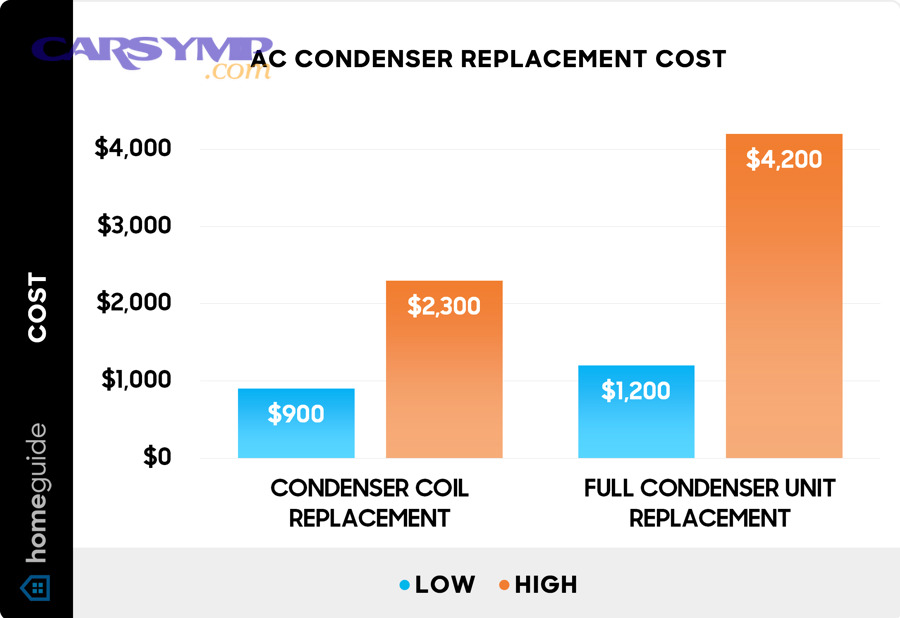
In practice, your quote usually covers three essentials: the condenser itself (the heat exchanger in front of the radiator), the labor to remove and reinstall it, and the correct handling of refrigerant (recovery, evacuation, and recharge). The closer a shop’s estimate stays to those three items, the easier it is to compare apples to apples.
To anchor expectations with a concrete benchmark, RepairPal’s estimator (last updated October 2025) lists an average total cost range of $784–$922, with labor estimated at $272–$400 and parts at $512–$522, before taxes/fees and location adjustments.
That benchmark matters because it separates a “normal” repair scenario from the situations that commonly inflate pricing: front-end disassembly on certain vehicles, an integrated receiver/drier design, extra cooling-system work, or contamination that forces other A/C parts to be replaced.
Why do some quotes look “too low” or “too high” compared to the average?
Yes—two quotes can be far apart for the same job, because parts sourcing, labor hours, and add-on services change the total more than most people expect. However, once you identify which line item is different, the price gap usually makes sense.
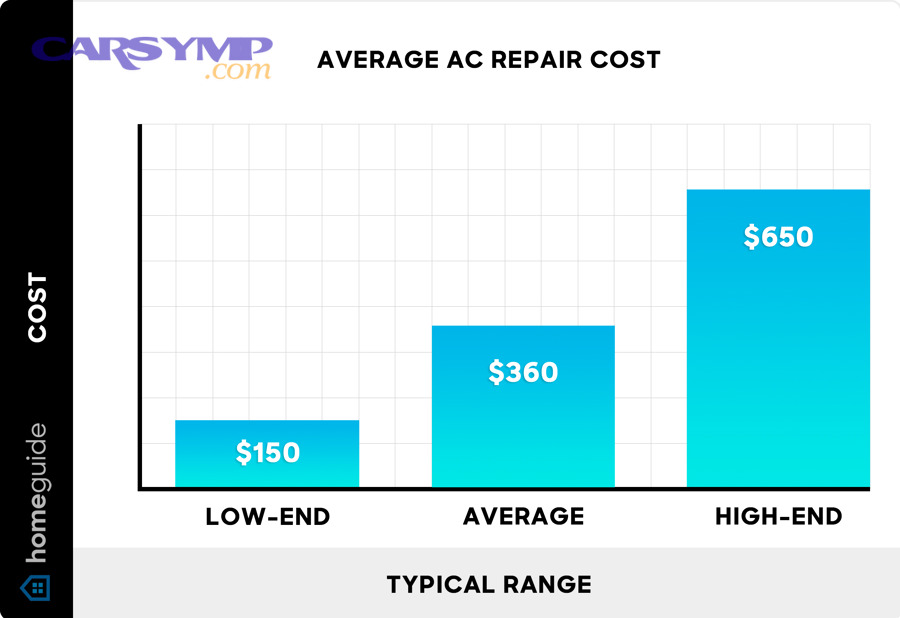
Low quotes often omit necessary refrigerant procedures or skip related seals/hardware that should be renewed when lines are opened. High quotes often include additional A/C components “while we’re in there,” or reflect difficult access (bumper cover removal, crash bar clearance, or tight packaging around the radiator support).
According to research by RepairPal’s estimator team, in October 2025, the condenser estimate range above explicitly notes it does not include taxes, fees, or location-specific variation—meaning your ZIP code and shop rate can legitimately push totals beyond the headline band.
What exactly are you paying for on the invoice?
A condenser quote is usually the sum of parts + labor + refrigerant handling, plus any required related repairs discovered during disassembly. To make comparisons easier, the next breakdown shows where money commonly goes and which items are negotiable.
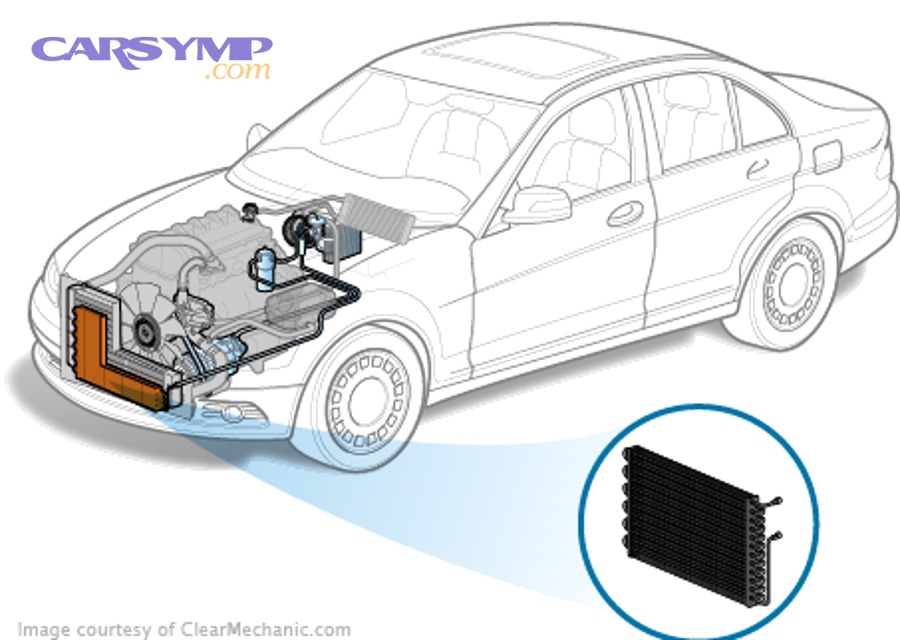
Most invoices group costs into:
- Condenser part (aftermarket or OEM)
- Labor time (removal/reinstall, front-end access, line reconnection)
- Refrigerant recovery + evacuation + recharge (equipment and consumables)
- Seals/O-rings and small hardware (often low-cost but important)
- Optional add-ons (system cleaning, additional diagnostics, cabin filter, etc.)
Some items look small but act like “multipliers.” For example, if the vehicle requires bumper removal, the labor line can rise because access time rises. If the condenser is integrated with a receiver/drier or includes a desiccant cartridge, the part cost can increase and the “related repair” lines can become mandatory rather than optional.
This table helps you translate a quote into comparable buckets so you can spot what’s missing or what’s being bundled.
| Cost bucket | What it covers | Why it changes | What to ask the shop |
|---|---|---|---|
| Parts | Condenser unit (OEM/aftermarket) | Vehicle fitment, brand choice, integrated designs | Is it OEM, OE-equivalent, or economy aftermarket? |
| Labor | Removal/reinstall, access work | Front clip/bumper removal, tight packaging, rust | How many labor hours and what rate? |
| Refrigerant service | Recover/evacuate/recharge, leak check | Refrigerant type, system capacity, shop procedure | Does the quote include full evacuation and proper recharge? |
| Related repairs | O-rings, receiver/drier, lines, extra A/C parts | Leak location, contamination, age, component integration | Which related items are required vs recommended? |
According to research by RepairPal’s estimator team, in October 2025, the “average range” estimate highlights that related repairs may also be needed—so treating add-ons as impossible is a common budgeting mistake.
Which factors push your estimate higher or lower?
The biggest price swings come from vehicle design and labor access, not from the condenser itself, because removing front-end components can take more time than the replacement part costs. Next, you’ll learn the specific factors that reliably change the number.
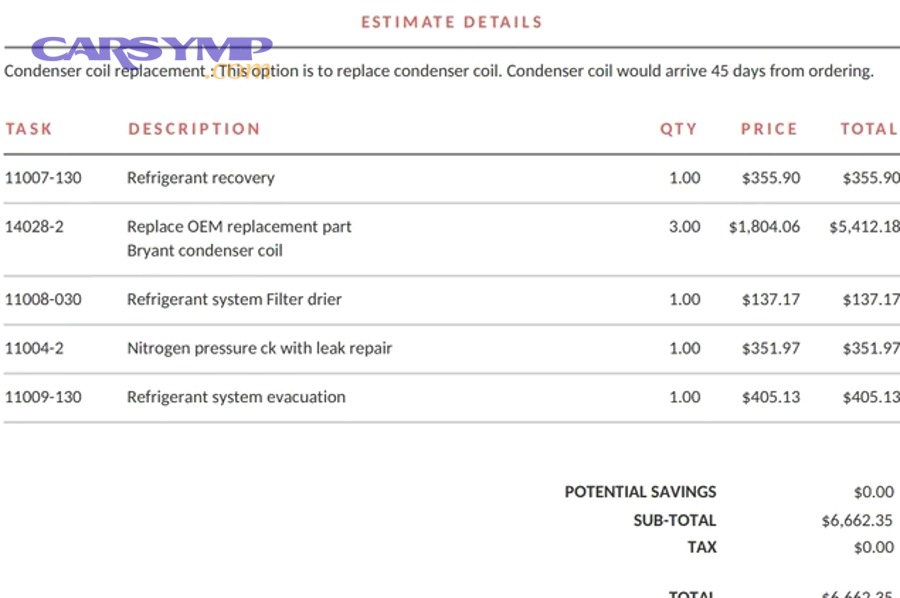
When two vehicles both “need a condenser,” the work can still be very different. These are the cost drivers that most consistently change estimates:
Vehicle packaging and access time
Yes—access can double labor time when the condenser is buried behind a bumper beam, active grille shutters, or tightly stacked coolers. Therefore, a higher quote can be justified even when the part price is similar.
On some models, technicians must remove the bumper cover, crash bar, cooling fans, and sometimes additional brackets to safely separate the condenser from the radiator. Rusty fasteners or collision repairs can also add time. A quote that lists labor hours clearly is easier to trust than a lump-sum with no time basis.
Part quality: OEM vs aftermarket
Yes—part choice can significantly change the estimate, because OEM pricing can exceed aftermarket by a wide margin. However, fitment and durability are where “cheap vs expensive” really shows up.
OEM parts tend to match factory tolerances and mounting points precisely. Many aftermarket condensers work well, but the lowest-tier options can be more prone to fin damage, weaker welds, or imperfect fitment that increases labor (because technicians must adjust or re-seat parts). If you’re planning to keep the car, a mid-tier OE-equivalent condenser is often the sweet spot.
Refrigerant type and system procedure
Yes—proper refrigerant handling can change cost, because the procedure requires certified equipment, time, and correct recharge amounts. Next, understand why skipping steps can cost more later.
Shops should recover refrigerant, pull vacuum, verify stability, and recharge by specification. If a quote is missing evacuation/recharge, you may see a “cheap” number that becomes expensive when cooling performance is poor or leaks reappear.
According to research by RepairPal’s estimator team, in October 2025, condenser replacement guidance emphasizes professional-grade equipment for reading high/low pressures and performing recovery/evacuation—meaning the procedure is part of the job, not an optional afterthought.
Is it worth replacing the condenser or can it be repaired?
In most real-world cases, replacing a failed condenser is the better long-term value because leaks and internal restrictions are difficult to “patch” reliably, and repeated rework quickly exceeds the cost of doing it right once. Next, you’ll see the scenarios where replacement is clearly justified.
Condenser repairs are uncommon for good reasons:
- Leaks often occur at tubes, joints, or thin sections where patching doesn’t restore structural integrity.
- Front-mounted condensers are exposed, so repeated impacts can reopen a repaired spot.
- Internal blockage (often from metallic contamination) can’t be solved by an external patch.
This is where many owners encounter the phrase AC condenser leak symptoms in forums or estimates: warm air at vents, intermittent cooling, oily residue on the condenser face, or a low-charge fault code. Even when symptoms point to a leak, the right next step is still confirmation testing—because a leak elsewhere can mimic the same symptoms.
There is one exception: if the “repair” is not patching the condenser itself but addressing an adjacent issue (like replacing O-rings at a connection) and the condenser is otherwise healthy. But once the condenser core is compromised, replacement tends to be the most predictable outcome.
According to research by AutoNation Mobile Service’s repair guide, in 2024 (published about a year prior), leaking condenser repairs like patching/welding may be less durable than replacement, and their article lists a typical replacement band of $630–$780 with parts and labor ranges called out.
How do shops confirm the condenser is the real problem before replacing it?
A proper diagnosis combines visual inspection, pressure/temperature readings, and leak detection to pinpoint where refrigerant is escaping or why heat exchange is failing. Next, you’ll learn the exact checkpoints that reduce the risk of paying for the wrong part.
Good shops typically follow a sequence:
- Verify the complaint: vent temperature, compressor engagement, fan operation.
- Check static and running pressures: high-side/low-side readings compared to ambient temperature.
- Inspect for visible damage: bent fins, impact marks, corrosion, oily residue.
- Leak test: UV dye, electronic sniffer, or nitrogen pressure test depending on shop practice.
- Confirm airflow and cooling stack health: fans, radiator blockage, debris packing, shrouds.
To avoid confusion, ask the shop to show you the evidence: the leak location (photo helps), the pressure readings, or the test method used. This is especially important when the A/C blows somewhat cool at speed but warms at idle—because that can indicate airflow or fan issues rather than a failed condenser core.
When you see the phrase Condenser vs evaporator vs compressor diagnosis in technician notes, it usually means they are differentiating between: a front-end heat-exchanger leak (condenser), an in-cabin leak (evaporator), or a pressure-generation/contamination issue (compressor). The “right” diagnosis is the one backed by test results, not the one that sounds most common.
According to research by RepairPal’s estimator guidance, in October 2025, condenser diagnosis requires advanced A/C system knowledge and professional-grade equipment to read pressures and interpret temperature/pressure relationships—reinforcing that a reputable diagnosis is a skill-and-tools process, not a guess.
What “related repairs” can appear on a condenser estimate?
Related repairs show up when replacing the condenser reveals additional leaks, contamination, or integrated components that must be renewed for reliability. Next, you’ll learn which add-ons are reasonable and which ones deserve a second opinion.
Common related items include:
- Receiver/drier or desiccant component (especially if the system was open to air or moisture is suspected).
- O-rings and seals at refrigerant line connections.
- A/C recharge (if not bundled into the main quote).
- Cooling fans or airflow fixes if overheating or poor airflow contributed to the problem.
- Compressor-related parts if metallic debris contamination is found.
Here’s where the phrase AC condenser replacement can be misleading in a quote: a shop may use that label as the “main job,” but the true scope becomes “A/C system service with condenser replacement,” which includes recovery/evacuation, sealing, testing, and recharge. That fuller scope is usually what you want—so long as each line item is justified.
A key red flag is “contamination” without proof. If a shop claims metallic debris, ask what they observed (screening, line inspection, old oil appearance, or part failure evidence). If contamination is real, skipping related work can result in rapid repeat failure.
According to research by RepairPal’s estimator guidance, in October 2025, condenser failure can involve leaks or metallic debris blockage, and the contamination scenario may require replacing additional components beyond the condenser—supporting why some estimates include more than one A/C part.
How can you reduce condenser replacement cost without risking repeat failure?
You can lower total cost by controlling part choice, confirming necessary procedures, and avoiding unnecessary add-ons, while still preserving the steps that protect reliability. Next, you’ll see the specific tactics that usually work.
Use the “same-scope” quote method
Yes—calling multiple shops can reduce cost, but only if you compare the same scope of work. Therefore, ask each shop to quote the same checklist: condenser + recover/evacuate/recharge + seals + leak test.
When scopes differ, the cheapest quote can be the most incomplete. A slightly higher quote that includes vacuum hold testing and proper recharge can save money by preventing immediate poor cooling or repeat visits.
Choose OE-equivalent aftermarket when appropriate
Yes—aftermarket can cut parts cost meaningfully, and many drivers do fine with quality OE-equivalent brands. However, avoid “unknown bargain” condensers where thin cores and poor fit can raise labor or shorten life.
Ask the shop which brand they’re installing and whether they’ve seen fitment issues. If the car is older and you’re optimizing budget, a reputable aftermarket condenser plus a strong labor warranty can be the best value.
Bundle only the add-ons that protect the system
Yes—some add-ons are smart (seals, drier where appropriate), while others are “nice-to-have.” Next, focus your budget on what prevents repeat failure.
When the system has been open, moisture control becomes important. When contamination is confirmed, replacing only the condenser can be false economy. The goal is to spend where it reduces failure probability, not where it merely pads the invoice.
According to research by RepairPal’s estimator guidance, in October 2025, attempting A/C work without proper recovery equipment risks chemical injury and environmental harm, and consumer-grade recharge products may damage professional recovery equipment—reinforcing that “cutting cost” should not mean skipping correct procedure.
When do debris and road damage make condenser replacement urgent?
Road impacts can puncture or crush condenser tubes and fins quickly, turning a small airflow problem into a refrigerant leak that stops cooling altogether. Next, you’ll learn the warning signs and why debris exposure is more than just cosmetic.
The condenser’s location—usually at the very front of the cooling stack—makes it vulnerable to:
- Rocks and gravel at highway speed
- Loose plastic or metal fragments
- Animal strikes and storm debris
- Improperly secured cargo falling from other vehicles
Minor fin bending can reduce airflow and raise high-side pressures, which may degrade cooling performance under load. But punctures or cracked joints can dump refrigerant rapidly, leading to warm air at vents and potential compressor stress if the system runs low.
If you see a shop note referencing Debris and road damage causes, it typically means they found physical impact evidence (crushed fins, dented tubes, impact marks) and are treating the repair as structural rather than purely “wear-and-tear.” In those cases, replacement is usually the reliable route.
According to research by the AAA Foundation for Traffic Safety from its roadway systems and drivers unit, in November 2025, road debris was a factor in an annual average of about 53,000 police-reported crashes causing roughly 5,467 injuries and 72 deaths each year from 2018–2023—highlighting how common debris events are on real roads, even before considering vehicle damage costs.
Contextual border: Now that you can estimate cost, break down invoices, and predict add-ons, the final step is learning the edge cases that quietly change pricing—especially on newer platforms and uncommon condenser designs.
Edge cases that change condenser pricing: rare designs, hybrids, and “hidden” fees
Some vehicles carry uncommon condenser designs or platform-specific requirements that add cost through specialized parts, extra labor access, or stricter post-repair validation. Next, you’ll see the four edge cases most likely to surprise you.
Integrated receiver/drier designs
Yes—some condensers include a built-in drier/desiccant component, which can raise parts cost and make “related repair” lines mandatory. Therefore, the correct comparison is condenser-with-drier vs condenser-only quotes.
In these designs, replacing just the condenser may also refresh the moisture-control component, which can be beneficial if the system has been open or leaked for a while. Ask whether the quoted condenser includes a drier and whether the system exposure time suggests moisture risk.
Hybrid/EV platforms with additional thermal management
Yes—hybrids and EVs may have more complex front-end packaging and thermal circuits, which can increase access labor even when the condenser itself looks similar. However, higher cost may be more about disassembly and validation than the part.
On these platforms, technicians may perform extra checks to ensure cooling performance remains stable across multiple systems. If the shop flags additional coolant circuits or sensors during disassembly, ask for a clear explanation and a photo-based justification.
“Hidden” shop fees and regional labor rates
Yes—two identical repairs can cost different amounts due to labor rate differences and fee structures. Therefore, always separate labor hours from labor rate, and identify fees like disposal, shop supplies, and environmental charges.
These fees aren’t automatically bad, but they should be transparent. The goal is a quote you can compare and predict, not a number that changes at checkout.
Post-repair verification that protects long-term value
Yes—verification steps can add small cost but prevent big future cost by confirming stable pressures, correct vent temperature, and leak-free operation. Next, treat verification as your “insurance” against repeat work.
Ask whether the shop performs a vacuum hold test, checks high-side pressure behavior under load, and verifies fan operation. These steps reduce the chance you pay twice.
FAQ
Can I drive with a leaking condenser while waiting for repair?
Sometimes yes for short trips, but it’s risky because refrigerant loss can lead to poor cooling and can increase stress on the system if it runs low. Therefore, if cooling drops fast or you see oily residue at the condenser, schedule repair soon and limit A/C use.
Should I always replace other A/C parts with the condenser?
No—only replace additional parts when there’s evidence (confirmed contamination, integrated drier design, or multiple leak points). However, renewing seals/O-rings and ensuring proper evacuation/recharge is a common best practice.
Why does my A/C cool on the highway but not at idle?
It can be a condenser airflow issue (fans, blockage, packed debris) rather than a condenser leak. Therefore, ask for fan and airflow verification before approving major parts replacement.
What’s the fastest way to validate a quote is fair?
Compare same-scope quotes from two or three shops, using the same checklist: condenser part brand, labor hours and rate, refrigerant recovery/evacuation/recharge, and required related repairs. Tóm lại, transparency beats guesswork when judging fairness.