


Yes—in most real-world repairs, you should replace the receiver drier when you replace a condenser, because opening the A/C circuit exposes the desiccant and internal surfaces to humidity and debris risk. The practical goal is simple: protect the compressor, keep moisture out, and reduce comeback leaks.
Next, owners usually want to know when it’s truly mandatory versus when it’s “nice to do,” plus what to do if the drier is integrated into the condenser or hard to access. That’s where system design (TXV vs orifice tube) changes the answer.
Besides the parts decision, a smart repair also includes correct sealing practices, oil handling, evacuation, and leak checking—because a new drier cannot compensate for air left in the system or a tiny O-ring leak.
Giới thiệu ý mới: below is a step-by-step decision logic that stays focused on what matters—moisture control, contamination control, and long-term reliability.
Should you replace the receiver drier when you replace a condenser?
Yes—replace the receiver drier with a condenser replacement in nearly all cases because the system has been opened, the desiccant can saturate, and the filter function may already be loaded with debris. Next, the key is understanding why this small canister often determines whether the repair lasts.
Here are the three most important reasons, in real repair terms:
- Moisture risk jumps when the circuit is open: humidity enters, and the desiccant may absorb enough water to reduce future protection.
- Debris control matters after a front-end event: road impact or a ruptured condenser can send particles downstream, and the drier’s filter may become a restriction.
- Warranty and reliability logic: many compressor warranty programs and tech bulletins treat a new drier/accumulator as part of “proper system service,” not an optional add-on.
In other words, even if the car cools today, the risk curve (acid formation, corrosion, freeze-ups, compressor scoring) rises over weeks and months when the moisture buffer is used up.
What does a receiver drier do, and why does opening the system shorten its life?
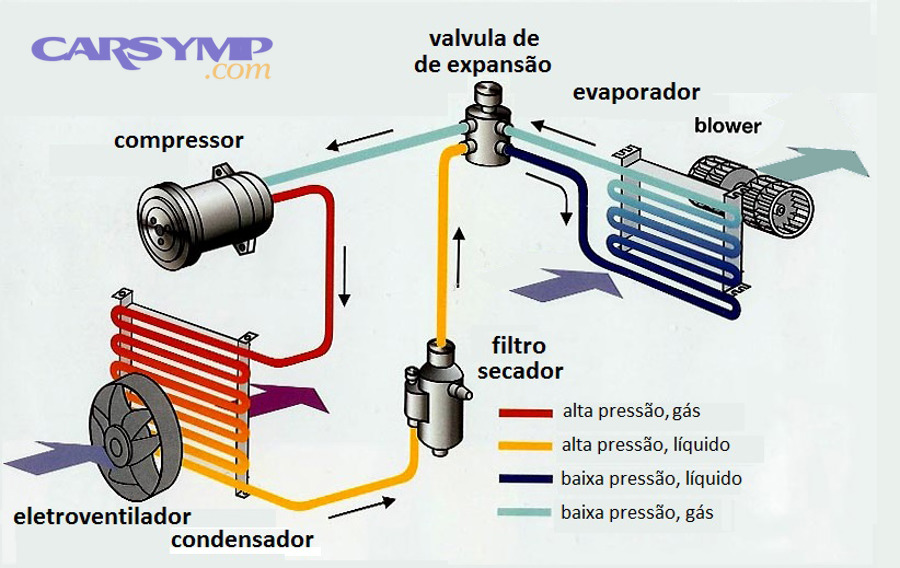
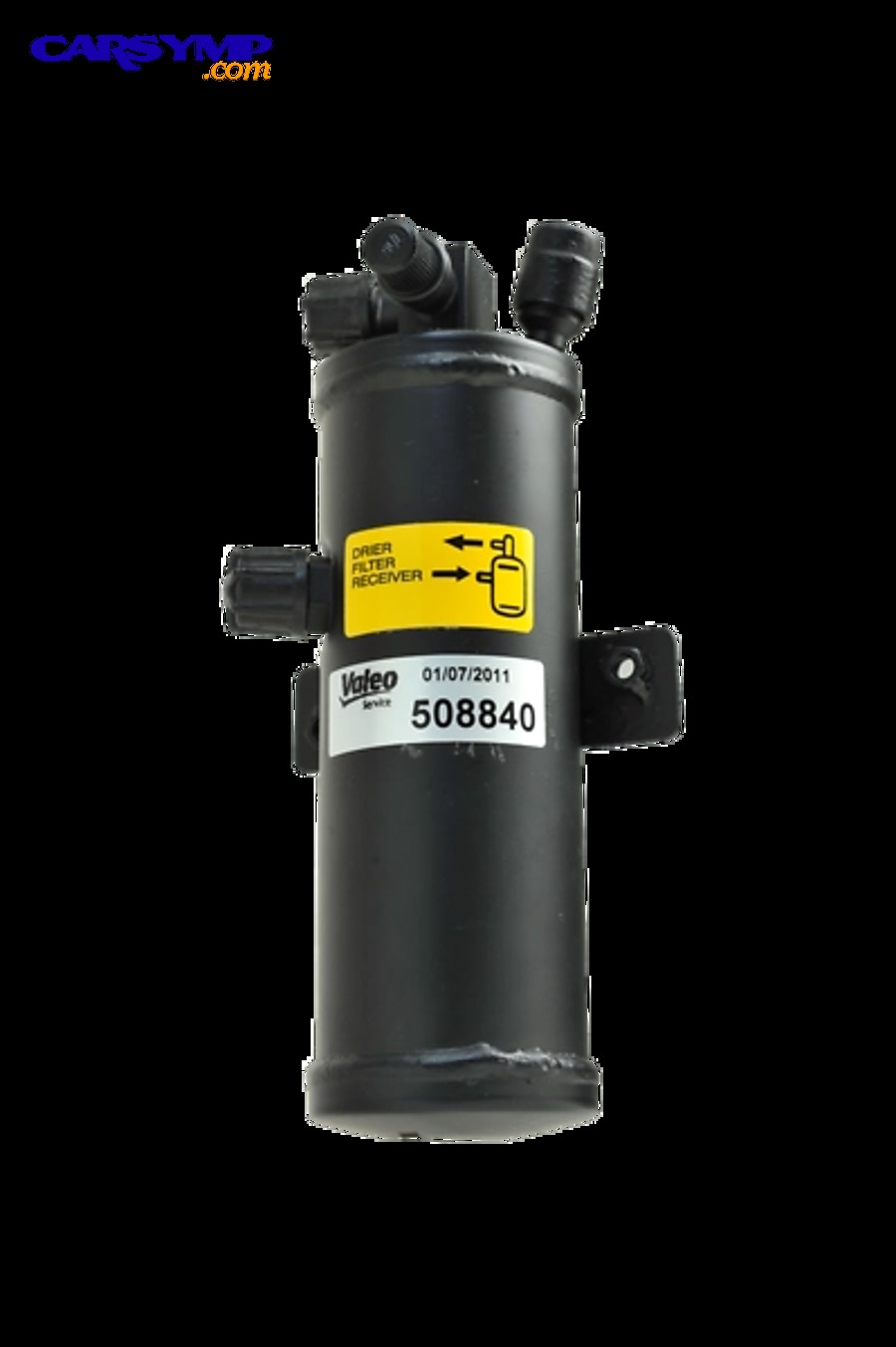
A receiver drier is a high-side storage-and-filtration component that removes moisture with desiccant, traps debris with a filter, and stabilizes liquid refrigerant supply. Next, once it has been exposed to humid air, its desiccant capacity can be consumed faster than people expect.
Moisture control is the real job, not “extra cooling”
The receiver drier does not make the system colder by itself; it protects the system’s internals. Moisture in a refrigeration circuit can react with refrigerant and oil to form acids, promote corrosion on aluminum surfaces, and create ice that intermittently blocks the metering device.
Filtration is the “silent” function that prevents restrictions
After a condenser leak or a line opening, dust, metal fines, and degraded O-ring particles can enter. The drier’s filter captures some of this—until it becomes a partial restriction that raises high-side pressure and reduces performance.
Liquid management improves stability at the metering device
By smoothing the supply of liquid refrigerant, the drier helps the expansion device receive a more consistent feed. That consistency matters when ambient temperature swings or condenser airflow changes at idle.
To connect the dots: a drier that is moisture-saturated can no longer buffer the system against the very contamination introduced during service, so the “best time” to replace it is exactly when the system is already open.
When is replacing the receiver drier mandatory, and when is it only recommended?
In practice, it’s mandatory whenever the A/C circuit has been open long enough to inhale humid air, when a major component is replaced, or when contamination is suspected. Next, use these categories to decide quickly without guessing.
Mandatory: the system was opened for repair or parts replacement
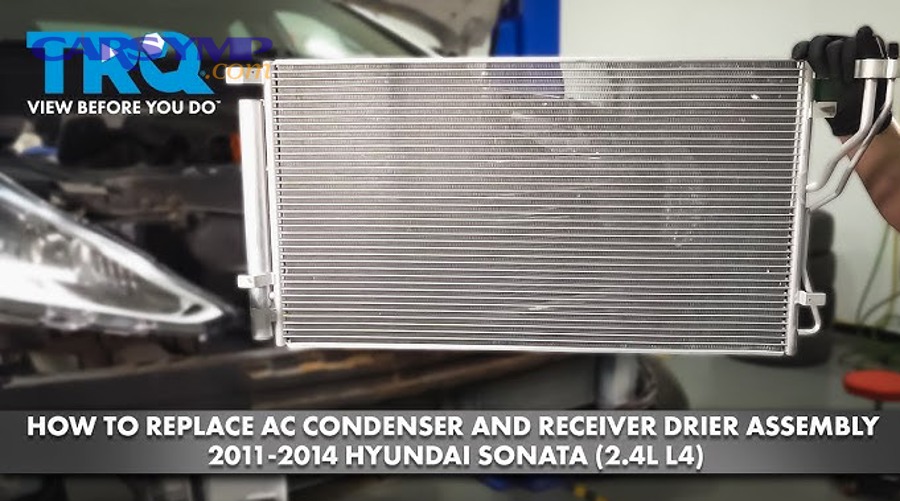
If you replaced a condenser, compressor, evaporator, hose, hard line, or any component that required opening fittings, treat the drier as a required service item. This is especially true during AC condenser replacement after a leak or impact.
Mandatory: there was compressor failure or obvious debris
If the compressor seized, shed metal, or the oil looks glittery, moisture and debris management must be reset. In that scenario, the drier is not a “maybe”—it’s part of the contamination response, along with the correct flush strategy and metering-device replacement where appropriate.
Strongly recommended: the system sat empty or leaked for a long time
A slow leak that ran the system low can pull moist air inward during off cycles. If the system has been discharged or empty for weeks, the drier’s remaining desiccant capacity is unknown, so replacement is a low-cost hedge against expensive internal damage.
Conditional: a sealed, quick service with minimal exposure
If exposure was extremely brief and the shop capped every line immediately, some technicians may consider reuse. However, because you cannot easily measure desiccant saturation on the car, the “conditional” case usually becomes a business decision—risk versus small parts cost.
Receiver drier vs accumulator: which one does your vehicle use?
A receiver drier typically sits on the high-pressure liquid side, while an accumulator sits on the low-pressure suction side; the system uses one or the other depending on the metering design. Next, identifying which you have prevents ordering the wrong part and missing the real “drying” component.
Systems with a TXV often use a receiver drier
When the expansion device is a thermal expansion valve, the receiver drier commonly lives between the condenser outlet and the expansion valve inlet. It stores liquid, filters it, and removes moisture before metering.
Systems with an orifice tube often use an accumulator
When the metering device is a fixed orifice tube, the drying function is often placed after the evaporator outlet, before the compressor, and the part is called an accumulator. The accumulator also helps prevent liquid refrigerant from returning to the compressor under certain load conditions.
Why the distinction changes “what to replace”
Owners may ask “Do I replace the receiver drier?” but their car may actually require an accumulator. The principle stays the same: replace the moisture-removal component when the system is opened, regardless of its name.
To continue: once you know which component your car uses, the next question is what goes wrong if you skip replacement.
What happens if you reuse the old drier after condenser work?
Reusing the old drier can work briefly, but it increases the chance of moisture-driven chemical damage, freeze-ups at the metering device, high-side pressure issues, and shortened compressor life. Next, the most important risk is moisture reacting inside the closed loop after you recharge.
Moisture + refrigerant + oil can create acids over time
Modern automotive systems use aluminum components and oils that do not tolerate water contamination. Over time, acids can form and attack internal surfaces, leading to corrosion flakes that circulate and create restrictions.
Intermittent icing looks like “random weak cooling”
Water can freeze at the metering device where pressure drops sharply. That can mimic electrical faults: the system blows cold, then warm, then cold again as the ice forms and melts. Many people misread this as a failing compressor clutch or a bad pressure sensor.
High-side pressure can creep up as filtration becomes a restriction
If debris accumulates in the drier’s filter, flow becomes limited. You may notice higher head pressure in traffic, warmer vent temps at idle, and a compressor that cycles more aggressively.
Compressor wear is the expensive outcome
When lubrication is compromised by contamination, the compressor’s tight internal clearances suffer. That wear may not be immediate; it often appears as noise, reduced pumping efficiency, or eventual seizure months later.
So the “money” argument is straightforward: saving a small part cost can increase the probability of a high-cost failure later.
How do you replace a receiver drier correctly without contaminating the system?
The correct method is clean handling + correct seals + correct oil management, done in a short, controlled exposure window. Next, focus on the one step most people underestimate: keeping every opening capped until the moment of assembly.
Step 1: Keep everything sealed until final assembly
Cap or plug every open line immediately. Do not leave a condenser or hose uncapped on the bench “just for a minute.” If you’re waiting for parts, keep the system sealed to prevent humidity load on the new desiccant.
Step 2: Replace O-rings with the correct type and lubricant
Use the correct O-ring material specified for the refrigerant and oil type, and lubricate lightly with the correct A/C oil. Over-lubrication can attract dirt; under-lubrication can pinch and roll seals during assembly.
Step 3: Handle oil balance deliberately
When you replace a condenser or drier, you may need to add a specified amount of oil to compensate for oil that was trapped in the removed component. Follow the service literature or reputable component guidance for the vehicle and compressor type.
Step 4: Never attempt to “flush” the drier
A drier/accumulator is a consumable filter and desiccant container. Flushing can leave residue and does not restore desiccant capacity. If contamination is suspected, replace it rather than trying to clean it.
Step 5: Torque fittings correctly and route lines to avoid vibration stress
Over-torque can distort sealing surfaces; under-torque can leak under thermal cycling. Also ensure lines are not rubbing, and brackets are secured to prevent vibration fatigue leaks.
After assembly, the next priority is verifying system integrity before you add refrigerant, because charging a leaking or air-filled system wastes time and risks damage.
What checks should be done before charging the system again?
Do a leak-tightness check, a deep evacuation, and a stability hold before charging, because these steps confirm the system is sealed and free of air and moisture. Next, the most critical concept is that evacuation is not just “vacuum for a few minutes”—it’s moisture removal and verification.
Leak check: verify seals before the refrigerant goes in
Use an appropriate method (nitrogen pressure test where permitted, or other professional leak-check approaches) to confirm you didn’t create a slow leak at a new O-ring. This is where small mistakes become big rework.
Evacuation: remove air and boil off moisture
A proper vacuum lowers the boiling point of water so moisture can be removed from internal surfaces. The drier helps later, but it is not a substitute for evacuation quality.
Vacuum hold: confirm you’re not losing vacuum
Holding vacuum helps detect gross leaks and can reveal moisture outgassing. If the vacuum rises quickly, don’t “just charge anyway”—find the leak or address the contamination source first.
Charging: correct mass matters more than “pressure looks OK”
Recharge by the specified refrigerant weight whenever possible. “By pressure” alone is unreliable across ambient temperatures and airflow conditions. This is also where Post-repair pressure test and recharge practices should be treated as a standard workflow, not an optional extra.
Once the system is charged and stable, you can evaluate cooling performance—but to do that correctly, you must avoid a common trap: misdiagnosing the condenser when the real fault is elsewhere.
How do you avoid misdiagnosis when the problem “looks like the condenser”?
A condenser may be damaged, but weak cooling can also come from low charge, airflow problems, metering device faults, or compressor issues. Next, use symptom patterns and simple checks to separate the likely causes before replacing parts blindly.
Airflow problems can mimic a failing condenser
If the radiator fans don’t run correctly, or the condenser fins are blocked, head pressure rises and vent temps worsen at idle. That often feels like “bad condenser,” but the condenser may be fine—it just isn’t getting enough air.
Metering device restrictions mimic low charge and cause abnormal pressures
A restricted expansion valve or clogged orifice tube can create low evaporator pressure and poor cooling, even when the condenser is intact. Debris can be the trigger, which is another reason the filtration function of the drier/accumulator matters.
Compressor efficiency loss can look like “system is charged but not cold”
A compressor can spin and still pump poorly if internal wear is present. In that case, pressure readings and vent temperatures don’t match expectations. This is where Condenser vs evaporator vs compressor diagnosis becomes the difference between a one-time fix and an expensive parts cannon.
Leaks leave a trail—don’t ignore visual and dye evidence
If you have oily residue on the condenser, line fittings, or near the drier, the system likely leaked refrigerant with oil. Pay attention to pattern: stone impacts often mark the condenser; O-ring leaks often show at joints. If you’re evaluating AC condenser leak symptoms, the “oily dirt” signature is one of the most common real-world clues.
Contextual Border: Up to this point, you have the core decision and execution workflow. Next, we’ll move into a few less-common design and process traps that can still ruin a repair even when you replaced the drier.
Supplementary: Rare pitfalls that make a new drier fail early
Even with a new drier, failures happen when design details, oil chemistry, or process gaps are ignored. Next, these pitfalls are less frequent, but they explain many “it worked for two weeks” stories.
Desiccant exposure time: why “open on the bench” is a big deal
Many receiver driers use desiccant that absorbs moisture quickly when exposed to ambient humidity. If a new drier sits uncapped, it can waste part of its capacity before it ever protects your system. The practical fix is simple: keep it sealed until the moment you install it, and cap lines immediately.
Oil type mismatch, especially on hybrids and electric compressors
Some hybrid and EV systems use electrically driven compressors and oils with specific electrical properties. Using the wrong oil can cause performance issues and, in some cases, electrical insulation problems. When in doubt, follow the vehicle’s specification rather than generic “PAG is fine.”
Integrated drier-in-condenser designs change the parts list
Some condensers include an integrated desiccant element (a built-in drier). In that case, replacing the condenser may automatically replace the drier function—unless the design uses a separate serviceable element. Confirm whether your replacement condenser includes the desiccant function or requires an additional cartridge.
Warranty and documentation traps
Some warranty processes require proof that the moisture-removal component and the metering device were replaced during major service, especially after compressor failure. Keep receipts and record the parts installed, because “I did it” is harder to prove later than you think.
FAQ
These quick answers reinforce the main decision logic and help you avoid common mistakes during receiver drier service. Next, use them as a final checklist before you close the hood.
Is it ever okay not to replace the receiver drier when replacing a condenser?
It can be “okay” only in narrow situations where the system was not meaningfully exposed to air, contamination risk is near zero, and you can verify the drier function is effectively renewed (for example, some condenser designs include the drying element). In most everyday repairs, replacement is still the safer reliability choice.
What if the drier is built into the condenser?
If the replacement condenser includes the integrated desiccant element, you may not have a separate drier to replace. Confirm the design before ordering parts, because some vehicles use a replaceable cartridge while others integrate it permanently.
Will a new receiver drier fix poor cooling by itself?
No. A new drier mainly protects the system; it does not correct low charge, fan problems, a stuck expansion valve, or a weak compressor. It supports long-term health after repair, but performance must be verified through correct charging and diagnosis.
Do you replace the expansion valve or orifice tube at the same time?
If there was compressor failure, visible debris, or evidence of restriction, replacing the metering device is often wise because it can trap contamination. If the system was simply opened for a clean condenser swap with no debris, it may not be strictly required—but many best-practice workflows do it to reduce risk.
What’s the biggest mistake DIYers make during this job?
Leaving lines and parts uncapped while working, then rushing evacuation and charging. Clean handling and proper evacuation are what make the new drier “count” in the long run.