


UV dye and an electronic sniffer solve the same problem—pinpointing where refrigerant is escaping—but they “see” leaks in totally different ways, so the best choice depends on your symptoms, access, and timeline.
For an AC leak finder decision, dye tracing is often better for verifying the exact leak path after you’ve driven the car, while a sniffer is usually better for quick, real-time confirmation around fittings, seams, and service ports.
To avoid wasted money and repeat recharges, you’ll want to match each method to leak size, airflow conditions, and component location—especially when the leak only shows up under certain temperatures or vibration.
After that, “Giới thiệu ý mới”: we’ll compare speed, sensitivity, false alarms, and a practical workflow you can follow at home or in a shop.
Which AC leak finder is faster: UV dye or an electronic sniffer?
An electronic sniffer is typically faster for same-day confirmation, while UV dye is often faster for pinpointing the exact leak trail after the dye has circulated and had time to mark the escape route.
To connect this to real-world use, think of the sniffer as “instant smell test” and dye as “breadcrumb trail” that becomes obvious once the system has run.
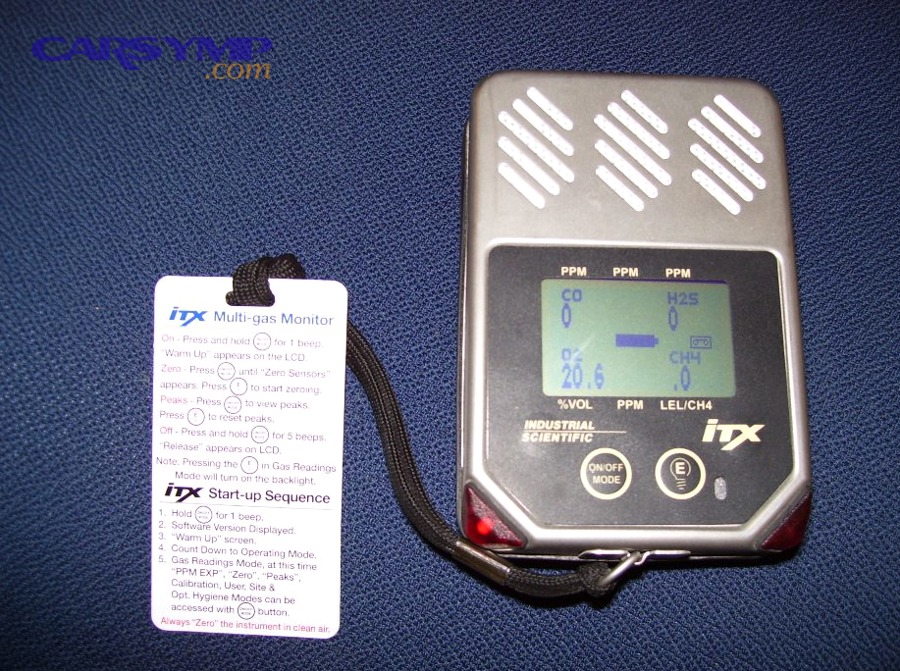
If you’re diagnosing a car that still has some pressure, a sniffer can identify suspicious areas in minutes—especially around service valves, compressor nose seals, and condenser corners—so you can decide whether it’s worth proceeding to deeper checks. However, dye needs time: you add it, run the A/C to distribute it, and later inspect for fluorescent residue at the leak site.
Speed also depends on access. A sniffer can reach into tight gaps with a probe tip, but airflow can dilute refrigerant and slow down your “hunt,” so the same leak might take longer in a windy bay or with fans running. MACS emphasizes that air movement and probe distance strongly affect a detector’s ability to pinpoint leaks, which is why the engine is recommended off during checking.
By contrast, dye is slow to set up but quick to confirm once it shows: if you can see a bright trace at a fitting or along a hose crimp, you can stop searching and move straight to the repair.
As a practical rule: if you need an answer today, start with the sniffer; if you need a “receipt” that proves exactly where the leak is, plan on dye (or use both in sequence).
The evidence-based anchor is leak-rate capability: MACS training materials describe electronic detectors (meeting SAE criteria) identifying very small leakage rates compared with soap-bubble approaches, supporting why a sniffer can quickly “sense” leaks you can’t visually confirm right away.
How does UV dye tracing work in an automotive A/C system?
UV dye tracing works by mixing a fluorescent additive into the refrigerant oil stream, then using a UV lamp to spot where the dye-laced oil escapes and leaves a glowing residue at the leak point.
To keep the flow clear, the key idea is that dye is not “sniffing gas”—it is revealing oil movement and the leak’s physical pathway after the system has operated.
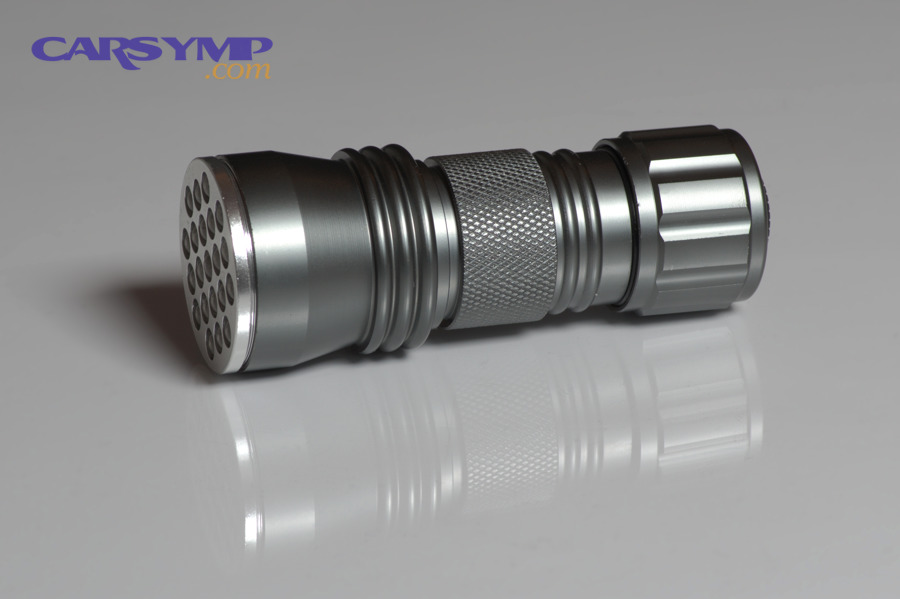
In practice, dye is strongest when leaks leave visible residue: hose crimps, O-ring joints, compressor case seams, condenser header joints, service ports, and any spot where oil can wet the surface. If the leak is slow, you may need days of normal driving for the dye to accumulate enough to be obvious. If the leak is large, dye can show quickly—sometimes the same day.
Cụ thể, you want to control three things for dye success:
- Circulation time: run the A/C long enough for oil to travel; then give it time to mark the leak.
- Inspection conditions: shade or darkness helps; wipe suspected areas first so old grime doesn’t mimic dye glow.
- Surface context: dye is most convincing when you see a trail leading from the component outward, not a random bright speck.
A common misconception is that dye always pinpoints leaks “better.” Actually, dye is only as good as the system’s ability to move oil to the leak and deposit residue. A leak that vents mostly vapor with minimal oil carryout may be less visually dramatic, so the inspection needs patience and good cleaning technique.
Also, dye is a chemical additive, so you should treat it like a maintenance decision, not a default. The UK/EU-oriented “Guide to Good Leak Testing” warns that dye/additives can be acceptable only if approved by equipment manufacturers and notes that use of additives can void warranty on some compressors.
Theo nghiên cứu của Real Zero / UK refrigeration compliance guidance từ leak testing guidance team, vào March 2009, dye/additive methods were listed as effective only when approved by the equipment manufacturer, with warranty-void risk noted for some compressors—so the “best” method is also a compatibility choice, not only a visibility choice.
How does an electronic sniffer work, and what affects reliability?
An electronic sniffer works by sampling air near suspected leak points and triggering when it detects refrigerant molecules above a threshold, using sensor technologies designed to respond to specific refrigerant types.
To link this to your results, what you’re really measuring is a cloud of refrigerant influenced by airflow, temperature, and probe position—so technique matters as much as the tool.
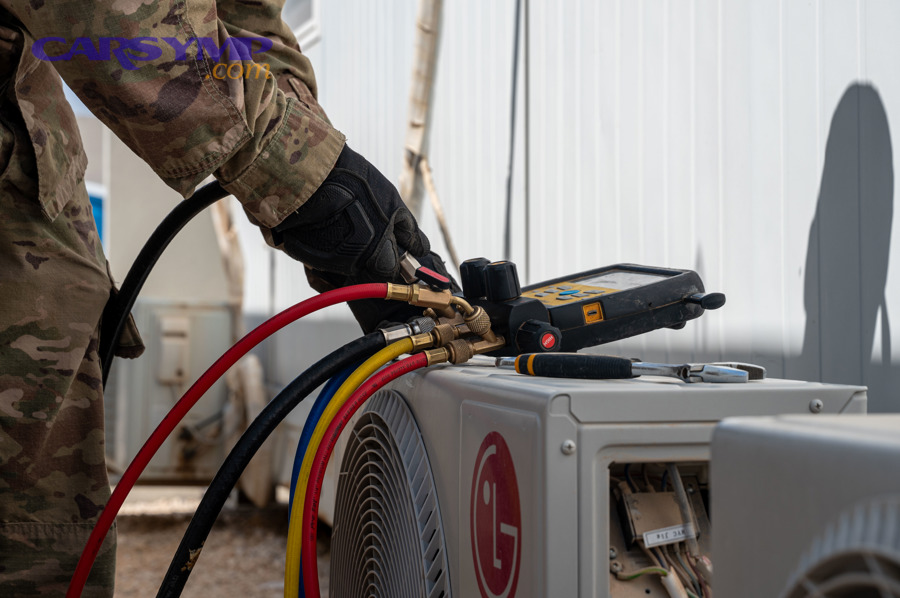
Three reliability factors dominate:
- Air movement: fans, wind, and engine bay turbulence can dilute refrigerant and create false “directional” clues.
- Probe distance and speed: too far and you miss it; too fast and the sensor can’t stabilize; too close and you risk contamination on the tip.
- Contamination and moisture: dirty surfaces, wet probe tips, and underhood chemicals can cause false alarms or reduce sensitivity.
MACS guidance explicitly notes that dirt/moisture contacting the probe tip, probe distance, and windy environments dramatically reduce a detector’s ability to pinpoint leaks.
Technique is why many “sniffer vs dye” debates feel contradictory: a good detector used poorly performs like a bad detector, and a modest detector used well can outperform expectations.
To improve signal quality, follow a repeatable pattern: do a visual pre-check for oily residue first, then test with the engine off, then sweep slowly across each fitting and seam on multiple faces (top, bottom, rear). MACS summarizes SAE J1628 procedure elements, including engine off and thorough surface checking.
Theo nghiên cứu của Mobile Air Climate Systems Association từ MACS certification training program, vào January 2025, recommended practice emphasized engine-off checking and multi-surface probing because airflow and probe distance can materially reduce pinpoint accuracy—highlighting that “sniffer performance” is inseparable from method discipline.
How sensitive are dye and sniffers, and what leak sizes can you truly confirm?
Electronic sniffers are strongest for very small leak rates, while dye is strongest for visually confirming the exact leak location once enough dye-marked oil has escaped to be seen.
However, the practical comparison becomes clearer when you anchor it to standardized leak-rate targets and what each method needs to “show proof.”
MACS training materials describe SAE-certified electronic leak detectors identifying leakage rates as low as 0.15 ounces per year (about 4 grams/year) and contrast that with soap-bubble methods only identifying much larger leaks (e.g., in excess of 1100 grams/year in their comparison chart notes).
This matters because many automotive A/C complaints start as “weak cooling” from a slow leak that isn’t visually obvious. A sniffer can detect the presence of refrigerant escaping even when there’s no wet, oily evidence yet—especially around micro-leaks at O-rings or porous brazes.
Dye, in contrast, needs accumulation. That means it can lag behind the sniffer on the smallest leaks, but once it appears, it can be more conclusive because you can see the exact origin point and the direction of travel.
To make the tradeoff actionable, here’s a quick comparison table (this table contains what each method is best at, what it struggles with, and the “proof style” you get from it):
If you want a standards-based benchmark for “sniffer capability,” the California Air Resources Board report on the I-MAC Service Team work summarizes SAE J2791 elements, including manual sensitivity scales (4 g/yr, 7 g/yr, 14 g/yr) and a probe pass requirement from 3/8 inch distance, tying performance to repeatable test conditions.
Theo nghiên cứu của California Air Resources Board từ I-MAC Service Team report, vào July 2015, SAE J2791 key elements were summarized with selectable leak-rate scales (including 4 g/yr) and a probe-pass timing requirement—showing that modern sniffer performance is defined around repeatable small-leak thresholds rather than “feel-based” detection.
When does each method win in real car scenarios?
Sniffers win when you need to localize an active leak quickly across many underhood points, while dye wins when you need visual certainty in messy, hard-to-interpret areas or after a repair to confirm the leak is truly gone.
Next, the best way to think about this is by location type and access, not by brand or price.
Underhood fittings and service ports: sniffers are excellent here because you can move probe-to-probe quickly and isolate which junction is actively venting. Dye can still help, but it may highlight old residue from earlier work, so cleaning and context are crucial.
Condenser corners and impact zones: dye is powerful if a stone chip or bent fin area is weeping oil; the fluorescent trail can show exactly where the tube/header is compromised. Sniffers work too, but wind across the front of the car can dilute readings, especially with shop fans.
Compressor shaft seal area: sniffers can confirm active leakage around the clutch nose region; dye can show a “ring” pattern if oil is flung outward. Combining them reduces misdiagnosis.
Hard-to-reach compartments: sniffers can extend into gaps, but false alarms from chemicals and moisture become more likely. Dye may be easier if you can visually access the area with a mirror and UV lamp after some driving.
One often-missed point: a sniffer can tell you “there is refrigerant here,” but it may not tell you whether it’s coming from the exact seam you’re hovering over, or drifting from a nearby vent point. That’s where dye’s visual trail can end arguments.
Regulatory/industry training also encourages leak repair once found and recommends standardized procedures to pinpoint leaks; MACS training explicitly ties pinpointing to SAE J1628 service procedure and SAE-certified detector use.
Theo nghiên cứu của Mobile Air Climate Systems Association từ Section 609 certification training materials, vào January 2025, pinpointing leaks in mobile systems was linked to following SAE J1628 procedures and using detectors certified to SAE standards—supporting a scenario-based approach where method and technique are paired to location/access.
How to choose between dye and a sniffer without wasting money
Choose a sniffer first if you need rapid localization and the system still has pressure; choose dye first if you need visual confirmation over time, suspect multiple seep points, or want a post-repair “proof trail.”
To make that choice confidently, use three decision filters: time horizon, system charge state, and surface visibility.
- Time horizon: If you must decide today, sniff. If you can drive and re-check later, dye becomes more valuable.
- Charge state: If the system is near empty, a sniffer needs enough refrigerant present to detect. MACS notes you may need to add some refrigerant to use an electronic detector and gives an example target of around 50 psi static pressure, with about 15% charge often being enough to reach that minimum pressure.
- Surface visibility: If you can’t see the suspected area well, dye may not pay off; if you can’t control airflow, sniffer readings may be noisy.
Cost-wise, a good sniffer can be a bigger upfront purchase, but it can save money by preventing repeat recharge cycles while you “guess and refill.” Dye kits are often cheaper, but dye also implies additional steps and possible compatibility concerns, and it may delay the answer.
One more “hidden cost” is error: a false positive sniffer sweep can send you chasing the wrong joint, while a misread dye glow (old residue, spilled dye, or contamination) can lead to replacing good parts. The fix is to demand repeatability: repeat the sniffer pass from different angles, and verify dye trails originate at a specific boundary (not randomly on a dusty surface).
Theo nghiên cứu của Mobile Air Climate Systems Association từ training guidance on detector technique, vào January 2025, airflow and probe distance were flagged as major performance limiters—so a “cheaper tool” can outperform an expensive one when used with the correct technique, which should influence how you allocate your budget.
How to run a reliable workflow that combines sniffer and dye
The most reliable workflow is: visual oil check first, sniffer scan second, dye confirmation third, and then a final re-check after repair—because each step reduces the uncertainty left by the previous one.
To keep the flow tight, you’re building from “fast signals” to “hard proof,” and you’re eliminating the most common sources of false readings along the way.
Step 1 — Visual pre-check (2–5 minutes): look for oil traces on components, especially around joints and crimps. MACS explicitly recommends visually inspecting for oil traces as possible leak sites before using the electronic detector.
Step 2 — Controlled sniffer scan (10–20 minutes): engine off, minimal airflow, slow sweep across every suspect point. Clean surfaces with a dry cloth if needed (avoid solvents) and keep the probe tip from touching wet grime.
Step 3 — Dye decision: if the sniffer suggests a general area but you can’t isolate the exact joint, add dye (if compatible), run the A/C to circulate, then inspect later with UV light and glasses.
Step 4 — Repair and verify: after replacing O-rings, hoses, or components, re-check with the sniffer. If you used dye, confirm no new dye trail appears after a few drive cycles.
To make this workflow even easier, here’s a short video demonstration you can follow while practicing the sweep technique and inspection angles:
Don’t skip the “controlled environment” step. The ARB summary of SAE J2791 elements includes a probe pass requirement from a defined distance and speed, reinforcing why slow, repeatable motion is not optional—it’s how the method is designed to work.
Finally, be realistic about proof: if the system is very low, you may only be able to prove “it leaks” rather than “it cools.” MACS notes limited refrigerant can be enough to check for leaks, but not enough to evaluate cooling performance.
Theo nghiên cứu của California Air Resources Board từ MVAC leak-detector performance discussion, vào July 2015, the standardized probe-distance/sweep expectations were summarized to reduce subjective technique errors—supporting a combined workflow where you first find the zone (sniffer) then prove the point (dye).
Contextual Border: Up to this point, you’ve learned how to compare and apply each tool for most common underhood leaks. Next, we’ll zoom out to tougher situations, decision shortcuts, and prevention habits that reduce repeat failures.
Beyond the basics: tough cases and smarter decisions
Intermittent leaks and cross-contamination traps
Intermittent leaks are where people lose the most money: the system cools on some days, then fades on others, and both dye and sniffers can “miss” if you test at the wrong moment. In these cases, build repeatability: test after a hot soak (higher pressure can increase leak rate), then test again after the car cools, and compare results.
MACS notes that higher temperatures increase system pressure and can help find leaks, while cold temperatures (especially below 60°F) may reduce leak rate enough to make leaks harder to find.
Also watch for cross-contamination: chemicals, cleaners, and oily residues can confuse sniffers. If a sniffer is “chirping everywhere,” clean the zone, let it air out, then repeat with a controlled sweep and confirm on a second pass before declaring a leak.
When the leak is inside the HVAC box
This is where people often bring up Evaporator leak symptoms vs other leaks: a musty odor, fogging, or gradual loss that’s hard to trace underhood can hint the leak is in a hidden core location. The trap is that symptoms overlap—so you still need structured proof: start with underhood confirmation, then use dye evidence at drain points or inspection ports if available, and corroborate with repeatable sniffer readings near relevant openings (while controlling airflow).
The ARB report explicitly mentions that some aspects of leak detection (including evaporators) were studied as challenging areas, reinforcing why you should treat “inside-the-box” leaks as a special workflow rather than a normal underhood scan.
Deciding what “normal” charge loss looks like
Drivers commonly ask How long refrigerant should last because they’re trying to decide if they should recharge or repair. The practical answer is: refrigerant should not be a routine “top-off” item; measurable loss usually indicates leakage that should be located and corrected. MACS training emphasizes that leaking systems should be repaired and provides procedures for pinpointing leaks rather than repeatedly refilling.
Use that as your decision shortcut: if performance drops repeatedly, invest in leak location first. It’s cheaper than multiple recharges and reduces the risk of running the compressor low on oil circulation, which MACS warns can occur with refrigerant loss.
DIY checks that keep you honest without over-recharging
If you’re searching How to find slow AC leaks at home, the safest approach is a staged test: confirm there’s still some pressure, run a disciplined sniffer sweep with the engine off, then use dye only if you need visual proof later. If the system is empty, avoid “random charging” just to see if it cools—add only enough for controlled diagnosis and then stop.
MACS notes that a small portion of charge can be sufficient to check for a leak and describes example minimum pressure conditions for performing the leak check; that supports an at-home strategy focused on diagnosis before full recharge.
Also, remember the additive caveat: some guidance documents list dye/additives as conditionally acceptable and warn of possible compressor warranty implications, so always check compatibility before using dye as your default DIY move.
FAQs
Can I use both methods on the same system?
Yes—using both is often the most accurate approach: a sniffer quickly identifies the active leak zone, and dye later provides visual confirmation of the exact origin point and leak path.
Why does my sniffer alarm near everything?
False triggering can come from underhood chemicals, moisture, or poor sweep technique. Clean the area, reduce airflow, keep the probe tip dry, and repeat the pass slowly at consistent distance; MACS highlights probe contamination and windy environments as major hindrances.
Is dye always safe for compressors?
Not always. Some guidance notes dye/additives may be acceptable only if approved by the equipment manufacturer and warns that additive use can void warranty on some compressors, so compatibility should be confirmed before use.
What’s the single best “first check” before buying tools?
Start with a careful visual inspection for oily residue at fittings, crimps, and component seams; then decide whether a sniffer scan is feasible given remaining pressure. MACS recommends an initial visual inspection for oil traces as possible leak sites.