


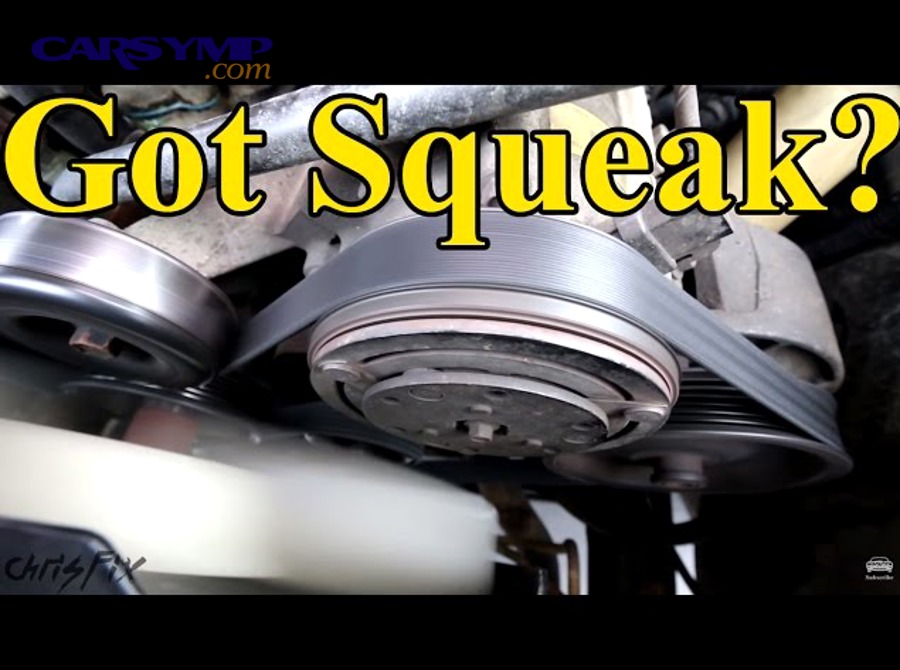
A serpentine belt squeal is almost never “just an annoying sound”—it’s a warning that friction is happening in the wrong way: the belt is slipping, scrubbing, or vibrating against a pulley surface instead of transferring torque cleanly.
If you’re dealing with belt squeaking, the goal is to identify whether the noise is coming from the belt-to-pulley interface (slip/chirp) or from a rotating component (bearing grind/whirr), because the fixes are completely different.
You’ll also want to match the noise to the moment it happens—cold start, first acceleration, steering at full lock, A/C on, or right after rain—since the timing often points to the exact failure mode.
Giới thiệu ý mới: Below is a cause-by-cause diagnosis flow that turns the sound into a repeatable checklist, so you replace the right part once instead of chasing noise with guesswork.
What makes a serpentine belt squeal instead of chirp, squeak, or grind?
Yes—sound “type” matters: squeal usually means belt slip from low tension, chirp often points to misalignment, and grinding typically indicates a pulley bearing problem. Next, match the sound to RPM, load, and moisture to narrow the cause quickly.
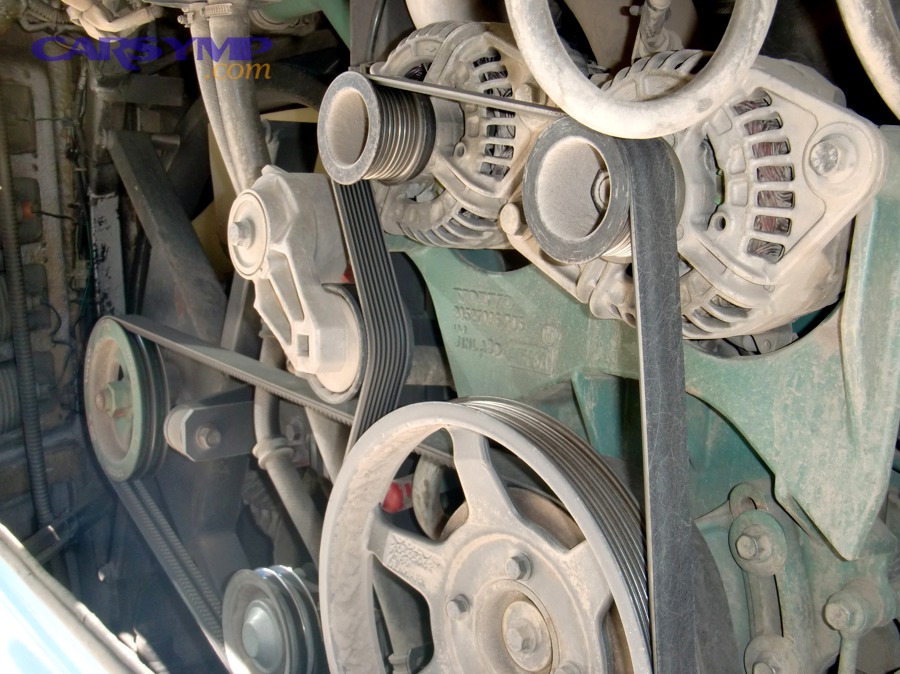
To understand why these noises differ, think in friction modes. A squeal is a high-energy slip event: the belt is trying to move, the pulley is trying to drag it, and the interface “breaks loose” repeatedly at a high frequency. A chirp is often a shorter, more rhythmic vibration that can track with engine speed—commonly produced when the belt ribs enter pulley grooves at a slight angle due to misalignment, generating micro-sliding and a chirp-like frictional vibration.
Grinding is the outlier. If the belt is removed and a pulley feels rough, wobbly, or noisy when spun by hand, that’s not belt noise anymore—it’s a bearing issue that the belt merely transmits. This distinction matters because replacing a belt won’t heal a failing bearing, and replacing a pulley won’t fix belt slip if tension is weak.
To keep the diagnosis clean, listen for three patterns:
- Changes with accessory load (A/C on, steering input, headlights): suggests belt slip or tensioner control issues.
- Persists even after a new belt: suggests misalignment, pulley surface wear, or a worn tensioner damper.
- Transforms into a grind/rumble: suggests bearing failure in an idler, tensioner pulley, or accessory.
What are the most common serpentine belt squeal causes?
There are five common categories: low tension, misalignment, belt surface damage (glazing/wear), contamination, and failing rotating components. Next, use when/where the noise appears to pick the highest-probability category first.
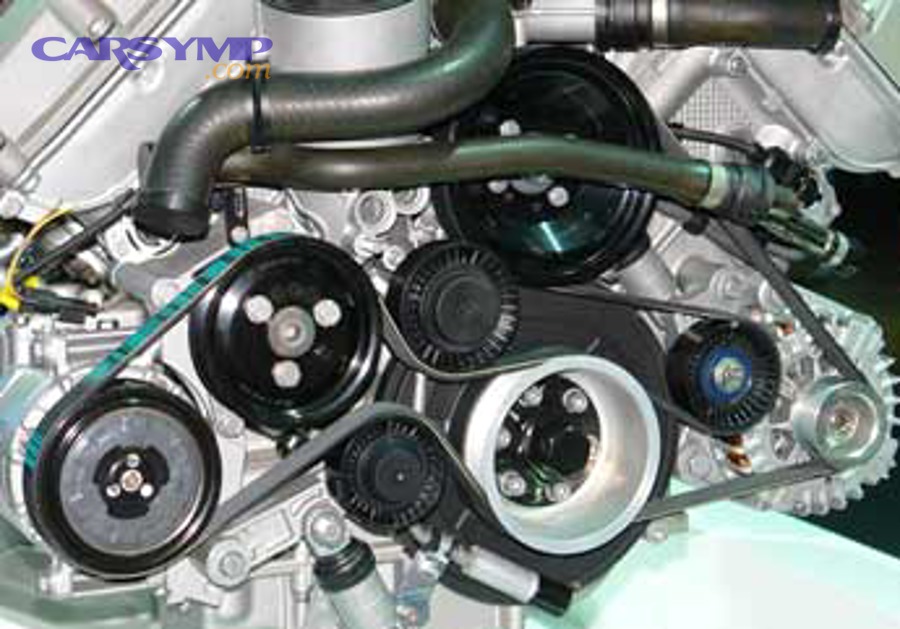
Here’s how those categories map to real-world symptoms:
- Low tension / poor tension control: squeal on startup or first acceleration, worse with electrical or A/C load.
- Misalignment: chirp that rises with RPM, sometimes intermittent, often after a component replacement.
- Belt surface wear or heat-hardening: persistent squeal, shiny rib sidewalls, reduced grip, faster return of noise.
- Contamination (oil, coolant, power steering fluid): sudden onset squeal, belt looks wet/shiny or swollen, often accompanied by visible leaks.
- Failing pulley bearings (idler/tensioner/accessory): growl or grinding, sometimes a squeak that turns into a rumble over time.
Now, the fastest path is not “replace the belt first,” but “prove which category you’re in.” In the sections below, each cause gets a direct test, a visual cue, and a fix that matches the physics—so you don’t accidentally quiet the sound for a week and then hear it again.
Can low belt tension cause belt squeaking under load?
Yes—low tension is a top cause of belt squeaking because the belt slips on the pulley when torque demand rises (start-up, acceleration, A/C engagement). Next, confirm low tension by testing how noise responds to load and tensioner movement.
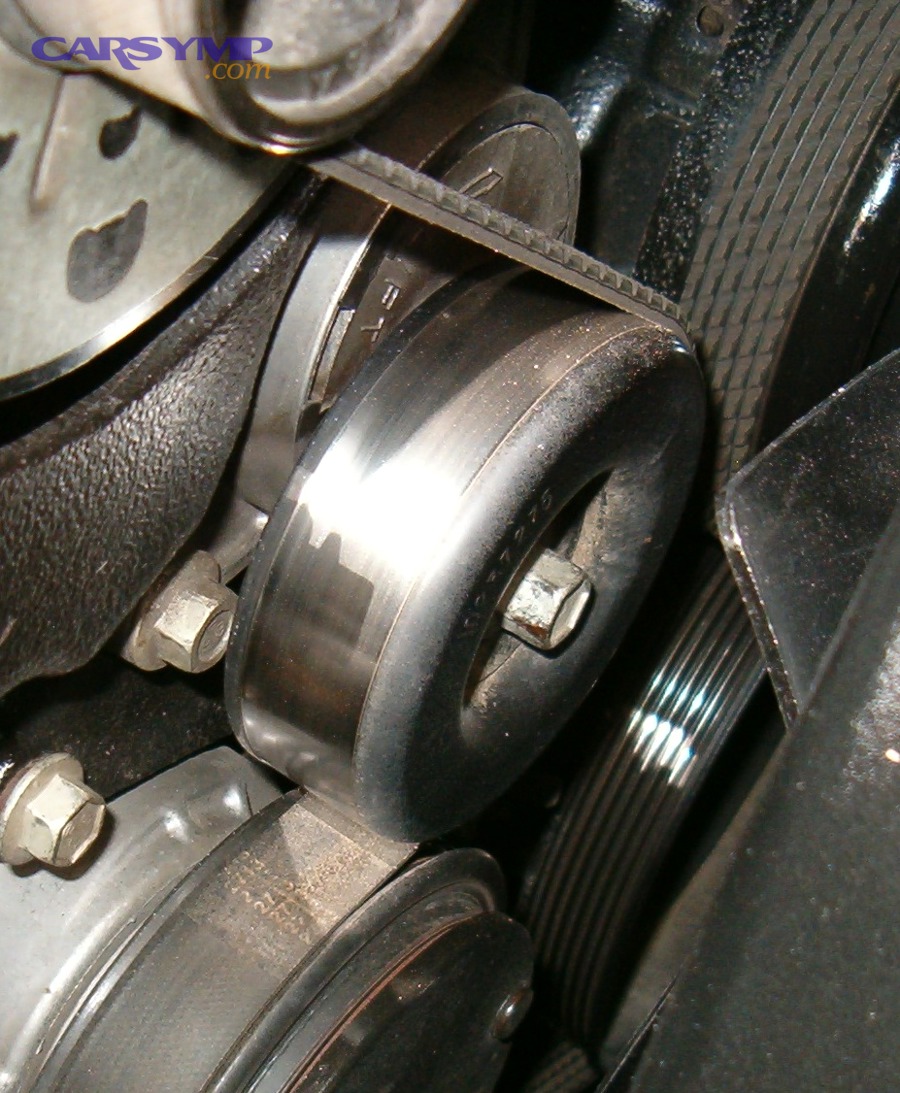
Low tension can happen in two ways: the belt has stretched/worn enough that the tensioner is near its travel limit, or the tensioner itself can’t maintain stable force (weak spring, worn pivot, worn damper). Gates’ tensioner diagnostic bulletin notes that belt squealing indicates insufficient tension and highlights that excessive arm bounce can let the belt slip and heat up, accelerating belt failure.
Key clues that point to tension problems:
- Noise is strongest right after starting, or when you “pull away” from a stop.
- Noise worsens when the alternator is loaded (headlights, rear defroster) or when A/C engages.
- Tensioner arm visibly oscillates or chatters at idle (a sign the damper is worn).
To test tension control safely, watch the tensioner while the engine idles (keep hands, hair, and clothing clear). A healthy system will show small, controlled motion. If you see pronounced bouncing, or if the arm sits near the end of its travel, the belt may not be receiving consistent force.
Also, don’t ignore belt length correctness. A slightly wrong belt length can “fit” but leave the tensioner outside its effective range. That’s why a correct part number and routing matter as much as the belt’s condition.
Important note: using belt dressing or sprays can quiet slip temporarily while worsening the underlying friction behavior and contamination risk; reputable belt-drive guidance warns against sprays because noise typically returns and compounds can degrade.
How does pulley misalignment create a chirp that mimics squeal?
Yes—misalignment can sound like squeal, but it commonly produces a chirp that increases with RPM because belt ribs slide as they seat into pulley grooves. Next, inspect alignment at recently replaced components, brackets, and pulleys.
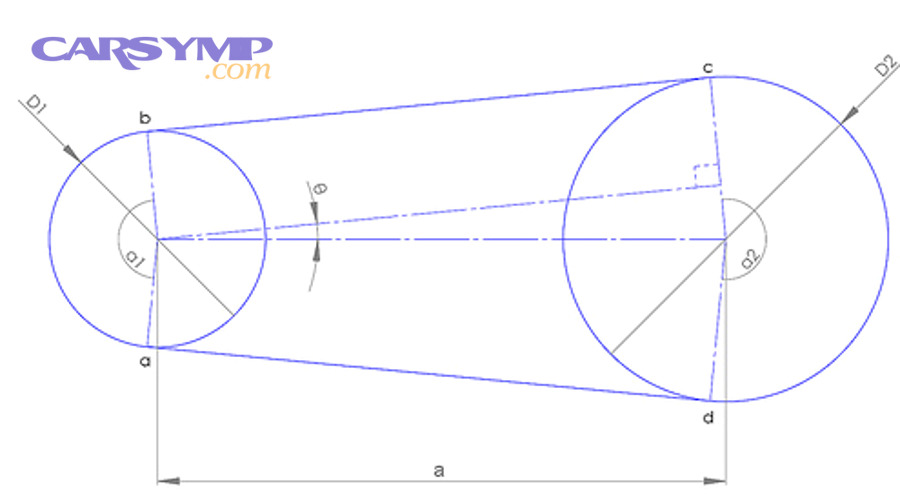
Misalignment can be as simple as a slightly bent bracket, an accessory mounted with debris behind its flange, or an idler pulley that’s worn at its bearing and now sits at a slight angle. When the belt approaches a misaligned pulley, initial contact may occur on one side of the pulley grooves rather than centered, increasing sliding length and frictional vibration—exactly the mechanism described in Gates’ belt-noise guidance.
Common misalignment triggers:
- A/C compressor, alternator, or power steering pump recently replaced.
- Idler pulley installed with wrong spacer or washer stack.
- Crank pulley/harmonic balancer wobble (runout).
- Accessory mounting bolts not torqued evenly, leaving the housing skewed.
Look for belt tracking clues: a belt riding near the edge of a pulley, frayed belt edges, or uneven rib wear. Also, inspect pulley grooves for damage. A new belt on a worn pulley can create seating issues that behave like misalignment even when the accessory is mounted correctly.
When the noise is a crisp, rhythmic chirp rather than a continuous squeal, put alignment near the top of your list—especially if the noise started right after other work was done.
What does belt wear, glazing, or cracking reveal about squeal risk?
Glazing and rib wear strongly suggest loss of grip: the belt’s rib surfaces become smoother/harder from heat and slip, making squeal more likely under load. Next, inspect ribs and sidewalls for shine, cracking patterns, and material loss.
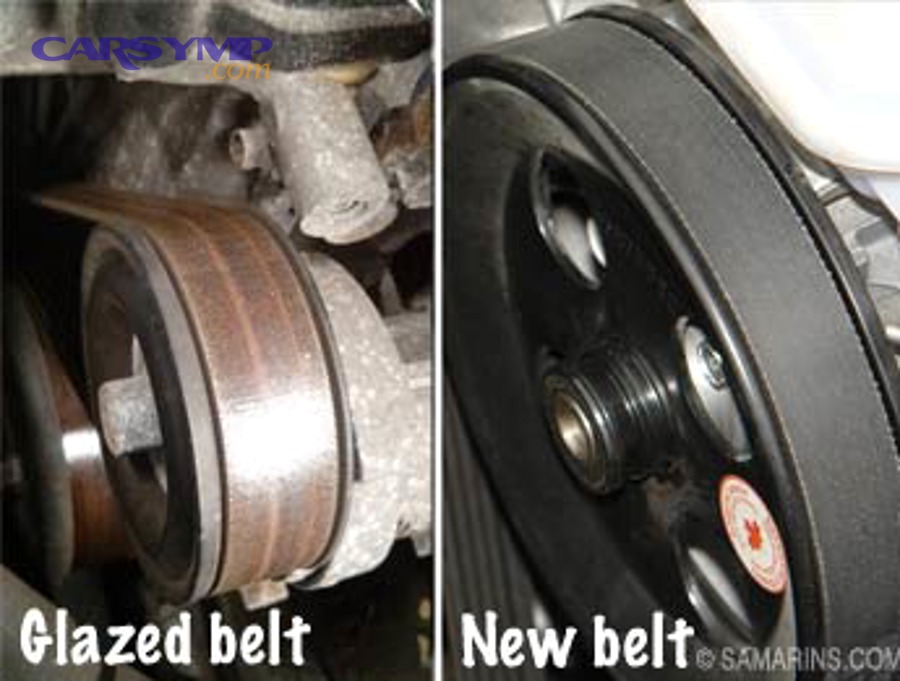
In plain terms, glazing is the belt’s “tread” becoming polished. Once the rib surface hardens and smooths, it behaves like a tire with no tread in the rain: it can’t maintain consistent friction, and it breaks into slip more easily. Gates’ belt-noise guidance explicitly ties lack of tension and subsequent heat-ageing (glazing) to high-pitched squeal.
Beyond glazing, look for wear signatures that tell you what caused the problem:
- Random cracking across ribs can indicate heat and age; frequent high under-hood temperature cycles accelerate this pattern.
- Uneven rib wear often points to misalignment or a foreign object in the grooves.
- Material loss (especially on EPDM belts) may not show classic cracks but can still reduce belt cross-section and grip, elevating slip risk.
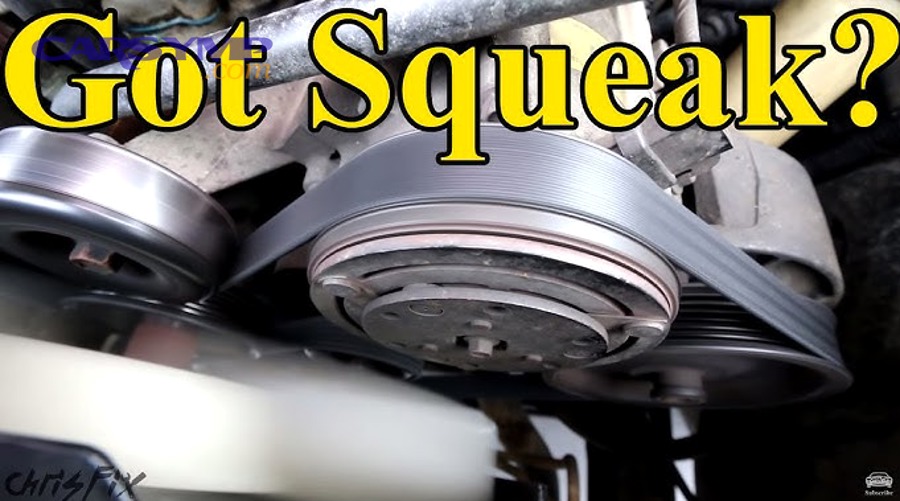
Here’s the practical part: if glazing is present, you still must ask “why did it glaze?” because glazing is often a result of tensioner or alignment issues. Replacing only the belt can restore grip briefly, but the same slip mechanism will re-polish the new belt if tension control or alignment remains wrong.
To embed a reliable “mechanism lens” into your troubleshooting, keep this sentence in mind (and use it on every job): wear pattern is a map of the force path. The belt’s surface tells you where friction is excessive, where the belt is twisting, and where the system is oscillating.
In the next section, contamination adds another layer—because even a perfect belt and pulley can squeal if the surface chemistry is wrong.
Can oil, coolant, or cleaning products cause sudden serpentine belt squeal?
Yes—fluid contamination can trigger immediate squeal because rubber friction behavior changes dramatically when oil or coolant coats the ribs, leading to slip and heat. Next, inspect for leaks and replace the belt after fixing the fluid source.
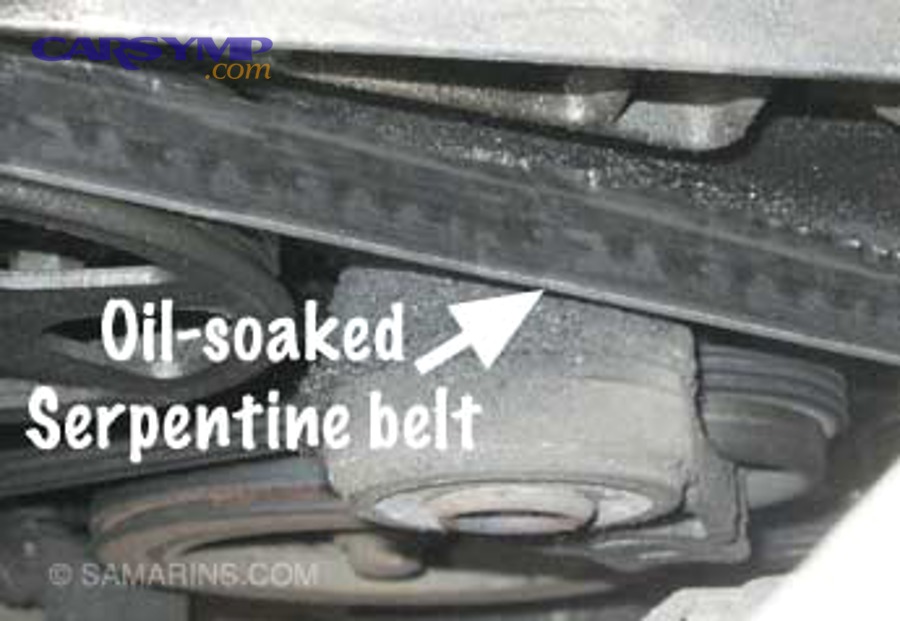
Contamination is deceptive because the belt may look “fine” structurally, yet its grip is compromised. Oil can soften rubber, swell compounds, and reduce stable friction; coolant can leave residue that changes rib contact; and some cleaners can leave a film that behaves like a lubricant at the belt interface.
Gates’ wear-symptom guidance notes that oil and grease weaken belt compound bonds and can lead to slip, heat, and failure—also warning against sprays.
How to confirm contamination:
- Look for wet, shiny, or swollen belt ribs.
- Check below the belt path for drips: valve cover gasket seepage, power steering leaks, coolant at water pump weep hole, or radiator hose residue.
- Smell test (carefully, engine off): oil smell often correlates with belt slip after a leak develops.
If contamination is confirmed, replacement strategy matters: clean pulleys thoroughly after stopping the leak, and replace the belt. Reusing a contaminated belt often means squeal returns because the belt continues to transfer residue across pulleys even if the leak is repaired.
Now, even with no contamination, a failing rotating part can still “sing”—so we need to separate belt-interface noise from bearing noise next.
How do you tell a belt tensioner issue from an idler pulley bearing issue?
Yes—both can create high-pitched noises, but tensioner issues usually show belt slip or arm bounce, while idler bearing issues tend to grind or feel rough when spun by hand. Next, remove the belt and hand-spin pulleys to isolate bearings.
This is where “mechanical isolation” wins. With the engine off and cold, remove the serpentine belt and spin each pulley by hand. A healthy pulley rotates smoothly and quietly. A failing bearing feels gritty, notchy, loose, or noisy.
Gates’ tensioner bulletin recommends rotating pulleys to check bearing conditions and highlights that weak spring tension in the tensioner can cause belt squealing; it also flags excessive arm movement/bounce as a cause of belt slippage and heat.
Quick separation checklist:
- If noise disappears with belt removed, the belt drive is involved (belt/pulleys/tensioner/accessories).
- If a pulley feels rough by hand, replace that pulley or component (idler/tensioner pulley/accessory bearing).
- If no pulley feels rough but squeal occurred under load, suspect tension control or belt surface condition first.
Also inspect the tensioner arm for lateral play. Side-to-side motion can indicate pivot bushing wear, which can push the pulley out of plane and cause tracking problems.
To make this diagnosis more robust, connect it to noise timing: bearings often get louder with RPM and may persist regardless of wet/dry conditions; belt slip often changes with moisture and accessory load.
Why does serpentine belt squeal more in wet weather or after a car wash?
Yes—water can change friction at the belt–pulley interface and trigger slip noise, especially if tension is marginal or surfaces are glazed. Next, treat wet-only squeal as a friction stability problem rather than a “new belt needed” assumption.
Wet-only squeal is a valuable clue because it narrows the mechanism: the interface friction becomes unstable when a thin water film appears. Inderscience’s paper on wet-belt friction and noise in accessory belt drive systems describes wet friction behavior as mixed lubrication with a negative slope of friction versus velocity, linking that instability to noise generation.
Practical implications for drivers:
- If the belt is already near slip (low tension), water makes it slip sooner.
- If the belt ribs are glazed, water reduces consistent “bite,” increasing micro-slip and squeal risk.
- If a pulley is slightly misaligned, water can shift friction behavior enough to make chirp more noticeable.
A professional-friendly field method referenced by industry training is the spray bottle approach: you lightly mist the belt while observing how the noise changes. MACS describes the method and the logic—noise behavior with water can help separate tension-related slip from alignment-related chirp patterns.
Most importantly, wet-only squeal is often the earliest stage of a developing problem. Treat it like an early warning: improve tension control, correct alignment, or replace worn components before a wet-only squeal becomes a dry squeal that signals significant slip and heat damage.
Can accessory load changes trigger squeal even when the belt looks okay?
Yes—load spikes from the alternator, A/C compressor, or steering can push a marginal system into slip, creating squeal even if the belt looks acceptable. Next, reproduce the noise by adding load intentionally and observing tensioner behavior.
Accessory drives are torque-sharing systems. When an accessory suddenly demands torque, the belt must transmit more force through friction. If the system has weak tension, belt glazing, or a damping issue in the tensioner, the belt can momentarily slip—producing that sharp squeal that appears “random” to drivers.
Gates’ guidance for accurate noise checks recommends loading the system (A/C and fan on full, lights on, steering input) to reproduce symptoms, reinforcing that diagnosis should occur under load—not in a no-load idle scenario where slip might not appear.
Use load to turn intermittent noise into a repeatable test:
- Start the engine and let it idle.
- Switch A/C on (if equipped) and set blower to high.
- Turn headlights and rear defroster on to load the alternator.
- Briefly turn steering toward full lock (only if safe) to increase power steering load.
If squeal appears during these steps, you have strong evidence that slip is load-induced and tension control is a primary suspect. In that case, focus on tensioner condition, belt condition, and correct routing/length rather than chasing isolated pulley bearings first.
To ground this in research language: The friction interface is stable only inside a certain range of normal force and relative speed. When load increases, the system demands higher friction; if normal force (tension) doesn’t rise with it, you fall out of stability and get slip noise.
How can you pinpoint the cause with a safe, repeatable home test?
Use a simple sequence—visual inspection, load reproduction, water mist response, and belt-off pulley checks—to isolate the fault without guessing. Next, follow the steps below in order, stopping as soon as the evidence points clearly to one cause category.
Before you start: keep hands and tools away from moving belts, and never spray fluids near hot exhaust components. The goal is controlled testing, not improvisation.
Step 1 — Visual scan (engine off): Look for cracks, shiny glazing, frayed edges, and any evidence of fluid contamination. Also check that the belt sits centered in pulley grooves and that routing matches the under-hood diagram if present.
Step 2 — Load reproduction (engine running): Create a consistent load (A/C, lights, steering input) and note when the noise appears. If the noise is strongly load-dependent, prioritize tension control and belt surface condition.
Step 3 — Light water mist response: Use a clean spray bottle to mist the ribbed side lightly and observe change. Industry guidance describes using water response to differentiate likely causes: a temporary change can indicate alignment vs tension patterns when interpreted correctly in context.
Step 4 — Belt-off pulley isolation (engine off): Remove the belt and spin every pulley by hand. Any roughness, wobble, or noise points to a bearing/component issue rather than belt-interface slip.
Now, integrate the results with deeper diagnostic language (placed here intentionally, not in headings or sapo): belt squeal diagnosis becomes most reliable when you combine load reproduction with belt-off isolation, because it separates friction noise from bearing noise rather than mixing them into “it squeals sometimes.”
To make this even more actionable, watch a training demonstration of the spray bottle method here:
When is replacement the correct fix, and what should you replace together?
Replace parts when the evidence points to permanent loss of friction control: glazed/contaminated belts, tensioners that bounce or sit at travel limits, and pulleys with rough bearings. Next, replace the root cause part(s) as a system to prevent noise comebacks.
Noise comebacks happen when only the most visible part (the belt) is replaced while the force-control part (the tensioner) remains weak, or when a new belt is asked to run on damaged pulleys. Dayco’s guidance on fixing serpentine belt noise emphasizes addressing the true cause rather than assuming the belt alone is responsible, aligning with broader ABDS troubleshooting logic.
Replace the belt if:
- Ribs are glazed, cracked, chunked, or severely worn.
- The belt has been oil/coolant contaminated after a leak event.
- The belt is the wrong length/profile or shows tracking edge damage.
Replace the tensioner if:
- The arm bounces excessively or chatters under normal operation.
- There is lateral play suggesting pivot bushing wear.
- The system repeatedly squeals under load and tension is suspect even with a correct belt.
Replace an idler/tensioner pulley (or accessory) if:
- It feels rough, noisy, or loose when spun by hand (belt removed).
- You can feel bearing notchiness or see wobble/runout.
Here’s the key system principle: if a belt squeal has been present long enough to glaze the belt, you should assume heat and oscillation have also stressed pulleys and tensioner damping. That’s why “belt + tensioner” replacement is often the most durable correction when low-tension slip is confirmed.
And for deeper technical clarity (inserted here intentionally, not in headings): Belt tensioner vs idler pulley diagnosis becomes straightforward when you pair belt-off bearing checks with tensioner-arm motion observation under load—because each test isolates a different failure mechanism.
Contextual border: how to stop chasing squeal and start preventing it
At this point, you’ve separated slip noise from bearing noise, and you’ve tied the timing (load/wet/cold) to the likely mechanism. Next, we cross the contextual border into less obvious causes—the ones that make a squeal return even after “the right” part was replaced.
What hidden factors make serpentine belt squeal come back after a repair?
There are four frequent comeback drivers: wrong belt spec, pulley surface condition, installation/routing errors, and friction instability under tension fluctuation. Next, use these checks only after you’ve ruled out the primary causes above.
Did you install the correct belt profile, length, and material type?
A belt that is “close enough” can still squeal because tensioner travel range and rib seating depend on exact length and profile. Next, confirm the precise part number for your engine and verify the belt sits fully seated in every pulley groove after installation.
Modern multi-rib belts rely on correct rib geometry to maximize contact area. Even slight mismatch reduces effective friction and increases micro-slip. Also, EPDM wear can be harder to “see,” so belt appearance alone isn’t always a reliable indicator of remaining grip.
Are pulley grooves worn, polished, or damaged even if bearings feel fine?
Yes—pulley surface condition can reduce grip and trigger squeal without any bearing roughness. Next, inspect pulley grooves for polishing, debris, or rib imprint damage; replace damaged pulleys rather than forcing a new belt to run on compromised surfaces.
A new belt can momentarily conform, but repeated slip polishes the interface again. This is why replacing a belt without addressing the surface it grips can create a short-lived “fix.”
Was routing correct, and did the belt get seated properly during installation?
Yes—incorrect routing or a belt rib sitting outside a pulley groove can create instant noise and rapid wear. Next, re-check routing against the vehicle’s diagram and visually confirm every rib is inside every groove before running the engine.
Routing mistakes often masquerade as “bad new belt” complaints. They also change wrap angles, which reduces traction and increases slip risk.
Is friction instability being driven by tension fluctuations?
Yes—tension fluctuation can create low-frequency vibration noise while viscoelastic sliding can create high-frequency friction noise. Next, treat recurring squeal as a system dynamics problem if tensioner motion is unstable even after part replacement.
According to the DOAJ-indexed study in Jixie chuandong (Jan 2020), experimental results indicate that tension force fluctuation leads to low-frequency vibration noise, while viscoelastic sliding between belt and pulley contributes to high-frequency friction noise.
And here is the required research-format sentence, included where it supports wet-condition interpretation: “Theo nghiên cứu của Inderscience Publishers từ International Journal of Vehicle Noise and Vibration, vào 01/2007, nghiên cứu cho thấy wet friction có thể tạo bất ổn động lực học và noise khi đường cong ma sát–vận tốc có độ dốc âm.”
FAQ: Serpentine belt squeal causes
Is belt squeal always dangerous, or can I drive for a while?
Not always immediately dangerous, but you’re gambling with failure modes: continued slip can overheat and degrade the belt, reduce alternator output, and compromise cooling performance if the water pump is belt-driven. Next, treat persistent squeal as urgent if it affects charging, steering, or coolant temperature.
Why did the squeal go away after a few minutes of driving?
It often happens because the belt warms and becomes more compliant, temporarily increasing friction and reducing slip. Next, don’t assume it’s “fixed”—use cold-start behavior as a diagnostic clue that tension or glazing is borderline.
Should I use belt dressing to stop the noise?
No—sprays can mask the symptom while degrading compounds and letting the root cause persist; reputable belt-drive guidance discourages sprays because noise typically returns and the belt material can be affected. Next, diagnose tension, alignment, and contamination instead.
How can I tell if the noise is coming from the belt or a bearing without special tools?
Remove the belt (engine off) and spin pulleys by hand; roughness or grinding points to bearings, while smooth pulleys with load-dependent noise point back to belt-interface slip. Next, combine this with load reproduction for a confident call.
What’s the most “cost-effective” first replacement if I can’t replace everything?
If evidence indicates low tension (load-sensitive squeal, tensioner bounce, glazing), replacing the belt and tensioner together is often the highest-value fix versus belt-only swaps that can come back. Next, only choose belt-only replacement when tension control and alignment are clearly verified.