


Electrical connector and fuse checks are the fastest way to confirm whether a “no power” complaint is real, localized, and repeatable—before you replace parts or chase guesses. Done correctly, they tell you if current can flow, where it stops, and why it stops.
Beyond that, these checks help you separate a simple open circuit from a high-resistance problem that “sort of works” until heat, vibration, or moisture makes it quit. That difference changes your next step: swap a fuse, repair a terminal, or rebuild a ground path.
They also prevent expensive misdiagnosis when a component is innocent but starving for voltage, or when an intermittent connection only fails under load. This is where a quick visual check becomes a disciplined electrical routine.
To begin, here is the mindset shift: treat every fuse and connector as a gate in a current path. Giới thiệu ý mới—we’ll map the path, test the gate, and prove the fault with simple measurements you can repeat.
What do electrical connector and fuse checks prove in one pass?
They prove whether power and ground are present, whether protection devices are intact, and whether connection quality is low-resistance under load—not just “looks fine.” Next, you’ll learn how to read a circuit like a chain of gates so you test with purpose.

Think in three outcomes: open (no continuity), overcurrent protection (fuse opened because current exceeded design), or high resistance (power exists but collapses under load). The last one is the trap: it can show 12V on a meter with the circuit “off,” then drop to 6–9V the moment the device tries to run.
Connector checks focus on contact quality: pin tension, corrosion films, fretting wear, heat discoloration, and mechanical strain relief. Fuse checks focus on protection logic: correct rating, correct fuse type, intact element, and solid contact at the fuse blades.
To make this repeatable, anchor your routine around a known-good reference: battery voltage at the posts, then voltage at the fuse input, fuse output, connector input, and component feed. Each step answers “Where does good voltage stop?”
According to research by Zhejiang Sci-Tech University from the Key Laboratory of Transient Physics, in May/2023, an electrical connector study reported initial electrical contact resistance distributed around 0.3521–0.4763 mΩ with a <0.5 mΩ requirement, highlighting how small resistance shifts can matter in practice.
- Open-circuit clue: device dead, no current, continuity breaks at a point.
- Overcurrent clue: fuse repeatedly opens, wiring may be shorted or load seized.
- High-resistance clue: intermittent, slow speed, dim lights, warm connector, “works when I wiggle it.”
Which fuses should you check first, and where are they hiding?
Check the fuses that feed the entire branch first (main, ignition, body, and module power), then the device-specific fuse—because a dead branch makes every downstream test look confusing. Next, you’ll learn a fast “top-down” fuse strategy that matches real vehicle layouts.
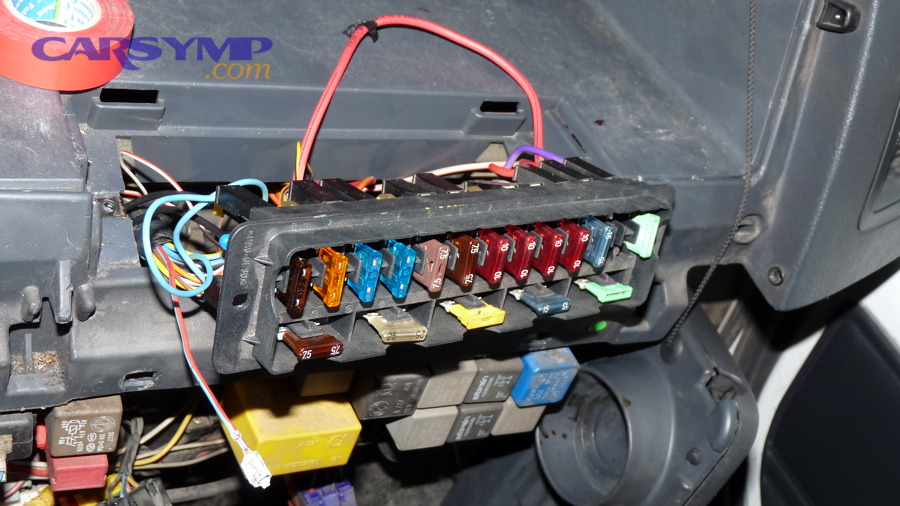
Most vehicles distribute protection across multiple locations, so “the fuse box” is rarely just one. Common groupings include:
- Under-hood power distribution: maxi fuses, fusible links, high-current relays.
- Interior panel: blade fuses for lighting, accessories, control modules.
- Inline fuses: added accessories, aftermarket devices, audio amplifiers.
To narrow quickly, categorize by what stopped working:
- Everything key-on is dead: look for ignition feed or main relay supply fuses.
- One system dead, others fine: look for a dedicated fuse and its upstream connector.
- Intermittent only: suspect fuse contact tension, corrosion at the blades, or a loose relay/fuse seating issue.
According to research by Littelfuse from its Fuseology design guidance, in March/2023, a time-current example notes that at about 1000% overload, a fast-acting fuse may clear in roughly 0.02 s while a time-delay fuse may take about 0.15 s, illustrating why “right rating” is not the whole story.
Practical tip: if you’re hunting an intermittent, don’t just look at the fuse element—inspect how tightly the fuse fits in its terminals. A loose fit can heat up and behave like a “soft open.”
And when you’re diagnosing comfort-system power issues, you may encounter the same feed path that later affects a blower motor replacement decision, but the electrical proof should come first so you don’t replace a component that’s merely underpowered.
How do you test a fuse safely without guessing?
Use a two-step method: verify power on the fuse input, then verify the same power on the fuse output—because a fuse can look intact and still fail under vibration or poor contact. Next, you’ll learn a quick workflow that works with a test light or a multimeter.
Step-by-step (key on or circuit energized as appropriate):
- Confirm battery baseline: measure at the battery posts. Note the value.
- Probe the fuse test points: most blade fuses have two small exposed metal pads on top.
- Input side check: one pad should show system voltage.
- Output side check: the other pad should show the same voltage (within a tiny margin).
- Load check if needed: activate the device while measuring; watch for voltage collapse.
Interpretation:
- No voltage on either pad: the feed to the fuse is missing—go upstream (relay, main fuse, ignition feed, connector).
- Voltage on one pad only: the fuse is open or not making contact in its holder.
- Voltage on both pads but device still dead: go downstream to connector checks or ground checks.
According to research by Littelfuse from its Fuseology guidance, in March/2023, the time-current discussion emphasizes that fuse behavior changes dramatically with overload magnitude, meaning a “temporarily works” scenario can still be consistent with fuse characteristics and poor contact heating.
Safety discipline: never “up-rate” a fuse to stop it blowing. If a correct fuse opens repeatedly, the circuit is telling you about excessive current or a short. Fix the cause, not the symptom.
When a fuse looks good but acts bad: remove it and inspect blade discoloration, melting, or darkened plastic around the fuse slot. That’s often a clue of heat at the holder, not a true overcurrent event.
How do you inspect connectors for looseness, heat, and corrosion?
Start with a visual and tactile inspection: locked housing, pin seating, terminal tension, and any sign of heat or green/white corrosion—because mechanical fit and metal condition decide electrical quality. Next, you’ll connect these observations to measurable voltage-drop proof.
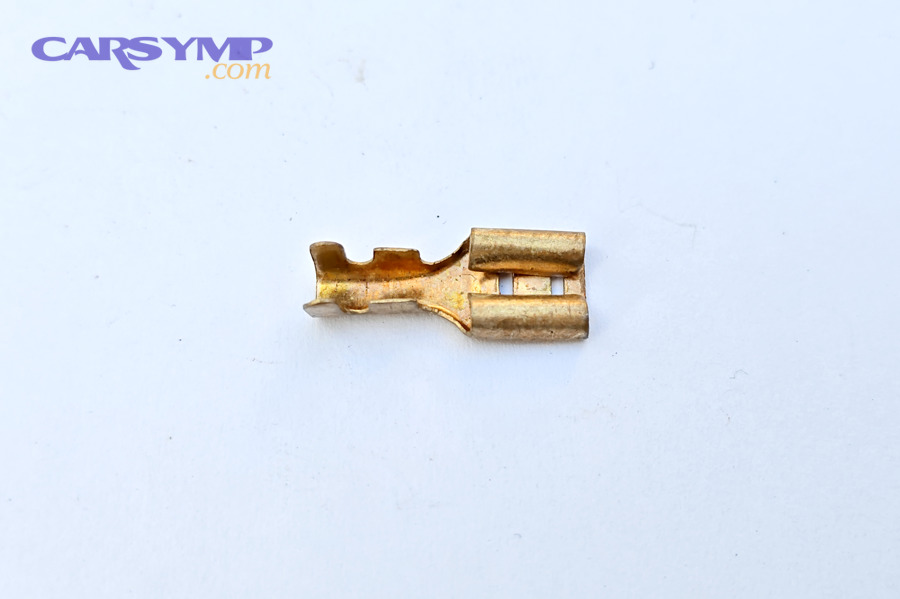
Use a simple checklist at each connector you touch:
- Locking tab: intact, fully latched, no “half click.”
- Terminal seating: pins not pushed back; no uneven depth compared to neighbors.
- Terminal tension: the male blade/pin should feel snug; a loose slip-fit is a red flag.
- Heat evidence: browned plastic, glossy melt, warped cavities, burnt smell.
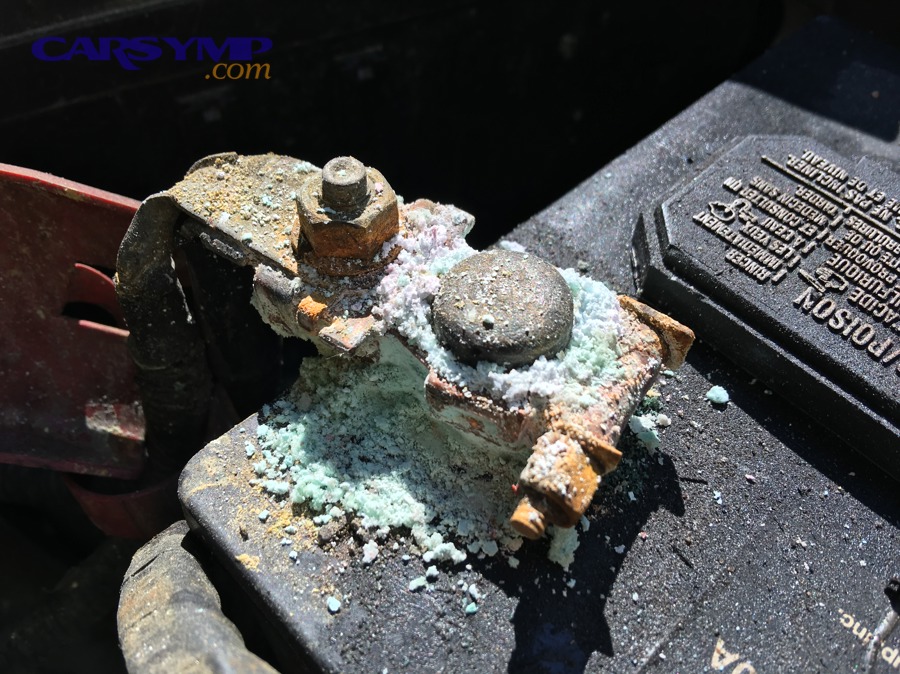
- Corrosion evidence: green/blue (copper salts), white crust (aluminum oxidation), powdery residue.
- Water path: drip marks, wet insulation, missing seals, torn boots.
To visualize what corrosion can look like on real vehicle hardware, this battery terminal image is a reminder that corrosion is not cosmetic—it is often a resistive layer that steals voltage and creates heat under load.
According to research by the National Highway Traffic Safety Administration from its Office of Defects Investigation, in March/2015, a service bulletin guidance for corrosion-related repairs notes that if corrosion extends more than about 6 inches into the harness, replacing the harness section may be required rather than attempting local cleaning.
Where to look first: high-current connectors, connectors near heat sources, connectors low in the vehicle (road spray), and any connector that’s been recently disturbed by prior work. Also prioritize areas where harnesses flex—doors, hatchbacks, tilt columns, and engine-to-body transitions.
And if you’re tracking complaints that resemble Blower motor failure symptoms (intermittent operation, speed changes, or sudden dead behavior), connector integrity at the power feed and ground often decides whether the component is actually failing or simply underfed.
How do you prove a bad connector with voltage-drop testing?
Voltage-drop testing proves connection health under real load: a good connector drops very little voltage, while a bad one “uses up” voltage as heat at the fault point. Next, you’ll learn exactly where to place meter leads so results are undeniable.
Why voltage drop beats continuity checks: continuity can pass with tiny current, but fail when the device draws real amperage. Voltage drop forces the circuit to “show its weakness” while operating.
Setup principle: measure across the suspect connection while the device is commanded on.
- Across a connector (power side): red lead upstream of the connector, black lead downstream of the connector.
- Across a ground point: red lead on the component ground, black lead on the battery negative post.
How to read results:
- Near-zero drop: the connection is likely healthy.
- Noticeable drop: the connection is resistive; the higher the drop under load, the more it’s stealing usable voltage.
According to research by Zhejiang Sci-Tech University from the Key Laboratory of Transient Physics, in May/2023, connector contact resistance values in the sub-milliohm range were treated as critical, reinforcing why even small resistance increases can translate into performance loss and heating under current.
Practical workflow (móc xích to the next step): once you find an excessive drop, don’t stop—move the meter one joint at a time upstream and downstream to “box in” the exact terminal or crimp that is responsible.
Common places that hide voltage drop: fuse blades to fuse holder, relay sockets, spade terminals, ring terminals at grounds, and crimped splices inside the harness. The photo below is a reminder that even a simple spade terminal can be the weak link if crimp quality or oxidation is poor.
What connector and fuse mistakes cause repeat failures?
Repeat failures usually come from treating symptoms: replacing fuses without finding overcurrent causes, cleaning corrosion without restoring tension, or ignoring heat damage that permanently changes plastics and spring forces. Next, you’ll learn what “good repair” looks like so the problem stays fixed.
High-frequency mistakes:
- Upsizing a fuse: hides the fault and can overheat wiring.
- Replacing a fuse without checking holder tension: the new fuse heats again in the same loose slot.
- Using dielectric grease as “conductive paste”: it’s typically an insulator; it’s for sealing, not improving conductivity.
- Cleaning corrosion without correcting the water path: it returns fast.
- Ignoring heat discoloration: heat changes terminal spring properties and increases resistance permanently.
According to research by the National Highway Traffic Safety Administration from its Office of Defects Investigation, in March/2015, corrosion guidance highlights repair limits when corrosion advances into the harness, which aligns with the practical reality that “surface cleaning” can be inadequate for deeper intrusion.
Heat is the storyteller: a connector that is warm after operation is rarely innocent. Heat typically means resistance at a joint, which can lead to Preventing blower motor burnout decisions in high-current HVAC circuits—because a motor fed by low voltage may draw higher current or operate inefficiently, depending on the design.
Use this quick decision rule: if the plastic is distorted, the terminal spring is weak, or the cavity is darkened, plan on repair or replacement of the terminal/connector—not just cleaning.
How do you repair fuse and connector problems the right way?
Repair means restoring the electrical path to low resistance and stable mechanics: correct fuse type, firm holder tension, clean metal-to-metal contact, sealed connectors, and strain relief—then verifying with load testing. Next, you’ll follow a repair ladder from simplest to most permanent.
Repair ladder (from mild to severe):
- Fuse correction: install the correct amperage and correct fuse type (fast vs time-delay) for that circuit design.
- Fuse holder restoration: if terminals are loose, replace the holder/terminal set; don’t rely on “bending” as a permanent fix.
- Terminal cleaning: remove oxidation carefully; avoid removing protective plating more than necessary.
- Terminal replacement (de-pin and re-pin): restore spring tension and contact area with the correct service terminal.
- Harness repair/section replacement: when corrosion travels or insulation wicks moisture.
According to research by Littelfuse from its Fuseology design guidance, in March/2023, time-current behavior examples show that fuse response depends on overload magnitude and design, supporting the idea that “correct fuse selection” is part of a durable repair—not just swapping whatever fits.
Connector sealing best practice: use dielectric grease sparingly on seals and boots (not as a conductor), ensure the secondary lock is engaged, and confirm wire strain relief so vibration does not pull on the crimp barrel.
Ground restoration: if a ground lug or battery terminal is corroded, remove, clean to bare metal where appropriate, reassemble with correct torque, and protect the area after reassembly. The corrosion image is a reminder: once buildup exists, it often takes more than a quick wipe to restore full conductivity.
Verification (non-negotiable): repeat the same measurement that proved the fault—especially voltage drop under load. If the drop is now minimal and stable during vibration/wiggle, the repair is real.
Table (this table helps you connect symptoms to the most likely check point):
This table contains common electrical symptoms and the first fuse/connector checkpoints that usually provide the fastest proof.
| Symptom | Most likely first checkpoint | Best proof test |
|---|---|---|
| Completely dead device | Device fuse + upstream feed | Fuse input/output voltage test |
| Works when you tap/wiggle | Connector pin tension, fuse holder tension | Voltage drop during wiggle under load |
| Intermittent after rain/wash | Seals, low-mounted connectors, water path | Visual inspection + voltage drop |
| Hot smell or melted plastic | High-current connector or holder | Drop test + thermal check after run |
| Fuse keeps blowing | Short to ground or overcurrent load | Current draw test + isolation |
Video (watching the probing technique once can reduce mistakes):
Note: the video is for technique, but always follow your vehicle’s wiring diagram and safety precautions when probing connectors.
Contextual Border
Advanced checks for intermittent faults: fretting, moisture paths, and “almost-open” joints
When basic checks look normal but the fault persists, focus on rare attributes: micro-movement wear (fretting), moisture wicking, hidden splice resistance, and heat-softened terminal springs. Next, you’ll use targeted methods to surface these “ghost” failures quickly.

How does fretting corrosion create “works today, fails tomorrow” behavior?
Yes—micro-vibration can create fretting films that increase resistance even when a connector looks clean, because the contact surfaces rub and oxidize at a microscopic level. Next, you’ll learn how to provoke the failure safely so you can measure it.
Best provocation tests: run the load, then lightly manipulate the harness near the connector (not the wires at the crimp), tap the connector body, and observe voltage drop changes in real time. If a tiny movement changes the drop, you’ve found a mechanical-electrical fault.
According to research by Zhejiang Sci-Tech University from the Key Laboratory of Transient Physics, in May/2023, contact resistance stability was treated as a core acceptance criterion in the sub-milliohm range, which is consistent with why fretting-driven increases can cause intermittent performance loss.
Which moisture paths matter most, and how do you stop them?
Moisture paths usually enter from above and travel along the harness by capillary action, so sealing the connector is not enough if the drip path remains. Next, you’ll learn where to look for the “upstream leak” that keeps re-wetting the joint.
Look for: missing cowl drains, torn grommets, damaged loom tape, poorly routed harnesses, and aftermarket wire pass-throughs. Also check for connectors mounted “pin-up” in splash zones; re-orientation or shielding can help in some designs.
According to research by the National Highway Traffic Safety Administration from its Office of Defects Investigation, in March/2015, corrosion repair guidance suggests that once corrosion progresses into the harness beyond a limited region, replacement becomes more reliable than repeated cleaning—supporting the “stop the path” approach, not just surface treatment.
What’s the fastest way to find a hidden high-resistance splice?
The fastest way is a “segment voltage drop sweep” while the load is operating: measure drop across each harness segment until one segment shows the abnormal loss. Next, you’ll apply the same logic to both power and ground so no path is missed.
How to sweep: pick two accessible points several inches apart, measure drop, then move one probe along the harness branch-by-branch. The segment that suddenly jumps in voltage drop contains the splice/terminal problem.
Pro move: test at operating temperature. Some faults only appear after heat soak, when plastics soften and spring forces change. That’s why a “cold test” can pass and still leave you stranded later.
According to research by Littelfuse from its Fuseology design guidance, in March/2023, time-current behavior examples reinforce that electrical behavior is dynamic under load and temperature, which aligns with why you must test under real operating conditions—not just static continuity.
When should you replace a connector or harness section instead of repairing it?
Replace it when heat damage changes the plastic/terminal springs, when corrosion travels into the wire strands, or when repeated failures show the joint cannot stay stable after repair. Next, you’ll use clear thresholds so the decision is confident, not emotional.
Replacement triggers:
- Melted or browned cavities: indicates repeated heating and loss of terminal tension.
- Green corrosion inside insulation: suggests capillary intrusion and strand damage.
- Broken secondary locks: terminals can walk out, creating intermittent opens.
- Corrosion length beyond local repair: a harness section is more reliable than patchwork.
According to research by the National Highway Traffic Safety Administration from its Office of Defects Investigation, in March/2015, guidance indicates that extensive corrosion progression (notably beyond a limited harness length) can require harness replacement rather than localized cleaning, supporting a “repair boundary” mindset.
FAQ
Can a fuse be “good” but still cause a no-power condition?
Yes—because the fuse element can be intact while the fuse-to-holder contact is poor, creating a high-resistance joint that drops voltage under load. Next, check voltage on both fuse test pads while the device is commanded on.
Is continuity testing enough for connectors?
No—continuity can pass with tiny current yet fail under real load, so it cannot reliably reveal high-resistance faults. Next, use voltage-drop testing with the circuit operating to expose the weak joint.
Should you use dielectric grease on electrical pins?
Usually no—dielectric grease is primarily for sealing and corrosion prevention at seals, not for improving conductivity at contact faces. Next, clean and restore terminal tension first, then apply grease sparingly to seals if appropriate.
What’s one quick sign a connector is failing under load?
A connector or fuse holder that becomes warm/hot during normal operation is a strong sign of resistance and localized heating. Next, confirm with a voltage-drop measurement across that joint while the load is on.