


To measure pad thickness correctly, use a simple method in a few steps: identify the friction material, measure at the right spot, compare inner vs outer pads, and interpret the number against safe/soon/replace thresholds.
Beyond a single number, the most useful check is consistency—whether both pads on the same wheel wear evenly, and whether the front axle matches the rear for the way you drive and brake.
Accuracy also depends on access: you can estimate through a wheel opening, measure precisely with the wheel off, or verify with a quick visual plus a tool measurement for confidence.
To begin, this guide connects tools, technique, and decision-making so you can measure once, record it, and act on it before braking feel or noise forces your hand.
What tools do you need to measure brake pad thickness accurately?
You need one primary measuring tool and one light source: a digital caliper (best), a small ruler or pad gauge (good), and a flashlight so you can see the friction material edge clearly.
To start, choose the tool that matches your access, because the same pad can read “thin” if you measure the wrong layer or the wrong location.
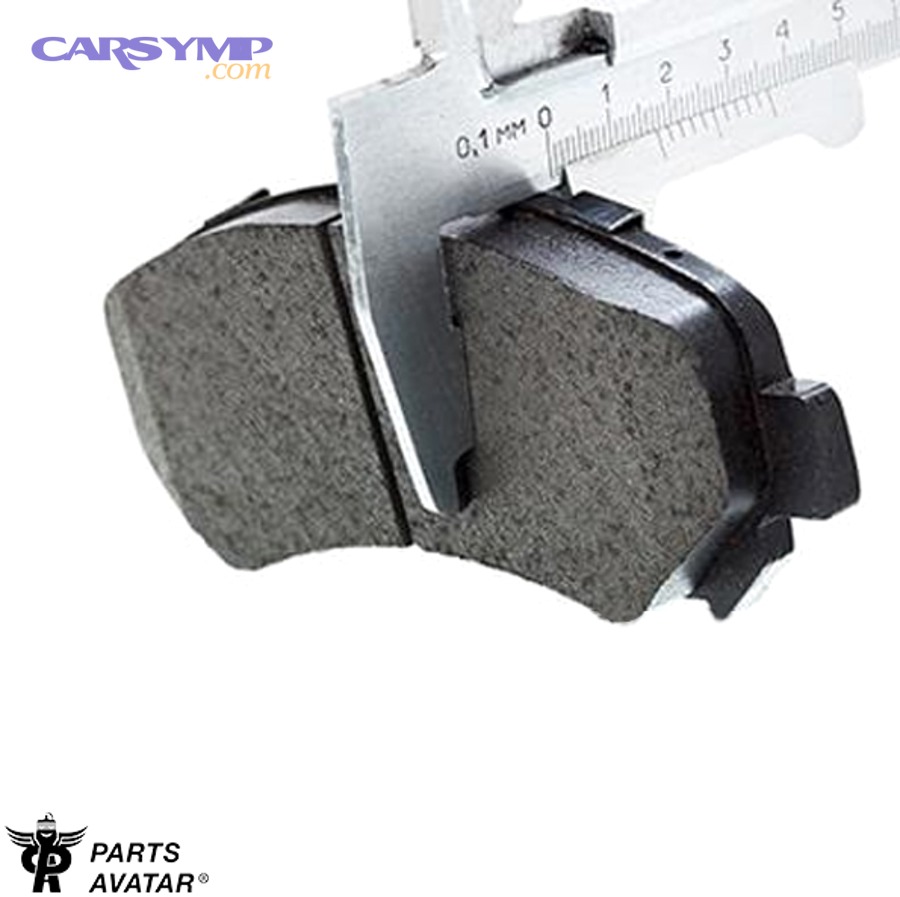
Which measuring tool is best for real numbers instead of guesses?
A digital caliper is best because it reads millimeters and inches precisely, fits into tight gaps, and helps you avoid rounding errors that happen with quick “eyeballing.”
Next, pair the caliper with a flashlight so you can separate the friction material from the backing plate line.
Use the outside jaws for thickness, close them gently until they touch, and avoid compressing crumbly pad edges that can under-read the true thickness.
What simple tools work if you do not have a caliper?
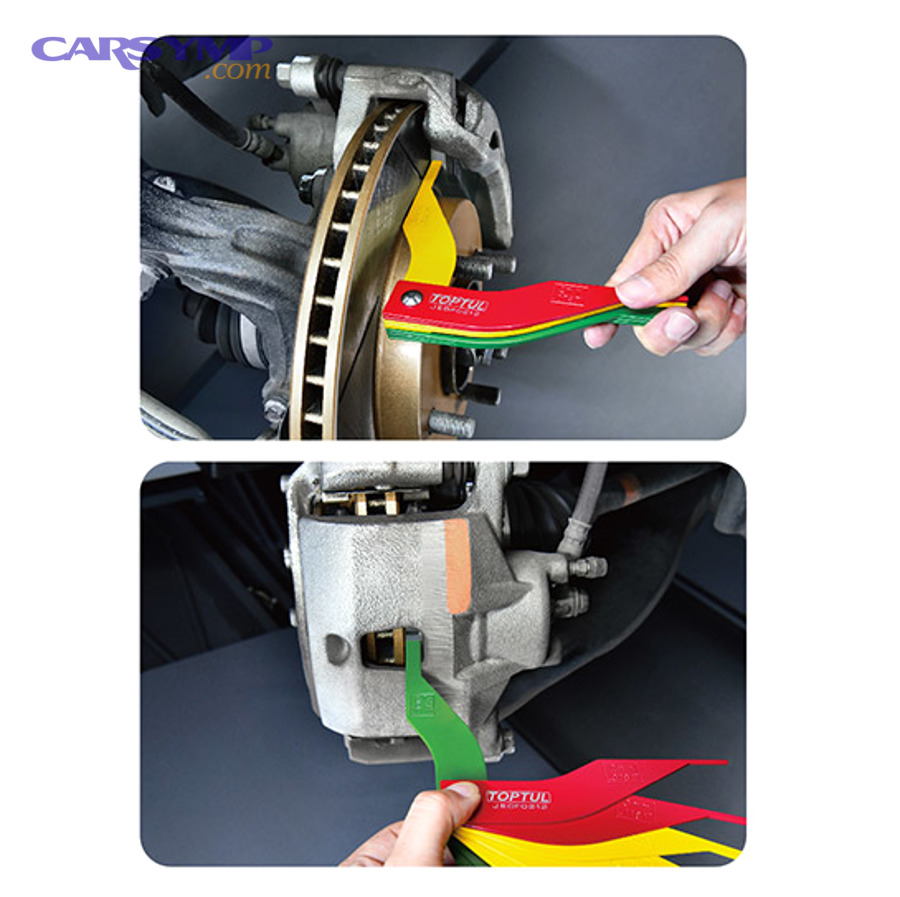
A brake pad gauge, a thin ruler with clear millimeter marks, or a feeler gauge stack can work, as long as you can place it squarely on the friction material without including the backing plate.
After that, confirm the reading with a second angle of view, because parallax makes a ruler look thicker or thinner depending on your eye position.
If you use a ruler, measure at the thinnest visible point, not the thickest edge, to avoid a falsely “safe” number.
What safety items matter before you measure?
You should use wheel chocks, gloves, and eye protection because brake dust and rust scale can fall when you turn the wheel or remove it, and a stable car prevents accidents during close-up inspection.
Then, let the brakes cool, because hot rotors and calipers can burn you and heat can distort your handling of tools.
If you lift the car, use a jack stand and never rely on a jack alone while your hands are inside the wheel well.
Where should you measure pad thickness on disc brakes?
You should measure the friction material thickness at the thinnest usable section, close to the pad’s working face, without counting the metal backing plate or any noise shim.
Next, identify the pad layers first, because most “wrong measurements” happen when the backing plate is accidentally included.
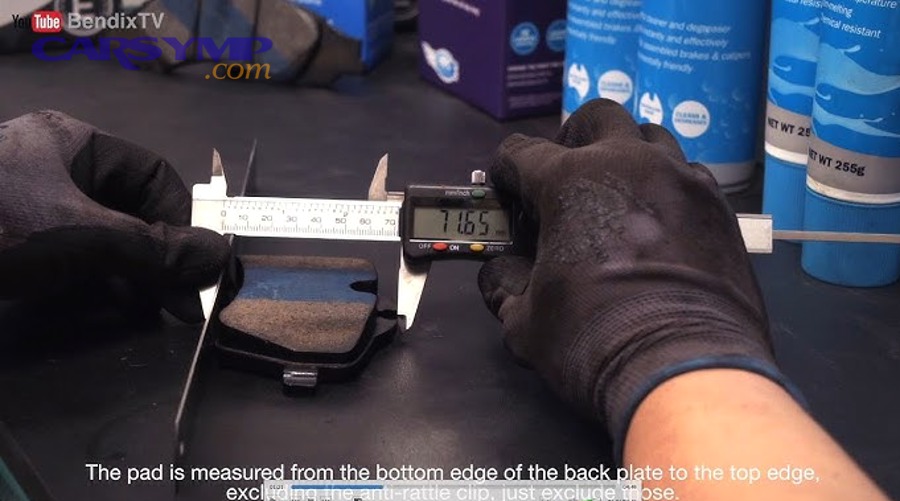
How do you identify the friction material versus the backing plate?
The friction material is the darker, textured block that contacts the rotor, while the backing plate is the flat metal base behind it that stays the same thickness even when the pad wears down.
After that, look for a clear seam line: friction material meets metal at a straight boundary, and measuring should start at that seam, not behind it.
If the pad has a bonded or slotted design, still measure only the friction portion, because slots and chamfers are not “lost thickness” the same way wear is.
Where on the pad face should you measure to avoid false readings?
You should measure near the center of the contact area, because edges can be chamfered, cracked, or tapered, which can make the pad look thinner than the working section.
Next, also check the inner pad and outer pad separately, since the inner pad often wears faster on sliding calipers and can be the true limiting factor.
If you can only see a small corner, rotate the steering wheel for a better view and use a mirror or phone camera to confirm you are not measuring a chamfer.
Should you measure both front and rear pads the same way?
Yes, you should measure both axles the same way, because comparing front vs rear thickness is meaningful only if your method is consistent and you measure the same layer and location each time.
Then, interpret differences with driving context: many cars wear fronts faster, but rears can wear quickly on vehicles with aggressive stability control or frequent loaded driving.
Record left and right values, because a side-to-side difference can reveal a sticking caliper, guide pin issues, or uneven hydraulic pressure.
How do you measure pad thickness without removing the wheel?
You can estimate pad thickness without removing the wheel by using a flashlight and viewing the pad edge through the wheel spokes or caliper inspection window, then measuring the visible friction block with a gauge or a caliper tip when space allows.
Next, treat this as a screening method, because tight wheel designs and dust shields can hide the thinnest region of the inner pad.
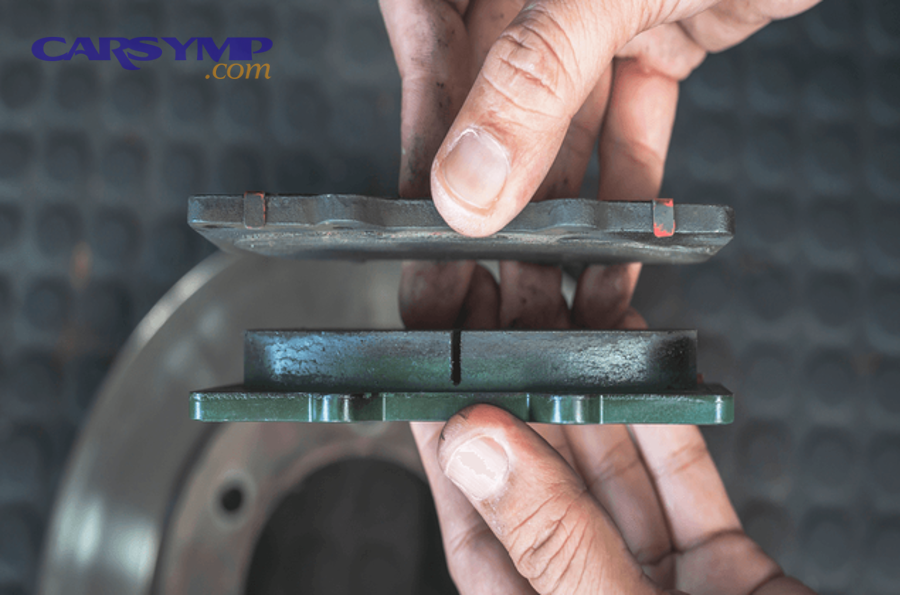
What is the fastest “look-and-measure” method through spokes?
The fastest method is to turn the steering wheel fully outward, shine a light at the caliper opening, and view the pad edge against the rotor to judge thickness before confirming with a small ruler or pad gauge.
After that, compare the visible outer pad to the inner pad as best you can, because the inner pad may be thinner and not visible from the same angle.
If you cannot see the inner pad, do not assume it matches the outer pad—plan a wheel-off check for a true measurement.
How do you avoid confusing rotor edge lip with pad thickness?
You avoid confusion by locating the pad’s friction block line and measuring only that thickness, not the rotor’s outer lip, which can look like extra “pad” when you view from an angle.
Next, move your light source so shadows outline the pad seam, because a flat head-on light can hide the boundary between friction material and backing plate.
If the rotor has a pronounced lip, remember it is on the rotor edge, not on the pad, and it signals rotor wear that may need attention alongside pads.
When is wheel-on measuring not reliable enough?
Wheel-on measuring is not reliable when you cannot see the inner pad, when the wheel design blocks the caliper, or when you suspect uneven wear, because those conditions can hide a dangerously thin pad.
Then, switch to a wheel-off measurement if you hear grinding, feel pulsation, or notice braking pull, since those signs can indicate problems beyond simple wear.
For consistent tracking, wheel-on checks are best used between full inspections, not as the only decision point.
How do you measure pad thickness with the wheel off?
You measure pad thickness most accurately with the wheel off by exposing the caliper and pads, measuring the friction material on both inner and outer pads at their thinnest points, and confirming the measurement is not including backing plate, shims, or a wear indicator tab.
Next, use this method for decisions, because it gives you real numbers you can record and compare over time.
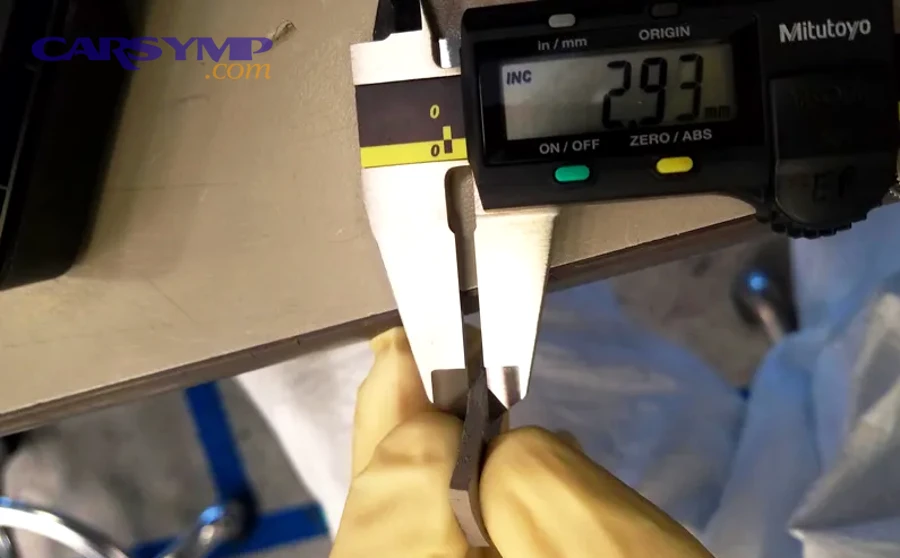
What step-by-step process prevents “measuring the wrong layer”?
Use a clean, simple sequence: identify the backing plate, find the seam where friction material begins, place the caliper jaws on friction only, and read the number in millimeters for clarity.
After that, repeat at least twice per pad—near the center and near the leading/trailing edges—to detect taper that a single point would miss.
If the pad edge is crumbling, measure on a solid section of friction material, because broken edges can understate thickness while still leaving usable material elsewhere.
How do you measure the inner pad if it is hard to access?
You measure the inner pad by viewing from behind the caliper or through the caliper window, then placing the caliper tip or a pad gauge against the inner friction edge, because the inner pad can wear faster and is the true safety limiter.
Next, if access is too tight, consider removing the caliper (with proper support and safety) for a clear measurement, since guessing inner thickness can lead to late replacement.
Do not let the caliper hang by the brake hose, because that can damage the hose and create a different, more serious problem than pad wear.
How do you confirm uneven wear or taper with measurements?
You confirm taper by measuring at two or three points along the pad height and length, because a pad can read “4 mm” at one corner and “2 mm” at another, changing the replacement decision.
Then, compare inner vs outer pad taper patterns, because certain tapers point toward guide pin binding, caliper piston issues, or rotor runout.
If you find strong taper, note it in your record, because fixing the cause can extend pad life and reduce noise or vibration later.
What thickness numbers mean “safe,” “soon,” or “replace now”?
In practical terms, 8–12 mm is typically like-new, 5–7 mm is usually healthy, 3–4 mm is “plan service soon,” and 2 mm or less is “replace now,” because stopping margin and heat capacity drop as friction material gets thin.
Next, treat these numbers as guidance, since vehicle design, pad material, and driving conditions can shift the best threshold for you.
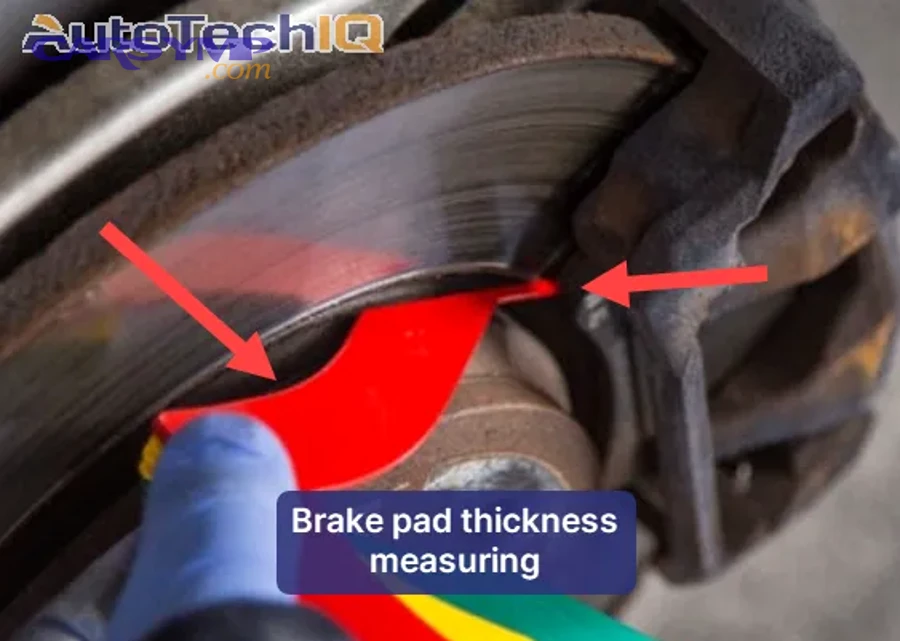
This table helps you turn a measurement into an action. It summarizes common thickness ranges, what they usually mean, and what to do next so you can plan service instead of reacting to noise.
| Measured friction material | Typical condition | Recommended action |
|---|---|---|
| 8–12 mm | New / near-new | Record it; recheck on your next rotation or in 3–6 months |
| 5–7 mm | Healthy wear | Monitor; inspect for even wear and rotor condition |
| 3–4 mm | Low but usable | Plan service soon; check inner pads and listen for indicators |
| 2 mm or less | Critical | Replace now; avoid hard driving and inspect rotor damage |
Why does thin friction material increase risk even before it is “metal-on-metal”?
Thin pads increase risk because they store less heat, can overheat sooner, and are more likely to fade under repeated braking, even if you are not yet hearing grinding.
After that, the margin for error shrinks: a small amount of extra wear from one long downhill or a stuck caliper can push a borderline pad into the danger zone quickly.
This is why “replace soon” is a planning threshold, not a comfort threshold, and why consistent measurement matters more than a single glance.
How do wear indicators change the replacement decision?
Wear indicators matter because a pad can still measure a few millimeters but begin squealing due to a wear tab touching the rotor, signaling it is time to schedule service rather than wait for a more damaging noise.
Next, confirm the sound source before assuming the pad is fully worn, because dust shields, hardware, and glazing can also squeal while thickness is still acceptable.
When you measure, note whether the wear tab is close to contact, because that can predict when the sound will start under your driving pattern.
Should you use millimeters or inches for tracking?
Millimeters are best for tracking because most pad thresholds are discussed in mm, it reduces fractions, and it makes small changes easy to spot over time.
Then, if you prefer inches, record both, but keep one primary unit so you do not lose consistency when comparing across months.
The key is repeatability: the same unit, the same measurement spots, and the same method every time.
How can uneven pad wear change your measurements?
Uneven pad wear can make a single thickness number misleading, because one pad or one corner can be much thinner than the rest, and the thinnest point is what determines safety and service timing.
Next, treat uneven wear as a diagnostic clue, not just a “replace pads” moment, because it often points to a fixable cause.
What patterns suggest caliper or guide pin problems?
If the inner pad is much thinner than the outer pad, or if one side of the pad is tapered, it often suggests a sticking slide pin, a binding caliper, or uneven clamping force across the pad face.
After that, confirm by checking pad movement and hardware condition, because worn clips, rusted abutments, or dry pins can prevent the caliper from centering properly.
Fixing the root cause helps the next set of pads wear evenly, which reduces squeal, vibration, and premature wear.
How does rotor condition affect pad wear readings?
Rotor condition affects readings because grooves, scoring, or a heavy lip can cause uneven contact, which can wear the pad in ridges and valleys that make “one-point” measurements inaccurate.
Next, measure at multiple points on the pad and inspect the rotor face, because a pad that looks thick at one ridge may be thin in the valley that actually contacts under braking.
Also note that a severely worn rotor can accelerate pad wear, turning a “3–4 mm” pad into a “replace now” situation faster than expected.
Why do left and right pads sometimes differ?
Left and right pads can differ because road crown, driving habits, caliper condition, and even parking brake mechanisms (on some rear designs) can load one side more than the other over time.
Then, use your measurements to identify trends: if the same side keeps wearing faster, investigate that corner rather than assuming it is normal.
This is where measurement becomes a maintenance tool, not just a snapshot, because it helps you catch a developing fault early.
How do you document results and decide what to do next?
You decide what to do next by recording inner and outer pad thickness for each wheel, comparing the thinnest reading to a clear action threshold, and checking for uneven wear signs that suggest additional service beyond pads.
Next, turn the numbers into a plan, because planning prevents rushed repairs and reduces the chance of rotor damage from delayed replacement.
What should you write down for a useful maintenance record?
Write down the date, mileage, wheel position, inner pad thickness, outer pad thickness, and any notes about taper, noise, rotor grooves, or hardware condition, because those details explain “why” the pad wore the way it did.
After that, include one sentence about driving context—city commute, mountain trips, towing—because it helps you estimate how quickly thickness will drop in your real use.
Even a simple phone note can become a predictive tool when you compare measurements across two inspections.
How do you estimate remaining life from thickness changes?
You estimate remaining life by comparing today’s thickness to your last recorded thickness and dividing the difference by miles driven, because wear rate is more personal and predictive than a generic “pads last X miles” claim.
Next, focus on the thinnest pad, because it ends the service interval for that axle regardless of how thick the other pads appear.
If your wear rate suddenly increases, investigate causes like dragging brakes, frequent heavy stops, or hardware issues, because replacing pads without fixing the cause can repeat the problem.
When should you schedule service even if thickness is not critical?
You should schedule service early if you see strong taper, if one pad is significantly thinner than its mate, or if the rotor surface is damaged, because those signs can create noise, vibration, or reduced braking consistency before the pad reaches the lowest thickness threshold.
Then, combine thickness with symptoms: steering pull, pedal pulsation, or burning smell can justify earlier inspection even if a ruler shows “still some pad left.”
At this point, many drivers start thinking about brake pad replacement to avoid rotor damage and to restore consistent braking feel, especially if the car is due for other maintenance that makes a brake service convenient.
Contextual Border: From here, the focus shifts from core measuring technique to advanced nuances that can skew readings, create noise, or change how you interpret thickness in real-world braking.
Advanced tips and rare cases that skew pad thickness readings
Advanced interpretation matters when thickness looks “okay” but braking feels wrong, when noise appears unexpectedly, or when design details make a simple measurement less straightforward than it seems.
Next, use these nuances to avoid misreading thickness and to connect measurement with real brake behavior.

What exactly should you measure when pads have multiple layers?
You should measure only the friction material that contacts the rotor, not the backing plate, not the adhesive layer, and not any separate shim, because those parts do not represent usable braking material.
After that, remember the meronymy relationship in the brake pad assembly: friction material is the functional part-of the pad that wears, while the backing plate is the structural part that should not be “consumed.”
If your pad has a pronounced chamfer or a slot, measure the main body thickness, because those features are designed into the pad and do not automatically mean the pad is worn out.
Why can noise happen even when thickness is still acceptable?
Noise can happen even when thickness is acceptable because surface glazing, contaminated friction material, hardware vibration, or rotor texture can create high-frequency squeal without the pad being near the end of its thickness life.
Next, consider that there are many Squeal after pad replacement causes that are unrelated to a “too-thin pad,” such as missing shims, dry slide pins, incorrect lubrication points, or pads not matched to the rotor finish.
If you measured a healthy thickness but hear persistent squeal, inspect pad hardware fit, rotor surface condition, and whether the pad edges are catching on rusty abutments.
How does proper break-in change what you feel after measuring thickness?
Proper break-in changes what you feel because it builds an even transfer layer on the rotor, stabilizes friction, and reduces the chances of hot spots that can create vibration or noise even when pad thickness is fine.
After that, if you recently installed pads, follow a Bedding-in new brake pads procedure appropriate for your pad type so the measured thickness translates into smooth, consistent braking instead of unpredictable bite or squeal.
Thickness tells you “how much material remains,” while break-in tells you “how well that material is working,” and both matter for the driving experience.
Do pad thickness readings change on vehicles with integrated parking brake mechanisms?
Yes, pad thickness interpretation can change because some rear brake designs include mechanisms that can keep slight tension on the pads, and a dragging condition can wear pads faster than your normal wear-rate estimate predicts.
Next, if rear pads wear surprisingly quickly, check whether the parking brake fully releases and whether the caliper mechanism moves smoothly, because that can explain an abnormal wear pattern.
This is why documenting measurements by wheel position is valuable: it helps you spot “rare but real” patterns that a single front-only check would miss.