


Door jamb wiring failure signs usually appear as intermittent electrical problems that get better or worse when you open, close, or flex a door—because the harness inside the rubber boot is repeatedly bent thousands of times.
Beyond annoyance, these failures can affect locks, windows, mirrors, speakers, courtesy lights, and even safety systems, so recognizing early patterns helps you prevent a total circuit break or an expensive module misdiagnosis.
Because the symptoms can mimic bad switches, weak actuators, or low battery voltage, the most reliable approach is to pair the signs with movement-based testing and a few targeted checks that confirm high resistance, shorts, or broken conductors.
Next, you’ll learn how to spot the most telling signs, how to verify them step-by-step, and how to choose the right repair method so the fix lasts instead of failing again a month later.
What are wiring in door jamb failure signs, and why do they happen?
Wiring in door jamb failure signs are the repeated, door-movement-triggered symptoms that occur when conductors, insulation, or connectors inside the door-to-body harness crack, fray, corrode, or break from constant flexing and vibration.
To begin, picture the harness as a “living hinge” that bends at the same points every time the door moves, which concentrates stress until copper strands fatigue.
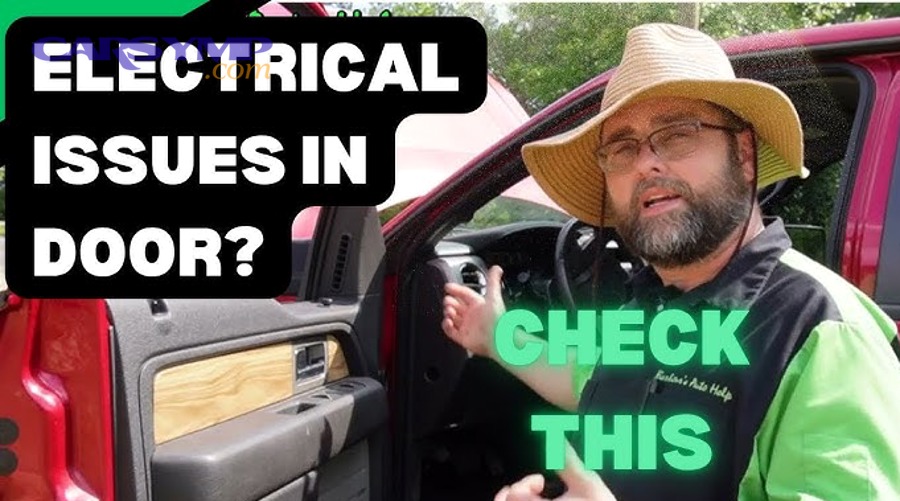
Why the door jamb is a high-stress zone
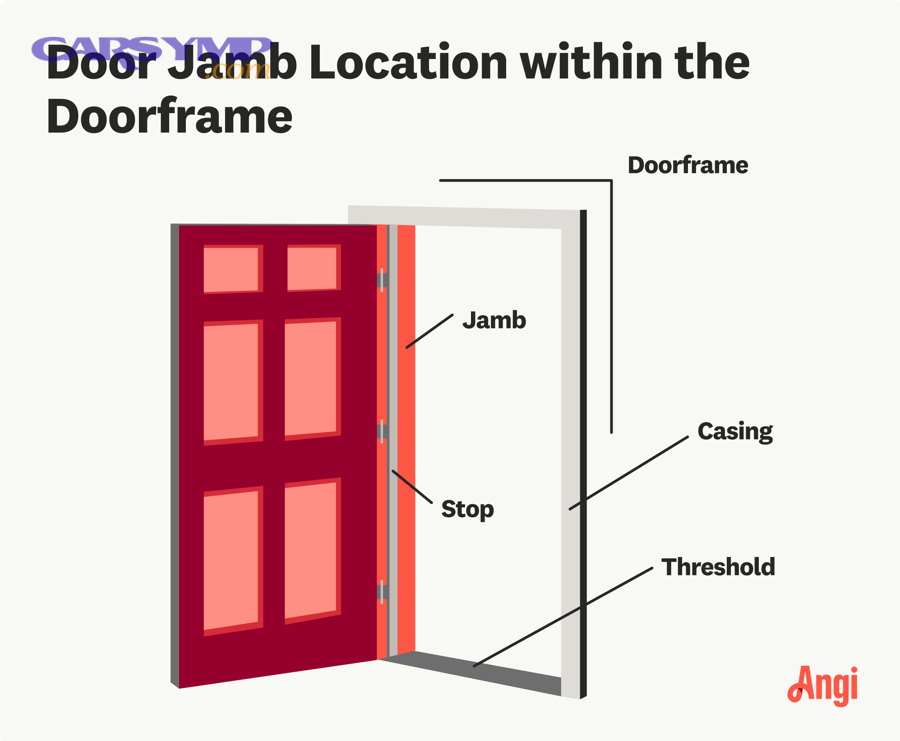
The door jamb area forces wiring to flex in a tight arc while being squeezed by a boot and sometimes pinched by trim. Over time, copper strands work-harden, then snap—often leaving a few strands intact, which creates high resistance before a complete open circuit.
Next, because the boot hides damage, the harness can look fine externally while the conductors inside are already fractured.
How fatigue differs from corrosion and abrasion
Fatigue typically causes intermittent faults that change with door position, while corrosion tends to cause gradually worsening resistance and unexpected voltage drops. Abrasion, on the other hand, may create shorts to ground or shorts between wires, especially if insulation rubs against a sharp edge.
In other words, the pattern of the symptom is often your best clue to the failure mode.
Why modern vehicles show “weird” symptoms
Many doors carry multiplexed data (CAN/LIN), shared grounds, and low-current signal wires for modules. A single compromised ground or data wire can cascade into multiple unrelated-looking faults, such as random chimes, warning messages, or loss of multiple door features at once.
To illustrate, one cracked ground can make a window motor backfeed through another circuit, creating confusing behavior that disappears when the door is held “just right.”
Which early symptoms most strongly point to a door jamb harness problem?
The strongest early symptoms are intermittent, door-position-dependent failures such as a feature working only when the door is partly open, working after you slam the door, or failing exactly when you hit bumps.
Next, use these symptom groupings to narrow the suspect circuits before you touch tools.
Locks and keyless behavior that changes with door movement
If power locks work sometimes but not others—and the behavior changes when you open/close the door—this is a classic sign of a fractured lock power, ground, or signal wire in the jamb. You may notice one door refuses to lock, or all doors act oddly when one door is moved.
For context, many owners jump straight to central locking repair, but if the fault is movement-triggered, the harness deserves priority before replacing actuators or modules.
Next, pay attention to whether the issue affects only one door or multiple doors via shared circuits.
Windows, mirrors, and seat memory acting “half-dead”
A window that moves slowly, pauses, or reverses unexpectedly can indicate a voltage drop from high resistance in the jamb harness. Mirrors that stop responding or seat memory that forgets positions (on some vehicles) can appear when reference voltages or grounds fluctuate.
In particular, high resistance creates symptoms that look like weak motors, yet the motor tests fine when powered directly.
Next, confirm whether the symptom correlates with door angle rather than temperature or battery state.
Courtesy lights, puddle lamps, and door-ajar signals glitching
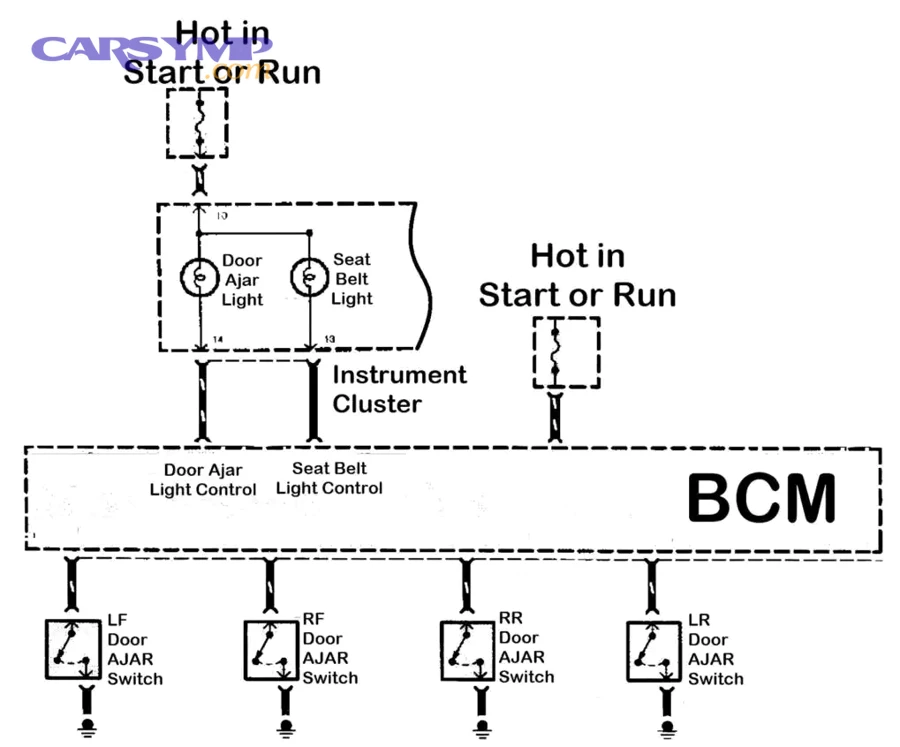
Door-ajar switches and latch sensors often run through the door harness. A false door-ajar signal can keep interior lights on, trigger alarms, or prevent the vehicle from “going to sleep,” sometimes causing battery drain.
Next, watch for interior lights flickering as the door moves—this is a practical, visible indicator of harness instability.
Speakers cutting out when you hit bumps
Door speakers often share the same flexible path, and broken speaker wires can cut audio intermittently. While this seems minor, it’s a helpful “easy circuit” to prove the jamb is at fault before you chase deeper electrical gremlins.
Next, note whether the audio returns when you push on the rubber boot or move the door slowly.
Why do door-related electrical problems change when the door opens or closes?
Yes—if the symptom predictably changes with door movement, it strongly suggests a mechanical electrical fault like a cracked conductor, loose terminal, or chafed insulation in the jamb, because flexing temporarily restores or breaks contact.
Next, use these movement patterns to separate harness faults from component failures.
“Works at one angle” usually means broken strands
When only a few copper strands remain, the wire can pass low current but fails under load. At a certain door angle, the remaining strands touch; at another angle, they separate. This produces maddening intermittence that seems random until you test it with controlled movement.
Next, try opening the door in small increments and noting the exact angle where the fault appears.
“Flickers” often means high resistance, not a full break
Flickering lights or a weak motor can happen when the conductor is not fully open but has micro-cracks. Resistance rises, voltage drops, and devices behave inconsistently—especially under load.
Next, measure voltage at the device during operation, not just continuity with no load.
“Blows a fuse” often means insulation damage or pinching
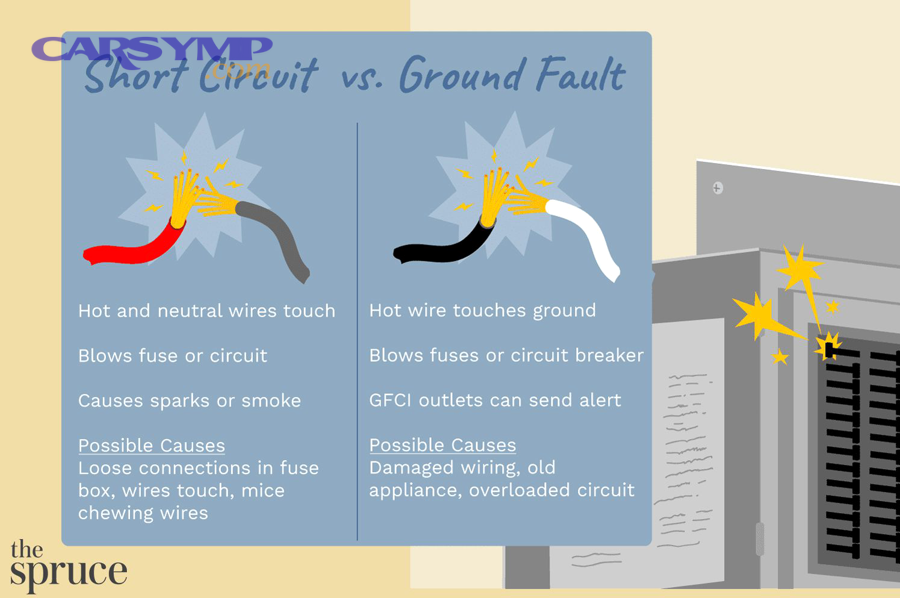
If opening or closing the door blows a fuse, suspect a short-to-ground caused by rubbed-through insulation or a pinched segment. Unlike high resistance, shorts can be dramatic and repeatable.
Next, treat repeated fuse blowing as urgent—shorts can overheat wiring and damage modules.
How can you confirm a door jamb wiring fault with simple tests?
You can confirm a door jamb wiring fault by combining a visual boot inspection, a wiggle test, and voltage-drop or continuity checks that reproduce the symptom while the door moves.
Next, follow this order to avoid misdiagnosis and unnecessary parts replacement.
Step 1: Reproduce the symptom with a controlled wiggle test
With the vehicle safely parked, operate the affected feature (lock, window, light) and slowly move the door from nearly closed to fully open. Then gently flex the rubber boot and harness area. If the symptom toggles on/off in sync with movement, you have a high-probability harness issue.
Next, record exactly what movement triggers the change, because it points to the stress point in the bend radius.
Step 2: Inspect the boot and look for “tells”
Pull back the rubber boot carefully and look for cracked insulation, green corrosion, broken strands, or a wire that looks thinner at one spot. Also look for a boot that’s torn or not seated—water intrusion accelerates corrosion and terminal fretting.
Next, if you find multiple compromised wires, plan for a more comprehensive repair rather than patching only one conductor.
Step 3: Use voltage drop testing under load
Continuity checks can lie when a few strands remain, so perform voltage drop tests while the device runs. Measure from battery negative to the door device ground, or from battery positive to the device feed, and compare with the door in different positions.
As a practical benchmark, a healthy power/ground path typically shows a low voltage drop; a noticeably higher drop that changes with door angle suggests resistance in the jamb wiring.
Next, if the circuit is low current (signals), use a test light or backprobe measurements carefully to avoid damaging terminals.
Step 4: Isolate which circuit is failing
Identify whether the fault is on the power feed, ground, or signal line by measuring voltage at the connector closest to the device and then upstream toward the body side. If voltage is stable on the body side but unstable on the door side when flexed, the jamb segment is the likely culprit.
Next, once you localize the segment, decide whether a repair splice is sufficient or whether a harness section should be replaced.
This table helps you map common symptoms to likely wire-level failure modes and the quickest confirmation test.
The table below lists symptom patterns, the most likely wiring fault, and the best first test to verify it.
| Symptom pattern | Most likely fault | Best confirmation test |
|---|---|---|
| Works only at one door angle | Broken strands (near-open circuit) | Wiggle test + continuity while flexing |
| Device weak or slow, then normal | High resistance in power/ground | Voltage drop test under load |
| Fuse blows when door moves | Short to ground from chafed insulation | Inspect boot + ohms to ground with fuse removed |
| Multiple door features fail together | Shared ground or data wire issue | Ground drop test + scan tool network checks |
Which wires and components are most vulnerable inside the door jamb?
The most vulnerable parts are the highest-flex conductors, the shared grounds, and the small-gauge signal/data wires, because they bend the most and tolerate less strand loss before performance collapses.
Next, understanding these “hot spots” helps you inspect the right areas first.
Shared grounds and ground splices
Many door functions share one or two ground paths. If a ground wire fractures or a splice corrodes, several features can fail or behave erratically. Ground problems are also famous for causing backfeeding, where current tries to return through unintended paths.
Next, treat a shared ground as a “single point of failure” and test it early when multiple features are affected.
High-current feeds for window motors and lock actuators
Higher current means more heat at a damaged point, and even small resistance can create big voltage drops. A window motor that stalls or a lock actuator that sounds weak may be a wiring drop, not a failing motor.
Next, measure voltage at the motor while operating it to separate motor failure from supply failure.
Low-current signal wires for latches, switches, and modules
Latch sensors, door-ajar circuits, and module communications often use small-gauge wires that are more prone to conductor fatigue. When these wires intermittently open, you can get false door-ajar warnings, alarm triggers, or “feature not available” messages.
Next, if the symptom is logic-related rather than power-related, suspect these small signal wires and their terminals.
Connectors, terminals, and the rubber boot interface
Terminals can loosen from repeated micro-movement (fretting), and connector seals can degrade. A boot that’s pulled off its seat allows moisture and grit into the harness, accelerating both corrosion and abrasion.
Next, a good repair restores not only the conductor but also strain relief and sealing.
How do you repair broken door jamb wires so the fix lasts?
The best durable repair is to restore conductor integrity, rebuild strain relief, and protect the splice from flex stress by placing it outside the tightest bend and using proper sealing materials.
Next, follow these steps to avoid “temporary fixes” that fail at the next cold snap or door slam.
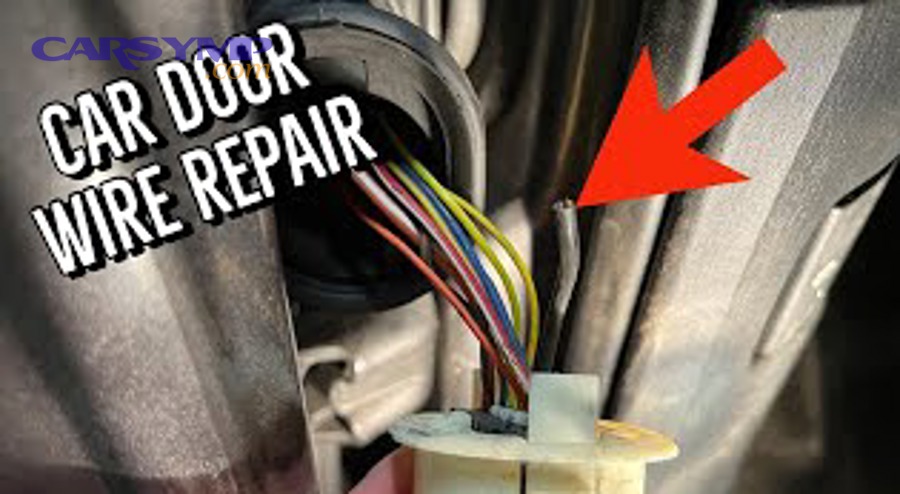
Step-by-step durable repair approach
Step 1: Disconnect power (battery negative when appropriate) and wait for modules to sleep if the vehicle is sensitive to door-open events. Remove trim only as needed and expose the boot carefully.
Step 2: Identify the damaged segment and cut back to healthy copper. If the copper is dark, brittle, or green, continue cutting until you reach clean, bright strands.
Step 3: Add a service loop by splicing in a short length of matching gauge wire so the repaired section is not under tension at full door open.
Step 4: Choose a splice method suited to flexing: high-quality crimp with adhesive-lined heat shrink or a properly supported solder splice with strain relief. Avoid bulky, rigid lumps at the bend point.
Step 5: Seal and rewrap, then re-seat the boot so moisture and grit stay out. Finally, retest the symptom through the full door range.
Next, focus on splice placement, because where you put the repair often matters more than the method.
Where you place the splice matters more than you think
If you splice at the exact flex hinge, the joint becomes a rigid stress riser and the wire will fail adjacent to your repair. A longer replacement section that moves the splice away from the maximum bend radius lasts significantly longer.
Next, aim to distribute flex across a longer, softer section rather than concentrating it at one stiff point.
Crimp vs solder for door jamb repairs
Crimp splices (done with correct tools and sealed with adhesive-lined heat shrink) can be very durable because they remain slightly more flexible than a heavy solder blob. Solder can also be excellent if you avoid wicking solder too far into the strands, which can create a brittle zone.
To compare, if you lack proper crimp tools, a careful solder-and-seal method with good strain relief may still outperform a poor crimp. However, if you have professional-grade crimpers and sealed butt connectors, a crimped repair is often the most consistent choice for a high-flex location.
Next, whichever method you choose, ensure you match wire gauge and protect the repair from abrasion.
Preventing repeat damage after the repair
Rewrap the harness with abrasion-resistant tape, maintain slack so the harness is not pulled tight at full door open, and confirm the boot isn’t twisting the bundle. If there’s a sharp edge nearby, add a protective sleeve or reposition the harness.
Also, if you’re evaluating a shop quote, remember that a thorough harness repair can influence a Central locking repair cost estimate because labor varies widely depending on trim complexity, access, and the number of conductors affected.
Next, consider whether the fault pattern suggests only one broken wire or a broader harness fatigue problem.
When should you replace the harness section instead of splicing?
You should replace the harness section when there are multiple damaged conductors, widespread insulation cracking, severe corrosion in several wires, or repeated failures near prior repairs—because splicing one wire at a time becomes unreliable and time-consuming.
Next, use these comparison points to choose the most cost-effective long-term solution.
Repair is best when damage is localized
If one or two wires are fractured at a clear stress point and the rest of the harness is supple and clean, a well-executed splice repair with added slack is usually sufficient.
Next, confirm there isn’t hidden internal cracking in adjacent wires by gently flexing and inspecting the bundle.
Replacement is best when damage is systemic
If the harness shows multiple brittle spots, cracked insulation, or green corrosion spread across the bundle, replacing the door-to-body harness section reduces the risk of “whack-a-mole” failures. This is especially true if a vehicle has seen harsh winters, water intrusion, or repeated door overstretching.
Next, consider that replacing the harness may also restore connector seals and terminal tension, not just the wires themselves.
What “module misdiagnosis” looks like
A failing jamb harness can mimic a bad door module, body control module logic issues, or even a failing actuator. If you’re stuck choosing between component replacement and wiring work, prioritize proving wiring integrity first—especially when the symptom changes with door position.
In practice, this is where the mindset behind Key fob vs door switch vs actuator diagnosis becomes valuable: you test the command source, the path, and the load in sequence so you don’t replace a good actuator when the harness is the real problem.
Next, once wiring is confirmed healthy, component-level diagnosis becomes straightforward.
How can you prevent door jamb wiring failures in the future?
You can reduce future failures by maintaining slack, protecting the boot and seals, avoiding overstretching the door, and addressing early symptoms before heat and arcing enlarge the damage.
Next, small habits and periodic checks can add years to harness life.
Keep the boot seated and intact
A torn or displaced boot lets moisture and grit in, accelerating corrosion and abrasion. During routine cleaning or detailing, take a moment to confirm the boot is seated firmly on both the door and body side.
Next, if you see cracking rubber, replace the boot or restore sealing before moisture starts attacking copper and terminals.
Avoid forcing the door beyond its normal stop
Using the door as leverage, letting it swing violently in wind, or overextending it against the hinge stop increases flex strain on the harness. Repeated overstretching shifts the bend point and can fracture wires faster.
Next, if your parking spot is windy, hold the door as you open it to reduce shock loads on the harness.
Reduce harness tension with proper routing
If trim was removed for previous repairs, confirm the harness routing matches factory clips and guides. A harness that is misrouted or clipped too tightly can be pulled taut at full open, concentrating stress at the jamb bend.
Next, restore clips and guides so the harness flexes smoothly across a longer radius.
Address early intermittence before it becomes a hard fault
Intermittent symptoms are the “warning light” of wiring fatigue. Fixing a partially fractured wire early prevents arcing, heat damage, and collateral harm to connectors or modules. It also reduces the chance you’ll chase unrelated symptoms caused by backfeeding or unstable reference voltages.
Next, treat flicker, angle-dependent behavior, and recurring fuse issues as priority checks rather than “quirks.”
What video shows typical door jamb wiring repairs and inspection?
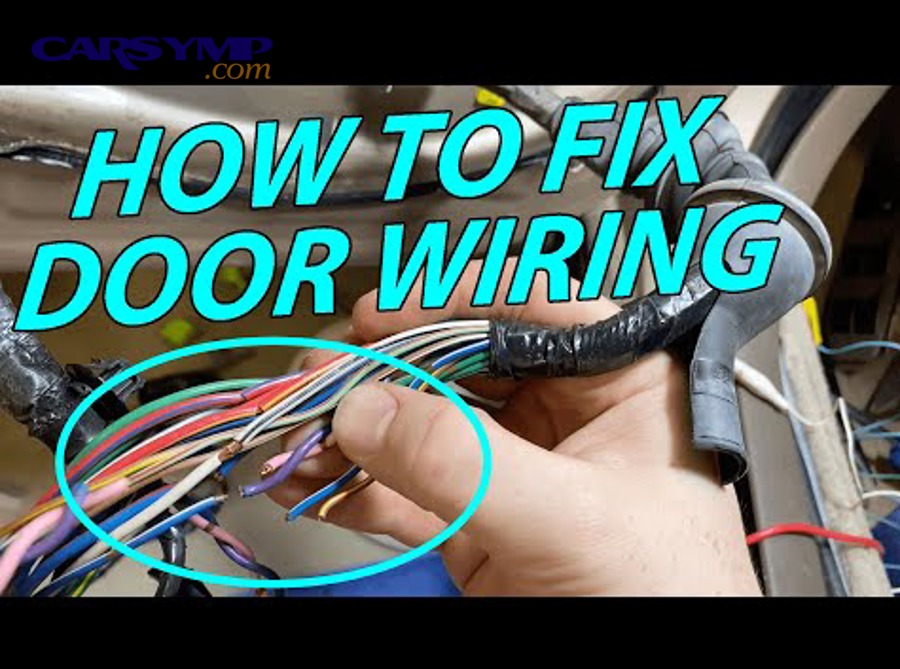
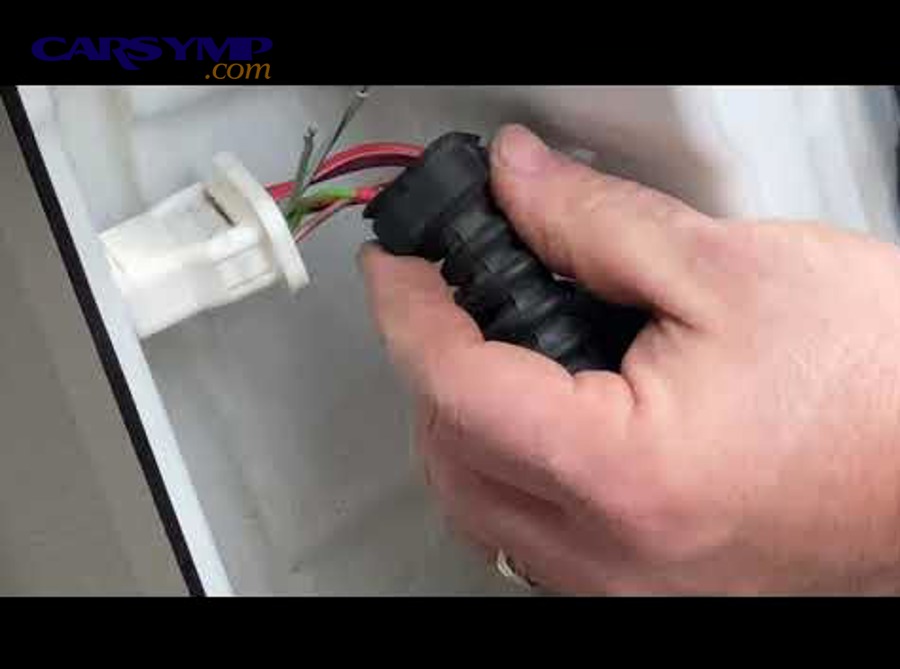
A visual walkthrough can help you recognize the boot location, common break points, and safe splice techniques, especially if you’ve never exposed a door-to-body harness before.
Next, use the video to compare the repair placement and strain relief ideas with your own harness layout.
Contextual Border: Up to this point, you’ve focused on the most common, high-probability signs and confirmations. Next, you’ll explore rarer clues and edge cases where door jamb wiring faults masquerade as network, sensor, or module failures.
Advanced clues and rare patterns that still indicate door jamb harness damage
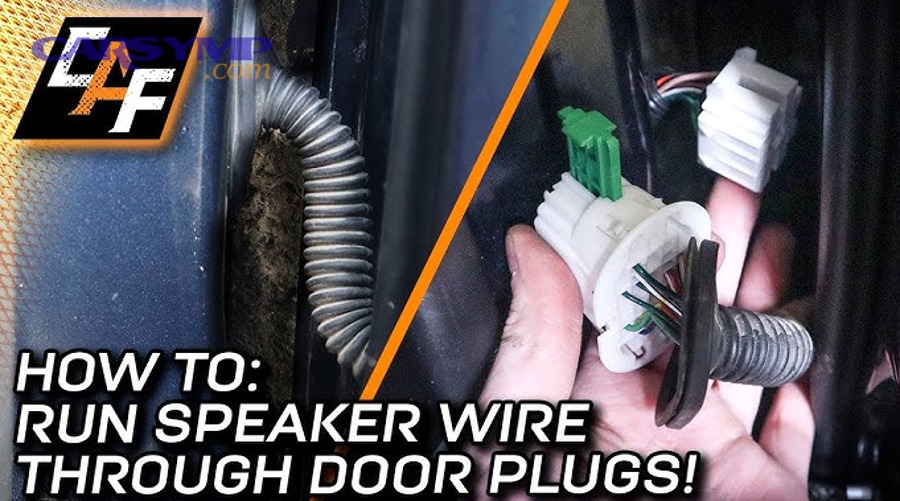
Rare patterns can still point to door jamb harness damage when you see data communication oddities, moisture-driven intermittence, or aftermarket wiring complications that change with door motion and harness flex.
Next, use these unique signals to avoid chasing the wrong subsystem.
Intermittent network faults tied to one door
Some vehicles route LIN or CAN signals into the door for mirror controls, window logic, or smart latches. If a scan tool shows a door module dropping offline when the door moves, suspect a data wire fracture or a shifting ground reference rather than a “bad module.”
Next, confirm by gently flexing the boot while watching live module communication status.
Moisture-triggered failures after rain or washing
If issues worsen after rain, a compromised boot seal or connector seal may be allowing moisture into terminals. Moisture can create temporary conductive paths, increase corrosion, and cause intermittent shorts that dry out later.
Next, inspect for water trails, green terminal residue, and swollen insulation near the connector ends.
Aftermarket accessories complicating the harness
Added speakers, alarm systems, remote starts, or lighting kits sometimes get routed through the door jamb without proper strain relief. Over time, splices and add-on wires increase stiffness and create new stress risers that accelerate fatigue in both factory and added conductors.
Next, identify any non-factory wiring and ensure it has slack, protective sleeving, and sealed connections.
“Phantom” battery drain linked to a false door state
If the vehicle intermittently believes a door is open, modules may stay awake, interior lights may cycle, and security systems may behave unpredictably. A fatigued latch signal wire in the jamb can produce exactly this behavior, especially when the door is bumped or moved slightly.
Next, correlate drain events with door movement and check live data for door-ajar status while flexing the harness.
FAQ
These quick answers address common uncertainties that come up when symptoms are intermittent, multi-system, or hard to reproduce.
Next, use the questions below to sanity-check your diagnosis path before buying parts.
Can a door jamb wiring fault affect only one lock while everything else seems fine?
Yes—if only one conductor for that door’s lock feed, ground, or command path is cracked, you may see a single-lock failure with other features unaffected. Over time, additional wires can fatigue, expanding symptoms beyond the lock circuit.
Next, test by operating the lock while moving the door slowly through its range.
What if the symptom looks like a failing actuator instead of wiring?
A weak actuator and a high-resistance wire can look identical. The differentiator is stability: wiring faults often change with door movement, while actuator failures are more consistent. A voltage drop test at the actuator during operation can separate supply issues from a failing motor/gearbox.
Next, prove supply integrity before replacing the actuator.
Is it safe to drive with intermittent door electrical faults?
It depends on what’s affected. A speaker cutting out is minor, but a short that blows fuses, a door that won’t latch/lock correctly, or warning lights tied to safety features deserves prompt attention. Intermittent shorts can also stress wiring and modules.
Next, treat fuse blowing, burning smells, or heat near the boot as urgent warning signs.
How do I avoid damaging connectors while testing?
Use proper backprobing pins, avoid forcing meter leads into terminals, and secure the harness so you’re not tugging on connectors. When in doubt, test at accessible points and follow service information for pin locations to prevent terminal spread.
Next, if you’re unsure, consult a wiring diagram and use non-invasive test methods first.
Why do symptoms sometimes disappear for weeks, then return?
Partially fractured conductors can make contact intermittently depending on temperature, humidity, and door usage. As fatigue progresses, the contact becomes less reliable until the fault becomes constant.
Next, if the pattern keeps returning, inspect the jamb harness even if it’s “working today.”