


Most belt-and-pulley CVT transmissions should last about 100,000–200,000 miles (8–15 years) in typical daily use, with the real number rising or falling based on heat, fluid condition, and how hard the vehicle is driven.
Next, the biggest reason some CVTs die early is not “bad luck”—it’s usually a pattern of high heat and high load, which accelerates belt/pulley wear and breaks down CVT fluid long before owners expect.
Then, you can meaningfully extend CVT service life with a simple longevity strategy: correct fluid service, temperature control, and small habit changes that reduce thermal spikes.
Introduce a new idea: once you know the lifespan range and the main wear drivers, the fastest way to protect your budget is learning the warning signs and the repair vs replace decision points before a small issue becomes a full transmission failure.
How long should a belt-and-pulley CVT transmission last in miles and years?
A belt-and-pulley CVT transmission typically lasts 100,000–200,000 miles (8–15 years) for most car owners, with outliers below 80,000 or above 200,000 depending on maintenance quality, heat exposure, and load.
To better understand that range, it helps to separate “typical,” “best-case,” and “high-risk” usage patterns and connect them to what a CVT is physically doing every time you accelerate.
What is the typical CVT lifespan range for everyday car owners (normal driving)?
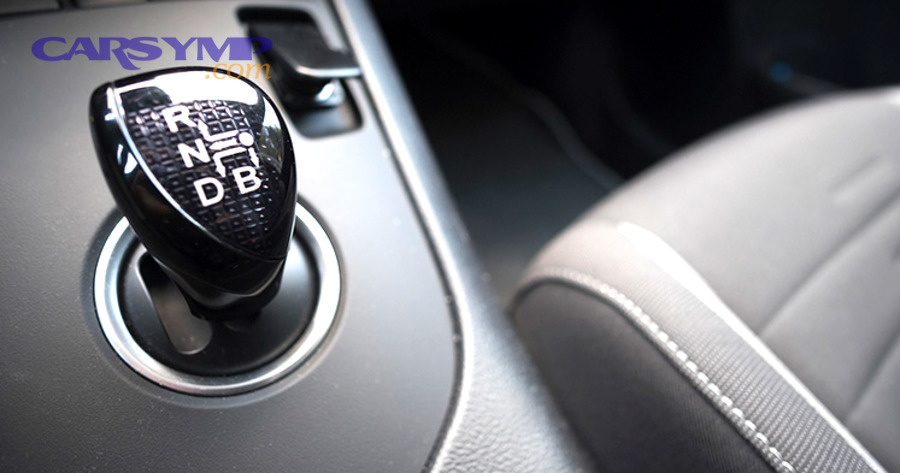
There are 3 main lifespan buckets for a belt-and-pulley CVT—early (60k–100k), typical (100k–200k), and extended (200k+)—based on the criterion of average operating heat plus fluid health over time.
Specifically, that criterion matters because a CVT depends on controlled friction between the belt (or chain) and pulleys while the fluid simultaneously lubricates, cools, and supports hydraulic pressure. When heat and contamination rise, the system loses its safety margin.
Before the table below, note what it represents: it summarizes realistic planning ranges so you can set expectations for service life and budgeting without pretending every CVT behaves the same.
| Lifespan bucket | Miles (typical) | Years (typical) | Most common ownership pattern | What usually drives the outcome |
|---|---|---|---|---|
| Early lifespan | 60,000–100,000 | 5–9 | Neglected fluid, frequent overheating, heavy load | Heat spikes, degraded fluid, belt slip wear |
| Typical lifespan | 100,000–200,000 | 8–15 | Normal commuting, some highway, basic maintenance | Moderate heat, periodic service, no chronic overload |
| Extended lifespan | 200,000+ | 12–20 | Gentle driving, consistent service, good cooling | Stable temps, clean fluid, early symptom response |
In practice, many owners land in the “typical” bucket because they do normal commuting, occasionally drive in hot weather, and service fluid when the car still feels “fine.” The problem is that CVT wear often starts quietly. By the time you notice shudder or slip, the belt/pulley surfaces may already be damaged.
A useful way to plan is to treat 120,000–160,000 miles as the “budgeting center” for many mainstream vehicles, then adjust up or down based on your driving severity (hot climate, hills, towing, stop-and-go, short trips).
Can a CVT realistically last 200,000 miles, and under what conditions?
Yes, a belt-and-pulley CVT can realistically last 200,000 miles if you (1) control operating heat, (2) keep the correct CVT fluid healthy, and (3) avoid repeated high-load behaviors that force belt slip and high clamping pressure.
However, “200k” is not a promise—it’s a result. The CVT has to maintain stable belt traction without micro-slip. That requires consistent hydraulic pressure control and fluid that still protects surfaces and carries heat away.
To make “200k” plausible, the conditions usually look like this:
- Fluid strategy: regular drain-and-fill (or manufacturer-approved service) using the exact spec fluid, not “universal” substitutes.
- Temperature stability: no chronic overheating; cooling system and any CVT cooler stay clear and functional.
- Driving profile: mostly smooth throttle application, more steady-speed driving, and limited repeated hard launches.
- Load discipline: minimal heavy towing and fewer steep, hot hill climbs at high speed.
If you drive in a hot region or do long climbs, the “200k” target depends heavily on avoiding temperature abuse. That’s where understanding CVT overheating causes and prevention becomes more than a tip—it becomes the difference between normal wear and accelerated failure.
How do “miles” and “years” differ when estimating CVT service life?
Miles-based lifespan is mainly driven by mechanical wear, while years-based lifespan is often driven by heat cycles, fluid aging, and corrosion/varnish risk, so a low-mileage CVT can still age “fast” if it lives a harsh life.
Meanwhile, two owners can have the same odometer reading and completely different CVT health:
- High miles / low years (mostly highway): often easier on a CVT because temperatures stabilize and ratio changes are smoother.
- Low miles / high years (short trips + stop-and-go): can be harder because the transmission warms and cools repeatedly, moisture management is worse, and fluid sees more harsh cycles per mile.
Short-trip city driving also creates repeated low-speed acceleration events—exactly where a CVT often runs higher ratio change activity and higher heat generation per mile. So if you drive 8,000 miles/year in heavy traffic, your CVT can accumulate “wear-equivalent stress” closer to someone doing 12,000–15,000 miles/year on highways.
What makes a CVT wear out faster than it “should”?
A CVT wears out faster than it should when heat and friction rise beyond the fluid’s ability to protect and cool, causing belt/pulley surface wear, pressure-control strain, and eventually slip, shudder, or drive loss.
In addition, the fastest path to early failure is usually a combination: aggressive driving habits + heavy load + hot climate + delayed fluid service, because each factor multiplies the others.
Which driving habits shorten CVT life the most (and why)?
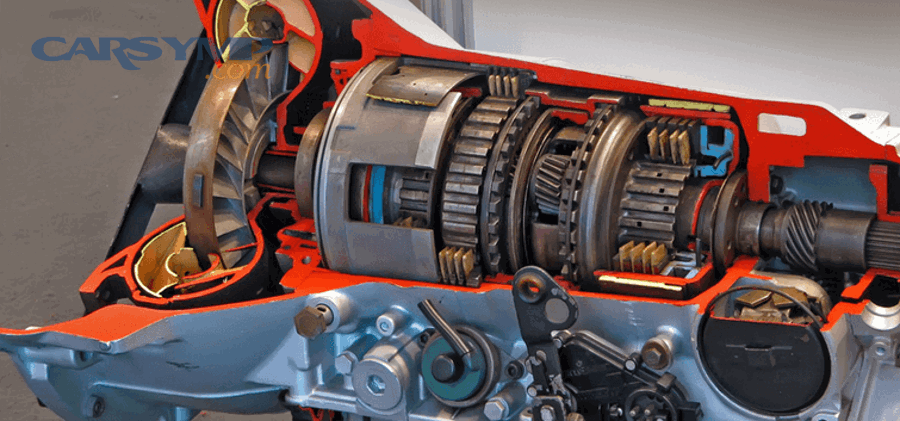
There are 4 main habit patterns that shorten CVT life—hard launches, rapid throttle cycling, high-speed hill pulls, and long hot idling in traffic—based on the criterion of how much heat and belt clamping demand they generate per minute.
More specifically, these habits matter because a belt-and-pulley CVT manages torque by squeezing the belt with high force while controlling slip to near zero. When you demand sudden torque repeatedly, the system must spike clamping pressure and dissipate more heat through fluid.
- Hard launches and “floor it” starts
A hard launch forces high torque at low speed, which increases clamping pressure demand. Over time, that promotes micro-wear on pulley faces and belt elements. - Throttle stabbing (on-off-on-off)
Repeated torque changes force constant ratio adjustments and pressure changes. That increases fluid shear and can create more heat cycling than steady acceleration. - Fast uphill pulls in hot weather
This is a classic overheating scenario: high sustained torque + poor airflow (or high ambient temp) + long duration. - Stop-and-go heat soak
Traffic makes the transmission live in the least efficient zone: repeated acceleration, limited cooling airflow, and rising fluid temps.
If you want one “simple rule,” it’s this: CVTs prefer smooth, sustained load more than spiky, repeated load.
Does towing or heavy loading reduce CVT lifespan compared with normal driving?
Yes, towing or heavy loading reduces CVT lifespan because (1) it raises sustained fluid temperature, (2) forces higher belt clamping pressure for longer, and (3) increases the chance of slip events that scar pulley surfaces.
On the other hand, the severity depends on “how heavy” and “how often.” Occasional light towing on flat roads is very different from frequent towing in hills during summer. The second scenario makes the CVT operate near its thermal ceiling, where fluid breakdown accelerates and protective films weaken.
If your vehicle is rated for towing, you still need to treat the CVT like a heat-managed system:
- Use tow mode if equipped (it changes load strategy and cooling fan behavior on some vehicles).
- Avoid high-speed hill climbs in extreme heat.
- Stop and cool down if temperatures rise or warnings appear.
This is also where an auxiliary cooler can be meaningful—when applied correctly, it helps prevent the heat-driven cascade that turns normal wear into sudden failure.
How do climate and terrain (heat, hills, city traffic) change expected CVT lifespan?
Hot climates and hilly terrain typically shorten CVT life compared with mild climates and flat terrain, while highway-heavy routes often extend life compared with stop-and-go routes—because the key variable is time spent at elevated fluid temperature.
Especially in summer, the CVT may run close to its thermal threshold during slow climbs or heavy traffic. Once fluid spends repeated hours hot, oxidation increases and viscosity behavior changes, which can reduce cooling performance and pressure stability.
According to a study by Bournemouth University from the Department of Design and Engineering, in 2022, oxidation measurably changed automatic transmission fluid properties and affected cooling-related performance figures-of-merit in tested ATFs.
What maintenance most improves CVT longevity?
CVT longevity improves most when you (1) keep the correct CVT fluid healthy, (2) prevent overheating by maintaining cooling capacity, and (3) respond early to symptoms before belt and pulley damage becomes irreversible.
Moreover, the goal of maintenance is not just “clean fluid”—it’s maintaining the entire friction-and-pressure environment that lets the belt transmit torque without slipping.

Should you change CVT fluid, and what interval best protects lifespan?
Yes, you should change CVT fluid because (1) fluid degrades from heat and shear, (2) contaminants accumulate and affect pressure control, and (3) fresh fluid restores cooling and friction behavior that protects belt/pulley surfaces.
Then, the “best” interval depends on severity, not just a generic number:
- Normal use: often around 40,000–60,000 miles as a protective range (many owners choose this even when manuals are vague).
- Severe use (hot climate, hills, towing, heavy city): often 25,000–40,000 miles as a more conservative range.
- Unknown history (used car): a cautious approach is inspection first (fluid condition + scan + road test), then service based on professional guidance.
The most important rule is the simplest: use the exact CVT fluid specification recommended for that transmission. CVTs are more sensitive to fluid friction characteristics than many traditional automatics, so “close enough” can become expensive.
What happens if you use the wrong CVT fluid or delay service too long?
Using the wrong CVT fluid or delaying service too long can cause unstable pressure control, higher operating temperature, and accelerated belt/pulley wear, because the fluid is doing three jobs at once: lubrication, cooling, and controlled friction support.
For example, wrong friction modifiers can change how the belt grips the pulley faces. That can trigger micro-slip, which creates more heat, which further degrades fluid, which increases slip risk—an ugly loop.
Delayed service can also allow:
- Varnish buildup in control passages that affects solenoid response.
- Contamination loading that increases abrasive wear.
- Thermal stress that makes seals harder and less forgiving.
If you feel delayed engagement, flare-like RPM behavior, or repeated shudder, treating it as “maybe it’s fine” is often how minor wear becomes major damage.
Do add-on CVT coolers or temperature management upgrades extend service life?
Yes, add-on CVT coolers and temperature management upgrades can extend service life because (1) they reduce peak fluid temperatures, (2) they stabilize operating temps under load, and (3) they slow fluid oxidation that undermines lubrication and pressure consistency.
However, effectiveness depends on correct installation and realistic expectations. A cooler helps most when your CVT runs hot due to environment or usage—towing, mountains, high ambient temps, or chronic traffic. It helps less if the real problem is already internal wear.
A practical temperature management checklist includes:
- Confirm the factory cooler (if equipped) is not restricted or leaking.
- Keep engine cooling and airflow systems healthy (fans, radiator, shrouds).
- Avoid sustained high-speed climbs in extreme heat.
- Treat “overheat” warnings as a stop-and-cool event, not a “push through it” moment.
If you want a quick mental model: cooling upgrades don’t “heal” wear, but they can prevent the heat spiral that forces wear to accelerate. That’s why learning CVT overheating causes and prevention is a longevity skill, not trivia.
What are the signs a CVT is nearing the end of its service life?
A CVT nearing end-of-life usually shows progressive shudder, slipping under load, delayed engagement, overheating behavior, or abnormal whining, because worn belt/pulley surfaces and stressed pressure control can no longer maintain stable traction.
Let’s explore the symptoms in a practical way—by separating early warnings from “stop driving” warnings—so you know what deserves monitoring and what deserves immediate action.

Which symptoms suggest early wear vs urgent failure risk?
There are 2 main symptom groups—early wear warnings and urgent failure warnings—based on the criterion of whether continued driving is likely to cause rapid, expensive internal damage.
More specifically, you can think in tiers:
Early wear warnings (schedule diagnosis soon):
- Mild shudder during light acceleration that comes and goes
- Slight delayed engagement (especially hot)
- Occasional RPM “flare” sensation without obvious slip
- Subtle whining that increases with speed
- Reduced fuel economy paired with unusual CVT feel
Urgent failure warnings (stop driving and diagnose now):
- Burning smell, smoke, or obvious overheating warning
- Loss of drive (won’t move forward or reverse normally)
- Loud grinding/metallic noise
- Consistent slipping under normal throttle
- Warning lights with limp-mode behavior
This is also where the linked phrase matters in real life: When to avoid driving with CVT symptoms is essentially “when the symptom suggests heat damage or metal-on-metal wear is actively happening.” If you keep driving through those warnings, you turn a potentially repairable issue into a full replacement scenario.
Is shudder or “rubber-band” acceleration always a CVT problem?
No, shudder or rubber-band acceleration is not always a CVT problem because (1) engine misfires can mimic driveline vibration, (2) mounts and axles can create load-sensitive shudder, and (3) torque converter issues in CVT-equipped vehicles can produce similar sensations.
However, CVT-specific shudder typically appears under light-to-moderate acceleration, may worsen when hot, and often feels like a rapid vibration rather than a single “clunk.”
If your CVT uses a torque converter, the Signs of bad torque converter in CVT can overlap with CVT complaints—especially torque converter shudder that feels like driving over a rumble strip during steady acceleration.
A simple differentiation approach is to ask:
- Does it happen at a consistent road speed (converter lockup range) rather than a consistent RPM? (More converter-like.)
- Does it disappear if you lift slightly off throttle? (Often converter/CVT control-related.)
- Does it happen even in neutral revving? (More engine-related than CVT-related.)
This isn’t a substitute for diagnosis, but it stops you from guessing wrong and spending money in the wrong place.
What diagnostic checks best predict CVT longevity (fluid condition, scan data, road test)?
There are 3 main diagnostic buckets—fluid inspection, scan data, and structured road testing—based on the criterion of whether they reveal heat damage, contamination, or traction-control instability.
For example, here’s a practical, owner-friendly checklist you can use before visiting a shop (or to understand what the shop reports back):
1) Fluid inspection (basic but powerful)
- Color: darker than normal can suggest heat aging (varies by fluid type)
- Smell: burnt odor is a red flag
- Debris: metallic sparkle or flakes suggests abnormal wear
- Service history: unknown history increases risk regardless of appearance
2) Scan data (the truth-teller)
- CVT fluid temperature behavior under load
- Diagnostic trouble codes (pressure control, ratio error, solenoid issues)
- Adaptation data (where accessible) that suggests control limits
3) Road test (pattern recognition)
- Does the symptom appear hot vs cold?
- Does it worsen under uphill load?
- Does it reproduce consistently at certain speeds?
According to a thesis by Virginia Tech in the Department of Mechanical Engineering, in 2018, experimental modeling and validation work on V-belt CVT behavior emphasized how belt dynamics and operating conditions influence efficiency and performance outcomes—reinforcing that measurable operating patterns matter when evaluating CVT behavior.
Is it better to repair, rebuild, or replace a failing CVT?
A repair is best when the failure is external or control-related, a rebuild is best when internal wear is contained and rebuild quality is proven, and replacement (often remanufactured) is best when wear is advanced, debris is present, or reliability risk is high.
In addition, the smartest decision is the one that reduces your “repeat failure” risk, not just the one with the lowest invoice today—because the wrong choice often leads to a second major bill.
When is a minor repair (valve body/solenoids/sensors) worth it vs a full rebuild?
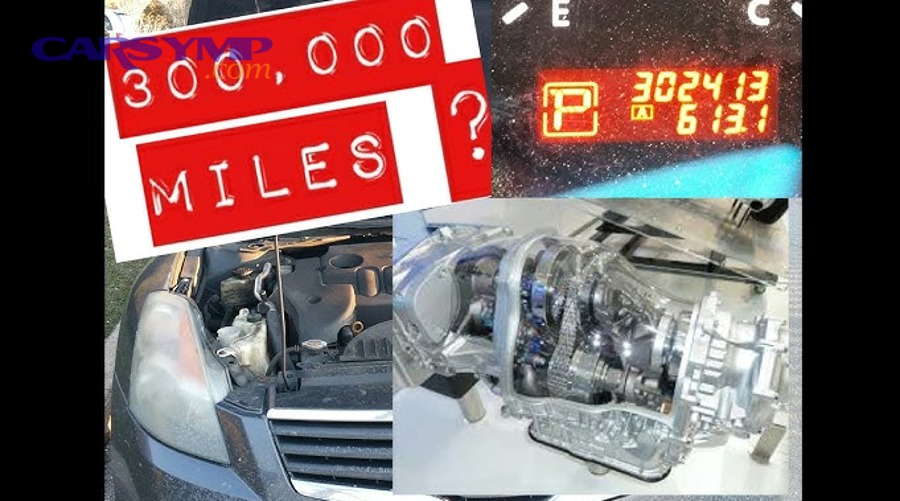
A minor repair is worth it when symptoms and data point to control faults without heavy internal wear, while a full rebuild is more appropriate when evidence suggests belt/pulley damage or significant debris.
However, you need decision triggers, not vibes. These are common decision signals:
Minor repair often makes sense when:
- Codes point to solenoid/pressure regulation issues
- Fluid is not burnt and debris is minimal
- Symptoms are intermittent and not load-slip dominated
- Road test shows control instability rather than mechanical slip
Rebuild/replace becomes likely when:
- Fluid is burnt and/or metallic debris is present
- Slip under load is repeatable and worsening
- Overheat events have been frequent
- The vehicle has entered limp mode repeatedly due to ratio errors
This is also where accurate phrasing matters: “CVT repair” can mean anything from a sensor replacement to a full unit overhaul. You want the shop to define the scope in writing so you can evaluate the risk.
How does a rebuild compare with a remanufactured CVT for long-term reliability?
A rebuild often wins on customization and cost control, a remanufactured CVT often wins on consistency and warranty coverage, and a used CVT is typically the most risk-prone option unless history and testing are unusually strong.
Meanwhile, reliability is mostly about process quality:
- Rebuild reliability depends on parts sourcing, machining quality, and whether known weak points are updated.
- Reman reliability often benefits from standardized quality control and updated components, plus a clearer warranty.
- Used CVT reliability is a gamble unless you have verified mileage, maintenance, and proven compatibility.
If you plan to keep the car for years, the decision often comes down to: “Which option minimizes the chance I pay twice?”
What questions should car owners ask a shop to protect long-term CVT life after repair?
There are 6 core questions you should ask—fluid spec, cooler/line handling, update strategy, diagnosis proof, post-repair calibration, and warranty terms—based on the criterion of whether the repair process prevents repeat heat and contamination problems.
To illustrate, here are the questions that separate a confident plan from a guess:
- What exact CVT fluid spec will you use, and why?
- Will you inspect/flush/replace the cooler and lines appropriately for this failure type?
- What did you find that proves the root cause (codes, pressure tests, debris evidence)?
- If it’s rebuilt, what wear parts are replaced and what surfaces are measured?
- Will the CVT control module adaptation/relearn be performed if required?
- What does the warranty cover—parts, labor, and failure causes like overheating?
End-of-core transition (contextual border): now that you know the expected lifespan, what shortens it, how to extend it, and how to decide between repair and replacement, the final section goes beyond the core estimate to explain why some CVTs behave like outliers due to design differences and uncommon factors.
How does CVT lifespan vary by design, brand tendencies, and uncommon factors?
CVT lifespan varies by design because belt/chain construction, launch hardware, cooling architecture, and control strategy change the balance between traction, heat, and wear—even when two transmissions are both labeled “CVT.”
Below, we’ll expand into the micro-level factors that often explain why one owner reaches 220k while another struggles at 90k under “similar” mileage.
Is a chain-type CVT more durable than a belt-type CVT for long-term service life?
A chain-type CVT tends to win in high-torque robustness, while a belt-type CVT can win in smoothness and efficiency, and the best choice depends on how consistently the design maintains traction without excessive heat.
However, “durability” isn’t only the chain or belt material. It’s the whole system’s ability to control clamping force, manage lubrication, and prevent slip. A chain can still suffer accelerated wear if fluid degrades or pressure control drifts.
The practical takeaway for owners is simple: regardless of belt or chain, the longest-lasting systems are the ones that avoid repeated overheating and receive correct fluid service.
Do torque-converter CVTs last longer than launch-clutch CVTs (and what’s the tradeoff)?
Torque-converter CVTs often win for smooth starts and can reduce low-speed harsh engagement stress, while launch-clutch CVTs can improve efficiency but may be more sensitive to engagement wear and heat management in certain driving patterns.
Meanwhile, your driving profile decides which one “ages better”:
- Frequent stop-and-go and creeping can be harder on launch clutches.
- Heavy acceleration from a stop can stress either design, but the heat signature can differ.
If your CVT uses a torque converter, don’t ignore converter-related symptoms because they can be the first domino in a bigger drivability problem.
Can used-oil analysis (UOA) or metal-in-fluid checks predict CVT lifespan more accurately?
Yes, metal-in-fluid checks can improve prediction because (1) rising metallic content signals abnormal wear, (2) burnt odor indicates heat stress, and (3) debris patterns can hint at whether wear is progressing quickly or slowly.
On the other hand, UOA is not a crystal ball. It’s most useful when you have trend data over time, not a single sample. Owners rarely do repeated CVT UOA sampling, so in many cases the practical approach is still: inspect fluid condition, scan for temperature behavior and ratio/pressure codes, and respond quickly to symptoms.
If a shop shows you glittery fluid or flakes, treat it as a serious clue. CVTs depend on clean, stable friction surfaces; debris is often evidence that those surfaces are already compromised.
Do “step-shift” programmed CVTs change wear patterns compared with smooth CVTs?
Step-shift programmed CVTs can change wear patterns because they may create more frequent load transitions, while smooth CVT control can maintain steadier conditions; however, the dominant wear driver is still temperature and traction stability, not the “feel” alone.
More importantly, step-shift behavior can trick drivers into driving it like a conventional automatic—harder downshifts, more sudden torque requests, and more aggressive throttle cycling. That driver behavior, not the software feature by itself, is often what increases heat and wear.
According to a thesis listing from Brigham Young University in the Ira A. Fulton College of Engineering and Technology; Mechanical Engineering, in 2007, CVT research emphasized how control and mechanical design must maintain proper engagement and operating behavior to achieve intended performance—supporting the idea that control strategy and operating conditions meaningfully shape outcomes.