


A bad torque converter (or, more often, a failing torque converter clutch—TCC) in a CVT usually announces itself with repeatable shudder, abnormal RPM behavior, and heat-related drivability changes—especially during light throttle cruising when lockup should be smooth and stable.
To make the diagnosis reliable, you need to understand what the torque converter and its lockup clutch are supposed to do in a CVT-equipped vehicle, and why certain failures show up at specific speeds, gears, and loads.
You also need a way to separate TCC-related vibration from other CVT or engine issues, because several problems can feel similar from the driver’s seat even though the CVT repair path is completely different.
Introduce a new idea: once you know the “why,” you can use simple pattern checks—what triggers the symptom, what makes it disappear, and what the tachometer does—to decide whether you’re dealing with a torque converter/TCC problem before spending money on parts.
What does the torque converter and TCC do in a CVT—and why does it fail?
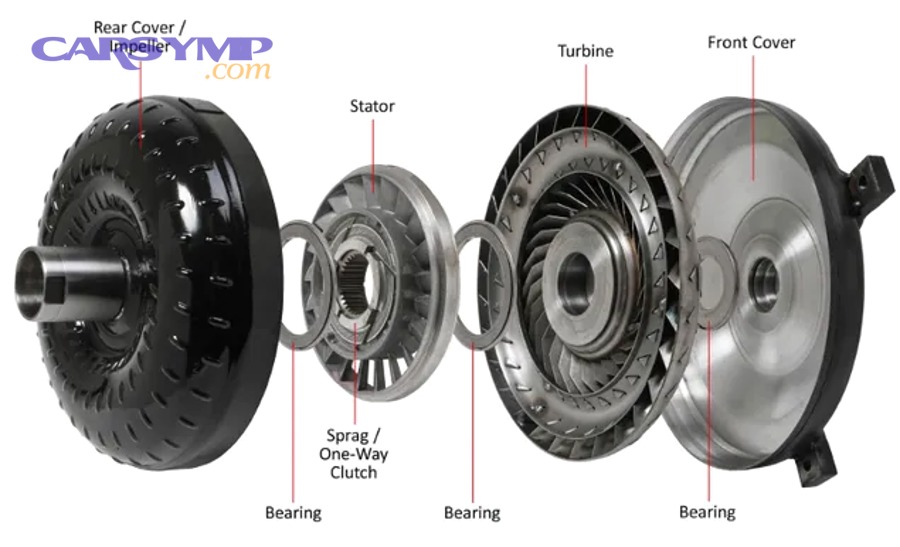
A torque converter in a CVT is a hydrodynamic coupling that multiplies torque at launch and smooths driveline vibration, while the torque converter clutch (TCC) is a friction clutch inside it that can partially or fully “lock” the connection to reduce slip and improve efficiency.
To better understand the failure signals you feel on the road, start by matching each component’s job to the symptom it creates when it can’t do that job.
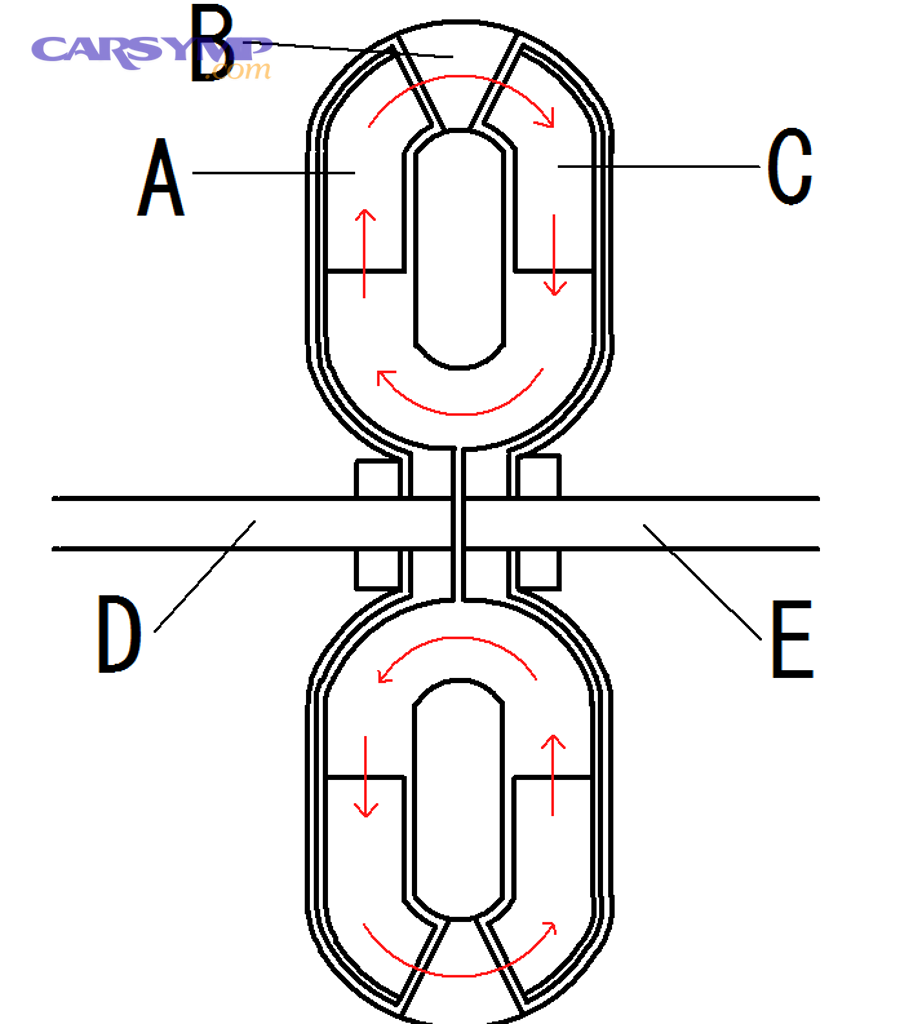
What is the torque converter in a CVT?
A torque converter sits between the engine and the CVT’s input shaft and transfers power through fluid motion rather than direct mechanical contact. That matters for three reasons:
- Smooth launch: At a stop, the engine can idle while the vehicle stays still; when you accelerate, the converter transmits torque progressively.
- Torque multiplication (low speed): The stator redirects flow to increase turbine torque at low speed ratios, improving take-off without harsh engagement.
- Vibration damping: Because the coupling is viscous, it naturally filters torsional pulses from the engine (especially noticeable at low RPM).
In many CVT designs, the torque converter’s role is mostly about launch smoothness and drivability; once moving, the system can transition toward more direct coupling via the TCC.
What is the torque converter clutch (TCC) and how does lock-up work?
The TCC is a friction clutch inside the torque converter that can operate in three practical modes:
- Open (unlocked): Normal fluid coupling with intentional slip.
- Slip-controlled (modulated lockup): The clutch applies with controlled slip to balance smoothness and efficiency.
- Locked: Slip approaches zero; the converter behaves closer to a direct mechanical link.
That “slip-controlled” middle zone is where many real-world shudder complaints live—because a wet friction interface under light load can become unstable if friction characteristics, pressure control, or fluid condition are off.
According to a Master’s thesis by Chalmers University of Technology from the Department of Applied Mechanics, in 2016, the torque converter lock-up clutch operates under open, slipping, or locked modes, and lock-up is used to eliminate slip-related losses as speed ratio approaches 1.
Why do torque converter/TCC components fail in CVTs?
Torque converter and TCC problems typically come from friction and heat management rather than “gear wear,” since the converter is a fluid device with a clutch inside it. Common failure drivers include:
- Friction material glazing or wear: The TCC friction surface can glaze, harden, or wear unevenly, changing how it grabs during slip control.
- Fluid breakdown or contamination: Degraded fluid can alter friction behavior and reduce the TCC’s ability to apply smoothly.
- Control instability: If TCC pressure control or the solenoid/valve body behavior is inconsistent, the clutch can oscillate between sticking and slipping.
- Overheating cycles: Repeated high-temperature events accelerate friction and fluid degradation.
- Mechanical damage inside the converter: Bearing wear, warped surfaces, or internal debris can amplify vibration and noise.
The core idea is simple: the TCC must generate stable friction in a controlled-slip environment. When it can’t, you feel it as a repeatable vibration under the same driving condition.
According to a study by Kookmin University from the School of Automotive Engineering, in 2022, achieving a positive friction–velocity (μ–V) characteristic is important for anti-shudder behavior in wet clutch engagement, because unfavorable friction behavior can trigger uncomfortable vibrations like shudder or stick–slip.
What are the 9 warning signs of a bad torque converter in a CVT?
There are 9 main warning signs of a bad torque converter/TCC in a CVT: shudder at light throttle, rumble-strip vibration at steady speed, RPM flare without matching acceleration, inconsistent lockup feel, heat-sensitive symptoms, delayed engagement, unusual noises, contaminated fluid clues, and recurring “vibration with cruise” patterns—based on when lockup should be applying and how the driveline responds.
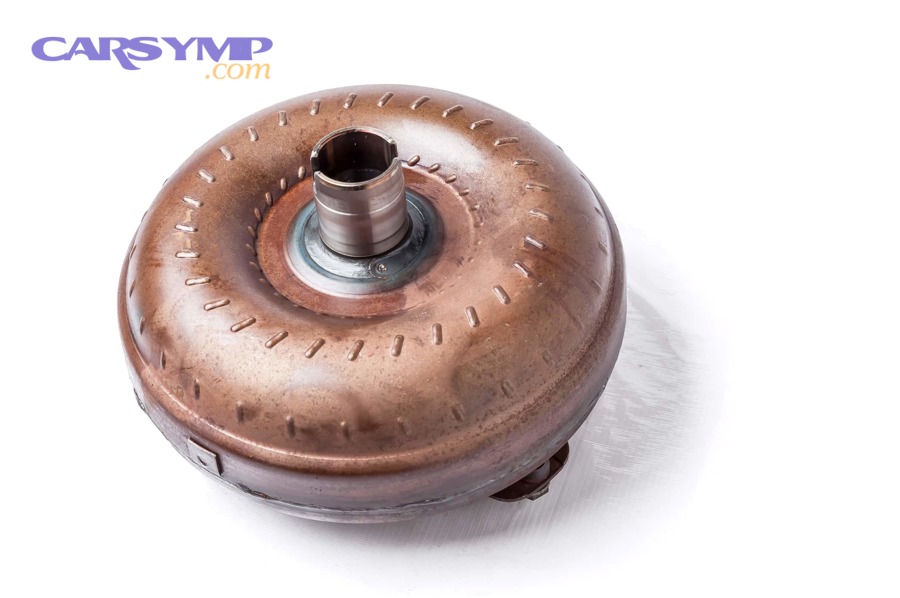
More specifically, these signs matter because most appear during the exact window where the TCC is slipping or transitioning, not during full-throttle acceleration where other CVT behaviors dominate.
Which symptoms feel like “shudder” or “rumble strip” vibration?
- Rumble-strip vibration at steady cruise (light throttle)
You feel a rapid, fine vibration like driving over textured pavement, often between ~30–60 mph depending on vehicle. It tends to appear when the TCC is commanded to slip slightly for efficiency. - Shudder during gentle acceleration (not hard acceleration)
Light throttle tip-in can trigger a short burst of vibration as lockup ramps. If you floor it and the symptom vanishes, that’s a clue the system moved out of lockup control into a different operating mode. - Shudder that changes with a small throttle change (±5–10%)
A tiny pedal adjustment can make it disappear or return. That behavior strongly suggests a control/friction instability rather than a constant mechanical imbalance.
If your vibration complaint overlaps with broader CVT slipping and shudder symptoms, treat that overlap as a prompt to confirm whether the vibration follows lockup state (TCC) or ratio/load state (belt/pulleys).
What tachometer and drivability patterns point to TCC trouble?
- RPM oscillation at steady speed (tach “wavers”)
At a constant speed on level ground, the tach needle may rise/fall slightly while your foot stays steady. That can happen when the TCC is alternately grabbing and releasing. - RPM flare without proportional vehicle acceleration
You press lightly, RPM jumps, but the car doesn’t accelerate smoothly. In a TCC issue, the flare can be tied to lockup transitions rather than belt slip. - Lockup feels “inconsistent” day to day
One day it’s smooth, the next day it shudders—especially with temperature differences. That inconsistency often tracks with fluid condition and pressure control sensitivity.
What heat, noise, and fluid clues show up with a failing converter/TCC?
- Symptoms get worse when hot (after 15–30 minutes)
Heat changes fluid viscosity and friction behavior. A marginal TCC can behave acceptably cold and become unstable hot. - Whine, growl, or cyclic vibration under light load
Not every noise is the converter, but a converter-related issue can produce a subtle growl or droning vibration at the same road speed/load window repeatedly. - Fluid clues: darkened fluid, burnt smell, or fine debris
CVT fluid and ATF vary by design, but burnt odor or unusually dark fluid can indicate overheating and friction stress. Debris doesn’t prove a converter fault, but it raises the stakes: do not ignore it.
A practical note: a professional diagnostic bulletin on TCC shudder describes confirmatory testing by changing TCC state and observing whether the vibration disappears, reinforcing that repeatability under specific conditions is a key hallmark of TCC shudder.
How can you confirm it’s the torque converter/TCC and not another CVT problem?
You can confirm it’s the torque converter/TCC (and not another CVT issue) by checking whether the symptom appears in the lockup window, changes when lockup state changes, and does not track engine speed or wheel speed the way other faults do.
However, confirmation depends on patterns—not guesses—so you want a structured differentiation: engine-related vibration vs tire/driveline vibration vs CVT pulley/belt behavior vs TCC instability.
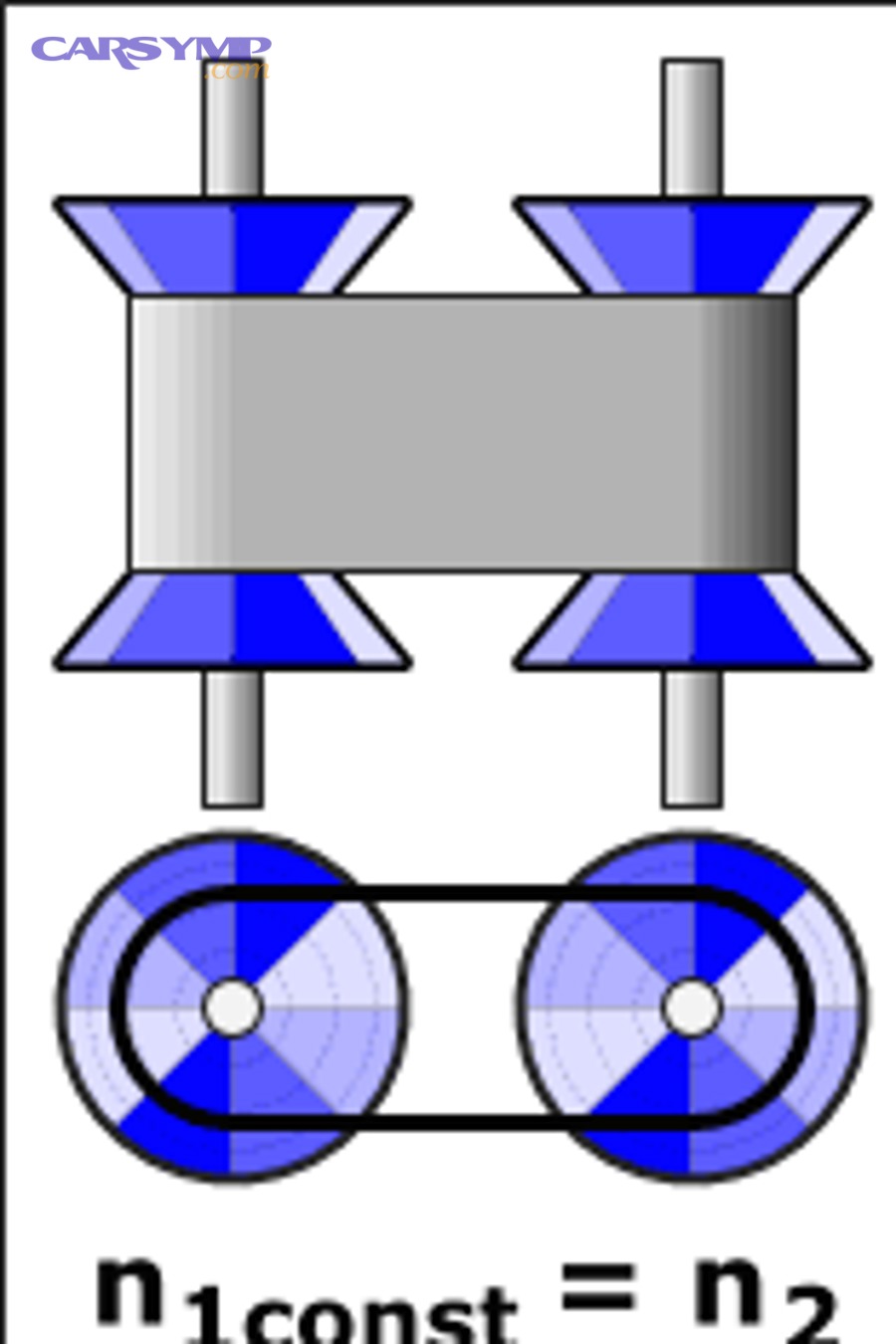
What makes TCC shudder different from tire, engine, or driveline vibration?
Use these “follows X” rules:
- If vibration follows vehicle speed regardless of RPM: suspect tires/wheels/axles first.
- If vibration follows engine RPM even in neutral/park: suspect engine misfire, mounts, or accessory drive.
- If vibration happens only in a narrow steady-cruise band and responds to tiny throttle changes: suspect TCC slip control instability.
- If vibration is tied to hard acceleration and ratio change: suspect CVT belt/pulley, pressure, or internal CVT issues.
The goal is to identify whether the symptom tracks lockup behavior rather than general rotation or load.
What scan-tool data points help differentiate TCC issues?
Even basic scan data can help if it includes:
- TCC slip speed / lockup status
- Engine RPM
- Transmission input speed (ISS) or turbine speed (if available)
- Throttle angle / torque request
- Fluid temperature
A professional diagnostic bulletin describes decision logic where TCC shudder is supported when the concern changes with TCC state (open vs locked) and when vibration frequency is stationary under the specific test condition, while patterns that follow engine speed or vehicle speed point away from TCC shudder.
What “one change” test gives the strongest clue?
The strongest clue is: does the vibration disappear when the system is forced out of the lockup window? For car owners without tools, you approximate this by changing operating conditions:
- Slightly increase throttle (forcing a different lockup strategy)
- Slightly decrease throttle (sometimes opening the clutch)
- Change speed by 5–10 mph
- Change grade (flat vs gentle hill)
- If safe, switch from cruise control to manual throttle control
If the symptom turns on/off with these small changes—and repeats reliably—the odds shift toward TCC control/friction behavior rather than random mechanical imbalance.
What quick checks can car owners do before visiting a shop?
You can do quick checks by using a controlled road-test pattern, basic fluid observations, and “trigger mapping” (what speed, load, and temperature make it happen) so you can describe the symptom precisely and avoid unnecessary part swapping.
Then, you can bring that structured description to a shop—because the quality of your symptom report often determines the quality of your diagnosis.
How do you safely map the trigger conditions?
Pick a safe route and capture four variables:
- Speed window: the mph range where it happens (example: 38–48 mph).
- Throttle window: light throttle vs moderate vs heavy.
- Temperature window: cold start, warm, fully hot.
- Road/grade window: flat vs slight incline.
Practical method:
- Drive normally until warmed (10–20 minutes).
- On a flat road, hold a steady speed in the suspected window.
- Make a small throttle change (barely more pedal, then barely less).
- Note whether shudder appears/disappears and how quickly.
- Repeat once to confirm it’s consistent, not random.
Your goal is not to “prove” the repair—your goal is to produce a repeatable, describable pattern.
What fluid and smell checks are worth doing (without overinterpreting them)?
If your vehicle has a serviceable check procedure (varies by design):
- Look for burnt odor (sharp, acrid smell) that suggests overheating.
- Look for abnormal darkness compared with fresh fluid.
- Note any metallic sheen or suspended particles (a warning sign, not a diagnosis).
Important: some CVTs are extremely sensitive to fluid type and level. Do not top off with “universal” fluids. If you suspect low fluid or contamination, treat it as a reason to schedule proper service, not to experiment.
What “behavior checks” should you report to the shop?
Bring these answers:
- Does it happen only at steady cruise?
- Does it happen only when warm?
- Does it go away with more throttle?
- Does it go away with a small speed change?
- Do you feel it more through the seat/floor (driveline) or steering wheel (front-end vibration)?
That information helps a technician decide whether to prioritize a lockup-focused diagnostic path or a broader driveline inspection.
According to a diagnostic bulletin published via NHTSA in 2021, confirming TCC shudder involves reproducing the concern in normal operation and verifying it is absent when the torque converter clutch is disabled or fully locked, supporting a symptom-based approach that focuses on how the vibration changes with lockup state.
When should you stop driving, and what are the typical repair paths?
Yes—you should stop driving (or at least minimize driving) if you have severe shudder, overheating warnings, burning smell, repeated limp mode, or worsening engagement delays, because continued operation can overheat fluid, increase debris, and turn a controllable issue into a costly failure.
More importantly, knowing the repair paths helps you avoid random spending and choose the right level of intervention based on confirmed root cause.
When is it unsafe or financially risky to keep driving?
Stop and tow (or drive only to a nearby shop) if you notice:
- Burning smell + shudder (overheat/friction stress)
- Warning lights + limp mode
- Loss of engagement (delayed drive/reverse, slipping takeoff)
- Rapid symptom escalation over days
- Grinding noises or harsh mechanical feel
If your symptom is mild shudder only at cruise, you may have time to diagnose—but don’t ignore it, because repeated TCC instability creates heat and material wear.
What are the realistic repair paths for a confirmed torque converter/TCC issue?
Repair paths typically stack from least invasive to most invasive:
- Correct fluid and calibration strategy (when applicable)
Some cases respond to proper fluid service and updated control logic—but only if the converter hardware is still healthy. This is often the first rational step because it is lower cost and addresses friction stability. - Valve body / solenoid control repair (if pressure control is the cause)
If data shows the clutch is being commanded inconsistently (pressure drift, solenoid performance), fixing control hardware can stabilize lockup. - Torque converter replacement (when the converter is the cause)
When evidence points to the converter itself (friction surface damage, persistent shudder that matches lockup behavior), replacement becomes the direct fix. - Transmission-level work (only if CVT internal damage is confirmed)
If the symptom is part of broader failure—ratio control problems, belt/pulley damage, metal contamination—then the repair may escalate into bigger decisions.
This is where many owners encounter the bigger decision: Rebuild vs remanufactured CVT options. If the issue is truly limited to the converter/TCC, you want to avoid unnecessary full replacement; if internal damage exists, you want the solution that restores long-term reliability rather than repeating partial repairs.
How do costs and outcomes usually compare?
Costs vary dramatically by model and labor, but the structure is consistent:
- Fluid/diagnostic service: lowest cost, best when caught early and correctly matched to the problem.
- Valve body/solenoid work: moderate cost, best when data supports control instability.
- Converter replacement: higher cost due to labor, best when shudder is clearly converter/TCC-driven.
- Full CVT replacement/reman: highest cost, best when internal damage is present or risk is high.
A key strategic point: a shop that jumps immediately to “replace everything” without confirming whether the vibration changes with lockup state risks misdiagnosis. A structured diagnostic approach can save real money in the long run.
If you’re already in the stage where you’re comparing shops, ask them directly what their process is for isolating TCC shudder before quoting major CVT repair.
According to a diagnostic bulletin published via NHTSA in 2023, specific patterns in engine RPM, transmission input speed (ISS), and TCC slip/pressure behavior can distinguish whether the likely root cause is the torque converter versus valve body/solenoid-related issues, emphasizing that correct classification should precede part replacement.
What advanced or less-common clues can indicate a failing CVT torque converter clutch (TCC)?
Less-common clues include lockup instability that appears only under very specific control modes, frequency-stable vibration signatures during lockup events, and fluid/friction behaviors that look normal in casual driving but break down during controlled slip.
Next, these clues matter because they explain the “mystery cases” where a driver can’t reproduce the symptom for a quick test drive—yet it returns reliably in one narrow scenario.
What “frequency-stable” vibration clue is strongly suggestive?
If a vibration peak is stable in frequency during the same operating condition (same gear/speed/load window) and does not chase engine RPM or vehicle speed, that behavior aligns with a clutch judder phenomenon rather than a rotating imbalance. In practice, technicians use NVH tools to see this clearly, but the driver may still notice it as a very repeatable “buzz” that feels identical every time.
What rare control-mode behavior can mislead owners?
Some vehicles change engine torque management or lockup strategy based on drive mode. A slight vibration that appears only under a special economy mode can be normal, while a true TCC shudder typically persists when you reproduce the same lockup slip conditions.
That’s why “it only happens in one mode” is not enough—what matters is whether it happens in the lockup slip window and whether it changes when lockup conditions change.
What fluid/friction micro-clues are easy to overlook?
A converter/TCC can be borderline when:
- Fluid looks “okay” but has friction properties that changed (not always visible).
- The symptom appears only after heat soak, because friction behavior changes with temperature.
- Minor shudder slowly increases over weeks, which owners normalize until it becomes obvious.
According to a study by Kookmin University from the School of Automotive Engineering, in 2022, wet clutch shudder is closely tied to friction behavior during engagement, and stable anti-shudder performance depends on managing friction characteristics rather than relying on a single mechanical factor.