Choosing between a CVT rebuild and a remanufactured (reman) CVT comes down to one thing: which option gives you the best mix of reliability, total installed cost, and downtime for your specific car and timeline. This guide compares both paths so you can decide with confidence.
A second layer of the decision is understanding what the words actually mean, because “rebuilt,” “reconditioned,” and “reman” are often used loosely. Once you know the real process behind each term, you can spot the difference between a solid unit and a risky one.
Cost and warranty usually decide the deal, but only if you compare apples to apples. The same “price” can hide extras like core charges, shipping, programming, cooler flushing, and whether labor is covered if something goes wrong.
Introduce a new idea: a smart choice still fails if the root cause isn’t fixed. That’s why this article ends with a fast decision matrix and the hidden factors that make rebuilt and reman CVTs fail early—so your money actually buys long-term results.
What does “rebuilt” vs “remanufactured (reman)” CVT mean?
A rebuilt CVT is a repaired and reassembled transmission using a mix of reused and replaced parts, while a remanufactured (reman) CVT is rebuilt to a standardized spec—often with broader replacement and testing—then sold as a ready-to-install unit.
Next, that definition matters because the “same” CVT option can be built two completely different ways depending on who builds it and what they replace.
Is a rebuilt CVT the same as a “reconditioned” CVT?
No—a rebuilt CVT is not automatically the same as a reconditioned CVT, because “reconditioned” is often a marketing label that can mean anything from a cleaned valve body to a partial repair, while “rebuilt” should imply teardown, inspection, and replacement of worn components.
To better understand why that difference matters, focus on what gets documented, not what gets advertised.
Here’s how the terms usually land in the real world:
- Rebuilt CVT (best-case meaning): The unit is removed, disassembled, inspected, measured, and rebuilt with specific wear parts replaced. Clearances are verified, and the builder can tell you what failed and why.
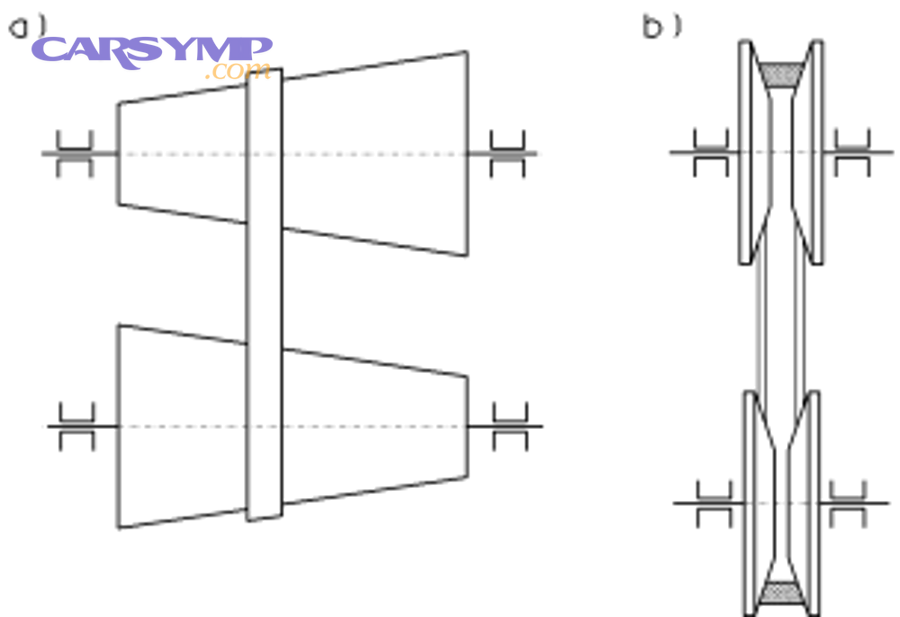
- Reconditioned / refurbished CVT (often vague): The unit may be cleaned, resealed, or fitted with a limited set of parts (for example, a valve body service) without a full teardown of the variator and pump.
- Used CVT (most risky label): Installed as-is, sometimes with a short warranty, often without proof of internal inspection.
A practical way to verify what “rebuilt” truly means is to ask for a parts list and failure diagnosis. If the seller can’t explain what failed (belt/chain, pulley faces, pump, bearings, valve body, solenoids, sensors, or contamination), you’re not buying certainty—you’re buying a roll of the dice.
This is also where many owners first look up Common CVT fault codes and diagnosis, because codes help define whether you’re dealing with a control issue (like solenoids or pressure regulation) or an internal mechanical wear issue (like belt slip or bearing damage). A code list alone won’t decide rebuild vs reman, but it often clarifies whether a “reconditioned” fix is too shallow for the failure you actually have.
Does a reman CVT mean “like-new,” and what testing is typically included?
Yes—a reman CVT is often “like-new” in the sense that it is rebuilt to a standardized specification and commonly tested before sale, but “like-new” does not guarantee every part is brand-new, and test depth varies by remanufacturer.
Then, the key is to treat “like-new” as a claim that must be verified with process evidence.
A typical reman workflow (in the best cases) includes:
- Full teardown and cleaning of the core unit (often including the case, valve body passages, and critical oil circuits).
- Inspection and measurement against a spec (wear limits, surface condition, shaft/bearing play, pulley face condition, and hydraulic integrity).
- Replacement of wear parts (seals, gaskets, friction elements where applicable, bearings, bushings, and commonly upgraded components depending on the unit).
- Standardized updates if a known weak point exists (for example, revised parts, updated valves, or improved sealing in a recurring wear area).
- Bench or dyno testing to validate pressure control, leaks, and operational behavior under a controlled procedure.
The difference you’re paying for is consistency: a strong reman operation tries to make every unit meet the same standard.
A reliability angle that many car owners overlook is heat and contamination. According to a study by Luleå University of Technology from the Department of Engineering Sciences and Mathematics, in 2013, researchers reported that contaminants like water in automatic transmission fluid can influence durability and friction behavior, reinforcing why fluid condition and contamination control matter even after you install a rebuilt or reman unit. (diva-portal.org)
Which is better for most drivers: rebuild or reman CVT?
Rebuild wins in local customization and potentially lower cost, reman is best for standardized quality and broader warranty coverage, and a third “option” (replace the vehicle or choose a different repair scope) is optimal when total risk and cost exceed the car’s value.
However, the better choice depends on your timeline, your local talent pool, and how long you plan to keep the car after the CVT work.

Is remanufactured usually more reliable than rebuilt for CVTs?
Yes—remanufactured is usually more reliable than rebuilt for CVTs because it tends to follow a repeatable spec, replace a wider set of wear parts, and include standardized testing, while rebuild quality can vary dramatically depending on the builder and the diagnosis.
More specifically, the reliability gap is not magical—it’s procedural.
Here are three reasons reman often wins reliability in practice:
- Standardization reduces “missed wear.” A local rebuild might replace only what’s obviously damaged, but CVTs often suffer from wear that accumulates across multiple components. Reman specs are more likely to replace “borderline” parts before they fail.
- Process control and testing. A reman unit commonly has documented testing steps. A rebuild may be excellent, but only if the shop has the equipment and discipline to test beyond “it drives today.”
- Built-in updates. Some remanufacturers incorporate revised parts or known fixes to recurring issues, while some rebuilds focus on restoring function with minimal changes.
That said, a great rebuild can absolutely beat a mediocre reman. If your area has a CVT specialist who can show measurements, explain the failure mode, and provide a strong warranty backed by real support, rebuild may be the more rational bet.
This is also where the phrase CVT repair matters: you’re not just paying for parts—you’re paying for the builder’s ability to identify the failure chain, remove it, and prevent it from repeating.
When is a rebuild the smarter choice than reman?
There are 4 main situations where a rebuild is the smarter choice: trusted specialist availability, cost control, targeted internal fixes, and reduced logistics downtime based on your local access and the unit’s specific failure.
Besides, rebuild becomes attractive when the value is in the craft, not the label.
- You have a proven CVT specialist locally. If a shop rebuilds CVTs regularly (not occasionally) and can show documented processes, their rebuild may be more trustworthy than a generic reman source.
- You need a targeted solution. Some failures are localized (for example, a known weak component or an internal wear item identified early), and a high-skill rebuild can address it without paying for a fully standardized replacement scope.
- You want control over parts choices. In some cases, rebuild lets you choose upgraded components, updated valves, improved cooling add-ons, or better filtration strategies.
- You can tolerate a longer in-shop timeline but want fewer shipping variables. A reman unit may ship quickly—or it may not. A rebuild timeline is often more predictable once the shop has parts in hand.
If you plan to keep the car for years, a rebuild is strongest when the shop can show they rebuilt “past the obvious” and corrected wear conditions you can’t see from the outside.
When is a reman CVT the smarter choice than rebuild?
There are 4 main situations where a reman CVT is smarter: standardized quality, stronger warranty reach, faster swap potential, and less dependence on local rebuild skill based on how much uncertainty you can afford.
Moreover, reman is often the safer choice when you don’t have a top-tier CVT builder nearby.
- You need a warranty with broad support. Some reman warranties are honored across networks, which matters if you travel or if you don’t want to be tied to one shop.
- You want a fast “remove-and-replace” path. A ready-to-install unit can reduce downtime compared to waiting for teardown, diagnosis, and parts ordering.
- You don’t know who to trust locally. When rebuild quality is uncertain, standardized reman can be a risk-reducing play.
- Your CVT has a history of repeated issues. If the unit has already been “fixed” once and failed again, a deeper standardized replacement scope may be more effective.
A useful mindset: rebuild is a bet on one builder’s expertise, reman is a bet on process consistency.
How much does a rebuild vs reman CVT cost, and what changes the price?
Rebuild is often cheaper in base labor, reman can be cheaper in total downtime and surprise cost control, and the “real” price is determined by what’s included: labor, fluids, programming, core charges, shipping, and root-cause repairs.
To illustrate the cost clearly, you need to compare complete installed totals, not just the transmission price.
Before the breakdown, here is a quick table that summarizes what you’re comparing and what each line typically means in a quote.
| Cost Component | Rebuild (Typical Pattern) | Reman (Typical Pattern) | Why It Matters |
|---|---|---|---|
| Transmission unit cost | Variable (parts found during teardown) | More fixed (unit priced upfront) | Predictability vs discovery |
| Labor | Higher labor hours for rebuild work | Higher for removal/install, less internal labor | Who does internal work affects bill |
| Fluids & filters | Sometimes added as extras | Sometimes included, sometimes not | CVTs are fluid-sensitive |
| Programming / relearn | Often required depending on vehicle | Often required depending on vehicle | Missing this can mimic failure |
| Core charge | Usually not a “charge” (your unit is rebuilt) | Common (deposit refunded after return) | Cash flow + deadlines |
| Shipping / freight | Usually none | Common | Adds cost and risk |
| Cooler flush / replace | May be recommended | Should be required | Contamination can kill the new unit |

What’s included in a rebuild quote vs a reman quote (parts, labor, fluids, programming)?
A rebuild quote usually includes teardown, internal labor, and variable parts, while a reman quote usually includes a fixed-price unit plus install labor, but both can exclude critical items like fluids, programming, and contamination control unless you confirm them.
Meanwhile, the easiest way to lose money is to accept a quote that hides “required later” add-ons.
A complete rebuild quote should state:
- Removal and reinstall labor (or separate line items)
- Teardown and rebuild labor
- List of replaced parts categories (seals, bearings, belt/chain if applicable, valve body work, pump components, solenoids if included)
- Required new CVT fluid quantity and specification
- Filter(s) and pan gasket
- Any required calibrations, relearn procedures, or control module work
- Cooler flush or replacement recommendation
- Warranty terms including labor coverage
A complete reman quote should state:
- Reman unit price (and whether it includes updated parts)
- Core charge amount and return timeline
- Shipping/freight cost and delivery estimate
- Install labor hours
- Fluids and filters
- Programming/relearn requirement
- Cooler flush or replacement requirement
- Warranty terms and claim process
This is where many owners get misled: they compare a $X rebuild estimate to a $Y reman unit cost, but the rebuild estimate is “installed” while the reman number is “unit only.” Your job is to force both into the same format: installed total, out-the-door total, and worst-case total.
Do core charges and shipping make reman cost more or less overall?
Yes—core charges and shipping can make reman cost more upfront, but they can still make it cheaper overall if the reman price reduces downtime and avoids rebuild “surprise parts” costs.
In addition, the true difference is your tolerance for cash flow and timing rules.
Core charges work like this:
- You pay a deposit because the remanufacturer wants your old unit back to rebuild for the next customer.
- You get the deposit back (fully or partially) when the core is returned within the required time window and in acceptable condition.
Where people get burned is missing the deadline or returning a core that has been damaged or disassembled in a way the remanufacturer won’t accept. That turns a “refundable” amount into a permanent cost.
Shipping matters because a CVT is heavy, freight is not cheap, and freight damage is a real risk. A good reman program uses protective packaging and clear freight rules—but it’s still a variable that rebuild avoids.
How do warranties compare on rebuilt vs reman CVTs—and what should you verify?
Reman warranties are typically stronger in length and network support, rebuild warranties can be excellent when backed by a reputable specialist, and the best warranty is the one with clear coverage, fair exclusions, and a simple claim path.
However, you should treat a warranty as a contract, not a comfort blanket.
This is a good moment to ground your expectations with longevity thinking. Many owners ask, “How long a CVT should last?” The honest answer is: it depends on design, driving conditions, heat management, and maintenance—but whichever option you pick, warranty and prevention steps decide whether “lasting” is realistic for your situation.
Is a longer warranty always a better deal for a CVT?
No—a longer warranty is not always a better deal because warranty length doesn’t guarantee lower failure risk, and some long warranties have strict exclusions, maintenance proof requirements, or limited labor coverage that make claims difficult.
More importantly, a warranty is only valuable if you can actually use it.
Three reasons longer isn’t always better:
- Exclusions can be broader than you expect. Overheating, towing, modifications, wrong fluid, and “contamination” clauses can remove coverage in the exact scenarios that cause CVT failures.
- Labor coverage may be limited. Some warranties cover the part but not the labor, or only cover labor at a reduced rate.
- Claims can be slow and paperwork-heavy. If you rely on the car for work, a slow claim can be more expensive than the repair itself.
A better approach is to judge warranty quality by: clarity, labor coverage, transferability, claim process, and whether required maintenance steps are reasonable.
What warranty fine print commonly voids coverage for CVTs?
There are 6 common warranty pitfalls that void coverage: wrong fluid, missing service records, overheating, contamination from the cooler, incorrect installation/programming, and delayed reporting based on the warranty’s stated conditions.
Specifically, these are the items you should verify before you authorize work.
- Fluid specification requirement: CVTs are fluid-sensitive. If the warranty requires OEM-spec fluid and you use something else without approval, you may lose coverage.
- Maintenance documentation requirement: Receipts, mileage logs, and service dates are often required.
- Overheating clause: Overheat events, repeated limp mode, or heat damage may be excluded.
- Cooler contamination clause: If the cooler wasn’t flushed or replaced, debris can contaminate the new unit, and the warranty may blame “external contamination.”
- Installation and programming clause: If the unit wasn’t installed by a qualified shop or if programming/relearn steps were skipped, the warranty may deny the claim.
- Delayed reporting clause: Continuing to drive with symptoms can be framed as “further damage due to neglect.”
If you want a simple rule: any warranty that says “you must do X” should be treated as a checklist you complete before the vehicle leaves the shop.
What should car owners ask before choosing a rebuild or reman CVT?
There are 8 essential questions you should ask before choosing rebuild or reman: they confirm the failure cause, rebuild/reman scope, testing, contamination control, programming, warranty reality, and total installed cost so you’re buying outcomes, not hope.
Let’s explore those questions in a practical checklist that you can use on the phone or at the counter.
What proof should you request (test results, parts list, photos, failure diagnosis)?
You should request four proof items—a failure diagnosis, a parts/operations list, test confirmation, and visual documentation—because proof reduces the risk of paying for a label rather than a real rebuild/reman process.
Then, the goal is simple: make the shop show their work.
Ask for:
- Failure diagnosis in plain language
- What failed first?
- What evidence supports that (wear pattern, codes, pressure readings, debris)?
- Parts and operations list
- Which wear parts are replaced by default?
- Which parts were measured and reused?
- Was the valve body serviced or replaced?
- Testing confirmation
- What tests were performed (pressure/leak tests, bench tests, road tests)?
- What result indicates “pass”?
- Photos or documentation (when possible)
- Debris in pan, damaged components, scored surfaces, belt/chain condition (if applicable)
- Cooler condition and flush confirmation
If the shop can’t provide proof, you can still proceed—but you should price the job as higher risk, because that’s what it is.
What symptoms or root-cause issues must be fixed so the replacement doesn’t fail again?
You must fix contamination, heat management, pressure control issues, electrical/connector faults, and mechanical misalignment because a rebuilt or reman CVT can be healthy on day one and still die early if the original failure cause is left in place.
Moreover, these root causes often cost less to address than a second transmission failure.
- Contaminated cooler and lines: Metal debris can recirculate and destroy the new unit’s pump, bearings, and valve body surfaces.
- Cooling system weakness: Overheat events accelerate fluid breakdown and can push the CVT into protective behavior that looks like “new failure.”
- Valve body or pressure regulation problems: Some CVT issues are hydraulic-control problems that create slip and heat even when internal parts are sound.
- Electrical/connector problems: Corrosion, poor grounds, or damaged harnesses can trigger false pressure control behavior and limp mode.
- Mounts and driveline stress: Excess movement can add vibration and shock loads that show up as “shudder,” which owners sometimes misread as internal CVT failure.
This is the moment where many owners consult a symptom resource like Car Symp to cross-check whether their shudder, flare, whining, or delayed engagement points to fluid/heat, control issues, or mechanical wear. The key is not the website—it’s the behavior pattern that guides the diagnosis.
Evidence matters here because CVTs rely on friction interfaces and fluid stability. According to a study by Luleå University of Technology from the Department of Engineering Sciences and Mathematics, in 2013, researchers investigated how water contamination affects automatic transmission fluid degradation and friction behavior, supporting the idea that contamination control directly impacts drivetrain durability. (diva-portal.org)
Should you avoid both rebuild and reman in any situations?
Yes—you should avoid both rebuild and reman in situations where vehicle value is too low, the model has unresolved recurring failures without credible updates, or the seller can’t provide proof/testing/warranty clarity, because the expected risk outweighs the likely benefit.
Especially when the numbers don’t work, the smartest “repair” is often a different plan.
- The installed cost approaches the car’s realistic resale value.
- The car has additional major issues (engine, rust, electrical) that make transmission investment irrational.
- You can’t get a clear answer on scope, testing, or warranty process.
- You can’t correct root causes (cooler contamination, overheating, repeated slip) due to budget or shop limitations.
Sometimes the best decision is to stop feeding a failure cycle.
How do you make the final decision in 5 minutes (simple decision matrix)?
Use a 3-step decision matrix—rank your priority (cost, downtime, warranty), match it to your vehicle plan (keep vs sell), and confirm proof (scope, testing, contamination control)—to choose rebuild or reman quickly with fewer regrets.

Thus, instead of debating endlessly, you turn the decision into a repeatable method.
- Pick your top priority
- Lowest total cost?
- Lowest risk?
- Fastest return to driving?
- Pick your ownership horizon
- Keeping the car 3+ years?
- Selling within 12 months?
- Confirm the “proof triad”
- Clear scope (what’s replaced)
- Clear testing
- Clear protection (warranty + contamination prevention)
If any part of the proof triad is missing, downgrade that option’s attractiveness—even if the price looks good.
Which option fits your profile: budget driver, long-term owner, or selling soon?
There are 3 main owner profiles—budget driver, long-term owner, and selling soon—and rebuild is often best for budget drivers with a trusted specialist, reman often fits long-term owners who want standardized reliability and coverage, while “selling soon” favors the option that restores function with the least risk of comeback.
On the other hand, your local market and shop quality can flip the recommendation.
- Budget driver (needs the lowest realistic installed total):
- Choose rebuild if a reputable CVT specialist can document scope and root-cause fixes.
- Choose reman if rebuild quotes are uncertain and you need predictable pricing.
- Long-term owner (wants durability and lower hassle):
- Lean reman when it offers clear testing and strong warranty support.
- Consider rebuild when the specialist is excellent and offers proof-driven workmanship.
- Selling soon (needs the car stable, not perfect):
- Choose the option with the clearest warranty and documentation that supports buyer confidence.
- Avoid vague “reconditioned” fixes that may raise red flags during inspection.
If you want an extra layer of confidence, watch a clear explainer on rebuilt vs reman differences:
What hidden factors can make a rebuilt or reman CVT fail early ?
Hidden factors are usually programming, fluid correctness, contamination control, and heat management—and preventing early failure means treating installation as a system job, not a parts swap.
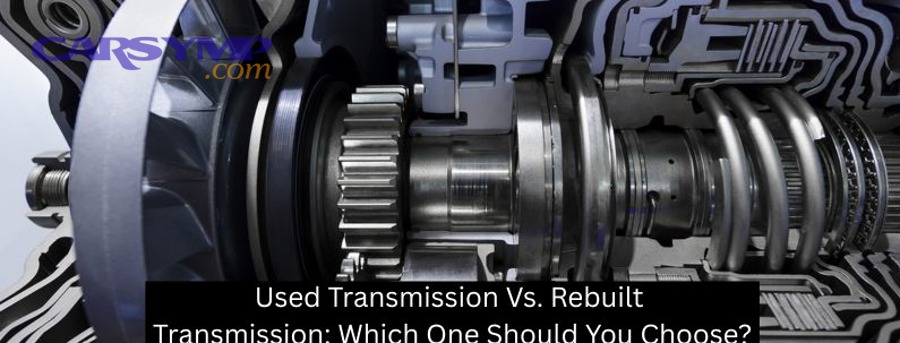
In short, the transmission choice is only half the battle; the environment you install it into decides how long it lives.
Do you need TCM programming or relearn after installing a rebuilt/reman CVT?
Yes—many vehicles need TCM programming, initialization, or a relearn procedure after installing a rebuilt or reman CVT, because control logic must match pressure behavior and ratio control characteristics to prevent slip, harsh engagement, or false fault detection.
Next, this is where “it drives weird” can be a setup issue, not a bad transmission.
- CVTs rely on precise pressure control to prevent belt/chain slip.
- Control modules adapt over time; a fresh unit can behave differently than the worn unit it replaced.
- Skipping relearn can cause symptoms that mimic failure: shudder, delayed engagement, ratio errors, or limp mode.
This is also why diagnostics matter post-install. If new symptoms appear, revisit Common CVT fault codes and diagnosis to determine whether the issue is adaptation/programming (control side) or mechanical (internal slip/pressure loss).
Can the wrong CVT fluid or skipped cooler flush ruin a new rebuild/reman?
Yes—the wrong CVT fluid or a skipped cooler flush can ruin a new rebuild or reman CVT because friction characteristics and contamination directly affect pressure stability, slip, heat, and internal wear surfaces.
More importantly, this is one of the most preventable causes of repeat failure.
- CVT fluids are engineered for specific friction and shear behavior.
- Using a fluid that doesn’t match spec can cause shudder, heat, and premature wear.
- Even “universal” fluids may require explicit approval for your unit.
- Debris trapped in the cooler can recirculate.
- The new unit’s pump and valve body are vulnerable to particles.
- Many reputable warranties require cooler flushing or cooler replacement documentation.
This point ties directly to engineering research on wear and efficiency in belt CVTs. A 2004 SAE paper describes how belt-type CVTs have wear regions and how operating conditions influence wear behavior, reinforcing the principle that slip and friction management materially affect durability. (ris.utwente.nl)
What break-in and maintenance steps help a rebuilt/reman CVT last longer?
There are 4 key break-in and maintenance steps that help a rebuilt/reman CVT last longer: gentle initial driving, heat control, early leak/fluid verification, and disciplined service habits based on how CVTs manage friction and pressure.
Specifically, the aim is to stabilize the unit before you stress it.
- Gentle break-in driving (first days/first couple hundred miles)
- Avoid hard launches and long high-load hill climbs if possible.
- Let the unit cycle through normal temperature ranges gradually.
- Monitor heat and behavior
- Watch for shudder, flare, delayed engagement, or ratio hunting.
- Address symptoms early instead of “driving through it.”
- Verify fluid level and leaks
- A minor leak can become low-pressure slip quickly in a CVT.
- Follow a realistic service plan
- Use correct fluid.
- Service intervals should match your driving severity (heat, traffic, towing, mountains).
This is where the question “How long a CVT should last” becomes practical: longevity isn’t a single number—it’s a result of heat control, clean fluid, correct pressure behavior, and early response to small symptoms.
What common CVT failure modes should you confirm were addressed (belt/chain, pulleys, valve body, pump)?
There are 4 common CVT failure mode groups you should confirm were addressed: belt/chain and pulley wear, valve body/pressure control faults, pump and bearing damage, and contamination-driven secondary wear, because any one of these can restart the failure cycle.
To sum up, you’re confirming that the rebuild/reman scope matches the real failure mode.
- Belt/chain + pulley surface wear: Can cause slip, heat, and ratio control instability.
- Valve body and solenoid control problems: Can create incorrect pressure, delayed engagement, and shudder even when hard parts look fine.
- Pump and bearing wear: Leads to pressure loss, whining noises, metal debris, and cascading damage.
- Contamination and heat damage: Turns small wear into a system-wide reliability problem.
A technical wear study on metal belt CVTs notes that wear and contact fatigue are significant concerns for belt/pulley interfaces, underscoring why a quality rebuild/reman must address friction surfaces and debris control rather than only “making it move again.” (atlantis-press.com)
Evidence (if any)
According to a study by Luleå University of Technology from the Department of Engineering Sciences and Mathematics, in 2013, researchers reported that contaminants such as water in automatic transmission fluid influence degradation behavior and can impact durability-related friction performance, highlighting why contamination prevention matters after CVT replacement. (diva-portal.org)