


If you’re noticing CVT symptoms, the safest rule is simple: avoid driving the car when the symptoms suggest loss of power, overheating, or severe slipping, because continued driving can turn a manageable issue into a full failure—or a dangerous stall in traffic.
Next, this guide helps you recognize what counts as a true CVT symptom (not just normal CVT “feel”), and explains why many CVT problems escalate quickly once heat, belt/chain slip, and contaminated fluid start compounding.
Then, you’ll get a clear “Don’t Drive vs Drive Carefully to a Shop” checklist, so you can make a decision in the driveway instead of gambling on the road.
Introduce a new idea: we’ll finish with what to do immediately and the specific driving behaviors to avoid, so you protect the transmission while you plan diagnosis and CVT repair.
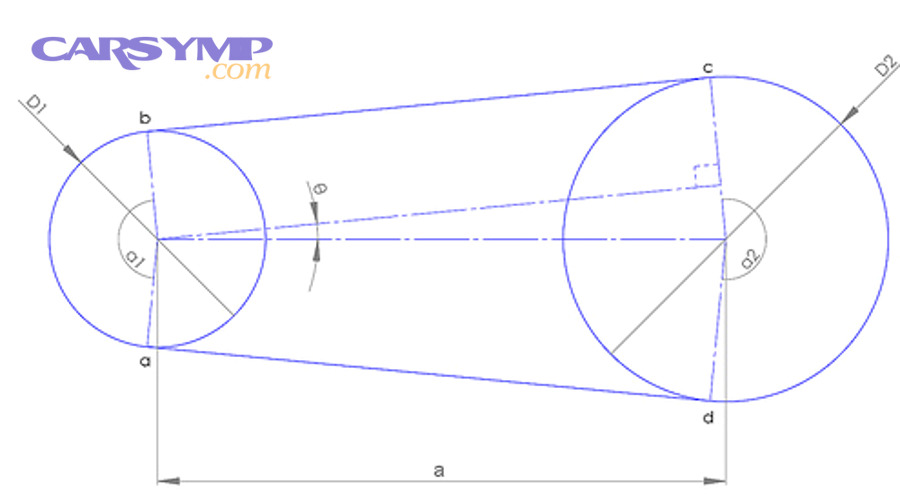
Should you stop driving immediately when CVT symptoms appear?
Yes—when you see CVT symptoms that signal slipping, overheating, or loss of drive, you should stop driving immediately because (1) heat rises fast, (2) belt/chain traction can collapse suddenly, and (3) one short trip can multiply damage and cost.
More importantly, once a CVT starts slipping or overheating, the transmission often enters a rapid-wear loop where friction creates heat, heat thins fluid, and thinner fluid reduces clamping pressure—making slip even worse.
Which “stop now” symptoms create immediate safety risk?
Treat these as pull-over-now signs because they can lead to sudden loss of acceleration or complete loss of drive:
- You press the gas and RPM rises, but the car barely moves (severe slip).
- The car won’t move in Drive or Reverse, or it moves intermittently.
- Dashboard warning + limp mode + severe power reduction, especially merging-capable power loss.
- Burning smell (hot fluid) or smoke-like odor from underhood after driving.
- Temperature warning or “transmission hot” message.
- Shuddering or violent vibration at low speed that feels like it might stall.
If any of these are present, the safest action is: stop driving, shut it down, and arrange a tow. Even if the car still creeps, creeping can be enough to grind belt/chain surfaces and glaze pulleys.
Can you “drive it gently” if it still moves?
You can sometimes drive carefully to a nearby shop only when symptoms are mild, stable, and not heat-related. That means:
- No overheating warnings.
- No burning smell.
- No major RPM flare.
- No sudden loss of drive.
- No violent shudder.
However, “gentle driving” still creates load and heat—especially in stop-and-go traffic—so it’s a calculated risk, not a safe fix.
Why “one more trip” often turns minor CVT issues into major damage
A CVT depends on controlled friction. The belt/chain must grip the pulleys with enough clamping force to transmit torque. When fluid degrades, pressure control weakens; when pressure weakens, slip starts; and slip quickly damages surfaces that are expensive or impossible to restore.
According to a study by University of Bath (Department of Mechanical Engineering), in 2000, test results on a metal V-belt CVT showed torque losses varied significantly with lubricant temperature across steady-state points from 25°C to 95°C, underscoring how fast heat can change CVT loss behavior.
What exactly counts as “CVT symptoms,” and why do they get worse when you keep driving?
CVT symptoms are measurable driving or mechanical changes—like slip, shudder, overheating warnings, abnormal noise, or delayed engagement—caused by traction loss, pressure-control issues, or internal wear in the belt/chain-and-pulley system.
Then, the reason they worsen is straightforward: heat and contamination amplify each other inside a CVT, so the longer you drive with a fault, the less stable the system becomes.
What are the most common CVT symptoms drivers notice first?
These early symptoms often show up before a warning light appears:
- Delayed engagement (you shift to Drive, it hesitates before moving).
- RPM flare (engine revs rise without a matching increase in speed).
- Shuddering or judder during light acceleration (especially 10–30 mph).
- Whining, droning, or metallic “belt-like” noise that changes with speed.
- Surging (speed oscillates slightly at steady throttle).
- Harsh transitions that feel like a “fake shift” banging.
Some of these can overlap with engine misfires or wheel/tire issues, but when they correlate with gear selection changes, heat, and throttle load, the CVT becomes the prime suspect.
Why does heat turn mild slip into serious damage?
CVTs are sensitive to temperature because heat affects:
- Fluid viscosity and friction modifiers (changes pressure response and traction behavior).
- Hydraulic control stability (solenoids and valves behave differently in hot, dirty fluid).
- Belt/chain traction (micro-slip becomes macro-slip).
- Elastomer and seal integrity (leaks reduce pressure, which worsens slip).
Once you cross a certain threshold, the CVT may protect itself by going into limp mode, but limp mode still generates heat. That’s why the CVT fluid change vs repair decision matters: if the issue is early fluid degradation, a service may help; if the issue is mechanical traction surface damage, fluid alone won’t reverse it.
How belt/chain CVTs fail in real life (the short version)
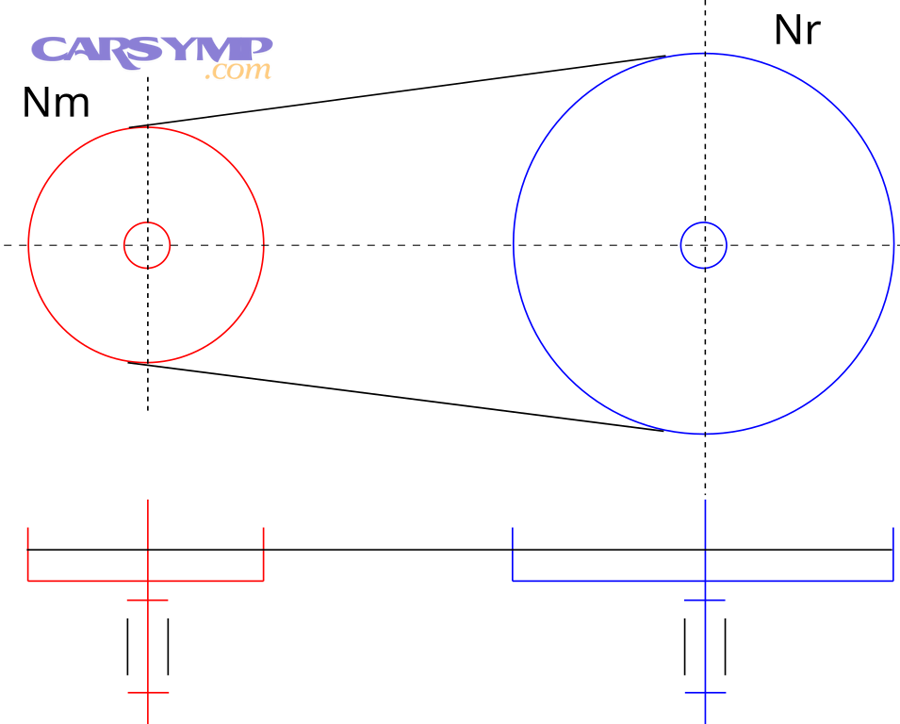
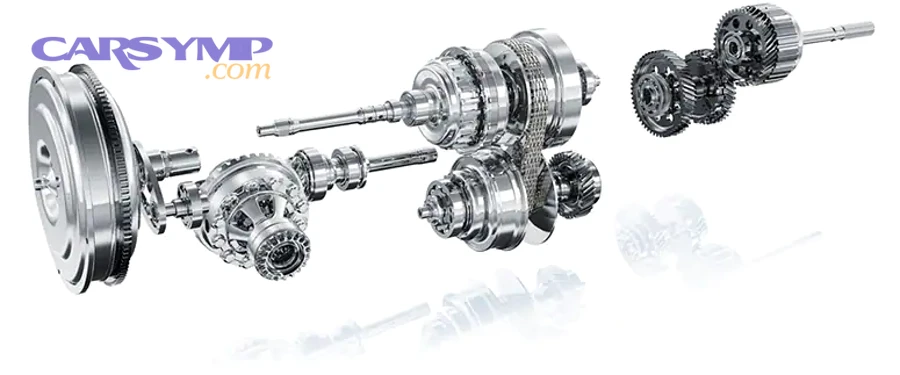
Most automotive CVTs rely on two variable pulleys + a steel belt/chain. The control system varies pulley width, changing the belt’s effective radius and the gear ratio. When pressure or friction behavior is off, the belt/chain can micro-slip, creating heat and polishing the pulley faces—reducing grip further.
That’s why drivers often describe a “snowball”: it started as a tiny shudder, then became a flare, then became a warning light.
Which CVT symptoms mean “Don’t Drive” vs “Drive Carefully to a Shop”?
“Don’t Drive” applies when CVT symptoms suggest severe slip, overheating, loss of drive, or violent shudder; “Drive Carefully” applies only to mild, stable symptoms with no heat warnings and no RPM flare.
Next, use a decision checklist that prioritizes safety and prevents avoidable damage.
To make this decision fast, the table below summarizes symptom severity, what it usually indicates, and the safest action.
| Symptom you feel/see | What it often indicates | Safest action |
|---|---|---|
| RPM climbs but speed doesn’t (strong flare/slip) | Traction loss, pressure control failure, pulley/belt damage | Don’t drive (tow) |
| Burning smell / “hot transmission” message | Overheating fluid, friction breakdown | Don’t drive (cool + tow) |
| Won’t move in Drive/Reverse or intermittently loses drive | Severe internal failure or control failure | Don’t drive |
| Violent shudder on takeoff (repeats) | Belt slip, pulley glazing, or converter/clutch issue | Don’t drive (tow) |
| Mild shudder only at light throttle, no warning lights | Early traction instability or fluid condition | Drive carefully to shop |
| Slight delay engaging Drive, improves when warm | Pressure leakdown or control adaptation | Drive carefully (short trip only) |
| Whine/droning increasing with speed, but no slip | Bearing/rotating component wear | Drive carefully (avoid highways) |
| Check engine + CVT warning + limp mode | Protective mode; underlying fault active | Usually Don’t drive unless shop is very close |
What are the “Don’t Drive” red flags you should never ignore?
If you see any of the following, treat it as tow-time:
- Overheat warning or burning odor
- Severe RPM flare/slip
- No movement in Drive/Reverse
- Sudden power drop when accelerating into traffic
- Loud grinding/metallic noises that weren’t there before
These are also the scenarios where drivers frequently confuse symptoms with engine issues—so quick diagnosis matters, but continuing to drive rarely helps.
When is it acceptable to drive a short distance to a shop?
It’s only reasonable when:
- Symptoms are mild and consistent (not escalating).
- No overheating signs.
- You can avoid hills, stop-and-go, and high speed.
- You can get there in 10–15 minutes without forcing the car.
Drive like you’re carrying a bowl of water on the hood: light throttle, smooth acceleration, no passing, no towing, no hard stops.
How do torque converter problems change the decision?
Some CVTs use a torque converter; others rely more on a launch clutch. If you suspect converter trouble—classic Signs of bad torque converter in CVT include shudder at low speed, slipping under load, or a rumble-strip vibration during light acceleration—assume the risk is higher because the converter can create extra heat and contaminate fluid quickly. If that shudder is strong or worsening, don’t drive.
What should you do right now if you suspect CVT trouble?
The best immediate method is a 5-step safety-and-damage-control routine—verify severity, reduce heat, avoid load, capture symptoms, and choose tow vs short drive—so you protect the CVT and speed up accurate diagnosis.
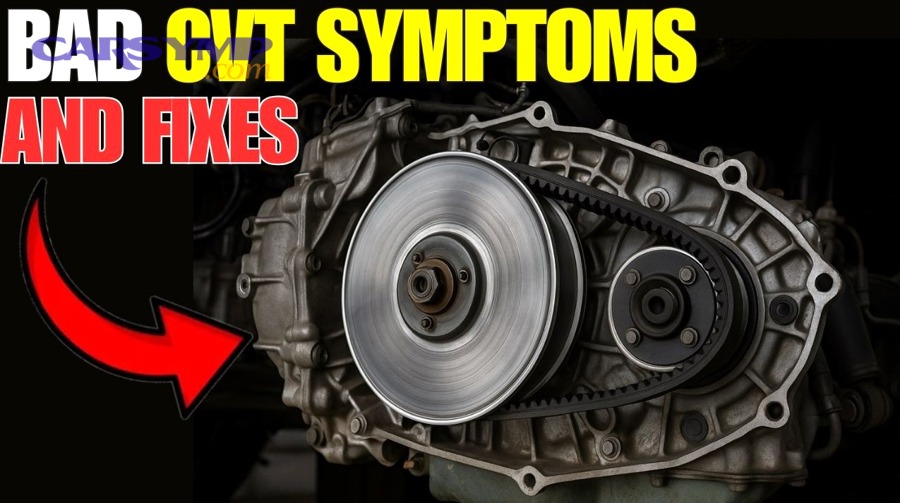
Then, once the situation is stable, you can decide the smartest next move instead of guessing.
Step-by-step actions: park, protect, document, decide
- Stop and idle-check (30–60 seconds).
If the car shakes violently, smells hot, or won’t engage properly, shut it down. - Let it cool before any decision.
Heat is the enemy. A 20–30 minute cool-down can prevent further fluid breakdown. - Do a simple engagement test (only if safe).
With foot on brake, shift P→R→N→D. Note delay, clunk, or no movement. - Document symptoms for the shop.
- When it happens (cold/hot, speed range)
- What it feels like (flare, shudder, whine)
- Any warning messages/lights
A short phone video helps.
- Choose tow vs short drive using the checklist from the prior section.
If in doubt, tow. A tow is cheaper than a cooked CVT.
How to communicate symptoms so the shop diagnoses faster
Use language that maps to measurable behavior:
- “RPM rises without speed increase” (slip/flare)
- “Delay of 2–3 seconds before moving in Drive”
- “Shudder at 15–25 mph under light throttle”
- “Whine increases with vehicle speed, not engine RPM”
- “Overheat warning after 10 minutes in traffic”
This helps a technician decide whether to start with scan data, fluid condition checks, or mechanical testing—especially for CVT repair decisions.
What not to do while waiting for diagnosis
Avoid common “panic fixes”:
- Don’t do repeated hard accelerations to “see if it clears up.”
- Don’t tow anything.
- Don’t drive long highway stretches (steady heat load).
- Don’t keep restarting and re-testing if it’s clearly slipping.
If you’re weighing a CVT fluid change vs repair decision, the rule is: fluid service can help early or maintenance-related issues, but it won’t restore damaged pulleys/belts. A shop needs to confirm what you’re dealing with.
What driving habits make CVT symptoms worse—and what should you avoid until it’s fixed?
There are 6 driving behaviors that reliably worsen CVT symptoms—hard launches, sustained high load, stop-and-go overheating, high-speed cruising under flare, towing, and aggressive “manual mode” use—because each one spikes heat and traction stress.
Besides, changing how you drive right now can be the difference between a serviceable unit and a replacement.
Which habits spike CVT heat and belt/chain stress?
Group these as “high heat / high pressure demand” behaviors:
- Hard launches (pedal-to-the-floor from a stop)
- Hill climbs with heavy throttle
- Stop-and-go traffic (constant ratio changes + poor cooling airflow)
- High-speed cruising while slipping (continuous friction)
- Towing or carrying heavy loads
- Repeated short trips with no full warm-up (moisture/contamination stress)
If you already have symptoms, these behaviors can accelerate damage quickly.
What should you avoid until repairs are complete?
Until the CVT is diagnosed and corrected:
- Avoid highways if you have any flare or shudder.
- Avoid hills and steep parking ramps.
- Avoid “sport mode” habits that hold high RPM.
- Avoid creeping in traffic; if stuck, consider pulling over and cooling.
If you’re trying to nurse it to a shop, keep speed moderate and throttle light. Treat the goal as arriving without adding damage, not “driving normally.”
What are “safe-ish” driving practices for limping to a shop?
These are temporary survival tactics (not solutions):
- Smooth throttle only
- Steady speed, minimal ratio hunting
- Leave extra distance to avoid braking/accelerating cycles
- Turn off unnecessary loads if overheating is a concern (A/C can add thermal load underhood)
- Stop and cool if you smell hot fluid
Once repaired, follow Maintenance tips to extend CVT life like scheduled fluid service (per manufacturer), correct fluid type, gentle warm-up, and avoiding repeated high-heat driving patterns.
Why do CVTs fail, and how can you reduce future risk after repairs?
CVTs most often fail from a combination of heat, fluid breakdown, pressure-control problems, and traction-surface wear, and you reduce future risk by controlling temperature, maintaining correct fluid, and avoiding high-load habits that exceed the system’s clamping margin.
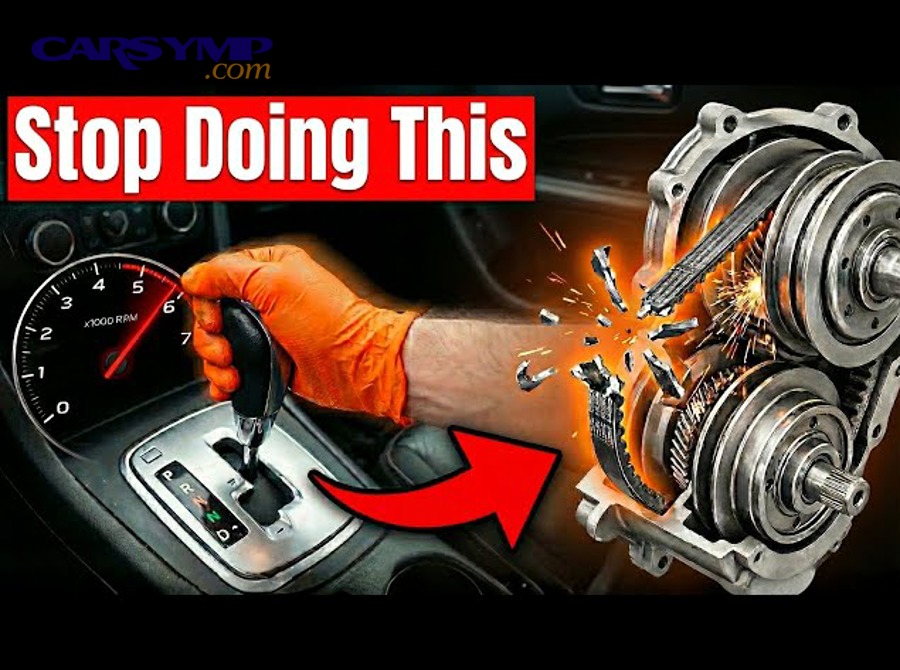
In short, the goal after any CVT repair is to keep traction stable and heat manageable.
What are the most common root causes after diagnosis?
Even though symptoms feel similar, the underlying causes often cluster into:
- Fluid degradation or incorrect fluid (wrong friction behavior)
- Valve body/solenoid control issues (unstable pressure, ratio control errors)
- Pulley/belt/chain wear (traction collapse under load)
- Bearing wear (whine, debris, overheating)
- Cooling system limitations (heat soak in traffic/hills)
A good shop will match scan data and symptom profile to these categories—then advise whether you need service, calibration, component repair, or replacement.
How do you reduce recurrence after a fix?
Use a practical prevention plan:
- Follow OEM guidance for fluid type and service intervals (and shorten intervals for severe use).
- Keep cooling systems healthy (radiator, fans, any trans cooler).
- Fix small leaks early—low fluid can destabilize pressure.
- Drive with heat awareness: avoid repeated high-load launches and heavy towing.
- If you had a previous overheating episode, ask the shop to confirm whether the unit’s learned values/adaptations need reset or relearn.
According to a study by University of Bath, in 2000, researchers tested a metal V-belt CVT across steady-state temperatures from 25°C to 95°C and showed that lubricant temperature meaningfully affected torque-loss behavior and related loss mechanisms—supporting why heat management is central to long-term CVT reliability.