


If you’re wondering when DPF replacement is necessary, the most accurate answer is this: replacement becomes necessary when the filter can no longer return to normal exhaust flow and regeneration behavior because it’s physically damaged, permanently contaminated, or effectively “end-of-life” from ash loading—so performance and reliability don’t recover even after proper diagnostics and service.
Next, the word “necessary” matters because it’s not the same as “the light is on.” It means there’s enough evidence that the DPF cannot be restored to safe, stable operation, and continuing to drive will keep triggering derates, overheating risk, or repeat failures that waste time and money.
Then, if you’re seeing a warning light or limp mode, you should treat it as a decision problem, not a parts-shopping problem: you need to separate a truly restricted DPF from sensor faults, operating conditions, and upstream engine issues that make the DPF look guilty when it isn’t.
Introduce a new idea: the fastest way to reach a confident decision is to follow a proof-based framework—symptoms → scan data → physical checks—so you know whether service can restore the DPF or replacement is the only durable fix.
What does “DPF replacement is necessary” actually mean for diesel owners?
“DPF replacement is necessary” means the diesel particulate filter can’t reliably return to normal restriction and regeneration behavior because ash loading, damage, or contamination prevents it from flowing and filtering correctly, even after proper diagnostics and corrective service.
To connect that definition to your real-world decision, the key is understanding what the DPF does, what it collects, and what is or isn’t reversible—because “clogged” is not one single condition.
What is a DPF, and what problem is it designed to solve?
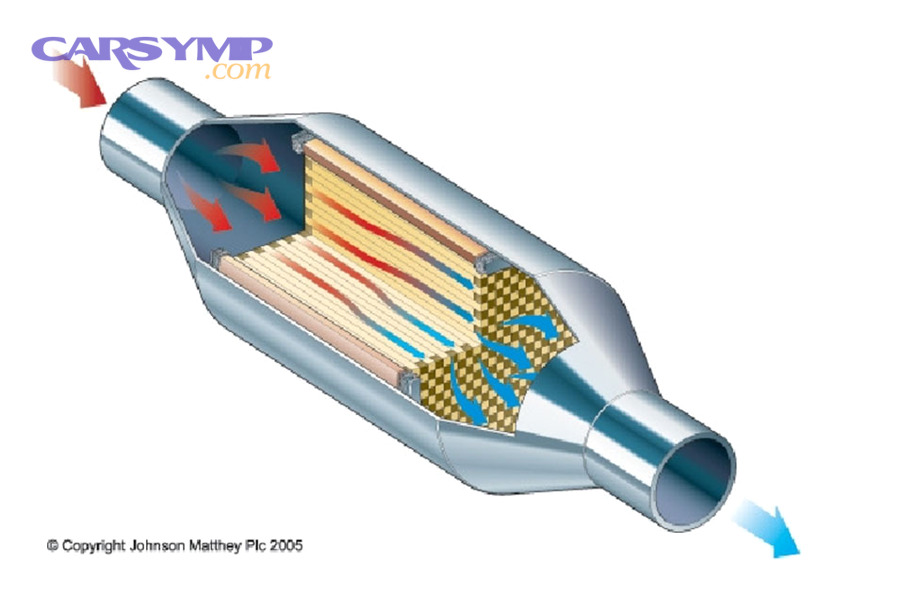
A DPF is an emissions-control filter in the exhaust stream that traps diesel soot (particulate matter) and reduces tailpipe particle emissions by storing soot and periodically burning it during regeneration, leaving a small residue behind over time.
Specifically, the DPF is built to do two jobs at once: capture soot efficiently and release that soot safely during regeneration. The capture side is mostly mechanical—exhaust passes through porous channel walls and soot gets trapped. The release side is thermal—when conditions are right, the trapped soot oxidizes (burns) and turns into gas, leaving behind a small amount of non-burnable residue.
That “two-job” design is why owners get confused: the DPF can be “full” in more than one way. A DPF that’s simply soot-loaded may be recoverable with correct regeneration and service. A DPF that’s ash-loaded, damaged, or contaminated may not be recoverable at all.
What’s the difference between soot loading and ash loading, and why does it matter for replacement?
Soot loading is usually recoverable through regeneration and professional service, while ash loading is cumulative, non-burnable, and eventually creates permanent restriction that pushes the DPF toward end-of-life and replacement.
However, the practical difference comes down to what burns and what doesn’t:
- Soot is carbon-based and is intended to be oxidized during regeneration.
- Ash is the leftover inorganic residue (often from oil additives and engine wear) that does not burn away; it accumulates in the DPF channels and slowly reduces available flow area.
In other words, soot is like “temporary inventory,” and ash is like “permanent clutter.” You can clear soot repeatedly, but you can’t “regenerate” ash out of existence; it has to be physically removed during off-vehicle service, and even then, the DPF can reach a point where service can’t restore adequate flow.
According to a study by University of Tennessee – Knoxville from Mechanical Engineering, in 2008, researchers used a backpressure-based protocol targeting 3 g/L soot loading and showed how backpressure rises substantially with ash accumulation across different substrate types.
Is DPF replacement necessary if you have a DPF warning light or check engine light?
No—DPF replacement is not automatically necessary when a warning light appears, because the same light can be triggered by recoverable soot loading, sensor errors, driving pattern limitations, or upstream engine faults; you need evidence of irreversible restriction or damage before replacement makes sense.
To keep that “no” from becoming guesswork, you should treat the warning light as an invitation to gather high-signal symptoms and repeatability clues—because repeat failure patterns are what separate “serviceable” from “replaceable.”
Which symptoms most strongly suggest the DPF is beyond cleaning?
There are 4 main DPF replacement-leaning symptom clusters: (1) persistent derate/limp mode, (2) very frequent or failed regenerations, (3) sustained power loss with rising restriction, and (4) repeat DPF-related faults shortly after proper service—based on whether symptoms recur despite correct operating conditions.
More specifically, here are the patterns that tend to point away from “simple recovery” and toward “the filter can’t be restored”:
- Repeated forced regenerations that don’t complete or complete but return quickly. This suggests the system can’t reduce soot/flow restriction to the expected baseline.
- Derate/limp mode that returns soon after clearing codes. A key signal is time-to-return—if the truck behaves normally for only a short period, restriction or damage is often still present.
- Power loss and poor throttle response that tracks with load. Restriction acts like a “breathing problem,” so the symptom grows under acceleration, towing, or hill climbs.
- Strong exhaust heat events without improvement. If the system attempts regeneration (you can often see it in scan data) and restriction doesn’t improve, serviceability drops.
- Visible smoke/odor changes paired with aftertreatment warnings. This is not diagnostic by itself, but combined with regen failure it increases suspicion.
In everyday language, these are the DPF clogging symptoms that matter most: not just “it feels weak,” but “it repeatedly fails to return to normal after the system tries to fix it.”
When can the same warning signs be caused by something other than the DPF?
The same warning signs can be caused by a faulty differential pressure sensor, temperature sensor issues, exhaust leaks, fueling problems, or airflow problems—so the DPF can look clogged when the control system is simply getting bad data or the engine is creating abnormal soot.
On the other hand, many owners get pushed toward replacement because “the DPF code came back,” when the real cause is upstream. This is where you must actively consider EGR and turbo issues linked to DPF problems, because those faults increase soot production or disturb combustion, overwhelming the DPF until it appears “bad.”
Common non-DPF causes that mimic DPF restriction include:
- Differential pressure sensor faults (reads too high or implausible)
- Exhaust gas temperature sensor faults (regen strategy fails or is inhibited)
- Boost leaks / turbo underperformance (poor air-fuel mix, more soot)
- EGR faults (combustion quality changes; soot load rises faster)
- Injector issues or poor fuel pressure (incomplete combustion → soot)
A key diagnostic mindset: the DPF is often the victim of a problem upstream, not the original problem.
What diagnostic evidence confirms replacement is needed instead of cleaning?
Diagnostic evidence confirms replacement is needed when restriction measurements, regeneration history, and physical inspection show the DPF cannot return to normal pressure drop and stable regeneration—even after correcting sensor faults and attempting appropriate service where applicable.
To move from “symptoms” to “proof,” you need the same three categories of evidence that good shops rely on: numbers, history, and inspection.

What measurements and scan data should you ask for before approving replacement?
There are 6 main proof points to request: differential pressure behavior, soot/ash estimation, regeneration frequency and success, temperature traces, sensor rationality checks, and post-event baselines—based on whether the DPF returns to expected restriction after regen attempts.
To illustrate, ask for these items in writing (or as scan screenshots):
- Differential pressure (ΔP) across the DPF
- ΔP at idle and at a specified raised RPM (shop-specific procedure)
- ΔP under load if possible (road test or dyno)
- Regeneration history
- Number of regens in a given mileage window
- Completed vs aborted regens
- Soot load estimate and ash load estimate (where the ECU provides it)
- The exact parameter names vary by OEM, but the trend matters.
- Exhaust temperature behavior during regen
- Did temps rise as expected? Did they drop too soon?
- Sensor plausibility checks
- Does the pressure sensor read near zero with the engine off?
- Does it respond smoothly to RPM/load changes?
- Before/after comparison
- After a regen attempt, does ΔP meaningfully drop, or does it remain elevated?
A simple rule: if the shop can’t show you before-and-after data, you don’t yet have proof—only suspicion.
Which fault-code patterns often indicate replacement vs a fixable cause?
There are 3 common fault-code pattern groups that lean toward replacement: repeated regeneration failure with rising restriction, persistent restriction/efficiency faults that return quickly after verified regeneration attempts, and rationality faults that persist after sensor verification—based on whether the system can restore normal flow.
Meanwhile, patterns that often indicate a fixable cause include: isolated sensor rationality faults, intermittent temperature sensor codes, or a single event after a short-trip cycle—because those can prevent regeneration without meaning the filter is ruined.
Instead of memorizing code numbers (which vary by manufacturer), use this pattern logic:
- “Regen tried and failed repeatedly” + restriction stays high → replacement becomes more likely.
- “Restriction high” + no evidence the system can ever complete regen → investigate why regen is inhibited (often fixable).
- “Pressure reading implausible” → sensor/hose/leak checks first, because replacement based on bad readings is expensive guesswork.
According to a study by West Virginia University from Mechanical and Aerospace Engineering, in 2011, researchers recommended keeping DPF operational backpressure below 120 in H₂O and reported filtration efficiency above 90% under that control approach.
Should you try cleaning before replacement?
Yes—you should try professional DPF cleaning before replacement in most cases because it can restore flow, reduce restriction, and confirm whether the DPF is actually recoverable; however, you should skip directly to replacement if there is clear physical damage, severe contamination, or repeated failed service outcomes.
To make that “yes” actionable, you need to understand what “cleaning” means in the real world and how you’ll judge whether it worked.

What types of DPF cleaning exist, and which ones actually restore flow?
There are 4 main types of DPF cleaning services—on-vehicle assisted cleaning, off-vehicle thermal + air cleaning, aqueous (wet) cleaning, and ultrasonic/advanced processes—based on how completely they remove ash and restore pressure drop.
More specifically, here’s how to think about them without marketing noise:
- On-vehicle assisted cleaning (limited scope)
- Often involves chemicals or forced-regeneration assistance.
- Helpful for soot-related issues but typically limited for heavy ash.
- Off-vehicle thermal + pneumatic cleaning (common in fleets)
- Heat is used to convert soot; compressed air backflush removes residue.
- Effective when performed with proper equipment and testing.
- Aqueous (wet) cleaning
- Water-based flushing methods can remove ash more thoroughly in some cases.
- Requires drying and validation to avoid residual moisture issues.
- Ultrasonic/advanced cleaning
- Specialized setups may help with stubborn deposits, but results vary by substrate condition.
When owners ask for “DPF cleaning,” what they really want is measurable flow recovery, not a ritual. The best providers validate results with a flow/pressure drop test and a post-clean inspection.
Practical tip: ask whether the service includes a pre-test and post-test report. If not, you’re paying for effort, not outcome.
How do you know a cleaning “worked,” and how long should it last?
A cleaning “worked” when the DPF returns to a stable regeneration interval and a lower, repeatable pressure drop across the filter, and it lasts when the engine is no longer producing abnormal soot or ash—typically measured in months or tens of thousands of miles depending on duty cycle.
Especially, you should validate success using three checkpoints:
- Checkpoint 1: Immediate baseline improvement — The differential pressure should drop meaningfully compared to pre-service.
- Checkpoint 2: Regeneration frequency returns to normal — Frequent forced regens are a strong signal something is still wrong.
- Checkpoint 3: No quick recurrence — If the warning returns after a short period, either the DPF wasn’t recoverable or the root cause wasn’t fixed.
This is also where budgeting becomes practical: a DPF cleaning cost estimate should include not just the service price, but also the diagnostic time, removal/reinstall labor, and the cost of fixing the upstream cause that created the loading in the first place.
DPF cleaning vs replacement: how do you choose the right fix for your situation?
DPF cleaning wins for recoverable restriction and routine ash maintenance, replacement is best for damaged or permanently contaminated filters, and “fix the engine first” is optimal when abnormal soot production is the real driver—so the right choice depends on recoverability, root cause, and downtime risk.
To better understand the choice, you need a decision frame that ties symptoms to evidence—because the same truck can need different answers at different times.

Before the table below, note what it represents: it’s a practical “if/then” map that connects what you observe (left) to the most defensible next step (right), so you avoid replacing a filter when service would have solved it—or servicing a filter that’s already non-recoverable.
| Situation you can verify | What it usually means | Best next step |
|---|---|---|
| ΔP drops after regen/service and stays stable | DPF is recoverable | Clean/service + address root cause |
| ΔP remains high after verified regen attempts | Restriction may be ash or damage | Off-vehicle service + flow test |
| Physical damage (cracked/melted core) | Structure can’t filter/flow correctly | Replace DPF |
| Heavy oil/coolant contamination evidence | Deposits may be permanent + root cause active | Fix cause, then replace if needed |
| Frequent aborted regens with sensor faults | Control system can’t manage regen | Diagnose sensors/strategy before replacing |
Which owner profiles usually benefit from cleaning first vs replacing first?
There are 3 main owner profiles where cleaning-first usually wins and 3 where replacement-first is often smarter—based on duty cycle, downtime cost, and the likelihood of irreversible damage.
More specifically:
Cleaning-first tends to fit:
- Highway-heavy drivers who can support passive regeneration and typically build ash slowly
- Fleets with scheduled maintenance that can remove and service filters before derates
- Owners with clear “no damage” evidence and predictable restriction patterns
Replacement-first tends to fit:
- Vehicles with confirmed physical damage (core fracture/melt, severe face plugging)
- Repeated service failures where restriction returns quickly despite verified cleaning
- Downtime-sensitive operations where a second service attempt costs more than replacement risk
The point is not that one choice is “better,” but that the same evidence has different economic meaning depending on how you use the vehicle.
What are the risks of delaying replacement when it’s truly necessary?
Delaying necessary replacement increases backpressure and heat stress, which can trigger derates, reduce performance, and raise the risk of secondary damage to the turbocharger and engine systems—especially when repeated regeneration attempts create extreme exhaust temperatures.
More importantly, modern systems protect themselves by limiting power. That means if you delay, you often pay twice: once in downtime and again in collateral stress from running near the limits.
A useful mental model: when restriction stays high, the engine must work harder to push exhaust through. That shifts operating conditions, increases thermal load, and can create a feedback loop where the DPF gets worse faster.
What should you do next if replacement looks likely?
If replacement looks likely, you should (1) confirm the filter is non-recoverable with measurements and inspection, (2) fix the root cause that created the loading or damage, and (3) verify the new DPF operates normally with post-install checks and correct ECU procedures.
Next, treat replacement as a process—not a single purchase—because the real win is preventing the same failure from repeating.
What questions should you ask a shop to avoid unnecessary DPF replacement?
There are 6 questions that reliably prevent unnecessary replacement: what evidence proves non-recoverability, what tests were run, what changed after regen/service, what root cause is suspected, what part options exist, and what warranty and verification steps are included.
For example, ask:
- “What was the differential pressure before and after your regen attempt?”
- “Did you verify the pressure sensor and hoses for plausibility and leaks?”
- “What does the regen history show—completed vs aborted?”
- “If we install a new DPF today, what will you do to prevent immediate reloading?”
- “Will you provide a post-repair scan report confirming normal regen behavior?”
- “What part are you recommending (OEM/reman/aftermarket), and why?”
These questions force the decision back onto evidence and accountability, which is exactly where it belongs.
What checks should be done after installing a new DPF to prevent repeat failure?
There are 5 post-install checks that prevent repeat failure: sensor verification, leak checks, proper ECU counter/reset procedures where applicable, a controlled drive/regen verification, and confirmation that the engine is not producing abnormal soot or oil/coolant contamination.
Besides the obvious “no leaks” inspection, the key is verifying that the system is back to normal behavior:
- Pressure sensor behavior makes sense across RPM and load
- Temperature sensors read plausibly and allow regen control
- Regeneration can complete under appropriate conditions
- No upstream conditions are creating abnormal soot (fueling/EGR/turbo-related)
- Oil consumption and coolant integrity are acceptable (to avoid ash/contamination overload)
This is where many repeat failures begin: the DPF gets replaced, but the engine problem that overloaded it remains active.
Contextual border: Up to this point, you’ve learned how to define “necessary,” interpret warning signs, demand proof-based diagnostics, and choose cleaning vs replacement using recoverability logic. The final section expands into less common—but highly decisive—edge cases that explain early failure and “non-cleanable” outcomes.
What uncommon issues can make a DPF “non-cleanable” even if it’s not old?
Uncommon issues can make a DPF non-cleanable when deposits are chemically or physically bonded to the substrate, when the core is cracked or melted, or when contamination from oil/coolant/DEF creates permanent blockage—so age alone is not a reliable indicator of recoverability.
To explore the micro-level reasons, focus on what changes the DPF from “dirty” to “structurally compromised.”
Can a cracked or melted DPF be cleaned, or is replacement the only option?
No—a cracked or melted DPF generally cannot be restored by cleaning because the substrate structure that provides filtration and controlled flow is damaged, so replacement is the only reliable option.
However, it helps to understand why cleaning fails here: cleaning removes deposits, but it cannot re-create a uniform honeycomb structure or re-seal internal fractures. A cracked core can also cause uneven flow paths and hot spots, which accelerates new loading and can trigger repeated regeneration issues.
If a shop shows you borescope images or physical inspection evidence of substrate damage, that’s the kind of “hard proof” that makes the replacement decision straightforward.
How do oil, coolant, or fuel-related problems contaminate a DPF and force replacement?
Oil, coolant, and fueling problems contaminate a DPF by increasing ash production, introducing non-burnable residues, or creating deposits that block channels and inhibit normal oxidation—so the filter may remain restricted even after aggressive service unless the root cause is fixed.
More specifically, these are the common contamination pathways:
- Oil consumption → ash overload (oil additives become non-burnable residue)
- Coolant ingestion → sticky deposits and abnormal residue patterns
- Injector/fueling issues → excessive soot and incomplete combustion byproducts
- Excessive idling/short trips → frequent incomplete regens, compounding loading
And this is where the earlier point becomes critical: if you replace the DPF without correcting the contamination source, you’re often installing a new filter into the same failure factory.
DPF vs DOC vs SCR: how do you avoid replacing the wrong part?
You avoid replacing the wrong part by confirming which component is failing based on temperature behavior, pressure behavior, and fault context—because the DOC mainly enables oxidation/heat, the DPF mainly traps soot, and the SCR mainly reduces NOx using DEF.
Meanwhile, symptom overlap is what causes expensive mistakes:
- A weak DOC can prevent the system from generating enough heat for effective regen, making the DPF look “clogged” when the real problem is poor oxidation support.
- A restriction signal (high ΔP) points more directly to DPF flow issues, but only if the sensor and hoses are verified.
- SCR/DEF issues often present as dosing/NOx efficiency problems, not as classic restriction, though system-level derates can blur the user experience.
The solution is a simple sequencing rule: validate DOC/temperature capability → validate pressure measurement integrity → then judge the DPF’s recoverability.
What resets/adaptations and verification steps are commonly missed after replacement?
There are 4 commonly missed steps after replacement: confirming sensor baselines, ensuring the ECU recognizes the new DPF state where applicable, validating a successful regeneration under correct conditions, and documenting normal post-repair restriction—based on whether the system can return to predictable “normal.”
To sum up, the goal after replacement is not “the light is off today.” The goal is “the system behaves normally next month.” That requires:
- A post-install scan report with stable parameters
- A verified regen strategy (completed, not aborted)
- A clear root-cause fix plan (especially for soot creation)
- A baseline you can compare against if a warning returns
When these steps are done, replacement becomes a durable solution instead of a recurring expense.